

Marburg virus disease (MVD), formerly known as Marburg hemorrhagic fever, is a severe, often fatal viral illness caused by Marburg virus (MARV) or Ravn virus (RAVV), both in the species Orthomarburgvirus marburgense and family Filoviridae. MVD is clinically similar to Ebola disease, but it is caused by different viruses. Transmission begins with exposure to infected fruit bats or contaminated cave/mine environments and then spreads between humans through direct contact with infected body fluids or contaminated materials. The disease may progress from abrupt fever and severe malaise to gastrointestinal illness, hemorrhage, shock, multiorgan failure, and death. Diagnosis is confirmed with RT-PCR, antigen testing, antibody-capture ELISA, or virus isolation in appropriate containment settings. Treatment is supportive; there are currently no approved vaccines or antiviral treatments for MVD.
Last updated: Aug 27, 2026
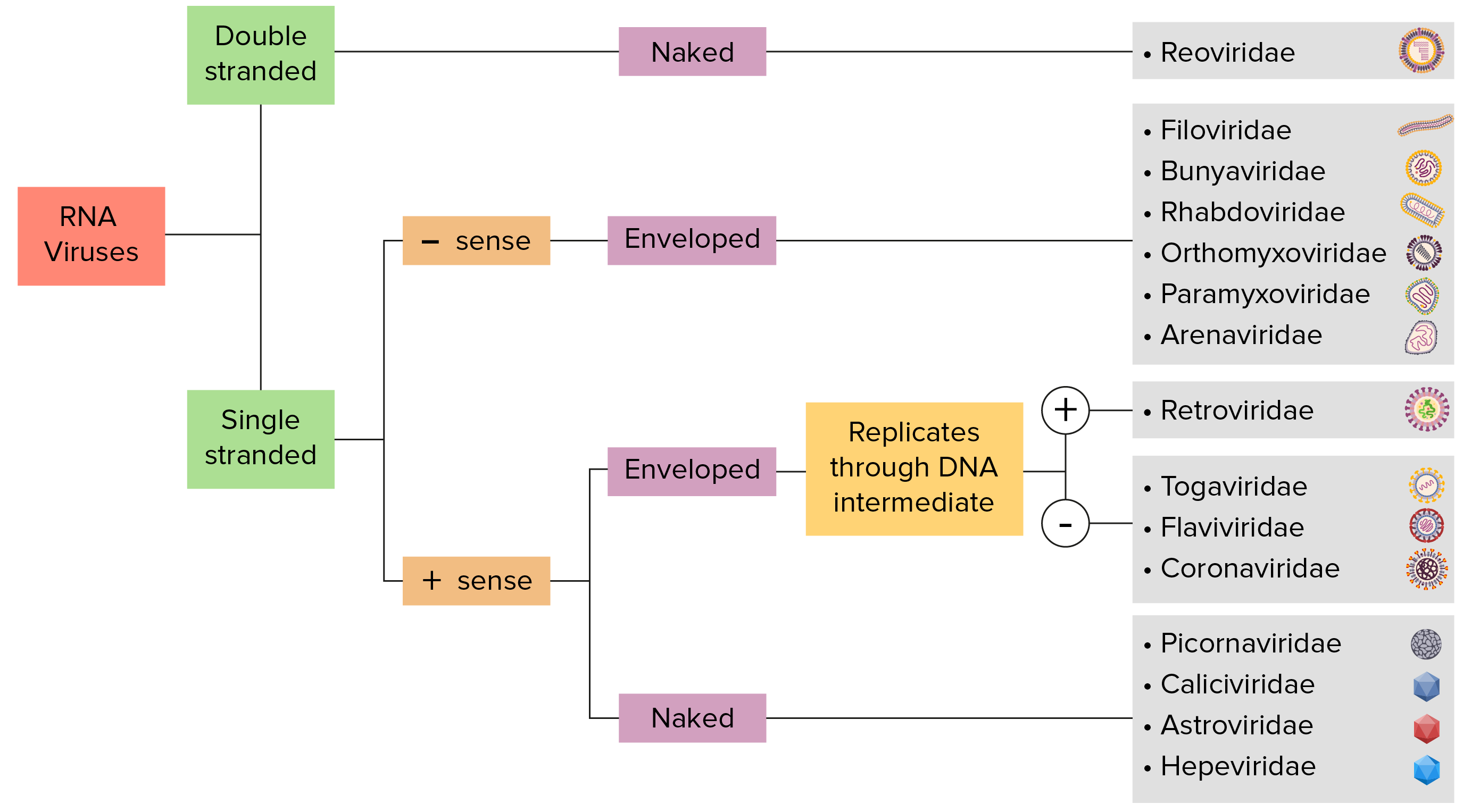
RNA virus identification:
Viruses can be classified in many ways. Most viruses, however, will have a genome formed by either DNA or RNA. RNA genome viruses can be further characterized by either a single- or double-stranded RNA. “Enveloped” viruses are covered by a thin coat of cell membrane (usually taken from the host cell). If the coat is absent, the viruses are called “naked” viruses. Viruses with single-stranded genomes are “positive-sense” viruses if the genome is directly used as messenger RNA (mRNA), which is translated into proteins. “Negative-sense,” single-stranded viruses use RNA-dependent RNA polymerase, a viral enzyme, to transcribe their genome into messenger RNA.
Marburg viruses Viruses Minute infectious agents whose genomes are composed of DNA or RNA, but not both. They are characterized by a lack of independent metabolism and the inability to replicate outside living host cells. Virology are RNA viruses RNA Viruses Viruses whose genetic material is RNA. Virology. They are single-stranded, negative-sense RNA Negative-sense RNA RNA viruses that have their genetic material encoded in the form of single-stranded, negative-sense RNA. Unlike retroviruses they do not employ DNA intermediates in their life-cycle. Respiratory Syncytial Virus viruses Viruses Minute infectious agents whose genomes are composed of DNA or RNA, but not both. They are characterized by a lack of independent metabolism and the inability to replicate outside living host cells. Virology, meaning the viral genome Viral genome The complete genetic complement contained in a DNA or RNA molecule in a virus. Virology must be transcribed into messenger RNA Messenger RNA RNA sequences that serve as templates for protein synthesis. Bacterial mRNAs are generally primary transcripts in that they do not require post-transcriptional processing. Eukaryotic mRNA is synthesized in the nucleus and must be exported to the cytoplasm for translation. Most eukaryotic mRNAs have a sequence of polyadenylic acid at the 3′ end, referred to as the poly(a) tail. The function of this tail is not known for certain, but it may play a role in the export of mature mRNA from the nucleus as well as in helping stabilize some mRNA molecules by retarding their degradation in the cytoplasm. RNA Types and Structure by viral RNA-dependent RNA polymerase RNA-dependent RNA polymerase An enzyme that catalyses rna-template-directed extension of the 3′- end of an RNA strand by one nucleotide at a time, and can initiate a chain de novo. Virology before viral proteins Proteins Linear polypeptides that are synthesized on ribosomes and may be further modified, crosslinked, cleaved, or assembled into complex proteins with several subunits. The specific sequence of amino acids determines the shape the polypeptide will take, during protein folding, and the function of the protein. Energy Homeostasis can be translated.
Ethiopia declared its first confirmed MVD outbreak on 14 November 2025, after molecular testing identified Marburg virus Virus Viruses are infectious, obligate intracellular parasites composed of a nucleic acid core surrounded by a protein capsid. Viruses can be either naked (non-enveloped) or enveloped. The classification of viruses is complex and based on many factors, including type and structure of the nucleoid and capsid, the presence of an envelope, the replication cycle, and the host range. Virology in samples from suspected viral hemorrhagic fever Fever Fever is defined as a measured body temperature of at least 38°C (100.4°F). Fever is caused by circulating endogenous and/or exogenous pyrogens that increase levels of prostaglandin E2 in the hypothalamus. Fever is commonly associated with chills, rigors, sweating, and flushing of the skin. Fever cases in Jinka town, South Ethiopia Regional State.
Marburg virus Virus Viruses are infectious, obligate intracellular parasites composed of a nucleic acid core surrounded by a protein capsid. Viruses can be either naked (non-enveloped) or enveloped. The classification of viruses is complex and based on many factors, including type and structure of the nucleoid and capsid, the presence of an envelope, the replication cycle, and the host range. Virology transmission occurs through zoonotic exposure and human-to-human spread.
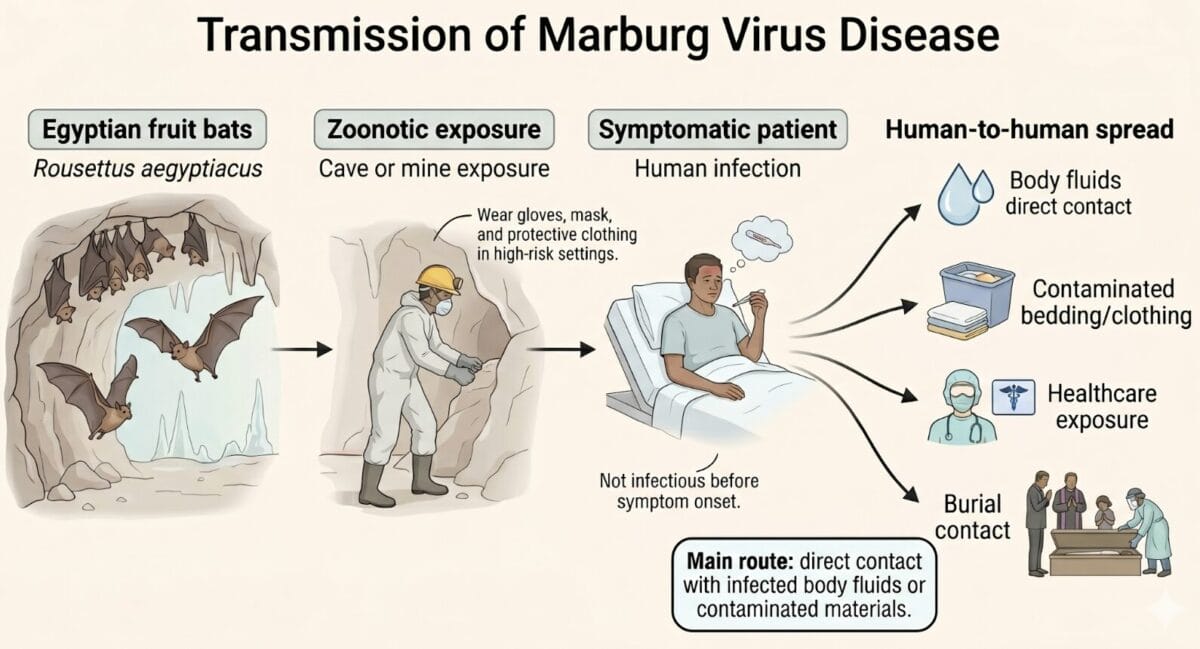
Marburg virus can spread from Egyptian fruit bats to humans through cave or mine exposure, then between humans through direct contact with infected body fluids, contaminated materials, healthcare exposure, or funeral/burial contact.
AI-generated image.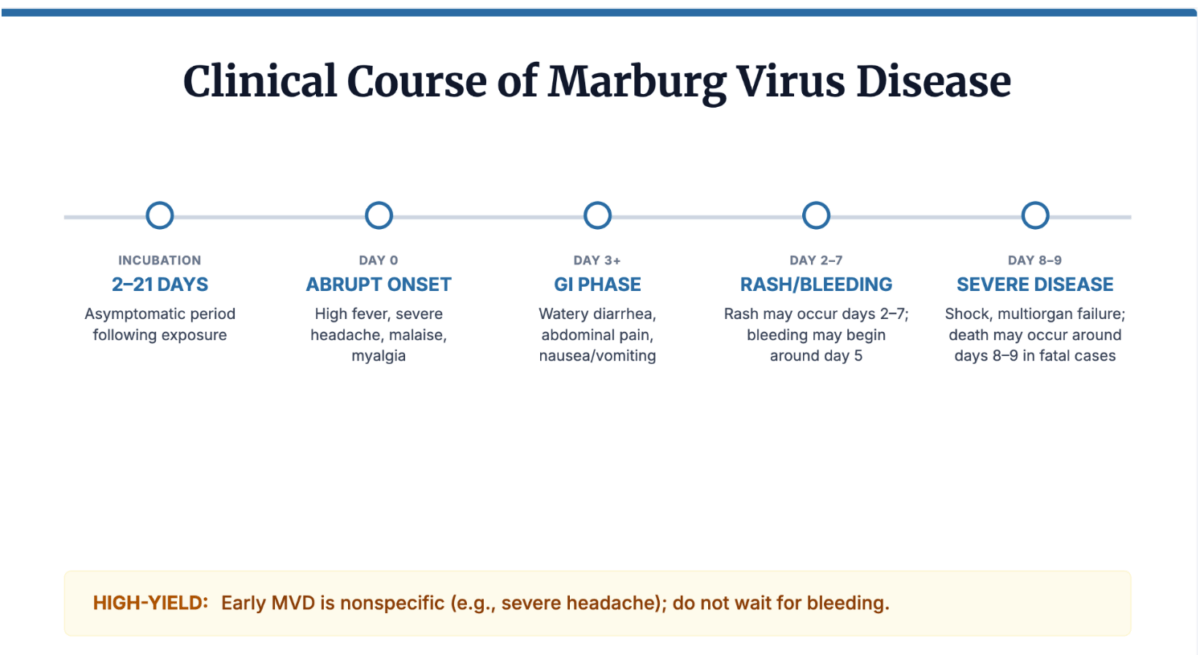
Marburg virus disease begins abruptly with fever, headache, malaise, and myalgias, followed by gastrointestinal illness, possible rash and hemorrhage, and in severe cases shock and multiorgan failure.
AI-generated image.Early diagnosis is difficult because initial symptoms are nonspecific. MVD can be difficult to distinguish clinically from malaria Malaria Malaria is an infectious parasitic disease affecting humans and other animals. Most commonly transmitted via the bite of a female Anopheles mosquito infected with microorganisms of the Plasmodium genus. Patients present with fever, chills, myalgia, headache, and diaphoresis. Plasmodium/Malaria, typhoid Typhoid Typhoid (or enteric) fever is a severe, systemic bacterial infection classically caused by the facultative intracellular and Gram-negative bacilli Salmonella enterica serotype Typhi (S. Typhimurium, formerly S. typhi). S. paratyphi serotypes A, B, or C can cause a similar syndrome. Enteric Fever (Typhoid Fever) fever Fever Fever is defined as a measured body temperature of at least 38°C (100.4°F). Fever is caused by circulating endogenous and/or exogenous pyrogens that increase levels of prostaglandin E2 in the hypothalamus. Fever is commonly associated with chills, rigors, sweating, and flushing of the skin. Fever, shigellosis Shigellosis Shigella, meningitis Meningitis Meningitis is inflammation of the meninges, the protective membranes of the brain, and spinal cord. The causes of meningitis are varied, with the most common being bacterial or viral infection. The classic presentation of meningitis is a triad of fever, altered mental status, and nuchal rigidity. Meningitis, Ebola disease, and other viral hemorrhagic fevers. A high index of suspicion is needed when compatible symptoms occur in a patient with:
There is currently no approved vaccine Vaccine Suspensions of killed or attenuated microorganisms (bacteria, viruses, fungi, protozoa), antigenic proteins, synthetic constructs, or other bio-molecular derivatives, administered for the prevention, amelioration, or treatment of infectious and other diseases. Vaccination or antiviral Antiviral Antivirals for Hepatitis B treatment for Marburg virus disease Marburg virus disease An RNA virus infection of rhesus, vervet, and squirrel monkeys transmissible to man. Ebolavirus and Marburgvirus. Management is primarily supportive. WHO states that early intensive supportive care, including rehydration Rehydration Dengue Virus and treatment of specific symptoms, is the main mortality-reducing intervention.
Prevention depends on early recognition, isolation, PPE, safe handling of body fluids, contact tracing, safe burial practices, and community engagement.
For routine care of patients Patients Individuals participating in the health care system for the purpose of receiving therapeutic, diagnostic, or preventive procedures. Clinician–Patient Relationship with suspected or confirmed Marburg virus disease Marburg virus disease An RNA virus infection of rhesus, vervet, and squirrel monkeys transmissible to man. Ebolavirus and Marburgvirus, CDC guidance supports Standard, Contact, and Droplet Precautions with eye protection, not routine airborne precautions.
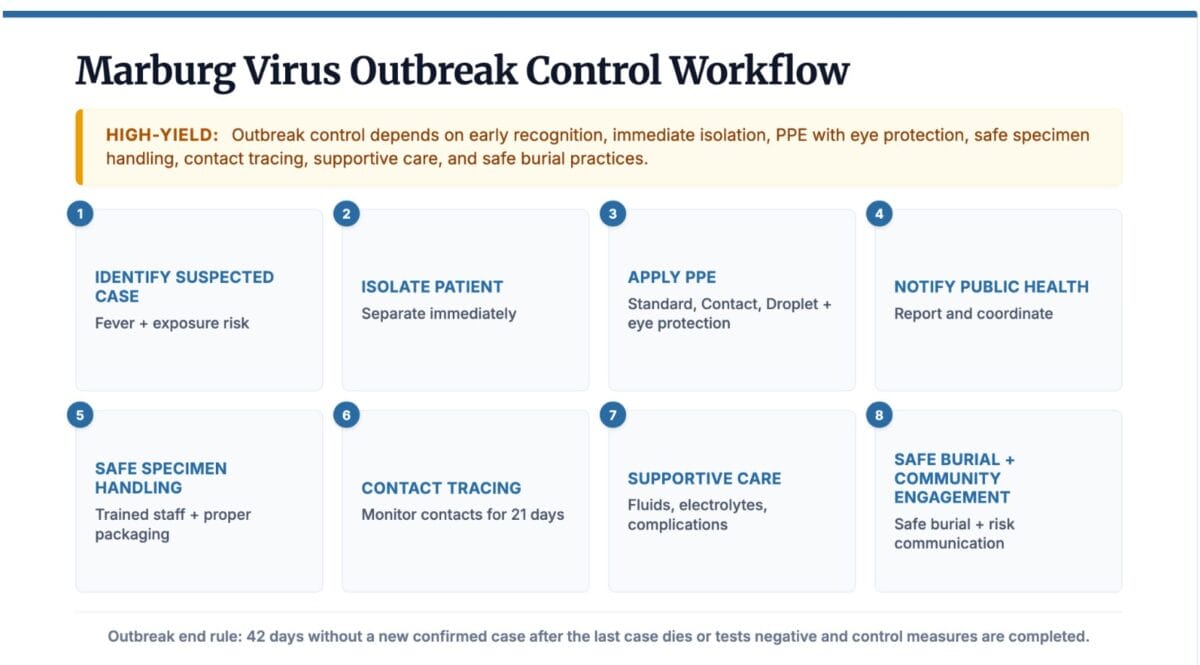
MVD outbreak control depends on early case identification, isolation, PPE, safe specimen handling, contact tracing, safe burial practices, and community engagement.
AI-generated imageThe following table compares and contrasts several viral causes of hemorrhagic fever Fever Fever is defined as a measured body temperature of at least 38°C (100.4°F). Fever is caused by circulating endogenous and/or exogenous pyrogens that increase levels of prostaglandin E2 in the hypothalamus. Fever is commonly associated with chills, rigors, sweating, and flushing of the skin. Fever:
| Organism | Family | Genome Genome The complete genetic complement contained in the DNA of a set of chromosomes in a human. The length of the human genome is about 3 billion base pairs. Basic Terms of Genetics | Transmission | Clinical Presentation | Diagnosis | Management |
|---|---|---|---|---|---|---|
| Ebola viruses Viruses Minute infectious agents whose genomes are composed of DNA or RNA, but not both. They are characterized by a lack of independent metabolism and the inability to replicate outside living host cells. Virology | Filoviridae Filoviridae A family of RNA viruses, of the order mononegavirales, containing filamentous virions. Although they resemble rhabdoviridae in possessing helical nucleocapsids, filoviridae differ in the length and degree of branching in their virions. There are two genera: ebolavirus and marburgvirus. Ebolavirus and Marburgvirus | Enveloped, nonsegmented, negative-sense ssRNA | Direct contact with body fluids, contaminated materials, infected animals Animals Unicellular or multicellular, heterotrophic organisms, that have sensation and the power of voluntary movement. Under the older five kingdom paradigm, animalia was one of the kingdoms. Under the modern three domain model, animalia represents one of the many groups in the domain eukaryota. Cell Types: Eukaryotic versus Prokaryotic, funeral exposure, health care exposure | Fever Fever Fever is defined as a measured body temperature of at least 38°C (100.4°F). Fever is caused by circulating endogenous and/or exogenous pyrogens that increase levels of prostaglandin E2 in the hypothalamus. Fever is commonly associated with chills, rigors, sweating, and flushing of the skin. Fever, fatigue Fatigue The state of weariness following a period of exertion, mental or physical, characterized by a decreased capacity for work and reduced efficiency to respond to stimuli. Fibromyalgia, myalgia Myalgia Painful sensation in the muscles. Ion Channel Myopathy, vomiting Vomiting The forcible expulsion of the contents of the stomach through the mouth. Hypokalemia, diarrhea Diarrhea Diarrhea is defined as ≥ 3 watery or loose stools in a 24-hour period. There are a multitude of etiologies, which can be classified based on the underlying mechanism of disease. The duration of symptoms (acute or chronic) and characteristics of the stools (e.g., watery, bloody, steatorrheic, mucoid) can help guide further diagnostic evaluation. Diarrhea, shock Shock Shock is a life-threatening condition associated with impaired circulation that results in tissue hypoxia. The different types of shock are based on the underlying cause: distributive (↑ cardiac output (CO), ↓ systemic vascular resistance (SVR)), cardiogenic (↓ CO, ↑ SVR), hypovolemic (↓ CO, ↑ SVR), obstructive (↓ CO), and mixed. Types of Shock, multiorgan dysfunction; bleeding may occur but is not required | RT-PCR RT-PCR A variation of the pcr technique in which cDNA is made from RNA via reverse transcription. The resultant cDNA is then amplified using standard pcr protocols. Polymerase Chain Reaction (PCR)/molecular testing, species identification Identification Defense Mechanisms important | Supportive care, Zaire-specific vaccine Vaccine Suspensions of killed or attenuated microorganisms (bacteria, viruses, fungi, protozoa), antigenic proteins, synthetic constructs, or other bio-molecular derivatives, administered for the prevention, amelioration, or treatment of infectious and other diseases. Vaccination, monoclonal antibodies Monoclonal antibodies Antibodies produced by a single clone of cells. Ebolavirus and Marburgvirus |
| Marburg virus Virus Viruses are infectious, obligate intracellular parasites composed of a nucleic acid core surrounded by a protein capsid. Viruses can be either naked (non-enveloped) or enveloped. The classification of viruses is complex and based on many factors, including type and structure of the nucleoid and capsid, the presence of an envelope, the replication cycle, and the host range. Virology | Filoviridae Filoviridae A family of RNA viruses, of the order mononegavirales, containing filamentous virions. Although they resemble rhabdoviridae in possessing helical nucleocapsids, filoviridae differ in the length and degree of branching in their virions. There are two genera: ebolavirus and marburgvirus. Ebolavirus and Marburgvirus | Enveloped, negative-sense ssRNA | Body fluids, contaminated materials, bats/caves/mines, health care exposure | Similar to Ebola disease | RT-PCR RT-PCR A variation of the pcr technique in which cDNA is made from RNA via reverse transcription. The resultant cDNA is then amplified using standard pcr protocols. Polymerase Chain Reaction (PCR), antigen Antigen Substances that are recognized by the immune system and induce an immune reaction. Vaccination/ serology Serology The study of serum, especially of antigen-antibody reactions in vitro. Yellow Fever Virus in some workflows | Supportive care, no approved vaccine Vaccine Suspensions of killed or attenuated microorganisms (bacteria, viruses, fungi, protozoa), antigenic proteins, synthetic constructs, or other bio-molecular derivatives, administered for the prevention, amelioration, or treatment of infectious and other diseases. Vaccination or specific treatment |
| Yellow fever Fever Fever is defined as a measured body temperature of at least 38°C (100.4°F). Fever is caused by circulating endogenous and/or exogenous pyrogens that increase levels of prostaglandin E2 in the hypothalamus. Fever is commonly associated with chills, rigors, sweating, and flushing of the skin. Fever virus Virus Viruses are infectious, obligate intracellular parasites composed of a nucleic acid core surrounded by a protein capsid. Viruses can be either naked (non-enveloped) or enveloped. The classification of viruses is complex and based on many factors, including type and structure of the nucleoid and capsid, the presence of an envelope, the replication cycle, and the host range. Virology | Flaviviridae Flaviviridae A family of RNA viruses, many of which cause disease in humans and domestic animals. There are three genera flavivirus; pestivirus; and hepacivirus, as well as several unassigned species. Hepatitis C Virus | Enveloped, positive-sense ssRNA Positive-sense ssRNA Hepatitis C Virus | Mosquito vector | Fever Fever Fever is defined as a measured body temperature of at least 38°C (100.4°F). Fever is caused by circulating endogenous and/or exogenous pyrogens that increase levels of prostaglandin E2 in the hypothalamus. Fever is commonly associated with chills, rigors, sweating, and flushing of the skin. Fever, jaundice Jaundice Jaundice is the abnormal yellowing of the skin and/or sclera caused by the accumulation of bilirubin. Hyperbilirubinemia is caused by either an increase in bilirubin production or a decrease in the hepatic uptake, conjugation, or excretion of bilirubin. Jaundice, hepatic dysfunction, hemorrhage | Serology Serology The study of serum, especially of antigen-antibody reactions in vitro. Yellow Fever Virus, PCR PCR Polymerase chain reaction (PCR) is a technique that amplifies DNA fragments exponentially for analysis. The process is highly specific, allowing for the targeting of specific genomic sequences, even with minuscule sample amounts. The PCR cycles multiple times through 3 phases: denaturation of the template DNA, annealing of a specific primer to the individual DNA strands, and synthesis/elongation of new DNA molecules. Polymerase Chain Reaction (PCR) | Supportive care, vaccine Vaccine Suspensions of killed or attenuated microorganisms (bacteria, viruses, fungi, protozoa), antigenic proteins, synthetic constructs, or other bio-molecular derivatives, administered for the prevention, amelioration, or treatment of infectious and other diseases. Vaccination prevention |
| Hantaviruses | Hantaviridae | Enveloped, segmented, negative-sense ssRNA | Aerosolized rodent waste | Fever Fever Fever is defined as a measured body temperature of at least 38°C (100.4°F). Fever is caused by circulating endogenous and/or exogenous pyrogens that increase levels of prostaglandin E2 in the hypothalamus. Fever is commonly associated with chills, rigors, sweating, and flushing of the skin. Fever, thrombocytopenia Thrombocytopenia Thrombocytopenia occurs when the platelet count is < 150,000 per microliter. The normal range for platelets is usually 150,000-450,000/µL of whole blood. Thrombocytopenia can be a result of decreased production, increased destruction, or splenic sequestration of platelets. Patients are often asymptomatic until platelet counts are < 50,000/µL. Thrombocytopenia, AKI AKI Acute kidney injury refers to sudden and often reversible loss of renal function, which develops over days or weeks. Azotemia refers to elevated levels of nitrogen-containing substances in the blood that accompany AKI, which include BUN and creatinine. Acute Kidney Injury or pulmonary edema Pulmonary edema Pulmonary edema is a condition caused by excess fluid within the lung parenchyma and alveoli as a consequence of a disease process. Based on etiology, pulmonary edema is classified as cardiogenic or noncardiogenic. Patients may present with progressive dyspnea, orthopnea, cough, or respiratory failure. Pulmonary Edema depending on syndrome | Serology Serology The study of serum, especially of antigen-antibody reactions in vitro. Yellow Fever Virus, PCR PCR Polymerase chain reaction (PCR) is a technique that amplifies DNA fragments exponentially for analysis. The process is highly specific, allowing for the targeting of specific genomic sequences, even with minuscule sample amounts. The PCR cycles multiple times through 3 phases: denaturation of the template DNA, annealing of a specific primer to the individual DNA strands, and synthesis/elongation of new DNA molecules. Polymerase Chain Reaction (PCR) | Supportive care |
| Lassa virus Lassa Virus Lassa virus, part of the Arenaviridae family, is an ssRNA virus that causes Lassa fever, a type of viral hemorrhagic illness. The virus is endemic in parts of West Africa (Sierra Leone, Liberia, Guinea, and Nigeria) and neighboring countries. The reservoir is the multimammate rat (Mastomys natalensis), and transmission is via inhalation or contact with rodent excretions or consumption of rodents. Lassa Virus | Arenaviridae Arenaviridae A family of RNA viruses naturally infecting rodents and consisting of one genus (arenavirus) with two groups: old world arenaviruses and new world arenaviruses. Infection in rodents is persistent and silent. Vertical transmission is through milk-, saliva-, or urine-borne routes. Horizontal transmission to humans, monkeys, and other animals is important. Lassa Virus | Enveloped, segmented, negative-sense ssRNA | Rodent waste, direct contact, body fluids | Fever Fever Fever is defined as a measured body temperature of at least 38°C (100.4°F). Fever is caused by circulating endogenous and/or exogenous pyrogens that increase levels of prostaglandin E2 in the hypothalamus. Fever is commonly associated with chills, rigors, sweating, and flushing of the skin. Fever, pharyngitis Pharyngitis Pharyngitis is an inflammation of the back of the throat (pharynx). Pharyngitis is usually caused by an upper respiratory tract infection, which is viral in most cases. It typically results in a sore throat and fever. Other symptoms may include a runny nose, cough, headache, and hoarseness. Pharyngitis, edema Edema Edema is a condition in which excess serous fluid accumulates in the body cavity or interstitial space of connective tissues. Edema is a symptom observed in several medical conditions. It can be categorized into 2 types, namely, peripheral (in the extremities) and internal (in an organ or body cavity). Edema, hemorrhage, deafness may occur | RT-PCR RT-PCR A variation of the pcr technique in which cDNA is made from RNA via reverse transcription. The resultant cDNA is then amplified using standard pcr protocols. Polymerase Chain Reaction (PCR), serology Serology The study of serum, especially of antigen-antibody reactions in vitro. Yellow Fever Virus | Supportive care, ribavirin Ribavirin A nucleoside antimetabolite antiviral agent that blocks nucleic acid synthesis and is used against both RNA and DNA viruses. Antivirals for Hepatitis C may be used |