The syndrome of inappropriate antidiuretic hormone Antidiuretic hormone Antidiuretic hormones released by the neurohypophysis of all vertebrates (structure varies with species) to regulate water balance and osmolarity. In general, vasopressin is a nonapeptide consisting of a six-amino-acid ring with a cysteine 1 to cysteine 6 disulfide bridge or an octapeptide containing a cystine. All mammals have arginine vasopressin except the pig with a lysine at position 8. Vasopressin, a vasoconstrictor, acts on the kidney collecting ducts to increase water reabsorption, increase blood volume and blood pressure. Hypernatremia secretion Secretion Coagulation Studies (SIADH) is a disorder of impaired water excretion due to the inability to suppress the secretion Secretion Coagulation Studies of antidiuretic hormone Antidiuretic hormone Antidiuretic hormones released by the neurohypophysis of all vertebrates (structure varies with species) to regulate water balance and osmolarity. In general, vasopressin is a nonapeptide consisting of a six-amino-acid ring with a cysteine 1 to cysteine 6 disulfide bridge or an octapeptide containing a cystine. All mammals have arginine vasopressin except the pig with a lysine at position 8. Vasopressin, a vasoconstrictor, acts on the kidney collecting ducts to increase water reabsorption, increase blood volume and blood pressure. Hypernatremia (ADH). There are many causes of SIADH, including increased pituitary Pituitary A small, unpaired gland situated in the sella turcica. It is connected to the hypothalamus by a short stalk which is called the infundibulum. Hormones: Overview and Types production of ADH (related to trauma, disease, or medications), ectopic production of ADH by a tumor Tumor Inflammation, and hereditary disorders. SIADH is characterized by impaired water excretion, leading to dilutional hyponatremia Hyponatremia Hyponatremia is defined as a decreased serum sodium (sNa+) concentration less than 135 mmol/L. Serum sodium is the greatest contributor to plasma osmolality, which is very tightly controlled via antidiuretic hormone (ADH) release from the hypothalamus and by the thirst mechanism. Hyponatremia. This condition is usually asymptomatic but may cause neurologic symptoms. SIADH should be suspected in any patient with hyponatremia Hyponatremia Hyponatremia is defined as a decreased serum sodium (sNa+) concentration less than 135 mmol/L. Serum sodium is the greatest contributor to plasma osmolality, which is very tightly controlled via antidiuretic hormone (ADH) release from the hypothalamus and by the thirst mechanism. Hyponatremia, hypo-osmolality, and high urine osmolality Osmolality Plasma osmolality refers to the combined concentration of all solutes in the blood. Renal Sodium and Water Regulation.
Last updated: Dec 1, 2025

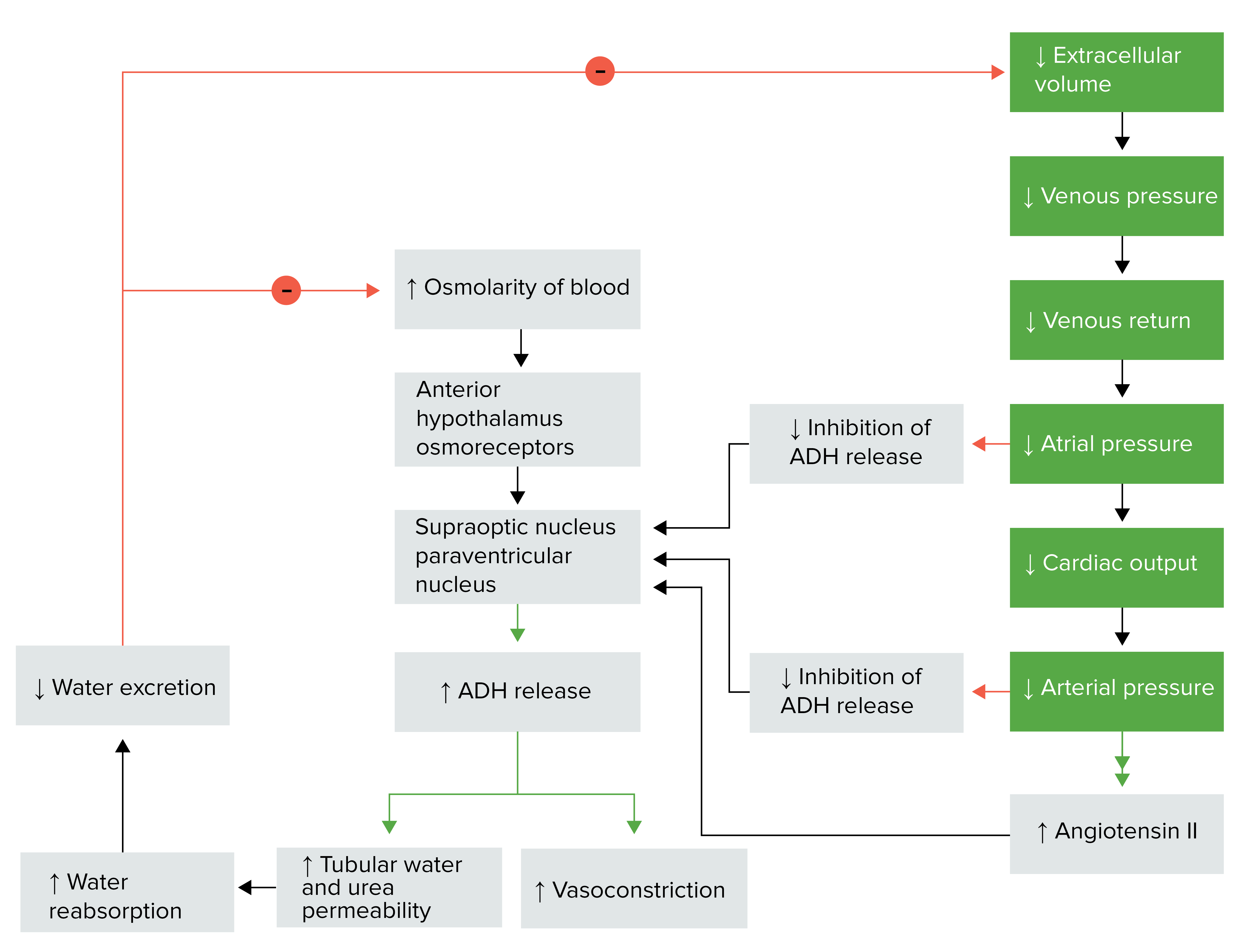
Antidiuretic hormone regulation
Image by Lecturio.
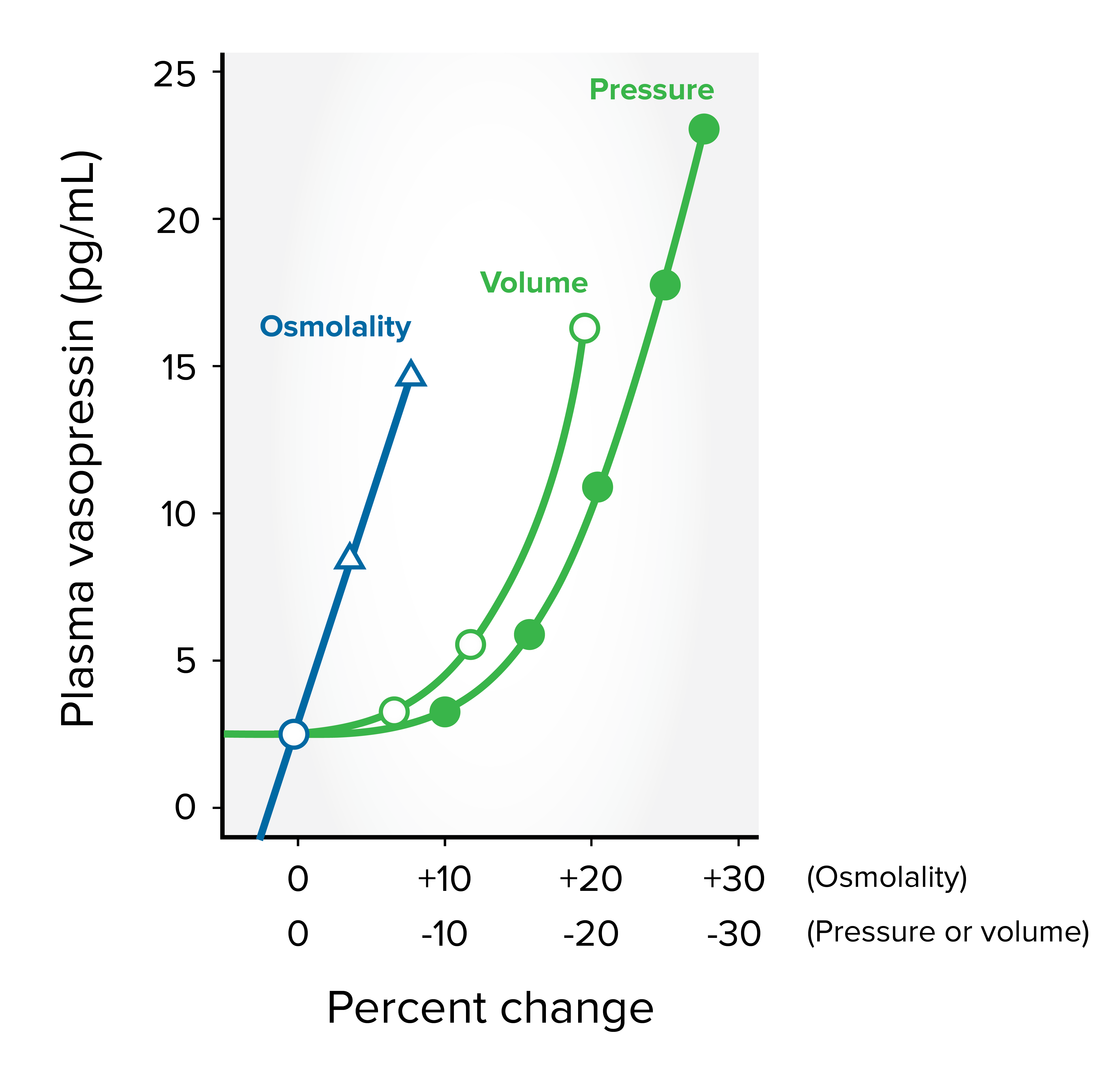
Antidiuretic hormone secretion: directly related to plasma osmolality, blood pressure, and blood volume
Image by Lecturio.
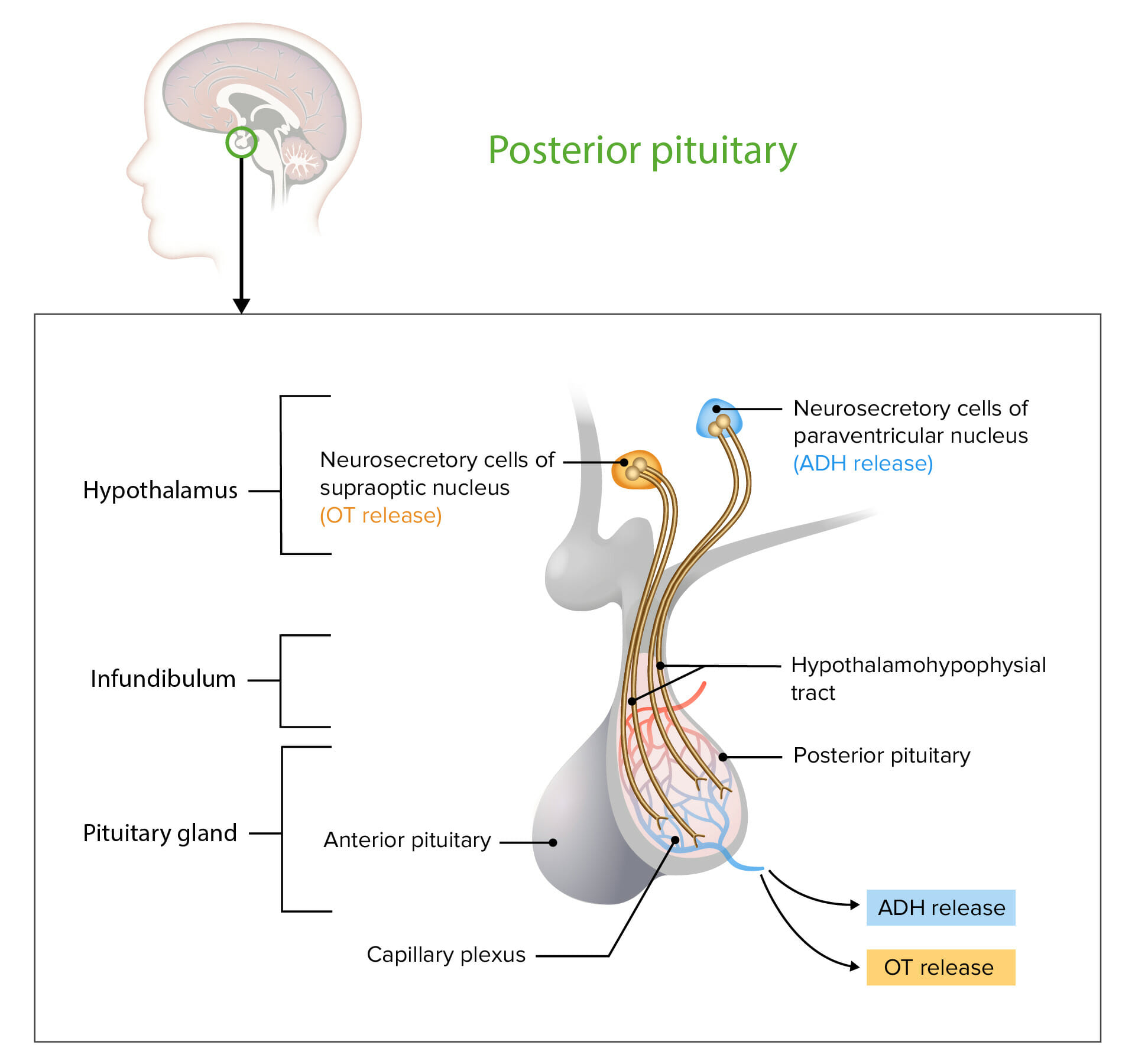
Neurosecretory cells in the hypothalamus release OT or ADH into the posterior lobe of the pituitary gland. The hormones are stored or released into the blood via the capillary plexus.
OT: oxytocin
ADH: antidiuretic hormone
| Major causes | Examples |
|---|---|
| Central nervous system Central nervous system The main information-processing organs of the nervous system, consisting of the brain, spinal cord, and meninges. Nervous System: Anatomy, Structure, and Classification causes |
|
| Neoplasms Neoplasms New abnormal growth of tissue. Malignant neoplasms show a greater degree of anaplasia and have the properties of invasion and metastasis, compared to benign neoplasms. Benign Bone Tumors |
|
| Pulmonary causes |
|
| Medications |
|
| Surgery |
|
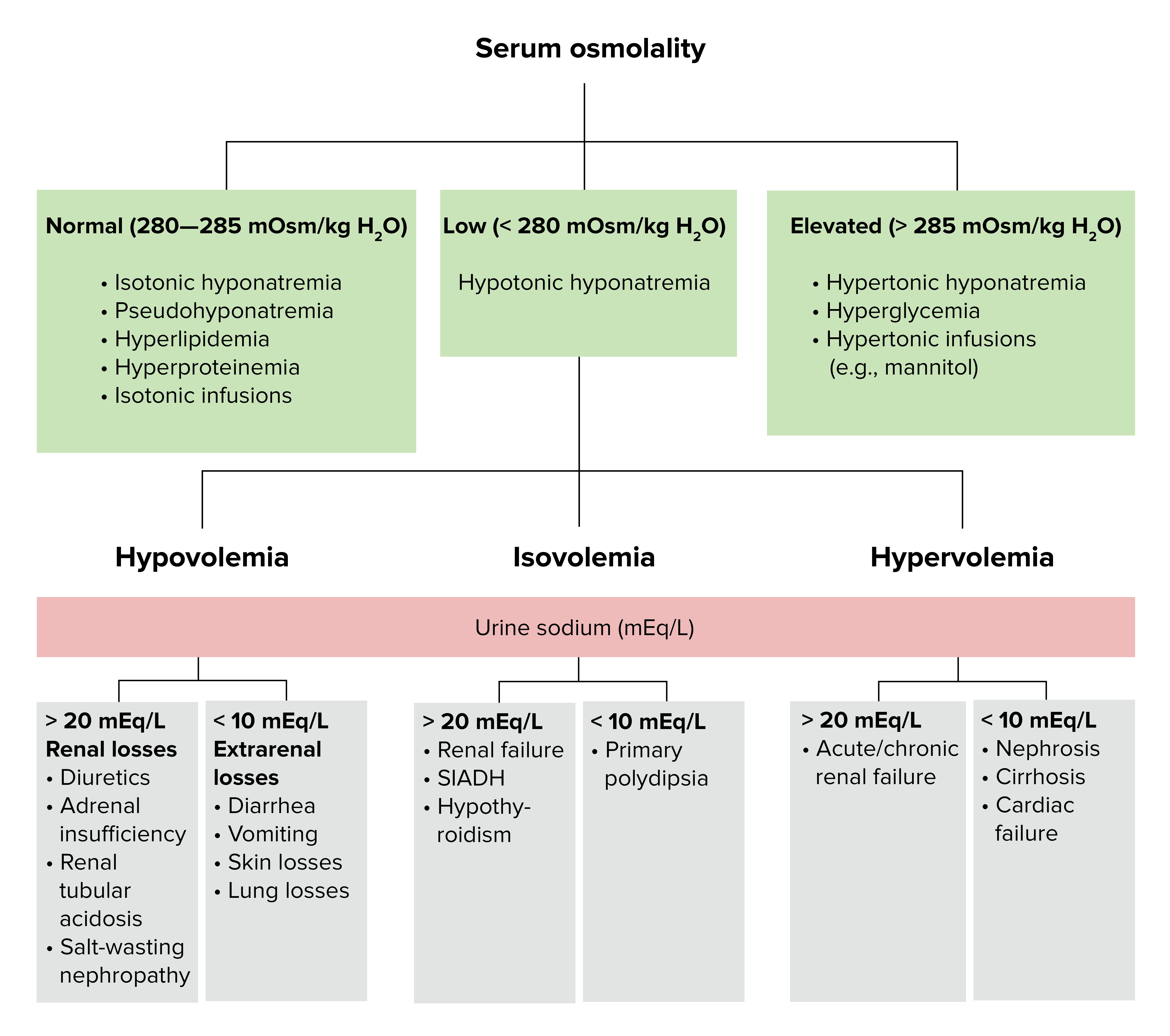
Diagnostic algorithm for volemic and sodium alterations
Image by Lecturio.The differential diagnosis of SIADH includes other hyponatremic conditions: