
Domina Conceptos Médicos

Estudia para la escuela de medicina y tus examenes con Lecturio.

Sepsis en Pediatría

La sepsis Sepsis Systemic inflammatory response syndrome with a proven or suspected infectious etiology. When sepsis is associated with organ dysfunction distant from the site of infection, it is called severe sepsis. When sepsis is accompanied by hypotension despite adequate fluid infusion, it is called septic shock. Sepsis and Septic Shock se define como un síndrome de respuesta sistémica potencialmente mortal causado por virus Virus Viruses are infectious, obligate intracellular parasites composed of a nucleic acid core surrounded by a protein capsid. Viruses can be either naked (non-enveloped) or enveloped. The classification of viruses is complex and based on many factors, including type and structure of the nucleoid and capsid, the presence of an envelope, the replication cycle, and the host range. Virology, bacterias, hongos y parásitos, o toxinas liberadas por estos organismos. Los LOS Neisseria neonatos y los LOS Neisseria niños son especialmente propensos a la sepsis Sepsis Systemic inflammatory response syndrome with a proven or suspected infectious etiology. When sepsis is associated with organ dysfunction distant from the site of infection, it is called severe sepsis. When sepsis is accompanied by hypotension despite adequate fluid infusion, it is called septic shock. Sepsis and Septic Shock debido a su sistema inmunitario inmaduro. Las personas afectadas pueden presentar síntomas localizados específicos de una fuente de infección, pero a menudo pueden quejarse de síntomas sistémicos inespecíficos. El diagnóstico se basa en EN Erythema nodosum is an immune-mediated panniculitis (inflammation of the subcutaneous fat) caused by a type IV (delayed-type) hypersensitivity reaction. It commonly manifests in young women as tender, erythematous nodules on the shins. Erythema Nodosum los LOS Neisseria antecedentes clínicos, el examen, las pruebas de laboratorio y la imagenología. Un alto índice de sospecha, un diagnóstico rápido y una intervención clínica con la terapia adecuada son importantes para lograr resultados favorables.

Last updated: Dec 15, 2025

Editorial responsibility: Stanley Oiseth, Lindsay Jones, Evelin Maza

Descripción General

Definición

  • Síndrome de respuesta inflamatoria sistémica (SIRS, por sus siglas en EN Erythema nodosum is an immune-mediated panniculitis (inflammation of the subcutaneous fat) caused by a type IV (delayed-type) hypersensitivity reaction. It commonly manifests in young women as tender, erythematous nodules on the shins. Erythema Nodosum inglés): una respuesta inflamatoria diseminada que se identifica por una combinación de síntomas (e.g., fiebre, taquicardia, taquipnea) y de laboratorio (e.g., recuento de leucocitos).
  • Sepsis Sepsis Systemic inflammatory response syndrome with a proven or suspected infectious etiology. When sepsis is associated with organ dysfunction distant from the site of infection, it is called severe sepsis. When sepsis is accompanied by hypotension despite adequate fluid infusion, it is called septic shock. Sepsis and Septic Shock: SIRS con la adición de una fuente de infección patógena conocida (e.g., criterios de SIRS y cultivo de orina positivo)

Criterios del síndrome de respuesta inflamatoria sistemática

Sepsis Sepsis Systemic inflammatory response syndrome with a proven or suspected infectious etiology. When sepsis is associated with organ dysfunction distant from the site of infection, it is called severe sepsis. When sepsis is accompanied by hypotension despite adequate fluid infusion, it is called septic shock. Sepsis and Septic Shock:

  • 2 de los LOS Neisseria criterios SIRS (nota: los LOS Neisseria valores de corte dependen de la edad):
    • Taquicardia o bradicardia ( en EN Erythema nodosum is an immune-mediated panniculitis (inflammation of the subcutaneous fat) caused by a type IV (delayed-type) hypersensitivity reaction. It commonly manifests in young women as tender, erythematous nodules on the shins. Erythema Nodosum niños < 1 año de edad)
    • Taquipnea
    • Fiebre o hipotermia: temperatura > 38°C o < 36°C (> 100,4°F o < 95,0°F)
    • Leucocitosis, leucopenia o bandemia ≥ 10%
  • Además, una fuente infecciosa sospechosa o confirmada

Sepsis Sepsis Systemic inflammatory response syndrome with a proven or suspected infectious etiology. When sepsis is associated with organ dysfunction distant from the site of infection, it is called severe sepsis. When sepsis is accompanied by hypotension despite adequate fluid infusion, it is called septic shock. Sepsis and Septic Shock severa:

  • Debe cumplir con los LOS Neisseria criterios de sepsis Sepsis Systemic inflammatory response syndrome with a proven or suspected infectious etiology. When sepsis is associated with organ dysfunction distant from the site of infection, it is called severe sepsis. When sepsis is accompanied by hypotension despite adequate fluid infusion, it is called septic shock. Sepsis and Septic Shock.
  • Además, 1 de los LOS Neisseria siguientes:
    • Hipotensión (presión arterial sistólica < 90 mm MM Multiple myeloma (MM) is a malignant condition of plasma cells (activated B lymphocytes) primarily seen in the elderly. Monoclonal proliferation of plasma cells results in cytokine-driven osteoclastic activity and excessive secretion of IgG antibodies. Multiple Myeloma Hg)
    • Disfunción de órganos:
      • Disfunción cardiovascular
      • Síndrome de distrés respiratorio agudo
      • Insuficiencia renal
      • Alteración del estado mental
    • Ácido láctico > 4 mmol

El shock Shock Shock is a life-threatening condition associated with impaired circulation that results in tissue hypoxia. The different types of shock are based on the underlying cause: distributive (↑ cardiac output (CO), ↓ systemic vascular resistance (SVR)), cardiogenic (↓ CO, ↑ SVR), hypovolemic (↓ CO, ↑ SVR), obstructive (↓ CO), and mixed. Types of Shock séptico es una sepsis Sepsis Systemic inflammatory response syndrome with a proven or suspected infectious etiology. When sepsis is associated with organ dysfunction distant from the site of infection, it is called severe sepsis. When sepsis is accompanied by hypotension despite adequate fluid infusion, it is called septic shock. Sepsis and Septic Shock grave que no responde a la reanimación con líquidos.
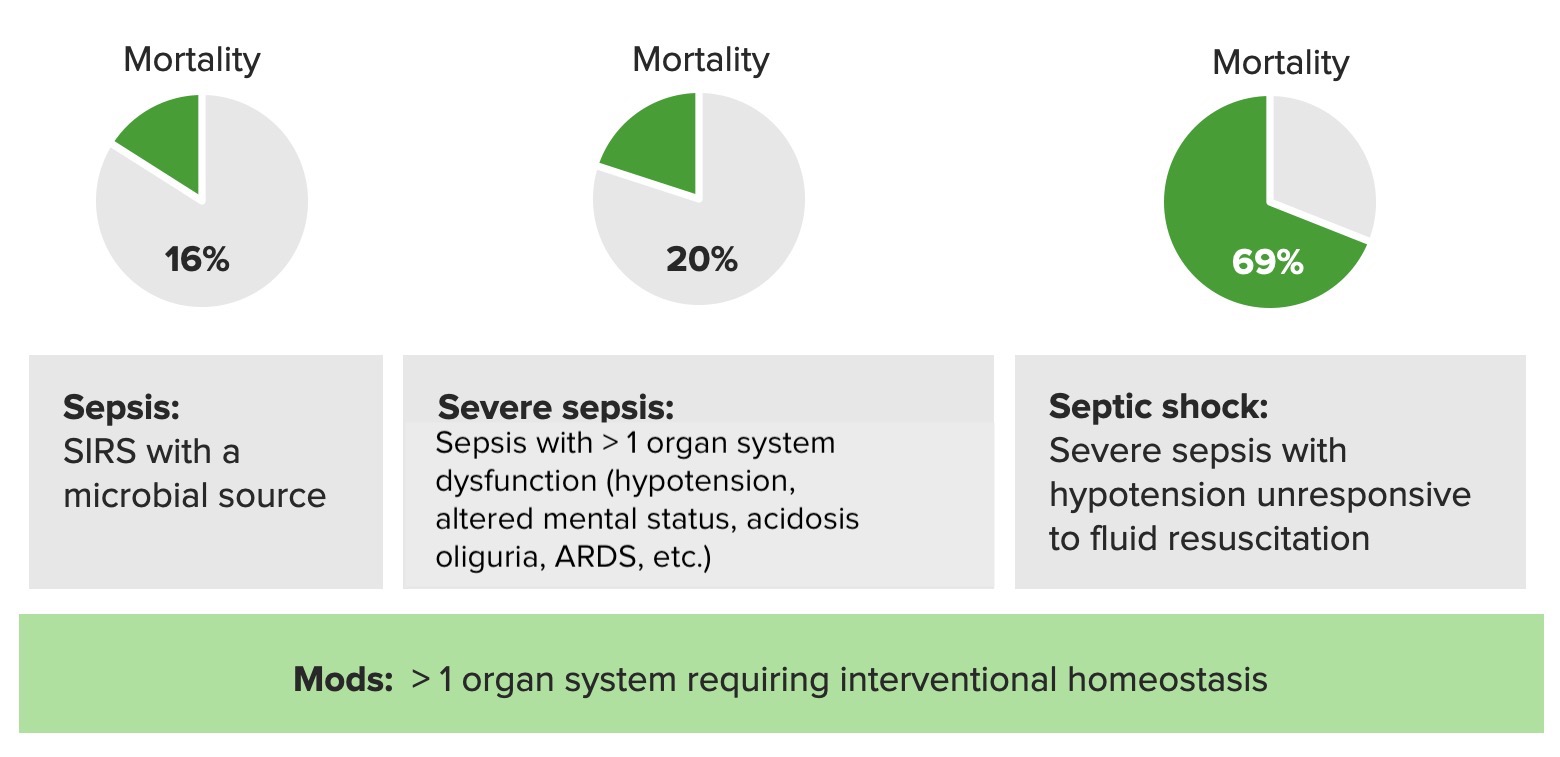
Tasas-de-mortalidad-en-shock

Tasas de mortalidad en sepsis, sepsis grave y shock séptico:
SIRS: síndrome de respuesta inflamatoria sistémica
ARDS: síndrome de distrés respiratorio agudo

Imagen por Lecturio.

Otros criterios de puntuación de sepsis Sepsis Systemic inflammatory response syndrome with a proven or suspected infectious etiology. When sepsis is associated with organ dysfunction distant from the site of infection, it is called severe sepsis. When sepsis is accompanied by hypotension despite adequate fluid infusion, it is called septic shock. Sepsis and Septic Shock

  • La puntuación de evaluación secuencial de insuficiencia orgánica ( SOFA SOFA Sepsis and Septic Shock, por sus siglas en EN Erythema nodosum is an immune-mediated panniculitis (inflammation of the subcutaneous fat) caused by a type IV (delayed-type) hypersensitivity reaction. It commonly manifests in young women as tender, erythematous nodules on the shins. Erythema Nodosum inglés) y la versión abreviada ( qSOFA qSOFA Presence of 2 of the following 3 criteria indicates a worse outcome in a patient suspected of having sepsis and triggers an immediate diagnostic workup and treatment as appropriate. Sbp < 100 mm hg, respiratory rate > 22/min, altered mental status. Types of Shock, por sus siglas en EN Erythema nodosum is an immune-mediated panniculitis (inflammation of the subcutaneous fat) caused by a type IV (delayed-type) hypersensitivity reaction. It commonly manifests in young women as tender, erythematous nodules on the shins. Erythema Nodosum inglés) son un conjunto de criterios más nuevo.
  • SOFA SOFA Sepsis and Septic Shock y qSOFA qSOFA Presence of 2 of the following 3 criteria indicates a worse outcome in a patient suspected of having sepsis and triggers an immediate diagnostic workup and treatment as appropriate. Sbp < 100 mm hg, respiratory rate > 22/min, altered mental status. Types of Shock ayudan a predecir la mortalidad asociada con la sepsis Sepsis Systemic inflammatory response syndrome with a proven or suspected infectious etiology. When sepsis is associated with organ dysfunction distant from the site of infection, it is called severe sepsis. When sepsis is accompanied by hypotension despite adequate fluid infusion, it is called septic shock. Sepsis and Septic Shock.
  • Se puede utilizar como alternativa a SIRS
  • Se sospecha sepsis Sepsis Systemic inflammatory response syndrome with a proven or suspected infectious etiology. When sepsis is associated with organ dysfunction distant from the site of infection, it is called severe sepsis. When sepsis is accompanied by hypotension despite adequate fluid infusion, it is called septic shock. Sepsis and Septic Shock cuando se cumplen 2 de los LOS Neisseria criterios qSOFA qSOFA Presence of 2 of the following 3 criteria indicates a worse outcome in a patient suspected of having sepsis and triggers an immediate diagnostic workup and treatment as appropriate. Sbp < 100 mm hg, respiratory rate > 22/min, altered mental status. Types of Shock.
  • Los LOS Neisseria 3 criterios para la puntuación qSOFA qSOFA Presence of 2 of the following 3 criteria indicates a worse outcome in a patient suspected of having sepsis and triggers an immediate diagnostic workup and treatment as appropriate. Sbp < 100 mm hg, respiratory rate > 22/min, altered mental status. Types of Shock incluyen:
    • Frecuencia respiratoria > 22 respiraciones/min
    • Presión arterial sistólica < 100 mm MM Multiple myeloma (MM) is a malignant condition of plasma cells (activated B lymphocytes) primarily seen in the elderly. Monoclonal proliferation of plasma cells results in cytokine-driven osteoclastic activity and excessive secretion of IgG antibodies. Multiple Myeloma Hg
    • Alteración del estado mental

Epidemiología y Etiología

Epidemiología

  • La incidencia de sepsis Sepsis Systemic inflammatory response syndrome with a proven or suspected infectious etiology. When sepsis is associated with organ dysfunction distant from the site of infection, it is called severe sepsis. When sepsis is accompanied by hypotension despite adequate fluid infusion, it is called septic shock. Sepsis and Septic Shock está inversamente relacionada con la edad en EN Erythema nodosum is an immune-mediated panniculitis (inflammation of the subcutaneous fat) caused by a type IV (delayed-type) hypersensitivity reaction. It commonly manifests in young women as tender, erythematous nodules on the shins. Erythema Nodosum los LOS Neisseria niños.
  • Neonatal:
    • Hasta el 10% de los LOS Neisseria recién nacidos tienen una infección dentro del 1er mes de vida.
    • Más frecuente en EN Erythema nodosum is an immune-mediated panniculitis (inflammation of the subcutaneous fat) caused by a type IV (delayed-type) hypersensitivity reaction. It commonly manifests in young women as tender, erythematous nodules on the shins. Erythema Nodosum niños con peso al AL Amyloidosis nacer < 1 500 gramos
    • El modo más común de transmisión de patógenos es durante el parto o a través de un canal de parto infectado.
    • La transmisión vertical ha HA Hemolytic anemia (HA) is the term given to a large group of anemias that are caused by the premature destruction/hemolysis of circulating red blood cells (RBCs). Hemolysis can occur within (intravascular hemolysis) or outside the blood vessels (extravascular hemolysis). Hemolytic Anemia ↓ debido a la detección temprana y el tratamiento del estreptococo del grupo B durante el embarazo
  • Lactantes y niños:
    • En EN Erythema nodosum is an immune-mediated panniculitis (inflammation of the subcutaneous fat) caused by a type IV (delayed-type) hypersensitivity reaction. It commonly manifests in young women as tender, erythematous nodules on the shins. Erythema Nodosum los LOS Neisseria Estados Unidos, 75 000 niños son hospitalizados anualmente por sepsis Sepsis Systemic inflammatory response syndrome with a proven or suspected infectious etiology. When sepsis is associated with organ dysfunction distant from the site of infection, it is called severe sepsis. When sepsis is accompanied by hypotension despite adequate fluid infusion, it is called septic shock. Sepsis and Septic Shock grave.
    • El 65% de los LOS Neisseria casos están asociados a infecciones respiratorias o del torrente sanguíneo.
    • Las vacunas contra Streptococcus Streptococcus Streptococcus is one of the two medically important genera of gram-positive cocci, the other being Staphylococcus. Streptococci are identified as different species on blood agar on the basis of their hemolytic pattern and sensitivity to optochin and bacitracin. There are many pathogenic species of streptococci, including S. pyogenes, S. agalactiae, S. pneumoniae, and the viridans streptococci. Streptococcus pneumoniae y Haemophilus influenzae Haemophilus Influenzae A species of Haemophilus found on the mucous membranes of humans and a variety of animals. The species is further divided into biotypes I through viii. Haemophilus han ↓ la incidencia

Factores de riesgo

  • Neonatales:
    • Inmadurez inmunológica
    • Exposición a patógenos del tracto genital materno
    • Trauma en EN Erythema nodosum is an immune-mediated panniculitis (inflammation of the subcutaneous fat) caused by a type IV (delayed-type) hypersensitivity reaction. It commonly manifests in young women as tender, erythematous nodules on the shins. Erythema Nodosum el cuero cabelludo durante el parto
    • Procedimientos invasivos (e.g., intubación endotraqueal prolongada, alimentación parenteral)
    • Pobres defensas mecánicas (e.g., piel fácilmente erosionable)
    • Microorganismos resistentes
  • En EN Erythema nodosum is an immune-mediated panniculitis (inflammation of the subcutaneous fat) caused by a type IV (delayed-type) hypersensitivity reaction. It commonly manifests in young women as tender, erythematous nodules on the shins. Erythema Nodosum lactantes y niños:
    • Edad < 1 mes
    • Lesión grave (e.g., traumatismo penetrante)
    • Condiciones crónicas y debilitantes
    • Inmunosupresión (e.g., infección por VIH)
    • Grandes incisiones quirúrgicas
    • Dispositivos permanentes o invasivos (e.g., drenaje pleural)
    • Infecciones frecuentes del tracto urinario

Etiología

  • Neonatos:
    • Bacterias más comunes:
      • Streptococcus Streptococcus Streptococcus is one of the two medically important genera of gram-positive cocci, the other being Staphylococcus. Streptococci are identified as different species on blood agar on the basis of their hemolytic pattern and sensitivity to optochin and bacitracin. There are many pathogenic species of streptococci, including S. pyogenes, S. agalactiae, S. pneumoniae, and the viridans streptococci. Streptococcus del grupo B ( en EN Erythema nodosum is an immune-mediated panniculitis (inflammation of the subcutaneous fat) caused by a type IV (delayed-type) hypersensitivity reaction. It commonly manifests in young women as tender, erythematous nodules on the shins. Erythema Nodosum recién nacidos)
      • S. agalactiae
      • S. aureus S. aureus Potentially pathogenic bacteria found in nasal membranes, skin, hair follicles, and perineum of warm-blooded animals. They may cause a wide range of infections and intoxications. Staphylococcus meticilino-resistente ( MRSA MRSA A strain of Staphylococcus aureus that is non-susceptible to the action of methicillin. The mechanism of resistance usually involves modification of normal or the presence of acquired penicillin binding proteins. Staphylococcus, por sus siglas en EN Erythema nodosum is an immune-mediated panniculitis (inflammation of the subcutaneous fat) caused by a type IV (delayed-type) hypersensitivity reaction. It commonly manifests in young women as tender, erythematous nodules on the shins. Erythema Nodosum inglés)
      • Escherichia coli Escherichia coli The gram-negative bacterium Escherichia coli is a key component of the human gut microbiota. Most strains of E. coli are avirulent, but occasionally they escape the GI tract, infecting the urinary tract and other sites. Less common strains of E. coli are able to cause disease within the GI tract, most commonly presenting as abdominal pain and diarrhea. Escherichia coli
      • Enterococus faecalis
    • Bacterias poco comunes:
      • S. pneumoniae
      • Pseudomonas aeruginosa Pseudomonas aeruginosa A species of gram-negative, aerobic, rod-shaped bacteria commonly isolated from clinical specimens (wound, burn, and urinary tract infections). It is also found widely distributed in soil and water. P. Aeruginosa is a major agent of nosocomial infection. Pseudomonas
      • Listeria Listeria Listeria spp. are motile, flagellated, gram-positive, facultative intracellular bacilli. The major pathogenic species is Listeria monocytogenes. Listeria are part of the normal gastrointestinal flora of domestic mammals and poultry and are transmitted to humans through the ingestion of contaminated food, especially unpasteurized dairy products. Listeria Monocytogenes/Listeriosis monocytogenes
      • Klebsiella Klebsiella Klebsiella are encapsulated gram-negative, lactose-fermenting bacilli. They form pink colonies on MacConkey agar due to lactose fermentation. The main virulence factor is a polysaccharide capsule. Klebsiella pneumoniae is the most important pathogenic species. Klebsiella
      • H. influenza Influenza Influenza viruses are members of the Orthomyxoviridae family and the causative organisms of influenza, a highly contagious febrile respiratory disease. There are 3 primary influenza viruses (A, B, and C) and various subtypes, which are classified based on their virulent surface antigens, hemagglutinin (HA) and neuraminidase (NA). Influenza typically presents with a fever, myalgia, headache, and symptoms of an upper respiratory infection. Influenza Viruses/Influenzae
      • Mycoplasma hominis Mycoplasma hominis A common inhabitant of the vagina and cervix and a potential human pathogen, causing infections of the male and female reproductive tracts. It has also been associated with respiratory disease and pharyngitis. Mycoplasma
    • Virus Virus Viruses are infectious, obligate intracellular parasites composed of a nucleic acid core surrounded by a protein capsid. Viruses can be either naked (non-enveloped) or enveloped. The classification of viruses is complex and based on many factors, including type and structure of the nucleoid and capsid, the presence of an envelope, the replication cycle, and the host range. Virology:
      • Adenovirus Adenovirus Adenovirus (member of the family Adenoviridae) is a nonenveloped, double-stranded DNA virus. Adenovirus is transmitted in a variety of ways, and it can have various presentations based on the site of entry. Presentation can include febrile pharyngitis, conjunctivitis, acute respiratory disease, atypical pneumonia, and gastroenteritis. Adenovirus
      • Citomegalovirus (CMV, por sus siglas en EN Erythema nodosum is an immune-mediated panniculitis (inflammation of the subcutaneous fat) caused by a type IV (delayed-type) hypersensitivity reaction. It commonly manifests in young women as tender, erythematous nodules on the shins. Erythema Nodosum inglés)
      • Enterovirus Enterovirus A genus of the family picornaviridae whose members preferentially inhabit the intestinal tract of a variety of hosts. The genus contains many species. Newly described members of human enteroviruses are assigned continuous numbers with the species designated ‘human enterovirus’. Coxsackievirus
      • Parechovirus
      • Virus Virus Viruses are infectious, obligate intracellular parasites composed of a nucleic acid core surrounded by a protein capsid. Viruses can be either naked (non-enveloped) or enveloped. The classification of viruses is complex and based on many factors, including type and structure of the nucleoid and capsid, the presence of an envelope, the replication cycle, and the host range. Virology de la hepatitis B Hepatitis B Hepatitis B virus (HBV) is a partially double-stranded DNA virus, which belongs to the Orthohepadnavirus genus and the Hepadnaviridae family. Most individuals with acute HBV infection are asymptomatic or have mild, self-limiting symptoms. Chronic infection can be asymptomatic or create hepatic inflammation, leading to liver cirrhosis and hepatocellular carcinoma (HCC). Hepatitis B Virus y C
      • Virus Virus Viruses are infectious, obligate intracellular parasites composed of a nucleic acid core surrounded by a protein capsid. Viruses can be either naked (non-enveloped) or enveloped. The classification of viruses is complex and based on many factors, including type and structure of the nucleoid and capsid, the presence of an envelope, the replication cycle, and the host range. Virology del herpes simple ( HSV HSV Herpes simplex virus (HSV) is a double-stranded DNA virus belonging to the family Herpesviridae. Herpes simplex virus commonly causes recurrent infections involving the skin and mucosal surfaces, including the mouth, lips, eyes, and genitals. Herpes Simplex Virus 1 and 2, por sus siglas en EN Erythema nodosum is an immune-mediated panniculitis (inflammation of the subcutaneous fat) caused by a type IV (delayed-type) hypersensitivity reaction. It commonly manifests in young women as tender, erythematous nodules on the shins. Erythema Nodosum inglés)
      • Virus Virus Viruses are infectious, obligate intracellular parasites composed of a nucleic acid core surrounded by a protein capsid. Viruses can be either naked (non-enveloped) or enveloped. The classification of viruses is complex and based on many factors, including type and structure of the nucleoid and capsid, the presence of an envelope, the replication cycle, and the host range. Virology de la inmunodeficiencia humana (VIH)
      • Parvovirus
      • Virus Virus Viruses are infectious, obligate intracellular parasites composed of a nucleic acid core surrounded by a protein capsid. Viruses can be either naked (non-enveloped) or enveloped. The classification of viruses is complex and based on many factors, including type and structure of the nucleoid and capsid, the presence of an envelope, the replication cycle, and the host range. Virology de la rubéola
      • Virus Virus Viruses are infectious, obligate intracellular parasites composed of a nucleic acid core surrounded by a protein capsid. Viruses can be either naked (non-enveloped) or enveloped. The classification of viruses is complex and based on many factors, including type and structure of the nucleoid and capsid, the presence of an envelope, the replication cycle, and the host range. Virology de la varicela-zoster (VZV, por sus siglas en EN Erythema nodosum is an immune-mediated panniculitis (inflammation of the subcutaneous fat) caused by a type IV (delayed-type) hypersensitivity reaction. It commonly manifests in young women as tender, erythematous nodules on the shins. Erythema Nodosum inglés)
      • Virus Virus Viruses are infectious, obligate intracellular parasites composed of a nucleic acid core surrounded by a protein capsid. Viruses can be either naked (non-enveloped) or enveloped. The classification of viruses is complex and based on many factors, including type and structure of the nucleoid and capsid, the presence of an envelope, the replication cycle, and the host range. Virology de Epstein-Barr ( EBV EBV Epstein-barr virus (EBV) is a linear, double-stranded DNA virus belonging to the herpesviridae family. This highly prevalent virus is mostly transmitted through contact with oropharyngeal secretions from an infected individual. The virus can infect epithelial cells and B lymphocytes, where it can undergo lytic replication or latency. Epstein-Barr Virus, por sus siglas en EN Erythema nodosum is an immune-mediated panniculitis (inflammation of the subcutaneous fat) caused by a type IV (delayed-type) hypersensitivity reaction. It commonly manifests in young women as tender, erythematous nodules on the shins. Erythema Nodosum inglés) ( en EN Erythema nodosum is an immune-mediated panniculitis (inflammation of the subcutaneous fat) caused by a type IV (delayed-type) hypersensitivity reaction. It commonly manifests in young women as tender, erythematous nodules on the shins. Erythema Nodosum individuos inmunocomprometidos)
    • Hongos:
      • Candida Candida Candida is a genus of dimorphic, opportunistic fungi. Candida albicans is part of the normal human flora and is the most common cause of candidiasis. The clinical presentation varies and can include localized mucocutaneous infections (e.g., oropharyngeal, esophageal, intertriginous, and vulvovaginal candidiasis) and invasive disease (e.g., candidemia, intraabdominal abscess, pericarditis, and meningitis). Candida/Candidiasis spp.
      • Malassezia Malassezia Malassezia is a lipophilic yeast commonly found on the skin surfaces of many animals, including humans. In the presence of certain environments or triggers, this fungus can cause pathologic diseases ranging from superficial skin conditions (tinea versicolor and dermatitis) to invasive disease (e.g., Malassezia folliculitis, catheter-associated fungemia, meningitis, and urinary tract infections). Malassezia Fungi spp.
    • Protozoos:
      • Especies de Plasmodium Plasmodium A genus of protozoa that comprise the malaria parasites of mammals. Four species infect humans (although occasional infections with primate malarias may occur). These are plasmodium falciparum; plasmodium malariae; plasmodium ovale, and plasmodium vivax. Species causing infection in vertebrates other than man include: plasmodium berghei; plasmodium chabaudi; p. Vinckei, and plasmodium yoelii in rodents; p. Brasilianum, plasmodium cynomolgi; and plasmodium knowlesi in monkeys; and plasmodium gallinaceum in chickens. Antimalarial Drugs
      • Toxoplasma Toxoplasma Toxoplasmosis is an infectious disease caused by Toxoplasma gondii, an obligate intracellular protozoan parasite. Felines are the definitive host, but transmission to humans can occur through contact with cat feces or the consumption of contaminated foods. The clinical presentation and complications depend on the host’s immune status. Toxoplasma/Toxoplasmosis gondii
      • Trypanosoma cruzi Trypanosoma cruzi Chagas disease is an infection caused by the American trypanosome Trypanosoma cruzi. This parasitic protozoan is transmitted in the feces of reduviid bugs in South and Central America. Acute infection may present with inflammation at the inoculation site (chagoma), fever, and lymphadenopathy. Untreated, chronic infection can progress to severe complications. Trypanosoma cruzi/Chagas disease
  • Lactantes y niños:
    • E. coli
    • S. aureus S. aureus Potentially pathogenic bacteria found in nasal membranes, skin, hair follicles, and perineum of warm-blooded animals. They may cause a wide range of infections and intoxications. Staphylococcus
    • S. pneumoniae
    • H. influenzae H. influenzae A species of Haemophilus found on the mucous membranes of humans and a variety of animals. The species is further divided into biotypes I through VIII. Haemophilus tipo b
    • Neisseria meningitidis Neisseria meningitidis A species of gram-negative, aerobic bacteria. It is a commensal and pathogen only of humans, and can be carried asymptomatically in the nasopharynx. When found in cerebrospinal fluid it is the causative agent of cerebrospinal meningitis. It is also found in venereal discharges and blood. There are at least 13 serogroups based on antigenic differences in the capsular polysaccharides; the ones causing most meningitis infections being a, b, c, y, and w-135. Each serogroup can be further classified by serotype, serosubtype, and immunotype. Neisseria
    • Salmonella Salmonella Salmonellae are gram-negative bacilli of the family Enterobacteriaceae. Salmonellae are flagellated, non-lactose-fermenting, and hydrogen sulfide-producing microbes. Salmonella enterica, the most common disease-causing species in humans, is further classified based on serotype as typhoidal (S. typhi and paratyphi) and nontyphoidal (S. enteritidis and typhimurium). Salmonella spp.
    • Virus Virus Viruses are infectious, obligate intracellular parasites composed of a nucleic acid core surrounded by a protein capsid. Viruses can be either naked (non-enveloped) or enveloped. The classification of viruses is complex and based on many factors, including type and structure of the nucleoid and capsid, the presence of an envelope, the replication cycle, and the host range. Virology

Fisiopatología

La capacidad del huésped para resistir el daño directo del patógeno y la respuesta del sistema inmunológico determina si una infección puede controlarse o si resultará en EN Erythema nodosum is an immune-mediated panniculitis (inflammation of the subcutaneous fat) caused by a type IV (delayed-type) hypersensitivity reaction. It commonly manifests in young women as tender, erythematous nodules on the shins. Erythema Nodosum sepsis Sepsis Systemic inflammatory response syndrome with a proven or suspected infectious etiology. When sepsis is associated with organ dysfunction distant from the site of infection, it is called severe sepsis. When sepsis is accompanied by hypotension despite adequate fluid infusion, it is called septic shock. Sepsis and Septic Shock.

  • Reconocimiento de antígenos → inicia la respuesta inmunitaria innata → secreción de citoquinas → activación del sistema del complemento, factor de activación de plaquetas, ácido araquidónico y vías inflamatorias, y liberación de óxido nítrico (NO, por sus siglas en EN Erythema nodosum is an immune-mediated panniculitis (inflammation of the subcutaneous fat) caused by a type IV (delayed-type) hypersensitivity reaction. It commonly manifests in young women as tender, erythematous nodules on the shins. Erythema Nodosum inglés)
  • Factores de coagulación activados y fibrinolisis → coagulación intravascular diseminada (CIV)
  • Inflamación de todo el sistema → vasodilatación generalizada y mala perfusión de órganos metabolismo anaeróbico → acidosis Acidosis A pathologic condition of acid accumulation or depletion of base in the body. The two main types are respiratory acidosis and metabolic acidosis, due to metabolic acid build up. Respiratory Acidosis láctica
  • ↓ Perfusión → síndrome de disfunción multiorgánica
  • Vasodilatación generalizada → hipovolemia relativa y, eventualmente, shock Shock Shock is a life-threatening condition associated with impaired circulation that results in tissue hypoxia. The different types of shock are based on the underlying cause: distributive (↑ cardiac output (CO), ↓ systemic vascular resistance (SVR)), cardiogenic (↓ CO, ↑ SVR), hypovolemic (↓ CO, ↑ SVR), obstructive (↓ CO), and mixed. Types of Shock distributivo

Presentación Clínica

No específica

  • Pobre ingesta
  • Cambio en EN Erythema nodosum is an immune-mediated panniculitis (inflammation of the subcutaneous fat) caused by a type IV (delayed-type) hypersensitivity reaction. It commonly manifests in young women as tender, erythematous nodules on the shins. Erythema Nodosum el comportamiento
  • Letargo
  • Alteración del estado mental
  • ↑/↓ Frecuencia cardíaca
  • Hipotensión
  • Inestabilidad térmica

Específica del sistema

  • Circulatoria:
    • Mala perfusión:
      • Palidez y cianosis
      • ↑ Relleno capilar
      • Edema Edema Edema is a condition in which excess serous fluid accumulates in the body cavity or interstitial space of connective tissues. Edema is a symptom observed in several medical conditions. It can be categorized into 2 types, namely, peripheral (in the extremities) and internal (in an organ or body cavity). Edema
      • Deshidratación
    • Shock Shock Shock is a life-threatening condition associated with impaired circulation that results in tissue hypoxia. The different types of shock are based on the underlying cause: distributive (↑ cardiac output (CO), ↓ systemic vascular resistance (SVR)), cardiogenic (↓ CO, ↑ SVR), hypovolemic (↓ CO, ↑ SVR), obstructive (↓ CO), and mixed. Types of Shock séptico:
      • Shock Shock Shock is a life-threatening condition associated with impaired circulation that results in tissue hypoxia. The different types of shock are based on the underlying cause: distributive (↑ cardiac output (CO), ↓ systemic vascular resistance (SVR)), cardiogenic (↓ CO, ↑ SVR), hypovolemic (↓ CO, ↑ SVR), obstructive (↓ CO), and mixed. Types of Shock “caliente”:
        • Relleno capilar instantáneo
        • Pulsos saltones (presión de pulso amplia)
        • Extremidades calientes
      • Shock Shock Shock is a life-threatening condition associated with impaired circulation that results in tissue hypoxia. The different types of shock are based on the underlying cause: distributive (↑ cardiac output (CO), ↓ systemic vascular resistance (SVR)), cardiogenic (↓ CO, ↑ SVR), hypovolemic (↓ CO, ↑ SVR), obstructive (↓ CO), and mixed. Types of Shock “frío”:
        • ↓ Llenado capilar (> 2 segundos)
        • ↓ Pulso
        • Extremidades frías
        • Más común en EN Erythema nodosum is an immune-mediated panniculitis (inflammation of the subcutaneous fat) caused by a type IV (delayed-type) hypersensitivity reaction. It commonly manifests in young women as tender, erythematous nodules on the shins. Erythema Nodosum pediatría
  • Digestiva:
    • Vómitos/diarrea
    • Distensión abdominal
    • Hepatomegalia
  • Respiratoria:
    • ↑/↓ Frecuencia respiratoria
    • Retracciones
    • Gruñidos
    • Aleteo nasal
    • Disnea
    • Cianosis
    • Hipoxia (< 90% de saturación)
  • Urológica:
    • Oliguria Oliguria Decreased urine output that is below the normal range. Oliguria can be defined as urine output of less than or equal to 0. 5 or 1 ml/kg/hr depending on the age. Renal Potassium Regulation
    • Anuria Anuria Absence of urine formation. It is usually associated with complete bilateral ureteral (ureter) obstruction, complete lower urinary tract obstruction, or unilateral ureteral obstruction when a solitary kidney is present. Acute Kidney Injury
  • Neurológica:
    • Convulsiones o temblores
    • Apatía
    • Irritabilidad
    • Letargo
    • Hipotonía/hipertonía
    • Hiperreflexia
    • Fontanela abombada
    • Reflejo de Moro anormal
    • Respiración irregular
    • Llanto agudo
  • Hematológica:
    • Ictericia
    • Hepatoesplenomegalia
    • Hemorragia
  • Dermatológica:
    • Moteado
    • Petequias
    • Púrpura

Progresión clínica en EN Erythema nodosum is an immune-mediated panniculitis (inflammation of the subcutaneous fat) caused by a type IV (delayed-type) hypersensitivity reaction. It commonly manifests in young women as tender, erythematous nodules on the shins. Erythema Nodosum la sepsis Sepsis Systemic inflammatory response syndrome with a proven or suspected infectious etiology. When sepsis is associated with organ dysfunction distant from the site of infection, it is called severe sepsis. When sepsis is accompanied by hypotension despite adequate fluid infusion, it is called septic shock. Sepsis and Septic Shock neonatal

Tabla: Progresión clínica en EN Erythema nodosum is an immune-mediated panniculitis (inflammation of the subcutaneous fat) caused by a type IV (delayed-type) hypersensitivity reaction. It commonly manifests in young women as tender, erythematous nodules on the shins. Erythema Nodosum sepsis Sepsis Systemic inflammatory response syndrome with a proven or suspected infectious etiology. When sepsis is associated with organ dysfunction distant from the site of infection, it is called severe sepsis. When sepsis is accompanied by hypotension despite adequate fluid infusion, it is called septic shock. Sepsis and Septic Shock neonatal
Fase inicial Fase séptica Fase tardía
  • El niño parece enfermo.
  • Pobre ingesta
  • Letargo
  • Taquicardia inexplicable
  • Síntomas gastrointestinales
  • Síntomas respiratorios
  • Signos neurológicos
  • Síntomas urológicos
  • Colapso circulatorio
  • Signos hematológicos

Diagnóstico

Análisis de laboratorio

  • Hemograma:
    • ↑/↓ Recuento de leucocitos
    • ↓ Recuento de plaquetas
    • ↑ Blastos
  • Electrolitos:
    • ↓ Na
    • ↓/↑ K
    • ↓ Fósforo
    • ↓ Glucosa por ↑ demanda metabólica y ↓ aporte calórico
    • Creatinina sérica y nitrógeno de urea Urea A compound formed in the liver from ammonia produced by the deamination of amino acids. It is the principal end product of protein catabolism and constitutes about one half of the total urinary solids. Urea Cycle (BUN, por sus siglas en EN Erythema nodosum is an immune-mediated panniculitis (inflammation of the subcutaneous fat) caused by a type IV (delayed-type) hypersensitivity reaction. It commonly manifests in young women as tender, erythematous nodules on the shins. Erythema Nodosum inglés): azotemia Azotemia A biochemical abnormality referring to an elevation of blood urea nitrogen and creatinine. Azotemia can be produced by kidney diseases or other extrarenal disorders. When azotemia becomes associated with a constellation of clinical signs, it is termed uremia. Acute Kidney Injury prerrenal por lesión renal aguda
  • Gases en EN Erythema nodosum is an immune-mediated panniculitis (inflammation of the subcutaneous fat) caused by a type IV (delayed-type) hypersensitivity reaction. It commonly manifests in young women as tender, erythematous nodules on the shins. Erythema Nodosum sangre:
    • Acidosis Acidosis A pathologic condition of acid accumulation or depletion of base in the body. The two main types are respiratory acidosis and metabolic acidosis, due to metabolic acid build up. Respiratory Acidosis metabólica
    • ↑ Ácido láctico: fuerte predictor de mortalidad
    • Hipoxemia
  • Bilirrubina total:
    • ↑ (> 4 mg/dL) alanina aminotransferasa ( ALT ALT An enzyme that catalyzes the conversion of l-alanine and 2-oxoglutarate to pyruvate and l-glutamate. Liver Function Tests)
    • ↑ Las transaminasas pueden indicar disfunción hepática, HSV HSV Herpes simplex virus (HSV) is a double-stranded DNA virus belonging to the family Herpesviridae. Herpes simplex virus commonly causes recurrent infections involving the skin and mucosal surfaces, including the mouth, lips, eyes, and genitals. Herpes Simplex Virus 1 and 2 o infección por enterovirus Enterovirus A genus of the family picornaviridae whose members preferentially inhabit the intestinal tract of a variety of hosts. The genus contains many species. Newly described members of human enteroviruses are assigned continuous numbers with the species designated ‘human enterovirus’. Coxsackievirus
  • Hemocultivos x 2 para identificar el agente causal
  • Tiempo de protrombina (TP), tiempo parcial de tromboplastina (TPT) e índice internacional normalizado (INR, por sus siglas en EN Erythema nodosum is an immune-mediated panniculitis (inflammation of the subcutaneous fat) caused by a type IV (delayed-type) hypersensitivity reaction. It commonly manifests in young women as tender, erythematous nodules on the shins. Erythema Nodosum inglés) debido a un trastorno de la coagulación
  • ↓ Fibrinógeno
  • ↑ Dímero D: CIV
  • Análisis de orina y cultivo

Imagenología diagnostica

  • Radiografía de tórax: si se sospecha neumonía o sobrecarga de líquidos
  • Ultrasonido o TC del abdomen: +/- si la etiología no es evidente
  • TC de cabeza: justificado en EN Erythema nodosum is an immune-mediated panniculitis (inflammation of the subcutaneous fat) caused by a type IV (delayed-type) hypersensitivity reaction. It commonly manifests in young women as tender, erythematous nodules on the shins. Erythema Nodosum individuos con coagulopatía y estado mental alterado

Tratamiento y Prevención

Tratamiento

  • Comienza con la estabilización del individuo afectado
  • Terapia dirigida a objetivos:
    • Acceso intravenoso en EN Erythema nodosum is an immune-mediated panniculitis (inflammation of the subcutaneous fat) caused by a type IV (delayed-type) hypersensitivity reaction. It commonly manifests in young women as tender, erythematous nodules on the shins. Erythema Nodosum 5 minutos
    • Reanimación con líquidos en EN Erythema nodosum is an immune-mediated panniculitis (inflammation of the subcutaneous fat) caused by a type IV (delayed-type) hypersensitivity reaction. It commonly manifests in young women as tender, erythematous nodules on the shins. Erythema Nodosum 30 minutos
    • Tratamiento antibiótico de amplio espectro en EN Erythema nodosum is an immune-mediated panniculitis (inflammation of the subcutaneous fat) caused by a type IV (delayed-type) hypersensitivity reaction. It commonly manifests in young women as tender, erythematous nodules on the shins. Erythema Nodosum 60 minutos
    • Infusión inotrópica dentro de los LOS Neisseria 60 minutos ( en EN Erythema nodosum is an immune-mediated panniculitis (inflammation of the subcutaneous fat) caused by a type IV (delayed-type) hypersensitivity reaction. It commonly manifests in young women as tender, erythematous nodules on the shins. Erythema Nodosum shock Shock Shock is a life-threatening condition associated with impaired circulation that results in tissue hypoxia. The different types of shock are based on the underlying cause: distributive (↑ cardiac output (CO), ↓ systemic vascular resistance (SVR)), cardiogenic (↓ CO, ↑ SVR), hypovolemic (↓ CO, ↑ SVR), obstructive (↓ CO), and mixed. Types of Shock refractario a líquidos)
    • Reevaluación periódica de:
      • Pulsos centrales y periféricos
      • Perfusión cutánea (relleno capilar y temperatura cutánea)
      • Estado de fluidos
      • Producción de orina (> 1 ml/kg/hora)
      • Presión sanguínea sistólica
      • Estado mental
      • Niveles de lactato sérico
      • Saturación de oxígeno venoso central
  • Objetivos de la reanimación:
    • Presión arterial media > 65 mmHg
    • Producción de orina > 0,5 ml/kg/hora
    • Presión venosa central 8–10 mmHg
    • Saturación de oxígeno venoso central > 70% o saturación de oxígeno venoso central > 65%
  • Terapias:
    • Soluciones isotónicas intravenosas: bolo inicial de 20 cc/kg para niños mayores sin patología cardíaca o renal
    • Vasopresores (e.g., norepinefrina, epinefrina)
    • Terapia inotrópica (e.g., epinefrina, dopamina)
    • Cálculo de la velocidad de perfusión: dosis/volumen de dilución/peso del niño/tiempo de perfusión

Terapia con antibióticos

  • Lo ideal es empezar cuanto antes.
    • Dentro de la 1ra hora de presentación (hora dorada)
    • Después de obtener muestras de cultivo
  • Antibióticos empíricos de amplia difusión al AL Amyloidosis 1er momento; luego, modifique según cultivos y antibiogramas
  • Factores a considerar:
    • Edad
    • Antecedentes
    • Comorbilidades
    • Situación clínica
    • Tipo de infección
    • Resultados de la tinción de Gram
  • Opciones de terapia con antibióticos:
    • < 28 semanas: ampicilina (50 mg/kg) o vancomicina (15 mg/kg) + cefotaxima (100 mg/kg) + gentamicina (2,5 mg/kg) y aciclovir (20 mg/kg) si se sospecha de HSV HSV Herpes simplex virus (HSV) is a double-stranded DNA virus belonging to the family Herpesviridae. Herpes simplex virus commonly causes recurrent infections involving the skin and mucosal surfaces, including the mouth, lips, eyes, and genitals. Herpes Simplex Virus 1 and 2
    • > 28 semanas:
      • Vancomicina (15 mg/kg) + ceftriaxona (75 mg/kg) o cefotaxima (100 mg/kg)
      • En EN Erythema nodosum is an immune-mediated panniculitis (inflammation of the subcutaneous fat) caused by a type IV (delayed-type) hypersensitivity reaction. It commonly manifests in young women as tender, erythematous nodules on the shins. Erythema Nodosum inmunosupresión: vancomicina (15 mg/kg) + cefepima (75 mg/kg) o meropenem Meropenem A thienamycin derivative antibacterial agent that is more stable to renal dehydropeptidase I than imipenem, but does not need to be given with an enzyme inhibitor such as cilastatin. It is used in the treatment of bacterial infections, including infections in immunocompromised patients. Carbapenems and Aztreonam (20 mg/kg)
    • En EN Erythema nodosum is an immune-mediated panniculitis (inflammation of the subcutaneous fat) caused by a type IV (delayed-type) hypersensitivity reaction. It commonly manifests in young women as tender, erythematous nodules on the shins. Erythema Nodosum niños que no pueden recibir penicilina: vancomicina (15 mg/kg) + meropenem Meropenem A thienamycin derivative antibacterial agent that is more stable to renal dehydropeptidase I than imipenem, but does not need to be given with an enzyme inhibitor such as cilastatin. It is used in the treatment of bacterial infections, including infections in immunocompromised patients. Carbapenems and Aztreonam (20 mg/kg) o aztreonam Aztreonam The carbapenems and aztreonam are both members of the bactericidal beta-lactam family of antibiotics (similar to penicillins). They work by preventing bacteria from producing their cell wall, ultimately leading to bacterial cell death. Carbapenems and Aztreonam (90–120 mg/kg/día) + clindamicina (40 mg/kg)
    • En EN Erythema nodosum is an immune-mediated panniculitis (inflammation of the subcutaneous fat) caused by a type IV (delayed-type) hypersensitivity reaction. It commonly manifests in young women as tender, erythematous nodules on the shins. Erythema Nodosum niños con infecciones fúngicas: anfotericina B + caspofungina

Prevención

  • Siga el calendario de vacunación para prevenir infecciones.
  • Limite el uso de catéteres permanentes.
  • Tamizaje de patógenos potenciales durante el embarazo y tratamiento antes del nacimiento.
  • Hisopado rectovaginal para colonización por Streptococcus Streptococcus Streptococcus is one of the two medically important genera of gram-positive cocci, the other being Staphylococcus. Streptococci are identified as different species on blood agar on the basis of their hemolytic pattern and sensitivity to optochin and bacitracin. There are many pathogenic species of streptococci, including S. pyogenes, S. agalactiae, S. pneumoniae, and the viridans streptococci. Streptococcus del grupo B a las 35–37 semanas de gestación, análisis de suero para:
    • VIH
    • Sífilis
    • Antígeno de superficie del virus Virus Viruses are infectious, obligate intracellular parasites composed of a nucleic acid core surrounded by a protein capsid. Viruses can be either naked (non-enveloped) or enveloped. The classification of viruses is complex and based on many factors, including type and structure of the nucleoid and capsid, the presence of an envelope, the replication cycle, and the host range. Virology de la hepatitis B Hepatitis B Hepatitis B virus (HBV) is a partially double-stranded DNA virus, which belongs to the Orthohepadnavirus genus and the Hepadnaviridae family. Most individuals with acute HBV infection are asymptomatic or have mild, self-limiting symptoms. Chronic infection can be asymptomatic or create hepatic inflammation, leading to liver cirrhosis and hepatocellular carcinoma (HCC). Hepatitis B Virus
    • C. trachomatis
    • N. gonorrhea Gonorrhea Gonorrhea is a sexually transmitted infection (STI) caused by the gram-negative bacteria Neisseria gonorrhoeae (N. gonorrhoeae). Gonorrhea may be asymptomatic but commonly manifests as cervicitis or urethritis with less common presentations such as proctitis, conjunctivitis, or pharyngitis. Gonorrhea
    • En EN Erythema nodosum is an immune-mediated panniculitis (inflammation of the subcutaneous fat) caused by a type IV (delayed-type) hypersensitivity reaction. It commonly manifests in young women as tender, erythematous nodules on the shins. Erythema Nodosum mujeres de alto riesgo, anticuerpos contra hepatitis C Hepatitis C Hepatitis C is an infection of the liver caused by the hepatitis C virus (HCV). The infection can be transmitted through infectious blood or body fluids and may be transmitted during childbirth or through IV drug use or sexual intercourse. Hepatitis C virus can cause both acute and chronic hepatitis, ranging from a mild to a serious, lifelong illness including liver cirrhosis and hepatocellular carcinoma (HCC). Hepatitis C Virus

Related videos

Diagnóstico Diferencial

  • Meningitis Meningitis Meningitis is inflammation of the meninges, the protective membranes of the brain, and spinal cord. The causes of meningitis are varied, with the most common being bacterial or viral infection. The classic presentation of meningitis is a triad of fever, altered mental status, and nuchal rigidity. Meningitis pediátrica: inflamación de las meninges Meninges The brain and the spinal cord are enveloped by 3 overlapping layers of connective tissue called the meninges. The layers are, from the most external layer to the most internal layer, the dura mater, arachnoid mater, and pia mater. Between these layers are 3 potential spaces called the epidural, subdural, and subarachnoid spaces. Meninges: Anatomy, que puede poner en EN Erythema nodosum is an immune-mediated panniculitis (inflammation of the subcutaneous fat) caused by a type IV (delayed-type) hypersensitivity reaction. It commonly manifests in young women as tender, erythematous nodules on the shins. Erythema Nodosum peligro la vida. Múltiples microorganismos son responsables de la meningitis Meningitis Meningitis is inflammation of the meninges, the protective membranes of the brain, and spinal cord. The causes of meningitis are varied, with the most common being bacterial or viral infection. The classic presentation of meningitis is a triad of fever, altered mental status, and nuchal rigidity. Meningitis. Los LOS Neisseria síntomas varían según la edad y van desde fontanelas abultadas en EN Erythema nodosum is an immune-mediated panniculitis (inflammation of the subcutaneous fat) caused by a type IV (delayed-type) hypersensitivity reaction. It commonly manifests in young women as tender, erythematous nodules on the shins. Erythema Nodosum neonatos hasta rigidez de nuca en EN Erythema nodosum is an immune-mediated panniculitis (inflammation of the subcutaneous fat) caused by a type IV (delayed-type) hypersensitivity reaction. It commonly manifests in young women as tender, erythematous nodules on the shins. Erythema Nodosum niños mayores. También pueden presentarse fiebre, cefalea, letargo y vómitos. Una punción lumbar se utiliza para el diagnóstico. El tratamiento incluye antibióticos.
  • Insuficiencia suprarrenal pediátrica: caracterizada como primaria (que afecta a la glándula suprarrenal) y central (disfunción hipotálamo-pituitaria), y puede ser congénita o adquirida. Los LOS Neisseria individuos afectados presentan hipovolemia, hipoglucemia, hiponatremia e hiperpotasemia. Las pruebas de laboratorio se utilizan para confirmar el diagnóstico. El tratamiento se basa en EN Erythema nodosum is an immune-mediated panniculitis (inflammation of the subcutaneous fat) caused by a type IV (delayed-type) hypersensitivity reaction. It commonly manifests in young women as tender, erythematous nodules on the shins. Erythema Nodosum la utilización de solución salina y dextrosa para regular Regular Insulin los LOS Neisseria electrolitos.
  • Enterocolitis Enterocolitis Inflammation of the mucosa of both the small intestine and the large intestine. Etiology includes ischemia, infections, allergic, and immune responses. Yersinia spp./Yersiniosis necrosante: una enfermedad gastrointestinal caracterizada por la necrosis Necrosis The death of cells in an organ or tissue due to disease, injury or failure of the blood supply. Ischemic Cell Damage de una parte del intestino. Común en EN Erythema nodosum is an immune-mediated panniculitis (inflammation of the subcutaneous fat) caused by a type IV (delayed-type) hypersensitivity reaction. It commonly manifests in young women as tender, erythematous nodules on the shins. Erythema Nodosum neonatos prematuros y neonatos con alguna enfermedad predisponente. Se presenta como mala alimentación, distensión abdominal y signos de sepsis Sepsis Systemic inflammatory response syndrome with a proven or suspected infectious etiology. When sepsis is associated with organ dysfunction distant from the site of infection, it is called severe sepsis. When sepsis is accompanied by hypotension despite adequate fluid infusion, it is called septic shock. Sepsis and Septic Shock. La enterocolitis Enterocolitis Inflammation of the mucosa of both the small intestine and the large intestine. Etiology includes ischemia, infections, allergic, and immune responses. Yersinia spp./Yersiniosis necrosante se diagnostica mediante radiografía abdominal. El diagnóstico temprano y los LOS Neisseria antibióticos pueden mejorar los LOS Neisseria resultados. Puede ser necesaria una intervención quirúrgica.
  • Choque cardiogénico: una condición que ocurre cuando hay un colapso circulatorio secundario a una lesión cardíaca. Los LOS Neisseria individuos afectados presentan taquicardia, hepatomegalia, galope cardíaco, soplos, arcadas precordiales y distensión venosa yugular. Las pruebas de laboratorio ayudan en EN Erythema nodosum is an immune-mediated panniculitis (inflammation of the subcutaneous fat) caused by a type IV (delayed-type) hypersensitivity reaction. It commonly manifests in young women as tender, erythematous nodules on the shins. Erythema Nodosum el diagnóstico. La radiografía de tórax y la monitorización del gasto cardíaco son útiles. El tratamiento implica el mantenimiento de las vías respiratorias, la oxigenación, la ventilación y la circulación.
  • Pericarditis Pericarditis Pericarditis is an inflammation of the pericardium, often with fluid accumulation. It can be caused by infection (often viral), myocardial infarction, drugs, malignancies, metabolic disorders, autoimmune disorders, or trauma. Acute, subacute, and chronic forms exist. Pericarditis infecciosa pediátrica: una infección del pericardio por bacterias, virus Virus Viruses are infectious, obligate intracellular parasites composed of a nucleic acid core surrounded by a protein capsid. Viruses can be either naked (non-enveloped) or enveloped. The classification of viruses is complex and based on many factors, including type and structure of the nucleoid and capsid, the presence of an envelope, the replication cycle, and the host range. Virology u hongos. Los LOS Neisseria individuos afectados presentan fiebre y dolor Dolor Inflammation torácico que empeoran con la presión palmar sobre el esternón y pueden tener síndrome prodrómico. La pericarditis Pericarditis Pericarditis is an inflammation of the pericardium, often with fluid accumulation. It can be caused by infection (often viral), myocardial infarction, drugs, malignancies, metabolic disorders, autoimmune disorders, or trauma. Acute, subacute, and chronic forms exist. Pericarditis infecciosa pediátrica puede causar derrame pericárdico o taponamiento cardíaco y muerte. Las pruebas de laboratorio y la imagenología cardíaca ayudan en EN Erythema nodosum is an immune-mediated panniculitis (inflammation of the subcutaneous fat) caused by a type IV (delayed-type) hypersensitivity reaction. It commonly manifests in young women as tender, erythematous nodules on the shins. Erythema Nodosum el diagnóstico. El tratamiento implica el control del dolor Dolor Inflammation y la terapia con antibióticos o pericardiocentesis Pericardiocentesis Puncture and aspiration of fluid from the pericardium. Cardiac Surgery.
  • Acidosis Acidosis A pathologic condition of acid accumulation or depletion of base in the body. The two main types are respiratory acidosis and metabolic acidosis, due to metabolic acid build up. Respiratory Acidosis metabólica pediátrica: un trastorno ácido-base que resulta de concentraciones séricas bajas de bicarbonato (HCO3) o altas de iones de hidrógeno. Varias etiologías que incluyen hipovolemia, ingestión tóxica, errores congénitos del metabolismo, insuficiencia cardíaca, cetoacidosis diabética, insuficiencia renal crónica y sepsis Sepsis Systemic inflammatory response syndrome with a proven or suspected infectious etiology. When sepsis is associated with organ dysfunction distant from the site of infection, it is called severe sepsis. When sepsis is accompanied by hypotension despite adequate fluid infusion, it is called septic shock. Sepsis and Septic Shock dan como resultado acidosis Acidosis A pathologic condition of acid accumulation or depletion of base in the body. The two main types are respiratory acidosis and metabolic acidosis, due to metabolic acid build up. Respiratory Acidosis metabólica. Identificar y tratar la etiología subyacente es importante en EN Erythema nodosum is an immune-mediated panniculitis (inflammation of the subcutaneous fat) caused by a type IV (delayed-type) hypersensitivity reaction. It commonly manifests in young women as tender, erythematous nodules on the shins. Erythema Nodosum el tratamiento.

Referencias

  1. Butt, W. (2001). Septic shock. Pediatric Clinics of North America, 48(3), 601.
  2. Haslam, D.B. (2020). Epidemiology of infections. In R.M. Kliegman MD, J.W. St Geme MD, N.J. Blum MD, Shah, Samir S., MD, MSCE, Tasker, Robert C., MBBS, MD, Wilson, Karen M., MD, MPH (Eds.), Nelson Textbook of Pediatrics (pp. 99–1005.e1)
  3. Mathias, B., Mira, J.C., Larson, S.D. (2016). Pediatric sepsis. Current Opinion in Pediatrics, 28(3), 380–387.
  4. Pasman, E.A. (2021). Shock in Pediatrics Treatment & Management: Approach Considerations, Initial Resuscitation, Glucose and Calcium Stabilization. Medscape. Retrieved August 8, 2021, from https://emedicine.medscape.com/article/1833578-treatment
  5. Rhodes, A., Evans, L.E., Alhazzani, W., Levy, M.M., Antonelli, M., Ferrer, R., Dellinger, R.P. (2017). Surviving sepsis campaign: international guidelines for the management of sepsis and septic shock. Intensive Care Medicine, 43(3), 304–377.
  6. Santhanam, S. (2021). Pediatric Sepsis: Practice Essentials, Background, Pathophysiology. Medscape. Retrieved August 8, 2021, from https://emedicine.medscape.com/article/972559-overview
  7. Sarmin, M., Afroze, F., Sharifuzzaman, Alam, T., Shaly, N.J., Ahmed, T., Chisti, M.J. (2019). Predictor of death in diarrheal children under 5 years of age having severe sepsis in an urban critical care ward in Bangladesh. Global Pediatric Health, 6, 2333794X19862716.
  8. Mathias, B., Mira, J.C., Larson, S.D. (2016). Pediatric sepsis. Current Opinion in Pediatrics, 28(3), 380–387.
  9. Wood, B.P. (2020). Necrotizing Enterocolitis Imaging: Practice Essentials, Radiography, Ultrasonography. Medscape. Retrieved August 8, 2021, from https://emedicine.medscape.com/article/411616-overview

¡Crea tu cuenta gratis o inicia una sesión para seguir leyendo!

Regístrate ahora y obtén acceso gratuito a Lecturio con páginas de concepto, videos médicos y cuestionarios para tu educación médica.

User Reviews

Que tengas una sesión de estudio alegre y navideña 🎁 Ahorra 50% en todos los planes >>

Details