Domina Conceptos Médicos

Estudia para la escuela de medicina y tus examenes con Lecturio.

Organismos Multidrogorresistentes e Infecciones Nosocomiales

Los organismos multirresistentes y las infecciones nosocomiales son un problema sanitario mundial y una causa importante de morbilidad y mortalidad. Los organismos multirresistentes son microorganismos, principalmente bacterias, que son resistentes/no susceptibles a ≥1 agente en ≥3 categorías de clase antimicrobiana. Se incluyen en este grupo el Staphylococcus aureus resistente a la meticilina, los enterococos resistentes a la vancomicina, las bacterias Gram negativas productoras de betalactamasas de espectro extendido (BLEE, por sus siglas en inglés), las Pseudomonas aeruginosa difíciles de tratar/resistentes y las Enterobacterias resistentes a los carbapenémicos (e.g. Escherichia coli, Salmonella y Klebsiella). Dado que la terapia antibiótica para los organismos multidrogorresistentes es limitada, se recomiendan medidas preventivas como la administración de antibióticos y el control de la infección. Las infecciones nosocomiales, también denominadas infecciones "asociadas a la atención en salud" o "adquiridas en el hospital", son infecciones transmitidas en EN Erythema nodosum is an immune-mediated panniculitis (inflammation of the subcutaneous fat) caused by a type IV (delayed-type) hypersensitivity reaction. It commonly manifests in young women as tender, erythematous nodules on the shins. Erythema Nodosum un hospital o centro sanitario y que no existían en EN Erythema nodosum is an immune-mediated panniculitis (inflammation of the subcutaneous fat) caused by a type IV (delayed-type) hypersensitivity reaction. It commonly manifests in young women as tender, erythematous nodules on the shins. Erythema Nodosum el momento del ingreso. Entre ellas se encuentran las infecciones relacionadas con catéteres intravasculares, las infecciones del tracto urinario asociadas a catéteres, la neumonía adquirida en EN Erythema nodosum is an immune-mediated panniculitis (inflammation of the subcutaneous fat) caused by a type IV (delayed-type) hypersensitivity reaction. It commonly manifests in young women as tender, erythematous nodules on the shins. Erythema Nodosum el hospital, la neumonía asociada a la ventilación, las infecciones por Clostridioides difficile y las infecciones del sitio quirúrgico. Los LOS Neisseria factores de riesgo para desarrollar estas infecciones son la hospitalización, la residencia en EN Erythema nodosum is an immune-mediated panniculitis (inflammation of the subcutaneous fat) caused by a type IV (delayed-type) hypersensitivity reaction. It commonly manifests in young women as tender, erythematous nodules on the shins. Erythema Nodosum un centro sanitario de larga duración, el uso frecuente de antibióticos y las comorbilidades subyacentes.

Last updated: Jul 17, 2023

Editorial responsibility: Stanley Oiseth, Lindsay Jones, Evelin Maza

Descripción General

Organismos multirresistentes

  • Se considera que hay multidrogorresistencia cuando un aislado es resistente al AL Amyloidosis menos a un medicamento de tres o más clases de medicamentos.
  • Organismos:
    • Enterococos resistentes a la vancomicina
    • Staphylococcus aureus Staphylococcus aureus Potentially pathogenic bacteria found in nasal membranes, skin, hair follicles, and perineum of warm-blooded animals. They may cause a wide range of infections and intoxications. Brain Abscess resistente a la meticilina ( MRSA MRSA A strain of Staphylococcus aureus that is non-susceptible to the action of methicillin. The mechanism of resistance usually involves modification of normal or the presence of acquired penicillin binding proteins. Staphylococcus, por sus siglas en EN Erythema nodosum is an immune-mediated panniculitis (inflammation of the subcutaneous fat) caused by a type IV (delayed-type) hypersensitivity reaction. It commonly manifests in young women as tender, erythematous nodules on the shins. Erythema Nodosum inglés)
    • Organismos productores de betalactamasas de espectro extendido (BLEE)
    • Bacilos gramnegativos multidrogorresistentes (especialmente bacilos resistentes a los LOS Neisseria carbapenemes y Pseudomonas aeruginosa Pseudomonas aeruginosa A species of gram-negative, aerobic, rod-shaped bacteria commonly isolated from clinical specimens (wound, burn, and urinary tract infections). It is also found widely distributed in soil and water. P. Aeruginosa is a major agent of nosocomial infection. Pseudomonas difíciles de tratar/resistentes)

Infecciones asociadas a la atención en EN Erythema nodosum is an immune-mediated panniculitis (inflammation of the subcutaneous fat) caused by a type IV (delayed-type) hypersensitivity reaction. It commonly manifests in young women as tender, erythematous nodules on the shins. Erythema Nodosum salud

  • Infección nosocomial, cuya transmisión se produce dentro de un hospital o centro sanitario
  • No está presente en EN Erythema nodosum is an immune-mediated panniculitis (inflammation of the subcutaneous fat) caused by a type IV (delayed-type) hypersensitivity reaction. It commonly manifests in young women as tender, erythematous nodules on the shins. Erythema Nodosum el momento del ingreso
  • Tipos de infecciones asociadas a la atención en EN Erythema nodosum is an immune-mediated panniculitis (inflammation of the subcutaneous fat) caused by a type IV (delayed-type) hypersensitivity reaction. It commonly manifests in young women as tender, erythematous nodules on the shins. Erythema Nodosum salud:
    • Neumonías: ~ 24% de las infecciones asociadas a la atención en EN Erythema nodosum is an immune-mediated panniculitis (inflammation of the subcutaneous fat) caused by a type IV (delayed-type) hypersensitivity reaction. It commonly manifests in young women as tender, erythematous nodules on the shins. Erythema Nodosum salud
      • Neumonía adquirida en EN Erythema nodosum is an immune-mediated panniculitis (inflammation of the subcutaneous fat) caused by a type IV (delayed-type) hypersensitivity reaction. It commonly manifests in young women as tender, erythematous nodules on the shins. Erythema Nodosum el hospital
      • Neumonía asociada a la ventilación
    • Infección del sitio quirúrgico: ~ 24% de las infecciones asociadas a la atención en EN Erythema nodosum is an immune-mediated panniculitis (inflammation of the subcutaneous fat) caused by a type IV (delayed-type) hypersensitivity reaction. It commonly manifests in young women as tender, erythematous nodules on the shins. Erythema Nodosum salud
    • Infección del torrente sanguíneo asociada a vía central:
      • 10-15% de las infecciones asociadas a la atención en EN Erythema nodosum is an immune-mediated panniculitis (inflammation of the subcutaneous fat) caused by a type IV (delayed-type) hypersensitivity reaction. It commonly manifests in young women as tender, erythematous nodules on the shins. Erythema Nodosum salud
      • La infección más letal de las infecciones asociadas a la atención en EN Erythema nodosum is an immune-mediated panniculitis (inflammation of the subcutaneous fat) caused by a type IV (delayed-type) hypersensitivity reaction. It commonly manifests in young women as tender, erythematous nodules on the shins. Erythema Nodosum salud
    • Infección del tracto urinario (ITU):
      • ~ 14% de las infecciones asociadas a la atención en EN Erythema nodosum is an immune-mediated panniculitis (inflammation of the subcutaneous fat) caused by a type IV (delayed-type) hypersensitivity reaction. It commonly manifests in young women as tender, erythematous nodules on the shins. Erythema Nodosum salud
      • La mayoría se debe a la infección del tracto urinario asociada al AL Amyloidosis catéter
    • Infección por Clostridioides difficile: ~ 12% de las infecciones asociadas a la atención en EN Erythema nodosum is an immune-mediated panniculitis (inflammation of the subcutaneous fat) caused by a type IV (delayed-type) hypersensitivity reaction. It commonly manifests in young women as tender, erythematous nodules on the shins. Erythema Nodosum salud

Otras consideraciones

Excluyendo la transmisión nosocomial del SARS-CoV-2 durante la pandemia, las nfecciones asociadas a la atención en EN Erythema nodosum is an immune-mediated panniculitis (inflammation of the subcutaneous fat) caused by a type IV (delayed-type) hypersensitivity reaction. It commonly manifests in young women as tender, erythematous nodules on the shins. Erythema Nodosum salud no bacterianas son menos frecuentes que las bacterianas.
  • SARS-CoV-2:
    • En EN Erythema nodosum is an immune-mediated panniculitis (inflammation of the subcutaneous fat) caused by a type IV (delayed-type) hypersensitivity reaction. It commonly manifests in young women as tender, erythematous nodules on the shins. Erythema Nodosum la primera oleada pandémica de 2020, una elevada proporción de las personas hospitalizadas se infectó (normalmente a través de otro paciente).
    • La tasa de transmisión dependía del tipo de atención prestada (informes de 2020):
      • Hospitales de agudos o generales: 10-15%
      • Centros de atención a largo plazo, incluidos los LOS Neisseria hospitales de salud mental: hasta el 82% (47% de las primeras muertes por COVID-19 COVID-19 Coronavirus disease 2019 (COVID-19) is an infectious disease caused by the severe acute respiratory syndrome coronavirus 2 (SARS-CoV-2) that mainly affects the respiratory system but can also cause damage to other body systems (cardiovascular, gastrointestinal, renal, and central nervous systems). )
  • Otras infecciones virales asociadas a la atención en EN Erythema nodosum is an immune-mediated panniculitis (inflammation of the subcutaneous fat) caused by a type IV (delayed-type) hypersensitivity reaction. It commonly manifests in young women as tender, erythematous nodules on the shins. Erythema Nodosum salud:
    • ~ 5% de las infecciones asociadas a la atención en EN Erythema nodosum is an immune-mediated panniculitis (inflammation of the subcutaneous fat) caused by a type IV (delayed-type) hypersensitivity reaction. It commonly manifests in young women as tender, erythematous nodules on the shins. Erythema Nodosum salud
    • Infecciones cruzadas:
      • Más comunes en EN Erythema nodosum is an immune-mediated panniculitis (inflammation of the subcutaneous fat) caused by a type IV (delayed-type) hypersensitivity reaction. It commonly manifests in young women as tender, erythematous nodules on the shins. Erythema Nodosum bebés y niños
      • También se observa en EN Erythema nodosum is an immune-mediated panniculitis (inflammation of the subcutaneous fat) caused by a type IV (delayed-type) hypersensitivity reaction. It commonly manifests in young women as tender, erythematous nodules on the shins. Erythema Nodosum ancianos, inmunodeprimidos o con comorbilidades
    • Ejemplos:
      • Influenza Influenza Influenza viruses are members of the Orthomyxoviridae family and the causative organisms of influenza, a highly contagious febrile respiratory disease. There are 3 primary influenza viruses (A, B, and C) and various subtypes, which are classified based on their virulent surface antigens, hemagglutinin (HA) and neuraminidase (NA). Influenza typically presents with a fever, myalgia, headache, and symptoms of an upper respiratory infection. Influenza Viruses/Influenza (especialmente durante una epidemia)
      • Norovirus Norovirus Norovirus is a nonenveloped, single-stranded, positive-sense RNA virus belonging to the Caliciviridae family. Norovirus infections are transmitted via the fecal-oral route or by aerosols from vomiting. The virus is one of the most common causes of nonbacterial gastroenteritis epidemic worldwide. Symptoms include watery and nonbloody diarrhea, nausea, vomiting, and low-grade fever. Norovirus
        • Muy contagioso
        • Representa aproximadamente el 60% de todos los LOS Neisseria casos de gastroenteritis Gastroenteritis Gastroenteritis is inflammation of the stomach and intestines, commonly caused by infections from bacteria, viruses, or parasites. Transmission may be foodborne, fecal-oral, or through animal contact. Common clinical features include abdominal pain, diarrhea, vomiting, fever, and dehydration. Gastroenteritis aguda por patógenos conocidos en EN Erythema nodosum is an immune-mediated panniculitis (inflammation of the subcutaneous fat) caused by a type IV (delayed-type) hypersensitivity reaction. It commonly manifests in young women as tender, erythematous nodules on the shins. Erythema Nodosum EE.UU.
      • Virus Virus Viruses are infectious, obligate intracellular parasites composed of a nucleic acid core surrounded by a protein capsid. Viruses can be either naked (non-enveloped) or enveloped. The classification of viruses is complex and based on many factors, including type and structure of the nucleoid and capsid, the presence of an envelope, the replication cycle, and the host range. Virology de la varicela-zóster o varicela (ahora menos común debido a las vacunas contra la varicela)
  • Fúngicas:
    • A menudo por esporas inhaladas (se transmiten por el aire cuando se alteran las zonas polvorientas por una reforma)
    • ↑ riesgo de aspergilosis pulmonar y diseminada en EN Erythema nodosum is an immune-mediated panniculitis (inflammation of the subcutaneous fat) caused by a type IV (delayed-type) hypersensitivity reaction. It commonly manifests in young women as tender, erythematous nodules on the shins. Erythema Nodosum pacientes inmunodeprimidos, especialmente si son neutropénicos
    • Candida Candida Candida is a genus of dimorphic, opportunistic fungi. Candida albicans is part of the normal human flora and is the most common cause of candidiasis. The clinical presentation varies and can include localized mucocutaneous infections (e.g., oropharyngeal, esophageal, intertriginous, and vulvovaginal candidiasis) and invasive disease (e.g., candidemia, intraabdominal abscess, pericarditis, and meningitis). Candida/Candidiasis auris: peligrosa por la alta tasa de multidrogorresistencia
  • Infecciones asociadas a la atención en EN Erythema nodosum is an immune-mediated panniculitis (inflammation of the subcutaneous fat) caused by a type IV (delayed-type) hypersensitivity reaction. It commonly manifests in young women as tender, erythematous nodules on the shins. Erythema Nodosum salud bacterianas especiales:
    • Micobacterias:
      • M. tuberculosis Tuberculosis Tuberculosis (TB) is an infectious disease caused by Mycobacterium tuberculosis complex bacteria. The bacteria usually attack the lungs but can also damage other parts of the body. Approximately 30% of people around the world are infected with this pathogen, with the majority harboring a latent infection. Tuberculosis spreads through the air when a person with active pulmonary infection coughs or sneezes. Tuberculosis de pacientes con tuberculosis Tuberculosis Tuberculosis (TB) is an infectious disease caused by Mycobacterium tuberculosis complex bacteria. The bacteria usually attack the lungs but can also damage other parts of the body. Approximately 30% of people around the world are infected with this pathogen, with the majority harboring a latent infection. Tuberculosis spreads through the air when a person with active pulmonary infection coughs or sneezes. Tuberculosis pulmonar
      • M. chimaera procedente de unidades de calentamiento y enfriamiento contaminadas utilizadas en EN Erythema nodosum is an immune-mediated panniculitis (inflammation of the subcutaneous fat) caused by a type IV (delayed-type) hypersensitivity reaction. It commonly manifests in young women as tender, erythematous nodules on the shins. Erythema Nodosum cirugía cardíaca
    • Legionelosis:
      • A menudo debido a la contaminación del agua potable, unidades de aire acondicionado, fuentes de agua, agua no estéril en EN Erythema nodosum is an immune-mediated panniculitis (inflammation of the subcutaneous fat) caused by a type IV (delayed-type) hypersensitivity reaction. It commonly manifests in young women as tender, erythematous nodules on the shins. Erythema Nodosum equipos de terapia respiratoria
      • Los LOS Neisseria pacientes inmunodeprimidos son los LOS Neisseria más afectados.

Epidemiología

  • Porcentajes de infecciones asociadas a la atención en EN Erythema nodosum is an immune-mediated panniculitis (inflammation of the subcutaneous fat) caused by a type IV (delayed-type) hypersensitivity reaction. It commonly manifests in young women as tender, erythematous nodules on the shins. Erythema Nodosum salud en EN Erythema nodosum is an immune-mediated panniculitis (inflammation of the subcutaneous fat) caused by a type IV (delayed-type) hypersensitivity reaction. It commonly manifests in young women as tender, erythematous nodules on the shins. Erythema Nodosum las hospitalizaciones:
    • 3,2% en EN Erythema nodosum is an immune-mediated panniculitis (inflammation of the subcutaneous fat) caused by a type IV (delayed-type) hypersensitivity reaction. It commonly manifests in young women as tender, erythematous nodules on the shins. Erythema Nodosum Estados Unidos
    • 6,5% en EN Erythema nodosum is an immune-mediated panniculitis (inflammation of the subcutaneous fat) caused by a type IV (delayed-type) hypersensitivity reaction. It commonly manifests in young women as tender, erythematous nodules on the shins. Erythema Nodosum la Unión Europea/Espacio Económico Europeo
    • 15% de todas las personas hospitalizadas en EN Erythema nodosum is an immune-mediated panniculitis (inflammation of the subcutaneous fat) caused by a type IV (delayed-type) hypersensitivity reaction. It commonly manifests in young women as tender, erythematous nodules on the shins. Erythema Nodosum el mundo, con proporciones más elevadas en EN Erythema nodosum is an immune-mediated panniculitis (inflammation of the subcutaneous fat) caused by a type IV (delayed-type) hypersensitivity reaction. It commonly manifests in young women as tender, erythematous nodules on the shins. Erythema Nodosum los LOS Neisseria países con pocos recursos (de la OMS)
  • Tendencias de las infecciones asociadas a la atención en EN Erythema nodosum is an immune-mediated panniculitis (inflammation of the subcutaneous fat) caused by a type IV (delayed-type) hypersensitivity reaction. It commonly manifests in young women as tender, erythematous nodules on the shins. Erythema Nodosum salud ( en EN Erythema nodosum is an immune-mediated panniculitis (inflammation of the subcutaneous fat) caused by a type IV (delayed-type) hypersensitivity reaction. It commonly manifests in young women as tender, erythematous nodules on the shins. Erythema Nodosum Estados Unidos):
    • Aumento de la probabilidad de que sean causadas por organismos resistentes a los LOS Neisseria antibióticos
    • 687 000 infecciones asociadas a la atención en EN Erythema nodosum is an immune-mediated panniculitis (inflammation of the subcutaneous fat) caused by a type IV (delayed-type) hypersensitivity reaction. It commonly manifests in young women as tender, erythematous nodules on the shins. Erythema Nodosum salud reportadas en EN Erythema nodosum is an immune-mediated panniculitis (inflammation of the subcutaneous fat) caused by a type IV (delayed-type) hypersensitivity reaction. It commonly manifests in young women as tender, erythematous nodules on the shins. Erythema Nodosum hospitales de atención aguda en EN Erythema nodosum is an immune-mediated panniculitis (inflammation of the subcutaneous fat) caused by a type IV (delayed-type) hypersensitivity reaction. It commonly manifests in young women as tender, erythematous nodules on the shins. Erythema Nodosum 2015, con 72 000 muertes asociadas
    • La incidencia disminuyó desde 2009, pero aumentó relativamente en EN Erythema nodosum is an immune-mediated panniculitis (inflammation of the subcutaneous fat) caused by a type IV (delayed-type) hypersensitivity reaction. It commonly manifests in young women as tender, erythematous nodules on the shins. Erythema Nodosum 2020 (relacionado con la pandemia de COVID-19 COVID-19 Coronavirus disease 2019 (COVID-19) is an infectious disease caused by the severe acute respiratory syndrome coronavirus 2 (SARS-CoV-2) that mainly affects the respiratory system but can also cause damage to other body systems (cardiovascular, gastrointestinal, renal, and central nervous systems). )
    • El 25-50% de las infecciones asociadas a la atención en EN Erythema nodosum is an immune-mediated panniculitis (inflammation of the subcutaneous fat) caused by a type IV (delayed-type) hypersensitivity reaction. It commonly manifests in young women as tender, erythematous nodules on the shins. Erythema Nodosum salud se deben a dispositivos invasivos, pero el porcentaje está disminuyendo.
    • El 75% de las ITU están asociadas al AL Amyloidosis uso de catéteres, y hasta el 25% de las personas hospitalizadas reciben catéteres urinarios.
  • Tendencias de los LOS Neisseria organismos multidrogorresistentes:
    • ≥ El 30% de las prescripciones de antibióticos para pacientes externos en EN Erythema nodosum is an immune-mediated panniculitis (inflammation of the subcutaneous fat) caused by a type IV (delayed-type) hypersensitivity reaction. It commonly manifests in young women as tender, erythematous nodules on the shins. Erythema Nodosum Estados Unidos son innecesarias, lo que lleva a un aumento de los LOS Neisseria organismos multidrogorresistentes
    • Staphylococcus aureus Staphylococcus aureus Potentially pathogenic bacteria found in nasal membranes, skin, hair follicles, and perineum of warm-blooded animals. They may cause a wide range of infections and intoxications. Brain Abscess resistente a la meticilina:
      • Entre 1995 y 2001, las infecciones del torrente sanguíneo por Staphylococcus aureus Staphylococcus aureus Potentially pathogenic bacteria found in nasal membranes, skin, hair follicles, and perineum of warm-blooded animals. They may cause a wide range of infections and intoxications. Brain Abscess resistente a la meticilina adquiridas en EN Erythema nodosum is an immune-mediated panniculitis (inflammation of the subcutaneous fat) caused by a type IV (delayed-type) hypersensitivity reaction. It commonly manifests in young women as tender, erythematous nodules on the shins. Erythema Nodosum el hospital en EN Erythema nodosum is an immune-mediated panniculitis (inflammation of the subcutaneous fat) caused by a type IV (delayed-type) hypersensitivity reaction. It commonly manifests in young women as tender, erythematous nodules on the shins. Erythema Nodosum Estados Unidos aumentaron del 22% al AL Amyloidosis 57%.
      • Con las medidas de prevención de la infección, las tasas de infección han disminuido anualmente en EN Erythema nodosum is an immune-mediated panniculitis (inflammation of the subcutaneous fat) caused by a type IV (delayed-type) hypersensitivity reaction. It commonly manifests in young women as tender, erythematous nodules on the shins. Erythema Nodosum un 17% entre 2005 y 2012.
    • Estreptococo resistentes a la vancomicina:
      • A principios de la década de 1990: representaban aproximadamente el 15% de los LOS Neisseria aislamientos de enterococos
      • A principios de la década de 2000: representaba aproximadamente el 29% de los LOS Neisseria aislamientos de enterococos
    • Las bacterias gramnegativas resistentes a las fluoroquinolonas, a los LOS Neisseria Organismos productores de betalactamasas de espectro extendido , a los LOS Neisseria carbapenems Carbapenems A group of beta-lactam antibiotics in which the sulfur atom in the thiazolidine ring of the penicillin molecule is replaced by a carbon atom. Thienamycins are a subgroup of carbapenems which have a sulfur atom as the first constituent of the side chain. Carbapenems and Aztreonam y a los LOS Neisseria aminoglucósidos han aumentado significativamente en EN Erythema nodosum is an immune-mediated panniculitis (inflammation of the subcutaneous fat) caused by a type IV (delayed-type) hypersensitivity reaction. It commonly manifests in young women as tender, erythematous nodules on the shins. Erythema Nodosum las dos últimas décadas.

Staphylococcus Aureus Resistente a la Meticilina (MRSA)

MRSA MRSA A strain of Staphylococcus aureus that is non-susceptible to the action of methicillin. The mechanism of resistance usually involves modification of normal or the presence of acquired penicillin binding proteins. Staphylococcus

  • MRSA MRSA A strain of Staphylococcus aureus that is non-susceptible to the action of methicillin. The mechanism of resistance usually involves modification of normal or the presence of acquired penicillin binding proteins. Staphylococcus es un grupo de Staphylococcus aureus Staphylococcus aureus Potentially pathogenic bacteria found in nasal membranes, skin, hair follicles, and perineum of warm-blooded animals. They may cause a wide range of infections and intoxications. Brain Abscess resistente a los LOS Neisseria antibióticos betalactámicos, incluidas las cefalosporinas:
    • Concentración inhibitoria mínima de oxacilina ≥ 4 μg / mL
    • Infección por MRSA MRSA A strain of Staphylococcus aureus that is non-susceptible to the action of methicillin. The mechanism of resistance usually involves modification of normal or the presence of acquired penicillin binding proteins. Staphylococcus asociada a la comunidad: infección por MRSA MRSA A strain of Staphylococcus aureus that is non-susceptible to the action of methicillin. The mechanism of resistance usually involves modification of normal or the presence of acquired penicillin binding proteins. Staphylococcus sin exposición asociada a la atención en EN Erythema nodosum is an immune-mediated panniculitis (inflammation of the subcutaneous fat) caused by a type IV (delayed-type) hypersensitivity reaction. It commonly manifests in young women as tender, erythematous nodules on the shins. Erythema Nodosum salud
    • Infección por MRSA MRSA A strain of Staphylococcus aureus that is non-susceptible to the action of methicillin. The mechanism of resistance usually involves modification of normal or the presence of acquired penicillin binding proteins. Staphylococcus asociada a la atención en EN Erythema nodosum is an immune-mediated panniculitis (inflammation of the subcutaneous fat) caused by a type IV (delayed-type) hypersensitivity reaction. It commonly manifests in young women as tender, erythematous nodules on the shins. Erythema Nodosum salud:
      • Infección por MRSA MRSA A strain of Staphylococcus aureus that is non-susceptible to the action of methicillin. The mechanism of resistance usually involves modification of normal or the presence of acquired penicillin binding proteins. Staphylococcus> 48 horas después de la hospitalización; O
      • Infección por MRSA MRSA A strain of Staphylococcus aureus that is non-susceptible to the action of methicillin. The mechanism of resistance usually involves modification of normal or the presence of acquired penicillin binding proteins. Staphylococcus fuera del hospital dentro de los LOS Neisseria 12 meses posteriores a la exposición a la atención en EN Erythema nodosum is an immune-mediated panniculitis (inflammation of the subcutaneous fat) caused by a type IV (delayed-type) hypersensitivity reaction. It commonly manifests in young women as tender, erythematous nodules on the shins. Erythema Nodosum salud (e.g., cirugía, hospitalización, diálisis)
  • Mecanismo de resistencia:
    • La resistencia a MRSA MRSA A strain of Staphylococcus aureus that is non-susceptible to the action of methicillin. The mechanism of resistance usually involves modification of normal or the presence of acquired penicillin binding proteins. Staphylococcus se debe a la presencia de un gen mec (necesario en EN Erythema nodosum is an immune-mediated panniculitis (inflammation of the subcutaneous fat) caused by a type IV (delayed-type) hypersensitivity reaction. It commonly manifests in young women as tender, erythematous nodules on the shins. Erythema Nodosum la resistencia a la meticilina).
    • El gen tiene un componente mecA, que genera la proteína de unión a penicilina 2a (PBP2a):
      • La PBP2a (enzimas peptidasas en EN Erythema nodosum is an immune-mediated panniculitis (inflammation of the subcutaneous fat) caused by a type IV (delayed-type) hypersensitivity reaction. It commonly manifests in young women as tender, erythematous nodules on the shins. Erythema Nodosum la membrana bacteriana) reduce la afinidad del organismo para unirse a los LOS Neisseria antibióticos betalactámicos.
      • La detección del gen mec y PBP2a es la forma más precisa de determinar la resistencia a la meticilina.
  • Factores de riesgo:
    • Factores de riesgo asociados a la atención en EN Erythema nodosum is an immune-mediated panniculitis (inflammation of the subcutaneous fat) caused by a type IV (delayed-type) hypersensitivity reaction. It commonly manifests in young women as tender, erythematous nodules on the shins. Erythema Nodosum salud:
      • Hospitalización reciente
      • Residencia en EN Erythema nodosum is an immune-mediated panniculitis (inflammation of the subcutaneous fat) caused by a type IV (delayed-type) hypersensitivity reaction. It commonly manifests in young women as tender, erythematous nodules on the shins. Erythema Nodosum un centro de cuidados a largo plazo
      • Cirugía reciente
      • Hemodiálisis
    • Factores de riesgo adicionales:
      • Infección por VIH
      • Uso de drogas inyectables
      • Uso previo de antibióticos y/o prescripción inadecuada de antibióticos
    • Factores asociados con los LOS Neisseria brotes de MRSA MRSA A strain of Staphylococcus aureus that is non-susceptible to the action of methicillin. The mechanism of resistance usually involves modification of normal or the presence of acquired penicillin binding proteins. Staphylococcus:
      • Encarcelamiento
      • Servicio militar
      • Compartir material deportivo
      • Compartir agujas, navajas de afeitar u otros objetos afilados

Infecciones y antibióticos

  • Infecciones frecuentes:
    • Infecciones de piel y tejidos blandos:
      • Cellulitis Cellulitis Cellulitis is a common infection caused by bacteria that affects the dermis and subcutaneous tissue of the skin. It is frequently caused by Staphylococcus aureus and Streptococcus pyogenes. The skin infection presents as an erythematous and edematous area with warmth and tenderness. Cellulitis
      • Fascitis necrotizante
      • Úlceras del pie diabético
    • Infecciones de huesos y articulaciones:
      • Osteomielitis de la columna
      • Osteomielitis de huesos largos de las extremidades superiores e inferiores
      • Artritis séptica de articulaciones nativas y protésicas
    • Neumonía
    • Bacteriemia
    • Endocarditis Endocarditis Endocarditis is an inflammatory disease involving the inner lining (endometrium) of the heart, most commonly affecting the cardiac valves. Both infectious and noninfectious etiologies lead to vegetations on the valve leaflets. Patients may present with nonspecific symptoms such as fever and fatigue. Endocarditis
  • Opciones de antibióticos:
    • Orales:
      • Trimetoprima, sulfametoxazol
      • Tetraciclinas: doxiciclina, minociclina
      • Clindamicina
      • Oxazolidinonas: linezolid Linezolid An oxazolidinone and acetamide derived anti-bacterial agent and protein synthesis inhibitor that is used in the treatment of gram-positive bacterial infections of the skin and respiratory tract. Oxazolidinones, tedizolid Tedizolid Oxazolidinones
      • Delafloxacino
    • Parenterales:
      • Vancomicina
      • Daptomicina
      • Dalbavancina
      • Oritavancina
      • Telavancina
      • Ceftarolina
      • Oxazolidinonas: linezolid Linezolid An oxazolidinone and acetamide derived anti-bacterial agent and protein synthesis inhibitor that is used in the treatment of gram-positive bacterial infections of the skin and respiratory tract. Oxazolidinones, tedizolid Tedizolid Oxazolidinones
      • Delafloxacino

Prevención

  • Higiene de manos y precauciones de contacto (e.g. batas, guantes)
  • Algunos establecimientos de atención médica utilizan la vigilancia activa de las personas con alto riesgo:
    • Cultivos de cribado de las fosas nasales, la orofaringe o el perineo para identificar a los LOS Neisseria individuos colonizados con bacterias resistentes a los LOS Neisseria antibióticos
    • Las intervenciones pueden incluir descolonización, aislamiento de contactos o limpieza integral.
  • El régimen de descolonización puede variar según las circunstancias (e.g., después del alta, antes de la cirugía), pero puede incluir:
    • Baño de clorhexidina
    • Tratamiento nasal con muciprocina
  • Limpieza ambiental
  • Uso racional de antibióticos (i.e. evitar el uso excesivo de antibióticos)

Enterococos Resistentes a la Vancomicina

Enterococos resistentes a la vancomicina

  • Los LOS Neisseria Enterococcus Enterococcus Enterococcus is a genus of oval-shaped gram-positive cocci that are arranged in pairs or short chains. Distinguishing factors include optochin resistance and the presence of pyrrolidonyl arylamidase (PYR) and Lancefield D antigen. Enterococcus is part of the normal flora of the human GI tract. Enterococcus son resistentes a la vancomicina (la mayoría de los LOS Neisseria aislados son Enterococcus Enterococcus Enterococcus is a genus of oval-shaped gram-positive cocci that are arranged in pairs or short chains. Distinguishing factors include optochin resistance and the presence of pyrrolidonyl arylamidase (PYR) and Lancefield D antigen. Enterococcus is part of the normal flora of the human GI tract. Enterococcus faecium)
  • Concentración inhibitoria mínima (resistente a la vancomicina): ≥ 32 μg / mL
  • Mecanismo de resistencia:
    • La vancomicina se une al AL Amyloidosis terminal D-alanil-D-alanina (D-Ala-D-Ala) de los LOS Neisseria precursores de la pared celular bacteriana → alteración en EN Erythema nodosum is an immune-mediated panniculitis (inflammation of the subcutaneous fat) caused by a type IV (delayed-type) hypersensitivity reaction. It commonly manifests in young women as tender, erythematous nodules on the shins. Erythema Nodosum la síntesis de la pared celular bacteriana
    • La resistencia se debe a la modificación del sitio de unión de D-Ala-D-Ala del bloque de construcción del peptidoglicano:
      • La D-Ala terminal se reemplaza por D-lactato → pérdida del enlace de hidrógeno que facilita la unión de alta afinidad de la vancomicina al AL Amyloidosis objetivo
      • Codificado por varios grupos de genes Genes A category of nucleic acid sequences that function as units of heredity and which code for the basic instructions for the development, reproduction, and maintenance of organisms. DNA Types and Structure de resistencia a la vancomicina (i.e., vanA, vanB, vanC, vanD y vanE )
  • Factores de riesgo:
    • Terapia antimicrobiana previa (especialmente cefalosporinas y vancomicina)
    • Hospitalización > 72 horas (especialmente estancia en EN Erythema nodosum is an immune-mediated panniculitis (inflammation of the subcutaneous fat) caused by a type IV (delayed-type) hypersensitivity reaction. It commonly manifests in young women as tender, erythematous nodules on the shins. Erythema Nodosum UCI)
    • Enfermedad renal en EN Erythema nodosum is an immune-mediated panniculitis (inflammation of the subcutaneous fat) caused by a type IV (delayed-type) hypersensitivity reaction. It commonly manifests in young women as tender, erythematous nodules on the shins. Erythema Nodosum etapa terminal que requiere diálisis
    • Receptores de trasplantes
    • Uso de inhibidores de la bomba de protones
    • Dispositivos invasivos
    • Superficies o equipos contaminados (e.g., termómetros, barandas)
    • Residencia en EN Erythema nodosum is an immune-mediated panniculitis (inflammation of the subcutaneous fat) caused by a type IV (delayed-type) hypersensitivity reaction. It commonly manifests in young women as tender, erythematous nodules on the shins. Erythema Nodosum centros de cuidados a largo plazo

Infecciones y antibióticos

  • Tipos de infecciones comunes:
    • Bacteriemia
    • Endocarditis Endocarditis Endocarditis is an inflammatory disease involving the inner lining (endometrium) of the heart, most commonly affecting the cardiac valves. Both infectious and noninfectious etiologies lead to vegetations on the valve leaflets. Patients may present with nonspecific symptoms such as fever and fatigue. Endocarditis
    • ITU
  • Opciones de antibióticos:
    • Linezolid Linezolid An oxazolidinone and acetamide derived anti-bacterial agent and protein synthesis inhibitor that is used in the treatment of gram-positive bacterial infections of the skin and respiratory tract. Oxazolidinones
    • Daptomicina
    • Tigeciclina
    • Oritavancina
    • Teicoplanina
    • Telavancina

Prevención

  • Higiene de manos y precauciones de contacto
  • Baño de clorhexidina (beneficio más observado en EN Erythema nodosum is an immune-mediated panniculitis (inflammation of the subcutaneous fat) caused by a type IV (delayed-type) hypersensitivity reaction. It commonly manifests in young women as tender, erythematous nodules on the shins. Erythema Nodosum las admisiones a la UCI)
  • Cultivos de vigilancia para enterococos resistentes a la vancomicina en EN Erythema nodosum is an immune-mediated panniculitis (inflammation of the subcutaneous fat) caused by a type IV (delayed-type) hypersensitivity reaction. It commonly manifests in young women as tender, erythematous nodules on the shins. Erythema Nodosum individuos de alto riesgo:
    • Muestras obtenidas de hisopos rectales, hisopos perirrectales, muestra de heces, áreas de ruptura de la piel y heridas supurantes
    • Los LOS Neisseria trabajadores de la salud pueden transmitir la infección a otras personas: se instituyen medidas apropiadas de aislamiento y contacto con cultivos positivos.
  • Limpieza ambiental
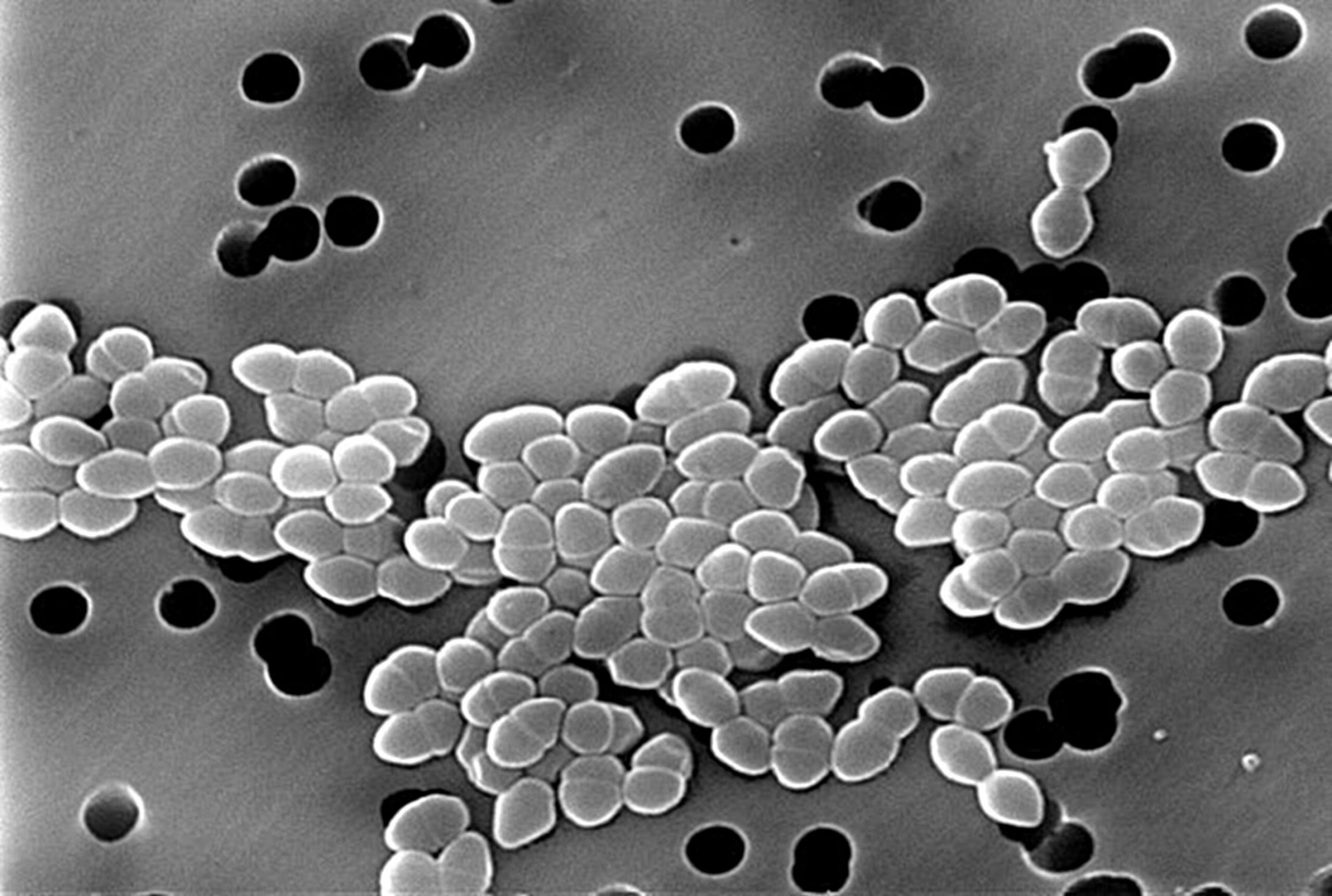
Enterococcus resistente a la vancomicina
Una micrografía electrónica de enterococos resistentes a la vancomicina
Imagen: “Vancomicin-Resistant Enterococcus” por CDC / Janice Haney Carr. Licencia: Dominio Público

Bacterias que Producen Beta-Lactamasa de Espectro Extendido

Beta-lactamasa de espectro extendido

  • Betalactamasas o enzimas expresadas en EN Erythema nodosum is an immune-mediated panniculitis (inflammation of the subcutaneous fat) caused by a type IV (delayed-type) hypersensitivity reaction. It commonly manifests in young women as tender, erythematous nodules on the shins. Erythema Nodosum organismos resistentes a penicilinas, cefalosporinas y aztreonam Aztreonam The carbapenems and aztreonam are both members of the bactericidal beta-lactam family of antibiotics (similar to penicillins). They work by preventing bacteria from producing their cell wall, ultimately leading to bacterial cell death. Carbapenems and Aztreonam (un monobactam)
  • Las betalactamasas abren el anillo betalactámico, lo que provoca la desactivación del antibiótico.
  • Generalmente, se encuentra en EN Erythema nodosum is an immune-mediated panniculitis (inflammation of the subcutaneous fat) caused by a type IV (delayed-type) hypersensitivity reaction. It commonly manifests in young women as tender, erythematous nodules on the shins. Erythema Nodosum organismos gram-negativos, predominantemente en EN Erythema nodosum is an immune-mediated panniculitis (inflammation of the subcutaneous fat) caused by a type IV (delayed-type) hypersensitivity reaction. It commonly manifests in young women as tender, erythematous nodules on the shins. Erythema Nodosum:
    • Klebsiella pneumoniae Klebsiella Pneumoniae Gram-negative, non-motile, capsulated, gas-producing rods found widely in nature and associated with urinary and respiratory infections in humans. Aminoglycosides
    • Klebsiella Klebsiella Klebsiella are encapsulated gram-negative, lactose-fermenting bacilli. They form pink colonies on MacConkey agar due to lactose fermentation. The main virulence factor is a polysaccharide capsule. Klebsiella pneumoniae is the most important pathogenic species. Klebsiella oxytoca
    • Escherichia coli Escherichia coli The gram-negative bacterium Escherichia coli is a key component of the human gut microbiota. Most strains of E. coli are avirulent, but occasionally they escape the GI tract, infecting the urinary tract and other sites. Less common strains of E. coli are able to cause disease within the GI tract, most commonly presenting as abdominal pain and diarrhea. Escherichia coli
    • Proteus mirabilis Proteus mirabilis A species of gram-negative, facultatively anaerobic, rod-shaped bacteria that is frequently isolated from clinical specimens. Its most common site of infection is the urinary tract. Proteus
  • Mecanismo de resistencia:
    • La producción de la enzima betalactamasa genera resistencia a la mayoría de los LOS Neisseria antibióticos betalactámicos.
    • Las beta-lactamasas de espectro extendido tienen diferentes variedades:
      • Betalactamasas TEM: las sustituciones de aminoácidos producen enzimas que hidrolizan penicilinas y cefalosporinas de espectro estrecho.
      • Betalactamasas SHV: sustituciones de aminoácidos
      • Betalactamasas CTX-M: surgen de la adquisición de plásmidos de genes Genes A category of nucleic acid sequences that function as units of heredity and which code for the basic instructions for the development, reproduction, and maintenance of organisms. DNA Types and Structure de betalactamasas
  • Factores de riesgo:
    • Hospitalización
    • Residencia en EN Erythema nodosum is an immune-mediated panniculitis (inflammation of the subcutaneous fat) caused by a type IV (delayed-type) hypersensitivity reaction. It commonly manifests in young women as tender, erythematous nodules on the shins. Erythema Nodosum un centro de cuidados a largo plazo
    • Uso de hemodiálisis
    • Presencia de un catéter intravascular
    • Terapia antibiótica reciente
    • Uso de corticosteroides
    • Presencia de una sonda de alimentación percutánea

Infecciones y antibióticos

  • Tipos de infecciones comunes:
    • Bacteriemia
    • ITU
    • Neumonía
  • Opciones de antibióticos:
    • Carbapenémicos:
      • Imipenem Imipenem Semisynthetic thienamycin that has a wide spectrum of antibacterial activity against gram-negative and gram-positive aerobic and anaerobic bacteria, including many multiresistant strains. It is stable to beta-lactamases. Clinical studies have demonstrated high efficacy in the treatment of infections of various body systems. Its effectiveness is enhanced when it is administered in combination with cilastatin, a renal dipeptidase inhibitor. Carbapenems and Aztreonam
      • Meropenem Meropenem A thienamycin derivative antibacterial agent that is more stable to renal dehydropeptidase I than imipenem, but does not need to be given with an enzyme inhibitor such as cilastatin. It is used in the treatment of bacterial infections, including infections in immunocompromised patients. Carbapenems and Aztreonam
      • Doripenem Doripenem A carbapenem derivative antibacterial agent that is more stable to renal dehydropeptidase I than imipenem, but does not need to be given with an enzyme inhibitor such as cilastatin. It is used in the treatment of infections such as hospital-acquired pneumonia, and complicated intra-abdominal or urinary-tract infections, including pyelonephritis. Carbapenems and Aztreonam
      • Ertapenem Ertapenem A carbapenem derivative antibacterial agent that is more stable to renal dehydropeptidase I than imipenem, but does not need to be given with an enzyme inhibitor such as cilastatin. It is used in the treatment of gram-positive and gram-negative bacterial infections including intra-abdominal infections, acute gynecological infections, complicated urinary tract infections, skin infections, and respiratory tract infections. It is also used to prevent infection in colorectal surgery. Carbapenems and Aztreonam
    • Combinación de agentes inhibidores de cefalosporinas-beta-lactamasa:
      • Ceftolozano-tazobactam
      • Ceftazidima-avibactam
    • Aminoglucósidos
    • Piperacilina-tazobactam (para infecciones urinarias aisladas)
    • Fosfomicina y nitrofurantoína (para cistitis simple)

Prevención

  • Precauciones de contacto
  • Restricciones de antibióticos (medicamentos betalactámicos)
  • Limpieza ambiental

Bacilos Gram-negativos Multi-Resistentes

Bacilos gram-negativos multi-resistentes

  • Las bacterias gram-negativas resistentes a varios antibióticos incluyen:
    • Acinetobacter Acinetobacter Multidrug-resistant Organisms and Nosocomial Infections baumannii : 67% resistente a carbapenémicos
    • Enterobacter Enterobacter Multidrug-resistant Organisms and Nosocomial Infections spp: 37% resistente a cefalosporinas de 3ra o 4ta generación
    • Escherichia coli Escherichia coli The gram-negative bacterium Escherichia coli is a key component of the human gut microbiota. Most strains of E. coli are avirulent, but occasionally they escape the GI tract, infecting the urinary tract and other sites. Less common strains of E. coli are able to cause disease within the GI tract, most commonly presenting as abdominal pain and diarrhea. Escherichia coli :
      • 42% resistente a fluoroquinolonas
      • 19% resistente a cefalosporinas de 3ra o 4ta generación
      • 2% resistente a carbapenémicos
    • Klebsiella pneumoniae Klebsiella Pneumoniae Gram-negative, non-motile, capsulated, gas-producing rods found widely in nature and associated with urinary and respiratory infections in humans. Aminoglycosides :
      • 29% resistente a cefalosporinas de 3ra o 4ta generación
      • 13% resistente a carbapenémicos
    • Pseudomonas aeruginosa Pseudomonas aeruginosa A species of gram-negative, aerobic, rod-shaped bacteria commonly isolated from clinical specimens (wound, burn, and urinary tract infections). It is also found widely distributed in soil and water. P. Aeruginosa is a major agent of nosocomial infection. Pseudomonas :
      • 31% resistente a fluoroquinolonas
      • 26% resistente a cefalosporinas de 3ra o 4ta generación
      • 26% resistente a carbapenémicos
  • Mecanismos de resistencia:
    • Las bacterias gram-negativas tienen una resistencia innata (no muestran respuesta a la vancomicina debido a la incapacidad del medicamento para penetrar la membrana externa).
    • Algunos producen betalactamasas.
    • Formación de biopelículas (reduce la difusión del agente antimicrobiano)
    • Genes Genes A category of nucleic acid sequences that function as units of heredity and which code for the basic instructions for the development, reproduction, and maintenance of organisms. DNA Types and Structure de resistencia (se pueden transferir entre bacterias a través de vectores (e.g., plásmidos, transposones)):
      • Produce enzimas inactivadoras de antibióticos como las carbapenemasas, lo que conduce a la resistencia a los LOS Neisseria carbapenémicos.
      • Otros regulan negativamente la proteína de la membrana externa OprD (una porina específica de carbapenémicos), disminuyendo la difusión del antibiótico.
      • Se crean bombas de salida de medicamentos, que expulsan agentes antimicrobianos.
      • La transferencia de un gen de metilasa de rRNA rRNA The most abundant form of RNA. Together with proteins, it forms the ribosomes, playing a structural role and also a role in ribosomal binding of mRNA and tRNAs. Individual chains are conventionally designated by their sedimentation coefficients. In eukaryotes, four large chains exist, synthesized in the nucleolus and constituting about 50% of the ribosome. RNA Types and Structure 16S de Actinomycetes a Pseudomonas aeruginosa Pseudomonas aeruginosa A species of gram-negative, aerobic, rod-shaped bacteria commonly isolated from clinical specimens (wound, burn, and urinary tract infections). It is also found widely distributed in soil and water. P. Aeruginosa is a major agent of nosocomial infection. Pseudomonas confiere resistencia a los LOS Neisseria aminoglucósidos
  • Los LOS Neisseria factores de riesgo incluyen:
    • Estancia en EN Erythema nodosum is an immune-mediated panniculitis (inflammation of the subcutaneous fat) caused by a type IV (delayed-type) hypersensitivity reaction. It commonly manifests in young women as tender, erythematous nodules on the shins. Erythema Nodosum UCI
    • Hemodiálisis crónica
    • Receptores de trasplantes
    • Uso frecuente de ciertos antibióticos (e.g. cefalosporinas de amplio espectro, aminoglucósidos, carbapenémicos, fluoroquinolonas)
    • Diabetes Diabetes Diabetes mellitus (DM) is a metabolic disease characterized by hyperglycemia and dysfunction of the regulation of glucose metabolism by insulin. Type 1 DM is diagnosed mostly in children and young adults as the result of autoimmune destruction of β cells in the pancreas and the resulting lack of insulin. Type 2 DM has a significant association with obesity and is characterized by insulin resistance. Diabetes Mellitus mellitus
    • Insuficiencia hepática
    • Enfermedad pulmonar
    • Albúmina < 3 g/dL
    • VIH

Enterobacterales productores de carbapenemasas

  • Organismos que:
    • Son resistentes a más de 1 antibiótico carbapenémico
    • Producen una enzima carbapenemasa (las carbapenemasas de Klebsiella pneumoniae Klebsiella Pneumoniae Gram-negative, non-motile, capsulated, gas-producing rods found widely in nature and associated with urinary and respiratory infections in humans. Aminoglycosides son las carbapenemasas más comunes en EN Erythema nodosum is an immune-mediated panniculitis (inflammation of the subcutaneous fat) caused by a type IV (delayed-type) hypersensitivity reaction. It commonly manifests in young women as tender, erythematous nodules on the shins. Erythema Nodosum los LOS Neisseria Estados Unidos)
  • Tipos de infecciones comunes:
    • Infección asociada a ventilación mecánica
    • Bacteriemia
    • Abscesos intraabdominales
    • UTI UTI Urinary tract infections (UTIs) represent a wide spectrum of diseases, from self-limiting simple cystitis to severe pyelonephritis that can result in sepsis and death. Urinary tract infections are most commonly caused by Escherichia coli, but may also be caused by other bacteria and fungi. Urinary Tract Infections (UTIs) (e.g., cistitis, pielonefritis)
  • Opciones de antibióticos:
    • El tratamiento es limitado, especialmente para infecciones graves (e.g., bacteriemia).
    • A menudo se encuentran presentes genes Genes A category of nucleic acid sequences that function as units of heredity and which code for the basic instructions for the development, reproduction, and maintenance of organisms. DNA Types and Structure de resistencia a otros antibióticos.
    • Para infecciones resistentes al AL Amyloidosis ertapenem Ertapenem A carbapenem derivative antibacterial agent that is more stable to renal dehydropeptidase I than imipenem, but does not need to be given with an enzyme inhibitor such as cilastatin. It is used in the treatment of gram-positive and gram-negative bacterial infections including intra-abdominal infections, acute gynecological infections, complicated urinary tract infections, skin infections, and respiratory tract infections. It is also used to prevent infection in colorectal surgery. Carbapenems and Aztreonam, pero susceptibles al AL Amyloidosis meropenem Meropenem A thienamycin derivative antibacterial agent that is more stable to renal dehydropeptidase I than imipenem, but does not need to be given with an enzyme inhibitor such as cilastatin. It is used in the treatment of bacterial infections, including infections in immunocompromised patients. Carbapenems and Aztreonam:
      • Se puede utilizar meropenem Meropenem A thienamycin derivative antibacterial agent that is more stable to renal dehydropeptidase I than imipenem, but does not need to be given with an enzyme inhibitor such as cilastatin. It is used in the treatment of bacterial infections, including infections in immunocompromised patients. Carbapenems and Aztreonam en EN Erythema nodosum is an immune-mediated panniculitis (inflammation of the subcutaneous fat) caused by a type IV (delayed-type) hypersensitivity reaction. It commonly manifests in young women as tender, erythematous nodules on the shins. Erythema Nodosum infusión prolongada.
      • Si la prueba de carbapenemasa es positiva, no use meropenem Meropenem A thienamycin derivative antibacterial agent that is more stable to renal dehydropeptidase I than imipenem, but does not need to be given with an enzyme inhibitor such as cilastatin. It is used in the treatment of bacterial infections, including infections in immunocompromised patients. Carbapenems and Aztreonam (incluso si la susceptibilidad es positiva).
    • Para cistitis sin complicaciones:
      • Ciprofloxacina, levofloxacina
      • Trimetoprim-sulfametoxazol
      • Nitrofurantoína
      • Aminoglucósido de dosis única
    • Infecciones urinarias complicadas e infecciones fuera del tracto urinario:

Pseudomonas aeruginosa Pseudomonas aeruginosa A species of gram-negative, aerobic, rod-shaped bacteria commonly isolated from clinical specimens (wound, burn, and urinary tract infections). It is also found widely distributed in soil and water. P. Aeruginosa is a major agent of nosocomial infection. Pseudomonas resistente de difícil tratamiento

  • Pseudomonas aeruginosa Pseudomonas aeruginosa A species of gram-negative, aerobic, rod-shaped bacteria commonly isolated from clinical specimens (wound, burn, and urinary tract infections). It is also found widely distributed in soil and water. P. Aeruginosa is a major agent of nosocomial infection. Pseudomonas no susceptible a lo siguiente:
    • Piperacilina-tazobactam
    • Ceftazidima, cefepime Cefepime A fourth-generation cephalosporin antibacterial agent that is used in the treatment of infections, including those of the abdomen, urinary tract, respiratory tract, and skin. It is effective against pseudomonas aeruginosa and may also be used in the empiric treatment of febrile neutropenia. Cephalosporins
    • Aztreonam Aztreonam The carbapenems and aztreonam are both members of the bactericidal beta-lactam family of antibiotics (similar to penicillins). They work by preventing bacteria from producing their cell wall, ultimately leading to bacterial cell death. Carbapenems and Aztreonam
    • Meropenem Meropenem A thienamycin derivative antibacterial agent that is more stable to renal dehydropeptidase I than imipenem, but does not need to be given with an enzyme inhibitor such as cilastatin. It is used in the treatment of bacterial infections, including infections in immunocompromised patients. Carbapenems and Aztreonam, imipenem-cilastatina
    • Ciprofloxacina, levofloxacina
  • Infecciones:
    • Neumonía asociada con el ventilador
    • ITU
    • Infección relacionada con el dispositivo (e.g., catéter)
    • Heridas o quemaduras
  • Opciones de antibióticos:

Prevención

  • Higiene de manos
  • Precauciones de aislamiento
  • Administración de antibióticos
  • Limpieza ambiental

Infección del Torrente Sanguíneo (Bacteriemia) Asociada a Vías Centrales

Infección del torrente sanguíneo (bacteriemia) asociada a vías centrales

  • Infección relacionada con la colocación o uso prolongado de un catéter venoso central
  • Factores de riesgo:
    • Factores del huésped:
      • Enfermedad crónica
      • Trasplante de médula ósea
      • Inmunodeficiencia (especialmente neutropenia Neutropenia Neutrophils are an important component of the immune system and play a significant role in the eradication of infections. Low numbers of circulating neutrophils, referred to as neutropenia, predispose the body to recurrent infections or sepsis, though patients can also be asymptomatic. Neutropenia)
      • Desnutrición
      • Administración de nutrición parenteral total
      • Infecciones previas del torrente sanguíneo
      • Extremos de la edad
      • Pérdida de la integridad de la piel (e.g. quemaduras)
    • Factores del catéter:
      • Ubicación del catéter (e.g., el catéter subclavio conlleva menos riesgo)
      • Duración del cateterismo
      • Tipo de catéter (e.g., los LOS Neisseria catéteres no tunelizados conllevan un mayor riesgo de infección)
      • Condiciones de inserción
      • Cuidado del sitio del catéter
      • Habilidad del operador que realiza la inserción
  • Fuentes de infección:
    • Colonización de la piel
    • Contaminación intraluminal
    • Siembra hematógena
    • Infundir contaminación
  • Organismos comunes:
    • Estafilococos coagulasa negativos
    • Staphylococcus aureus Staphylococcus aureus Potentially pathogenic bacteria found in nasal membranes, skin, hair follicles, and perineum of warm-blooded animals. They may cause a wide range of infections and intoxications. Brain Abscess
    • Enterococcus Enterococcus Enterococcus is a genus of oval-shaped gram-positive cocci that are arranged in pairs or short chains. Distinguishing factors include optochin resistance and the presence of pyrrolidonyl arylamidase (PYR) and Lancefield D antigen. Enterococcus is part of the normal flora of the human GI tract. Enterococcus
    • Cándida spp.
    • Klebsiella Klebsiella Klebsiella are encapsulated gram-negative, lactose-fermenting bacilli. They form pink colonies on MacConkey agar due to lactose fermentation. The main virulence factor is a polysaccharide capsule. Klebsiella pneumoniae is the most important pathogenic species. Klebsiella spp.
    • Escherichia coli Escherichia coli The gram-negative bacterium Escherichia coli is a key component of the human gut microbiota. Most strains of E. coli are avirulent, but occasionally they escape the GI tract, infecting the urinary tract and other sites. Less common strains of E. coli are able to cause disease within the GI tract, most commonly presenting as abdominal pain and diarrhea. Escherichia coli
    • Enterobacter Enterobacter Multidrug-resistant Organisms and Nosocomial Infections spp.
    • Pseudomonas Pseudomonas Pseudomonas is a non-lactose-fermenting, gram-negative bacillus that produces pyocyanin, which gives it a characteristic blue-green color. Pseudomonas is found ubiquitously in the environment, as well as in moist reservoirs, such as hospital sinks and respiratory equipment. Pseudomonas spp.
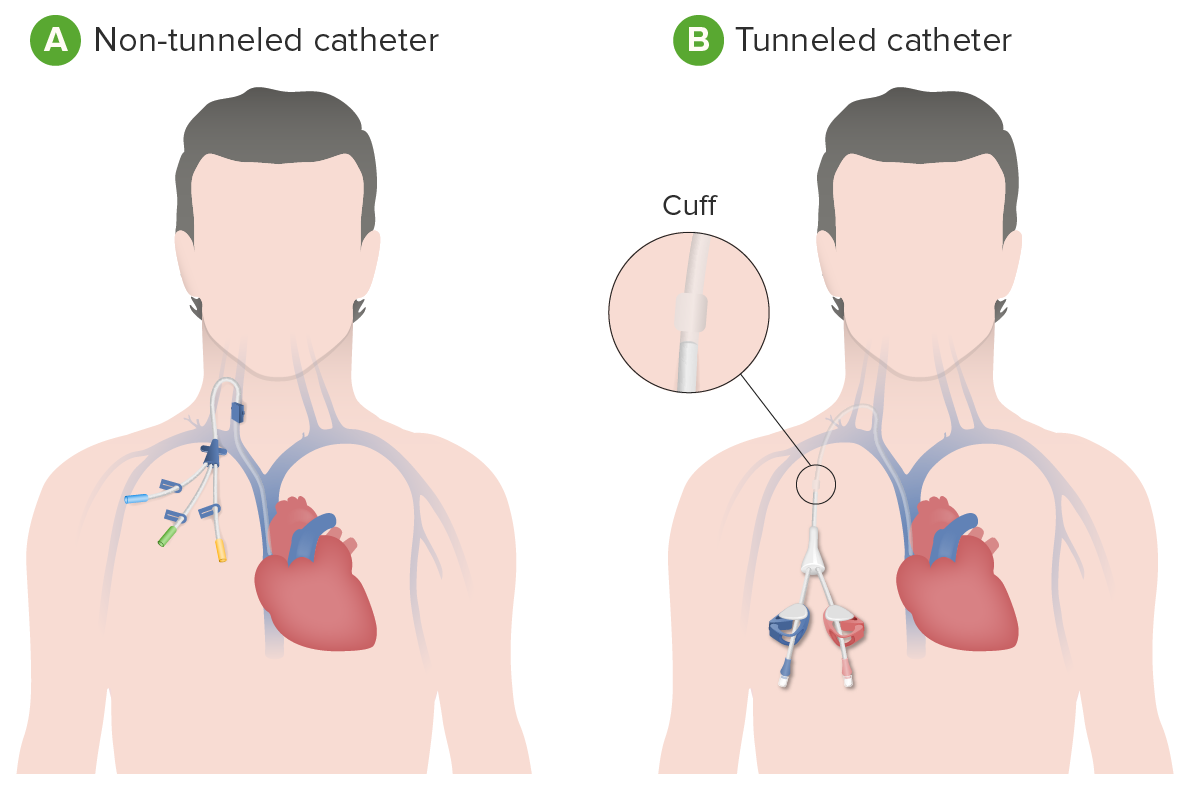
Catéteres de diálisis no tunelizados versus tunelizados

Un catéter venoso central (e.g., catéter de diálisis) es una fuente potencial de infección:
A: catéter no tunelizado (diseñado para ser temporal y puede colocarse en una vena grande cerca del cuello, tórax o la ingle)
B: Catéter de diálisis tunelizado (colocado debajo de la piel) (pensado para ser utilizado durante más tiempo)
Imagen por Lecturio.

Antibióticos y tratamiento

  • Terapia empírica:
    • Organismos gram-positivos: vancomicina
    • Bacilos gram-negativos si no hay inestabilidad hemodinámica, neutropenia Neutropenia Neutrophils are an important component of the immune system and play a significant role in the eradication of infections. Low numbers of circulating neutrophils, referred to as neutropenia, predispose the body to recurrent infections or sepsis, though patients can also be asymptomatic. Neutropenia o quemaduras: ceftriaxona
    • Bacilos gram-negativos si hay inestabilidad hemodinámica, neutropenia Neutropenia Neutrophils are an important component of the immune system and play a significant role in the eradication of infections. Low numbers of circulating neutrophils, referred to as neutropenia, predispose the body to recurrent infections or sepsis, though patients can also be asymptomatic. Neutropenia o quemaduras graves (use agentes anti-pseudomonas):
      • Ceftazidima, cefepime Cefepime A fourth-generation cephalosporin antibacterial agent that is used in the treatment of infections, including those of the abdomen, urinary tract, respiratory tract, and skin. It is effective against pseudomonas aeruginosa and may also be used in the empiric treatment of febrile neutropenia. Cephalosporins
      • Piperacilina-tazobactam
      • Imipenem Imipenem Semisynthetic thienamycin that has a wide spectrum of antibacterial activity against gram-negative and gram-positive aerobic and anaerobic bacteria, including many multiresistant strains. It is stable to beta-lactamases. Clinical studies have demonstrated high efficacy in the treatment of infections of various body systems. Its effectiveness is enhanced when it is administered in combination with cilastatin, a renal dipeptidase inhibitor. Carbapenems and Aztreonam, meropenem Meropenem A thienamycin derivative antibacterial agent that is more stable to renal dehydropeptidase I than imipenem, but does not need to be given with an enzyme inhibitor such as cilastatin. It is used in the treatment of bacterial infections, including infections in immunocompromised patients. Carbapenems and Aztreonam
  • Terapia dirigida para Staphylococcus Staphylococcus Staphylococcus is a medically important genera of Gram-positive, aerobic cocci. These bacteria form clusters resembling grapes on culture plates. Staphylococci are ubiquitous for humans, and many strains compose the normal skin flora. Staphylococcus:
    • Sensible a la meticilina:
      • Nafcilina
      • Oxacilina
      • Cefazolina
      • Flucloxacilina
    • Resistente a la meticilina:
      • Vancomicina
      • Daptomicina
  • Terapia dirigida para Enterococcus Enterococcus Enterococcus is a genus of oval-shaped gram-positive cocci that are arranged in pairs or short chains. Distinguishing factors include optochin resistance and the presence of pyrrolidonyl arylamidase (PYR) and Lancefield D antigen. Enterococcus is part of the normal flora of the human GI tract. Enterococcus:
    • Sensible a ampicilina: ampicilina
    • Resistente a ampicilina, sensible a vancomicina: vancomicina
    • Resistente a ampicilina, resistente a vancomicina: daptomicina, linezolid Linezolid An oxazolidinone and acetamide derived anti-bacterial agent and protein synthesis inhibitor that is used in the treatment of gram-positive bacterial infections of the skin and respiratory tract. Oxazolidinones
  • Enterobacteriaceae Enterobacteriaceae A family of gram-negative, facultatively anaerobic, rod-shaped bacteria that do not form endospores. Its organisms are distributed worldwide with some being saprophytes and others being plant and animal parasites. Many species are of considerable economic importance due to their pathogenic effects on agriculture and livestock. Cephalosporins (e.g., Escherichiacoli, Klebsiella Klebsiella Klebsiella are encapsulated gram-negative, lactose-fermenting bacilli. They form pink colonies on MacConkey agar due to lactose fermentation. The main virulence factor is a polysaccharide capsule. Klebsiella pneumoniae is the most important pathogenic species. Klebsiella spp., Enterobacter Enterobacter Multidrug-resistant Organisms and Nosocomial Infections spp.):
    • Beta-lactamasa de espectro extendido negativo:
      • Ceftriaxona
      • Ciprofloxacina
    • Beta-lactamasa de espectro extendido positivo:
      • Imipenem Imipenem Semisynthetic thienamycin that has a wide spectrum of antibacterial activity against gram-negative and gram-positive aerobic and anaerobic bacteria, including many multiresistant strains. It is stable to beta-lactamases. Clinical studies have demonstrated high efficacy in the treatment of infections of various body systems. Its effectiveness is enhanced when it is administered in combination with cilastatin, a renal dipeptidase inhibitor. Carbapenems and Aztreonam
      • Meropenem Meropenem A thienamycin derivative antibacterial agent that is more stable to renal dehydropeptidase I than imipenem, but does not need to be given with an enzyme inhibitor such as cilastatin. It is used in the treatment of bacterial infections, including infections in immunocompromised patients. Carbapenems and Aztreonam
      • Ertapenem Ertapenem A carbapenem derivative antibacterial agent that is more stable to renal dehydropeptidase I than imipenem, but does not need to be given with an enzyme inhibitor such as cilastatin. It is used in the treatment of gram-positive and gram-negative bacterial infections including intra-abdominal infections, acute gynecological infections, complicated urinary tract infections, skin infections, and respiratory tract infections. It is also used to prevent infection in colorectal surgery. Carbapenems and Aztreonam
      • Ciprofloxacina
  • Pseudomonas spp.:
    • Preferible:
      • Ceftazidima
      • Cefepima
      • Piperacilina-tazobactam
    • Alternativo:
      • Imipenem Imipenem Semisynthetic thienamycin that has a wide spectrum of antibacterial activity against gram-negative and gram-positive aerobic and anaerobic bacteria, including many multiresistant strains. It is stable to beta-lactamases. Clinical studies have demonstrated high efficacy in the treatment of infections of various body systems. Its effectiveness is enhanced when it is administered in combination with cilastatin, a renal dipeptidase inhibitor. Carbapenems and Aztreonam
      • Meropenem Meropenem A thienamycin derivative antibacterial agent that is more stable to renal dehydropeptidase I than imipenem, but does not need to be given with an enzyme inhibitor such as cilastatin. It is used in the treatment of bacterial infections, including infections in immunocompromised patients. Carbapenems and Aztreonam
      • Ciprofloxacina
  • Manejo del catéter:
    • Eliminar en EN Erythema nodosum is an immune-mediated panniculitis (inflammation of the subcutaneous fat) caused by a type IV (delayed-type) hypersensitivity reaction. It commonly manifests in young women as tender, erythematous nodules on the shins. Erythema Nodosum los LOS Neisseria siguientes casos:
      • Inestabilidad hemodinámica
      • Septicemia
      • Coágulo de sangre o tromboflebitis supurativa
      • Endocarditis Endocarditis Endocarditis is an inflammatory disease involving the inner lining (endometrium) of the heart, most commonly affecting the cardiac valves. Both infectious and noninfectious etiologies lead to vegetations on the valve leaflets. Patients may present with nonspecific symptoms such as fever and fatigue. Endocarditis
      • Infección del tracto del catéter venoso central tunelizado subcutáneamente o infección del reservorio del puerto subcutáneo
      • La bacteriemia persiste incluso después de 72 horas de antibióticos apropiados.
      • Organismos identificados: Staphylococcus Staphylococcus Staphylococcus is a medically important genera of Gram-positive, aerobic cocci. These bacteria form clusters resembling grapes on culture plates. Staphylococci are ubiquitous for humans, and many strains compose the normal skin flora. Staphylococcus aureus, Pseudomonas aeruginosa Pseudomonas aeruginosa A species of gram-negative, aerobic, rod-shaped bacteria commonly isolated from clinical specimens (wound, burn, and urinary tract infections). It is also found widely distributed in soil and water. P. Aeruginosa is a major agent of nosocomial infection. Pseudomonas, bacilos gram-negativos multiresistentes o Candida Candida Candida is a genus of dimorphic, opportunistic fungi. Candida albicans is part of the normal human flora and is the most common cause of candidiasis. The clinical presentation varies and can include localized mucocutaneous infections (e.g., oropharyngeal, esophageal, intertriginous, and vulvovaginal candidiasis) and invasive disease (e.g., candidemia, intraabdominal abscess, pericarditis, and meningitis). Candida/Candidiasis spp.
    • Mantener en EN Erythema nodosum is an immune-mediated panniculitis (inflammation of the subcutaneous fat) caused by a type IV (delayed-type) hypersensitivity reaction. It commonly manifests in young women as tender, erythematous nodules on the shins. Erythema Nodosum los LOS Neisseria siguientes casos:
      • Infección sin complicaciones por estafilococos coagulasa negativos
      • Generalmente, no involucra equipo ortopédico o implante endovascular
      • Terapia de bloqueo de antibióticos (instilación de antibióticos en EN Erythema nodosum is an immune-mediated panniculitis (inflammation of the subcutaneous fat) caused by a type IV (delayed-type) hypersensitivity reaction. It commonly manifests in young women as tender, erythematous nodules on the shins. Erythema Nodosum la luz) con antibióticos sistémicos administrados

Prevención

  • Lavado de manos
  • Precauciones de barrera completas con inserción de catéter venoso central
  • Clorhexidina para la desinfección de la piel
  • Evitación del sitio de inserción femoral
  • Retirada de catéteres cuando ya no esté indicado

Infección del Tracto Urinario Asociada al Catéter

ITU asociada al AL Amyloidosis catéter

  • Una infección urinaria relacionada con el uso de un catéter urinario (catéter de Foley)
  • Diferenciación según la Infectious Diseases Society of America:
    • Bacteriuria Bacteriuria The presence of bacteria in the urine which is normally bacteria-free. These bacteria are from the urinary tract and are not contaminants of the surrounding tissues. Bacteriuria can be symptomatic or asymptomatic. Significant bacteriuria is an indicator of urinary tract infection. Urinary Tract Infections (UTIs) in Children sintomática (ITU):
      • Crecimiento de cultivos de ≥ 10³ unidades formadoras de colonias (UFC)/mL de bacterias uropatógenas
      • Signos y síntomas de ITU sin otra fuente identificable
      • Los LOS Neisseria síntomas pueden incluir fiebre, dolor Dolor Inflammation a la palpación del ángulo suprapúbico o costovertebral, estado mental alterado e hipotensión.
      • Cateterismo uretral permanente, suprapúbico permanente o intermitente actualmente o dentro de las 48 horas
    • Bacteriuria Bacteriuria The presence of bacteria in the urine which is normally bacteria-free. These bacteria are from the urinary tract and are not contaminants of the surrounding tissues. Bacteriuria can be symptomatic or asymptomatic. Significant bacteriuria is an indicator of urinary tract infection. Urinary Tract Infections (UTIs) in Children asintomática:
      • Crecimiento de cultivos de ≥ 10⁵ UFC/mL de bacterias uropatógenas
      • No se observaron síntomas de ITU en EN Erythema nodosum is an immune-mediated panniculitis (inflammation of the subcutaneous fat) caused by a type IV (delayed-type) hypersensitivity reaction. It commonly manifests in young women as tender, erythematous nodules on the shins. Erythema Nodosum un individuo con cateterismo uretral permanente, suprapúbico permanente o intermitente
  • Factores de riesgo:
    • Catéter de larga estancia (riesgo de infección de catéteres a permanencia:  ~3-7% por día)
    • Mujer
    • Edad avanzada
    • Diabetes Diabetes Diabetes mellitus (DM) is a metabolic disease characterized by hyperglycemia and dysfunction of the regulation of glucose metabolism by insulin. Type 1 DM is diagnosed mostly in children and young adults as the result of autoimmune destruction of β cells in the pancreas and the resulting lack of insulin. Type 2 DM has a significant association with obesity and is characterized by insulin resistance. Diabetes Mellitus mellitus
    • La bolsa de drenaje está colonizada por bacterias.
    • Problemas de mantenimiento del catéter (i.e., errores en EN Erythema nodosum is an immune-mediated panniculitis (inflammation of the subcutaneous fat) caused by a type IV (delayed-type) hypersensitivity reaction. It commonly manifests in young women as tender, erythematous nodules on the shins. Erythema Nodosum la técnica estéril, no mantener un sistema de drenaje cerrado)
  • Patogénesis:
    • Extraluminal (más común): las bacterias ingresan a la vejiga a lo largo de la biopelícula (se forma alrededor del catéter).
    • Intraluminal: falla de drenaje (promueve la estasis urinaria o la infección ascendente de una bolsa de recolección de orina contaminada)
  • Organismos comunes:
    • Escherichia coli Escherichia coli The gram-negative bacterium Escherichia coli is a key component of the human gut microbiota. Most strains of E. coli are avirulent, but occasionally they escape the GI tract, infecting the urinary tract and other sites. Less common strains of E. coli are able to cause disease within the GI tract, most commonly presenting as abdominal pain and diarrhea. Escherichia coli
    • Candida Candida Candida is a genus of dimorphic, opportunistic fungi. Candida albicans is part of the normal human flora and is the most common cause of candidiasis. The clinical presentation varies and can include localized mucocutaneous infections (e.g., oropharyngeal, esophageal, intertriginous, and vulvovaginal candidiasis) and invasive disease (e.g., candidemia, intraabdominal abscess, pericarditis, and meningitis). Candida/Candidiasis spp
    • Enterococcus Enterococcus Enterococcus is a genus of oval-shaped gram-positive cocci that are arranged in pairs or short chains. Distinguishing factors include optochin resistance and the presence of pyrrolidonyl arylamidase (PYR) and Lancefield D antigen. Enterococcus is part of the normal flora of the human GI tract. Enterococcus spp
    • Pseudomonas aeruginosa Pseudomonas aeruginosa A species of gram-negative, aerobic, rod-shaped bacteria commonly isolated from clinical specimens (wound, burn, and urinary tract infections). It is also found widely distributed in soil and water. P. Aeruginosa is a major agent of nosocomial infection. Pseudomonas
    • Klebsiella Klebsiella Klebsiella are encapsulated gram-negative, lactose-fermenting bacilli. They form pink colonies on MacConkey agar due to lactose fermentation. The main virulence factor is a polysaccharide capsule. Klebsiella pneumoniae is the most important pathogenic species. Klebsiella spp

Tratamiento

  • Opciones antimicrobianas:
    • Depende de los LOS Neisseria resultados de cultivo y susceptibilidad
    • No se recomiendan los LOS Neisseria antibióticos en EN Erythema nodosum is an immune-mediated panniculitis (inflammation of the subcutaneous fat) caused by a type IV (delayed-type) hypersensitivity reaction. It commonly manifests in young women as tender, erythematous nodules on the shins. Erythema Nodosum la bacteriuria Bacteriuria The presence of bacteria in the urine which is normally bacteria-free. These bacteria are from the urinary tract and are not contaminants of the surrounding tissues. Bacteriuria can be symptomatic or asymptomatic. Significant bacteriuria is an indicator of urinary tract infection. Urinary Tract Infections (UTIs) in Children asintomática, excepto en EN Erythema nodosum is an immune-mediated panniculitis (inflammation of the subcutaneous fat) caused by a type IV (delayed-type) hypersensitivity reaction. It commonly manifests in young women as tender, erythematous nodules on the shins. Erythema Nodosum ciertos casos (e.g., embarazo, intervención urológica anticipada)
    • Requiere consideración de los LOS Neisseria siguientes factores:
      • Urocultivos pasados
      • Terapia antimicrobiana previa
      • Exposiciones sanitarias
      • Prevalencia de la resistencia a los LOS Neisseria antimicrobianos
      • Alergias a los LOS Neisseria antibióticos
  • Minimice el uso de catéteres permanentes:
    • El cateterismo intermitente conlleva un menor riesgo de ITU.
    • Si es necesario un catéter permanente, se recomienda el reemplazo junto con el inicio de los LOS Neisseria antibióticos.
  • Prevención:
    • Evite el cateterismo innecesario.
    • Utilice técnicas estériles al AL Amyloidosis colocar el catéter.
    • Retire el catéter tan pronto como ya no lo necesite.

Neumonías Nosocomiales y Neumonías Asociadas a la Ventilación Mecánica

Neumonías en EN Erythema nodosum is an immune-mediated panniculitis (inflammation of the subcutaneous fat) caused by a type IV (delayed-type) hypersensitivity reaction. It commonly manifests in young women as tender, erythematous nodules on the shins. Erythema Nodosum el hospital

  • Definiciones:
    • Neumonía asociada a hospitalización o neumonía nosocomial: infección pulmonar que ocurre ≥ 48 horas después del ingreso y no está presente en EN Erythema nodosum is an immune-mediated panniculitis (inflammation of the subcutaneous fat) caused by a type IV (delayed-type) hypersensitivity reaction. It commonly manifests in young women as tender, erythematous nodules on the shins. Erythema Nodosum el momento del ingreso
    • Neumonía asociada a la ventilación mecánica: neumonía que se desarrolla ≥ 48 horas después de la intubación endotraqueal.
  • Factores de riesgo:
    • Ventilación mecánica: la mayoría de las neumonías nosocomiales ocurren en EN Erythema nodosum is an immune-mediated panniculitis (inflammation of the subcutaneous fat) caused by a type IV (delayed-type) hypersensitivity reaction. It commonly manifests in young women as tender, erythematous nodules on the shins. Erythema Nodosum personas que no reciben ventilación mecánica (pero las personas con ventilación mecánica tienen el mayor riesgo de neumonía asociada a hospitalización).
    • Edad avanzada
    • Enfermedad pulmonar crónica
    • Conciencia deprimida
    • Aspiración
    • Cirugía de tórax o abdomen superior
    • Agentes que aumentan el pH pH The quantitative measurement of the acidity or basicity of a solution. Acid-Base Balance gástrico
    • Exposición previa a antibióticos (especialmente antibióticos de amplio espectro)
    • Reintubación o intubación prolongada
    • Mayor uso de opioides
    • Trauma
    • Parálisis
    • Numerosas colocaciones y cirugías de catéteres venosos centrales
    • Uso de relajantes musculares o glucocorticoides
    • Presencia de un monitor de presión intracraneal
    • Desnutrición
    • Falla renal crónica
    • Anemia Anemia Anemia is a condition in which individuals have low Hb levels, which can arise from various causes. Anemia is accompanied by a reduced number of RBCs and may manifest with fatigue, shortness of breath, pallor, and weakness. Subtypes are classified by the size of RBCs, chronicity, and etiology. Anemia: Overview and Types
    • Hospitalización previa
  • Organismos comunes:
  • Bacilos gram-positivos:
    • Staphylococcus aureus Staphylococcus aureus Potentially pathogenic bacteria found in nasal membranes, skin, hair follicles, and perineum of warm-blooded animals. They may cause a wide range of infections and intoxications. Brain Abscess (incluido MRSA MRSA A strain of Staphylococcus aureus that is non-susceptible to the action of methicillin. The mechanism of resistance usually involves modification of normal or the presence of acquired penicillin binding proteins. Staphylococcus)
    • Streptococcus Streptococcus Streptococcus is one of the two medically important genera of gram-positive cocci, the other being Staphylococcus. Streptococci are identified as different species on blood agar on the basis of their hemolytic pattern and sensitivity to optochin and bacitracin. There are many pathogenic species of streptococci, including S. pyogenes, S. agalactiae, S. pneumoniae, and the viridans streptococci. Streptococcus spp
Radiografía de pecho

Neumonía asociada al ventilador:
a: Radiografía de tórax que muestra neumonía en la base del pulmón derecho
b: La TC del tórax revela un absceso pulmonar en desarrollo con pleuritis y aparente empiema en la zona observada en la radiografía de tórax.
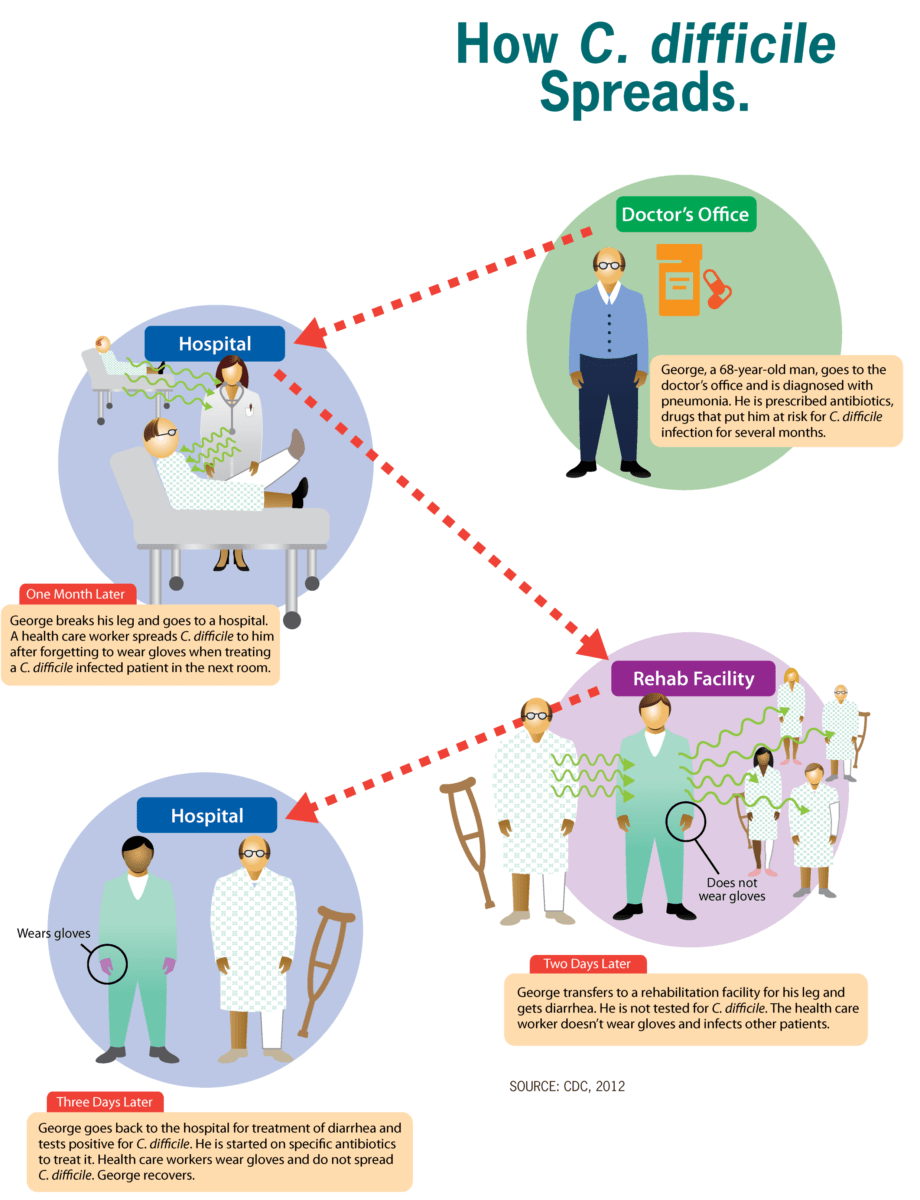
Imagen:Chest X-ray (a) and CT (b) reveal pneumonia of the right basis with accompanying plevritis” por Intensive Care Unit, “Mitera” Obstetric and Gynecological Hospital, Atenas, Grecia. Licencia: CC BY 2.0

Tratamiento

  • Opciones antibióticas:
    • Incluye cobertura para:
      • Staphylococcus aureus Staphylococcus aureus Potentially pathogenic bacteria found in nasal membranes, skin, hair follicles, and perineum of warm-blooded animals. They may cause a wide range of infections and intoxications. Brain Abscess
      • Pseudomonas aeruginosa Pseudomonas aeruginosa A species of gram-negative, aerobic, rod-shaped bacteria commonly isolated from clinical specimens (wound, burn, and urinary tract infections). It is also found widely distributed in soil and water. P. Aeruginosa is a major agent of nosocomial infection. Pseudomonas
      • Otros bacilos gram-negativos
    • Considerar los LOS Neisseria patógenos locales y los LOS Neisseria riesgos de los LOS Neisseria microorganismos multiresistentes.
  • Régimen:
    • Personas sin riesgo de estar expuestos a microorganismos multiresistentes y bajo riesgo de MRSA MRSA A strain of Staphylococcus aureus that is non-susceptible to the action of methicillin. The mechanism of resistance usually involves modification of normal or the presence of acquired penicillin binding proteins. Staphylococcus: 1 agente contra Pseudomonas aeruginosa Pseudomonas aeruginosa A species of gram-negative, aerobic, rod-shaped bacteria commonly isolated from clinical specimens (wound, burn, and urinary tract infections). It is also found widely distributed in soil and water. P. Aeruginosa is a major agent of nosocomial infection. Pseudomonas, otros bacilos gram-negativos y Staphylococcus aureus Staphylococcus aureus Potentially pathogenic bacteria found in nasal membranes, skin, hair follicles, and perineum of warm-blooded animals. They may cause a wide range of infections and intoxications. Brain Abscess sensible a meticilina:
      • Piperacilina-tazobactam
      • Cefepima
      • Levofloxacina
    • Personas en EN Erythema nodosum is an immune-mediated panniculitis (inflammation of the subcutaneous fat) caused by a type IV (delayed-type) hypersensitivity reaction. It commonly manifests in young women as tender, erythematous nodules on the shins. Erythema Nodosum riesgo de estar expuestos a microorganismos multiresistentes (incluido MRSA MRSA A strain of Staphylococcus aureus that is non-susceptible to the action of methicillin. The mechanism of resistance usually involves modification of normal or the presence of acquired penicillin binding proteins. Staphylococcus): 2 agentes contra Pseudomonas aeruginosa Pseudomonas aeruginosa A species of gram-negative, aerobic, rod-shaped bacteria commonly isolated from clinical specimens (wound, burn, and urinary tract infections). It is also found widely distributed in soil and water. P. Aeruginosa is a major agent of nosocomial infection. Pseudomonas y otros bacilos Gram-negativos, y 1 agente con actividad contra MRSA MRSA A strain of Staphylococcus aureus that is non-susceptible to the action of methicillin. The mechanism of resistance usually involves modification of normal or the presence of acquired penicillin binding proteins. Staphylococcus:
      • Piperacilina-tazobactam / cefepima / ceftazidima / carbapenem Carbapenem The carbapenems and aztreonam are both members of the bactericidal beta-lactam family of antibiotics (similar to penicillins). They work by preventing bacteria from producing their cell wall, ultimately leading to bacterial cell death. Carbapenems and Aztreonam / aztreonam Aztreonam The carbapenems and aztreonam are both members of the bactericidal beta-lactam family of antibiotics (similar to penicillins). They work by preventing bacteria from producing their cell wall, ultimately leading to bacterial cell death. Carbapenems and Aztreonam; Y,
      • Un aminoglucósido (e.g., amikacina, gentamicina); Y,
      • Vancomicina / linezolid Linezolid An oxazolidinone and acetamide derived anti-bacterial agent and protein synthesis inhibitor that is used in the treatment of gram-positive bacterial infections of the skin and respiratory tract. Oxazolidinones / telavancina
  • Prevención:
    • Uso de ventilación con presión positiva no invasiva cuando sea posible (evitando la intubación)
    • Protocolos de destete
    • Minimizar la sedación
    • Facilitar el acondicionamiento físico y la movilidad temprana
    • Prevenir la aspiración:
      • Elevación de la cama
      • Drenaje de secreciones subglóticas
    • Enfoques para ayudar a reducir la neumonía por ventilación mecánica:
      • Probióticos
      • Cuidado bucal (clorhexidina)
      • Profilaxis de úlceras por estrés
      • Tubos endotraqueales recubiertos de plata

Infección por Clostridioides difficile

Infección por Clostridioides difficile

  • Infección causada por la bacteria Bacteria Bacteria are prokaryotic single-celled microorganisms that are metabolically active and divide by binary fission. Some of these organisms play a significant role in the pathogenesis of diseases. Bacteriology formadora de esporas Clostridioides difficile
  • Una de las infecciones hospitalarias más comunes.
  • Factores de riesgo:
    • Uso de antibióticos
    • Edad avanzada
    • Hospitalización
    • Enfermedad comórbida grave
  • Microbiología y enfermedad:
    • Clostridioides difficile :
      • Bacilo anaeróbico gram-positivo, formador de esporas y productor de toxinas
      • Libera 2 exotoxinas potentes que median la colitis Colitis Inflammation of the colon section of the large intestine, usually with symptoms such as diarrhea (often with blood and mucus), abdominal pain, and fever. Pseudomembranous Colitis y la diarrea: enterotoxina A (diarrea) y toxina B ( colitis Colitis Inflammation of the colon section of the large intestine, usually with symptoms such as diarrhea (often with blood and mucus), abdominal pain, and fever. Pseudomembranous Colitis pseudomembranosa)
    • Colitis Colitis Inflammation of the colon section of the large intestine, usually with symptoms such as diarrhea (often with blood and mucus), abdominal pain, and fever. Pseudomembranous Colitis pseudomembranosa (inflamación grave del revestimiento del intestino):
      • Dolor Dolor Inflammation abdominal
      • Diarrea acuosa profusa (ocasionalmente puede ser sanguinolenta)
      • Leucocitosis
      • Asociada con el uso reciente de antibióticos (e.g., clindamicina, fluoroquinolonas, cefalosporinas, penicilinas)

Tratamiento

  • Opciones de antibióticos:
    • Fidaxomicina oral
    • Vancomicina oral
    • Metronidazol
  • Infección por Clostridioides difficile recurrente: agregue bezlotoxumab (anticuerpo monoclonal).
  • Suspenda el antibiótico incitante.
  • Atención de apoyo: controle las pérdidas de líquidos y electrolitos.
  • Otras:
    • Trasplante de microbiota fecal:
      • Las heces procesadas de un donante sano se instilan en EN Erythema nodosum is an immune-mediated panniculitis (inflammation of the subcutaneous fat) caused by a type IV (delayed-type) hypersensitivity reaction. It commonly manifests in young women as tender, erythematous nodules on the shins. Erythema Nodosum el tracto intestinal.
      • Administrado mediante cápsulas orales, colonoscopia, enema de retención o sonda nasoyeyunal / nasoduodenal
    • Considere la cirugía en EN Erythema nodosum is an immune-mediated panniculitis (inflammation of the subcutaneous fat) caused by a type IV (delayed-type) hypersensitivity reaction. It commonly manifests in young women as tender, erythematous nodules on the shins. Erythema Nodosum caso de enfermedad fulminante (i.e., hipotensión, shock Shock Shock is a life-threatening condition associated with impaired circulation that results in tissue hypoxia. The different types of shock are based on the underlying cause: distributive (↑ cardiac output (CO), ↓ systemic vascular resistance (SVR)), cardiogenic (↓ CO, ↑ SVR), hypovolemic (↓ CO, ↑ SVR), obstructive (↓ CO), and mixed. Types of Shock, íleo o megacolon Megacolon Megacolon is a severe, abnormal dilatation of the colon, and is classified as acute or chronic. There are many etiologies of megacolon, including neuropathic and dysmotility conditions, severe infections, ischemia, and inflammatory bowel disease. Megacolon)
  • Prevención:
    • Control de infecciónes:
      • Higiene de manos
      • Use agua y jabón en EN Erythema nodosum is an immune-mediated panniculitis (inflammation of the subcutaneous fat) caused by a type IV (delayed-type) hypersensitivity reaction. It commonly manifests in young women as tender, erythematous nodules on the shins. Erythema Nodosum lugar de un desinfectante de manos a base de alcohol (las esporas de Clostridioides difficile son resistentes al AL Amyloidosis alcohol).
    • Minimice el uso de antibióticos.
    • Profilaxis con vancomicina oral para personas con alto riesgo de infección por Clostridioides difficile

Infecciones del Sitio Quirúrgico

Infecciones del sitio quirúrgico

  • Una infección en EN Erythema nodosum is an immune-mediated panniculitis (inflammation of the subcutaneous fat) caused by a type IV (delayed-type) hypersensitivity reaction. It commonly manifests in young women as tender, erythematous nodules on the shins. Erythema Nodosum el área de cirugía reciente.
  • Factores de riesgo:
    • Tabaquismo
    • Edad avanzada
    • Enfermedad vascular
    • Obesidad
    • Desnutrición
    • Diabetes Diabetes Diabetes mellitus (DM) is a metabolic disease characterized by hyperglycemia and dysfunction of the regulation of glucose metabolism by insulin. Type 1 DM is diagnosed mostly in children and young adults as the result of autoimmune destruction of β cells in the pancreas and the resulting lack of insulin. Type 2 DM has a significant association with obesity and is characterized by insulin resistance. Diabetes Mellitus
    • Terapia inmunosupresora
    • Presencia de infección reciente o remota en EN Erythema nodosum is an immune-mediated panniculitis (inflammation of the subcutaneous fat) caused by a type IV (delayed-type) hypersensitivity reaction. It commonly manifests in young women as tender, erythematous nodules on the shins. Erythema Nodosum el sitio quirúrgico
    • Cirugía reciente
    • Hospitalización
    • Transfusión
    • Factores locales de la herida:
      • Edema Edema Edema is a condition in which excess serous fluid accumulates in the body cavity or interstitial space of connective tissues. Edema is a symptom observed in several medical conditions. It can be categorized into 2 types, namely, peripheral (in the extremities) and internal (in an organ or body cavity). Edema
      • Proximidad a otros sitios de heridas abiertos o contaminados
      • Presencia de infecciones remotas
  • Microbiología y enfermedad:
    • Organismos comunes:
      • Superficies cutáneas y mucosas: bacterias gram-positivas (e.g., Staphylococcus aureus Staphylococcus aureus Potentially pathogenic bacteria found in nasal membranes, skin, hair follicles, and perineum of warm-blooded animals. They may cause a wide range of infections and intoxications. Brain Abscess, Staphylococcus Staphylococcus Staphylococcus is a medically important genera of Gram-positive, aerobic cocci. These bacteria form clusters resembling grapes on culture plates. Staphylococci are ubiquitous for humans, and many strains compose the normal skin flora. Staphylococcus coagulasa negativos).
      • Las áreas inguinales y de la ingle pueden estar contaminadas por bacilos gram-negativos y organismos anaerobios.
    • Las infecciones pueden ser:
      • Superficiales (e.g., hinchazón, calor Calor Inflammation, secreción): determinadas por observación
      • Profundas (e.g., afectación de la fascia Fascia Layers of connective tissue of variable thickness. The superficial fascia is found immediately below the skin; the deep fascia invests muscles, nerves, and other organs. Cellulitis, los LOS Neisseria músculos o los LOS Neisseria órganos): se necesitan imagenología y exploración.

Tratamiento

  • Drenaje de líquido infectado
  • Exploración y desbridamiento si es necesario (especialmente en EN Erythema nodosum is an immune-mediated panniculitis (inflammation of the subcutaneous fat) caused by a type IV (delayed-type) hypersensitivity reaction. It commonly manifests in young women as tender, erythematous nodules on the shins. Erythema Nodosum tejido necrótico)
  • Terapia con antibióticos:
    • Considere la extensión de la infección, las comorbilidades y las manifestaciones sistémicas.
    • Úselo para infecciones profundas (no siempre es necesario para infecciones superficiales).
    • Generalmente guiado por cultivo y sensibilidades: la selección empírica se basa en EN Erythema nodosum is an immune-mediated panniculitis (inflammation of the subcutaneous fat) caused by a type IV (delayed-type) hypersensitivity reaction. It commonly manifests in young women as tender, erythematous nodules on the shins. Erythema Nodosum la tinción de Gram inicial, el sitio de la herida y el tipo.
    • Los LOS Neisseria organismos más comunes para cubrir:
      • Staphylococcus aureus Staphylococcus aureus Potentially pathogenic bacteria found in nasal membranes, skin, hair follicles, and perineum of warm-blooded animals. They may cause a wide range of infections and intoxications. Brain Abscess
      • Estafilococos coagulasa negativos
      • Streptococcus Streptococcus Streptococcus is one of the two medically important genera of gram-positive cocci, the other being Staphylococcus. Streptococci are identified as different species on blood agar on the basis of their hemolytic pattern and sensitivity to optochin and bacitracin. There are many pathogenic species of streptococci, including S. pyogenes, S. agalactiae, S. pneumoniae, and the viridans streptococci. Streptococcus spp.
      • Enterococcus Enterococcus Enterococcus is a genus of oval-shaped gram-positive cocci that are arranged in pairs or short chains. Distinguishing factors include optochin resistance and the presence of pyrrolidonyl arylamidase (PYR) and Lancefield D antigen. Enterococcus is part of the normal flora of the human GI tract. Enterococcus spp.
  • Prevención:
    • Paciente:
      • Cesación de tabaquismo
      • Preparación intestinal antes de la cirugía de colon Colon The large intestines constitute the last portion of the digestive system. The large intestine consists of the cecum, appendix, colon (with ascending, transverse, descending, and sigmoid segments), rectum, and anal canal. The primary function of the colon is to remove water and compact the stool prior to expulsion from the body via the rectum and anal canal. Colon, Cecum, and Appendix: Anatomy
    • Control de infección:
      • Higiene de manos
      • Vestimenta quirúrgica y dispositivos de barrera
      • Profilaxis antimicrobiana
      • Descolonización de Staphylococcus aureus Staphylococcus aureus Potentially pathogenic bacteria found in nasal membranes, skin, hair follicles, and perineum of warm-blooded animals. They may cause a wide range of infections and intoxications. Brain Abscess
      • Aplicación de antisépticos en EN Erythema nodosum is an immune-mediated panniculitis (inflammation of the subcutaneous fat) caused by a type IV (delayed-type) hypersensitivity reaction. It commonly manifests in young women as tender, erythematous nodules on the shins. Erythema Nodosum la piel
      • Depilación: Evite afeitarse con navajas en EN Erythema nodosum is an immune-mediated panniculitis (inflammation of the subcutaneous fat) caused by a type IV (delayed-type) hypersensitivity reaction. It commonly manifests in young women as tender, erythematous nodules on the shins. Erythema Nodosum el lugar de la operación planificado.
    • Otras medidas perioperatorias:
      • Mantener la temperatura
      • Limitar la entrada de personas al AL Amyloidosis quirófano
      • Uso de flujo de aire laminar
      • Oxígeno suplementario
      • Minimizar la transfusión de eritrocitos
      • Controlar la glucosa
      • Entregar antibióticos tópicos y locales
      • Protectores de heridas intraoperatorios
    • Terapia profiláctica de heridas con presión negativa

Relevancia Clínica

  • ITU: un amplio espectro de enfermedades, desde la cistitis simple (autolimitada) hasta la pielonefritis grave. Las infecciones son causadas con mayor frecuencia por Escherichia coli Escherichia coli The gram-negative bacterium Escherichia coli is a key component of the human gut microbiota. Most strains of E. coli are avirulent, but occasionally they escape the GI tract, infecting the urinary tract and other sites. Less common strains of E. coli are able to cause disease within the GI tract, most commonly presenting as abdominal pain and diarrhea. Escherichia coli. Las características incluyen disuria, urgencia urinaria, frecuencia, dolor Dolor Inflammation suprapúbico y fiebre. El análisis de orina y el cultivo se utilizan para establecer el diagnóstico. El tratamiento se realiza con antibióticos (e.g., trimetoprima-sulfametoxazol, nitrofurantoína, ceftriaxona). Es posible que se necesiten más estudios si no hay resolución.
  • Neumonía: infección del parénquima pulmonar causada generalmente por una bacteria Bacteria Bacteria are prokaryotic single-celled microorganisms that are metabolically active and divide by binary fission. Some of these organisms play a significant role in the pathogenesis of diseases. Bacteriology o un virus Virus Viruses are infectious, obligate intracellular parasites composed of a nucleic acid core surrounded by a protein capsid. Viruses can be either naked (non-enveloped) or enveloped. The classification of viruses is complex and based on many factors, including type and structure of the nucleoid and capsid, the presence of an envelope, the replication cycle, and the host range. Virology. La neumonía adquirida en EN Erythema nodosum is an immune-mediated panniculitis (inflammation of the subcutaneous fat) caused by a type IV (delayed-type) hypersensitivity reaction. It commonly manifests in young women as tender, erythematous nodules on the shins. Erythema Nodosum la comunidad representa el 80% de los LOS Neisseria casos. Si la infección se adquiere mientras está ingresado en EN Erythema nodosum is an immune-mediated panniculitis (inflammation of the subcutaneous fat) caused by a type IV (delayed-type) hypersensitivity reaction. It commonly manifests in young women as tender, erythematous nodules on the shins. Erythema Nodosum un centro de atención médica, la infección se denomina neumonía asociada a los LOS Neisseria cuidados sanitarios. El diagnóstico se basa en EN Erythema nodosum is an immune-mediated panniculitis (inflammation of the subcutaneous fat) caused by a type IV (delayed-type) hypersensitivity reaction. It commonly manifests in young women as tender, erythematous nodules on the shins. Erythema Nodosum una presentación clínica de fiebre, tos TOS Thoracic outlet syndrome (TOS) is a broad term used for a spectrum of syndromes related to the general region of the thoracic outlet, which involves the compression or irritation of elements of the brachial plexus, subclavian artery, or subclavian vein. Thoracic Outlet Syndrome productiva, disnea, estertores y consolidación en EN Erythema nodosum is an immune-mediated panniculitis (inflammation of the subcutaneous fat) caused by a type IV (delayed-type) hypersensitivity reaction. It commonly manifests in young women as tender, erythematous nodules on the shins. Erythema Nodosum la radiografía de tórax. La neumonía atípica puede presentarse con síntomas más leves e imagenología menos notable. El tratamiento con antibióticos empíricos es generalmente apropiado para la neumonía asociada a los LOS Neisseria cuidados sanitarios, mientras que la neumonía en EN Erythema nodosum is an immune-mediated panniculitis (inflammation of the subcutaneous fat) caused by a type IV (delayed-type) hypersensitivity reaction. It commonly manifests in young women as tender, erythematous nodules on the shins. Erythema Nodosum el paciente ventilado a menudo requiere un tratamiento basado en EN Erythema nodosum is an immune-mediated panniculitis (inflammation of the subcutaneous fat) caused by a type IV (delayed-type) hypersensitivity reaction. It commonly manifests in young women as tender, erythematous nodules on the shins. Erythema Nodosum cultivos.
  • Sepsis Sepsis Systemic inflammatory response syndrome with a proven or suspected infectious etiology. When sepsis is associated with organ dysfunction distant from the site of infection, it is called severe sepsis. When sepsis is accompanied by hypotension despite adequate fluid infusion, it is called septic shock. Sepsis and Septic Shock: disfunción orgánica resultante de una respuesta sistémica desregulada del huésped a la infección. La etiología es principalmente bacteriana y la neumonía es la fuente más común. Los LOS Neisseria pacientes suelen presentar fiebre, taquicardia, taquipnea, hipotensión y/o alteraciones mentales. El shock Shock Shock is a life-threatening condition associated with impaired circulation that results in tissue hypoxia. The different types of shock are based on the underlying cause: distributive (↑ cardiac output (CO), ↓ systemic vascular resistance (SVR)), cardiogenic (↓ CO, ↑ SVR), hypovolemic (↓ CO, ↑ SVR), obstructive (↓ CO), and mixed. Types of Shock séptico se diagnostica durante el tratamiento, cuando los LOS Neisseria vasopresores son necesarios para controlar la hipotensión. La sepsis Sepsis Systemic inflammatory response syndrome with a proven or suspected infectious etiology. When sepsis is associated with organ dysfunction distant from the site of infection, it is called severe sepsis. When sepsis is accompanied by hypotension despite adequate fluid infusion, it is called septic shock. Sepsis and Septic Shock y el shock Shock Shock is a life-threatening condition associated with impaired circulation that results in tissue hypoxia. The different types of shock are based on the underlying cause: distributive (↑ cardiac output (CO), ↓ systemic vascular resistance (SVR)), cardiogenic (↓ CO, ↑ SVR), hypovolemic (↓ CO, ↑ SVR), obstructive (↓ CO), and mixed. Types of Shock séptico son emergencias médicas y los LOS Neisseria antibióticos se administran dentro de la 1ra hora después del diagnóstico.

Referencias

  1. Anderson, D.J. (2020). Methicillin-resistant Staphylococcus aureus (MRSA) in adults: Epidemiology. UpToDate. Retrieved September 15, 2021, from  https://www.uptodate.com/contents/methicillin-resistant-staphylococcus-aureus-mrsa-in-adults-epidemiology
  2. Anderson, D.J. (2021). Vancomycin-resistant enterococci: Epidemiology, prevention, and control. In Harris A. et al. (Ed.), UpToDate. Retrieved September 16, 2021, from:https://www.uptodate.com/contents/vancomycin-resistant-enterococci-epidemiology-prevention-and-control
  3. Borody, T., Ramrakha, S. (2021). Fecal microbiota transplantation for treatment of Clostridioides infection. UpToDate. Retrieved Dec 5, 2021 from https://www.uptodate.com/contents/fecal-microbiota-transplantation-for-treatment-of-clostridioides-difficile-infection
  4. Calderwood, M. (2021). Intravascular non-hemodialysis catheter-related infection: Treatment. UpToDate. Retrieved Dec 4, 2021 from https://www.uptodate.com/contents/intravascular-non-hemodialysis-catheter-related-infection-treatment
  5. Exner, M., Bhattacharya, S., Christiansen, B., Gebel, J., Goroncy-Bermes, P., Hartemann, P., Heeg, P., Ilschner, C., Kramer, A., Larson, E., Merkens, W., Mielke, M., Oltmanns, P., Ross, B., Rotter, M., Schmithausen, R. M., Sonntag, H. G., Trautmann, M. (2017). Antibiotic resistance: What is so special about multidrug-resistant Gram-negative bacteria?. GMS hygiene and infection control, 12, Doc05. https://doi.org/10.3205/dgkh000290
  6. Fekete, T. (2021). Catheter-associated urinary tract infection in adults. UpToDate. Retrieved Dec 4, 2021, from https://www.uptodate.com/contents/catheter-associated-urinary-tract-infection-in-adults
  7. Gaynes, R., Jacob, J. (2020). Intravascular catheter-related infections: Epidemiology, pathogenesis, and microbiology. UpToDate. Retrieved Dec 4, 2021, from https://www.uptodate.com/contents/intravascular-catheter-related-infection-epidemiology-pathogenesis-and-microbiology
  8. Young, M. P. (2025). Central venous catheters: Overview of complications and prevention in adults. UpToDate. Retrieved June 17, 2025, from https://www.uptodate.com/contents/central-venous-catheters-overview-of-complications-and-prevention-in-adults
  9. Kanj, S., Sexton, D. (2021). Epidemiology, microbiology, and pathogenesis of Pseudomonas aeruginosa infection. UpToDate. Retrieved Dec 4, 2021, from https://www.uptodate.com/contents/epidemiology-microbiology-and-pathogenesis-of-pseudomonas-aeruginosa-infection
  10. Kanj, S., Sexton, D. (2019). Principles of antimicrobial therapy of Pseudomonas aeruginosa infection. UpToDate. Retrieved Dec 4, 2021, from https://www.uptodate.com/contents/principles-of-antimicrobial-therapy-of-pseudomonas-aeruginosa-infections
  11. Klompas, M. (2021). Epidemiology, pathogenesis, microbiology and diagnosis hospital-acquired and ventilator-associated pneumonia in adults. UpToDate. Retrieved December 5, 2021, from https://www.uptodate.com/contents/epidemiology-pathogenesis-microbiology-and-diagnosis-of-hospital-acquired-and-ventilator-associated-pneumonia-in-adults
  12. Klompas, M. (2021). Risk factors and prevention of hospital-acquired and ventilator-associated pneumonia in adults. UpToDate. Retrieved September 15, 2021, from https://www.uptodate.com/contents/risk-factors-and-prevention-of-hospital-acquired-and-ventilator-associated-pneumonia-in-adults
  13. Klompas M. (2021). Treatment of hospital-acquired and ventilator-associated pneumonia in adults. UpToDate. Retrieved September 15, 2021, from: https://www.uptodate.com/contents/treatment-of-hospital-acquired-and-ventilator-associated-pneumonia-in-adults
  14. Lamont, J.T., Bakken, J. (2021). Clostridioides difficile infection in adults: Epidemiology, microbiology, and pathophysiology. UpToDate. Retrieved Dec 5, 2021, from: https://www.uptodate.com/contents/clostridioides-difficile-infection-in-adults-epidemiology-microbiology-and-pathophysiology
  15. UpToDate. (2023). Methicillin-resistant Staphylococcus aureus (MRSA): Microbiology and laboratory detection. Retrieved June 17, 2025, from https://www.uptodate.com/contents/methicillin-resistant-staphylococcus-aureus-mrsa-microbiology-and-laboratory-detection
  16. Lowy, F.D. (2021). Methicillin-resistant Staphylococcus aureus (MRSA) in adults: Treatment of bacteremia. In Spelman D. et al. (Ed.), UpToDate. Retrieved September 15, 2021, from https://www.uptodate.com/contents/methicillin-resistant-staphylococcus-aureus-mrsa-in-adults-treatment-of-bacteremia
  17. Lowy, F.D. (2021). Methicillin-resistant Staphylococcus aureus (MRSA) in adults: Treatment of skin and soft tissue infections. UpToDate. Retrieved September 15, 2021, from https://www.uptodate.com/contents/methicillin-resistant-staphylococcus-aureus-mrsa-in-adults-treatment-of-skin-and-soft-tissue-infections
  18. Murray, B.E., Miller, W. (2021). Treatment of enterococcal infections. UpToDate. Retrieved September 16, 2021, from https://www.uptodate.com/contents/treatment-of-enterococcal-infections
  19. Munoz-Price, L.S. (2021). Extended spectrum beta-lactamases. UpToDate. Retrieved December 3, 2021, from https://www.uptodate.com/contents/extended-spectrum-beta-lactamases
  20. Quale, J., Spelman, D. (2020). Overview of carbapenemase-producing gram-negative bacilli. Uptodate. Retrieved September 16, 2021, from https://www.uptodate.com/contents/overview-of-carbapenemase-producing-gram-negative-bacilli
  21. Tamma, P., Aitken, S., Bonomo, R., Mathers, A., van Duin, D., Clancy, C. (2020). IDSA Guidance on the Treatment of Antimicrobial-Resistant Gram-Negative Infections: Version 1.0. Retrieved Dec 4, 2021 from https://www.idsociety.org/practice-guideline/amr-guidance/
  22. Fleming-Dutra, K.E., Hersh, A.L., Shapiro, D.J., et al. (2016). Prevalence of inappropriate antibiotic prescriptions among U.S. ambulatory care visits, 2010–2011. JAMA 2016;315:1864–73.http://dx.doi.org/10.1001/jama.2016.4151
  23. DC. (2019). Antibiotic Resistance Threats in the United States, 2019. Atlanta, GA: U.S. Department of Health and Human Services, CDC; 2019. www.cdc.gov/DrugResistance/Biggest-Threats.html. DOI: http://dx.doi.org/10.15620/cdc:82532
  24. Dall, C. (2019). Fluoroquinolone Stewardship May End at Hospital Door. CIDRAP, Feb. 13, 2019.  Accessed December 30, 2021. https://www.cidrap.umn.edu/news-perspective/2019/02/fluoroquinolone-stewardship-may-end-hospital-door
  25. Centers for Disease Control and Prevention. (2024). 2023 National and state healthcare-associated infections progress report. Retrieved June 17, 2025, from https://www.cdc.gov/healthcare-associated-infections/php/data/progress-report.html
  26. Khan, Hassan Ahmed, Fatima Kanwal Baig, and Riffat Mehboob. (2017) Nosocomial Infections: Epidemiology, Prevention, Control and Surveillance. Asian Pacific Journal of Tropical Biomedicine 7, no. 5: 478–82. https://doi.org/10.1016/j.apjtb.2017.01.019
  27. Rahmani, Keyvan, Anurag Garikipati, Gina Barnes, Jana Hoffman, Jacob Calvert, Qingqing Mao, and Ritankar Das. (2021), Early Prediction of Central Line Associated Bloodstream Infection Using Machine Learning. American Journal of Infection Control, August 21, 2021. https://doi.org/10.1016/j.ajic.2021.08.017
  28. Weinstein, R. A. (2018). Infections acquired in Health Care Facilities. In D. L. Longo, A. S. Fauci, S. L. Hauser, & J. Loscalzo (Eds.), Harrison’s Principles of Internal Medicine (pp. 1022–1030).  McGraw-Hill Education.
  29. CDC-National Healthcare Data Network, (2022). Urinary Tract Infection (Catheter-Associated Urinary Tract Infection [CAUTI] and Non-Catheter-Associated Urinary Tract Infection [UTI]) Events. https://www.cdc.gov/nhsn/pdfs/pscmanual/7psccauticurrent.pdf
  30. Read, J.M., Green, C.A., Harrison, E.M., et al. (2021). Hospital-acquired SARS-CoV-2 infection in the UK’s first COVID-19 pandemic wave. The Lancet, August 12, 2021: 1037-1038. DOI: https://doi.org/10.1016/S0140-6736(21)01786-4
  31. Tramarin, Andrea, Nicola Gennaro, Giancarlo Dal Grande, Luciana Bragagnolo, Maria Rosa Carta, Davide Giavarina, Michela Pascarella, Mario Rassu, Antonio Matteazzi, and Giampaolo Stopazzolo. (2021).“The Impact of COVID-19 First Wave on Long Term Care Facilities of an Italian Province: An Historical Reference.” Geriatric Care 7, no. 1 (March 24, 2021). https://doi.org/10.4081/gc.2021.9654
  32. Barranco, Rosario, Luca Vallega Bernucci Du Tremoul, and Francesco Ventura. “Hospital-Acquired SARS-Cov-2 Infections in Patients: Inevitable Conditions or Medical Malpractice?” (2021). International Journal of Environmental Research and Public Health 18, no. 2 (January 2021). https://doi.org/10.3390/ijerph18020489
  33. Hospital Healthcare Europe. “Over 1 in 10 COVID-19 Infections Were Hospital-Acquired,” August 16, 2021. https://hospitalhealthcare.com/covid-19/over-1-in-10-covid-19-infections-were-hospital-acquired/
  34. Dykgraaf, Sally Hall, Sethunya Matenge, Jane Desborough, Elizabeth Sturgiss, Garang Dut, Leslee Roberts, Alison McMillan, and Michael Kidd. (2021). “Protecting Nursing Homes and Long-Term Care Facilities From COVID-19: A Rapid Review of International Evidence.” Journal of the American Medical Directors Association 22, no. 10 (October 1, 2021): 1969–88. https://doi.org/10.1016/j.jamda.2021.07.027
  35. Lecorche, Emmanuel, Gauthier Pean de Ponfilly, Faiza Mougari, Hanaa Benmansour, Elodie Poisnel, Frederic Janvier, and Emmanuelle Cambau. “Disseminated Mycobacterium Chimaera Following Open-Heart Surgery, the Heater–Cooler Unit Worldwide Outbreak: Case Report and Minireview.” (2020). Frontiers in Medicine 7 (2020): 243. https://doi.org/10.3389/fmed.2020.00243

¡Crea tu cuenta gratis o inicia una sesión para seguir leyendo!

Regístrate ahora y obtén acceso gratuito a Lecturio con páginas de concepto, videos médicos y cuestionarios para tu educación médica.

User Reviews

Que tengas una sesión de estudio alegre y navideña 🎁 Ahorra 50% en todos los planes >>

Details