Domina Conceptos Médicos

Estudia para la escuela de medicina y tus examenes con Lecturio.

Fluoroquinolonas

Las fluoroquinolonas son un grupo de antibióticos bactericidas de amplio espectro que inhiben la replicación del ADN bacteriano. Las fluoroquinolonas tienen cobertura contra organismos gram-negativos, anaerobios y atípicos, así como algunos gram-positivos y multirresistentes. Una nueva fluoroquinolona, la delafloxacina, cubre tanto la Pseudomonas aeruginosa Pseudomonas aeruginosa A species of gram-negative, aerobic, rod-shaped bacteria commonly isolated from clinical specimens (wound, burn, and urinary tract infections). It is also found widely distributed in soil and water. P. Aeruginosa is a major agent of nosocomial infection. Pseudomonas como el Staphylococcus aureus Staphylococcus aureus Potentially pathogenic bacteria found in nasal membranes, skin, hair follicles, and perineum of warm-blooded animals. They may cause a wide range of infections and intoxications. Brain Abscess resistente a la meticilina ( MRSA MRSA A strain of Staphylococcus aureus that is non-susceptible to the action of methicillin. The mechanism of resistance usually involves modification of normal or the presence of acquired penicillin binding proteins. Staphylococcus, por sus siglas en EN Erythema nodosum is an immune-mediated panniculitis (inflammation of the subcutaneous fat) caused by a type IV (delayed-type) hypersensitivity reaction. It commonly manifests in young women as tender, erythematous nodules on the shins. Erythema Nodosum inglés). Aunque las fluoroquinolonas tienen un amplio espectro de actividad, su uso está limitado por una serie de riesgos asociados a la clase de las fluoroquinolonas (p. ej., efectos adversos incapacitantes y potencialmente permanentes, como neuropatía periférica y tendinopatía/rotura de tendones). Las fluoroquinolonas están indicadas en EN Erythema nodosum is an immune-mediated panniculitis (inflammation of the subcutaneous fat) caused by a type IV (delayed-type) hypersensitivity reaction. It commonly manifests in young women as tender, erythematous nodules on the shins. Erythema Nodosum infecciones urinarias, respiratorias, intraabdominales, óseas, articulares y cutáneas complicadas. Las fluoroquinolonas son agentes de 2da línea utilizados para tratar la tuberculosis Tuberculosis Tuberculosis (TB) is an infectious disease caused by Mycobacterium tuberculosis complex bacteria. The bacteria usually attack the lungs but can also damage other parts of the body. Approximately 30% of people around the world are infected with this pathogen, with the majority harboring a latent infection. Tuberculosis spreads through the air when a person with active pulmonary infection coughs or sneezes. Tuberculosis y agentes de 1ra línea en EN Erythema nodosum is an immune-mediated panniculitis (inflammation of the subcutaneous fat) caused by a type IV (delayed-type) hypersensitivity reaction. It commonly manifests in young women as tender, erythematous nodules on the shins. Erythema Nodosum una serie de infecciones menos comunes (e.g., ántrax, peste y tularemia).

Last updated: Dec 15, 2025

Editorial responsibility: Stanley Oiseth, Lindsay Jones, Evelin Maza

Clasificación y Estructura Química

Clasificación

Las fluoroquinolonas son una clase de antibióticos de amplio espectro. Los LOS Neisseria medicamentos más comunes de la clase incluyen:

  • 1ra generación: norfloxacino (ya no tiene uso clínico)
  • 2da generación:
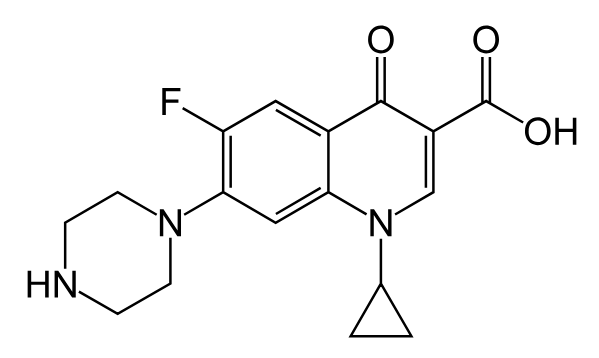
    • Ciprofloxacino (medicamento prototipo)
    • Ofloxacino
  • 3ra generación:
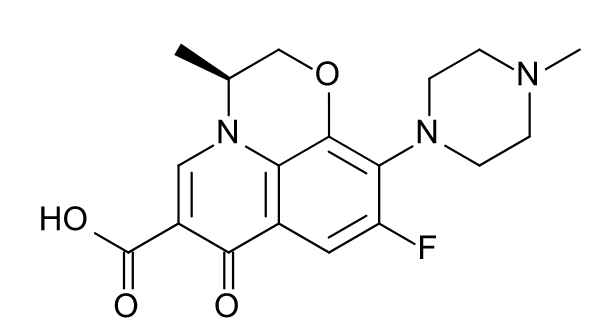
    • Levofloxacino
    • Moxifloxacino
    • Gemifloxacino
  • 4ta generación: delafloxacino

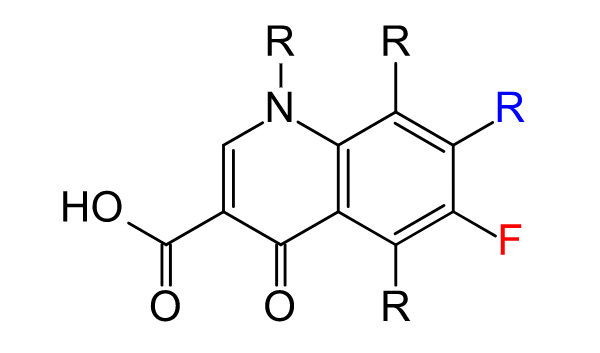
Estructura química

Estructura de las fluoroquinolonas:

  • Estructura de núcleo bicíclico (todas)
  • Grupo funcional de cetona (quinolonas)
  • Átomo de flúor (fluoroquinolonas)

Mecanismos de Acción y de Resistencia

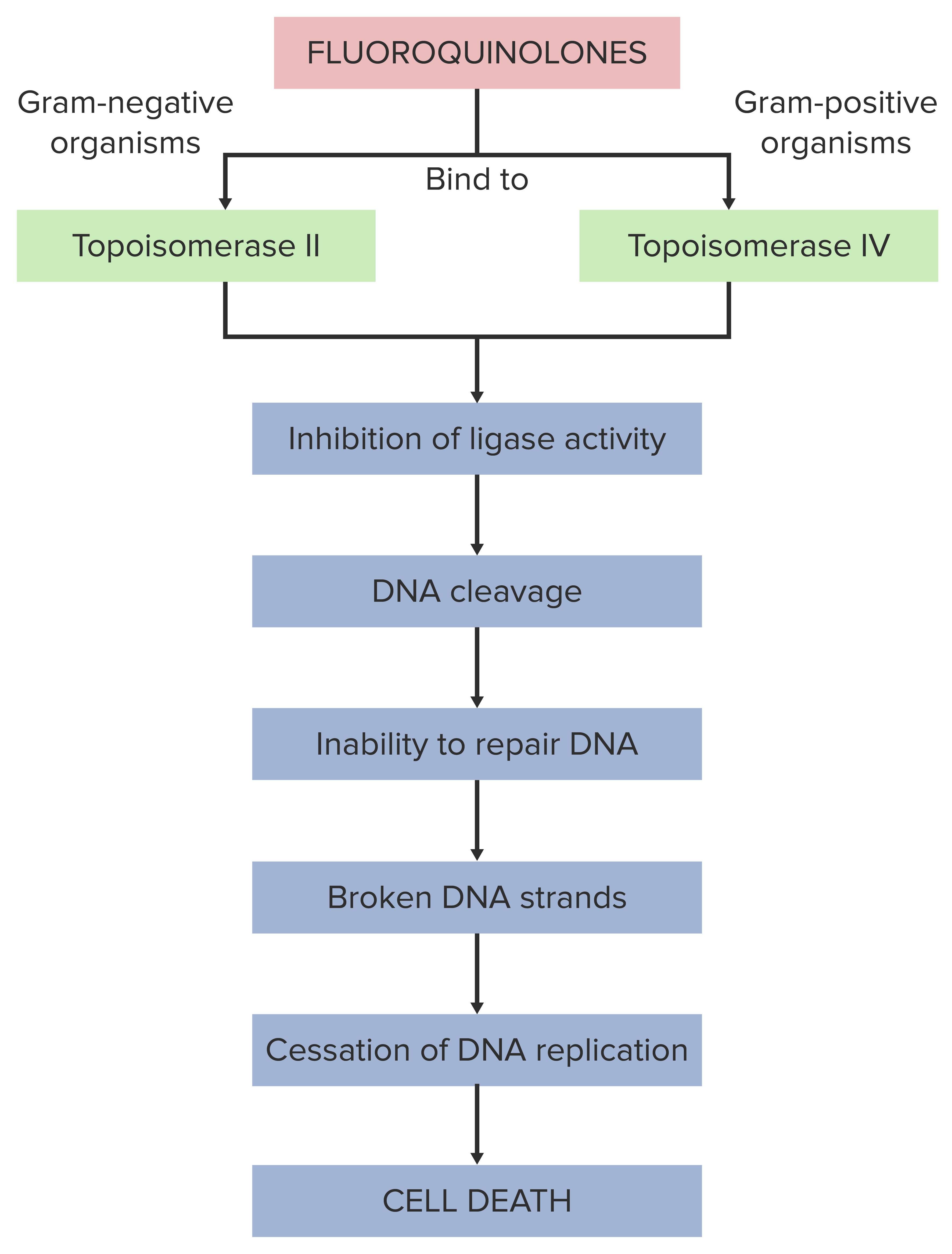
Mecanismo de acción

  • Las fluoroquinolonas inhiben directamente la síntesis del ADN bacteriano cuando se unen a la:
    • Topoisomerasa II (ADN girasa) en EN Erythema nodosum is an immune-mediated panniculitis (inflammation of the subcutaneous fat) caused by a type IV (delayed-type) hypersensitivity reaction. It commonly manifests in young women as tender, erythematous nodules on the shins. Erythema Nodosum organismos gram-negativos
    • Topoisomerasa IV en EN Erythema nodosum is an immune-mediated panniculitis (inflammation of the subcutaneous fat) caused by a type IV (delayed-type) hypersensitivity reaction. It commonly manifests in young women as tender, erythematous nodules on the shins. Erythema Nodosum organismos gram-positivos
  • Enzima topoisomerasa:
    • Desenrolla el ADN antes de la replicación
    • Tiene actividad tanto de nucleasa (escisión del ADN) como de ligasa (reparación del ADN)
  • La unión de las fluoroquinolonas a las enzimas da como resultado:
    • Inhibición únicamente de la actividad de la ligasa
    • Escisión del ADN sin la capacidad de reparar el ADN
    • Cese de la replicación del ADN con hebras de ADN rotas
    • Muerte celular → las fluoroquinolonas son bactericidas

Mecanismo de resistencia

Mecanismos predominantes de resistencia a las fluoroquinolonas:
  • ↓ Acumulación del medicamento dentro de las células bacterianas:
    • ↓ Expresión de canales de porina → ↓ entrada del medicamento en EN Erythema nodosum is an immune-mediated panniculitis (inflammation of the subcutaneous fat) caused by a type IV (delayed-type) hypersensitivity reaction. It commonly manifests in young women as tender, erythematous nodules on the shins. Erythema Nodosum las células
    • ↑ Expresión de bombas de eflujo
  • ↓ Afinidad del medicamento con su diana:
    • Las mutaciones cromosómicas puntuales cambian la estructura de la topoisomerasa y afectan al AL Amyloidosis sitio de unión.
    • Las mutaciones son específicas para cada medicamento y microorganismo (e.g., los LOS Neisseria genes Genes A category of nucleic acid sequences that function as units of heredity and which code for the basic instructions for the development, reproduction, and maintenance of organisms. DNA Types and Structure gyrA en EN Erythema nodosum is an immune-mediated panniculitis (inflammation of the subcutaneous fat) caused by a type IV (delayed-type) hypersensitivity reaction. It commonly manifests in young women as tender, erythematous nodules on the shins. Erythema Nodosum Neisseria gonorrhoeae Neisseria gonorrhoeae A species of gram-negative, aerobic bacteria primarily found in purulent venereal discharges. It is the causative agent of gonorrhea. Neisseria)
    • Resistencia mediada por plásmidos (normalmente una resistencia de bajo nivel)
Mechanisms of resistance

Mecanismo de acción de las fluoroquinolonas

Imagen por Lecturio.

Patrones de resistencia clínicamente importantes

A medida que la resistencia a las fluoroquinolonas se hace HACE Altitude Sickness más común, el uso de fluoroquinolonas puede ser limitado para las siguientes indicaciones:

  • Neisseria gonorrhoeae Neisseria gonorrhoeae A species of gram-negative, aerobic bacteria primarily found in purulent venereal discharges. It is the causative agent of gonorrhea. Neisseria
  • Pseudomonas aeruginosa Pseudomonas aeruginosa A species of gram-negative, aerobic, rod-shaped bacteria commonly isolated from clinical specimens (wound, burn, and urinary tract infections). It is also found widely distributed in soil and water. P. Aeruginosa is a major agent of nosocomial infection. Pseudomonas
  • Infecciones del tracto urinario (ITU)
  • Fiebre tifoidea

Farmacocinética

Absorción

  • Absorción adecuada en EN Erythema nodosum is an immune-mediated panniculitis (inflammation of the subcutaneous fat) caused by a type IV (delayed-type) hypersensitivity reaction. It commonly manifests in young women as tender, erythematous nodules on the shins. Erythema Nodosum el tracto gastrointestinal superior
  • Buena biodisponibilidad oral:
    • Levofloxacino (99%) > moxifloxacino (90%) > gemifloxacino/ciprofloxacino (70%) > delafloxacino (60%)
    • Ingestión con productos lácteos, suplementos minerales y la mayoría de los LOS Neisseria antiácidos puede ↓ la biodisponibilidad de forma significativa
  • Concentraciones máximas: 1–3 horas después de una dosis oral

Distribución

  • Grandes volúmenes de distribución: la mayoría superan el volumen de agua corporal total → el medicamento se acumula en EN Erythema nodosum is an immune-mediated panniculitis (inflammation of the subcutaneous fat) caused by a type IV (delayed-type) hypersensitivity reaction. It commonly manifests in young women as tender, erythematous nodules on the shins. Erythema Nodosum los LOS Neisseria tejidos
  • Los LOS Neisseria medicamentos se concentran en EN Erythema nodosum is an immune-mediated panniculitis (inflammation of the subcutaneous fat) caused by a type IV (delayed-type) hypersensitivity reaction. It commonly manifests in young women as tender, erythematous nodules on the shins. Erythema Nodosum:
    • Tejido prostático
    • Bilis y heces
    • Pulmones
    • Riñones (excepto moxifloxacino)
    • Neutrófilos y macrófagos

Metabolismo

  • < 15% de las concentraciones de medicamentos se someten a metabolismo hepático (excepto moxifloxacino)
  • Moxifloxacino:
    • Aproximadamente el 50% del medicamento se metaboliza en EN Erythema nodosum is an immune-mediated panniculitis (inflammation of the subcutaneous fat) caused by a type IV (delayed-type) hypersensitivity reaction. It commonly manifests in young women as tender, erythematous nodules on the shins. Erythema Nodosum el hígado.
    • Se metaboliza a través de la glucuronidación y la conjugación del sulfato en EN Erythema nodosum is an immune-mediated panniculitis (inflammation of the subcutaneous fat) caused by a type IV (delayed-type) hypersensitivity reaction. It commonly manifests in young women as tender, erythematous nodules on the shins. Erythema Nodosum lugar de los LOS Neisseria mecanismos del CYP450
  • Ciprofloxacino:
    • Inhibe el CYP1A2 → puede ↑ los LOS Neisseria niveles de medicamentos metabolizados por el CYP1A2
    • Algunos de los LOS Neisseria medicamentos afectados son:
      • Clozapina
      • Teofilina
      • Tizanidina

Excreción

  • Eliminación:
    • Principalmente por secreción en EN Erythema nodosum is an immune-mediated panniculitis (inflammation of the subcutaneous fat) caused by a type IV (delayed-type) hypersensitivity reaction. It commonly manifests in young women as tender, erythematous nodules on the shins. Erythema Nodosum los LOS Neisseria túbulos renales (excepto el moxifloxacino)
    • Cierta excreción fecal de ciprofloxacino, moxifloxacino, gemifloxacino y delafloxacino
  • Moxifloxacino:
    • Aclaramiento hepático
    • Puede utilizarse en EN Erythema nodosum is an immune-mediated panniculitis (inflammation of the subcutaneous fat) caused by a type IV (delayed-type) hypersensitivity reaction. It commonly manifests in young women as tender, erythematous nodules on the shins. Erythema Nodosum la insuficiencia renal
    • No debe utilizarse para las ITU
  • Vida media: 3–9 horas (normalmente dos veces al AL Amyloidosis día)

Espectro de Actividad

Las fluoroquinolonas se consideran antibióticos de amplio espectro: el ciprofloxacino es el que mejor cubre a los LOS Neisseria bacilos gram-negativos; el levofloxacino y el moxifloxacino proporcionan una excelente cobertura de la mayoría de los LOS Neisseria posibles patógenos respiratorios; el delafloxacino cubre tanto la P. aeruginosa P. aeruginosa A species of gram-negative, aerobic, rod-shaped bacteria commonly isolated from clinical specimens (wound, burn, and urinary tract infections). It is also found widely distributed in soil and water. P. Aeruginosa is a major agent of nosocomial infection. Pseudomonas como el MRSA MRSA A strain of Staphylococcus aureus that is non-susceptible to the action of methicillin. The mechanism of resistance usually involves modification of normal or the presence of acquired penicillin binding proteins. Staphylococcus.

Organismos aerobios gram-negativos

  • Medicamentos con actividad:
    • La mayoría de las fluoroquinolonas son muy activas contra los LOS Neisseria bacilos gram-negativos.
    • La ciprofloxacina tiene una actividad limitada o nula contra los LOS Neisseria organismos gram-positivos.
  • Organismos cubiertos por las fluoroquinolonas:
    • Enterobacteriaceae Enterobacteriaceae A family of gram-negative, facultatively anaerobic, rod-shaped bacteria that do not form endospores. Its organisms are distributed worldwide with some being saprophytes and others being plant and animal parasites. Many species are of considerable economic importance due to their pathogenic effects on agriculture and livestock. Cephalosporins:
      • Escherichia coli Escherichia coli The gram-negative bacterium Escherichia coli is a key component of the human gut microbiota. Most strains of E. coli are avirulent, but occasionally they escape the GI tract, infecting the urinary tract and other sites. Less common strains of E. coli are able to cause disease within the GI tract, most commonly presenting as abdominal pain and diarrhea. Escherichia coli
      • Klebsiella Klebsiella Klebsiella are encapsulated gram-negative, lactose-fermenting bacilli. They form pink colonies on MacConkey agar due to lactose fermentation. The main virulence factor is a polysaccharide capsule. Klebsiella pneumoniae is the most important pathogenic species. Klebsiella spp.
      • Proteus Proteus Proteus spp. are gram-negative, facultatively anaerobic bacilli. Different types of infection result from Proteus, but the urinary tract is the most common site. The majority of cases are caused by Proteus mirabilis (P. mirabilis). The bacteria are part of the normal intestinal flora and are also found in the environment. Proteus spp.
    • Haemophilus Haemophilus Haemophilus is a genus of Gram-negative coccobacilli, all of whose strains require at least 1 of 2 factors for growth (factor V [NAD] and factor X [heme]); therefore, it is most often isolated on chocolate agar, which can supply both factors. The pathogenic species are H. influenzae and H. ducreyi. Haemophilus spp.
    • Moraxella catarrhalis Moraxella catarrhalis Gram-negative aerobic cocci of low virulence that colonize the nasopharynx and occasionally cause meningitis; bacteremia; empyema; pericarditis; and pneumonia. Moraxella
    • P. aeruginosa (ciprofloxacino > levofloxacino y delafloxacino > moxifloxacino)
    • Neisseria meningitidis Neisseria meningitidis A species of gram-negative, aerobic bacteria. It is a commensal and pathogen only of humans, and can be carried asymptomatically in the nasopharynx. When found in cerebrospinal fluid it is the causative agent of cerebrospinal meningitis. It is also found in venereal discharges and blood. There are at least 13 serogroups based on antigenic differences in the capsular polysaccharides; the ones causing most meningitis infections being a, b, c, y, and w-135. Each serogroup can be further classified by serotype, serosubtype, and immunotype. Neisseria y N. gonorrhoeae N. gonorrhoeae A species of gram-negative, aerobic bacteria primarily found in purulent venereal discharges. It is the causative agent of gonorrhea. Neisseria

Organismos aerobios gram-positivos

  • Medicamentos con actividad:
    • Principalmente los LOS Neisseria medicamentos delas últimas generaciones:
      • Levofloxacino
      • Moxifloxacino
      • Delafloxacino
    • Ciprofloxacino tiene actividad limitada o nula contra estos organismos.
  • Organismos cubiertos:
    • Staphylococcus aureus Staphylococcus aureus Potentially pathogenic bacteria found in nasal membranes, skin, hair follicles, and perineum of warm-blooded animals. They may cause a wide range of infections and intoxications. Brain Abscess ( MRSA MRSA A strain of Staphylococcus aureus that is non-susceptible to the action of methicillin. The mechanism of resistance usually involves modification of normal or the presence of acquired penicillin binding proteins. Staphylococcus solo con delafloxacino)
    • Algunos Streptococcus Streptococcus Streptococcus is one of the two medically important genera of gram-positive cocci, the other being Staphylococcus. Streptococci are identified as different species on blood agar on the basis of their hemolytic pattern and sensitivity to optochin and bacitracin. There are many pathogenic species of streptococci, including S. pyogenes, S. agalactiae, S. pneumoniae, and the viridans streptococci. Streptococcus spp. (incluyendo S. pneumoniae)

Patógenos respiratorios atípicos y anaerobios

Organismos atípicos

  • Medicamentos con actividad:
    • Levofloxacino
    • Moxifloxacino
  • Organismos cubiertos:
    • Mycobacterium Mycobacterium Mycobacterium is a genus of the family Mycobacteriaceae in the phylum Actinobacteria. Mycobacteria comprise more than 150 species of facultative intracellular bacilli that are mostly obligate aerobes. Mycobacteria are responsible for multiple human infections including serious diseases, such as tuberculosis (M. tuberculosis), leprosy (M. leprae), and M. avium complex infections. Mycobacterium spp. (M. tuberculosis Tuberculosis Tuberculosis (TB) is an infectious disease caused by Mycobacterium tuberculosis complex bacteria. The bacteria usually attack the lungs but can also damage other parts of the body. Approximately 30% of people around the world are infected with this pathogen, with the majority harboring a latent infection. Tuberculosis spreads through the air when a person with active pulmonary infection coughs or sneezes. Tuberculosis):
      • Agentes de 2da línea para tratar la tuberculosis Tuberculosis Tuberculosis (TB) is an infectious disease caused by Mycobacterium tuberculosis complex bacteria. The bacteria usually attack the lungs but can also damage other parts of the body. Approximately 30% of people around the world are infected with this pathogen, with the majority harboring a latent infection. Tuberculosis spreads through the air when a person with active pulmonary infection coughs or sneezes. Tuberculosis
      • Se utiliza en EN Erythema nodosum is an immune-mediated panniculitis (inflammation of the subcutaneous fat) caused by a type IV (delayed-type) hypersensitivity reaction. It commonly manifests in young women as tender, erythematous nodules on the shins. Erythema Nodosum casos de resistencia y/o intolerancia a los LOS Neisseria agentes de 1ra línea
    • Legionella Legionella Legionella is a facultative intracellular, gram-negative bacilli. Legionella does not grow on common culture media because it requires certain supplementation (cysteine and iron). Legionella pneumophila (L. pneumophila) accounts for the majority of human infections. Legionella/Legionellosis spp.
    • Chlamydia pneumoniae Chlamydia pneumoniae A species of chlamydophila that causes acute respiratory infection, especially atypical pneumonia, in humans, horses, and koalas. Chlamydia

Organismos anaerobios

  • Solo el moxifloxacino
  • Cubre las infecciones respiratorias causadas por anaerobios:
    • Neumonía por aspiración
    • Absceso pulmonar
  • Generalmente no es eficaz contra Bacteroides Bacteroides Bacteroides is a genus of opportunistic, anaerobic, gram-negative bacilli. Bacteroides fragilis is the most common species involved in human disease and is part of the normal flora of the large intestine. Bacteroides (uso limitado para infecciones intraabdominales)

Otros organismos

Las fluoroquinolonas también se consideran agentes de 1ra línea contra las infecciones susceptibles causadas por:

  • Bacillus anthracis Bacillus anthracis A species of bacteria that causes anthrax in humans and animals. Anthrax
  • Francisella tularensis Francisella Tularensis Aminoglycosides
  • Salmonella typhi Salmonella typhi A serotype of Salmonella enterica which is the etiologic agent of typhoid fever. Enteric Fever (Typhoid Fever)
  • Yersinia pestis Yersinia pestis The plague is a bacterial infection caused by Yersinia pestis (Y. pestis), which primarily infects rodents. The disease is transmitted to humans via a flea bite. Inhalation of infectious droplets and handling infected animals or laboratory specimens are other means of transmission. The plague has 3 forms: bubonic (most common form), septicemic, and pneumonic. Yersinia pestis/Plague

Indicaciones

En EN Erythema nodosum is an immune-mediated panniculitis (inflammation of the subcutaneous fat) caused by a type IV (delayed-type) hypersensitivity reaction. It commonly manifests in young women as tender, erythematous nodules on the shins. Erythema Nodosum comparación con otros antibióticos, las fluoroquinolonas se asocian a un mayor riesgo de efectos secundarios potencialmente permanentes e incapacitantes. Por lo tanto, las fluoroquinolonas no suelen utilizarse para las infecciones no complicadas y solamente deben emplearse contra las bacterias susceptibles.

Infecciones complicadas

  • Infecciones genitourinarias:
    • ITU complicada y pielonefritis
    • Prostatitis Prostatitis Prostatitis is inflammation or an irritative condition of the prostate that presents as different syndromes: acute bacterial, chronic bacterial, chronic prostatitis/chronic pelvic pain, and asymptomatic. Bacterial prostatitis is easier to identify clinically and the management (antibiotics) is better established. Prostatitis (aguda y crónica)
    • Enfermedad inflamatoria pélvica
    • Pueden utilizarse en EN Erythema nodosum is an immune-mediated panniculitis (inflammation of the subcutaneous fat) caused by a type IV (delayed-type) hypersensitivity reaction. It commonly manifests in young women as tender, erythematous nodules on the shins. Erythema Nodosum la cistitis no complicada cuando no existen otras alternativas
  • Infecciones respiratorias:
    • Neumonía nosocomial
    • Neumonía causada por S. pneumoniae multirresistente
    • Neumonía atípica
    • Tuberculosis Tuberculosis Tuberculosis (TB) is an infectious disease caused by Mycobacterium tuberculosis complex bacteria. The bacteria usually attack the lungs but can also damage other parts of the body. Approximately 30% of people around the world are infected with this pathogen, with the majority harboring a latent infection. Tuberculosis spreads through the air when a person with active pulmonary infection coughs or sneezes. Tuberculosis (levofloxacino y moxifloxacino (agentes de 2da línea))
    • Pueden utilizarse en EN Erythema nodosum is an immune-mediated panniculitis (inflammation of the subcutaneous fat) caused by a type IV (delayed-type) hypersensitivity reaction. It commonly manifests in young women as tender, erythematous nodules on the shins. Erythema Nodosum infecciones no complicadas cuando no existen otras alternativas:
      • Sinusitis Sinusitis Sinusitis refers to inflammation of the mucosal lining of the paranasal sinuses. The condition usually occurs concurrently with inflammation of the nasal mucosa (rhinitis), a condition known as rhinosinusitis. Acute sinusitis is due to an upper respiratory infection caused by a viral, bacterial, or fungal agent. Sinusitis bacteriana
      • Exacerbaciones de la enfermedad pulmonar obstructiva crónica (EPOC)
  • Infecciones abdominales:
    • Infecciones intraabdominales complicadas ( en EN Erythema nodosum is an immune-mediated panniculitis (inflammation of the subcutaneous fat) caused by a type IV (delayed-type) hypersensitivity reaction. It commonly manifests in young women as tender, erythematous nodules on the shins. Erythema Nodosum combinación con metronidazol para la cobertura de anaerobios)
    • Peritonitis Peritonitis Inflammation of the peritoneum lining the abdominal cavity as the result of infectious, autoimmune, or chemical processes. Primary peritonitis is due to infection of the peritoneal cavity via hematogenous or lymphatic spread and without intra-abdominal source. Secondary peritonitis arises from the abdominal cavity itself through rupture or abscess of intra-abdominal organs. Penetrating Abdominal Injury e infección asociada a catéter de diálisis peritoneal
  • Infecciones cutáneas, de tejidos blandos y musculoesqueléticas:
    • Infecciones óseas y articulares (incluidas las infecciones de prótesis)
    • Infecciones de pie diabético
    • Infecciones cutáneas
    • Profilaxis quirúrgica en EN Erythema nodosum is an immune-mediated panniculitis (inflammation of the subcutaneous fat) caused by a type IV (delayed-type) hypersensitivity reaction. It commonly manifests in young women as tender, erythematous nodules on the shins. Erythema Nodosum pacientes alérgicos a agentes de 1ra línea (e.g., cefalosporinas)
    • Infecciones por heridas por mordedura
  • Infecciones del sistema nervioso: meningitis Meningitis Meningitis is inflammation of the meninges, the protective membranes of the brain, and spinal cord. The causes of meningitis are varied, with the most common being bacterial or viral infection. The classic presentation of meningitis is a triad of fever, altered mental status, and nuchal rigidity. Meningitis bacteriana

Infecciones causadas por organismos únicos

  • Diarrea del viajero (E. coli, Shigella Shigella Shigella is a genus of gram-negative, non-lactose-fermenting facultative intracellular bacilli. Infection spreads most commonly via person-to-person contact or through contaminated food and water. Humans are the only known reservoir. Shigella o Campylobacter Campylobacter Campylobacter (“curved bacteria”) is a genus of thermophilic, S-shaped, gram-negative bacilli. There are many species of Campylobacter, with C. jejuni and C. coli most commonly implicated in human disease. Campylobacter)
  • Fiebre tifoidea ( Salmonella typhi Salmonella typhi A serotype of Salmonella enterica which is the etiologic agent of typhoid fever. Enteric Fever (Typhoid Fever))
  • Ántrax ( Bacillus anthracis Bacillus anthracis A species of bacteria that causes anthrax in humans and animals. Anthrax)
  • Tularemia ( Francisella tularensis Francisella Tularensis Aminoglycosides)
  • Peste ( Yersinia pestis Yersinia pestis The plague is a bacterial infection caused by Yersinia pestis (Y. pestis), which primarily infects rodents. The disease is transmitted to humans via a flea bite. Inhalation of infectious droplets and handling infected animals or laboratory specimens are other means of transmission. The plague has 3 forms: bubonic (most common form), septicemic, and pneumonic. Yersinia pestis/Plague)
  • Enfermedad por arañazo de gato ( Bartonella henselae Bartonella henselae A species of gram-negative bacteria that is the etiologic agent of bacillary angiomatosis. This organism can also be a cause of cat-scratch disease in immunocompetent patients. Bartonella)
  • Cólera ( Vibrio cholerae Vibrio cholerae The etiologic agent of cholera. Vibrio)
  • Chancroide ( Haemophilus ducreyi Haemophilus ducreyi A species of Haemophilus that appears to be the pathogen or causative agent of the sexually transmitted disease, chancroid. Haemophilus)

Efectos Secundarios y Contraindicaciones

Efectos secundarios

Las fluoroquinolonas conllevan mayores riesgos que muchos otros antibióticos, lo que limita su uso. Aunque los LOS Neisseria efectos secundarios son poco frecuentes, algunos pueden ser permanentes o graves.

  • Efectos neurológicos:
    • Efectos leves comunes:
      • Cefalea
      • Mareo
      • Insomnio (transitorio)
    • Efectos menos comunes y más graves:
      • Neuropatía periférica (puede ser permanente)
      • Delirium Delirium Delirium is a medical condition characterized by acute disturbances in attention and awareness. Symptoms may fluctuate during the course of a day and involve memory deficits and disorientation. Delirium, psicosis y/o alucinaciones
      • Convulsiones
    • Exacerbación de la miastenia gravis
  • Efectos musculoesqueléticos (especialmente en EN Erythema nodosum is an immune-mediated panniculitis (inflammation of the subcutaneous fat) caused by a type IV (delayed-type) hypersensitivity reaction. It commonly manifests in young women as tender, erythematous nodules on the shins. Erythema Nodosum niños en EN Erythema nodosum is an immune-mediated panniculitis (inflammation of the subcutaneous fat) caused by a type IV (delayed-type) hypersensitivity reaction. It commonly manifests in young women as tender, erythematous nodules on the shins. Erythema Nodosum crecimiento y adolescentes):
    • Tendinopatía, incluida la rotura de tendón:
      • La mayoría de las veces el tendón de Aquiles
      • Aconsejar a las personas que dejen de tomar la fluoroquinolona si aparece dolor Dolor Inflammation y/o edema Edema Edema is a condition in which excess serous fluid accumulates in the body cavity or interstitial space of connective tissues. Edema is a symptom observed in several medical conditions. It can be categorized into 2 types, namely, peripheral (in the extremities) and internal (in an organ or body cavity). Edema.
    • Artropatía:
      • Erosiones de cartílago
      • Derrames no inflamatorios
  • Efectos gastrointestinales:
    • Náuseas, vómitos y/o malestar abdominal
    • Diarrea (menos común)
    • Infección por Clostridium difficile Clostridium difficile A common inhabitant of the colon flora in human infants and sometimes in adults. The type species clostridioides difficile is formerly known as Clostridium difficile. It is a causative agent for clostridioides infections and is associated with pseudomembranous enterocolitis in patients receiving antibiotic therapy. Clostridia
    • Hepatotoxicidad (varios medicamentos han sido retirados del mercado debido a la hepatotoxicidad)
  • Efectos cardiovasculares:
  • Otros efectos:
    • Erupciones cutáneas
    • Fototoxicidad
    • Disglucemia (mayor riesgo con la moxifloxacina en EN Erythema nodosum is an immune-mediated panniculitis (inflammation of the subcutaneous fat) caused by a type IV (delayed-type) hypersensitivity reaction. It commonly manifests in young women as tender, erythematous nodules on the shins. Erythema Nodosum individuos diabéticos)

Contraindicaciones

  • Hipersensibilidad a las fluoroquinolonas
  • Embarazo
  • Niños en EN Erythema nodosum is an immune-mediated panniculitis (inflammation of the subcutaneous fat) caused by a type IV (delayed-type) hypersensitivity reaction. It commonly manifests in young women as tender, erythematous nodules on the shins. Erythema Nodosum crecimiento y adolescentes
  • Uso simultáneo con otros medicamentos que prolongan el intervalo QT
  • Miastenia gravis
  • Utilizar con precaución en EN Erythema nodosum is an immune-mediated panniculitis (inflammation of the subcutaneous fat) caused by a type IV (delayed-type) hypersensitivity reaction. It commonly manifests in young women as tender, erythematous nodules on the shins. Erythema Nodosum pacientes con:
    • Diabetes Diabetes Diabetes mellitus (DM) is a metabolic disease characterized by hyperglycemia and dysfunction of the regulation of glucose metabolism by insulin. Type 1 DM is diagnosed mostly in children and young adults as the result of autoimmune destruction of β cells in the pancreas and the resulting lack of insulin. Type 2 DM has a significant association with obesity and is characterized by insulin resistance. Diabetes Mellitus
    • Artritis reumatoide (riesgo de rotura del tendón)
    • Aneurisma/disección aórtica
    • Deterioro renal (ciprofloxacino, levofloxacino y delafloxacino)
    • Deterioro hepático (moxifloxacino)

Comparación de Medicamentos

Comparación basada en EN Erythema nodosum is an immune-mediated panniculitis (inflammation of the subcutaneous fat) caused by a type IV (delayed-type) hypersensitivity reaction. It commonly manifests in young women as tender, erythematous nodules on the shins. Erythema Nodosum los LOS Neisseria mecanismos de acción

Los LOS Neisseria antibióticos pueden clasificarse de varias maneras. Una forma es clasificar a los LOS Neisseria antibióticos por su mecanismo de acción:

Tabla: Antibióticos clasificados por su mecanismo de acción primario
Mecanismo Clases de antibióticos
Inhibidores de la síntesis de la pared celular bacteriana
  • Penicilinas
  • Cefalosporinas
  • Carbapenémicos
  • Misceláneos
Inhibidores de la síntesis proteica bacteriana
  • Tetraciclinas
  • Macrólidos
  • Cetólidos
  • Lincosamidas
  • Estreptograminas
  • Linezolid Linezolid An oxazolidinone and acetamide derived anti-bacterial agent and protein synthesis inhibitor that is used in the treatment of gram-positive bacterial infections of the skin and respiratory tract. Oxazolidinones
Agentes que actúan contra el ADN y/o el folato
  • Sulfonamidas
  • Trimetoprim
  • Fluoroquinolonas
Agentes antimicobacterianos
  • Agentes antiTB
  • Agentes antileprosos
  • Agentes micobacterianos atípicos

Comparación basada en EN Erythema nodosum is an immune-mediated panniculitis (inflammation of the subcutaneous fat) caused by a type IV (delayed-type) hypersensitivity reaction. It commonly manifests in young women as tender, erythematous nodules on the shins. Erythema Nodosum la cobertura

Los LOS Neisseria diferentes antibióticos tienen diferentes grados de actividad contra diferentes bacterias. En EN Erythema nodosum is an immune-mediated panniculitis (inflammation of the subcutaneous fat) caused by a type IV (delayed-type) hypersensitivity reaction. It commonly manifests in young women as tender, erythematous nodules on the shins. Erythema Nodosum la siguiente tabla se describen los LOS Neisseria antibióticos con actividad contra 3 clases importantes de bacterias: cocos gram-positivos, bacilos gram-negativos y anaerobios.
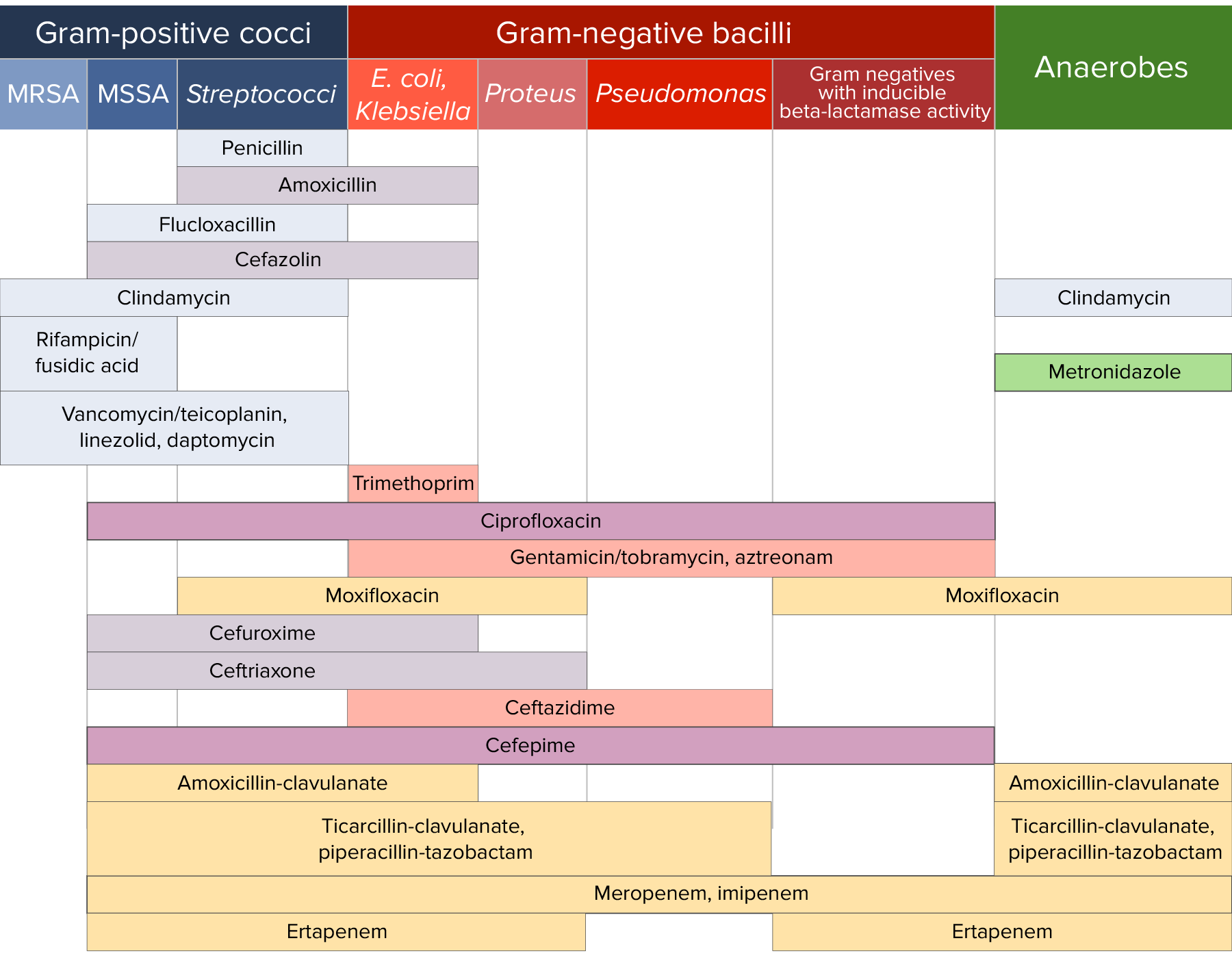
Tabla de sensibilidad a los antibióticos

Sensibilidad a los antibióticos:
Tabla que compara la cobertura microbiana de diferentes antibióticos para cocos gram-positivos, bacilos gram-negativos y anaerobios.

Imagen por Lecturio. Licencia: CC BY-NC-SA 4.0

Referencias

  1. Deck, D.H., Winston, L.G. (2013). Sulfonamides, Trimethoprim, and Quinolones. In Katzung, B.G., Masters, S.B., and Trevor, A.J. (Eds.), Basic and Clinical Pharmacology (12th Ed., pp. 831‒834). 
  2. Hooper, D.C. (2025). Fluoroquinolones. In Bogorodskaya, M. (Ed.), UpToDate. Retrieved October 16, 2025, from https://www.uptodate.com/contents/fluoroquinolones 
  3. Lexicomp Drug Information Sheets (2025). In UpToDate. Retrieved October 16, 2025, from:

¡Crea tu cuenta gratis o inicia una sesión para seguir leyendo!

Regístrate ahora y obtén acceso gratuito a Lecturio con páginas de concepto, videos médicos y cuestionarios para tu educación médica.

User Reviews

Que tengas una sesión de estudio alegre y navideña 🎁 Ahorra 50% en todos los planes >>

Details