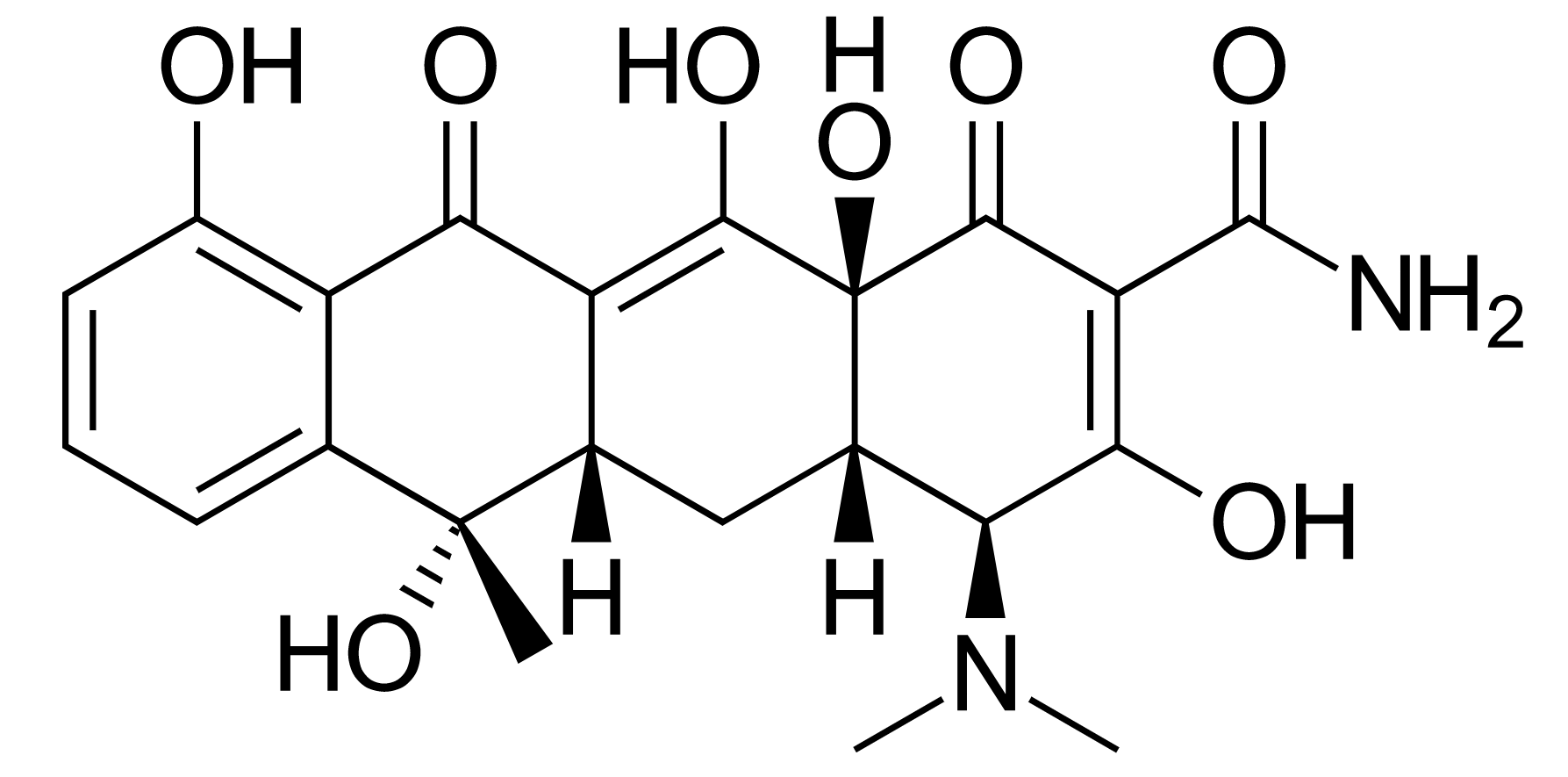
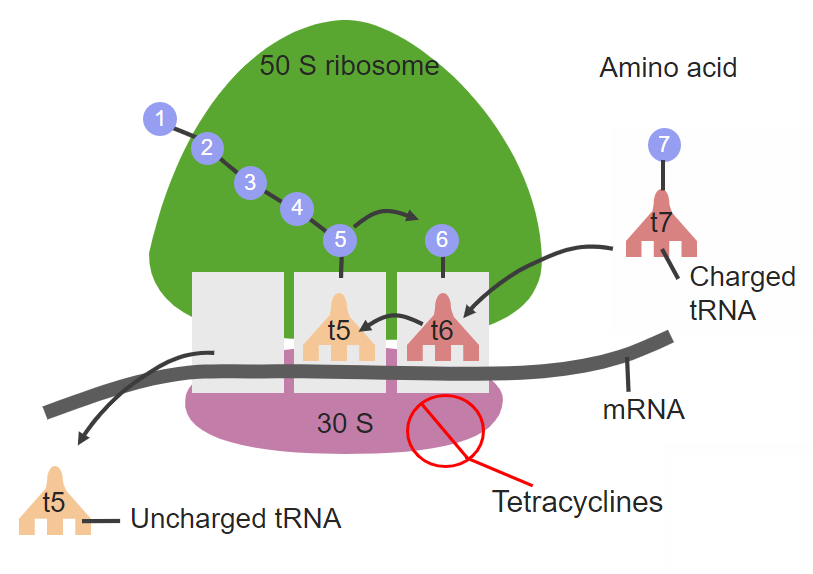
As tetraciclinas são uma classe de antibióticos de largo espectro indicados para uma ampla variedade de infeções bacterianas. Estes fármacos ligam-se à subunidade ribossómica 30S para inibir a síntese de proteínas bacterianas. As tetraciclinas cobrem organismos gram-positivos e gram-negativos, bem como bactérias atípicas, como clamídia, micoplasma, espiroquetas e até protozoários. A absorção oral das tetraciclinas diminui com a ingestão de alguns fármacos e suplementos (por exemplo, leite de magnésia) ou alimentos (por exemplo, lacticínios) que contêm catiões polivalentes, como cálcio e magnésio. Os efeitos adversos incluem fotossensibilidade, distúrbios gastrointestinais e pigmentação da pele no caso da minociclina. As tetraciclinas suprimem o crescimento ósseo e descoloram os dentes em crianças e estão contraindicadas na gravidez e na amamentação. É importante realçar que foram aprovadas três novas tetraciclinas pela FDA em 2018, que podem ter um papel no tratamento de certas infeções causadas por organismos resistentes a fármacos.
.
A absorção diminui em 1–2 horas após o consumo de produtos lácteos, antiácidos e quaisquer outros produtos que contenham ferro, magnésio, cálcio ou alumínio (por exemplo, suplementos, vitaminas), porque estes elementos se podem ligar às tetraciclinas e reduzir a sua capacidade de ser absorvidas.
Distribuição de minociclina ↑ na salivaSalivaThe clear, viscous fluid secreted by the salivary glands and mucous glands of the mouth. It contains mucins, water, organic salts, and ptyalin.Salivary Glands: Anatomy e lágrimas
Distribuição de doxiciclina ↑ nos fluidos prostáticos
Metabolismo: a maior parte das tetraciclinas de 1ª geração não é metabolizada.
Excreção:
Excreção principalmente renal
Doxiciclina excretada via bílis/fezes
Indicações
Tabela: Tetraciclinas e as suas indicações
Fármaco
Indicações
Pérolas
Tetraciclina (comprimido oral)
Actinomicose: quando a penicilina está contraindicada
Infeções por gram-negativos:
KlebsiellaKlebsiellaKlebsiella are encapsulated gram-negative, lactose-fermenting bacilli. They form pink colonies on MacConkey agar due to lactose fermentation. The main virulence factor is a polysaccharide capsule. Klebsiella pneumoniae is the most important pathogenic species.Klebsiella
Escherichia coliEscherichia coliThe gram-negative bacterium Escherichia coli is a key component of the human gut microbiota. Most strains of E. coli are avirulent, but occasionally they escape the GI tract, infecting the urinary tract and other sites. Less common strains of E. coli are able to cause disease within the GI tract, most commonly presenting as abdominal pain and diarrhea. Escherichia coli
BacteroidesBacteroidesBacteroides is a genus of opportunistic, anaerobic, gram-negative bacilli. Bacteroides fragilis is the most common species involved in human disease and is part of the normal flora of the large intestine.Bacteroides
ShigellaShigellaShigella is a genus of gram-negative, non-lactose-fermenting facultative intracellular bacilli. Infection spreads most commonly via person-to-person contact or through contaminated food and water. Humans are the only known reservoir.Shigella
Acne: Cutibacterium (PropionibacteriumPropionibacteriumA genus of gram-positive, rod-shaped bacteria whose cells occur singly, in pairs or short chains, in V or y configurations, or in clumps resembling letters of the chinese alphabet. Its organisms are found in cheese and dairy products as well as on human skin and can occasionally cause soft tissue infections.Dog and Cat Bites) acnes
Infeções respiratórias:
Haemophilus influenzaeHaemophilus InfluenzaeA species of Haemophilus found on the mucous membranes of humans and a variety of animals. The species is further divided into biotypes I through viii.Haemophilus
StreptococcusStreptococcusStreptococcus is one of the two medically important genera of gram-positive cocci, the other being Staphylococcus. Streptococci are identified as different species on blood agar on the basis of their hemolytic pattern and sensitivity to optochin and bacitracin. There are many pathogenic species of streptococci, including S. pyogenes, S. agalactiae, S. pneumoniae, and the viridans streptococci.Streptococcus pneumoniae
S. pyogenes
KlebsiellaKlebsiellaKlebsiella are encapsulated gram-negative, lactose-fermenting bacilli. They form pink colonies on MacConkey agar due to lactose fermentation. The main virulence factor is a polysaccharide capsule. Klebsiella pneumoniae is the most important pathogenic species.Klebsiella
Mycoplasma pneumoniaeMycoplasma pneumoniaeShort filamentous organism of the genus mycoplasma, which binds firmly to the cells of the respiratory epithelium. It is one of the etiologic agents of non-viral primary atypical pneumonia in man.Mycoplasma
Staphylococcus aureusStaphylococcus aureusPotentially pathogenic bacteria found in nasal membranes, skin, hair follicles, and perineum of warm-blooded animals. They may cause a wide range of infections and intoxications.Brain Abscess
S. pyogenes
Infeções do trato urinário (ITUs)
KlebsiellaKlebsiellaKlebsiella are encapsulated gram-negative, lactose-fermenting bacilli. They form pink colonies on MacConkey agar due to lactose fermentation. The main virulence factor is a polysaccharide capsule. Klebsiella pneumoniae is the most important pathogenic species.Klebsiella
E. coli
DSTs
Chlamydia trachomatisChlamydia trachomatisType species of Chlamydia causing a variety of ocular and urogenital diseases.Chlamydia
Linfogranuloma venéreo
Cancroide (Haemophilus ducreyiHaemophilus ducreyiA species of Haemophilus that appears to be the pathogen or causative agent of the sexually transmitted disease, chancroid.Haemophilus)
Sífilis (Treponema pallidumTreponema pallidumThe causative agent of venereal and non-venereal syphilis as well as yaws.Treponema) – quando a penicilina está contraindicada
Infeções oftálmicas: Chlamydia trachomatisChlamydia trachomatisType species of Chlamydia causing a variety of ocular and urogenital diseases.Chlamydia (conjuntivite)
Piã: TreponemaTreponemaTreponema is a gram-negative, microaerophilic spirochete. Owing to its very thin structure, it is not easily seen on Gram stain, but can be visualized using dark-field microscopy. This spirochete contains endoflagella, which allow for a characteristic corkscrew movement.Treponema pertenue
Amebíase: Entamoeba histolyticaEntamoeba HistolyticaA species of parasitic protozoa causing entamoebiasis and amebic dysentery (dysentery, amebic). Characteristics include a single nucleus containing a small central karyosome and peripheral chromatin that is finely and regularly beaded.Amebicides
Antraz
Bacillus anthracisBacillus anthracisA species of bacteria that causes anthrax in humans and animals.Anthrax
Quando a penicilina está contraindicada
Infeção de Vincent (gengivite ulcerativa necrosante aguda)
FusobacteriumFusobacteriumA genus of gram-negative, anaerobic, rod-shaped bacteria found in cavities of humans and other animals. No endospores are formed. Some species are pathogenic and occur in various purulent or gangrenous infections.Dog and Cat Bites fusiforme
Quando a penicilina está contraindicada
Listeriose
ListeriaListeriaListeria spp. are motile, flagellated, gram-positive, facultative intracellular bacilli. The major pathogenic species is Listeria monocytogenes. Listeria are part of the normal gastrointestinal flora of domestic mammals and poultry and are transmitted to humans through the ingestion of contaminated food, especially unpasteurized dairy products. Listeria Monocytogenes/Listeriosis monocytogenes
Infeções por RickettsiaRickettsiaRickettsiae are a diverse collection of obligate intracellular, gram-negative bacteria that have a tropism for vascular endothelial cells. The vectors for transmission vary by species but include ticks, fleas, mites, and lice. Rickettsia
Grupo Typhus
Febre macular das Montanhas Rochosas
Coxiella burnetiiCoxiella burnetiiA species of gram-negative bacteria that grows preferentially in the vacuoles of the host cell. It is the etiological agent of q fever.Coxiella/Q Fever (febre Q)
Infeções zoonóticas:
BartonellaBartonellaBartonella is a genus of gram-negative bacteria in the family Bartonellaceae. As a facultative intracellular parasite, Bartonella can infect healthy people as well as act as an opportunistic pathogen. Bartonella species are transmitted by vectors such as ticks, fleas, sandflies, and mosquitoes. B. henselae is the most common of the 3 species known to cause human disease.Bartonella
Brucelose (febre mediterrânea/ondulante): em associação a aminoglicosídeos
Peste: Yersinia pestisYersinia pestisThe plague is a bacterial infection caused by Yersinia pestis (Y. pestis), which primarily infects rodents. The disease is transmitted to humans via a flea bite. Inhalation of infectious droplets and handling infected animals or laboratory specimens are other means of transmission. The plague has 3 forms: bubonic (most common form), septicemic, and pneumonic. Yersinia pestis/Plague
Psitacose (febre de papagaio): Chlamydia psittaciChlamydia psittaciA genus of chlamydophila infecting primarily birds. It contains eight known serovars, some of which infect more than one type of host, including humans.Chlamydia
Uso off-label: parte do tratamento polifarmacológico para Helicobacter pyloriHelicobacter pyloriA spiral bacterium active as a human gastric pathogen. It is a gram-negative, urease-positive, curved or slightly spiral organism initially isolated in 1982 from patients with lesions of gastritis or peptic ulcers in Western Australia. Helicobacter pylori was originally classified in the genus campylobacter, but RNA sequencing, cellular fatty acid profiles, growth patterns, and other taxonomic characteristics indicate that the micro-organism should be included in the genus Helicobacter. It has been officially transferred to Helicobacter gen.Helicobacter (úlcera péptica)
Doença de Lyme (BorreliaBorreliaBorrelia are gram-negative microaerophilic spirochetes. Owing to their small size, they are not easily seen on Gram stain but can be visualized using dark-field microscopy, Giemsa, or Wright stain. Spirochetes are motile and move in a characteristic spinning fashion due to axial filaments in the periplasmic space. Borrelia spp.)
Rosácea (apenas lesões inflamatórias)
PneumoniaPneumoniaPneumonia or pulmonary inflammation is an acute or chronic inflammation of lung tissue. Causes include infection with bacteria, viruses, or fungi. In more rare cases, pneumonia can also be caused through toxic triggers through inhalation of toxic substances, immunological processes, or in the course of radiotherapy.Pneumonia adquirida na comunidade
Infeções cutâneas por Staphylococcus aureusStaphylococcus aureusPotentially pathogenic bacteria found in nasal membranes, skin, hair follicles, and perineum of warm-blooded animals. They may cause a wide range of infections and intoxications.Brain Abscess, incluindo MRSAMRSAA strain of Staphylococcus aureus that is non-susceptible to the action of methicillin. The mechanism of resistance usually involves modification of normal or the presence of acquired penicillin binding proteins.Staphylococcus
Profilaxia de PlasmodiumPlasmodiumA genus of protozoa that comprise the malaria parasites of mammals. Four species infect humans (although occasional infections with primate malarias may occur). These are plasmodium falciparum; plasmodium malariae; plasmodium ovale, and plasmodium vivax. Species causing infection in vertebrates other than man include: plasmodium berghei; plasmodium chabaudi; p. Vinckei, and plasmodium yoelii in rodents; p. Brasilianum, plasmodium cynomolgi; and plasmodium knowlesi in monkeys; and plasmodium gallinaceum in chickens.Antimalarial Drugs falciparum (malária)
Tratamento de 1ª linha para a doença de Lyme, a não ser que haja contraindicação
Atividade da doxiciclina > tetraciclina
Não é necessário nenhum ajuste de dose na lesão renal
Meningite: Neisseria meningitidisNeisseria meningitidisA species of gram-negative, aerobic bacteria. It is a commensal and pathogen only of humans, and can be carried asymptomatically in the nasopharynx. When found in cerebrospinal fluid it is the causative agent of cerebrospinal meningitis. It is also found in venereal discharges and blood. There are at least 13 serogroups based on antigenic differences in the capsular polysaccharides; the ones causing most meningitis infections being a, b, c, y, and w-135. Each serogroup can be further classified by serotype, serosubtype, and immunotype.Neisseria
Micobactérias atípicas
Demeclociclina
Numerosos alvos bacterianos e indicações
Agora raramente é usada como um agente antibacteriano
Usada no tratamento de SIADHSIADHSyndrome of inappropriate antidiuretic hormone secretion (SIADH) is a disorder of impaired water excretion due to the inability to suppress the secretion of antidiuretic hormone (ADH). SIADH is characterized by impaired water excretion leading to dilutional hyponatremia, which is mainly asymptomatic but may cause neurologic symptoms. SSyndrome of Inappropriate Antidiuretic Hormone Secretion (SIADH) crónica
Induz diabetesDiabetesDiabetes mellitus (DM) is a metabolic disease characterized by hyperglycemia and dysfunction of the regulation of glucose metabolism by insulin. Type 1 DM is diagnosed mostly in children and young adults as the result of autoimmune destruction of β cells in the pancreas and the resulting lack of insulin. Type 2 DM has a significant association with obesity and is characterized by insulin resistance.Diabetes Mellitus insipidus nefrogénico
Tigeciclina (solução injetável (IV))
PneumoniaPneumoniaPneumonia or pulmonary inflammation is an acute or chronic inflammation of lung tissue. Causes include infection with bacteria, viruses, or fungi. In more rare cases, pneumonia can also be caused through toxic triggers through inhalation of toxic substances, immunological processes, or in the course of radiotherapy.Pneumonia adquirida na comunidade
Infeções da pele e dos tecidos molesMolesPrimary Skin Lesions, incluindo MRSAMRSAA strain of Staphylococcus aureus that is non-susceptible to the action of methicillin. The mechanism of resistance usually involves modification of normal or the presence of acquired penicillin binding proteins.Staphylococcus
EnterococcusEnterococcusEnterococcus is a genus of oval-shaped gram-positive cocci that are arranged in pairs or short chains. Distinguishing factors include optochin resistance and the presence of pyrrolidonyl arylamidase (PYR) and Lancefield D antigen. Enterococcus is part of the normal flora of the human GI tract.Enterococcus resistente à vancomicina (VRE)
Infeções intra-abdominais, incluindo MRSAMRSAA strain of Staphylococcus aureus that is non-susceptible to the action of methicillin. The mechanism of resistance usually involves modification of normal or the presence of acquired penicillin binding proteins.Staphylococcus
Derivado das tetraciclinas, na verdade uma glicilciclina
Usa-se quando não há alternativas e/ou quando há resistência às tetraciclinas
Apenas utilização IV
Não é necessário fazer nenhum ajuste de dose na lesão renal
Não deve ser usada para infeções da corrente sanguínea
Não é suscetível a mecanismos de resistência às tetraciclinas
Deve aconselhar-se os pacientes a fazer a medicação com água e a sentar-se na posição vertical durante 30 minutos após a ingestão para prevenir a esofagite.
Fotossensibilidade da pele:
A interação química entre o fármaco/metabolito na pele e os raios ultravioleta pode causar uma reação semelhante a uma queimadura solar severa.
Deve aconselhar-se os pacientes a evitar a luz solar direta e os raios ultravioleta artificiais (ou seja, cabines para bronzeamento) e usar roupas de proteção e protetor solar.
↓ Crescimento ósseo: crianças < 8 anos
Amarelecimento dos dentes e hipoplasia do esmalte: normalmente em crianças < 8 anos de idade
Hepatotoxicidade
Disfunção vestibular com minociclina ou doxiciclina
Reação semelhante ao lúpus induzida por fármacos com minociclina
Síndrome de Fanconi com tetraciclinas expiradas
Contraindicações
Gravidez (categoria D):
Pode causar defeitos congénitos, hepatotoxicidade na mãe e desenvolvimento anormal dos dentes como acima
A exceção é a doxiciclina para o tratamento de RickettsiaRickettsiaRickettsiae are a diverse collection of obligate intracellular, gram-negative bacteria that have a tropism for vascular endothelial cells. The vectors for transmission vary by species but include ticks, fleas, mites, and lice. Rickettsia spp.
Crianças < 8 anos de idade, exceto a doxiciclina para o tratamento de RickettsiaRickettsiaRickettsiae are a diverse collection of obligate intracellular, gram-negative bacteria that have a tropism for vascular endothelial cells. The vectors for transmission vary by species but include ticks, fleas, mites, and lice. Rickettsia spp.
Insuficiência renal, exceto com a doxiciclina por causa da sua eliminação GI
Precauções
Amamentação:
Presente no leite materno em pequenas quantidades
Evitar cursos prolongados ou repetidos.
Utilização de curto prazo aceitável
Anteriormente havia uma preocupação teórica com a coloração dos bebés; é possível haver deposição óssea e nos dentes, inibindo o crescimento, mas estudos recentes sugerem que isto é improvável
Doença/insuficiência hepática preexistente: doses altas podem causar toxicidade hepática.
Interações farmacológicas:
Anticonvulsivantes: diminuem a eficácia das tetraciclinas e alteram os níveis do fármaco anticonvulsivante
Varfarina: ↑ INR
Contracetivos orais: eficácia diminuída
Aviso “black box” para a tigeciclina: associado a ↑ mortalidade
Mecanismos de Resistência
Desenvolvimento de bombas de efluxo mediadas por plasmaPlasmaThe residual portion of blood that is left after removal of blood cells by centrifugation without prior blood coagulation.Transfusion Products para ejeção ativa, limitando a capacidade do fármaco para se acumular nas células
Diminuição da penetração na parede celular
As proteínas de proteção ribossómica impedem a ligação.
PneumoniaPneumoniaPneumonia or pulmonary inflammation is an acute or chronic inflammation of lung tissue. Causes include infection with bacteria, viruses, or fungi. In more rare cases, pneumonia can also be caused through toxic triggers through inhalation of toxic substances, immunological processes, or in the course of radiotherapy.Pneumonia adquirida na comunidade
Neisseria meningitidisNeisseria meningitidisA species of gram-negative, aerobic bacteria. It is a commensal and pathogen only of humans, and can be carried asymptomatically in the nasopharynx. When found in cerebrospinal fluid it is the causative agent of cerebrospinal meningitis. It is also found in venereal discharges and blood. There are at least 13 serogroups based on antigenic differences in the capsular polysaccharides; the ones causing most meningitis infections being a, b, c, y, and w-135. Each serogroup can be further classified by serotype, serosubtype, and immunotype.Neisseria
World Health Organization. (2019). World Health Organization Model List of Essential Medicines, 21st list 2019. Geneva: World Health Organization. http://apps.who.int/iris/handle/10665/325771
Moullan N, Mouchiroud L, Wang X, et al. (2015). Tetracyclines disturb mitochondrial function across eukaryotic models: a call for caution in biomedical research. Cell Reports 10:1681–1691. https://www.ncbi.nlm.nih.gov/pmc/articles/PMC4565776/
Chatzispyrou IA, Held NM, Mouchiroud L, Auwerx J, Houtkooper RH. (2015). Tetracycline antibiotics impair mitochondrial function and its experimental use confounds research. Cancer Research :4446–4449. https://www.ncbi.nlm.nih.gov/pmc/articles/PMC4631686/
Sapadin AN, Fleischmajer R. (2006). Tetracyclines: nonantibiotic properties and their clinical implications. J Am Acad Dermatol 54:258–265. https://pubmed.ncbi.nlm.nih.gov/16443056/
Valentín S, Morales A, Sánchez JL, Rivera A. (2009). Safety and efficacy of doxycycline in the treatment of rosacea. Clin Cosmet Investig Dermatol; 2:129-40. https://pubmed.ncbi.nlm.nih.gov/21436975/
Yılmaz Ç, Özcengiz G. (2017). Antibiotics: pharmacokinetics, toxicity, resistance, and multidrug efflux pumps. Biochem Pharmacol 133:43–62. https://pubmed.ncbi.nlm.nih.gov/27765485/
¡Crea tu cuenta gratis o inicia una sesión para seguir leyendo!
A Lecturio Medical complementa o teu estudo através de métodos de ensino baseados em evidência, vídeos de palestras, perguntas e muito mais – tudo combinado num só lugar e fácil de usar.
User Reviews
One Platform. Everything You Need to Succeed. 📚 Get 30% off all plans and certificates!
Lecturio Premium dá-lhe acesso total a todos os conteúdos e características
Obtenha Premium para ver todos os vídeos
Verifique agora o seu e-mail para obter um teste gratuito.
Crie uma conta gratuita para testar os seus conhecimentos
Lecturio Premium dá-lhe acesso total a todos os conteúdos e características - incluindo o Qbank de Lecturio com perguntas actualizadas ao estilo do board-.