La acidosisAcidosisA pathologic condition of acid accumulation or depletion of base in the body. The two main types are respiratory acidosis and metabolic acidosis, due to metabolic acid build up.Respiratory Acidosis tubular renal es un desequilibrio enENErythema nodosum is an immune-mediated panniculitis (inflammation of the subcutaneous fat) caused by a type IV (delayed-type) hypersensitivity reaction. It commonly manifests in young women as tender, erythematous nodules on the shins.Erythema Nodosum el pHpHThe quantitative measurement of the acidity or basicity of a solution.Acid-Base Balance fisiológico causado por la incapacidad del riñón para acidificar la orina para mantener el pHpHThe quantitative measurement of the acidity or basicity of a solution.Acid-Base Balance de la sangre enENErythema nodosum is an immune-mediated panniculitis (inflammation of the subcutaneous fat) caused by a type IV (delayed-type) hypersensitivity reaction. It commonly manifests in young women as tender, erythematous nodules on the shins.Erythema Nodosum niveles fisiológicos. Las acidosisAcidosisA pathologic condition of acid accumulation or depletion of base in the body. The two main types are respiratory acidosis and metabolic acidosis, due to metabolic acid build up.Respiratory Acidosis tubulares renales existen enENErythema nodosum is an immune-mediated panniculitis (inflammation of the subcutaneous fat) caused by a type IV (delayed-type) hypersensitivity reaction. It commonly manifests in young women as tender, erythematous nodules on the shins.Erythema Nodosum múltiples presentaciones, incluida la acidosisAcidosisA pathologic condition of acid accumulation or depletion of base in the body. The two main types are respiratory acidosis and metabolic acidosis, due to metabolic acid build up.Respiratory Acidosis tubular renal distal (tipo 1), la acidosisAcidosisA pathologic condition of acid accumulation or depletion of base in the body. The two main types are respiratory acidosis and metabolic acidosis, due to metabolic acid build up.Respiratory Acidosis tubular renal proximal (tipo 2), acidosisAcidosisA pathologic condition of acid accumulation or depletion of base in the body. The two main types are respiratory acidosis and metabolic acidosis, due to metabolic acid build up.Respiratory Acidosis tubular renal mixta (tipo 3) y la acidosisAcidosisA pathologic condition of acid accumulation or depletion of base in the body. The two main types are respiratory acidosis and metabolic acidosis, due to metabolic acid build up.Respiratory Acidosis tubular renal hiperpotasémica (tipo 4). Dependiendo del tipo de acidosisAcidosisA pathologic condition of acid accumulation or depletion of base in the body. The two main types are respiratory acidosis and metabolic acidosis, due to metabolic acid build up.Respiratory Acidosis tubular renal, varios mecanismos causan disfunción del control del balance ácido-base renal, lo que resulta enENErythema nodosum is an immune-mediated panniculitis (inflammation of the subcutaneous fat) caused by a type IV (delayed-type) hypersensitivity reaction. It commonly manifests in young women as tender, erythematous nodules on the shins.Erythema Nodosum una acidosisAcidosisA pathologic condition of acid accumulation or depletion of base in the body. The two main types are respiratory acidosis and metabolic acidosis, due to metabolic acid build up.Respiratory Acidosis metabólica sin desequilibrio aniónico. Todas las acidosisAcidosisA pathologic condition of acid accumulation or depletion of base in the body. The two main types are respiratory acidosis and metabolic acidosis, due to metabolic acid build up.Respiratory Acidosis tubulares renales se presentan clínicamente con algún grado de acidosisAcidosisA pathologic condition of acid accumulation or depletion of base in the body. The two main types are respiratory acidosis and metabolic acidosis, due to metabolic acid build up.Respiratory Acidosis metabólica; sin embargo, la acidosisAcidosisA pathologic condition of acid accumulation or depletion of base in the body. The two main types are respiratory acidosis and metabolic acidosis, due to metabolic acid build up.Respiratory Acidosis tubular renal distal y la acidosisAcidosisA pathologic condition of acid accumulation or depletion of base in the body. The two main types are respiratory acidosis and metabolic acidosis, due to metabolic acid build up.Respiratory Acidosis tubular renal proximal también tienen hipopotasemia, mientras que la acidosisAcidosisA pathologic condition of acid accumulation or depletion of base in the body. The two main types are respiratory acidosis and metabolic acidosis, due to metabolic acid build up.Respiratory Acidosis tubular renal hiperpotasémica no. El diagnóstico se realiza principalmente a través de losLOSNeisseria antecedentes y losLOSNeisseria análisis de laboratorio, incluida la medición de la brecha aniónica enENErythema nodosum is an immune-mediated panniculitis (inflammation of the subcutaneous fat) caused by a type IV (delayed-type) hypersensitivity reaction. It commonly manifests in young women as tender, erythematous nodules on the shins.Erythema Nodosum suero y orina. El tratamiento consiste enENErythema nodosum is an immune-mediated panniculitis (inflammation of the subcutaneous fat) caused by a type IV (delayed-type) hypersensitivity reaction. It commonly manifests in young women as tender, erythematous nodules on the shins.Erythema Nodosum la corrección de la acidosisAcidosisA pathologic condition of acid accumulation or depletion of base in the body. The two main types are respiratory acidosis and metabolic acidosis, due to metabolic acid build up.Respiratory Acidosis metabólica crónica con álcali para prevenir sus efectos catabólicos a largo plazo sobre losLOSNeisseria huesos y losLOSNeisseria músculos, así como tratar las etiologías subyacentes que conducen a esta condición.
La acidosisAcidosisA pathologic condition of acid accumulation or depletion of base in the body. The two main types are respiratory acidosis and metabolic acidosis, due to metabolic acid build up.Respiratory Acidosis tubular renal es un desequilibrio enENErythema nodosum is an immune-mediated panniculitis (inflammation of the subcutaneous fat) caused by a type IV (delayed-type) hypersensitivity reaction. It commonly manifests in young women as tender, erythematous nodules on the shins.Erythema Nodosum el pHpHThe quantitative measurement of the acidity or basicity of a solution.Acid-Base Balance fisiológico causado por la incapacidad del riñón para acidificar la orina para mantener el pHpHThe quantitative measurement of the acidity or basicity of a solution.Acid-Base Balance de la sangre enENErythema nodosum is an immune-mediated panniculitis (inflammation of the subcutaneous fat) caused by a type IV (delayed-type) hypersensitivity reaction. It commonly manifests in young women as tender, erythematous nodules on the shins.Erythema Nodosum niveles fisiológicos.
Clasificación
La acidosisAcidosisA pathologic condition of acid accumulation or depletion of base in the body. The two main types are respiratory acidosis and metabolic acidosis, due to metabolic acid build up.Respiratory Acidosis tubular renal se puede clasificar según las características clínicas y el defecto fisiológico:
Tipo 1: acidosisAcidosisA pathologic condition of acid accumulation or depletion of base in the body. The two main types are respiratory acidosis and metabolic acidosis, due to metabolic acid build up.Respiratory Acidosis tubular renal distal
Tipo 2: acidosisAcidosisA pathologic condition of acid accumulation or depletion of base in the body. The two main types are respiratory acidosis and metabolic acidosis, due to metabolic acid build up.Respiratory Acidosis tubular renal proximal
Tipo 3: acidosisAcidosisA pathologic condition of acid accumulation or depletion of base in the body. The two main types are respiratory acidosis and metabolic acidosis, due to metabolic acid build up.Respiratory Acidosis tubular renal mixta (muy rara)
Tipo 4: acidosisAcidosisA pathologic condition of acid accumulation or depletion of base in the body. The two main types are respiratory acidosis and metabolic acidosis, due to metabolic acid build up.Respiratory Acidosis tubular renal hiperpotasémica
Comparación de losLOSNeisseria tipos de acidosisAcidosisA pathologic condition of acid accumulation or depletion of base in the body. The two main types are respiratory acidosis and metabolic acidosis, due to metabolic acid build up.Respiratory Acidosis tubular renal, incluidas las características clínicas, losLOSNeisseria defectos fisiológicos y las posibles etiologías:
Tabla: AcidosisAcidosisA pathologic condition of acid accumulation or depletion of base in the body. The two main types are respiratory acidosis and metabolic acidosis, due to metabolic acid build up.Respiratory Acidosis tubular renal tipo 1 (distal)—alteración enENErythema nodosum is an immune-mediated panniculitis (inflammation of the subcutaneous fat) caused by a type IV (delayed-type) hypersensitivity reaction. It commonly manifests in young women as tender, erythematous nodules on the shins.Erythema Nodosum la secreción de protones
Características
Alteración enENErythema nodosum is an immune-mediated panniculitis (inflammation of the subcutaneous fat) caused by a type IV (delayed-type) hypersensitivity reaction. It commonly manifests in young women as tender, erythematous nodules on the shins.Erythema Nodosum la secreción de H+ por losLOSNeisseria segmentos distales
pHpHThe quantitative measurement of the acidity or basicity of a solution.Acid-Base Balance urinario > 5,3
HCO3– plasmático variableVariableVariables represent information about something that can change. The design of the measurement scales, or of the methods for obtaining information, will determine the data gathered and the characteristics of that data. As a result, a variable can be qualitative or quantitative, and may be further classified into subgroups.Types of Variables
Defecto renal
H+/K+–ATPasa ↓ o defectuosa
↑ Permeabilidad de losLOSNeisseria túbulos, lo que permite el reflujo de H+
↓ Reabsorción de Na+
Etiología
Causas familiares y trastornos autoinmunes (síndrome de Sjögren, artritis reumatoide)
Medicamentos, toxinas
Cuadro: AcidosisAcidosisA pathologic condition of acid accumulation or depletion of base in the body. The two main types are respiratory acidosis and metabolic acidosis, due to metabolic acid build up.Respiratory Acidosis tubular renal tipo 2 (proximal)–alteración enENErythema nodosum is an immune-mediated panniculitis (inflammation of the subcutaneous fat) caused by a type IV (delayed-type) hypersensitivity reaction. It commonly manifests in young women as tender, erythematous nodules on the shins.Erythema Nodosum la secreción de bicarbonato
Características
Deterioro enENErythema nodosum is an immune-mediated panniculitis (inflammation of the subcutaneous fat) caused by a type IV (delayed-type) hypersensitivity reaction. It commonly manifests in young women as tender, erythematous nodules on the shins.Erythema Nodosum la reabsorción proximal de HCO3
pHpHThe quantitative measurement of the acidity or basicity of a solution.Acid-Base Balance urinario variableVariableVariables represent information about something that can change. The design of the measurement scales, or of the methods for obtaining information, will determine the data gathered and the characteristics of that data. As a result, a variable can be qualitative or quantitative, and may be further classified into subgroups.Types of Variables
HCO3– plasmático 12–20 mM/L
Defecto renal
Disfunción tubular inespecífica o mutaciones enENErythema nodosum is an immune-mediated panniculitis (inflammation of the subcutaneous fat) caused by a type IV (delayed-type) hypersensitivity reaction. It commonly manifests in young women as tender, erythematous nodules on the shins.Erythema NodosumgenesGenesA category of nucleic acid sequences that function as units of heredity and which code for the basic instructions for the development, reproduction, and maintenance of organisms.DNA Types and Structure implicados enENErythema nodosum is an immune-mediated panniculitis (inflammation of the subcutaneous fat) caused by a type IV (delayed-type) hypersensitivity reaction. It commonly manifests in young women as tender, erythematous nodules on the shins.Erythema Nodosum la reabsorción del HCO3
Etiología
Familiar
Síndrome de Fanconi
Medicamentos, toxinas
Inhibidores de la anhidrasa carbónica
Tabla: AcidosisAcidosisA pathologic condition of acid accumulation or depletion of base in the body. The two main types are respiratory acidosis and metabolic acidosis, due to metabolic acid build up.Respiratory Acidosis tubular renal tipo 3 (mixta)—combinada proximal y distal
Características
Mutaciones heredadas de la anhidrasa carbónica II
Muy raras
Se presenta enENErythema nodosum is an immune-mediated panniculitis (inflammation of the subcutaneous fat) caused by a type IV (delayed-type) hypersensitivity reaction. It commonly manifests in young women as tender, erythematous nodules on the shins.Erythema Nodosum lactantes y niños
Defecto renal
Mutaciones heredadas enENErythema nodosum is an immune-mediated panniculitis (inflammation of the subcutaneous fat) caused by a type IV (delayed-type) hypersensitivity reaction. It commonly manifests in young women as tender, erythematous nodules on the shins.Erythema Nodosum la anhidrasa carbónica II
Etiología
Patrón de herencia autosómico recesivo
La mayoría de losLOSNeisseria casos registrados enENErythema nodosum is an immune-mediated panniculitis (inflammation of the subcutaneous fat) caused by a type IV (delayed-type) hypersensitivity reaction. It commonly manifests in young women as tender, erythematous nodules on the shins.Erythema Nodosum el norte de África, enENErythema nodosum is an immune-mediated panniculitis (inflammation of the subcutaneous fat) caused by a type IV (delayed-type) hypersensitivity reaction. It commonly manifests in young women as tender, erythematous nodules on the shins.Erythema Nodosum zonas con alta prevalencia de consanguinidad
Tabla: AcidosisAcidosisA pathologic condition of acid accumulation or depletion of base in the body. The two main types are respiratory acidosis and metabolic acidosis, due to metabolic acid build up.Respiratory Acidosis tubular renal tipo 4 (hipoaldosteronismo)—alteración enENErythema nodosum is an immune-mediated panniculitis (inflammation of the subcutaneous fat) caused by a type IV (delayed-type) hypersensitivity reaction. It commonly manifests in young women as tender, erythematous nodules on the shins.Erythema Nodosum la secreción de protones
Características
Deterioro de la liberación o de la respuesta de aldosterona
pHpHThe quantitative measurement of the acidity or basicity of a solution.Acid-Base Balance urinario < 5,3
HCO3– > plasmático 17 mM/L
Hiperpotasemia
Defecto renal
Deterioro de la reabsorción de Na+ a través del canal epitelial de Na+
Etiología
Hipoaldosteronismo congénito (enfermedad de Addison)
Resistencia a la aldosterona
Nefropatía diabética
Medicamentos
Diuréticos
Epidemiología
La acidosisAcidosisA pathologic condition of acid accumulation or depletion of base in the body. The two main types are respiratory acidosis and metabolic acidosis, due to metabolic acid build up.Respiratory Acidosis tubular renal hiperpotasémica (tipo 4) es la más común enENErythema nodosum is an immune-mediated panniculitis (inflammation of the subcutaneous fat) caused by a type IV (delayed-type) hypersensitivity reaction. It commonly manifests in young women as tender, erythematous nodules on the shins.Erythema NodosumlosLOSNeisseria Estados Unidos.
Más comúnmente causada por nefropatía diabética
Conduce a hipoaldosteronismo hiporreninémico y obstrucción del tracto urinario
La acidosisAcidosisA pathologic condition of acid accumulation or depletion of base in the body. The two main types are respiratory acidosis and metabolic acidosis, due to metabolic acid build up.Respiratory Acidosis tubular renal proximal (tipo 2) y la acidosisAcidosisA pathologic condition of acid accumulation or depletion of base in the body. The two main types are respiratory acidosis and metabolic acidosis, due to metabolic acid build up.Respiratory Acidosis tubular renal distal (tipo 1) son poco frecuentes.
Mixta (tipo 3) es extremadamente rara
La acidosisAcidosisA pathologic condition of acid accumulation or depletion of base in the body. The two main types are respiratory acidosis and metabolic acidosis, due to metabolic acid build up.Respiratory Acidosis tubular renal asociada con el uso de medicamentos está aumentando enENErythema nodosum is an immune-mediated panniculitis (inflammation of the subcutaneous fat) caused by a type IV (delayed-type) hypersensitivity reaction. It commonly manifests in young women as tender, erythematous nodules on the shins.Erythema Nodosum incidencia:
Medicamentos antivirales
Medicamentos para trasplantes (20% de incidencia de acidosisAcidosisA pathologic condition of acid accumulation or depletion of base in the body. The two main types are respiratory acidosis and metabolic acidosis, due to metabolic acid build up.Respiratory Acidosis tubular renal hiperpotasémica enENErythema nodosum is an immune-mediated panniculitis (inflammation of the subcutaneous fat) caused by a type IV (delayed-type) hypersensitivity reaction. It commonly manifests in young women as tender, erythematous nodules on the shins.Erythema Nodosum trasplantes renales)
Etiología
AcidosisAcidosisA pathologic condition of acid accumulation or depletion of base in the body. The two main types are respiratory acidosis and metabolic acidosis, due to metabolic acid build up.Respiratory Acidosis tubular renal distal (tipo 1)
EnENErythema nodosum is an immune-mediated panniculitis (inflammation of the subcutaneous fat) caused by a type IV (delayed-type) hypersensitivity reaction. It commonly manifests in young women as tender, erythematous nodules on the shins.Erythema Nodosum adultos, las etiologías más comunes son:
Enfermedad autoinmune:
Síndrome de Sjögren
Artritis reumatoide
Lupus eritematoso sistémico
Hipercalciuria:
Intoxicación por vitamina D
Hiperparatiroidismo
SarcoidosisSarcoidosisSarcoidosis is a multisystem inflammatory disease that causes noncaseating granulomas. The exact etiology is unknown. Sarcoidosis usually affects the lungs and thoracic lymph nodes, but it can also affect almost every system in the body, including the skin, heart, and eyes, most commonly. Sarcoidosis
Hipercalciuria idiopática (familiar)
EnENErythema nodosum is an immune-mediated panniculitis (inflammation of the subcutaneous fat) caused by a type IV (delayed-type) hypersensitivity reaction. It commonly manifests in young women as tender, erythematous nodules on the shins.Erythema NodosumlosLOSNeisseria niños, la etiología más común es genética:
Autosómico dominante o autosómico recesivo:
Mutaciones del intercambiador Cl–/HCO3–
Mutaciones de la bomba H+–ATPasa
Otras asociaciones genéticas:
Síndrome de Marfan
Síndrome de Ehlers-Danlos
AnemiaAnemiaAnemia is a condition in which individuals have low Hb levels, which can arise from various causes. Anemia is accompanied by a reduced number of RBCs and may manifest with fatigue, shortness of breath, pallor, and weakness. Subtypes are classified by the size of RBCs, chronicity, and etiology. Anemia: Overview and Types drepanocítica
Obstrucción congénita del tracto urinario
Otras etiologías:
Medicamentos:
Litio
Anfotericina B
AINE
Ifosfamida (más común enENErythema nodosum is an immune-mediated panniculitis (inflammation of the subcutaneous fat) caused by a type IV (delayed-type) hypersensitivity reaction. It commonly manifests in young women as tender, erythematous nodules on the shins.Erythema NodosumacidosisAcidosisA pathologic condition of acid accumulation or depletion of base in the body. The two main types are respiratory acidosis and metabolic acidosis, due to metabolic acid build up.Respiratory Acidosis tubular renal tipo 3)
Uropatía obstructiva
Rechazo del trasplante de riñón
Riñón enENErythema nodosum is an immune-mediated panniculitis (inflammation of the subcutaneous fat) caused by a type IV (delayed-type) hypersensitivity reaction. It commonly manifests in young women as tender, erythematous nodules on the shins.Erythema Nodosum esponja medular
Enfermedad de Wilson
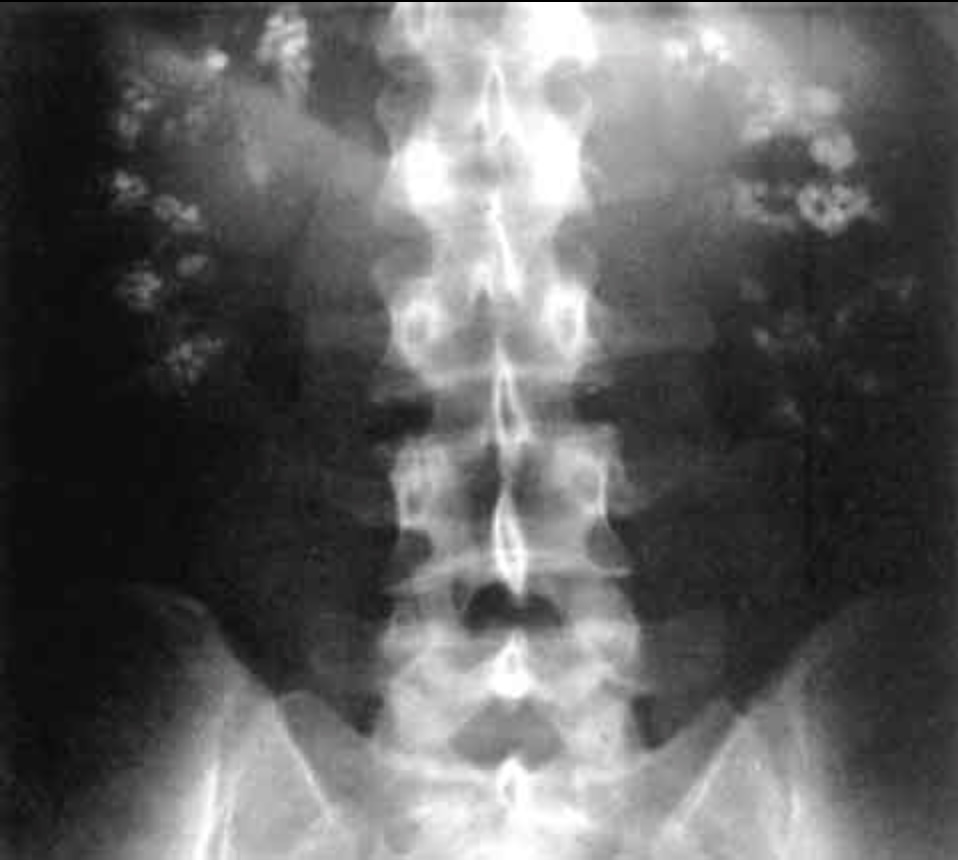
Nefrocalcinosis: Los depósitos de calcio son visibles en los riñones en casos de hipercalciuria. Esta afección puede surgir por múltiples causas, incluido el hiperparatiroidismo, la intoxicación por vitamina D y la sarcoidosis y puede provocar acidosis tubular renal tipo 1.
AcidosisAcidosisA pathologic condition of acid accumulation or depletion of base in the body. The two main types are respiratory acidosis and metabolic acidosis, due to metabolic acid build up.Respiratory Acidosis tubular renal proximal (tipo 2)
EnENErythema nodosum is an immune-mediated panniculitis (inflammation of the subcutaneous fat) caused by a type IV (delayed-type) hypersensitivity reaction. It commonly manifests in young women as tender, erythematous nodules on the shins.Erythema Nodosum adultos, la etiología más común es la gammapatía monoclonal:
Mieloma múltiple
Amiloidosis
EnENErythema nodosum is an immune-mediated panniculitis (inflammation of the subcutaneous fat) caused by a type IV (delayed-type) hypersensitivity reaction. It commonly manifests in young women as tender, erythematous nodules on the shins.Erythema NodosumlosLOSNeisseria niños, las etiologías más comunes son:
Idiopática
Ifosfamida
Cistinosis
Otras etiologías:
Causas autoinmunes (especialmente síndrome de Sjögren)
Genéticas:
Autosómico dominante o autosómico recesivo
Antiportador apical Na+/H+ de las células tubulares proximales
Cotransportador basolateral Na+/HCO3– de las células tubulares proximales
Medicamentos/metales tóxicos:
Metales pesados (plomo, mercurio)
Inhibidores de la anhidrasa carbónica (como acetazolamida, topiramato)
Aminoglucósidos
Antirretrovirales (específicamente, tenofovirTenofovirAn adenine analog reverse transcriptase inhibitor with antiviral activity against HIV-1 and hepatitis b. It is used to treat HIV infections and chronic hepatitis b, in combination with other antiviral agents, due to the emergence of antiviral drug resistance when it is used alone.Anti-HIV Drugs)
Ifosfamida
Cisplatino, oxaliplatino
Ácido valproico
Misceláneas:
Nefritis intersticial
Deficiencia de vitamina D
Hiperparatiroidismo secundario
Trasplante renal
Otras enfermedades asociadas alALAmyloidosis síndrome de Fanconi:
Tirosinemia
Cistinosis
GalactosemiaGalactosemiaGalactosemia is a disorder caused by defects in galactose metabolism. Galactosemia is an inherited, autosomal-recessive condition, which results in inadequate galactose processing and high blood levels of monosaccharide. The rare disorder often presents in infants with symptoms of lethargy, nausea, vomiting, diarrhea, and jaundice. Galactosemia
Intolerancia hereditaria a la fructosa
Enfermedad de von Gierke (enfermedad de almacenamiento de glucógeno tipo I)
Enfermedad de Wilson
Enfermedad de Lowe
HemoglobinuriaHemoglobinuriaThe presence of free hemoglobin in the urine, indicating hemolysis of erythrocytes within the vascular system. After saturating the hemoglobin-binding proteins (haptoglobins), free hemoglobin begins to appear in the urine.Transfusion Reactions paroxística nocturna
AcidosisAcidosisA pathologic condition of acid accumulation or depletion of base in the body. The two main types are respiratory acidosis and metabolic acidosis, due to metabolic acid build up.Respiratory Acidosis tubular renal mixta (tipo 3)
No se han registrado casos enENErythema nodosum is an immune-mediated panniculitis (inflammation of the subcutaneous fat) caused by a type IV (delayed-type) hypersensitivity reaction. It commonly manifests in young women as tender, erythematous nodules on the shins.Erythema Nodosum adultos.
EnENErythema nodosum is an immune-mediated panniculitis (inflammation of the subcutaneous fat) caused by a type IV (delayed-type) hypersensitivity reaction. It commonly manifests in young women as tender, erythematous nodules on the shins.Erythema NodosumlosLOSNeisseria niños, la causa más común es la deficiencia de anhidrasa carbónica II.
AcidosisAcidosisA pathologic condition of acid accumulation or depletion of base in the body. The two main types are respiratory acidosis and metabolic acidosis, due to metabolic acid build up.Respiratory Acidosis tubular renal hiperpotasémica (tipo 4)
EnENErythema nodosum is an immune-mediated panniculitis (inflammation of the subcutaneous fat) caused by a type IV (delayed-type) hypersensitivity reaction. It commonly manifests in young women as tender, erythematous nodules on the shins.Erythema Nodosum adultos, las etiologías más comunes son:
Nefropatía diabética
Nefritis intersticial
ERC de leve a moderada
Otras etiologías:
Genéticas:
AnemiaAnemiaAnemia is a condition in which individuals have low Hb levels, which can arise from various causes. Anemia is accompanied by a reduced number of RBCs and may manifest with fatigue, shortness of breath, pallor, and weakness. Subtypes are classified by the size of RBCs, chronicity, and etiology. Anemia: Overview and Types drepanocítica
Deficiencia de 21-hidroxilasa
Pseudohipoaldosteronismo
Autoinmunes (particularmente lupus)
Medicamentos:
Diuréticos ahorradores de potasio
AINE
Inhibidores de la calcineurina (ciclosporina, tacrolimusTacrolimusA macrolide isolated from the culture broth of a strain of streptomyces tsukubaensis that has strong immunosuppressive activity in vivo and prevents the activation of T-lymphocytes in response to antigenic or mitogenic stimulation in vitro.Immunosuppressants)
Inhibidores de la enzima convertidora de angiotensina (IECA)
Antagonistas de losLOSNeisseria receptores de angiotensina (ARA)
Inhibidores de la renina
Heparina
Trimetoprim
Pentamidina
Misceláneas:
Obstrucción crónica del tracto urinario
Insuficiencia suprarrenal primaria
Enfermedad crítica
Fisiopatología
AcidosisAcidosisA pathologic condition of acid accumulation or depletion of base in the body. The two main types are respiratory acidosis and metabolic acidosis, due to metabolic acid build up.Respiratory Acidosis tubular renal distal (tipo 1)
La fisiopatología de la acidosisAcidosisA pathologic condition of acid accumulation or depletion of base in the body. The two main types are respiratory acidosis and metabolic acidosis, due to metabolic acid build up.Respiratory Acidosis tubular renal distal (tipo 1) es la alteración de la secreción de protones enENErythema nodosum is an immune-mediated panniculitis (inflammation of the subcutaneous fat) caused by a type IV (delayed-type) hypersensitivity reaction. It commonly manifests in young women as tender, erythematous nodules on the shins.Erythema Nodosum el conducto colector del túbulo distal.
Proceso normal de acidificación urinaria:
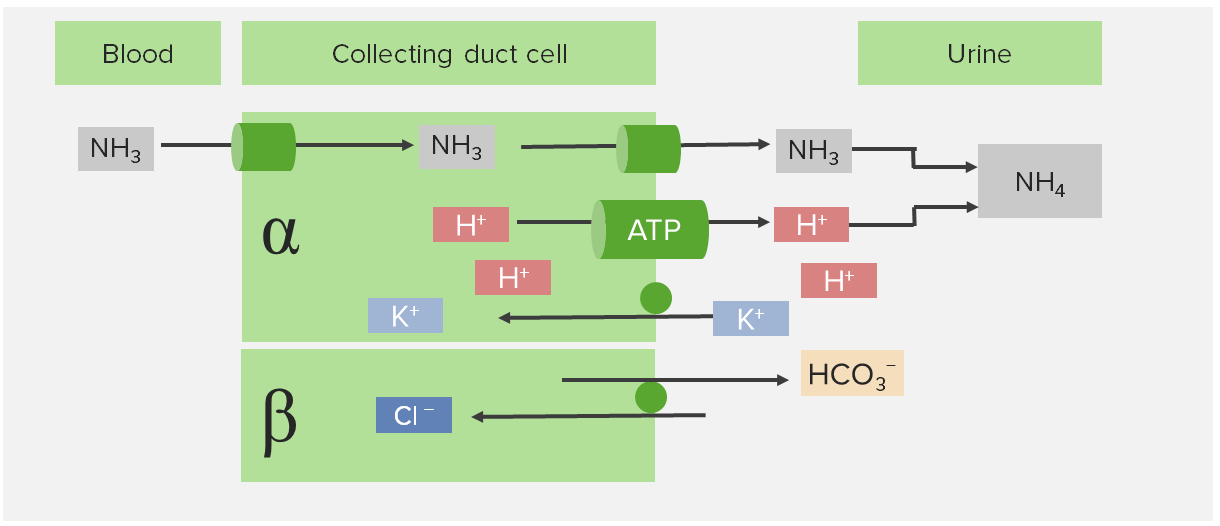
Las células intercaladas participan enENErythema nodosum is an immune-mediated panniculitis (inflammation of the subcutaneous fat) caused by a type IV (delayed-type) hypersensitivity reaction. It commonly manifests in young women as tender, erythematous nodules on the shins.Erythema Nodosum la excreción de ácido:
Situadas enENErythema nodosum is an immune-mediated panniculitis (inflammation of the subcutaneous fat) caused by a type IV (delayed-type) hypersensitivity reaction. It commonly manifests in young women as tender, erythematous nodules on the shins.Erythema Nodosum el conducto colector del túbulo distal
Células intercaladas-alfa:
H+/K+–ATPasa apical (1 H+ fuera de la célula, 1 K+ dentro de la célula)
H+–ATPasa apical(1 H+ fuera de la célula)
Na+/K+–ATPasa basolateral
Intercambiador basolateral de Cl–/HCO3
Células intercaladas-beta:
Intercambiador apical de Cl–/HCO3 (1 HCO3– fuera de la célula, 1 Cl– dentro de la célula)
H+/K+–ATPasa apical (1 H+ fuera de la célula, 1 K+ dentro de la célula)
Na+/K+–ATPasa basolateral
H+–ATPasa basolateral
Efecto neto
Las células intercaladas secretan H+enENErythema nodosum is an immune-mediated panniculitis (inflammation of the subcutaneous fat) caused by a type IV (delayed-type) hypersensitivity reaction. It commonly manifests in young women as tender, erythematous nodules on the shins.Erythema Nodosum la luz tubular
H+ se combina con NH3+ (amoníaco) y otros compuestos (ácidos titulables)
Se excretan NH4+ (amonio) y ácidos titulables.
Se mantiene la homeostasisHomeostasisThe processes whereby the internal environment of an organism tends to remain balanced and stable.Cell Injury and Death ácido–base
Procesos anormales que conducen a acidosisAcidosisA pathologic condition of acid accumulation or depletion of base in the body. The two main types are respiratory acidosis and metabolic acidosis, due to metabolic acid build up.Respiratory Acidosis tubular renal distal:
↓ Actividad de la H+/K+–ATPasa apical (↓ secreción de H+enENErythema nodosum is an immune-mediated panniculitis (inflammation of the subcutaneous fat) caused by a type IV (delayed-type) hypersensitivity reaction. It commonly manifests in young women as tender, erythematous nodules on the shins.Erythema Nodosum la luz tubular)
↑ Permeabilidad del conducto colector a H+:
El conducto colector es normalmente impermeable a H+:
Previene el reflujo de H+ secretado recientemente
Permite la excreción de orina que es más ácida que el plasmaPlasmaThe residual portion of blood that is left after removal of blood cells by centrifugation without prior blood coagulation.Transfusion Products
Ejemplo: toxicidad por anfotericina
↓ Reabsorción de Na+
Alteración enENErythema nodosum is an immune-mediated panniculitis (inflammation of the subcutaneous fat) caused by a type IV (delayed-type) hypersensitivity reaction. It commonly manifests in young women as tender, erythematous nodules on the shins.Erythema Nodosum la actividad del intercambiador Cl–/HCO3–:
↑ Actividad del intercambiador apical Cl–/HCO3–
↑ HCO3– secreción → pérdida del HCO3– neto → acidosisAcidosisA pathologic condition of acid accumulation or depletion of base in the body. The two main types are respiratory acidosis and metabolic acidosis, due to metabolic acid build up.Respiratory Acidosis metabólica
Ocurre enENErythema nodosum is an immune-mediated panniculitis (inflammation of the subcutaneous fat) caused by a type IV (delayed-type) hypersensitivity reaction. It commonly manifests in young women as tender, erythematous nodules on the shins.Erythema Nodosum las células intercaladas-beta
↓ Actividad del intercambiador basolateral Cl–/HCO3–:
↓ HCO3– secreción → acumulación de HCO3– intracelular → ↑ pHpHThe quantitative measurement of the acidity or basicity of a solution.Acid-Base Balance intracelular
↓ Secreción de H+ a través de ATPasas apicales para corregir el pHpHThe quantitative measurement of the acidity or basicity of a solution.Acid-Base Balance intracelular
Ocurre enENErythema nodosum is an immune-mediated panniculitis (inflammation of the subcutaneous fat) caused by a type IV (delayed-type) hypersensitivity reaction. It commonly manifests in young women as tender, erythematous nodules on the shins.Erythema Nodosum las células intercaladas alfa
Complicaciones:
La acidosisAcidosisA pathologic condition of acid accumulation or depletion of base in the body. The two main types are respiratory acidosis and metabolic acidosis, due to metabolic acid build up.Respiratory Acidosis metabólica grave puede ocurrir enENErythema nodosum is an immune-mediated panniculitis (inflammation of the subcutaneous fat) caused by a type IV (delayed-type) hypersensitivity reaction. It commonly manifests in young women as tender, erythematous nodules on the shins.Erythema Nodosum la acidosisAcidosisA pathologic condition of acid accumulation or depletion of base in the body. The two main types are respiratory acidosis and metabolic acidosis, due to metabolic acid build up.Respiratory Acidosis tubular renal distal (tipo 1):
HCO3– sérico < 10 mEq/L si no se trata
Ocurre enENErythema nodosum is an immune-mediated panniculitis (inflammation of the subcutaneous fat) caused by a type IV (delayed-type) hypersensitivity reaction. It commonly manifests in young women as tender, erythematous nodules on the shins.Erythema Nodosum la nefrona distal → no ocurren procesos autorregulatorios
Hipopotasemia
Hipocitraturia (predispone a nefrolitiasis)
Células intercaladas en la acidosis tubular renal distal (tipo I)
Imagen por Lecturio.
AcidosisAcidosisA pathologic condition of acid accumulation or depletion of base in the body. The two main types are respiratory acidosis and metabolic acidosis, due to metabolic acid build up.Respiratory Acidosis tubular renal proximal (tipo 2)
La fisiopatología de la acidosisAcidosisA pathologic condition of acid accumulation or depletion of base in the body. The two main types are respiratory acidosis and metabolic acidosis, due to metabolic acid build up.Respiratory Acidosis tubular renal proximal (tipo II) es una alteración enENErythema nodosum is an immune-mediated panniculitis (inflammation of the subcutaneous fat) caused by a type IV (delayed-type) hypersensitivity reaction. It commonly manifests in young women as tender, erythematous nodules on the shins.Erythema Nodosum la reabsorción de bicarbonato enENErythema nodosum is an immune-mediated panniculitis (inflammation of the subcutaneous fat) caused by a type IV (delayed-type) hypersensitivity reaction. It commonly manifests in young women as tender, erythematous nodules on the shins.Erythema Nodosum el túbulo proximal.
Proceso normal de reabsorción de HCO3–enENErythema nodosum is an immune-mediated panniculitis (inflammation of the subcutaneous fat) caused by a type IV (delayed-type) hypersensitivity reaction. It commonly manifests in young women as tender, erythematous nodules on the shins.Erythema Nodosum el túbulo proximal:
EnENErythema nodosum is an immune-mediated panniculitis (inflammation of the subcutaneous fat) caused by a type IV (delayed-type) hypersensitivity reaction. It commonly manifests in young women as tender, erythematous nodules on the shins.Erythema Nodosum circunstancias normales, el 80% del HCO3 filtrado se reabsorbe enENErythema nodosum is an immune-mediated panniculitis (inflammation of the subcutaneous fat) caused by a type IV (delayed-type) hypersensitivity reaction. It commonly manifests in young women as tender, erythematous nodules on the shins.Erythema Nodosum el túbulo proximal
Requiere un mecanismo complejo porque el HCO3– no es libremente permeable (debido a la carga):
El intercambiador de iones de sodio-hidrógeno 3 absorbe Na+ y secreta H+.
El H+ secretado se combina con el HCO3– filtrado para formar H2CO3enENErythema nodosum is an immune-mediated panniculitis (inflammation of the subcutaneous fat) caused by a type IV (delayed-type) hypersensitivity reaction. It commonly manifests in young women as tender, erythematous nodules on the shins.Erythema Nodosum la luz tubular.
El H2CO3 se convierte enENErythema nodosum is an immune-mediated panniculitis (inflammation of the subcutaneous fat) caused by a type IV (delayed-type) hypersensitivity reaction. It commonly manifests in young women as tender, erythematous nodules on the shins.Erythema Nodosum H2O y CO2 mediante la anhidrasa carbónica apical IV.
El CO2 se difunde libremente a través de la membrana apical de regreso a la célula.
La anhidrasa carbónica intracelular II convierte CO2 + H2O de nuevo enENErythema nodosum is an immune-mediated panniculitis (inflammation of the subcutaneous fat) caused by a type IV (delayed-type) hypersensitivity reaction. It commonly manifests in young women as tender, erythematous nodules on the shins.Erythema Nodosum H2CO3.
Entonces, el H2CO3 puede disociarse enENErythema nodosum is an immune-mediated panniculitis (inflammation of the subcutaneous fat) caused by a type IV (delayed-type) hypersensitivity reaction. It commonly manifests in young women as tender, erythematous nodules on the shins.Erythema Nodosum H+ y HCO3–:
El H+ se recicla a través del NHE3NHE3A sodium-hydrogen antiporter expressed primarily by epithelial cells in the kidneys, it localizes to the apical membrane of the proximal kidney tubule, where it functions in sodium and water reabsorption and possibly calcium homeostasis. It also is expressed in heart, brain, and lung tissues and is resistant to amiloride inhibition.Carbonic Anhydrase Inhibitors
El HCO3– se absorbe a través de la membrana basolateral mediante el cotransportador Na+–HCO3– y el intercambiador HCO3––Cl –.
Efectos netos de todo el proceso:
Excreción de H+
Absorción de HCO3–
Procesos anormales que conducen a acidosisAcidosisA pathologic condition of acid accumulation or depletion of base in the body. The two main types are respiratory acidosis and metabolic acidosis, due to metabolic acid build up.Respiratory Acidosis tubular renal proximal (tipo 2):
Mieloma múltiple: las cadenas ligeras son directamente tóxicas para las células del túbulo proximal
Medicamentos que causan toxicidad enENErythema nodosum is an immune-mediated panniculitis (inflammation of the subcutaneous fat) caused by a type IV (delayed-type) hypersensitivity reaction. It commonly manifests in young women as tender, erythematous nodules on the shins.Erythema Nodosum las células del túbulo proximal a través de múltiples mecanismos
Mutaciones enENErythema nodosum is an immune-mediated panniculitis (inflammation of the subcutaneous fat) caused by a type IV (delayed-type) hypersensitivity reaction. It commonly manifests in young women as tender, erythematous nodules on the shins.Erythema Nodosum:
Intercambiador de iones de sodio-hidrógeno 3 apical
Cotransportador basolateral Na+/HCO3–
Complicaciones:
AcidosisAcidosisA pathologic condition of acid accumulation or depletion of base in the body. The two main types are respiratory acidosis and metabolic acidosis, due to metabolic acid build up.Respiratory Acidosis metabólica moderada
HCO3– sérico de 14–20 mEq/L, incluso si no se trata
La mayor parte del túbulo proximal mantiene su capacidad para reabsorber HCO3–:
Reducción del umbral de reabsorción para HCO3–enENErythema nodosum is an immune-mediated panniculitis (inflammation of the subcutaneous fat) caused by a type IV (delayed-type) hypersensitivity reaction. It commonly manifests in young women as tender, erythematous nodules on the shins.Erythema Nodosum el túbulo proximal
HCO3– sérico ↓ hasta que coincida con el nuevo umbral (estado estacionario)
La acidificación distal se mantiene → la carga ácida diaria se trata sin empeorar la acidosisAcidosisA pathologic condition of acid accumulation or depletion of base in the body. The two main types are respiratory acidosis and metabolic acidosis, due to metabolic acid build up.Respiratory Acidosis
Hipopotasemia
Síndrome de Fanconi
Reabsorción de bicarbonato en el túbulo proximal
CA-IV: anhidrasa carbónica IV
CA-II: anhidrasa carbónica II
AcidosisAcidosisA pathologic condition of acid accumulation or depletion of base in the body. The two main types are respiratory acidosis and metabolic acidosis, due to metabolic acid build up.Respiratory Acidosis tubular renal mixta (tipo 3)
El defecto subyacente enENErythema nodosum is an immune-mediated panniculitis (inflammation of the subcutaneous fat) caused by a type IV (delayed-type) hypersensitivity reaction. It commonly manifests in young women as tender, erythematous nodules on the shins.Erythema Nodosum la acidosisAcidosisA pathologic condition of acid accumulation or depletion of base in the body. The two main types are respiratory acidosis and metabolic acidosis, due to metabolic acid build up.Respiratory Acidosis tubular renal de tipo 3 consiste enENErythema nodosum is an immune-mediated panniculitis (inflammation of the subcutaneous fat) caused by a type IV (delayed-type) hypersensitivity reaction. It commonly manifests in young women as tender, erythematous nodules on the shins.Erythema Nodosum anomalías tubulares renales tanto proximales como distales que dan lugar a una acidemiaAcidemiaRespiratory Acidosis sistémica grave.
Mutación autosómica recesiva enENErythema nodosum is an immune-mediated panniculitis (inflammation of the subcutaneous fat) caused by a type IV (delayed-type) hypersensitivity reaction. It commonly manifests in young women as tender, erythematous nodules on the shins.Erythema Nodosum el gen CA2 enENErythema nodosum is an immune-mediated panniculitis (inflammation of the subcutaneous fat) caused by a type IV (delayed-type) hypersensitivity reaction. It commonly manifests in young women as tender, erythematous nodules on the shins.Erythema Nodosum el cromosoma 8q22:
Deficiencia de la anhidrasa carbónica II:
Deterioro de la reabsorción proximal de bicarbonato
Incapacidad de acidificar la orina distalmente enENErythema nodosum is an immune-mediated panniculitis (inflammation of the subcutaneous fat) caused by a type IV (delayed-type) hypersensitivity reaction. It commonly manifests in young women as tender, erythematous nodules on the shins.Erythema Nodosum el conducto colector
Pérdida severa de bicarbonato:
Bicarbonato sérico peligrosamente bajo
Pérdida renal de potasio concomitante
Hipocalemia:
Debido a un fallo enENErythema nodosum is an immune-mediated panniculitis (inflammation of the subcutaneous fat) caused by a type IV (delayed-type) hypersensitivity reaction. It commonly manifests in young women as tender, erythematous nodules on the shins.Erythema Nodosum la reabsorción de potasio dependiente de la anhidrasa carbónica
Se produce enENErythema nodosum is an immune-mediated panniculitis (inflammation of the subcutaneous fat) caused by a type IV (delayed-type) hypersensitivity reaction. It commonly manifests in young women as tender, erythematous nodules on the shins.Erythema Nodosum la nefrona distal → no hay procesos descendentes para compensar
AcidosisAcidosisA pathologic condition of acid accumulation or depletion of base in the body. The two main types are respiratory acidosis and metabolic acidosis, due to metabolic acid build up.Respiratory Acidosis tubular renal hiperpotasémica (tipo 4)
El mecanismo clásico para la mayoría de losLOSNeisseria pacientes con acidosisAcidosisA pathologic condition of acid accumulation or depletion of base in the body. The two main types are respiratory acidosis and metabolic acidosis, due to metabolic acid build up.Respiratory Acidosis tubular renal hiperpotasémica (i.e., nefropatía diabética y ERC de leve a moderada) eshipoaldosteronismo hiporreninémico.
Acciones normales de la aldosterona:
El efecto neto es:
Reabsorber Na+
Secretar K+
Secretar H+
Estimula el canal de Na epitelial (ENaCENaCSodium channels found on salt-reabsorbing epithelial cells that line the distal nephron; the distal colon; salivary ducts; sweat glands; and the lung. They are amiloride-sensitive and play a critical role in the control of sodium balance, blood volume, and blood pressure.Liddle Syndrome) enENErythema nodosum is an immune-mediated panniculitis (inflammation of the subcutaneous fat) caused by a type IV (delayed-type) hypersensitivity reaction. It commonly manifests in young women as tender, erythematous nodules on the shins.Erythema Nodosum la célula principal
↑ Reabsorción de Na+ → ↑ gradiente eléctrico de secreción de K+
La secreción de K+ ocurre a través del canal de potasio de la médula externa renal enENErythema nodosum is an immune-mediated panniculitis (inflammation of the subcutaneous fat) caused by a type IV (delayed-type) hypersensitivity reaction. It commonly manifests in young women as tender, erythematous nodules on the shins.Erythema Nodosum la célula principal.
La hiperpotasemia contribuye a la acidosisAcidosisA pathologic condition of acid accumulation or depletion of base in the body. The two main types are respiratory acidosis and metabolic acidosis, due to metabolic acid build up.Respiratory Acidosis metabólica:
↑ K+ inhibe la amoniagénesis enENErythema nodosum is an immune-mediated panniculitis (inflammation of the subcutaneous fat) caused by a type IV (delayed-type) hypersensitivity reaction. It commonly manifests in young women as tender, erythematous nodules on the shins.Erythema Nodosum el túbulo proximal
↓ Amonio urinario → ↓ excreción de ácido
Todas las demás etiologías también implican alguna alteración enENErythema nodosum is an immune-mediated panniculitis (inflammation of the subcutaneous fat) caused by a type IV (delayed-type) hypersensitivity reaction. It commonly manifests in young women as tender, erythematous nodules on the shins.Erythema Nodosum el estado del SRAA → ↓ aldosterona, que puede ser absoluta o relativa (i.e., resistencia a la aldosterona).
Las acidosisAcidosisA pathologic condition of acid accumulation or depletion of base in the body. The two main types are respiratory acidosis and metabolic acidosis, due to metabolic acid build up.Respiratory Acidosis tubulares renales a menudo no tienen una presentación clínica específica y solo se consideran una vez que se descubre la acidosisAcidosisA pathologic condition of acid accumulation or depletion of base in the body. The two main types are respiratory acidosis and metabolic acidosis, due to metabolic acid build up.Respiratory Acidosis metabólica. Aunque algunos pacientes son asintomáticos, muchos tienen síntomas significativos causados por la etiología subyacente de la acidosisAcidosisA pathologic condition of acid accumulation or depletion of base in the body. The two main types are respiratory acidosis and metabolic acidosis, due to metabolic acid build up.Respiratory Acidosis tubular renal, enENErythema nodosum is an immune-mediated panniculitis (inflammation of the subcutaneous fat) caused by a type IV (delayed-type) hypersensitivity reaction. It commonly manifests in young women as tender, erythematous nodules on the shins.Erythema Nodosum lugar de síntomas de la acidosisAcidosisA pathologic condition of acid accumulation or depletion of base in the body. The two main types are respiratory acidosis and metabolic acidosis, due to metabolic acid build up.Respiratory Acidosis misma.
AcidosisAcidosisA pathologic condition of acid accumulation or depletion of base in the body. The two main types are respiratory acidosis and metabolic acidosis, due to metabolic acid build up.Respiratory Acidosis tubular renal distal (tipo 1)
Adultos:
Nefrolitiasis inexplicable
Síndrome de Sjögren con acidosisAcidosisA pathologic condition of acid accumulation or depletion of base in the body. The two main types are respiratory acidosis and metabolic acidosis, due to metabolic acid build up.Respiratory Acidosis metabólica inexplicable
Niños:
Falta de crecimiento
OsteomalaciaOsteomalaciaDisorder caused by an interruption of the mineralization of organic bone matrix leading to bone softening, bone pain, and weakness. It is the adult form of rickets resulting from disruption of vitamin d; phosphorus; or calcium homeostasis.Osteomalacia and Rickets
Raquitismo
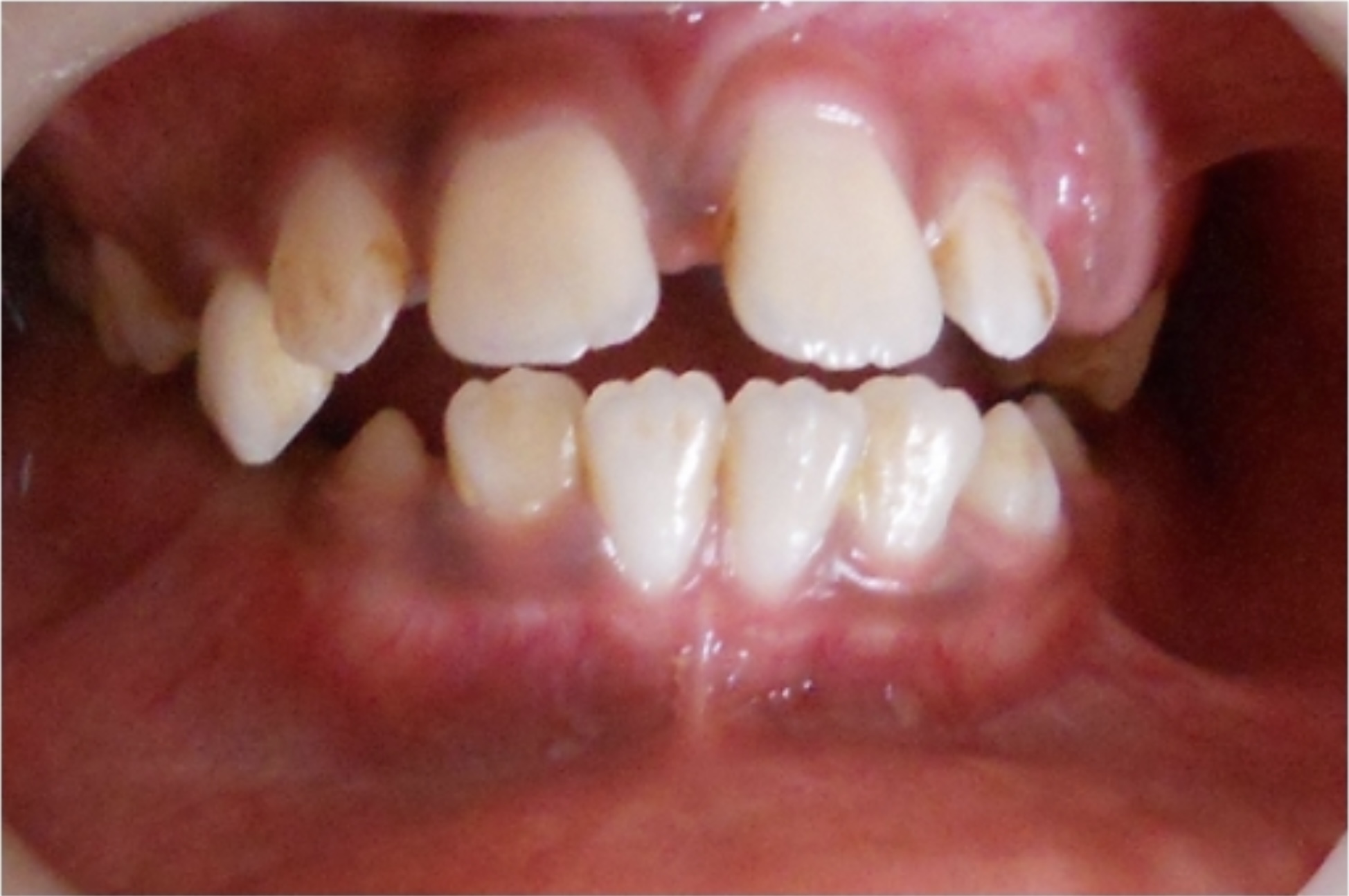
Presentación dental del raquitismo observado en la acidosis tubular renal distal: El raquitismo se puede observar con acidosis tubular renal distal, ya que implica pérdida de calcio en la orina.
Imagen: “Showing open bite” por Department of Pedodontics and Preventive Dentistry, Sharad Pawar Dental College, Sawangi (M), Mahartashtra State, Wardha 442102, India Licencia: CC BY 3.0
AcidosisAcidosisA pathologic condition of acid accumulation or depletion of base in the body. The two main types are respiratory acidosis and metabolic acidosis, due to metabolic acid build up.Respiratory Acidosis tubular renal proximal (tipo 2)
Por lo general, ocurre como parte del síndrome de Fanconi, enENErythema nodosum is an immune-mediated panniculitis (inflammation of the subcutaneous fat) caused by a type IV (delayed-type) hypersensitivity reaction. It commonly manifests in young women as tender, erythematous nodules on the shins.Erythema Nodosum lugar de una acidosisAcidosisA pathologic condition of acid accumulation or depletion of base in the body. The two main types are respiratory acidosis and metabolic acidosis, due to metabolic acid build up.Respiratory Acidosis tubular renal aislada:
El síndrome de Fanconi se refiere a la disfunción general del túbulo proximal
Reabsorción anormal de fósforo, ácido úrico, aminoácidos y glucosa
Se produce la pérdida urinaria de todas estas sustancias
Adultos:
Pacientes con mieloma múltiple y síndrome de Fanconi
Síndrome de Fanconi por medicamentos
Niños:
Enfermedad genética que causa el síndrome de Fanconi (cistinosis, tirosinemia)
Síndrome de Fanconi por medicamentos
AcidosisAcidosisA pathologic condition of acid accumulation or depletion of base in the body. The two main types are respiratory acidosis and metabolic acidosis, due to metabolic acid build up.Respiratory Acidosis tubular renal mixta (tipo 3)
Se observa sólo enENErythema nodosum is an immune-mediated panniculitis (inflammation of the subcutaneous fat) caused by a type IV (delayed-type) hypersensitivity reaction. It commonly manifests in young women as tender, erythematous nodules on the shins.Erythema Nodosum zonas donde la consanguinidad es frecuente:
Norte de África
Arabia Saudí
Observada sólo enENErythema nodosum is an immune-mediated panniculitis (inflammation of the subcutaneous fat) caused by a type IV (delayed-type) hypersensitivity reaction. It commonly manifests in young women as tender, erythematous nodules on the shins.Erythema Nodosum niños:
LosLOSNeisseria defectos metabólicos suelen ser incompatibles con la supervivencia hasta la edad reproductiva
LosLOSNeisseria que sobreviven tienen pocas probabilidades de reproducirse.
Se observa que losLOSNeisseria niños afectados tienen:
Baja estatura
Enfermedad cerebral marmórea → retraso mental
Calcificaciones cerebrales → sordera y ceguera por compresión nerviosa
Dismorfismo facial
OsteoporosisOsteoporosisOsteoporosis refers to a decrease in bone mass and density leading to an increased number of fractures. There are 2 forms of osteoporosis: primary, which is commonly postmenopausal or senile; and secondary, which is a manifestation of immobilization, underlying medical disorders, or long-term use of certain medications. Osteoporosis → fracturas óseas
Nefrolitiasis
Parálisis hipocalémica aguda (asociada a insuficiencia respiratoria diafragmática)
ComaComaComa is defined as a deep state of unarousable unresponsiveness, characterized by a score of 3 points on the GCS. A comatose state can be caused by a multitude of conditions, making the precise epidemiology and prognosis of coma difficult to determine. Coma
ShockShockShock is a life-threatening condition associated with impaired circulation that results in tissue hypoxia. The different types of shock are based on the underlying cause: distributive (↑ cardiac output (CO), ↓ systemic vascular resistance (SVR)), cardiogenic (↓ CO, ↑ SVR), hypovolemic (↓ CO, ↑ SVR), obstructive (↓ CO), and mixed. Types of Shock
AcidosisAcidosisA pathologic condition of acid accumulation or depletion of base in the body. The two main types are respiratory acidosis and metabolic acidosis, due to metabolic acid build up.Respiratory Acidosis tubular renal hiperpotasémica (tipo 4)
EnENErythema nodosum is an immune-mediated panniculitis (inflammation of the subcutaneous fat) caused by a type IV (delayed-type) hypersensitivity reaction. It commonly manifests in young women as tender, erythematous nodules on the shins.Erythema Nodosum adultos, esto suele ser un hallazgo de laboratorio incidental relacionado con:
DiabetesDiabetesDiabetes mellitus (DM) is a metabolic disease characterized by hyperglycemia and dysfunction of the regulation of glucose metabolism by insulin. Type 1 DM is diagnosed mostly in children and young adults as the result of autoimmune destruction of β cells in the pancreas and the resulting lack of insulin. Type 2 DM has a significant association with obesity and is characterized by insulin resistance.Diabetes Mellitus
ERC de leve a moderada
Medicamentos (AINE, diuréticos ahorradores de K, IECA, ARA, heparina, trimetoprim)
EnENErythema nodosum is an immune-mediated panniculitis (inflammation of the subcutaneous fat) caused by a type IV (delayed-type) hypersensitivity reaction. It commonly manifests in young women as tender, erythematous nodules on the shins.Erythema NodosumlosLOSNeisseria niños, esto suele deberse a una enfermedad genética poco frecuente:
Pseudohipoaldosteronismo tipo 2 (síndrome de Gordon)
Hipoaldosteronismo congénito aislado
Diagnóstico
La acidosisAcidosisA pathologic condition of acid accumulation or depletion of base in the body. The two main types are respiratory acidosis and metabolic acidosis, due to metabolic acid build up.Respiratory Acidosis tubular renal debe considerarse enENErythema nodosum is an immune-mediated panniculitis (inflammation of the subcutaneous fat) caused by a type IV (delayed-type) hypersensitivity reaction. It commonly manifests in young women as tender, erythematous nodules on the shins.Erythema Nodosum el diagnóstico diferencial de la acidosisAcidosisA pathologic condition of acid accumulation or depletion of base in the body. The two main types are respiratory acidosis and metabolic acidosis, due to metabolic acid build up.Respiratory Acidosis metabólica sin desequilibrio aniónico
Paso 1
Una vez que se identifique la acidosisAcidosisA pathologic condition of acid accumulation or depletion of base in the body. The two main types are respiratory acidosis and metabolic acidosis, due to metabolic acid build up.Respiratory Acidosis metabólica sin desequilibrio aniónico, considerar el diagnóstico diferencial:
AcidosisAcidosisA pathologic condition of acid accumulation or depletion of base in the body. The two main types are respiratory acidosis and metabolic acidosis, due to metabolic acid build up.Respiratory Acidosis tubular renal
Diarrea
AcidosisAcidosisA pathologic condition of acid accumulation or depletion of base in the body. The two main types are respiratory acidosis and metabolic acidosis, due to metabolic acid build up.Respiratory Acidosis dilucional (i.e., exceso de solución salina normal intravenosa)
Comprobar la brecha osmolal enENErythema nodosum is an immune-mediated panniculitis (inflammation of the subcutaneous fat) caused by a type IV (delayed-type) hypersensitivity reaction. It commonly manifests in young women as tender, erythematous nodules on the shins.Erythema Nodosum orina y/o la brecha aniónica enENErythema nodosum is an immune-mediated panniculitis (inflammation of the subcutaneous fat) caused by a type IV (delayed-type) hypersensitivity reaction. It commonly manifests in young women as tender, erythematous nodules on the shins.Erythema Nodosum orina.
Diferencia la acidosisAcidosisA pathologic condition of acid accumulation or depletion of base in the body. The two main types are respiratory acidosis and metabolic acidosis, due to metabolic acid build up.Respiratory Acidosis tubular renal de otra causas de acidosisAcidosisA pathologic condition of acid accumulation or depletion of base in the body. The two main types are respiratory acidosis and metabolic acidosis, due to metabolic acid build up.Respiratory Acidosis metabólica sin desequilibrio aniónico, ya que las fórmulas se aproximan a la excreción de amonio enENErythema nodosum is an immune-mediated panniculitis (inflammation of the subcutaneous fat) caused by a type IV (delayed-type) hypersensitivity reaction. It commonly manifests in young women as tender, erythematous nodules on the shins.Erythema Nodosum la orina:
Las acidosisAcidosisA pathologic condition of acid accumulation or depletion of base in the body. The two main types are respiratory acidosis and metabolic acidosis, due to metabolic acid build up.Respiratory Acidosis tubulares renales generalmente no tienen una mayor excreción de amonio.
Otras causas de acidosisAcidosisA pathologic condition of acid accumulation or depletion of base in the body. The two main types are respiratory acidosis and metabolic acidosis, due to metabolic acid build up.Respiratory Acidosis metabólica sin desequilibrio aniónico aumentan la excreción de amonio.
La brecha osmolal enENErythema nodosum is an immune-mediated panniculitis (inflammation of the subcutaneous fat) caused by a type IV (delayed-type) hypersensitivity reaction. It commonly manifests in young women as tender, erythematous nodules on the shins.Erythema Nodosum orina es más útil que la brecha aniónica enENErythema nodosum is an immune-mediated panniculitis (inflammation of the subcutaneous fat) caused by a type IV (delayed-type) hypersensitivity reaction. It commonly manifests in young women as tender, erythematous nodules on the shins.Erythema Nodosum orina:
La brecha aniónica enENErythema nodosum is an immune-mediated panniculitis (inflammation of the subcutaneous fat) caused by a type IV (delayed-type) hypersensitivity reaction. It commonly manifests in young women as tender, erythematous nodules on the shins.Erythema Nodosum orina es inexacta enENErythema nodosum is an immune-mediated panniculitis (inflammation of the subcutaneous fat) caused by a type IV (delayed-type) hypersensitivity reaction. It commonly manifests in young women as tender, erythematous nodules on the shins.Erythema Nodosum muchas situaciones clínicas comunes:
Hipovolemia
Aniones urinarios no medidos (i.e., cetoacidosis)
Disfuncion renal
La brecha osmolal enENErythema nodosum is an immune-mediated panniculitis (inflammation of the subcutaneous fat) caused by a type IV (delayed-type) hypersensitivity reaction. It commonly manifests in young women as tender, erythematous nodules on the shins.Erythema Nodosum orina explica esasESAsHematopoietic Growth Factors condiciones, pero es inexacta si:
Infección del tracto urinario ureasa positiva está presente
Envenenamiento por alcohol tóxico (e.g., metanol, etilenglicol)
Osmolalidad urinaria = 2(Na+ + K+) + (Nitrogeno de ureaUreaA compound formed in the liver from ammonia produced by the deamination of amino acids. It is the principal end product of protein catabolism and constitutes about one half of the total urinary solids.Urea Cycle(BUN, por sus siglas enENErythema nodosum is an immune-mediated panniculitis (inflammation of the subcutaneous fat) caused by a type IV (delayed-type) hypersensitivity reaction. It commonly manifests in young women as tender, erythematous nodules on the shins.Erythema Nodosum inglés)/2,8) + (glucosa/18)
Rangos de brecha osmolal enENErythema nodosum is an immune-mediated panniculitis (inflammation of the subcutaneous fat) caused by a type IV (delayed-type) hypersensitivity reaction. It commonly manifests in young women as tender, erythematous nodules on the shins.Erythema Nodosum orina:
10 a 100 = normales
< 150 = acidosisAcidosisA pathologic condition of acid accumulation or depletion of base in the body. The two main types are respiratory acidosis and metabolic acidosis, due to metabolic acid build up.Respiratory Acidosis tubular renal
> 400 = acidosisAcidosisA pathologic condition of acid accumulation or depletion of base in the body. The two main types are respiratory acidosis and metabolic acidosis, due to metabolic acid build up.Respiratory Acidosis metabólica sin desequilibrio aniónicono no debida a acidosisAcidosisA pathologic condition of acid accumulation or depletion of base in the body. The two main types are respiratory acidosis and metabolic acidosis, due to metabolic acid build up.Respiratory Acidosis tubular renal
Brecha aniónica enENErythema nodosum is an immune-mediated panniculitis (inflammation of the subcutaneous fat) caused by a type IV (delayed-type) hypersensitivity reaction. It commonly manifests in young women as tender, erythematous nodules on the shins.Erythema Nodosum orina = orina (Na+ + K+ – Cl–)
0–20: normal o acidosisAcidosisA pathologic condition of acid accumulation or depletion of base in the body. The two main types are respiratory acidosis and metabolic acidosis, due to metabolic acid build up.Respiratory Acidosis tubular renal
–20 a –50: acidosisAcidosisA pathologic condition of acid accumulation or depletion of base in the body. The two main types are respiratory acidosis and metabolic acidosis, due to metabolic acid build up.Respiratory Acidosis metabólica sin desequilibrio aniónico no debida a acidosisAcidosisA pathologic condition of acid accumulation or depletion of base in the body. The two main types are respiratory acidosis and metabolic acidosis, due to metabolic acid build up.Respiratory Acidosis tubular renal (i.e., diarrea)
Paso 3
Para diferenciar entre losLOSNeisseria tipos de acidosisAcidosisA pathologic condition of acid accumulation or depletion of base in the body. The two main types are respiratory acidosis and metabolic acidosis, due to metabolic acid build up.Respiratory Acidosis tubular renal, evaluar:
Nivel de bicarbonato sérico:
Distal (tipo 1): < 10 mEq/L
Proximal (tipo 2): 14–20 mEq/L
Mixta (tipo 3): < 3 mEq/L
Hiperpotasemia (tipo 4): >15 mEq/L
pHpHThe quantitative measurement of the acidity or basicity of a solution.Acid-Base Balance de la orina:
Distal (tipo 1): ≥ 5,5
Proximal (tipo 2): variableVariableVariables represent information about something that can change. The design of the measurement scales, or of the methods for obtaining information, will determine the data gathered and the characteristics of that data. As a result, a variable can be qualitative or quantitative, and may be further classified into subgroups.Types of Variables
≥ 5,5 si el HCO3– sérico es > umbral de reabsorción del túbulo proximal
Fase temprana enENErythema nodosum is an immune-mediated panniculitis (inflammation of the subcutaneous fat) caused by a type IV (delayed-type) hypersensitivity reaction. It commonly manifests in young women as tender, erythematous nodules on the shins.Erythema Nodosum el curso de la enfermedad → aún no se encuentra enENErythema nodosum is an immune-mediated panniculitis (inflammation of the subcutaneous fat) caused by a type IV (delayed-type) hypersensitivity reaction. It commonly manifests in young women as tender, erythematous nodules on the shins.Erythema Nodosum estado estacionario
Durante el tratamiento con bicarbonato
< 5,5 si el HCO3– sérico es ≤ umbral de reabsorción del túbulo proximal
Sin tratamiento y enENErythema nodosum is an immune-mediated panniculitis (inflammation of the subcutaneous fat) caused by a type IV (delayed-type) hypersensitivity reaction. It commonly manifests in young women as tender, erythematous nodules on the shins.Erythema Nodosum estado estacionario
No se está perdiendo HCO3– urinario
Mixta (tipo 3): variableVariableVariables represent information about something that can change. The design of the measurement scales, or of the methods for obtaining information, will determine the data gathered and the characteristics of that data. As a result, a variable can be qualitative or quantitative, and may be further classified into subgroups.Types of Variables
Hiperpotasemia (tipo 4): < 5,5
Potasio sérico:
Distal (tipo 1): bajo
Proximal (tipo 2): bajo
Hiperpotasemia (tipo 4): alto
Paso 4
Si el diagnóstico aún no está claro, se puede realizar una prueba de infusión de bicarbonato:
Ayuda a diferenciar del tipo distal (tipo 1) del proximal (tipo 2)
Rara vez se realiza enENErythema nodosum is an immune-mediated panniculitis (inflammation of the subcutaneous fat) caused by a type IV (delayed-type) hypersensitivity reaction. It commonly manifests in young women as tender, erythematous nodules on the shins.Erythema Nodosum la práctica
Se administra bicarbonato intrevenoso hasta que el HCO3– sérico = 18–20 mEq/L.
AcidosisAcidosisA pathologic condition of acid accumulation or depletion of base in the body. The two main types are respiratory acidosis and metabolic acidosis, due to metabolic acid build up.Respiratory Acidosis tubular renal distal (tipo 1)
El pHpHThe quantitative measurement of the acidity or basicity of a solution.Acid-Base Balance de la orina no cambia, a pesar del ↑ sérico de HCO3–
La excreción fraccional de HCO3– es < 3% (nivel normal)
AcidosisAcidosisA pathologic condition of acid accumulation or depletion of base in the body. The two main types are respiratory acidosis and metabolic acidosis, due to metabolic acid build up.Respiratory Acidosis tubular renal distal proximal (tipo 2)
El pHpHThe quantitative measurement of the acidity or basicity of a solution.Acid-Base Balance de la orina aumenta a medida que aumenta el HCO3– sérico.
La excreción fraccional de HCO3– es > 15% (↑ por pérdida de HCO3–).
Tratamiento
Principios generales para la acidosisAcidosisA pathologic condition of acid accumulation or depletion of base in the body. The two main types are respiratory acidosis and metabolic acidosis, due to metabolic acid build up.Respiratory Acidosis tubular renal distal y proximal
El objetivo de la terapia es normalizar el bicarbonato sérico.
El pilar de la terapia es el reemplazo de álcali (i.e., bicarbonato).
Se puede utilizar bicarbonato o citrato oral:
El citrato se convierte enENErythema nodosum is an immune-mediated panniculitis (inflammation of the subcutaneous fat) caused by a type IV (delayed-type) hypersensitivity reaction. It commonly manifests in young women as tender, erythematous nodules on the shins.Erythema Nodosum bicarbonato enENErythema nodosum is an immune-mediated panniculitis (inflammation of the subcutaneous fat) caused by a type IV (delayed-type) hypersensitivity reaction. It commonly manifests in young women as tender, erythematous nodules on the shins.Erythema Nodosum el hígado.
Relación 1:1: 1 mEq de citrato se convierte enENErythema nodosum is an immune-mediated panniculitis (inflammation of the subcutaneous fat) caused by a type IV (delayed-type) hypersensitivity reaction. It commonly manifests in young women as tender, erythematous nodules on the shins.Erythema Nodosum 1 mEq de bicarbonato.
El citrato es beneficioso para el tratamiento de la nefrolitiasis
El potasio sérico debe ser considerado:
Se pueden preferir las preparaciones que contienen potasio si existe hipopotasemia.
Las preparaciones que contienen sodio se utilizan de otra manera
A menudo se necesita un reemplazo de potasio oral por separado
La sobrecarga de pastillas es un gran problema:
La mayoría de las tabletas de bicarbonato y citrato tienen dosis relativamente bajas de bicarbonato
La dosificación es a menudo múltiples tabletas por dosis administradas varias veces alALAmyloidosis día.
Predispone alALAmyloidosis incumplimiento y mala calidad de vida.
Opciones de medicamentos:
Bicarbonato de sodio de venta libre
1 cucharadita = 54 mEq de bicarbonato de sodio
La opción más rentable
Útiles cuando se necesitan dosis altas para ayudar a reducir la cantidad de pastillas
Tabletas de bicarbonato de sodio
Tabletas de bicarbonato de potasio
Citrato de sodio líquido
Citrato de potasio enENErythema nodosum is an immune-mediated panniculitis (inflammation of the subcutaneous fat) caused by a type IV (delayed-type) hypersensitivity reaction. It commonly manifests in young women as tender, erythematous nodules on the shins.Erythema Nodosum tabletas o líquido
AcidosisAcidosisA pathologic condition of acid accumulation or depletion of base in the body. The two main types are respiratory acidosis and metabolic acidosis, due to metabolic acid build up.Respiratory Acidosis tubular renal distal (tipo 1)
Bicarbonato oral (o equivalente): 1–2 mEq/kg/día enENErythema nodosum is an immune-mediated panniculitis (inflammation of the subcutaneous fat) caused by a type IV (delayed-type) hypersensitivity reaction. It commonly manifests in young women as tender, erythematous nodules on the shins.Erythema Nodosum dosis divididas
Relativamente fácil de corregir, porque la reabsorción de HCO3– del túbulo proximal es normal
También puede requerir suplementos de potasio
AcidosisAcidosisA pathologic condition of acid accumulation or depletion of base in the body. The two main types are respiratory acidosis and metabolic acidosis, due to metabolic acid build up.Respiratory Acidosis tubular renal proximal (tipo 2)
El tratamiento de la acidosisAcidosisA pathologic condition of acid accumulation or depletion of base in the body. The two main types are respiratory acidosis and metabolic acidosis, due to metabolic acid build up.Respiratory Acidosis tubular renal proximal es más complicado que simplemente reemplazar el bicarbonato:
Razón fundamental:
Un poco de bicarbonato suplementario siempre se perderá enENErythema nodosum is an immune-mediated panniculitis (inflammation of the subcutaneous fat) caused by a type IV (delayed-type) hypersensitivity reaction. It commonly manifests in young women as tender, erythematous nodules on the shins.Erythema Nodosum la orina:
Se necesitan dosis mucho más altas de bicarbonato
Frecuentemente no es posible normalizar el bicarbonato sérico independientemente del tratamiento
La pérdida de bicarbonato da como resultado un empeoramiento de la hipopotasemia:
HCO3– viaja a través de la nefrona unido a Na+ (NaHCO3)
↑ NaHCO3 → ↑ suministro distal de Na+ a las células principales del conducto colector
↑ Reabsorción de Na+ por el canal de Na epitelial→ ↑ Secreción de K+ por el canal de potasio de la médula externa renal
El tratamiento implica un abordaje combinado:
Si es posible, suspender cualquier sustancia/medicamento nocivo
Tratar la afección subyacente, si es posible.
Suplementación con bicarbonato:
Bicarbonato oral
La hidroclorotiazida se puede utilizar para mejorar la cantidad de píldoras:
Diuréticos → depleción ligera de volumen → estimula la reabsorción de Na+ y HCO3–enENErythema nodosum is an immune-mediated panniculitis (inflammation of the subcutaneous fat) caused by a type IV (delayed-type) hypersensitivity reaction. It commonly manifests in young women as tender, erythematous nodules on the shins.Erythema NodosumlosLOSNeisseria túbulos proximales
El efecto secundario es el empeoramiento de la hipopotasemia
Suplementos de potasio:
Un problema mucho mayor que con la acidosisAcidosisA pathologic condition of acid accumulation or depletion of base in the body. The two main types are respiratory acidosis and metabolic acidosis, due to metabolic acid build up.Respiratory Acidosis tubular renal distal (tipo 1)
Exacerbados por la bicarbonaturia
Exacerbados por el uso de tiazidas
Por lo general, requieren más K+ de lo que se incluye enENErythema nodosum is an immune-mediated panniculitis (inflammation of the subcutaneous fat) caused by a type IV (delayed-type) hypersensitivity reaction. It commonly manifests in young women as tender, erythematous nodules on the shins.Erythema NodosumlosLOSNeisseria suplementos de bicarbonato.
LosLOSNeisseria diuréticos ahorradores de K+ se pueden utilizar para ↓ la necesidad de suplementos de K+
Es posible que se necesiten suplementos adicionales para el síndrome de Fanconi:
Fósforo
Vitamina D
Laboratorios frecuentes para monitorear HCO3–, K+ y fosfato sérico
AcidosisAcidosisA pathologic condition of acid accumulation or depletion of base in the body. The two main types are respiratory acidosis and metabolic acidosis, due to metabolic acid build up.Respiratory Acidosis tubular renal mixta (tipo 3)
Debido a su rareza, no hay consenso sobre el tratamiento de la acidosisAcidosisA pathologic condition of acid accumulation or depletion of base in the body. The two main types are respiratory acidosis and metabolic acidosis, due to metabolic acid build up.Respiratory Acidosis tubular renal tipo 3.
NaHCO₃ para la acidosisAcidosisA pathologic condition of acid accumulation or depletion of base in the body. The two main types are respiratory acidosis and metabolic acidosis, due to metabolic acid build up.Respiratory Acidosis aguda
Análisis frecuentes para monitorizar el HCO3– y el K+enENErythema nodosum is an immune-mediated panniculitis (inflammation of the subcutaneous fat) caused by a type IV (delayed-type) hypersensitivity reaction. It commonly manifests in young women as tender, erythematous nodules on the shins.Erythema Nodosum suero
AcidosisAcidosisA pathologic condition of acid accumulation or depletion of base in the body. The two main types are respiratory acidosis and metabolic acidosis, due to metabolic acid build up.Respiratory Acidosis tubular renal hiperpotasémica (tipo 4)
El tratamiento para la acidosisAcidosisA pathologic condition of acid accumulation or depletion of base in the body. The two main types are respiratory acidosis and metabolic acidosis, due to metabolic acid build up.Respiratory Acidosis tubular renal hiperpotasémica difiere significativamente del de las otras formas de acidosisAcidosisA pathologic condition of acid accumulation or depletion of base in the body. The two main types are respiratory acidosis and metabolic acidosis, due to metabolic acid build up.Respiratory Acidosis tubular renal, principalmente enENErythema nodosum is an immune-mediated panniculitis (inflammation of the subcutaneous fat) caused by a type IV (delayed-type) hypersensitivity reaction. It commonly manifests in young women as tender, erythematous nodules on the shins.Erythema Nodosum que la terapia con bicarbonato oral no es el tratamiento de 1ra línea.
Fludrocortisona:
Análogo oral de la aldosterona
El efecto secundario de la retención de Na+ puede limitar la utilidad
Empeora la hipertensión
Puede conducir a una sobrecarga de volumen (edemaEdemaEdema is a condition in which excess serous fluid accumulates in the body cavity or interstitial space of connective tissues. Edema is a symptom observed in several medical conditions. It can be categorized into 2 types, namely, peripheral (in the extremities) and internal (in an organ or body cavity). Edema periférico y pulmonar)
Dieta baja enENErythema nodosum is an immune-mediated panniculitis (inflammation of the subcutaneous fat) caused by a type IV (delayed-type) hypersensitivity reaction. It commonly manifests in young women as tender, erythematous nodules on the shins.Erythema Nodosum K+
Diuréticos de asaASAAnterior Cord Syndrome o tiazídicos (particularmente si no se puede utilizar fludrocortisona)
La terapia con bicarbonato oral generalmente no se utiliza.
Diagnóstico Diferencial
Mieloma múltiple: discrasia de células plasmáticas malignas que conduce a niveles tóxicos de paraproteína sérica. La presentación clínica es con el síndromeCRAB (enENErythema nodosum is an immune-mediated panniculitis (inflammation of the subcutaneous fat) caused by a type IV (delayed-type) hypersensitivity reaction. It commonly manifests in young women as tender, erythematous nodules on the shins.Erythema Nodosum inglés), incluye hyperCalcemia (hipercalcemia), Renal insufficiency (insuficiencia renal), Anemia (anemiaAnemiaAnemia is a condition in which individuals have low Hb levels, which can arise from various causes. Anemia is accompanied by a reduced number of RBCs and may manifest with fatigue, shortness of breath, pallor, and weakness. Subtypes are classified by the size of RBCs, chronicity, and etiology. Anemia: Overview and Types) y Bone (lesiones/dolorDolorInflammation óseo). También puede haber acidosisAcidosisA pathologic condition of acid accumulation or depletion of base in the body. The two main types are respiratory acidosis and metabolic acidosis, due to metabolic acid build up.Respiratory Acidosis tubular renal proximal (tipo 2). El diagnóstico se realiza con electroforesis de proteínas séricas con inmunofijación, que identifica la paraproteína anormal (conocida como pico M enENErythema nodosum is an immune-mediated panniculitis (inflammation of the subcutaneous fat) caused by a type IV (delayed-type) hypersensitivity reaction. It commonly manifests in young women as tender, erythematous nodules on the shins.Erythema Nodosum la electroforesis de proteínas séricas). Las pruebas adicionales incluyen electroforesis de proteínas enENErythema nodosum is an immune-mediated panniculitis (inflammation of the subcutaneous fat) caused by a type IV (delayed-type) hypersensitivity reaction. It commonly manifests in young women as tender, erythematous nodules on the shins.Erythema Nodosum orina y la proporción de cadenas ligeras libres enENErythema nodosum is an immune-mediated panniculitis (inflammation of the subcutaneous fat) caused by a type IV (delayed-type) hypersensitivity reaction. It commonly manifests in young women as tender, erythematous nodules on the shins.Erythema Nodosum suero. El tratamiento consiste enENErythema nodosum is an immune-mediated panniculitis (inflammation of the subcutaneous fat) caused by a type IV (delayed-type) hypersensitivity reaction. It commonly manifests in young women as tender, erythematous nodules on the shins.Erythema Nodosum quimioterapia y trasplante de células madre hematopoyéticas.
Pseudohipoaldosteronismo tipo 1: trastorno poco frecuente que se presenta enENErythema nodosum is an immune-mediated panniculitis (inflammation of the subcutaneous fat) caused by a type IV (delayed-type) hypersensitivity reaction. It commonly manifests in young women as tender, erythematous nodules on the shins.Erythema Nodosum el período neonatal como hiponatremia, hiperpotasemia y acidosisAcidosisA pathologic condition of acid accumulation or depletion of base in the body. The two main types are respiratory acidosis and metabolic acidosis, due to metabolic acid build up.Respiratory Acidosis metabólica (acidosisAcidosisA pathologic condition of acid accumulation or depletion of base in the body. The two main types are respiratory acidosis and metabolic acidosis, due to metabolic acid build up.Respiratory Acidosis tubular renal hiperpotasémica tipo 4). El pseudohipoaldosteronismo tipo 1 se puede diagnosticar por una actividad elevada de renina plasmática y un nivel elevado de aldosterona. El tratamiento incluye suplementos de sodio y tratamiento agresivo de líquidos y electrólitos.
Cistinosis: la enfermedad de almacenamiento lisosomal autosómica recesiva es la causa hereditaria más común del síndrome de Fanconi enENErythema nodosum is an immune-mediated panniculitis (inflammation of the subcutaneous fat) caused by a type IV (delayed-type) hypersensitivity reaction. It commonly manifests in young women as tender, erythematous nodules on the shins.Erythema Nodosum niños y es causada por una mutación enENErythema nodosum is an immune-mediated panniculitis (inflammation of the subcutaneous fat) caused by a type IV (delayed-type) hypersensitivity reaction. It commonly manifests in young women as tender, erythematous nodules on the shins.Erythema Nodosum un gen que codifica la proteína transportadora cistinosina. La cistina intralisosomal se acumula enENErythema nodosum is an immune-mediated panniculitis (inflammation of the subcutaneous fat) caused by a type IV (delayed-type) hypersensitivity reaction. It commonly manifests in young women as tender, erythematous nodules on the shins.Erythema Nodosum todo el cuerpo, incluso enENErythema nodosum is an immune-mediated panniculitis (inflammation of the subcutaneous fat) caused by a type IV (delayed-type) hypersensitivity reaction. It commonly manifests in young women as tender, erythematous nodules on the shins.Erythema Nodosum las células del túbulo proximal, durante el 1er año de vida (lo que da como resultado acidosisAcidosisA pathologic condition of acid accumulation or depletion of base in the body. The two main types are respiratory acidosis and metabolic acidosis, due to metabolic acid build up.Respiratory Acidosis tubular renal proximal tipo 2 y síndrome de Fanconi). Se produce daño renal progresivo (incluido el glomérulo) y la enfermedad renal enENErythema nodosum is an immune-mediated panniculitis (inflammation of the subcutaneous fat) caused by a type IV (delayed-type) hypersensitivity reaction. It commonly manifests in young women as tender, erythematous nodules on the shins.Erythema Nodosum etapa terminal ocurre durante la infancia. El tratamiento incluye cisteamina, un agente que reduce la cistina y terapia de reemplazo renal (incluido el trasplante renal).
Síndrome de Sjögren: enfermedad autoinmune enENErythema nodosum is an immune-mediated panniculitis (inflammation of the subcutaneous fat) caused by a type IV (delayed-type) hypersensitivity reaction. It commonly manifests in young women as tender, erythematous nodules on the shins.Erythema Nodosum la que losLOSNeisseria tejidos glandulares, como las glándulas salivales y lagrimales, son infiltrados por linfocitos, provocando síntomas como ojos secos y xerostomía. Existe una amplia gama de manifestaciones extraglandulares del síndrome de Sjögren, que incluyen acidosisAcidosisA pathologic condition of acid accumulation or depletion of base in the body. The two main types are respiratory acidosis and metabolic acidosis, due to metabolic acid build up.Respiratory Acidosis tubular renal distal (tipo 1), fenómeno de Raynaud, neuropatía y vasculitisVasculitisInflammation of any one of the blood vessels, including the arteries; veins; and rest of the vasculature system in the body.Systemic Lupus Erythematosus cutánea. El diagnóstico se valida mediante el examen clínico, losLOSNeisseria estudios serológicos y la biopsia de las glándulas salivales. Se necesita un enfoque multidisciplinario para tratar a losLOSNeisseria pacientes afectados y tratar el alivio de losLOSNeisseria síntomas.
Lupus eritematoso sistémico (LES): enfermedad autoinmune crónica que causa el depósito de complejos inmunes enENErythema nodosum is an immune-mediated panniculitis (inflammation of the subcutaneous fat) caused by a type IV (delayed-type) hypersensitivity reaction. It commonly manifests in young women as tender, erythematous nodules on the shins.Erythema NodosumlosLOSNeisseria órganos, lo que resulta enENErythema nodosum is an immune-mediated panniculitis (inflammation of the subcutaneous fat) caused by a type IV (delayed-type) hypersensitivity reaction. It commonly manifests in young women as tender, erythematous nodules on the shins.Erythema Nodosum una amplia gama de posibles manifestaciones sistémicas. Las posibles características clínicas notables incluyen erupción malar, artritis no destructiva, nefritis lúpica, serositisSerositisInflammation of a serous membrane.Systemic Lupus Erythematosus, citopenias, enfermedad tromboembólica, convulsiones y/o psicosis. La acidosisAcidosisA pathologic condition of acid accumulation or depletion of base in the body. The two main types are respiratory acidosis and metabolic acidosis, due to metabolic acid build up.Respiratory Acidosis tubular renal hiperpotasémica (tipo 4), también puede estar presente. El diagnóstico se realiza alALAmyloidosis cumplir con losLOSNeisseria criterios clínicos, que incluyen anticuerpos antinucleares, anticuerpos específicos de LES y hallazgos clínicos específicos. Las opciones de tratamiento incluyen hidroxicloroquina y medicamentos inmunosupresores (e.g., prednisona, metotrexato, micofenolato mofetilo).
Tirosinemia: trastorno genético autosómico recesivo causado por un defecto enENErythema nodosum is an immune-mediated panniculitis (inflammation of the subcutaneous fat) caused by a type IV (delayed-type) hypersensitivity reaction. It commonly manifests in young women as tender, erythematous nodules on the shins.Erythema Nodosum la descomposición del aminoácido tirosina, lo que provoca un retraso enENErythema nodosum is an immune-mediated panniculitis (inflammation of the subcutaneous fat) caused by a type IV (delayed-type) hypersensitivity reaction. It commonly manifests in young women as tender, erythematous nodules on the shins.Erythema Nodosum el crecimiento durante el primer mes de vida. Otras manifestaciones clínicas incluyen acidosisAcidosisA pathologic condition of acid accumulation or depletion of base in the body. The two main types are respiratory acidosis and metabolic acidosis, due to metabolic acid build up.Respiratory Acidosis tubular renal proximal (tipo 2), síndrome de Fanconi, heces sanguinolentas, olor a repollo, ictericia, hepatomegalia y vómitos. Sin tratamiento, se desarrollarán cirrosis y carcinoma hepatocelular. El tratamiento incluye nitisinona y una dieta baja enENErythema nodosum is an immune-mediated panniculitis (inflammation of the subcutaneous fat) caused by a type IV (delayed-type) hypersensitivity reaction. It commonly manifests in young women as tender, erythematous nodules on the shins.Erythema Nodosum tirosina (i.e., baja enENErythema nodosum is an immune-mediated panniculitis (inflammation of the subcutaneous fat) caused by a type IV (delayed-type) hypersensitivity reaction. It commonly manifests in young women as tender, erythematous nodules on the shins.Erythema Nodosum proteínas).
Enfermedad de Wilson: también conocida como degeneración hepatolenticular. La enfermedad de Wilson es un trastorno autosómico recesivo asociado con mutaciones enENErythema nodosum is an immune-mediated panniculitis (inflammation of the subcutaneous fat) caused by a type IV (delayed-type) hypersensitivity reaction. It commonly manifests in young women as tender, erythematous nodules on the shins.Erythema Nodosum el gen ATP7B, que dan como resultado la acumulación de cobre enENErythema nodosum is an immune-mediated panniculitis (inflammation of the subcutaneous fat) caused by a type IV (delayed-type) hypersensitivity reaction. It commonly manifests in young women as tender, erythematous nodules on the shins.Erythema Nodosum el hígado, el cerebro y la córnea. La presentación es con síntomas hepáticos, neurológicos y psiquiátricos. La acidosisAcidosisA pathologic condition of acid accumulation or depletion of base in the body. The two main types are respiratory acidosis and metabolic acidosis, due to metabolic acid build up.Respiratory Acidosis tubular renal distal (tipo 1), también puede estar presente. El diagnóstico se establece mediante la detección de depósitos corneales de cobre (anillos de Kayser-Fleischer), ceruloplasmina plasmática baja y/o niveles elevados de cobre enENErythema nodosum is an immune-mediated panniculitis (inflammation of the subcutaneous fat) caused by a type IV (delayed-type) hypersensitivity reaction. It commonly manifests in young women as tender, erythematous nodules on the shins.Erythema Nodosum la orina. El tratamiento es con el uso de agentes quelantes del cobre como la penicilamina.
Referencias
Bello, C., Duarte, J. S., & Vasconcelos, C. (2017). Diabetes mellitus and hyperkalemic renal tubular acidosis: case reports and literature review. J Bras Nefrol 39, pp. 481–485. https://doi.org/10.5935/0101-2800.20170086
Berend, K. (2017). Review of the diagnostic evaluation of normal anion gap metabolic acidosis. Kidney Dis (Basel) 3, pp. 149–159.
Dobbin, S., Petrie, J. R., Lean, M., & McKay, G. A. (2017). Fludrocortisone therapy for persistent hyperkalaemia. Diabetic medicine : a journal of the British Diabetic Association, 34(7), pp. 1005–1008. https://doi.org/10.1111/dme.13359
Karet, F. E. (2009). Mechanisms in hyperkalemic renal tubular acidosis. Journal of the American Society of Nephrology (JASN), 20(2), pp. 251–254. https://doi.org/10.1681/ASN.2008020166
Koratala, A., & Ruchi, R. (2017). Hypokalemia: A potentially life-threatening complication of tenofovir therapy. SAGE open medical case reports, 5. https://doi.org/10.1177/2050313X17741010
Marangella, M. (2017). Impiego del citrato nel paziente con Nefrolitiasi [Use of citrate in patients with nephrolithiasis]. Giornale italiano di nefrologia: organo ufficiale della Societa italiana di nefrologia, 34(4), pp. 51–60.
Goswami, R. P., Mondal, S., Karmakar, P. S., Ghosh, A. (2012). Type 3 renal tubular acidosis. Indian Journal of Nephrology, 22(6), 466–468. doi: 10.4103/0971-4065.106058. PMID: 23439805; PMCID: PMC3573491. Retrieved October 8, 2022, from: https://www.ncbi.nlm.nih.gov/pmc/articles/PMC3573491/
Alsharidi, A., Al-Hamed, M., Alsuwaida, A. (2016). Carbonic anhydrase II deficiency: report of a novel mutation. CEN Case Reports 5(1), 108, 112. doi: 10.1007/s13730-015-0205-y. PMID: 28509178; PMCID: PMC5411668. Retrieved October 8, 2022, from: https://www.ncbi.nlm.nih.gov/pmc/articles/PMC5411668/
¡Crea tu cuenta gratis o inicia una sesión para seguir leyendo!
Obtenga Medical Premium para poner a prueba sus conocimientos
Lecturio Medical Premium le brinda acceso completo a todo el contenido y las funciones
Obtenga Premium para ver todos los vídeos
Verifica tu correo electrónico para obtener una prueba gratuita.
Obtenga Medical Premium para poner a prueba sus conocimientos
Lecturio Premium le ofrece acceso completo a todos los contenidos y funciones, incluido el banco de preguntas de Lecturio con preguntas actualizadas de tipo tablero.