
Domina Conceptos Médicos

Estudia para la escuela de medicina y tus examenes con Lecturio.

Neumonía en Niños

La neumonía es una enfermedad de las vías aéreas inferiores caracterizada por la inflamación del tejido alveolar y/o intersticial de los LOS Neisseria pulmones. La neumonía tiene numerosas posibles etiologías, la más común es la infecciosa, y se clasifica según varios factores. Los LOS Neisseria patógenos que suelen afectar a la población pediátrica a menudo difieren de los LOS Neisseria observados en EN Erythema nodosum is an immune-mediated panniculitis (inflammation of the subcutaneous fat) caused by a type IV (delayed-type) hypersensitivity reaction. It commonly manifests in young women as tender, erythematous nodules on the shins. Erythema Nodosum los LOS Neisseria adultos. El diagnóstico se basa en EN Erythema nodosum is an immune-mediated panniculitis (inflammation of the subcutaneous fat) caused by a type IV (delayed-type) hypersensitivity reaction. It commonly manifests in young women as tender, erythematous nodules on the shins. Erythema Nodosum los LOS Neisseria antecedentes y el examen físico. En EN Erythema nodosum is an immune-mediated panniculitis (inflammation of the subcutaneous fat) caused by a type IV (delayed-type) hypersensitivity reaction. It commonly manifests in young women as tender, erythematous nodules on the shins. Erythema Nodosum algunos casos, se obtiene información de soporte mediante laboratorios e imagenología. El tratamiento implica cuidados de soporte y agentes antimicrobianos en EN Erythema nodosum is an immune-mediated panniculitis (inflammation of the subcutaneous fat) caused by a type IV (delayed-type) hypersensitivity reaction. It commonly manifests in young women as tender, erythematous nodules on the shins. Erythema Nodosum función de la etiología. El pronóstico es generalmente bueno.

Last updated: Dec 15, 2025
Editorial responsibility: Stanley Oiseth, Lindsay Jones, Evelin Maza

Descripción General

Epidemiología

  • Incidencia en EN Erythema nodosum is an immune-mediated panniculitis (inflammation of the subcutaneous fat) caused by a type IV (delayed-type) hypersensitivity reaction. It commonly manifests in young women as tender, erythematous nodules on the shins. Erythema Nodosum países ricos en EN Erythema nodosum is an immune-mediated panniculitis (inflammation of the subcutaneous fat) caused by a type IV (delayed-type) hypersensitivity reaction. It commonly manifests in young women as tender, erythematous nodules on the shins. Erythema Nodosum recursos: 1,5–3,3 por cada 1 000 niños
  • Incidencia en EN Erythema nodosum is an immune-mediated panniculitis (inflammation of the subcutaneous fat) caused by a type IV (delayed-type) hypersensitivity reaction. It commonly manifests in young women as tender, erythematous nodules on the shins. Erythema Nodosum países con recursos limitados: 231 por cada 1 000 niños
  • Mayor prevalencia durante los LOS Neisseria meses fríos
  • Presente en EN Erythema nodosum is an immune-mediated panniculitis (inflammation of the subcutaneous fat) caused by a type IV (delayed-type) hypersensitivity reaction. It commonly manifests in young women as tender, erythematous nodules on the shins. Erythema Nodosum todas las edades; más común en EN Erythema nodosum is an immune-mediated panniculitis (inflammation of the subcutaneous fat) caused by a type IV (delayed-type) hypersensitivity reaction. It commonly manifests in young women as tender, erythematous nodules on the shins. Erythema Nodosum < 5 años de edad (principal causa de muerte a nivel mundial en EN Erythema nodosum is an immune-mediated panniculitis (inflammation of the subcutaneous fat) caused by a type IV (delayed-type) hypersensitivity reaction. It commonly manifests in young women as tender, erythematous nodules on the shins. Erythema Nodosum este grupo de edad)
  • La introducción de la vacunación neumocócica sistemática en EN Erythema nodosum is an immune-mediated panniculitis (inflammation of the subcutaneous fat) caused by a type IV (delayed-type) hypersensitivity reaction. It commonly manifests in young women as tender, erythematous nodules on the shins. Erythema Nodosum el 2000 redujo drásticamente la incidencia en EN Erythema nodosum is an immune-mediated panniculitis (inflammation of the subcutaneous fat) caused by a type IV (delayed-type) hypersensitivity reaction. It commonly manifests in young women as tender, erythematous nodules on the shins. Erythema Nodosum Estados Unidos
  • Factores de riesgo:
    • Ambientales:
      • Condiciones de hacinamiento
      • Hermanos en EN Erythema nodosum is an immune-mediated panniculitis (inflammation of the subcutaneous fat) caused by a type IV (delayed-type) hypersensitivity reaction. It commonly manifests in young women as tender, erythematous nodules on the shins. Erythema Nodosum edad escolar
      • Exposiciones a irritantes de la vía aérea, incluido el tabaquismo pasivo
    • Anomalías anatómicas de la vía aérea o de los LOS Neisseria pulmones
    • Deterioro de la protección de la vía aérea
    • Trastornos neuromusculares
    • Disfagia
    • Alteración del estado mental
  • Enfermedad cardiopulmonar subyacente:
  • Inmunodeficiencia:
    • Enfermedad de células falciformes ( asplenia Asplenia Asplenia is the absence of splenic tissue or function and can stem from several factors ranging from congenital to iatrogenic. There is a distinction between anatomic asplenia, which is due to the surgical removal of the spleen, and functional asplenia, which is due to a condition that leads to splenic atrophy, infarct, congestion, or infiltrative disease. Asplenia funcional)
    • Trasplante de órganos

Clasificación

  • Por curso clínico:
    • Típico:
      • Inicio abrupto
      • Presentación sintomática más grave
    • Atípico:
      • Inicio más insidioso
      • Generalmente con síntomas menos graves
  • Por lugar de adquisición:
    • Neumonía adquirida en EN Erythema nodosum is an immune-mediated panniculitis (inflammation of the subcutaneous fat) caused by a type IV (delayed-type) hypersensitivity reaction. It commonly manifests in young women as tender, erythematous nodules on the shins. Erythema Nodosum la comunidad
    • Nosocomial/adquirida en EN Erythema nodosum is an immune-mediated panniculitis (inflammation of the subcutaneous fat) caused by a type IV (delayed-type) hypersensitivity reaction. It commonly manifests in young women as tender, erythematous nodules on the shins. Erythema Nodosum el hospital (inicio > 48 horas después del ingreso)
  • Por patrón de compromiso anatómico:
    • Lobar o multilobar
    • Bronconeumonía
    • Intersticial
    • Necrosante
    • Granuloma caseoso
  • Por el estado inmunológico del paciente:
    • Inmunocompetente
    • Inmunocomprometido
  • Según la edad del paciente:
    • Recién nacido
    • De 4 semanas a 5 años
    • > 5 años

Etiología y Fisiopatología

Etiología

  • Neumonía adquirida en EN Erythema nodosum is an immune-mediated panniculitis (inflammation of the subcutaneous fat) caused by a type IV (delayed-type) hypersensitivity reaction. It commonly manifests in young women as tender, erythematous nodules on the shins. Erythema Nodosum la comunidad:
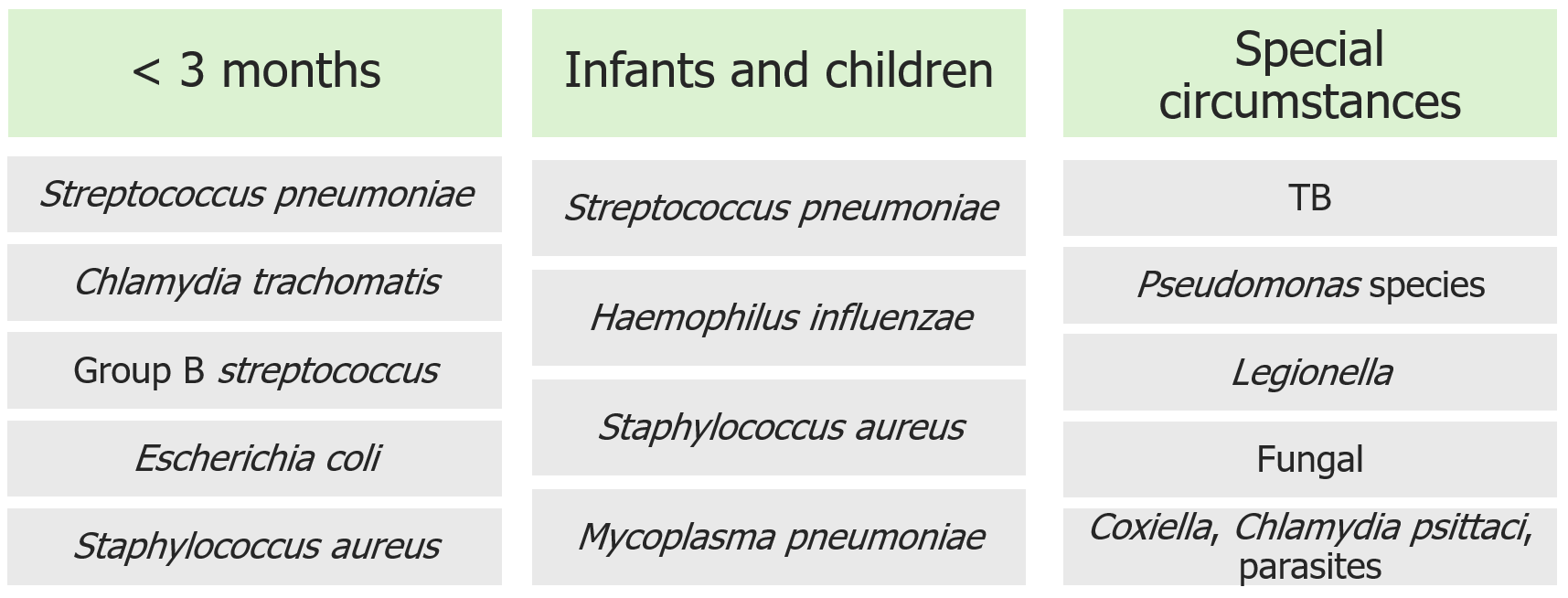
    • Viral: representa aproximadamente el 50% de los LOS Neisseria casos en EN Erythema nodosum is an immune-mediated panniculitis (inflammation of the subcutaneous fat) caused by a type IV (delayed-type) hypersensitivity reaction. It commonly manifests in young women as tender, erythematous nodules on the shins. Erythema Nodosum niños < 5 años:
      • Virus Virus Viruses are infectious, obligate intracellular parasites composed of a nucleic acid core surrounded by a protein capsid. Viruses can be either naked (non-enveloped) or enveloped. The classification of viruses is complex and based on many factors, including type and structure of the nucleoid and capsid, the presence of an envelope, the replication cycle, and the host range. Virology respiratorio sincitial ( RSV RSV Respiratory syncytial virus (RSV) is an enveloped, single-stranded, linear, negative-sense RNA virus of the family Paramyxoviridae and the genus Orthopneumovirus. Two subtypes (A and B) are present in outbreaks, but type A causes more severe disease. Respiratory syncytial virus causes infections of the lungs and respiratory tract. Respiratory Syncytial Virus, por sus siglas en EN Erythema nodosum is an immune-mediated panniculitis (inflammation of the subcutaneous fat) caused by a type IV (delayed-type) hypersensitivity reaction. It commonly manifests in young women as tender, erythematous nodules on the shins. Erythema Nodosum inglés; el más común)
      • Virus Virus Viruses are infectious, obligate intracellular parasites composed of a nucleic acid core surrounded by a protein capsid. Viruses can be either naked (non-enveloped) or enveloped. The classification of viruses is complex and based on many factors, including type and structure of the nucleoid and capsid, the presence of an envelope, the replication cycle, and the host range. Virology de la influenza Influenza Influenza viruses are members of the Orthomyxoviridae family and the causative organisms of influenza, a highly contagious febrile respiratory disease. There are 3 primary influenza viruses (A, B, and C) and various subtypes, which are classified based on their virulent surface antigens, hemagglutinin (HA) and neuraminidase (NA). Influenza typically presents with a fever, myalgia, headache, and symptoms of an upper respiratory infection. Influenza Viruses/Influenza
      • Adenovirus Adenovirus Adenovirus (member of the family Adenoviridae) is a nonenveloped, double-stranded DNA virus. Adenovirus is transmitted in a variety of ways, and it can have various presentations based on the site of entry. Presentation can include febrile pharyngitis, conjunctivitis, acute respiratory disease, atypical pneumonia, and gastroenteritis. Adenovirus
      • Metaneumovirus
      • Virus Virus Viruses are infectious, obligate intracellular parasites composed of a nucleic acid core surrounded by a protein capsid. Viruses can be either naked (non-enveloped) or enveloped. The classification of viruses is complex and based on many factors, including type and structure of the nucleoid and capsid, the presence of an envelope, the replication cycle, and the host range. Virology de la parainfluenza
      • Enterovirus Enterovirus A genus of the family picornaviridae whose members preferentially inhabit the intestinal tract of a variety of hosts. The genus contains many species. Newly described members of human enteroviruses are assigned continuous numbers with the species designated ‘human enterovirus’. Coxsackievirus
      • Coronavirus Coronavirus Coronaviruses are a group of related viruses that contain positive-sense, single-stranded RNA. Coronavirus derives its name from “κορώνη korṓnē” in Greek, which translates as “crown,” after the small club-shaped proteins visible as a ring around the viral envelope in electron micrographs. Coronavirus
      • Rinovirus
    • Bacteriana en EN Erythema nodosum is an immune-mediated panniculitis (inflammation of the subcutaneous fat) caused by a type IV (delayed-type) hypersensitivity reaction. It commonly manifests in young women as tender, erythematous nodules on the shins. Erythema Nodosum la edad < 4 semanas:
      • Estreptococo del grupo B
      • Escherichia coli Escherichia coli The gram-negative bacterium Escherichia coli is a key component of the human gut microbiota. Most strains of E. coli are avirulent, but occasionally they escape the GI tract, infecting the urinary tract and other sites. Less common strains of E. coli are able to cause disease within the GI tract, most commonly presenting as abdominal pain and diarrhea. Escherichia coli
      • Klebsiella Klebsiella Klebsiella are encapsulated gram-negative, lactose-fermenting bacilli. They form pink colonies on MacConkey agar due to lactose fermentation. The main virulence factor is a polysaccharide capsule. Klebsiella pneumoniae is the most important pathogenic species. Klebsiella spp.
      • Chlamydia trachomatis Chlamydia trachomatis Type species of Chlamydia causing a variety of ocular and urogenital diseases. Chlamydia
      • Listeria Listeria Listeria spp. are motile, flagellated, gram-positive, facultative intracellular bacilli. The major pathogenic species is Listeria monocytogenes. Listeria are part of the normal gastrointestinal flora of domestic mammals and poultry and are transmitted to humans through the ingestion of contaminated food, especially unpasteurized dairy products. Listeria Monocytogenes/Listeriosis monocytogenesa
    • Bacteriana en EN Erythema nodosum is an immune-mediated panniculitis (inflammation of the subcutaneous fat) caused by a type IV (delayed-type) hypersensitivity reaction. It commonly manifests in young women as tender, erythematous nodules on the shins. Erythema Nodosum la edad > 4 semanas:
      • Streptococcus Streptococcus Streptococcus is one of the two medically important genera of gram-positive cocci, the other being Staphylococcus. Streptococci are identified as different species on blood agar on the basis of their hemolytic pattern and sensitivity to optochin and bacitracin. There are many pathogenic species of streptococci, including S. pyogenes, S. agalactiae, S. pneumoniae, and the viridans streptococci. Streptococcus pneumoniae: la causa más común del curso clínico típico
      • Haemophilus influenzae Haemophilus Influenzae A species of Haemophilus found on the mucous membranes of humans and a variety of animals. The species is further divided into biotypes I through viii. Haemophilus
      • Staphylococcus aureus Staphylococcus aureus Potentially pathogenic bacteria found in nasal membranes, skin, hair follicles, and perineum of warm-blooded animals. They may cause a wide range of infections and intoxications. Brain Abscess (sensible a la meticilina (MSSA, por sus siglas en EN Erythema nodosum is an immune-mediated panniculitis (inflammation of the subcutaneous fat) caused by a type IV (delayed-type) hypersensitivity reaction. It commonly manifests in young women as tender, erythematous nodules on the shins. Erythema Nodosum inglés) y resistente a la meticilina ( MRSA MRSA A strain of Staphylococcus aureus that is non-susceptible to the action of methicillin. The mechanism of resistance usually involves modification of normal or the presence of acquired penicillin binding proteins. Staphylococcus, por sus siglas en EN Erythema nodosum is an immune-mediated panniculitis (inflammation of the subcutaneous fat) caused by a type IV (delayed-type) hypersensitivity reaction. It commonly manifests in young women as tender, erythematous nodules on the shins. Erythema Nodosum inglés))
      • Mycoplasma pneumoniae Mycoplasma pneumoniae Short filamentous organism of the genus mycoplasma, which binds firmly to the cells of the respiratory epithelium. It is one of the etiologic agents of non-viral primary atypical pneumonia in man. Mycoplasma: causa común del curso clínico atípico
      • Moraxella catarrhalis Moraxella catarrhalis Gram-negative aerobic cocci of low virulence that colonize the nasopharynx and occasionally cause meningitis; bacteremia; empyema; pericarditis; and pneumonia. Moraxella
      • Streptococcus Streptococcus Streptococcus is one of the two medically important genera of gram-positive cocci, the other being Staphylococcus. Streptococci are identified as different species on blood agar on the basis of their hemolytic pattern and sensitivity to optochin and bacitracin. There are many pathogenic species of streptococci, including S. pyogenes, S. agalactiae, S. pneumoniae, and the viridans streptococci. Streptococcus pyogenes
      • Chlamydia pneumoniae Chlamydia pneumoniae A species of chlamydophila that causes acute respiratory infection, especially atypical pneumonia, in humans, horses, and koalas. Chlamydia: causa común del curso clínico atípico
    • Micobacteriana
    • Fúngica:
  • Nosocomial/adquirida en EN Erythema nodosum is an immune-mediated panniculitis (inflammation of the subcutaneous fat) caused by a type IV (delayed-type) hypersensitivity reaction. It commonly manifests in young women as tender, erythematous nodules on the shins. Erythema Nodosum el hospital:
    • Bacilos gram-negativos
    • Staphylococcus aureus Staphylococcus aureus Potentially pathogenic bacteria found in nasal membranes, skin, hair follicles, and perineum of warm-blooded animals. They may cause a wide range of infections and intoxications. Brain Abscess
  • Poblaciones especiales:
    • Inmunocomprometidos:
      • Bacilos gram-negativos
      • Fúngica
      • Pneumocystis jirovecii
      • Virus Virus Viruses are infectious, obligate intracellular parasites composed of a nucleic acid core surrounded by a protein capsid. Viruses can be either naked (non-enveloped) or enveloped. The classification of viruses is complex and based on many factors, including type and structure of the nucleoid and capsid, the presence of an envelope, the replication cycle, and the host range. Virology de varicela zoster
      • Citomegalovirus
    • Fibrosis Fibrosis Any pathological condition where fibrous connective tissue invades any organ, usually as a consequence of inflammation or other injury. Bronchiolitis Obliterans quística:
      • Pseudomonas aeruginosa Pseudomonas aeruginosa A species of gram-negative, aerobic, rod-shaped bacteria commonly isolated from clinical specimens (wound, burn, and urinary tract infections). It is also found widely distributed in soil and water. P. Aeruginosa is a major agent of nosocomial infection. Pseudomonas
      • Aspergillus Aspergillus A genus of mitosporic fungi containing about 100 species and eleven different teleomorphs in the family trichocomaceae. Echinocandins
  • No infecciosa:
    • Neumonía por aspiración (causada por el contenido gástrico)
    • Cuerpo extraño

Fisiopatología

  • 2 posibles mecanismos de inoculación infecciosa:
    • Invasión de las vías respiratorias
    • Diseminación hematógena: menos frecuente
  • Colonización bacteriana de la nasofaringe → aspiración o inhalación de organismos
  • Invasión viral de la mucosa nasofaríngea → propagación contigua al AL Amyloidosis tracto respiratorio inferior
  • Vías respiratorias inferiores infectadas por patógenos → liberación de mediadores inflamatorios y reclutamiento de leucocitos → los LOS Neisseria espacios aéreos se llenan de leucocitos, líquido y restos celulares → reducción de la distensibilidad pulmonar, obstrucción de las vías aéreas pequeñas y atelectasias → deterioro de la ventilación
Patógenos en la neumonía adquirida en la comunidad

Patógenos causantes de la neumonía adquirida en la comunidad según el grupo etario y las circunstancias especiales

Imagen por Lecturio. Licencia: CC BY-NC-SA 4.0

Presentación Clínica

Presentación clínica

La presentación clínica varía según la edad del paciente y el curso de la enfermedad.

Por edad:

  • Neonatos:
    • Apnea
    • Letargo
    • Mala alimentación
    • Irritabilidad
    • Fiebre
  • Lactantes y niños:
    • Fiebre
    • Taquipnea
    • Tos TOS Thoracic outlet syndrome (TOS) is a broad term used for a spectrum of syndromes related to the general region of the thoracic outlet, which involves the compression or irritation of elements of the brachial plexus, subclavian artery, or subclavian vein. Thoracic Outlet Syndrome
    • Dolor Dolor Inflammation torácico
    • Dolor Dolor Inflammation abdominal

Por curso clínico:

  • Curso típico:
    • Antecedentes:
      • Fiebre/escalofríos
      • Malestar general
      • Tos TOS Thoracic outlet syndrome (TOS) is a broad term used for a spectrum of syndromes related to the general region of the thoracic outlet, which involves the compression or irritation of elements of the brachial plexus, subclavian artery, or subclavian vein. Thoracic Outlet Syndrome productiva
      • Dolor Dolor Inflammation torácico
      • Disnea
    • Examen físico:
      • Taquipnea y taquicardia
      • Hipoxia
      • Crepitantes reproducibles en EN Erythema nodosum is an immune-mediated panniculitis (inflammation of the subcutaneous fat) caused by a type IV (delayed-type) hypersensitivity reaction. It commonly manifests in young women as tender, erythematous nodules on the shins. Erythema Nodosum un punto fijo, que se auscultan en EN Erythema nodosum is an immune-mediated panniculitis (inflammation of the subcutaneous fat) caused by a type IV (delayed-type) hypersensitivity reaction. It commonly manifests in young women as tender, erythematous nodules on the shins. Erythema Nodosum el examen pulmonar
      • Disminución de los LOS Neisseria ruidos respiratorios
      • Frémito táctil
      • Matidez a la percusión
      • Retracciones/uso de los LOS Neisseria músculos accesorios de la respiración
  • Curso atípico:
    • Antecedentes:
      • Tos TOS Thoracic outlet syndrome (TOS) is a broad term used for a spectrum of syndromes related to the general region of the thoracic outlet, which involves the compression or irritation of elements of the brachial plexus, subclavian artery, or subclavian vein. Thoracic Outlet Syndrome no productiva
      • Fatiga
      • Cefalea
      • Dolor Dolor Inflammation de garganta
      • Mialgias
    • Examen físico:
      • Es común que no se encuentre nada relevante
      • Posibles sibilancias (también en EN Erythema nodosum is an immune-mediated panniculitis (inflammation of the subcutaneous fat) caused by a type IV (delayed-type) hypersensitivity reaction. It commonly manifests in young women as tender, erythematous nodules on the shins. Erythema Nodosum la enfermedad viral)

Criterios de dificultad respiratoria en EN Erythema nodosum is an immune-mediated panniculitis (inflammation of the subcutaneous fat) caused by a type IV (delayed-type) hypersensitivity reaction. It commonly manifests in young women as tender, erythematous nodules on the shins. Erythema Nodosum niños con neumonía

  • Taquipnea:
    • Edades 0–2 meses: > 60 respiraciones/min
    • Edades 2–12 meses: > 50 respiraciones/min
    • Edades 1–5 años: > 40 respiraciones/min
    • Edades > 5 años: > 20 respiraciones/min
  • Disnea
  • Apnea
  • Retracciones (uso de los LOS Neisseria músculos supraesternales, intercostales o subcostales)
  • Quejidos
  • Aleteo nasal
  • Alteración del estado mental
  • Oximetría de pulso < 90%

Diagnóstico

El diagnóstico se basa en EN Erythema nodosum is an immune-mediated panniculitis (inflammation of the subcutaneous fat) caused by a type IV (delayed-type) hypersensitivity reaction. It commonly manifests in young women as tender, erythematous nodules on the shins. Erythema Nodosum los LOS Neisseria antecedentes y el examen físico, y puede confirmarse o refinarse con imagenología.
Imagenología

  • Indicado para:
    • Enfermedad grave
    • Hospitalización
    • Neumonía recurrente
    • Exclusión de otras causas de dificultad respiratoria
    • Evaluación de las complicaciones
  • Resultados de la radiografía de tórax:
    • Patrón lobar:
      • Broncogramas de opacidad +/- aire
      • La etiología bacteriana es la más probable
    • Patrón bronquial:
      • Infiltraciones en EN Erythema nodosum is an immune-mediated panniculitis (inflammation of the subcutaneous fat) caused by a type IV (delayed-type) hypersensitivity reaction. It commonly manifests in young women as tender, erythematous nodules on the shins. Erythema Nodosum patrón parcheado
      • Es más probable con una etiología atípica o viral
    • Patrón intersticial:
      • Opacidades reticulares difusas
      • La etiología viral es la más probable
    • Derrame o empiema
  • TC de tórax: si la infección es refractaria al AL Amyloidosis tratamiento hospitalario o es recurrente
  • Broncoscopia: para evaluar la anatomía o las masas si la infección es recurrente
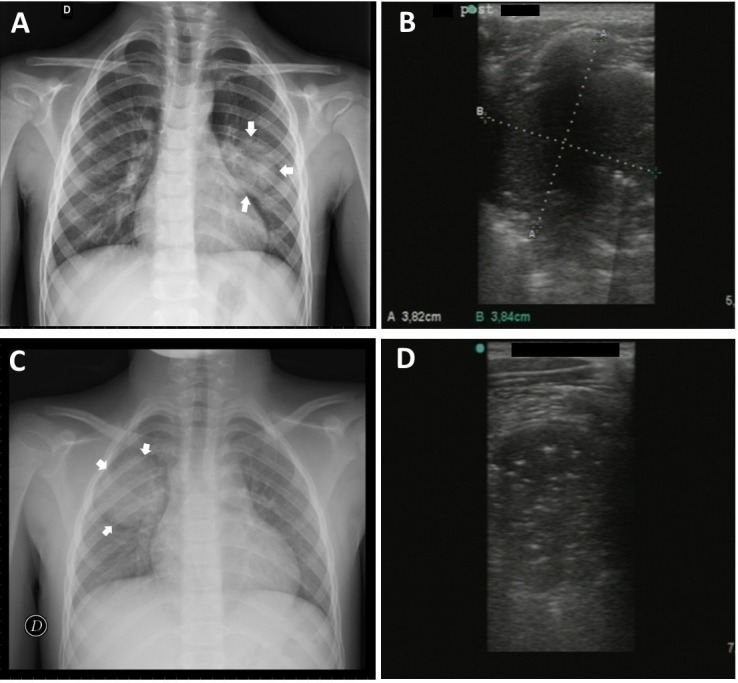
Neumonía redonda en un bebé

Neumonía redonda:
Caso 1: Niño de 5 años con evidencia de neumonía redonda por radiografía de tórax en la región media del pulmón izquierdo (A) detectado por ultrasonido pulmonar (B)
Caso 2: Niño de 8 años con neumonía redonda en la región media/superior del pulmón derecho por radiografía de tórax (C) y la imagen de ultrasonido correspondiente (D)

Imagen: “Round pneumonia” por Iorio G, Capasso M, De Luca G, Prisco S, Mancusi C, Laganà B, Comune V. Licencia: CC BY 4.0

Estudios de laboratorio

  • De soporte, pero no se utilizan para diagnosticar
  • Hemograma con leucocitosis
  • PCR PCR Polymerase chain reaction (PCR) is a technique that amplifies DNA fragments exponentially for analysis. The process is highly specific, allowing for the targeting of specific genomic sequences, even with minuscule sample amounts. The PCR cycles multiple times through 3 phases: denaturation of the template DNA, annealing of a specific primer to the individual DNA strands, and synthesis/elongation of new DNA molecules. Polymerase Chain Reaction (PCR)
  • Gasometría arterial: baja presión parcial de oxígeno (PaO2)
  • Hemocultivo
  • Panel respiratorio viral: los LOS Neisseria resultados pueden reflejar colonización o diseminación prolongada y podrían no modificar el manejo
  • Tinción de Gram y cultivo de esputo
  • Toracocentesis: para evaluar el líquido de un derrame o empiema

Tratamiento

Cuidados generales de soporte

  • Oxígeno
  • Reanimación con líquidos
  • Espirometría incentivada
  • Antipiréticos

Antimicrobianos

  • Paciente ambulatorio con neumonía adquirida en EN Erythema nodosum is an immune-mediated panniculitis (inflammation of the subcutaneous fat) caused by a type IV (delayed-type) hypersensitivity reaction. It commonly manifests in young women as tender, erythematous nodules on the shins. Erythema Nodosum la comunidad:
    • Viral:
      • Cuidados de soporte
      • Medicamentos antivirales contra la gripe, según se requiera
    • Curso típico:
      • Amoxicilina
      • Cefalosporina de 2da o 3ra generación
      • Fluoroquinolonas (desaconsejadas por su perfil de efectos secundarios)
    • Curso atípico: azitromicina
    • Respuesta:
      • Anticipar mejoría en EN Erythema nodosum is an immune-mediated panniculitis (inflammation of the subcutaneous fat) caused by a type IV (delayed-type) hypersensitivity reaction. It commonly manifests in young women as tender, erythematous nodules on the shins. Erythema Nodosum < 72 horas
      • Si no hay respuesta, hay que considerar un diagnóstico alternativo, una complicación o una cobertura ineficaz
      • La tos TOS Thoracic outlet syndrome (TOS) is a broad term used for a spectrum of syndromes related to the general region of the thoracic outlet, which involves the compression or irritation of elements of the brachial plexus, subclavian artery, or subclavian vein. Thoracic Outlet Syndrome puede durar semanas después de la resolución de todos los LOS Neisseria demás síntomas.
  • Paciente hospitalizado con neumonía adquirida en EN Erythema nodosum is an immune-mediated panniculitis (inflammation of the subcutaneous fat) caused by a type IV (delayed-type) hypersensitivity reaction. It commonly manifests in young women as tender, erythematous nodules on the shins. Erythema Nodosum la comunidad:
    • Ingreso en EN Erythema nodosum is an immune-mediated panniculitis (inflammation of the subcutaneous fat) caused by a type IV (delayed-type) hypersensitivity reaction. It commonly manifests in young women as tender, erythematous nodules on the shins. Erythema Nodosum el hospital en EN Erythema nodosum is an immune-mediated panniculitis (inflammation of the subcutaneous fat) caused by a type IV (delayed-type) hypersensitivity reaction. It commonly manifests in young women as tender, erythematous nodules on the shins. Erythema Nodosum caso de:
      • Lactantes
      • Hipoxia
      • Deshidratación
      • Dificultad respiratoria
      • Complicación
      • Fracaso del tratamiento ambulatorio
    • Elección de los LOS Neisseria antimicrobianos:
      • Ampicilina: 1ra línea
      • Cefalosporina de 3ra generación: para pacientes < 12 meses o subinmunizados
      • Cefalosporina de 3ra generación + vancomicina si se sospecha de MRSA MRSA A strain of Staphylococcus aureus that is non-susceptible to the action of methicillin. The mechanism of resistance usually involves modification of normal or the presence of acquired penicillin binding proteins. Staphylococcus
      • Cefalosporina de 3ra generación + macrólido si se sospecha de infección atípica
  • Casos especiales:
    • < 6 meses:
      • Desde el nacimiento hasta el 1er mes: ampicilina y gentamicina
      • 1–6 meses: macrólidos
    • Fibrosis Fibrosis Any pathological condition where fibrous connective tissue invades any organ, usually as a consequence of inflammation or other injury. Bronchiolitis Obliterans quística: cobertura antipseudomónica
    • Aspiración: ampicilina-sulbactam o clindamicina
  • Nosocomial: β-lactámico antipseudomonal (p. ej., piperacilina-tazobactam o cefepima) + vancomicina ± un aminoglucósido según los LOS Neisseria factores de riesgo.

Criterios de hospitalización en EN Erythema nodosum is an immune-mediated panniculitis (inflammation of the subcutaneous fat) caused by a type IV (delayed-type) hypersensitivity reaction. It commonly manifests in young women as tender, erythematous nodules on the shins. Erythema Nodosum niños con neumonía adquirida en EN Erythema nodosum is an immune-mediated panniculitis (inflammation of the subcutaneous fat) caused by a type IV (delayed-type) hypersensitivity reaction. It commonly manifests in young women as tender, erythematous nodules on the shins. Erythema Nodosum la comunidad

  • Lactantes:
    • Apnea o quejidos
    • Saturación de oxígeno ≤ 92%
    • Mala alimentación
    • Frecuencia respiratoria > 70 respiraciones/min
  • Niños mayores:
    • Quejidos
    • Incapacidad de tolerar la ingesta oral
    • Saturación de oxígeno ≤ 92%
    • Frecuencia respiratoria > 50 respiraciones/min
  • Todos los LOS Neisseria grupos etarios:
    • Comorbilidades (e.g., enfermedad pulmonar crónica, asma ASMA Autoimmune Hepatitis, cardiopatía congénita no reparada o incompletamente reparada, diabetes Diabetes Diabetes mellitus (DM) is a metabolic disease characterized by hyperglycemia and dysfunction of the regulation of glucose metabolism by insulin. Type 1 DM is diagnosed mostly in children and young adults as the result of autoimmune destruction of β cells in the pancreas and the resulting lack of insulin. Type 2 DM has a significant association with obesity and is characterized by insulin resistance. Diabetes Mellitus mellitus, enfermedad neuromuscular)
    • La familia no es capaz de proporcionar una observación adecuada

Pronóstico y Prevención

La mayoría de los LOS Neisseria niños con neumonía se recuperan sin secuelas a largo plazo; sin embargo, pueden producirse algunas complicaciones.

  • Complicaciones:
    • Tos TOS Thoracic outlet syndrome (TOS) is a broad term used for a spectrum of syndromes related to the general region of the thoracic outlet, which involves the compression or irritation of elements of the brachial plexus, subclavian artery, or subclavian vein. Thoracic Outlet Syndrome prolongada
    • Derrame pleural
    • Empiema
    • Absceso pulmonar
    • Neumatocele
    • Bacteriemia/ sepsis Sepsis Systemic inflammatory response syndrome with a proven or suspected infectious etiology. When sepsis is associated with organ dysfunction distant from the site of infection, it is called severe sepsis. When sepsis is accompanied by hypotension despite adequate fluid infusion, it is called septic shock. Sepsis and Septic Shock
    • Síndrome de dificultad respiratoria aguda
    • Insuficiencia respiratoria
    • Fallecimiento
  • La vacunación es el medio de prevención más importante:
    • Vacunación antineumocócica (PCV15 o PCV20 según el calendario actual del ACIP para niños menores de 5 años)
    • Vacunación contra Haemophilus influenzae Haemophilus Influenzae A species of Haemophilus found on the mucous membranes of humans and a variety of animals. The species is further divided into biotypes I through viii. Haemophilus tipo b (Hib)
    • Vacunación contra la influenza Influenza Influenza viruses are members of the Orthomyxoviridae family and the causative organisms of influenza, a highly contagious febrile respiratory disease. There are 3 primary influenza viruses (A, B, and C) and various subtypes, which are classified based on their virulent surface antigens, hemagglutinin (HA) and neuraminidase (NA). Influenza typically presents with a fever, myalgia, headache, and symptoms of an upper respiratory infection. Influenza Viruses/Influenza
    • Vacunación contra la varicela
    • Vacunación contra la difteria, el tétanos y la tos TOS Thoracic outlet syndrome (TOS) is a broad term used for a spectrum of syndromes related to the general region of the thoracic outlet, which involves the compression or irritation of elements of the brachial plexus, subclavian artery, or subclavian vein. Thoracic Outlet Syndrome ferina acelular ( DTaP DTaP Combined vaccines consisting of diphtheria toxoid; tetanus toxoid; and an acellular form of pertussis vaccine. At least five different purified antigens of b. Pertussis have been used in various combinations in these vaccines. Bordetella)

Otras complicaciones de la neumonía en EN Erythema nodosum is an immune-mediated panniculitis (inflammation of the subcutaneous fat) caused by a type IV (delayed-type) hypersensitivity reaction. It commonly manifests in young women as tender, erythematous nodules on the shins. Erythema Nodosum los LOS Neisseria niños incluyen:

  • Pulmonares:
    • Absceso pulmonar
    • Neumotórax
    • Fístula broncopleural
    • Neumonía necrosante
    • Insuficiencia respiratoria aguda
  • Metastásicas:
    • Meningitis Meningitis Meningitis is inflammation of the meninges, the protective membranes of the brain, and spinal cord. The causes of meningitis are varied, with the most common being bacterial or viral infection. The classic presentation of meningitis is a triad of fever, altered mental status, and nuchal rigidity. Meningitis
    • Absceso del SNC
    • Pericarditis Pericarditis Pericarditis is an inflammation of the pericardium, often with fluid accumulation. It can be caused by infection (often viral), myocardial infarction, drugs, malignancies, metabolic disorders, autoimmune disorders, or trauma. Acute, subacute, and chronic forms exist. Pericarditis
    • Endocarditis Endocarditis Endocarditis is an inflammatory disease involving the inner lining (endometrium) of the heart, most commonly affecting the cardiac valves. Both infectious and noninfectious etiologies lead to vegetations on the valve leaflets. Patients may present with nonspecific symptoms such as fever and fatigue. Endocarditis
    • Osteomielitis
    • Artritis séptica
  • Sistémicas:
    • Sepsis Sepsis Systemic inflammatory response syndrome with a proven or suspected infectious etiology. When sepsis is associated with organ dysfunction distant from the site of infection, it is called severe sepsis. When sepsis is accompanied by hypotension despite adequate fluid infusion, it is called septic shock. Sepsis and Septic Shock
    • Síndrome hemolítico urémico

Diagnóstico Diferencial

  • Asma ASMA Autoimmune Hepatitis: enfermedad inflamatoria de las vías aéreas que provoca un estrechamiento luminal de los LOS Neisseria bronquios debido al AL Amyloidosis estrechamiento del músculo liso y a la sobreproducción de moco en EN Erythema nodosum is an immune-mediated panniculitis (inflammation of the subcutaneous fat) caused by a type IV (delayed-type) hypersensitivity reaction. It commonly manifests in young women as tender, erythematous nodules on the shins. Erythema Nodosum respuesta a un estímulo irritante (aire frío, infección o alergias) y, por lo tanto, la obstrucción del flujo de aire. El asma ASMA Autoimmune Hepatitis se caracteriza por tos TOS Thoracic outlet syndrome (TOS) is a broad term used for a spectrum of syndromes related to the general region of the thoracic outlet, which involves the compression or irritation of elements of the brachial plexus, subclavian artery, or subclavian vein. Thoracic Outlet Syndrome, sibilancias y disnea, y generalmente se diagnostica a partir de los LOS Neisseria 2 años. El asma ASMA Autoimmune Hepatitis tiene desencadenantes conocidos, con reversibilidad de los LOS Neisseria síntomas con el uso de broncodilatadores en EN Erythema nodosum is an immune-mediated panniculitis (inflammation of the subcutaneous fat) caused by a type IV (delayed-type) hypersensitivity reaction. It commonly manifests in young women as tender, erythematous nodules on the shins. Erythema Nodosum todos los LOS Neisseria casos.
  • Bronquiolitis: afección respiratoria causada por la inflamación de las vías aéreas medianas y pequeñas (bronquiolos), siendo la mayoría de los LOS Neisseria casos en EN Erythema nodosum is an immune-mediated panniculitis (inflammation of the subcutaneous fat) caused by a type IV (delayed-type) hypersensitivity reaction. It commonly manifests in young women as tender, erythematous nodules on the shins. Erythema Nodosum niños causados por el RSV RSV Respiratory syncytial virus (RSV) is an enveloped, single-stranded, linear, negative-sense RNA virus of the family Paramyxoviridae and the genus Orthopneumovirus. Two subtypes (A and B) are present in outbreaks, but type A causes more severe disease. Respiratory syncytial virus causes infections of the lungs and respiratory tract. Respiratory Syncytial Virus. En EN Erythema nodosum is an immune-mediated panniculitis (inflammation of the subcutaneous fat) caused by a type IV (delayed-type) hypersensitivity reaction. It commonly manifests in young women as tender, erythematous nodules on the shins. Erythema Nodosum un principio, los LOS Neisseria pacientes generalmente presentan síntomas respiratorios superiores, como tos TOS Thoracic outlet syndrome (TOS) is a broad term used for a spectrum of syndromes related to the general region of the thoracic outlet, which involves the compression or irritation of elements of the brachial plexus, subclavian artery, or subclavian vein. Thoracic Outlet Syndrome y congestión, y pueden progresar a disnea, sibilancias e hipoxia. El diagnóstico es clínico y el tratamiento se dirige a mejorar la oxigenación y la hidratación. La afección es autolimitada y tiene buen pronóstico.
  • Tos ferina: infección bacteriana potencialmente mortal, también conocida como “tos convulsa”. La tos TOS Thoracic outlet syndrome (TOS) is a broad term used for a spectrum of syndromes related to the general region of the thoracic outlet, which involves the compression or irritation of elements of the brachial plexus, subclavian artery, or subclavian vein. Thoracic Outlet Syndrome ferina se presenta como una tos TOS Thoracic outlet syndrome (TOS) is a broad term used for a spectrum of syndromes related to the general region of the thoracic outlet, which involves the compression or irritation of elements of the brachial plexus, subclavian artery, or subclavian vein. Thoracic Outlet Syndrome paroxística intensa, seguida de un sonido estridente inspiratorio. La afección puede ser grave para los LOS Neisseria lactantes < 1 año de edad. Si se sospecha de tos TOS Thoracic outlet syndrome (TOS) is a broad term used for a spectrum of syndromes related to the general region of the thoracic outlet, which involves the compression or irritation of elements of the brachial plexus, subclavian artery, or subclavian vein. Thoracic Outlet Syndrome ferina, debe iniciarse inmediatamente una terapia antibiótica con macrólidos, aunque esté pendiente la confirmación de laboratorio. La tos TOS Thoracic outlet syndrome (TOS) is a broad term used for a spectrum of syndromes related to the general region of the thoracic outlet, which involves the compression or irritation of elements of the brachial plexus, subclavian artery, or subclavian vein. Thoracic Outlet Syndrome ferina se puede prevenir con la vacunación.
  • Aspiración de cuerpo extraño: hallazgo común en EN Erythema nodosum is an immune-mediated panniculitis (inflammation of the subcutaneous fat) caused by a type IV (delayed-type) hypersensitivity reaction. It commonly manifests in young women as tender, erythematous nodules on the shins. Erythema Nodosum la población pediátrica. Los LOS Neisseria cuerpos extraños aspirados pueden quedar alojados en EN Erythema nodosum is an immune-mediated panniculitis (inflammation of the subcutaneous fat) caused by a type IV (delayed-type) hypersensitivity reaction. It commonly manifests in young women as tender, erythematous nodules on the shins. Erythema Nodosum los LOS Neisseria bronquios, afectando a la respiración, y pueden provocar una infección o una erosión de las paredes bronquiales. Los LOS Neisseria niños pueden presentarse de forma aguda con tos TOS Thoracic outlet syndrome (TOS) is a broad term used for a spectrum of syndromes related to the general region of the thoracic outlet, which involves the compression or irritation of elements of the brachial plexus, subclavian artery, or subclavian vein. Thoracic Outlet Syndrome o sibilancias, pero los LOS Neisseria síntomas también pueden ser más indolentes, con síntomas persistentes de neumonía recurrente asociados a la infección causada por la aspiración. El diagnóstico se realiza mediante imagenología y el tratamiento consiste en EN Erythema nodosum is an immune-mediated panniculitis (inflammation of the subcutaneous fat) caused by a type IV (delayed-type) hypersensitivity reaction. It commonly manifests in young women as tender, erythematous nodules on the shins. Erythema Nodosum extraer rápidamente el cuerpo extraño.
  • Insuficiencia cardíaca: afección potencialmente mortal con múltiples etiologías. La insuficiencia cardíaca se debe a la incapacidad del corazón de expulsar suficiente sangre para satisfacer las necesidades metabólicas del organismo. La presentación incluye dolor Dolor Inflammation torácico, disnea de esfuerzo, tos TOS Thoracic outlet syndrome (TOS) is a broad term used for a spectrum of syndromes related to the general region of the thoracic outlet, which involves the compression or irritation of elements of the brachial plexus, subclavian artery, or subclavian vein. Thoracic Outlet Syndrome que empeora al AL Amyloidosis reclinarse, fatiga, edema Edema Edema is a condition in which excess serous fluid accumulates in the body cavity or interstitial space of connective tissues. Edema is a symptom observed in several medical conditions. It can be categorized into 2 types, namely, peripheral (in the extremities) and internal (in an organ or body cavity). Edema con fóvea y crepitantes en EN Erythema nodosum is an immune-mediated panniculitis (inflammation of the subcutaneous fat) caused by a type IV (delayed-type) hypersensitivity reaction. It commonly manifests in young women as tender, erythematous nodules on the shins. Erythema Nodosum el examen pulmonar. El ultrasonido cardíaco y la prueba de esfuerzo cardíaco mostrarán una función cardíaca reducida, y la radiografía de tórax mostrará un edema Edema Edema is a condition in which excess serous fluid accumulates in the body cavity or interstitial space of connective tissues. Edema is a symptom observed in several medical conditions. It can be categorized into 2 types, namely, peripheral (in the extremities) and internal (in an organ or body cavity). Edema pulmonar. El tratamiento implica múltiples medicamentos, como los LOS Neisseria diuréticos, y modificaciones del estilo de vida.

Referencias

  1. Ranganathan, S.C., Sonnappa, S. (2009). Pneumonia and other respiratory infections. Pediatric Clinics of North America 56:135–156. https://doi.org/10.1016/j.pcl.2008.10.005 
  2. American Academy of Pediatrics. (2011). Management of community-acquired pneumonia (CAP) in infants and children older than 3 months of age. Pediatrics 128:e1677. https://doi.org/10.1542/peds.2011-2385 
  3. Kelly, M.S. and Sandora, T.J. (2020) Community-Acquired Pneumonia. In: Berman, R.E., Kliegman, M.R., St Geme, J.W., Blum, N.J., Shah, S.S., Tasker, R.C., et al., Eds., Nelson Textbook of Pediatrics, 21st Edition, Elsevier Inc., Philadelphia, 2266-2274.
  4. Copeland, J.E. (2016). Pneumonia in infants and children. In Tintinalli, J.E., et al. (Eds.), Tintinalli’s Emergency Medicine: A comprehensive study guide, 8th ed. New York: McGraw-Hill Education. https://accessmedicine.mhmedical.com/Content.aspx?bookid=1658&sectionid=109407264
  5. Kemp, W.L., Burns, D.K., Brown, T.G. (2008). Pulmonary pathology. Chapter 13 of Pathology: The Big Picture. New York: McGraw-Hill. https://accessmedicine.mhmedical.com/content.aspx?aid=57053485
  6. Mandell, L.A., Wunderink, R. (2018). Pneumonia. In Jameson, J., et al. (Eds.), Harrison’s Principles of Internal Medicine, 20th ed. New York: McGraw-Hill Education. https://accessmedicine.mhmedical.com/content.aspx?aid=1155964517
  7. Leung, A.K.C., et al. (2018). Community-acquired pneumonia in children. Recent Patents on Inflammation & Allergy Drug Discovery 12(2):136–144. https://doi.org/10.2174/1872213X12666180621163821 

¡Crea tu cuenta gratis o inicia una sesión para seguir leyendo!

Regístrate ahora y obtén acceso gratuito a Lecturio con páginas de concepto, videos médicos y cuestionarios para tu educación médica.

User Reviews

Que tengas una sesión de estudio alegre y navideña 🎁 Ahorra 50% en todos los planes >>

Details