Domina Conceptos Médicos

Estudia para la escuela de medicina y tus examenes con Lecturio.

Anomalías Gastrointestinales Pediátricas

En la población pediátrica, la imagenología a menudo juegan un papel crítico en el diagnóstico, especialmente en el diagnóstico de anomalías congénitas. En los niños, las TC se evitan en la medida de lo posible debido al alto riesgo de exposición a la radiación. Además, tanto la TC como (especialmente) la RM requieren que los niños permanezcan quietos durante períodos de tiempo significativos y, a menudo, requieren sedación para completar el estudio. Por estas razones, la radiografía simple (a menudo con contraste), la fluoroscopia y el ultrasonido son las modalidades de imagenología de elección para la mayoría de los casos sospechosos de patología gastrointestinal. Algunas afecciones que se pueden diagnosticar mediante imagenología incluyen estenosis pilórica hipertrófica, enterocolitis necrosante, malrotación del intestino medio con o sin vólvulo, atresia intestinal, intususcepción, apendicitis, enfermedad de Hirschsprung, linfadenitis mesentérica y obstrucciones del árbol biliar.

Last updated: Dec 15, 2025

Editorial responsibility: Stanley Oiseth, Lindsay Jones, Evelin Maza

Introducción

Consideraciones clave en EN Erythema nodosum is an immune-mediated panniculitis (inflammation of the subcutaneous fat) caused by a type IV (delayed-type) hypersensitivity reaction. It commonly manifests in young women as tender, erythematous nodules on the shins. Erythema Nodosum la imagenología pediátrica

Se deben considerar varias cuestiones adicionales durante la obtención de imagenología pediátrica, que incluyen:

  • Limitar/evitar la exposición a la radiación tanto como sea posible → se evitan las TC
  • ¿Puede el individuo quedarse quieto para la imagen sin sedación? → las RM generalmente se evitan/no son necesarias, especialmente en EN Erythema nodosum is an immune-mediated panniculitis (inflammation of the subcutaneous fat) caused by a type IV (delayed-type) hypersensitivity reaction. It commonly manifests in young women as tender, erythematous nodules on the shins. Erythema Nodosum niños pequeños
  • Las mejores modalidades de imagenología:
    • Ultrasonido
    • Radiografía simple
    • Fluoroscopia

Pasos preparatorios antes del análisis de imágenes

Antes de la interpretación de cualquier imagen, el médico debe tomar ciertos pasos preparatorios. Siempre se debe seguir el mismo abordaje sistemático:

  • Confirmar el nombre, la fecha y la hora en EN Erythema nodosum is an immune-mediated panniculitis (inflammation of the subcutaneous fat) caused by a type IV (delayed-type) hypersensitivity reaction. It commonly manifests in young women as tender, erythematous nodules on the shins. Erythema Nodosum todas las imágenes.
  • Obtener los LOS Neisseria antecedentes médicos del individuo y los LOS Neisseria hallazgos del examen físico.
  • Confirmar que el examen y la técnica sean adecuados para la patología deseada.
  • Comparar cualquier imagen disponible de la misma área tomada previamente con la misma modalidad.
  • Determinar la orientación de la imagen:
    • Marcador derecho o izquierdo en EN Erythema nodosum is an immune-mediated panniculitis (inflammation of the subcutaneous fat) caused by a type IV (delayed-type) hypersensitivity reaction. It commonly manifests in young women as tender, erythematous nodules on the shins. Erythema Nodosum la radiografía
    • En EN Erythema nodosum is an immune-mediated panniculitis (inflammation of the subcutaneous fat) caused by a type IV (delayed-type) hypersensitivity reaction. It commonly manifests in young women as tender, erythematous nodules on the shins. Erythema Nodosum los LOS Neisseria ultrasonidos, las vistas de examen estándar colocan un marcador (punto) en EN Erythema nodosum is an immune-mediated panniculitis (inflammation of the subcutaneous fat) caused by a type IV (delayed-type) hypersensitivity reaction. It commonly manifests in young women as tender, erythematous nodules on the shins. Erythema Nodosum el lado derecho del sujeto.
    • Para TC/RM: en EN Erythema nodosum is an immune-mediated panniculitis (inflammation of the subcutaneous fat) caused by a type IV (delayed-type) hypersensitivity reaction. It commonly manifests in young women as tender, erythematous nodules on the shins. Erythema Nodosum la vista axial Axial Computed Tomography (CT), la imagen se corta y se ve VE Ventilation: Mechanics of Breathing de abajo hacia arriba (como si estuviera mirando desde los LOS Neisseria pies del sujeto hacia arriba).

Radiografía/Fluoroscopia

Indicaciones

  • Distensión abdominal
  • Movimientos intestinales anormales (estreñimiento crónico, diarrea, etc ETC The electron transport chain (ETC) sends electrons through a series of proteins, which generate an electrochemical proton gradient that produces energy in the form of adenosine triphosphate (ATP). Electron Transport Chain (ETC).)
  • Náuseas/vómitos
  • Antecedente de ingestión de objeto extraño
  • Sospecha de obstrucción o perforación intestinal
  • Masa palpable
  • Traumatismo
  • Verificación de la colocación correcta de accesos intravenosos, vías y tubos

Ventajas

  • Bajo costo
  • Dosis de radiación relativamente baja
  • Disponibilidad ubicua
  • Rápida
  • Portátil

Desventajas

  • A menudo inespecífica
  • Mala resolución de tejidos blandos
  • Exposición a radiaciones ionizantes
  • Los LOS Neisseria sujetos deben permanecer quietos durante la adquisición de imágenes.

Técnica de examen

  • El sujeto debe permanecer inmóvil durante la adquisición de la imagen.
  • Los LOS Neisseria brazos deben mantenerse alejados del abdomen (e.g., hacia abajo a los LOS Neisseria lados o por encima de la cabeza).
  • Retirar los LOS Neisseria elementos radiopacos (e.g., pañales mojados).
  • Obtener la imagen durante la inspiración (ideal).
  • Imágenes anteroposteriores:
    • Se pueden adquirir con el sujeto en EN Erythema nodosum is an immune-mediated panniculitis (inflammation of the subcutaneous fat) caused by a type IV (delayed-type) hypersensitivity reaction. It commonly manifests in young women as tender, erythematous nodules on the shins. Erythema Nodosum posición supina o en EN Erythema nodosum is an immune-mediated panniculitis (inflammation of the subcutaneous fat) caused by a type IV (delayed-type) hypersensitivity reaction. It commonly manifests in young women as tender, erythematous nodules on the shins. Erythema Nodosum bipedestación (la posición en EN Erythema nodosum is an immune-mediated panniculitis (inflammation of the subcutaneous fat) caused by a type IV (delayed-type) hypersensitivity reaction. It commonly manifests in young women as tender, erythematous nodules on the shins. Erythema Nodosum bipedestación es mejor para evaluar la obstrucción intestinal y el aire libre)
    • Sin rotación de hombros o caderas; lo siguiente debe ser simétrico:
      • Pedículos de la columna
      • Costillas
      • Crestas ilíacas
      • Foramen obturador
    • La tabla debe ser colocada contra la espalda.
    • Haces de rayos X en EN Erythema nodosum is an immune-mediated panniculitis (inflammation of the subcutaneous fat) caused by a type IV (delayed-type) hypersensitivity reaction. It commonly manifests in young women as tender, erythematous nodules on the shins. Erythema Nodosum dirección anterior → posterior a través del sujeto
  • Para imágenes en EN Erythema nodosum is an immune-mediated panniculitis (inflammation of the subcutaneous fat) caused by a type IV (delayed-type) hypersensitivity reaction. It commonly manifests in young women as tender, erythematous nodules on the shins. Erythema Nodosum decúbito lateral:
    • El sujeto debe estar acostado de lado.
    • La tabla debe ser colocada contra la espalda del sujeto (sostenida por un asistente).
    • Generalmente, el decúbito lateral izquierdo (i.e. el lado izquierdo hacia abajo sobre la mesa) permite una mejor visualización del aire libre.
  • Campo de visión:
    • La imagen debe estar centrada en EN Erythema nodosum is an immune-mediated panniculitis (inflammation of the subcutaneous fat) caused by a type IV (delayed-type) hypersensitivity reaction. It commonly manifests in young women as tender, erythematous nodules on the shins. Erythema Nodosum la línea media al AL Amyloidosis nivel de las crestas ilíacas.
    • Superiormente: incluir al AL Amyloidosis menos hasta el diafragma completo.
    • Inferiormente: ramas púbicas inferiores
    • Lateralmente: bordes laterales de la pared abdominal
  • Visualización:
    • El gas intestinal debe ser completamente radiotransparente.
    • Los LOS Neisseria planos de grasa peritoneal deben ser visibles lateralmente.

Interpretación/evaluación

Las imágenes siempre deben interpretarse utilizando un abordaje sistemático.

  • Seguir los LOS Neisseria pasos descritos en EN Erythema nodosum is an immune-mediated panniculitis (inflammation of the subcutaneous fat) caused by a type IV (delayed-type) hypersensitivity reaction. It commonly manifests in young women as tender, erythematous nodules on the shins. Erythema Nodosum la introducción (e.g., confirmar el nombre del sujeto, los LOS Neisseria antecedentes médicos, la orientación de la imagen y que el estudio sea el correcto para la patología sospechada).
  • Evaluar la adecuación de la imagen:
    • Rotación: ¿el sujeto presenta rotación?
    • La penetración es el grado en EN Erythema nodosum is an immune-mediated panniculitis (inflammation of the subcutaneous fat) caused by a type IV (delayed-type) hypersensitivity reaction. It commonly manifests in young women as tender, erythematous nodules on the shins. Erythema Nodosum que la radiación ha HA Hemolytic anemia (HA) is the term given to a large group of anemias that are caused by the premature destruction/hemolysis of circulating red blood cells (RBCs). Hemolysis can occur within (intravascular hemolysis) or outside the blood vessels (extravascular hemolysis). Hemolytic Anemia pasado a través del cuerpo, dando como resultado una imagen más oscura o más clara:
      • Subpenetración: no han pasado suficientes rayos X → no se pueden diferenciar diferentes estructuras densas → la película se obseerva blanca y las características son menos evidentes
      • Penetración excesiva: han pasado demasiados rayos X → la película se obseerva oscura y las características son menos evidentes
  • Abordaje de adentro hacia afuera (del centro a la periferia):
    • Observar los LOS Neisseria patrones de gases intestinales:
      • Dilatación
      • Distribución
      • Patrón de la pared
    • Buscar siluetas de órganos sólidos (hígado, bazo, riñón).
    • Buscar planos de grasa normales en EN Erythema nodosum is an immune-mediated panniculitis (inflammation of the subcutaneous fat) caused by a type IV (delayed-type) hypersensitivity reaction. It commonly manifests in young women as tender, erythematous nodules on the shins. Erythema Nodosum la periferia.
    • Buscar evidencia de aire intraperitoneal Intraperitoneal Peritoneum: Anatomy libre.
    • Evaluar tejidos blandos en EN Erythema nodosum is an immune-mediated panniculitis (inflammation of the subcutaneous fat) caused by a type IV (delayed-type) hypersensitivity reaction. It commonly manifests in young women as tender, erythematous nodules on the shins. Erythema Nodosum busca de calcificaciones anormales (cálculos, masas en EN Erythema nodosum is an immune-mediated panniculitis (inflammation of the subcutaneous fat) caused by a type IV (delayed-type) hypersensitivity reaction. It commonly manifests in young women as tender, erythematous nodules on the shins. Erythema Nodosum pediatría).
    • Evaluar las bases Bases Usually a hydroxide of lithium, sodium, potassium, rubidium or cesium, but also the carbonates of these metals, ammonia, and the amines. Acid-Base Balance pulmonares en EN Erythema nodosum is an immune-mediated panniculitis (inflammation of the subcutaneous fat) caused by a type IV (delayed-type) hypersensitivity reaction. It commonly manifests in young women as tender, erythematous nodules on the shins. Erythema Nodosum busca de evidencia de consolidación, derrame y neumotórax.
    • Evaluar las estructuras óseas (altura del cuerpo vertebral, huesos ilíacos, fémures).
    • Localizar tubos y vías.
  • Si se observa una anomalía → usar patrones para diagnósticos diferenciales

Hallazgos normales

  • Gases intestinales:
    • Deben estar presentes en EN Erythema nodosum is an immune-mediated panniculitis (inflammation of the subcutaneous fat) caused by a type IV (delayed-type) hypersensitivity reaction. It commonly manifests in young women as tender, erythematous nodules on the shins. Erythema Nodosum los LOS Neisseria intestinos delgado y grueso
    • No deben distender el intestino delgado en EN Erythema nodosum is an immune-mediated panniculitis (inflammation of the subcutaneous fat) caused by a type IV (delayed-type) hypersensitivity reaction. It commonly manifests in young women as tender, erythematous nodules on the shins. Erythema Nodosum > 3 cm
    • Deben ser uniformes en EN Erythema nodosum is an immune-mediated panniculitis (inflammation of the subcutaneous fat) caused by a type IV (delayed-type) hypersensitivity reaction. It commonly manifests in young women as tender, erythematous nodules on the shins. Erythema Nodosum todo el abdomen
  • Órganos:
    • La región del hígado visible bajo el hemidiafragma derecho debe ser uniforme y sin aire libre.
    • El estómago y el colon Colon The large intestines constitute the last portion of the digestive system. The large intestine consists of the cecum, appendix, colon (with ascending, transverse, descending, and sigmoid segments), rectum, and anal canal. The primary function of the colon is to remove water and compact the stool prior to expulsion from the body via the rectum and anal canal. Colon, Cecum, and Appendix: Anatomy son visibles con aire en EN Erythema nodosum is an immune-mediated panniculitis (inflammation of the subcutaneous fat) caused by a type IV (delayed-type) hypersensitivity reaction. It commonly manifests in young women as tender, erythematous nodules on the shins. Erythema Nodosum la luz debajo del hemidiafragma izquierdo.
    • Los LOS Neisseria contornos renales, si son visibles, deben estar en EN Erythema nodosum is an immune-mediated panniculitis (inflammation of the subcutaneous fat) caused by a type IV (delayed-type) hypersensitivity reaction. It commonly manifests in young women as tender, erythematous nodules on the shins. Erythema Nodosum los LOS Neisseria cuadrantes superiores derecho e izquierdo.
  • Planos de grasa: a lo largo de la periferia
  • Bases Bases Usually a hydroxide of lithium, sodium, potassium, rubidium or cesium, but also the carbonates of these metals, ammonia, and the amines. Acid-Base Balance pulmonares:
    • Deben ser claras con marcas pulmonares mínimas
    • Los LOS Neisseria ángulos costofrénicos deben verse nítidos.
  • Huesos:
    • Los LOS Neisseria pedículos deben estar presentes y simétricos bilateralmente.
    • Las alturas de los LOS Neisseria cuerpos vertebrales deben aumentar gradualmente a medida que se mueven hacia abajo.
    • Los LOS Neisseria procesos espinosos deben estar en EN Erythema nodosum is an immune-mediated panniculitis (inflammation of the subcutaneous fat) caused by a type IV (delayed-type) hypersensitivity reaction. It commonly manifests in young women as tender, erythematous nodules on the shins. Erythema Nodosum la línea media.

Pruebas especializadas

Esofagograma, contraste gastrointestinal superior (i.e., “estudio de deglución”) y estudios del tránsito del intestino delgado:
  • Las imágenes radiográficas/fluoroscópicas se adquieren mientras se deglute contraste de bario.
  • Esofagograma:
    • Se enfoca principalmente en EN Erythema nodosum is an immune-mediated panniculitis (inflammation of the subcutaneous fat) caused by a type IV (delayed-type) hypersensitivity reaction. It commonly manifests in young women as tender, erythematous nodules on the shins. Erythema Nodosum el esófago
    • Permite la evaluación de la función esofágica y la anatomía de la luz
    • Indicado en EN Erythema nodosum is an immune-mediated panniculitis (inflammation of the subcutaneous fat) caused by a type IV (delayed-type) hypersensitivity reaction. It commonly manifests in young women as tender, erythematous nodules on the shins. Erythema Nodosum la evaluación de dificultades para comer/beber/deglutir y reflujo gástrico
  • Radiografía digestiva alta:
    • Incluye evaluación del esófago, estómago y duodeno
    • Útil en EN Erythema nodosum is an immune-mediated panniculitis (inflammation of the subcutaneous fat) caused by a type IV (delayed-type) hypersensitivity reaction. It commonly manifests in young women as tender, erythematous nodules on the shins. Erythema Nodosum el diagnóstico de malrotación, vólvulo y/o atresia Atresia Hypoplastic Left Heart Syndrome (HLHS) duodenal
  • Estudio del tránsito a través del intestino delgado:
    • Las imágenes se toman en EN Erythema nodosum is an immune-mediated panniculitis (inflammation of the subcutaneous fat) caused by a type IV (delayed-type) hypersensitivity reaction. It commonly manifests in young women as tender, erythematous nodules on the shins. Erythema Nodosum diferentes puntos de tiempo (minutos a horas) después del contraste oral → el contraste se sigue a lo largo del intestino delgado hasta el colon Colon The large intestines constitute the last portion of the digestive system. The large intestine consists of the cecum, appendix, colon (with ascending, transverse, descending, and sigmoid segments), rectum, and anal canal. The primary function of the colon is to remove water and compact the stool prior to expulsion from the body via the rectum and anal canal. Colon, Cecum, and Appendix: Anatomy
    • Generalmente (aunque no siempre) se realiza luego de un estudio gastrointestinal superior
    • Permite la evaluación de estenosis, obstrucciones, masas y posición de los LOS Neisseria intestinos
  • Hallazgos normales:
    • Movimiento normal del contraste en EN Erythema nodosum is an immune-mediated panniculitis (inflammation of the subcutaneous fat) caused by a type IV (delayed-type) hypersensitivity reaction. It commonly manifests in young women as tender, erythematous nodules on the shins. Erythema Nodosum ondas peristálticas por el esófago, hacia el estómago y hacia el intestino delgado
    • Sin reflujo
    • Sin estrechamiento/estenosis
    • Posición normal de los LOS Neisseria órganos
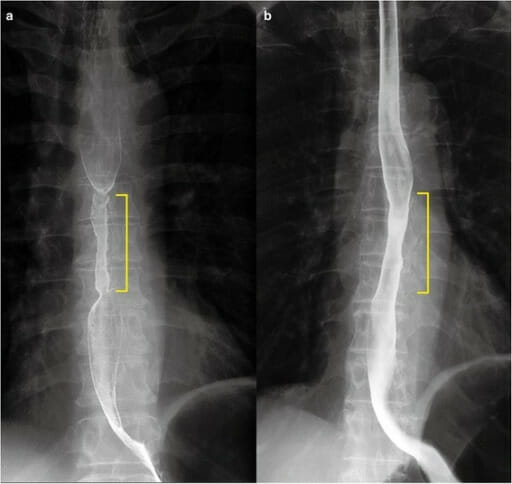
Esofagrama de bario

Esofagograma con bario que muestra un estrechamiento sutil en esófago medio (marcador amarillo)

Imagen: “Barium esophagram 1 month after endoscopic submucosal dissection.” por Department of Gastroenterology, Keiyukai Daini Hospital. Licencia: CC BY 4.0
Enema de contraste

  • Se toman imágenes radiográficas/fluoroscópicas mientras se inyecta el contraste en EN Erythema nodosum is an immune-mediated panniculitis (inflammation of the subcutaneous fat) caused by a type IV (delayed-type) hypersensitivity reaction. It commonly manifests in young women as tender, erythematous nodules on the shins. Erythema Nodosum el recto a través de un tubo de enema.
  • Permite la evaluación de la anatomía gastrointestinal inferior
  • El contraste puede ser bario o un agente soluble en EN Erythema nodosum is an immune-mediated panniculitis (inflammation of the subcutaneous fat) caused by a type IV (delayed-type) hypersensitivity reaction. It commonly manifests in young women as tender, erythematous nodules on the shins. Erythema Nodosum agua.
  • Puede estar indicado para la evaluación de:
    • Estreñimiento crónico o diarrea
    • Dificultades con la evacuación
    • Pérdida de peso inexplicable
    • Sospecha de patología:
      • Enfermedad inflamatoria intestinal
      • Enfermedad de Hirschsprung
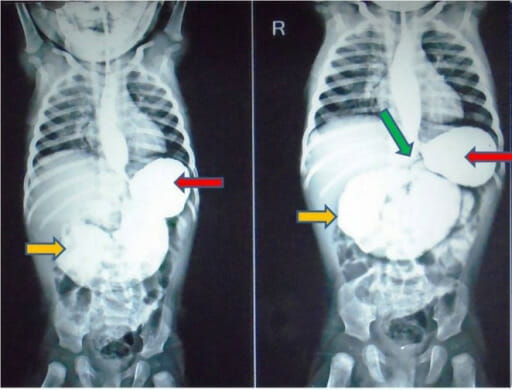
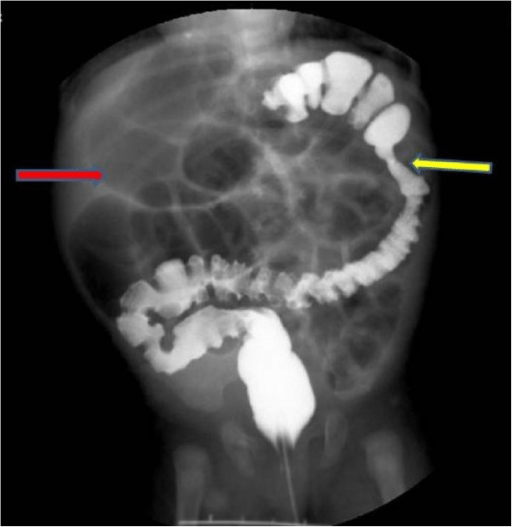
estudio de enema de bario

Un estudio de enema de bario que demuestra atresia colónica: una niña de 2 meses de edad muestra retraso en la evacuación de meconio, distensión abdominal y vómitos que comienzan 10 días después del nacimiento. El enema de bario revela atresia en el lado esplénico del colon (flecha amarilla) y distensión del íleon (flecha roja).

Imagen: “Case 3” por Pediatric Surgery Department of the First Affiliated Hospital, Sun Yat-sen University, Guangzhou, China. Licencia: CC BY 2.0

Prueba de marcador de Sitz para determinar el tiempo de tránsito colónico

  • Se degluten las cápsulas con una serie de pequeños marcadores radiopacos → se realiza una radiografía entre 3‒5 días después
  • Permite la evaluación de la motilidad intestinal y el tránsito colónico
  • Indicada para la evaluación del estreñimiento crónico
  • Hallazgos normales: todos los LOS Neisseria marcadores deben desaparecer a los LOS Neisseria 5 días.

Ultrasonido

Indicaciones

  • Evaluar en EN Erythema nodosum is an immune-mediated panniculitis (inflammation of the subcutaneous fat) caused by a type IV (delayed-type) hypersensitivity reaction. It commonly manifests in young women as tender, erythematous nodules on the shins. Erythema Nodosum busca de afecciones potenciales/sospechadas:
    • Apendicitis
    • Intususcepción
    • Hipertrofia pilórica
    • Abscesos en EN Erythema nodosum is an immune-mediated panniculitis (inflammation of the subcutaneous fat) caused by a type IV (delayed-type) hypersensitivity reaction. It commonly manifests in young women as tender, erythematous nodules on the shins. Erythema Nodosum tejido blando/tejido subcutáneo
  • Para neonatos con anomalías observadas en EN Erythema nodosum is an immune-mediated panniculitis (inflammation of the subcutaneous fat) caused by a type IV (delayed-type) hypersensitivity reaction. It commonly manifests in young women as tender, erythematous nodules on the shins. Erythema Nodosum el ultrasonido prenatal
  • Enfermedad congénita conocida con predisposición a ciertas complicaciones

Ventajas

  • Bajo costo
  • No hay exposición a la radiación
  • Ampliamente disponible
  • Rápido

Desventajas

  • Mala resolución
  • Campo de visión estrecho
  • El sujeto debe permanecer quieto durante la adquisición de la imagen.
  • Dependiente del técnico

Técnica de examen

  • Posicionamiento:
    • Depende del área de interés, pero generalmente en EN Erythema nodosum is an immune-mediated panniculitis (inflammation of the subcutaneous fat) caused by a type IV (delayed-type) hypersensitivity reaction. It commonly manifests in young women as tender, erythematous nodules on the shins. Erythema Nodosum decúbito supino
    • El órgano de interés debe ser más superficial al AL Amyloidosis transductor sin otros órganos/intestino entre el área de interés y el transductor de ultrasonido.
    • Maximizar el contacto entre la piel del sujeto y el transductor de ultrasonido.
  • Profundidad:
    • Determina el campo de visión
    • Debe incluir toda el área de interés sin áreas demasiado profundas
  • Ganancia:
    • Determina las características de ecogenicidad del tejido
    • El parénquima de órganos sólidos debe tener una ecogenicidad de señal de rango medio.
  • Doppler Doppler Ultrasonography applying the doppler effect, with frequency-shifted ultrasound reflections produced by moving targets (usually red blood cells) in the bloodstream along the ultrasound axis in direct proportion to the velocity of movement of the targets, to determine both direction and velocity of blood flow. Ultrasound (Sonography): evalúa la velocidad y la dirección del flujo sanguíneo en EN Erythema nodosum is an immune-mediated panniculitis (inflammation of the subcutaneous fat) caused by a type IV (delayed-type) hypersensitivity reaction. It commonly manifests in young women as tender, erythematous nodules on the shins. Erythema Nodosum un área

Interpretación y evaluación

  • Seguir los LOS Neisseria pasos descritos en EN Erythema nodosum is an immune-mediated panniculitis (inflammation of the subcutaneous fat) caused by a type IV (delayed-type) hypersensitivity reaction. It commonly manifests in young women as tender, erythematous nodules on the shins. Erythema Nodosum la introducción (e.g., confirmar el nombre del sujeto, los LOS Neisseria antecedentes médicos, la orientación de la imagen, el estudio correcto para la patología sospechosa).
  • Evaluar la adecuación de la imagen:
    • ¿La profundidad y la ganancia son apropiadas para evaluar completamente el área de interés?
    • ¿Está toda el área de interés circunscrita en EN Erythema nodosum is an immune-mediated panniculitis (inflammation of the subcutaneous fat) caused by a type IV (delayed-type) hypersensitivity reaction. It commonly manifests in young women as tender, erythematous nodules on the shins. Erythema Nodosum las vistas adecuadas para una evaluación completa?
  • Analizar las imágenes:
    • Tomar medidas de todas las estructuras relevantes y compararlas con rangos de referencia estándar, por ejemplo:
      • Tamaño del apéndice
      • Grosor de la pared intestinal
    • Evaluar la ecogenicidad de las estructuras:
      • Parénquima: ecogenicidad de rango medio (gris medio)
      • Fluido seroso: hipoecoico/anecoico (negro)
      • Sangre “fresca”: más señales hiperecogénicas
      • Hueso/calcificaciones: muy hiperecoico (blanco)
      • Los LOS Neisseria gases intestinales crean sombras significativas.
    • Reportar cualquier anormalidad estructural o masa observada.

Hallazgos normales

  • Ultrasonido intestinal normal:
    • Sin evidencia de engrosamiento u obstrucción anormal de la pared
    • La pared pilórica debe tener < 4 mm de espesor.
    • El apéndice debe tener < 6 mm de diámetro.
    • Posición normal de órganos y vasos
  • Tejidos blandos subcutáneos:
    • Debe ser heterogéneo debido a la presencia de músculo, fascia Fascia Layers of connective tissue of variable thickness. The superficial fascia is found immediately below the skin; the deep fascia invests muscles, nerves, and other organs. Cellulitis y grasa
    • Sin colección de líquidos
    • Las arterias y las venas deben tener un flujo direccional apropiado.

Hallazgos Patológicos

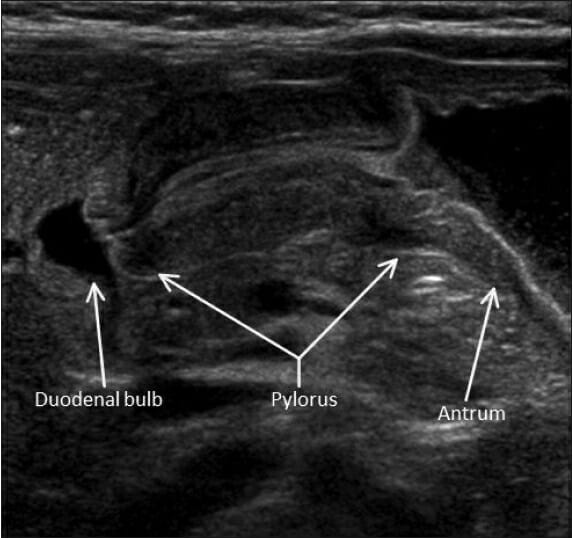
Estenosis hipertrófica de píloro

La estenosis hipertrófica de píloro se refiere al AL Amyloidosis engrosamiento congénito de la musculatura del píloro que produce estenosis severa y casi obstrucción de la salida gástrica. Los LOS Neisseria pacientes se presentan con vómitos en EN Erythema nodosum is an immune-mediated panniculitis (inflammation of the subcutaneous fat) caused by a type IV (delayed-type) hypersensitivity reaction. It commonly manifests in young women as tender, erythematous nodules on the shins. Erythema Nodosum proyectil no biliosos y una masa del tamaño de una aceituna en EN Erythema nodosum is an immune-mediated panniculitis (inflammation of the subcutaneous fat) caused by a type IV (delayed-type) hypersensitivity reaction. It commonly manifests in young women as tender, erythematous nodules on the shins. Erythema Nodosum la parte superior del abdomen. La estenosis hipertrófica del píloro se puede tratar quirúrgicamente.
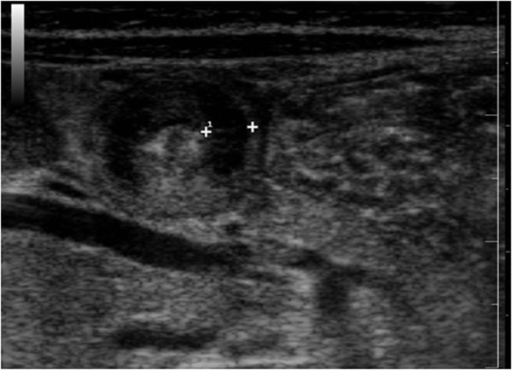
  • El ultrasonido es la imagenología de elección en EN Erythema nodosum is an immune-mediated panniculitis (inflammation of the subcutaneous fat) caused by a type IV (delayed-type) hypersensitivity reaction. It commonly manifests in young women as tender, erythematous nodules on the shins. Erythema Nodosum casos sospechosos:
    • Espesor pilórico > 4 mm
    • Signo de la diana o signo de la rosquilla: aspecto transversal clásico del píloro en EN Erythema nodosum is an immune-mediated panniculitis (inflammation of the subcutaneous fat) caused by a type IV (delayed-type) hypersensitivity reaction. It commonly manifests in young women as tender, erythematous nodules on the shins. Erythema Nodosum forma de diana o rosquilla
    • Canal pilórico alargado
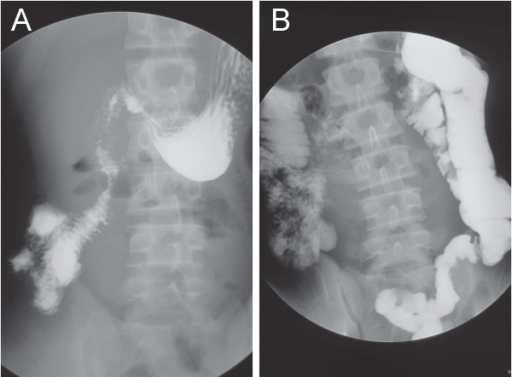
  • Serie gastrointestinal superior: solo se solicita si el examen y el ultrasonido no son diagnósticos, o si hay otros síntomas que sugieren una obstrucción más distal
    • Signo de la cuerda: canal pilórico alargado
    • Signo de doble vía: 2 vías delgadas a lo largo del canal pilórico, creadas por la compresión de la mucosa pilórica
    • Signo del pico: punta cónica al AL Amyloidosis final del canal pilórico
    • Signo del hombro: una “protuberancia” prepilórica de contraste

Enterocolitis Enterocolitis Inflammation of the mucosa of both the small intestine and the large intestine. Etiology includes ischemia, infections, allergic, and immune responses. Yersinia spp./Yersiniosis necrosante

La enterocolitis Enterocolitis Inflammation of the mucosa of both the small intestine and the large intestine. Etiology includes ischemia, infections, allergic, and immune responses. Yersinia spp./Yersiniosis necrosante es una emergencia gastrointestinal neonatal relativamente común debido a la infección por organismos formadores de gas, lo que resulta en EN Erythema nodosum is an immune-mediated panniculitis (inflammation of the subcutaneous fat) caused by a type IV (delayed-type) hypersensitivity reaction. It commonly manifests in young women as tender, erythematous nodules on the shins. Erythema Nodosum necrosis Necrosis The death of cells in an organ or tissue due to disease, injury or failure of the blood supply. Ischemic Cell Damage isquémica de la mucosa intestinal. Los LOS Neisseria lactantes suelen presentar un cambio repentino en EN Erythema nodosum is an immune-mediated panniculitis (inflammation of the subcutaneous fat) caused by a type IV (delayed-type) hypersensitivity reaction. It commonly manifests in young women as tender, erythematous nodules on the shins. Erythema Nodosum la tolerancia a la alimentación y distensión abdominal en EN Erythema nodosum is an immune-mediated panniculitis (inflammation of the subcutaneous fat) caused by a type IV (delayed-type) hypersensitivity reaction. It commonly manifests in young women as tender, erythematous nodules on the shins. Erythema Nodosum la 1ra o 2da semana de vida.
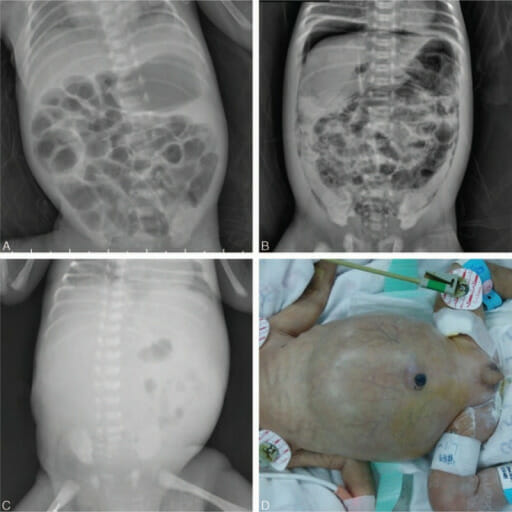
  • Hallazgos de la radiografía simple (modalidad de imagenologíade elección):
    • Neumatosis intestinal:
      • Patognomónica de la enterocolitis Enterocolitis Inflammation of the mucosa of both the small intestine and the large intestine. Etiology includes ischemia, infections, allergic, and immune responses. Yersinia spp./Yersiniosis necrotizante
      • Presencia de gas dentro de la propia pared intestinal
      • Aparece como un patrón lineal o burbujeante
    • Asas intestinales dilatadas y engrosadas
    • Asas dilatadas fijas y ausencia de gas intestinal (abdomen sin gas)
  • Neumoperitoneo y/o gas venoso portal → indica necrosis Necrosis The death of cells in an organ or tissue due to disease, injury or failure of the blood supply. Ischemic Cell Damage y perforación intestinal
  • El ultrasonido se utiliza como prueba de 2da línea:
    • Engrosamiento de la pared intestinal
    • Focos hiperecogénicos dentro de las paredes intestinales → representa gas intramural
    • Líquido libre (especialmente con restos ecogénicos) → sugiere perforación
  • Nota: los LOS Neisseria enemas de bario están contraindicados en EN Erythema nodosum is an immune-mediated panniculitis (inflammation of the subcutaneous fat) caused by a type IV (delayed-type) hypersensitivity reaction. It commonly manifests in young women as tender, erythematous nodules on the shins. Erythema Nodosum la enterocolitis Enterocolitis Inflammation of the mucosa of both the small intestine and the large intestine. Etiology includes ischemia, infections, allergic, and immune responses. Yersinia spp./Yersiniosis necrosante, ya que pueden causar perforación intestinal.
Hallazgos radiográficos de enterocolitis necrosante

Enterocolitis necrosante en radiografía
(A) Gas venoso portal sutil con neumatosis intestinal
(B) Neumoperitoneo bajo el hemidiafragma derecho y neumatosis intestinal
(C) Escasez de gas en el abdomen
(D) Neonato con abdomen distendido
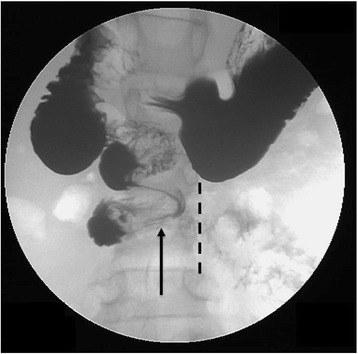
Imagen: “Radiographic findings of necrotizing enterocolitis” por Qingfeng Sheng, MD, PhD, Zhibao Lv, MD, Weijue Xu, MD, Jiangbin Liu, MD, Yibo Wu, MD, Jingyi Shi, MD, and Zhengjun Xi, MD. Licencia: CC BY 4.0

Malrotación y vólvulo del intestino medio

  • La malrotación del intestino medio es la posición y fijación anormal del intestino debido a la rotación anormal del tubo intestinal durante el desarrollo fetal:
    • La anatomía varía según las diferentes anomalías rotacionales durante el desarrollo.
    • Posicionamiento anormal de la unión duodenoyeyunal:
      • Anatomía normal: se encuentra a la izquierda de la línea media
      • Anatomía en EN Erythema nodosum is an immune-mediated panniculitis (inflammation of the subcutaneous fat) caused by a type IV (delayed-type) hypersensitivity reaction. It commonly manifests in young women as tender, erythematous nodules on the shins. Erythema Nodosum la malrotación: más comúnmente a la derecha de la línea media
    • Posicionamiento anormal de la unión ileocecal:
      • Anatomía normal: se encuentra en EN Erythema nodosum is an immune-mediated panniculitis (inflammation of the subcutaneous fat) caused by a type IV (delayed-type) hypersensitivity reaction. It commonly manifests in young women as tender, erythematous nodules on the shins. Erythema Nodosum el cuadrante inferior derecho
      • Anatomía en EN Erythema nodosum is an immune-mediated panniculitis (inflammation of the subcutaneous fat) caused by a type IV (delayed-type) hypersensitivity reaction. It commonly manifests in young women as tender, erythematous nodules on the shins. Erythema Nodosum la malrotación: más comúnmente termina en EN Erythema nodosum is an immune-mediated panniculitis (inflammation of the subcutaneous fat) caused by a type IV (delayed-type) hypersensitivity reaction. It commonly manifests in young women as tender, erythematous nodules on the shins. Erythema Nodosum el abdomen superior medio derecho, fijado a la pared abdominal y potencialmente obstruyendo el duodeno
    • Si es sintomática, lo más común es que se presente con vómitos biliosos y dolor Dolor Inflammation abdominal.
    • Predispone al AL Amyloidosis vólvulo
  • Vólvulo:
    • Torsión de los LOS Neisseria intestinos alrededor de su mesenterio, lo que resulta en EN Erythema nodosum is an immune-mediated panniculitis (inflammation of the subcutaneous fat) caused by a type IV (delayed-type) hypersensitivity reaction. It commonly manifests in young women as tender, erythematous nodules on the shins. Erythema Nodosum una obstrucción intestinal
    • Requiere intervención quirúrgica de emergencia
  • Ultrasonido:
    • El mejor examen inicial para el tamizaje y el diagnóstico
    • Mejores resultados en EN Erythema nodosum is an immune-mediated panniculitis (inflammation of the subcutaneous fat) caused by a type IV (delayed-type) hypersensitivity reaction. It commonly manifests in young women as tender, erythematous nodules on the shins. Erythema Nodosum diagnosticar vólvulos que malrotaciones
    • Los LOS Neisseria hallazgos incluyen:
      • Posición anormal del duodeno y/o vena mesentérica superior
      • Signo de remolino en EN Erythema nodosum is an immune-mediated panniculitis (inflammation of the subcutaneous fat) caused by a type IV (delayed-type) hypersensitivity reaction. It commonly manifests in young women as tender, erythematous nodules on the shins. Erythema Nodosum Doppler Doppler Ultrasonography applying the doppler effect, with frequency-shifted ultrasound reflections produced by moving targets (usually red blood cells) in the bloodstream along the ultrasound axis in direct proportion to the velocity of movement of the targets, to determine both direction and velocity of blood flow. Ultrasound (Sonography): causado por vasos que giran alrededor de la base del mesenterio en EN Erythema nodosum is an immune-mediated panniculitis (inflammation of the subcutaneous fat) caused by a type IV (delayed-type) hypersensitivity reaction. It commonly manifests in young women as tender, erythematous nodules on the shins. Erythema Nodosum el vólvulo
      • Duodeno dilatado (indica obstrucción)
  • Radiografía simple:
    • Rara vez ayuda con el diagnóstico, pero debe solicitarse para descartar perforación intestinal y neumoperitoneo
    • En EN Erythema nodosum is an immune-mediated panniculitis (inflammation of the subcutaneous fat) caused by a type IV (delayed-type) hypersensitivity reaction. It commonly manifests in young women as tender, erythematous nodules on the shins. Erythema Nodosum caso de vólvulo se puede observar asas dilatadas de intestino y niveles hidroaéreos, lo que indica obstrucción.
    • Hallazgo que hace HACE Altitude Sickness diagnóstico de malrotación/vólvulo: visualización directa de la posición anormal del duodeno al AL Amyloidosis pasar una sonda nasogástrica a través del área
  • Serie gastrointestinal superior con contraste:
    • Estándar de oro para el diagnóstico definitivo tanto de malrotación como de vólvulo
    • Indicada si los LOS Neisseria resultados del ultrasonido son equívocos (o negativos) pero aún se sospecha malrotación/vólvulo
    • Hallazgos de malrotación: el duodeno se encuentra, en EN Erythema nodosum is an immune-mediated panniculitis (inflammation of the subcutaneous fat) caused by a type IV (delayed-type) hypersensitivity reaction. It commonly manifests in young women as tender, erythematous nodules on the shins. Erythema Nodosum toda su extensión, a la derecha de la columna.
    • Vólvulo:
      • Apariencia de sacacorchos del duodeno y yeyuno
      • Obstrucción duodenal (sin paso de contraste)
  • Tránsito a través del intestino delgado: puede mostrar una posición anormal de la unión ileocecal

Atresia Atresia Hypoplastic Left Heart Syndrome (HLHS) intestinal

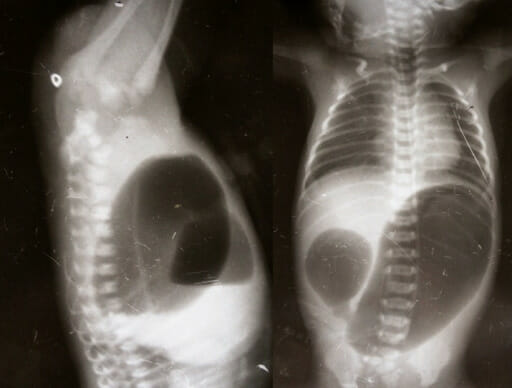
La atresia Atresia Hypoplastic Left Heart Syndrome (HLHS) intestinal es una afección en EN Erythema nodosum is an immune-mediated panniculitis (inflammation of the subcutaneous fat) caused by a type IV (delayed-type) hypersensitivity reaction. It commonly manifests in young women as tender, erythematous nodules on the shins. Erythema Nodosum la que una parte del intestino no se canaliza durante el desarrollo, lo que provoca una obstrucción intestinal en EN Erythema nodosum is an immune-mediated panniculitis (inflammation of the subcutaneous fat) caused by a type IV (delayed-type) hypersensitivity reaction. It commonly manifests in young women as tender, erythematous nodules on the shins. Erythema Nodosum los LOS Neisseria recién nacidos. Aproximadamente ½ de todos los LOS Neisseria casos constituyen atresia Atresia Hypoplastic Left Heart Syndrome (HLHS) duodenal. Los LOS Neisseria lactantes se presentan con vómitos y distensión abdominal. La cirugía es el tratamiento definitivo.
Intususcepción

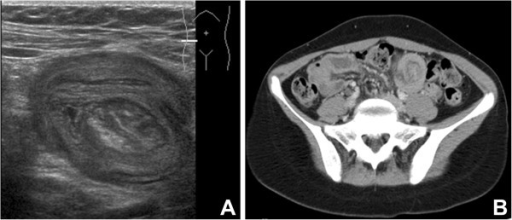
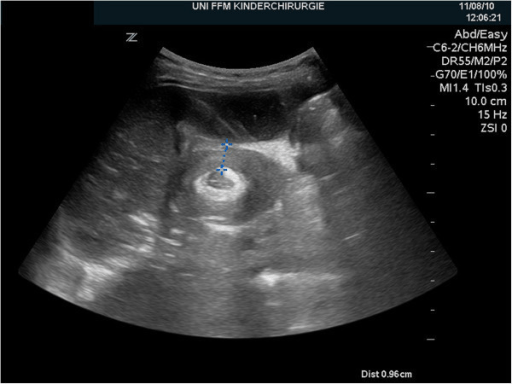
Intususcepción: invaginación de un segmento proximal del intestino en EN Erythema nodosum is an immune-mediated panniculitis (inflammation of the subcutaneous fat) caused by a type IV (delayed-type) hypersensitivity reaction. It commonly manifests in young women as tender, erythematous nodules on the shins. Erythema Nodosum un segmento adyacente más distal, con mayor frecuencia en EN Erythema nodosum is an immune-mediated panniculitis (inflammation of the subcutaneous fat) caused by a type IV (delayed-type) hypersensitivity reaction. It commonly manifests in young women as tender, erythematous nodules on the shins. Erythema Nodosum la región ileocólica. La intususcepción es la emergencia abdominal más común en EN Erythema nodosum is an immune-mediated panniculitis (inflammation of the subcutaneous fat) caused by a type IV (delayed-type) hypersensitivity reaction. It commonly manifests in young women as tender, erythematous nodules on the shins. Erythema Nodosum niños < 2 años de edad, que se presenta con la “tríada clásica” de dolor Dolor Inflammation abdominal tipo cólico de inicio súbito, una masa palpable en EN Erythema nodosum is an immune-mediated panniculitis (inflammation of the subcutaneous fat) caused by a type IV (delayed-type) hypersensitivity reaction. It commonly manifests in young women as tender, erythematous nodules on the shins. Erythema Nodosum forma de salchicha y heces en EN Erythema nodosum is an immune-mediated panniculitis (inflammation of the subcutaneous fat) caused by a type IV (delayed-type) hypersensitivity reaction. It commonly manifests in young women as tender, erythematous nodules on the shins. Erythema Nodosum gelatina de grosella.
  • Ultrasonido:
    • A menudo, la prueba diagnóstica de elección
    • Excelente sensibilidad, especificidad y valor predictivo negativo cuando lo realiza un ultrasonografista experimentado
    • Puede detectar las lesiones patológicas que pueden haber causado la intususcepción
    • El hallazgo clave es un signo de la “diana” (más a menudo en EN Erythema nodosum is an immune-mediated panniculitis (inflammation of the subcutaneous fat) caused by a type IV (delayed-type) hypersensitivity reaction. It commonly manifests in young women as tender, erythematous nodules on the shins. Erythema Nodosum el cuadrante inferior derecho):
      • También llamado signo del ojo de buey o del resorte
      • Representa capas de intestino dentro del intestino
    • ↓ Perfusión en EN Erythema nodosum is an immune-mediated panniculitis (inflammation of the subcutaneous fat) caused by a type IV (delayed-type) hypersensitivity reaction. It commonly manifests in young women as tender, erythematous nodules on the shins. Erythema Nodosum el Doppler Doppler Ultrasonography applying the doppler effect, with frequency-shifted ultrasound reflections produced by moving targets (usually red blood cells) in the bloodstream along the ultrasound axis in direct proportion to the velocity of movement of the targets, to determine both direction and velocity of blood flow. Ultrasound (Sonography) color → indica isquemia
  • Radiografía simple:
    • No diagnóstico para la intususcepción intestinal en EN Erythema nodosum is an immune-mediated panniculitis (inflammation of the subcutaneous fat) caused by a type IV (delayed-type) hypersensitivity reaction. It commonly manifests in young women as tender, erythematous nodules on the shins. Erythema Nodosum
    • Debe indicarse para excluir perforación y para la detección de otras patologías
    • Posibles hallazgos:
      • Signo de la media luna (menisco): densidad del tejido blando (intususcepción) que se proyecta hacia el gas del intestino grueso
      • Signos de obstrucción del intestino delgado: asas intestinales distendidas con ausencia de gas colónico
  • Tratamiento:
    • En EN Erythema nodosum is an immune-mediated panniculitis (inflammation of the subcutaneous fat) caused by a type IV (delayed-type) hypersensitivity reaction. It commonly manifests in young women as tender, erythematous nodules on the shins. Erythema Nodosum individuos estables, generalmente se trata con reducción no quirúrgica (e.g., un enema de aire) administrada bajo guía fluoroscópica o con ultrasonido.
    • La cirugía está indicada para:
      • Individuos inestables
      • Casos complicados por perforación intestinal o peritonitis Peritonitis Inflammation of the peritoneum lining the abdominal cavity as the result of infectious, autoimmune, or chemical processes. Primary peritonitis is due to infection of the peritoneal cavity via hematogenous or lymphatic spread and without intra-abdominal source. Secondary peritonitis arises from the abdominal cavity itself through rupture or abscess of intra-abdominal organs. Penetrating Abdominal Injury
      • Reducción no quirúrgica sin éxito

Íleo meconial

Obstrucción del íleon terminal por meconio anormalmente espeso y pegajoso. El íleo meconial a menudo se observa en EN Erythema nodosum is an immune-mediated panniculitis (inflammation of the subcutaneous fat) caused by a type IV (delayed-type) hypersensitivity reaction. It commonly manifests in young women as tender, erythematous nodules on the shins. Erythema Nodosum neonatos con fibrosis Fibrosis Any pathological condition where fibrous connective tissue invades any organ, usually as a consequence of inflammation or other injury. Bronchiolitis Obliterans quística y enfermedad de Hirschsprung. Los LOS Neisseria neonatos afectados generalmente se presentan con vómitos, incapacidad de evacuar el meconio dentro de las 12‒24 horas y distensión abdominal.

  • Radiografía simple: para descartar perforación y otras anomalías
  • Enema de contraste:
    • Diagnóstico y terapéutico
    • Colon Colon The large intestines constitute the last portion of the digestive system. The large intestine consists of the cecum, appendix, colon (with ascending, transverse, descending, and sigmoid segments), rectum, and anal canal. The primary function of the colon is to remove water and compact the stool prior to expulsion from the body via the rectum and anal canal. Colon, Cecum, and Appendix: Anatomy de pequeño calibre por desuso
    • Se pueden ver gránulos de meconio en EN Erythema nodosum is an immune-mediated panniculitis (inflammation of the subcutaneous fat) caused by a type IV (delayed-type) hypersensitivity reaction. It commonly manifests in young women as tender, erythematous nodules on the shins. Erythema Nodosum el íleon terminal.
    • A menudo libera la obstrucción (de lo contrario, se requiere cirugía)

Enfermedad de Hirschsprung

También conocida como megacolon Megacolon Megacolon is a severe, abnormal dilatation of the colon, and is classified as acute or chronic. There are many etiologies of megacolon, including neuropathic and dysmotility conditions, severe infections, ischemia, and inflammatory bowel disease. Megacolon agangliónico congénito, la enfermedad de Hirschsprung se caracteriza por la ausencia de células nerviosas en EN Erythema nodosum is an immune-mediated panniculitis (inflammation of the subcutaneous fat) caused by a type IV (delayed-type) hypersensitivity reaction. It commonly manifests in young women as tender, erythematous nodules on the shins. Erythema Nodosum el colon Colon The large intestines constitute the last portion of the digestive system. The large intestine consists of the cecum, appendix, colon (with ascending, transverse, descending, and sigmoid segments), rectum, and anal canal. The primary function of the colon is to remove water and compact the stool prior to expulsion from the body via the rectum and anal canal. Colon, Cecum, and Appendix: Anatomy distal, lo que provoca que el segmento afectado no se relaje, lo que lleva a una obstrucción funcional. Los LOS Neisseria neonatos afectados se presentan con emesis biliosa, distensión abdominal y incapacidad de evacuar el meconio. Es común su asociación con la enterocolitis Enterocolitis Inflammation of the mucosa of both the small intestine and the large intestine. Etiology includes ischemia, infections, allergic, and immune responses. Yersinia spp./Yersiniosis.
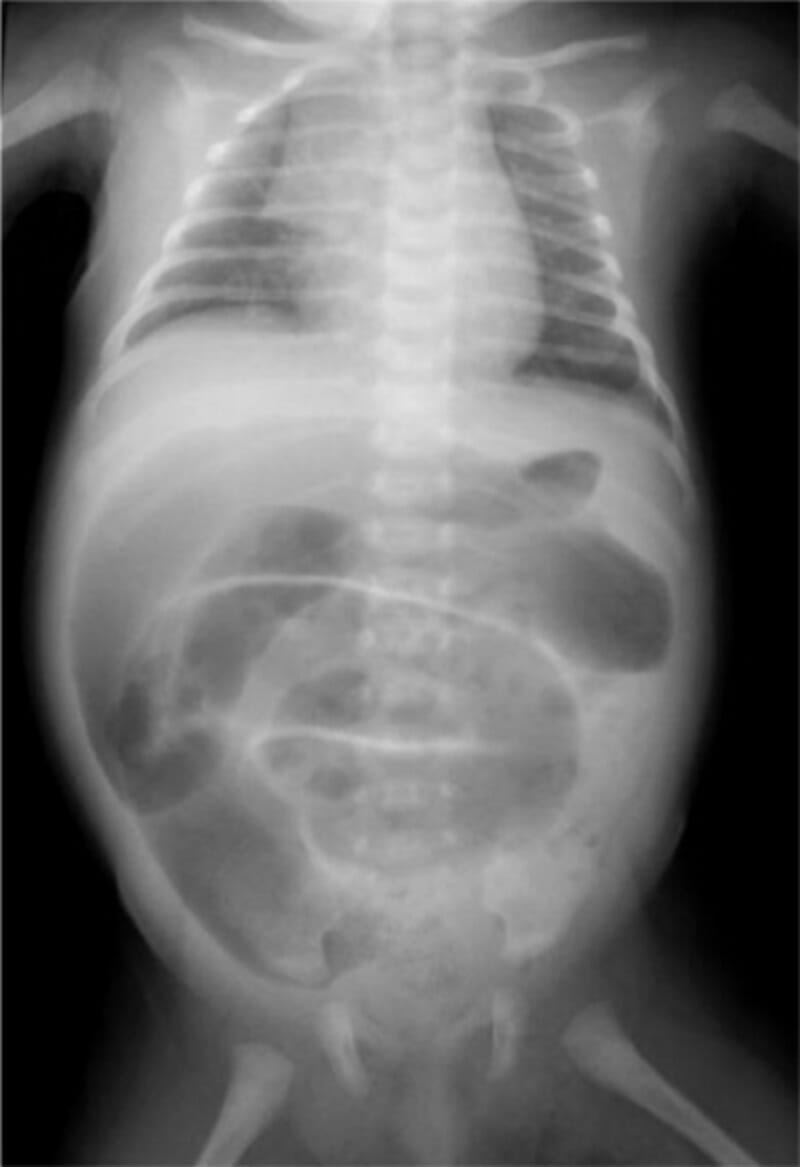
  • Radiografía simple:
    • Colon Colon The large intestines constitute the last portion of the digestive system. The large intestine consists of the cecum, appendix, colon (with ascending, transverse, descending, and sigmoid segments), rectum, and anal canal. The primary function of the colon is to remove water and compact the stool prior to expulsion from the body via the rectum and anal canal. Colon, Cecum, and Appendix: Anatomy proximal dilatado con colon Colon The large intestines constitute the last portion of the digestive system. The large intestine consists of the cecum, appendix, colon (with ascending, transverse, descending, and sigmoid segments), rectum, and anal canal. The primary function of the colon is to remove water and compact the stool prior to expulsion from the body via the rectum and anal canal. Colon, Cecum, and Appendix: Anatomy/recto distal colapsado
    • Descarta la perforación
    • Las radiografías normales no excluyen el diagnóstico.
  • El enema de contraste es la mejor prueba radiológica:
    • Hallazgo patognomónico: presencia de una zona de transición entre el intestino proximal normal distendido y los LOS Neisseria segmentos distales agangliónicos estrechos
      • El sitio de la zona de transición depende de la extensión de la afectación intestinal, pero generalmente se encuentra en EN Erythema nodosum is an immune-mediated panniculitis (inflammation of the subcutaneous fat) caused by a type IV (delayed-type) hypersensitivity reaction. It commonly manifests in young women as tender, erythematous nodules on the shins. Erythema Nodosum el área rectosigmoidea.
      • Puede estar ausente: las radiografías normales no excluyen el diagnóstico.
    • Los LOS Neisseria tapones de meconio pueden verse como múltiples defectos de llenado dentro del colon Colon The large intestines constitute the last portion of the digestive system. The large intestine consists of the cecum, appendix, colon (with ascending, transverse, descending, and sigmoid segments), rectum, and anal canal. The primary function of the colon is to remove water and compact the stool prior to expulsion from the body via the rectum and anal canal. Colon, Cecum, and Appendix: Anatomy.
  • Otras pruebas diagnósticas:
    • Manometría anorrectal
    • El diagnóstico definitivo requiere una biopsia rectal, que debe obtenerse antes de la cirugía.
Radiografía simple de abdomen

Radiografía abdominal anteroposterior de un neonato con enfermedad de Hirschsprung que muestra asas del intestino grueso distendidas llenas de aire: no se puede identificar ninguna parte del colon descendente o sigmoide.

Imagen: “Abdominal plain X-ray shows a generalized distention of the loops of the large intestine” por Nusrat et al.  Licencia: CC BY 4.0

Apendicitis

La apendicitis es la inflamación del apéndice, que característicamente se presenta con dolor Dolor Inflammation periumbilical que migra al AL Amyloidosis cuadrante inferior derecho con defensa, náuseas/vómitos y fiebre. En EN Erythema nodosum is an immune-mediated panniculitis (inflammation of the subcutaneous fat) caused by a type IV (delayed-type) hypersensitivity reaction. It commonly manifests in young women as tender, erythematous nodules on the shins. Erythema Nodosum niños, el diagnóstico es generalmente clínico con/sin el uso de ultrasonido. Generalmente, el tratamiento es quirúrgico.
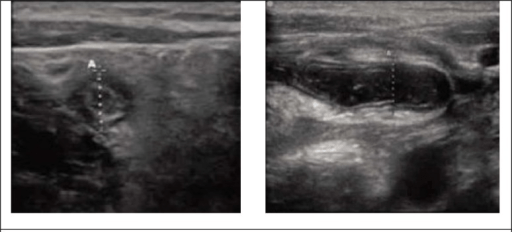
  • Ultrasonido: la apendicitis no se puede excluir de manera confiable a menos que se vea definitivamente el apéndice.
    • Estructura tubular no comprimible en EN Erythema nodosum is an immune-mediated panniculitis (inflammation of the subcutaneous fat) caused by a type IV (delayed-type) hypersensitivity reaction. It commonly manifests in young women as tender, erythematous nodules on the shins. Erythema Nodosum el cuadrante inferior derecho
    • Espesor de pared > 2 mm
    • Diámetro total > 6 mm
    • Hiperemia
    • Fecalito calcificado
  • Puede considerarse la realización de una TC y/o RM si el ultrasonido no es diagnóstico. Los LOS Neisseria hallazgos son similares a los LOS Neisseria del ultrasonido, aunque la TC/RM tienen mayor sensibilidad/especificidad.
Vistas ecográficas del apéndice.

Vistas ultrasonográficas en la apendicitis: axial (izquierda) y transversal (derecha). Se muestra el diámetro total entre los calibradores.

Imagen: “Sonographic views of appendix.” por Ebrahim Karimi, Mohammad Aminianfar, Keivan Zarafshani, and Arash Safaie. Licencia: CC BY 3.0

Linfadenitis mesentérica

La linfadenitis mesentérica se refiere a la inflamación de los LOS Neisseria ganglios linfáticos mesentéricos (generalmente en EN Erythema nodosum is an immune-mediated panniculitis (inflammation of the subcutaneous fat) caused by a type IV (delayed-type) hypersensitivity reaction. It commonly manifests in young women as tender, erythematous nodules on the shins. Erythema Nodosum el cuadrante inferior derecho) que a menudo ocurre cuando el sistema inmunitario entérico reacciona fuertemente a una infección (e.g., infecciones virales, infección por Yersinia enterocolitica Yersinia enterocolitica A species of the genus yersinia, isolated from both man and animal. It is a frequent cause of bacterial gastroenteritis in children. Yersinia spp./Yersiniosis). El estiramiento de las cápsulas de los LOS Neisseria ganglios linfáticos puede provocar un dolor Dolor Inflammation similar al AL Amyloidosis experimentado en EN Erythema nodosum is an immune-mediated panniculitis (inflammation of the subcutaneous fat) caused by a type IV (delayed-type) hypersensitivity reaction. It commonly manifests in young women as tender, erythematous nodules on the shins. Erythema Nodosum la apendicitis; sin embargo, la linfadenitis mesentérica es autolimitada.
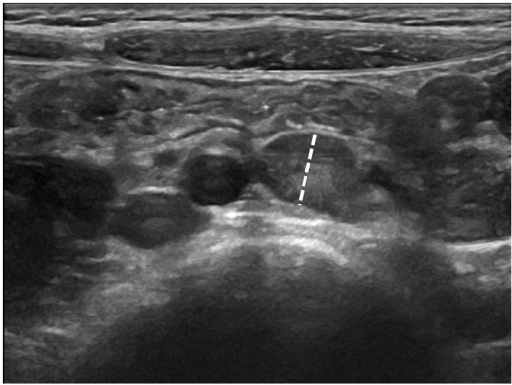
  • Ultrasonido:
    • Ganglios linfáticos agrandados > 8 mm de diámetro
    • Con/sin engrosamiento de la pared ileocecal
    • Apéndice normal
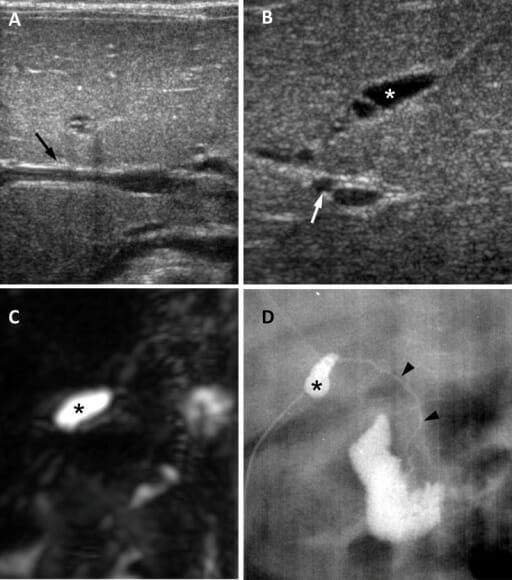
Ecografía abdominal que muestra grandes ganglios linfáticos mesentéricos hipoecoicos

Ultrasonido del cuadrante inferior derecho que muestra ganglios linfáticos mesentéricos prominentes de hasta 9 mm, sugestivos de linfadenitis mesentérica

Imagen: “Abdominal ultrasound showing large hypoechoic mesenteric lymph nodes in a 6-year-old girl with acute nonspecific mesenteric lymphadenitis” por Rossana Helbling, Elisa Conficconi, Marina Wyttenbach, Cecilia Benetti, Giacomo D. Simonetti, Mario G. Bianchetti, Flurim Hamitaga, Sebastiano A.G. Lava, Emilio F. Fossali, and Gregorio P. Milani. Licencia: CC BY 4.0

Trastornos obstructivos de las vías biliares

Dos trastornos importantes de las vías biliares que pueden causar obstrucción son la atresia Atresia Hypoplastic Left Heart Syndrome (HLHS) biliar y los LOS Neisseria quistes de colédoco. Ambos se presentan con ictericia obstructiva y heces acólicas. El tratamiento es quirúrgico.
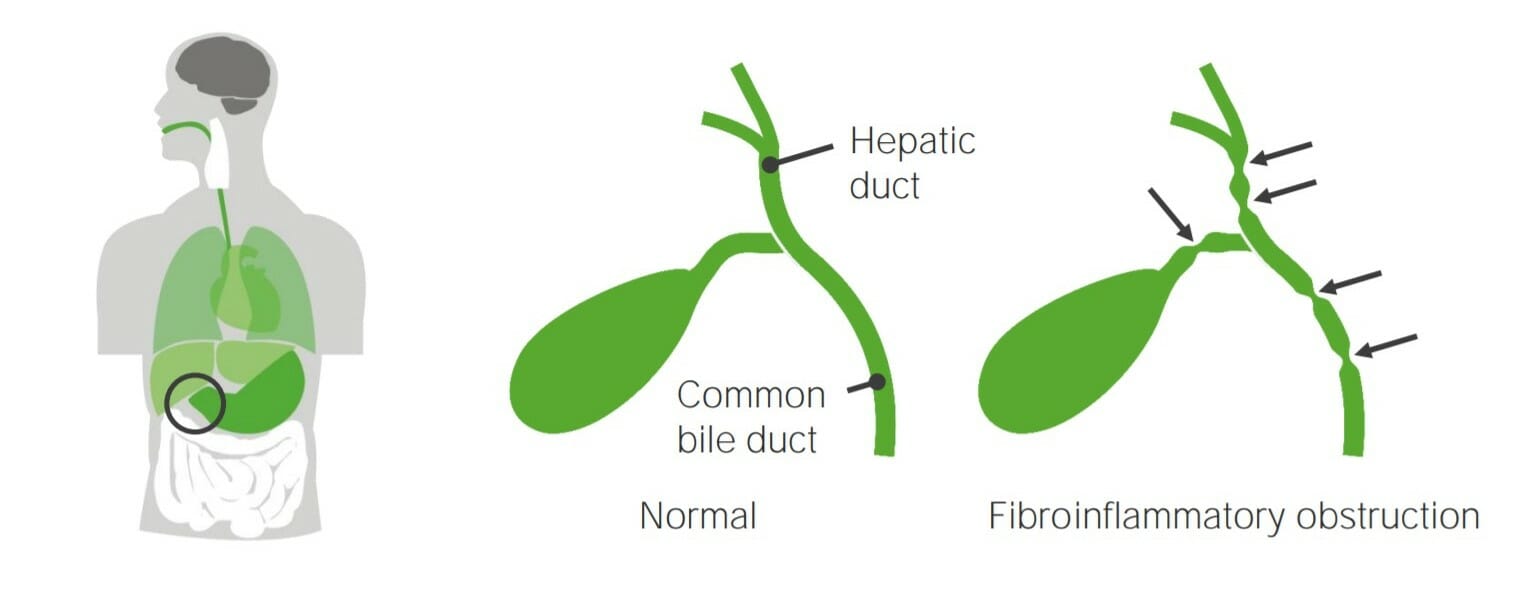
  • Atresia Atresia Hypoplastic Left Heart Syndrome (HLHS) biliar: un trastorno progresivo idiopático en EN Erythema nodosum is an immune-mediated panniculitis (inflammation of the subcutaneous fat) caused by a type IV (delayed-type) hypersensitivity reaction. It commonly manifests in young women as tender, erythematous nodules on the shins. Erythema Nodosum neonatos caracterizado por fibrosis Fibrosis Any pathological condition where fibrous connective tissue invades any organ, usually as a consequence of inflammation or other injury. Bronchiolitis Obliterans obliterante del árbol biliar extrahepático
  • Quistes de colédoco: anomalías quísticas congénitas de las vías biliares que causan agrandamiento anormal y obstrucción de las vías biliares intrahepáticas y/o extrahepáticas
  • Ultrasonido:
    • Los LOS Neisseria hallazgos de la atresia Atresia Hypoplastic Left Heart Syndrome (HLHS) biliar pueden incluir:
      • Ausencia o forma irregular de la vesícula biliar
      • Signo del cordón triangular: un área ecogénica triangular justo encima de la porta hepatis Porta hepatis Liver: Anatomy
      • Puede haber poliesplenia.
    • Hallazgos de quistes de colédoco: se observan masas hipoecoicas
    • También se usa para excluir otras causas de colestasis (e.g., cálculos biliares)
  • Colangiografía intraoperatoria:
    • Se inyecta contraste en EN Erythema nodosum is an immune-mediated panniculitis (inflammation of the subcutaneous fat) caused by a type IV (delayed-type) hypersensitivity reaction. It commonly manifests in young women as tender, erythematous nodules on the shins. Erythema Nodosum el árbol biliar y se adquieren imágenes radiográficas.
    • Estándar de oro para el diagnóstico de atresia Atresia Hypoplastic Left Heart Syndrome (HLHS) biliar

Referencias

  1. Olive, A., et al. (2024). Infantile hypertrophic pyloric stenosis. UpToDate. Retrieved July 26, 2025, from https://www.uptodate.com/contents/infantile-hypertrophic-pyloric-stenosis
  2. Vo, N., et al. (2024). Intussusception in children. UpToDate. Retrieved July 26, 2025, from https://www.uptodate.com/contents/intussusception-in-children
  3. Sabharwal, S., et al. (2025). Cystic fibrosis: Overview of gastrointestinal disease. UpToDate. Retrieved July 26, 2025, from https://www.uptodate.com/contents/cystic-fibrosis-overview-of-gastrointestinal-disease
  4. Kim, J.H. (2023). Neonatal necrotizing enterocolitis: Clinical features and diagnosis. UpToDate. Retrieved July 26, 2025, from https://www.uptodate.com/contents/neonatal-necrotizing-enterocolitis-clinical-features-and-diagnosis 
  5. Brandt, M.L. (2025). Intestinal malrotation in children. UpToDate. Retrieved July 26, 2025, from https://www.uptodate.com/contents/intestinal-malrotation-in-children 
  6. Wesson, D.E. (2024). Intestinal atresia. UpToDate. Retrieved July 26, 2025, from https://www.uptodate.com/contents/intestinal-atresia
  7. Wesson, D.E., Esperanza Lopez, M. (2025). Congenital aganglionic megacolon (Hirschsprung disease). UpToDate. Retrieved July 26, 2025, from https://www.uptodate.com/contents/congenital-aganglionic-megacolon-hirschsprung-disease
  8. Taylor, G.A., Brandt, M., Esperanza Lopez, M. (2024). Acute appendicitis in children: Diagnostic imaging. UpToDate. Retrieved July 26, 2025, from https://www.uptodate.com/contents/acute-appendicitis-in-children-diagnostic-imaging

¡Crea tu cuenta gratis o inicia una sesión para seguir leyendo!

Regístrate ahora y obtén acceso gratuito a Lecturio con páginas de concepto, videos médicos y cuestionarios para tu educación médica.

User Reviews

Que tengas una sesión de estudio alegre y navideña 🎁 Ahorra 50% en todos los planes >>

Details