Domina Conceptos Médicos

Estudia para la escuela de medicina y tus examenes con Lecturio.

Virus del Herpes Simple 1 y 2

El virus Virus Viruses are infectious, obligate intracellular parasites composed of a nucleic acid core surrounded by a protein capsid. Viruses can be either naked (non-enveloped) or enveloped. The classification of viruses is complex and based on many factors, including type and structure of the nucleoid and capsid, the presence of an envelope, the replication cycle, and the host range. Virology del herpes simple (VHS) es un virus Virus Viruses are infectious, obligate intracellular parasites composed of a nucleic acid core surrounded by a protein capsid. Viruses can be either naked (non-enveloped) or enveloped. The classification of viruses is complex and based on many factors, including type and structure of the nucleoid and capsid, the presence of an envelope, the replication cycle, and the host range. Virology de ADN de doble cadena que pertenece a la familia Herpesviridae Herpesviridae A family of enveloped, linear, double-stranded DNA viruses infecting a wide variety of animals. Subfamilies, based on biological characteristics, include: alphaherpesvirinae; betaherpesvirinae; and gammaherpesvirinae. Herpes Simplex Virus 1 and 2. El virus Virus Viruses are infectious, obligate intracellular parasites composed of a nucleic acid core surrounded by a protein capsid. Viruses can be either naked (non-enveloped) or enveloped. The classification of viruses is complex and based on many factors, including type and structure of the nucleoid and capsid, the presence of an envelope, the replication cycle, and the host range. Virology del herpes simple suele causar infecciones recurrentes que afectan a la piel y a las superficies mucosas, como la boca, los LOS Neisseria labios, los LOS Neisseria ojos y los LOS Neisseria genitales. Las infecciones mucocutáneas típicas se caracterizan por una aparición aguda localizada de grupos de vesículas pequeñas y dolorosas sobre una base eritematosa. Aunque existe un solapamiento, el VHS-1 se asocia clásicamente a las lesiones orofaríngeas, mientras que el VHS-2 es el principal responsable del herpes genital, una ITS. También pueden producirse infecciones sistémicas y graves, como encefalitis, meningitis Meningitis Meningitis is inflammation of the meninges, the protective membranes of the brain, and spinal cord. The causes of meningitis are varied, with the most common being bacterial or viral infection. The classic presentation of meningitis is a triad of fever, altered mental status, and nuchal rigidity. Meningitis y herpes neonatal. El diagnóstico se realiza con base en EN Erythema nodosum is an immune-mediated panniculitis (inflammation of the subcutaneous fat) caused by a type IV (delayed-type) hypersensitivity reaction. It commonly manifests in young women as tender, erythematous nodules on the shins. Erythema Nodosum la presentación y los LOS Neisseria antecedentes clínicos, que puede confirmarse mediante el examen microscópico de un frotis teñido de una vesícula fresca, la prueba de amplificación nucleica mediante PCR PCR Polymerase chain reaction (PCR) is a technique that amplifies DNA fragments exponentially for analysis. The process is highly specific, allowing for the targeting of specific genomic sequences, even with minuscule sample amounts. The PCR cycles multiple times through 3 phases: denaturation of the template DNA, annealing of a specific primer to the individual DNA strands, and synthesis/elongation of new DNA molecules. Polymerase Chain Reaction (PCR), la inmunofluorescencia directa o las pruebas serológicas. El tratamiento de las lesiones mucocutáneas suele ser sintomático, pero las terapias antivirales con aciclovir, valaciclovir o famciclovir Famciclovir An aminopurine derivative and prodrug of penciclovir which is a competitive inhibitor of herpes simplex 2 DNA polymerase. It is used to treat herpes simplex virus infection. Antivirals for Herpes Virus son útiles si se administran rápidamente y siempre forman parte del tratamiento de las infecciones sistémicas graves.

Last updated: Dec 15, 2025
Editorial responsibility: Stanley Oiseth, Lindsay Jones, Evelin Maza

Clasificación

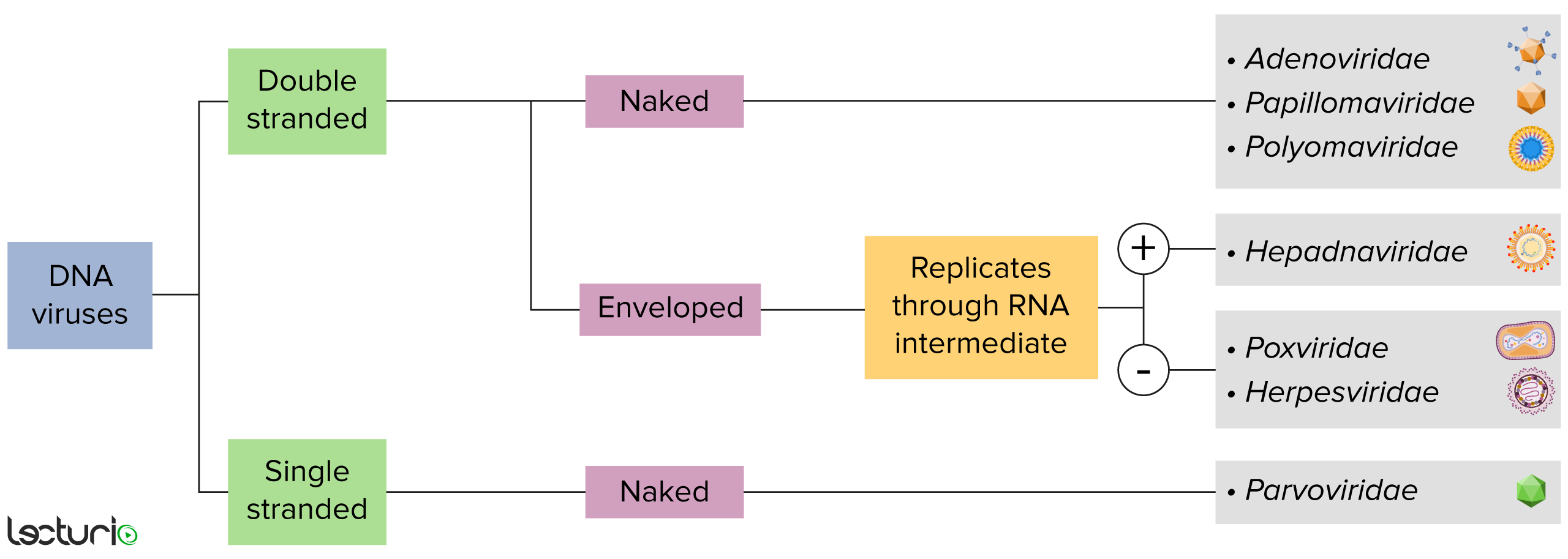
Diagrama de flujo de la clasificación de los virus del ADN

Identificación de virus de ADN:
Los virus pueden clasificarse de muchas maneras. Sin embargo, la mayoría de los virus tienen un genoma formado por ADN o ARN. Los virus con un genoma de ADN pueden caracterizarse además por el hecho de que ese ADN sea de cadena simple o doble. Si los virus están cubiertos por una fina capa de membrana celular (generalmente tomada de la célula huésped), se denominan virus “envueltos”. Si esa capa está ausente, los virus se denominan “desnudos”. Algunos de los virus con envoltura traducen su ADN en ARN antes de incorporarlo al genoma de la célula huésped.
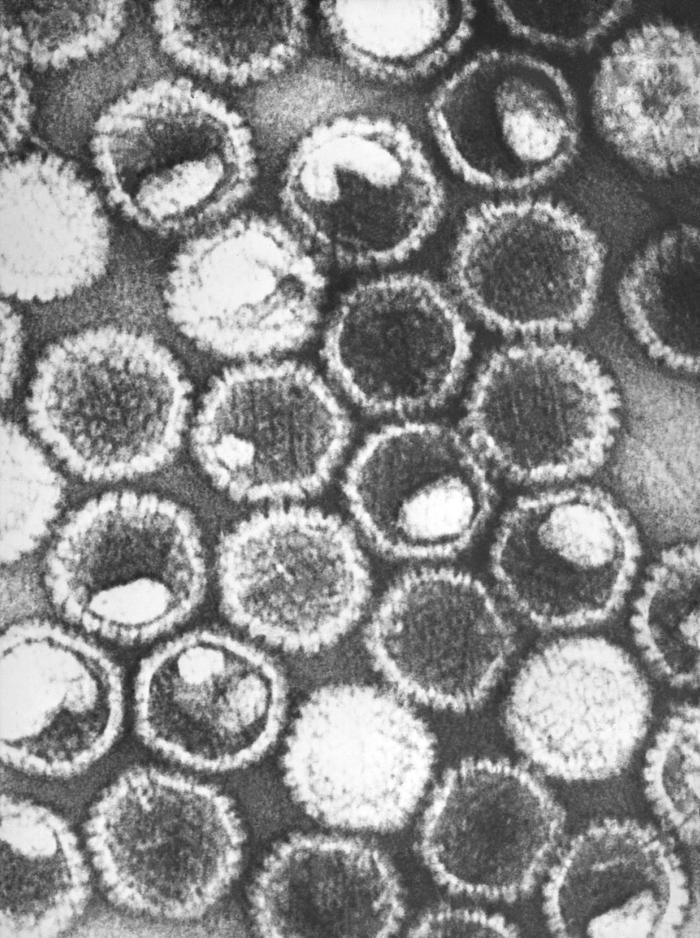
Imagen de Lecturio.

Características Generales y Epidemiología

Características básicas del virus Virus Viruses are infectious, obligate intracellular parasites composed of a nucleic acid core surrounded by a protein capsid. Viruses can be either naked (non-enveloped) or enveloped. The classification of viruses is complex and based on many factors, including type and structure of the nucleoid and capsid, the presence of an envelope, the replication cycle, and the host range. Virology del herpes simple

  • Taxonomía:
    • Familia: Herpesviridae Herpesviridae A family of enveloped, linear, double-stranded DNA viruses infecting a wide variety of animals. Subfamilies, based on biological characteristics, include: alphaherpesvirinae; betaherpesvirinae; and gammaherpesvirinae. Herpes Simplex Virus 1 and 2
    • Subfamilia: Alphaherpesvirinae Alphaherpesvirinae A subfamily of herpesviridae characterized by a short replication cycle. The genera include: simplexvirus; varicellovirus; marek’s disease-like viruses; and iltovirus. Antivirals for Herpes Virus
    • Género: Simplexvirus
  • Virus Virus Viruses are infectious, obligate intracellular parasites composed of a nucleic acid core surrounded by a protein capsid. Viruses can be either naked (non-enveloped) or enveloped. The classification of viruses is complex and based on many factors, including type and structure of the nucleoid and capsid, the presence of an envelope, the replication cycle, and the host range. Virology de ADN
    • Doble cadena
    • Lineal
    • Codifica aproximadamente 70 proteínas
  • Estructura:
    • Núcleo (contiene el genoma)
    • Nucleocápside icosaédrica
    • Tegumento (contiene proteínas y enzimas virales)
    • Envuelto y picos de glicoproteínas

Especies clínicamente relevantes

Se han reconocido dos tipos que causan infecciones:

  • VHS-1 (tropismo por el epitelio oral)
  • VHS-2 (tropismo por el epitelio genital)

Epidemiología

VHS-1:

  • Prevalece en EN Erythema nodosum is an immune-mediated panniculitis (inflammation of the subcutaneous fat) caused by a type IV (delayed-type) hypersensitivity reaction. It commonly manifests in young women as tender, erythematous nodules on the shins. Erythema Nodosum todo el mundo.
  • Afecta aproximadamente al AL Amyloidosis 66% de la población.
  • Seroprevalencia:
    • Personas de 0 a 49 años de edad:
      • 47% en EN Erythema nodosum is an immune-mediated panniculitis (inflammation of the subcutaneous fat) caused by a type IV (delayed-type) hypersensitivity reaction. It commonly manifests in young women as tender, erythematous nodules on the shins. Erythema Nodosum Estados Unidos
      • Hasta el 90% en EN Erythema nodosum is an immune-mediated panniculitis (inflammation of the subcutaneous fat) caused by a type IV (delayed-type) hypersensitivity reaction. It commonly manifests in young women as tender, erythematous nodules on the shins. Erythema Nodosum los LOS Neisseria países de bajos ingresos
    • En EN Erythema nodosum is an immune-mediated panniculitis (inflammation of the subcutaneous fat) caused by a type IV (delayed-type) hypersensitivity reaction. It commonly manifests in young women as tender, erythematous nodules on the shins. Erythema Nodosum los LOS Neisseria niños de Estados Unidos:
      • 6–7 años: 26%
      • 12–13 años: 36%
  • Sin preferencia de género
  • Cada vez más frecuente como causa de herpes genital primario, especialmente en EN Erythema nodosum is an immune-mediated panniculitis (inflammation of the subcutaneous fat) caused by a type IV (delayed-type) hypersensitivity reaction. It commonly manifests in young women as tender, erythematous nodules on the shins. Erythema Nodosum países de altos ingresos (HSV-2 sigue siendo la causa más común de herpes genital)
  • La causa más común de encefalitis viral aguda no epidémica en EN Erythema nodosum is an immune-mediated panniculitis (inflammation of the subcutaneous fat) caused by a type IV (delayed-type) hypersensitivity reaction. It commonly manifests in young women as tender, erythematous nodules on the shins. Erythema Nodosum Estados Unidos

VHS-2:

  • Prevalece a nivel mundial.
  • Más común en EN Erythema nodosum is an immune-mediated panniculitis (inflammation of the subcutaneous fat) caused by a type IV (delayed-type) hypersensitivity reaction. It commonly manifests in young women as tender, erythematous nodules on the shins. Erythema Nodosum los LOS Neisseria países de bajos ingresos
  • Seroprevalencia:
    • Personas de 14 a 49 años en EN Erythema nodosum is an immune-mediated panniculitis (inflammation of the subcutaneous fat) caused by a type IV (delayed-type) hypersensitivity reaction. It commonly manifests in young women as tender, erythematous nodules on the shins. Erythema Nodosum Estados Unidos: aproximadamente el 16%
    • Aumenta con la edad y el número de parejas sexuales.
    • Género:
      • Mujeres: 21%
      • Hombres: 12%
    • Raza:
      • Negros no hispanos: 39%
      • Blancos no hispanos: 12%

Infección neonatal por herpes:

  • Una complicación poco común de la infección por herpes genital materno
  • Ocurre en EN Erythema nodosum is an immune-mediated panniculitis (inflammation of the subcutaneous fat) caused by a type IV (delayed-type) hypersensitivity reaction. It commonly manifests in young women as tender, erythematous nodules on the shins. Erythema Nodosum aproximadamente 1 de cada 3200 partos en EN Erythema nodosum is an immune-mediated panniculitis (inflammation of the subcutaneous fat) caused by a type IV (delayed-type) hypersensitivity reaction. It commonly manifests in young women as tender, erythematous nodules on the shins. Erythema Nodosum Estados Unidos
  • Es más probable que se produzca en EN Erythema nodosum is an immune-mediated panniculitis (inflammation of the subcutaneous fat) caused by a type IV (delayed-type) hypersensitivity reaction. It commonly manifests in young women as tender, erythematous nodules on the shins. Erythema Nodosum mujeres que adquieren una infección primaria por herpes genital y, por tanto, carecen de anticuerpos maternos en EN Erythema nodosum is an immune-mediated panniculitis (inflammation of the subcutaneous fat) caused by a type IV (delayed-type) hypersensitivity reaction. It commonly manifests in young women as tender, erythematous nodules on the shins. Erythema Nodosum el momento del parto o cerca de él.

Patogénesis

Reservorio

Los LOS Neisseria humanos son el principal reservorio.

Transmisión

VHS-1:

  • Contacto estrecho con secreciones orales de individuos que están eliminando activamente el virus Virus Viruses are infectious, obligate intracellular parasites composed of a nucleic acid core surrounded by a protein capsid. Viruses can be either naked (non-enveloped) or enveloped. The classification of viruses is complex and based on many factors, including type and structure of the nucleoid and capsid, the presence of an envelope, the replication cycle, and the host range. Virology
  • También puede transmitirse a través de lesiones no aparentes o asintomáticas.
  • Puede transmitirse a través del sexo oral a parejas no infectadas.

VHS-2:

  • Contacto sexual:
    • El riesgo es mayor con las parejas de origen masculino que con las femeninas.
    • El 70% de las transmisiones exitosas se producen durante periodos de excreción viral asintomática.
  • Contacto con secreciones infectadas
  • Transmisión perinatal:
    • Suele ocurrir durante el parto vaginal.
    • Las infecciones in utero pueden producirse durante infecciones primarias.

Fisiopatología

Infección primaria:

  • Infección primaria:
    • Ocurre en EN Erythema nodosum is an immune-mediated panniculitis (inflammation of the subcutaneous fat) caused by a type IV (delayed-type) hypersensitivity reaction. It commonly manifests in young women as tender, erythematous nodules on the shins. Erythema Nodosum individuos sin anticuerpos preexistentes contra el VHS-1 o el VHS-2.
    • Diferente del primer episodio no primario: una infección herpética en EN Erythema nodosum is an immune-mediated panniculitis (inflammation of the subcutaneous fat) caused by a type IV (delayed-type) hypersensitivity reaction. It commonly manifests in young women as tender, erythematous nodules on the shins. Erythema Nodosum un paciente con anticuerpos preexistentes contra el serotipo alternativo
    • Ejemplo: 1er episodio de una lesión perioral de VHS-1 en EN Erythema nodosum is an immune-mediated panniculitis (inflammation of the subcutaneous fat) caused by a type IV (delayed-type) hypersensitivity reaction. It commonly manifests in young women as tender, erythematous nodules on the shins. Erythema Nodosum un paciente que tiene anticuerpos preexistentes contra el VHS-2
      • Los LOS Neisseria pacientes presentan síntomas y signos atenuados similares a los LOS Neisseria de las lesiones de reactivación, con menos lesiones y síntomas sistémicos menos graves.
  • El virus Virus Viruses are infectious, obligate intracellular parasites composed of a nucleic acid core surrounded by a protein capsid. Viruses can be either naked (non-enveloped) or enveloped. The classification of viruses is complex and based on many factors, including type and structure of the nucleoid and capsid, the presence of an envelope, the replication cycle, and the host range. Virology debe encontrarse con superficies mucosas o piel rota (la piel intacta es resistente).
  • El virus Virus Viruses are infectious, obligate intracellular parasites composed of a nucleic acid core surrounded by a protein capsid. Viruses can be either naked (non-enveloped) or enveloped. The classification of viruses is complex and based on many factors, including type and structure of the nucleoid and capsid, the presence of an envelope, the replication cycle, and the host range. Virology se adhiere a las células epiteliales y entra en EN Erythema nodosum is an immune-mediated panniculitis (inflammation of the subcutaneous fat) caused by a type IV (delayed-type) hypersensitivity reaction. It commonly manifests in young women as tender, erythematous nodules on the shins. Erythema Nodosum ellas a través de las interacciones entre las glicoproteínas de la superficie viral y los LOS Neisseria receptores celulares del VHS (e.g., la nectina-1).
  • Se producen lesiones vesiculares de la epidermis Epidermis The external, nonvascular layer of the skin. It is made up, from within outward, of five layers of epithelium: (1) basal layer (stratum basale epidermidis); (2) spinous layer (stratum spinosum epidermidis); (3) granular layer (stratum granulosum epidermidis); (4) clear layer (stratum lucidum epidermidis); and (5) horny layer (stratum corneum epidermidis). Skin: Structure and Functions → liberación de viriones infecciosos durante la fase lítica/reproductiva.

Latencia de por vida:

  • Definición: la persistencia de genomas virales en EN Erythema nodosum is an immune-mediated panniculitis (inflammation of the subcutaneous fat) caused by a type IV (delayed-type) hypersensitivity reaction. It commonly manifests in young women as tender, erythematous nodules on the shins. Erythema Nodosum células que no producen virus Virus Viruses are infectious, obligate intracellular parasites composed of a nucleic acid core surrounded by a protein capsid. Viruses can be either naked (non-enveloped) or enveloped. The classification of viruses is complex and based on many factors, including type and structure of the nucleoid and capsid, the presence of an envelope, the replication cycle, and the host range. Virology infecciosos
  • Las nucleocápsides virales son transportadas a lo largo de los LOS Neisseria axones sensoriales hasta los LOS Neisseria cuerpos celulares neuronales → establecimiento de la infección latente:
    • Ganglios del trigémino en EN Erythema nodosum is an immune-mediated panniculitis (inflammation of the subcutaneous fat) caused by a type IV (delayed-type) hypersensitivity reaction. It commonly manifests in young women as tender, erythematous nodules on the shins. Erythema Nodosum las infecciones orofaríngeas
    • Ganglios sacros en EN Erythema nodosum is an immune-mediated panniculitis (inflammation of the subcutaneous fat) caused by a type IV (delayed-type) hypersensitivity reaction. It commonly manifests in young women as tender, erythematous nodules on the shins. Erythema Nodosum las infecciones genitales
  • El virus Virus Viruses are infectious, obligate intracellular parasites composed of a nucleic acid core surrounded by a protein capsid. Viruses can be either naked (non-enveloped) or enveloped. The classification of viruses is complex and based on many factors, including type and structure of the nucleoid and capsid, the presence of an envelope, the replication cycle, and the host range. Virology permanece latente en EN Erythema nodosum is an immune-mediated panniculitis (inflammation of the subcutaneous fat) caused by a type IV (delayed-type) hypersensitivity reaction. It commonly manifests in young women as tender, erythematous nodules on the shins. Erythema Nodosum los LOS Neisseria núcleos de las células nerviosas.
  • Solo se sintetizan las transcripciones de ARN viral asociadas a la latencia (LAT, por sus siglas en EN Erythema nodosum is an immune-mediated panniculitis (inflammation of the subcutaneous fat) caused by a type IV (delayed-type) hypersensitivity reaction. It commonly manifests in young women as tender, erythematous nodules on the shins. Erythema Nodosum inglés) (no se producen proteínas virales).
  • Las LAT parecen conferir resistencia a la apoptosis Apoptosis A regulated cell death mechanism characterized by distinctive morphologic changes in the nucleus and cytoplasm, including the endonucleolytic cleavage of genomic DNA, at regularly spaced, internucleosomal sites, I.e., DNA fragmentation. It is genetically-programmed and serves as a balance to mitosis in regulating the size of animal tissues and in mediating pathologic processes associated with tumor growth. Ischemic Cell Damage al AL Amyloidosis silenciar la expresión de genes Genes A category of nucleic acid sequences that function as units of heredity and which code for the basic instructions for the development, reproduction, and maintenance of organisms. DNA Types and Structure líticos mediante la formación de heterocromatina, que impide la transcripción.
  • El VHS evita el reconocimiento inmunitario celular y humoral mediante:
    • Inhibición de la vía de reconocimiento del CMH de clase I
    • Producción de receptores señuelo que se unen al AL Amyloidosis dominio Fc Fc Crystallizable fragments composed of the carboxy-terminal halves of both immunoglobulin heavy chains linked to each other by disulfide bonds. Fc fragments contain the carboxy-terminal parts of the heavy chain constant regions that are responsible for the effector functions of an immunoglobulin (complement fixation, binding to the cell membrane via fc receptors, and placental transport). This fragment can be obtained by digestion of immunoglobulins with the proteolytic enzyme papain. Immunoglobulins: Types and Functions de las Igs Igs Immunoglobulins (Igs), also known as antibodies, are glycoprotein molecules produced by plasma cells that act in immune responses by recognizing and binding particular antigens. The various ig classes are IgG (the most abundant), IgM, IgE, IgD, and IgA, which differ in their biologic features, structure, target specificity, and distribution. Immunoglobulins: Types and Functions e inhiben la activación del complemento
    • Células dendríticas infectantes que ayudan en EN Erythema nodosum is an immune-mediated panniculitis (inflammation of the subcutaneous fat) caused by a type IV (delayed-type) hypersensitivity reaction. It commonly manifests in young women as tender, erythematous nodules on the shins. Erythema Nodosum la respuesta inmune antiviral Antiviral Antivirals for Hepatitis B

Reactivación:

  • Significa la transición de un virus Virus Viruses are infectious, obligate intracellular parasites composed of a nucleic acid core surrounded by a protein capsid. Viruses can be either naked (non-enveloped) or enveloped. The classification of viruses is complex and based on many factors, including type and structure of the nucleoid and capsid, the presence of an envelope, the replication cycle, and the host range. Virology de su estado latente al AL Amyloidosis estado de replicación lítica en EN Erythema nodosum is an immune-mediated panniculitis (inflammation of the subcutaneous fat) caused by a type IV (delayed-type) hypersensitivity reaction. It commonly manifests in young women as tender, erythematous nodules on the shins. Erythema Nodosum los LOS Neisseria ganglios nerviosos.
  • El virus Virus Viruses are infectious, obligate intracellular parasites composed of a nucleic acid core surrounded by a protein capsid. Viruses can be either naked (non-enveloped) or enveloped. The classification of viruses is complex and based on many factors, including type and structure of the nucleoid and capsid, the presence of an envelope, the replication cycle, and the host range. Virology se desplaza por transporte axonal anterógrado hasta las células epiteliales del lugar originalmente infectado.
  • La replicación se produce dentro de las células epiteliales:
    • Formación de 1 o más grupos típicos de vesículas
    • También puede ser clínicamente inaparente e implicar el desprendimiento asintomático de viriones.
  • Las erupciones recurrentes suelen ser:
    • Menos graves
    • Ocurren con menos frecuencia a lo largo del tiempo.
  • Ocurre en EN Erythema nodosum is an immune-mediated panniculitis (inflammation of the subcutaneous fat) caused by a type IV (delayed-type) hypersensitivity reaction. It commonly manifests in young women as tender, erythematous nodules on the shins. Erythema Nodosum individuos inmunocompetentes porque el VHS tiene múltiples mecanismos de evasión inmunológica.
  • Factores que favorecen la reactivación/frecuencia de reactivación:
    • Estados inmunodeprimidos:
      • Pacientes transplantados
      • Pacientes con cáncer
      • Pacientes con SIDA que tienen recuentos bajos de CD4 (el VHS requiere una inmunidad celular intacta para ser contenido normalmente)
    • Exceso de luz solar
    • Enfermedades febriles
    • Estrés físico (e.g., procedimientos dentales) o emocional
    • Ancianos
    • Estímulos desconocidos
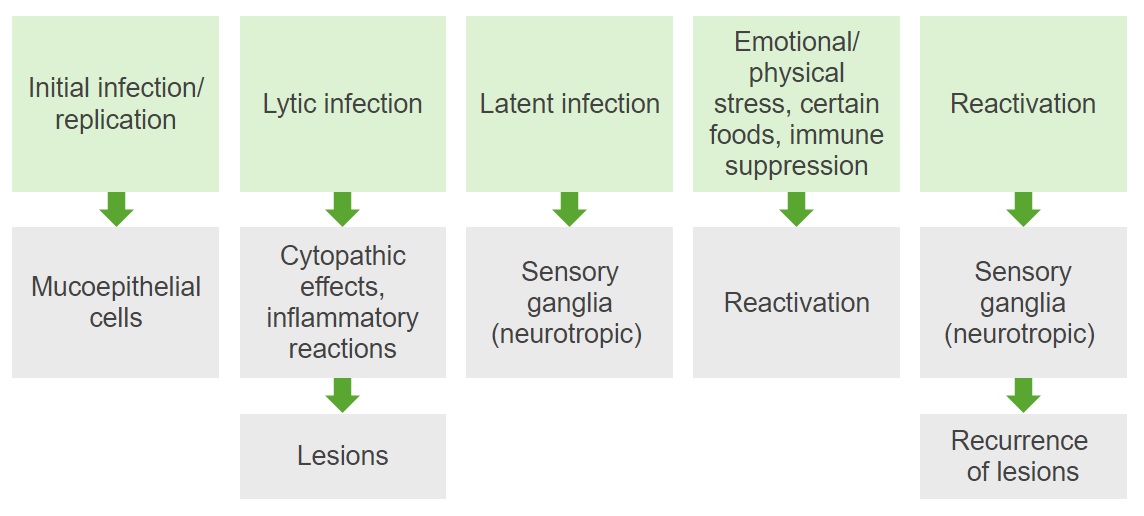
Patogénesis de las infecciones por VHS-1 y 2 Virus del herpes simple

Diagrama que resume la patogénesis de las infecciones por VHS-1 y -2

Imagen de Lecturio. Licencia: CC BY-NC-SA 4.0

Patología

Los LOS Neisseria virus Virus Viruses are infectious, obligate intracellular parasites composed of a nucleic acid core surrounded by a protein capsid. Viruses can be either naked (non-enveloped) or enveloped. The classification of viruses is complex and based on many factors, including type and structure of the nucleoid and capsid, the presence of an envelope, the replication cycle, and the host range. Virology del herpes simple causan infecciones citolíticas que constituyen la base de todos los LOS Neisseria cambios patológicos: necrosis Necrosis The death of cells in an organ or tissue due to disease, injury or failure of the blood supply. Ischemic Cell Damage de las células infectadas junto con la respuesta inflamatoria.
  • Lesiones generales:
    • Vesículas agrupadas sobre una base eritematosa
    • Más tarde se convierten en EN Erythema nodosum is an immune-mediated panniculitis (inflammation of the subcutaneous fat) caused by a type IV (delayed-type) hypersensitivity reaction. It commonly manifests in young women as tender, erythematous nodules on the shins. Erythema Nodosum pústulas y forman costras que curan sin cicatrizar porque los LOS Neisseria efectos citopáticos se limitan a la epidermis Epidermis The external, nonvascular layer of the skin. It is made up, from within outward, of five layers of epithelium: (1) basal layer (stratum basale epidermidis); (2) spinous layer (stratum spinosum epidermidis); (3) granular layer (stratum granulosum epidermidis); (4) clear layer (stratum lucidum epidermidis); and (5) horny layer (stratum corneum epidermidis). Skin: Structure and Functions.
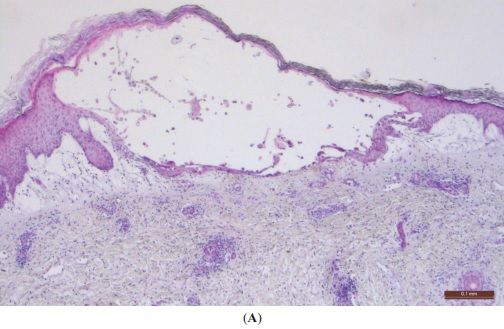
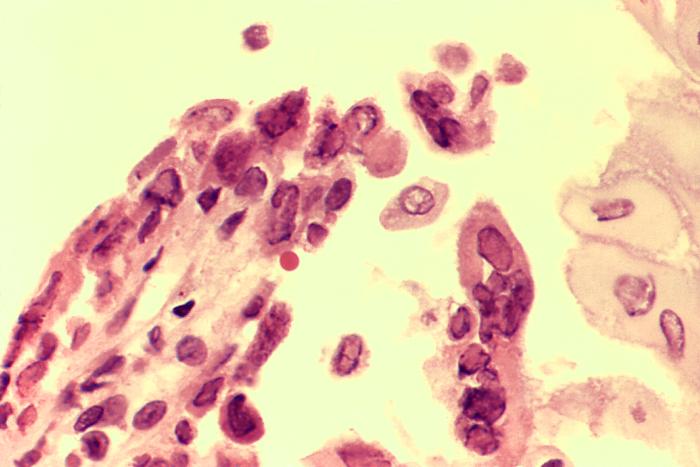
  • Lesiones microscópicas:
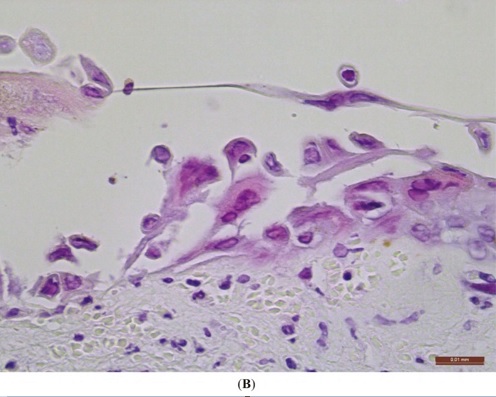
    • Los LOS Neisseria queratinocitos infectados se vuelven multinucleados (por la fusión celular) y acantolíticos (separados entre sí).
    • Distintas inclusiones intranucleares (“inclusiones Cowdry tipo A” = proteínas de replicación viral y viriones que empujan la cromatina hacia el borde del núcleo)
    • Necrosis Necrosis The death of cells in an organ or tissue due to disease, injury or failure of the blood supply. Ischemic Cell Damage epidérmica o acantólisis de espesor total (provoca ampollas)
    • Las ramificaciones nerviosas dérmicas pueden presentar una inflamación perineural aguda y crónica con hipertrofia ocasional de las células de Schwann y necrosis Necrosis The death of cells in an organ or tissue due to disease, injury or failure of the blood supply. Ischemic Cell Damage neuronal franca.

Enfermedades Causadas por el VHS-1

El VHS provoca una serie de afecciones. Las infecciones que se enumeran a continuación son las más comunes causadas por el VHS-1. Nota: El VHS-2 también puede estar asociado (aunque con menor frecuencia) a muchos de estos diagnósticos.

Infección asintomática

Solo el 20%‒25% de los LOS Neisseria pacientes con anticuerpos contra el VHS-1 tienen antecedentes clínicos positivos de infecciones orales-labiales o genitales.

Infecciones orales

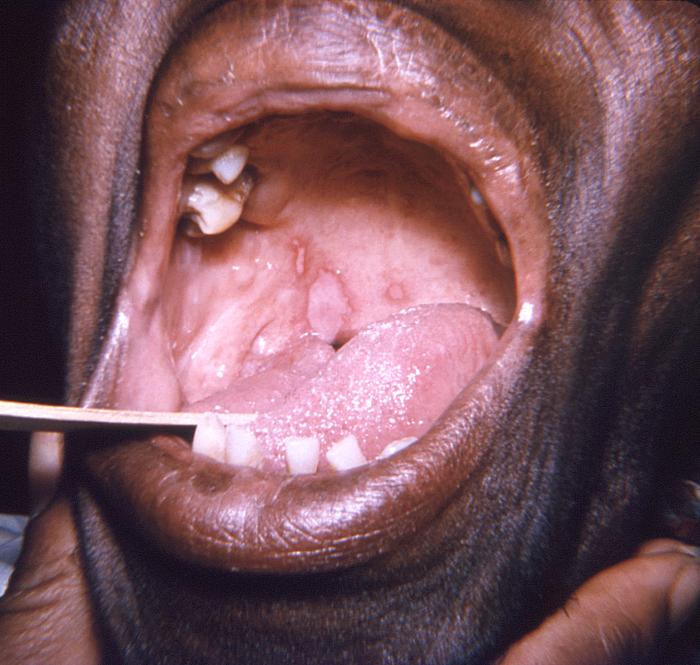
Gingivoestomatitis:

  • Comúnmente causada en EN Erythema nodosum is an immune-mediated panniculitis (inflammation of the subcutaneous fat) caused by a type IV (delayed-type) hypersensitivity reaction. It commonly manifests in young women as tender, erythematous nodules on the shins. Erythema Nodosum niños por una infección primaria
  • Signos y síntomas:
    • Fiebre
    • Lesiones vesiculares dolorosas:
      • Se producen en EN Erythema nodosum is an immune-mediated panniculitis (inflammation of the subcutaneous fat) caused by a type IV (delayed-type) hypersensitivity reaction. It commonly manifests in young women as tender, erythematous nodules on the shins. Erythema Nodosum la mucosa oral y faríngea.
      • Se ulceran rápidamente.
    • Gingivitis Gingivitis Inflammation of gum tissue (gingiva) without loss of connective tissue. Chédiak-Higashi Syndrome con extensión a los LOS Neisseria labios y mejillas
    • Faringitis
    • Linfadenopatía cervical
    • Síntomas sistémicos:
      • Fiebre
      • Malestar
      • Mialgias

Faringitis:

  • Causada comúnmente en EN Erythema nodosum is an immune-mediated panniculitis (inflammation of the subcutaneous fat) caused by a type IV (delayed-type) hypersensitivity reaction. It commonly manifests in young women as tender, erythematous nodules on the shins. Erythema Nodosum adultos por una infección primaria
  • Signos y síntomas:
    • Edema Edema Edema is a condition in which excess serous fluid accumulates in the body cavity or interstitial space of connective tissues. Edema is a symptom observed in several medical conditions. It can be categorized into 2 types, namely, peripheral (in the extremities) and internal (in an organ or body cavity). Edema y dolor Dolor Inflammation faríngeo
    • Exudado amigdalino
    • Lesiones orales:
      • Exudativa
      • Ulcerativa
    • Linfadenopatía cervical
    • Síntomas sistémicos

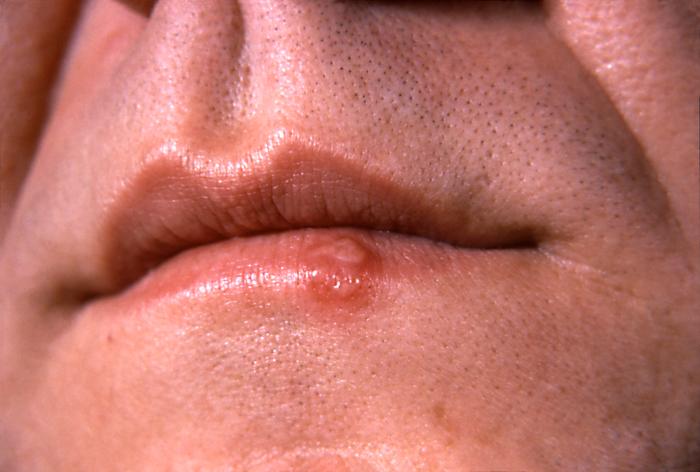
Herpes labial:

  • Infección por reactivación recurrente
  • Signos y síntomas:
    • Pródromo:
      • Aproximadamente 24 horas antes del brote, se desarrollan lesiones dolorosas en el borde del labio (“borde bermellón”).
      • Dolor Dolor Inflammation
      • Ardor
      • Hormigueo
      • Prurito
    • Lesiones:
      • Consisten en vesículas o úlceras bucolabiales localizadas (“herpes labial” o “ampollas de fiebre”).
      • Disminución del dolor Dolor Inflammation después de 24 horas
      • Cicatrización y formación de costras en EN Erythema nodosum is an immune-mediated panniculitis (inflammation of the subcutaneous fat) caused by a type IV (delayed-type) hypersensitivity reaction. It commonly manifests in young women as tender, erythematous nodules on the shins. Erythema Nodosum 5–8 días
    • Rara vez se asocia con síntomas sistémicos

Infección genital

  • Infecciones genitales primarias por VHS-1:
    • Úlceras genitales bilaterales
    • Linfadenopatía sensible
    • Fiebre
    • Cefalea
    • Mialgias
    • Disfunción autonómica (retención urinaria o estreñimiento)
    • Alteraciones sensoriales (hiperestesia o anestesia del periné)
  • Reactivación del VHS-1 genital:
    • Más común en EN Erythema nodosum is an immune-mediated panniculitis (inflammation of the subcutaneous fat) caused by a type IV (delayed-type) hypersensitivity reaction. It commonly manifests in young women as tender, erythematous nodules on the shins. Erythema Nodosum el primer año después de la infección
    • Múltiples recurrencias son poco comunes (a diferencia de las infecciones genitales por VHS-2).

Otras manifestaciones cutáneas

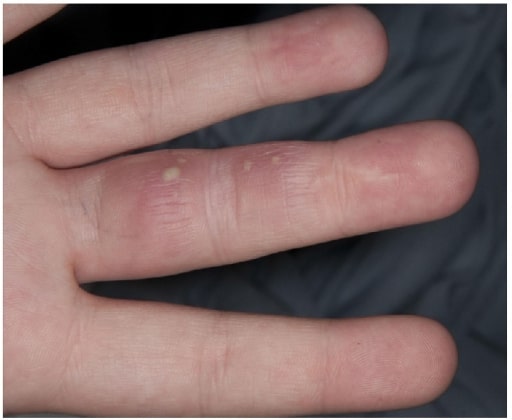
Panadizo herpético:

  • Infección del dedo por inoculación del virus Virus Viruses are infectious, obligate intracellular parasites composed of a nucleic acid core surrounded by a protein capsid. Viruses can be either naked (non-enveloped) or enveloped. The classification of viruses is complex and based on many factors, including type and structure of the nucleoid and capsid, the presence of an envelope, the replication cycle, and the host range. Virology a través de una rotura en EN Erythema nodosum is an immune-mediated panniculitis (inflammation of the subcutaneous fat) caused by a type IV (delayed-type) hypersensitivity reaction. It commonly manifests in young women as tender, erythematous nodules on the shins. Erythema Nodosum la piel
  • Visto en EN Erythema nodosum is an immune-mediated panniculitis (inflammation of the subcutaneous fat) caused by a type IV (delayed-type) hypersensitivity reaction. It commonly manifests in young women as tender, erythematous nodules on the shins. Erythema Nodosum:
    • Niños después de la autoinoculación
    • Adolescentes en EN Erythema nodosum is an immune-mediated panniculitis (inflammation of the subcutaneous fat) caused by a type IV (delayed-type) hypersensitivity reaction. It commonly manifests in young women as tender, erythematous nodules on the shins. Erythema Nodosum asociación con VHS genital
    • Personal sanitario (dentistas, personal sanitario a domicilio)
  • Signos y síntomas:
    • Vesículas individuales o en EN Erythema nodosum is an immune-mediated panniculitis (inflammation of the subcutaneous fat) caused by a type IV (delayed-type) hypersensitivity reaction. It commonly manifests in young women as tender, erythematous nodules on the shins. Erythema Nodosum racimo:
      • Generalmente claras con base eritematosa → pueden volverse turbias
      • Evolucionan hacia una úlcera poco profunda → costra
      • Se curan gradualmente en EN Erythema nodosum is an immune-mediated panniculitis (inflammation of the subcutaneous fat) caused by a type IV (delayed-type) hypersensitivity reaction. It commonly manifests in young women as tender, erythematous nodules on the shins. Erythema Nodosum 2–3 semanas
    • Dolor Dolor Inflammation por ardor u hormigueo
    • Pueden aparecer síntomas similares a los LOS Neisseria de la gripe.
    • Diferenciar de las infecciones bacterianas (paroniquia), ya que no se requiere una incisión quirúrgica

Herpes del gladiador:

  • Infección de la piel de la cara, el cuello y los LOS Neisseria brazos de luchadores y jugadores de rugby
  • Erupción vesiculopustulosa → ulceración

Eritema multiforme:

  • Trastorno inmunológico
  • Signos y síntomas:
    • Lesiones cutáneas
    • Eritema de la mucosa y erosiones o bullas (dolorosas)

Eccema herpético:

  • Infección por VHS-1 superpuesta a lesiones cutáneas por dermatitis Dermatitis Any inflammation of the skin. Atopic Dermatitis (Eczema) atópica (especialmente en EN Erythema nodosum is an immune-mediated panniculitis (inflammation of the subcutaneous fat) caused by a type IV (delayed-type) hypersensitivity reaction. It commonly manifests in young women as tender, erythematous nodules on the shins. Erythema Nodosum pacientes con tratamiento inmunosupresor)
  • Signos y síntomas:
    • Dolor Dolor Inflammation y lesiones cutáneas vesiculares
    • Puede extenderse rápidamente si no se trata.

Infecciones oculares

Las infecciones oculares se producen en EN Erythema nodosum is an immune-mediated panniculitis (inflammation of the subcutaneous fat) caused by a type IV (delayed-type) hypersensitivity reaction. It commonly manifests in young women as tender, erythematous nodules on the shins. Erythema Nodosum < 5% de los LOS Neisseria pacientes con infecciones por VHS-1, lo que conlleva la pérdida de visión y/o la ceguera.

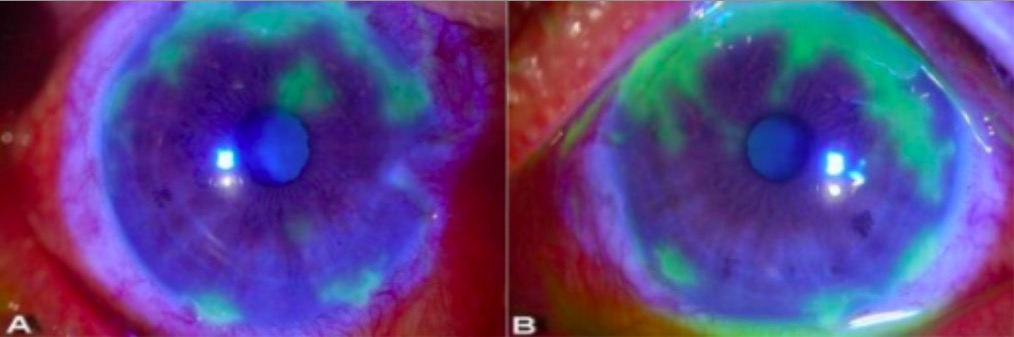
Queratitis:

  • Infección del epitelio corneal
  • Causa principal de ceguera corneal en EN Erythema nodosum is an immune-mediated panniculitis (inflammation of the subcutaneous fat) caused by a type IV (delayed-type) hypersensitivity reaction. It commonly manifests in young women as tender, erythematous nodules on the shins. Erythema Nodosum los LOS Neisseria países de altos ingresos
  • Signos y síntomas:
    • Dolor Dolor Inflammation
    • Sensación de cuerpo extraño
    • Desenfoque visual
    • Desgarro
    • Quemosis
    • Conjuntivitis
    • ↓ Sensación de la córnea
    • Lesiones dendríticas características de la córnea:
      • Úlcera corneal con patrón de ramificación
      • Vistas en EN Erythema nodosum is an immune-mediated panniculitis (inflammation of the subcutaneous fat) caused by a type IV (delayed-type) hypersensitivity reaction. It commonly manifests in young women as tender, erythematous nodules on the shins. Erythema Nodosum el examen con lámpara de hendidura
  • Las infecciones recurrentes son frecuentes.
  • Pueden producirse cicatrices estromales.

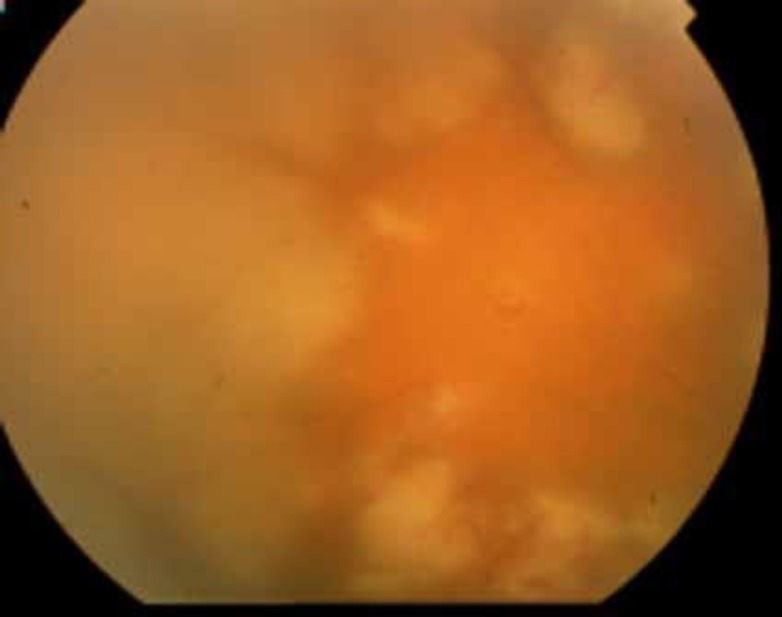
Necrosis Necrosis The death of cells in an organ or tissue due to disease, injury or failure of the blood supply. Ischemic Cell Damage retiniana aguda:

  • Retinitis necrotizante, poco común y potencialmente cegadora
  • Ocurre en EN Erythema nodosum is an immune-mediated panniculitis (inflammation of the subcutaneous fat) caused by a type IV (delayed-type) hypersensitivity reaction. It commonly manifests in young women as tender, erythematous nodules on the shins. Erythema Nodosum:
    • Huéspedes inmunocompetentes
    • Mujeres embarazadas
    • Pacientes con infección por VIH
  • Signos y síntomas:

Conjuntivitis y blefaritis:

  • Unilateral
  • Vesículas en EN Erythema nodosum is an immune-mediated panniculitis (inflammation of the subcutaneous fat) caused by a type IV (delayed-type) hypersensitivity reaction. It commonly manifests in young women as tender, erythematous nodules on the shins. Erythema Nodosum el margen del párpado
  • Quemosis
  • Edema Edema Edema is a condition in which excess serous fluid accumulates in the body cavity or interstitial space of connective tissues. Edema is a symptom observed in several medical conditions. It can be categorized into 2 types, namely, peripheral (in the extremities) and internal (in an organ or body cavity). Edema de los LOS Neisseria párpados
  • Desgarro

Coriorretinitis (uveítis posterior):

  • De infecciones diseminadas por VHS
  • Se observa en EN Erythema nodosum is an immune-mediated panniculitis (inflammation of the subcutaneous fat) caused by a type IV (delayed-type) hypersensitivity reaction. It commonly manifests in young women as tender, erythematous nodules on the shins. Erythema Nodosum neonatos o en EN Erythema nodosum is an immune-mediated panniculitis (inflammation of the subcutaneous fat) caused by a type IV (delayed-type) hypersensitivity reaction. It commonly manifests in young women as tender, erythematous nodules on the shins. Erythema Nodosum personas inmunodeprimidas.
  • Signos y síntomas:
    • Visión borrosa, distorsionada o pérdida de visión
    • Escotoma
    • Miodesopsias

Síndromes neurológicos

Encefalitis:

  • Suele ser unilateral y afecta al AL Amyloidosis lóbulo temporal y al AL Amyloidosis corteza insular (pregunta de exámen)
  • Alta tasa de morbilidad y mortalidad
  • Signos y síntomas:
    • Fiebre
    • Cefalea
    • Convulsiones
    • Signos neurológicos focales
    • Consciencia alterada

Meningitis Meningitis Meningitis is inflammation of the meninges, the protective membranes of the brain, and spinal cord. The causes of meningitis are varied, with the most common being bacterial or viral infection. The classic presentation of meningitis is a triad of fever, altered mental status, and nuchal rigidity. Meningitis aséptica:

  • Más comúnmente asociada a las infecciones por VHS-2
  • Signos y síntomas:
    • Fiebre
    • Cefalea
    • Fotofobia
    • Meningismo

Otras manifestaciones:

  • Parálisis de Bell: incapacidad temporal para controlar los LOS Neisseria músculos faciales del lado afectado de la cara
  • Disfunción autonómica: Se presenta como retención urinaria durante una infección genital primaria.
  • Mielitis transversal: una inflamación desmielinizante de ambos lados de 1 sección de la médula espinal

Infecciones de las vías respiratorias

Epiglotitis o laringitis (crup herpético):

  • Puede ocurrir en EN Erythema nodosum is an immune-mediated panniculitis (inflammation of the subcutaneous fat) caused by a type IV (delayed-type) hypersensitivity reaction. It commonly manifests in young women as tender, erythematous nodules on the shins. Erythema Nodosum niños.
  • Condición autolimitante
  • Signos y síntomas:
    • Tos TOS Thoracic outlet syndrome (TOS) is a broad term used for a spectrum of syndromes related to the general region of the thoracic outlet, which involves the compression or irritation of elements of the brachial plexus, subclavian artery, or subclavian vein. Thoracic Outlet Syndrome no productiva
    • Estridor

Neumonitis por VHS:

  • Rara
  • Suele ocurrir en EN Erythema nodosum is an immune-mediated panniculitis (inflammation of the subcutaneous fat) caused by a type IV (delayed-type) hypersensitivity reaction. It commonly manifests in young women as tender, erythematous nodules on the shins. Erythema Nodosum pacientes inmunodeprimidos.
  • Se considera una condición definitoria del SIDA.
  • Se produce tras una traqueobronquitis.
  • Signos y síntomas:
    • Disnea
    • Tos TOS Thoracic outlet syndrome (TOS) is a broad term used for a spectrum of syndromes related to the general region of the thoracic outlet, which involves the compression or irritation of elements of the brachial plexus, subclavian artery, or subclavian vein. Thoracic Outlet Syndrome
    • Fiebre
    • Sibilancias

Enfermedad gastrointestinal

Esofagitis por VHS:

  • Suele observarse en EN Erythema nodosum is an immune-mediated panniculitis (inflammation of the subcutaneous fat) caused by a type IV (delayed-type) hypersensitivity reaction. It commonly manifests in young women as tender, erythematous nodules on the shins. Erythema Nodosum huéspedes inmunodeprimidos.
  • Se considera una condición definitoria del SIDA.
  • Difundida por:
    • Extensión directa desde la orofaringe
    • Reactivación y propagación a través del nervio vago a la mucosa
  • Signos y síntomas:

Hepatitis fulminante:

  • Rara
  • Asociada a la enfermedad diseminada
  • Causada tanto por el VHS-1 como por el VHS-2
  • Solo el 30% de los LOS Neisseria pacientes presentan lesiones cutáneas típicas.

Related videos

Enfermedades Causadas por el VHS-2

Las afecciones que se enumeran a continuación son las más comúnmente asociadas a las infecciones por VHS-2. Una vez más, hay que tener en EN Erythema nodosum is an immune-mediated panniculitis (inflammation of the subcutaneous fat) caused by a type IV (delayed-type) hypersensitivity reaction. It commonly manifests in young women as tender, erythematous nodules on the shins. Erythema Nodosum cuenta que el VHS-1 también puede estar asociado a muchos de estos diagnósticos.

Infección genital

Infecciones genitales primarias por VHS-2:

  • Periodo medio de incubación: 4 días (rango 2–12 días)
  • La viremia Viremia The presence of viruses in the blood. Erythema Infectiosum es más frecuente (24%) que en EN Erythema nodosum is an immune-mediated panniculitis (inflammation of the subcutaneous fat) caused by a type IV (delayed-type) hypersensitivity reaction. It commonly manifests in young women as tender, erythematous nodules on the shins. Erythema Nodosum los LOS Neisseria casos de reactivación.
  • Pueden ser asintomáticas o presentarse con síntomas leves o graves:
    • Úlceras genitales dolorosas:
      • Grupos de vesículas de 2–4 mm que contienen un líquido claro
      • Se convierten en EN Erythema nodosum is an immune-mediated panniculitis (inflammation of the subcutaneous fat) caused by a type IV (delayed-type) hypersensitivity reaction. It commonly manifests in young women as tender, erythematous nodules on the shins. Erythema Nodosum pústulas que se rompen → erosiones o úlceras superficiales con bordes festoneados.
      • Se curan sin cicatrizar.
    • Disuria
    • Fiebre
    • Linfadenopatía inguinal local sensible
    • Cefalea

Infección no primaria de primer episodio (reactivación):
  • Frecuencia de las recidivas:
    • Recaídas más tempranas y frecuentes si la infección primaria ha HA Hemolytic anemia (HA) is the term given to a large group of anemias that are caused by the premature destruction/hemolysis of circulating red blood cells (RBCs). Hemolysis can occur within (intravascular hemolysis) or outside the blood vessels (extravascular hemolysis). Hemolytic Anemia durado > 5 semanas
    • Más común con el VHS-2 que con el VHS-1
    • Más común en EN Erythema nodosum is an immune-mediated panniculitis (inflammation of the subcutaneous fat) caused by a type IV (delayed-type) hypersensitivity reaction. It commonly manifests in young women as tender, erythematous nodules on the shins. Erythema Nodosum pacientes inmunodeprimidos
  • Signos y síntomas:
    • Puede ser sintomática o asintomática
    • Pródromo: leves hormigueos o dolores punzantes en EN Erythema nodosum is an immune-mediated panniculitis (inflammation of the subcutaneous fat) caused by a type IV (delayed-type) hypersensitivity reaction. It commonly manifests in young women as tender, erythematous nodules on the shins. Erythema Nodosum las nalgas, las piernas y las caderas
    • Menos lesiones y síntomas sistémicos menos graves
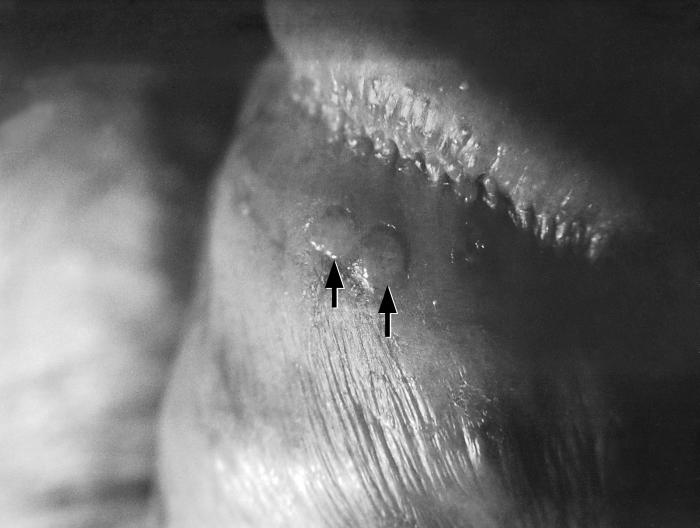
Ampollas en el pene herpes simplex-2

Ampollas en el pene (flechas) debidas a una infección recurrente por el virus del herpes simple-2 (VHS-2)

Imagen: “Penile blisters (arrows), due to a recurring herpes simplex-2 (HSV-2) virus infection” por CDC/ Susan Lindsley. Licencia: Dominio Público
Manifestaciones extragenitales

  • Meningitis Meningitis Meningitis is inflammation of the meninges, the protective membranes of the brain, and spinal cord. The causes of meningitis are varied, with the most common being bacterial or viral infection. The classic presentation of meningitis is a triad of fever, altered mental status, and nuchal rigidity. Meningitis aséptica
  • Meningitis Meningitis Meningitis is inflammation of the meninges, the protective membranes of the brain, and spinal cord. The causes of meningitis are varied, with the most common being bacterial or viral infection. The classic presentation of meningitis is a triad of fever, altered mental status, and nuchal rigidity. Meningitis aséptica recurrente benigna ( meningitis Meningitis Meningitis is inflammation of the meninges, the protective membranes of the brain, and spinal cord. The causes of meningitis are varied, with the most common being bacterial or viral infection. The classic presentation of meningitis is a triad of fever, altered mental status, and nuchal rigidity. Meningitis de Mollaret):
    • > 3 episodios de síntomas de meningitis Meningitis Meningitis is inflammation of the meninges, the protective membranes of the brain, and spinal cord. The causes of meningitis are varied, with the most common being bacterial or viral infection. The classic presentation of meningitis is a triad of fever, altered mental status, and nuchal rigidity. Meningitis
    • Seguida de una resolución espontánea
  • Disfunción del SNA sacro: Provoca retención de orina.
  • Radiculitis Radiculitis Ankylosing Spondylitis sacra:
    • Retención urinaria aguda con pérdida de la sensibilidad sacra
    • Se produce en EN Erythema nodosum is an immune-mediated panniculitis (inflammation of the subcutaneous fat) caused by a type IV (delayed-type) hypersensitivity reaction. It commonly manifests in young women as tender, erythematous nodules on the shins. Erythema Nodosum infecciones primarias graves.
    • Transitoria, pero requiere cateterismo
  • Hepatitis
  • Proctitis Proctitis Inflammation of the mucous membrane of the rectum, the distal end of the large intestine. Chronic Granulomatous Disease: más común en EN Erythema nodosum is an immune-mediated panniculitis (inflammation of the subcutaneous fat) caused by a type IV (delayed-type) hypersensitivity reaction. It commonly manifests in young women as tender, erythematous nodules on the shins. Erythema Nodosum hombres que tienen sexo con hombres (HSH)

Diagnóstico

  • PCR PCR Polymerase chain reaction (PCR) is a technique that amplifies DNA fragments exponentially for analysis. The process is highly specific, allowing for the targeting of specific genomic sequences, even with minuscule sample amounts. The PCR cycles multiple times through 3 phases: denaturation of the template DNA, annealing of a specific primer to the individual DNA strands, and synthesis/elongation of new DNA molecules. Polymerase Chain Reaction (PCR):
    • Método de diagnóstico preferido
    • Puede utilizarse para detectar ADN viral.
    • Puede utilizarse para identificar los LOS Neisseria serotipos del VHS.
    • Sensibilidad (98%) y especificidad (99%) extremadamente altas
    • Hallazgos positivos en EN Erythema nodosum is an immune-mediated panniculitis (inflammation of the subcutaneous fat) caused by a type IV (delayed-type) hypersensitivity reaction. It commonly manifests in young women as tender, erythematous nodules on the shins. Erythema Nodosum el curso temprano de la enfermedad
    • Las muestras pueden obtenerse de:
      • Lesiones vesiculares no cubiertas
      • Líquido intraocular ( necrosis Necrosis The death of cells in an organ or tissue due to disease, injury or failure of the blood supply. Ischemic Cell Damage retiniana aguda)
      • Hisopos uretrales, rectales o cervicales
      • LCR
      • Sangre (útil para infecciones neonatales fulminantes, hepatitis)
  • Cultivos virales:
    • Menos sensibles que la PCR PCR Polymerase chain reaction (PCR) is a technique that amplifies DNA fragments exponentially for analysis. The process is highly specific, allowing for the targeting of specific genomic sequences, even with minuscule sample amounts. The PCR cycles multiple times through 3 phases: denaturation of the template DNA, annealing of a specific primer to the individual DNA strands, and synthesis/elongation of new DNA molecules. Polymerase Chain Reaction (PCR)
    • Dependen de la cantidad del virus Virus Viruses are infectious, obligate intracellular parasites composed of a nucleic acid core surrounded by a protein capsid. Viruses can be either naked (non-enveloped) or enveloped. The classification of viruses is complex and based on many factors, including type and structure of the nucleoid and capsid, the presence of an envelope, the replication cycle, and the host range. Virology.
  • Biopsia de tejido:
    • Sitios:
      • Piel
      • Pulmón
      • Hígado
      • Esófago
    • Se puede diagnosticar por su aspecto histológico y confirmarse mediante métodos inmunohistoquímicos o moleculares.
  • El frotis de Tzanck:
    • Procedimiento:
      • La muestra se obtiene raspando la base de una vesícula.
      • La muestra se coloca en EN Erythema nodosum is an immune-mediated panniculitis (inflammation of the subcutaneous fat) caused by a type IV (delayed-type) hypersensitivity reaction. It commonly manifests in young women as tender, erythematous nodules on the shins. Erythema Nodosum un portaobjetos.
      • Teñida con Giemsa o azul de toluidina
      • Se observan los LOS Neisseria efectos citopáticos típicos del VHS.
    • Mostrará células gigantes multinucleadas.
    • Baja sensibilidad y especificidad
    • No se puede diferenciar entre los LOS Neisseria serotipos del VHS.
  • Prueba directa de anticuerpos fluorescentes:
    • Rápida
    • Baja sensibilidad y especificidad
  • Pruebas serológicas:
    • Aplicaciones limitadas
    • Los LOS Neisseria títulos no se correlacionan con los LOS Neisseria cultivos positivos o la presencia de lesiones.
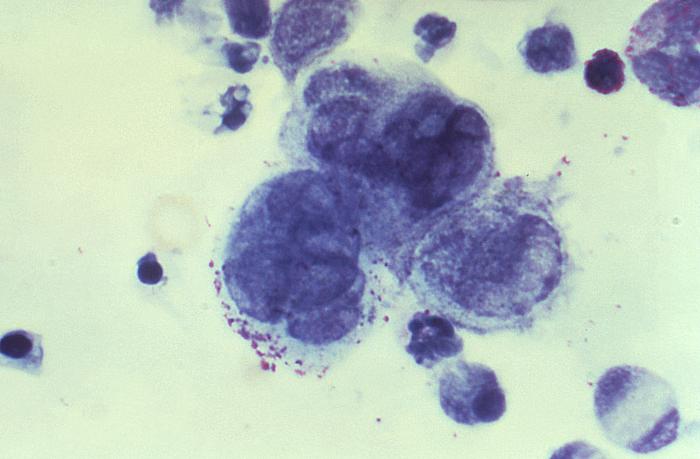
Imagen de un frotis de Tzanck Virus del herpes simple

Imagen de un frotis de Tzanck obtenido de una lesión de pene:
Se observan células gigantes multinucleadas, lo que indica una infección por herpes.

Imagen: “Photomicrograph depicts a Tzanck stained penile lesion specimen”por CDC/ Joe Miller. Licencia: Dominio Público

Tratamiento

Terapia médica

Antivirales:

  • Mecanismo de acción: derivados nucleósidos que interfieren en EN Erythema nodosum is an immune-mediated panniculitis (inflammation of the subcutaneous fat) caused by a type IV (delayed-type) hypersensitivity reaction. It commonly manifests in young women as tender, erythematous nodules on the shins. Erythema Nodosum la síntesis del ADN viral al AL Amyloidosis inhibir la ADN polimerasa viral
  • Debe vigilarse la función renal.
  • Usos:
    • Depende de la gravedad (puede no ser necesario para infecciones leves o mínimamente sintomáticas).
    • Tratamiento de una infección activa
    • Terapia episódica (iniciada al AL Amyloidosis primer signo de síntomas prodrómicos)
    • Supresión crónica (para recidivas frecuentes o graves)
    • Reduce pero no elimina la excreción viral.
  • Opciones sistémicas:
    • Aciclovir
    • Valaciclovir
    • Famciclovir Famciclovir An aminopurine derivative and prodrug of penciclovir which is a competitive inhibitor of herpes simplex 2 DNA polymerase. It is used to treat herpes simplex virus infection. Antivirals for Herpes Virus
  • Opciones tópicas (para infecciones oculares):
    • Aciclovir
    • Ganciclovir Ganciclovir An acyclovir analog that is a potent inhibitor of the herpesvirus family including cytomegalovirus. Ganciclovir is used to treat complications from aids-associated cytomegalovirus infections. Antivirals for Herpes Virus
    • Trifluridina (más toxicidad para la córnea)

Analgésicos:

  • Lidocaína
  • Benzocaína

Pacientes inmunodeprimidos

  • Los LOS Neisseria pacientes inmunodeprimidos pueden presentar síntomas más graves, mayor riesgo de complicaciones y mayor riesgo de desarrollar infecciones por VHS resistentes a los LOS Neisseria medicamentos.
  • Tratados con regímenes similares a los LOS Neisseria de los LOS Neisseria pacientes inmunocompetentes, pero con dosis más altas para la terapia supresiva
  • Los LOS Neisseria pacientes seropositivos que no reciben terapia antirretroviral (TAR) pueden ser propensos a padecer el síndrome inflamatorio de reconstitución inmunitaria (IRIS, por sus siglas en EN Erythema nodosum is an immune-mediated panniculitis (inflammation of the subcutaneous fat) caused by a type IV (delayed-type) hypersensitivity reaction. It commonly manifests in young women as tender, erythematous nodules on the shins. Erythema Nodosum inglés) cuando son tratados por infecciones por VHS.
    • Las manifestaciones clínicas empeoran inicialmente tras el inicio de la TAR.
    • Se puede administrar una terapia supresora para prevenir el IRIS.

Prevención de nuevas infecciones por VHS

  • Herpes labial:
    • Evitar el contacto con la saliva Saliva The clear, viscous fluid secreted by the salivary glands and mucous glands of the mouth. It contains mucins, water, organic salts, and ptyalin. Salivary Glands: Anatomy o los LOS Neisseria fómites contaminados por la saliva Saliva The clear, viscous fluid secreted by the salivary glands and mucous glands of the mouth. It contains mucins, water, organic salts, and ptyalin. Salivary Glands: Anatomy de los LOS Neisseria miembros de la familia y las parejas íntimas (e.g., evite besarse y compartir utensilios de cocina y toallas)
    • Personal sanitario:
      • Precauciones universales
      • Utilizar guantes durante la exploración física de un paciente con lesiones activas por VHS
      • Protección ocular y bucal durante la aspiración o la broncoscopia
  • Herpes genital:
    • Se recomienda el uso de barreras para el sexo oral y genital.
    • Nota: Las parejas embarazadas que son negativas al AL Amyloidosis VHS deben tomar precauciones debido al AL Amyloidosis alto riesgo de transmisión al AL Amyloidosis neonato.
  • Herpes del gladiador:
    • Los LOS Neisseria deportistas no deben participar en EN Erythema nodosum is an immune-mediated panniculitis (inflammation of the subcutaneous fat) caused by a type IV (delayed-type) hypersensitivity reaction. It commonly manifests in young women as tender, erythematous nodules on the shins. Erythema Nodosum deportes de contacto hasta que todas las lesiones herpéticas estén en EN Erythema nodosum is an immune-mediated panniculitis (inflammation of the subcutaneous fat) caused by a type IV (delayed-type) hypersensitivity reaction. It commonly manifests in young women as tender, erythematous nodules on the shins. Erythema Nodosum la fase de corteza seca.
    • Se ha HA Hemolytic anemia (HA) is the term given to a large group of anemias that are caused by the premature destruction/hemolysis of circulating red blood cells (RBCs). Hemolysis can occur within (intravascular hemolysis) or outside the blood vessels (extravascular hemolysis). Hemolytic Anemia sugerido un tratamiento antiviral Antiviral Antivirals for Hepatitis B oral supresivo para todos los LOS Neisseria luchadores, independientemente de los LOS Neisseria antecedentes de VHS, ya que reduce notablemente el riesgo de un brote ( en EN Erythema nodosum is an immune-mediated panniculitis (inflammation of the subcutaneous fat) caused by a type IV (delayed-type) hypersensitivity reaction. It commonly manifests in young women as tender, erythematous nodules on the shins. Erythema Nodosum un 85%).

Comparación de los Herpesvirus

La tabla que se presenta a continuación compara y contrasta el VHS-1 y el VHS-2:

Tabla: Comparación de los LOS Neisseria virus Virus Viruses are infectious, obligate intracellular parasites composed of a nucleic acid core surrounded by a protein capsid. Viruses can be either naked (non-enveloped) or enveloped. The classification of viruses is complex and based on many factors, including type and structure of the nucleoid and capsid, the presence of an envelope, the replication cycle, and the host range. Virology del herpes simple
Serotipo VHS-1 VHS-2
Transmisión
  • Secreciones respiratorias, saliva Saliva The clear, viscous fluid secreted by the salivary glands and mucous glands of the mouth. It contains mucins, water, organic salts, and ptyalin. Salivary Glands: Anatomy
  • Ubicua
  • 90% en EN Erythema nodosum is an immune-mediated panniculitis (inflammation of the subcutaneous fat) caused by a type IV (delayed-type) hypersensitivity reaction. It commonly manifests in young women as tender, erythematous nodules on the shins. Erythema Nodosum la infancia
  • Contacto sexual, perinatal
  • 30% en EN Erythema nodosum is an immune-mediated panniculitis (inflammation of the subcutaneous fat) caused by a type IV (delayed-type) hypersensitivity reaction. It commonly manifests in young women as tender, erythematous nodules on the shins. Erythema Nodosum la edad adulta
Infección lítica Células mucoepiteliales Células mucoepiteliales
Latencia Ganglios del trigémino Ganglios sacros
Enfermedades
  • Gingivoestomatitis
  • Herpes labial
  • Queratitis
  • Conjuntivitis
  • Panadizo herpético
  • Encefalitis
  • Hepatitis
  • Esofagitis
  • Neumonitis
  • Herpes genital
  • Herpes neonatal
  • Meningitis Meningitis Meningitis is inflammation of the meninges, the protective membranes of the brain, and spinal cord. The causes of meningitis are varied, with the most common being bacterial or viral infection. The classic presentation of meningitis is a triad of fever, altered mental status, and nuchal rigidity. Meningitis aséptica
  • Proctitis Proctitis Inflammation of the mucous membrane of the rectum, the distal end of the large intestine. Chronic Granulomatous Disease

Comparación de los LOS Neisseria virus Virus Viruses are infectious, obligate intracellular parasites composed of a nucleic acid core surrounded by a protein capsid. Viruses can be either naked (non-enveloped) or enveloped. The classification of viruses is complex and based on many factors, including type and structure of the nucleoid and capsid, the presence of an envelope, the replication cycle, and the host range. Virology de la familia Herpesviridae Herpesviridae A family of enveloped, linear, double-stranded DNA viruses infecting a wide variety of animals. Subfamilies, based on biological characteristics, include: alphaherpesvirinae; betaherpesvirinae; and gammaherpesvirinae. Herpes Simplex Virus 1 and 2

La siguiente tabla compara los LOS Neisseria 9 herpesvirus considerados endémicos en EN Erythema nodosum is an immune-mediated panniculitis (inflammation of the subcutaneous fat) caused by a type IV (delayed-type) hypersensitivity reaction. It commonly manifests in young women as tender, erythematous nodules on the shins. Erythema Nodosum humanos. En EN Erythema nodosum is an immune-mediated panniculitis (inflammation of the subcutaneous fat) caused by a type IV (delayed-type) hypersensitivity reaction. It commonly manifests in young women as tender, erythematous nodules on the shins. Erythema Nodosum total se conocen 115 especies diferentes de herpesvirus, que se agrupan en EN Erythema nodosum is an immune-mediated panniculitis (inflammation of the subcutaneous fat) caused by a type IV (delayed-type) hypersensitivity reaction. It commonly manifests in young women as tender, erythematous nodules on the shins. Erythema Nodosum 3 familias:

  • Alfa (infectan a las células epiteliales y producen una infección latente en EN Erythema nodosum is an immune-mediated panniculitis (inflammation of the subcutaneous fat) caused by a type IV (delayed-type) hypersensitivity reaction. It commonly manifests in young women as tender, erythematous nodules on the shins. Erythema Nodosum las neuronas posmitóticas)
  • Beta (infectan y producen una infección latente en EN Erythema nodosum is an immune-mediated panniculitis (inflammation of the subcutaneous fat) caused by a type IV (delayed-type) hypersensitivity reaction. It commonly manifests in young women as tender, erythematous nodules on the shins. Erythema Nodosum varios tipos de células)
  • Gamma (producen una infección latente principalmente en EN Erythema nodosum is an immune-mediated panniculitis (inflammation of the subcutaneous fat) caused by a type IV (delayed-type) hypersensitivity reaction. It commonly manifests in young women as tender, erythematous nodules on the shins. Erythema Nodosum las células linfoides)
Tabla: Comparación de los LOS Neisseria 9 herpesvirus considerados endémicos en EN Erythema nodosum is an immune-mediated panniculitis (inflammation of the subcutaneous fat) caused by a type IV (delayed-type) hypersensitivity reaction. It commonly manifests in young women as tender, erythematous nodules on the shins. Erythema Nodosum humanos
HHV Nombre común Células objetivo primarias Sitio de latencia Presentación clínica*
1
(grupo alfa)
VHS-1 Células mucoepiteliales Ganglios de la raíz dorsal
  • Gingivoestomatitis
  • Queratitis
  • Panadizo herpético
  • Encefalitis
  • Hepatitis
  • Esofagitis
  • Neumonitis
2
(grupo alfa)
VHS-2
  • Herpes genital
  • Meningitis Meningitis Meningitis is inflammation of the meninges, the protective membranes of the brain, and spinal cord. The causes of meningitis are varied, with the most common being bacterial or viral infection. The classic presentation of meningitis is a triad of fever, altered mental status, and nuchal rigidity. Meningitis
  • Proctitis Proctitis Inflammation of the mucous membrane of the rectum, the distal end of the large intestine. Chronic Granulomatous Disease
3
(grupo alfa)
VZV
  • Varicela
  • Herpes zóster
4
(grupo gamma)
EBV EBV Epstein-barr virus (EBV) is a linear, double-stranded DNA virus belonging to the herpesviridae family. This highly prevalent virus is mostly transmitted through contact with oropharyngeal secretions from an infected individual. The virus can infect epithelial cells and B lymphocytes, where it can undergo lytic replication or latency. Epstein-Barr Virus
  • Células epiteliales
  • Linfocitos B
Linfocitos B de memoria
  • Mononucleosis Mononucleosis Infectious mononucleosis (IM), also known as “the kissing disease,” is a highly contagious viral infection caused by the Epstein-Barr virus. Its common name is derived from its main method of transmission: the spread of infected saliva via kissing. Clinical manifestations of IM include fever, tonsillar pharyngitis, and lymphadenopathy. Mononucleosis infecciosa
  • Linfoma de Hodgkin
  • Linfoma de Burkitt
  • Leucoplasia vellosa oral
  • Cáncer gástrico asociado al AL Amyloidosis EBV EBV Epstein-barr virus (EBV) is a linear, double-stranded DNA virus belonging to the herpesviridae family. This highly prevalent virus is mostly transmitted through contact with oropharyngeal secretions from an infected individual. The virus can infect epithelial cells and B lymphocytes, where it can undergo lytic replication or latency. Epstein-Barr Virus
5
(grupo beta)
CMV
  • Monocitos
  • Linfocitos
  • Células epiteliales
Células progenitoras hematopoyéticas en EN Erythema nodosum is an immune-mediated panniculitis (inflammation of the subcutaneous fat) caused by a type IV (delayed-type) hypersensitivity reaction. It commonly manifests in young women as tender, erythematous nodules on the shins. Erythema Nodosum la médula ósea
  • Mononucleosis Mononucleosis Infectious mononucleosis (IM), also known as “the kissing disease,” is a highly contagious viral infection caused by the Epstein-Barr virus. Its common name is derived from its main method of transmission: the spread of infected saliva via kissing. Clinical manifestations of IM include fever, tonsillar pharyngitis, and lymphadenopathy. Mononucleosis por CMV
  • Retinitis por CMV
  • Colitis Colitis Inflammation of the colon section of the large intestine, usually with symptoms such as diarrhea (often with blood and mucus), abdominal pain, and fever. Pseudomembranous Colitis por CMV
  • Encefalitis por CMV
6A, 6B
(grupo beta)
HHV-6 HHV-6 Human herpesvirus (HHV)-6 and HHV-7 are similar double-stranded DNA viruses belonging to the Herpesviridae family. Human herpesviruses are ubiquitous and infections are commonly contracted during childhood. Human Herpesvirus 6 and 7 Linfocitos T Monocitos Roséola
7
(grupo beta)
HHV-7 HHV-7 Human herpesvirus (HHV)-6 and HHV-7 are similar double-stranded DNA viruses belonging to the Herpesviridae family. Human herpesviruses are ubiquitous and infections are commonly contracted during childhood. Human Herpesvirus 6 and 7 Linfocitos T
8
(grupo gamma)
KSHV
  • Linfocitos
  • Células epiteliales
Linfocitos B Sarcoma de Kaposi Kaposi A multicentric, malignant neoplastic vascular proliferation characterized by the development of bluish-red cutaneous nodules, usually on the lower extremities, most often on the toes or feet, and slowly increasing in size and number and spreading to more proximal areas. The tumors have endothelium-lined channels and vascular spaces admixed with variably sized aggregates of spindle-shaped cells, and often remain confined to the skin and subcutaneous tissue, but widespread visceral involvement may occur. Hhv-8 is the suspected cause. There is also a high incidence in AIDS patients. AIDS-defining Conditions
* Negrita en la columna “presentación clínica”: Enfermedades definitorias de sida
CMV: citomegalovirus
EBV, por sus siglas en inglés: virus de Epstein-Barr
HHV: herpesvirus humano
VHS: virus del herpes simple
KSHV: herpesvirus asociado al sarcoma de Kaposi
VZV, por sus siglas en inglés: virus de la varicela-zóster

Diagnóstico Diferencial

  • Úlceras aftosas recurrentes (aftas): Una enfermedad muy común, probablemente relacionada con el sistema inmunitario, de la mucosa oral (y menos comúnmente, de la mucosa genital), que se manifiesta como pequeñas úlceras discretas y dolorosas que se curan en EN Erythema nodosum is an immune-mediated panniculitis (inflammation of the subcutaneous fat) caused by a type IV (delayed-type) hypersensitivity reaction. It commonly manifests in young women as tender, erythematous nodules on the shins. Erythema Nodosum 1–2 semanas. Las aftas recurrentes no van precedidas de vesículas y solo se producen en EN Erythema nodosum is an immune-mediated panniculitis (inflammation of the subcutaneous fat) caused by a type IV (delayed-type) hypersensitivity reaction. It commonly manifests in young women as tender, erythematous nodules on the shins. Erythema Nodosum las superficies mucosas. El diagnóstico es clínico, aunque se pueden realizar pruebas para evaluar condiciones asociadas (e.g., deficiencias nutricionales, enfermedad inflamatoria intestinal). El tratamiento incluye la evitación de los LOS Neisseria factores desencadenantes, la terapia sintomática y el tratamiento de las etiologías subyacentes.
  • Sífilis: Una infección bacteriana causada por la espiroqueta Treponema pallidum Treponema pallidum The causative agent of venereal and non-venereal syphilis as well as yaws. Treponema, que se suele contagiar por contacto sexual. La sífilis primaria puede presentarse con chancros duros que inicialmente se presentan como pequeñas manchas rojas. A diferencia de las vesículas en EN Erythema nodosum is an immune-mediated panniculitis (inflammation of the subcutaneous fat) caused by a type IV (delayed-type) hypersensitivity reaction. It commonly manifests in young women as tender, erythematous nodules on the shins. Erythema Nodosum las infecciones por VHS, estos chancros (las vesículas están ausentes) son indoloros. El diagnóstico se realiza con serología, examen de campo oscuro e inmunotinción en EN Erythema nodosum is an immune-mediated panniculitis (inflammation of the subcutaneous fat) caused by a type IV (delayed-type) hypersensitivity reaction. It commonly manifests in young women as tender, erythematous nodules on the shins. Erythema Nodosum la biopsia. La penicilina G es el antibiótico de elección.
  • Chancroide: Una ITS causada por Haemophilus ducreyi Haemophilus ducreyi A species of Haemophilus that appears to be the pathogen or causative agent of the sexually transmitted disease, chancroid. Haemophilus. Los LOS Neisseria pacientes desarrollan úlceras genitales necrotizantes dolorosas y linfadenopatía inguinal. El diagnóstico suele ser clínico, pero la PCR PCR Polymerase chain reaction (PCR) is a technique that amplifies DNA fragments exponentially for analysis. The process is highly specific, allowing for the targeting of specific genomic sequences, even with minuscule sample amounts. The PCR cycles multiple times through 3 phases: denaturation of the template DNA, annealing of a specific primer to the individual DNA strands, and synthesis/elongation of new DNA molecules. Polymerase Chain Reaction (PCR) y los LOS Neisseria cultivos pueden utilizarse para la confirmación. El manejo es con antibióticos macrólidos.
  • Otras úlceras genitales, anales o perianales: Causas no infecciosas que no están relacionadas con las ITS: hongos, traumatismos, carcinoma, aftas, erupción fija por medicamentos y psoriasis Psoriasis Psoriasis is a common T-cell-mediated inflammatory skin condition. The etiology is unknown, but is thought to be due to genetic inheritance and environmental triggers. There are 4 major subtypes, with the most common form being chronic plaque psoriasis. Psoriasis.
  • Faringitis bacteriana: Infección de la faringe. Los LOS Neisseria pacientes suelen experimentar dolor Dolor Inflammation de garganta y fiebre. Los LOS Neisseria síntomas no van precedidos de un grupo de vesículas agrupadas como las que se observan en EN Erythema nodosum is an immune-mediated panniculitis (inflammation of the subcutaneous fat) caused by a type IV (delayed-type) hypersensitivity reaction. It commonly manifests in young women as tender, erythematous nodules on the shins. Erythema Nodosum las infecciones por VHS. El diagnóstico puede incluir pruebas rápidas de detección de Streptococcus Streptococcus Streptococcus is one of the two medically important genera of gram-positive cocci, the other being Staphylococcus. Streptococci are identified as different species on blood agar on the basis of their hemolytic pattern and sensitivity to optochin and bacitracin. There are many pathogenic species of streptococci, including S. pyogenes, S. agalactiae, S. pneumoniae, and the viridans streptococci. Streptococcus del grupo A, cultivos bacterianos y PCR PCR Polymerase chain reaction (PCR) is a technique that amplifies DNA fragments exponentially for analysis. The process is highly specific, allowing for the targeting of specific genomic sequences, even with minuscule sample amounts. The PCR cycles multiple times through 3 phases: denaturation of the template DNA, annealing of a specific primer to the individual DNA strands, and synthesis/elongation of new DNA molecules. Polymerase Chain Reaction (PCR) para excluir infecciones por VHS. El tratamiento incluye penicilina o amoxicilina.
  • Infecciones por enterovirus Enterovirus A genus of the family picornaviridae whose members preferentially inhabit the intestinal tract of a variety of hosts. The genus contains many species. Newly described members of human enteroviruses are assigned continuous numbers with the species designated ‘human enterovirus’. Coxsackievirus (e.g., herpangina Herpangina Acute types of coxsackievirus infections or echovirus infections that usually affect children during the summer and are characterized by vesiculoulcerative lesions on the mucous membranes of the throat; dysphagia; vomiting, and fever. Coxsackievirus): Enfermedades febriles agudas causadas principalmente por los LOS Neisseria coxsackievirus Coxsackievirus Coxsackievirus is a member of a family of viruses called Picornaviridae and the genus Enterovirus. Coxsackieviruses are single-stranded, positive-sense RNA viruses, and are divided into coxsackie group A and B viruses. Both groups of viruses cause upper respiratory infections, rashes, aseptic meningitis, or encephalitis. Coxsackievirus A y B, y el enterovirus Enterovirus A genus of the family picornaviridae whose members preferentially inhabit the intestinal tract of a variety of hosts. The genus contains many species. Newly described members of human enteroviruses are assigned continuous numbers with the species designated ‘human enterovirus’. Coxsackievirus 71. La herpangina Herpangina Acute types of coxsackievirus infections or echovirus infections that usually affect children during the summer and are characterized by vesiculoulcerative lesions on the mucous membranes of the throat; dysphagia; vomiting, and fever. Coxsackievirus se asocia a pequeñas lesiones vesiculares o ulcerosas en EN Erythema nodosum is an immune-mediated panniculitis (inflammation of the subcutaneous fat) caused by a type IV (delayed-type) hypersensitivity reaction. It commonly manifests in young women as tender, erythematous nodules on the shins. Erythema Nodosum las estructuras orofaríngeas posteriores (enantema). Los LOS Neisseria hallazgos clínicos y la PCR PCR Polymerase chain reaction (PCR) is a technique that amplifies DNA fragments exponentially for analysis. The process is highly specific, allowing for the targeting of specific genomic sequences, even with minuscule sample amounts. The PCR cycles multiple times through 3 phases: denaturation of the template DNA, annealing of a specific primer to the individual DNA strands, and synthesis/elongation of new DNA molecules. Polymerase Chain Reaction (PCR) se utilizan para hacer el diagnóstico. El tratamiento es sintomático.
  • Mononucleosis Mononucleosis Infectious mononucleosis (IM), also known as “the kissing disease,” is a highly contagious viral infection caused by the Epstein-Barr virus. Its common name is derived from its main method of transmission: the spread of infected saliva via kissing. Clinical manifestations of IM include fever, tonsillar pharyngitis, and lymphadenopathy. Mononucleosis infecciosa: Infección causada por otro herpesvirus, el EBV EBV Epstein-barr virus (EBV) is a linear, double-stranded DNA virus belonging to the herpesviridae family. This highly prevalent virus is mostly transmitted through contact with oropharyngeal secretions from an infected individual. The virus can infect epithelial cells and B lymphocytes, where it can undergo lytic replication or latency. Epstein-Barr Virus. Las manifestaciones clínicas incluyen fiebre, faringoamigdalitis y linfadenopatía. A diferencia de las infecciones por VHS, la mononucleosis Mononucleosis Infectious mononucleosis (IM), also known as “the kissing disease,” is a highly contagious viral infection caused by the Epstein-Barr virus. Its common name is derived from its main method of transmission: the spread of infected saliva via kissing. Clinical manifestations of IM include fever, tonsillar pharyngitis, and lymphadenopathy. Mononucleosis no suele estar asociada a grupos de vesículas. El diagnóstico es clínico y se confirma mediante pruebas de anticuerpos heterófilos o serología. El tratamiento es de soporte.
  • Síndrome de Stevens-Johnson ( SJS SJS Stevens-Johnson syndrome (SJS) is a cutaneous, immune-mediated hypersensitivity reaction that is commonly triggered by medications, including antiepileptics and antibiotics. The condition runs on a spectrum with toxic epidermal necrolysis (TEN) based on the amount of body surface area (BSA) involved. Stevens-Johnson Syndrome): Enfermedad rara y potencialmente letal que ataca la piel y las mucosas. El síndrome de Stevens-Johnson tiene un espectro con la forma más grave (necrólisis epidérmica tóxica (NET)) y puede ser desencadenado por una reacción a un medicamento o a una infección bacteriana o vírica (incluido el VHS) o enfermedad preexistente. Los LOS Neisseria pacientes presentan un pródromo gripal y la aparición de bullas cutáneas, seguidas de descamación en EN Erythema nodosum is an immune-mediated panniculitis (inflammation of the subcutaneous fat) caused by a type IV (delayed-type) hypersensitivity reaction. It commonly manifests in young women as tender, erythematous nodules on the shins. Erythema Nodosum la cara, el tórax y las mucosas. El diagnóstico es clínico y el tratamiento es en EN Erythema nodosum is an immune-mediated panniculitis (inflammation of the subcutaneous fat) caused by a type IV (delayed-type) hypersensitivity reaction. It commonly manifests in young women as tender, erythematous nodules on the shins. Erythema Nodosum gran medida de apoyo.
  • Infecciones cutáneas bacterianas con ulceración superficial: Infecciones que pueden simular un panadizo herpético. Las infecciones bacterianas de la piel con ulceración superficial no van precedidas de una vesícula y suelen afectar a los LOS Neisseria tejidos subepidérmicos. Es importante diferenciar estas condiciones, ya que los LOS Neisseria antibióticos y el drenaje no son necesarios para el panadizo herpético.
  • Proctitis Proctitis Inflammation of the mucous membrane of the rectum, the distal end of the large intestine. Chronic Granulomatous Disease: Además de las infecciones por VHS, el diagnóstico diferencial en EN Erythema nodosum is an immune-mediated panniculitis (inflammation of the subcutaneous fat) caused by a type IV (delayed-type) hypersensitivity reaction. It commonly manifests in young women as tender, erythematous nodules on the shins. Erythema Nodosum los LOS Neisseria HSH incluye las infecciones por Neisseria gonorrhoeae Neisseria gonorrhoeae A species of gram-negative, aerobic bacteria primarily found in purulent venereal discharges. It is the causative agent of gonorrhea. Neisseria, Chlamydia Chlamydia Chlamydiae are obligate intracellular gram-negative bacteria. They lack a peptidoglycan layer and are best visualized using Giemsa stain. The family of Chlamydiaceae comprises 3 pathogens that can infect humans: Chlamydia trachomatis, Chlamydia psittaci, and Chlamydia pneumoniae. Chlamydia y T. pallidum. La presentación de la proctitis Proctitis Inflammation of the mucous membrane of the rectum, the distal end of the large intestine. Chronic Granulomatous Disease puede simular una enfermedad intestinal inflamatoria. El diagnóstico se realiza mediante PCR PCR Polymerase chain reaction (PCR) is a technique that amplifies DNA fragments exponentially for analysis. The process is highly specific, allowing for the targeting of specific genomic sequences, even with minuscule sample amounts. The PCR cycles multiple times through 3 phases: denaturation of the template DNA, annealing of a specific primer to the individual DNA strands, and synthesis/elongation of new DNA molecules. Polymerase Chain Reaction (PCR), cultivos, serología, examen de campo oscuro e inmunotinción en EN Erythema nodosum is an immune-mediated panniculitis (inflammation of the subcutaneous fat) caused by a type IV (delayed-type) hypersensitivity reaction. It commonly manifests in young women as tender, erythematous nodules on the shins. Erythema Nodosum la biopsia.

Referencias

  1. Wald, A., Johnston, C. (2020). Treatment and prevention of herpes simplex virus type 1 in immunocompetent adolescents and adults. UpToDate. Retrieved February 1, 2021, from https://www.uptodate.com/contents/treatment-and-prevention-of-herpes-simplex-virus-type-1-in-immunocompetent-adolescents-and-adults
  2. Miller, S. (2019). Herpesviruses. In Riedel, S, Morse, S.A., Mietzner, T., Miller, S. (Eds.), Jawetz, Melnick, & Adelberg’s Medical Microbiology, 28th ed, pp. 473–482.
  3. Corey, C. (2018). Herpes Simplex Virus Infections. In Jameson, J.L., et al. (Ed.), Harrison’s Principles of Internal Medicine, 20th ed. Vol 1, pp. 1345–1354.
  4. Frank, K.M., McAdam, A.J. (2020). Infectious Diseases. In Kumar, V., Abbas, A.K., Aster, J.C., (Eds.). Robbins & Cotran Pathologic Basis of Disease, 10 ed. pp. 354–355.
  5. Johnston, C., Wald, A. (2019). Epidemiology, clinical manifestations, and diagnosis of herpes simplex virus type 1 infection. In Mitty, J. (Ed.), UpToDate. Retrieved May 24, 2021, from https://www.uptodate.com/contents/epidemiology-clinical-manifestations-and-diagnosis-of-herpes-simplex-virus-type-1-infection
  6. Saleh, D., Yarrarapu, S.N.S., Sharma, S. (2021). Herpes simplex type 1. [online] StatPearls. Retrieved May 24, 2021, from https://www.ncbi.nlm.nih.gov/books/NBK482197/
  7. Mathew, Jr, J., Sapra, A. (2021). Herpes simplex type 2. [online] StatPearls. Retrieved May 24, 2021, from https://www.ncbi.nlm.nih.gov/books/NBK554427/
  8. Ayoade, F.O., Balan, S., Todd, J.R. (2021). Herpes simplex. In Bronze, M.S. (Ed.), Medscape. Retrieved May 24, 2021, from https://emedicine.medscape.com/article/218580-overview

¡Crea tu cuenta gratis o inicia una sesión para seguir leyendo!

Regístrate ahora y obtén acceso gratuito a Lecturio con páginas de concepto, videos médicos y cuestionarios para tu educación médica.

User Reviews

Details