Domina Conceptos Médicos

Estudia para la escuela de medicina y tus examenes con Lecturio.

Pielonefritis y Absceso Perirrenal

La pielonefritis es una infección que afecta a la pelvis Pelvis The pelvis consists of the bony pelvic girdle, the muscular and ligamentous pelvic floor, and the pelvic cavity, which contains viscera, vessels, and multiple nerves and muscles. The pelvic girdle, composed of 2 "hip" bones and the sacrum, is a ring-like bony structure of the axial skeleton that links the vertebral column with the lower extremities. Pelvis: Anatomy renal y al AL Amyloidosis parénquima renal. Esta condición surge principalmente como una complicación de la infección de la vejiga que asciende al AL Amyloidosis tracto urinario superior. La pielonefritis puede ser aguda o crónica (que resulta de infecciones persistentes o crónicas). Los LOS Neisseria síntomas agudos típicos son dolor Dolor Inflammation de costado, fiebre y náuseas con vómitos. El tipo crónico depende de la patología subyacente. El diagnóstico se establece a través de la presentación clínica, respaldada por hallazgos de laboratorio ( en EN Erythema nodosum is an immune-mediated panniculitis (inflammation of the subcutaneous fat) caused by a type IV (delayed-type) hypersensitivity reaction. It commonly manifests in young women as tender, erythematous nodules on the shins. Erythema Nodosum sangre y orina). La imagenología se realiza si se observa una enfermedad grave o si no hay respuesta al AL Amyloidosis tratamiento inicial (antibióticos). La TC es el estudio de elección, dada su capacidad para detectar anomalías renales asociadas a la infección, incluida la extensión de la enfermedad. El absceso perirrenal es una infección que afecta el espacio perirrenal entre el riñón y la fascia Fascia Layers of connective tissue of variable thickness. The superficial fascia is found immediately below the skin; the deep fascia invests muscles, nerves, and other organs. Cellulitis de Gerota. El absceso perirrenal puede ser una extensión de la pielonefritis o de la diseminación hematógena de una infección sistémica. El diagnóstico se establece mediante TC. El tratamiento incluye antibióticos, con drenaje del absceso (que es tanto diagnóstico como terapéutico).

Last updated: Dec 15, 2025
Editorial responsibility: Stanley Oiseth, Lindsay Jones, Evelin Maza

Descripción General

Definiciones

  • La pielonefritis es una infección del riñón ( pelvis Pelvis The pelvis consists of the bony pelvic girdle, the muscular and ligamentous pelvic floor, and the pelvic cavity, which contains viscera, vessels, and multiple nerves and muscles. The pelvic girdle, composed of 2 “hip” bones and the sacrum, is a ring-like bony structure of the axial skeleton that links the vertebral column with the lower extremities. Pelvis: Anatomy y parénquima) o del tracto urinario superior y se considera una infección del tracto urinario (ITU) complicada.
  • El absceso perirrenal es una infección caracterizada por material supurativo (licuefacción) entre la fascia Fascia Layers of connective tissue of variable thickness. The superficial fascia is found immediately below the skin; the deep fascia invests muscles, nerves, and other organs. Cellulitis de Gerota y la cápsula renal.
    • Puede extenderse a los LOS Neisseria músculos psoas y transversalis
    • Puede extenderse a la cavidad peritoneal.
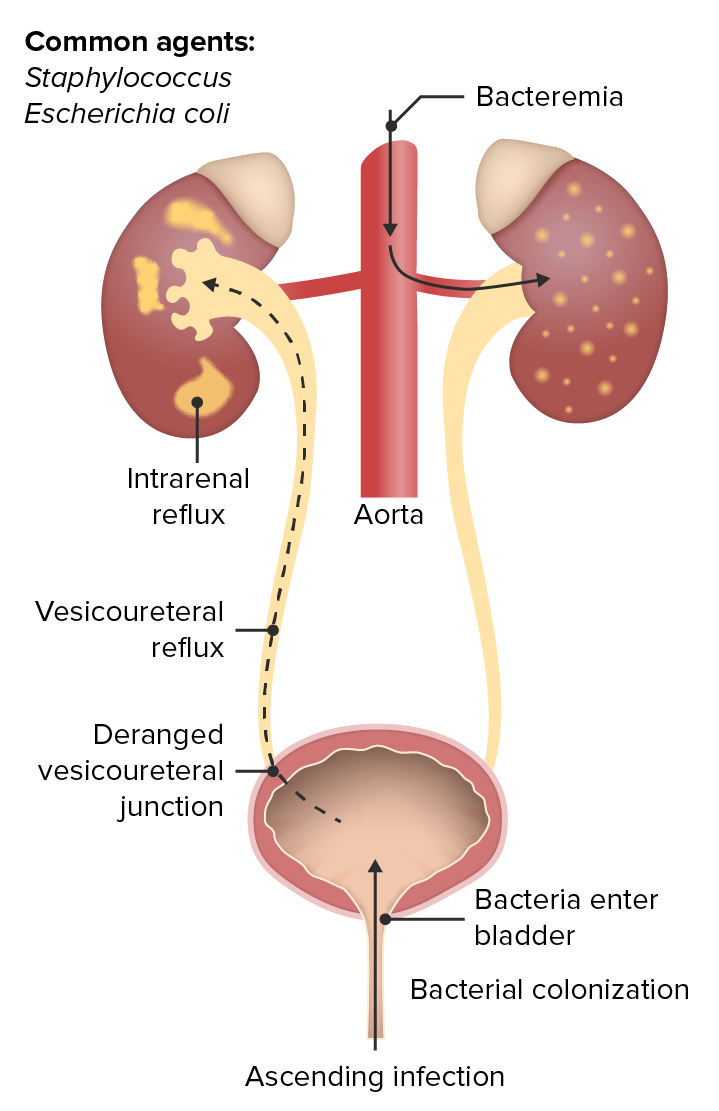
ITU ascendente y hematógena

Infección hematógena ascendente del tracto urinario

Imagen por Lecturio. Licencia: CC BY-NC-SA 4.0

Tipos de pielonefritis

La pielonefritis aguda es el proceso infeccioso de inicio repentino y la inflamación de los LOS Neisseria riñones a partir de una infección ascendente o diseminación hematógena de infecciones sistémicas.

  • Pielonefritis no complicada: infección con presentación típica y sin los LOS Neisseria factores de riesgo enumerados para el tipo con complicaciones.
  • Pielonefritis complicada se puede manifestar como:
    • Bacteriemia, sepsis Sepsis Systemic inflammatory response syndrome with a proven or suspected infectious etiology. When sepsis is associated with organ dysfunction distant from the site of infection, it is called severe sepsis. When sepsis is accompanied by hypotension despite adequate fluid infusion, it is called septic shock. Sepsis and Septic Shock, disfunción multiorgánica, shock Shock Shock is a life-threatening condition associated with impaired circulation that results in tissue hypoxia. The different types of shock are based on the underlying cause: distributive (↑ cardiac output (CO), ↓ systemic vascular resistance (SVR)), cardiogenic (↓ CO, ↑ SVR), hypovolemic (↓ CO, ↑ SVR), obstructive (↓ CO), and mixed. Types of Shock
    • Insuficiencia renal aguda.
    • Absceso corticomedular intrarrenal
    • Absceso perinéfrico
    • Pielonefritis enfisematosa
    • Necrosis Necrosis The death of cells in an organ or tissue due to disease, injury or failure of the blood supply. Ischemic Cell Damage papilar
    • Pionefrosis
  • Pielonefritis crónica:
    • Surge de ITU recurrentes o continuas, a menudo asociadas con anomalías anatómicas importantes.
    • La pielonefritis xantogranulomatosa es una variante de la pielonefritis crónica, generalmente debida a la obstrucción por cálculos renales infectados.

Epidemiología

  • Pielonefritis aguda:
    • Más común en EN Erythema nodosum is an immune-mediated panniculitis (inflammation of the subcutaneous fat) caused by a type IV (delayed-type) hypersensitivity reaction. It commonly manifests in young women as tender, erythematous nodules on the shins. Erythema Nodosum mujeres que en EN Erythema nodosum is an immune-mediated panniculitis (inflammation of the subcutaneous fat) caused by a type IV (delayed-type) hypersensitivity reaction. It commonly manifests in young women as tender, erythematous nodules on the shins. Erythema Nodosum hombres; incidencia aumentada en EN Erythema nodosum is an immune-mediated panniculitis (inflammation of the subcutaneous fat) caused by a type IV (delayed-type) hypersensitivity reaction. It commonly manifests in young women as tender, erythematous nodules on the shins. Erythema Nodosum el embarazo
    • 15–17 casos por 10 000 mujeres
    • 3–4 casos por cada 10 000 hombres
  • Pielonefritis crónica:
    • Común en EN Erythema nodosum is an immune-mediated panniculitis (inflammation of the subcutaneous fat) caused by a type IV (delayed-type) hypersensitivity reaction. It commonly manifests in young women as tender, erythematous nodules on the shins. Erythema Nodosum niños
    • Asociado con la enfermedad de reflujo vesicoureteral, que se observa en EN Erythema nodosum is an immune-mediated panniculitis (inflammation of the subcutaneous fat) caused by a type IV (delayed-type) hypersensitivity reaction. It commonly manifests in young women as tender, erythematous nodules on the shins. Erythema Nodosum 30%–40% de niños con infecciones urinarias
    • Más común en EN Erythema nodosum is an immune-mediated panniculitis (inflammation of the subcutaneous fat) caused by a type IV (delayed-type) hypersensitivity reaction. It commonly manifests in young women as tender, erythematous nodules on the shins. Erythema Nodosum mujeres
  • Absceso perirrenal:
    • Raro; representa aproximadamente el 0,02% de los LOS Neisseria ingresos hospitalarios
    • Aproximadamente el 75% debido a complicaciones de infecciones urinarias
    • 20%–60% asociado con cálculos renales

Etiología

Uropatógenos

  • Bacterias gram-negativas
    • Escherichia coli Escherichia coli The gram-negative bacterium Escherichia coli is a key component of the human gut microbiota. Most strains of E. coli are avirulent, but occasionally they escape the GI tract, infecting the urinary tract and other sites. Less common strains of E. coli are able to cause disease within the GI tract, most commonly presenting as abdominal pain and diarrhea. Escherichia coli (más común):
      • Se adhiere al AL Amyloidosis tracto urinario
      • Tiene fimbrias P que interactúan con las células uroepiteliales
    • Proteus mirabilis Proteus mirabilis A species of gram-negative, facultatively anaerobic, rod-shaped bacteria that is frequently isolated from clinical specimens. Its most common site of infection is the urinary tract. Proteus
    • Klebsiella Klebsiella Klebsiella are encapsulated gram-negative, lactose-fermenting bacilli. They form pink colonies on MacConkey agar due to lactose fermentation. The main virulence factor is a polysaccharide capsule. Klebsiella pneumoniae is the most important pathogenic species. Klebsiella spp.
    • Citrobacter Citrobacter Multidrug-resistant Organisms and Nosocomial Infections spp.
    • Pseudomonas aeruginosa Pseudomonas aeruginosa A species of gram-negative, aerobic, rod-shaped bacteria commonly isolated from clinical specimens (wound, burn, and urinary tract infections). It is also found widely distributed in soil and water. P. Aeruginosa is a major agent of nosocomial infection. Pseudomonas (observada en EN Erythema nodosum is an immune-mediated panniculitis (inflammation of the subcutaneous fat) caused by a type IV (delayed-type) hypersensitivity reaction. It commonly manifests in young women as tender, erythematous nodules on the shins. Erythema Nodosum personas que sometidas a procedimientos o estuvieron expuestas previamente durante atención médica)
  • Bacterias gram-positivas
    • Estafilococos
    • Enterococos
    • Estreptococos del grupo B
  • En EN Erythema nodosum is an immune-mediated panniculitis (inflammation of the subcutaneous fat) caused by a type IV (delayed-type) hypersensitivity reaction. It commonly manifests in young women as tender, erythematous nodules on the shins. Erythema Nodosum algunos casos, hongos (e.g., Candida Candida Candida is a genus of dimorphic, opportunistic fungi. Candida albicans is part of the normal human flora and is the most common cause of candidiasis. The clinical presentation varies and can include localized mucocutaneous infections (e.g., oropharyngeal, esophageal, intertriginous, and vulvovaginal candidiasis) and invasive disease (e.g., candidemia, intraabdominal abscess, pericarditis, and meningitis). Candida/Candidiasis) y virus Virus Viruses are infectious, obligate intracellular parasites composed of a nucleic acid core surrounded by a protein capsid. Viruses can be either naked (non-enveloped) or enveloped. The classification of viruses is complex and based on many factors, including type and structure of the nucleoid and capsid, the presence of an envelope, the replication cycle, and the host range. Virology (e.g., adenovirus Adenovirus Adenovirus (member of the family Adenoviridae) is a nonenveloped, double-stranded DNA virus. Adenovirus is transmitted in a variety of ways, and it can have various presentations based on the site of entry. Presentation can include febrile pharyngitis, conjunctivitis, acute respiratory disease, atypical pneumonia, and gastroenteritis. Adenovirus) provocan infecciones urinarias.

Factores de riesgo de infecciones del tracto urinario

Asociado con el desarrollo de pielonefritis y absceso perirrenal:

  • Estasis y obstrucción causadas por:
    • Hiperplasia prostática benigna (HPB)
    • Reflujo vesicoureteral
    • Medicamentos que promueven el vaciado incompleto de la vejiga
    • Litiasis urinarias obstructivas
    • Estenosis uretral
    • Cistocele
    • Vejiga neurógena
  • Cuerpo extraño (e.g., sonda urinaria, especialmente sonda urinaria a permanencia)
  • Condiciones que causan una disminución de la resistencia a los LOS Neisseria organismos, tales como:
    • Diabetes Diabetes Diabetes mellitus (DM) is a metabolic disease characterized by hyperglycemia and dysfunction of the regulation of glucose metabolism by insulin. Type 1 DM is diagnosed mostly in children and young adults as the result of autoimmune destruction of β cells in the pancreas and the resulting lack of insulin. Type 2 DM has a significant association with obesity and is characterized by insulin resistance. Diabetes Mellitus mellitus
    • Malignidad
    • Inmunosupresión
    • Uso de espermicida
    • Agotamiento de estrógeno
    • Uso de antimicrobianos
  • Otros:
    • Trauma
    • Anomalías anatómicas
    • Femenino (la uretra es más corta y las regiones anal y genital están cerca)
    • Actividad sexual
    • Menopausia
    • Incontinencia fecal
    • Estreñimiento crónico en EN Erythema nodosum is an immune-mediated panniculitis (inflammation of the subcutaneous fat) caused by a type IV (delayed-type) hypersensitivity reaction. It commonly manifests in young women as tender, erythematous nodules on the shins. Erythema Nodosum niños pequeños
    • Trasplante renal

Fisiopatología

Pielonefritis aguda

  • Proceso inicial:
    • Comienza cuando el introito vaginal o el meato uretral es colonizado por patógenos, a menudo la flora fecal
    • Estos microorganismos ascienden a la vejiga y la pielonefritis aguda se desarrolla cuando la infección llega a los riñones
      • La infección ascendente introduce el microorganismo en el tracto urinario superior.
      • La instrumentación también predispone a la infección ascendente.
    • La infección también puede provenir de la bacteriemia, cuando se introduce el microorganismo en los riñones (visto en los estafilococos).
  • Hallazgos histopatológicos:
    • Dentro del parénquima, los exudados inflamatorios neutrofílicos se acumulan en los túbulos y en las zonas intersticiales y pueden estar asociados a la necrosis o a la formación de abscesos.
    • Tras la fase aguda de la pielonefritis, la cicatrización comienza cuando los infiltrados neutrófilos son sustituidos por macrófagos, células plasmáticas y linfocitos.
    • Fibrosis:
      • La fase final de curación, que deja cicatrices residuales irregulares (“pielonefritis”) en EN Erythema nodosum is an immune-mediated panniculitis (inflammation of the subcutaneous fat) caused by a type IV (delayed-type) hypersensitivity reaction. It commonly manifests in young women as tender, erythematous nodules on the shins. Erythema Nodosum la superficie cortical, que se observan como depresiones fibrosas.
      • Sin embargo, el parénquima mostrará una deformación del cáliz y la pelvis Pelvis The pelvis consists of the bony pelvic girdle, the muscular and ligamentous pelvic floor, and the pelvic cavity, which contains viscera, vessels, and multiple nerves and muscles. The pelvic girdle, composed of 2 “hip” bones and the sacrum, is a ring-like bony structure of the axial skeleton that links the vertebral column with the lower extremities. Pelvis: Anatomy subyacentes, atrofia tubular en EN Erythema nodosum is an immune-mediated panniculitis (inflammation of the subcutaneous fat) caused by a type IV (delayed-type) hypersensitivity reaction. It commonly manifests in young women as tender, erythematous nodules on the shins. Erythema Nodosum parches, fibrosis Fibrosis Any pathological condition where fibrous connective tissue invades any organ, usually as a consequence of inflammation or other injury. Bronchiolitis Obliterans intersticial e infiltrados linfoplasmacíticos persistentes, lo que refleja el papel a menudo inalterado de la infección ascendente y el reflujo vesicoureteral en EN Erythema nodosum is an immune-mediated panniculitis (inflammation of the subcutaneous fat) caused by a type IV (delayed-type) hypersensitivity reaction. It commonly manifests in young women as tender, erythematous nodules on the shins. Erythema Nodosum la patogénesis de la enfermedad.
  • Complicaciones:
    • Bacteriemia, sepsis Sepsis Systemic inflammatory response syndrome with a proven or suspected infectious etiology. When sepsis is associated with organ dysfunction distant from the site of infection, it is called severe sepsis. When sepsis is accompanied by hypotension despite adequate fluid infusion, it is called septic shock. Sepsis and Septic Shock, disfunción multiorgánica, shock Shock Shock is a life-threatening condition associated with impaired circulation that results in tissue hypoxia. The different types of shock are based on the underlying cause: distributive (↑ cardiac output (CO), ↓ systemic vascular resistance (SVR)), cardiogenic (↓ CO, ↑ SVR), hypovolemic (↓ CO, ↑ SVR), obstructive (↓ CO), and mixed. Types of Shock
    • Lesión renal aguda (insuficiencia renal aguda)
    • Absceso corticomedular intrarrenal: una cavidad amurallada de infección, con lesiones grandes (> 2 cm) que se observan en EN Erythema nodosum is an immune-mediated panniculitis (inflammation of the subcutaneous fat) caused by a type IV (delayed-type) hypersensitivity reaction. It commonly manifests in young women as tender, erythematous nodules on the shins. Erythema Nodosum aquellos con diagnóstico tardío o diabetes Diabetes Diabetes mellitus (DM) is a metabolic disease characterized by hyperglycemia and dysfunction of the regulation of glucose metabolism by insulin. Type 1 DM is diagnosed mostly in children and young adults as the result of autoimmune destruction of β cells in the pancreas and the resulting lack of insulin. Type 2 DM has a significant association with obesity and is characterized by insulin resistance. Diabetes Mellitus
    • Absceso perinéfrico: infección caracterizada por material supurativo entre la fascia Fascia Layers of connective tissue of variable thickness. The superficial fascia is found immediately below the skin; the deep fascia invests muscles, nerves, and other organs. Cellulitis de Gerota y la cápsula renal
      • Puede extenderse a los LOS Neisseria músculos psoas y transversalis
      • Puede extenderse a la cavidad peritoneal
    • Pielonefritis enfisematosa
    • Necrosis Necrosis The death of cells in an organ or tissue due to disease, injury or failure of the blood supply. Ischemic Cell Damage papilar
    • Pionefrosis

Pielonefritis crónica

  • La pielonefritis crónica puede ocurrir cuando la infección es persistente o recurrente.
  • Riñón afectado por inflamación y cicatrización:
    • Cálices dilatados y romos
    • Tiroidización tubular (túbulos llenos de cilindros coloidales, como tejido tiroideo)
    • Fibrosis Fibrosis Any pathological condition where fibrous connective tissue invades any organ, usually as a consequence of inflammation or other injury. Bronchiolitis Obliterans e infiltrados inflamatorios en EN Erythema nodosum is an immune-mediated panniculitis (inflammation of the subcutaneous fat) caused by a type IV (delayed-type) hypersensitivity reaction. It commonly manifests in young women as tender, erythematous nodules on the shins. Erythema Nodosum intersticio
  • Los LOS Neisseria factores de riesgo predominantes incluyen:
    • Anomalías del tracto genitourinario
    • Obstrucción del tracto urinario (como agrandamiento de la próstata o cálculos renales)
    • Reflujo vesicoureteral:
      • Primario: forma más común de reflujo, que surge del cierre incompetente o inadecuado de la unión ureterovesical
      • Secundario: la presión de vaciado anormalmente alta no cierra la unión ureterovesical (como en EN Erythema nodosum is an immune-mediated panniculitis (inflammation of the subcutaneous fat) caused by a type IV (delayed-type) hypersensitivity reaction. It commonly manifests in young women as tender, erythematous nodules on the shins. Erythema Nodosum las válvulas uretrales posteriores)
  • Pielonefritis xantogranulomatosa:
    • Una variante de la pielonefritis crónica
    • Caracterizada por destrucción renal por tejido granulomatoso, que se cree que se debe a una inflamación aberrante
    • El escenario habitual es la obstrucción debido a cálculos renales infectados
    • Comúnmente asociado con Proteus mirabilis Proteus mirabilis A species of gram-negative, facultatively anaerobic, rod-shaped bacteria that is frequently isolated from clinical specimens. Its most common site of infection is the urinary tract. Proteus y E. coli
    • Los LOS Neisseria cambios histopatológicos muestran infiltración por macrófagos cargados de lípidos.
    • Puede confundirse con una neoplasia renal por las imágenes y el aspecto macroscópico

Absceso perirrenal

  • También comienza ya sea por infección local o diseminación hematógena.
    • Cuando el organismo invade inicialmente el riñón, puede extenderse hacia afuera a la grasa perirrenal (generalmente por organismos gram-negativos).
    • El absceso perirrenal también puede formarse a partir de un absceso intrarrenal perforado.
    • El organismo puede provenir de la circulación (visto en EN Erythema nodosum is an immune-mediated panniculitis (inflammation of the subcutaneous fat) caused by a type IV (delayed-type) hypersensitivity reaction. It commonly manifests in young women as tender, erythematous nodules on the shins. Erythema Nodosum infecciones estafilocócicas) e introducirse en EN Erythema nodosum is an immune-mediated panniculitis (inflammation of the subcutaneous fat) caused by a type IV (delayed-type) hypersensitivity reaction. It commonly manifests in young women as tender, erythematous nodules on the shins. Erythema Nodosum la grasa peritoneal y, en EN Erythema nodosum is an immune-mediated panniculitis (inflammation of the subcutaneous fat) caused by a type IV (delayed-type) hypersensitivity reaction. It commonly manifests in young women as tender, erythematous nodules on the shins. Erythema Nodosum la mayoría de los LOS Neisseria casos, no afecta el riñón.
  • Los LOS Neisseria factores de riesgo incluyen:
    • Diabetes Diabetes Diabetes mellitus (DM) is a metabolic disease characterized by hyperglycemia and dysfunction of the regulation of glucose metabolism by insulin. Type 1 DM is diagnosed mostly in children and young adults as the result of autoimmune destruction of β cells in the pancreas and the resulting lack of insulin. Type 2 DM has a significant association with obesity and is characterized by insulin resistance. Diabetes Mellitus
    • Embarazo
    • Anomalías del tracto urinario

Presentación Clínica

Características clínicas de la pielonefritis

  • Pielonefritis aguda:
    • Tríada clásica de síntomas:
      • Fiebre
      • Sensibilidad costovertebral
      • Náuseas/vómitos
    • Puede estar asociado con síntomas de cistitis (pero no siempre se ve VE Ventilation: Mechanics of Breathing):
      • Frecuencia
      • Urgencia
      • Disuria
      • Sensibilidad suprapúbica
    • Síntomas pediátricos:
      • Mala alimentación
      • Problemas en EN Erythema nodosum is an immune-mediated panniculitis (inflammation of the subcutaneous fat) caused by a type IV (delayed-type) hypersensitivity reaction. It commonly manifests in young women as tender, erythematous nodules on the shins. Erythema Nodosum el desarrollo
    • Síntomas geriátricos:
      • Estado mental alterado
      • Desorientación
  • La pielonefritis crónica se asocia con:
    • Antecedente de pielonefritis aguda
    • Episodios recurrentes de fiebre, letargo, dolor Dolor Inflammation de costado y náuseas

Características clínicas del absceso perirrenal

  • Comienzo insidioso de:
    • Fiebre
    • Dolor Dolor Inflammation lumboabdominal vago
    • Fatiga, sudores y pérdida de peso
  • Puede tener una masa palpable en EN Erythema nodosum is an immune-mediated panniculitis (inflammation of the subcutaneous fat) caused by a type IV (delayed-type) hypersensitivity reaction. It commonly manifests in young women as tender, erythematous nodules on the shins. Erythema Nodosum el costado.
  • Los LOS Neisseria síntomas de una ITU inferior no son típicos.

Diagnóstico

Pielonefritis

  • Hallazgos sospechosos de pielonefritis:
  • Análisis de sangre:
    • Posible ↑ creatinina sérica
    • Leucocitosis (Hemograma)
  • Estudio de orina:
    • Análisis de orina:
      • Piuria
      • Bacteriuria Bacteriuria The presence of bacteria in the urine which is normally bacteria-free. These bacteria are from the urinary tract and are not contaminants of the surrounding tissues. Bacteriuria can be symptomatic or asymptomatic. Significant bacteriuria is an indicator of urinary tract infection. Urinary Tract Infections (UTIs) in Children
      • Hematuria Hematuria Presence of blood in the urine. Renal Cell Carcinoma
      • Cilindros de leucocitos (sugestivos de origen renal de la piuria)
      • Resultados de tira reactiva:
        • Nitrito: puede ser positivo si el patógeno está en EN Erythema nodosum is an immune-mediated panniculitis (inflammation of the subcutaneous fat) caused by a type IV (delayed-type) hypersensitivity reaction. It commonly manifests in young women as tender, erythematous nodules on the shins. Erythema Nodosum número suficiente y produce nitrato reductasa (e.g., E. coli, Proteus mirabilis Proteus mirabilis A species of gram-negative, facultatively anaerobic, rod-shaped bacteria that is frequently isolated from clinical specimens. Its most common site of infection is the urinary tract. Proteus, Klebsiella Klebsiella Klebsiella are encapsulated gram-negative, lactose-fermenting bacilli. They form pink colonies on MacConkey agar due to lactose fermentation. The main virulence factor is a polysaccharide capsule. Klebsiella pneumoniae is the most important pathogenic species. Klebsiella), pero muchas otras bacterias no producen esta reductasa y la prueba será negativa (e.g., Staphylococcus Staphylococcus Staphylococcus is a medically important genera of Gram-positive, aerobic cocci. These bacteria form clusters resembling grapes on culture plates. Staphylococci are ubiquitous for humans, and many strains compose the normal skin flora. Staphylococcus, Pseudomonas Pseudomonas Pseudomonas is a non-lactose-fermenting, gram-negative bacillus that produces pyocyanin, which gives it a characteristic blue-green color. Pseudomonas is found ubiquitously in the environment, as well as in moist reservoirs, such as hospital sinks and respiratory equipment. Pseudomonas, Streptococcus Streptococcus Streptococcus is one of the two medically important genera of gram-positive cocci, the other being Staphylococcus. Streptococci are identified as different species on blood agar on the basis of their hemolytic pattern and sensitivity to optochin and bacitracin. There are many pathogenic species of streptococci, including S. pyogenes, S. agalactiae, S. pneumoniae, and the viridans streptococci. Streptococcus del grupo B, Acinetobacter Acinetobacter Multidrug-resistant Organisms and Nosocomial Infections, Enterococcus Enterococcus Enterococcus is a genus of oval-shaped gram-positive cocci that are arranged in pairs or short chains. Distinguishing factors include optochin resistance and the presence of pyrrolidonyl arylamidase (PYR) and Lancefield D antigen. Enterococcus is part of the normal flora of the human GI tract. Enterococcus faecalis y hongos).
        • El nitrito suele combinarse con la esterasa leucocitaria (corresponde a la piuria) y la presencia de sangre en EN Erythema nodosum is an immune-mediated panniculitis (inflammation of the subcutaneous fat) caused by a type IV (delayed-type) hypersensitivity reaction. It commonly manifests in young women as tender, erythematous nodules on the shins. Erythema Nodosum una prueba de tira reactiva de orina.
        • Si las tres pruebas son positivas (nitrito, esterasa leucocitaria, sangre), el valor predictivo positivo es del 82%; si las tres son negativas, el valor predictivo negativo es del 67%.
        • Conclusión: Los LOS Neisseria resultados de la tira reactiva pueden mejorar el diagnóstico de la ITU, pero no pueden descartar adecuadamente la infección.
      • Cultivo de orina: el crecimiento apoya el diagnóstico de infección e identifica el organismo etiológico
      • Prueba de embarazo, porque el embarazo afecta las opciones de tratamiento

Estudios de imagen:

  • A menudo se realiza si la infección está asociada con una enfermedad grave o no mejora:
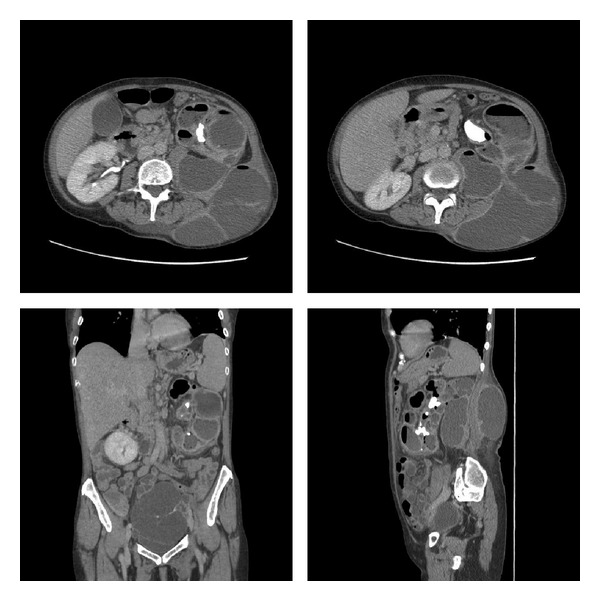
    • TC (método de elección):
      • Detecta una obstrucción (e.g., cálculos que causan hidrouréter, hidronefrosis)
      • Identifica anomalías del tracto urinario
      • Se aprecian lesiones renales hipodensas por isquemia
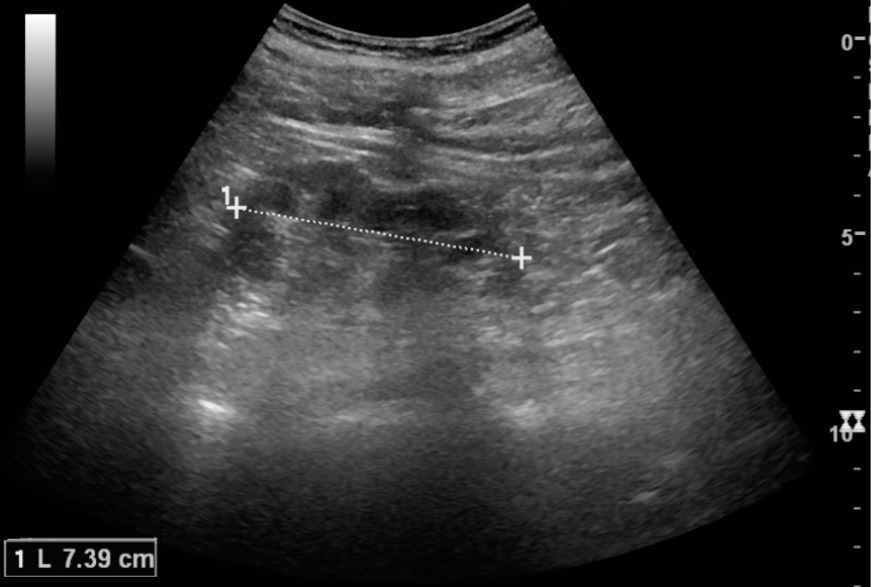
    • Ultrasonido (pielonefritis aguda):
      • El riñón puede estar dilatado de forma difusa o focal
      • Las áreas con edema Edema Edema is a condition in which excess serous fluid accumulates in the body cavity or interstitial space of connective tissues. Edema is a symptom observed in several medical conditions. It can be categorized into 2 types, namely, peripheral (in the extremities) and internal (in an organ or body cavity). Edema son hipoecoicas
      • Si hay hemorragia, el área afectada es hiperecogénica
      • Puede ser normal
    • Ultrasonido (pielonefritis crónica):
      • Cicatrización renal, atrofia y/o adelgazamiento cortical
      • La retracción de la papila de la cicatriz suprayacente conduce a hipocratismo calicial
      • Sistema calicial engrosado y dilatado
      • Riñones asimétricos
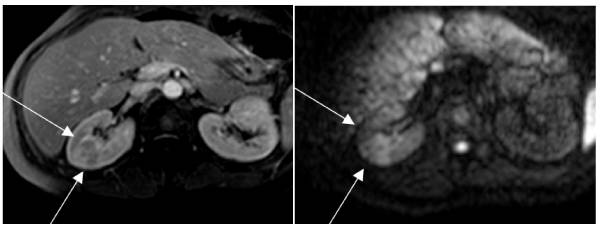
    • La RM es una opción si es necesario evitar el uso de contraste o radiación.
    • Otros estudios de imagenología:
      • Cistouretrografía miccional: establece la presencia y el grado de reflujo vesicoureteral
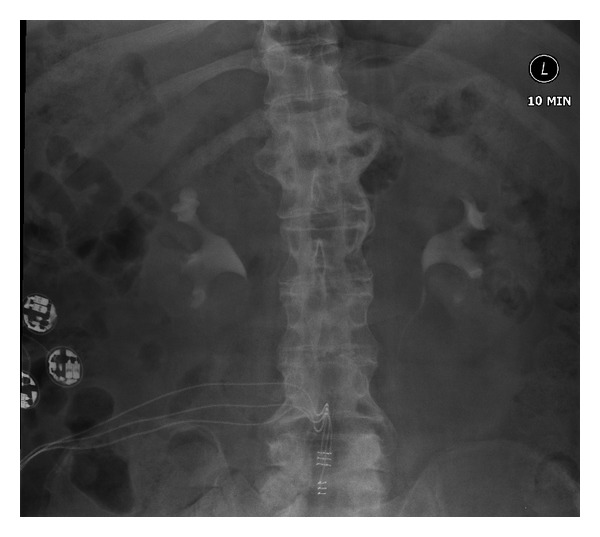
      • Pielografía intravenosa/urografía: controles de anomalías y obstrucción

Absceso perirrenal

  • Hallazgos de:
    • Fiebre, sensibilidad costovertebral
    • Sin respuesta al AL Amyloidosis tratamiento de la pielonefritis
    • Peritonitis Peritonitis Inflammation of the peritoneum lining the abdominal cavity as the result of infectious, autoimmune, or chemical processes. Primary peritonitis is due to infection of the peritoneal cavity via hematogenous or lymphatic spread and without intra-abdominal source. Secondary peritonitis arises from the abdominal cavity itself through rupture or abscess of intra-abdominal organs. Penetrating Abdominal Injury inexplicable, absceso pélvico y empiema pleural (raro)
  • Análisis de sangre:
    • ↑ Conteo de leucocitos
    • Marcadores inflamatorios elevados
    • ↑ Creatinina y ↓ TFG
    • Hemocultivo
  • Estudios de orina:
    • Análisis de orina:
      • Piuria
      • Cilindros de leucocitos
      • Bacteriuria Bacteriuria The presence of bacteria in the urine which is normally bacteria-free. These bacteria are from the urinary tract and are not contaminants of the surrounding tissues. Bacteriuria can be symptomatic or asymptomatic. Significant bacteriuria is an indicator of urinary tract infection. Urinary Tract Infections (UTIs) in Children
      • Puede ser negativo si el absceso no se comunica con el sistema colector
    • Cultivo de orina: identifica el organismo agresor
  • Imagenología:
    • TC de abdomen con contraste:
      • Mejor estudio de imagen
      • Muestra un absceso en EN Erythema nodosum is an immune-mediated panniculitis (inflammation of the subcutaneous fat) caused by a type IV (delayed-type) hypersensitivity reaction. It commonly manifests in young women as tender, erythematous nodules on the shins. Erythema Nodosum el espacio perirrenal (atenuación de tejido blando o líquido)
      • También se pueden ver bolsas de gas
      • Permite la visualización de la extensión a estructuras adyacentes
    • Si la presentación no es específica, la radiografía simple puede ser la prueba inicial. En EN Erythema nodosum is an immune-mediated panniculitis (inflammation of the subcutaneous fat) caused by a type IV (delayed-type) hypersensitivity reaction. It commonly manifests in young women as tender, erythematous nodules on the shins. Erythema Nodosum ocasiones, la radiografía puede revelar hallazgos sospechosos.
      • Escoliosis con la concavidad hacia el riñón afectado
      • Masa abdominal
      • Aumento de tamaño del riñón con contornos indistintos o sombra renal indefinida
      • Pérdida del margen del psoas
      • Cálculo/cálculos radiopacos
    • Ultrasonido: puede mostrar un absceso perirrenal de pared gruesa (hipoecogénico o ecogenicidad mixta)
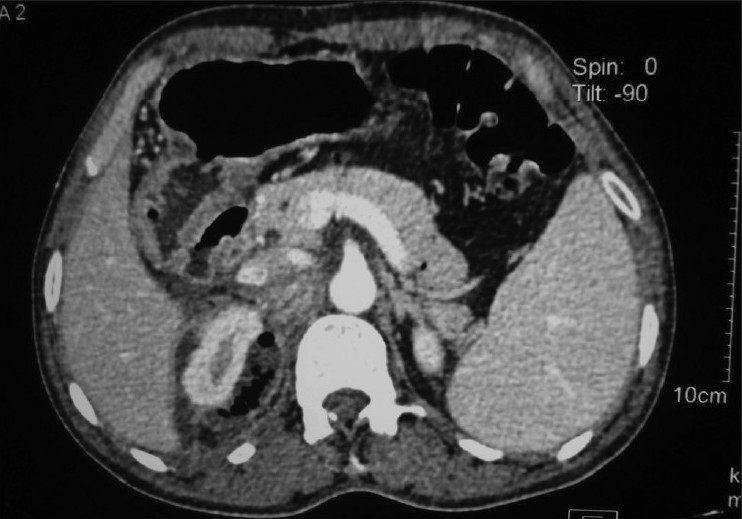
Axial CT image

Absceso perinéfrico: imagen axial de TC a través del polo superior del riñón derecho que muestra un absceso perinéfrico que llega hasta la vena cava inferior

Imagen: “Axial CT image through the upper pole of the right kidney showing perinephric abscess reaching posterior to IVC.” por Wani NA. Licencia: CC BY 2.0

Tratamiento

Pielonefritis aguda

El tratamiento depende de la gravedad de la presentación clínica y los LOS Neisseria factores de riesgo de resistencia a los LOS Neisseria medicamentos:

  • Pielonefritis sin complicaciones (curso leve o con estabilidad hemodinámica):
    • Tratamiento empírico:
      • 1ra opción: fluoroquinolonas orales como ciprofloxacina o levofloxacina (no para niños)
      • Alternativa: cefalosporinas (como ceftibuteno o cefpodoxima) o trimetoprima-sulfametoxazol
    • La mayoría de los LOS Neisseria casos se pueden tratar de forma ambulatoria.
    • La hospitalización es necesaria si una persona afectada no puede mantener la hidratación o está gravemente enferma.
  • Pielonefritis con complicaciones o pielonefritis grave sin complicaciones:
    • Hospitalización:
      • Terapia intravenosa
      • Después de la mejoría clínica → terapia oral
    • Opciones de terapia empírica (sin riesgo de resistencia a múltiples fármacos):
      • Ceftriaxona
      • Piperacilina-tazobactam
      • Ciprofloxacina o levofloxacina
    • Opciones de terapia empírica (con riesgo de multirresistencia):
      • Piperacilina-tazobactam
      • Meropenem Meropenem A thienamycin derivative antibacterial agent that is more stable to renal dehydropeptidase I than imipenem, but does not need to be given with an enzyme inhibitor such as cilastatin. It is used in the treatment of bacterial infections, including infections in immunocompromised patients. Carbapenems and Aztreonam, imipenem Imipenem Semisynthetic thienamycin that has a wide spectrum of antibacterial activity against gram-negative and gram-positive aerobic and anaerobic bacteria, including many multiresistant strains. It is stable to beta-lactamases. Clinical studies have demonstrated high efficacy in the treatment of infections of various body systems. Its effectiveness is enhanced when it is administered in combination with cilastatin, a renal dipeptidase inhibitor. Carbapenems and Aztreonam o doripenem Doripenem A carbapenem derivative antibacterial agent that is more stable to renal dehydropeptidase I than imipenem, but does not need to be given with an enzyme inhibitor such as cilastatin. It is used in the treatment of infections such as hospital-acquired pneumonia, and complicated intra-abdominal or urinary-tract infections, including pyelonephritis. Carbapenems and Aztreonam
      • Si la orina muestra cocos gram-positivos: agregar vancomicina, daptomicina o linezolid Linezolid An oxazolidinone and acetamide derived anti-bacterial agent and protein synthesis inhibitor that is used in the treatment of gram-positive bacterial infections of the skin and respiratory tract. Oxazolidinones.
    • Para personas en EN Erythema nodosum is an immune-mediated panniculitis (inflammation of the subcutaneous fat) caused by a type IV (delayed-type) hypersensitivity reaction. It commonly manifests in young women as tender, erythematous nodules on the shins. Erythema Nodosum estado crítico (que requieren cuidados intensivos): vancomicina + carbapenémico antipseudomonas

Pielonefritis crónica

  • Tratamiento de la causa subyacente (e.g., consulta de urología por obstrucción)
  • Para las infecciones recurrentes, la terapia con antibióticos a largo plazo es una opción.
  • La pielonefritis xantogranulomatosa se trata con nefrectomía (parcial o total) después del tratamiento antibiótico inicial.

Absceso perirrenal

  • Antibióticos (la elección depende de la patogenia sospechada):
    • Si se asocia con pielonefritis, la terapia se dirige a Enterobacteriaceae Enterobacteriaceae A family of gram-negative, facultatively anaerobic, rod-shaped bacteria that do not form endospores. Its organisms are distributed worldwide with some being saprophytes and others being plant and animal parasites. Many species are of considerable economic importance due to their pathogenic effects on agriculture and livestock. Cephalosporins.
    • Si se asocia con infección sistémica estafilocócica, el tratamiento se dirige a este agente etiológico.
  • Drenaje:
    • Si el absceso es pequeño (e.g., < 3 cm):
      • El drenaje puede no ser necesario
      • El antibiótico puede ser suficiente (especialmente si otras muestras brindan información suficiente sobre la etiología)
    • El drenaje percutáneo se realiza con fines diagnósticos (especialmente si no se dispone de otras muestras) y terapéuticos.
    • Los LOS Neisseria abscesos más grandes y/o las fallas en EN Erythema nodosum is an immune-mediated panniculitis (inflammation of the subcutaneous fat) caused by a type IV (delayed-type) hypersensitivity reaction. It commonly manifests in young women as tender, erythematous nodules on the shins. Erythema Nodosum la resolución con antibióticos requieren intervención quirúrgica.

Diagnóstico Diferencial

  • Apendicitis aguda: inflamación del apéndice vermiforme. La apendicitis aguda también se puede presentar con fiebre y piuria. El dolor Dolor Inflammation de la apendicitis típicamente se localiza en EN Erythema nodosum is an immune-mediated panniculitis (inflammation of the subcutaneous fat) caused by a type IV (delayed-type) hypersensitivity reaction. It commonly manifests in young women as tender, erythematous nodules on the shins. Erythema Nodosum el cuadrante inferior derecho, no en EN Erythema nodosum is an immune-mediated panniculitis (inflammation of the subcutaneous fat) caused by a type IV (delayed-type) hypersensitivity reaction. It commonly manifests in young women as tender, erythematous nodules on the shins. Erythema Nodosum el ángulo costofrénico. El diagnóstico se puede confirmar con imagenología (TC).
  • Colecistitis aguda: al AL Amyloidosis igual que la pielonefritis, la colecistitis aguda es más común en EN Erythema nodosum is an immune-mediated panniculitis (inflammation of the subcutaneous fat) caused by a type IV (delayed-type) hypersensitivity reaction. It commonly manifests in young women as tender, erythematous nodules on the shins. Erythema Nodosum mujeres y puede presentarse con fiebre y dolor Dolor Inflammation abdominal. Sin embargo, en EN Erythema nodosum is an immune-mediated panniculitis (inflammation of the subcutaneous fat) caused by a type IV (delayed-type) hypersensitivity reaction. It commonly manifests in young women as tender, erythematous nodules on the shins. Erythema Nodosum la colecistitis aguda, el dolor Dolor Inflammation se localiza en EN Erythema nodosum is an immune-mediated panniculitis (inflammation of the subcutaneous fat) caused by a type IV (delayed-type) hypersensitivity reaction. It commonly manifests in young women as tender, erythematous nodules on the shins. Erythema Nodosum el cuadrante superior derecho, no en EN Erythema nodosum is an immune-mediated panniculitis (inflammation of the subcutaneous fat) caused by a type IV (delayed-type) hypersensitivity reaction. It commonly manifests in young women as tender, erythematous nodules on the shins. Erythema Nodosum el ángulo costofrénico. Además, el análisis de orina en EN Erythema nodosum is an immune-mediated panniculitis (inflammation of the subcutaneous fat) caused by a type IV (delayed-type) hypersensitivity reaction. It commonly manifests in young women as tender, erythematous nodules on the shins. Erythema Nodosum el caso de la pielonefritis muestra bacteriuria Bacteriuria The presence of bacteria in the urine which is normally bacteria-free. These bacteria are from the urinary tract and are not contaminants of the surrounding tissues. Bacteriuria can be symptomatic or asymptomatic. Significant bacteriuria is an indicator of urinary tract infection. Urinary Tract Infections (UTIs) in Children, lo que puede ayudar a diferenciarla de la colecistitis.
  • Pancreatitis Pancreatitis Inflammation of the pancreas. Pancreatitis is classified as acute unless there are computed tomographic or endoscopic retrograde cholangiopancreatographic findings of chronic pancreatitis. The two most common forms of acute pancreatitis are alcoholic pancreatitis and gallstone pancreatitis. Acute Pancreatitis: puede presentarse con fiebre y dolor Dolor Inflammation abdominal, pero el dolor Dolor Inflammation se localiza en EN Erythema nodosum is an immune-mediated panniculitis (inflammation of the subcutaneous fat) caused by a type IV (delayed-type) hypersensitivity reaction. It commonly manifests in young women as tender, erythematous nodules on the shins. Erythema Nodosum el epigastrio, no en EN Erythema nodosum is an immune-mediated panniculitis (inflammation of the subcutaneous fat) caused by a type IV (delayed-type) hypersensitivity reaction. It commonly manifests in young women as tender, erythematous nodules on the shins. Erythema Nodosum el ángulo costofrénico. Los LOS Neisseria estudios de laboratorio ayudan a distinguir estas condiciones: el análisis de orina en EN Erythema nodosum is an immune-mediated panniculitis (inflammation of the subcutaneous fat) caused by a type IV (delayed-type) hypersensitivity reaction. It commonly manifests in young women as tender, erythematous nodules on the shins. Erythema Nodosum la pielonefritis muestra anomalías como bacteriuria Bacteriuria The presence of bacteria in the urine which is normally bacteria-free. These bacteria are from the urinary tract and are not contaminants of the surrounding tissues. Bacteriuria can be symptomatic or asymptomatic. Significant bacteriuria is an indicator of urinary tract infection. Urinary Tract Infections (UTIs) in Children y piuria, y la pancreatitis Pancreatitis Inflammation of the pancreas. Pancreatitis is classified as acute unless there are computed tomographic or endoscopic retrograde cholangiopancreatographic findings of chronic pancreatitis. The two most common forms of acute pancreatitis are alcoholic pancreatitis and gallstone pancreatitis. Acute Pancreatitis se asocia con amilasa y lipasa elevadas.
  • ITU inferior: puede coexistir con pielonefritis. Las infecciones urinarias inferiores generalmente no se asocian con dolor Dolor Inflammation de costado y generalmente tienen una duración más corta. Organismos similares conducen a infecciones urinarias inferiores y superiores; por lo tanto, los LOS Neisseria antibióticos dirigidos a estos agentes etiológicos cubren tanto la ITU inferior como la pielonefritis.
  • Absceso renal: colección de material supurativo dentro del parénquima renal. El absceso renal generalmente se asocia con reflujo vesicoureteral y obstrucción del tracto urinario por un cálculo. La diferenciación del absceso perirrenal se logra con imagenología (e.g., TC).
  • Urinoma: masa o colección encapsulada de orina extravasada. El urinoma surge por lesión del tracto urinario o por ruptura espontánea secundaria a obstrucción urinaria. El urinoma se puede diferenciar del absceso perirrenal mediante imagenología, que incluyen ultrasonido, TC y RM.

Referencias

  1. Barshak M, Kasper DL. (2018). Intraabdominal infections and abscesses. Chapter 127 of Jameson J, Fauci AS, Kasper DL, Hauser SL, Longo DL, Loscalzo J (Eds.), Harrison’s Principles of Internal Medicine, 20th ed. McGraw-Hill. https://accessmedicine.mhmedical.com/content.aspx?bookid=2129&sectionid=186949739
  2. Belyayeva M, Jeong JM. (2021). Acute pyelonephritis. StatPearls. https://www.ncbi.nlm.nih.gov/books/NBK519537/
  3. Hooton T, Gupta K. (2021). Acute complicated urinary tract infection (including pyelonephritis) in adults. UpToDate. Retrieved July 25, 2021, from https://www.uptodate.com/contents/acute-complicated-urinary-tract-infection-including-pyelonephritis-in-adults
  4. Lohr, J. (2019). Chronic pyelonephritis. Medscape. Retrieved July 25, 2021, from https://emedicine.medscape.com/article/245464-overview
  5. Meyrier, A. (2021). Renal and perinephric abscess. UpToDate. Retrieved July 25, 2021, from https://www.uptodate.com/contents/renal-and-perinephric-abscess?topicRef=16109&source=related_link#H1492726249 
  6. Okafor CN, Onyeaso E.E. (2020). Perinephric abscess. StatPearls. Retrieved July 28, 2021, https://www.ncbi.nlm.nih.gov/books/NBK536936/
  7. Gupta K, Hooton T, Naber KG, Wullt B, Colgan R, Miller LG, Moran GJ, Nicolle LE, Raz R, Schaeffer AJ, Soper DE. International Clinical Practice Guidelines for the Treatment of Acute Uncomplicated Cystitis and Pyelonephritis in Women: A 2010 Update by the Infectious Diseases Society of America and the European Society for Microbiology and Infectious Diseases, Clinical Infectious Diseases. 2011;52(5):e103–e120. https://doi.org/10.1093/cid/ciq257
  8. National Institute for Healthcare Excellence; NICE guideline [NG111]. Pyelonephritis (acute): antimicrobial prescribing. https://www.nice.org.uk/guidance/ng111/chapter/Recommendations. Published October 2018. Retrieved April 26, 2022.

¡Crea tu cuenta gratis o inicia una sesión para seguir leyendo!

Regístrate ahora y obtén acceso gratuito a Lecturio con páginas de concepto, videos médicos y cuestionarios para tu educación médica.

User Reviews

Que tengas una sesión de estudio alegre y navideña 🎁 Ahorra 50% en todos los planes >>

Details