Domina Conceptos Médicos

Estudia para la escuela de medicina y tus examenes con Lecturio.

Absceso Cerebral

El absceso cerebral es una afección potencialmente mortal que consiste en EN Erythema nodosum is an immune-mediated panniculitis (inflammation of the subcutaneous fat) caused by a type IV (delayed-type) hypersensitivity reaction. It commonly manifests in young women as tender, erythematous nodules on the shins. Erythema Nodosum la acumulación de pus en EN Erythema nodosum is an immune-mediated panniculitis (inflammation of the subcutaneous fat) caused by a type IV (delayed-type) hypersensitivity reaction. It commonly manifests in young women as tender, erythematous nodules on the shins. Erythema Nodosum el parénquima cerebral causada por una infección de bacterias, hongos, parásitos o protozoos. La presentación más común está compuesta por cefalea, fiebre con escalofríos, convulsiones y déficits neurológicos. El diagnóstico se basa principalmente en EN Erythema nodosum is an immune-mediated panniculitis (inflammation of the subcutaneous fat) caused by a type IV (delayed-type) hypersensitivity reaction. It commonly manifests in young women as tender, erythematous nodules on the shins. Erythema Nodosum la imagenología, ya que es difícil llegar a un diagnóstico definitivo basado únicamente en EN Erythema nodosum is an immune-mediated panniculitis (inflammation of the subcutaneous fat) caused by a type IV (delayed-type) hypersensitivity reaction. It commonly manifests in young women as tender, erythematous nodules on the shins. Erythema Nodosum la presentación clínica. El tratamiento incluye la administración de terapia antibiótica empírica y la intervención quirúrgica. Es necesario un tratamiento inmediato; de lo contrario, se producen graves complicaciones neurológicas.

Last updated: Dec 15, 2025

Editorial responsibility: Stanley Oiseth, Lindsay Jones, Evelin Maza

Descripción General

Definición

El absceso cerebral es una acumulación infecciosa de pus en EN Erythema nodosum is an immune-mediated panniculitis (inflammation of the subcutaneous fat) caused by a type IV (delayed-type) hypersensitivity reaction. It commonly manifests in young women as tender, erythematous nodules on the shins. Erythema Nodosum el parénquima cerebral, poco frecuente pero potencialmente mortal.

Epidemiología

  • Es rara en EN Erythema nodosum is an immune-mediated panniculitis (inflammation of the subcutaneous fat) caused by a type IV (delayed-type) hypersensitivity reaction. It commonly manifests in young women as tender, erythematous nodules on the shins. Erythema Nodosum los LOS Neisseria países desarrollados, pero la incidencia es alta en EN Erythema nodosum is an immune-mediated panniculitis (inflammation of the subcutaneous fat) caused by a type IV (delayed-type) hypersensitivity reaction. It commonly manifests in young women as tender, erythematous nodules on the shins. Erythema Nodosum los LOS Neisseria países en EN Erythema nodosum is an immune-mediated panniculitis (inflammation of the subcutaneous fat) caused by a type IV (delayed-type) hypersensitivity reaction. It commonly manifests in young women as tender, erythematous nodules on the shins. Erythema Nodosum desarrollo
  • Más predominante en EN Erythema nodosum is an immune-mediated panniculitis (inflammation of the subcutaneous fat) caused by a type IV (delayed-type) hypersensitivity reaction. It commonly manifests in young women as tender, erythematous nodules on the shins. Erythema Nodosum hombres que en EN Erythema nodosum is an immune-mediated panniculitis (inflammation of the subcutaneous fat) caused by a type IV (delayed-type) hypersensitivity reaction. It commonly manifests in young women as tender, erythematous nodules on the shins. Erythema Nodosum mujeres (2:1)
  • Mayor incidencia en EN Erythema nodosum is an immune-mediated panniculitis (inflammation of the subcutaneous fat) caused by a type IV (delayed-type) hypersensitivity reaction. It commonly manifests in young women as tender, erythematous nodules on the shins. Erythema Nodosum pacientes con SIDA
  • La tasa de mortalidad ha HA Hemolytic anemia (HA) is the term given to a large group of anemias that are caused by the premature destruction/hemolysis of circulating red blood cells (RBCs). Hemolysis can occur within (intravascular hemolysis) or outside the blood vessels (extravascular hemolysis). Hemolytic Anemia mejorado con los LOS Neisseria avances en EN Erythema nodosum is an immune-mediated panniculitis (inflammation of the subcutaneous fat) caused by a type IV (delayed-type) hypersensitivity reaction. It commonly manifests in young women as tender, erythematous nodules on the shins. Erythema Nodosum la imagenología cerebral.

Etiología

Existen dos vías de propagación de la infección al AL Amyloidosis cerebro:

  1. Propagación directa de infecciones adyacentes de la región de la cabeza y el cuello, generalmente suele presentarse como un absceso único:
    • Otitis media (diseminación al AL Amyloidosis lóbulo temporal inferior y al AL Amyloidosis cerebelo)
    • Mastoiditis Mastoiditis Inflammation of the honeycomb-like mastoid bone in the skull just behind the ear. It is usually a complication of otitis media. Mumps Virus/Mumps (diseminación al AL Amyloidosis lóbulo temporal inferior y al AL Amyloidosis cerebelo)
    • Infección de los LOS Neisseria senos paranasales (diseminación a los LOS Neisseria lóbulos frontales)
    • Infección dental (diseminación a los LOS Neisseria lóbulos frontales)
    • Traumatismo craneal/facial
    • Procedimiento neuroquirúrgico
  2. Diseminación hematógena a partir de infecciones de otras regiones del cuerpo, suele presentarse con abscesos multifocales en EN Erythema nodosum is an immune-mediated panniculitis (inflammation of the subcutaneous fat) caused by a type IV (delayed-type) hypersensitivity reaction. It commonly manifests in young women as tender, erythematous nodules on the shins. Erythema Nodosum la distribución de la arteria cerebral media:
    • Endocarditis Endocarditis Endocarditis is an inflammatory disease involving the inner lining (endometrium) of the heart, most commonly affecting the cardiac valves. Both infectious and noninfectious etiologies lead to vegetations on the valve leaflets. Patients may present with nonspecific symptoms such as fever and fatigue. Endocarditis bacteriana
    • Infección pulmonar crónica:
      • Absceso pulmonar
      • Empiema
    • Infección pélvica
    • Infección intraabdominal

Organismos causantes de abscesos cerebrales:

  • Bacterias:
    • Staphylococcus aureus Staphylococcus aureus Potentially pathogenic bacteria found in nasal membranes, skin, hair follicles, and perineum of warm-blooded animals. They may cause a wide range of infections and intoxications. Brain Abscess (más común)
    • Streptococcus viridans Streptococcus viridans A large heterogeneous group of mostly alpha-hemolytic streptococci. They colonize the respiratory tract at birth and generally have a low degree of pathogenicity. This group of species includes Streptococcus mitis; Streptococcus mutans; Streptococcus oralis; Streptococcus sanguis; Streptococcus sobrinus; and the Streptococcus milleri group. The latter are often beta-hemolytic and commonly produce invasive pyogenic infections including brain and abdominal abscesses. Brain Abscess (2do más común)
    • Bacteroides Bacteroides Bacteroides is a genus of opportunistic, anaerobic, gram-negative bacilli. Bacteroides fragilis is the most common species involved in human disease and is part of the normal flora of the large intestine. Bacteroides
    • Prevotella Prevotella A genus of gram-negative, anaerobic, nonsporeforming, nonmotile rods. Organisms of this genus had originally been classified as members of the bacteroides genus but overwhelming biochemical and chemical findings in 1990 indicated the need to separate them from other bacteroides species, and hence, this new genus was established. Dog and Cat Bites
    • Enterobacteriaceae Enterobacteriaceae A family of gram-negative, facultatively anaerobic, rod-shaped bacteria that do not form endospores. Its organisms are distributed worldwide with some being saprophytes and others being plant and animal parasites. Many species are of considerable economic importance due to their pathogenic effects on agriculture and livestock. Cephalosporins (e.g., Klebsiella Klebsiella Klebsiella are encapsulated gram-negative, lactose-fermenting bacilli. They form pink colonies on MacConkey agar due to lactose fermentation. The main virulence factor is a polysaccharide capsule. Klebsiella pneumoniae is the most important pathogenic species. Klebsiella)
    • Nocardia Nocardia Nocardia is a branching, filamentous, gram-positive bacilli. It is partially acid fast due to the presence of mycolic acids in the cell wall. Nocardia is a ubiquitous soil organism that most commonly affects immunocompromised patients. Nocardia is transmitted via inhalation of aerosolized bacteria or less commonly, via direct contact with wounds. Nocardia/Nocardiosis
  • Hongos:
    • Candida Candida Candida is a genus of dimorphic, opportunistic fungi. Candida albicans is part of the normal human flora and is the most common cause of candidiasis. The clinical presentation varies and can include localized mucocutaneous infections (e.g., oropharyngeal, esophageal, intertriginous, and vulvovaginal candidiasis) and invasive disease (e.g., candidemia, intraabdominal abscess, pericarditis, and meningitis). Candida/Candidiasis
    • Aspergillus Aspergillus A genus of mitosporic fungi containing about 100 species and eleven different teleomorphs in the family trichocomaceae. Echinocandins
    • Rhizopus Rhizopus A genus of zygomycetes fungi of the family mucoraceae, order mucorales, a common saprophyte and facultative parasite of mature fruits and vegetables. It may cause cerebral mycoses in diabetes and cutaneous infection in severely burned patients. Mucorales/Mucormycosis arrhizus
    • Coccidioides Coccidioides Coccidioidomycosis, commonly known as San Joaquin Valley fever, is a fungal disease caused by Coccidioides immitis or Coccidioides posadasii. When Coccidioides spores are inhaled, they transform into spherules that result in infection. Coccidioidomycosis is also a common cause of community-acquired pneumonia and can cause severe disease in the immunocompromised. Coccidioides/Coccidioidomycosis
    • Blastomyces dermatitidis Blastomyces dermatitidis Blastomyces/Blastomycosis
    • Histoplasma capsulatum Histoplasma capsulatum Histoplasma/Histoplasmosis
  • Protozoos:
    • Toxoplasma Toxoplasma Toxoplasmosis is an infectious disease caused by Toxoplasma gondii, an obligate intracellular protozoan parasite. Felines are the definitive host, but transmission to humans can occur through contact with cat feces or the consumption of contaminated foods. The clinical presentation and complications depend on the host’s immune status. Toxoplasma/Toxoplasmosis gondii
    • Trypanosoma cruzi Trypanosoma cruzi Chagas disease is an infection caused by the American trypanosome Trypanosoma cruzi. This parasitic protozoan is transmitted in the feces of reduviid bugs in South and Central America. Acute infection may present with inflammation at the inoculation site (chagoma), fever, and lymphadenopathy. Untreated, chronic infection can progress to severe complications. Trypanosoma cruzi/Chagas disease
    • Entamoeba histolytica Entamoeba Histolytica A species of parasitic protozoa causing entamoebiasis and amebic dysentery (dysentery, amebic). Characteristics include a single nucleus containing a small central karyosome and peripheral chromatin that is finely and regularly beaded. Amebicides
    • Naegleria
    • Acanthamoeba
  • Helmintos:
    • Taenia Taenia Taenia belong to the Cestoda class of helminths. Humans are infected with these tapeworms by eating undercooked beef (T. saginata) or pork (T. solium and T. asiatica). Taeniasis is often asymptomatic, but the ingestion of larvae can cause abdominal discomfort, nausea, and constipation or diarrhea. Taenia/Taeniasis solium
    • Schistosoma Schistosoma Schistosomiasis is an infection caused by Schistosoma, a trematode. Schistosomiasis occurs in developing countries with poor sanitation. Freshwater snails are the intermediate host and are transmitted to humans through skin contact with contaminated fresh water. The clinical presentation occurs as a result of the host’s immune response to antigens from the eggs. Schistosoma/Schistosomiasis
    • Paragonimus

Factores de riesgo:

  • VIH/SIDA
  • Pacientes con inmunosupresores
  • Personas inmunocomprometidas
  • Traumatismo craneoencefálico o cirugía reciente de cabeza
  • Procedimiento dental reciente
  • Abuso de drogas por vía intravenosa

Fisiopatología y Presentación Clínica

Patogénesis

  • El daño al AL Amyloidosis tejido cerebral es causado por la respuesta inflamatoria aguda.
  • Fase inicial:
    • Cerebritis
    • 1–2 semanas
    • Se presenta con congestión vascular y edema Edema Edema is a condition in which excess serous fluid accumulates in the body cavity or interstitial space of connective tissues. Edema is a symptom observed in several medical conditions. It can be categorized into 2 types, namely, peripheral (in the extremities) and internal (in an organ or body cavity). Edema localizado
    • No hay necrosis Necrosis The death of cells in an organ or tissue due to disease, injury or failure of the blood supply. Ischemic Cell Damage tisular
  • Fase tardía:
    • Se desarrolla en EN Erythema nodosum is an immune-mediated panniculitis (inflammation of the subcutaneous fat) caused by a type IV (delayed-type) hypersensitivity reaction. It commonly manifests in young women as tender, erythematous nodules on the shins. Erythema Nodosum 2–3 semanas
    • Licuefacción y necrosis Necrosis The death of cells in an organ or tissue due to disease, injury or failure of the blood supply. Ischemic Cell Damage tisular
    • Desarrollo de la cápsula fibrosa formada por 3 capas:
      • Capa astroglial externa
      • Capa colágena media
      • Una capa interna de tejido de granulación

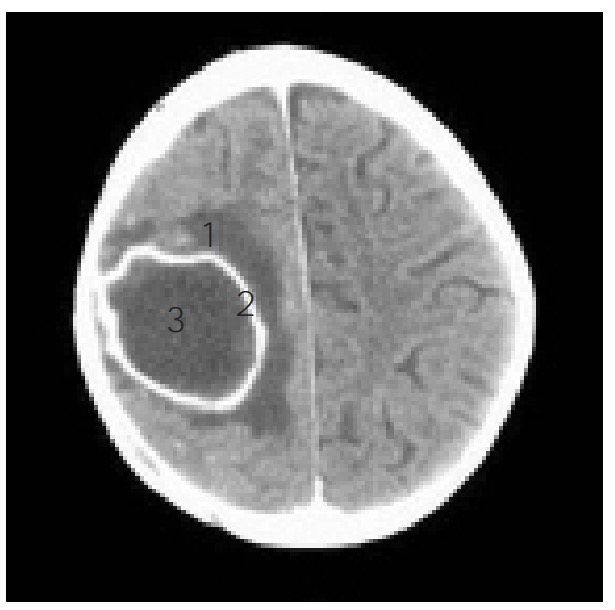
Estadios de desarrollo del absceso cerebral tras la infección

Cerebritis temprana (13 días):

  • Infiltrado inflamatorio agudo
  • Organismos visibles en EN Erythema nodosum is an immune-mediated panniculitis (inflammation of the subcutaneous fat) caused by a type IV (delayed-type) hypersensitivity reaction. It commonly manifests in young women as tender, erythematous nodules on the shins. Erythema Nodosum la tinción
  • Edema Edema Edema is a condition in which excess serous fluid accumulates in the body cavity or interstitial space of connective tissues. Edema is a symptom observed in several medical conditions. It can be categorized into 2 types, namely, peripheral (in the extremities) and internal (in an organ or body cavity). Edema circundante

Cerebritis tardía (49 días):

  • Macrófago predominante
  • Infiltración linfocítica

Formación temprana de la cápsula (1013 días):

  • El centro necrótico disminuye de tamaño.
  • Edema Edema Edema is a condition in which excess serous fluid accumulates in the body cavity or interstitial space of connective tissues. Edema is a symptom observed in several medical conditions. It can be categorized into 2 types, namely, peripheral (in the extremities) and internal (in an organ or body cavity). Edema
  • Se desarrolla una cápsula de colágeno.

Formación tardía de la cápsula (+14 días):

La cápsula se vuelve gruesa y es susceptible de ser extirpada.
Localización (por orden de frecuencia)

  • Frontal-temporal Frontal-Temporal Brain Abscess
  • Frontal-parietal
  • Parietal Parietal One of a pair of irregularly shaped quadrilateral bones situated between the frontal bone and occipital bone, which together form the sides of the cranium. Skull: Anatomy
  • Cerebelar
  • Occipital Occipital Part of the back and base of the cranium that encloses the foramen magnum. Skull: Anatomy

Presentación clínica

  • Tríada clásica:
    1. Cefalea (síntoma más común de presentación; 70% de los LOS Neisseria pacientes):
      • El dolor Dolor Inflammation suele estar localizado en EN Erythema nodosum is an immune-mediated panniculitis (inflammation of the subcutaneous fat) caused by a type IV (delayed-type) hypersensitivity reaction. It commonly manifests in young women as tender, erythematous nodules on the shins. Erythema Nodosum el lado del absceso.
      • No disminuye con los LOS Neisseria analgésicos
    2. Fiebre con escalofríos (50%)
    3. Déficits neurológicos focales (50%):
      • Afasia
      • Hemiparesia
      • Alteraciones del campo visual
  • Convulsiones (25%):
    • Especialmente si la lesión está localizada en EN Erythema nodosum is an immune-mediated panniculitis (inflammation of the subcutaneous fat) caused by a type IV (delayed-type) hypersensitivity reaction. It commonly manifests in young women as tender, erythematous nodules on the shins. Erythema Nodosum el lóbulo frontal Frontal The bone that forms the frontal aspect of the skull. Its flat part forms the forehead, articulating inferiorly with the nasal bone and the cheek bone on each side of the face. Skull: Anatomy
    • Puede deberse a una lesión focal o a un aumento de la presión intracraneal
  • Rigidez nucal (15%):
    • Absceso localizado en EN Erythema nodosum is an immune-mediated panniculitis (inflammation of the subcutaneous fat) caused by a type IV (delayed-type) hypersensitivity reaction. It commonly manifests in young women as tender, erythematous nodules on the shins. Erythema Nodosum el lóbulo occipital Occipital Part of the back and base of the cranium that encloses the foramen magnum. Skull: Anatomy
    • Fuga hacia el ventrículo lateral
  • Aumento de la presión intracraneal:
    • Náuseas y vómitos
    • Alteraciones sensoriales
    • Parálisis del 3er y 6to par PAR The PAR is the attributable risk for an entire population. It represents the fraction of cases that would not occur in a population if the exposure was eliminated. Measures of Risk craneal
    • Papiledema (25%)

Diagnóstico

Examen físico

  • Fiebre
  • Cefalea focal/unilateral
  • Signos de aumento de la presión intracraneal:
    • Papiledema ( edema Edema Edema is a condition in which excess serous fluid accumulates in the body cavity or interstitial space of connective tissues. Edema is a symptom observed in several medical conditions. It can be categorized into 2 types, namely, peripheral (in the extremities) and internal (in an organ or body cavity). Edema del disco óptico)
    • Déficits unilaterales de los LOS Neisseria nervios craneales
    • Hemiparesia

Imagenología

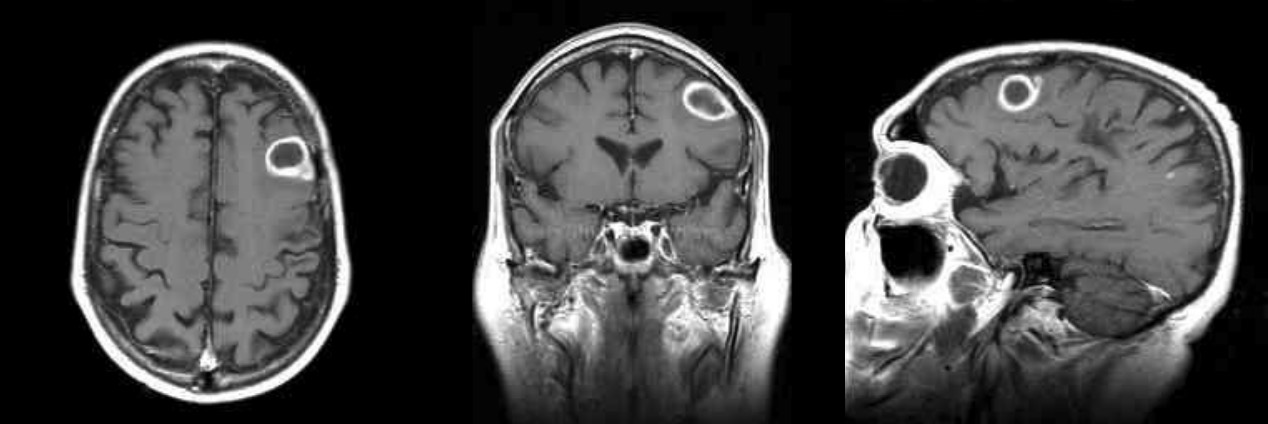
  • Resonancia magnética (RM):
    • Más sensible que la tomografía computarizada (TC)
    • Realizada con gadolinio
    • Útil en EN Erythema nodosum is an immune-mediated panniculitis (inflammation of the subcutaneous fat) caused by a type IV (delayed-type) hypersensitivity reaction. It commonly manifests in young women as tender, erythematous nodules on the shins. Erythema Nodosum la cerebritis temprana y para detectar lesiones satélite
    • Estima la extensión de la necrosis Necrosis The death of cells in an organ or tissue due to disease, injury or failure of the blood supply. Ischemic Cell Damage y el edema Edema Edema is a condition in which excess serous fluid accumulates in the body cavity or interstitial space of connective tissues. Edema is a symptom observed in several medical conditions. It can be categorized into 2 types, namely, peripheral (in the extremities) and internal (in an organ or body cavity). Edema cerebral
    • Se observa el clásico patrón “realce en EN Erythema nodosum is an immune-mediated panniculitis (inflammation of the subcutaneous fat) caused by a type IV (delayed-type) hypersensitivity reaction. It commonly manifests in young women as tender, erythematous nodules on the shins. Erythema Nodosum anillo”.
  • TC:
    • No es tan sensible como la resonancia magnética y, por lo tanto, se utiliza sobre todo en EN Erythema nodosum is an immune-mediated panniculitis (inflammation of the subcutaneous fat) caused by a type IV (delayed-type) hypersensitivity reaction. It commonly manifests in young women as tender, erythematous nodules on the shins. Erythema Nodosum casos de emergencia
    • Realizada con y sin contraste
    • La cerebritis temprana aparece como un área irregular de baja densidad.
    • El patrón de realce en EN Erythema nodosum is an immune-mediated panniculitis (inflammation of the subcutaneous fat) caused by a type IV (delayed-type) hypersensitivity reaction. It commonly manifests in young women as tender, erythematous nodules on the shins. Erythema Nodosum anillo no es tan claro como en EN Erythema nodosum is an immune-mediated panniculitis (inflammation of the subcutaneous fat) caused by a type IV (delayed-type) hypersensitivity reaction. It commonly manifests in young women as tender, erythematous nodules on the shins. Erythema Nodosum la RM.

Punción lumbar

  • Se realiza para:
    • Excluir meningitis Meningitis Meningitis is inflammation of the meninges, the protective membranes of the brain, and spinal cord. The causes of meningitis are varied, with the most common being bacterial or viral infection. The classic presentation of meningitis is a triad of fever, altered mental status, and nuchal rigidity. Meningitis/meningoencefalitis del diferencial
    • Obtener líquido cefalorraquídeo (LCR) para el análisis serológico
  • Primero, obtener imagenología cerebral para descartar masa intracerebral, dado el riesgo de hernia Hernia Protrusion of tissue, structure, or part of an organ through the bone, muscular tissue, or the membrane by which it is normally contained. Hernia may involve tissues such as the abdominal wall or the respiratory diaphragm. Hernias may be internal, external, congenital, or acquired. Abdominal Hernias del tronco encefálico.
  • Contraindicada si hay papiledema o déficits neurológicos focales debido al AL Amyloidosis riesgo de herniación del tronco encefálico

Aspiración/biopsia del absceso

  • Obtenida mediante aspiración guiada por imagen o durante una intervención quirúrgica
  • Pruebas realizadas en EN Erythema nodosum is an immune-mediated panniculitis (inflammation of the subcutaneous fat) caused by a type IV (delayed-type) hypersensitivity reaction. It commonly manifests in young women as tender, erythematous nodules on the shins. Erythema Nodosum la muestra:
    • Tinción de Gram
    • Cultivo de bacterias aeróbicas y anaeróbicas
    • Cultivo de hongos y micobacterias
    • Histopatología:
      • Proporciona un diagnóstico definitivo
      • La muestra se obtiene durante cirugía o mediante una biopsia cerebral guiada por imagen.

Serología de la sangre y del LCR

  • Indicada si se sospecha de un absceso parasitario
  • Puede detectar anticuerpos contra T. gondii
  • Puede detectar anticuerpos anticisticerco

Tratamiento

El tratamiento se basa en EN Erythema nodosum is an immune-mediated panniculitis (inflammation of the subcutaneous fat) caused by a type IV (delayed-type) hypersensitivity reaction. It commonly manifests in young women as tender, erythematous nodules on the shins. Erythema Nodosum una combinación de tratamiento médico y quirúrgico.

Tratamiento médico

Antibióticos:

  • El tratamiento empírico se dirige de acuerdo a la posible etiología y el origen del absceso.
  • La administración es por vía intravenosa durante una duración mínima de 4–8 semanas.
  • Infección de una fuente directa:
    • Metronidazol + ceftriaxona/cefotaxima
  • Infección por diseminación hematógena:
    • Staphylococcus aureus Staphylococcus aureus Potentially pathogenic bacteria found in nasal membranes, skin, hair follicles, and perineum of warm-blooded animals. They may cause a wide range of infections and intoxications. Brain Abscess resistente a meticilina ( MRSA MRSA A strain of Staphylococcus aureus that is non-susceptible to the action of methicillin. The mechanism of resistance usually involves modification of normal or the presence of acquired penicillin binding proteins. Staphylococcus, por sus siglas en EN Erythema nodosum is an immune-mediated panniculitis (inflammation of the subcutaneous fat) caused by a type IV (delayed-type) hypersensitivity reaction. It commonly manifests in young women as tender, erythematous nodules on the shins. Erythema Nodosum inglés): vancomicina + metronidazol + ceftriaxona/cefotaxima
    • Staphylococcus aureus Staphylococcus aureus Potentially pathogenic bacteria found in nasal membranes, skin, hair follicles, and perineum of warm-blooded animals. They may cause a wide range of infections and intoxications. Brain Abscess sensible a meticilina (MSSA, por sus siglas en EN Erythema nodosum is an immune-mediated panniculitis (inflammation of the subcutaneous fat) caused by a type IV (delayed-type) hypersensitivity reaction. It commonly manifests in young women as tender, erythematous nodules on the shins. Erythema Nodosum inglés): nafcilina/oxacilina + metronidazol + ceftriaxona/cefotaxima
  • Infección posquirúrgica (zona de cabeza y cuello):
    • MRSA MRSA A strain of Staphylococcus aureus that is non-susceptible to the action of methicillin. The mechanism of resistance usually involves modification of normal or the presence of acquired penicillin binding proteins. Staphylococcus: vancomicina + ceftazidima/cefepima o meropenem Meropenem A thienamycin derivative antibacterial agent that is more stable to renal dehydropeptidase I than imipenem, but does not need to be given with an enzyme inhibitor such as cilastatin. It is used in the treatment of bacterial infections, including infections in immunocompromised patients. Carbapenems and Aztreonam
    • MSSA: naficilina/oxacilina + ceftazidima/cefepima o meropenem Meropenem A thienamycin derivative antibacterial agent that is more stable to renal dehydropeptidase I than imipenem, but does not need to be given with an enzyme inhibitor such as cilastatin. It is used in the treatment of bacterial infections, including infections in immunocompromised patients. Carbapenems and Aztreonam
  • Infección debida a un traumatismo penetrante:
    • MRSA MRSA A strain of Staphylococcus aureus that is non-susceptible to the action of methicillin. The mechanism of resistance usually involves modification of normal or the presence of acquired penicillin binding proteins. Staphylococcus: vancomicina + ceftriaxona/cefotaxima
    • MSSA: nafcilina/oxacilina + ceftriaxona/cefotaxima
    • Sospecha de infección por Pseudomonas Pseudomonas Pseudomonas is a non-lactose-fermenting, gram-negative bacillus that produces pyocyanin, which gives it a characteristic blue-green color. Pseudomonas is found ubiquitously in the environment, as well as in moist reservoirs, such as hospital sinks and respiratory equipment. Pseudomonas: vancomicina + cefepima
  • Fuente desconocida:
    • Régimen normal: vancomicina + metronidazol + ceftriaxona/cefotaxima
    • Sospecha de infección por Pseudomonas Pseudomonas Pseudomonas is a non-lactose-fermenting, gram-negative bacillus that produces pyocyanin, which gives it a characteristic blue-green color. Pseudomonas is found ubiquitously in the environment, as well as in moist reservoirs, such as hospital sinks and respiratory equipment. Pseudomonas: vancomicina + metronidazol + cefepima

Glucocorticoides:

  • Los LOS Neisseria glucocorticoides se consideran en EN Erythema nodosum is an immune-mediated panniculitis (inflammation of the subcutaneous fat) caused by a type IV (delayed-type) hypersensitivity reaction. It commonly manifests in young women as tender, erythematous nodules on the shins. Erythema Nodosum el marco de un efecto de masa importante.
  • Deben suspenderse una vez que el estado mental y las manifestaciones neurológicas hayan mejorado debido a las complicaciones asociadas

Tratamiento quirúrgico

Aspiración con aguja:

  • Se asocia con menos complicaciones que la escisión quirúrgica (preferible)
  • Se perfora un agujero de trépano guiado por imagen.
  • Se pasa una aguja de aspiración a través del agujero de trépano.
  • El aspirado se envía para análisis de laboratorio/patológico.
  • Contraindicaciones:
    • Cerebritis temprana sin necrosis Necrosis The death of cells in an organ or tissue due to disease, injury or failure of the blood supply. Ischemic Cell Damage central evidente (licuefacción)
    • Absceso en EN Erythema nodosum is an immune-mediated panniculitis (inflammation of the subcutaneous fat) caused by a type IV (delayed-type) hypersensitivity reaction. It commonly manifests in young women as tender, erythematous nodules on the shins. Erythema Nodosum regiones vitales o inaccesibles

Extirpación quirúrgica:

  • Se asocia con más complicaciones que la aspiración con aguja
  • Tratamiento de elección en EN Erythema nodosum is an immune-mediated panniculitis (inflammation of the subcutaneous fat) caused by a type IV (delayed-type) hypersensitivity reaction. It commonly manifests in young women as tender, erythematous nodules on the shins. Erythema Nodosum:
    • Absceso cerebral traumático (con fragmentos óseos/cuerpos extraños)
    • Abscesos multiloculados
    • Absceso cerebral fúngico encapsulado
  • Indicaciones para la escisión quirúrgica tras la aspiración con aguja:
    • Ausencia de mejoría clínica 1 semana después de la aspiración con aguja
    • Depresión del sensorio
    • Aumento de la presión intracraneal
    • Aumento progresivo del diámetro del absceso

La intervención quirúrgica podría evitarse si:

  • El paciente presenta una cerebritis temprana sin evidencia de necrosis Necrosis The death of cells in an organ or tissue due to disease, injury or failure of the blood supply. Ischemic Cell Damage
  • El absceso está en EN Erythema nodosum is an immune-mediated panniculitis (inflammation of the subcutaneous fat) caused by a type IV (delayed-type) hypersensitivity reaction. It commonly manifests in young women as tender, erythematous nodules on the shins. Erythema Nodosum un lugar vital o inaccesible

Pronóstico

  • La mortalidad es de aproximadamente un 10%.
  • La tasa de recuperación total es del 70%.
  • Las secuelas neurológicas más comunes son las convulsiones.

Diagnóstico Diferencial

  • Neurocisticercosis: quistes en EN Erythema nodosum is an immune-mediated panniculitis (inflammation of the subcutaneous fat) caused by a type IV (delayed-type) hypersensitivity reaction. It commonly manifests in young women as tender, erythematous nodules on the shins. Erythema Nodosum el cerebro causados por una infección del parásito Taenia Taenia Taenia belong to the Cestoda class of helminths. Humans are infected with these tapeworms by eating undercooked beef (T. saginata) or pork (T. solium and T. asiatica). Taeniasis is often asymptomatic, but the ingestion of larvae can cause abdominal discomfort, nausea, and constipation or diarrhea. Taenia/Taeniasis solium. Se presenta con epilepsia, cefalea, aumento de la presión intracraneal, demencia y disartria. El diagnóstico confirmatorio se realiza por medio de imagenología. El tratamiento incluye antiparasitarios y una posible intervención quirúrgica.
  • Tumor Tumor Inflammation intracraneal: crecimiento benigno o maligno de células en EN Erythema nodosum is an immune-mediated panniculitis (inflammation of the subcutaneous fat) caused by a type IV (delayed-type) hypersensitivity reaction. It commonly manifests in young women as tender, erythematous nodules on the shins. Erythema Nodosum el cerebro que se presenta como cefalea, náuseas o vómitos inexplicables, visión borrosa y dificultad para hablar o escuchar. El diagnóstico principal se realiza mediante imagenología (RM o TC) y un examen neurológico. El tratamiento incluye radiación, quimioterapia y cirugía.
  • Encefalitis: inflamación infecciosa del parénquima cerebral. Se presenta con fiebre, cefalea, dolor Dolor Inflammation muscular, articular y fatiga. Se diagnostica por medio de imagenología, análisis de LCR, pruebas de laboratorio y electroencefalograma. Raramente, se presenta con rigidez nucal y fotofobia. Las convulsiones son frecuentes. Para el tratamiento de la encefalitis se emplean tratamientos de soporte, antiinflamatorios y antivirales.
  • Meningitis Meningitis Meningitis is inflammation of the meninges, the protective membranes of the brain, and spinal cord. The causes of meningitis are varied, with the most common being bacterial or viral infection. The classic presentation of meningitis is a triad of fever, altered mental status, and nuchal rigidity. Meningitis: inflamación de las meninges Meninges The brain and the spinal cord are enveloped by 3 overlapping layers of connective tissue called the meninges. The layers are, from the most external layer to the most internal layer, the dura mater, arachnoid mater, and pia mater. Between these layers are 3 potential spaces called the epidural, subdural, and subarachnoid spaces. Meninges: Anatomy causada generalmente por una infección bacteriana o viral. Se presenta clínicamente con cefalea, fiebre, rigidez nucal y se diagnostica mediante la presentación clínica, el análisis de sangre, el análisis del LCR e imagenología. El tratamiento incluye tratamiento de soporte y antimicrobianos dirigidos contra el agente infeccioso.

Referencias

  1. Southwick FS. (2025). Pathogenesis, clinical manifestations, and diagnosis of brain abscess. UpToDate. Retrieved September 29, 2025, from https://www.uptodate.com/contents/pathogenesis-clinical-manifestations-and-diagnosis-of-brain-abscess
  2. Southwick FS. (2025). Treatment and prognosis of bacterial brain abscess. UpToDate. Retrieved September 29, 2025, from https://www.uptodate.com/contents/treatment-and-prognosis-of-bacterial-brain-abscess
  3. Brook I. (2025). Brain Abscess. Medscape. Retrieved September 29, 2025, from https://reference.medscape.com/article/212946-overview
  4. Cerebral Abscess. Johns Hopkins Medicine. Retrieved September 29, 2025, from https://www.hopkinsmedicine.org/health/conditions-and-diseases/cerebral-abscess
  5. Bokhari MR, Mesfin FB. (2024). Brain Abscess. NCBI. Retrieved September 29, 2025, from https://www.ncbi.nlm.nih.gov/books/NBK441841/

¡Crea tu cuenta gratis o inicia una sesión para seguir leyendo!

Regístrate ahora y obtén acceso gratuito a Lecturio con páginas de concepto, videos médicos y cuestionarios para tu educación médica.

User Reviews

Que tengas una sesión de estudio alegre y navideña 🎁 Ahorra 50% en todos los planes >>

Details