La neutropeniaNeutropeniaNeutrophils are an important component of the immune system and play a significant role in the eradication of infections. Low numbers of circulating neutrophils, referred to as neutropenia, predispose the body to recurrent infections or sepsis, though patients can also be asymptomatic. Neutropenia febril es una emergencia médica definida como fiebre > 38,3 ℃ (100.9 ℉) o superior a 38,0 ℃ (100.4 ℉) durante más de 1 hora enENErythema nodosum is an immune-mediated panniculitis (inflammation of the subcutaneous fat) caused by a type IV (delayed-type) hypersensitivity reaction. It commonly manifests in young women as tender, erythematous nodules on the shins.Erythema Nodosum un paciente con un recuento absoluto de neutrófilos < 500 células/µL, o 500–1000 células/µL, que se espera que disminuya a <500 células/µL enENErythema nodosum is an immune-mediated panniculitis (inflammation of the subcutaneous fat) caused by a type IV (delayed-type) hypersensitivity reaction. It commonly manifests in young women as tender, erythematous nodules on the shins.Erythema Nodosum las próximas 48 horas. La neutropeniaNeutropeniaNeutrophils are an important component of the immune system and play a significant role in the eradication of infections. Low numbers of circulating neutrophils, referred to as neutropenia, predispose the body to recurrent infections or sepsis, though patients can also be asymptomatic. Neutropenia febril es una complicación común que amenaza la vida enENErythema nodosum is an immune-mediated panniculitis (inflammation of the subcutaneous fat) caused by a type IV (delayed-type) hypersensitivity reaction. It commonly manifests in young women as tender, erythematous nodules on the shins.Erythema Nodosum neoplasias malignas, hematológicas y enENErythema nodosum is an immune-mediated panniculitis (inflammation of the subcutaneous fat) caused by a type IV (delayed-type) hypersensitivity reaction. It commonly manifests in young women as tender, erythematous nodules on the shins.Erythema Nodosum pacientes sometidos a quimioterapia. LosLOSNeisseria pacientes suelen estar asintomáticos y el único signo es la presencia de fiebre. El diagnóstico debe incluir una evaluación detallada de losLOSNeisseria antecedentes, un examen físico, pruebas de laboratorio de rutina, además de un estudio con cultivos dirigido a losLOSNeisseria síntomas. El tratamiento inicial incluye la administración de antibióticos empíricos ajustados según la respuesta clínica y losLOSNeisseria resultados de losLOSNeisseria cultivos.
La neutropeniaNeutropeniaNeutrophils are an important component of the immune system and play a significant role in the eradication of infections. Low numbers of circulating neutrophils, referred to as neutropenia, predispose the body to recurrent infections or sepsis, though patients can also be asymptomatic. Neutropenia febril se define como una temperatura oral única > 38.3 ℃ (100.9 ℉) o una temperatura > 38.0 ℃ (100.4 ℉) durante alALAmyloidosis menos 1 hora con un recuento absoluto de neutrófilos <1500 células / µL o un recuento absoluto de neutrófilos que se espera que disminuya a <500 células / µL durante las próximas 48 horas.
Epidemiología
La neutropeniaNeutropeniaNeutrophils are an important component of the immune system and play a significant role in the eradication of infections. Low numbers of circulating neutrophils, referred to as neutropenia, predispose the body to recurrent infections or sepsis, though patients can also be asymptomatic. Neutropenia febril se desarrolla enENErythema nodosum is an immune-mediated panniculitis (inflammation of the subcutaneous fat) caused by a type IV (delayed-type) hypersensitivity reaction. It commonly manifests in young women as tender, erythematous nodules on the shins.Erythema Nodosum:
10%–50% de pacientes con tumores sólidos
80% de losLOSNeisseria pacientes con tumores hematológicos
El 50% de losLOSNeisseria pacientes desarrollará una infección.
Fuente de infección evidente enENErythema nodosum is an immune-mediated panniculitis (inflammation of the subcutaneous fat) caused by a type IV (delayed-type) hypersensitivity reaction. It commonly manifests in young women as tender, erythematous nodules on the shins.Erythema Nodosum 20%–30% de losLOSNeisseria casos
El examen/cultivo no detectan focos/patógenos infecciosos enENErythema nodosum is an immune-mediated panniculitis (inflammation of the subcutaneous fat) caused by a type IV (delayed-type) hypersensitivity reaction. It commonly manifests in young women as tender, erythematous nodules on the shins.Erythema Nodosum 30%–60% de losLOSNeisseria casos.
El 80% de las infecciones provienen de la flora bacteriana normalmente benigna o comensal del paciente.
LosLOSNeisseria sitios comunes de infección incluyen:
Pulmón
Piel
Sangre
Tracto gastrointestinal
Etiología
EnENErythema nodosum is an immune-mediated panniculitis (inflammation of the subcutaneous fat) caused by a type IV (delayed-type) hypersensitivity reaction. It commonly manifests in young women as tender, erythematous nodules on the shins.Erythema Nodosum la mayoría de losLOSNeisseria casos, se desconoce el origen de la infección (lo que se conoce como fiebre de origen desconocido). La mayoría de las infecciones documentadas son bacterianas.
Las fuentes comunes de bacteriemia son:
Translocación de bacterias entéricas alALAmyloidosis torrente sanguíneo
Infecciones del torrente sanguíneo relacionadas con el catéter
Patógenos bacterianos comunes:
Gram positivos (representan más de la ½ de losLOSNeisseria casos):
Estafilococos coagulasa negativos (más común)
Staphylococcus epidermidisStaphylococcus epidermidisA species of staphylococcus that is a spherical, non-motile, gram-positive, chemoorganotrophic, facultative anaerobe. Mainly found on the skin and mucous membrane of warm-blooded animals, it can be primary pathogen or secondary invader.Staphylococcus
StaphylococcusStaphylococcusStaphylococcus is a medically important genera of Gram-positive, aerobic cocci. These bacteria form clusters resembling grapes on culture plates. Staphylococci are ubiquitous for humans, and many strains compose the normal skin flora.Staphylococcus haemolyticus
Staphylococcus aureusStaphylococcus aureusPotentially pathogenic bacteria found in nasal membranes, skin, hair follicles, and perineum of warm-blooded animals. They may cause a wide range of infections and intoxications.Brain Abscess (incluido MRSAMRSAA strain of Staphylococcus aureus that is non-susceptible to the action of methicillin. The mechanism of resistance usually involves modification of normal or the presence of acquired penicillin binding proteins.Staphylococcus, por sus siglas enENErythema nodosum is an immune-mediated panniculitis (inflammation of the subcutaneous fat) caused by a type IV (delayed-type) hypersensitivity reaction. It commonly manifests in young women as tender, erythematous nodules on the shins.Erythema Nodosum inglés)
Enterococos (incluidos losLOSNeisseria resistentes a la vancomicina)
Estreptococos del grupo viridans
StreptococcusStreptococcusStreptococcus is one of the two medically important genera of gram-positive cocci, the other being Staphylococcus. Streptococci are identified as different species on blood agar on the basis of their hemolytic pattern and sensitivity to optochin and bacitracin. There are many pathogenic species of streptococci, including S. pyogenes, S. agalactiae, S. pneumoniae, and the viridans streptococci.Streptococcus pyogenes
StreptococcusStreptococcusStreptococcus is one of the two medically important genera of gram-positive cocci, the other being Staphylococcus. Streptococci are identified as different species on blood agar on the basis of their hemolytic pattern and sensitivity to optochin and bacitracin. There are many pathogenic species of streptococci, including S. pyogenes, S. agalactiae, S. pneumoniae, and the viridans streptococci.Streptococcus pneumoniae
Especies de BacillusBacillusBacillus are aerobic, spore-forming, gram-positive bacilli. Two pathogenic species are Bacillus anthracis (B. anthracis) and B. cereus. Bacillus
Gram-negativos:
Escherichia coliEscherichia coliThe gram-negative bacterium Escherichia coli is a key component of the human gut microbiota. Most strains of E. coli are avirulent, but occasionally they escape the GI tract, infecting the urinary tract and other sites. Less common strains of E. coli are able to cause disease within the GI tract, most commonly presenting as abdominal pain and diarrhea. Escherichia coli
Pseudomonas aeruginosaPseudomonas aeruginosaA species of gram-negative, aerobic, rod-shaped bacteria commonly isolated from clinical specimens (wound, burn, and urinary tract infections). It is also found widely distributed in soil and water. P. Aeruginosa is a major agent of nosocomial infection.Pseudomonas
Especies de KlebsiellaKlebsiellaKlebsiella are encapsulated gram-negative, lactose-fermenting bacilli. They form pink colonies on MacConkey agar due to lactose fermentation. The main virulence factor is a polysaccharide capsule. Klebsiella pneumoniae is the most important pathogenic species.Klebsiella
FusobacteriumFusobacteriumA genus of gram-negative, anaerobic, rod-shaped bacteria found in cavities of humans and other animals. No endospores are formed. Some species are pathogenic and occur in various purulent or gangrenous infections.Dog and Cat Bites
Especies de AspergillusAspergillusA genus of mitosporic fungi containing about 100 species and eleven different teleomorphs in the family trichocomaceae.Echinocandins
Especies de Cándida
Especies de Fusarium
Hongos endémicos
Patógenos virales comunes:
VirusVirusViruses are infectious, obligate intracellular parasites composed of a nucleic acid core surrounded by a protein capsid. Viruses can be either naked (non-enveloped) or enveloped. The classification of viruses is complex and based on many factors, including type and structure of the nucleoid and capsid, the presence of an envelope, the replication cycle, and the host range. Virologyherpes simplexHerpes SimplexA group of acute infections caused by herpes simplex virus type 1 or type 2 that is characterized by the development of one or more small fluid-filled vesicles with a raised erythematous base on the skin or mucous membrane. It occurs as a primary infection or recurs due to a reactivation of a latent infection.Congenital TORCH Infections
Citomegalovirus
VirusVirusViruses are infectious, obligate intracellular parasites composed of a nucleic acid core surrounded by a protein capsid. Viruses can be either naked (non-enveloped) or enveloped. The classification of viruses is complex and based on many factors, including type and structure of the nucleoid and capsid, the presence of an envelope, the replication cycle, and the host range. VirologyinfluenzaInfluenzaInfluenza viruses are members of the Orthomyxoviridae family and the causative organisms of influenza, a highly contagious febrile respiratory disease. There are 3 primary influenza viruses (A, B, and C) and various subtypes, which are classified based on their virulent surface antigens, hemagglutinin (HA) and neuraminidase (NA). Influenza typically presents with a fever, myalgia, headache, and symptoms of an upper respiratory infection. Influenza Viruses/Influenza
VirusVirusViruses are infectious, obligate intracellular parasites composed of a nucleic acid core surrounded by a protein capsid. Viruses can be either naked (non-enveloped) or enveloped. The classification of viruses is complex and based on many factors, including type and structure of the nucleoid and capsid, the presence of an envelope, the replication cycle, and the host range. Virology parainfluenza
AdenovirusAdenovirusAdenovirus (member of the family Adenoviridae) is a nonenveloped, double-stranded DNA virus. Adenovirus is transmitted in a variety of ways, and it can have various presentations based on the site of entry. Presentation can include febrile pharyngitis, conjunctivitis, acute respiratory disease, atypical pneumonia, and gastroenteritis. Adenovirus
VirusVirusViruses are infectious, obligate intracellular parasites composed of a nucleic acid core surrounded by a protein capsid. Viruses can be either naked (non-enveloped) or enveloped. The classification of viruses is complex and based on many factors, including type and structure of the nucleoid and capsid, the presence of an envelope, the replication cycle, and the host range. Virology sincitial respiratorio
Otros patógenos comunes:
Strongyloides stercoralisStrongyloides stercoralisA species of parasitic nematode widely distributed in tropical and subtropical countries. The females and their larvae inhabit the mucosa of the intestinal tract, where they cause ulceration and diarrhea.Strongyloidiasis
Especies de Leishmanias
Esepecies de Trypanosoma
Fisiopatología
La combinación de losLOSNeisseria siguientes factores contribuye alALAmyloidosis desarrollo de fiebre neutropénica:
Supresión de la médula ósea inducida por quimioterapia
Reemplazo metastásico de médula ósea
Producción/aclaramiento anormal de anticuerpos enENErythema nodosum is an immune-mediated panniculitis (inflammation of the subcutaneous fat) caused by a type IV (delayed-type) hypersensitivity reaction. It commonly manifests in young women as tender, erythematous nodules on the shins.Erythema Nodosum cánceres productores de anticuerpos (e.g., mieloma múltiple, leucemia linfocítica crónica), lo que da como resultado aspleniaAspleniaAsplenia is the absence of splenic tissue or function and can stem from several factors ranging from congenital to iatrogenic. There is a distinction between anatomic asplenia, which is due to the surgical removal of the spleen, and functional asplenia, which is due to a condition that leads to splenic atrophy, infarct, congestion, or infiltrative disease. Asplenia funcional
Producción y función anormal de celulas T (linfoma)
Lesión de la mucosa inducida por quimioterapia
Presencia de fuentes de infección (catéteres)
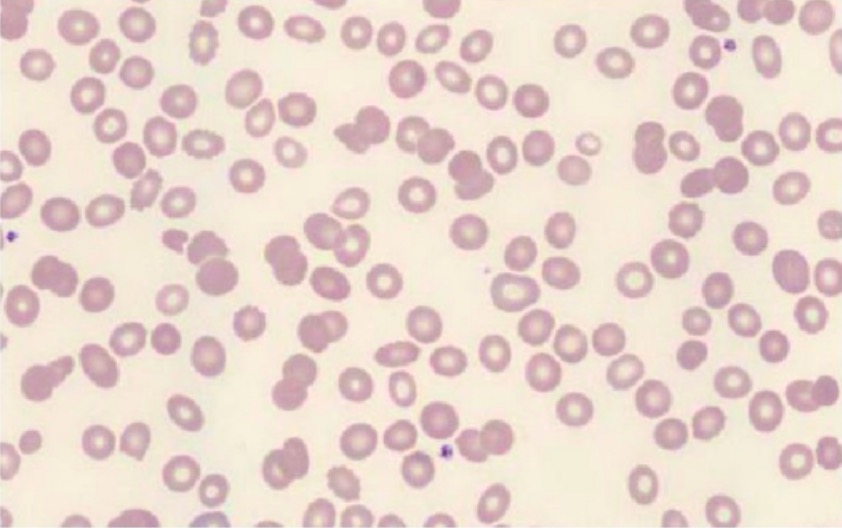
Frotis de sangre periférica que muestra escasez de neutrófilos
Imagen: “Peripheral blood smear” por Melissa Zhao. Licencia: CC BY 4.0
La neutropeniaNeutropeniaNeutrophils are an important component of the immune system and play a significant role in the eradication of infections. Low numbers of circulating neutrophils, referred to as neutropenia, predispose the body to recurrent infections or sepsis, though patients can also be asymptomatic. Neutropenia puede minimizar losLOSNeisseria síntomas y signos de infección:
Activación de neutrófilos responsable de muchos síntomas inflamatorios de infección.
NeutropeniaNeutropeniaNeutrophils are an important component of the immune system and play a significant role in the eradication of infections. Low numbers of circulating neutrophils, referred to as neutropenia, predispose the body to recurrent infections or sepsis, though patients can also be asymptomatic. Neutropenia → ↓ activación de neutrófilos → ↓ liberación de citocinas → ↓ síntomas inflamatorios
La presencia de fiebre puede ser el único signo de infección.
LosLOSNeisseria síntomas comunes de la neutropeniaNeutropeniaNeutrophils are an important component of the immune system and play a significant role in the eradication of infections. Low numbers of circulating neutrophils, referred to as neutropenia, predispose the body to recurrent infections or sepsis, though patients can also be asymptomatic. Neutropenia febril son:
Odinofagia
DolorDolorInflammationenENErythema nodosum is an immune-mediated panniculitis (inflammation of the subcutaneous fat) caused by a type IV (delayed-type) hypersensitivity reaction. It commonly manifests in young women as tender, erythematous nodules on the shins.Erythema Nodosum la boca
Úlceras cutáneas
TosTOSThoracic outlet syndrome (TOS) is a broad term used for a spectrum of syndromes related to the general region of the thoracic outlet, which involves the compression or irritation of elements of the brachial plexus, subclavian artery, or subclavian vein.Thoracic Outlet Syndrome
Disnea
Disuria
Frecuencia y urgencia urinaria
Enrojecimiento y sensibilidad enENErythema nodosum is an immune-mediated panniculitis (inflammation of the subcutaneous fat) caused by a type IV (delayed-type) hypersensitivity reaction. It commonly manifests in young women as tender, erythematous nodules on the shins.Erythema Nodosum el sitio del catéter.
Diagnóstico
Todos losLOSNeisseria pacientes con neutropeniaNeutropeniaNeutrophils are an important component of the immune system and play a significant role in the eradication of infections. Low numbers of circulating neutrophils, referred to as neutropenia, predispose the body to recurrent infections or sepsis, though patients can also be asymptomatic. Neutropenia febril deben someterse a una evaluación de losLOSNeisseria antecedentes y un examen físico detallados. Se deben realizar estudios de diagnóstico.
Antecedentes
Una anamnesis detallada debe incluir:
Revisión de sistemas para localizar un foco de infección
Medicamentos actuales
Tipo de cáncer
Régimen de quimioterapia actual
Revise cualquier prueba de laboratorio reciente, enENErythema nodosum is an immune-mediated panniculitis (inflammation of the subcutaneous fat) caused by a type IV (delayed-type) hypersensitivity reaction. It commonly manifests in young women as tender, erythematous nodules on the shins.Erythema Nodosum particular losLOSNeisseria estudios hematológicos.
Presencia de alergias
Uso de esteroides
Comorbilidades
Antecedentes previos de infecciones.
Profilaxis reciente con antibióticos
Administración reciente de factores de crecimiento hematopoyéticos
Antecedentes de trasplante
Examen físico
Un examen físico completo debe incluir una evaluación de:
Piel:
Eritema
Sensibilidad
Úlceras
Abscesos
Sitios de inserción de catéteres centrales
Ectima gangrenoso (visto enENErythema nodosum is an immune-mediated panniculitis (inflammation of the subcutaneous fat) caused by a type IV (delayed-type) hypersensitivity reaction. It commonly manifests in young women as tender, erythematous nodules on the shins.Erythema Nodosum la infección por P. aeruginosaP. aeruginosaA species of gram-negative, aerobic, rod-shaped bacteria commonly isolated from clinical specimens (wound, burn, and urinary tract infections). It is also found widely distributed in soil and water. P. Aeruginosa is a major agent of nosocomial infection.Pseudomonas )
No realizar un examen rectal enENErythema nodosum is an immune-mediated panniculitis (inflammation of the subcutaneous fat) caused by a type IV (delayed-type) hypersensitivity reaction. It commonly manifests in young women as tender, erythematous nodules on the shins.Erythema Nodosum pacientes neutropénicos.
Área perineal:
Quiste pilonidal
Absceso perirrectal
Infección vaginal/vulvar
Sistema neurológico:
Meningismo
Déficit neurológico focal
Estado mental alterado
Sitios de catéter:
Eritema
Fluctuación
Sensibilidad
Cordón palpable a lo largo de la vena
Pruebas de diagnóstico
Estudios de laboratorio:
Hemograma/Diferencial:
NeutropeniaNeutropeniaNeutrophils are an important component of the immune system and play a significant role in the eradication of infections. Low numbers of circulating neutrophils, referred to as neutropenia, predispose the body to recurrent infections or sepsis, though patients can also be asymptomatic. Neutropenia grave: Recuento absoluto de neutrófilos < 500 células / µL
NeutropeniaNeutropeniaNeutrophils are an important component of the immune system and play a significant role in the eradication of infections. Low numbers of circulating neutrophils, referred to as neutropenia, predispose the body to recurrent infections or sepsis, though patients can also be asymptomatic. Neutropenia profunda: Recuento absoluto de neutrófilos < 100 células / µL
Tipo de sangre
Pruebas de coagulación
Química sanguínea:
Función renal
Función hepática
Electrolitos
Lactato: losLOSNeisseria niveles elevados sugieren sepsisSepsisSystemic inflammatory response syndrome with a proven or suspected infectious etiology. When sepsis is associated with organ dysfunction distant from the site of infection, it is called severe sepsis. When sepsis is accompanied by hypotension despite adequate fluid infusion, it is called septic shock.Sepsis and Septic Shock.
Análisis de orina
Proteína C reactiva
Tasa de sedimentación de eritrocitos
Procalcitonina:
Prohormona de la calcitonina, producida durante la infección sistémica enENErythema nodosum is an immune-mediated panniculitis (inflammation of the subcutaneous fat) caused by a type IV (delayed-type) hypersensitivity reaction. It commonly manifests in young women as tender, erythematous nodules on the shins.Erythema Nodosum respuesta a toxinas microbianas y mediadores inflamatorios del huésped
Puede ayudar a diferenciar la etiología infecciosa de la no infecciosa de la fiebre:
Elevada enENErythema nodosum is an immune-mediated panniculitis (inflammation of the subcutaneous fat) caused by a type IV (delayed-type) hypersensitivity reaction. It commonly manifests in young women as tender, erythematous nodules on the shins.Erythema Nodosum la infección bacteriana
Elevada enENErythema nodosum is an immune-mediated panniculitis (inflammation of the subcutaneous fat) caused by a type IV (delayed-type) hypersensitivity reaction. It commonly manifests in young women as tender, erythematous nodules on the shins.Erythema Nodosum la infección fúngica
Puede ayudar a guiar la selección y la duración de la terapia antibiótica:
Refuerza la decisión de iniciar losLOSNeisseria antibióticos si son elevados
Refuerza la decisión de retener/retirar losLOSNeisseria antibióticos si no están elevados
Puede ayudar a evitar un tratamiento antibiótico innecesario o prolongado
Cultivos:
Hemocultivos:
Deben obtenerse 2 muestras de hemocultivos de 2 sitios de punción venosa periférica separados y de cualquier catéter venoso presente.
1 set consta de 2 frascos (aeróbico y anaeróbico).
Debe obtenerse un urocultivo si:
El paciente está sintomático
El paciente tiene antecedentes de infección del tracto urinario.
Un catéter está presente
Cultivo específico de un sitio
Microscopía y coprocultivo si hay diarrea (Clostridium difficileClostridium difficileA common inhabitant of the colon flora in human infants and sometimes in adults. The type species clostridioides difficile is formerly known as Clostridium difficile. It is a causative agent for clostridioides infections and is associated with pseudomembranous enterocolitis in patients receiving antibiotic therapy.Clostridia)
Microscopía y cultivo de esputo si hay signos de infección respiratoria.
Hisopo para piel/heridas
Imagenología:
Se debe obtener una radiografía de tórax o una tomografía computarizada (TC).
Se debe realizar más imagenología cuando esté clínicamente indicado.
Puntuación de la Multinational Association for Supportive Care in Cancer (Asociación Multinacional para el Cuidado de Apoyo enENErythema nodosum is an immune-mediated panniculitis (inflammation of the subcutaneous fat) caused by a type IV (delayed-type) hypersensitivity reaction. It commonly manifests in young women as tender, erythematous nodules on the shins.Erythema Nodosum el Cáncer (MASCC, por sus siglas enENErythema nodosum is an immune-mediated panniculitis (inflammation of the subcutaneous fat) caused by a type IV (delayed-type) hypersensitivity reaction. It commonly manifests in young women as tender, erythematous nodules on the shins.Erythema Nodosum inglés))
Paciente apropiado para el tratamiento ambulatorio versus hospitalario
Paciente apropiado para antibióticos orales versus intravenosos
Duración prevista de la terapia
Disponibilidad del cuidador
Pacientes de bajo riesgo:
Duración de la neutropeniaNeutropeniaNeutrophils are an important component of the immune system and play a significant role in the eradication of infections. Low numbers of circulating neutrophils, referred to as neutropenia, predispose the body to recurrent infections or sepsis, though patients can also be asymptomatic. Neutropenia ≤ 7 días
Sin comorbilidades
Funcionalismo hepático y renal normales
Puntuación MASCC ≥ 21
Pacientes de alto riesgo:
NeutropeniaNeutropeniaNeutrophils are an important component of the immune system and play a significant role in the eradication of infections. Low numbers of circulating neutrophils, referred to as neutropenia, predispose the body to recurrent infections or sepsis, though patients can also be asymptomatic. Neutropenia profunda (Recuento total de neutrófilos ≤ 100 células/µL)
NeutropeniaNeutropeniaNeutrophils are an important component of the immune system and play a significant role in the eradication of infections. Low numbers of circulating neutrophils, referred to as neutropenia, predispose the body to recurrent infections or sepsis, though patients can also be asymptomatic. Neutropenia prolongada (≥ 7 días)
Evidencia de disfunción orgánica enENErythema nodosum is an immune-mediated panniculitis (inflammation of the subcutaneous fat) caused by a type IV (delayed-type) hypersensitivity reaction. It commonly manifests in young women as tender, erythematous nodules on the shins.Erythema NodosumlosLOSNeisseria laboratorios
Inestabilidad hemodinámica
La terapia empírica debe administrarse dentro de 1 hora después del ingreso.
Selección de antibióticos empíricos:
Adaptado a la fuente de infección conocida/sospechada
Antibiótico betalactámico antipseudomonas para pacientes que ya reciben profilaxis con fluoroquinolonas
Si se desconoce la fuente:
Cobertura de amplio espectro
Considere la posibilidad de realizar una interconsulta con infectología
Tabla: Puntuación del índice de riesgo de la Asociación Multinacional para la Atención de Apoyo enENErythema nodosum is an immune-mediated panniculitis (inflammation of the subcutaneous fat) caused by a type IV (delayed-type) hypersensitivity reaction. It commonly manifests in young women as tender, erythematous nodules on the shins.Erythema Nodosum el Cáncer (MASCC)
Característica
Puntuación
Severidad de la enfermedad: síntomas leves o nulos
5
Severidad de la enfermedad: síntomas moderados
3
Severidad de la enfermedad: síntomas graves
0
Sin hipotensión
5
Sin enfermedad pulmonar obstructiva crónica
4
TumorTumorInflammation sólido o neoplasia maligna hematológica sin infección micótica previa
4
Sin deshidratación que requiera fluidos parenterales
3
Paciente ambulatorio
2
Edad < 60 años
2
Pacientes de bajo riesgo
LosLOSNeisseria pacientes de bajo riesgo se tratan como pacientes ambulatorios o inicialmente como pacientes hospitalizados y luego se transfieren a pacientes ambulatorios con un seguimiento estrecho (terapia con antibióticos por vía oral).
Sin alergia a la penicilina: levofloxacino/ciprofloxacino más amoxicilina–clavulanato
Alergia a la penicilina: clindamicina más levofloxacino/ciprofloxacino
Otros: monoterapia con moxifloxacino
Inicialmente, no se recomienda ningún tratamiento antimicótico.
Se deben administrar antifúngicos de amplio espectro si la fiebre persiste ≥ 4–7 días.
Pacientes de alto riesgo
LosLOSNeisseria pacientes de alto riesgo deben ser tratados como pacientes hospitalizados (terapia con antibióticos por vía intravenosa).
Sin alergia a la penicilina:
Piperacilina–tazobactamTazobactamA penicillanic acid and sulfone derivative and potent beta-lactamase inhibitor that enhances the activity of other anti-bacterial agents against beta-lactamase producing bacteria.Cephalosporins
MeropenemMeropenemA thienamycin derivative antibacterial agent that is more stable to renal dehydropeptidase I than imipenem, but does not need to be given with an enzyme inhibitor such as cilastatin. It is used in the treatment of bacterial infections, including infections in immunocompromised patients.Carbapenems and Aztreonam
ImipenemImipenemSemisynthetic thienamycin that has a wide spectrum of antibacterial activity against gram-negative and gram-positive aerobic and anaerobic bacteria, including many multiresistant strains. It is stable to beta-lactamases. Clinical studies have demonstrated high efficacy in the treatment of infections of various body systems. Its effectiveness is enhanced when it is administered in combination with cilastatin, a renal dipeptidase inhibitor.Carbapenems and Aztreonam–cilastatina
Cefepima
Caso complicado o resistencia a losLOSNeisseria antibióticos: Se deben agregar aminoglucósidos a losLOSNeisseria regímenes anteriores.
Gentamicina
Amikacina
Tobramicina
Alergia a la penicilina:
Sin profilaxis con fluoroquinolonas: ciprofloxacina más clindamicina
Con profilaxis con fluoroquinolonas: aztreonamAztreonamThe carbapenems and aztreonam are both members of the bactericidal beta-lactam family of antibiotics (similar to penicillins). They work by preventing bacteria from producing their cell wall, ultimately leading to bacterial cell death. Carbapenems and Aztreonam más vancomicina
Pacientes con enterocolitisEnterocolitisInflammation of the mucosa of both the small intestine and the large intestine. Etiology includes ischemia, infections, allergic, and immune responses.Yersinia spp./Yersiniosis neutropénica:
Piperacilina–tazobactamTazobactamA penicillanic acid and sulfone derivative and potent beta-lactamase inhibitor that enhances the activity of other anti-bacterial agents against beta-lactamase producing bacteria.Cephalosporins
CarbapenemCarbapenemThe carbapenems and aztreonam are both members of the bactericidal beta-lactam family of antibiotics (similar to penicillins). They work by preventing bacteria from producing their cell wall, ultimately leading to bacterial cell death. Carbapenems and Aztreonam
Cefalosporina antipseudomonica más metronidazol
Organismos resistentes a antibióticos:
S. aureusS. aureusPotentially pathogenic bacteria found in nasal membranes, skin, hair follicles, and perineum of warm-blooded animals. They may cause a wide range of infections and intoxications.Staphylococcus resistente a la meticilina:
Daptomicina
LinezolidLinezolidAn oxazolidinone and acetamide derived anti-bacterial agent and protein synthesis inhibitor that is used in the treatment of gram-positive bacterial infections of the skin and respiratory tract.Oxazolidinones
Vancomicina
Enterococos resistentes a la vancomicina:
Daptomicina
LinezolidLinezolidAn oxazolidinone and acetamide derived anti-bacterial agent and protein synthesis inhibitor that is used in the treatment of gram-positive bacterial infections of the skin and respiratory tract.Oxazolidinones
Betalactamasa de espectro extendido:
Un carbapenémico
Carbapenemasa de Klebsiella pneumoniaeKlebsiella PneumoniaeGram-negative, non-motile, capsulated, gas-producing rods found widely in nature and associated with urinary and respiratory infections in humans.Aminoglycosides:
Polimixina B
Colistina
Tigeciclina
Indicaciones de adición de vancomicina:
Inestabilidad hemodinámica
Neumonía
Hemocultivos positivos para bacterias grampositivas
Infección de piel o tejidos blandos
Infección relacionada con el catéter
Colonización con MRSAMRSAA strain of Staphylococcus aureus that is non-susceptible to the action of methicillin. The mechanism of resistance usually involves modification of normal or the presence of acquired penicillin binding proteins.Staphylococcus, StreptococcusStreptococcusStreptococcus is one of the two medically important genera of gram-positive cocci, the other being Staphylococcus. Streptococci are identified as different species on blood agar on the basis of their hemolytic pattern and sensitivity to optochin and bacitracin. There are many pathogenic species of streptococci, including S. pyogenes, S. agalactiae, S. pneumoniae, and the viridans streptococci.Streptococcus resistente a penicilina
Terapia antifúngica:
Indicaciones:
El paciente es inestable y
La fiebre persiste > 4–7 días
Medicamentos:
Anfotericina B (aspergilosis invasiva)
Voriconazol (aspergilosis invasiva)
Itraconazol
Posaconazol
Caspofungina (candidiasisCandidiasisCandida is a genus of dimorphic, opportunistic fungi. Candida albicans is part of the normal human flora and is the most common cause of candidiasis. The clinical presentation varies and can include localized mucocutaneous infections (e.g., oropharyngeal, esophageal, intertriginous, and vulvovaginal candidiasis) and invasive disease (e.g., candidemia, intraabdominal abscess, pericarditis, and meningitis). Candida/Candidiasis)
Enfermedad viral activa con herpes simplexHerpes SimplexA group of acute infections caused by herpes simplex virus type 1 or type 2 that is characterized by the development of one or more small fluid-filled vesicles with a raised erythematous base on the skin or mucous membrane. It occurs as a primary infection or recurs due to a reactivation of a latent infection.Congenital TORCH Infections/varicela zoster
Trasplante de médula ósea reciente/actual
Medicamentos
Aciclovir para el herpes simplexHerpes SimplexA group of acute infections caused by herpes simplex virus type 1 or type 2 that is characterized by the development of one or more small fluid-filled vesicles with a raised erythematous base on the skin or mucous membrane. It occurs as a primary infection or recurs due to a reactivation of a latent infection.Congenital TORCH Infections
Aciclovir para la varicela zoster
Inhibidores de la neuraminidasa para influenzaInfluenzaInfluenza viruses are members of the Orthomyxoviridae family and the causative organisms of influenza, a highly contagious febrile respiratory disease. There are 3 primary influenza viruses (A, B, and C) and various subtypes, which are classified based on their virulent surface antigens, hemagglutinin (HA) and neuraminidase (NA). Influenza typically presents with a fever, myalgia, headache, and symptoms of an upper respiratory infection. Influenza Viruses/Influenza probable/confirmada
Duración de la terapia
Se identifica la fuente de infección:
Duración adecuada del tratamiento para esa infección enENErythema nodosum is an immune-mediated panniculitis (inflammation of the subcutaneous fat) caused by a type IV (delayed-type) hypersensitivity reaction. It commonly manifests in young women as tender, erythematous nodules on the shins.Erythema Nodosum particular y
Recuento absoluto de neutrófilos ≥ 500 células/µL
Fuente de infección desconocida:
Fiebre resuelta por ≥ 48 horas y
Recuento absoluto de neutrófilos ≥ 500 células/µL
Terapia de soporte
Líquidos intravenosos
No se recomienda la administración de factores estimulantes de colonias
Indicaciones para la extracción del catéter permanente:
Infección del túnel del catéter o de la bolsa del puerto
SepsisSepsisSystemic inflammatory response syndrome with a proven or suspected infectious etiology. When sepsis is associated with organ dysfunction distant from the site of infection, it is called severe sepsis. When sepsis is accompanied by hypotension despite adequate fluid infusion, it is called septic shock.Sepsis and Septic Shock (si se desconoce la fuente infecciosa)
EndocarditisEndocarditisEndocarditis is an inflammatory disease involving the inner lining (endometrium) of the heart, most commonly affecting the cardiac valves. Both infectious and noninfectious etiologies lead to vegetations on the valve leaflets. Patients may present with nonspecific symptoms such as fever and fatigue. Endocarditis
Émbolos sépticos
Infección que persiste> 72 horas a pesar de la terapia con antibióticos
Infección causada por:
S. aureusS. aureusPotentially pathogenic bacteria found in nasal membranes, skin, hair follicles, and perineum of warm-blooded animals. They may cause a wide range of infections and intoxications.Staphylococcus
StreptococcusStreptococcusStreptococcus is one of the two medically important genera of gram-positive cocci, the other being Staphylococcus. Streptococci are identified as different species on blood agar on the basis of their hemolytic pattern and sensitivity to optochin and bacitracin. There are many pathogenic species of streptococci, including S. pyogenes, S. agalactiae, S. pneumoniae, and the viridans streptococci.Streptococcus
Hongos
Micobacterias no tuberculosas
Profilaxis
Indicaciones:
Pacientes de alto riesgo
NeutropeniaNeutropeniaNeutrophils are an important component of the immune system and play a significant role in the eradication of infections. Low numbers of circulating neutrophils, referred to as neutropenia, predispose the body to recurrent infections or sepsis, though patients can also be asymptomatic. Neutropenia profunda
NeutropeniaNeutropeniaNeutrophils are an important component of the immune system and play a significant role in the eradication of infections. Low numbers of circulating neutrophils, referred to as neutropenia, predispose the body to recurrent infections or sepsis, though patients can also be asymptomatic. Neutropenia prolongada
Medicamentos:
Levofloxacina
Ciprofloxacina
AzolesAzolesAzoles are a widely used class of antifungal medications inhibiting the production of ergosterol, a critical component in the fungal cell membrane. The 2 primary subclasses of azoles are the imidazoles, older agents typically only used for topical applications, and the triazoles, newer agents with a wide spectrum of uses. Azoles
Trimetoprima-sulfametoxazol (neumonía por Pneumocystis jirovecii)
Diagnóstico Diferencial
Reacción a la transfusión: complicación de las terapias transfusionales (hemoderivados/sangre total). La reacción a la transfusión se manifiesta con fiebre, escalofríos, urticariaUrticariaUrticaria is raised, well-circumscribed areas (wheals) of edema (swelling) and erythema (redness) involving the dermis and epidermis with associated pruritus (itch). Urticaria is not a single disease but rather is a reaction pattern representing cutaneous mast cell degranulation.Urticaria (Hives), prurito, disnea, hipotensión y dificultad respiratoria. El diagnóstico se basa enENErythema nodosum is an immune-mediated panniculitis (inflammation of the subcutaneous fat) caused by a type IV (delayed-type) hypersensitivity reaction. It commonly manifests in young women as tender, erythematous nodules on the shins.Erythema Nodosum la aparición de síntomas durante o después de la transfusión. El tratamiento incluye la interrupción de la transfusión, la administración de líquidos intravenosos, antihistamínicos y antipiréticos.
Fiebre neoplásica: síndrome paraneoplásico causado por ciertas neoplasias malignas (principalmente hematológicas). El único síntoma de presentación es fiebre, sin signos de infección o reacción a medicamentos. La fiebre neoplásica es un diagnóstico de exclusión. La administración de naproxeno puede suprimir la temperatura. El tratamiento incluye el tratamiento de la neoplasia maligna subyacente y el control de losLOSNeisseria síntomas con AINE, acetaminofén y corticosteroides.
Referencias
Nara, K., Yamamoto, T., Sato, Y. et al. Low pretherapy skeletal muscle mass index is associated with an increased risk of febrile neutropenia in patients with esophageal cancer receiving docetaxel + cisplatin + 5-fluorouracil (DCF) therapy. Support Care Cancer 31, 150 (2023). https://doi.org/10.1007/s00520-023-07609-6
Freifeld, A. G. et al. (2011). Clinical practice guideline for the use of antimicrobial agents in neutropenic patients with cancer: 2010 update by the Infectious Diseases society of America. Clinical Infectious Diseases 52(4):e56–e93. https://doi.org/10.1093/cid/cir073
Robinson, J. O., Lamoth, F., Bally, F., Knaup, M., Calandra, T., Marchetti, O. (2011). Monitoring procalcitonin in febrile neutropenia: what is its utility for initial diagnosis of infection and reassessment in persistent fever?. PloS One 6(4):e18886. https://doi.org/10.1371/journal.pone.0018886
¡Crea tu cuenta gratis o inicia una sesión para seguir leyendo!
Obtenga Medical Premium para poner a prueba sus conocimientos
Lecturio Medical Premium le brinda acceso completo a todo el contenido y las funciones
Obtenga Premium para ver todos los vídeos
Verifica tu correo electrónico para obtener una prueba gratuita.
Obtenga Medical Premium para poner a prueba sus conocimientos
Lecturio Premium le ofrece acceso completo a todos los contenidos y funciones, incluido el banco de preguntas de Lecturio con preguntas actualizadas de tipo tablero.