


Fluoroquinolonas

As fluoroquinolonas são um grupo de antibióticos bactericidas de largo espectro que inibem a replicação do DNA DNA A deoxyribonucleotide polymer that is the primary genetic material of all cells. Eukaryotic and prokaryotic organisms normally contain DNA in a double-stranded state, yet several important biological processes transiently involve single-stranded regions. DNA, which consists of a polysugar-phosphate backbone possessing projections of purines (adenine and guanine) and pyrimidines (thymine and cytosine), forms a double helix that is held together by hydrogen bonds between these purines and pyrimidines (adenine to thymine and guanine to cytosine). DNA Types and Structure bacteriano. As fluoroquinolonas abrangem organismos gram-negativos, anaeróbios e atípicos, bem como alguns organismos gram-positivos e multirresistentes. Uma nova fluoroquinolona, delafloxacina, cobre Pseudomonas aeruginosa Pseudomonas aeruginosa A species of gram-negative, aerobic, rod-shaped bacteria commonly isolated from clinical specimens (wound, burn, and urinary tract infections). It is also found widely distributed in soil and water. P. Aeruginosa is a major agent of nosocomial infection. Pseudomonas e MRSA MRSA A strain of Staphylococcus aureus that is non-susceptible to the action of methicillin. The mechanism of resistance usually involves modification of normal or the presence of acquired penicillin binding proteins. Staphylococcus. Embora as fluoroquinolonas tenham um largo espectro de atividade, a sua utilização é limitada devido a uma série de riscos associados à classe das fluoroquinolonas (ou seja, neuropatia periférica permanente e ruptura de tendão em crianças). As fluoroquinolonas estão indicadas em infeções urinárias, respiratórias, intra-abdominais, ósseas, articulares e cutâneas complicadas. As fluoroquinolonas são agentes de 2ª linha usados para tratar tuberculose e agentes de 1ª linha em várias infeções menos comuns (por exemplo, antraz, peste e tularemia).

Last updated: Dec 15, 2025

Editorial responsibility: Stanley Oiseth, Lindsay Jones, Evelin Maza

Classificação e Química

Classificação

As fluoroquinolonas são uma classe de antibióticos de largo espectro. Os fármacos comuns desta classe incluem:

  • 1ª geração: norfloxacina (já não é usado clinicamente)
  • 2ª geração:
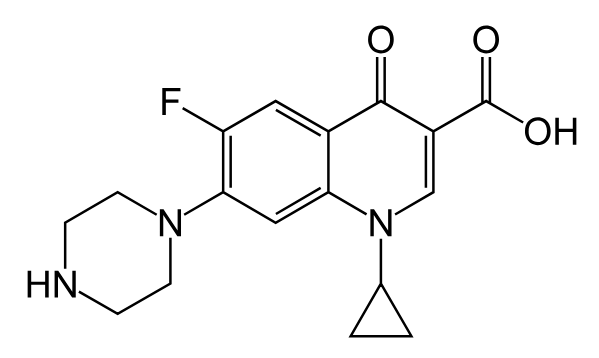
    • Ciprofloxacina (fármaco padrão)
    • Ofloxacina
  • 3ª geração:
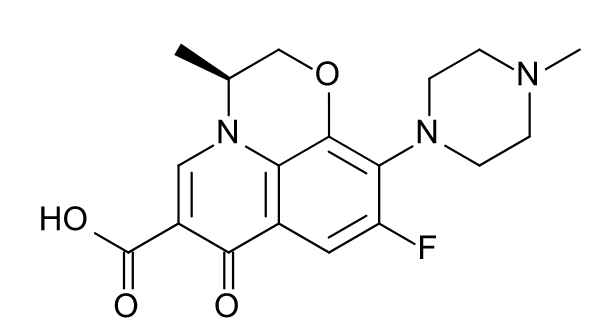
    • Levofloxacina
    • Moxifloxacina
    • Gemifloxacina
  • 4ª geração: delafloxacina

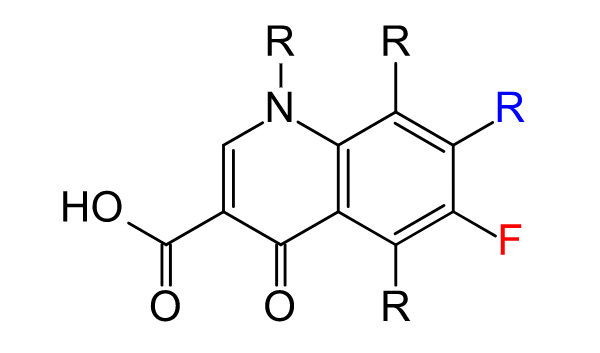
Estrutura química

Estruturas de fluoroquinolona:

  • Estrutura de núcleo bicíclico (todas)
  • Grupo funcional cetona (quinolonas)
  • Átomo de flúor (fluoroquinolonas)

Mecanismos de Ação e Resistência

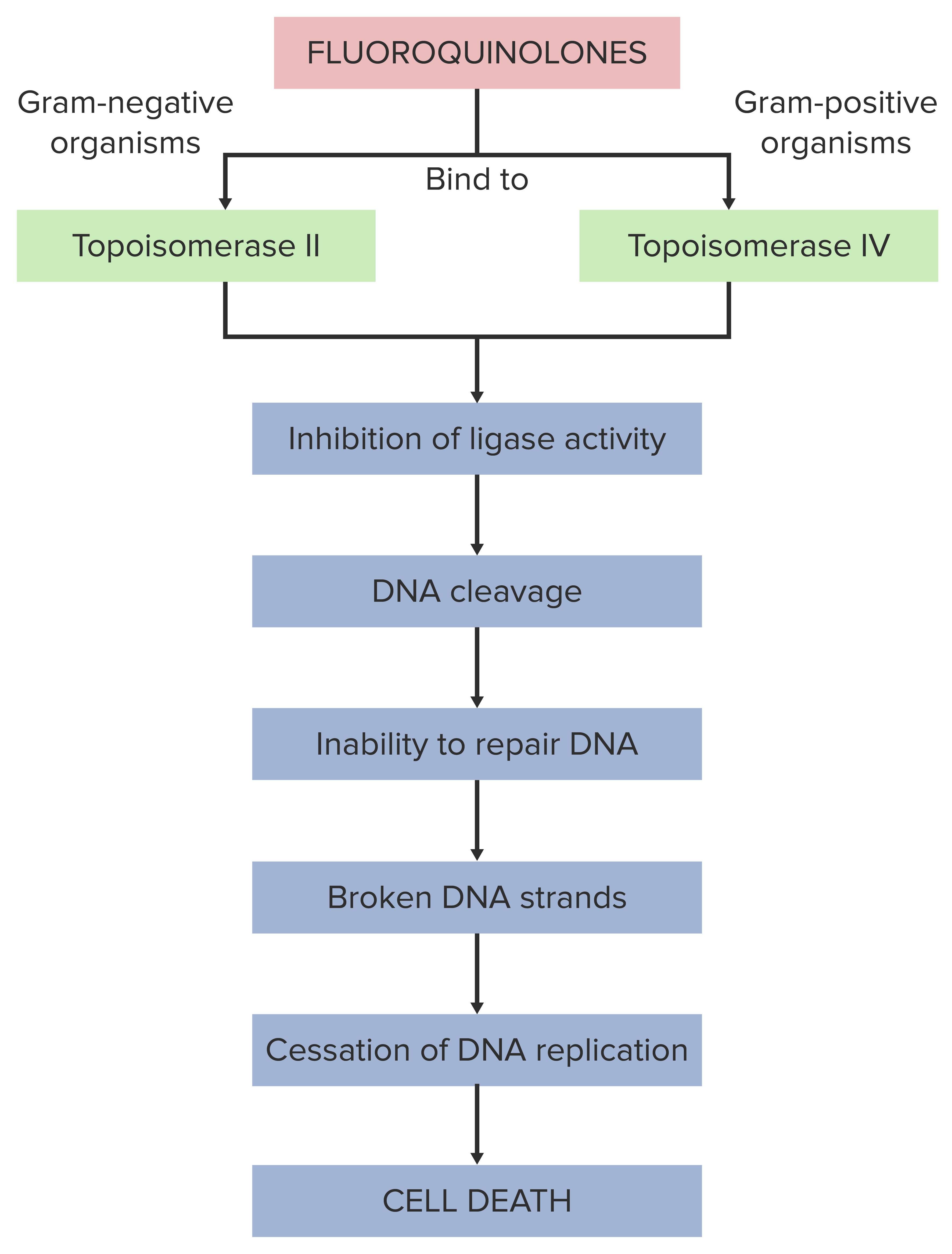
Mecanismo de ação

  • As fluoroquinolonas inibem diretamente a síntese de DNA DNA A deoxyribonucleotide polymer that is the primary genetic material of all cells. Eukaryotic and prokaryotic organisms normally contain DNA in a double-stranded state, yet several important biological processes transiently involve single-stranded regions. DNA, which consists of a polysugar-phosphate backbone possessing projections of purines (adenine and guanine) and pyrimidines (thymine and cytosine), forms a double helix that is held together by hydrogen bonds between these purines and pyrimidines (adenine to thymine and guanine to cytosine). DNA Types and Structure bacteriano ao se ligarem a:
    • Topoisomerase II Topoisomerase II DNA topoisomerases that catalyze ATP-dependent breakage of both strands of DNA, passage of the unbroken strands through the breaks, and rejoining of the broken strands. These enzymes bring about relaxation of the supercoiled DNA and resolution of a knotted circular DNA duplex. Fluoroquinolones ( DNA DNA A deoxyribonucleotide polymer that is the primary genetic material of all cells. Eukaryotic and prokaryotic organisms normally contain DNA in a double-stranded state, yet several important biological processes transiently involve single-stranded regions. DNA, which consists of a polysugar-phosphate backbone possessing projections of purines (adenine and guanine) and pyrimidines (thymine and cytosine), forms a double helix that is held together by hydrogen bonds between these purines and pyrimidines (adenine to thymine and guanine to cytosine). DNA Types and Structure girase) em organismos gram-negativos
    • Topoisomerase IV Topoisomerase IV A bacterial DNA topoisomerase II that catalyzes ATP-dependent breakage of both strands of DNA, passage of the unbroken strands through the breaks, and rejoining of the broken strands. Topoisomerase IV binds to DNA as a heterotetramer consisting 2 parc and 2 pare subunits. Topoisomerase IV is a decatenating enzyme that resolves interlinked daughter chromosomes following DNA replication. Fluoroquinolones em organismos gram-positivos
  • Enzimas da topoisomerase:
    • Desenrola o DNA DNA A deoxyribonucleotide polymer that is the primary genetic material of all cells. Eukaryotic and prokaryotic organisms normally contain DNA in a double-stranded state, yet several important biological processes transiently involve single-stranded regions. DNA, which consists of a polysugar-phosphate backbone possessing projections of purines (adenine and guanine) and pyrimidines (thymine and cytosine), forms a double helix that is held together by hydrogen bonds between these purines and pyrimidines (adenine to thymine and guanine to cytosine). DNA Types and Structure antes da replicação
    • Têm atividade de nuclease (clivagem de DNA DNA A deoxyribonucleotide polymer that is the primary genetic material of all cells. Eukaryotic and prokaryotic organisms normally contain DNA in a double-stranded state, yet several important biological processes transiently involve single-stranded regions. DNA, which consists of a polysugar-phosphate backbone possessing projections of purines (adenine and guanine) and pyrimidines (thymine and cytosine), forms a double helix that is held together by hydrogen bonds between these purines and pyrimidines (adenine to thymine and guanine to cytosine). DNA Types and Structure) e ligase (reparação de DNA DNA A deoxyribonucleotide polymer that is the primary genetic material of all cells. Eukaryotic and prokaryotic organisms normally contain DNA in a double-stranded state, yet several important biological processes transiently involve single-stranded regions. DNA, which consists of a polysugar-phosphate backbone possessing projections of purines (adenine and guanine) and pyrimidines (thymine and cytosine), forms a double helix that is held together by hydrogen bonds between these purines and pyrimidines (adenine to thymine and guanine to cytosine). DNA Types and Structure)
  • A ligação da fluoroquinolona às enzimas resulta em:
    • Inibição apenas da atividade da ligase
    • Clivagem de DNA DNA A deoxyribonucleotide polymer that is the primary genetic material of all cells. Eukaryotic and prokaryotic organisms normally contain DNA in a double-stranded state, yet several important biological processes transiently involve single-stranded regions. DNA, which consists of a polysugar-phosphate backbone possessing projections of purines (adenine and guanine) and pyrimidines (thymine and cytosine), forms a double helix that is held together by hydrogen bonds between these purines and pyrimidines (adenine to thymine and guanine to cytosine). DNA Types and Structure sem capacidade para reparar o DNA DNA A deoxyribonucleotide polymer that is the primary genetic material of all cells. Eukaryotic and prokaryotic organisms normally contain DNA in a double-stranded state, yet several important biological processes transiently involve single-stranded regions. DNA, which consists of a polysugar-phosphate backbone possessing projections of purines (adenine and guanine) and pyrimidines (thymine and cytosine), forms a double helix that is held together by hydrogen bonds between these purines and pyrimidines (adenine to thymine and guanine to cytosine). DNA Types and Structure
    • Cessação da replicação de DNA DNA A deoxyribonucleotide polymer that is the primary genetic material of all cells. Eukaryotic and prokaryotic organisms normally contain DNA in a double-stranded state, yet several important biological processes transiently involve single-stranded regions. DNA, which consists of a polysugar-phosphate backbone possessing projections of purines (adenine and guanine) and pyrimidines (thymine and cytosine), forms a double helix that is held together by hydrogen bonds between these purines and pyrimidines (adenine to thymine and guanine to cytosine). DNA Types and Structure com cadeias de DNA DNA A deoxyribonucleotide polymer that is the primary genetic material of all cells. Eukaryotic and prokaryotic organisms normally contain DNA in a double-stranded state, yet several important biological processes transiently involve single-stranded regions. DNA, which consists of a polysugar-phosphate backbone possessing projections of purines (adenine and guanine) and pyrimidines (thymine and cytosine), forms a double helix that is held together by hydrogen bonds between these purines and pyrimidines (adenine to thymine and guanine to cytosine). DNA Types and Structure danificadas
    • Morte celular → as fluoroquinolonas são bactericidas

Mecanismos de resistência

Os mecanismos dominantes de resistência às fluoroquinolonas são:
  • ↓ Acumulação do fármaco nas células bacterianas:
    • ↓ Expressão dos canais de porina → ↓ entrada do fármaco nas células
    • ↑ Expressão de bombas de efluxo
  • ↓ Afinidade do fármaco para o alvo:
    • Mutações cromossómicas pontuais alteram a estrutura da topoisomerase e afetam o local de ligação.
    • As mutações são específicas para fármacos e espécies (por exemplo, genes Genes A category of nucleic acid sequences that function as units of heredity and which code for the basic instructions for the development, reproduction, and maintenance of organisms. DNA Types and Structure gyrA em Neisseria gonorrhoeae Neisseria gonorrhoeae A species of gram-negative, aerobic bacteria primarily found in purulent venereal discharges. It is the causative agent of gonorrhea. Neisseria)
    • Resistência mediada por plasmídeo (normalmente uma resistência de baixo nível)
Mechanisms of resistance

Mecanismos de ação das fluoroquinolonas

Imagem por Lecturio.

Padrões de resistência clinicamente importantes

À medida que a resistência às fluoroquinolonas se torna mais MAIS Androgen Insensitivity Syndrome comum, o uso de fluoroquinolonas pode ser limitado para as seguintes indicações:

  • Neisseria gonorrhoeae Neisseria gonorrhoeae A species of gram-negative, aerobic bacteria primarily found in purulent venereal discharges. It is the causative agent of gonorrhea. Neisseria
  • Pseudomonas aeruginosa Pseudomonas aeruginosa A species of gram-negative, aerobic, rod-shaped bacteria commonly isolated from clinical specimens (wound, burn, and urinary tract infections). It is also found widely distributed in soil and water. P. Aeruginosa is a major agent of nosocomial infection. Pseudomonas
  • Infeções do trato urinário (ITUs)
  • Tifoide

Farmacocinética

Absorção

  • Bem absorvidas no trato gastrointestinal superior
  • Boa biodisponibilidade oral:
    • Levofloxacina (99%) > moxifloxacina (90%) > gemifloxacina/ciprofloxacina (70%) > delafloxacina (60%)
    • A ingestão de produtos lácteos, suplementos minerais e a maioria dos antiácidos podem ↓ significativamente a biodisponibilidade
  • Concentrações máximas: 1–3 horas após uma dose oral

Distribuição

  • Grandes volumes de distribuição (VD): a maioria excede o volume total de água do corpo → o fármaco acumula-se nos tecidos
  • Os fármacos concentram-se em:
    • Tecido da próstata
    • Bílis e fezes
    • Pulmões
    • Rins (exceto moxifloxacina)
    • Neutrófilos e macrófagos

Metabolismo

  • < 15% das concentrações do fármaco sofrem metabolismo hepático (exceto da moxifloxacina)
  • Moxifloxacina:
    • Aproximadamente 50% do fármaco é metabolizado no fígado.
    • Metabolizado via glucuronidação e conjugação de sulfato em vez de mecanismos CYP450
  • Ciprofloxacina:
    • Inibe a CYP1A2 → pode ↑ os níveis dos fármacos metabolizados pela CYP1A2
    • Alguns fármacos afetados incluem:
      • Clozapina
      • Teofilina
      • Tizanidina

Excreção

  • Eliminação:
    • Principalmente via secreção tubular renal (exceto a moxifloxacina)
    • Alguma excreção fecal de ciprofloxacina, moxifloxacina, gemifloxacina e delafloxacina
  • Moxifloxacina:
    • Depuração hepática
    • Pode ser usada na insuficiência renal
    • Não deve ser usada para ITUs
  • Semi-vida: 3-9 horas (normalmente administrada duas vezes por dia)

Espectro de Atividade

As fluoroquinolonas são consideradas antibióticos de largo espectro: a ciprofloxacina cobre melhor os bacilos gram-negativos; a levofloxacina e a moxifloxacina fornecem excelente cobertura da maioria dos potenciais agentes patogénicos respiratórios; a delafloxacina cobre P. aeruginosa P. aeruginosa A species of gram-negative, aerobic, rod-shaped bacteria commonly isolated from clinical specimens (wound, burn, and urinary tract infections). It is also found widely distributed in soil and water. P. Aeruginosa is a major agent of nosocomial infection. Pseudomonas e MRSA MRSA A strain of Staphylococcus aureus that is non-susceptible to the action of methicillin. The mechanism of resistance usually involves modification of normal or the presence of acquired penicillin binding proteins. Staphylococcus.

Organismos aeróbios gram-negativos

  • Fármacos com atividade:
    • A maioria das fluoroquinolonas é altamente ativa contra bacilos gram-negativos.
    • A ciprofloxacina tem a maior atividade.
  • Organismos cobertos por fluoroquinolonas:
    • Enterobacteriaceae Enterobacteriaceae A family of gram-negative, facultatively anaerobic, rod-shaped bacteria that do not form endospores. Its organisms are distributed worldwide with some being saprophytes and others being plant and animal parasites. Many species are of considerable economic importance due to their pathogenic effects on agriculture and livestock. Cephalosporins:
      • Escherichia coli Escherichia coli The gram-negative bacterium Escherichia coli is a key component of the human gut microbiota. Most strains of E. coli are avirulent, but occasionally they escape the GI tract, infecting the urinary tract and other sites. Less common strains of E. coli are able to cause disease within the GI tract, most commonly presenting as abdominal pain and diarrhea. Escherichia coli
      • Klebsiella Klebsiella Klebsiella are encapsulated gram-negative, lactose-fermenting bacilli. They form pink colonies on MacConkey agar due to lactose fermentation. The main virulence factor is a polysaccharide capsule. Klebsiella pneumoniae is the most important pathogenic species. Klebsiella spp.
      • Proteus Proteus Proteus spp. are gram-negative, facultatively anaerobic bacilli. Different types of infection result from Proteus, but the urinary tract is the most common site. The majority of cases are caused by Proteus mirabilis (P. mirabilis). The bacteria are part of the normal intestinal flora and are also found in the environment. Proteus spp.
    • Haemophilus Haemophilus Haemophilus is a genus of Gram-negative coccobacilli, all of whose strains require at least 1 of 2 factors for growth (factor V [NAD] and factor X [heme]); therefore, it is most often isolated on chocolate agar, which can supply both factors. The pathogenic species are H. influenzae and H. ducreyi. Haemophilus spp.
    • Moraxella catarrhalis Moraxella catarrhalis Gram-negative aerobic cocci of low virulence that colonize the nasopharynx and occasionally cause meningitis; bacteremia; empyema; pericarditis; and pneumonia. Moraxella
    • P. aeruginosa (ciprofloxacina > levofloxacina e delafloxacina > moxifloxacina)
    • Neisseria meningitidis Neisseria meningitidis A species of gram-negative, aerobic bacteria. It is a commensal and pathogen only of humans, and can be carried asymptomatically in the nasopharynx. When found in cerebrospinal fluid it is the causative agent of cerebrospinal meningitis. It is also found in venereal discharges and blood. There are at least 13 serogroups based on antigenic differences in the capsular polysaccharides; the ones causing most meningitis infections being a, b, c, y, and w-135. Each serogroup can be further classified by serotype, serosubtype, and immunotype. Neisseria e N. gonorrhoeae N. gonorrhoeae A species of gram-negative, aerobic bacteria primarily found in purulent venereal discharges. It is the causative agent of gonorrhea. Neisseria

Organismos aeróbios gram-positivos

  • Fármacos com atividade:
    • Principalmente os antibióticos de última geração:
      • Levofloxacina
      • Moxifloxacina
      • Delafloxacina
    • A ciprofloxacina tem atividade limitada ou nula contra organismos gram-positivos.
  • Organismos cobertos:
    • Staphylococcus aureus Staphylococcus aureus Potentially pathogenic bacteria found in nasal membranes, skin, hair follicles, and perineum of warm-blooded animals. They may cause a wide range of infections and intoxications. Brain Abscess ( MRSA MRSA A strain of Staphylococcus aureus that is non-susceptible to the action of methicillin. The mechanism of resistance usually involves modification of normal or the presence of acquired penicillin binding proteins. Staphylococcus apenas por delafloxacina)
    • Alguns  Streptococcus Streptococcus Streptococcus is one of the two medically important genera of gram-positive cocci, the other being Staphylococcus. Streptococci are identified as different species on blood agar on the basis of their hemolytic pattern and sensitivity to optochin and bacitracin. There are many pathogenic species of streptococci, including S. pyogenes, S. agalactiae, S. pneumoniae, and the viridans streptococci. Streptococcus spp. (incluindo S. pneumoniae)

Agentes patogénicos respiratórios atípicos e anaeróbios

Organismos atípicos

  • Fármacos com atividade:
    • Levofloxacina
    • Moxifloxacina
  • Organismos cobertos:
    • Mycobacterium Mycobacterium Mycobacterium is a genus of the family Mycobacteriaceae in the phylum Actinobacteria. Mycobacteria comprise more than 150 species of facultative intracellular bacilli that are mostly obligate aerobes. Mycobacteria are responsible for multiple human infections including serious diseases, such as tuberculosis (M. tuberculosis), leprosy (M. leprae), and M. avium complex infections. Mycobacterium spp. (M. tuberculosis Tuberculosis Tuberculosis (TB) is an infectious disease caused by Mycobacterium tuberculosis complex bacteria. The bacteria usually attack the lungs but can also damage other parts of the body. Approximately 30% of people around the world are infected with this pathogen, with the majority harboring a latent infection. Tuberculosis spreads through the air when a person with active pulmonary infection coughs or sneezes. Tuberculosis):
      • Agentes de 2ª linha para tratar a tuberculose
      • Usado em casos de resistência e/ou intolerância a agentes de 1ª linha
    • Legionella Legionella Legionella is a facultative intracellular, gram-negative bacilli. Legionella does not grow on common culture media because it requires certain supplementation (cysteine and iron). Legionella pneumophila (L. pneumophila) accounts for the majority of human infections. Legionella/Legionellosis spp.
    • Chlamydia pneumoniae Chlamydia pneumoniae A species of chlamydophila that causes acute respiratory infection, especially atypical pneumonia, in humans, horses, and koalas. Chlamydia

Organismos anaeróbios

  • Apenas moxifloxacina
  • Cobre infeções respiratórias anaeróbias:
    • Pneumonia Pneumonia Pneumonia or pulmonary inflammation is an acute or chronic inflammation of lung tissue. Causes include infection with bacteria, viruses, or fungi. In more rare cases, pneumonia can also be caused through toxic triggers through inhalation of toxic substances, immunological processes, or in the course of radiotherapy. Pneumonia por aspiração
    • Abcesso pulmonar
  • Geralmente não é eficaz contra Bacteroides Bacteroides Bacteroides is a genus of opportunistic, anaerobic, gram-negative bacilli. Bacteroides fragilis is the most common species involved in human disease and is part of the normal flora of the large intestine. Bacteroides (uso limitado para infeções intra-abdominais)

Outros organismos

As fluoroquinolonas também são consideradas opções de primeira linha contra infeções suscetíveis causadas por:

  • Bacillus anthracis Bacillus anthracis A species of bacteria that causes anthrax in humans and animals. Anthrax
  • Francisella tularensis Francisella Tularensis Aminoglycosides
  • Salmonella typhi Salmonella typhi A serotype of Salmonella enterica which is the etiologic agent of typhoid fever. Enteric Fever (Typhoid Fever)
  • Yersinia pestis Yersinia pestis The plague is a bacterial infection caused by Yersinia pestis (Y. pestis), which primarily infects rodents. The disease is transmitted to humans via a flea bite. Inhalation of infectious droplets and handling infected animals or laboratory specimens are other means of transmission. The plague has 3 forms: bubonic (most common form), septicemic, and pneumonic. Yersinia pestis/Plague

Indicações

Em comparação com outros antibióticos, as fluoroquinolonas estão associadas a um maior risco de efeitos adversos potencialmente permanentes e incapacitantes. Portanto, as fluoroquinolonas geralmente não são usadas em infeções não complicadas e devem ser usadas apenas em bactérias suscetíveis.

Infeções complicadas

  • Infeções geniturinárias:
    • ITUs complicadas e pielonefrite
    • Prostatite (aguda e crónica)
    • Doença inflamatória pélvica
    • Podem ser usadas na cistite não complicada quando não houver opções alternativas
  • Infeções respiratórias:
    • Pneumonia Pneumonia Pneumonia or pulmonary inflammation is an acute or chronic inflammation of lung tissue. Causes include infection with bacteria, viruses, or fungi. In more rare cases, pneumonia can also be caused through toxic triggers through inhalation of toxic substances, immunological processes, or in the course of radiotherapy. Pneumonia adquirida no hospital
    • Pneumonia Pneumonia Pneumonia or pulmonary inflammation is an acute or chronic inflammation of lung tissue. Causes include infection with bacteria, viruses, or fungi. In more rare cases, pneumonia can also be caused through toxic triggers through inhalation of toxic substances, immunological processes, or in the course of radiotherapy. Pneumonia causada por S. pneumoniae multirresistente
    • Pneumonia Pneumonia Pneumonia or pulmonary inflammation is an acute or chronic inflammation of lung tissue. Causes include infection with bacteria, viruses, or fungi. In more rare cases, pneumonia can also be caused through toxic triggers through inhalation of toxic substances, immunological processes, or in the course of radiotherapy. Pneumonia atípica
    • Tuberculose (levofloxacina e moxifloxacina (agentes de 2ª linha))
    • Podem ser usadas em infeções não complicadas quando não existem opções alternativas:
      • Sinusite bacteriana
      • Exacerbações da doença pulmonar obstrutiva crónica (DPOC)
  • Infeções abdominais:
    • Infeções intra-abdominais complicadas (em combinação com metronidazol para cobertura anaeróbia)
    • Peritonite e infeção relacionada a um cateter de diálise peritoneal
  • Infeções da pele, dos tecidos moles Moles Primary Skin Lesions e musculoesqueléticas:
    • Infeções ósseas e articulares (incluindo infeções articulares protésicas)
    • Infeções do pé diabético
    • Infeções cutâneas
    • Profilaxia cirúrgica em pacientes alérgicos a agentes de primeira linha (por exemplo, cefalosporinas)
    • Infeção de feridas de dentadas
  • Infeções do sistema nervoso: meningite bacteriana

Infeções causadas por organismos únicos

  • Diarreia do viajante (E. coli, Shigella Shigella Shigella is a genus of gram-negative, non-lactose-fermenting facultative intracellular bacilli. Infection spreads most commonly via person-to-person contact or through contaminated food and water. Humans are the only known reservoir. Shigella ou Campylobacter Campylobacter Campylobacter (“curved bacteria”) is a genus of thermophilic, S-shaped, gram-negative bacilli. There are many species of Campylobacter, with C. jejuni and C. coli most commonly implicated in human disease. Campylobacter)
  • Febre tifoide ( Salmonella typhi Salmonella typhi A serotype of Salmonella enterica which is the etiologic agent of typhoid fever. Enteric Fever (Typhoid Fever))
  • Antraz ( Bacillus anthracis Bacillus anthracis A species of bacteria that causes anthrax in humans and animals. Anthrax)
  • Tularemia ( Francisella tularensis Francisella Tularensis Aminoglycosides)
  • Peste ( Yersinia pestis Yersinia pestis The plague is a bacterial infection caused by Yersinia pestis (Y. pestis), which primarily infects rodents. The disease is transmitted to humans via a flea bite. Inhalation of infectious droplets and handling infected animals or laboratory specimens are other means of transmission. The plague has 3 forms: bubonic (most common form), septicemic, and pneumonic. Yersinia pestis/Plague)
  • Doença da arranhadela do gato ( Bartonella henselae Bartonella henselae A species of gram-negative bacteria that is the etiologic agent of bacillary angiomatosis. This organism can also be a cause of cat-scratch disease in immunocompetent patients. Bartonella)
  • Cólera ( Vibrio cholerae Vibrio cholerae The etiologic agent of cholera. Vibrio)
  • Cancroide ( Haemophilus ducreyi Haemophilus ducreyi A species of Haemophilus that appears to be the pathogen or causative agent of the sexually transmitted disease, chancroid. Haemophilus)

Efeitos Adversos e Contraindicações

Efeitos adversos

As fluoroquinolonas apresentam riscos maiores do que muitos outros antibióticos, o que limita o seu uso. Embora os efeitos adversos sejam incomuns, alguns podem ser permanentes ou graves.

  • Efeitos neurológicos:
    • Efeitos ligeiros comuns:
      • Cefaleias
      • Tonturas
      • Insónia (transitória)
    • Efeitos menos comuns e mais MAIS Androgen Insensitivity Syndrome sérios:
      • Neuropatia periférica (pode ser permanente)
      • Delírio, psicose e/ou alucinações
      • Convulsões
    • Exacerbação de miastenia gravis
  • Efeitos musculoesqueléticos (especialmente em crianças e adolescentes em crescimento):
    • Tendinopatia, incluindo ruptura de tendão:
      • Na maioria das vezes, o tendão de Aquiles
      • Aconselhar os indivíduos a parar de tomar fluoroquinolonas se desenvolverem dor e/ou edema Edema Edema is a condition in which excess serous fluid accumulates in the body cavity or interstitial space of connective tissues. Edema is a symptom observed in several medical conditions. It can be categorized into 2 types, namely, peripheral (in the extremities) and internal (in an organ or body cavity). Edema.
    • Artropatia:
      • Erosões da cartilagem
      • Derrames não inflamatórios
  • Efeitos GI:
    • Náuseas, vómitos e/ou desconforto abdominal
    • Diarreia (menos comum)
    • Infeção por Clostridioides difficile
    • Hepatotoxicidade (vários fármacos foram retirados do mercado devido à hepatotoxicidade)
  • Efeitos cardiovasculares:
  • Outros efeitos:
    • Erupções cutâneas
    • Fototoxicidade
    • Disglicemia (o maior risco é com a moxifloxacina em indivíduos diabéticos)

Contraindicações

  • Hipersensibilidade a fluoroquinolonas
  • Gravidez
  • Crianças e adolescentes em crescimento
  • Uso concomitante com outros fármacos que prolongam o intervalo QT
  • Miastenia gravis
  • Utilizar com precaução se:
    • Diabetes Diabetes Diabetes mellitus (DM) is a metabolic disease characterized by hyperglycemia and dysfunction of the regulation of glucose metabolism by insulin. Type 1 DM is diagnosed mostly in children and young adults as the result of autoimmune destruction of β cells in the pancreas and the resulting lack of insulin. Type 2 DM has a significant association with obesity and is characterized by insulin resistance. Diabetes Mellitus
    • Artrite reumatoide (risco de ruptura do tendão)
    • Aneurisma/disseção da aorta Aorta The main trunk of the systemic arteries. Mediastinum and Great Vessels: Anatomy
    • Insuficiência renal (ciprofloxacina, levofloxacina e delafloxacina)
    • Insuficiência hepática (moxifloxacina)

Comparação de Fármacos

Comparação baseada no mecanismo de ação

Os antibióticos podem ser classificados de várias maneiras. Uma forma é classificar os antibióticos por mecanismo de ação:

Tabela: Antibióticos classificados por mecanismo de ação primário
Mecanismo Classes de antibióticos
Inibidores da síntese da parede celular bacteriana
  • Penicilinas
  • Cefalosporinas
  • Penemes
  • Diversos
Inibidores da síntese de proteínas bacterianas
  • Tetraciclinas
  • Macrólidos
  • Cetolídeos
  • Lincosamidas
  • Estreptograminas
  • Linezolida
Agentes que atuam contra DNA DNA A deoxyribonucleotide polymer that is the primary genetic material of all cells. Eukaryotic and prokaryotic organisms normally contain DNA in a double-stranded state, yet several important biological processes transiently involve single-stranded regions. DNA, which consists of a polysugar-phosphate backbone possessing projections of purines (adenine and guanine) and pyrimidines (thymine and cytosine), forms a double helix that is held together by hydrogen bonds between these purines and pyrimidines (adenine to thymine and guanine to cytosine). DNA Types and Structure e/ou folato
  • Sulfonamidas
  • Trimetoprim
  • Fluoroquinolonas
Agentes antimicobacterianos
  • Agentes anti-TB
  • Agentes anti-lepra
  • Agentes micobacterianos atípicos

Comparação com base na cobertura

Diferentes antibióticos têm vários graus de atividade contra diferentes bactérias. A tabela abaixo descreve os antibióticos com atividade contra 3 classes importantes de bactérias: cocos gram-positivos, bacilos gram-negativos e anaeróbios.
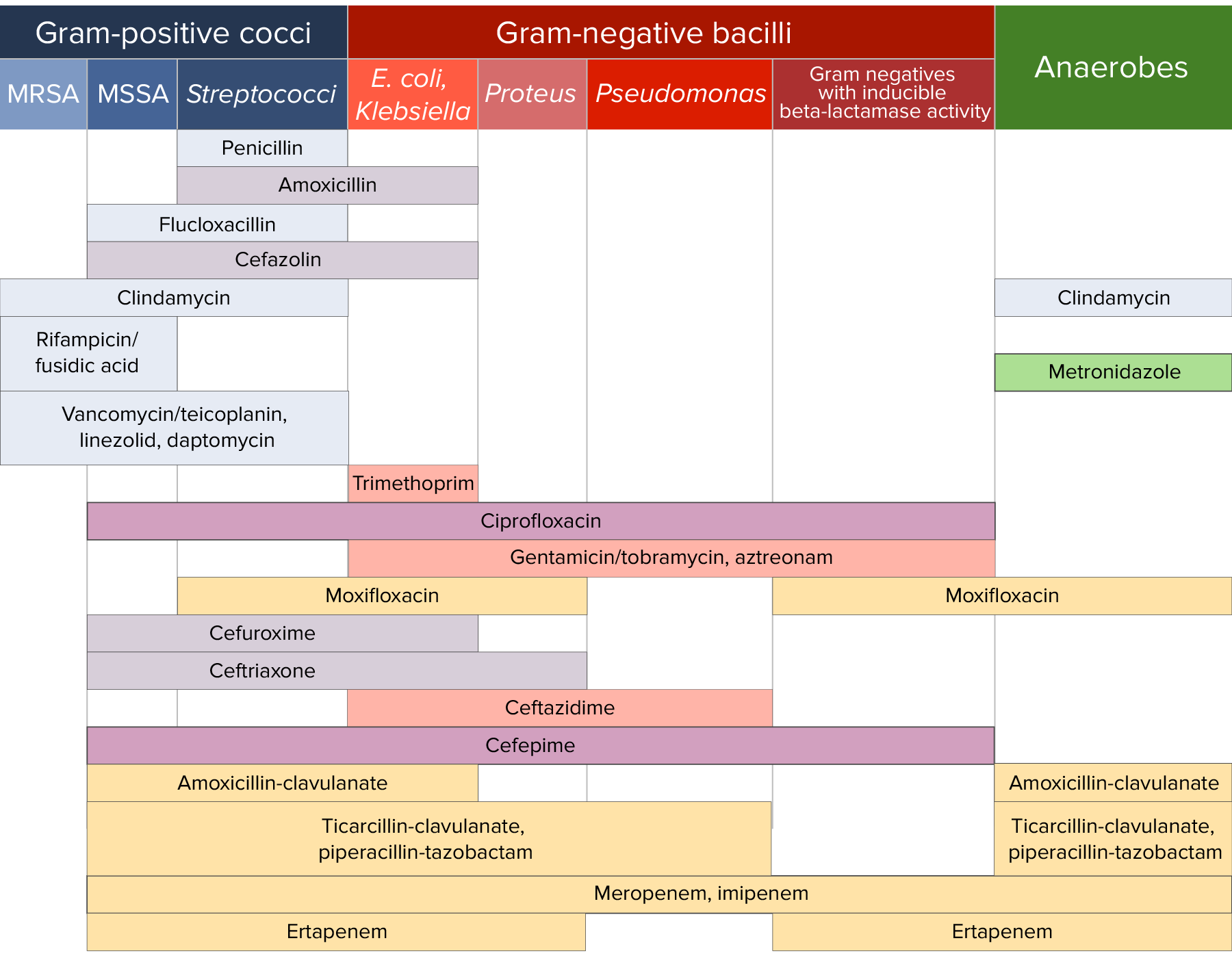
Gráfico de sensibilidade a antibióticos

Sensibilidade aos antibióticos:
Gráfico que compara a cobertura microbiana de diferentes antibióticos para cocos gram-positivos, bacilos gram-negativos e anaeróbios.

Imagem por Lecturio. Licença: CC BY-NC-SA 4.0

Referências

  1. Deck, D.H., Winston, L.G. (2013). Sulfonamides, Trimethoprim, and Quinolones. In Katzung, B.G., Masters, S.B., and Trevor, A.J. (Eds.), Basic and Clinical Pharmacology (12th Ed., pp. 831‒834). 
  2. Hooper, D.C. (2025). Fluoroquinolones. In Bogorodskaya, M. (Ed.), UpToDate. Retrieved October 16, 2025, from https://www.uptodate.com/contents/fluoroquinolones 
  3. Lexicomp Drug Information Sheets (2025). In UpToDate. Retrieved October 16, 2025, from:

Crie sua conta gratuita ou faça login para continuar lendo!

Cadastre-se agora e tenha acesso grátis ao Lecturio, com páginas de conceitos, vídeos de medicina e questões para sua educação médica.

Aprende mais com a Lecturio:

Multiple devices displaying human anatomy and health education content.

Complementa o teu estudo da faculdade com o companheiro de estudo tudo-em-um da Lecturio, através de métodos de ensino baseados em evidência.

Estuda onde quiseres

Two iPhones display medical education apps, one showing anatomy, the other Bookmatcher.

A Lecturio Medical complementa o teu estudo através de métodos de ensino baseados em evidência, vídeos de palestras, perguntas e muito mais – tudo combinado num só lugar e fácil de usar.

User Reviews

Details