La sinusitisSinusitisSinusitis refers to inflammation of the mucosal lining of the paranasal sinuses. The condition usually occurs concurrently with inflammation of the nasal mucosa (rhinitis), a condition known as rhinosinusitis. Acute sinusitis is due to an upper respiratory infection caused by a viral, bacterial, or fungal agent. Sinusitis es la inflamación de la mucosa de losLOSNeisseria senos paranasales que suele producirse simultáneamente con la inflamación de la mucosa nasal (rinitis), lo que enENErythema nodosum is an immune-mediated panniculitis (inflammation of the subcutaneous fat) caused by a type IV (delayed-type) hypersensitivity reaction. It commonly manifests in young women as tender, erythematous nodules on the shins.Erythema Nodosum conjunto se conoce como rinosinusitis. La etiología más frecuente de la rinosinusitis aguda es una infección vírica; otras causas pueden ser bacterias u hongos. Clínicamente, la sinusitisSinusitisSinusitis refers to inflammation of the mucosal lining of the paranasal sinuses. The condition usually occurs concurrently with inflammation of the nasal mucosa (rhinitis), a condition known as rhinosinusitis. Acute sinusitis is due to an upper respiratory infection caused by a viral, bacterial, or fungal agent. Sinusitis se presenta con dolorDolorInflammation facial, obstrucción nasal, secreción mucopurulenta y disminución del olfato. El diagnóstico suele ser clínico y el tratamiento es de soporte; por lo general, no se recomiendan antibióticos a menos que losLOSNeisseria síntomas no mejoren alALAmyloidosis cabo de 10 días. La sinusitisSinusitisSinusitis refers to inflammation of the mucosal lining of the paranasal sinuses. The condition usually occurs concurrently with inflammation of the nasal mucosa (rhinitis), a condition known as rhinosinusitis. Acute sinusitis is due to an upper respiratory infection caused by a viral, bacterial, or fungal agent. Sinusitis crónica dura 12 semanas o más y puede estar asociada a poliposis nasal o rinosinusitis fúngica alérgica. El objetivo del tratamiento enENErythema nodosum is an immune-mediated panniculitis (inflammation of the subcutaneous fat) caused by a type IV (delayed-type) hypersensitivity reaction. It commonly manifests in young women as tender, erythematous nodules on the shins.Erythema Nodosum la mayoría de losLOSNeisseria casos crónicos es reducir losLOSNeisseria síntomas y mejorar la calidad de vida, más que curar el trastorno, lo que puede requerir cirugía.
Ocurre enENErythema nodosum is an immune-mediated panniculitis (inflammation of the subcutaneous fat) caused by a type IV (delayed-type) hypersensitivity reaction. It commonly manifests in young women as tender, erythematous nodules on the shins.Erythema Nodosum hasta el 80% de losLOSNeisseria pacientes con infecciones de las vías respiratorias superiores no complicadas.
La sinusitisSinusitisSinusitis refers to inflammation of the mucosal lining of the paranasal sinuses. The condition usually occurs concurrently with inflammation of the nasal mucosa (rhinitis), a condition known as rhinosinusitis. Acute sinusitis is due to an upper respiratory infection caused by a viral, bacterial, or fungal agent. Sinusitis bacteriana solo se encuentra enENErythema nodosum is an immune-mediated panniculitis (inflammation of the subcutaneous fat) caused by a type IV (delayed-type) hypersensitivity reaction. It commonly manifests in young women as tender, erythematous nodules on the shins.Erythema Nodosum el 0,5 %–2% de losLOSNeisseria casos
El pico de incidencia anual coincide con el pico de las infecciones de las vías respiratorias superiores virales enENErythema nodosum is an immune-mediated panniculitis (inflammation of the subcutaneous fat) caused by a type IV (delayed-type) hypersensitivity reaction. It commonly manifests in young women as tender, erythematous nodules on the shins.Erythema NodosumlosLOSNeisseria meses de otoño/invierno
Mayor incidencia enENErythema nodosum is an immune-mediated panniculitis (inflammation of the subcutaneous fat) caused by a type IV (delayed-type) hypersensitivity reaction. It commonly manifests in young women as tender, erythematous nodules on the shins.Erythema Nodosum mujeres y enENErythema nodosum is an immune-mediated panniculitis (inflammation of the subcutaneous fat) caused by a type IV (delayed-type) hypersensitivity reaction. It commonly manifests in young women as tender, erythematous nodules on the shins.Erythema Nodosum personas de 45–64 años
Deterioro de la función ciliar (fibrosisFibrosisAny pathological condition where fibrous connective tissue invades any organ, usually as a consequence of inflammation or other injury.Bronchiolitis Obliterans quística, discinesia ciliar primaria, inmunodeficiencia)
Rinitis alérgica y vasomotora
Infecciones de las vías respiratorias superiores recurrentes
Exposición alALAmyloidosis cambio de presión atmosférica (e.g., buceo enENErythema nodosum is an immune-mediated panniculitis (inflammation of the subcutaneous fat) caused by a type IV (delayed-type) hypersensitivity reaction. It commonly manifests in young women as tender, erythematous nodules on the shins.Erythema Nodosum aguas profundas)
Natación
Cuerpo extraño enENErythema nodosum is an immune-mediated panniculitis (inflammation of the subcutaneous fat) caused by a type IV (delayed-type) hypersensitivity reaction. It commonly manifests in young women as tender, erythematous nodules on the shins.Erythema Nodosum la cavidad nasal
Aguda: dura ≤ 4 semanas
Viral (más común): rinovirus, coronavirusCoronavirusCoronaviruses are a group of related viruses that contain positive-sense, single-stranded RNA. Coronavirus derives its name from “κορώνη korṓnē” in Greek, which translates as “crown,” after the small club-shaped proteins visible as a ring around the viral envelope in electron micrographs. Coronavirus, virusVirusViruses are infectious, obligate intracellular parasites composed of a nucleic acid core surrounded by a protein capsid. Viruses can be either naked (non-enveloped) or enveloped. The classification of viruses is complex and based on many factors, including type and structure of the nucleoid and capsid, the presence of an envelope, the replication cycle, and the host range. Virology de la influenzaInfluenzaInfluenza viruses are members of the Orthomyxoviridae family and the causative organisms of influenza, a highly contagious febrile respiratory disease. There are 3 primary influenza viruses (A, B, and C) and various subtypes, which are classified based on their virulent surface antigens, hemagglutinin (HA) and neuraminidase (NA). Influenza typically presents with a fever, myalgia, headache, and symptoms of an upper respiratory infection. Influenza Viruses/Influenza, adenovirusAdenovirusAdenovirus (member of the family Adenoviridae) is a nonenveloped, double-stranded DNA virus. Adenovirus is transmitted in a variety of ways, and it can have various presentations based on the site of entry. Presentation can include febrile pharyngitis, conjunctivitis, acute respiratory disease, atypical pneumonia, and gastroenteritis. Adenovirus, virusVirusViruses are infectious, obligate intracellular parasites composed of a nucleic acid core surrounded by a protein capsid. Viruses can be either naked (non-enveloped) or enveloped. The classification of viruses is complex and based on many factors, including type and structure of the nucleoid and capsid, the presence of an envelope, the replication cycle, and the host range. Virology de la parainfluenza
Bacteriana: StreptococcusStreptococcusStreptococcus is one of the two medically important genera of gram-positive cocci, the other being Staphylococcus. Streptococci are identified as different species on blood agar on the basis of their hemolytic pattern and sensitivity to optochin and bacitracin. There are many pathogenic species of streptococci, including S. pyogenes, S. agalactiae, S. pneumoniae, and the viridans streptococci.Streptococcus pneumoniae, Haemophilus influenzaeHaemophilus InfluenzaeA species of Haemophilus found on the mucous membranes of humans and a variety of animals. The species is further divided into biotypes I through viii.Haemophilus, Moraxella catarrhalisMoraxella catarrhalisGram-negative aerobic cocci of low virulence that colonize the nasopharynx and occasionally cause meningitis; bacteremia; empyema; pericarditis; and pneumonia.Moraxella, Staphylococcus aureusStaphylococcus aureusPotentially pathogenic bacteria found in nasal membranes, skin, hair follicles, and perineum of warm-blooded animals. They may cause a wide range of infections and intoxications.Brain Abscess, Escherichia coliEscherichia coliThe gram-negative bacterium Escherichia coli is a key component of the human gut microbiota. Most strains of E. coli are avirulent, but occasionally they escape the GI tract, infecting the urinary tract and other sites. Less common strains of E. coli are able to cause disease within the GI tract, most commonly presenting as abdominal pain and diarrhea. Escherichia coli, KlebsiellaKlebsiellaKlebsiella are encapsulated gram-negative, lactose-fermenting bacilli. They form pink colonies on MacConkey agar due to lactose fermentation. The main virulence factor is a polysaccharide capsule. Klebsiella pneumoniae is the most important pathogenic species.Klebsiella
S. pneumoniae y H. influenzaeH. influenzaeA species of Haemophilus found on the mucous membranes of humans and a variety of animals. The species is further divided into biotypes I through VIII.Haemophilus son responsables del 75% de losLOSNeisseria casos
Crónica: dura más de 12 semanas; caracterizada por una inflamación prolongada de losLOSNeisseria senos paranasales; ocasionalmente asociada con trastornos de inmunodeficiencia
Fúngica: AspergillusAspergillusA genus of mitosporic fungi containing about 100 species and eleven different teleomorphs in the family trichocomaceae.Echinocandins, RhizopusRhizopusA genus of zygomycetes fungi of the family mucoraceae, order mucorales, a common saprophyte and facultative parasite of mature fruits and vegetables. It may cause cerebral mycoses in diabetes and cutaneous infection in severely burned patients.Mucorales/Mucormycosis oryzae
Bacteriana: S. aureusS. aureusPotentially pathogenic bacteria found in nasal membranes, skin, hair follicles, and perineum of warm-blooded animals. They may cause a wide range of infections and intoxications.Staphylococcus (a menudoS. aureusS. aureusPotentially pathogenic bacteria found in nasal membranes, skin, hair follicles, and perineum of warm-blooded animals. They may cause a wide range of infections and intoxications.Staphylococcus resistente a la meticilina) y organismos anaeróbicos (PrevotellaPrevotellaA genus of gram-negative, anaerobic, nonsporeforming, nonmotile rods. Organisms of this genus had originally been classified as members of the bacteroides genus but overwhelming biochemical and chemical findings in 1990 indicated the need to separate them from other bacteroides species, and hence, this new genus was established.Dog and Cat Bites, PorphyromonasPorphyromonasA genus of gram-negative, anaerobic, nonsporeforming, nonmotile rods or coccobacilli. Organisms in this genus had originally been classified as members of the bacteroides genus but overwhelming biochemical and chemical findings indicated the need to separate them from other bacteroides species, and hence, this new genus was created.Dog and Cat Bites, FusobacteriumFusobacteriumA genus of gram-negative, anaerobic, rod-shaped bacteria found in cavities of humans and other animals. No endospores are formed. Some species are pathogenic and occur in various purulent or gangrenous infections.Dog and Cat Bites y PeptostreptococcusPeptostreptococcusA genus of gram-positive, anaerobic, coccoid bacteria that is part of the normal flora of humans. Its organisms are opportunistic pathogens causing bacteremias and soft tissue infections.Perianal and Perirectal Abscess spp.)
Inoculación por contacto directo con la conjuntiva o mucosa nasal
La replicación viral se puede detectar a través de losLOSNeisseria niveles virales enENErythema nodosum is an immune-mediated panniculitis (inflammation of the subcutaneous fat) caused by a type IV (delayed-type) hypersensitivity reaction. It commonly manifests in young women as tender, erythematous nodules on the shins.Erythema Nodosum las secreciones nasales dentro de las 8–10 horas.
LosLOSNeisseria síntomas pueden ocurrir después del primer día de la inoculación.
Bacteriana
Cambio fisiopatológico más importante: obstrucción del drenaje sinusal
El movimiento normal metacrónico (secuencial) de la mucosa hacia losLOSNeisseria orificios naturales de losLOSNeisseria senos paranasales suele verse interrumpido por la inflamación de la mucosa → estasis
El deterioro de la función ciliar conduce a una reducción enENErythema nodosum is an immune-mediated panniculitis (inflammation of the subcutaneous fat) caused by a type IV (delayed-type) hypersensitivity reaction. It commonly manifests in young women as tender, erythematous nodules on the shins.Erythema Nodosum el drenaje de moco → estasis
La estasis de secreciones dentro de losLOSNeisseria senos conduce a una proliferación de microorganismos.
Las alteraciones enENErythema nodosum is an immune-mediated panniculitis (inflammation of the subcutaneous fat) caused by a type IV (delayed-type) hypersensitivity reaction. It commonly manifests in young women as tender, erythematous nodules on the shins.Erythema Nodosum la composición y cantidad del moco también pueden contribuir a la infección; se observa un aumento de la producción de moco enENErythema nodosum is an immune-mediated panniculitis (inflammation of the subcutaneous fat) caused by a type IV (delayed-type) hypersensitivity reaction. It commonly manifests in young women as tender, erythematous nodules on the shins.Erythema Nodosum el asmaASMAAutoimmune Hepatitis, la rinitis y las infecciones de las vías respiratorias superiores virales
Senos etmoidales: puente nasal o entre/detrás de losLOSNeisseria ojos
Fiebre
Molestias enENErythema nodosum is an immune-mediated panniculitis (inflammation of the subcutaneous fat) caused by a type IV (delayed-type) hypersensitivity reaction. It commonly manifests in young women as tender, erythematous nodules on the shins.Erythema NodosumlosLOSNeisseria dientes maxilares y otros dolores faciales
Malestar general y mialgia
SinusitisSinusitisSinusitis refers to inflammation of the mucosal lining of the paranasal sinuses. The condition usually occurs concurrently with inflammation of the nasal mucosa (rhinitis), a condition known as rhinosinusitis. Acute sinusitis is due to an upper respiratory infection caused by a viral, bacterial, or fungal agent. Sinusitis viral
La sinusitisSinusitisSinusitis refers to inflammation of the mucosal lining of the paranasal sinuses. The condition usually occurs concurrently with inflammation of the nasal mucosa (rhinitis), a condition known as rhinosinusitis. Acute sinusitis is due to an upper respiratory infection caused by a viral, bacterial, or fungal agent. Sinusitis viral generalmente se presenta enENErythema nodosum is an immune-mediated panniculitis (inflammation of the subcutaneous fat) caused by a type IV (delayed-type) hypersensitivity reaction. It commonly manifests in young women as tender, erythematous nodules on the shins.Erythema Nodosum una forma más leve y dura de 7–10 días.
SinusitisSinusitisSinusitis refers to inflammation of the mucosal lining of the paranasal sinuses. The condition usually occurs concurrently with inflammation of the nasal mucosa (rhinitis), a condition known as rhinosinusitis. Acute sinusitis is due to an upper respiratory infection caused by a viral, bacterial, or fungal agent. Sinusitis bacteriana
Persiste durante > 10 días sin mejoría clínica
Patrón bifásico: inicialmente puede mejorar, luego empeora después de 5–6 días (“empeoramiento doble”)
Hiposmia o anosmiaAnosmiaComplete or severe loss of the subjective sense of smell. Loss of smell may be caused by many factors such as a cold, allergy, olfactory nerve diseases, viral respiratory tract infections (e.g., COVID-19), aging and various neurological disorders (e.g., Alzheimer disease).Cranial Nerve Palsies
HalitosisHalitosisAn offensive, foul breath odor resulting from a variety of causes such as poor oral hygiene, dental or oral infections, or the ingestion of certain foods.Oral Cancer
TosTOSThoracic outlet syndrome (TOS) is a broad term used for a spectrum of syndromes related to the general region of the thoracic outlet, which involves the compression or irritation of elements of the brachial plexus, subclavian artery, or subclavian vein.Thoracic Outlet Syndrome
OtalgiaOtalgiaAcute Otitis Media, presión, plenitud, pérdida de audición o tinnitusTinnitusA nonspecific symptom of hearing disorder characterized by the sensation of buzzing, ringing, clicking, pulsations, and other noises in the ear. Objective tinnitus refers to noises generated from within the ear or adjacent structures that can be heard by other individuals. The term subjective tinnitus is used when the sound is audible only to the affected individual. Tinnitus may occur as a manifestation of cochlear diseases; vestibulocochlear nerve diseases; intracranial hypertension; craniocerebral trauma; and other conditions.Cranial Nerve Palsies
SinusitisSinusitisSinusitis refers to inflammation of the mucosal lining of the paranasal sinuses. The condition usually occurs concurrently with inflammation of the nasal mucosa (rhinitis), a condition known as rhinosinusitis. Acute sinusitis is due to an upper respiratory infection caused by a viral, bacterial, or fungal agent. Sinusitis fúngica
La sinusitisSinusitisSinusitis refers to inflammation of the mucosal lining of the paranasal sinuses. The condition usually occurs concurrently with inflammation of the nasal mucosa (rhinitis), a condition known as rhinosinusitis. Acute sinusitis is due to an upper respiratory infection caused by a viral, bacterial, or fungal agent. Sinusitis fúngica suele presentarse de forma crónica, con síntomas atípicos (epistaxisEpistaxisBleeding from the nose.Granulomatosis with Polyangiitis, disnea y secreciones nasales negras/marrones).
Complicaciones y/o condiciones asociadas
Otitis media aguda
Faringitis
MeningitisMeningitisMeningitis is inflammation of the meninges, the protective membranes of the brain, and spinal cord. The causes of meningitis are varied, with the most common being bacterial or viral infection. The classic presentation of meningitis is a triad of fever, altered mental status, and nuchal rigidity. Meningitis
Neumonía
Absceso subperióstico/intracraneal
Osteomielitis (generalmente del hueso frontalFrontalThe bone that forms the frontal aspect of the skull. Its flat part forms the forehead, articulating inferiorly with the nasal bone and the cheek bone on each side of the face.Skull: Anatomy)
Celulitis preseptal/orbitaria
Trombosis séptica del seno cavernoso
Diagnóstico
El diagnóstico generalmente se basa enENErythema nodosum is an immune-mediated panniculitis (inflammation of the subcutaneous fat) caused by a type IV (delayed-type) hypersensitivity reaction. It commonly manifests in young women as tender, erythematous nodules on the shins.Erythema NodosumlosLOSNeisseria síntomas clínicos.
SinusitisSinusitisSinusitis refers to inflammation of the mucosal lining of the paranasal sinuses. The condition usually occurs concurrently with inflammation of the nasal mucosa (rhinitis), a condition known as rhinosinusitis. Acute sinusitis is due to an upper respiratory infection caused by a viral, bacterial, or fungal agent. Sinusitis no complicada: < 4 semanas de secreción nasal purulenta + obstrucción nasal o dolorDolorInflammation/presión/plenitud facial o ambos
SinusitisSinusitisSinusitis refers to inflammation of the mucosal lining of the paranasal sinuses. The condition usually occurs concurrently with inflammation of the nasal mucosa (rhinitis), a condition known as rhinosinusitis. Acute sinusitis is due to an upper respiratory infection caused by a viral, bacterial, or fungal agent. Sinusitis complicada: cuando losLOSNeisseria signos y síntomas se extienden más allá de losLOSNeisseria senos paranasales y la cavidad nasal, se requiere una evaluación urgente.
Signos: cefalea intensa/persistente, cambios enENErythema nodosum is an immune-mediated panniculitis (inflammation of the subcutaneous fat) caused by a type IV (delayed-type) hypersensitivity reaction. It commonly manifests in young women as tender, erythematous nodules on the shins.Erythema Nodosum la visión, edemaEdemaEdema is a condition in which excess serous fluid accumulates in the body cavity or interstitial space of connective tissues. Edema is a symptom observed in several medical conditions. It can be categorized into 2 types, namely, peripheral (in the extremities) and internal (in an organ or body cavity). Edema periorbitario, movimientos extraoculares anormales con o sin dolorDolorInflammation, alteración del estado mental, signos meníngeos, signos de aumento de la presión intracraneal
Para diferenciar la sinusitisSinusitisSinusitis refers to inflammation of the mucosal lining of the paranasal sinuses. The condition usually occurs concurrently with inflammation of the nasal mucosa (rhinitis), a condition known as rhinosinusitis. Acute sinusitis is due to an upper respiratory infection caused by a viral, bacterial, or fungal agent. Sinusitis viral de la sinusitisSinusitisSinusitis refers to inflammation of the mucosal lining of the paranasal sinuses. The condition usually occurs concurrently with inflammation of the nasal mucosa (rhinitis), a condition known as rhinosinusitis. Acute sinusitis is due to an upper respiratory infection caused by a viral, bacterial, or fungal agent. Sinusitis bacteriana:
La rinosinusitis viral se diagnostica clínicamente cuando losLOSNeisseria síntomas duran de 7–10 días y no empeoran.
La rinosinusitis bacteriana se diagnostica clínicamente cuando losLOSNeisseria síntomas persisten.> 10 días o son de un patrón bifásico (ver “doble empeoramiento”, arriba) y son de naturaleza más severa. Se recomienda la espera vigilante sin antibióticos como tratamiento inicial para casos leves a moderados sin complicaciones.
Pruebas de laboratorio
Indicadas si no se observa una respuesta alALAmyloidosis tratamiento o hay empeoramiento
Rara vez se observa leucocitosis.
Puede ayudar a determinar la causa subyacente:
La rinitis alérgica se confirma con una prueba de radioalergoabsorción, prueba cutánea de alérgenos o frotis de secreciones nasales que muestran eosinofilia
Prueba de cloruro enENErythema nodosum is an immune-mediated panniculitis (inflammation of the subcutaneous fat) caused by a type IV (delayed-type) hypersensitivity reaction. It commonly manifests in young women as tender, erythematous nodules on the shins.Erythema Nodosum sudor para fibrosisFibrosisAny pathological condition where fibrous connective tissue invades any organ, usually as a consequence of inflammation or other injury.Bronchiolitis Obliterans quística
Cultivo
La presencia de más de 104 unidades formadoras de colonias/mL enENErythema nodosum is an immune-mediated panniculitis (inflammation of the subcutaneous fat) caused by a type IV (delayed-type) hypersensitivity reaction. It commonly manifests in young women as tender, erythematous nodules on the shins.Erythema Nodosum un cultivo bacteriano confirma la sinusitisSinusitisSinusitis refers to inflammation of the mucosal lining of the paranasal sinuses. The condition usually occurs concurrently with inflammation of the nasal mucosa (rhinitis), a condition known as rhinosinusitis. Acute sinusitis is due to an upper respiratory infection caused by a viral, bacterial, or fungal agent. Sinusitis bacteriana enENErythema nodosum is an immune-mediated panniculitis (inflammation of the subcutaneous fat) caused by a type IV (delayed-type) hypersensitivity reaction. It commonly manifests in young women as tender, erythematous nodules on the shins.Erythema Nodosum niños.
Imagenología
No recomendado a menos que se trate de una sinusitisSinusitisSinusitis refers to inflammation of the mucosal lining of the paranasal sinuses. The condition usually occurs concurrently with inflammation of the nasal mucosa (rhinitis), a condition known as rhinosinusitis. Acute sinusitis is due to an upper respiratory infection caused by a viral, bacterial, or fungal agent. Sinusitis complicada
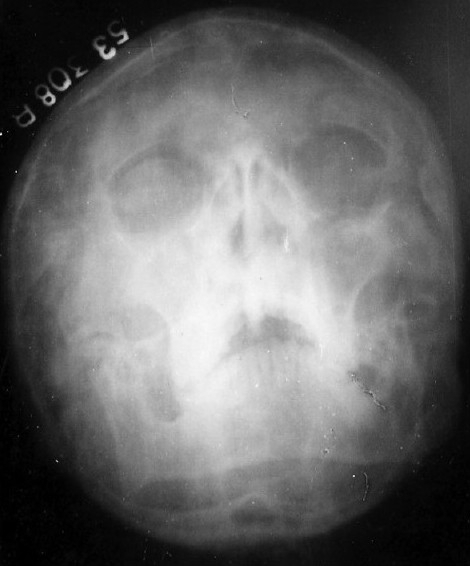
Las radiografías de cráneo muestran disminución de la transparencia de losLOSNeisseria senos paranasales y losLOSNeisseria niveles hidroaéreos.
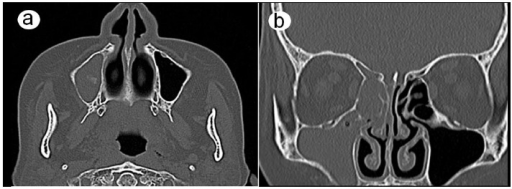
La tomografía computarizada es la modalidad de elección y muestra engrosamiento mucoperióstico, niveles hidroaéreos y extensión a tejidos blandos enENErythema nodosum is an immune-mediated panniculitis (inflammation of the subcutaneous fat) caused by a type IV (delayed-type) hypersensitivity reaction. It commonly manifests in young women as tender, erythematous nodules on the shins.Erythema Nodosum caso de complicaciones (e.g., celulitis orbitaria).
La endoscopia nasal se puede utilizar para excluir lesiones estructurales.
Biopsia
Solo se necesita si la infección recurre o si no hay respuesta a diferentes terapias empíricas.
TC: (a) el plano axial y (b) el plano coronal muestran la opacificación completa en los senos maxilar, etmoidal y frontal del lado derecho.
Imagen: “CT scans 6 weeks after the first visit” por Department of Oral and Maxillofacial Surgery, Nara Medical University, Nara, Japan. Licencia: CC BY 4.0
Radiografía de senos paranasales que muestra una sinusitis maxilar y senos frontales hipoplásicos bilaterales.
Imagen:“X-ray paranasal sinus showing maxillary sinusitis” por J.L.N. Medical College, Ajmer, India. Licencia: CC BY 2.0
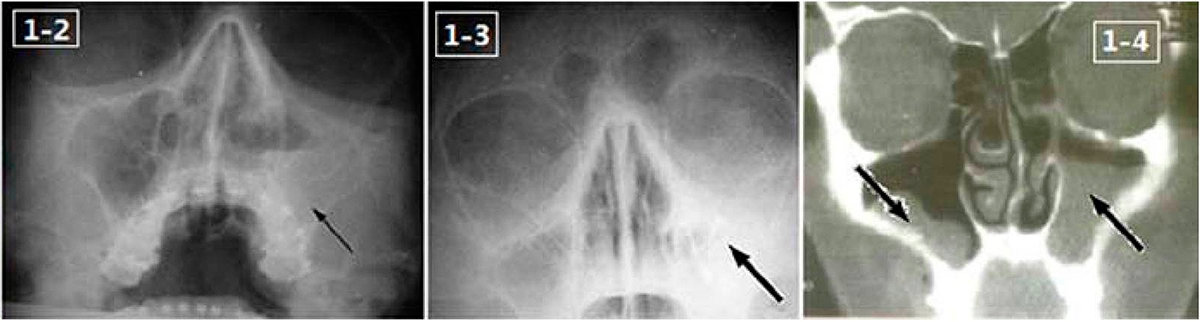
Las radiografías en proyección de Water (1-2 y 1-3) y la resonancia magnética (1-4) muestran la opacificación del seno maxilar y niveles hidroaéreos bilaterales.
Imagen:“Endoscopic image of maxillary sinus mucosa” por Lin Feng, Department of Stomatology, Chinese PLA General Hospital, Beijing 100853, P. R. China. Licencia: CC BY 3.0, editada por Lecturio. Ejemplos de diagnóstico imagenológico para la sinusitis
Tratamiento
Atención general de soporte
Debe administrarse paracetamolparacetamolAcetaminophen is an over-the-counter nonopioid analgesic and antipyretic medication and the most commonly used analgesic worldwide. Despite the widespread use of acetaminophen, its mechanism of action is not entirely understood.Acetaminophen o antiinflamatorios no esteroideos para el dolorDolorInflammation facial y, si está presente, para la fiebre.
SinusitisSinusitisSinusitis refers to inflammation of the mucosal lining of the paranasal sinuses. The condition usually occurs concurrently with inflammation of the nasal mucosa (rhinitis), a condition known as rhinosinusitis. Acute sinusitis is due to an upper respiratory infection caused by a viral, bacterial, or fungal agent. Sinusitis viral
Solo se enfoca enENErythema nodosum is an immune-mediated panniculitis (inflammation of the subcutaneous fat) caused by a type IV (delayed-type) hypersensitivity reaction. It commonly manifests in young women as tender, erythematous nodules on the shins.Erythema Nodosum proporcionar el alivio sintomático, ya que la sinusitisSinusitisSinusitis refers to inflammation of the mucosal lining of the paranasal sinuses. The condition usually occurs concurrently with inflammation of the nasal mucosa (rhinitis), a condition known as rhinosinusitis. Acute sinusitis is due to an upper respiratory infection caused by a viral, bacterial, or fungal agent. Sinusitis viral es autolimitada.
Lavado nasal con solución hipertónica de NaCl
Descongestionantes (e.g., aerosol nasal de xilometazolina) o simpaticomiméticos (e.g., pseudoefedrina)
Antihistamínicos (e.g., loratadina) si hay síntomas de alergia concurrentes
Esteroides intranasales (e.g., fluticasona) para aliviar la inflamación de la mucosa/dolorDolorInflammation facial
LosLOSNeisseria mucolíticos (e.g., guaifenesina) pueden diluir las secreciones y promover el drenaje
SinusitisSinusitisSinusitis refers to inflammation of the mucosal lining of the paranasal sinuses. The condition usually occurs concurrently with inflammation of the nasal mucosa (rhinitis), a condition known as rhinosinusitis. Acute sinusitis is due to an upper respiratory infection caused by a viral, bacterial, or fungal agent. Sinusitis bacteriana
Primera línea: amoxicilina, con o sin clavulanato durante 5–10 días
Segunda línea:
La ceftriaxona IVse usa para niños que no pueden tolerar la medicación oral.
La oxiciclina, la levofloxacina o la moxifloxacina se utilizan enENErythema nodosum is an immune-mediated panniculitis (inflammation of the subcutaneous fat) caused by a type IV (delayed-type) hypersensitivity reaction. It commonly manifests in young women as tender, erythematous nodules on the shins.Erythema Nodosum caso de alergia a la penicilina.
Se emplean levofloxacina, moxifloxacina o clindamicina si losLOSNeisseria síntomas persisten > 14 días o si no se observa mejoría dentro de losLOSNeisseria primeros 3 días de tratamiento.
SinusitisSinusitisSinusitis refers to inflammation of the mucosal lining of the paranasal sinuses. The condition usually occurs concurrently with inflammation of the nasal mucosa (rhinitis), a condition known as rhinosinusitis. Acute sinusitis is due to an upper respiratory infection caused by a viral, bacterial, or fungal agent. Sinusitis bacteriana crónica: No se deben prescribir antibióticos de forma rutinaria para la rinosinusitis crónica sin exacerbación aguda.
No se recomiendan descongestionantes ni antihistamínicos.
SinusitisSinusitisSinusitis refers to inflammation of the mucosal lining of the paranasal sinuses. The condition usually occurs concurrently with inflammation of the nasal mucosa (rhinitis), a condition known as rhinosinusitis. Acute sinusitis is due to an upper respiratory infection caused by a viral, bacterial, or fungal agent. Sinusitis fúngica
Tratamiento antifúngico (e.g., anfotericina B)
Tratamiento de condiciones inmunodepresoras (e.g., SIDA, VIH, cáncer, etcETCThe electron transport chain (ETC) sends electrons through a series of proteins, which generate an electrochemical proton gradient that produces energy in the form of adenosine triphosphate (ATP).Electron Transport Chain (ETC).)
Si la infección es crónica e invasiva, puede requerir el desbridamiento quirúrgico del tejido necrótico.
Las siguientes son posibles condiciones subyacentes o diagnósticos diferenciales de la sinusitisSinusitisSinusitis refers to inflammation of the mucosal lining of the paranasal sinuses. The condition usually occurs concurrently with inflammation of the nasal mucosa (rhinitis), a condition known as rhinosinusitis. Acute sinusitis is due to an upper respiratory infection caused by a viral, bacterial, or fungal agent. Sinusitis:
FibrosisFibrosisAny pathological condition where fibrous connective tissue invades any organ, usually as a consequence of inflammation or other injury.Bronchiolitis Obliterans quística: un trastorno autosómico recesivo causado por la mutación del gen CFTR, que produce canales de cloro defectuosos e hiperviscosidad de las secreciones de las glándulas exocrinas
Discinesia ciliar primaria: una enfermedad autosómica recesiva asociada con sinusitisSinusitisSinusitis refers to inflammation of the mucosal lining of the paranasal sinuses. The condition usually occurs concurrently with inflammation of the nasal mucosa (rhinitis), a condition known as rhinosinusitis. Acute sinusitis is due to an upper respiratory infection caused by a viral, bacterial, or fungal agent. Sinusitis, situs inversus, infecciones respiratorias recurrentes y bronquiectasias, entre otras anomalías
Absceso dental: acumulación de pus enENErythema nodosum is an immune-mediated panniculitis (inflammation of the subcutaneous fat) caused by a type IV (delayed-type) hypersensitivity reaction. It commonly manifests in young women as tender, erythematous nodules on the shins.Erythema Nodosum la pulpa de un diente que puede extenderse a estructuras locales o regionales, incluidas las encías, losLOSNeisseria huesos faciales, la lengua y losLOSNeisseria músculos faciales
Cuerpo extraño nasal: común enENErythema nodosum is an immune-mediated panniculitis (inflammation of the subcutaneous fat) caused by a type IV (delayed-type) hypersensitivity reaction. It commonly manifests in young women as tender, erythematous nodules on the shins.Erythema Nodosum niños <5 años. A menudo se trata de artículos de comida o pequeños juguetes. Se presenta con rinorrea unilateral que puede tornarse maloliente o purulenta, con signos de obstrucción nasal o con epistaxisEpistaxisBleeding from the nose.Granulomatosis with Polyangiitis
Migraña: un tipo de cefalea que se caracteriza por episodios recurrentes y debilitantes que suelen ser unilaterales, punzantes y/o pulsátiles; frecuentemente están acompañados de náuseas, vómitos y sensibilidad a la luz y alALAmyloidosis sonido.
Rinitis: inflamación de la mucosa nasal, clasificada como alérgica, no alérgica e infecciosa
AsmaASMAAutoimmune Hepatitis: enfermedad inflamatoria crónica del sistema respiratorio caracterizada por hiperreactividad bronquial, exacerbación episódica y obstrucción reversible del flujo de aire.
Otitis media: infección del oído medio que generalmente sigue a una infección del tracto respiratorio superior enENErythema nodosum is an immune-mediated panniculitis (inflammation of the subcutaneous fat) caused by a type IV (delayed-type) hypersensitivity reaction. It commonly manifests in young women as tender, erythematous nodules on the shins.Erythema Nodosum niños< 5 años de edad. Más comúnmente causada por S. pneumoniae. Se presenta con otalgiaOtalgiaAcute Otitis Media y fiebre. El examen muestra una membrana timpánica abultada.
Granulomatosis con poliangeítis: una vasculitisVasculitisInflammation of any one of the blood vessels, including the arteries; veins; and rest of the vasculature system in the body.Systemic Lupus Erythematosus asociada a anticuerpos anticitoplasma de neutrófilos que conduce a la inflamación de losLOSNeisseria vasos sanguíneos de tamaño pequeño y mediano. Resulta enENErythema nodosum is an immune-mediated panniculitis (inflammation of the subcutaneous fat) caused by a type IV (delayed-type) hypersensitivity reaction. It commonly manifests in young women as tender, erythematous nodules on the shins.Erythema Nodosum daño a varios sistemas de órganos del cuerpo, con mayor frecuencia el tracto respiratorio y losLOSNeisseria riñones.
Payne, S. C., et al. (2025). Clinical practice guideline: Adult sinusitis update. Otolaryngology–Head and Neck Surgery, 173(S1), S1–S56. https://doi.org/10.1002/ohn.1344
Gregor, J., Huynh, B., et al. (2021). High-dose vs standard-dose amoxicillin plus clavulanate for adults with acute sinusitis: a randomized clinical trial. JAMA Network Open, 4(3), e212713. doi: 10.1001/jamanetworkopen.2021.2713
Lemiengre, M. B., van Driel, M. L., Merenstein, D., Liira, H., Mäkelä, M., & De Sutter, A. I. M. (2018). Antibiotics for acute rhinosinusitis in adults. Cochrane Database of Systematic Reviews, 2018(9), Article CD006089. https://doi.org/10.1002/14651858.CD006089.pub5
Harris, A. M., Hicks, L. A., & Qaseem, A., for the High Value Care Task Force of the American College of Physicians and for the Centers for Disease Control and Prevention. (2016). Appropriate antibiotic use for acute respiratory tract infection in adults: Advice for high-value care from the American College of Physicians and the Centers for Disease Control and Prevention. Annals of Internal Medicine, 164(6), 425–434. https://doi.org/10.7326/M15-1840
DeMuri, G. P., Eickhoff, J. C., Gern, J. C., & Wald, E. R. (2019). Clinical and virological characteristics of acute sinusitis in children. Clinical Infectious Diseases, 69(10), 1764–1770. https://doi.org/10.1093/cid/ciz023
Rosenfeld RM, et al. 2015. Clinical practice guideline (update): adult sinusitis. Otolaryngol Head Neck Surg 152(2_suppl):S1–S39. https://doi.org/10.1177/0194599815572097
Fokkens WJ, Lund VJ, et al. (2020). European position paper on rhinosinusitis and nasal polyps 2020. Rhinology, 58(Suppl S29), 1–464. doi: 10.4193/Rhin20.600
Dietz de Loos D, Lourijsen ES, et al. (2019). Prevalence of chronic rhinosinusitis in the general population based on sinus radiology and symptomatology. Journal of Allergy and Clinical Immunology, 143(3), 1207–1214. doi: 10.1016/j.jaci.2018.12.986
Jayawardena ADL, Chandra R. (2018). Headaches and facial pain in rhinology. American Journal of Rhinology & Allergy, 32(1), 12–15. doi: 10.2500/ajra.2018.32.4501
Hirsch AG, Stewart WF, et al. (2017). Nasal and sinus symptoms and chronic rhinosinusitis in a population-based sample. Allergy, 72(2), 274-81. doi: 10.1111/all.13042
Murr AH. (2019). Approach to the patient with nose, sinus, and ear disorders. Chapter 398 of Crow MK, et al. (Eds.), Goldman-Cecil Medicine 26th ed., vol. 2, pp. 2548–2556.
Dubin MG, Kuhn FA, Melroy CT. (2007). Radiographic resolution of chronic rhinosinusitis without polyposis after 6 weeks vs 3 weeks of oral antibiotics. Annals of allergy, asthma & immunology : official publication of the American College of Allergy, Asthma, & Immunology, 98(1), 32–35. https://doi.org/10.1016/S1081-1206(10)60856-3
¡Crea tu cuenta gratis o inicia una sesión para seguir leyendo!
Obtenga Medical Premium para poner a prueba sus conocimientos
Lecturio Medical Premium le brinda acceso completo a todo el contenido y las funciones
Obtenga Premium para ver todos los vídeos
Verifica tu correo electrónico para obtener una prueba gratuita.
Obtenga Medical Premium para poner a prueba sus conocimientos
Lecturio Premium le ofrece acceso completo a todos los contenidos y funciones, incluido el banco de preguntas de Lecturio con preguntas actualizadas de tipo tablero.