Domina Conceptos Médicos

Estudia para la escuela de medicina y tus examenes con Lecturio.

Linfomas No Hodgkin

Los linfomas no Hodgkin son un grupo diverso de neoplasias malignas hematológicas que son trastornos proliferativos clonales de células B maduras o progenitoras, células T o células asesinas naturales. La mayoría de los casos pediátricos son agresivos y de alto grado (pero curables); en adultos, los subtipos de bajo grado son más comunes. Al igual que el linfoma de Hodgkin, que tiene distintas características patológicas y tratamientos, el linfoma no Hodgkin a menudo se presenta con signos constitucionales de fiebre, sudores nocturnos y pérdida de peso. Las características clínicas incluyen linfadenopatía y hepatoesplenomegalia, pero algunas personas presentan compromiso extraganglionar y hallazgos de laboratorio anormales. Los linfomas no Hodgkin de células B incluyen el linfoma difuso de células B grandes, linfoma folicular, linfoma de Burkitt, linfoma de células del manto y linfoma de la zona marginal. Los linfomas no Hodgkin de células T incluyen el linfoma de células T del adulto y la micosis fungoide. El diagnóstico se realiza mediante biopsia de ganglio linfático, biopsia de médula ósea o ambas. El tratamiento es con quimioterapia o medicamentos dirigidos. La radioterapia se usa en adultos, pero no en niños, y el trasplante de células madre se usa para pacientes con enfermedad agresiva.

Last updated: Aug 7, 2022

Editorial responsibility: Stanley Oiseth, Lindsay Jones, Evelin Maza

Descripción General

Definición

Los LOS Neisseria linfomas no Hodgkin son un grupo diverso de neoplasias malignas hematológicas que son trastornos proliferativos clonales de células B maduras o progenitoras, células T o células asesinas naturales.

Epidemiología

  • Incidencia en EN Erythema nodosum is an immune-mediated panniculitis (inflammation of the subcutaneous fat) caused by a type IV (delayed-type) hypersensitivity reaction. It commonly manifests in young women as tender, erythematous nodules on the shins. Erythema Nodosum los LOS Neisseria Estados Unidos: > 70 000 casos al AL Amyloidosis año (6to cáncer más común en EN Erythema nodosum is an immune-mediated panniculitis (inflammation of the subcutaneous fat) caused by a type IV (delayed-type) hypersensitivity reaction. It commonly manifests in young women as tender, erythematous nodules on the shins. Erythema Nodosum los LOS Neisseria Estados Unidos)
  • Representan el 4% de todos los LOS Neisseria cánceres:
    • Tipo más común de cáncer hematopoyético
    • Aumento de la incidencia; algunos relacionados con:
      • Infección viral (e.g., virus Virus Viruses are infectious, obligate intracellular parasites composed of a nucleic acid core surrounded by a protein capsid. Viruses can be either naked (non-enveloped) or enveloped. The classification of viruses is complex and based on many factors, including type and structure of the nucleoid and capsid, the presence of an envelope, the replication cycle, and the host range. Virology de Epstein-Barr, infección por Helicobacter pylori Helicobacter pylori A spiral bacterium active as a human gastric pathogen. It is a gram-negative, urease-positive, curved or slightly spiral organism initially isolated in 1982 from patients with lesions of gastritis or peptic ulcers in Western Australia. Helicobacter pylori was originally classified in the genus campylobacter, but RNA sequencing, cellular fatty acid profiles, growth patterns, and other taxonomic characteristics indicate that the micro-organism should be included in the genus Helicobacter. It has been officially transferred to Helicobacter gen. Helicobacter, virus Virus Viruses are infectious, obligate intracellular parasites composed of a nucleic acid core surrounded by a protein capsid. Viruses can be either naked (non-enveloped) or enveloped. The classification of viruses is complex and based on many factors, including type and structure of the nucleoid and capsid, the presence of an envelope, the replication cycle, and the host range. Virology de la leucemia/linfoma de linfocitos T humano, herpes virus Herpes Virus Antivirals for Herpes Virus humano 8, virus Virus Viruses are infectious, obligate intracellular parasites composed of a nucleic acid core surrounded by a protein capsid. Viruses can be either naked (non-enveloped) or enveloped. The classification of viruses is complex and based on many factors, including type and structure of the nucleoid and capsid, the presence of an envelope, the replication cycle, and the host range. Virology de la hepatitis C Hepatitis C Hepatitis C is an infection of the liver caused by the hepatitis C virus (HCV). The infection can be transmitted through infectious blood or body fluids and may be transmitted during childbirth or through IV drug use or sexual intercourse. Hepatitis C virus can cause both acute and chronic hepatitis, ranging from a mild to a serious, lifelong illness including liver cirrhosis and hepatocellular carcinoma (HCC). Hepatitis C Virus)
      • Inmunodeficiencia
    • Los LOS Neisseria linfomas no Hodgkin son significativamente más comunes que el linfoma de Hodgkin.
  • Ocurren tanto en EN Erythema nodosum is an immune-mediated panniculitis (inflammation of the subcutaneous fat) caused by a type IV (delayed-type) hypersensitivity reaction. It commonly manifests in young women as tender, erythematous nodules on the shins. Erythema Nodosum niños como en EN Erythema nodosum is an immune-mediated panniculitis (inflammation of the subcutaneous fat) caused by a type IV (delayed-type) hypersensitivity reaction. It commonly manifests in young women as tender, erythematous nodules on the shins. Erythema Nodosum adultos:
    • En EN Erythema nodosum is an immune-mediated panniculitis (inflammation of the subcutaneous fat) caused by a type IV (delayed-type) hypersensitivity reaction. It commonly manifests in young women as tender, erythematous nodules on the shins. Erythema Nodosum niños:
      • Los LOS Neisseria tumores suelen ser extraganglionares y a menudo se presentan como leucemias.
      • Los LOS Neisseria subtipos son de alto grado y agresivos, pero las tasas de supervivencia a 5 años son > 85%.
      • Los LOS Neisseria subtipos más comunes son el linfoma de Burkitt y la leucemia/linfoma linfoblástico
    • En EN Erythema nodosum is an immune-mediated panniculitis (inflammation of the subcutaneous fat) caused by a type IV (delayed-type) hypersensitivity reaction. It commonly manifests in young women as tender, erythematous nodules on the shins. Erythema Nodosum adultos:
      • La incidencia aumenta con la edad; media, 67 años
      • Subtipos más comunes en EN Erythema nodosum is an immune-mediated panniculitis (inflammation of the subcutaneous fat) caused by a type IV (delayed-type) hypersensitivity reaction. It commonly manifests in young women as tender, erythematous nodules on the shins. Erythema Nodosum adultos: folicular, difuso de células B grandes y leucemia linfocítica crónica/linfoma linfocítico de células pequeñas (LLC/LLCP)
      • La LLC/LLCP es mucho menos frecuente en EN Erythema nodosum is an immune-mediated panniculitis (inflammation of the subcutaneous fat) caused by a type IV (delayed-type) hypersensitivity reaction. It commonly manifests in young women as tender, erythematous nodules on the shins. Erythema Nodosum Japón y otros países asiáticos que en EN Erythema nodosum is an immune-mediated panniculitis (inflammation of the subcutaneous fat) caused by a type IV (delayed-type) hypersensitivity reaction. It commonly manifests in young women as tender, erythematous nodules on the shins. Erythema Nodosum occidente.
  • Vistos en EN Erythema nodosum is an immune-mediated panniculitis (inflammation of the subcutaneous fat) caused by a type IV (delayed-type) hypersensitivity reaction. It commonly manifests in young women as tender, erythematous nodules on the shins. Erythema Nodosum individuos de todas las razas y niveles socioeconómicos
  • Tipos:
    • Aproximadamente el 85% de linfomas no Hodgkin se derivan de las células B en EN Erythema nodosum is an immune-mediated panniculitis (inflammation of the subcutaneous fat) caused by a type IV (delayed-type) hypersensitivity reaction. It commonly manifests in young women as tender, erythematous nodules on the shins. Erythema Nodosum occidente.
    • La mayoría de los LOS Neisseria demás se derivan de las células T.
    • La leucemia/linfoma de células T es más frecuente en EN Erythema nodosum is an immune-mediated panniculitis (inflammation of the subcutaneous fat) caused by a type IV (delayed-type) hypersensitivity reaction. It commonly manifests in young women as tender, erythematous nodules on the shins. Erythema Nodosum el suroeste de Japón.
    • El linfoma de Burkitt se da más frecuentemente en EN Erythema nodosum is an immune-mediated panniculitis (inflammation of the subcutaneous fat) caused by a type IV (delayed-type) hypersensitivity reaction. It commonly manifests in young women as tender, erythematous nodules on the shins. Erythema Nodosum África subsahariana.
    • El linfoma de células asesinas naturales es raro.

Etiología

  • Etiología exacta y/o patogénesis son desconocidas para la mayoría de tipos.
  • Las infecciones virales están fuertemente asociadas con algunos linfomas no Hodgkin:
    • EBV EBV Epstein-barr virus (EBV) is a linear, double-stranded DNA virus belonging to the herpesviridae family. This highly prevalent virus is mostly transmitted through contact with oropharyngeal secretions from an infected individual. The virus can infect epithelial cells and B lymphocytes, where it can undergo lytic replication or latency. Epstein-Barr Virus:
      • Fuertemente vinculado al AL Amyloidosis linfoma de Burkitt endémico ( en EN Erythema nodosum is an immune-mediated panniculitis (inflammation of the subcutaneous fat) caused by a type IV (delayed-type) hypersensitivity reaction. It commonly manifests in young women as tender, erythematous nodules on the shins. Erythema Nodosum África Central y Nueva Guinea)
      • > 90% de tumores endémicos llevan el genoma de EBV EBV Epstein-barr virus (EBV) is a linear, double-stranded DNA virus belonging to the herpesviridae family. This highly prevalent virus is mostly transmitted through contact with oropharyngeal secretions from an infected individual. The virus can infect epithelial cells and B lymphocytes, where it can undergo lytic replication or latency. Epstein-Barr Virus
      • No es la causa directa del linfoma, pero es un mitógeno policlonal de células B, incrementando el riesgo de mutaciones malignas, incluyendo la traslocación (8;14).
    • Virus Virus Viruses are infectious, obligate intracellular parasites composed of a nucleic acid core surrounded by a protein capsid. Viruses can be either naked (non-enveloped) or enveloped. The classification of viruses is complex and based on many factors, including type and structure of the nucleoid and capsid, the presence of an envelope, the replication cycle, and the host range. Virology linfotrópico de células T humanas tipo 1 (HTLV-1, por sus siglas en EN Erythema nodosum is an immune-mediated panniculitis (inflammation of the subcutaneous fat) caused by a type IV (delayed-type) hypersensitivity reaction. It commonly manifests in young women as tender, erythematous nodules on the shins. Erythema Nodosum inglés)
      • Este es una causa definida de leucemia/linfoma de células T en EN Erythema nodosum is an immune-mediated panniculitis (inflammation of the subcutaneous fat) caused by a type IV (delayed-type) hypersensitivity reaction. It commonly manifests in young women as tender, erythematous nodules on the shins. Erythema Nodosum el adulto
      • Sus mecanismos moleculares de transformación maligna no se comprenden por completo.
    • Virus Virus Viruses are infectious, obligate intracellular parasites composed of a nucleic acid core surrounded by a protein capsid. Viruses can be either naked (non-enveloped) or enveloped. The classification of viruses is complex and based on many factors, including type and structure of the nucleoid and capsid, the presence of an envelope, the replication cycle, and the host range. Virology de la hepatitis C Hepatitis C Hepatitis C is an infection of the liver caused by the hepatitis C virus (HCV). The infection can be transmitted through infectious blood or body fluids and may be transmitted during childbirth or through IV drug use or sexual intercourse. Hepatitis C virus can cause both acute and chronic hepatitis, ranging from a mild to a serious, lifelong illness including liver cirrhosis and hepatocellular carcinoma (HCC). Hepatitis C Virus: el origen del linfoma es mayormente indirecto, a través de estimulación crónica del sistema inmunológico → crioblogulinemia → trastorno linfoproliferativo o linfoma.
    • VIH
      • Por mecanismos indirectos:
        • Marcada proliferación de células B infectadas con herpesvirus oncogénicos que no son neutralizados debido a la extrema depleción de células T.
        • Hiperplasia de células B del centro germinal en EN Erythema nodosum is an immune-mediated panniculitis (inflammation of the subcutaneous fat) caused by a type IV (delayed-type) hypersensitivity reaction. It commonly manifests in young women as tender, erythematous nodules on the shins. Erythema Nodosum infección precoz de VIH, aumentando el riesgo de adquirir mutaciones iniciadoras de linfoma, debido a las normales tasas de error Error Refers to any act of commission (doing something wrong) or omission (failing to do something right) that exposes patients to potentially hazardous situations. Disclosure of Information elevadas de cambio de clase y a la hipermutación somática en EN Erythema nodosum is an immune-mediated panniculitis (inflammation of the subcutaneous fat) caused by a type IV (delayed-type) hypersensitivity reaction. It commonly manifests in young women as tender, erythematous nodules on the shins. Erythema Nodosum los LOS Neisseria genes Genes A category of nucleic acid sequences that function as units of heredity and which code for the basic instructions for the development, reproduction, and maintenance of organisms. DNA Types and Structure de inmunoglobulinas; puede ocurrir traslocación de oncogenes Oncogenes Genes whose gain-of-function alterations lead to neoplastic cell transformation. They include, for example, genes for activators or stimulators of cell proliferation such as growth factors, growth factor receptors, protein kinases, signal transducers, nuclear phosphoproteins, and transcription factors. A prefix of ‘v-‘ before oncogene symbols indicates oncogenes captured and transmitted by retroviruses; the prefix ‘c-‘ before the gene symbol of an oncogene indicates it is the cellular homolog (proto-oncogenes) of a v-oncogene. Carcinogenesis en EN Erythema nodosum is an immune-mediated panniculitis (inflammation of the subcutaneous fat) caused by a type IV (delayed-type) hypersensitivity reaction. It commonly manifests in young women as tender, erythematous nodules on the shins. Erythema Nodosum los LOS Neisseria loci genéticos de las Ig Ig X-linked Agammaglobulinemia.
      • El linfoma en EN Erythema nodosum is an immune-mediated panniculitis (inflammation of the subcutaneous fat) caused by a type IV (delayed-type) hypersensitivity reaction. It commonly manifests in young women as tender, erythematous nodules on the shins. Erythema Nodosum un paciente VIH+ es una condición definitoria de SIDA.
    • Herpesvirus humano-8 (HHV-8, por sus siglas en EN Erythema nodosum is an immune-mediated panniculitis (inflammation of the subcutaneous fat) caused by a type IV (delayed-type) hypersensitivity reaction. It commonly manifests in young women as tender, erythematous nodules on the shins. Erythema Nodosum inglés)
      • Usualmente, se da en EN Erythema nodosum is an immune-mediated panniculitis (inflammation of the subcutaneous fat) caused by a type IV (delayed-type) hypersensitivity reaction. It commonly manifests in young women as tender, erythematous nodules on the shins. Erythema Nodosum pacientes VIH+
      • El origen del linfoma ocurre indirectamente:
        • Como resultado de una interacción entre la infección por HHV-8 y un sistema inmunológico desregulado.
      • El linfoma de efusión primaria es el linfoma más frecuente, pero también se puede producir linfoma difuso de células B grandes.
    • Gastritis Gastritis Gastritis refers to inflammation of the gastric mucosa. Gastritis may occur suddenly (acute gastritis) or slowly over time (chronic gastritis). Gastritis may be asymptomatic or with symptoms, including burning abdominal pain (which either worsens or improves with eating), dyspepsia, nausea, and vomiting. Gastritis por Helicobacter pylori Helicobacter pylori A spiral bacterium active as a human gastric pathogen. It is a gram-negative, urease-positive, curved or slightly spiral organism initially isolated in 1982 from patients with lesions of gastritis or peptic ulcers in Western Australia. Helicobacter pylori was originally classified in the genus campylobacter, but RNA sequencing, cellular fatty acid profiles, growth patterns, and other taxonomic characteristics indicate that the micro-organism should be included in the genus Helicobacter. It has been officially transferred to Helicobacter gen. Helicobacter: linfoma de zona marginal tipo MALT MALT Colon, Cecum, and Appendix: Anatomy (tejido linfoide asociado a mucosas, por sus siglas en EN Erythema nodosum is an immune-mediated panniculitis (inflammation of the subcutaneous fat) caused by a type IV (delayed-type) hypersensitivity reaction. It commonly manifests in young women as tender, erythematous nodules on the shins. Erythema Nodosum inglés) ( tumor Tumor Inflammation linfoide asociado a mucosas ( MALToma MALToma Extranodal marginal zone lymphoma (EMZL) of mucosa-associated lymphoid tissue (also called MALToma, MALT lymphoma, and pseudolymphoma) is a group of non-Hodgkin’s lymphomas that have historically been grouped together because they appear to arise from postgerminal center marginal zone B cells and share a similar immunophenotype. MALT Lymphoma))
    • Afecciones inflamatorias crónicas o enfermedades autoinmunes:
      • Tiroiditis de Hashimoto: linfoma de la zona marginal
      • Síndrome de Sjögren: linfoma de la zona marginal
      • Enfermedad celíaca
      • Artritis reumatoide
      • Lupus eritematoso sistémico
    • Inmunodeficiencia:
      • Síndrome de ataxia Ataxia Impairment of the ability to perform smoothly coordinated voluntary movements. This condition may affect the limbs, trunk, eyes, pharynx, larynx, and other structures. Ataxia may result from impaired sensory or motor function. Sensory ataxia may result from posterior column injury or peripheral nerve diseases. Motor ataxia may be associated with cerebellar diseases; cerebral cortex diseases; thalamic diseases; basal ganglia diseases; injury to the red nucleus; and other conditions. Ataxia-telangiectasia telangiectasia Telangiectasia Permanent dilation of preexisting blood vessels creating small focal red lesions, most commonly in the skin or mucous membranes. It is characterized by the prominence of skin blood vessels, such as vascular spiders. Chronic Venous Insufficiency
      • Enfermedad de inmunodeficiencia variable Variable Variables represent information about something that can change. The design of the measurement scales, or of the methods for obtaining information, will determine the data gathered and the characteristics of that data. As a result, a variable can be qualitative or quantitative, and may be further classified into subgroups. Types of Variables común
      • VIH (por acción indirecta): linfoma difuso de células B grandes, linfoma de Burkitt
      • Inmunosupresión iatrogénica
    • Exposición a sustancias químicas y medicamentos:
      • Quimioterapia o radiación previa
      • Fenitoína
      • Dioxina (fenoxi herbicidas)
    • Factores genéticos: algunos polimorfismos de un solo nucleótido están asociados con un riesgo ↑ de linfoma no Hodgkin.

Clasificación

  • Los LOS Neisseria subtipos se clasifican según su:
    • Célula de origen
    • Morfología
    • Inmunofenotipo
    • Perfil genético y molecular
    • Características clínicas
  • Clasificados en EN Erythema nodosum is an immune-mediated panniculitis (inflammation of the subcutaneous fat) caused by a type IV (delayed-type) hypersensitivity reaction. It commonly manifests in young women as tender, erythematous nodules on the shins. Erythema Nodosum 5 grandes categorías por la World Health Organization (WHO):
    • Neoplasias de células B precursoras: leucemia/linfoma linfoblástico agudo de células B precursoras
    • Neoplasias de células B periféricas:
      • Leucemia linfocítica crónica/linfoma linfocítico pequeño
      • Linfomas de la zona marginal
      • Linfoma de células del manto
      • Linfoma difuso de células B grandes
      • Linfoma de Burkitt
    • Neoplasias de células T precursoras: leucemia/linfoma linfoblástico agudo de células T precursoras
    • Neoplasias de células T periféricas y células asesinas naturales:
      • Leucemia prolinfocítica de células T
      • Micosis fungoide/síndrome de Sézary
      • Linfoma periférico de células T, no especificado
      • Leucemia/linfoma de células T del adulto
      • Linfoma extraganglionar de células T/asesinas naturales
      • Leucemia de células asesinas naturales
    • Linfoma de Hodgkin (todos los LOS Neisseria subtipos)
  • Los LOS Neisseria linfomas también se pueden clasificar de otras formas:
    • Ganglionar (⅔) o extraganglionar (⅓)
    • Agresivo (60%) o indolente (40%)

Fisiopatología

La patogenia del linfoma no Hodgkin implica múltiples lesiones genéticas que afectan a los LOS Neisseria protooncogenes y a los LOS Neisseria genes Genes A category of nucleic acid sequences that function as units of heredity and which code for the basic instructions for the development, reproduction, and maintenance of organisms. DNA Types and Structure supresores de tumores. Las células anormales también parecen escapar de la vigilancia inmunológica.

Patogénesis

  • Las translocaciones genéticas colocan un protooncogén junto a un gen activo en EN Erythema nodosum is an immune-mediated panniculitis (inflammation of the subcutaneous fat) caused by a type IV (delayed-type) hypersensitivity reaction. It commonly manifests in young women as tender, erythematous nodules on the shins. Erythema Nodosum los LOS Neisseria linfocitos, lo que da como resultado la sobreexpresión de factores de transcripción:
    • t(14;18) causa ↑ expresión de BCL2 (linfoma de células foliculares)
    • t(8;14) causa ↑ expresión de c-MYC c-MYC Basic helix-loop-helix transcription factors encoded by the c-myc genes. They are normally involved in nucleic acid metabolism and in mediating the cellular response to growth factors. Elevated and deregulated (constitutive) expression of c-myc proteins can cause tumorigenesis. Non-Hodgkin Lymphomas (linfoma de Burkitt)
    • t(11;14) causa ↑ expresión de ciclina D1 (linfoma de células del manto)
  • Pueden estar involucradas células precursoras o células maduras.
  • Etapa de diferenciación de linfocitos en EN Erythema nodosum is an immune-mediated panniculitis (inflammation of the subcutaneous fat) caused by a type IV (delayed-type) hypersensitivity reaction. It commonly manifests in young women as tender, erythematous nodules on the shins. Erythema Nodosum la que ocurre el evento oncogénico → presentación y pronóstico de la enfermedad

Mecanismos que contribuyen a los LOS Neisseria linfomas no Hodgkin

  • Translocaciones cromosómicas (e.g., t(11:14) en EN Erythema nodosum is an immune-mediated panniculitis (inflammation of the subcutaneous fat) caused by a type IV (delayed-type) hypersensitivity reaction. It commonly manifests in young women as tender, erythematous nodules on the shins. Erythema Nodosum el linfoma de células del manto)
  • Alteraciones cromosómicas desequilibradas: (e.g., leucemia linfocítica crónica/linfoma linfocítico pequeño)
    • Reconocidas por secuenciación genómica
    • Asociadas con progresión tumoral y resultados adversos
  • Mutaciones somáticas:
    • Algunas son clonales: presentes en EN Erythema nodosum is an immune-mediated panniculitis (inflammation of the subcutaneous fat) caused by a type IV (delayed-type) hypersensitivity reaction. It commonly manifests in young women as tender, erythematous nodules on the shins. Erythema Nodosum todas las células del linfoma (lo que sugiere un inicio temprano de los LOS Neisseria eventos patogénicos)
    • Muchas son “impulsoras”: se encuentran solo en EN Erythema nodosum is an immune-mediated panniculitis (inflammation of the subcutaneous fat) caused by a type IV (delayed-type) hypersensitivity reaction. It commonly manifests in young women as tender, erythematous nodules on the shins. Erythema Nodosum un subconjunto de células de linfoma (lo que sugiere un inicio más tardío en EN Erythema nodosum is an immune-mediated panniculitis (inflammation of the subcutaneous fat) caused by a type IV (delayed-type) hypersensitivity reaction. It commonly manifests in young women as tender, erythematous nodules on the shins. Erythema Nodosum la patogénesis)
  • Modificaciones epigenéticas: mutaciones que afectan a los LOS Neisseria genes Genes A category of nucleic acid sequences that function as units of heredity and which code for the basic instructions for the development, reproduction, and maintenance of organisms. DNA Types and Structure que regulan las modificaciones de las histonas
  • Daño del genoma: reordenamiento y/o reparación aberrante del ácido desoxirribonucleico (ADN)
  • Virus Virus Viruses are infectious, obligate intracellular parasites composed of a nucleic acid core surrounded by a protein capsid. Viruses can be either naked (non-enveloped) or enveloped. The classification of viruses is complex and based on many factors, including type and structure of the nucleoid and capsid, the presence of an envelope, the replication cycle, and the host range. Virology oncogénicos: introducen genes Genes A category of nucleic acid sequences that function as units of heredity and which code for the basic instructions for the development, reproduction, and maintenance of organisms. DNA Types and Structure extraños en EN Erythema nodosum is an immune-mediated panniculitis (inflammation of the subcutaneous fat) caused by a type IV (delayed-type) hypersensitivity reaction. It commonly manifests in young women as tender, erythematous nodules on the shins. Erythema Nodosum sus células diana

Diferencias en EN Erythema nodosum is an immune-mediated panniculitis (inflammation of the subcutaneous fat) caused by a type IV (delayed-type) hypersensitivity reaction. It commonly manifests in young women as tender, erythematous nodules on the shins. Erythema Nodosum el mecanismo de los LOS Neisseria tumores sólidos

  • El genoma del linfoma no Hodgkin es relativamente estable (a diferencia de la inestabilidad genómica aleatoria que se observa en EN Erythema nodosum is an immune-mediated panniculitis (inflammation of the subcutaneous fat) caused by a type IV (delayed-type) hypersensitivity reaction. It commonly manifests in young women as tender, erythematous nodules on the shins. Erythema Nodosum los LOS Neisseria tumores sólidos).
  • La inestabilidad de microsatélites (debido a defectos en EN Erythema nodosum is an immune-mediated panniculitis (inflammation of the subcutaneous fat) caused by a type IV (delayed-type) hypersensitivity reaction. It commonly manifests in young women as tender, erythematous nodules on the shins. Erythema Nodosum los LOS Neisseria genes Genes A category of nucleic acid sequences that function as units of heredity and which code for the basic instructions for the development, reproduction, and maintenance of organisms. DNA Types and Structure de reparación de desajustes del ADN) es poco frecuente en EN Erythema nodosum is an immune-mediated panniculitis (inflammation of the subcutaneous fat) caused by a type IV (delayed-type) hypersensitivity reaction. It commonly manifests in young women as tender, erythematous nodules on the shins. Erythema Nodosum comparación con los LOS Neisseria tumores sólidos.

Presentación Clínica

La mayoría de los LOS Neisseria linfomas se presentan con linfadenopatía indolora con afectación variable Variable Variables represent information about something that can change. The design of the measurement scales, or of the methods for obtaining information, will determine the data gathered and the characteristics of that data. As a result, a variable can be qualitative or quantitative, and may be further classified into subgroups. Types of Variables de la sangre periférica, médula ósea, tubo digestivo, piel o sistema nervioso central (SNC).
Linfomas agresivos de “alto grado”

  • Masa de rápido crecimiento (sin dolor Dolor Inflammation)
  • Síntomas constitucionales “B”:
    • Fiebre leve
    • Sudoración nocturna
    • Pérdida de peso
  • Fatiga
  • Los LOS Neisseria ganglios mediastínicos y retroperitoneales agrandados pueden producir presión sobre:
    • Vena cava superior → edema Edema Edema is a condition in which excess serous fluid accumulates in the body cavity or interstitial space of connective tissues. Edema is a symptom observed in several medical conditions. It can be categorized into 2 types, namely, peripheral (in the extremities) and internal (in an organ or body cavity). Edema facial y disnea
    • Compresión del árbol biliar → ictericia
    • Compresión de uréteres → hidronefrosis
    • Obstrucción intestinal
  • Derrames pleurales
  • Puede tener manifestaciones leucémicas (afectación de la médula ósea o sangre periférica)
  • Afectación mediastínica poco frecuente

Linfomas indolentes de “bajo grado”

  • Inicio insidioso
  • Linfadenopatías periféricas indoloras
  • Hepatomegalia o esplenomegalia
  • Citopenias:
    • Anemia Anemia Anemia is a condition in which individuals have low Hb levels, which can arise from various causes. Anemia is accompanied by a reduced number of RBCs and may manifest with fatigue, shortness of breath, pallor, and weakness. Subtypes are classified by the size of RBCs, chronicity, and etiology. Anemia: Overview and Types (33%)
    • Neutropenia Neutropenia Neutrophils are an important component of the immune system and play a significant role in the eradication of infections. Low numbers of circulating neutrophils, referred to as neutropenia, predispose the body to recurrent infections or sepsis, though patients can also be asymptomatic. Neutropenia
    • Trombocitopenia

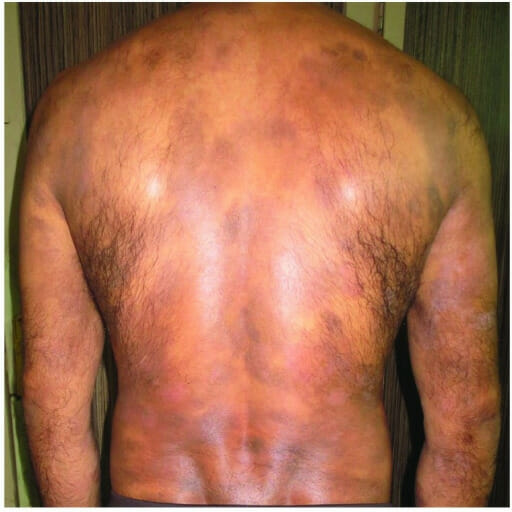
Linfoma cutáneo de células T

  • Eritema difuso
  • Pápulas discretas, placas y nódulos
Micosis fungoide

Micosis fungoide en un hombre de 40 años con erupción generalizada

Imagen: “Mycosis fungoides in a 40-year-old man manifested as generalized atrophic patches” por F1000Research. Licencia: CC BY 4.0

Diagnóstico y Estadificación

El diagnóstico adecuado requiere examen histológico, inmunofenotipificación, genotipificación y consideración de las características clínicas. La estadificación es similar a la del linfoma de Hodgkin.
Diagnóstico

  • Antecedentes que incluyen síntomas B y antecedentes pasados o presentes de:
    • Factores de riesgo de VIH
    • Hepatitis B Hepatitis B Hepatitis B virus (HBV) is a partially double-stranded DNA virus, which belongs to the Orthohepadnavirus genus and the Hepadnaviridae family. Most individuals with acute HBV infection are asymptomatic or have mild, self-limiting symptoms. Chronic infection can be asymptomatic or create hepatic inflammation, leading to liver cirrhosis and hepatocellular carcinoma (HCC). Hepatitis B Virus o C
  • Examen físico e imagenología
  • Biopsia por escisión de ganglio linfático si hay ganglios palpables:
    • La inmunohistoquímica define la distribución de las células T y B.
    • Análisis citogenético y mutacional:
      • t(14;18) visto en EN Erythema nodosum is an immune-mediated panniculitis (inflammation of the subcutaneous fat) caused by a type IV (delayed-type) hypersensitivity reaction. It commonly manifests in young women as tender, erythematous nodules on the shins. Erythema Nodosum linfoma folicular
      • Mutación MYD88 en EN Erythema nodosum is an immune-mediated panniculitis (inflammation of the subcutaneous fat) caused by a type IV (delayed-type) hypersensitivity reaction. It commonly manifests in young women as tender, erythematous nodules on the shins. Erythema Nodosum linfoma linfoblástico
  • Estudio de laboratorio inicial
    • Hemograma con diferencial de leucocitos y recuento de plaquetas
    • Pruebas para evidenciar una hipogammaglobulinemia:
      • Aproximadamente el 15% de los LOS Neisseria pacientes en EN Erythema nodosum is an immune-mediated panniculitis (inflammation of the subcutaneous fat) caused by a type IV (delayed-type) hypersensitivity reaction. It commonly manifests in young women as tender, erythematous nodules on the shins. Erythema Nodosum el momento del diagnóstico
      • Aumenta el riesgo de infección bacteriana
      • Puede requerir reemplazo intravenoso de inmunoglobulina
    • Otros laboratorios:
      • Electrolitos
      • Función renal: nitrógeno de urea Urea A compound formed in the liver from ammonia produced by the deamination of amino acids. It is the principal end product of protein catabolism and constitutes about one half of the total urinary solids. Urea Cycle (BUN, por sus siglas en EN Erythema nodosum is an immune-mediated panniculitis (inflammation of the subcutaneous fat) caused by a type IV (delayed-type) hypersensitivity reaction. It commonly manifests in young women as tender, erythematous nodules on the shins. Erythema Nodosum inglés)/creatinina
      • Pruebas de función hepática
      • Lactato deshidrogenasa ( LDH LDH Osteosarcoma)
      • Nivel de ácido úrico
      • Pruebas de VIH, hepatitis B Hepatitis B Hepatitis B virus (HBV) is a partially double-stranded DNA virus, which belongs to the Orthohepadnavirus genus and the Hepadnaviridae family. Most individuals with acute HBV infection are asymptomatic or have mild, self-limiting symptoms. Chronic infection can be asymptomatic or create hepatic inflammation, leading to liver cirrhosis and hepatocellular carcinoma (HCC). Hepatitis B Virus y hepatitis C Hepatitis C Hepatitis C is an infection of the liver caused by the hepatitis C virus (HCV). The infection can be transmitted through infectious blood or body fluids and may be transmitted during childbirth or through IV drug use or sexual intercourse. Hepatitis C virus can cause both acute and chronic hepatitis, ranging from a mild to a serious, lifelong illness including liver cirrhosis and hepatocellular carcinoma (HCC). Hepatitis C Virus, si están indicadas
  • Biopsia de médula ósea
  • Endoscopia/gastroscopia si se necesita una biopsia en EN Erythema nodosum is an immune-mediated panniculitis (inflammation of the subcutaneous fat) caused by a type IV (delayed-type) hypersensitivity reaction. It commonly manifests in young women as tender, erythematous nodules on the shins. Erythema Nodosum caso de sospecha de afectación gastrointestinal
  • Punción lumbar si:
    • Síntomas de afectación del SNC
    • Médula ósea positiva
    • Linfoma agresivo (tipos de linfoma de células grandes, linfoblástico o de Burkitt)
  • Toracocentesis o paracentesis Paracentesis A procedure in which fluid is withdrawn from a body cavity or organ via a trocar and cannula, needle, or other hollow instrument. Portal Hypertension si hay derrame pleural o ascitis
  • Imagenología:
    • Radiografía de tórax
    • Tomografía computarizada (TC) de abdomen, pelvis Pelvis The pelvis consists of the bony pelvic girdle, the muscular and ligamentous pelvic floor, and the pelvic cavity, which contains viscera, vessels, and multiple nerves and muscles. The pelvic girdle, composed of 2 “hip” bones and the sacrum, is a ring-like bony structure of the axial skeleton that links the vertebral column with the lower extremities. Pelvis: Anatomy, tórax:
      • No solo para estadificación; también se utiliza para biopsia guiada si es necesario
      • También se utiliza para la evaluación de la respuesta a la terapia
    • Tomografía por emisión de positrones ( PET PET An imaging technique that combines a positron-emission tomography (PET) scanner and a ct X ray scanner. This establishes a precise anatomic localization in the same session. Nuclear Imaging, por sus siglas en EN Erythema nodosum is an immune-mediated panniculitis (inflammation of the subcutaneous fat) caused by a type IV (delayed-type) hypersensitivity reaction. It commonly manifests in young women as tender, erythematous nodules on the shins. Erythema Nodosum inglés) en EN Erythema nodosum is an immune-mediated panniculitis (inflammation of the subcutaneous fat) caused by a type IV (delayed-type) hypersensitivity reaction. It commonly manifests in young women as tender, erythematous nodules on the shins. Erythema Nodosum linfoma de células grandes
    • Resonancia magnética (RM) del cerebro y la médula espinal si hay síntomas neurológicos

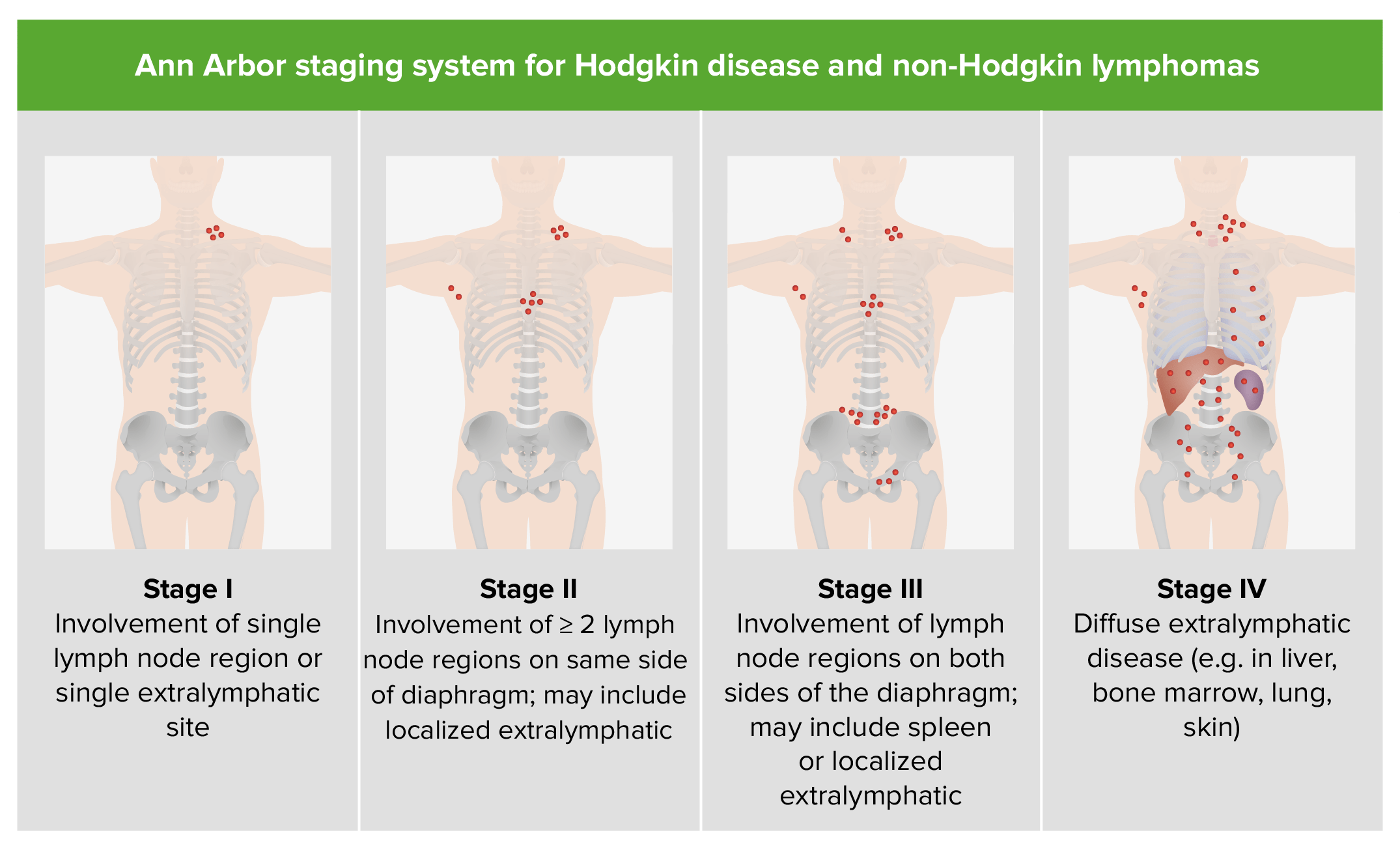
Estadificación del linfoma no Hodgkin

Tabla: Estadios
Estadio I compromiso de un solo grupo de ganglios linfáticos o de un solo órgano extralinfático
Estadio II afectación de ≥ 2 grupos de ganglios linfáticos del mismo lado del diafragma
Estadio III afectación de los LOS Neisseria ganglios linfáticos, el bazo o ambos, a ambos lados del diafragma
Estadio IV afectación difusa o diseminada de ≥ 1 órgano extralinfático (hígado, médula ósea, pulmón) con o sin afectación de ganglios linfáticos
  • Se utiliza un subíndice “E” si se encuentra una extensión extraganglionar limitada.
  • Un subíndice “X” designa enfermedad voluminosa:
    • No tomado en EN Erythema nodosum is an immune-mediated panniculitis (inflammation of the subcutaneous fat) caused by a type IV (delayed-type) hypersensitivity reaction. It commonly manifests in young women as tender, erythematous nodules on the shins. Erythema Nodosum cuenta para fines de tratamiento
    • Se considera voluminoso el linfoma folicular cuando mide 6 cm.
    • Se considera voluminoso el linfoma de células B grandes cuando mide de 6–10 cm
  • A diferencia del linfoma de Hodgkin, los LOS Neisseria síntomas B no se toman en EN Erythema nodosum is an immune-mediated panniculitis (inflammation of the subcutaneous fat) caused by a type IV (delayed-type) hypersensitivity reaction. It commonly manifests in young women as tender, erythematous nodules on the shins. Erythema Nodosum cuenta en EN Erythema nodosum is an immune-mediated panniculitis (inflammation of the subcutaneous fat) caused by a type IV (delayed-type) hypersensitivity reaction. It commonly manifests in young women as tender, erythematous nodules on the shins. Erythema Nodosum la estadificación del linfoma no Hodgkin.
Estadificación de la enfermedad de Hodgkin

Estadificación del linfoma no Hodgkin (igual que para la enfermedad de Hodgkin)

Imagen por Lecturio.

Tratamiento y Pronóstico

El tratamiento se basa en EN Erythema nodosum is an immune-mediated panniculitis (inflammation of the subcutaneous fat) caused by a type IV (delayed-type) hypersensitivity reaction. It commonly manifests in young women as tender, erythematous nodules on the shins. Erythema Nodosum muchos factores, incluidos el subtipo histológico, el estadio y las comorbilidades. CD19 se expresa en EN Erythema nodosum is an immune-mediated panniculitis (inflammation of the subcutaneous fat) caused by a type IV (delayed-type) hypersensitivity reaction. It commonly manifests in young women as tender, erythematous nodules on the shins. Erythema Nodosum gran medida en EN Erythema nodosum is an immune-mediated panniculitis (inflammation of the subcutaneous fat) caused by a type IV (delayed-type) hypersensitivity reaction. It commonly manifests in young women as tender, erythematous nodules on the shins. Erythema Nodosum casi todas las neoplasias malignas de células B, lo que lo convierte en EN Erythema nodosum is an immune-mediated panniculitis (inflammation of the subcutaneous fat) caused by a type IV (delayed-type) hypersensitivity reaction. It commonly manifests in young women as tender, erythematous nodules on the shins. Erythema Nodosum un receptor Receptor Receptors are proteins located either on the surface of or within a cell that can bind to signaling molecules known as ligands (e.g., hormones) and cause some type of response within the cell. Receptors atractivo para nuevas terapias dirigidas.

Tratamiento

  • Estadio I (enfermedad localizada):
    • Radiación regional: posible cura en EN Erythema nodosum is an immune-mediated panniculitis (inflammation of the subcutaneous fat) caused by a type IV (delayed-type) hypersensitivity reaction. It commonly manifests in young women as tender, erythematous nodules on the shins. Erythema Nodosum un 40%
    • Curso corto de quimioterapia
    • Para el linfoma linfoblástico en EN Erythema nodosum is an immune-mediated panniculitis (inflammation of the subcutaneous fat) caused by a type IV (delayed-type) hypersensitivity reaction. It commonly manifests in young women as tender, erythematous nodules on the shins. Erythema Nodosum estadio I o el linfoma de Burkitt: quimioterapia combinada intensiva con profilaxis meníngea
  • Para la enfermedad avanzada (estadios II, III, IV o síntomas B), la terapia a menudo consiste en EN Erythema nodosum is an immune-mediated panniculitis (inflammation of the subcutaneous fat) caused by a type IV (delayed-type) hypersensitivity reaction. It commonly manifests in young women as tender, erythematous nodules on the shins. Erythema Nodosum:
    • Radioterapia:
      • Puede usarse para limitar el número de ciclos de quimioinmunoterapia
      • Tratamiento localizado para sitios residuales de enfermedad voluminosa
    • Inmunoterapia:
      • Las terapias con anticuerpos monoclonales anti-CD20 pueden retrasar la necesidad de quimioterapia mielosupresora.
      • Anticuerpos monoclonales dirigidos a CD20: rituximab Rituximab A murine-derived monoclonal antibody and antineoplastic agent that binds specifically to the cd20 antigen and is used in the treatment of leukemia; lymphoma and rheumatoid arthritis. Immunosuppressants, obinutuzumab, ofatumumab
    • Quimioterapia: (R-CHOP) Rituximab (anticuerpo monoclonal anti-CD20) más Ciclofosfamida, Hidroxidaunorrubicina, vincristina (Oncovin) y Prednisona
    • Medicamentos dirigidos:
      • Inhibidores de la tirosina quinasa de Bruton para linfoma no Hodgkin folicular, de células del manto y de zona marginal: ibrutinib Ibrutinib Targeted and Other Nontraditional Antineoplastic Therapy, acalabrutinib Acalabrutinib Targeted and Other Nontraditional Antineoplastic Therapy y zanubrutinib
      • Inmunoterapias dirigidas a CD19 (e.g., blinatumomab)
      • Los LOS Neisseria anticuerpos biespecíficos contra CD19 y CD3 CD3 Complex of at least five membrane-bound polypeptides in mature T-lymphocytes that are non-covalently associated with one another and with the T-cell receptor. The CD3 complex includes the gamma, delta, epsilon, zeta, and eta chains (subunits). When antigen binds to the T-cell receptor, the CD3 complex transduces the activating signals to the cytoplasm of the T-cell. The CD3 gamma and delta chains (subunits) are separate from and not related to the gamma/delta chains of the T-cell receptor. T cells: Types and Functions se encuentran en EN Erythema nodosum is an immune-mediated panniculitis (inflammation of the subcutaneous fat) caused by a type IV (delayed-type) hypersensitivity reaction. It commonly manifests in young women as tender, erythematous nodules on the shins. Erythema Nodosum las primeras investigaciones.
      • Células T modificadas con receptor Receptor Receptors are proteins located either on the surface of or within a cell that can bind to signaling molecules known as ligands (e.g., hormones) and cause some type of response within the cell. Receptors de antígeno quimérico: células T autólogas que han sido modificadas genéticamente para reconocer un antígeno tumoral (e.g., CD19)—cura potencial para el linfoma difuso de células B grandes refractario
    • El trasplante de células madre hematopoyéticas se utiliza para:
      • Linfoma no Hodgkin de células T periféricas
      • Linfoma primario del SNC
      • Linfoma no Hodgkin sin remisión al AL Amyloidosis final de la terapia o con recaída después de la quimioterapia
  • Linfoma folicular:
    • Se trata solo si el trastorno está causando problemas
    • Quimioterapia con bendamustina más rituximab Rituximab A murine-derived monoclonal antibody and antineoplastic agent that binds specifically to the cd20 antigen and is used in the treatment of leukemia; lymphoma and rheumatoid arthritis. Immunosuppressants (igual eficacia que R-CHOP, pero menor toxicidad)

Pronóstico

Los LOS Neisseria linfomas no Hodgkin de alto grado son agresivos pero tienen un mejor pronóstico, mientras que los LOS Neisseria de bajo grado progresan lentamente, pero son difíciles de curar.

Los LOS Neisseria factores del Índice Pronóstico Internacional que se asocian a un peor pronóstico:

  • Edad > 60 años
  • Presencia de síntomas B
  • Enfermedad en EN Erythema nodosum is an immune-mediated panniculitis (inflammation of the subcutaneous fat) caused by a type IV (delayed-type) hypersensitivity reaction. It commonly manifests in young women as tender, erythematous nodules on the shins. Erythema Nodosum estadio III o IV
  • LDH LDH Osteosarcoma sérica elevada
  • Estado funcional
  • > 1 sitio extraganglionar
  • Enfermedad avanzada versus localizada

Supervivencia general a 5 años para los LOS Neisseria linfomas no Hodgkin en EN Erythema nodosum is an immune-mediated panniculitis (inflammation of the subcutaneous fat) caused by a type IV (delayed-type) hypersensitivity reaction. It commonly manifests in young women as tender, erythematous nodules on the shins. Erythema Nodosum general:

  • 72% para caucásicos y 63% para afroamericanos
  • Rango de supervivencia mucho más amplio que para el linfoma de Hodgkin (que tiene una tasa de supervivencia a 5 años de 85%–90%) debido a la heterogeneidad en EN Erythema nodosum is an immune-mediated panniculitis (inflammation of the subcutaneous fat) caused by a type IV (delayed-type) hypersensitivity reaction. It commonly manifests in young women as tender, erythematous nodules on the shins. Erythema Nodosum los LOS Neisseria linfomas no Hodgkin
  • En EN Erythema nodosum is an immune-mediated panniculitis (inflammation of the subcutaneous fat) caused by a type IV (delayed-type) hypersensitivity reaction. It commonly manifests in young women as tender, erythematous nodules on the shins. Erythema Nodosum linfoma difuso de células B grandes, el pronóstico depende de la célula de origen; peor si hay reordenamientos del gen MYC o BCL
  • En EN Erythema nodosum is an immune-mediated panniculitis (inflammation of the subcutaneous fat) caused by a type IV (delayed-type) hypersensitivity reaction. It commonly manifests in young women as tender, erythematous nodules on the shins. Erythema Nodosum el linfoma folicular, la enfermedad responde, pero casi siempre reaparece después de la quimioterapia o la radioterapia
    • La mayoría sobrevive de 15–20 años
    • 3% se transforman en EN Erythema nodosum is an immune-mediated panniculitis (inflammation of the subcutaneous fat) caused by a type IV (delayed-type) hypersensitivity reaction. It commonly manifests in young women as tender, erythematous nodules on the shins. Erythema Nodosum linfoma difuso de células B grandes cada año

Complicaciones

  • Algunas quimioterapias pueden causar cardiomiopatía o arritmias
  • Mielodisplasia en EN Erythema nodosum is an immune-mediated panniculitis (inflammation of the subcutaneous fat) caused by a type IV (delayed-type) hypersensitivity reaction. It commonly manifests in young women as tender, erythematous nodules on the shins. Erythema Nodosum los LOS Neisseria 1ros 10 años después del tratamiento
  • Leucemia aguda debida a los LOS Neisseria efectos de los LOS Neisseria agentes de quimioterapia en EN Erythema nodosum is an immune-mediated panniculitis (inflammation of the subcutaneous fat) caused by a type IV (delayed-type) hypersensitivity reaction. It commonly manifests in young women as tender, erythematous nodules on the shins. Erythema Nodosum la médula ósea
  • ↑ Riesgo de cánceres secundarios con radiación previa al AL Amyloidosis tórax

Comparación de Linfomas No Hodgkin

Tabla: Comparación de linfomas no Hodgkin
Origen Tipo Factores de riesgo y genética Epidemiología Patología y características clínicas
Célula B (85%–90%) DLBCL DLBCL Malignant lymphoma composed of large B lymphoid cells whose nuclear size can exceed normal macrophage nuclei, or more than twice the size of a normal lymphocyte. The pattern is predominantly diffuse. Most of these lymphomas represent the malignant counterpart of B-lymphocytes at midstage in the process of differentiation. Non-Hodgkin Lymphomas Surge de forma esporádica o de la transformación de un linfoma de bajo grado (e.g., linfoma folicular)
  • Linfoma de alto grado más común
  • Edad: adultez tardía
  • Grupo heterogéneo con diferentes genotipos, pronósticos y respuestas a la terapia
  • Supervivencia a 5 años: aproximadamente 65%
  • Ganglio linfático agrandado o masa extraganglionar
  • Extremadamente agresivo
Linfoma folicular t(14;18) → sobreexpresión de BCL2 (gen que regula la apoptosis Apoptosis A regulated cell death mechanism characterized by distinctive morphologic changes in the nucleus and cytoplasm, including the endonucleolytic cleavage of genomic DNA, at regularly spaced, internucleosomal sites, I.e., DNA fragmentation. It is genetically-programmed and serves as a balance to mitosis in regulating the size of animal tissues and in mediating pathologic processes associated with tumor growth. Ischemic Cell Damage)
  • Linfoma de bajo grado más frecuente
  • Edad: a menudo en EN Erythema nodosum is an immune-mediated panniculitis (inflammation of the subcutaneous fat) caused by a type IV (delayed-type) hypersensitivity reaction. It commonly manifests in young women as tender, erythematous nodules on the shins. Erythema Nodosum la mediana edad o mayor
  • Linfadenopatía indolora
  • Complicaciones: cierto progreso a linfoma difuso de células B grandes
Linfoma de Burkitt
  • Asociado con EBV EBV Epstein-barr virus (EBV) is a linear, double-stranded DNA virus belonging to the herpesviridae family. This highly prevalent virus is mostly transmitted through contact with oropharyngeal secretions from an infected individual. The virus can infect epithelial cells and B lymphocytes, where it can undergo lytic replication or latency. Epstein-Barr Virus
  • t(8;14) → sobreexpresión de c-MYC c-MYC Basic helix-loop-helix transcription factors encoded by the c-myc genes. They are normally involved in nucleic acid metabolism and in mediating the cellular response to growth factors. Elevated and deregulated (constitutive) expression of c-myc proteins can cause tumorigenesis. Non-Hodgkin Lymphomas
  • También asociado con la infección por VIH
  • Edad: adolescentes o adultos jóvenes
  • En EN Erythema nodosum is an immune-mediated panniculitis (inflammation of the subcutaneous fat) caused by a type IV (delayed-type) hypersensitivity reaction. It commonly manifests in young women as tender, erythematous nodules on the shins. Erythema Nodosum África: niños en EN Erythema nodosum is an immune-mediated panniculitis (inflammation of the subcutaneous fat) caused by a type IV (delayed-type) hypersensitivity reaction. It commonly manifests in young women as tender, erythematous nodules on the shins. Erythema Nodosum regiones donde la malaria Malaria Malaria is an infectious parasitic disease affecting humans and other animals. Most commonly transmitted via the bite of a female Anopheles mosquito infected with microorganisms of the Plasmodium genus. Patients present with fever, chills, myalgia, headache, and diaphoresis. Plasmodium/Malaria y el EBV EBV Epstein-barr virus (EBV) is a linear, double-stranded DNA virus belonging to the herpesviridae family. This highly prevalent virus is mostly transmitted through contact with oropharyngeal secretions from an infected individual. The virus can infect epithelial cells and B lymphocytes, where it can undergo lytic replication or latency. Epstein-Barr Virus son endémicos
  • Apariencia de cielo estrellado en EN Erythema nodosum is an immune-mediated panniculitis (inflammation of the subcutaneous fat) caused by a type IV (delayed-type) hypersensitivity reaction. It commonly manifests in young women as tender, erythematous nodules on the shins. Erythema Nodosum histología (muchos macrófagos con inclusiones teñidas)
  • Altamente agresivo
Linfoma de células del manto t(11;14) → sobreexpresión de ciclina D1
  • Edad: adultez tardía
  • Hombres > mujeres
  • Linfadenopatía indolora
  • Altamente agresivo, a menudo se presenta en EN Erythema nodosum is an immune-mediated panniculitis (inflammation of the subcutaneous fat) caused by a type IV (delayed-type) hypersensitivity reaction. It commonly manifests in young women as tender, erythematous nodules on the shins. Erythema Nodosum la última etapa de la enfermedad
MZL
  • Asociado con inflamación crónica debido a autoinmunidad o infección
  • t(11;18) anormalidad citogenética en EN Erythema nodosum is an immune-mediated panniculitis (inflammation of the subcutaneous fat) caused by a type IV (delayed-type) hypersensitivity reaction. It commonly manifests in young women as tender, erythematous nodules on the shins. Erythema Nodosum el 50% de los LOS Neisseria casos
  • Tipo esplénico: asociado a hepatitis C Hepatitis C Hepatitis C is an infection of the liver caused by the hepatitis C virus (HCV). The infection can be transmitted through infectious blood or body fluids and may be transmitted during childbirth or through IV drug use or sexual intercourse. Hepatitis C virus can cause both acute and chronic hepatitis, ranging from a mild to a serious, lifelong illness including liver cirrhosis and hepatocellular carcinoma (HCC). Hepatitis C Virus
  • Linfoma no Hodgkin indolente de células B más común (después del linfoma folicular)
  • Tipo extraganglionar (MALTomas): más común en EN Erythema nodosum is an immune-mediated panniculitis (inflammation of the subcutaneous fat) caused by a type IV (delayed-type) hypersensitivity reaction. It commonly manifests in young women as tender, erythematous nodules on the shins. Erythema Nodosum el estómago ( gastritis Gastritis Gastritis refers to inflammation of the gastric mucosa. Gastritis may occur suddenly (acute gastritis) or slowly over time (chronic gastritis). Gastritis may be asymptomatic or with symptoms, including burning abdominal pain (which either worsens or improves with eating), dyspepsia, nausea, and vomiting. Gastritis por H. pylori H. pylori A spiral bacterium active as a human gastric pathogen. It is a gram-negative, urease-positive, curved or slightly spiral organism initially isolated in 1982 from patients with lesions of gastritis or peptic ulcers in Western Australia. Helicobacter pylori was originally classified in the genus campylobacter, but RNA sequencing, cellular fatty acid profiles, growth patterns, and other taxonomic characteristics indicate that the micro-organism should be included in the genus Helicobacter. It has been officially transferred to Helicobacter gen. Helicobacter)
  • Otros sitios de inflamación crónica (piel, tiroides, glándulas salivales, intestino delgado)
  • Tipo ganglionar: forma rara
Linfoma linfoplasmocitario (macroglobulinemia de Waldenström) Mutación del gen MYD88 en EN Erythema nodosum is an immune-mediated panniculitis (inflammation of the subcutaneous fat) caused by a type IV (delayed-type) hypersensitivity reaction. It commonly manifests in young women as tender, erythematous nodules on the shins. Erythema Nodosum la mayoría de los LOS Neisseria casos
  • Edad: adultos
  • Ocurre en EN Erythema nodosum is an immune-mediated panniculitis (inflammation of the subcutaneous fat) caused by a type IV (delayed-type) hypersensitivity reaction. It commonly manifests in young women as tender, erythematous nodules on the shins. Erythema Nodosum los LOS Neisseria ganglios linfáticos y la médula ósea
  • La producción de una paraproteína inmunoglobulina M ( IgM IgM A class of immunoglobulin bearing mu chains (immunoglobulin mu-chains). Igm can fix complement. The name comes from its high molecular weight and originally being called a macroglobulin. Immunoglobulins: Types and Functions) es característica
  • Puede causar síndrome de hiperviscosidad y accidente cerebrovascular
Célula T (10%–15%) Linfoma de células T del adulto Asociado con el retrovirus HTLV-1
  • Edad: adultos
  • Localizaciones geográficas: Japón, África Occidental, Caribe
  • Lesiones cutáneas
  • Lesiones óseas líticas
  • Hipercalcemia
Micosis fungoide (linfoma cutáneo de células T)
  • Causa poco clara
  • Muchas anormalidades genéticas encontradas
  • Edad: adultos
  • Parches/placas en EN Erythema nodosum is an immune-mediated panniculitis (inflammation of the subcutaneous fat) caused by a type IV (delayed-type) hypersensitivity reaction. It commonly manifests in young women as tender, erythematous nodules on the shins. Erythema Nodosum la piel
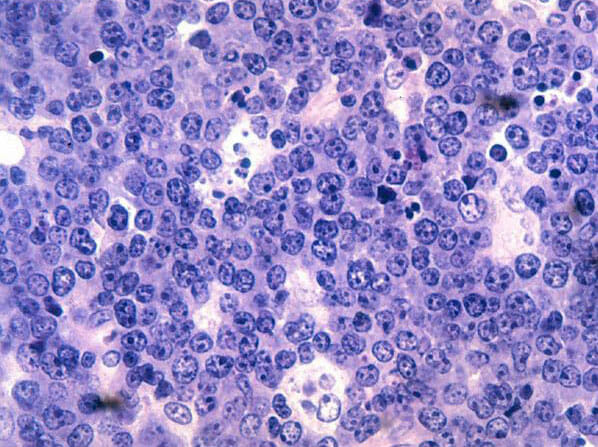
  • Células CD4+ atípicas con núcleos cerebriformes en EN Erythema nodosum is an immune-mediated panniculitis (inflammation of the subcutaneous fat) caused by a type IV (delayed-type) hypersensitivity reaction. It commonly manifests in young women as tender, erythematous nodules on the shins. Erythema Nodosum histología
  • Complicaciones: progresión a leucemia de células T
DLBCL: linfoma difuso de células B grandes
EBV: Virus de Epstein-Barr
HTLV-1: leucemia secundaria al virus linfotrópico de células T humanas tipo 1
MZL: linfoma de la zona marginal
MALT: tumor linfoide asociado a mucosas

Diagnóstico Diferencial

  • Linfoma de Hodgkin: malignidad de los LOS Neisseria linfocitos B que se origina en EN Erythema nodosum is an immune-mediated panniculitis (inflammation of the subcutaneous fat) caused by a type IV (delayed-type) hypersensitivity reaction. It commonly manifests in young women as tender, erythematous nodules on the shins. Erythema Nodosum los LOS Neisseria ganglios linfáticos. La enfermedad se presenta más comúnmente con linfadenopatía (más comúnmente afectando cuello), sudores nocturnos, pérdida de peso, fiebre y, en EN Erythema nodosum is an immune-mediated panniculitis (inflammation of the subcutaneous fat) caused by a type IV (delayed-type) hypersensitivity reaction. It commonly manifests in young women as tender, erythematous nodules on the shins. Erythema Nodosum ocasiones, hepatoesplenomegalia. Las pruebas de diagnóstico incluyen análisis histológicos de los LOS Neisseria ganglios linfáticos que muestran células de Hodgkin Reed-Sternberg, análisis de sangre, TC y PET PET An imaging technique that combines a positron-emission tomography (PET) scanner and a ct X ray scanner. This establishes a precise anatomic localization in the same session. Nuclear Imaging. El tratamiento es con quimioterapia y radioterapia.
  • Mieloma múltiple: afección maligna de las células plasmáticas (linfocitos B activados) que se observa principalmente en EN Erythema nodosum is an immune-mediated panniculitis (inflammation of the subcutaneous fat) caused by a type IV (delayed-type) hypersensitivity reaction. It commonly manifests in young women as tender, erythematous nodules on the shins. Erythema Nodosum adultos mayores. La proliferación monoclonal de células plasmáticas seguida de actividad osteoclástica da como resultado reabsorción ósea, dolor Dolor Inflammation óseo, fracturas patológicas y alteraciones metabólicas. El diagnóstico se establece mediante electroforesis en EN Erythema nodosum is an immune-mediated panniculitis (inflammation of the subcutaneous fat) caused by a type IV (delayed-type) hypersensitivity reaction. It commonly manifests in young women as tender, erythematous nodules on the shins. Erythema Nodosum plasma Plasma The residual portion of blood that is left after removal of blood cells by centrifugation without prior blood coagulation. Transfusion Products y biopsia de médula ósea. Hay tratamientos disponibles que retrasan la progresión de la enfermedad, pero no existe una cura para el mieloma múltiple y la media de supervivencia es de unos 3 años.
  • Linfadenopatía no maligna: agrandamiento de los LOS Neisseria ganglios linfáticos (> 1 cm) que es benigna y autolimitada. Las etiologías incluyen infección, trastornos autoinmunes y causas iatrogénicas, como el uso de ciertos medicamentos. La linfadenopatía generalizada a menudo indica una enfermedad sistémica subyacente. El diagnóstico se basa en EN Erythema nodosum is an immune-mediated panniculitis (inflammation of the subcutaneous fat) caused by a type IV (delayed-type) hypersensitivity reaction. It commonly manifests in young women as tender, erythematous nodules on the shins. Erythema Nodosum antecedentes médicos detallados, examen físico y una posible biopsia. El tratamiento se dirige a la infección subyacente, tumor Tumor Inflammation maligno u otra causa.

Referencias

  1. Freedman, A.S., Friedberg, J.W., Aster, J.C. (2025). Clinical presentation and initial evaluation of non-Hodgkin lymphoma. UpToDate. Retrieved November 3, 2025, from https://www.uptodate.com/contents/clinical-presentation-and-initial-evaluation-of-non-hodgkin-lymphoma
  2. Jacobson, C.A., Longo, D.L. (2018). Non-Hodgkin’s lymphoma. In: Jameson, J.L., et al. (Ed.), Harrison’s Principles of Internal Medicine, 20th ed., vol. 1, pp. 769–803. McGraw-Hill Education.
  3. Brown, J.R., Freedman, A.S. (2021). Overview of the pathobiology of the non-Hodgkin lymphomas. UpToDate. Retrieved November 9, 2021, from https://www.uptodate.com/contents/overview-of-the-pathobiology-of-the-non-hodgkin-lymphomas
  4. de Leval, L., Jaffe, E.S. (2020). Lymphoma classification. Cancer J 26:176–185. https://doi.org/10.1097/PPO.0000000000000451
  5. Freedman, A.S., Friedberg, J.W. (2020). Pretreatment evaluation, staging, and response assessment of non-Hodgkin lymphoma. UpToDate. Retrieved November 15, 2021, from https://www.uptodate.com/contents/pretreatment-evaluation-staging-and-response-assessment-of-non-hodgkin-lymphoma
  6. Watkins, M.P., Bartlett, N.L. (2018). CD19-targeted immunotherapies for treatment of patients with non-Hodgkin B-cell lymphomas. Expert Opin Investig Drugs 27:601–611. https://doi.org/10.1080/13543784.2018.1492549
  7. Shanbhag, S., Ambinder, R.F. (2018). Hodgkin lymphoma: a review and update on recent progress. CA Cancer J Clin 68:116–132. Doi: 10.3322/caac.21438
  8. Liu, Weiping, Jiangmei Liu, Yuqin Song, Xinying Zeng, Xiaopei Wang, Lan Mi, Cai Cai, et al. “Burden of Lymphoma in China, 2006–2016: An Analysis of the Global Burden of Disease Study 2016.” Journal of Hematology & Oncology 12 (2019). https://doi.org/10.1186/s13045-019-0785-7
  9. Linch, D.C., Gonzalez, B., Wang, L., Campo, E. (2021). General Consideration of Lymphomas, and Pathology of Lymphomas, in Williams Hematology (Kaushansky, K.,Lichtman, M.A., Prchal, J.T., et al., [Eds.]. pp. 1654-1682.

¡Crea tu cuenta gratis o inicia una sesión para seguir leyendo!

Regístrate ahora y obtén acceso gratuito a Lecturio con páginas de concepto, videos médicos y cuestionarios para tu educación médica.

User Reviews

Que tengas una sesión de estudio alegre y navideña 🎁 Ahorra 50% en todos los planes >>

Details