Domina Conceptos Médicos

Estudia para la escuela de medicina y tus examenes con Lecturio.

Linfadenopatía

La linfadenopatía es el agrandamiento de los LOS Neisseria ganglios linfáticos (> 1 cm) y es benigna y autolimitada en EN Erythema nodosum is an immune-mediated panniculitis (inflammation of the subcutaneous fat) caused by a type IV (delayed-type) hypersensitivity reaction. It commonly manifests in young women as tender, erythematous nodules on the shins. Erythema Nodosum la mayoría de los LOS Neisseria pacientes. Las etiologías incluyen malignidad, infección y trastornos autoinmunes, así como causas iatrogénicas como el uso de ciertos medicamentos. La linfadenopatía generalizada a menudo indica una enfermedad sistémica subyacente. El diagnóstico se basa en EN Erythema nodosum is an immune-mediated panniculitis (inflammation of the subcutaneous fat) caused by a type IV (delayed-type) hypersensitivity reaction. It commonly manifests in young women as tender, erythematous nodules on the shins. Erythema Nodosum una revisión completa de los LOS Neisseria antecedentes médicos  y un examen físico, que generalmente identifican la causa subyacente. Cuando se desconoce la causa, puede ser necesaria una biopsia. El tratamiento está dirigido a la infección subyacente, el tumor Tumor Inflammation maligno u otra causa.

Last updated: Dec 15, 2025

Editorial responsibility: Stanley Oiseth, Lindsay Jones, Evelin Maza

Descripción General

Definición

La linfadenopatía es el aumento de tamaño de los LOS Neisseria ganglios linfáticos, por lo general > 1 cm. Se considera localizada si el agrandamiento se limita a los LOS Neisseria ganglios linfáticos de 1 región anatómica y generalizada cuando hay afectación de ≥ 2 regiones.

Etiología

Muy a menudo, la linfadenopatía es una reacción a una infección local. Con menos frecuencia, puede deberse a un proceso maligno o a una enfermedad sistémica crónica. Las siguientes condiciones incluyen linfadenopatía en EN Erythema nodosum is an immune-mediated panniculitis (inflammation of the subcutaneous fat) caused by a type IV (delayed-type) hypersensitivity reaction. It commonly manifests in young women as tender, erythematous nodules on the shins. Erythema Nodosum su presentación clínica:

  • Infecciosas:
    • Infecciones virales:
      • EBV EBV Epstein-barr virus (EBV) is a linear, double-stranded DNA virus belonging to the herpesviridae family. This highly prevalent virus is mostly transmitted through contact with oropharyngeal secretions from an infected individual. The virus can infect epithelial cells and B lymphocytes, where it can undergo lytic replication or latency. Epstein-Barr Virus ( Virus Virus Viruses are infectious, obligate intracellular parasites composed of a nucleic acid core surrounded by a protein capsid. Viruses can be either naked (non-enveloped) or enveloped. The classification of viruses is complex and based on many factors, including type and structure of the nucleoid and capsid, the presence of an envelope, the replication cycle, and the host range. Virology de Epstein-Barr, por sus siglas en EN Erythema nodosum is an immune-mediated panniculitis (inflammation of the subcutaneous fat) caused by a type IV (delayed-type) hypersensitivity reaction. It commonly manifests in young women as tender, erythematous nodules on the shins. Erythema Nodosum inglés)
      • Citomegalovirus
      • VIH
      • Enfermedades infantiles: varicela, sarampión, paperas, rubéola
      • HSV-1 ( Virus Virus Viruses are infectious, obligate intracellular parasites composed of a nucleic acid core surrounded by a protein capsid. Viruses can be either naked (non-enveloped) or enveloped. The classification of viruses is complex and based on many factors, including type and structure of the nucleoid and capsid, the presence of an envelope, the replication cycle, and the host range. Virology del herpes simple 1, por sus siglas en EN Erythema nodosum is an immune-mediated panniculitis (inflammation of the subcutaneous fat) caused by a type IV (delayed-type) hypersensitivity reaction. It commonly manifests in young women as tender, erythematous nodules on the shins. Erythema Nodosum inglés) y HSV-2 ( Virus Virus Viruses are infectious, obligate intracellular parasites composed of a nucleic acid core surrounded by a protein capsid. Viruses can be either naked (non-enveloped) or enveloped. The classification of viruses is complex and based on many factors, including type and structure of the nucleoid and capsid, the presence of an envelope, the replication cycle, and the host range. Virology del herpes simple 2, por sus siglas en EN Erythema nodosum is an immune-mediated panniculitis (inflammation of the subcutaneous fat) caused by a type IV (delayed-type) hypersensitivity reaction. It commonly manifests in young women as tender, erythematous nodules on the shins. Erythema Nodosum inglés)
      • Hepatitis A Hepatitis A Hepatitis A is caused by the hepatitis A virus (HAV), a nonenveloped virus of the Picornaviridae family with single-stranded RNA. HAV causes an acute, highly contagious hepatitis with unspecific prodromal symptoms such as fever and malaise followed by jaundice and elevated liver transaminases. Hepatitis A Virus, B y C
    • Infecciones bacterianas:
      • Staphylococcus aureus Staphylococcus aureus Potentially pathogenic bacteria found in nasal membranes, skin, hair follicles, and perineum of warm-blooded animals. They may cause a wide range of infections and intoxications. Brain Abscess
      • Streptococcus Streptococcus Streptococcus is one of the two medically important genera of gram-positive cocci, the other being Staphylococcus. Streptococci are identified as different species on blood agar on the basis of their hemolytic pattern and sensitivity to optochin and bacitracin. There are many pathogenic species of streptococci, including S. pyogenes, S. agalactiae, S. pneumoniae, and the viridans streptococci. Streptococcus pyogenes
      • Treponema pallidum Treponema pallidum The causative agent of venereal and non-venereal syphilis as well as yaws. Treponema (causa sífilis)
      • Mycobacterium Mycobacterium Mycobacterium is a genus of the family Mycobacteriaceae in the phylum Actinobacteria. Mycobacteria comprise more than 150 species of facultative intracellular bacilli that are mostly obligate aerobes. Mycobacteria are responsible for multiple human infections including serious diseases, such as tuberculosis (M. tuberculosis), leprosy (M. leprae), and M. avium complex infections. Mycobacterium tuberculosis Tuberculosis Tuberculosis (TB) is an infectious disease caused by Mycobacterium tuberculosis complex bacteria. The bacteria usually attack the lungs but can also damage other parts of the body. Approximately 30% of people around the world are infected with this pathogen, with the majority harboring a latent infection. Tuberculosis spreads through the air when a person with active pulmonary infection coughs or sneezes. Tuberculosis en EN Erythema nodosum is an immune-mediated panniculitis (inflammation of the subcutaneous fat) caused by a type IV (delayed-type) hypersensitivity reaction. It commonly manifests in young women as tender, erythematous nodules on the shins. Erythema Nodosum pacientes con exposición o factores de riesgo
      • M. avium-intracelulare en EN Erythema nodosum is an immune-mediated panniculitis (inflammation of the subcutaneous fat) caused by a type IV (delayed-type) hypersensitivity reaction. It commonly manifests in young women as tender, erythematous nodules on the shins. Erythema Nodosum pacientes inmunocomprometidos
      • M. marinum en EN Erythema nodosum is an immune-mediated panniculitis (inflammation of the subcutaneous fat) caused by a type IV (delayed-type) hypersensitivity reaction. It commonly manifests in young women as tender, erythematous nodules on the shins. Erythema Nodosum pescadores
    • Infecciones fúngicas:
      • Coccidioidomicosis en EN Erythema nodosum is an immune-mediated panniculitis (inflammation of the subcutaneous fat) caused by a type IV (delayed-type) hypersensitivity reaction. It commonly manifests in young women as tender, erythematous nodules on the shins. Erythema Nodosum pacientes con viaje reciente a zonas endémicas
      • Histoplasmosis Histoplasmosis Histoplasmosis is an infection caused by Histoplasma capsulatum, a dimorphic fungus. Transmission is through inhalation, and exposure to soils containing bird or bat droppings increases the risk of infection. Most infections are asymptomatic; however, immunocompromised individuals generally develop acute pulmonary infection, chronic infection, or even disseminated disease. Histoplasma/Histoplasmosis
      • Criptococosis
      • Esporotricosis en EN Erythema nodosum is an immune-mediated panniculitis (inflammation of the subcutaneous fat) caused by a type IV (delayed-type) hypersensitivity reaction. It commonly manifests in young women as tender, erythematous nodules on the shins. Erythema Nodosum jardineros
    • Infecciones parasitarias:
      • Toxoplasmosis Toxoplasmosis Toxoplasmosis is an infectious disease caused by Toxoplasma gondii, an obligate intracellular protozoan parasite. Felines are the definitive host, but transmission to humans can occur through contact with cat feces or the consumption of contaminated foods. The clinical presentation and complications depend on the host’s immune status. Toxoplasma/Toxoplasmosis
      • Enfermedad de Chagas
      • Leishmaniasis Leishmaniasis Leishmania species are obligate intracellular parasites that are transmitted by an infected sandfly. The mildest form is cutaneous leishmaniasis (CL), characterized by painless skin ulcers. The mucocutaneous type involves more tissue destruction, causing deformities. Visceral leishmaniasis (VL), the most severe form, presents with hepatosplenomegaly, anemia, thrombocytopenia, and fever. Leishmania/Leishmaniasis
  • Neoplasias malignas:
    • Hematológicas primarias:
      • Leucemia linfoblástica aguda
      • Linfoma de Hodgkin
      • Linfoma no Hodgkin
    • Cánceres metastásicos:
      • Cáncer de mama
      • Cáncer de pulmón
      • Cáncer de tiroides
  • Trastornos autoinmunes:
    • Lupus eritematoso sistémico (LES)
    • Artritis idiopática juvenil
  • Causas iatrogénicas: medicamentos
    • Anticonvulsivantes:
      • Carbamazepina
      • Fenitoína
      • Lamotrigina
    • Antibióticos:
      • Penicilina
      • Cefalosporinas
    • Antiprotozoarios: pirimetamina
    • Otros:
      • Sulfonamidas
      • Sulindac Sulindac A sulfinylindene derivative prodrug whose sulfinyl moiety is converted in vivo to an active nsaid analgesic. Specifically, the prodrug is converted by liver enzymes to a sulfide which is excreted in the bile and then reabsorbed from the intestine. This helps to maintain constant blood levels with reduced gastrointestinal side effects. Nonsteroidal Antiinflammatory Drugs (NSAIDs)
      • Alopurinol
  • Errores innatos del metabolismo:
    • Enfermedad de Niemann-Pick
    • Enfermedad de Gaucher
    • Enfermedad de Fabry

Mnemotecnia

Para recordar las diversas causas de la linfadenopatía, recuerde “MIAMI” ( en EN Erythema nodosum is an immune-mediated panniculitis (inflammation of the subcutaneous fat) caused by a type IV (delayed-type) hypersensitivity reaction. It commonly manifests in young women as tender, erythematous nodules on the shins. Erythema Nodosum inglés):

  • M Malignancy Malignancy Hemothorax (Malignidad)
  • I – Infection (Infección)
  • A – Autoimmune (Autoinmune)
  • M – Inborn errors of Metabolism (Errores innatos del metabolismo)
  • I Iatrogenic Iatrogenic Any adverse condition in a patient occurring as the result of treatment by a physician, surgeon, or other health professional, especially infections acquired by a patient during the course of treatment. Anterior Cord Syndrome (Iatrogénico)

Fisiopatología

Los LOS Neisseria sistemas inmunológico y linfático están altamente interrelacionados. Los LOS Neisseria linfocitos se transportan a través de los LOS Neisseria vasos linfáticos a los LOS Neisseria ganglios linfáticos. Los LOS Neisseria seres humanos tienen entre 500–600 ganglios linfáticos en EN Erythema nodosum is an immune-mediated panniculitis (inflammation of the subcutaneous fat) caused by a type IV (delayed-type) hypersensitivity reaction. It commonly manifests in young women as tender, erythematous nodules on the shins. Erythema Nodosum todo el cuerpo. La linfadenopatía, o inflamación de los LOS Neisseria ganglios linfáticos, puede ocurrir en EN Erythema nodosum is an immune-mediated panniculitis (inflammation of the subcutaneous fat) caused by a type IV (delayed-type) hypersensitivity reaction. It commonly manifests in young women as tender, erythematous nodules on the shins. Erythema Nodosum respuesta a una infección, una neoplasia maligna o una enfermedad crónica.

Distribución de los LOS Neisseria ganglios linfáticos

  • Ganglios linfáticos que drenan de la cabeza y el cuello:
    • Anteriores: preauriculares, parotídeos, amigdalinos, submandibulares y submentonianos
    • Posteriores: auriculares posteriores, occipitales y cervicales superficiales y profundos
  • Ganglios linfáticos que drenan del resto del cuerpo:
    • Supraclaviculares
    • Deltopectorales
    • Axilares
    • Epitrocleares
    • Inguinales
    • Poplíteos
  • Los LOS Neisseria órganos linfoides secundarios juegan un papel en EN Erythema nodosum is an immune-mediated panniculitis (inflammation of the subcutaneous fat) caused by a type IV (delayed-type) hypersensitivity reaction. It commonly manifests in young women as tender, erythematous nodules on the shins. Erythema Nodosum la respuesta inmune activa:
    • Los LOS Neisseria ganglios linfáticos eliminan los LOS Neisseria desechos y los LOS Neisseria patógenos de la linfa
    • Bazo
    • Nódulos linfoides:
      • Amígdalas
      • Tejido linfoide asociado a mucosa
      • Tejido linfoide asociado a bronquios

Mecanismos patógenos

Las células, el plasma Plasma The residual portion of blood that is left after removal of blood cells by centrifugation without prior blood coagulation. Transfusion Products y las partículas extrañas en EN Erythema nodosum is an immune-mediated panniculitis (inflammation of the subcutaneous fat) caused by a type IV (delayed-type) hypersensitivity reaction. It commonly manifests in young women as tender, erythematous nodules on the shins. Erythema Nodosum el espacio intersticial se convierten en EN Erythema nodosum is an immune-mediated panniculitis (inflammation of the subcutaneous fat) caused by a type IV (delayed-type) hypersensitivity reaction. It commonly manifests in young women as tender, erythematous nodules on the shins. Erythema Nodosum fluido linfático al AL Amyloidosis ingresar a los LOS Neisseria vasos linfáticos. Dentro de los LOS Neisseria ganglios linfáticos, este fluido se filtra del exceso de líquido y células anormales (e.g., infectadas, malignas, dañadas, presentadoras de antígeno). Esto desencadena una respuesta inmune que involucra proliferación celular, lo que hace HACE Altitude Sickness que los LOS Neisseria ganglios se agranden (linfadenopatía reactiva).

La linfadenopatía es resultado de 1 de los LOS Neisseria procesos patológicos:

  • Proliferación de células inmunológicas (infección)
  • Proliferación maligna:
    • Tumores hematológicos
    • Metástasis
  • Acumulación de metabolitos

Presentación Clínica

Los LOS Neisseria signos y síntomas asociados con la linfadenopatía dependerán de la causa y el tipo (localizada versus generalizada).

Linfadenopatía localizada

  • Linfadenopatía cervical anterior causada por infecciones virales o bacterianas:
    • Faringitis estreptocócica
    • Mononucleosis Mononucleosis Infectious mononucleosis (IM), also known as “the kissing disease,” is a highly contagious viral infection caused by the Epstein-Barr virus. Its common name is derived from its main method of transmission: the spread of infected saliva via kissing. Clinical manifestations of IM include fever, tonsillar pharyngitis, and lymphadenopathy. Mononucleosis
    • Otitis media
    • Sinusitis Sinusitis Sinusitis refers to inflammation of the mucosal lining of the paranasal sinuses. The condition usually occurs concurrently with inflammation of the nasal mucosa (rhinitis), a condition known as rhinosinusitis. Acute sinusitis is due to an upper respiratory infection caused by a viral, bacterial, or fungal agent. Sinusitis
    • Celulitis facial
    • Infecciones dentales
  • Linfadenopatía cervical anterior causada por condiciones no infecciosas:
    • Tumores de cabeza y cuello
    • Linfoma
    • Rinitis alérgica/goteo posnasal
  • Cervical posterior:
    • Infecciones como EBV EBV Epstein-barr virus (EBV) is a linear, double-stranded DNA virus belonging to the herpesviridae family. This highly prevalent virus is mostly transmitted through contact with oropharyngeal secretions from an infected individual. The virus can infect epithelial cells and B lymphocytes, where it can undergo lytic replication or latency. Epstein-Barr Virus en EN Erythema nodosum is an immune-mediated panniculitis (inflammation of the subcutaneous fat) caused by a type IV (delayed-type) hypersensitivity reaction. It commonly manifests in young women as tender, erythematous nodules on the shins. Erythema Nodosum mononucleosis Mononucleosis Infectious mononucleosis (IM), also known as “the kissing disease,” is a highly contagious viral infection caused by the Epstein-Barr virus. Its common name is derived from its main method of transmission: the spread of infected saliva via kissing. Clinical manifestations of IM include fever, tonsillar pharyngitis, and lymphadenopathy. Mononucleosis, tuberculosis Tuberculosis Tuberculosis (TB) is an infectious disease caused by Mycobacterium tuberculosis complex bacteria. The bacteria usually attack the lungs but can also damage other parts of the body. Approximately 30% of people around the world are infected with this pathogen, with the majority harboring a latent infection. Tuberculosis spreads through the air when a person with active pulmonary infection coughs or sneezes. Tuberculosis, linfoma
    • Afecciones dermatológicas del cuero cabelludo como la psoriasis Psoriasis Psoriasis is a common T-cell-mediated inflammatory skin condition. The etiology is unknown, but is thought to be due to genetic inheritance and environmental triggers. There are 4 major subtypes, with the most common form being chronic plaque psoriasis. Psoriasis o la dermatitis Dermatitis Any inflammation of the skin. Atopic Dermatitis (Eczema) seborreica
    • Neoplasias malignas como linfoma o carcinoma metastásico de células escamosas
  • Supraclavicular:
    • La adenopatía supraclavicular derecha se asocia con cáncer en EN Erythema nodosum is an immune-mediated panniculitis (inflammation of the subcutaneous fat) caused by a type IV (delayed-type) hypersensitivity reaction. It commonly manifests in young women as tender, erythematous nodules on the shins. Erythema Nodosum el mediastino, los LOS Neisseria pulmones o el esófago
    • Adenopatía supraclavicular izquierda (ganglio de Virchow): asociada con malignidad abdominal o pélvica del estómago, vesícula biliar, páncreas, riñones, testículos, ovarios, linfoma o próstata
  • Axilar:
    • Infecciones como la enfermedad por arañazo de gato debida a Bartonella henselae Bartonella henselae A species of gram-negative bacteria that is the etiologic agent of bacillary angiomatosis. This organism can also be a cause of cat-scratch disease in immunocompetent patients. Bartonella
    • Cáncer de mama
  • Epitroclear: los LOS Neisseria ganglios epitrocleares palpables siempre son patológicos
    • Infecciones del antebrazo o la mano
    • Linfoma
    • Sarcoidosis Sarcoidosis Sarcoidosis is a multisystem inflammatory disease that causes noncaseating granulomas. The exact etiology is unknown. Sarcoidosis usually affects the lungs and thoracic lymph nodes, but it can also affect almost every system in the body, including the skin, heart, and eyes, most commonly. Sarcoidosis
    • Tularemia
    • Sífilis secundaria
  • Inguinal: a menudo se observa en EN Erythema nodosum is an immune-mediated panniculitis (inflammation of the subcutaneous fat) caused by a type IV (delayed-type) hypersensitivity reaction. It commonly manifests in young women as tender, erythematous nodules on the shins. Erythema Nodosum personas sanas, ya que los LOS Neisseria traumatismos crónicos y las infecciones son comunes en EN Erythema nodosum is an immune-mediated panniculitis (inflammation of the subcutaneous fat) caused by a type IV (delayed-type) hypersensitivity reaction. It commonly manifests in young women as tender, erythematous nodules on the shins. Erythema Nodosum las extremidades inferiores
    • No siempre se consideran patológicas
    • Puede deberse a malignidades pélvicas o genitourinarias
    • Infecciones de transmisión sexual como chancroide, sífilis, linfogranuloma venéreo o herpes genital

Linfadenopatía generalizada

  • Enfermedad primaria por VIH: los LOS Neisseria ganglios cervicales y axilares no dolorosos se desarrollan en EN Erythema nodosum is an immune-mediated panniculitis (inflammation of the subcutaneous fat) caused by a type IV (delayed-type) hypersensitivity reaction. It commonly manifests in young women as tender, erythematous nodules on the shins. Erythema Nodosum la mayoría de los LOS Neisseria pacientes durante la segunda semana de infección aguda por VIH sintomática debido a la aparición de una respuesta inmune.
  • Tuberculosis Tuberculosis Tuberculosis (TB) is an infectious disease caused by Mycobacterium tuberculosis complex bacteria. The bacteria usually attack the lungs but can also damage other parts of the body. Approximately 30% of people around the world are infected with this pathogen, with the majority harboring a latent infection. Tuberculosis spreads through the air when a person with active pulmonary infection coughs or sneezes. Tuberculosis por Mycobacterium Mycobacterium Mycobacterium is a genus of the family Mycobacteriaceae in the phylum Actinobacteria. Mycobacteria comprise more than 150 species of facultative intracellular bacilli that are mostly obligate aerobes. Mycobacteria are responsible for multiple human infections including serious diseases, such as tuberculosis (M. tuberculosis), leprosy (M. leprae), and M. avium complex infections. Mycobacterium
  • Enfermedad autoinmune: LES
  • Sarcoidosis Sarcoidosis Sarcoidosis is a multisystem inflammatory disease that causes noncaseating granulomas. The exact etiology is unknown. Sarcoidosis usually affects the lungs and thoracic lymph nodes, but it can also affect almost every system in the body, including the skin, heart, and eyes, most commonly. Sarcoidosis
  • Neoplasias malignas:
    • Enfermedad de Hodgkin
    • Linfoma no Hodgkin
    • Leucemia linfoblástica aguda o leucemia linfoblastica crónica
    • Trastornos de las células plasmáticas
    • Síndrome POEMS ( en EN Erythema nodosum is an immune-mediated panniculitis (inflammation of the subcutaneous fat) caused by a type IV (delayed-type) hypersensitivity reaction. It commonly manifests in young women as tender, erythematous nodules on the shins. Erythema Nodosum inglés) (Polyneuropathy (polineuropatía), Organomegaly (organomegalia), Endocrinopathy (endocrinopatía), Monoclonal protein (proteína monoclonal), Skin changes (cambios en EN Erythema nodosum is an immune-mediated panniculitis (inflammation of the subcutaneous fat) caused by a type IV (delayed-type) hypersensitivity reaction. It commonly manifests in young women as tender, erythematous nodules on the shins. Erythema Nodosum la piel))
    • Macroglobulinemia de Waldenström (también llamada linfoma linfoplasmocitario)
  • Enfermedades sistémicas raras

Diagnóstico y Tratamiento

Diagnóstico

Antecedentes:

  • Inicio: inicio rápido versus crecimiento lento
  • Síntomas: dolorosa versus indolora
  • Ubicación: 1 área o múltiples áreas
  • Síntomas asociados:
    • Fiebre
    • Sudoración nocturna
    • Pérdida de peso
    • Fatiga
    • Tos TOS Thoracic outlet syndrome (TOS) is a broad term used for a spectrum of syndromes related to the general region of the thoracic outlet, which involves the compression or irritation of elements of the brachial plexus, subclavian artery, or subclavian vein. Thoracic Outlet Syndrome
    • Sarpullido
    • Síntomas genitales
  • Antecedentes médicos:
    • Antecedentes sexuales
    • Tabaquismo
    • Viajes recientes
    • Contacto con animales (e.g., gatos, conejos)
    • Uso de medicamentos intravenosos
    • Picaduras recientes de garrapatas
    • Enfermedad autoinmune
    • Neoplasia maligna previa
  • Los LOS Neisseria factores de riesgo de malignidad incluyen:
    • Edad > 40 años
    • Ubicación supraclavicular de los LOS Neisseria ganglios
    • Presencia de síntomas sistémicos como:
      • Fiebre
      • Sudoración nocturna
      • Pérdida de peso inexplicable

Examen físico:

  • Buscar signos de enfermedad o infección local o sistémica.
  • Características clínicas de la linfadenopatía:
    • Las etiologías benignas o infecciosas tienden a causar:
      • Sensibilidad
      • Calor Calor Inflammation a la palpación
      • Fluctuación
      • Movilidad
      • Inicio rápido
    • Favorecen causas malignas/micobacterianas:
      • Sin sensibilidad
      • Sólidas o firmes
      • Fijas
      • Crecimiento lento
  • Hallazgos asociados:
    • Erupción cutánea
    • Esplenomegalia
    • Anomalías articulares
    • Hallazgos cardíacos anormales

Pruebas de laboratorio:

Pedidas en EN Erythema nodosum is an immune-mediated panniculitis (inflammation of the subcutaneous fat) caused by a type IV (delayed-type) hypersensitivity reaction. It commonly manifests in young women as tender, erythematous nodules on the shins. Erythema Nodosum base a los LOS Neisseria antecedentes relevantes del paciente y los LOS Neisseria hallazgos del examen físico para confirmar el diagnóstico sospechado:

  • Prueba o cultivo rápido de estreptococos
  • Serología para EBV EBV Epstein-barr virus (EBV) is a linear, double-stranded DNA virus belonging to the herpesviridae family. This highly prevalent virus is mostly transmitted through contact with oropharyngeal secretions from an infected individual. The virus can infect epithelial cells and B lymphocytes, where it can undergo lytic replication or latency. Epstein-Barr Virus
  • Serología para citomegalovirus
  • Pruebas de ITS
  • Hemograma y frotis de sangre periférica
  • ANA
  • QuantiFERON-TB Gold (análisis de sangre para TB TB Tuberculosis (TB) is an infectious disease caused by Mycobacterium tuberculosis complex bacteria. The bacteria usually attack the lungs but can also damage other parts of the body. Approximately 30% of people around the world are infected with this pathogen, with the majority harboring a latent infection. Tuberculosis spreads through the air when a person with active pulmonary infection coughs or sneezes. Tuberculosis)
  • Pruebas de función hepática y renal
  • Marcadores tumorales séricos en EN Erythema nodosum is an immune-mediated panniculitis (inflammation of the subcutaneous fat) caused by a type IV (delayed-type) hypersensitivity reaction. It commonly manifests in young women as tender, erythematous nodules on the shins. Erythema Nodosum casos seleccionados de alta sospecha
  • Prueba de VIH

Imagenología:

El tipo de prueba solicitada se guía por los LOS Neisseria antecedentes, el examen físico y los LOS Neisseria factores de riesgo.

  • Ultrasonido
  • Radiografía de tórax
  • Tomografía computarizada (CT) o resonancia magnética (RM)

Biopsia del ganglio linfático:

Tratamiento

  • El tratamiento de la causa subyacente de la linfadenopatía es la base del manejo de la condición.
  • Los LOS Neisseria pacientes con linfadenopatía localizada puede observarse durante 3–4 semanas si no hay nada más en EN Erythema nodosum is an immune-mediated panniculitis (inflammation of the subcutaneous fat) caused by a type IV (delayed-type) hypersensitivity reaction. It commonly manifests in young women as tender, erythematous nodules on the shins. Erythema Nodosum los LOS Neisseria antecedentes, el examen físico y pruebas de laboratorio que sugieran malignidad.
  • La biopsia es apropiada si un ganglio anormal no se ha HA Hemolytic anemia (HA) is the term given to a large group of anemias that are caused by the premature destruction/hemolysis of circulating red blood cells (RBCs). Hemolysis can occur within (intravascular hemolysis) or outside the blood vessels (extravascular hemolysis). Hemolytic Anemia resuelto después de 4 semanas.

Diagnóstico Diferencial

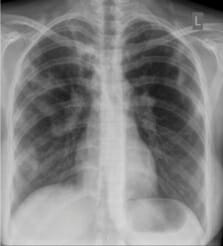
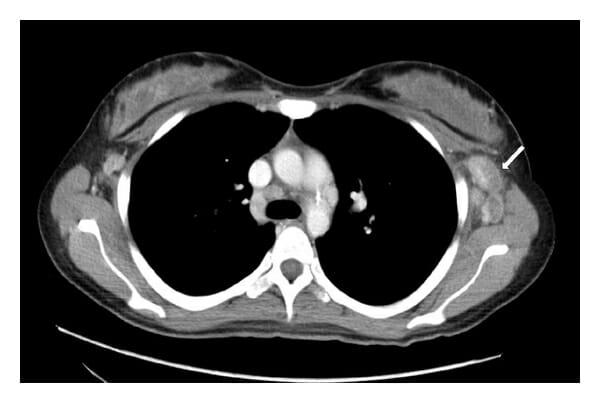
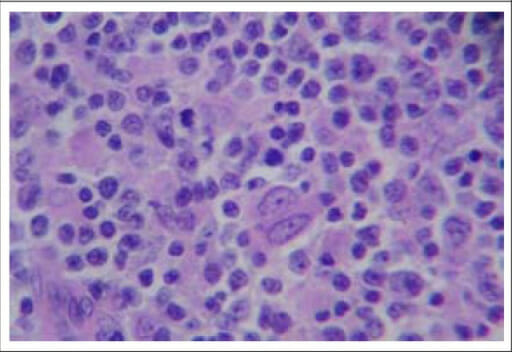
  • Linfoma de Hodgkin: malignidad de los LOS Neisseria linfocitos B que se origina en EN Erythema nodosum is an immune-mediated panniculitis (inflammation of the subcutaneous fat) caused by a type IV (delayed-type) hypersensitivity reaction. It commonly manifests in young women as tender, erythematous nodules on the shins. Erythema Nodosum los LOS Neisseria ganglios linfáticos. El linfoma de Hodgkin se presenta con mayor frecuencia con linfadenopatía en EN Erythema nodosum is an immune-mediated panniculitis (inflammation of the subcutaneous fat) caused by a type IV (delayed-type) hypersensitivity reaction. It commonly manifests in young women as tender, erythematous nodules on the shins. Erythema Nodosum el cuello, así como sudores nocturnos, pérdida de peso, fiebre y posible esplenomegalia y hepatomegalia. Las pruebas de diagnóstico incluyen análisis histológicos de los LOS Neisseria ganglios linfáticos que muestran células de Hodgkin Reed-Sternberg (células B multinucleadas gigantes con inclusiones eosinofílicas). El linfoma de Hodgkin se trata con quimioterapia y radioterapia.
  • Linfoma no Hodgkin: grupo diverso de neoplasias malignas de células B, células T y células asesinas naturales. ⅔ de los LOS Neisseria linfoma no Hodgkin afectan a los LOS Neisseria ganglios linfáticos y el resto son extraganglionares. Al AL Amyloidosis igual que el linfoma de Hodgkin, que se distingue por sus claras características patológicas y tratamientos, el linfoma no Hodgkin se presenta de manera única con signos constitucionales. El tratamiento es principalmente con quimioterapia.
  • Leucemia linfoblástica crónica: malignidad hematológica caracterizada por un exceso de producción de linfocitos B monoclonales en EN Erythema nodosum is an immune-mediated panniculitis (inflammation of the subcutaneous fat) caused by a type IV (delayed-type) hypersensitivity reaction. It commonly manifests in young women as tender, erythematous nodules on the shins. Erythema Nodosum la sangre periférica. La leucemia linfoblástica crónica es idéntica a 1 de los LOS Neisseria linfoma no Hodgkin y se denomina linfoma linfocítico pequeño cuando su afectación es principalmente ganglionar. La enfermedad generalmente se presenta en EN Erythema nodosum is an immune-mediated panniculitis (inflammation of the subcutaneous fat) caused by a type IV (delayed-type) hypersensitivity reaction. It commonly manifests in young women as tender, erythematous nodules on the shins. Erythema Nodosum adultos mayores y la progresión de los LOS Neisseria síntomas es lenta. Las células B en EN Erythema nodosum is an immune-mediated panniculitis (inflammation of the subcutaneous fat) caused by a type IV (delayed-type) hypersensitivity reaction. It commonly manifests in young women as tender, erythematous nodules on the shins. Erythema Nodosum estos pacientes son linfocitos funcionalmente incompetentes y, por lo tanto, pueden provocar infecciones recurrentes.
  • Leucemias agudas: malignidades hematológicas que comienzan en EN Erythema nodosum is an immune-mediated panniculitis (inflammation of the subcutaneous fat) caused by a type IV (delayed-type) hypersensitivity reaction. It commonly manifests in young women as tender, erythematous nodules on the shins. Erythema Nodosum la médula ósea con transformación maligna y proliferación descontrolada de precursores de leucocitos. La leucemia linfoblástica aguda puede presentarse con linfadenopatía indolora, mientras que los LOS Neisseria ganglios linfáticos palpables son raros en EN Erythema nodosum is an immune-mediated panniculitis (inflammation of the subcutaneous fat) caused by a type IV (delayed-type) hypersensitivity reaction. It commonly manifests in young women as tender, erythematous nodules on the shins. Erythema Nodosum la leucemia mieloide aguda. Otros síntomas incluyen fatiga, palidez, sangrado, fiebre e infección relacionada con anemia Anemia Anemia is a condition in which individuals have low Hb levels, which can arise from various causes. Anemia is accompanied by a reduced number of RBCs and may manifest with fatigue, shortness of breath, pallor, and weakness. Subtypes are classified by the size of RBCs, chronicity, and etiology. Anemia: Overview and Types, trombocitopenia y falta de leucocitos funcionales que se observan en EN Erythema nodosum is an immune-mediated panniculitis (inflammation of the subcutaneous fat) caused by a type IV (delayed-type) hypersensitivity reaction. It commonly manifests in young women as tender, erythematous nodules on the shins. Erythema Nodosum la leucemia aguda. El diagnóstico se realiza con frotis de sangre periférica y biopsia de médula ósea.
  • Enfermedad de Kawasaki: aunque es una enfermedad poco frecuente, la enfermedad de Kawasaki es la causa más frecuente de vasculitis Vasculitis Inflammation of any one of the blood vessels, including the arteries; veins; and rest of the vasculature system in the body. Systemic Lupus Erythematosus infantil. Este síndrome se asocia con fiebre, linfadenopatía cervical y una variedad de otros síntomas, que incluyen conjuntivitis, mucositis Mucositis Stomatitis is a general term referring to inflammation of the mucous membranes of the mouth, which may include sores. Stomatitis can be caused by infections, autoimmune disorders, allergic reactions, or exposure to irritants. The typical presentation may be either solitary or a group of painful oral lesions. Stomatitis, erupción cutánea y aneurisma de la arteria coronaria.
  • Amiloidosis: acumulación patógena y depósito de amiloide en EN Erythema nodosum is an immune-mediated panniculitis (inflammation of the subcutaneous fat) caused by a type IV (delayed-type) hypersensitivity reaction. It commonly manifests in young women as tender, erythematous nodules on the shins. Erythema Nodosum todo el cuerpo. El amiloide puede depositarse en EN Erythema nodosum is an immune-mediated panniculitis (inflammation of the subcutaneous fat) caused by a type IV (delayed-type) hypersensitivity reaction. It commonly manifests in young women as tender, erythematous nodules on the shins. Erythema Nodosum los LOS Neisseria ganglios linfáticos y es una causa rara de linfadenopatía en EN Erythema nodosum is an immune-mediated panniculitis (inflammation of the subcutaneous fat) caused by a type IV (delayed-type) hypersensitivity reaction. It commonly manifests in young women as tender, erythematous nodules on the shins. Erythema Nodosum ausencia de infiltración de amiloide en EN Erythema nodosum is an immune-mediated panniculitis (inflammation of the subcutaneous fat) caused by a type IV (delayed-type) hypersensitivity reaction. It commonly manifests in young women as tender, erythematous nodules on the shins. Erythema Nodosum otros órganos. El diagnóstico se basa en EN Erythema nodosum is an immune-mediated panniculitis (inflammation of the subcutaneous fat) caused by a type IV (delayed-type) hypersensitivity reaction. It commonly manifests in young women as tender, erythematous nodules on the shins. Erythema Nodosum la biopsia de los LOS Neisseria ganglios linfáticos.

Referencias

  1. Ferrer, R.L. (2025). Evaluation of peripheral lymphadenopathy in adults. UpToDate. Retrieved on August 9, 2025, from https://www.uptodate.com/contents/evaluation-of-peripheral-lymphadenopathy-in-adults
  2. McClain, K.L. (2025). Peripheral lymphadenopathy in children: evaluation and diagnostic approach. UpToDate. Retrieved on August 9, 2025, from https://www.uptodate.com/contents/peripheral-lymphadenopathy-in-children-evaluation-and-diagnostic-approach
  3. Freeman AM, Matto P. Lymphadenopathy. [Updated 2023 Feb 20]. In: StatPearls [Internet]. Treasure Island (FL): StatPearls Publishing; 2025 Jan-. Available from: https://www.ncbi.nlm.nih.gov/books/NBK513250/

¡Crea tu cuenta gratis o inicia una sesión para seguir leyendo!

Regístrate ahora y obtén acceso gratuito a Lecturio con páginas de concepto, videos médicos y cuestionarios para tu educación médica.

User Reviews

Details