Domina Conceptos Médicos

Estudia para la escuela de medicina y tus examenes con Lecturio.

Lincosamidas

Las lincosamidas, lincomicina y clindamicina, son inhibidores de la síntesis proteica bacteriana. Los LOS Neisseria medicamentos de esta clase comparten el mismo sitio de unión que los LOS Neisseria macrólidos y los LOS Neisseria anfenicoles; sin embargo, difieren en EN Erythema nodosum is an immune-mediated panniculitis (inflammation of the subcutaneous fat) caused by a type IV (delayed-type) hypersensitivity reaction. It commonly manifests in young women as tender, erythematous nodules on the shins. Erythema Nodosum su estructura química. Las lincosamidas se dirigen a la subunidad ribosomal 50S e interfieren en EN Erythema nodosum is an immune-mediated panniculitis (inflammation of the subcutaneous fat) caused by a type IV (delayed-type) hypersensitivity reaction. It commonly manifests in young women as tender, erythematous nodules on the shins. Erythema Nodosum la transpeptidación. La cobertura antimicrobiana de las lincosamidas abarcan los LOS Neisseria cocos Gram-positivos (incluido el Staphylococcus aureus Staphylococcus aureus Potentially pathogenic bacteria found in nasal membranes, skin, hair follicles, and perineum of warm-blooded animals. They may cause a wide range of infections and intoxications. Brain Abscess resistente a la meticilina ( MRSA MRSA A strain of Staphylococcus aureus that is non-susceptible to the action of methicillin. The mechanism of resistance usually involves modification of normal or the presence of acquired penicillin binding proteins. Staphylococcus, por sus siglas en EN Erythema nodosum is an immune-mediated panniculitis (inflammation of the subcutaneous fat) caused by a type IV (delayed-type) hypersensitivity reaction. It commonly manifests in young women as tender, erythematous nodules on the shins. Erythema Nodosum inglés)) y los LOS Neisseria anaerobios. La clindamicina también puede utilizarse para tratar el síndrome del shock Shock Shock is a life-threatening condition associated with impaired circulation that results in tissue hypoxia. The different types of shock are based on the underlying cause: distributive (↑ cardiac output (CO), ↓ systemic vascular resistance (SVR)), cardiogenic (↓ CO, ↑ SVR), hypovolemic (↓ CO, ↑ SVR), obstructive (↓ CO), and mixed. Types of Shock tóxico y la fascitis necrosante debido a su efecto antitoxina. La diarrea es un efecto secundario común y la clindamicina suele asociarse a un mayor riesgo de colitis Colitis Inflammation of the colon section of the large intestine, usually with symptoms such as diarrhea (often with blood and mucus), abdominal pain, and fever. Pseudomembranous Colitis por Clostridioides difficile.

Last updated: Dec 15, 2025
Editorial responsibility: Stanley Oiseth, Lindsay Jones, Evelin Maza

Estructura Química y Farmacodinamia

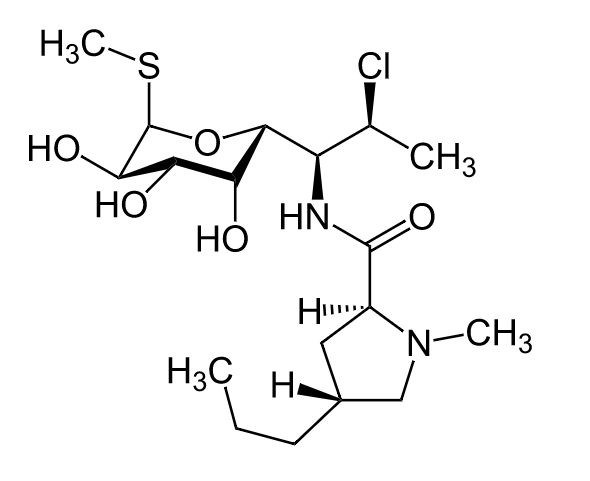
Estructura química

  • La estructura química está formada por moléculas de aminoácidos y azúcares.
  • La lincomicina es el medicamento prototipo.
  • La clindamicina es un derivado clorado.
Estructura química de la clindamicina Lincosamidas

Estructura química de la clindamicina

Imagen: “Clindamycin” por Jü. Licencia: Dominio Público
Mecanismo de acción

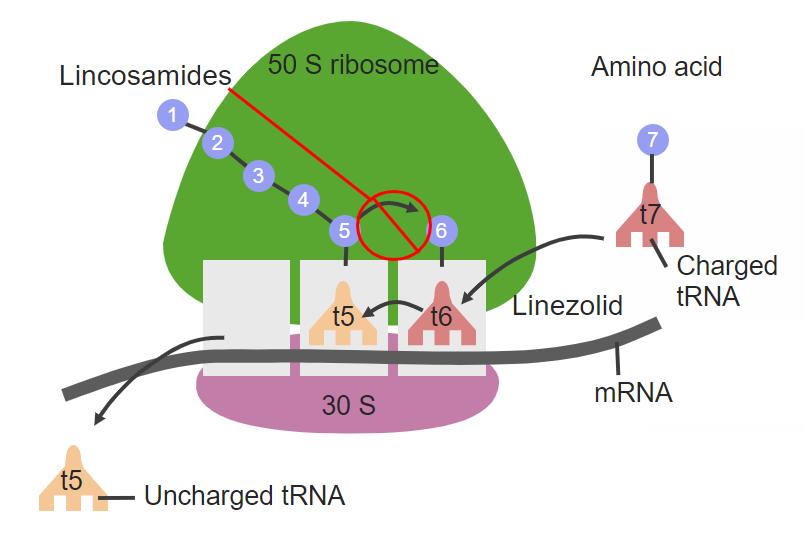
  • Inhiben la síntesis proteica bacteriana al AL Amyloidosis unirse de forma reversible a la subunidad ribosomal 50S:
    • Se unen cerca del centro de la peptidiltransferasa → impiden que la peptidiltransferasa añada aminoácidos al AL Amyloidosis péptido en EN Erythema nodosum is an immune-mediated panniculitis (inflammation of the subcutaneous fat) caused by a type IV (delayed-type) hypersensitivity reaction. It commonly manifests in young women as tender, erythematous nodules on the shins. Erythema Nodosum crecimiento (evitando la transpeptidación)
    • Sitio de unión similar al AL Amyloidosis de los LOS Neisseria macrólidos y el cloranfenicol
  • Limitan el crecimiento bacteriano → bacteriostático
  • Pueden ejercer un efecto destructivo dependiente del tiempo para algunas bacterias
  • Efectos adicionales: inhiben la producción de toxinas estafilocócicas y estreptocócicas
Sitio de acción Clindamicina Lincosamidas

Sitio de acción de la clindamicina en la subunidad ribosomal 50S

Imagen por Lecturio. Licencia: CC BY-NC-SA 4.0

Farmacocinética

Debido a que la lincomicina se utiliza raramente, se ha HA Hemolytic anemia (HA) is the term given to a large group of anemias that are caused by the premature destruction/hemolysis of circulating red blood cells (RBCs). Hemolysis can occur within (intravascular hemolysis) or outside the blood vessels (extravascular hemolysis). Hemolytic Anemia listado la farmacocinética de la clindamicina:

Absorción y distribución

  • Absorción rápida
    • Aproximadamente 90% de absorción de las dosis orales
    • La concentración plasmática alcanza su máximo 2-4 horas después de la dosis oral y 1-2 horas después de la dosis IM.
  • Unida a proteínas
  • Captada por las células fagocíticas
  • Ampliamente distribuida en EN Erythema nodosum is an immune-mediated panniculitis (inflammation of the subcutaneous fat) caused by a type IV (delayed-type) hypersensitivity reaction. It commonly manifests in young women as tender, erythematous nodules on the shins. Erythema Nodosum fluidos corporales, huesos y tejidos
    • Atraviesa la placenta Placenta A highly vascularized mammalian fetal-maternal organ and major site of transport of oxygen, nutrients, and fetal waste products. It includes a fetal portion (chorionic villi) derived from trophoblasts and a maternal portion (decidua) derived from the uterine endometrium. The placenta produces an array of steroid, protein and peptide hormones (placental hormones). Placenta, Umbilical Cord, and Amniotic Cavity
    • No atraviesa la barrera hematoencefálica

Metabolismo y excreción

Indicaciones

Cobertura antimicrobiana

  • Microorganismos Gram-positivos:
    • Streptococcus Streptococcus Streptococcus is one of the two medically important genera of gram-positive cocci, the other being Staphylococcus. Streptococci are identified as different species on blood agar on the basis of their hemolytic pattern and sensitivity to optochin and bacitracin. There are many pathogenic species of streptococci, including S. pyogenes, S. agalactiae, S. pneumoniae, and the viridans streptococci. Streptococcus
    • Staphylococcus Staphylococcus Staphylococcus is a medically important genera of Gram-positive, aerobic cocci. These bacteria form clusters resembling grapes on culture plates. Staphylococci are ubiquitous for humans, and many strains compose the normal skin flora. Staphylococcus (incluyendo MRSA MRSA A strain of Staphylococcus aureus that is non-susceptible to the action of methicillin. The mechanism of resistance usually involves modification of normal or the presence of acquired penicillin binding proteins. Staphylococcus)
  • Anaerobios:
    • Bacteroides Bacteroides Bacteroides is a genus of opportunistic, anaerobic, gram-negative bacilli. Bacteroides fragilis is the most common species involved in human disease and is part of the normal flora of the large intestine. Bacteroides
    • Clostridium perfringens Clostridium perfringens The most common etiologic agent of gas gangrene. It is differentiable into several distinct types based on the distribution of twelve different toxins. Gas Gangrene
    • Fusobacterium Fusobacterium A genus of gram-negative, anaerobic, rod-shaped bacteria found in cavities of humans and other animals. No endospores are formed. Some species are pathogenic and occur in various purulent or gangrenous infections. Dog and Cat Bites
    • Prevotella Prevotella A genus of gram-negative, anaerobic, nonsporeforming, nonmotile rods. Organisms of this genus had originally been classified as members of the bacteroides genus but overwhelming biochemical and chemical findings in 1990 indicated the need to separate them from other bacteroides species, and hence, this new genus was established. Dog and Cat Bites melaninogenicus
    • Peptostreptococcus Peptostreptococcus A genus of gram-positive, anaerobic, coccoid bacteria that is part of the normal flora of humans. Its organisms are opportunistic pathogens causing bacteremias and soft tissue infections. Perianal and Perirectal Abscess

Tipo de infecciones

  • Infecciones de piel y tejidos blandos:
    • Acné
    • Celulitis
  • Infecciones respiratorias:
    • Infecciones orales
    • Neumonía
    • Absceso pulmonar
  • Infecciones óseas y articulares:
    • Osteomielitis
    • Infección de la prótesis articular
    • Artritis séptica
  • Infecciones intraabdominales
  • Infecciones ginecológicas:
    • Vaginosis bacteriana
    • Enfermedad inflamatoria pélvica
    • Endometritis Endometritis Endometritis is an inflammation of the endometrium, the inner layer of the uterus. The most common subtype is postpartum endometritis, resulting from the ascension of normal vaginal flora to the previously aseptic uterus. Postpartum Endometritis
  • Se utiliza como terapia combinada para:
    • Babesiosis Babesiosis Babesiosis is an infection caused by a protozoa belonging to the genus, Babesia. The most common Babesia seen in the United States is B. microti, which is transmitted by the Ixodes tick. The protozoa thrive and replicate within host erythrocytes. Lysis of erythrocytes and the body’s immune response result in clinical symptoms. Babesia/Babesiosis
    • Toxoplasmosis Toxoplasmosis Toxoplasmosis is an infectious disease caused by Toxoplasma gondii, an obligate intracellular protozoan parasite. Felines are the definitive host, but transmission to humans can occur through contact with cat feces or the consumption of contaminated foods. The clinical presentation and complications depend on the host’s immune status. Toxoplasma/Toxoplasmosis
    • Neumonía por Pneumocystis jirovecii
    • Síndrome de shock Shock Shock is a life-threatening condition associated with impaired circulation that results in tissue hypoxia. The different types of shock are based on the underlying cause: distributive (↑ cardiac output (CO), ↓ systemic vascular resistance (SVR)), cardiogenic (↓ CO, ↑ SVR), hypovolemic (↓ CO, ↑ SVR), obstructive (↓ CO), and mixed. Types of Shock tóxico y fascitis necrosante (efecto antitoxina)

Efectos Secundarios y Contraindicaciones

Efectos secundarios

  • Tópicos:
    • Prurito
    • Xeroderma
    • Eritema
    • Exfoliación
  • Vaginales:
    • Candidiasis Candidiasis Candida is a genus of dimorphic, opportunistic fungi. Candida albicans is part of the normal human flora and is the most common cause of candidiasis. The clinical presentation varies and can include localized mucocutaneous infections (e.g., oropharyngeal, esophageal, intertriginous, and vulvovaginal candidiasis) and invasive disease (e.g., candidemia, intraabdominal abscess, pericarditis, and meningitis). Candida/Candidiasis
    • Vulvovaginitis Vulvovaginitis The term vulvovaginitis is used to describe an acute inflammation of the vulva and vagina. Vulvovaginitis can be caused by several infectious and non-infectious etiologies, and results from disruption of the normal vaginal environment. Common signs and symptoms include pain, pruritus, erythema, edema, vaginal discharge and dyspareunia. Vulvovaginitis
  • Sistémicos:
    • Malestar gastrointestinal y diarrea
    • Colitis Colitis Inflammation of the colon section of the large intestine, usually with symptoms such as diarrhea (often with blood and mucus), abdominal pain, and fever. Pseudomembranous Colitis pseudomembranosa (Clostridioides difficile)
    • Esofagitis
    • Sabor metálico
    • Azotemia Azotemia A biochemical abnormality referring to an elevation of blood urea nitrogen and creatinine. Azotemia can be produced by kidney diseases or other extrarenal disorders. When azotemia becomes associated with a constellation of clinical signs, it is termed uremia. Acute Kidney Injury
    • Agranulocitosis
    • Reacciones alérgicas:
      • Eritema multiforme
      • Síndrome de Stevens-Johnson
      • Anafilaxia

Contraindicaciones

  • Antecedentes de infecciones por C. difficile
  • Antecedentes de alergia a las lincosamidas

Interacciones medicamentosas

  • Inductores del CYP3A4 CYP3A4 Class 3 Antiarrhythmic Drugs (Potassium Channel Blockers): ↓ concentraciones de clindamicina
  • Agentes bloqueadores neuromusculares: ↑ efecto de bloqueo neuromuscular
  • No debe utilizarse en EN Erythema nodosum is an immune-mediated panniculitis (inflammation of the subcutaneous fat) caused by a type IV (delayed-type) hypersensitivity reaction. It commonly manifests in young women as tender, erythematous nodules on the shins. Erythema Nodosum combinación con macrólidos o cloranfenicol (debido a su mismo sitio de unión ribosomal)

Mecanismos de Resistencia

Existen 3 vías principales para la resistencia:

  • Modificación del sitio de unión:
    • La metilación o mutación ribosómica impide la unión del antibiótico a su sitio de unión en EN Erythema nodosum is an immune-mediated panniculitis (inflammation of the subcutaneous fat) caused by a type IV (delayed-type) hypersensitivity reaction. It commonly manifests in young women as tender, erythematous nodules on the shins. Erythema Nodosum el ribosoma.
    • Mecanismo más prevalente de resistencia a las lincosamidas
  • Bombas de eflujo
  • Inactivación enzimática (poco común, sobre todo en EN Erythema nodosum is an immune-mediated panniculitis (inflammation of the subcutaneous fat) caused by a type IV (delayed-type) hypersensitivity reaction. It commonly manifests in young women as tender, erythematous nodules on the shins. Erythema Nodosum los LOS Neisseria Staphylococcus Staphylococcus Staphylococcus is a medically important genera of Gram-positive, aerobic cocci. These bacteria form clusters resembling grapes on culture plates. Staphylococci are ubiquitous for humans, and many strains compose the normal skin flora. Staphylococcus)

Comparación de Antibióticos

La siguiente tabla compara varias clases de antibióticos inhibidores de la síntesis proteica bacteriana:

Tabla: Comparación de varias clases de antibióticos inhibidores de la síntesis proteica bacteriana
Clase de medicamento Mecanismo de acción Cobertura Efectos secundarios
Anfenicoles
  • Se unen a la subunidad 50S
  • Evitan la transpeptidación
  • Gram-positivos
  • Gram-negativos
  • Atípicos
  • Malestar gastrointestinal
  • Neuritis óptica
  • Anemia Anemia Anemia is a condition in which individuals have low Hb levels, which can arise from various causes. Anemia is accompanied by a reduced number of RBCs and may manifest with fatigue, shortness of breath, pallor, and weakness. Subtypes are classified by the size of RBCs, chronicity, and etiology. Anemia: Overview and Types aplásica
  • Síndrome del bebé gris
Lincosamidas
  • Se unen a la subunidad 50S
  • Evitan la transpeptidación
  • Cocos Gram-positivos:
    • Staphylococcus aureus Staphylococcus aureus Potentially pathogenic bacteria found in nasal membranes, skin, hair follicles, and perineum of warm-blooded animals. They may cause a wide range of infections and intoxications. Brain Abscess sensible a la meticilina (MSSA, por sus siglas en EN Erythema nodosum is an immune-mediated panniculitis (inflammation of the subcutaneous fat) caused by a type IV (delayed-type) hypersensitivity reaction. It commonly manifests in young women as tender, erythematous nodules on the shins. Erythema Nodosum inglés)
    • MRSA MRSA A strain of Staphylococcus aureus that is non-susceptible to the action of methicillin. The mechanism of resistance usually involves modification of normal or the presence of acquired penicillin binding proteins. Staphylococcus
    • Streptococcus Streptococcus Streptococcus is one of the two medically important genera of gram-positive cocci, the other being Staphylococcus. Streptococci are identified as different species on blood agar on the basis of their hemolytic pattern and sensitivity to optochin and bacitracin. There are many pathogenic species of streptococci, including S. pyogenes, S. agalactiae, S. pneumoniae, and the viridans streptococci. Streptococcus
  • Anaerobios
  • Malestar gastrointestinal
  • Reacciones alérgicas
  • Colitis Colitis Inflammation of the colon section of the large intestine, usually with symptoms such as diarrhea (often with blood and mucus), abdominal pain, and fever. Pseudomembranous Colitis pseudomembranosa
Macrólidos
  • Se unen a la subunidad 50S
  • Evitan la transpeptidación
  • Gram-positivos
  • Gram-negativos
  • Atípicos
  • Complejo Mycobacterium avium Mycobacterium avium A bacterium causing tuberculosis in domestic fowl and other birds. In pigs, it may cause localized and sometimes disseminated disease. The organism occurs occasionally in sheep and cattle. It should be distinguished from the m. avium complex, which infects primarily humans. Mycobacterium
  • Malestar gastrointestinal
  • Prolongación del QT
  • Hepatotoxicidad
  • Exacerbación de la miastenia gravis
Oxazolidinonas
  • Se unen al AL Amyloidosis ARNr 23S de la subunidad 50S
  • Evitan la formación de complejos de iniciación
Cocos Gram-positivos:
  • MSSA
  • MRSA MRSA A strain of Staphylococcus aureus that is non-susceptible to the action of methicillin. The mechanism of resistance usually involves modification of normal or the presence of acquired penicillin binding proteins. Staphylococcus
  • ERV
  • Streptococcus Streptococcus Streptococcus is one of the two medically important genera of gram-positive cocci, the other being Staphylococcus. Streptococci are identified as different species on blood agar on the basis of their hemolytic pattern and sensitivity to optochin and bacitracin. There are many pathogenic species of streptococci, including S. pyogenes, S. agalactiae, S. pneumoniae, and the viridans streptococci. Streptococcus
  • Mielosupresión
  • Neuropatía
  • Acidosis Acidosis A pathologic condition of acid accumulation or depletion of base in the body. The two main types are respiratory acidosis and metabolic acidosis, due to metabolic acid build up. Respiratory Acidosis láctica
  • Síndrome serotoninérgico
ARNr: ARN ribosómico
ERV: Enterococo resistente a la vancomicina
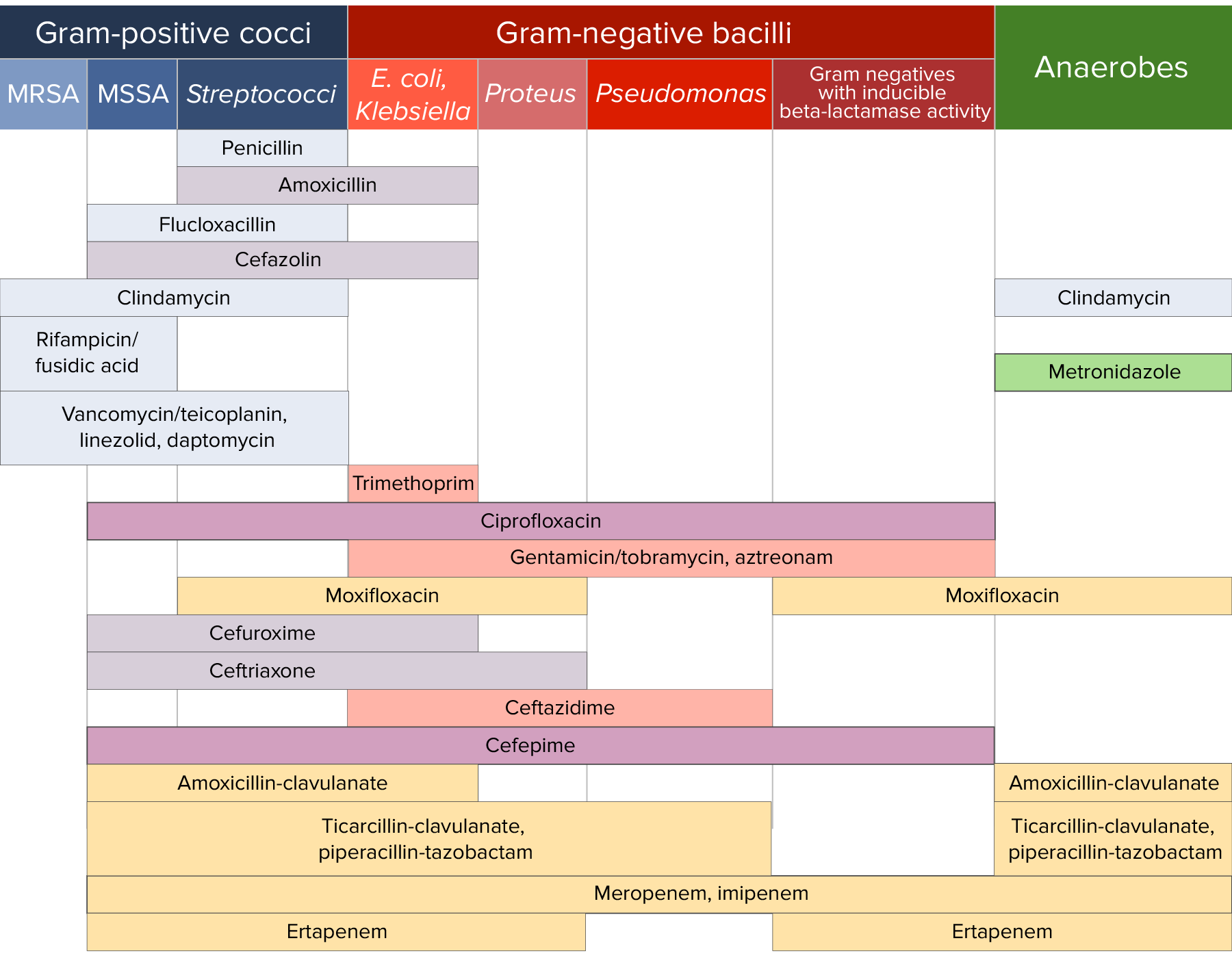
Tabla de sensibilidad a los antibióticos

Sensibilidad a los antibióticos:
Gráfico que compara la cobertura microbiana de diferentes antibióticos para cocos Gram-positivos, bacilos Gram-negativos y anaerobios.

Imagen por Lecturio. Licencia: CC BY-NC-SA 4.0

Referencias

  1. Deck, D.H., Winston, L.G. (2012). Tetracyclines, macrolides, clindamycin, chloramphenicol, streptogramins, & oxazolidinones. In Katzung, B.G., Masters, S.B., Trevor, A.J. (Eds.), Basic & Clinical Pharmacology (12th edition, pp. 809-819). https://pharmacomedicale.org/images/cnpm/CNPM_2016/katzung-pharmacology.pdf
  2. Leclercq, R. (2002). Mechanisms of resistance to macrolides and lincosamides: Nature of the resistance elements and their clinical implications. Clinical Infectious Diseases, 34(4), 482-492. https://academic.oup.com/cid/article/34/4/482/412492
  3. Johnson, M. (2023). Clindamycin: An overview. In Bond, S. (Ed.), UpToDate. Retrieved December 18, 2024, from https://www.uptodate.com/contents/clindamycin-an-overview
  4. Murphy, P.B., Bistas, K.G., Le, J.K. (2024). Clindamycin. StatPearls. Retrieved December 18, 2024, from https://www.ncbi.nlm.nih.gov/books/NBK519574/
  5. Werth, B.J. (2024). Clindamycin. MSD Manual Professional Version. Retrieved December 18, 2024, from https://www.msdmanuals.com/professional/infectious-diseases/bacteria-and-antibacterial-drugs/clindamycin

¡Crea tu cuenta gratis o inicia una sesión para seguir leyendo!

Regístrate ahora y obtén acceso gratuito a Lecturio con páginas de concepto, videos médicos y cuestionarios para tu educación médica.

User Reviews

Details