Domina Conceptos Médicos

Estudia para la escuela de medicina y tus examenes con Lecturio.

Infecciones del Sitio Operatorio

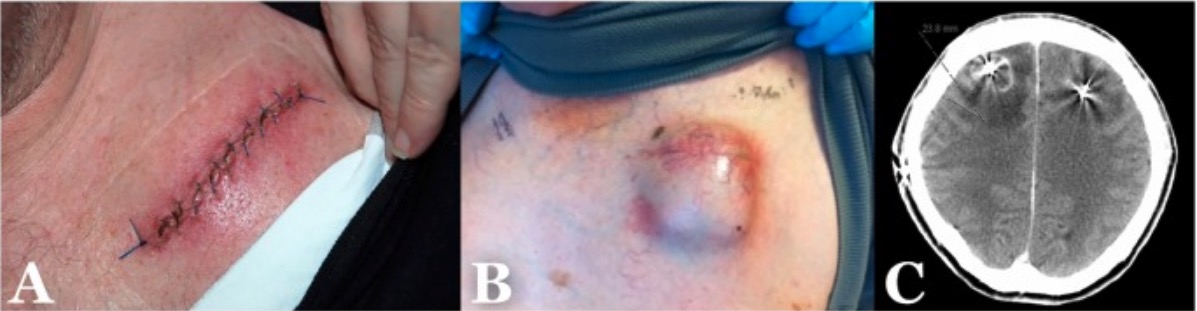
La infección del sitio operatorio (ISO) es un tipo de infección quirúrgica que se produce en EN Erythema nodosum is an immune-mediated panniculitis (inflammation of the subcutaneous fat) caused by a type IV (delayed-type) hypersensitivity reaction. It commonly manifests in young women as tender, erythematous nodules on the shins. Erythema Nodosum la incisión quirúrgica o cerca de la misma en EN Erythema nodosum is an immune-mediated panniculitis (inflammation of the subcutaneous fat) caused by a type IV (delayed-type) hypersensitivity reaction. It commonly manifests in young women as tender, erythematous nodules on the shins. Erythema Nodosum los LOS Neisseria 30 días siguientes a la intervención o en EN Erythema nodosum is an immune-mediated panniculitis (inflammation of the subcutaneous fat) caused by a type IV (delayed-type) hypersensitivity reaction. It commonly manifests in young women as tender, erythematous nodules on the shins. Erythema Nodosum los LOS Neisseria 90 días siguientes si material protésico ha HA Hemolytic anemia (HA) is the term given to a large group of anemias that are caused by the premature destruction/hemolysis of circulating red blood cells (RBCs). Hemolysis can occur within (intravascular hemolysis) or outside the blood vessels (extravascular hemolysis). Hemolytic Anemia sido implantado. Las infecciones del sitio operatorio se clasifican según la profundidad del compromiso de los LOS Neisseria tejidos, como superficiales, profundas o de órgano/espacio. El diagnóstico se realiza basándose en EN Erythema nodosum is an immune-mediated panniculitis (inflammation of the subcutaneous fat) caused by a type IV (delayed-type) hypersensitivity reaction. It commonly manifests in young women as tender, erythematous nodules on the shins. Erythema Nodosum los LOS Neisseria hallazgos clínicos y puede requerir imagenología diagnostica. El tratamiento consiste en EN Erythema nodosum is an immune-mediated panniculitis (inflammation of the subcutaneous fat) caused by a type IV (delayed-type) hypersensitivity reaction. It commonly manifests in young women as tender, erythematous nodules on the shins. Erythema Nodosum la administración de antibióticos, así como del drenaje/desbridamiento quirúrgico si es necesario.

Last updated: Dec 15, 2025

Editorial responsibility: Stanley Oiseth, Lindsay Jones, Evelin Maza

Descripción General

Definición

La infección del sitio operatorio (ISO) es un tipo de infección quirúrgica que se produce en EN Erythema nodosum is an immune-mediated panniculitis (inflammation of the subcutaneous fat) caused by a type IV (delayed-type) hypersensitivity reaction. It commonly manifests in young women as tender, erythematous nodules on the shins. Erythema Nodosum la incisión quirúrgica o cerca de la misma en EN Erythema nodosum is an immune-mediated panniculitis (inflammation of the subcutaneous fat) caused by a type IV (delayed-type) hypersensitivity reaction. It commonly manifests in young women as tender, erythematous nodules on the shins. Erythema Nodosum los LOS Neisseria 30 días siguientes a la intervención o en EN Erythema nodosum is an immune-mediated panniculitis (inflammation of the subcutaneous fat) caused by a type IV (delayed-type) hypersensitivity reaction. It commonly manifests in young women as tender, erythematous nodules on the shins. Erythema Nodosum los LOS Neisseria 90 días siguientes si material protésico ha HA Hemolytic anemia (HA) is the term given to a large group of anemias that are caused by the premature destruction/hemolysis of circulating red blood cells (RBCs). Hemolysis can occur within (intravascular hemolysis) or outside the blood vessels (extravascular hemolysis). Hemolytic Anemia sido implantado.

Clasificación de las infecciones del sitio quirúrgico

  • Superficial: afecta a la piel y al AL Amyloidosis tejido subcutáneo
  • Profundo: afecta a las capas fasciales y/o musculares
  • Órgano/espacio: afecta a órganos o espacios profundos a la incisión (e.g., absceso intraabdominal)

Clasificación de las heridas quirúrgicas

Las heridas quirúrgicas se clasifican de limpias a sucias en EN Erythema nodosum is an immune-mediated panniculitis (inflammation of the subcutaneous fat) caused by a type IV (delayed-type) hypersensitivity reaction. It commonly manifests in young women as tender, erythematous nodules on the shins. Erythema Nodosum función del riesgo creciente de infección.

Tabla: Clasificación de las heridas quirúrgicas
Clase Descripción
Limpia
  • No hay inflamación
  • No se interviene el tracto respiratorio, gastrointestinal o genitourinario.
  • No hay ruptura de la técnica aséptica.
Limpia-contaminada
  • Se interviene en EN Erythema nodosum is an immune-mediated panniculitis (inflammation of the subcutaneous fat) caused by a type IV (delayed-type) hypersensitivity reaction. It commonly manifests in young women as tender, erythematous nodules on the shins. Erythema Nodosum el tracto respiratorio, gastrointestinal o genitourinario.
  • No hay derrames significativos
Contaminada
  • Presenta inflamación aguda (sin pus) o hay contaminación visible de la herida
  • Ejemplos:
    • Derrame de una víscera hueca durante el procedimiento
    • Heridas abiertas/compuestas < 4 horas de evolución
Sucia
  • Presencia de pus
  • Víscera hueca previamente perforada
  • Lesiones abiertas/compuestas > 4 horas de evolución

Fisiopatología

La contaminación de las heridas quirúrgicas se produce en EN Erythema nodosum is an immune-mediated panniculitis (inflammation of the subcutaneous fat) caused by a type IV (delayed-type) hypersensitivity reaction. It commonly manifests in young women as tender, erythematous nodules on the shins. Erythema Nodosum algún grado en EN Erythema nodosum is an immune-mediated panniculitis (inflammation of the subcutaneous fat) caused by a type IV (delayed-type) hypersensitivity reaction. It commonly manifests in young women as tender, erythematous nodules on the shins. Erythema Nodosum todos los LOS Neisseria procedimientos quirúrgicos. Sin embargo, en EN Erythema nodosum is an immune-mediated panniculitis (inflammation of the subcutaneous fat) caused by a type IV (delayed-type) hypersensitivity reaction. It commonly manifests in young women as tender, erythematous nodules on the shins. Erythema Nodosum la mayoría de los LOS Neisseria casos, los LOS Neisseria agentes infecciosos no superan las defensas del huésped. Para que se produzca una ISO, la colonización bacteriana debe desencadenar una respuesta inmunitaria.

Factores de riesgo

Factores relacionados con el procedimiento:

  • Violaciones de la técnica estéril (i.e., inadecuada preparación de la piel, contaminación de los LOS Neisseria instrumentos, lavado de manos inadecuado)
  • Profilaxis antibiótica inadecuada o inoportuna
  • Tiempo prolongado del procedimiento
  • Necrosis Necrosis The death of cells in an organ or tissue due to disease, injury or failure of the blood supply. Ischemic Cell Damage tisular local
  • Formación de hematomas
  • Uso de material extraño en EN Erythema nodosum is an immune-mediated panniculitis (inflammation of the subcutaneous fat) caused by a type IV (delayed-type) hypersensitivity reaction. It commonly manifests in young women as tender, erythematous nodules on the shins. Erythema Nodosum las heridas (e.g., drenajes, mallas)
  • Afeitado preoperatorio
  • Estancia hospitalaria preoperatoria prolongada (↑ infección nosocomial)
  • Contaminación con contenido intestinal

Factores del paciente:

  • Edad avanzada (> 65 años)
  • Infección quirúrgica previa
  • Desnutrición
  • Obesidad
  • Diabetes Diabetes Diabetes mellitus (DM) is a metabolic disease characterized by hyperglycemia and dysfunction of the regulation of glucose metabolism by insulin. Type 1 DM is diagnosed mostly in children and young adults as the result of autoimmune destruction of β cells in the pancreas and the resulting lack of insulin. Type 2 DM has a significant association with obesity and is characterized by insulin resistance. Diabetes Mellitus mellitus
  • Hipotermia
  • Hipoxemia
  • Hiperglucemia
  • Inmunosupresión
  • Terapia con corticosteroides
  • Inflamación crónica
  • Tabaquismo
  • Insuficiencia renal
  • Enfermedad vascular periférica (EVP)
  • Anemia Anemia Anemia is a condition in which individuals have low Hb levels, which can arise from various causes. Anemia is accompanied by a reduced number of RBCs and may manifest with fatigue, shortness of breath, pallor, and weakness. Subtypes are classified by the size of RBCs, chronicity, and etiology. Anemia: Overview and Types
  • Irradiación previa del sitio quirúrgico
  • Enfermedad crónica de la piel
  • Estado de portador (e.g., portador crónico de Staphylococcus Staphylococcus Staphylococcus is a medically important genera of Gram-positive, aerobic cocci. These bacteria form clusters resembling grapes on culture plates. Staphylococci are ubiquitous for humans, and many strains compose the normal skin flora. Staphylococcus)

Patogénesis

Cuando los LOS Neisseria factores de virulencia de un microorganismo son suficientes para superar las respuestas inmunitarias innata y adaptativa, se produce una infección clínicamente importante de la siguiente manera:
  1. Una vez que los LOS Neisseria microbios entran, las defensas del huésped (i.e., las barreras tisulares, la lactoferrina y la transferrina que secuestran el hierro, y el fibrinógeno) actúan para limitar y/o eliminar todos los LOS Neisseria patógenos.
  2. Los LOS Neisseria macrófagos residentes secretan citocinas (factor de necrosis Necrosis The death of cells in an organ or tissue due to disease, injury or failure of the blood supply. Ischemic Cell Damage tumoral α (TNF-α, por sus siglas en EN Erythema nodosum is an immune-mediated panniculitis (inflammation of the subcutaneous fat) caused by a type IV (delayed-type) hypersensitivity reaction. It commonly manifests in young women as tender, erythematous nodules on the shins. Erythema Nodosum inglés); IL-1β, 6 y 8; e interferón (IFN-γ)) en EN Erythema nodosum is an immune-mediated panniculitis (inflammation of the subcutaneous fat) caused by a type IV (delayed-type) hypersensitivity reaction. It commonly manifests in young women as tender, erythematous nodules on the shins. Erythema Nodosum el medio tisular y en EN Erythema nodosum is an immune-mediated panniculitis (inflammation of the subcutaneous fat) caused by a type IV (delayed-type) hypersensitivity reaction. It commonly manifests in young women as tender, erythematous nodules on the shins. Erythema Nodosum la circulación sistémica.
  3. La opsonización microbiana, la fagocitosis y la destrucción microbiana extracelular e intracelular se producen a través de la ingestión celular.
  4. Al AL Amyloidosis mismo tiempo, se activan las vías clásica y alternativa del complemento y aumenta la permeabilidad vascular.
  5. El líquido inflamatorio y los LOS Neisseria neutrófilos fluyen hacia la zona de la infección.
  6. Posibles resultados:
    • El microorganismo es erradicado.
    • Contención en EN Erythema nodosum is an immune-mediated panniculitis (inflammation of the subcutaneous fat) caused by a type IV (delayed-type) hypersensitivity reaction. It commonly manifests in young women as tender, erythematous nodules on the shins. Erythema Nodosum el parénquima (i.e., absceso)
    • Infección localizada, con síntomas locales (i.e., celulitis)
    • Infección sistémica (bacteriemia o fungemia Fungemia The presence of fungi circulating in the blood. Opportunistic fungal sepsis is seen most often in immunosuppressed patients with severe neutropenia or in postoperative patients with intravenous catheters and usually follows prolonged antibiotic therapy. Chronic Granulomatous Disease) con su presentación acompañante (i.e., fiebre, taquicardia)
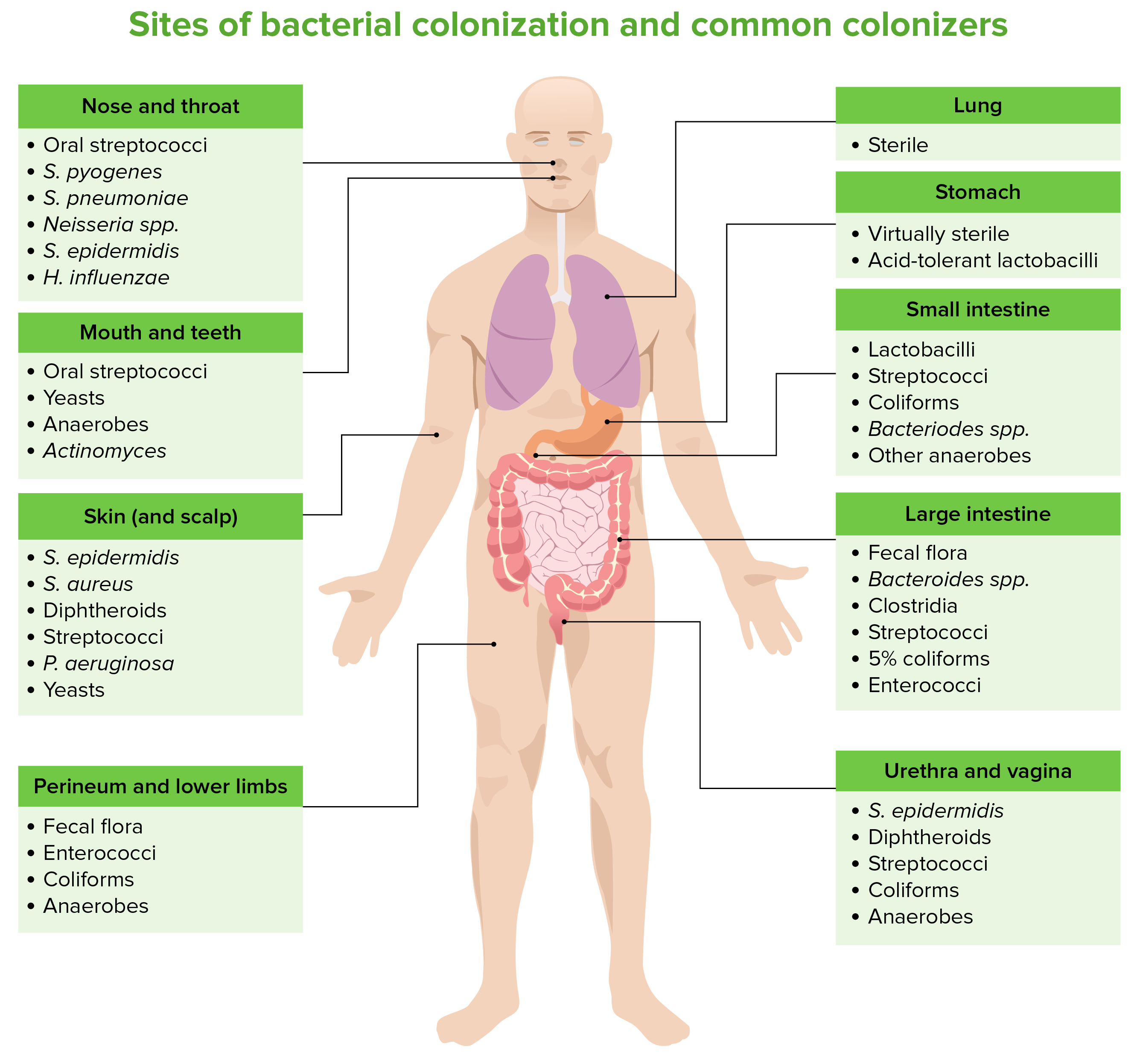
Lugares de colonización bacteriana

Lugares de colonización bacteriana y colonizadores comunes

Imagen por Lecturio. Licencia: CC BY-NC-SA 4.0
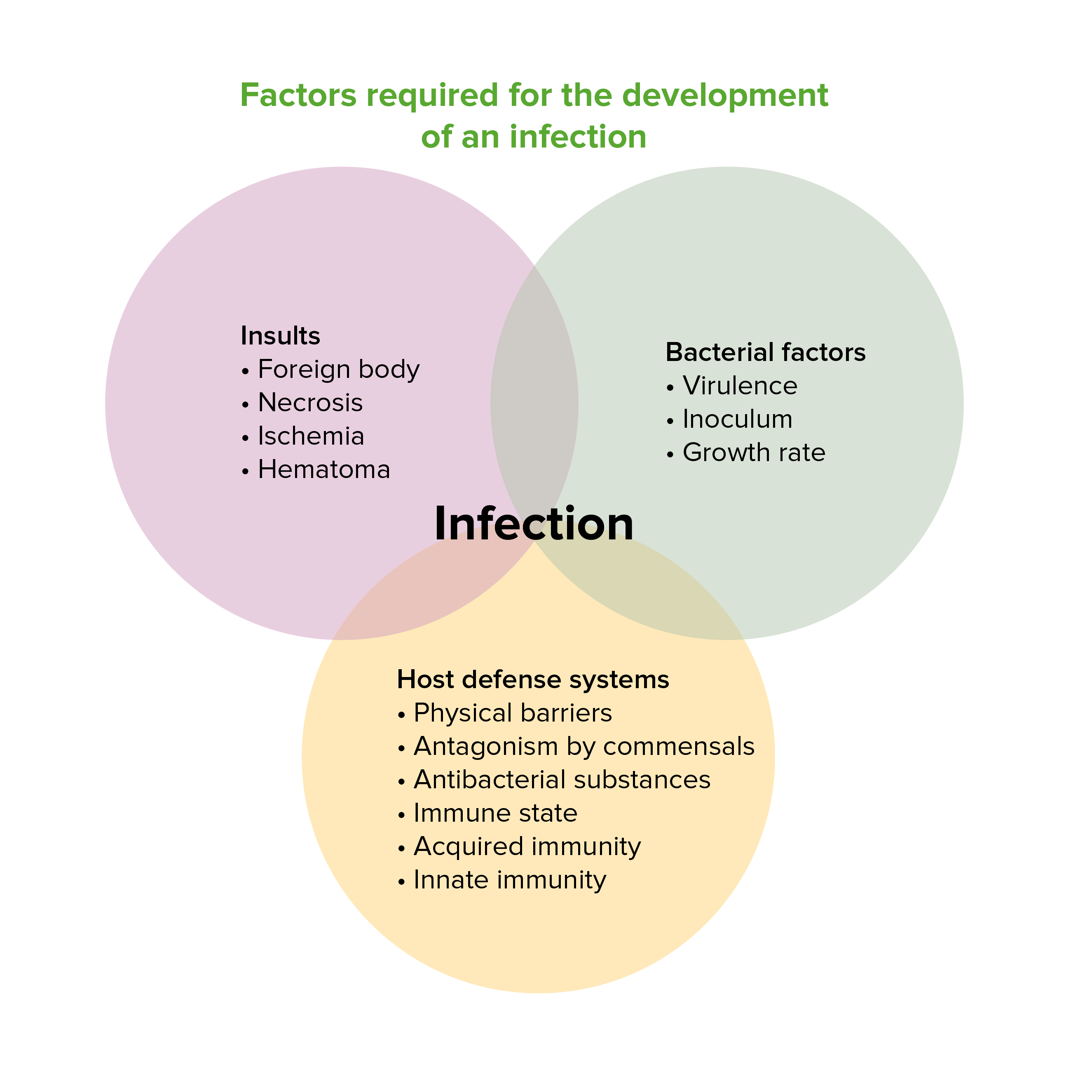
Factores necesarios para el desarrollo de una infección

Factores necesarios para el desarrollo de una infección

Imagen por Lecturio. Licencia: CC BY-NC-SA 4.0
Presentación Clínica

Inflamación sistémica:

  • Fiebre
  • Taquicardia
  • Taquipnea

Inflamación local:

  • Eritema local
  • Dolor Dolor Inflammation
  • Secreción purulenta
  • Signos peritoneales en EN Erythema nodosum is an immune-mediated panniculitis (inflammation of the subcutaneous fat) caused by a type IV (delayed-type) hypersensitivity reaction. It commonly manifests in young women as tender, erythematous nodules on the shins. Erythema Nodosum las infecciones de órganos/espacios abdominales
  • Los LOS Neisseria abscesos cercanos a la piel son dolorosos y la piel que los LOS Neisseria recubre está hinchada, eritematosa y caliente.

Shock Shock Shock is a life-threatening condition associated with impaired circulation that results in tissue hypoxia. The different types of shock are based on the underlying cause: distributive (↑ cardiac output (CO), ↓ systemic vascular resistance (SVR)), cardiogenic (↓ CO, ↑ SVR), hypovolemic (↓ CO, ↑ SVR), obstructive (↓ CO), and mixed. Types of Shock séptico:

  • Hipotensión
  • Palidez
  • Sudoración
  • Escalofríos
  • Confusión (alteración del estado mental)

Diagnóstico

El diagnóstico de la ISO se basa principalmente en EN Erythema nodosum is an immune-mediated panniculitis (inflammation of the subcutaneous fat) caused by a type IV (delayed-type) hypersensitivity reaction. It commonly manifests in young women as tender, erythematous nodules on the shins. Erythema Nodosum los LOS Neisseria hallazgos clínicos. La imagenología diagnostica y los LOS Neisseria estudios de laboratorio son útiles para identificar las infecciones de los LOS Neisseria tejidos profundos y de los LOS Neisseria órganos/espacios.

Examen físico

Hallazgos clínicos (locales):

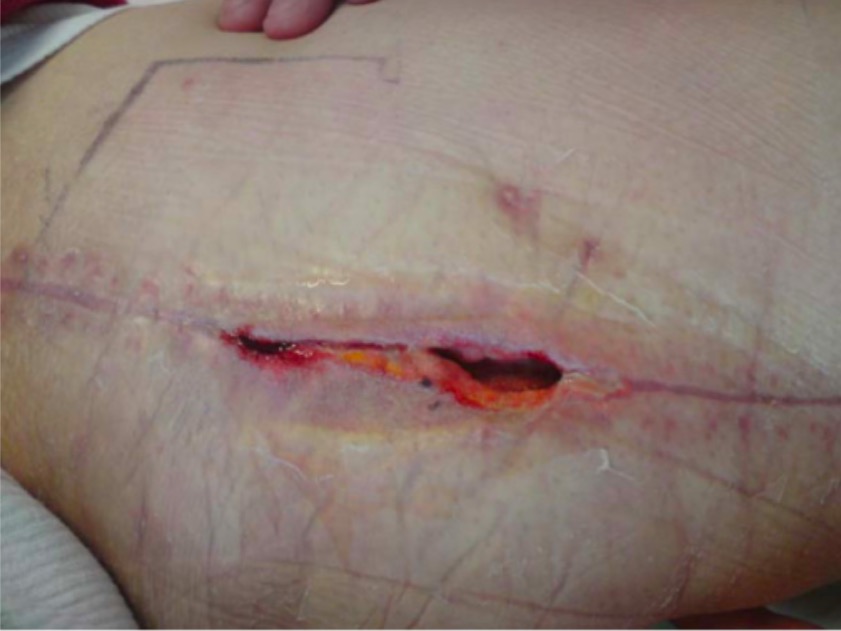
  • Exudado purulento que drena del sitio operatorio
  • Un sitio quirúrgico que se ha HA Hemolytic anemia (HA) is the term given to a large group of anemias that are caused by the premature destruction/hemolysis of circulating red blood cells (RBCs). Hemolysis can occur within (intravascular hemolysis) or outside the blood vessels (extravascular hemolysis). Hemolytic Anemia reabierto en EN Erythema nodosum is an immune-mediated panniculitis (inflammation of the subcutaneous fat) caused by a type IV (delayed-type) hypersensitivity reaction. It commonly manifests in young women as tender, erythematous nodules on the shins. Erythema Nodosum el marco de ≥ 1 signo clínico de infección ( dolor Dolor Inflammation, hinchazón, eritema, calor Calor Inflammation)
  • Eritema, hinchazón, fluctuación y/o induración alrededor de la incisión
  • Infecciones de órganos/espacios:
    • Fiebre/escalofríos/signos de sepsis Sepsis Systemic inflammatory response syndrome with a proven or suspected infectious etiology. When sepsis is associated with organ dysfunction distant from the site of infection, it is called severe sepsis. When sepsis is accompanied by hypotension despite adequate fluid infusion, it is called septic shock. Sepsis and Septic Shock
    • Sensibilidad abdominal localizada con signos peritoneales

Hallazgos de sepsis Sepsis Systemic inflammatory response syndrome with a proven or suspected infectious etiology. When sepsis is associated with organ dysfunction distant from the site of infection, it is called severe sepsis. When sepsis is accompanied by hypotension despite adequate fluid infusion, it is called septic shock. Sepsis and Septic Shock (sistémicos):
  • Criterios del síndrome de respuesta inflamatoria sistémica (SIRS, por sus siglas en EN Erythema nodosum is an immune-mediated panniculitis (inflammation of the subcutaneous fat) caused by a type IV (delayed-type) hypersensitivity reaction. It commonly manifests in young women as tender, erythematous nodules on the shins. Erythema Nodosum inglés):
    • Temperatura > 38°C (100,4°F) o < 36°C (96,8°F)
    • FC Fc Crystallizable fragments composed of the carboxy-terminal halves of both immunoglobulin heavy chains linked to each other by disulfide bonds. Fc fragments contain the carboxy-terminal parts of the heavy chain constant regions that are responsible for the effector functions of an immunoglobulin (complement fixation, binding to the cell membrane via fc receptors, and placental transport). This fragment can be obtained by digestion of immunoglobulins with the proteolytic enzyme papain. Immunoglobulins: Types and Functions > 90/minuto
    • FR > 20 o presión parcial de dióxido de carbono (PaCO2) < 32 mm Hg
    • Glóbulos blancos > 12.000 (leucocitosis) o < 4000 (leucopenia) o >10 % de formas inmaduras ( en EN Erythema nodosum is an immune-mediated panniculitis (inflammation of the subcutaneous fat) caused by a type IV (delayed-type) hypersensitivity reaction. It commonly manifests in young women as tender, erythematous nodules on the shins. Erythema Nodosum banda)
  • Evaluación secuencial del fallo orgánico ( SOFA SOFA Sepsis and Septic Shock, por sus siglas en EN Erythema nodosum is an immune-mediated panniculitis (inflammation of the subcutaneous fat) caused by a type IV (delayed-type) hypersensitivity reaction. It commonly manifests in young women as tender, erythematous nodules on the shins. Erythema Nodosum inglés):
    • Puntuación de predicción de la mortalidad
    • Se utiliza para seguir el estado de una persona durante su estancia en EN Erythema nodosum is an immune-mediated panniculitis (inflammation of the subcutaneous fat) caused by a type IV (delayed-type) hypersensitivity reaction. It commonly manifests in young women as tender, erythematous nodules on the shins. Erythema Nodosum una UCI
    • Basado en EN Erythema nodosum is an immune-mediated panniculitis (inflammation of the subcutaneous fat) caused by a type IV (delayed-type) hypersensitivity reaction. It commonly manifests in young women as tender, erythematous nodules on the shins. Erythema Nodosum una evaluación del grado de disfunción de 6 sistemas de órganos.
    • La puntuación se calcula al AL Amyloidosis ingreso y cada 24 horas hasta el alta.
    • El SOFA SOFA Sepsis and Septic Shock rápido ( qSOFA qSOFA Presence of 2 of the following 3 criteria indicates a worse outcome in a patient suspected of having sepsis and triggers an immediate diagnostic workup and treatment as appropriate. Sbp < 100 mm hg, respiratory rate > 22/min, altered mental status. Types of Shock, por sus siglas en EN Erythema nodosum is an immune-mediated panniculitis (inflammation of the subcutaneous fat) caused by a type IV (delayed-type) hypersensitivity reaction. It commonly manifests in young women as tender, erythematous nodules on the shins. Erythema Nodosum inglés) es una herramienta de evaluación abreviada (poco sensible, pero decentemente específica para el riesgo de muerte):
      • FR ≥ 22/minuto
      • Alteración del estado mental
      • PA sistólica ≤ 100 mm Hg

Laboratorio

  • Hemograma: Leucocitos > 10 000 (leucocitosis)
  • Creatinina sérica
  • BUN
  • Proteína C reactiva
  • Microbiología:
    • Tinción de Gram y cultivo de una herida o aspirado
    • Hemocultivo en EN Erythema nodosum is an immune-mediated panniculitis (inflammation of the subcutaneous fat) caused by a type IV (delayed-type) hypersensitivity reaction. It commonly manifests in young women as tender, erythematous nodules on the shins. Erythema Nodosum pacientes febriles o con sospecha de sepsis Sepsis Systemic inflammatory response syndrome with a proven or suspected infectious etiology. When sepsis is associated with organ dysfunction distant from the site of infection, it is called severe sepsis. When sepsis is accompanied by hypotension despite adequate fluid infusion, it is called septic shock. Sepsis and Septic Shock

Imagenología

  • Las ISO de tejidos profundos u órganos/espacios pueden requerir imágenes radiológicas para el diagnóstico definitivo.
  • La infección relacionada con prótesis (e.g., mallas utilizadas para el manejo de las hernias) también puede requerir imagenología para apoyar el diagnóstico.
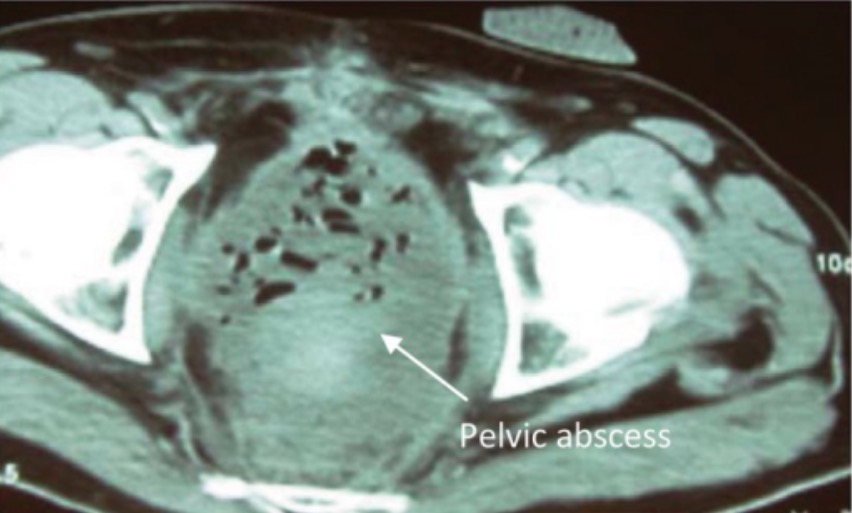
  • La TC, RM o el ultrasonido pueden identificar los LOS Neisseria abscesos abdominales, pélvicos y de tejidos blandos.
  • La imagenología es necesarias para la planificación del drenaje percutáneo o quirúrgico.
Tomografía axial computarizada de la pelvis que muestra un absceso pélvico

Absceso pélvico posquirúrgico

Imagen: Axial computed tomography of the pelvis showing pelvic abscess” por Plastic and Reconstructive Surgery Department, Cork University Hospital, Wilton, Cork, Ireland. Licencia: CC BY 3.0

Tratamiento

El tratamiento de las ISO puede incluir antibióticos, drenaje del absceso (abierto o percutáneo) y retirada del material protésico infectado.

Terapia con antibióticos

  • Reservado para pacientes con celulitis significativa, SIRS, infecciones de órganos/espacios o prótesis
  • La elección del antibiótico depende del procedimiento realizado y del tipo de herida:
    • Las infecciones asociadas a la flora cutánea requieren en EN Erythema nodosum is an immune-mediated panniculitis (inflammation of the subcutaneous fat) caused by a type IV (delayed-type) hypersensitivity reaction. It commonly manifests in young women as tender, erythematous nodules on the shins. Erythema Nodosum su mayoría una cobertura de grampositivos, así como la consideración de una posible resistencia a la meticilina.
    • La contaminación con flora intestinal requiere una cobertura de gramnegativos y anaerobios.
Tabla: Elección del antibiótico según el organismo potencialmente implicado
Microorganismo Primera opción Alterativa
Staphylococcus aureus Staphylococcus aureus Potentially pathogenic bacteria found in nasal membranes, skin, hair follicles, and perineum of warm-blooded animals. They may cause a wide range of infections and intoxications. Brain Abscess sensible a la meticilina Cefazolina Clindamicina o penicilina antiestafilocócica (nafcilina, oxacilina, dicloxacilina)
Staphylococcus aureus Staphylococcus aureus Potentially pathogenic bacteria found in nasal membranes, skin, hair follicles, and perineum of warm-blooded animals. They may cause a wide range of infections and intoxications. Brain Abscess resistente a la meticilina Vancomicina Linezolid Linezolid An oxazolidinone and acetamide derived anti-bacterial agent and protein synthesis inhibitor that is used in the treatment of gram-positive bacterial infections of the skin and respiratory tract. Oxazolidinones o daptomicina
Estafilococos coagulasa-negativos Vancomicina Linezolid Linezolid An oxazolidinone and acetamide derived anti-bacterial agent and protein synthesis inhibitor that is used in the treatment of gram-positive bacterial infections of the skin and respiratory tract. Oxazolidinones o daptomicina
Streptococcus Streptococcus Streptococcus is one of the two medically important genera of gram-positive cocci, the other being Staphylococcus. Streptococci are identified as different species on blood agar on the basis of their hemolytic pattern and sensitivity to optochin and bacitracin. There are many pathogenic species of streptococci, including S. pyogenes, S. agalactiae, S. pneumoniae, and the viridans streptococci. Streptococcus pneumoniae Bencilpenicilina Claritromicina
Streptococcus Streptococcus Streptococcus is one of the two medically important genera of gram-positive cocci, the other being Staphylococcus. Streptococci are identified as different species on blood agar on the basis of their hemolytic pattern and sensitivity to optochin and bacitracin. There are many pathogenic species of streptococci, including S. pyogenes, S. agalactiae, S. pneumoniae, and the viridans streptococci. Streptococcus pyogenes (estreptococo β-hemolítico del grupo A) Bencilpenicilina, clindamicina Claritromicina
Enterococos Amoxicilina Vancomicina
Bacteroides Bacteroides Bacteroides is a genus of opportunistic, anaerobic, gram-negative bacilli. Bacteroides fragilis is the most common species involved in human disease and is part of the normal flora of the large intestine. Bacteroides spp. Metronidazol Amoxicilina-clavulanato
Escherichia coli Escherichia coli The gram-negative bacterium Escherichia coli is a key component of the human gut microbiota. Most strains of E. coli are avirulent, but occasionally they escape the GI tract, infecting the urinary tract and other sites. Less common strains of E. coli are able to cause disease within the GI tract, most commonly presenting as abdominal pain and diarrhea. Escherichia coli Piperacilina-tazobactam Meropenem Meropenem A thienamycin derivative antibacterial agent that is more stable to renal dehydropeptidase I than imipenem, but does not need to be given with an enzyme inhibitor such as cilastatin. It is used in the treatment of bacterial infections, including infections in immunocompromised patients. Carbapenems and Aztreonam
Haemophilus influenzae Haemophilus Influenzae A species of Haemophilus found on the mucous membranes of humans and a variety of animals. The species is further divided into biotypes I through viii. Haemophilus Amoxicilina Amoxicilina-clavulanato
Klebsiella Klebsiella Klebsiella are encapsulated gram-negative, lactose-fermenting bacilli. They form pink colonies on MacConkey agar due to lactose fermentation. The main virulence factor is a polysaccharide capsule. Klebsiella pneumoniae is the most important pathogenic species. Klebsiella spp. Ceftriaxona o piperacilina-tazobactam Meropenem Meropenem A thienamycin derivative antibacterial agent that is more stable to renal dehydropeptidase I than imipenem, but does not need to be given with an enzyme inhibitor such as cilastatin. It is used in the treatment of bacterial infections, including infections in immunocompromised patients. Carbapenems and Aztreonam
Proteus Proteus Proteus spp. are gram-negative, facultatively anaerobic bacilli. Different types of infection result from Proteus, but the urinary tract is the most common site. The majority of cases are caused by Proteus mirabilis (P. mirabilis). The bacteria are part of the normal intestinal flora and are also found in the environment. Proteus spp. Amoxicilina-clavulanato Meropenem Meropenem A thienamycin derivative antibacterial agent that is more stable to renal dehydropeptidase I than imipenem, but does not need to be given with an enzyme inhibitor such as cilastatin. It is used in the treatment of bacterial infections, including infections in immunocompromised patients. Carbapenems and Aztreonam
Pseudomonas aeruginosa Pseudomonas aeruginosa A species of gram-negative, aerobic, rod-shaped bacteria commonly isolated from clinical specimens (wound, burn, and urinary tract infections). It is also found widely distributed in soil and water. P. Aeruginosa is a major agent of nosocomial infection. Pseudomonas Piperacilina-tazobactam Meropenem Meropenem A thienamycin derivative antibacterial agent that is more stable to renal dehydropeptidase I than imipenem, but does not need to be given with an enzyme inhibitor such as cilastatin. It is used in the treatment of bacterial infections, including infections in immunocompromised patients. Carbapenems and Aztreonam
Clostridium spp.
  • Para C. difficile: vancomicina o fidaxomicina por vía oral
  • Para otras especies de Clostridium (p. ej., C. perfringens C. perfringens The most common etiologic agent of gas gangrene. It is differentiable into several distinct types based on the distribution of twelve different toxins. Gas Gangrene): bencilpenicilina con o sin clindamicina
Metronidazol

Terapia quirúrgica

  • ISO superficial/abscesos:
    • Abrir la herida
    • Permitir que la herida sane por segunda intención con cambios diarios de cura/apósitos
  • Infección profunda de la herida con afectación de la fascia Fascia Layers of connective tissue of variable thickness. The superficial fascia is found immediately below the skin; the deep fascia invests muscles, nerves, and other organs. Cellulitis/músculo:
    • Abrir la herida
    • Puede ser necesario el desbridamiento del tejido infectado/desvitalizado.
    • Cambios diarios de apósitos/curación de la herida; puede beneficiarse de la terapia de vacío de la herida
  • Infección de órganos/espacios:
    • Los LOS Neisseria abscesos muy pequeños (< 3 cm) pueden resolverse solo con terapia antibiótica.
    • Los LOS Neisseria abscesos más grandes suelen requerir drenaje percutáneo o quirúrgico.
  • Infecciones relacionadas con materiales protésicos:
    • La terapia inicial es de antibióticos con drenaje de todos los LOS Neisseria abscesos asociados.
    • Se puede intentar el rescate si hay una buena respuesta clínica a los LOS Neisseria antibióticos y al AL Amyloidosis drenaje, pero la mayoría de las veces se requiere la retirada del material protésico.

Prevención

  • Adherencia a la técnica estéril
  • Profilaxis antibiótica adecuada
  • Preparación del intestino (limpieza) cuando sea posible en EN Erythema nodosum is an immune-mediated panniculitis (inflammation of the subcutaneous fat) caused by a type IV (delayed-type) hypersensitivity reaction. It commonly manifests in young women as tender, erythematous nodules on the shins. Erythema Nodosum los LOS Neisseria casos de resección/anastomosis intestinal
  • Optimizar el estado del paciente (cesación del consumo de tabaco, nutrición adecuada, control de la glucemia, evitar la hipotermia en EN Erythema nodosum is an immune-mediated panniculitis (inflammation of the subcutaneous fat) caused by a type IV (delayed-type) hypersensitivity reaction. It commonly manifests in young women as tender, erythematous nodules on the shins. Erythema Nodosum el quirófano)

Referencias

  1. Johnson, S., Lavergne, V., Skinner, A. M., Gonzales-Luna, A. J., Garey, K. W., Kelly, C. P., & Wilcox, M. H. (2021). Clinical practice guideline by the Infectious Diseases Society of America (IDSA) and Society for Healthcare Epidemiology of America (SHEA): 2021 focused update guidelines on management of Clostridioides difficile infection in adults. Clinical Infectious Diseases, 73(5), e1029–e1044. https://doi.org/10.1093/cid/ciab549
  2. Qureshi, S. (2024). Klebsiella infections medication. Medscape. Retrieved November 19, 2025, from https://emedicine.medscape.com/article/219907-medication
  3. Herchline, T. E. (2024). Cellulitis treatment & management. Medscape. Retrieved November 19, 2025, from https://emedicine.medscape.com/article/214222-treatment
  4. Marik, P. E., & Taeb, A. M. (2017). SIRS, qSOFA and new sepsis definition. Journal of Thoracic Disease, 9(4), 943–945. https://doi.org/10.21037/jtd.2017.03.125
  5. Gossain, S., & Hawkey, P. M. (2018). Infections and antibiotics. In O. J. Garden & R. W. Parks (Eds.), Principles and practice of surgery (7th ed., pp. 48–59). Elsevier.
  6. Owens CD, Stoessel K. (2008). Surgical site infections: epidemiology, microbiology and prevention. J Hosp Infect 70(Suppl 2):3–10. https://www.ncbi.nlm.nih.gov/pubmed/19022115
  7. Bulander RE, Dunn DL, Beilman GJ. (2019). Surgical infections. Brunicardi F, Andersen DK, Billiar TR, et al. (Eds.), Schwartz’s Principles of Surgery, 11th ed. McGraw-Hill.
  8. Bjerknes S, Skogseid IM, Sæhle T, Dietrichs E, Toft M. (2014). Surgical site infections after deep brain stimulation surgery: frequency, characteristics, and management in a 10-year period. PLoS One 9(8):e105288. https://doi.org/10.1371/journal.pone.0105288
  9. Quick C, Biers S, Arulampalam T. (2020). Immunity, Inflammation, and Infection, Essential Surgery: Problems, Diagnosis, and Management, 6th ed. Edinburgh: Elsevier. 
  10. Young PY, Khadaroo RG. (2014). Surgical site infections. Surg Clin North Am94:1245–1264. https://www.ncbi.nlm.nih.gov/pubmed/25440122

¡Crea tu cuenta gratis o inicia una sesión para seguir leyendo!

Regístrate ahora y obtén acceso gratuito a Lecturio con páginas de concepto, videos médicos y cuestionarios para tu educación médica.

User Reviews

Que tengas una sesión de estudio alegre y navideña 🎁 Ahorra 50% en todos los planes >>

Details