Domina Conceptos Médicos

Estudia para la escuela de medicina y tus examenes con Lecturio.

Histoplasma/Histoplasmosis

La histoplasmosis Histoplasmosis Histoplasmosis is an infection caused by Histoplasma capsulatum, a dimorphic fungus. Transmission is through inhalation, and exposure to soils containing bird or bat droppings increases the risk of infection. Most infections are asymptomatic; however, immunocompromised individuals generally develop acute pulmonary infection, chronic infection, or even disseminated disease. Histoplasma/Histoplasmosis es una infección causada por el Histoplasma capsulatum Histoplasma capsulatum Histoplasma/Histoplasmosis, un hongo dimórfico. El hongo existe como moho a bajas temperaturas y como levadura a altas temperaturas. H. capsulatum es la infección fúngica endémica más común en EN Erythema nodosum is an immune-mediated panniculitis (inflammation of the subcutaneous fat) caused by a type IV (delayed-type) hypersensitivity reaction. It commonly manifests in young women as tender, erythematous nodules on the shins. Erythema Nodosum EE. UU. y es más prevalente en EN Erythema nodosum is an immune-mediated panniculitis (inflammation of the subcutaneous fat) caused by a type IV (delayed-type) hypersensitivity reaction. It commonly manifests in young women as tender, erythematous nodules on the shins. Erythema Nodosum los LOS Neisseria estados del medio oeste y sureste a lo largo de los LOS Neisseria valles de los LOS Neisseria ríos Ohio y Mississippi. La transmisión es mediante la inhalación, y la exposición a suelos que contengan excremento de aves o murciélagos, aumenta el riesgo de infección. La mayoría de las infecciones son asintomáticas; sin embargo, los LOS Neisseria individuos inmunocomprometidos suelen desarrollar una infección pulmonar aguda, una infección crónica o incluso una enfermedad diseminada. El diagnóstico se realiza a través de diferentes modalidades, mediante la visualización y/o crecimiento del organismo causante realizado mediante microscopía directa, histopatología o estudios de cultivo. El tratamiento depende de la gravedad de la enfermedad. Los LOS Neisseria medicamentos antifúngicos que se utilizan son la anfotericina B y el itraconazol.

Last updated: Dec 15, 2025

Editorial responsibility: Stanley Oiseth, Lindsay Jones, Evelin Maza

Características Generales del Histoplasma

Características

  • Morfología: hongo dimórfico térmico
    • Temperatura ambiente (baja): forma de moho
    • Temperatura corporal (alta): forma de levadura
  • Características:
    • Aerobio obligado
    • Forma de moho:
      • Micelio septado: fino y ramificado
      • Produce microconidias y macroconidias tuberculadas
    • Forma de levadura:
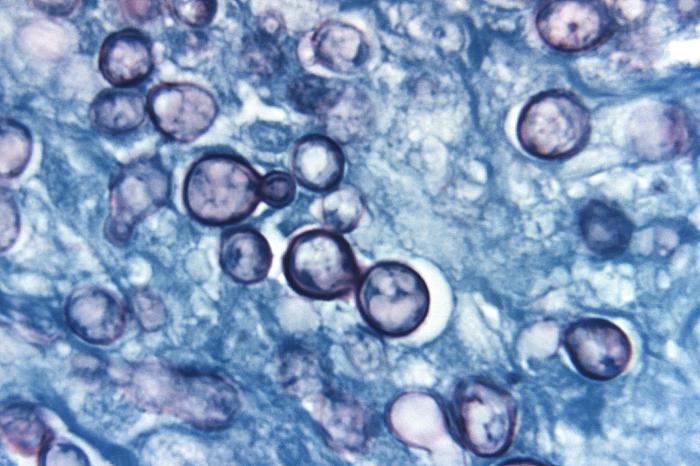
      • Se reproduce por gemación
      • Ligeramente ovalada
      • 2–4 µm de diámetro
      • Se encuentra exclusivamente en EN Erythema nodosum is an immune-mediated panniculitis (inflammation of the subcutaneous fat) caused by a type IV (delayed-type) hypersensitivity reaction. It commonly manifests in young women as tender, erythematous nodules on the shins. Erythema Nodosum los LOS Neisseria macrófagos

Especies clínicamente relevantes

  • H. capsulatum var. capsulatum
  • H. capsulatum var. duboisii: existe principalmente en EN Erythema nodosum is an immune-mediated panniculitis (inflammation of the subcutaneous fat) caused by a type IV (delayed-type) hypersensitivity reaction. It commonly manifests in young women as tender, erythematous nodules on the shins. Erythema Nodosum África

Formas de la enfermedad

  • Histoplasmosis Histoplasmosis Histoplasmosis is an infection caused by Histoplasma capsulatum, a dimorphic fungus. Transmission is through inhalation, and exposure to soils containing bird or bat droppings increases the risk of infection. Most infections are asymptomatic; however, immunocompromised individuals generally develop acute pulmonary infection, chronic infection, or even disseminated disease. Histoplasma/Histoplasmosis pulmonar:
    • Asintomática
    • Sintomática
    • Aguda difusa
    • Pulmonar crónica
  • Histoplasmosis Histoplasmosis Histoplasmosis is an infection caused by Histoplasma capsulatum, a dimorphic fungus. Transmission is through inhalation, and exposure to soils containing bird or bat droppings increases the risk of infection. Most infections are asymptomatic; however, immunocompromised individuals generally develop acute pulmonary infection, chronic infection, or even disseminated disease. Histoplasma/Histoplasmosis diseminada:
    • SNC
    • Gastrointestinal
    • Lesiones cutáneas
    • Glándulas suprarrenales

Mnemotecnia

La histoplasmosis Histoplasmosis Histoplasmosis is an infection caused by Histoplasma capsulatum, a dimorphic fungus. Transmission is through inhalation, and exposure to soils containing bird or bat droppings increases the risk of infection. Most infections are asymptomatic; however, immunocompromised individuals generally develop acute pulmonary infection, chronic infection, or even disseminated disease. Histoplasma/Histoplasmosis es una infección causada por un hongo dimórfico. Se puede utilizar la siguiente mnemotecnia para recordar las diferentes formas del hongo:
  • “Moho en el frío”
  • “Levadura en el calor”

Epidemiología

Frecuencia

  • Es la infección endémica fúngica más común en EN Erythema nodosum is an immune-mediated panniculitis (inflammation of the subcutaneous fat) caused by a type IV (delayed-type) hypersensitivity reaction. It commonly manifests in young women as tender, erythematous nodules on the shins. Erythema Nodosum los LOS Neisseria Estados Unidos
  • Incidencia en EN Erythema nodosum is an immune-mediated panniculitis (inflammation of the subcutaneous fat) caused by a type IV (delayed-type) hypersensitivity reaction. It commonly manifests in young women as tender, erythematous nodules on the shins. Erythema Nodosum Estados Unidos: 1 a 2 casos por cada 100.000 habitantes
  • Prevalencia geográfica:
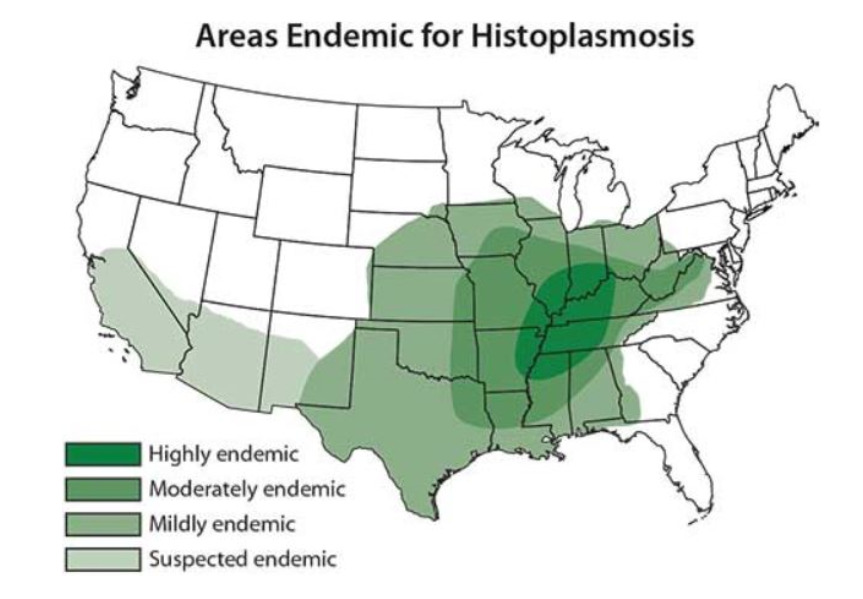
    • Estados Unidos: Alta exposición en EN Erythema nodosum is an immune-mediated panniculitis (inflammation of the subcutaneous fat) caused by a type IV (delayed-type) hypersensitivity reaction. It commonly manifests in young women as tender, erythematous nodules on the shins. Erythema Nodosum los LOS Neisseria valles de los LOS Neisseria ríos Misisipi y Ohio (60-90 % de exposición a lo largo de la vida en EN Erythema nodosum is an immune-mediated panniculitis (inflammation of the subcutaneous fat) caused by a type IV (delayed-type) hypersensitivity reaction. It commonly manifests in young women as tender, erythematous nodules on the shins. Erythema Nodosum estas regiones)
    • A nivel mundial:
      • América del Sur y Central
      • África
      • India
    • Australia

Morbilidad y mortalidad

  • Los LOS Neisseria resultados pueden variar en EN Erythema nodosum is an immune-mediated panniculitis (inflammation of the subcutaneous fat) caused by a type IV (delayed-type) hypersensitivity reaction. It commonly manifests in young women as tender, erythematous nodules on the shins. Erythema Nodosum función de la gravedad, la duración y el estado inmunitario del huésped.
  • Enfermedad leve: pronóstico típicamente favorable
  • Mortalidad por enfermedad grave (a pesar de la hospitalización):
    • 5% en EN Erythema nodosum is an immune-mediated panniculitis (inflammation of the subcutaneous fat) caused by a type IV (delayed-type) hypersensitivity reaction. It commonly manifests in young women as tender, erythematous nodules on the shins. Erythema Nodosum niños
    • 8% en EN Erythema nodosum is an immune-mediated panniculitis (inflammation of the subcutaneous fat) caused by a type IV (delayed-type) hypersensitivity reaction. It commonly manifests in young women as tender, erythematous nodules on the shins. Erythema Nodosum adultos
  • La histoplasmosis Histoplasmosis Histoplasmosis is an infection caused by Histoplasma capsulatum, a dimorphic fungus. Transmission is through inhalation, and exposure to soils containing bird or bat droppings increases the risk of infection. Most infections are asymptomatic; however, immunocompromised individuals generally develop acute pulmonary infection, chronic infection, or even disseminated disease. Histoplasma/Histoplasmosis pulmonar crónica es más probable en EN Erythema nodosum is an immune-mediated panniculitis (inflammation of the subcutaneous fat) caused by a type IV (delayed-type) hypersensitivity reaction. It commonly manifests in young women as tender, erythematous nodules on the shins. Erythema Nodosum individuos con una enfermedad pulmonar subyacente (particularmente enfisema).
  • Histoplasmosis Histoplasmosis Histoplasmosis is an infection caused by Histoplasma capsulatum, a dimorphic fungus. Transmission is through inhalation, and exposure to soils containing bird or bat droppings increases the risk of infection. Most infections are asymptomatic; however, immunocompromised individuals generally develop acute pulmonary infection, chronic infection, or even disseminated disease. Histoplasma/Histoplasmosis diseminada:
    • Adultos inmunocompetentes: 1 por cada 2 000 casos de histoplasmosis Histoplasmosis Histoplasmosis is an infection caused by Histoplasma capsulatum, a dimorphic fungus. Transmission is through inhalation, and exposure to soils containing bird or bat droppings increases the risk of infection. Most infections are asymptomatic; however, immunocompromised individuals generally develop acute pulmonary infection, chronic infection, or even disseminated disease. Histoplasma/Histoplasmosis
    • Individuos inmunocomprometidos: mortalidad de 4%–27% en EN Erythema nodosum is an immune-mediated panniculitis (inflammation of the subcutaneous fat) caused by a type IV (delayed-type) hypersensitivity reaction. It commonly manifests in young women as tender, erythematous nodules on the shins. Erythema Nodosum los LOS Neisseria casos graves
Mapa de las zonas de Estados Unidos donde la histoplasmosis es endémica

Mapa de Estados Unidos que ilustra las zonas endémicas de histoplasmosis

Imagen: “Map showing areas endemic for histoplasmosis in the US” por CDC. Licencia: Dominio Público

Patogénesis

Proceso infeccioso

  • Hábitat:
    • Se encuentra en EN Erythema nodosum is an immune-mediated panniculitis (inflammation of the subcutaneous fat) caused by a type IV (delayed-type) hypersensitivity reaction. It commonly manifests in young women as tender, erythematous nodules on the shins. Erythema Nodosum suelos contaminados con excremento de aves o murciélagos
    • El excremento aumenta el contenido de nitrógeno → ambiente favorable para la esporulación
    • Sitios comunes:
      • Gallineros
      • Granjas
      • Edificios abandonados
      • Cuevas
  • Transmisión:
    • Inhalación por vía respiratoria
    • Deposición en EN Erythema nodosum is an immune-mediated panniculitis (inflammation of the subcutaneous fat) caused by a type IV (delayed-type) hypersensitivity reaction. It commonly manifests in young women as tender, erythematous nodules on the shins. Erythema Nodosum los LOS Neisseria alvéolos pulmonares
    • Se observa una mayor exposición en EN Erythema nodosum is an immune-mediated panniculitis (inflammation of the subcutaneous fat) caused by a type IV (delayed-type) hypersensitivity reaction. It commonly manifests in young women as tender, erythematous nodules on the shins. Erythema Nodosum los LOS Neisseria espeleólogos y en EN Erythema nodosum is an immune-mediated panniculitis (inflammation of the subcutaneous fat) caused by a type IV (delayed-type) hypersensitivity reaction. It commonly manifests in young women as tender, erythematous nodules on the shins. Erythema Nodosum las personas dedicadas a la construcción o a la agricultura.
  • Factores de virulencia:
    • Sideróforos: ayudan al AL Amyloidosis crecimiento intracelular de la levadura
    • Melanina:
      • Se encuentra en EN Erythema nodosum is an immune-mediated panniculitis (inflammation of the subcutaneous fat) caused by a type IV (delayed-type) hypersensitivity reaction. It commonly manifests in young women as tender, erythematous nodules on the shins. Erythema Nodosum la pared celular
      • Disminuye los LOS Neisseria mecanismos de defensa del huésped
      • Disminuye la susceptibilidad de las levaduras a los LOS Neisseria agentes antifúngicos
    • Proteínas de choque térmico:
      • HSP60: impide una activación significativa de los LOS Neisseria fagocitos
      • HSP82: involucrada en EN Erythema nodosum is an immune-mediated panniculitis (inflammation of the subcutaneous fat) caused by a type IV (delayed-type) hypersensitivity reaction. It commonly manifests in young women as tender, erythematous nodules on the shins. Erythema Nodosum el desarrollo de la levadura y el estrés celular
    • Gen específico de la fase de levadura 3:
      • Se encuentra en EN Erythema nodosum is an immune-mediated panniculitis (inflammation of the subcutaneous fat) caused by a type IV (delayed-type) hypersensitivity reaction. It commonly manifests in young women as tender, erythematous nodules on the shins. Erythema Nodosum la pared celular
      • Función desconocida
    • La proteína de unión al AL Amyloidosis calcio optimiza las condiciones fagolisosomales para el crecimiento de la levadura.
    • α-(1,3)-glucano: función antigénica
  • Patogenicidad y proceso de la enfermedad:
    • Los LOS Neisseria microconidios son fagocitados por los LOS Neisseria macrófagos.
    • Se produce la conversión a la forma de levadura.
    • Las levaduras se multiplican en EN Erythema nodosum is an immune-mediated panniculitis (inflammation of the subcutaneous fat) caused by a type IV (delayed-type) hypersensitivity reaction. It commonly manifests in young women as tender, erythematous nodules on the shins. Erythema Nodosum los LOS Neisseria macrófagos alveolares.
    • Las levaduras en EN Erythema nodosum is an immune-mediated panniculitis (inflammation of the subcutaneous fat) caused by a type IV (delayed-type) hypersensitivity reaction. It commonly manifests in young women as tender, erythematous nodules on the shins. Erythema Nodosum división destruyen los LOS Neisseria macrófagos y luego son ingeridas por los LOS Neisseria fagocitos reclutados.
    • H. capsulatum sobrevive capturando el hierro y modulando el pH pH The quantitative measurement of the acidity or basicity of a solution. Acid-Base Balance (a neutro), con lo que disminuye el efecto letal de los LOS Neisseria fagolisosomas.
    • El ciclo continúa y permite que la infección se extienda a los LOS Neisseria ganglios linfáticos hiliares.
    • Los LOS Neisseria macrófagos ayudan a propagar el microorganismo a través del sistema linfático.

Factores de riesgo del huésped

  • Infección por VIH
  • Inmunodeficiencias primarias
  • Trastornos inmunosupresivos
  • Receptores de trasplantes
  • Medicamentos inmunosupresores:
    • La infección fúngica más común en EN Erythema nodosum is an immune-mediated panniculitis (inflammation of the subcutaneous fat) caused by a type IV (delayed-type) hypersensitivity reaction. It commonly manifests in young women as tender, erythematous nodules on the shins. Erythema Nodosum pacientes tratados con inhibidores del factor de necrosis Necrosis The death of cells in an organ or tissue due to disease, injury or failure of the blood supply. Ischemic Cell Damage tumoral-α (TNF-α, por sus siglas en EN Erythema nodosum is an immune-mediated panniculitis (inflammation of the subcutaneous fat) caused by a type IV (delayed-type) hypersensitivity reaction. It commonly manifests in young women as tender, erythematous nodules on the shins. Erythema Nodosum inglés)
    • Glucocorticoides
    • Terapias antirrechazo para trasplantes de órganos sólidos
  • Extremos de la edad
  • Fuerte exposición a la inoculación

Presentación Clínica

Hallazgos generales

La presentación clínica varía en EN Erythema nodosum is an immune-mediated panniculitis (inflammation of the subcutaneous fat) caused by a type IV (delayed-type) hypersensitivity reaction. It commonly manifests in young women as tender, erythematous nodules on the shins. Erythema Nodosum función del estado inmunitario del huésped y de los LOS Neisseria factores de riesgo subyacentes.
  • La exposición al AL Amyloidosis Histoplasma Histoplasma Histoplasmosis is an infection caused by Histoplasma capsulatum, a dimorphic fungus. The fungus exists as a mold at low temperatures and as yeast at high temperatures. H. capsulatum is the most common endemic fungal infection in the US and is most prevalent in the midwestern and central states along the Ohio and Mississippi River valleys. Histoplasma/Histoplasmosis en EN Erythema nodosum is an immune-mediated panniculitis (inflammation of the subcutaneous fat) caused by a type IV (delayed-type) hypersensitivity reaction. It commonly manifests in young women as tender, erythematous nodules on the shins. Erythema Nodosum las regiones endémicas es extremadamente frecuente.
  • La mayoría de las infecciones son asintomáticas o subclínicas.

Histoplasmosis Histoplasmosis Histoplasmosis is an infection caused by Histoplasma capsulatum, a dimorphic fungus. Transmission is through inhalation, and exposure to soils containing bird or bat droppings increases the risk of infection. Most infections are asymptomatic; however, immunocompromised individuals generally develop acute pulmonary infection, chronic infection, or even disseminated disease. Histoplasma/Histoplasmosis pulmonar

  • < 5% de los LOS Neisseria individuos desarrollan una enfermedad sintomática tras una exposición leve.
  • Histoplasmosis Histoplasmosis Histoplasmosis is an infection caused by Histoplasma capsulatum, a dimorphic fungus. Transmission is through inhalation, and exposure to soils containing bird or bat droppings increases the risk of infection. Most infections are asymptomatic; however, immunocompromised individuals generally develop acute pulmonary infection, chronic infection, or even disseminated disease. Histoplasma/Histoplasmosis pulmonar sintomática:
    • Se presenta varias semanas después de la exposición
    • Síntomas:
      • Fiebre
      • Escalofríos
      • Cefalea
      • Mialgias
      • Anorexia Anorexia The lack or loss of appetite accompanied by an aversion to food and the inability to eat. It is the defining characteristic of the disorder anorexia nervosa. Anorexia Nervosa
      • Tos TOS Thoracic outlet syndrome (TOS) is a broad term used for a spectrum of syndromes related to the general region of the thoracic outlet, which involves the compression or irritation of elements of the brachial plexus, subclavian artery, or subclavian vein. Thoracic Outlet Syndrome
      • Dolor Dolor Inflammation torácico pleurítico
    • Examen físico
      • Típicamente sin hallazgos relevantes
      • Puede presentar crepitantes o signos de consolidación
    • Radiografía de tórax: puede ser normal o mostrar infiltrados focales con/sin afectación de los LOS Neisseria ganglios linfáticos hiliares o mediastínicos
  • Histoplasmosis Histoplasmosis Histoplasmosis is an infection caused by Histoplasma capsulatum, a dimorphic fungus. Transmission is through inhalation, and exposure to soils containing bird or bat droppings increases the risk of infection. Most infections are asymptomatic; however, immunocompromised individuals generally develop acute pulmonary infection, chronic infection, or even disseminated disease. Histoplasma/Histoplasmosis pulmonar aguda difusa
    • Asociada a un gran inóculo
    • Aparición brusca de los LOS Neisseria síntomas
    • Radiografía de tórax: infiltrados pulmonares difusos (reticulonodulares)
    • El síndrome de dificultad respiratoria aguda puede desarrollarse en EN Erythema nodosum is an immune-mediated panniculitis (inflammation of the subcutaneous fat) caused by a type IV (delayed-type) hypersensitivity reaction. It commonly manifests in young women as tender, erythematous nodules on the shins. Erythema Nodosum cuestión de días.
    • La disnea y la fatiga pueden persistir durante meses después del tratamiento.
  • Histoplasmosis Histoplasmosis Histoplasmosis is an infection caused by Histoplasma capsulatum, a dimorphic fungus. Transmission is through inhalation, and exposure to soils containing bird or bat droppings increases the risk of infection. Most infections are asymptomatic; however, immunocompromised individuals generally develop acute pulmonary infection, chronic infection, or even disseminated disease. Histoplasma/Histoplasmosis pulmonar crónica
    • ↑ Riesgo con enfermedad pulmonar subyacente
    • Síntomas:
      • Tos TOS Thoracic outlet syndrome (TOS) is a broad term used for a spectrum of syndromes related to the general region of the thoracic outlet, which involves the compression or irritation of elements of the brachial plexus, subclavian artery, or subclavian vein. Thoracic Outlet Syndrome productiva
      • Fatiga
      • Fiebre
      • Sudoración
      • Disnea
    • Radiografía/TC:
      • Infiltrados apicales fibróticos con cavitación
      • Puede confundirse con la tuberculosis Tuberculosis Tuberculosis (TB) is an infectious disease caused by Mycobacterium tuberculosis complex bacteria. The bacteria usually attack the lungs but can also damage other parts of the body. Approximately 30% of people around the world are infected with this pathogen, with the majority harboring a latent infection. Tuberculosis spreads through the air when a person with active pulmonary infection coughs or sneezes. Tuberculosis
    • Las áreas de infección crónica tienen una mayor predisposición a:
      • Aspergiloma
      • Micobacterias atípicas
      • Neumonía crónica o recurrente
  • Broncolitiasis
    • La calcificación de los LOS Neisseria ganglios linfáticos o la calcificación del granuloma pulmonar pueden producirse años después de la infección inicial.
    • La calcificación puede erosionar los LOS Neisseria bronquios adyacentes.
    • El paciente puede reportar expectoración de:
      • Piedras pequeñas
      • Gravilla
      • Material arenoso
    • Síntomas:
      • Tos TOS Thoracic outlet syndrome (TOS) is a broad term used for a spectrum of syndromes related to the general region of the thoracic outlet, which involves the compression or irritation of elements of the brachial plexus, subclavian artery, or subclavian vein. Thoracic Outlet Syndrome crónica
      • Esputo purulento
      • Sibilancias
      • Hemoptisis
      • Fiebre
      • Escalofríos
  • Otras manifestaciones pulmonares:
    • Mediastinitis Mediastinitis Mediastinitis refers to an infection or inflammation involving the mediastinum (a region in the thoracic cavity containing the heart, thymus gland, portions of the esophagus, and trachea). Acute mediastinitis can be caused by bacterial infection due to direct contamination, hematogenous or lymphatic spread, or extension of infection from nearby structures. Mediastinitis granulomatosa
    • Fibrosis Fibrosis Any pathological condition where fibrous connective tissue invades any organ, usually as a consequence of inflammation or other injury. Bronchiolitis Obliterans mediastínica

Histoplasmosis Histoplasmosis Histoplasmosis is an infection caused by Histoplasma capsulatum, a dimorphic fungus. Transmission is through inhalation, and exposure to soils containing bird or bat droppings increases the risk of infection. Most infections are asymptomatic; however, immunocompromised individuals generally develop acute pulmonary infection, chronic infection, or even disseminated disease. Histoplasma/Histoplasmosis diseminada

  • La mayoría de los LOS Neisseria pacientes experimentan una diseminación asintomática.
  • Puede presentarse de forma aguda o años más tarde
    • Aguda:
      • En EN Erythema nodosum is an immune-mediated panniculitis (inflammation of the subcutaneous fat) caused by a type IV (delayed-type) hypersensitivity reaction. It commonly manifests in young women as tender, erythematous nodules on the shins. Erythema Nodosum niños y personas inmunocomprometidas
      • Puede ser rápidamente mortal
    • Crónico: pacientes de edad avanzada que son inmunocompetentes
  • Síntomas:
    • Fiebre
    • Malestar general
    • Pérdida de peso
  • Examen físico
    • Hepatoesplenomegalia
    • Linfadenopatía
    • Palidez
    • Petequias: si hay pancitopenia
    • Úlceras orales
    • Lesiones cutáneas
  • Enfermedad grave:
    • Sepsis Sepsis Systemic inflammatory response syndrome with a proven or suspected infectious etiology. When sepsis is associated with organ dysfunction distant from the site of infection, it is called severe sepsis. When sepsis is accompanied by hypotension despite adequate fluid infusion, it is called septic shock. Sepsis and Septic Shock
    • Coagulación intravascular diseminada
    • Insuficiencia renal
    • Insuficiencia hepática
    • Dificultad respiratoria aguda
  • SNC:
    • 5%–20% de los LOS Neisseria casos
    • Presentación:
      • Meningitis Meningitis Meningitis is inflammation of the meninges, the protective membranes of the brain, and spinal cord. The causes of meningitis are varied, with the most common being bacterial or viral infection. The classic presentation of meningitis is a triad of fever, altered mental status, and nuchal rigidity. Meningitis
      • Meningitis Meningitis Meningitis is inflammation of the meninges, the protective membranes of the brain, and spinal cord. The causes of meningitis are varied, with the most common being bacterial or viral infection. The classic presentation of meningitis is a triad of fever, altered mental status, and nuchal rigidity. Meningitis crónica aislada
      • Vasculitis Vasculitis Inflammation of any one of the blood vessels, including the arteries; veins; and rest of the vasculature system in the body. Systemic Lupus Erythematosus cerebral
      • Lesiones cerebrales focales
      • Encefalitis
      • Afectación localizada de la médula espinal
  • Enfermedad gastrointestinal:
    • Aunque el 70% de los LOS Neisseria pacientes tienen afectación gastrointestinal, < 10% se presentan clínicamente.
    • Puede ocurrir en EN Erythema nodosum is an immune-mediated panniculitis (inflammation of the subcutaneous fat) caused by a type IV (delayed-type) hypersensitivity reaction. It commonly manifests in young women as tender, erythematous nodules on the shins. Erythema Nodosum todo el tracto gastrointestinal (más común en EN Erythema nodosum is an immune-mediated panniculitis (inflammation of the subcutaneous fat) caused by a type IV (delayed-type) hypersensitivity reaction. It commonly manifests in young women as tender, erythematous nodules on the shins. Erythema Nodosum íleon y colon Colon The large intestines constitute the last portion of the digestive system. The large intestine consists of the cecum, appendix, colon (with ascending, transverse, descending, and sigmoid segments), rectum, and anal canal. The primary function of the colon is to remove water and compact the stool prior to expulsion from the body via the rectum and anal canal. Colon, Cecum, and Appendix: Anatomy)
    • Manifestaciones:
      • Úlceras orales
      • Perforación colónica
      • Masa de aspecto polipoide
  • Dermatológicos:
    • 10%–15% de los LOS Neisseria casos
    • Más a menudo en EN Erythema nodosum is an immune-mediated panniculitis (inflammation of the subcutaneous fat) caused by a type IV (delayed-type) hypersensitivity reaction. It commonly manifests in young women as tender, erythematous nodules on the shins. Erythema Nodosum pacientes con SIDA
    • Lesiones:
  • Glándulas suprarrenales:
    • La afectación es común; sin embargo, < 10% de los LOS Neisseria individuos tienen insuficiencia suprarrenal manifiesta
    • Puede ser unilateral o bilateral
    • Perivasculitis → trombosis → infarto de las glándulas suprarrenales
    • Insuficiencia suprarrenal:
      • Anomalías electrolíticas
      • Hipotensión ortostática
      • Hipoglucemia
  • Otros: menos comunes:
    • Cardiopulmonar: endocarditis Endocarditis Endocarditis is an inflammatory disease involving the inner lining (endometrium) of the heart, most commonly affecting the cardiac valves. Both infectious and noninfectious etiologies lead to vegetations on the valve leaflets. Patients may present with nonspecific symptoms such as fever and fatigue. Endocarditis, pericarditis Pericarditis Pericarditis is an inflammation of the pericardium, often with fluid accumulation. It can be caused by infection (often viral), myocardial infarction, drugs, malignancies, metabolic disorders, autoimmune disorders, or trauma. Acute, subacute, and chronic forms exist. Pericarditis, pleuritis Pleuritis Pleuritis, also known as pleurisy, is an inflammation of the visceral and parietal layers of the pleural membranes of the lungs. The condition can be primary or secondary and results in sudden, sharp, and intense chest pain on inhalation and exhalation. Pleuritis
    • Gastrointestinal/abdominal: peritonitis Peritonitis Inflammation of the peritoneum lining the abdominal cavity as the result of infectious, autoimmune, or chemical processes. Primary peritonitis is due to infection of the peritoneal cavity via hematogenous or lymphatic spread and without intra-abdominal source. Secondary peritonitis arises from the abdominal cavity itself through rupture or abscess of intra-abdominal organs. Penetrating Abdominal Injury, pancreatitis Pancreatitis Inflammation of the pancreas. Pancreatitis is classified as acute unless there are computed tomographic or endoscopic retrograde cholangiopancreatographic findings of chronic pancreatitis. The two most common forms of acute pancreatitis are alcoholic pancreatitis and gallstone pancreatitis. Acute Pancreatitis, colecistitis
    • Esquelético: osteomielitis, artritis séptica
    • Coriorretinitis
    • Mastitis Mastitis Mastitis is inflammation of the breast tissue with or without infection. The most common form of mastitis is associated with lactation in the first few weeks after birth. Non-lactational mastitis includes periductal mastitis and idiopathic granulomatous mastitis (IGM). Mastitis
    • Microangiopatía trombótica
    • Síndrome hemofagocítico
    • Hipercalcemia: debido al AL Amyloidosis calcitriol Calcitriol The physiologically active form of vitamin d. It is formed primarily in the kidney by enzymatic hydroxylation of 25-hydroxycholecalciferol (calcifediol). Its production is stimulated by low blood calcium levels and parathyroid hormone. Calcitriol increases intestinal absorption of calcium and phosphorus, and in concert with parathyroid hormone increases bone resorption. Parathyroid Glands: Anatomy producido por los LOS Neisseria macrófagos

Diagnóstico

Abordaje diagnóstico

  • El diagnóstico no puede hacerse únicamente con la información clínica.
  • El abordaje variará en EN Erythema nodosum is an immune-mediated panniculitis (inflammation of the subcutaneous fat) caused by a type IV (delayed-type) hypersensitivity reaction. It commonly manifests in young women as tender, erythematous nodules on the shins. Erythema Nodosum función de la presentación y las limitaciones de las pruebas.
  • Múltiples pruebas, como el cultivo, la microscopía directa y la histopatología, pueden ayudar al AL Amyloidosis diagnóstico.
    • Tiempo de espera (> 14 días)
    • Sensibilidad variable Variable Variables represent information about something that can change. The design of the measurement scales, or of the methods for obtaining information, will determine the data gathered and the characteristics of that data. As a result, a variable can be qualitative or quantitative, and may be further classified into subgroups. Types of Variables
    • El cultivo es más eficaz cuando la carga fúngica es elevada.
  • Histopatología:
    • Preparación de KOH
    • Tinciones:
      • Plata metanamina
      • Ácido periódico de Schiff
    • Hallazgos de la biopsia:
      • Células de las levaduras en EN Erythema nodosum is an immune-mediated panniculitis (inflammation of the subcutaneous fat) caused by a type IV (delayed-type) hypersensitivity reaction. It commonly manifests in young women as tender, erythematous nodules on the shins. Erythema Nodosum gemación, de 2–4 µm de ancho
      • Granulomas Granulomas A relatively small nodular inflammatory lesion containing grouped mononuclear phagocytes, caused by infectious and noninfectious agents. Sarcoidosis
      • Agregados linfohistiocíticos
      • Infiltrado difuso de células mononucleares
  • Cultivo:
    • Medio: agar dextrosa de Sabouraud
    • Crecimiento: 2–6 semanas
    • Fuentes:
      • Tejido
      • Esputo y/o lavado broncoalveolar
      • Sangre
      • Médula ósea
  • Detección de antígenos:
    • Ensayo inmunoabsorbente ligado a enzimas ( ELISA ELISA An immunoassay utilizing an antibody labeled with an enzyme marker such as horseradish peroxidase. While either the enzyme or the antibody is bound to an immunosorbent substrate, they both retain their biologic activity; the change in enzyme activity as a result of the enzyme-antibody-antigen reaction is proportional to the concentration of the antigen and can be measured spectrophotometrically or with the naked eye. Many variations of the method have been developed. St. Louis Encephalitis Virus, por sus siglas en EN Erythema nodosum is an immune-mediated panniculitis (inflammation of the subcutaneous fat) caused by a type IV (delayed-type) hypersensitivity reaction. It commonly manifests in young women as tender, erythematous nodules on the shins. Erythema Nodosum inglés) para pruebas de antígenos
    • Permite un diagnóstico rápido, especialmente en EN Erythema nodosum is an immune-mediated panniculitis (inflammation of the subcutaneous fat) caused by a type IV (delayed-type) hypersensitivity reaction. It commonly manifests in young women as tender, erythematous nodules on the shins. Erythema Nodosum la enfermedad diseminada
    • La sensibilidad aumenta con la gravedad de la enfermedad (es la prueba más sensible en EN Erythema nodosum is an immune-mediated panniculitis (inflammation of the subcutaneous fat) caused by a type IV (delayed-type) hypersensitivity reaction. It commonly manifests in young women as tender, erythematous nodules on the shins. Erythema Nodosum la enfermedad diseminada).
    • Pueden producirse falsos positivos con otras enfermedades fúngicas.
    • Fuentes:
      • Orina
      • Suero
      • Lavado broncoalveolar
      • LCR
  • Microscopía directa:
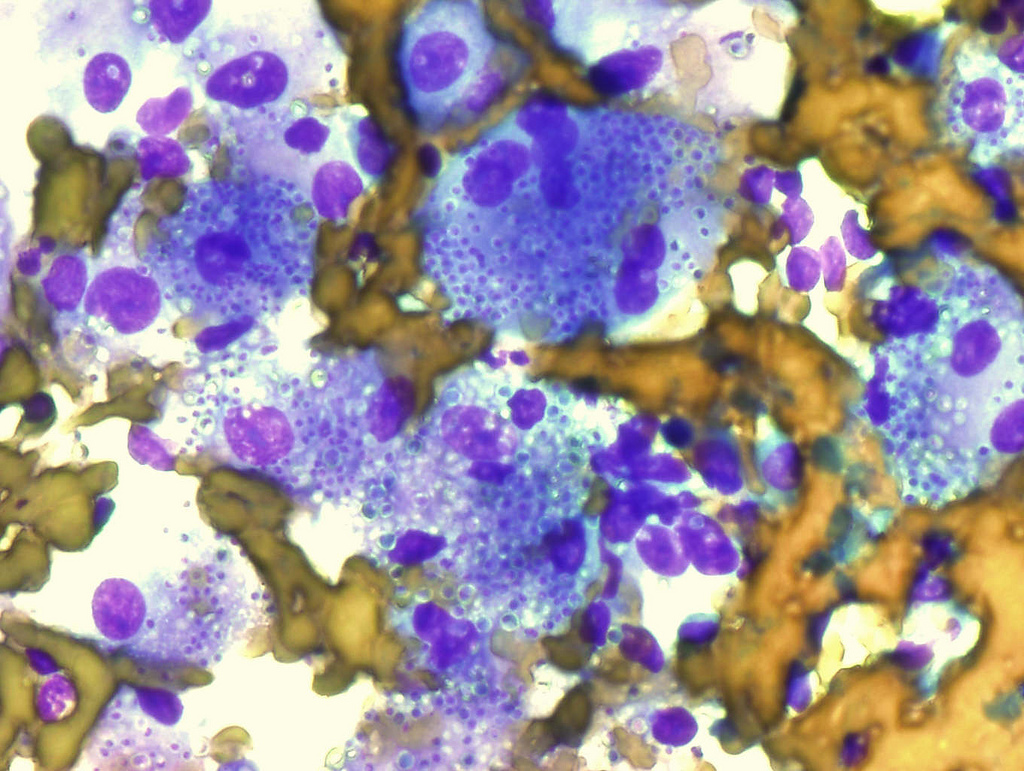
    • Tinción de Wright (sangre)
    • De bajo costo
    • Puede permitir un diagnóstico rápido y confirmatorio
    • Limitado por la baja sensibilidad (< 10%)
  • Otros:
    • Pruebas de anticuerpos (prueba de inmunodifusión y prueba de fijación del complemento)
    • Reacción en EN Erythema nodosum is an immune-mediated panniculitis (inflammation of the subcutaneous fat) caused by a type IV (delayed-type) hypersensitivity reaction. It commonly manifests in young women as tender, erythematous nodules on the shins. Erythema Nodosum cadena de la polimerasa ( PCR PCR Polymerase chain reaction (PCR) is a technique that amplifies DNA fragments exponentially for analysis. The process is highly specific, allowing for the targeting of specific genomic sequences, even with minuscule sample amounts. The PCR cycles multiple times through 3 phases: denaturation of the template DNA, annealing of a specific primer to the individual DNA strands, and synthesis/elongation of new DNA molecules. Polymerase Chain Reaction (PCR), por sus siglas en EN Erythema nodosum is an immune-mediated panniculitis (inflammation of the subcutaneous fat) caused by a type IV (delayed-type) hypersensitivity reaction. It commonly manifests in young women as tender, erythematous nodules on the shins. Erythema Nodosum inglés)

Imagenología

  • Radiografía de tórax y TC de tórax:
    • Puede ser normal
    • Hallazgos:
      • Infiltrados focales
      • Linfadenopatía hiliar y/o mediastínica
      • Granulomas Granulomas A relatively small nodular inflammatory lesion containing grouped mononuclear phagocytes, caused by infectious and noninfectious agents. Sarcoidosis calcificados
      • Nódulos pulmonares
      • Infiltrados difusos intersticiales o reticulonodulares
      • Lesiones cavitadas (raras)
      • Derrame pleural
  • TC (de otras áreas):
    • TC craneal:
      • Puede ser útil para detectar la histoplasmosis Histoplasmosis Histoplasmosis is an infection caused by Histoplasma capsulatum, a dimorphic fungus. Transmission is through inhalation, and exposure to soils containing bird or bat droppings increases the risk of infection. Most infections are asymptomatic; however, immunocompromised individuals generally develop acute pulmonary infection, chronic infection, or even disseminated disease. Histoplasma/Histoplasmosis cerebral
      • Debe realizarse antes de la punción lumbar
    • TC abdominal:
      • Puede demostrar la afectación suprarrenal, si existe la sospecha
      • Los LOS Neisseria hallazgos suelen demostrar un aumento de tamaño de las glándulas suprarrenales.
Radiografía_de_pulmón_aguda_de_histoplasmosis

Radiografía de tórax:
Infiltración pulmonar difusa por histoplasmosis pulmonar aguda causada por Histoplasma capsulatum

Imagen: “This chest film shows diffuse pulmonary infiltration due to acute pulmonary histoplasmosis caused by H. capsulatum” por CDC/M. Renz. Licencia: Dominio Público

Tratamiento

Principios generales

  • El tratamiento varía en EN Erythema nodosum is an immune-mediated panniculitis (inflammation of the subcutaneous fat) caused by a type IV (delayed-type) hypersensitivity reaction. It commonly manifests in young women as tender, erythematous nodules on the shins. Erythema Nodosum función de la gravedad de la enfermedad.
  • La mayoría de los LOS Neisseria casos son autolimitados y no requieren tratamiento.
  • Los LOS Neisseria individuos con gran exposición al AL Amyloidosis inóculo y los LOS Neisseria pacientes inmunocomprometidos generalmente requieren tratamiento.
  • Los LOS Neisseria medicamentos antifúngicos son la base del tratamiento.
Tabla: Tratamiento de la histoplasmosis Histoplasmosis Histoplasmosis is an infection caused by Histoplasma capsulatum, a dimorphic fungus. Transmission is through inhalation, and exposure to soils containing bird or bat droppings increases the risk of infection. Most infections are asymptomatic; however, immunocompromised individuals generally develop acute pulmonary infection, chronic infection, or even disseminated disease. Histoplasma/Histoplasmosis
Afección Tratamiento
Enfermedad pulmonar moderada o síntomas que duran más de 4 semanas Itraconazol
Enfermedad pulmonar de moderada a grave Anfotericina B + itraconazol
Histoplasmosis Histoplasmosis Histoplasmosis is an infection caused by Histoplasma capsulatum, a dimorphic fungus. Transmission is through inhalation, and exposure to soils containing bird or bat droppings increases the risk of infection. Most infections are asymptomatic; however, immunocompromised individuals generally develop acute pulmonary infection, chronic infection, or even disseminated disease. Histoplasma/Histoplasmosis pulmonar crónica Itraconazol
Histoplasmosis Histoplasmosis Histoplasmosis is an infection caused by Histoplasma capsulatum, a dimorphic fungus. Transmission is through inhalation, and exposure to soils containing bird or bat droppings increases the risk of infection. Most infections are asymptomatic; however, immunocompromised individuals generally develop acute pulmonary infection, chronic infection, or even disseminated disease. Histoplasma/Histoplasmosis diseminada leve: síntomas leves con un solo foco (sin afectación del SNC) Itraconazol
Histoplasmosis Histoplasmosis Histoplasmosis is an infection caused by Histoplasma capsulatum, a dimorphic fungus. Transmission is through inhalation, and exposure to soils containing bird or bat droppings increases the risk of infection. Most infections are asymptomatic; however, immunocompromised individuals generally develop acute pulmonary infection, chronic infection, or even disseminated disease. Histoplasma/Histoplasmosis diseminada grave sin afectación del SNC Anfotericina B + itraconazol
Afectación del SNC Anfotericina B (a largo plazo) + itraconazol

Histoplasmosis Histoplasmosis Histoplasmosis is an infection caused by Histoplasma capsulatum, a dimorphic fungus. Transmission is through inhalation, and exposure to soils containing bird or bat droppings increases the risk of infection. Most infections are asymptomatic; however, immunocompromised individuals generally develop acute pulmonary infection, chronic infection, or even disseminated disease. Histoplasma/Histoplasmosis pulmonar aguda

  • No se requiere tratamiento para:
    • Personas asintomáticas
    • Individuos con síntomas leves
  • Síntomas prolongados (> 4 semanas) o enfermedad pulmonar moderada:
    • Itraconazol durante 6–12 semanas (dosis de carga durante los LOS Neisseria 1ros 3 días)
    • Monitorizar la respuesta mediante imagenología torácica.
    • Monitorizar en EN Erythema nodosum is an immune-mediated panniculitis (inflammation of the subcutaneous fat) caused by a type IV (delayed-type) hypersensitivity reaction. It commonly manifests in young women as tender, erythematous nodules on the shins. Erythema Nodosum busca de recaídas (durante varios años).
  • Enfermedad pulmonar de moderada a grave:
    • Anfotericina B durante 1–2 semanas, seguida de itraconazol durante 12 semanas
    • Metilprednisona durante 1–2 semanas para el síndrome de dificultad respiratoria aguda

Histoplasmosis Histoplasmosis Histoplasmosis is an infection caused by Histoplasma capsulatum, a dimorphic fungus. Transmission is through inhalation, and exposure to soils containing bird or bat droppings increases the risk of infection. Most infections are asymptomatic; however, immunocompromised individuals generally develop acute pulmonary infection, chronic infection, or even disseminated disease. Histoplasma/Histoplasmosis pulmonar crónica

  • El tratamiento está indicado para todos los LOS Neisseria pacientes.
  • Itraconazol durante 1 año (dosis de carga durante los LOS Neisseria 1ros 3 días)

Histoplasmosis Histoplasmosis Histoplasmosis is an infection caused by Histoplasma capsulatum, a dimorphic fungus. Transmission is through inhalation, and exposure to soils containing bird or bat droppings increases the risk of infection. Most infections are asymptomatic; however, immunocompromised individuals generally develop acute pulmonary infection, chronic infection, or even disseminated disease. Histoplasma/Histoplasmosis diseminada

  • Si los LOS Neisseria síntomas clínicos son leves y el foco de la enfermedad es único (sin afectación del SNC): itraconazol durante 1 año (dosis de carga durante los LOS Neisseria 1ros 3 días)
  • Todos los LOS Neisseria demás casos:
    • Anfotericina B durante 1–2 semanas (con afectación del SNC: 4–6 semanas)
    • Itraconazol durante al AL Amyloidosis menos 1 año (dosis de carga durante los LOS Neisseria 1ros 3 días)

Terapia supresiva

  • Pueden producirse recaídas si no se mantiene la recuperación inmunitaria con la terapia antirretroviral en EN Erythema nodosum is an immune-mediated panniculitis (inflammation of the subcutaneous fat) caused by a type IV (delayed-type) hypersensitivity reaction. It commonly manifests in young women as tender, erythematous nodules on the shins. Erythema Nodosum los LOS Neisseria pacientes con SIDA.
  • El itraconazol es eficaz para prevenir hasta el 95% de los LOS Neisseria casos.
  • Para pacientes con VIH que tengan recuentos de CD4 < 150 células/µl → itraconazol a largo plazo

Diagnóstico Diferencial

  • Infecciones fúngicas oportunistas: un grupo de infecciones que se producen en EN Erythema nodosum is an immune-mediated panniculitis (inflammation of the subcutaneous fat) caused by a type IV (delayed-type) hypersensitivity reaction. It commonly manifests in young women as tender, erythematous nodules on the shins. Erythema Nodosum pacientes con sistemas inmunitarios debilitados (especialmente individuos con recuentos de CD4 < 200 células/μL). Los LOS Neisseria individuos sanos con sistemas inmunitarios normales no suelen verse afectados. Los LOS Neisseria signos y síntomas generales pueden ser similares a los LOS Neisseria de la histoplasmosis Histoplasmosis Histoplasmosis is an infection caused by Histoplasma capsulatum, a dimorphic fungus. Transmission is through inhalation, and exposure to soils containing bird or bat droppings increases the risk of infection. Most infections are asymptomatic; however, immunocompromised individuals generally develop acute pulmonary infection, chronic infection, or even disseminated disease. Histoplasma/Histoplasmosis. Los LOS Neisseria antecedentes de exposición, la microscopía y el cultivo del esputo o del lavado broncoalveolar para identificar organismos específicos pueden ayudar a diferenciar las infecciones fúngicas.
  • Neumonía adquirida en EN Erythema nodosum is an immune-mediated panniculitis (inflammation of the subcutaneous fat) caused by a type IV (delayed-type) hypersensitivity reaction. It commonly manifests in young women as tender, erythematous nodules on the shins. Erythema Nodosum la comunidad: generalmente, los LOS Neisseria síntomas típicos ( tos TOS Thoracic outlet syndrome (TOS) is a broad term used for a spectrum of syndromes related to the general region of the thoracic outlet, which involves the compression or irritation of elements of the brachial plexus, subclavian artery, or subclavian vein. Thoracic Outlet Syndrome, fiebre, dolor Dolor Inflammation torácico pleurítico) son de menor duración que los LOS Neisseria observados en EN Erythema nodosum is an immune-mediated panniculitis (inflammation of the subcutaneous fat) caused by a type IV (delayed-type) hypersensitivity reaction. It commonly manifests in young women as tender, erythematous nodules on the shins. Erythema Nodosum la neumonía por histoplasmosis Histoplasmosis Histoplasmosis is an infection caused by Histoplasma capsulatum, a dimorphic fungus. Transmission is through inhalation, and exposure to soils containing bird or bat droppings increases the risk of infection. Most infections are asymptomatic; however, immunocompromised individuals generally develop acute pulmonary infection, chronic infection, or even disseminated disease. Histoplasma/Histoplasmosis. La radiografía de tórax suele mostrar una consolidación lobar (típica) o infiltrados intersticiales bilaterales (atípicos). La tinción de Gram del esputo y el cultivo suelen revelar neutrófilos y bacterias que no forman parte de la flora normal. Los LOS Neisseria antibióticos son el pilar del tratamiento.
  • Sarcoidosis Sarcoidosis Sarcoidosis is a multisystem inflammatory disease that causes noncaseating granulomas. The exact etiology is unknown. Sarcoidosis usually affects the lungs and thoracic lymph nodes, but it can also affect almost every system in the body, including the skin, heart, and eyes, most commonly. Sarcoidosis: trastorno autoinmune que puede presentarse con hallazgos clínicos similares a los LOS Neisseria de la histoplasmosis Histoplasmosis Histoplasmosis is an infection caused by Histoplasma capsulatum, a dimorphic fungus. Transmission is through inhalation, and exposure to soils containing bird or bat droppings increases the risk of infection. Most infections are asymptomatic; however, immunocompromised individuals generally develop acute pulmonary infection, chronic infection, or even disseminated disease. Histoplasma/Histoplasmosis. Los LOS Neisseria hallazgos comunes incluyen infiltrados pulmonares difusos, linfadenopatía mediastínica, eritema nodoso, esplenomegalia y granulomas Granulomas A relatively small nodular inflammatory lesion containing grouped mononuclear phagocytes, caused by infectious and noninfectious agents. Sarcoidosis no caseificantes. Aunque se observan ↑ niveles de enzima convertidora de angiotensina en EN Erythema nodosum is an immune-mediated panniculitis (inflammation of the subcutaneous fat) caused by a type IV (delayed-type) hypersensitivity reaction. It commonly manifests in young women as tender, erythematous nodules on the shins. Erythema Nodosum ambas enfermedades, la elevación se asocia clásicamente a la sarcoidosis Sarcoidosis Sarcoidosis is a multisystem inflammatory disease that causes noncaseating granulomas. The exact etiology is unknown. Sarcoidosis usually affects the lungs and thoracic lymph nodes, but it can also affect almost every system in the body, including the skin, heart, and eyes, most commonly. Sarcoidosis.
  • Blastomicosis: enfermedad pulmonar causada por la inhalación de las esporas de Blastomyces Blastomyces Blastomycosis is an infection caused by inhalation of the spores of the fungus, Blastomyces. Blastomyces species thrive in moist soil and decaying material and are common in the Ohio and Mississippi River valleys and the Great Lakes regions of the United States and Canada. Although most patients are asymptomatic, some can develop pneumonia. Blastomyces/Blastomycosis. Los LOS Neisseria pacientes pueden desarrollar neumonía o enfermedad extrapulmonar diseminada. Clínicamente, las manifestaciones pulmonares pueden ser difíciles de distinguir de la histoplasmosis Histoplasmosis Histoplasmosis is an infection caused by Histoplasma capsulatum, a dimorphic fungus. Transmission is through inhalation, and exposure to soils containing bird or bat droppings increases the risk of infection. Most infections are asymptomatic; however, immunocompromised individuals generally develop acute pulmonary infection, chronic infection, or even disseminated disease. Histoplasma/Histoplasmosis. A diferencia de la histoplasmosis Histoplasmosis Histoplasmosis is an infection caused by Histoplasma capsulatum, a dimorphic fungus. Transmission is through inhalation, and exposure to soils containing bird or bat droppings increases the risk of infection. Most infections are asymptomatic; however, immunocompromised individuals generally develop acute pulmonary infection, chronic infection, or even disseminated disease. Histoplasma/Histoplasmosis, la piel es el lugar más común de diseminación en EN Erythema nodosum is an immune-mediated panniculitis (inflammation of the subcutaneous fat) caused by a type IV (delayed-type) hypersensitivity reaction. It commonly manifests in young women as tender, erythematous nodules on the shins. Erythema Nodosum la blastomicosis. Blastomyces Blastomyces Blastomycosis is an infection caused by inhalation of the spores of the fungus, Blastomyces. Blastomyces species thrive in moist soil and decaying material and are common in the Ohio and Mississippi River valleys and the Great Lakes regions of the United States and Canada. Although most patients are asymptomatic, some can develop pneumonia. Blastomyces/Blastomycosis es endémica en EN Erythema nodosum is an immune-mediated panniculitis (inflammation of the subcutaneous fat) caused by a type IV (delayed-type) hypersensitivity reaction. It commonly manifests in young women as tender, erythematous nodules on the shins. Erythema Nodosum las regiones de los LOS Neisseria Grandes Lagos y los LOS Neisseria valles de los LOS Neisseria ríos Ohio y Mississippi. El diagnóstico se realiza mediante cultivos e imagenología.
  • TB TB Tuberculosis (TB) is an infectious disease caused by Mycobacterium tuberculosis complex bacteria. The bacteria usually attack the lungs but can also damage other parts of the body. Approximately 30% of people around the world are infected with this pathogen, with the majority harboring a latent infection. Tuberculosis spreads through the air when a person with active pulmonary infection coughs or sneezes. Tuberculosis: enfermedad infecciosa causada por bacterias del complejo Mycobacterium tuberculosis Mycobacterium tuberculosis Tuberculosis (TB) is an infectious disease caused by Mycobacterium tuberculosis complex bacteria. The bacteria usually attack the lungs but can also damage other parts of the body. Approximately 30% of people around the world are infected with this pathogen, with the majority harboring a latent infection. Tuberculosis spreads through the air when a person with active pulmonary infection coughs or sneezes. Tuberculosis. Al AL Amyloidosis igual que la histoplasmosis Histoplasmosis Histoplasmosis is an infection caused by Histoplasma capsulatum, a dimorphic fungus. Transmission is through inhalation, and exposure to soils containing bird or bat droppings increases the risk of infection. Most infections are asymptomatic; however, immunocompromised individuals generally develop acute pulmonary infection, chronic infection, or even disseminated disease. Histoplasma/Histoplasmosis, la TB TB Tuberculosis (TB) is an infectious disease caused by Mycobacterium tuberculosis complex bacteria. The bacteria usually attack the lungs but can also damage other parts of the body. Approximately 30% of people around the world are infected with this pathogen, with the majority harboring a latent infection. Tuberculosis spreads through the air when a person with active pulmonary infection coughs or sneezes. Tuberculosis generalmente infecta los LOS Neisseria pulmones, pero también puede extenderse a otras partes del cuerpo. Tanto la TB TB Tuberculosis (TB) is an infectious disease caused by Mycobacterium tuberculosis complex bacteria. The bacteria usually attack the lungs but can also damage other parts of the body. Approximately 30% of people around the world are infected with this pathogen, with the majority harboring a latent infection. Tuberculosis spreads through the air when a person with active pulmonary infection coughs or sneezes. Tuberculosis como la histoplasmosis Histoplasmosis Histoplasmosis is an infection caused by Histoplasma capsulatum, a dimorphic fungus. Transmission is through inhalation, and exposure to soils containing bird or bat droppings increases the risk of infection. Most infections are asymptomatic; however, immunocompromised individuals generally develop acute pulmonary infection, chronic infection, or even disseminated disease. Histoplasma/Histoplasmosis están asociadas a un periodo de latencia y pueden presentarse con signos y síntomas similares. Se debe buscar un antecedente de exposición a un entorno con prevalencia de TB TB Tuberculosis (TB) is an infectious disease caused by Mycobacterium tuberculosis complex bacteria. The bacteria usually attack the lungs but can also damage other parts of the body. Approximately 30% of people around the world are infected with this pathogen, with the majority harboring a latent infection. Tuberculosis spreads through the air when a person with active pulmonary infection coughs or sneezes. Tuberculosis (centros de salud, refugios para personas sin hogar, etc ETC The electron transport chain (ETC) sends electrons through a series of proteins, which generate an electrochemical proton gradient that produces energy in the form of adenosine triphosphate (ATP). Electron Transport Chain (ETC).). Un recuento de CD4 de < 300 células/μL se asocia típicamente a la TB TB Tuberculosis (TB) is an infectious disease caused by Mycobacterium tuberculosis complex bacteria. The bacteria usually attack the lungs but can also damage other parts of the body. Approximately 30% of people around the world are infected with this pathogen, with the majority harboring a latent infection. Tuberculosis spreads through the air when a person with active pulmonary infection coughs or sneezes. Tuberculosis. El diagnóstico se establece mediante la prueba cutánea de la tuberculina, los LOS Neisseria análisis de sangre, el cultivo de esputo y la imagenología pulmonar.
  • Coccidioidomicosis: enfermedad fúngica de propagación pulmonar o hematógena causada por la especie Coccidioides Coccidioides Coccidioidomycosis, commonly known as San Joaquin Valley fever, is a fungal disease caused by Coccidioides immitis or Coccidioides posadasii. When Coccidioides spores are inhaled, they transform into spherules that result in infection. Coccidioidomycosis is also a common cause of community-acquired pneumonia and can cause severe disease in the immunocompromised. Coccidioides/Coccidioidomycosis. Al AL Amyloidosis igual que la histoplasmosis Histoplasmosis Histoplasmosis is an infection caused by Histoplasma capsulatum, a dimorphic fungus. Transmission is through inhalation, and exposure to soils containing bird or bat droppings increases the risk of infection. Most infections are asymptomatic; however, immunocompromised individuals generally develop acute pulmonary infection, chronic infection, or even disseminated disease. Histoplasma/Histoplasmosis, la coccidioidomicosis se adquiere por inhalación. Las regiones endémicas de Coccidioides Coccidioides Coccidioidomycosis, commonly known as San Joaquin Valley fever, is a fungal disease caused by Coccidioides immitis or Coccidioides posadasii. When Coccidioides spores are inhaled, they transform into spherules that result in infection. Coccidioidomycosis is also a common cause of community-acquired pneumonia and can cause severe disease in the immunocompromised. Coccidioides/Coccidioidomycosis son distintas de las de Histoplasma Histoplasma Histoplasmosis is an infection caused by Histoplasma capsulatum, a dimorphic fungus. The fungus exists as a mold at low temperatures and as yeast at high temperatures. H. capsulatum is the most common endemic fungal infection in the US and is most prevalent in the midwestern and central states along the Ohio and Mississippi River valleys. Histoplasma/Histoplasmosis e incluyen el sur de California, Arizona, Nuevo México y el oeste de Texas.

Referencias

  1. Centers for Disease Control and Prevention. (2014). Facts and stats about histoplasmosis. https://www.cdc.gov/histoplasmosis/php/statistics/index.html
  2. Baddley, J.W. (2025). Diagnosis and treatment of histoplasmosis in patients with HIV. UpToDate. Retrieved March 25, 2025, from https://www.uptodate.com/contents/diagnosis-and-treatment-of-histoplasmosis-in-patients-with-hiv
  3. Guimarães, A.J., Nosanchuk, J.D., Zancopé-Oliveira, R.M. (2006). Diagnosis of histoplasmosis. Braz J Microbiol 37, 1–13.
  4. Kauffman, C.A. (2020). Histoplasmosis: A clinical and laboratory update. Clin Microbiol Rev 20, 115–132.
  5. Kauffman, C.A. (2025). Diagnosis and treatment of pulmonary histoplasmosis. UpToDate. Retrieved March 25, 2025, from https://www.uptodate.com/contents/diagnosis-and-treatment-of-pulmonary-histoplasmosis
  6. Kauffman, C.A. (2025). Pathogenesis and clinical features of pulmonary histoplasmosis. UpToDate. Retrieved March 25, 2025, from https://www.uptodate.com/contents/pathogenesis-and-clinical-features-of-pulmonary-histoplasmosis
  7. Kauffman, C.A. (2025). Pathogenesis and clinical manifestations of disseminated histoplasmosis. UpToDate. Retrieved March 25, 2025, from https://www.uptodate.com/contents/pathogenesis-and-clinical-manifestations-of-disseminated-histoplasmosis
  8. Linder, K.A., Kauffman, C.A. (2019). Histoplasmosis: Epidemiology, diagnosis, and clinical manifestations. Curr Fungal Infect Reports 13, 120–128.
  9. Mihu, M.R., Nosanchuk, J.D. (2012). Histoplasma virulence and host responses. Int J Microbiol 2012, 268123.

¡Crea tu cuenta gratis o inicia una sesión para seguir leyendo!

Regístrate ahora y obtén acceso gratuito a Lecturio con páginas de concepto, videos médicos y cuestionarios para tu educación médica.

User Reviews

Que tengas una sesión de estudio alegre y navideña 🎁 Ahorra 50% en todos los planes >>

Details