


Cloranfenicol

O cloranfenicol, o único fármaco clinicamente relevante na classe dos anfenicol, é um potente inibidor da síntese de proteínas bacterianas ao se ligar à subunidade ribossómica 50S e prevenir a formação de ligações peptídicas. O cloranfenicol é um antibiótico de largo espectro com ampla distribuição; no entanto, devido à sua toxicidade, a sua utilização é limitada a infeções graves para as quais não está disponível outro antibiótico alternativo (geralmente devido a problemas de resistência). Os efeitos adversos incluem neurite óptica, anemia Anemia Anemia is a condition in which individuals have low Hb levels, which can arise from various causes. Anemia is accompanied by a reduced number of RBCs and may manifest with fatigue, shortness of breath, pallor, and weakness. Subtypes are classified by the size of RBCs, chronicity, and etiology. Anemia: Overview and Types aplástica e síndrome do bebé cinzento.

Last updated: Feb 13, 2025
Editorial responsibility: Stanley Oiseth, Lindsay Jones, Evelin Maza

Farmacodinâmica e Farmacocinética

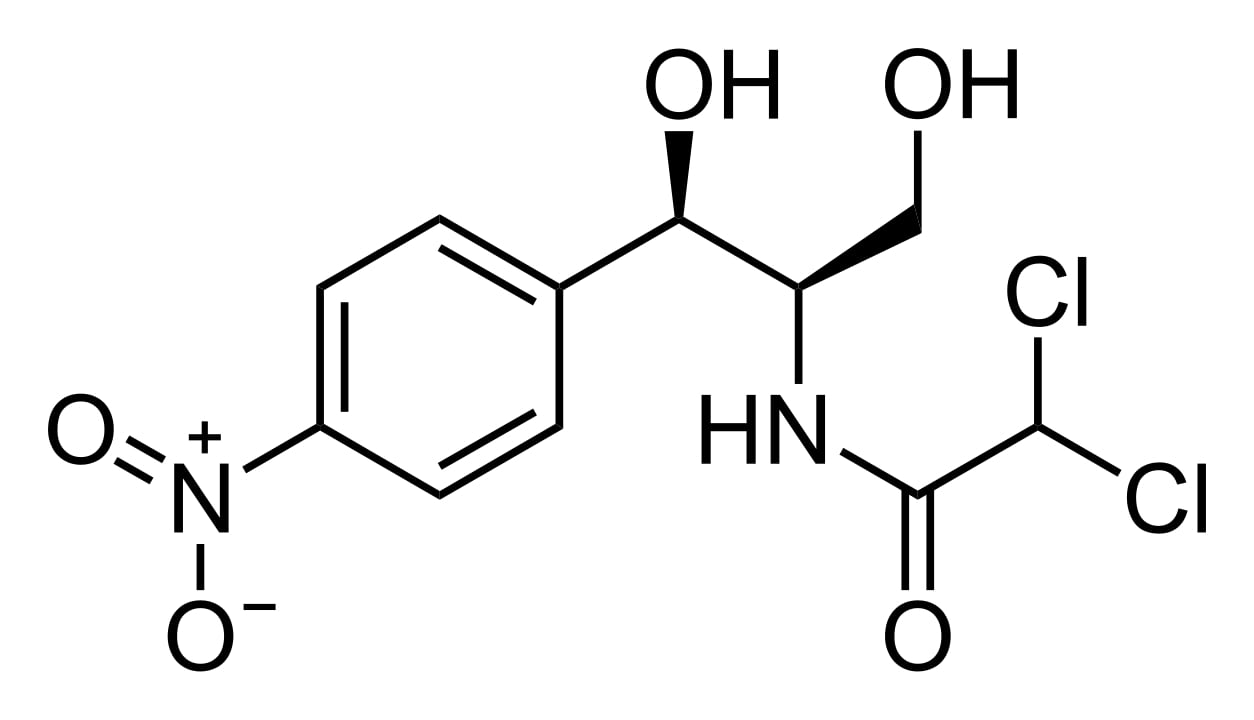
Estrutura química

  • O cloranfenicol é o único fármaco da sua classe.
  • Composto cristalino
  • Solúvel em álcool

Mecanismo de ação

  • Inibe a síntese de proteínas bacterianas
    • Liga-se reversivelmente à subunidade ribossómica 50S bacteriana do ribossoma 70S
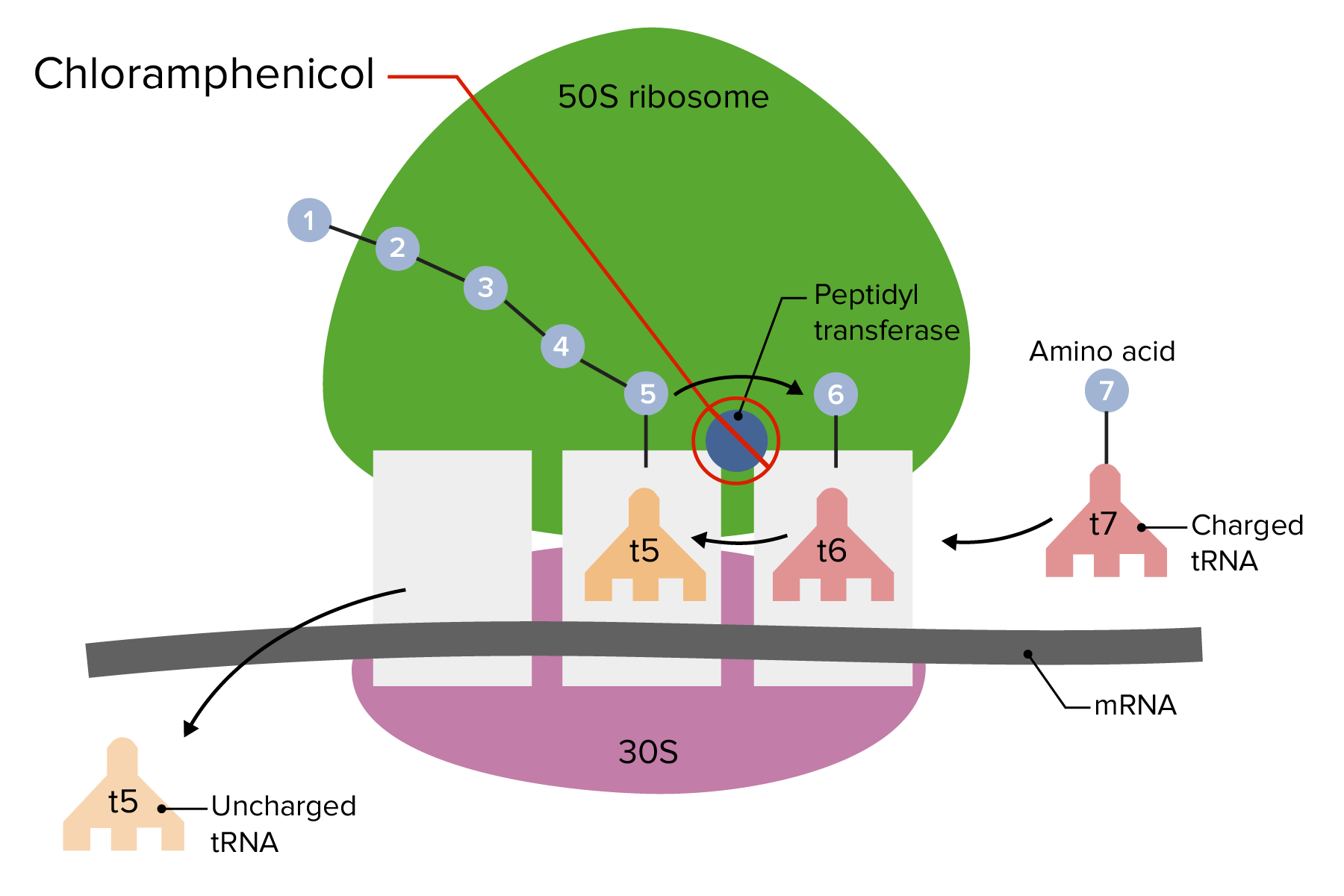
    • Inibe a peptidil transferase → evita a formação de ligações peptídicas (evita a transpeptidação)
  • Limita o crescimento bacteriano → bacteriostático; pode ser bactericida em concentrações elevadas
Local de ação do cloranfenicol na subunidade ribossómica 50S

Local de ação do cloranfenicol na subunidade ribossómica 50S:
Isto evita a ligação de aminoácidos à cadeia peptídica, resultando na inibição da síntese de proteínas.
tRNA: RNA de transferência

Imagem por Lecturio. Licença: CC BY-NC-SA 4.0

Farmacocinética

  • Absorção: absorvido rapidamente pelo trato gastrointestinal
  • Distribuição:
    • 60% ligado a proteínas
    • Solúvel em lípidos
    • Amplamente distribuído
    • Ultrapassa a barreira hematoencefálica
  • Metabolismo: inativado pela glucuroniltransferase hepática
  • Excreção: urina

Indicações

Cobertura antimicrobiana

  • Cocos e bacilos gram-positivos:
    • Streptococcus Streptococcus Streptococcus is one of the two medically important genera of gram-positive cocci, the other being Staphylococcus. Streptococci are identified as different species on blood agar on the basis of their hemolytic pattern and sensitivity to optochin and bacitracin. There are many pathogenic species of streptococci, including S. pyogenes, S. agalactiae, S. pneumoniae, and the viridans streptococci. Streptococcus (particularmente S. pneumoniae)
    • Staphylococcus Staphylococcus Staphylococcus is a medically important genera of Gram-positive, aerobic cocci. These bacteria form clusters resembling grapes on culture plates. Staphylococci are ubiquitous for humans, and many strains compose the normal skin flora. Staphylococcus
    • Enterococcus Enterococcus Enterococcus is a genus of oval-shaped gram-positive cocci that are arranged in pairs or short chains. Distinguishing factors include optochin resistance and the presence of pyrrolidonyl arylamidase (PYR) and Lancefield D antigen. Enterococcus is part of the normal flora of the human GI tract. Enterococcus
    • Bacillus Bacillus Bacillus are aerobic, spore-forming, gram-positive bacilli. Two pathogenic species are Bacillus anthracis (B. anthracis) and B. cereus. Bacillus
    • Listeria Listeria Listeria spp. are motile, flagellated, gram-positive, facultative intracellular bacilli. The major pathogenic species is Listeria monocytogenes. Listeria are part of the normal gastrointestinal flora of domestic mammals and poultry and are transmitted to humans through the ingestion of contaminated food, especially unpasteurized dairy products. Listeria Monocytogenes/Listeriosis
  • Cocos e bacilos gram-negativos:
    • Haemophilus influenzae Haemophilus Influenzae A species of Haemophilus found on the mucous membranes of humans and a variety of animals. The species is further divided into biotypes I through viii. Haemophilus
    • Neisseria meningitidis Neisseria meningitidis A species of gram-negative, aerobic bacteria. It is a commensal and pathogen only of humans, and can be carried asymptomatically in the nasopharynx. When found in cerebrospinal fluid it is the causative agent of cerebrospinal meningitis. It is also found in venereal discharges and blood. There are at least 13 serogroups based on antigenic differences in the capsular polysaccharides; the ones causing most meningitis infections being a, b, c, y, and w-135. Each serogroup can be further classified by serotype, serosubtype, and immunotype. Neisseria
    • Moraxella catarrhalis Moraxella catarrhalis Gram-negative aerobic cocci of low virulence that colonize the nasopharynx and occasionally cause meningitis; bacteremia; empyema; pericarditis; and pneumonia. Moraxella
    • Escherichia coli Escherichia coli The gram-negative bacterium Escherichia coli is a key component of the human gut microbiota. Most strains of E. coli are avirulent, but occasionally they escape the GI tract, infecting the urinary tract and other sites. Less common strains of E. coli are able to cause disease within the GI tract, most commonly presenting as abdominal pain and diarrhea. Escherichia coli
    • Yersinia pestis Yersinia pestis The plague is a bacterial infection caused by Yersinia pestis (Y. pestis), which primarily infects rodents. The disease is transmitted to humans via a flea bite. Inhalation of infectious droplets and handling infected animals or laboratory specimens are other means of transmission. The plague has 3 forms: bubonic (most common form), septicemic, and pneumonic. Yersinia pestis/Plague
    • Salmonella Salmonella Salmonellae are gram-negative bacilli of the family Enterobacteriaceae. Salmonellae are flagellated, non-lactose-fermenting, and hydrogen sulfide-producing microbes. Salmonella enterica, the most common disease-causing species in humans, is further classified based on serotype as typhoidal (S. typhi and paratyphi) and nontyphoidal (S. enteritidis and typhimurium). Salmonella
    • Shigella Shigella Shigella is a genus of gram-negative, non-lactose-fermenting facultative intracellular bacilli. Infection spreads most commonly via person-to-person contact or through contaminated food and water. Humans are the only known reservoir. Shigella
  • Bactérias atípicas:
    • Rickettsia Rickettsia Rickettsiae are a diverse collection of obligate intracellular, gram-negative bacteria that have a tropism for vascular endothelial cells. The vectors for transmission vary by species but include ticks, fleas, mites, and lice. Rickettsia
    • Mycoplasma Mycoplasma Mycoplasma is a species of pleomorphic bacteria that lack a cell wall, which makes them difficult to target with conventional antibiotics and causes them to not gram stain well. Mycoplasma bacteria commonly target the respiratory and urogenital epithelium. Mycoplasma pneumoniae (M. pneumoniae), the causative agent of atypical or “walking” pneumonia. Mycoplasma

Tipos de infeções

Devido aos efeitos adversos do cloranfenicol, a sua utilização geralmente é limitada a infeções graves nas quais se desenvolveu resistência contra agentes alternativos:

  • Meningite bacteriana
  • Conjuntivite bacteriana e endoftalmite
  • Otite externa
  • Febre macular das Montanhas Rochosas
  • Febre tifóide
  • Antraz
  • Peste

Efeitos Adversos e Contraindicações

Efeitos adversos

  • Distúrbios GI
  • Neurite óptica
  • Ototoxicidade (com gotas para os ouvidos)
  • Supressão medular
    • Anemia Anemia Anemia is a condition in which individuals have low Hb levels, which can arise from various causes. Anemia is accompanied by a reduced number of RBCs and may manifest with fatigue, shortness of breath, pallor, and weakness. Subtypes are classified by the size of RBCs, chronicity, and etiology. Anemia: Overview and Types ligeira, trombocitopenia e neutropenia Neutropenia Neutrophils are an important component of the immune system and play a significant role in the eradication of infections. Low numbers of circulating neutrophils, referred to as neutropenia, predispose the body to recurrent infections or sepsis, though patients can also be asymptomatic. Neutropenia
    • Anemia Anemia Anemia is a condition in which individuals have low Hb levels, which can arise from various causes. Anemia is accompanied by a reduced number of RBCs and may manifest with fatigue, shortness of breath, pallor, and weakness. Subtypes are classified by the size of RBCs, chronicity, and etiology. Anemia: Overview and Types aplásica
  • Síndrome do bebé cinzento
    • Devido à glucuronidação imatura pela ↓ da enzima glucuronosiltransferase em recém-nascidos → acumulação de cloranfenicol
    • Sinais e sintomas:
      • Aparência de cianose (cor cinzenta)
      • Hipotermia
      • Distensão abdominal
      • Flacidez
      • Colapso cardiovascular

Contraindicações

  • Não deve ser usado se houver terapia antibiótica alternativa disponível
  • Evitar a utilização em doentes grávidas ou a amamentar.

Interações farmacológicas

  • Clozapina: ↑ risco de mielossupressão
  • Pode ↑ concentrações séricas de:
    • Barbitúricos
    • Ciclosporina
    • Fosfenitoína e fenitoína
    • Sulfonilureias
    • Tacrolimus Tacrolimus A macrolide isolated from the culture broth of a strain of streptomyces tsukubaensis that has strong immunosuppressive activity in vivo and prevents the activation of T-lymphocytes in response to antigenic or mitogenic stimulation in vitro. Immunosuppressants

Mecanismos de Resistência

Os mecanismos de resistência ao cloranfenicol em bactérias incluem:

  • Inativação enzimática por acetilação via
  • Bombas de efluxo
  • Barreiras de permeabilidade
  • Mutação do local alvo na subunidade 50S

Comparação de Fármacos

Tabela: Comparação de várias classes de antibióticos inibidores da síntese de proteínas bacterianas
Classe do fármaco Mecanismo de ação Cobertura Efeitos adversos
Anfenicois
  • Ligam-se à subunidade 50S
  • Previnem a transpeptidação
  • Gram-positivos
  • Gram-negativos
  • Atípicos
  • Distúrbios GI
  • Neurite óptica
  • Anemia Anemia Anemia is a condition in which individuals have low Hb levels, which can arise from various causes. Anemia is accompanied by a reduced number of RBCs and may manifest with fatigue, shortness of breath, pallor, and weakness. Subtypes are classified by the size of RBCs, chronicity, and etiology. Anemia: Overview and Types aplásica
  • Síndrome do bebé cinzento
Lincosamidas
  • Ligam-se à subunidade 50S
  • Previnem a transpeptidação
  • Cocos gram-positivos:
    • MSSA
    • MRSA MRSA A strain of Staphylococcus aureus that is non-susceptible to the action of methicillin. The mechanism of resistance usually involves modification of normal or the presence of acquired penicillin binding proteins. Staphylococcus
    • Streptococcus Streptococcus Streptococcus is one of the two medically important genera of gram-positive cocci, the other being Staphylococcus. Streptococci are identified as different species on blood agar on the basis of their hemolytic pattern and sensitivity to optochin and bacitracin. There are many pathogenic species of streptococci, including S. pyogenes, S. agalactiae, S. pneumoniae, and the viridans streptococci. Streptococcus
  • Anaeróbios
  • Distúrbios GI
  • Reações alérgicas
  • Colite pseudomembranosa
Macrólidos
  • Ligam-se à subunidade 50S
  • Previnem a transpeptidação
  • Gram-positivos
  • Gram-negativos
  • Atípicos
  • Complexo Mycobacterium avium Mycobacterium avium A bacterium causing tuberculosis in domestic fowl and other birds. In pigs, it may cause localized and sometimes disseminated disease. The organism occurs occasionally in sheep and cattle. It should be distinguished from the m. avium complex, which infects primarily humans. Mycobacterium
  • Distúrbios GI
  • Prolongamento do intervalo QT
  • Hepatotoxicidade
  • Exacerbação de miastenia gravis
Oxazolidinonas
  • Ligam-se ao rRNA rRNA The most abundant form of RNA. Together with proteins, it forms the ribosomes, playing a structural role and also a role in ribosomal binding of mRNA and tRNAs. Individual chains are conventionally designated by their sedimentation coefficients. In eukaryotes, four large chains exist, synthesized in the nucleolus and constituting about 50% of the ribosome. RNA Types and Structure 23S da subunidade 50S
  • Impedem a formação do complexo de iniciação
Cocos gram-positivos:
  • MSSA
  • MRSA MRSA A strain of Staphylococcus aureus that is non-susceptible to the action of methicillin. The mechanism of resistance usually involves modification of normal or the presence of acquired penicillin binding proteins. Staphylococcus
  • VRE
  • Streptococcus Streptococcus Streptococcus is one of the two medically important genera of gram-positive cocci, the other being Staphylococcus. Streptococci are identified as different species on blood agar on the basis of their hemolytic pattern and sensitivity to optochin and bacitracin. There are many pathogenic species of streptococci, including S. pyogenes, S. agalactiae, S. pneumoniae, and the viridans streptococci. Streptococcus
  • Mielossupressão
  • Neuropatia
  • Acidose lática
  • Síndrome serotoninérgico
rRNA: RNA ribossómico
VRE: Enterococcus resistente à vancomicina
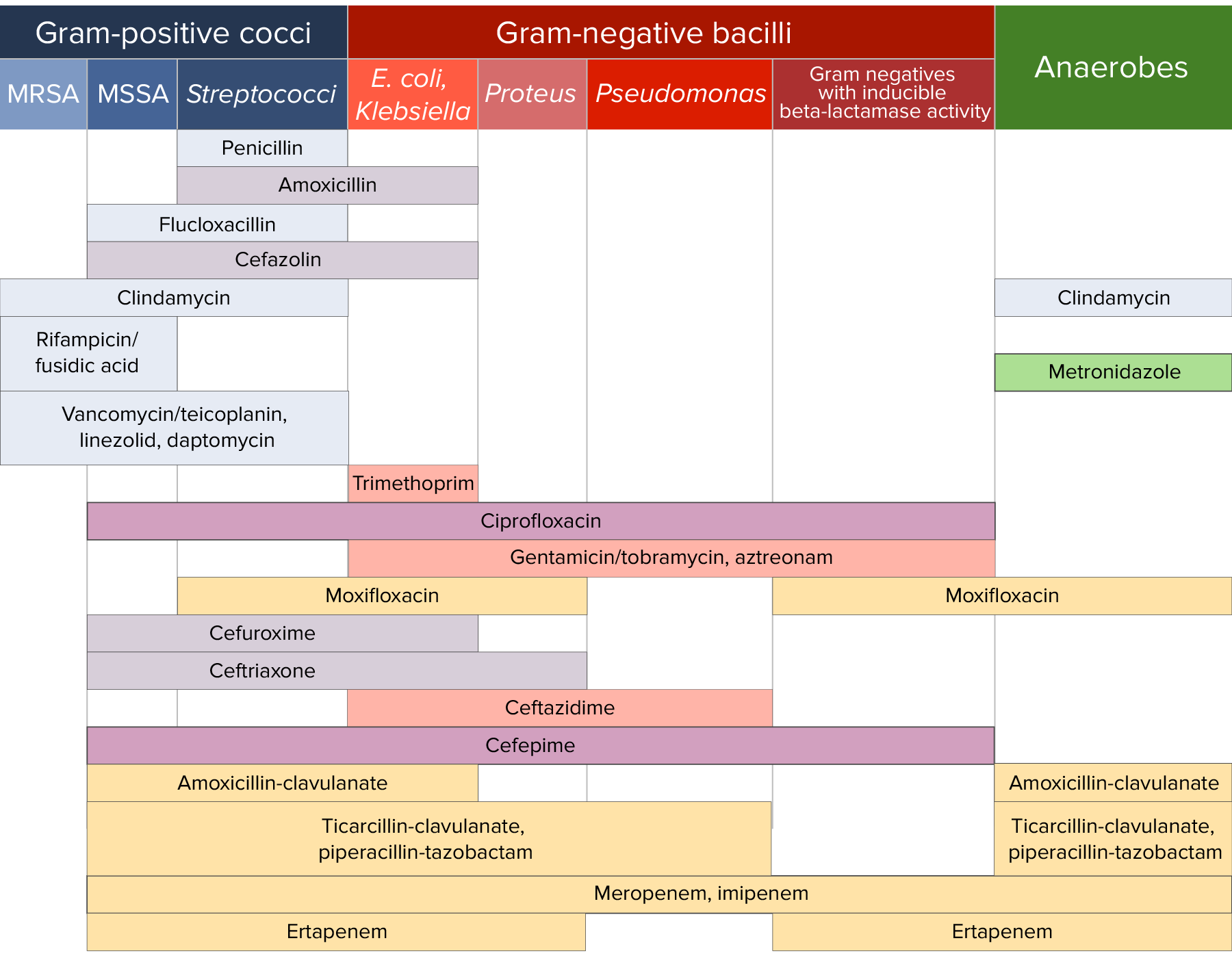
Gráfico de sensibilidade a antibióticos

Sensibilidade aos antibióticos:
Gráfico que compara a cobertura microbiana de diferentes antibióticos para cocos gram-positivos, bacilos gram-negativos e anaeróbios.

Imagem por Lecturio. Licença: CC BY-NC-SA 4.0

Referências

  1. The American Society of Health-System Pharmacists. (2015). Chloramphenicol. Archived from the original on June 24, 2015, from https://web.archive.org/web/20150624080341/http://www.drugs.com/monograph/chloramphenicol.html
  2. Deck, D.H., and Winston, L.G. (2012). Tetracyclines, macrolides, clindamycin, chloramphenicol, streptogramins, & oxazolidinones. In Katzung, B.G., et al (Eds.), Basic & Clinical Pharmacology (12th edition, pp. 809–819). https://pharmacomedicale.org/images/cnpm/CNPM_2016/katzung-pharmacology.pdf
  3. OOong, G. C., & Tadi, P. (2023). Chloramphenicol. In StatPearls [Internet]. StatPearls Publishing. Retrieved February 12, 2025, from https://www.ncbi.nlm.nih.gov/books/NBK555966/
  4. Werth, B.J. (2024). Chloramphenicol. [online] MSD Manual Professional Version. Retrieved February 12, 2025, from https://www.msdmanuals.com/professional/infectious-diseases/bacteria-and-antibacterial-drugs/chloramphenicol

Crie sua conta gratuita ou faça login para continuar lendo!

Cadastre-se agora e tenha acesso grátis ao Lecturio, com páginas de conceitos, vídeos de medicina e questões para sua educação médica.

Aprende mais com a Lecturio:

Multiple devices displaying human anatomy and health education content.

Complementa o teu estudo da faculdade com o companheiro de estudo tudo-em-um da Lecturio, através de métodos de ensino baseados em evidência.

Estuda onde quiseres

Two iPhones display medical education apps, one showing anatomy, the other Bookmatcher.

A Lecturio Medical complementa o teu estudo através de métodos de ensino baseados em evidência, vídeos de palestras, perguntas e muito mais – tudo combinado num só lugar e fácil de usar.

User Reviews

Have a holly, jolly study session 🎁 Save 50% on all plans now >>

Que tengas una sesión de estudio alegre y navideña 🎁 Ahorra 50% en todos los planes >>

Details