Domina Conceptos Médicos

Estudia para la escuela de medicina y tus examenes con Lecturio.

Cáncer Gástrico

El cáncer gástrico es la 4ta causa de muerte por cáncer en EN Erythema nodosum is an immune-mediated panniculitis (inflammation of the subcutaneous fat) caused by a type IV (delayed-type) hypersensitivity reaction. It commonly manifests in young women as tender, erythematous nodules on the shins. Erythema Nodosum todo el mundo. La mayoría de los LOS Neisseria casos son adenocarcinomas. Los LOS Neisseria factores de riesgo modificables son la infección por Helicobacter pylori Helicobacter pylori A spiral bacterium active as a human gastric pathogen. It is a gram-negative, urease-positive, curved or slightly spiral organism initially isolated in 1982 from patients with lesions of gastritis or peptic ulcers in Western Australia. Helicobacter pylori was originally classified in the genus campylobacter, but RNA sequencing, cellular fatty acid profiles, growth patterns, and other taxonomic characteristics indicate that the micro-organism should be included in the genus Helicobacter. It has been officially transferred to Helicobacter gen. Helicobacter, el tabaquismo y las dietas ricas en EN Erythema nodosum is an immune-mediated panniculitis (inflammation of the subcutaneous fat) caused by a type IV (delayed-type) hypersensitivity reaction. It commonly manifests in young women as tender, erythematous nodules on the shins. Erythema Nodosum nitratos. Los LOS Neisseria síndromes hereditarios, la anemia Anemia Anemia is a condition in which individuals have low Hb levels, which can arise from various causes. Anemia is accompanied by a reduced number of RBCs and may manifest with fatigue, shortness of breath, pallor, and weakness. Subtypes are classified by the size of RBCs, chronicity, and etiology. Anemia: Overview and Types perniciosa y la gastrectomía parcial previa son algunos de los LOS Neisseria factores de riesgo endógenos. Cuando se producen síntomas como plenitud epigástrica, vómitos y pérdida de peso, es probable que el cáncer esté en EN Erythema nodosum is an immune-mediated panniculitis (inflammation of the subcutaneous fat) caused by a type IV (delayed-type) hypersensitivity reaction. It commonly manifests in young women as tender, erythematous nodules on the shins. Erythema Nodosum fase avanzada. El diagnóstico se confirma con esofagogastroduodenoscopia y biopsia. La imagenología y la laparoscopia ayudan a determinar el estadio del cáncer. Por lo tanto, la estadificación dicta el abordaje terapéutico. El tratamiento consiste en EN Erythema nodosum is an immune-mediated panniculitis (inflammation of the subcutaneous fat) caused by a type IV (delayed-type) hypersensitivity reaction. It commonly manifests in young women as tender, erythematous nodules on the shins. Erythema Nodosum gastrectomía y quimiorradioterapia. La mayoría de los LOS Neisseria casos se diagnostican en EN Erythema nodosum is an immune-mediated panniculitis (inflammation of the subcutaneous fat) caused by a type IV (delayed-type) hypersensitivity reaction. It commonly manifests in young women as tender, erythematous nodules on the shins. Erythema Nodosum fases avanzadas, lo que indica un pronóstico generalmente malo.

Last updated: Dec 15, 2025

Editorial responsibility: Stanley Oiseth, Lindsay Jones, Evelin Maza

Descripción General

Epidemiología

  • Es la 4ta causa de muerte por cáncer en EN Erythema nodosum is an immune-mediated panniculitis (inflammation of the subcutaneous fat) caused by a type IV (delayed-type) hypersensitivity reaction. It commonly manifests in young women as tender, erythematous nodules on the shins. Erythema Nodosum el mundo
  • Alta incidencia en EN Erythema nodosum is an immune-mediated panniculitis (inflammation of the subcutaneous fat) caused by a type IV (delayed-type) hypersensitivity reaction. It commonly manifests in young women as tender, erythematous nodules on the shins. Erythema Nodosum Asia ASIA Spinal Cord Injuries Oriental, Europa del Este y América del Sur
  • Se observan diferencias regionales: ↓ incidencia en EN Erythema nodosum is an immune-mediated panniculitis (inflammation of the subcutaneous fat) caused by a type IV (delayed-type) hypersensitivity reaction. It commonly manifests in young women as tender, erythematous nodules on the shins. Erythema Nodosum Estados Unidos, pero ↑ en EN Erythema nodosum is an immune-mediated panniculitis (inflammation of the subcutaneous fat) caused by a type IV (delayed-type) hypersensitivity reaction. It commonly manifests in young women as tender, erythematous nodules on the shins. Erythema Nodosum Japón y Corea del Sur
  • Hombres > mujeres
  • Edad media en EN Erythema nodosum is an immune-mediated panniculitis (inflammation of the subcutaneous fat) caused by a type IV (delayed-type) hypersensitivity reaction. It commonly manifests in young women as tender, erythematous nodules on the shins. Erythema Nodosum el momento del diagnóstico: 70 años

Etiología

Factores de riesgo endógenos:

  • Gastritis Gastritis Gastritis refers to inflammation of the gastric mucosa. Gastritis may occur suddenly (acute gastritis) or slowly over time (chronic gastritis). Gastritis may be asymptomatic or with symptoms, including burning abdominal pain (which either worsens or improves with eating), dyspepsia, nausea, and vomiting. Gastritis atrófica crónica
  • Anemia Anemia Anemia is a condition in which individuals have low Hb levels, which can arise from various causes. Anemia is accompanied by a reduced number of RBCs and may manifest with fatigue, shortness of breath, pallor, and weakness. Subtypes are classified by the size of RBCs, chronicity, and etiology. Anemia: Overview and Types perniciosa
  • Gastrectomía parcial previa (antrectomía)
  • Grupo sanguíneo A
  • Enfermedad de Menetrier (hipertrofia extrema de los LOS Neisseria pliegues rugosos gástricos)
  • Reflujo biliar
  • Factores genéticos y síndromes hereditarios:
    • Cáncer gástrico difuso hereditario (asociado al AL Amyloidosis gen de la E-caderina o a la mutación CDH1)
    • Adenocarcinoma gástrico y poliposis proximal del estómago
    • Cáncer gástrico de tipo intestinal familiar
    • Cáncer colorrectal hereditario no polipósico
    • Síndrome de Peutz-Jeghers
    • Poliposis adenomatosa familiar
    • Síndrome de Li-Fraumeni

Factores de riesgo exógenos:

  • Infección crónica por Helicobacter pylori Helicobacter pylori A spiral bacterium active as a human gastric pathogen. It is a gram-negative, urease-positive, curved or slightly spiral organism initially isolated in 1982 from patients with lesions of gastritis or peptic ulcers in Western Australia. Helicobacter pylori was originally classified in the genus campylobacter, but RNA sequencing, cellular fatty acid profiles, growth patterns, and other taxonomic characteristics indicate that the micro-organism should be included in the genus Helicobacter. It has been officially transferred to Helicobacter gen. Helicobacter (asociada a un adenocarcinoma distal de tipo intestinal)
  • Dieta rica en EN Erythema nodosum is an immune-mediated panniculitis (inflammation of the subcutaneous fat) caused by a type IV (delayed-type) hypersensitivity reaction. It commonly manifests in young women as tender, erythematous nodules on the shins. Erythema Nodosum nitratos prolongada (presentes en EN Erythema nodosum is an immune-mediated panniculitis (inflammation of the subcutaneous fat) caused by a type IV (delayed-type) hypersensitivity reaction. It commonly manifests in young women as tender, erythematous nodules on the shins. Erythema Nodosum alimentos secos, ahumados, salados y parcialmente descompuestos)
  • Bajo consumo de verduras
  • Tabaquismo
  • Infección por el virus Virus Viruses are infectious, obligate intracellular parasites composed of a nucleic acid core surrounded by a protein capsid. Viruses can be either naked (non-enveloped) or enveloped. The classification of viruses is complex and based on many factors, including type and structure of the nucleoid and capsid, the presence of an envelope, the replication cycle, and the host range. Virology de Epstein-Barr ( EBV EBV Epstein-barr virus (EBV) is a linear, double-stranded DNA virus belonging to the herpesviridae family. This highly prevalent virus is mostly transmitted through contact with oropharyngeal secretions from an infected individual. The virus can infect epithelial cells and B lymphocytes, where it can undergo lytic replication or latency. Epstein-Barr Virus, por sus siglas en EN Erythema nodosum is an immune-mediated panniculitis (inflammation of the subcutaneous fat) caused by a type IV (delayed-type) hypersensitivity reaction. It commonly manifests in young women as tender, erythematous nodules on the shins. Erythema Nodosum inglés)
  • Irradiación abdominal en EN Erythema nodosum is an immune-mediated panniculitis (inflammation of the subcutaneous fat) caused by a type IV (delayed-type) hypersensitivity reaction. It commonly manifests in young women as tender, erythematous nodules on the shins. Erythema Nodosum supervivientes de cáncer

Tipos de Cáncer Gástrico

Adenocarcinoma

  • 85% de los LOS Neisseria cánceres gástricos
  • Principales tipos histológicos:
    • Tipo intestinal (70%):
      • Las células tumorales presentan adhesión y tienen formaciones glandulares.
      • Más común en EN Erythema nodosum is an immune-mediated panniculitis (inflammation of the subcutaneous fat) caused by a type IV (delayed-type) hypersensitivity reaction. It commonly manifests in young women as tender, erythematous nodules on the shins. Erythema Nodosum hombres y en EN Erythema nodosum is an immune-mediated panniculitis (inflammation of the subcutaneous fat) caused by a type IV (delayed-type) hypersensitivity reaction. It commonly manifests in young women as tender, erythematous nodules on the shins. Erythema Nodosum grupos de edad avanzada
      • Se asocia a un ↑ incidencia en EN Erythema nodosum is an immune-mediated panniculitis (inflammation of the subcutaneous fat) caused by a type IV (delayed-type) hypersensitivity reaction. It commonly manifests in young women as tender, erythematous nodules on the shins. Erythema Nodosum las clases socioeconómicas más bajas
      • Mejor pronóstico
    • Tipo difuso (30%):
      • Histología poco cohesiva, carente de adherencias intercelulares (incluye el carcinoma de células en EN Erythema nodosum is an immune-mediated panniculitis (inflammation of the subcutaneous fat) caused by a type IV (delayed-type) hypersensitivity reaction. It commonly manifests in young women as tender, erythematous nodules on the shins. Erythema Nodosum anillo de sello)
      • Células tumorales con probabilidad de infiltración y manifestación como engrosamiento de la pared del estómago en EN Erythema nodosum is an immune-mediated panniculitis (inflammation of the subcutaneous fat) caused by a type IV (delayed-type) hypersensitivity reaction. It commonly manifests in young women as tender, erythematous nodules on the shins. Erythema Nodosum lugar de una masa
      • El estómago pierde distensibilidad.
      • Distribución equitativa por sexos
      • Más común en EN Erythema nodosum is an immune-mediated panniculitis (inflammation of the subcutaneous fat) caused by a type IV (delayed-type) hypersensitivity reaction. It commonly manifests in young women as tender, erythematous nodules on the shins. Erythema Nodosum los LOS Neisseria grupos de edad más jóvenes
      • En EN Erythema nodosum is an immune-mediated panniculitis (inflammation of the subcutaneous fat) caused by a type IV (delayed-type) hypersensitivity reaction. It commonly manifests in young women as tender, erythematous nodules on the shins. Erythema Nodosum general, peor pronóstico
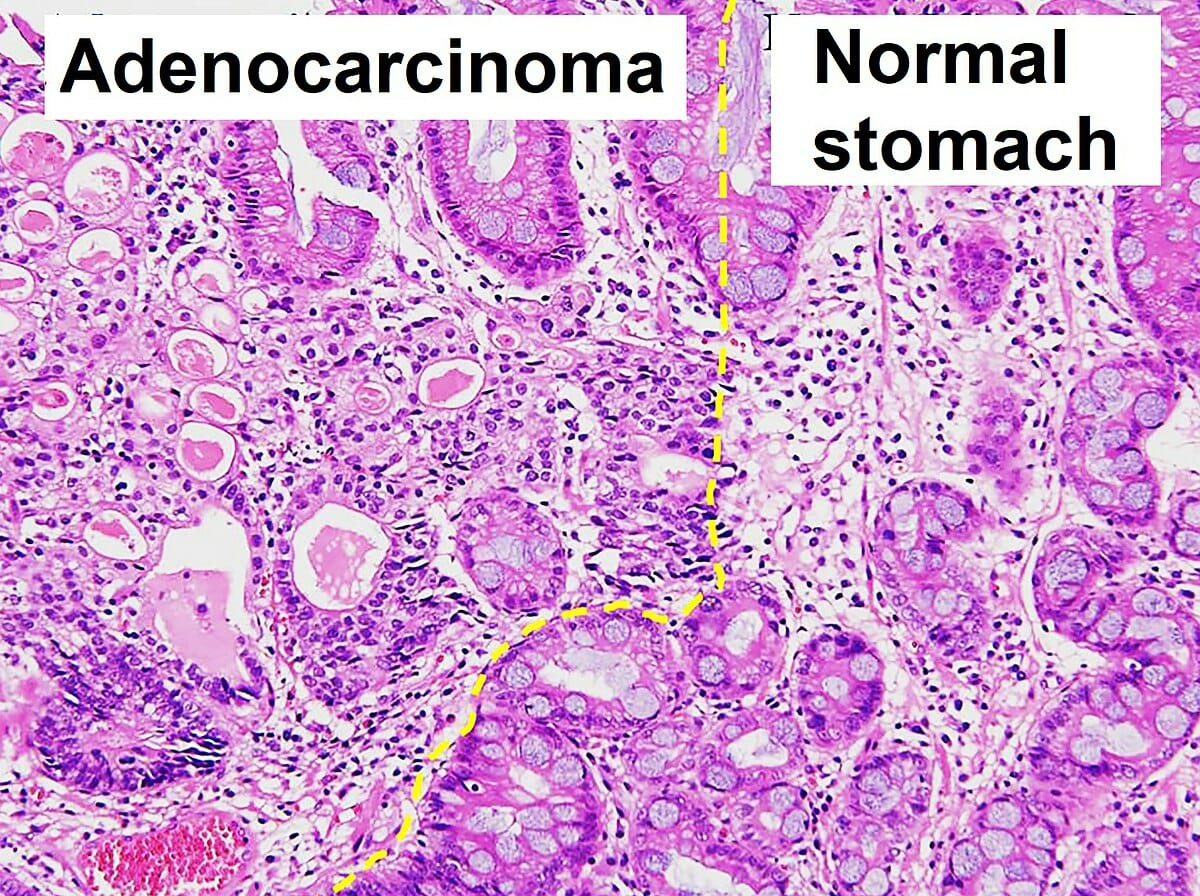
Histopathology of gastric adenocarcinoma and normal histology

Histopatología del adenocarcinoma gástrico y patología normal

Imagen: “Histopathology of gastric adenocarcinoma and normal histology” por Ji Min Choi et al. Licencia: CC BY 4.0
Linfoma gástrico primario

  • ~3–5 % de los LOS Neisseria cánceres gástricos
  • Estómago: sitio extraganglionar más común del linfoma
  • Va VA Ventilation: Mechanics of Breathing desde el linfoma superficial de tejido linfoide asociado a mucosas hasta el linfoma de células grandes
  • El desarrollo de linfoma superficial de tejido linfoide asociado a mucosas está asociado a la infección por H. pylori H. pylori A spiral bacterium active as a human gastric pathogen. It is a gram-negative, urease-positive, curved or slightly spiral organism initially isolated in 1982 from patients with lesions of gastritis or peptic ulcers in Western Australia. Helicobacter pylori was originally classified in the genus campylobacter, but RNA sequencing, cellular fatty acid profiles, growth patterns, and other taxonomic characteristics indicate that the micro-organism should be included in the genus Helicobacter. It has been officially transferred to Helicobacter gen. Helicobacter.

Tumores del estroma gastrointestinal

  • Tumores estromales o mesenquimales, que constituyen aproximadamente el 1% de los LOS Neisseria cánceres gástricos primarios
  • Se encuentran en EN Erythema nodosum is an immune-mediated panniculitis (inflammation of the subcutaneous fat) caused by a type IV (delayed-type) hypersensitivity reaction. It commonly manifests in young women as tender, erythematous nodules on the shins. Erythema Nodosum otras zonas del tracto digestivo, pero la mayoría están en EN Erythema nodosum is an immune-mediated panniculitis (inflammation of the subcutaneous fat) caused by a type IV (delayed-type) hypersensitivity reaction. It commonly manifests in young women as tender, erythematous nodules on the shins. Erythema Nodosum el estómago

Tumores carcinoides

  • Raros
  • Tumores neuroendocrinos de crecimiento lento
  • Se originan en EN Erythema nodosum is an immune-mediated panniculitis (inflammation of the subcutaneous fat) caused by a type IV (delayed-type) hypersensitivity reaction. It commonly manifests in young women as tender, erythematous nodules on the shins. Erythema Nodosum las células productoras de hormonas (enterocromafines)
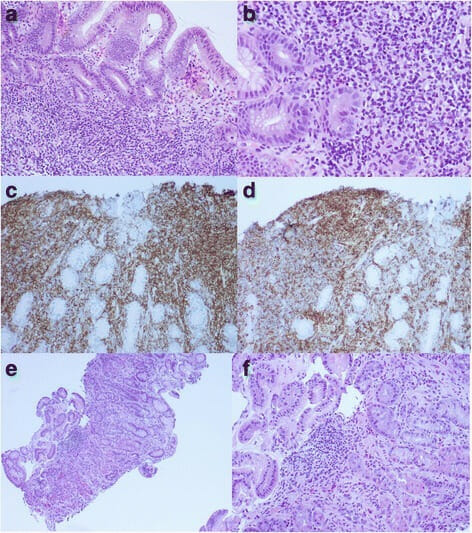
Gastric mucosa-associated lymphoid tissue lymphoma and Helicobacter pylori infection

Linfoma del tejido linfoide asociado a la mucosa gástrica e infección por Helicobacter pylori:
a. La biopsia gástrica muestra un pequeño infiltrado linfocítico intralaminar de características monótonas (tinción H&E, aumento 100x).
b. Focos de lesión linfoepitelial (tinción H&E, aumento 200x)
c. Hojas de células B pequeñas CD20+ vistas en la inmunotinción CD20 (aumento 200x)
d. La inmunotinción también revela una expresión aberrante de CD43 (ampliación 200x).
e. La repetición de la biopsia gástrica 6 meses después de la erradicación del H. pylori muestra infiltrados intralaminares dispersos de pequeños linfocitos, células plasmáticas y unos pocos agregados linfoides pequeños y sueltos, lo que indica una remisión completa (tinción H&E, aumento 100x).
f. Los mismos hallazgos se observan con un aumento de 200x (tinción de H&E).
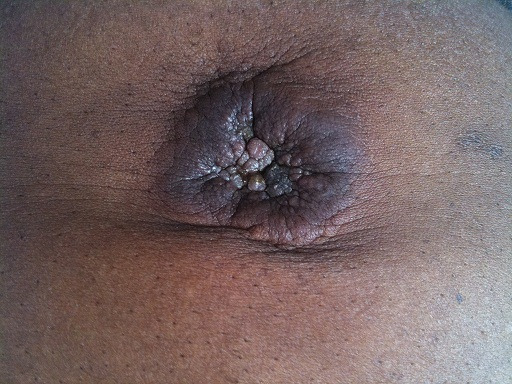
Imagen: “Fig1” por Qinglong Hu, Yizhuo Zhang, Xiaoyan Zhang and Kai Fu. Licencia: CC BY 4.0

Fisiopatología

Tipo intestinal

  • La infección crónica por H. pylori H. pylori A spiral bacterium active as a human gastric pathogen. It is a gram-negative, urease-positive, curved or slightly spiral organism initially isolated in 1982 from patients with lesions of gastritis or peptic ulcers in Western Australia. Helicobacter pylori was originally classified in the genus campylobacter, but RNA sequencing, cellular fatty acid profiles, growth patterns, and other taxonomic characteristics indicate that the micro-organism should be included in the genus Helicobacter. It has been officially transferred to Helicobacter gen. Helicobacter: un factor de riesgo primario para el cáncer gástrico (de tipo intestinal) no del cardias
  • Exposición prolongada al AL Amyloidosis factor de riesgo → gastritis Gastritis Gastritis refers to inflammation of the gastric mucosa. Gastritis may occur suddenly (acute gastritis) or slowly over time (chronic gastritis). Gastritis may be asymptomatic or with symptoms, including burning abdominal pain (which either worsens or improves with eating), dyspepsia, nausea, and vomiting. Gastritis atrófica → aclorhidria o hipoclorhidria → ↑ pH pH The quantitative measurement of the acidity or basicity of a solution. Acid-Base Balance estomacal → colonización microbiana y pérdida de células (que producen factores de crecimiento epidérmico y transformante) necesarias para regenerar el tejido dañado.
  • Sigue un patrón de progresión escalonado (cascada de Correa): gastritis Gastritis Gastritis refers to inflammation of the gastric mucosa. Gastritis may occur suddenly (acute gastritis) or slowly over time (chronic gastritis). Gastritis may be asymptomatic or with symptoms, including burning abdominal pain (which either worsens or improves with eating), dyspepsia, nausea, and vomiting. Gastritis crónica → gastritis Gastritis Gastritis refers to inflammation of the gastric mucosa. Gastritis may occur suddenly (acute gastritis) or slowly over time (chronic gastritis). Gastritis may be asymptomatic or with symptoms, including burning abdominal pain (which either worsens or improves with eating), dyspepsia, nausea, and vomiting. Gastritis atrófica crónica → metaplasia Metaplasia A condition in which there is a change of one adult cell type to another similar adult cell type. Cellular Adaptation intestinal → displasia (precursora directa del cáncer) → adenocarcinoma

Tipo difuso

  • Se asocia con mutaciones de pérdida de función de CDH1 (gen supresor tumoral que codifica la E-cadherina, una proteína de adhesión celular)
  • Células neoplásicas sin adhesión intercelular (debido a la pérdida de expresión de E-cadherina) → infiltración de células neoplásicas dentro de la pared gástrica → engrosamiento difuso de la pared gástrica → pérdida de distensibilidad (conocida como linitis plástica, o apariencia de “botella de cuero”).

Presentación Clínica

Síntomas

  • Asintomático en EN Erythema nodosum is an immune-mediated panniculitis (inflammation of the subcutaneous fat) caused by a type IV (delayed-type) hypersensitivity reaction. It commonly manifests in young women as tender, erythematous nodules on the shins. Erythema Nodosum los LOS Neisseria primeros estadios, cuando el cáncer es más curable
  • Cuando empiezan los LOS Neisseria síntomas, el cáncer ya está avanzado.
  • Los LOS Neisseria síntomas iniciales aparecen de forma insidiosa:
    • Molestias epigástricas (llenado postprandial, dolor Dolor Inflammation constante)
    • Anorexia Anorexia The lack or loss of appetite accompanied by an aversion to food and the inability to eat. It is the defining characteristic of the disorder anorexia nervosa. Anorexia Nervosa
    • Náuseas
  • Síntomas posteriores a medida que avanza la enfermedad:
    • Pérdida de peso
    • Aumento de las náuseas y de la saciedad precoz (se observa en EN Erythema nodosum is an immune-mediated panniculitis (inflammation of the subcutaneous fat) caused by a type IV (delayed-type) hypersensitivity reaction. It commonly manifests in young women as tender, erythematous nodules on the shins. Erythema Nodosum la linitis plástica, ya que el estómago no puede distenderse)
    • Vómitos u obstrucción de la salida gástrica (especialmente con tumores pilóricos)
    • Disfagia (especialmente en EN Erythema nodosum is an immune-mediated panniculitis (inflammation of the subcutaneous fat) caused by a type IV (delayed-type) hypersensitivity reaction. It commonly manifests in young women as tender, erythematous nodules on the shins. Erythema Nodosum los LOS Neisseria tumores de tipo difuso, esofagogástrico y del cardias)
    • Melena Melena The black, tarry, foul-smelling feces that contain degraded blood. Gastrointestinal Bleeding o hematemesis Hematemesis Vomiting of blood that is either fresh bright red, or older ‘coffee-ground’ in character. It generally indicates bleeding of the upper gastrointestinal tract. Mallory-Weiss Syndrome (Mallory-Weiss Tear)

Signos

  • Examen físico normal al AL Amyloidosis principio de la enfermedad
  • Una masa epigástrica indica un crecimiento de larga duración.
  • Signos de carcinoma gástrico metastásico:
    • Hepatomegalia o masa hepática palpable
    • Ganglio de Virchow: ganglio palpable en EN Erythema nodosum is an immune-mediated panniculitis (inflammation of the subcutaneous fat) caused by a type IV (delayed-type) hypersensitivity reaction. It commonly manifests in young women as tender, erythematous nodules on the shins. Erythema Nodosum la región supraclavicular izquierda
    • Ganglio irlandés: ganglios palpables en EN Erythema nodosum is an immune-mediated panniculitis (inflammation of the subcutaneous fat) caused by a type IV (delayed-type) hypersensitivity reaction. It commonly manifests in young women as tender, erythematous nodules on the shins. Erythema Nodosum la axila izquierda
    • Escudo de Blumer (masa en EN Erythema nodosum is an immune-mediated panniculitis (inflammation of the subcutaneous fat) caused by a type IV (delayed-type) hypersensitivity reaction. It commonly manifests in young women as tender, erythematous nodules on the shins. Erythema Nodosum el saco de Douglas): palpable en EN Erythema nodosum is an immune-mediated panniculitis (inflammation of the subcutaneous fat) caused by a type IV (delayed-type) hypersensitivity reaction. It commonly manifests in young women as tender, erythematous nodules on the shins. Erythema Nodosum el tacto rectal o vaginal
    • Nódulo de la hermana Maria Jose: nódulo periumbilical
    • Tumor Tumor Inflammation de Krukenberg: malignidad en EN Erythema nodosum is an immune-mediated panniculitis (inflammation of the subcutaneous fat) caused by a type IV (delayed-type) hypersensitivity reaction. It commonly manifests in young women as tender, erythematous nodules on the shins. Erythema Nodosum los LOS Neisseria ovarios que representa una metástasis de otro sitio (fuente gastrointestinal con mayor frecuencia)
    • Ascitis: puede indicar carcinomatosis peritoneal

Hallazgos paraneoplásicos

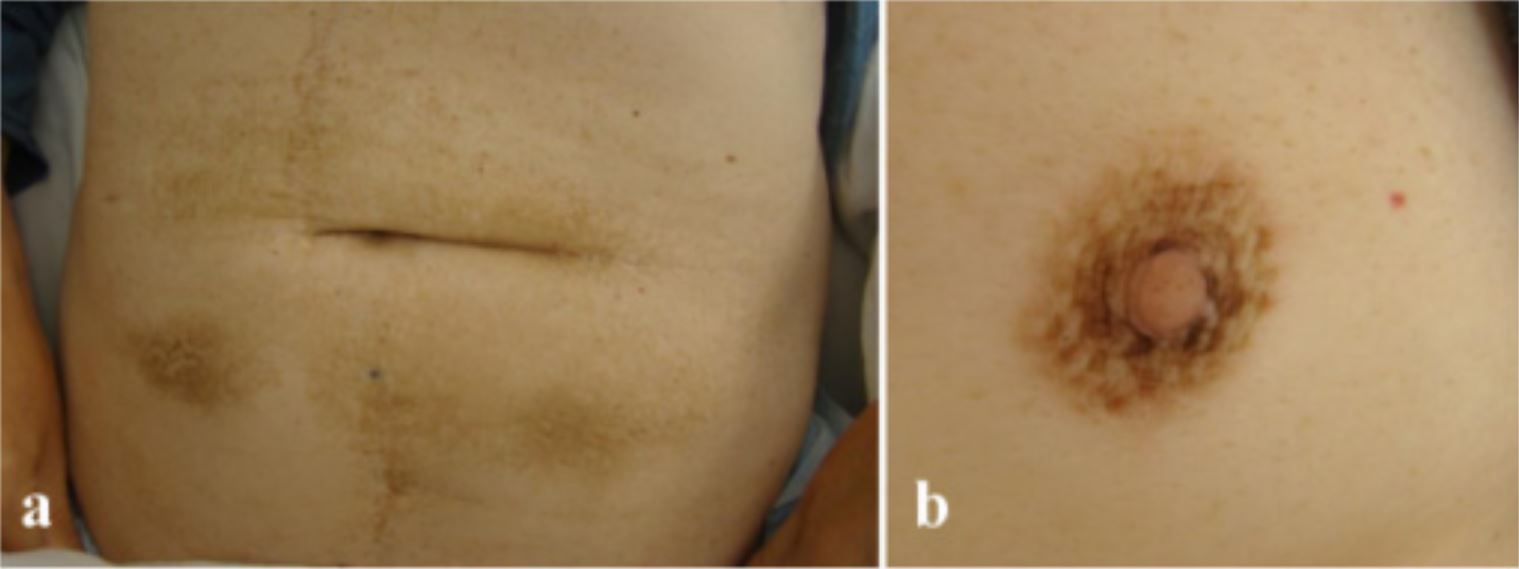
  • Acantosis nigricans maligna: aparición/crecimiento rápido de parches oscuros y aterciopelados (generalmente en EN Erythema nodosum is an immune-mediated panniculitis (inflammation of the subcutaneous fat) caused by a type IV (delayed-type) hypersensitivity reaction. It commonly manifests in young women as tender, erythematous nodules on the shins. Erythema Nodosum los LOS Neisseria pliegues cutáneos)
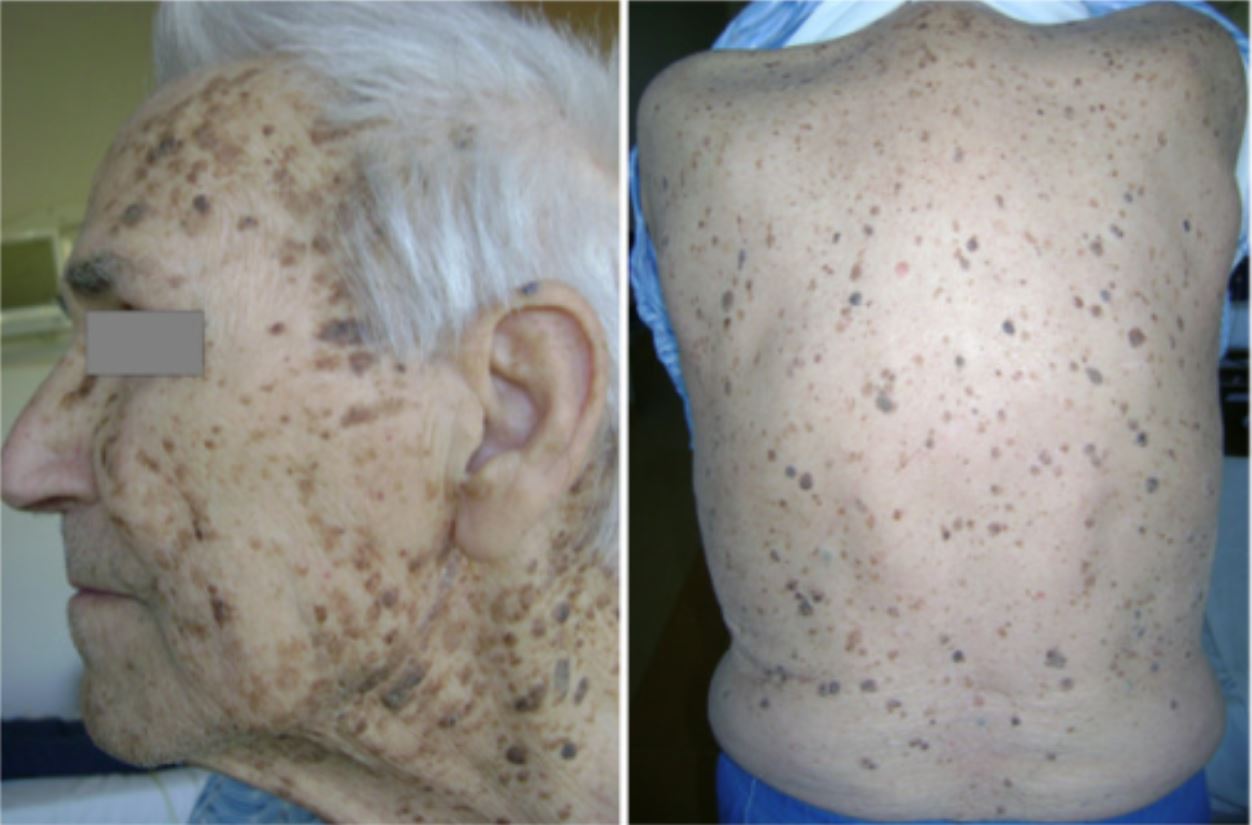
  • Queratosis seborreicas difusas (síndrome de Leser-Trélat)
  • Dermatomiositis
  • Estado de hipercoagulabilidad
  • Nefropatía membranosa

Diagnóstico

Vigilancia

  • No hay recomendaciones para la población en EN Erythema nodosum is an immune-mediated panniculitis (inflammation of the subcutaneous fat) caused by a type IV (delayed-type) hypersensitivity reaction. It commonly manifests in young women as tender, erythematous nodules on the shins. Erythema Nodosum general
  • Pacientes de alto riesgo para los LOS Neisseria que la endoscopia superior puede ser beneficiosa:
    • Poliposis adenomatosa familiar
    • Adenomas gástricos
    • Ancianos con gastritis Gastritis Gastritis refers to inflammation of the gastric mucosa. Gastritis may occur suddenly (acute gastritis) or slowly over time (chronic gastritis). Gastritis may be asymptomatic or with symptoms, including burning abdominal pain (which either worsens or improves with eating), dyspepsia, nausea, and vomiting. Gastritis atrófica o anemia Anemia Anemia is a condition in which individuals have low Hb levels, which can arise from various causes. Anemia is accompanied by a reduced number of RBCs and may manifest with fatigue, shortness of breath, pallor, and weakness. Subtypes are classified by the size of RBCs, chronicity, and etiology. Anemia: Overview and Types perniciosa
    • Cáncer colorrectal hereditario no polipósico
    • Antecedentes de gastrectomía parcial
    • Población étnica inmigrante de alto riesgo

Diagnóstico

  • Esofagogastroduodenoscopia:
    • Procedimiento de diagnóstico por imagenología de elección
    • Evalúa la mucosa gástrica y la afectación de los LOS Neisseria ganglios linfáticos
    • Permite la biopsia profunda de la mucosa/úlcera (para distinguir las úlceras benignas de las malignas)
    • Posibles hallazgos que sugieren cáncer gástrico:
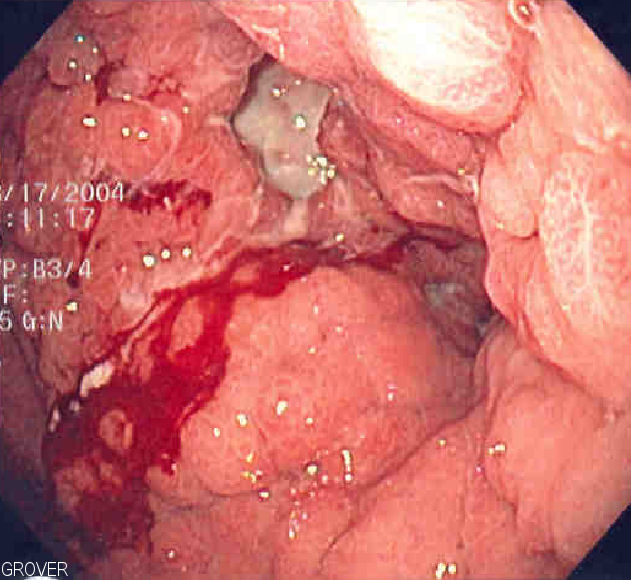
      • Masa ulcerada friable
      • Úlcera gástrica con márgenes irregulares o engrosados
      • En EN Erythema nodosum is an immune-mediated panniculitis (inflammation of the subcutaneous fat) caused by a type IV (delayed-type) hypersensitivity reaction. It commonly manifests in young women as tender, erythematous nodules on the shins. Erythema Nodosum la linitis plástica se observa una mucosa normal pero con escasa distensibilidad del estómago.
  • Estudio de trago de bario con doble contraste:
    • Baja sensibilidad
    • Útil para evaluar la linitis plástica, que tiene un aspecto de botella de cuero
Linitis plástica

Imagen endoscópica de la linitis plástica, en la que todo el estómago está invadido por el cáncer, dando lugar a un aspecto de botella de cuero

Imagen: “Linitis plastica” por Samir. Licencia: Dominio Público
Procedimientos para estadificación

  • Tomografía computarizada (TC) de tórax, abdomen y pelvis Pelvis The pelvis consists of the bony pelvic girdle, the muscular and ligamentous pelvic floor, and the pelvic cavity, which contains viscera, vessels, and multiple nerves and muscles. The pelvic girdle, composed of 2 “hip” bones and the sacrum, is a ring-like bony structure of the axial skeleton that links the vertebral column with the lower extremities. Pelvis: Anatomy:
    • Proporciona información sobre el tumor Tumor Inflammation primario y la extensión local de la enfermedad
    • Evalúa las áreas de metástasis a distancia
  • Ultrasonido endoscópico:
    • Más fiable para evaluar la profundidad de la invasión tumoral
    • Detecta la afectación ganglionar regional y permite la aspiración con aguja fina del ganglio linfático
  • Tomografía por emisión de positrones ( PET PET An imaging technique that combines a positron-emission tomography (PET) scanner and a ct X ray scanner. This establishes a precise anatomic localization in the same session. Nuclear Imaging) con 18-fluorodeoxiglucosa (FDG):
    • Detección de lesiones metastásicas ocultas (especialmente en EN Erythema nodosum is an immune-mediated panniculitis (inflammation of the subcutaneous fat) caused by a type IV (delayed-type) hypersensitivity reaction. It commonly manifests in young women as tender, erythematous nodules on the shins. Erythema Nodosum enfermedad ≥ T2N0)
    • Más sensible que la TC en EN Erythema nodosum is an immune-mediated panniculitis (inflammation of the subcutaneous fat) caused by a type IV (delayed-type) hypersensitivity reaction. It commonly manifests in young women as tender, erythematous nodules on the shins. Erythema Nodosum la detección de metástasis a distancia
  • Laparoscopia de estadificación:
    • Como las metástasis peritoneales pueden pasar desapercibidas en EN Erythema nodosum is an immune-mediated panniculitis (inflammation of the subcutaneous fat) caused by a type IV (delayed-type) hypersensitivity reaction. It commonly manifests in young women as tender, erythematous nodules on the shins. Erythema Nodosum la TC, la laparoscopia ayuda a determinar la diseminación peritoneal oculta.
    • Permite lavados peritoneales y la citología
<

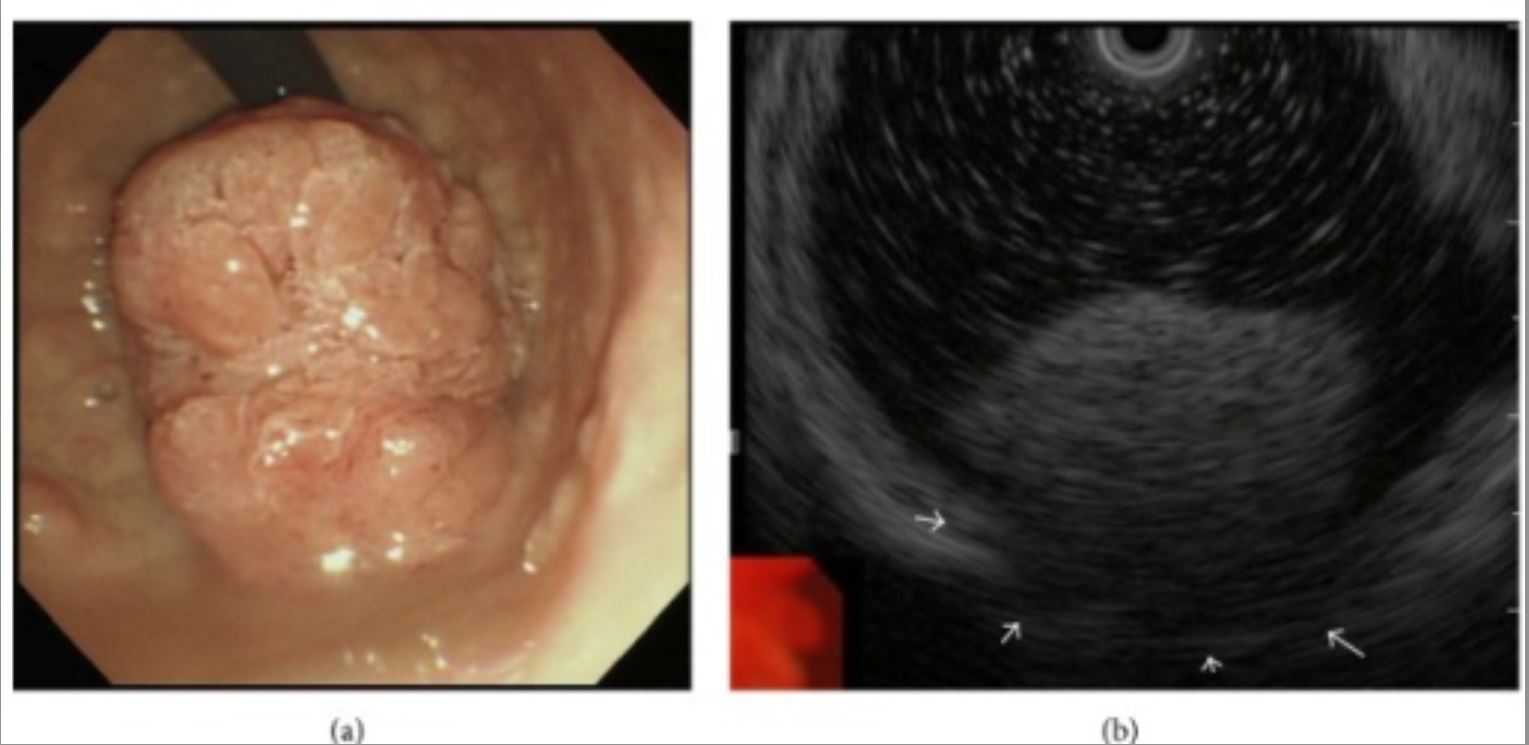
Tumor polipoide que se expresa en el anillo pilórico:
a: La endoscopia gástrica superior revela un tumor gigante de tipo polipoide que se extiende desde el bulbo del duodeno hasta el anillo pilórico.
b: El ultrasonido endoscópico sugiere la invasión tumoral de la túnica muscular (flechas blancas).

Imagen: “Giant polypoid tumor expressing on the pyloric ring” por Sonoda H, Kobayashi T, Endo Y, Irie S, Hirata T, Minamimura K, Mafune K, Mori M. Licencia: CC BY 3.0

Clasificación y Estadios del Tumor, Nódulos (Ganglios) Linfáticos y las Metástasis (TNM)

Tabla: Clasificación TNM para la estadificación del carcinoma gástrico
T ( tumor Tumor Inflammation primario) N (nódulos linfáticos afectados) M (metástasis a distancia)
TX No se puede evaluar N0 No hay nódulos linfáticos regionales M0 No hay metástasis a distancia
T0 No hay evidencias de tumor Tumor Inflammation N1 1–2 nódulos regionales M1 Metástasis confirmadas
Tis Carcinoma in situ Carcinoma in situ A lesion with cytological characteristics associated with invasive carcinoma but the tumor cells are confined to the epithelium of origin, without invasion of the basement membrane. Leukoplakia N2 3–6 nódulos regionales
T1 Invasión hasta la submucosa N3 7 o más nódulos regionales
T2 Invasión de la muscularis propria
T3 T3 A T3 thyroid hormone normally synthesized and secreted by the thyroid gland in much smaller quantities than thyroxine (T4). Most T3 is derived from peripheral monodeiodination of T4 at the 5′ position of the outer ring of the iodothyronine nucleus. The hormone finally delivered and used by the tissues is mainly t3. Thyroid Hormones Invasión de la serosa
T4a Perfora la serosa
T4b Estructuras adyacentes afectadas
Tabla: Sistema de estadificación clínica del carcinoma gástrico
EtapaTNMCaracterísticas
0 TisN0M0 Nódulos negativos; limitado a la mucosa
1 T1-2N0M0 Nódulos negativos; invasión de la submucosa hasta la muscularis propria
2a T1N1-3M0
T2N1-3M
Nódulos positivos; invasión de la muscularis propria
2b T3N0M0
T4aN0M0
Nódulos negativos; invasión hasta la serosa
3 T3 T3 A T3 thyroid hormone normally synthesized and secreted by the thyroid gland in much smaller quantities than thyroxine (T4). Most T3 is derived from peripheral monodeiodination of T4 at the 5′ position of the outer ring of the iodothyronine nucleus. The hormone finally delivered and used by the tissues is mainly t3. Thyroid Hormones,N1-3,M0
T4a,N1-3, M0
Nódulos positivos; invasión hasta la serosa
4a T4b, cualquier N, M0 Nódulos positivos; más allá de la serosa, hasta las estructuras adyacentes
4b Cualquier T, N, M1 Metástasis a distancia
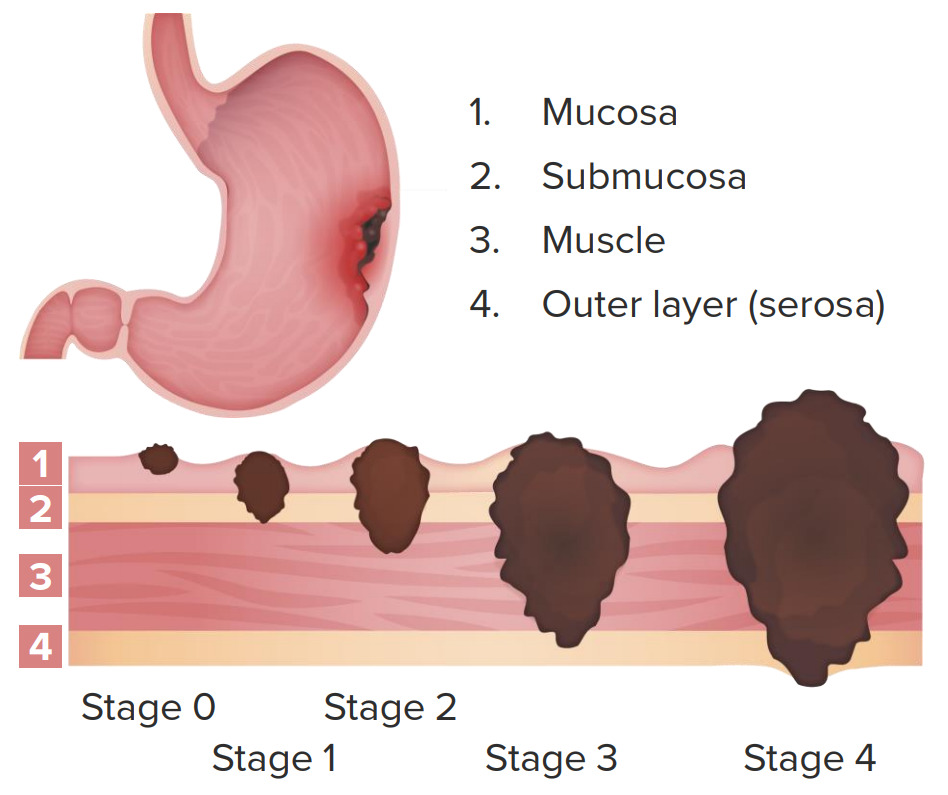
Estadificación clínica del cáncer gástrico

Estadificación clínica del cáncer gástrico:
Estadio 0: nódulos negativos; limitado a la mucosa
Estadio 1: nódulos negativos; invasión de la submucosa y parte de la muscularis propria
Estadio 2: nódulos negativos con invasión hasta la serosa o nódulos positivos con invasión hasta la muscularis propria
Estadio 3: nódulos positivos; invasión de la serosa
Estadio 4: nódulos positivos; invasión hasta las estructuras adyacentes con o sin metástasis a distancia

Imagen por Lecturio.

Tratamiento y Pronóstico

Tratamiento

  • Terapia de erradicación de H. pylori H. pylori A spiral bacterium active as a human gastric pathogen. It is a gram-negative, urease-positive, curved or slightly spiral organism initially isolated in 1982 from patients with lesions of gastritis or peptic ulcers in Western Australia. Helicobacter pylori was originally classified in the genus campylobacter, but RNA sequencing, cellular fatty acid profiles, growth patterns, and other taxonomic characteristics indicate that the micro-organism should be included in the genus Helicobacter. It has been officially transferred to Helicobacter gen. Helicobacter para aquellos con infección positiva
  • El estadio clínico dicta la terapia inicial.
  • Enfermedad locorregional (estadio I–III):
    • Quimioterapia preoperatoria (neoadyuvante) para la reducción de estadio
    • Cirugía de tumores proximales: gastrectomía total y resección de ganglios adyacentes
    • Cirugía de tumores distales (⅔ inferiores): gastrectomía subtotal y resección de ganglios linfáticos adyacentes
    • Quimioterapia combinada postoperatoria (adyuvante) ± quimiorradioterapia (según el estadio)
  • Localmente avanzado no resecable o metastásico (estadio IV):
    • Resección gástrica paliativa limitada
    • Quimioterapia paliativa
    • Radioterapia
    • Trastuzumab Trastuzumab A humanized monoclonal antibody against the ErbB-2 receptor (HER2). As an antineoplastic agent, it is used to treat breast cancer where HER2 is overexpressed. Targeted and Other Nontraditional Antineoplastic Therapy si el tumor Tumor Inflammation es positivo para el receptor Receptor Receptors are proteins located either on the surface of or within a cell that can bind to signaling molecules known as ligands (e.g., hormones) and cause some type of response within the cell. Receptors del factor de crecimiento epidérmico humano 2 ( HER2 HER2 A cell surface protein-tyrosine kinase receptor that is overexpressed in a variety of adenocarcinomas. It has extensive homology to and heterodimerizes with the EGF receptor, the ERBB-3 receptor, and the ERBB-4 receptor. Activation of the erbB-2 receptor occurs through heterodimer formation with a ligand-bound erbB receptor family member. Targeted and Other Nontraditional Antineoplastic Therapy)
    • Colocación de stents endoscópicos
  • Otros: se considera la gastrectomía profiláctica en EN Erythema nodosum is an immune-mediated panniculitis (inflammation of the subcutaneous fat) caused by a type IV (delayed-type) hypersensitivity reaction. It commonly manifests in young women as tender, erythematous nodules on the shins. Erythema Nodosum aquellos con el gen de la cadherina E o la mutación CDH1

Pronóstico

  • La supervivencia a 5 años del adenocarcinoma gástrico es del 30%.
  • La supervivencia a 5 años de los LOS Neisseria que se someten a una resección quirúrgica curativa es > 45%.
  • Principales factores que determinan el pronóstico tras la resección:
    • Estadificación
    • Tipo histológico
    • Márgenes de resección

Complicaciones Postgastrectomía

Sobrecrecimiento bacteriano del intestino delgado

  • La cantidad normalmente baja de bacterias en EN Erythema nodosum is an immune-mediated panniculitis (inflammation of the subcutaneous fat) caused by a type IV (delayed-type) hypersensitivity reaction. It commonly manifests in young women as tender, erythematous nodules on the shins. Erythema Nodosum el intestino delgado aumenta u otros patógenos tienen un crecimiento significativo.
  • Sobrecrecimiento bacteriano facilitado por la disminución de la secreción de ácido gástrico y las asas ciegas
  • Características clínicas:
    • Diarrea, distensión abdominal
    • Malabsorción que lleva a pérdida de peso
    • Esteatorrea y diarrea osmótica
  • Diagnóstico:
    • Cultivos de aspirado yeyunal
    • Prueba del aliento con carbohidratos (lactulosa)
  • Tratamiento: antibióticos y suplementos nutricionales

Síndrome de vaciamiento

  • Relacionado con la motilidad (vaciado gástrico rápido)
  • Debido a bypass del esfínter pilórico
  • Tipo de vaciamiento temprano:
    • El deterioro del esfínter pilórico provoca un vaciado rápido del quimo hiperosmolar.
    • Vómito, diarrea y cólicos abdominales
    • Síntomas vasomotores (sudoración, enrojecimiento y palpitaciones) luego de la ingesta de comidas
  • Tipo de vaciamiento tardío:
    • La rápida absorción de la glucosa provoca una respuesta hiperinsulinémica.
    • Hipoglucemia postprandial
    • Temblores y desmayos que se producen 1 hora después de la comida
  • Tratamiento:
    • Modificaciones en EN Erythema nodosum is an immune-mediated panniculitis (inflammation of the subcutaneous fat) caused by a type IV (delayed-type) hypersensitivity reaction. It commonly manifests in young women as tender, erythematous nodules on the shins. Erythema Nodosum la dieta (más fibra); comidas pequeñas y frecuentes ricas en EN Erythema nodosum is an immune-mediated panniculitis (inflammation of the subcutaneous fat) caused by a type IV (delayed-type) hypersensitivity reaction. It commonly manifests in young women as tender, erythematous nodules on the shins. Erythema Nodosum proteínas y grasas
    • Considerar la octreotida; reintervención en EN Erythema nodosum is an immune-mediated panniculitis (inflammation of the subcutaneous fat) caused by a type IV (delayed-type) hypersensitivity reaction. It commonly manifests in young women as tender, erythematous nodules on the shins. Erythema Nodosum ciertos casos

Estasis gástrica

  • Relacionado con la motilidad (tránsito lento)
  • Debido a la denervación vagal, al AL Amyloidosis remanente de estómago pequeño o a la atonía posquirúrgica
  • Características clínicas: saciedad precoz, vómitos, dolor Dolor Inflammation abdominal
  • Tratamiento:
    • Uso de agentes procinéticos
    • Si es grave, se considera la gastrectomía total

Otros efectos a largo plazo

  • Reducción de la absorción de hierro: anemia Anemia Anemia is a condition in which individuals have low Hb levels, which can arise from various causes. Anemia is accompanied by a reduced number of RBCs and may manifest with fatigue, shortness of breath, pallor, and weakness. Subtypes are classified by the size of RBCs, chronicity, and etiology. Anemia: Overview and Types
  • Reducción de la absorción de B12 (sin factor intrínseco): deficiencia de B12
  • Reducción de la absorción de calcio: osteoporosis Osteoporosis Osteoporosis refers to a decrease in bone mass and density leading to an increased number of fractures. There are 2 forms of osteoporosis: primary, which is commonly postmenopausal or senile; and secondary, which is a manifestation of immobilization, underlying medical disorders, or long-term use of certain medications. Osteoporosis
  • Cálculos biliares
  • Úlcera péptica
  • La gastrectomía parcial es un riesgo para cáncer remanente.

Referencias

  1. Abouzid, A., Elkashef, T., Elashwah, S., El-Ashwah, S., & Denewer, M. (2022). ABCL-178 Primary gastric lymphoma mimicking gastric carcinoma: The clinicopathological features and treatment. Clinical Lymphoma Myeloma and Leukemia, 22(Suppl. 2), S363–S364. https://doi.org/10.1016/s2152-2650(22)01508-7
  2. Ilic, M., & Ilic, I. (2022). Epidemiology of stomach cancer. World Journal of Gastroenterology, 28(12), 1187–1203. https://doi.org/10.3748/wjg.v28.i12.1187
  3. Animalu, C. (2025). Bacterial Overgrowth Syndrome In Bronze, M. (Ed.). Medscape. Retrieved October 24, 2025, from https://emedicine.medscape.com/article/212861-overview#a5
  4. Cabebe, E., Espat, N. (Ed.). (2025). Gastric cancer. Medscape. Retrieved October 24, 2025, from https://emedicine.medscape.com/article/278744-clinical#b4 
  5. Chan, A., Wong, B. (2025). Risk factors for Gastric Cancer in Feldman M, Savarese D. in UpToDate. Retrieved October 24, 2025, from https://www.uptodate.com/contents/risk-factors-for-gastric-cancer
  6. Chan, A., Wong, B. (2025). Epidemiology of gastric cancer in Feldman M, Grover S. UpToDate. Retrieved October 24, 2025, from https://www.uptodate.com/contents/epidemiology-of-gastric-cancer
  7. Cohen, J., Greenwald, D. (2025). Overview of upper gastrointestinal endoscopy. UpToDate. Retrieved October 24, 2025, from https://www.uptodate.com/contents/overview-of-upper-gastrointestinal-endoscopy-esophagogastroduodenoscopy
  8. Gupta, S., Li, D., El Serag, H. et al. (2020). AGA Clinical Practice Guidelines on Management of Gastric Intestinal Metaplasia. Clinical Practice Guideline 158, Issue 3, 693–702. https://doi.org/10.1053/j.gastro.2019.12.003
  9. Lauwers, G., Kumarasinghe, P. (2025). Gastric Cancer: Pathology and molecular pathogenesis in Godberg, R. & Savarese, D. (Eds). UpToDate. Retrieved October 24, 2025, from https://www.uptodate.com/contents/gastric-cancer-pathology-and-molecular-pathogenesis
  10. Layke, J., Lopez, P. (2004). Gastric Cancer: Diagnosis and Treatment Options. Am Fam Physician. 1;69(5):1133–1141
  11. Mansfield, P. F. (2025). Clinical presentation, diagnosis, and staging of gastric cancer. UpToDate. Retrieved October 24, 2025, from https://www.uptodate.com/contents/clinical-presentation-diagnosis-and-staging-of-gastric-cancer
  12. Mayer, R.J. (2018). Upper gastrointestinal tract cancers. Jameson, J, & Fauci, A.S., & Kasper, D.L., & Hauser, S.L., & Longo, D.L., & Loscalzo J. (Eds.), Harrison’s Principles of Internal Medicine, 20th ed. McGraw-Hill.
  13. Roses, R.E., & Dempsey, D.T. (2019). Stomach. Brunicardi, F., & Andersen, D.K., & Billiar, T.R., & Dunn, D.L., & Kao, L.S., & Hunter, J.G., & Matthews, J.B., & Pollock, R.E. (Eds.), Schwartz’s Principles of Surgery, 11th ed. McGraw-Hill.
  14. Smith, M.A. (2019). Gastric cancer. Usatine, R.P., & Smith, M.A., & Mayeaux, Jr. E.J., & Chumley, H.S.(Eds.), The Color Atlas and Synopsis of Family Medicine, 3rd ed. McGraw-Hill.
  15. Ursem, C., McQuaid, K.R. (2021). Gastric adenocarcinoma. Papadakis, M.A., & McPhee, S.J., & Rabow M.W.(Eds.), Current Medical Diagnosis & Treatment 2021. McGraw-Hill. 

¡Crea tu cuenta gratis o inicia una sesión para seguir leyendo!

Regístrate ahora y obtén acceso gratuito a Lecturio con páginas de concepto, videos médicos y cuestionarios para tu educación médica.

User Reviews

Que tengas una sesión de estudio alegre y navideña 🎁 Ahorra 50% en todos los planes >>

Details