
Una infección es la proliferación de microorganismos dentro de los LOS Neisseria tejidos, las cavidades corporales o los LOS Neisseria espacios, que inducen una respuesta inmunitaria y superan las defensas naturales del organismo. En EN Erythema nodosum is an immune-mediated panniculitis (inflammation of the subcutaneous fat) caused by a type IV (delayed-type) hypersensitivity reaction. It commonly manifests in young women as tender, erythematous nodules on the shins. Erythema Nodosum los LOS Neisseria pacientes quirúrgicos, estas infecciones suelen estar causadas por la translocación de organismos comensales a los LOS Neisseria tejidos más profundos, combinada con el deterioro de las defensas del huésped debido a una lesión o estrés quirúrgico. Entre las infecciones que se identifican habitualmente en EN Erythema nodosum is an immune-mediated panniculitis (inflammation of the subcutaneous fat) caused by a type IV (delayed-type) hypersensitivity reaction. It commonly manifests in young women as tender, erythematous nodules on the shins. Erythema Nodosum los LOS Neisseria pacientes después de una intervención quirúrgica se encuentran las infecciones del sitio quirúrgico, las infecciones asociadas a catéteres y las infecciones asociadas a ventiladores. Los LOS Neisseria subtipos de infección pueden prevenirse, diagnosticarse o tratarse mediante varias estrategias. Los LOS Neisseria pilares del tratamiento en EN Erythema nodosum is an immune-mediated panniculitis (inflammation of the subcutaneous fat) caused by a type IV (delayed-type) hypersensitivity reaction. It commonly manifests in young women as tender, erythematous nodules on the shins. Erythema Nodosum los LOS Neisseria pacientes quirúrgicos son el control local de la infección y la terapia antibiótica dirigida.
Last updated: Dec 15, 2025
La infección quirúrgica es un trastorno clínico que se manifiesta cuando los LOS Neisseria factores de virulencia de un microorganismo introducido durante los LOS Neisseria procedimientos quirúrgicos superan las respuestas inmunitarias innatas y adaptativas del huésped.
Son varios los LOS Neisseria factores que hacen que los LOS Neisseria pacientes sometidos a una intervención quirúrgica sean especialmente susceptibles de sufrir infecciones nosocomiales:
La presencia de bacterias puede estar asociada o no a una infección clínicamente significativa.
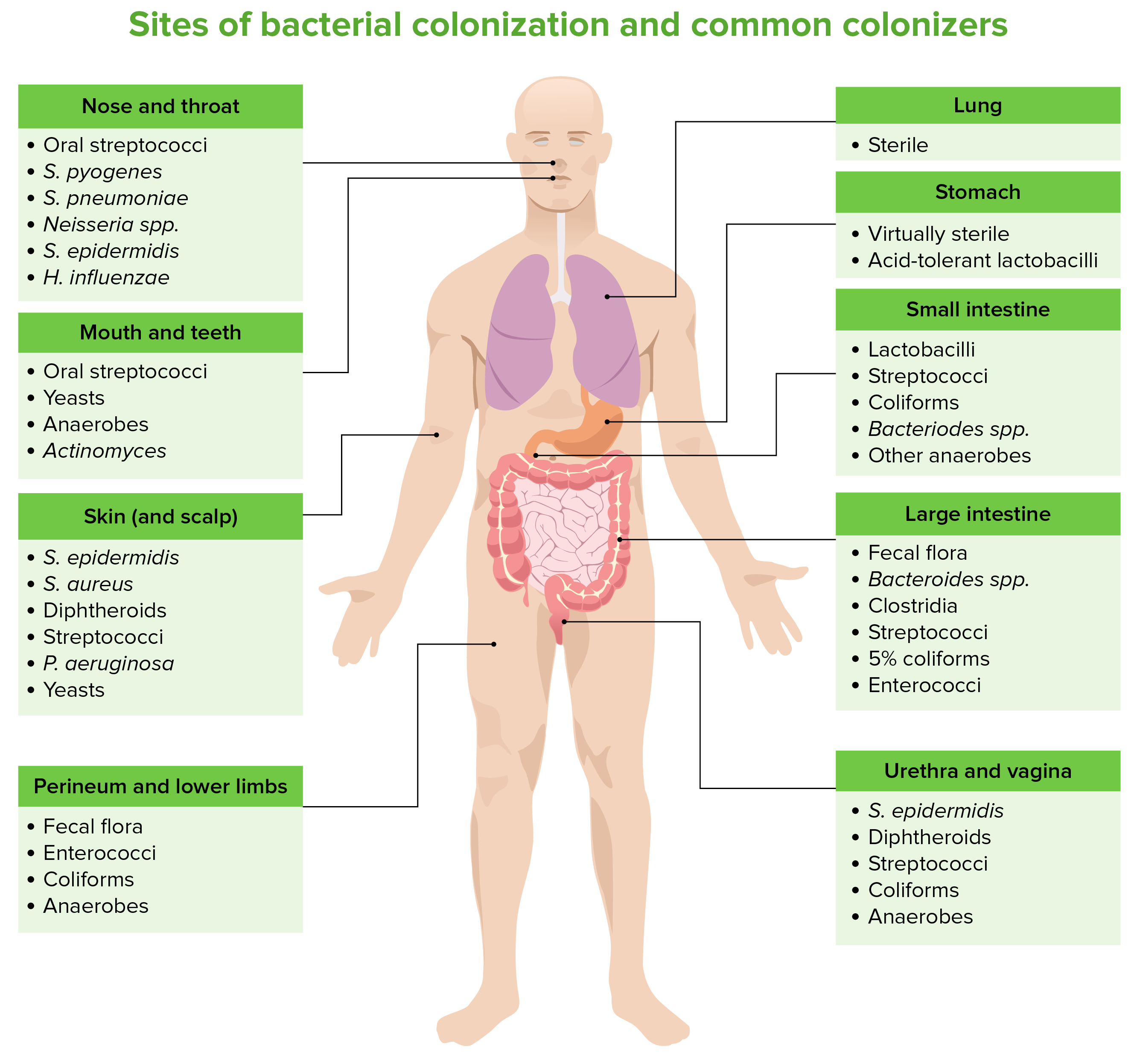
Sitios de colonización bacteriana y colonizadores comunes
Imagen por Lecturio. Licencia: CC BY-NC-SA 4.0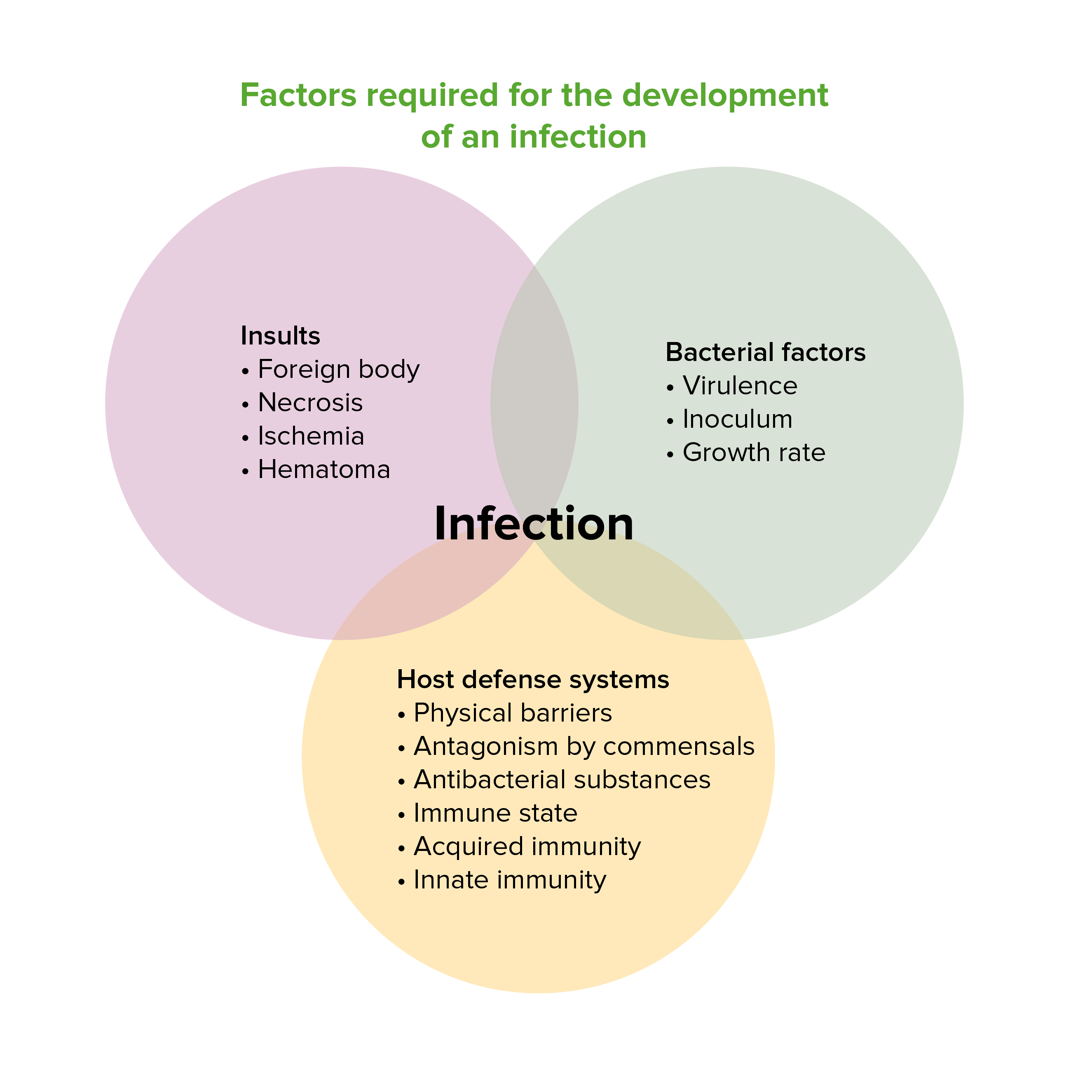
Factores necesarios para el desarrollo de una infección
Signos de inflamación sistémica (SIRS):
Hallazgos específicos relacionados con las infecciones quirúrgicas:
Signos de shock Shock Shock is a life-threatening condition associated with impaired circulation that results in tissue hypoxia. The different types of shock are based on the underlying cause: distributive (↑ cardiac output (CO), ↓ systemic vascular resistance (SVR)), cardiogenic (↓ CO, ↑ SVR), hypovolemic (↓ CO, ↑ SVR), obstructive (↓ CO), and mixed. Types of Shock:
La prevención de las infecciones quirúrgicas depende en EN Erythema nodosum is an immune-mediated panniculitis (inflammation of the subcutaneous fat) caused by a type IV (delayed-type) hypersensitivity reaction. It commonly manifests in young women as tender, erythematous nodules on the shins. Erythema Nodosum gran medida de la técnica estéril, la higiene de las manos y la administración de antibióticos profilácticos.
Término utilizado para describir las medidas tomadas por el equipo quirúrgico antes y durante un procedimiento para prevenir el desarrollo de infecciones postoperatorias, que incluye:
El tratamiento de las infecciones quirúrgicas se describe con el término de “control de la fuente”, que implica la combinación del tratamiento quirúrgico (si está indicado) con la administración de antibióticos.
| Organismo | 1ra opción | Alternativa |
|---|---|---|
| MSSA ( Staphylococcus aureus Staphylococcus aureus Potentially pathogenic bacteria found in nasal membranes, skin, hair follicles, and perineum of warm-blooded animals. They may cause a wide range of infections and intoxications. Brain Abscess sensible a la meticilina) | Cefazolina | Claritromicina |
| MRSA MRSA A strain of Staphylococcus aureus that is non-susceptible to the action of methicillin. The mechanism of resistance usually involves modification of normal or the presence of acquired penicillin binding proteins. Staphylococcus | Vancomicina |
|
| Estafilococos coagulasa-negativos | Vancomicina |
|
| Streptococcus Streptococcus Streptococcus is one of the two medically important genera of gram-positive cocci, the other being Staphylococcus. Streptococci are identified as different species on blood agar on the basis of their hemolytic pattern and sensitivity to optochin and bacitracin. There are many pathogenic species of streptococci, including S. pyogenes, S. agalactiae, S. pneumoniae, and the viridans streptococci. Streptococcus pneumoniae | Bencilpenicilina | Claritromicina |
| S. pyogenes ( estreptococo β-hemolítico del grupo A) |
|
Claritromicina |
| Enterococos | Amoxicilina | Vancomicina |
| Bacteroides Bacteroides Bacteroides is a genus of opportunistic, anaerobic, gram-negative bacilli. Bacteroides fragilis is the most common species involved in human disease and is part of the normal flora of the large intestine. Bacteroides spp. | Metronidazol |
|
| Escherichia coli Escherichia coli The gram-negative bacterium Escherichia coli is a key component of the human gut microbiota. Most strains of E. coli are avirulent, but occasionally they escape the GI tract, infecting the urinary tract and other sites. Less common strains of E. coli are able to cause disease within the GI tract, most commonly presenting as abdominal pain and diarrhea. Escherichia coli |
|
Meropenem Meropenem A thienamycin derivative antibacterial agent that is more stable to renal dehydropeptidase I than imipenem, but does not need to be given with an enzyme inhibitor such as cilastatin. It is used in the treatment of bacterial infections, including infections in immunocompromised patients. Carbapenems and Aztreonam |
| Haemophilus influenzae Haemophilus Influenzae A species of Haemophilus found on the mucous membranes of humans and a variety of animals. The species is further divided into biotypes I through viii. Haemophilus | Ceftriazona |
|
| Klebsiella Klebsiella Klebsiella are encapsulated gram-negative, lactose-fermenting bacilli. They form pink colonies on MacConkey agar due to lactose fermentation. The main virulence factor is a polysaccharide capsule. Klebsiella pneumoniae is the most important pathogenic species. Klebsiella spp. |
|
Meropenem Meropenem A thienamycin derivative antibacterial agent that is more stable to renal dehydropeptidase I than imipenem, but does not need to be given with an enzyme inhibitor such as cilastatin. It is used in the treatment of bacterial infections, including infections in immunocompromised patients. Carbapenems and Aztreonam |
| Proteus Proteus Proteus spp. are gram-negative, facultatively anaerobic bacilli. Different types of infection result from Proteus, but the urinary tract is the most common site. The majority of cases are caused by Proteus mirabilis (P. mirabilis). The bacteria are part of the normal intestinal flora and are also found in the environment. Proteus spp. |
|
Meropenem Meropenem A thienamycin derivative antibacterial agent that is more stable to renal dehydropeptidase I than imipenem, but does not need to be given with an enzyme inhibitor such as cilastatin. It is used in the treatment of bacterial infections, including infections in immunocompromised patients. Carbapenems and Aztreonam |
| Pseudomonas aeruginosa Pseudomonas aeruginosa A species of gram-negative, aerobic, rod-shaped bacteria commonly isolated from clinical specimens (wound, burn, and urinary tract infections). It is also found widely distributed in soil and water. P. Aeruginosa is a major agent of nosocomial infection. Pseudomonas | Piperacilina-tazobactam | Meropenem Meropenem A thienamycin derivative antibacterial agent that is more stable to renal dehydropeptidase I than imipenem, but does not need to be given with an enzyme inhibitor such as cilastatin. It is used in the treatment of bacterial infections, including infections in immunocompromised patients. Carbapenems and Aztreonam |
| Clostridium spp. | Bencilpenicilina | Metronidazol |
| C. difficile | Fidaxomicina |
|
Absceso:
Fascitis necrosante e infecciones del pie diabético: