Domina Conceptos Médicos

Estudia para la escuela de medicina y tus examenes con Lecturio.

Gonorrea

La gonorrea es una infección de transmisión sexual (ITS) causada por la bacteria Bacteria Bacteria are prokaryotic single-celled microorganisms that are metabolically active and divide by binary fission. Some of these organisms play a significant role in the pathogenesis of diseases. Bacteriology gram-negativa Neisseria gonorrhoeae Neisseria gonorrhoeae A species of gram-negative, aerobic bacteria primarily found in purulent venereal discharges. It is the causative agent of gonorrhea. Neisseria ( N. gonorrhoeae N. gonorrhoeae A species of gram-negative, aerobic bacteria primarily found in purulent venereal discharges. It is the causative agent of gonorrhea. Neisseria). La gonorrea puede ser asintomática, pero comúnmente se manifiesta como cervicitis Cervicitis Inflammation of the uterine cervix. Gonorrhea o uretritis, con presentaciones menos comunes como proctitis Proctitis Inflammation of the mucous membrane of the rectum, the distal end of the large intestine. Chronic Granulomatous Disease, conjuntivitis o faringitis. Sin tratamiento antibiótico, pueden presentarse complicaciones. Las complicaciones para los LOS Neisseria hombres pueden incluir epididimitis, prostatitis Prostatitis Prostatitis is inflammation or an irritative condition of the prostate that presents as different syndromes: acute bacterial, chronic bacterial, chronic prostatitis/chronic pelvic pain, and asymptomatic. Bacterial prostatitis is easier to identify clinically and the management (antibiotics) is better established. Prostatitis, balanitis Balanitis Inflammation of the head of the penis, glans penis. Penile Anomalies and Conditions y absceso periuretral. Las mujeres pueden desarrollar una enfermedad inflamatoria pélvica, que puede causar perihepatitis y problemas de fertilidad. La infección gonocócica diseminada se asocia con fiebre, dermatitis Dermatitis Any inflammation of the skin. Atopic Dermatitis (Eczema), tenosinovitis, artritis séptica y (raramente) endocarditis Endocarditis Endocarditis is an inflammatory disease involving the inner lining (endometrium) of the heart, most commonly affecting the cardiac valves. Both infectious and noninfectious etiologies lead to vegetations on the valve leaflets. Patients may present with nonspecific symptoms such as fever and fatigue. Endocarditis o meningitis Meningitis Meningitis is inflammation of the meninges, the protective membranes of the brain, and spinal cord. The causes of meningitis are varied, with the most common being bacterial or viral infection. The classic presentation of meningitis is a triad of fever, altered mental status, and nuchal rigidity. Meningitis. El diagnóstico de la gonorrea se realiza mediante microscopía, cultivo o pruebas de amplificación de ácidos nucleicos. El tratamiento suele consistir en EN Erythema nodosum is an immune-mediated panniculitis (inflammation of the subcutaneous fat) caused by a type IV (delayed-type) hypersensitivity reaction. It commonly manifests in young women as tender, erythematous nodules on the shins. Erythema Nodosum ceftriaxona, pero debe seguirse un tratamiento con doxiciclina si no se excluye una coinfección con Chlamydia Chlamydia Chlamydiae are obligate intracellular gram-negative bacteria. They lack a peptidoglycan layer and are best visualized using Giemsa stain. The family of Chlamydiaceae comprises 3 pathogens that can infect humans: Chlamydia trachomatis, Chlamydia psittaci, and Chlamydia pneumoniae. Chlamydia trachomatis (C. trachomatis).

Last updated: Jun 27, 2022

Editorial responsibility: Stanley Oiseth, Lindsay Jones, Evelin Maza

Epidemiología y Etiología

Epidemiología

  • Segunda ITS bacteriana más común (la clamidia es la más común)
  • Incidencia anual en EN Erythema nodosum is an immune-mediated panniculitis (inflammation of the subcutaneous fat) caused by a type IV (delayed-type) hypersensitivity reaction. It commonly manifests in young women as tender, erythematous nodules on the shins. Erythema Nodosum el mundo: aproximadamente 80–100 millones de personas:
    • Mayor incidencia en EN Erythema nodosum is an immune-mediated panniculitis (inflammation of the subcutaneous fat) caused by a type IV (delayed-type) hypersensitivity reaction. It commonly manifests in young women as tender, erythematous nodules on the shins. Erythema Nodosum los LOS Neisseria países en EN Erythema nodosum is an immune-mediated panniculitis (inflammation of the subcutaneous fat) caused by a type IV (delayed-type) hypersensitivity reaction. It commonly manifests in young women as tender, erythematous nodules on the shins. Erythema Nodosum vía de desarrollo, incluyendo África y el Pacífico Occidental
    • Estados Unidos nuevos casos en EN Erythema nodosum is an immune-mediated panniculitis (inflammation of the subcutaneous fat) caused by a type IV (delayed-type) hypersensitivity reaction. It commonly manifests in young women as tender, erythematous nodules on the shins. Erythema Nodosum 2022: aproximadamente 710 000
    • La incidencia parece estar aumentando en EN Erythema nodosum is an immune-mediated panniculitis (inflammation of the subcutaneous fat) caused by a type IV (delayed-type) hypersensitivity reaction. It commonly manifests in young women as tender, erythematous nodules on the shins. Erythema Nodosum todo el mundo.
  • Diferencias de género: hombres > mujeres (especialmente en EN Erythema nodosum is an immune-mediated panniculitis (inflammation of the subcutaneous fat) caused by a type IV (delayed-type) hypersensitivity reaction. It commonly manifests in young women as tender, erythematous nodules on the shins. Erythema Nodosum hombres que tienen sexo con hombres (HSH))
  • Grupos de edad más comunes:
    • Hombres: 20–29 años
    • Mujeres: 15–24 años
  • Factores que mantienen la gonorrea en EN Erythema nodosum is an immune-mediated panniculitis (inflammation of the subcutaneous fat) caused by a type IV (delayed-type) hypersensitivity reaction. It commonly manifests in young women as tender, erythematous nodules on the shins. Erythema Nodosum la población:
    • Una tendencia reversiva reciente en EN Erythema nodosum is an immune-mediated panniculitis (inflammation of the subcutaneous fat) caused by a type IV (delayed-type) hypersensitivity reaction. It commonly manifests in young women as tender, erythematous nodules on the shins. Erythema Nodosum las prácticas sexuales seguras
    • Casos asintomáticos
    • Cepas resistentes a los LOS Neisseria antibióticos
  • La gonorrea es una enfermedad de declaración obligatoria.

Etiología

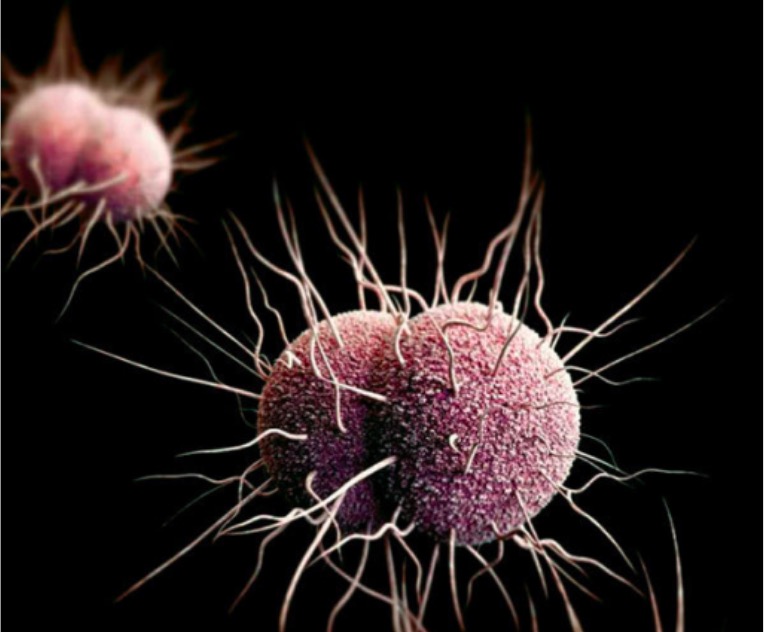
La gonorrea está causada por el patógeno Neisseria gonorrhoeae Neisseria gonorrhoeae A species of gram-negative, aerobic bacteria primarily found in purulent venereal discharges. It is the causative agent of gonorrhea. Neisseria ( N. gonorrhoeae N. gonorrhoeae A species of gram-negative, aerobic bacteria primarily found in purulent venereal discharges. It is the causative agent of gonorrhea. Neisseria):

  • Bacteria Bacteria Bacteria are prokaryotic single-celled microorganisms that are metabolically active and divide by binary fission. Some of these organisms play a significant role in the pathogenesis of diseases. Bacteriology gram-negativa, no móvil, no formadora de esporas
  • Diplococo (crece en EN Erythema nodosum is an immune-mediated panniculitis (inflammation of the subcutaneous fat) caused by a type IV (delayed-type) hypersensitivity reaction. It commonly manifests in young women as tender, erythematous nodules on the shins. Erythema Nodosum parejas)
  • Cultivo y características bioquímicas:
    • Crece mejor en EN Erythema nodosum is an immune-mediated panniculitis (inflammation of the subcutaneous fat) caused by a type IV (delayed-type) hypersensitivity reaction. It commonly manifests in young women as tender, erythematous nodules on the shins. Erythema Nodosum condiciones aeróbicas, pero puede crecer en EN Erythema nodosum is an immune-mediated panniculitis (inflammation of the subcutaneous fat) caused by a type IV (delayed-type) hypersensitivity reaction. It commonly manifests in young women as tender, erythematous nodules on the shins. Erythema Nodosum condiciones anaeróbicas
    • Medio: agar Thayer-Martin modificado ( MTM MTM Enriched chocolate agar with antimicrobial agents that selectively favor growth of Neisseria by inhibiting growth of other bacteria and fungi Neisseria) en EN Erythema nodosum is an immune-mediated panniculitis (inflammation of the subcutaneous fat) caused by a type IV (delayed-type) hypersensitivity reaction. It commonly manifests in young women as tender, erythematous nodules on the shins. Erythema Nodosum atmósfera de CO2 al AL Amyloidosis 5%:
      • Agar chocolate enriquecido
      • Los LOS Neisseria agentes antimicrobianos se utilizan para favorecer selectivamente el crecimiento de Neisseria Neisseria Neisseria is a genus of bacteria commonly present on mucosal surfaces. Several species exist, but only 2 are pathogenic to humans: N. gonorrhoeae and N. meningitidis. Neisseria species are non-motile, gram-negative diplococci most commonly isolated on modified Thayer-Martin (MTM) agar. Neisseria, inhibiendo el crecimiento de hongos y otras bacterias.
    • Oxidasa y catalasa positivas:
      • Solo oxida la glucosa
      • Produce ácido, no gas (no fermenta)

Factores de riesgo:

  • Nuevas o múltiples parejas sexuales
  • Sexo sin protección
  • Abuso de sustancias
  • Bajo nivel educativo
  • Bajo nivel socioeconómico
  • HSH
  • Antecedentes de ITS
  • La gonorrea es un factor independiente para la transmisión del VIH.

Fisiopatología

Transmisión

  • Contacto sexual con el pene, la vagina Vagina The vagina is the female genital canal, extending from the vulva externally to the cervix uteri internally. The structures have sexual, reproductive, and urinary functions and a rich blood supply, mainly arising from the internal iliac artery. Vagina, Vulva, and Pelvic Floor: Anatomy, la boca o el ano de un individuo infectado
  • Perinatal (durante el parto vaginal)

Factores de virulencia

  • Variación antigénica:
    • Permite la expresión de antígenos de superficie distintos.
    • Impide el reconocimiento por parte del sistema inmunitario del huésped.
  • Pili Pili Filamentous or elongated proteinaceous structures which extend from the cell surface in gram-negative bacteria that contain certain types of conjugative plasmid. These pili are the organs associated with genetic transfer and have essential roles in conjugation. Normally, only one or a few pili occur on a given donor cell. This preferred use of ‘pili’ refers to the sexual appendage, to be distinguished from bacterial fimbriae, also known as common pili, which are usually concerned with adhesion. Salmonella (fimbrias):
    • Apéndices largos, parecidos a cabellos, en EN Erythema nodosum is an immune-mediated panniculitis (inflammation of the subcutaneous fat) caused by a type IV (delayed-type) hypersensitivity reaction. It commonly manifests in young women as tender, erythematous nodules on the shins. Erythema Nodosum la superficie de la bacteria Bacteria Bacteria are prokaryotic single-celled microorganisms that are metabolically active and divide by binary fission. Some of these organisms play a significant role in the pathogenesis of diseases. Bacteriology
    • Capaces de alargarse y retraerse
    • Inician la adhesión a las células del huésped.
    • Proporcionan resistencia a la fagocitosis.
    • Proporcionan variación antigénica entre diferentes cepas.
  • Proteína asociada a la opacidad:
    • Proteína de la membrana externa
    • Ayuda a la adhesión a los LOS Neisseria receptores de la célula huésped.
  • Proteínalipooligosacárida ( LOS LOS Neisseria) de envoltura:
    • Endotoxina
    • Un oligosacárido con un componente lipídico A
    • Ayuda a evadir las defensas del huésped:
      • Puede imitar los LOS Neisseria glicoesfingolípidos del huésped
      • Capaz de proporcionar variación antigénica
    • Responsable de la toxicidad al AL Amyloidosis causar:
      • Fiebre
      • Pérdida ciliar
      • Muerte de las células de la mucosa
  • Proteína porina (Por):
    • La proteína de superficie más abundante
    • Proporciona canales acuosos.
    • Hace HACE Altitude Sickness que algunas cepas sean resistentes a la activación y deposición del complemento.
    • Interfiere en EN Erythema nodosum is an immune-mediated panniculitis (inflammation of the subcutaneous fat) caused by a type IV (delayed-type) hypersensitivity reaction. It commonly manifests in young women as tender, erythematous nodules on the shins. Erythema Nodosum la fusión fagosoma-lisosoma y puede impedir la muerte intracelular por parte de los LOS Neisseria neutrófilos.
  • Proteasa IgA IgA Represents 15-20% of the human serum immunoglobulins, mostly as the 4-chain polymer in humans or dimer in other mammals. Secretory iga is the main immunoglobulin in secretions. Immunoglobulins: Types and Functions:
    • Corta e inactiva la inmunoglobulina IgA-1.
    • Reduce las defensas inmunitarias del huésped.

Patogénesis

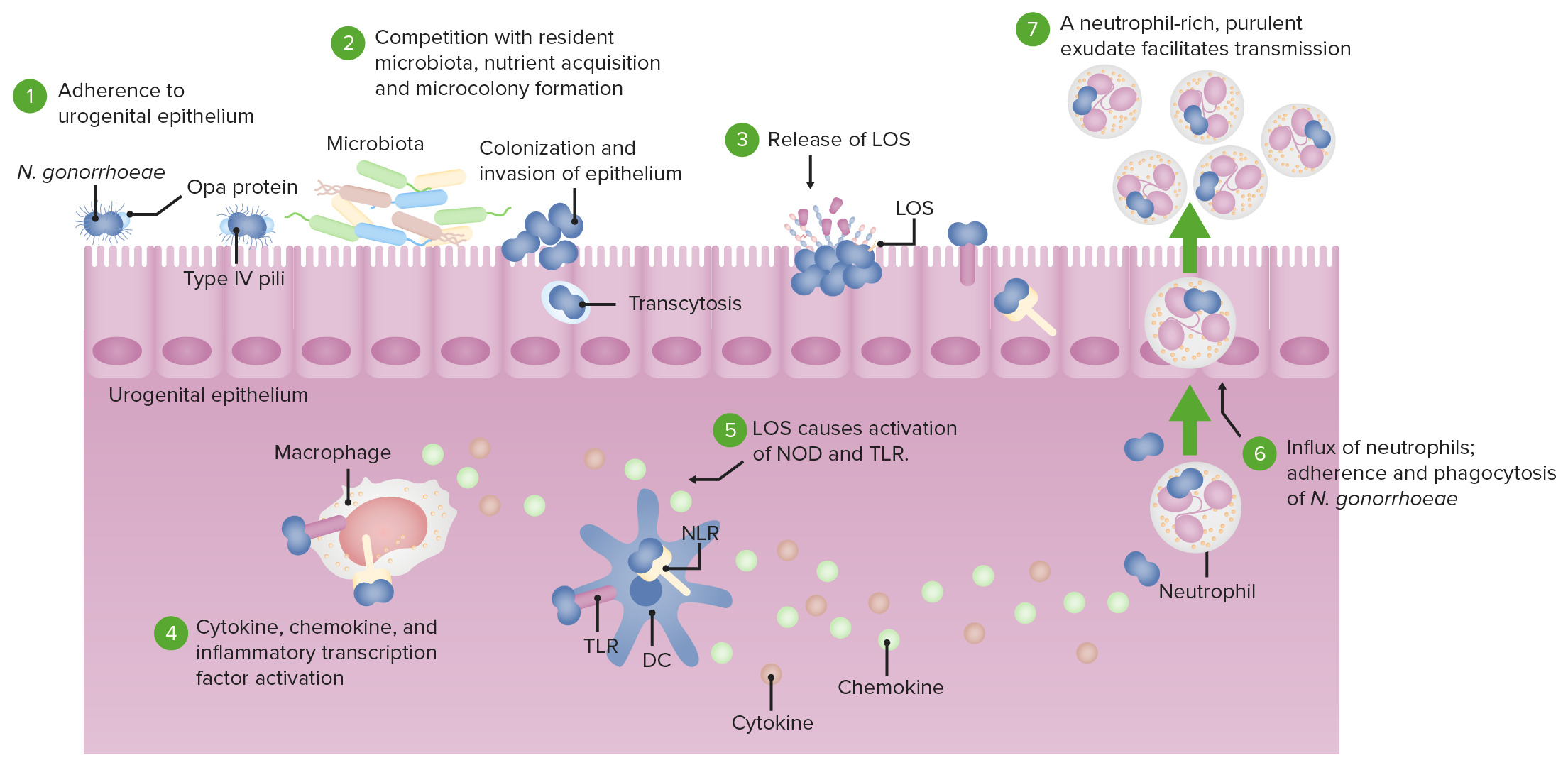
  • La bacteria Bacteria Bacteria are prokaryotic single-celled microorganisms that are metabolically active and divide by binary fission. Some of these organisms play a significant role in the pathogenesis of diseases. Bacteriology se adhiere al AL Amyloidosis epitelio de la mucosa → compite con la microbiota → coloniza e invade el epitelio a través de la transcitosis con la ayuda de pili Pili Filamentous or elongated proteinaceous structures which extend from the cell surface in gram-negative bacteria that contain certain types of conjugative plasmid. These pili are the organs associated with genetic transfer and have essential roles in conjugation. Normally, only one or a few pili occur on a given donor cell. This preferred use of ‘pili’ refers to the sexual appendage, to be distinguished from bacterial fimbriae, also known as common pili, which are usually concerned with adhesion. Salmonella y proteínas asociadas a la opacidad.
  • La LOS LOS Neisseria se libera → activa la señalización del receptor Receptor Receptors are proteins located either on the surface of or within a cell that can bind to signaling molecules known as ligands (e.g., hormones) and cause some type of response within the cell. Receptors tipo Toll (TLR, por sus siglas en EN Erythema nodosum is an immune-mediated panniculitis (inflammation of the subcutaneous fat) caused by a type IV (delayed-type) hypersensitivity reaction. It commonly manifests in young women as tender, erythematous nodules on the shins. Erythema Nodosum inglés) y de la proteína que contiene el dominio de oligomerización de nucleótidos (NOD, por sus siglas en EN Erythema nodosum is an immune-mediated panniculitis (inflammation of the subcutaneous fat) caused by a type IV (delayed-type) hypersensitivity reaction. It commonly manifests in young women as tender, erythematous nodules on the shins. Erythema Nodosum inglés) en EN Erythema nodosum is an immune-mediated panniculitis (inflammation of the subcutaneous fat) caused by a type IV (delayed-type) hypersensitivity reaction. It commonly manifests in young women as tender, erythematous nodules on the shins. Erythema Nodosum:
    • Células epiteliales
    • Macrófagos
    • Células dendríticas
  • Producción de citoquinas y quimioquinas → afluencia de neutrófilos → fagocitosis de bacterias dañinas → exudado purulento rico en EN Erythema nodosum is an immune-mediated panniculitis (inflammation of the subcutaneous fat) caused by a type IV (delayed-type) hypersensitivity reaction. It commonly manifests in young women as tender, erythematous nodules on the shins. Erythema Nodosum neutrófilos
  • Como la N. gonorrhoeae N. gonorrhoeae A species of gram-negative, aerobic bacteria primarily found in purulent venereal discharges. It is the causative agent of gonorrhea. Neisseria tiene mecanismos de defensa para resistirse a la eliminaión, los LOS Neisseria neutrófilos cargados de bacterias actúan como agentes de transmisión a otro huésped.
Gonorrea Neisseria gonorrhoeae patogénesis

Patogénesis de N. gonorrhoeae:
DC: célula dendrítica
LOS: lipooligosacárido
TLR: receptor tipo Toll
NOD: proteína con dominio de oligomerización de unión a nucleótidos
NLR: Receptor tipo NOD
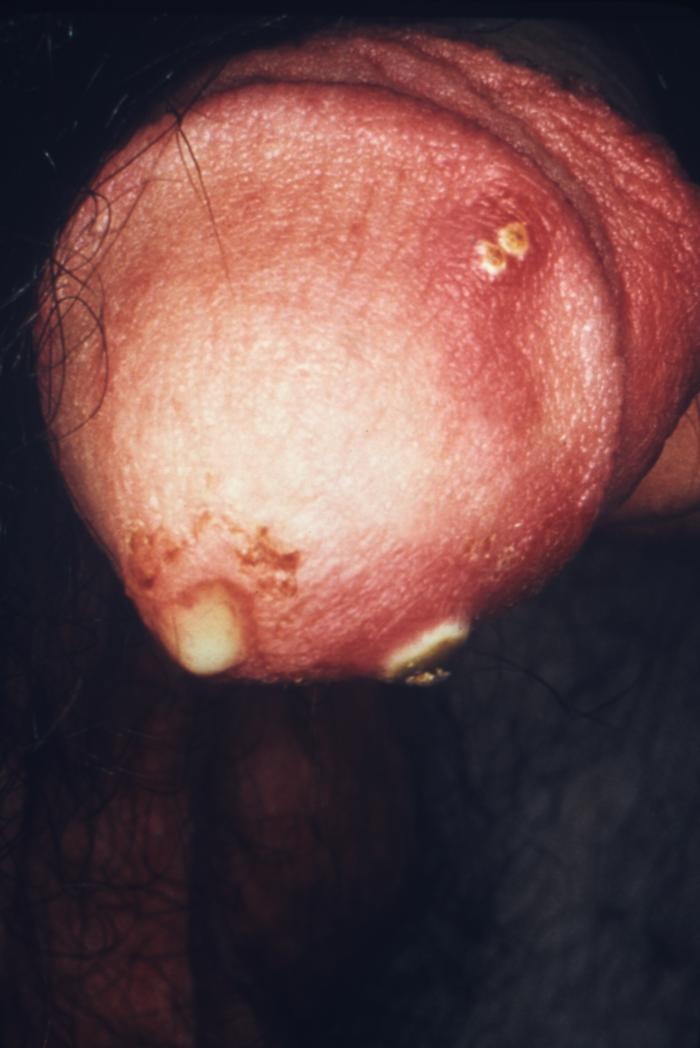
Imagen por Lecturio.

Resistencia antimicrobiana

  • La resistencia a la penicilina y a la tetraciclina se produce por la adquisición del factor R (plásmido) que codifica:
    • B-lactamasa (penicilinasa) → altera la estructura interna de la penicilina.
    • Proteína TetM → impide que la tetraciclina se una a su sitio objetivo de la subunidad ribosomal 30S.
  • La resistencia a las quinolonas se produce por alteraciones en EN Erythema nodosum is an immune-mediated panniculitis (inflammation of the subcutaneous fat) caused by a type IV (delayed-type) hypersensitivity reaction. It commonly manifests in young women as tender, erythematous nodules on the shins. Erythema Nodosum la ADN girasa y la topoisomerasa IV.
  • La resistencia a los LOS Neisseria macrólidos (por ejemplo, la azitromicina) puede deberse a cualquiera de los LOS Neisseria 2 factores:
    • Alteraciones en EN Erythema nodosum is an immune-mediated panniculitis (inflammation of the subcutaneous fat) caused by a type IV (delayed-type) hypersensitivity reaction. It commonly manifests in young women as tender, erythematous nodules on the shins. Erythema Nodosum el lugar de unión ribosomal
    • Subexpresión y sobreexpresión de los LOS Neisseria sistemas de influjo y eflujo
  • Cefalosporinas de tercera generación (por ejemplo, ceftriaxona):
    • Sigue siendo muy eficaz como dosis única, pero se han aislado cepas resistentes en EN Erythema nodosum is an immune-mediated panniculitis (inflammation of the subcutaneous fat) caused by a type IV (delayed-type) hypersensitivity reaction. It commonly manifests in young women as tender, erythematous nodules on the shins. Erythema Nodosum Japón y en EN Erythema nodosum is an immune-mediated panniculitis (inflammation of the subcutaneous fat) caused by a type IV (delayed-type) hypersensitivity reaction. It commonly manifests in young women as tender, erythematous nodules on the shins. Erythema Nodosum Europa.
    • Las cepas resistentes pueden tener mutaciones en EN Erythema nodosum is an immune-mediated panniculitis (inflammation of the subcutaneous fat) caused by a type IV (delayed-type) hypersensitivity reaction. It commonly manifests in young women as tender, erythematous nodules on the shins. Erythema Nodosum:
      • El genPenA → codifica una proteína de unión a la penicilina.
      • Gen regulador de la resistencia múltiple transferible (mtrR) → ↑ eflujo de fármacos
      • GenPenB → ↓ afluencia de fármacos a través de proteínas porinas

Presentación Clínica

Infección urogenital en EN Erythema nodosum is an immune-mediated panniculitis (inflammation of the subcutaneous fat) caused by a type IV (delayed-type) hypersensitivity reaction. It commonly manifests in young women as tender, erythematous nodules on the shins. Erythema Nodosum los LOS Neisseria hombres

  • Periodo de incubación: 2–7 días
  • La mayoría serán sintomáticos.
  • Uretritis aguda (presentación más común):
    • Secreción uretral:
      • Mucopurulento
      • Copioso
    • Disuria
    • Linfadenopatía regional
  • Complicaciones:
    • Epididimitis:
    • Prostatitis Prostatitis Prostatitis is inflammation or an irritative condition of the prostate that presents as different syndromes: acute bacterial, chronic bacterial, chronic prostatitis/chronic pelvic pain, and asymptomatic. Bacterial prostatitis is easier to identify clinically and the management (antibiotics) is better established. Prostatitis:
      • Agrandamiento de la próstata
      • Dolor Dolor Inflammation y sensibilidad a la palpación
    • Balanitis Balanitis Inflammation of the head of the penis, glans penis. Penile Anomalies and Conditions (inflamación del glande del pene):
    • Absceso periuretral:
    • Inflamación o absceso de la glándula de Cowper (bulbouretral):
    • Vesiculitis seminal:
      • Disuria
      • Fiebre
      • Dolor Dolor Inflammation perineal
      • Eyaculación de material purulento
Uretritis por gonorrea

Secreción del pene purulenta por infección de gonorrea urogenital

Imagen: “4065” de CDC. Licencia: Public Domain
Infección urogenital en EN Erythema nodosum is an immune-mediated panniculitis (inflammation of the subcutaneous fat) caused by a type IV (delayed-type) hypersensitivity reaction. It commonly manifests in young women as tender, erythematous nodules on the shins. Erythema Nodosum la mujer

  • Periodo de incubación: < 10 días
  • Hasta el 70% de las mujeres son asintomáticas.
  • Cervicitis Cervicitis Inflammation of the uterine cervix. Gonorrhea:
    • Prurito vaginal
    • Flujo vaginal mucopurulento
    • Examen físico:
      • Puede ser normal
      • Secreción cervical mucopurulenta
      • Mucosa cervical friable
  • Uretritis:
    • Disuria
    • Urgencia y frecuencia urinaria
  • Complicaciones:
    • Infección de las glándulas de Bartolino o de Skene:
      • Glándulas inflamadas
      • El pus puede salir de los LOS Neisseria orificios.
    • Enfermedad inflamatoria pélvica (EIP):
      • Ocurre en EN Erythema nodosum is an immune-mediated panniculitis (inflammation of the subcutaneous fat) caused by a type IV (delayed-type) hypersensitivity reaction. It commonly manifests in young women as tender, erythematous nodules on the shins. Erythema Nodosum 10%–20% de las mujeres con gonorrea cervical.
      • Dolor Dolor Inflammation pélvico
      • Dolor Dolor Inflammation y sensibilidad en EN Erythema nodosum is an immune-mediated panniculitis (inflammation of the subcutaneous fat) caused by a type IV (delayed-type) hypersensitivity reaction. It commonly manifests in young women as tender, erythematous nodules on the shins. Erythema Nodosum la parte baja del abdomen
      • Sangrado vaginal anormal
      • Dispareunia
      • Fiebre
      • Sensibilidad al AL Amyloidosis movimiento cervical
      • Sensibilidad anexial
    • Perihepatitis (síndrome de Fitz-Hugh-Curtis):
      • Ocurre en EN Erythema nodosum is an immune-mediated panniculitis (inflammation of the subcutaneous fat) caused by a type IV (delayed-type) hypersensitivity reaction. It commonly manifests in young women as tender, erythematous nodules on the shins. Erythema Nodosum el 4% de las mujeres infectadas; se asocia a la EIP.
      • Inflamación de la cápsula hepática

Infecciones extragenitales

  • Gonorrea ocular (conjuntivitis):
    • Generalmente causada por autoinoculación desde un sitio primario de infección en EN Erythema nodosum is an immune-mediated panniculitis (inflammation of the subcutaneous fat) caused by a type IV (delayed-type) hypersensitivity reaction. It commonly manifests in young women as tender, erythematous nodules on the shins. Erythema Nodosum adultos
    • Las manifestaciones varían en EN Erythema nodosum is an immune-mediated panniculitis (inflammation of the subcutaneous fat) caused by a type IV (delayed-type) hypersensitivity reaction. It commonly manifests in young women as tender, erythematous nodules on the shins. Erythema Nodosum gravedad desde asintomáticas hasta posible pérdida de vision Vision Ophthalmic Exam.
    • Signos y síntomas:
      • Edema Edema Edema is a condition in which excess serous fluid accumulates in the body cavity or interstitial space of connective tissues. Edema is a symptom observed in several medical conditions. It can be categorized into 2 types, namely, peripheral (in the extremities) and internal (in an organ or body cavity). Edema del párpado
      • Conjuntiva hiperémica
      • Quemosis
      • Secreción purulenta
      • Fotofobia
      • Dolor Dolor Inflammation
    • Complicaciones graves:
      • Ulceración de la córnea
      • Perforación
      • Ceguera
  • Gonorrea faríngea (faringitis):
    • Debido a la exposición sexual orogenital
    • A menudo coexiste con la infección genital
    • Suele ser leve o asintomática.
    • Signos y síntomas:
    • La mayoría de los LOS Neisseria casos se resuelven espontáneamente.
  • Gonorrea anorrectal ( proctitis Proctitis Inflammation of the mucous membrane of the rectum, the distal end of the large intestine. Chronic Granulomatous Disease):
    • En EN Erythema nodosum is an immune-mediated panniculitis (inflammation of the subcutaneous fat) caused by a type IV (delayed-type) hypersensitivity reaction. It commonly manifests in young women as tender, erythematous nodules on the shins. Erythema Nodosum las mujeres:
      • La mayoría de las veces ocurre simultáneamente con la cervicitis Cervicitis Inflammation of the uterine cervix. Gonorrhea.
      • Generalmente asintomática
    • En EN Erythema nodosum is an immune-mediated panniculitis (inflammation of the subcutaneous fat) caused by a type IV (delayed-type) hypersensitivity reaction. It commonly manifests in young women as tender, erythematous nodules on the shins. Erythema Nodosum los LOS Neisseria hombres:
      • Se asocia más a menudo con los LOS Neisseria HSH.
      • Más probabilidades de presentar síntomas
    • Posibles síntomas:
      • Dolor Dolor Inflammation y llenura rectal
      • Prurito
      • Tenesmo
      • Secreción purulenta
      • Sangrado rectal
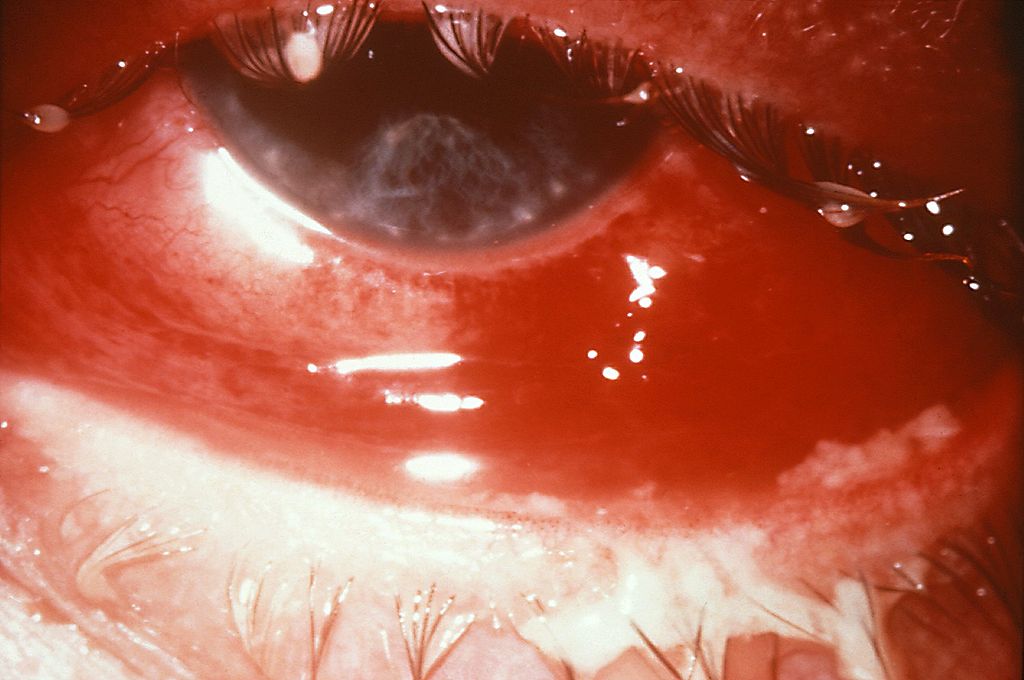
Infección ocular por gonorrea

Hiperemia, quemosis y secreción purulenta por conjuntivitis gonocócica:
El paciente desarrolló una ceguera parcial como resultado de la infección.
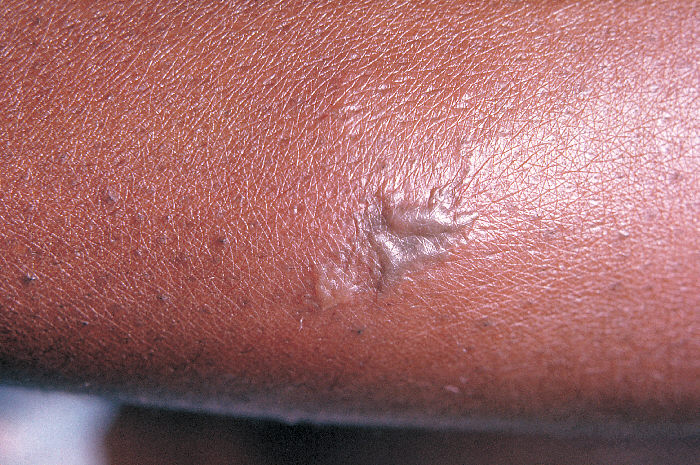
Imagen: “Eye infection due to gonorrhea” por CDC/Arthur E. Kaye. Licencia: Public Domain

Infección gonocócica diseminada

  • Bacteriemia:
    • Fiebre
    • Escalofríos
  • Artritis purulenta:
    • Inicio abrupto
    • Mono o oligoartritis
    • Dolor Dolor Inflammation e inflamación
    • Articulaciones distales (por ejemplo, rodillas, muñecas, tobillos)
  • Síndrome de artritis-dermatitis:
    • Se produce 2–3 semanas después de la infección genitourinaria.
    • Poliartralgia:
      • Articulaciones pequeñas o grandes
      • Asimétrico
      • Migratorio
    • Tenosinovitis: A menudo afecta a las articulaciones distales (por ejemplo, dedos de las manos, dedos de los LOS Neisseria pies, muñecas, tobillos).
  • Manifestaciones raras:
    • Endocarditis Endocarditis Endocarditis is an inflammatory disease involving the inner lining (endometrium) of the heart, most commonly affecting the cardiac valves. Both infectious and noninfectious etiologies lead to vegetations on the valve leaflets. Patients may present with nonspecific symptoms such as fever and fatigue. Endocarditis (común antes de que antibióticos estuvieran disponibles)
    • Miopericarditis
    • Meningitis Meningitis Meningitis is inflammation of the meninges, the protective membranes of the brain, and spinal cord. The causes of meningitis are varied, with the most common being bacterial or viral infection. The classic presentation of meningitis is a triad of fever, altered mental status, and nuchal rigidity. Meningitis
    • Osteomielitis
Lesión gonocócica en la piel

Primer plano de una lesión gonocócica en la piel del brazo de un paciente:
una pústula gris asociada a una infección gonocócica diseminada

Imagen: “2038” por CDC/Emory University, Dr. Thomas F. Sellers. Licencia: Public Domain

Presentación clínica en EN Erythema nodosum is an immune-mediated panniculitis (inflammation of the subcutaneous fat) caused by a type IV (delayed-type) hypersensitivity reaction. It commonly manifests in young women as tender, erythematous nodules on the shins. Erythema Nodosum niños

Infecciones en EN Erythema nodosum is an immune-mediated panniculitis (inflammation of the subcutaneous fat) caused by a type IV (delayed-type) hypersensitivity reaction. It commonly manifests in young women as tender, erythematous nodules on the shins. Erythema Nodosum los LOS Neisseria recién nacidos:

  • Causada por la exposición a secreciones cervicales infectadas en EN Erythema nodosum is an immune-mediated panniculitis (inflammation of the subcutaneous fat) caused by a type IV (delayed-type) hypersensitivity reaction. It commonly manifests in young women as tender, erythematous nodules on the shins. Erythema Nodosum el parto
  • Oftalmia neonatal:
    • Conjuntivitis purulenta
    • Ulceraciones corneales
    • Panoftalmitis
    • Ceguera
  • Otros focos de infección en EN Erythema nodosum is an immune-mediated panniculitis (inflammation of the subcutaneous fat) caused by a type IV (delayed-type) hypersensitivity reaction. It commonly manifests in young women as tender, erythematous nodules on the shins. Erythema Nodosum las mucosas (generalmente asintomáticos):
    • Vaginitis
    • Infección anorrectal
    • Infección faríngea
  • Infección gonocócica diseminada:
    • Fiebre
    • Letargo
    • Mala alimentación
    • Vómitos
    • Artritis (rechazo a mover el miembro afectado)
    • Abscesos del cuero cabelludo
Oftalmia neonatal gonocócica

Un recién nacido que presenta una oftalmia neonatal gonocócica, causada por una infección gonocócica de transmisión materna.

Imagen: “Gonococcal ophthalmia neonatorum” por CDC/J. Pledger. Licencia: Dominio Público

Después del periodo neonatal:

  • Sospecha de abuso sexual si se diagnostica gonorrea (o cualquier otra ITS).
  • La vulvovaginitis Vulvovaginitis The term vulvovaginitis is used to describe an acute inflammation of the vulva and vagina. Vulvovaginitis can be caused by several infectious and non-infectious etiologies, and results from disruption of the normal vaginal environment. Common signs and symptoms include pain, pruritus, erythema, edema, vaginal discharge and dyspareunia. Vulvovaginitis es la manifestación más común.
  • Las infecciones anorrectales y faríngeas también son frecuentes, pero suelen ser asintomáticas.

Diagnóstico

Laboratorios

  • Prueba de amplificación de ácidos nucleicos:
    • La prueba de elección
    • > 95% de sensibilidad y especificidad
    • Amplifica secuencias de ADN o ARN de N. gonorrhoeae N. gonorrhoeae A species of gram-negative, aerobic bacteria primarily found in purulent venereal discharges. It is the causative agent of gonorrhea. Neisseria
    • Especímenes:
      • Hisopo endocervical o vaginal (solo mujeres)
      • Hisopo uretral (solo para hombres)
      • Hisopo de orofaringe
      • Hisopo rectal
      • Las muestras de primera orina también pueden analizarse para detectar la presencia de Chlamydia trachomatis Chlamydia trachomatis Type species of Chlamydia causing a variety of ocular and urogenital diseases. Chlamydia (C. trachomatis).
    • No proporciona información sobre la susceptibilidad a los LOS Neisseria antibióticos.
  • Tinción de Gram:
    • La sensibilidad varía según los LOS Neisseria sitios:
      • > 90% en EN Erythema nodosum is an immune-mediated panniculitis (inflammation of the subcutaneous fat) caused by a type IV (delayed-type) hypersensitivity reaction. It commonly manifests in young women as tender, erythematous nodules on the shins. Erythema Nodosum exudados uretrales de hombres
      • 50% para exudados endocervicales
      • < 10% para el líquido articular
      • La tinción de Gram no es útil para las muestras de orofaringe o de recto, ya que la Neisseria Neisseria Neisseria is a genus of bacteria commonly present on mucosal surfaces. Several species exist, but only 2 are pathogenic to humans: N. gonorrhoeae and N. meningitidis. Neisseria species are non-motile, gram-negative diplococci most commonly isolated on modified Thayer-Martin (MTM) agar. Neisseria no patógena suele colonizar estos lugares.
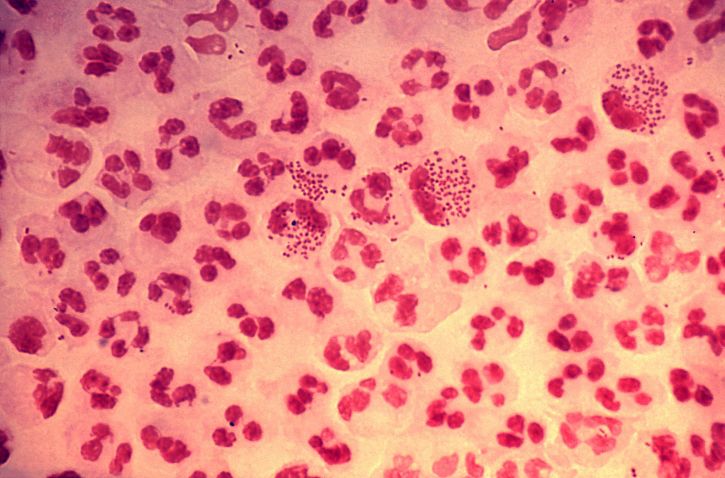
    • Hallazgos: diplococos intracelulares gram-negativos
  • Cultivos:
    • Proporciona datos de susceptibilidad a los LOS Neisseria antibióticos
    • Útil si se sospecha que el tratamiento ha HA Hemolytic anemia (HA) is the term given to a large group of anemias that are caused by the premature destruction/hemolysis of circulating red blood cells (RBCs). Hemolysis can occur within (intravascular hemolysis) or outside the blood vessels (extravascular hemolysis). Hemolytic Anemia fracasado
    • Sensibilidad:
      • 72%-95% en EN Erythema nodosum is an immune-mediated panniculitis (inflammation of the subcutaneous fat) caused by a type IV (delayed-type) hypersensitivity reaction. It commonly manifests in young women as tender, erythematous nodules on the shins. Erythema Nodosum pacientes sintomáticos
      • 50%–85% en EN Erythema nodosum is an immune-mediated panniculitis (inflammation of the subcutaneous fat) caused by a type IV (delayed-type) hypersensitivity reaction. It commonly manifests in young women as tender, erythematous nodules on the shins. Erythema Nodosum pacientes asintomáticos
  • Los LOS Neisseria pacientes también deben ser evaluados para otras ITS:
    • C. trachomatis
    • Sífilis
    • VIH
    • VHS
    • Hepatitis B Hepatitis B Hepatitis B virus (HBV) is a partially double-stranded DNA virus, which belongs to the Orthohepadnavirus genus and the Hepadnaviridae family. Most individuals with acute HBV infection are asymptomatic or have mild, self-limiting symptoms. Chronic infection can be asymptomatic or create hepatic inflammation, leading to liver cirrhosis and hepatocellular carcinoma (HCC). Hepatitis B Virus y C

Evaluación de la infección gonocócica diseminada

Además de las evaluaciones de laboratorio mencionadas anteriormente, en EN Erythema nodosum is an immune-mediated panniculitis (inflammation of the subcutaneous fat) caused by a type IV (delayed-type) hypersensitivity reaction. It commonly manifests in young women as tender, erythematous nodules on the shins. Erythema Nodosum los LOS Neisseria pacientes en EN Erythema nodosum is an immune-mediated panniculitis (inflammation of the subcutaneous fat) caused by a type IV (delayed-type) hypersensitivity reaction. It commonly manifests in young women as tender, erythematous nodules on the shins. Erythema Nodosum los LOS Neisseria que se sospecha una infección gonocócica diseminada se pueden realizar las siguientes pruebas:

  • Hemocultivos:
    • Un cultivo positivo es un diagnóstico.
    • Resultado positivo más común en EN Erythema nodosum is an immune-mediated panniculitis (inflammation of the subcutaneous fat) caused by a type IV (delayed-type) hypersensitivity reaction. It commonly manifests in young women as tender, erythematous nodules on the shins. Erythema Nodosum el síndrome artritis-dermatitis que en EN Erythema nodosum is an immune-mediated panniculitis (inflammation of the subcutaneous fat) caused by a type IV (delayed-type) hypersensitivity reaction. It commonly manifests in young women as tender, erythematous nodules on the shins. Erythema Nodosum la artritis purulenta
  • Líquido sinovial:
    • Los LOS Neisseria glóbulos blancos suelen ser > 50 000 células/μL.
    • ↓ Glucosa
    • Cultivos:
      • Positivo solo en EN Erythema nodosum is an immune-mediated panniculitis (inflammation of the subcutaneous fat) caused by a type IV (delayed-type) hypersensitivity reaction. It commonly manifests in young women as tender, erythematous nodules on the shins. Erythema Nodosum el 50% de los LOS Neisseria casos
      • Menos probabilidades de ser positivo en EN Erythema nodosum is an immune-mediated panniculitis (inflammation of the subcutaneous fat) caused by a type IV (delayed-type) hypersensitivity reaction. It commonly manifests in young women as tender, erythematous nodules on the shins. Erythema Nodosum el síndrome de artritis-dermatitis
    • Se puede utilizar la prueba de amplificación del ácidos nucleóticos y es más sensible.

Tratamiento

Gestión de la infección gonocócica sin complicaciones

Tratamiento con antibióticos:

  • Dosis única IM de ceftriaxona
  • El tratamiento dual con ceftriaxona y azitromicina no es recomendado debido al AL Amyloidosis aumento de la resistencia.
  • Se debe añadir doxiciclina si no se ha HA Hemolytic anemia (HA) is the term given to a large group of anemias that are caused by the premature destruction/hemolysis of circulating red blood cells (RBCs). Hemolysis can occur within (intravascular hemolysis) or outside the blood vessels (extravascular hemolysis). Hemolytic Anemia excluido la coinfección o por C. trachomatis.

Medidas adicionales:

  • Infecciones faríngeas:
    • Más difíciles de curar
    • Volver a hacer la prueba para confirmar que el tratamiento ha HA Hemolytic anemia (HA) is the term given to a large group of anemias that are caused by the premature destruction/hemolysis of circulating red blood cells (RBCs). Hemolysis can occur within (intravascular hemolysis) or outside the blood vessels (extravascular hemolysis). Hemolytic Anemia sido eficaz
  • Gonorrea ocular:
    • Evaluación oftalmológica
    • Fluoroquinolonas tópicas
    • Irrigación salina
  • Epididimitis y proctitis Proctitis Inflammation of the mucous membrane of the rectum, the distal end of the large intestine. Chronic Granulomatous Disease: La ceftriaxona va VA Ventilation: Mechanics of Breathing seguida de un curso de doxiciclina.

Tratamiento de la infección gonocócica diseminada

  • Ceftriaxona IV
  • Realizar drenajes articulares en EN Erythema nodosum is an immune-mediated panniculitis (inflammation of the subcutaneous fat) caused by a type IV (delayed-type) hypersensitivity reaction. It commonly manifests in young women as tender, erythematous nodules on the shins. Erythema Nodosum pacientes con artritis séptica

Tratamientos para las parejas sexuales

  • Todas las personas que hayan tenido contacto sexual en EN Erythema nodosum is an immune-mediated panniculitis (inflammation of the subcutaneous fat) caused by a type IV (delayed-type) hypersensitivity reaction. It commonly manifests in young women as tender, erythematous nodules on the shins. Erythema Nodosum los LOS Neisseria últimos 60 días con el paciente deben ser notificadas para su evaluación y tratamiento.
  • Terapia de pareja acelerada (EPT, por sus siglas en EN Erythema nodosum is an immune-mediated panniculitis (inflammation of the subcutaneous fat) caused by a type IV (delayed-type) hypersensitivity reaction. It commonly manifests in young women as tender, erythematous nodules on the shins. Erythema Nodosum inglés):
    • Se proporciona una prescripción de cefixima para las parejas sexuales sin una evaluación formal.
    • Limitada a contactos heterosexuales
    • Depende de la normativa de cada país y de cada estado
    • No se recomienda para los LOS Neisseria HSH debido al AL Amyloidosis alto riesgo de:
      • Infecciones coexistentes (especialmente VIH)
      • Fracaso del tratamiento (especialmente para la infección faríngea)

Prevención y reducción de riesgos

  • Los LOS Neisseria preservativos de látex son una de las medidas preventivas más eficaces.
  • Pruebas de ITS cada año si:
    • Múltiples parejas sexuales
    • Antecedentes de ITS
  • Educar sobre la transmisión de la gonorrea a otras superficies mucosas

Complicaciones

  • Infertilidad
  • Dolor Dolor Inflammation pélvico crónico
  • Pérdida fetal
  • Embarazo ectópico
  • Estrechez uretral
  • Mayor riesgo de transmisión de VIH

Diagnóstico Diferencial

  • Enfermedad inflamatoria pélvica no gonocócica: Una infección ascendente mono o polimicrobiana causada por C. trachomatis (la más común), Mycoplasma Mycoplasma Mycoplasma is a species of pleomorphic bacteria that lack a cell wall, which makes them difficult to target with conventional antibiotics and causes them to not gram stain well. Mycoplasma bacteria commonly target the respiratory and urogenital epithelium. Mycoplasma pneumoniae (M. pneumoniae), the causative agent of atypical or “walking” pneumonia. Mycoplasma genitalium (M. genitalium), organismos anaeróbicos, bacilos entéricos gram-negativos, estreptococos, micoplasmas genitales y Gardnerella vaginalis Gardnerella vaginalis Polymicrobial, nonspecific vaginitis associated with positive cultures of gardnerella vaginalis and other anaerobic organisms and a decrease in lactobacilli. It remains unclear whether the initial pathogenic event is caused by the growth of anaerobes or a primary decrease in lactobacilli. Vulvovaginitis. Las pacientes pueden presentar flujo cervical, sangrado vaginal, dolor Dolor Inflammation abdominal bajo y fiebre. Las pruebas de amplificación de ácidos nucleicos y los LOS Neisseria cultivos del endocérvix ayudan al AL Amyloidosis diagnóstico, pero el tratamiento suele ser con antibióticos empíricos.
  • Cervicitis Cervicitis Inflammation of the uterine cervix. Gonorrhea no goncocócica: Otras causas de infecciosas agudas son Trichomonas Trichomonas A genus of parasitic flagellate eukaryotes distinguished by the presence of four anterior flagella, an undulating membrane, and a trailing flagellum. Nitroimidazoles vaginalis (T. vaginalis), C. trachomatis o M. genitalium. La cervicitis Cervicitis Inflammation of the uterine cervix. Gonorrhea crónica suele tener una causa no infecciosa, casi siempre una irritación mecánica o química (por ejemplo, tampón, diafragma o látex). Las pacientes pueden presentar flujo vaginal, sangrado y un cuello uterino eritematoso y friable. La etiología puede diagnosticarse mediante pruebas de amplificación de ácidos nucleicos: Las tinciones de Gram y los LOS Neisseria cultivos no son tan sensibles. El tratamiento implica la administración de antibióticos para el organismo causante.
  • Uretritis no gonocócica en EN Erythema nodosum is an immune-mediated panniculitis (inflammation of the subcutaneous fat) caused by a type IV (delayed-type) hypersensitivity reaction. It commonly manifests in young women as tender, erythematous nodules on the shins. Erythema Nodosum el hombre: La uretritis gonocócica (UG) suele ser más grave que la uretritis no gonocócica, incluidas las causadas por C. trachomatis y M. genitalium. Sin embargo, la mayoría de los LOS Neisseria casos de uretritis en EN Erythema nodosum is an immune-mediated panniculitis (inflammation of the subcutaneous fat) caused by a type IV (delayed-type) hypersensitivity reaction. It commonly manifests in young women as tender, erythematous nodules on the shins. Erythema Nodosum Estados Unidos no son causados ni por la gonorrea ni por la clamidia. El diagnóstico de la GU se realiza mediante la tinción de Gram y pruebas de amplificación de ácidos nucleicos. Otros posibles patógenos, que pueden diferenciarse mediante pruebas de laboratorio específicas, son Neisseria meningitidis Neisseria meningitidis A species of gram-negative, aerobic bacteria. It is a commensal and pathogen only of humans, and can be carried asymptomatically in the nasopharynx. When found in cerebrospinal fluid it is the causative agent of cerebrospinal meningitis. It is also found in venereal discharges and blood. There are at least 13 serogroups based on antigenic differences in the capsular polysaccharides; the ones causing most meningitis infections being a, b, c, y, and w-135. Each serogroup can be further classified by serotype, serosubtype, and immunotype. Neisseria, T. vaginalis, VHS y sífilis.
  • Epididimitis: La epididimitis aguda suele ser infecciosa. Los LOS Neisseria organismos más comunes responsables de la epididimitis aguda en EN Erythema nodosum is an immune-mediated panniculitis (inflammation of the subcutaneous fat) caused by a type IV (delayed-type) hypersensitivity reaction. It commonly manifests in young women as tender, erythematous nodules on the shins. Erythema Nodosum hombres < 35 años de edad son N. gonorrhoeae N. gonorrhoeae A species of gram-negative, aerobic bacteria primarily found in purulent venereal discharges. It is the causative agent of gonorrhea. Neisseria y C. trachomatis. Las especies coliformes (por ejemplo, Escherichia coli Escherichia coli The gram-negative bacterium Escherichia coli is a key component of the human gut microbiota. Most strains of E. coli are avirulent, but occasionally they escape the GI tract, infecting the urinary tract and other sites. Less common strains of E. coli are able to cause disease within the GI tract, most commonly presenting as abdominal pain and diarrhea. Escherichia coli) y Pseudomonas Pseudomonas Pseudomonas is a non-lactose-fermenting, gram-negative bacillus that produces pyocyanin, which gives it a characteristic blue-green color. Pseudomonas is found ubiquitously in the environment, as well as in moist reservoirs, such as hospital sinks and respiratory equipment. Pseudomonas son más frecuentes en EN Erythema nodosum is an immune-mediated panniculitis (inflammation of the subcutaneous fat) caused by a type IV (delayed-type) hypersensitivity reaction. It commonly manifests in young women as tender, erythematous nodules on the shins. Erythema Nodosum los LOS Neisseria hombres mayores. Las causas virales y micóticas de la epididimitis son raras. Para el diagnóstico deben realizarse pruebas de amplificación de ácidos nucleicos y cultivos. El tratamiento depende de la etiología, pero puede incluir antibióticos, elevación del escroto, compresas de hielo y analgésicos.
  • Infección del tracto urinario: Una infección (generalmente debida a bacterias) del sistema urinario. Los LOS Neisseria pacientes pueden desarrollar frecuencia urinaria, urgencia y/o dolor Dolor Inflammation suprapúbico. Las infecciones urinarias no suelen presentar flujo vaginal, pero pueden presentar fiebre y dolor Dolor Inflammation en EN Erythema nodosum is an immune-mediated panniculitis (inflammation of the subcutaneous fat) caused by a type IV (delayed-type) hypersensitivity reaction. It commonly manifests in young women as tender, erythematous nodules on the shins. Erythema Nodosum el costado si los LOS Neisseria riñones están afectados. Las pruebas de amplificación de ácidos nucleicos, el exámen microscópico y los LOS Neisseria cultivos de muestras de orina ayudan a diagnosticar la enfermedad. El tratamiento incluye la cobertura antibiótica adecuada para el organismo responsable.
  • Conjuntivitis: La conjuntivitis aguda suele tener una etiología viral, pero las causas bacterianas incluyen Staphylococcus aureus Staphylococcus aureus Potentially pathogenic bacteria found in nasal membranes, skin, hair follicles, and perineum of warm-blooded animals. They may cause a wide range of infections and intoxications. Brain Abscess, Streptococcus Streptococcus Streptococcus is one of the two medically important genera of gram-positive cocci, the other being Staphylococcus. Streptococci are identified as different species on blood agar on the basis of their hemolytic pattern and sensitivity to optochin and bacitracin. There are many pathogenic species of streptococci, including S. pyogenes, S. agalactiae, S. pneumoniae, and the viridans streptococci. Streptococcus pneumoniae, Haemophilus Haemophilus Haemophilus is a genus of Gram-negative coccobacilli, all of whose strains require at least 1 of 2 factors for growth (factor V [NAD] and factor X [heme]); therefore, it is most often isolated on chocolate agar, which can supply both factors. The pathogenic species are H. influenzae and H. ducreyi. Haemophilus y C. trachomatis. Los LOS Neisseria pacientes pueden experimentar irritación, hiperemia y secreción ocular. El diagnóstico de la conjuntivitis es clínico. El tratamiento suele ser empírico con antibióticos tópicos y/o sistémicos.

Referencias

  1. Riedel, S., Hobden, J.A. (2019). In Riedel, S, Morse, S.A., Mietzner, T., Miller, S. (Eds.), Jawetz, Melnick, & Adelberg’s Medical Microbiology (28th ed, pp. 295-301).
  2. Ram, S., Rice, P.A. (2018). In Jameson, J.L., et al. (Ed.), Harrison’s Principles of Internal Medicine (20th ed. Vol 1, pp. 1122-1129). 
  3. Morris, S.R. (2023). Gonorrhea. MSD Manual Professional Edition. Retrieved July 21, 2025, from https://www.msdmanuals.com/professional/infectious-diseases/sexually-transmitted-diseases-stds/gonorrhea
  4. Cyr, S. S. (2020). Update to CDC’s treatment guidelines for gonococcal infection, 2020. MMWR. Morbidity and Mortality Weekly Report, 69. Retrieved July 21, 2025, from https://doi.org/10.15585/mmwr.mm6950a6
  5. Lovett, A., & Duncan, J. A. (2019). Human immune responses and the natural history of Neisseria gonorrhoeae infection. Frontiers in Immunology, 9. https://doi.org/10.3389/fimmu.2018.03187
  6. Lockwood, C.J., Magriples U. (2025). Prenatal care: Initial assessment. UpToDate. Retrieved July 21, 2025, from https://www.uptodate.com/contents/prenatal-care-initial-assessment
  7. Price, G.A., and Bash, M.C. (2024). Epidemiology and pathogenesis of Neisseria gonorrhoeae infection. In Bloom, A. (Ed.), UpToDate. Retrieved July 21, 2025, from https://www.uptodate.com/contents/epidemiology-and-pathogenesis-of-neisseria-gonorrhoeae-infection
  8. Ghanem, K.G. (2024). Clinical manifestations and diagnosis of Neisseria gonorrhoeae infection in adults and adolescents. In Bloom, A. (Ed.), UpToDate. Retrieved July 21, 2025, from https://www.uptodate.com/contents/clinical-manifestations-and-diagnosis-of-neisseria-gonorrhoeae-infection-in-adults-and-adolescents
  9. Klausner, J.D. (2024). Disseminated gonococcal infection. In Bloom, A. (Ed.), UpToDate. Retrieved July 21, 2025, from https://www.uptodate.com/contents/disseminated-gonococcal-infection
  10. Seña, A. C., & Cohen, M. S. (2025). Treatment of uncomplicated gonorrhea (Neisseria gonorrhoeae infection) in adults and adolescents. UpToDate. Retrieved July 21, 2025, from https://www.uptodate.com/contents/treatment-of-uncomplicated-gonorrhea-neisseria-gonorrhoeae-infection-in-adults-and-adolescents
  11. Wong, B. (2025). Gonorrhea. In Chadrasekar, P.H. (Ed.), Medscape. Retrieved July 21, 2025, from https://emedicine.medscape.com/article/218059-overview
  12. Devitt, M. (2023). CDC report shows STI cases nearing pre-pandemic levels. American Academy of Family Physicians. https://www.aafp.org/news/health-of-the-public/cdc-sti-report.html

¡Crea tu cuenta gratis o inicia una sesión para seguir leyendo!

Regístrate ahora y obtén acceso gratuito a Lecturio con páginas de concepto, videos médicos y cuestionarios para tu educación médica.

User Reviews

Que tengas una sesión de estudio alegre y navideña 🎁 Ahorra 50% en todos los planes >>

Details