



A infeção do local cirúrgico é um tipo de infeção cirúrgica, que ocorre na incisão cirúrgica, ou junto da mesma, dentro de 30 dias após o procedimento, ou dentro de 90 dias, no caso de implante de material prostético. As infeções do local cirúrgico são classificadas, de acordo com a profundidade de envolvimento, em superficiais, profundas ou de órgãos/espaços. O diagnóstico depende de achados clínicos e pode exigir exames imagiológicos. O tratamento envolve antibioterapia, bem como drenagem/desbridamento cirúrgico, conforme necessário.
Last updated: Dec 15, 2025
A infeção do local cirúrgico é uma infeção que ocorre na incisão cirúrgica, podendo atingir estruturas profundas, ou junto da mesma, dentro de 30 dias após o procedimento, ou dentro de 90 dias no caso de implante de material prostético.
As feridas cirúrgicas são classificadas de limpas a sujas, com base no risco crescente de infeção.
| Classe | Descrição |
|---|---|
| Limpa |
|
| Limpa-contaminada |
|
| Contaminada |
|
| Contaminada |
|
A contaminação das feridas cirúrgicas ocorre, até certo ponto, em todos os procedimentos cirúrgicos. No entanto, na maioria dos casos, os agentes de infeção não superam os mecanismos de defesa do hospedeiro. Para que a infeção do local cirúrgico ocorra, a colonização bacteriana tem de desencadear uma resposta imunológica.
Fatores do procedimento:
Fatores do paciente:
Quando os fatores de virulência de um microorganismo são suficientes para superar as respostas imunológicas inatas e adaptativas, ocorre uma infeção clinicamente importante da seguinte forma:

Locais de colonização bacteriana e colonizadores comuns
Imagem por Lecturio. Licença: CC BY-NC-SA 4.0
Fatores necessários para o desenvolvimento de uma infeção
Imagem por Lecturio. Licença: CC BY-NC-SA 4.0
Infeção superficial da ferida cirúrgica:
Abertura e deiscência dos bordos da ferida
Exemplos dos diferentes tipos de infeções do local cirúrgico:
A: Infeção do local cirúrgico incisional superficial
B: Infeção do local cirúrgico incisional profunda
C: Infeção do local cirúrgico de órgão/espaço
Inflamação sistémica:
Inflamação local:
Choque séptico:
O diagnóstico da infeção do local cirúrgico baseia-se principalmente nos achados clínicos. Os exames imagiológicos e as análises laboratoriais são úteis na identificação de infeções de tecidos profundos e de órgãos/espaços.
Achados clínicos (locais):
Sinais de sépsis (sistémicos):
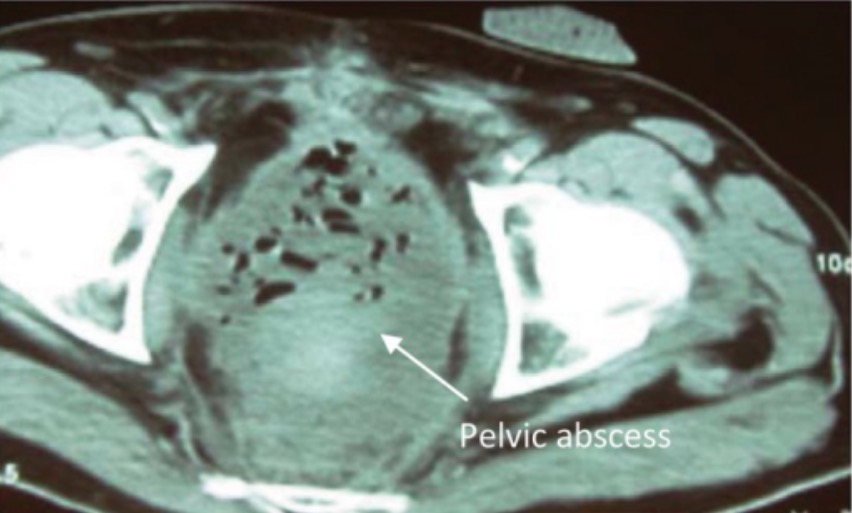
Abcesso pélvico pós-cirúrgico
Imagem: “Axial computed tomography of the pelvis showing pelvic abscess” by Plastic and Reconstructive Surgery Department, Cork University Hospital, Wilton, Cork, Ireland. Licença: CC BY 3.0O tratamento das infeções do local cirúrgico pode incluir antibioterapia, drenagem de abcesso (aberta ou percutânea) e remoção de material prostético infetado.
| Microorganismo | 1ª escolha | Alternativa |
|---|---|---|
| Staphylococcus aureus Staphylococcus aureus Potentially pathogenic bacteria found in nasal membranes, skin, hair follicles, and perineum of warm-blooded animals. They may cause a wide range of infections and intoxications. Brain Abscess sensível à meticilina | Cefazolina | Claritromicina |
| Staphylococcus aureus Staphylococcus aureus Potentially pathogenic bacteria found in nasal membranes, skin, hair follicles, and perineum of warm-blooded animals. They may cause a wide range of infections and intoxications. Brain Abscess resistente à meticilina | Vancomicina | Linezolida ou daptomicina |
| Staphylococci coagulase-negativos | Vancomicina | Linezolida ou daptomicina |
| Streptococcus Streptococcus Streptococcus is one of the two medically important genera of gram-positive cocci, the other being Staphylococcus. Streptococci are identified as different species on blood agar on the basis of their hemolytic pattern and sensitivity to optochin and bacitracin. There are many pathogenic species of streptococci, including S. pyogenes, S. agalactiae, S. pneumoniae, and the viridans streptococci. Streptococcus pneumoniae | Benzilpenicilina | Claritromicina |
| Streptococcus Streptococcus Streptococcus is one of the two medically important genera of gram-positive cocci, the other being Staphylococcus. Streptococci are identified as different species on blood agar on the basis of their hemolytic pattern and sensitivity to optochin and bacitracin. There are many pathogenic species of streptococci, including S. pyogenes, S. agalactiae, S. pneumoniae, and the viridans streptococci. Streptococcus pyogenes ( Streptococcus Streptococcus Streptococcus is one of the two medically important genera of gram-positive cocci, the other being Staphylococcus. Streptococci are identified as different species on blood agar on the basis of their hemolytic pattern and sensitivity to optochin and bacitracin. There are many pathogenic species of streptococci, including S. pyogenes, S. agalactiae, S. pneumoniae, and the viridans streptococci. Streptococcus β-hemolítico do grupo A) | Benzilpenicilina, clindamicina | Claritromicina |
| Enterococci | Amoxicilina | Vancomicina |
| Bacteroides Bacteroides Bacteroides is a genus of opportunistic, anaerobic, gram-negative bacilli. Bacteroides fragilis is the most common species involved in human disease and is part of the normal flora of the large intestine. Bacteroides spp. | Metronidazol | Amoxicilina-ácido clavulânico |
| Escherichia coli Escherichia coli The gram-negative bacterium Escherichia coli is a key component of the human gut microbiota. Most strains of E. coli are avirulent, but occasionally they escape the GI tract, infecting the urinary tract and other sites. Less common strains of E. coli are able to cause disease within the GI tract, most commonly presenting as abdominal pain and diarrhea. Escherichia coli | Piperacilina-tazobactam | Meropenem Meropenem A thienamycin derivative antibacterial agent that is more stable to renal dehydropeptidase I than imipenem, but does not need to be given with an enzyme inhibitor such as cilastatin. It is used in the treatment of bacterial infections, including infections in immunocompromised patients. Carbapenems and Aztreonam |
| Haemophilus influenzae Haemophilus Influenzae A species of Haemophilus found on the mucous membranes of humans and a variety of animals. The species is further divided into biotypes I through viii. Haemophilus | Amoxicilina | Amoxicilina-ácido clavulânico |
| Klebsiella Klebsiella Klebsiella are encapsulated gram-negative, lactose-fermenting bacilli. They form pink colonies on MacConkey agar due to lactose fermentation. The main virulence factor is a polysaccharide capsule. Klebsiella pneumoniae is the most important pathogenic species. Klebsiella spp. | Amoxicilina-ácido clavulânico | Meropenem Meropenem A thienamycin derivative antibacterial agent that is more stable to renal dehydropeptidase I than imipenem, but does not need to be given with an enzyme inhibitor such as cilastatin. It is used in the treatment of bacterial infections, including infections in immunocompromised patients. Carbapenems and Aztreonam |
| Proteus Proteus Proteus spp. are gram-negative, facultatively anaerobic bacilli. Different types of infection result from Proteus, but the urinary tract is the most common site. The majority of cases are caused by Proteus mirabilis (P. mirabilis). The bacteria are part of the normal intestinal flora and are also found in the environment. Proteus spp. | Amoxicilina-ácido clavulânico | Meropenem Meropenem A thienamycin derivative antibacterial agent that is more stable to renal dehydropeptidase I than imipenem, but does not need to be given with an enzyme inhibitor such as cilastatin. It is used in the treatment of bacterial infections, including infections in immunocompromised patients. Carbapenems and Aztreonam |
| Pseudomonas aeruginosa Pseudomonas aeruginosa A species of gram-negative, aerobic, rod-shaped bacteria commonly isolated from clinical specimens (wound, burn, and urinary tract infections). It is also found widely distributed in soil and water. P. Aeruginosa is a major agent of nosocomial infection. Pseudomonas | Piperacilina-tazobactam | Meropenem Meropenem A thienamycin derivative antibacterial agent that is more stable to renal dehydropeptidase I than imipenem, but does not need to be given with an enzyme inhibitor such as cilastatin. It is used in the treatment of bacterial infections, including infections in immunocompromised patients. Carbapenems and Aztreonam |
| Clostridium spp. | Benzilpenicilina, metronidazol | Metronidazol |