
Domina Conceptos Médicos

Estudia para la escuela de medicina y tus examenes con Lecturio.

Virus de la Encefalitis Transmitida por Garrapatas

El virus Virus Viruses are infectious, obligate intracellular parasites composed of a nucleic acid core surrounded by a protein capsid. Viruses can be either naked (non-enveloped) or enveloped. The classification of viruses is complex and based on many factors, including type and structure of the nucleoid and capsid, the presence of an envelope, the replication cycle, and the host range. Virology de la encefalitis transmitida por garrapatas ( TBEV TBEV Tick-borne encephalitis virus (TBEV) is a positive-sense, single-stranded RNA virus of the genus Flavivirus. Transmission occurs primarily via Ixodes ticks found in Europe, the former Soviet Union, and Asia. The virus causes tick-borne encephalitis. Most patients are asymptomatic; however, symptomatic individuals may experience a biphasic illness. Tick-borne Encephalitis Virus, por sus siglas en EN Erythema nodosum is an immune-mediated panniculitis (inflammation of the subcutaneous fat) caused by a type IV (delayed-type) hypersensitivity reaction. It commonly manifests in young women as tender, erythematous nodules on the shins. Erythema Nodosum inglés) es un virus Virus Viruses are infectious, obligate intracellular parasites composed of a nucleic acid core surrounded by a protein capsid. Viruses can be either naked (non-enveloped) or enveloped. The classification of viruses is complex and based on many factors, including type and structure of the nucleoid and capsid, the presence of an envelope, the replication cycle, and the host range. Virology de ácido ribonucleico (ARN) monocatenario de sentido positivo del género Flavivirus Flavivirus A genus of flaviviridae containing several subgroups and many species. Most are arboviruses transmitted by mosquitoes or ticks. The type species is yellow fever virus. Tick-borne Encephalitis Virus. La transmisión se produce principalmente a través de las garrapatas Ixodes que se encuentran en EN Erythema nodosum is an immune-mediated panniculitis (inflammation of the subcutaneous fat) caused by a type IV (delayed-type) hypersensitivity reaction. It commonly manifests in young women as tender, erythematous nodules on the shins. Erythema Nodosum Europa, la antigua Unión Soviética y Asia ASIA Spinal Cord Injuries. El virus Virus Viruses are infectious, obligate intracellular parasites composed of a nucleic acid core surrounded by a protein capsid. Viruses can be either naked (non-enveloped) or enveloped. The classification of viruses is complex and based on many factors, including type and structure of the nucleoid and capsid, the presence of an envelope, the replication cycle, and the host range. Virology causa encefalitis transmitida por garrapatas. La mayoría de los LOS Neisseria pacientes son asintomáticos; sin embargo, los LOS Neisseria individuos sintomáticos pueden experimentar una enfermedad bifásica. Tras presentar síntomas inespecíficos como fiebre, malestar y artralgias, los LOS Neisseria individuos pueden desarrollar una segunda fase de síntomas caracterizada por manifestaciones neurológicas, como meningitis Meningitis Meningitis is inflammation of the meninges, the protective membranes of the brain, and spinal cord. The causes of meningitis are varied, with the most common being bacterial or viral infection. The classic presentation of meningitis is a triad of fever, altered mental status, and nuchal rigidity. Meningitis, encefalitis o meningoencefalitis. La serología o reacción en EN Erythema nodosum is an immune-mediated panniculitis (inflammation of the subcutaneous fat) caused by a type IV (delayed-type) hypersensitivity reaction. It commonly manifests in young women as tender, erythematous nodules on the shins. Erythema Nodosum cadena de polimerasa ( PCR PCR Polymerase chain reaction (PCR) is a technique that amplifies DNA fragments exponentially for analysis. The process is highly specific, allowing for the targeting of specific genomic sequences, even with minuscule sample amounts. The PCR cycles multiple times through 3 phases: denaturation of the template DNA, annealing of a specific primer to the individual DNA strands, and synthesis/elongation of new DNA molecules. Polymerase Chain Reaction (PCR), por sus siglas en EN Erythema nodosum is an immune-mediated panniculitis (inflammation of the subcutaneous fat) caused by a type IV (delayed-type) hypersensitivity reaction. It commonly manifests in young women as tender, erythematous nodules on the shins. Erythema Nodosum inglés) pueden confirmar el diagnóstico. No existe un tratamiento antiviral Antiviral Antivirals for Hepatitis B eficaz para las infecciones por TBEV TBEV Tick-borne encephalitis virus (TBEV) is a positive-sense, single-stranded RNA virus of the genus Flavivirus. Transmission occurs primarily via Ixodes ticks found in Europe, the former Soviet Union, and Asia. The virus causes tick-borne encephalitis. Most patients are asymptomatic; however, symptomatic individuals may experience a biphasic illness. Tick-borne Encephalitis Virus, por lo que el tratamiento es de soporte.

Last updated: Dec 15, 2025
Editorial responsibility: Stanley Oiseth, Lindsay Jones, Evelin Maza

Clasificación

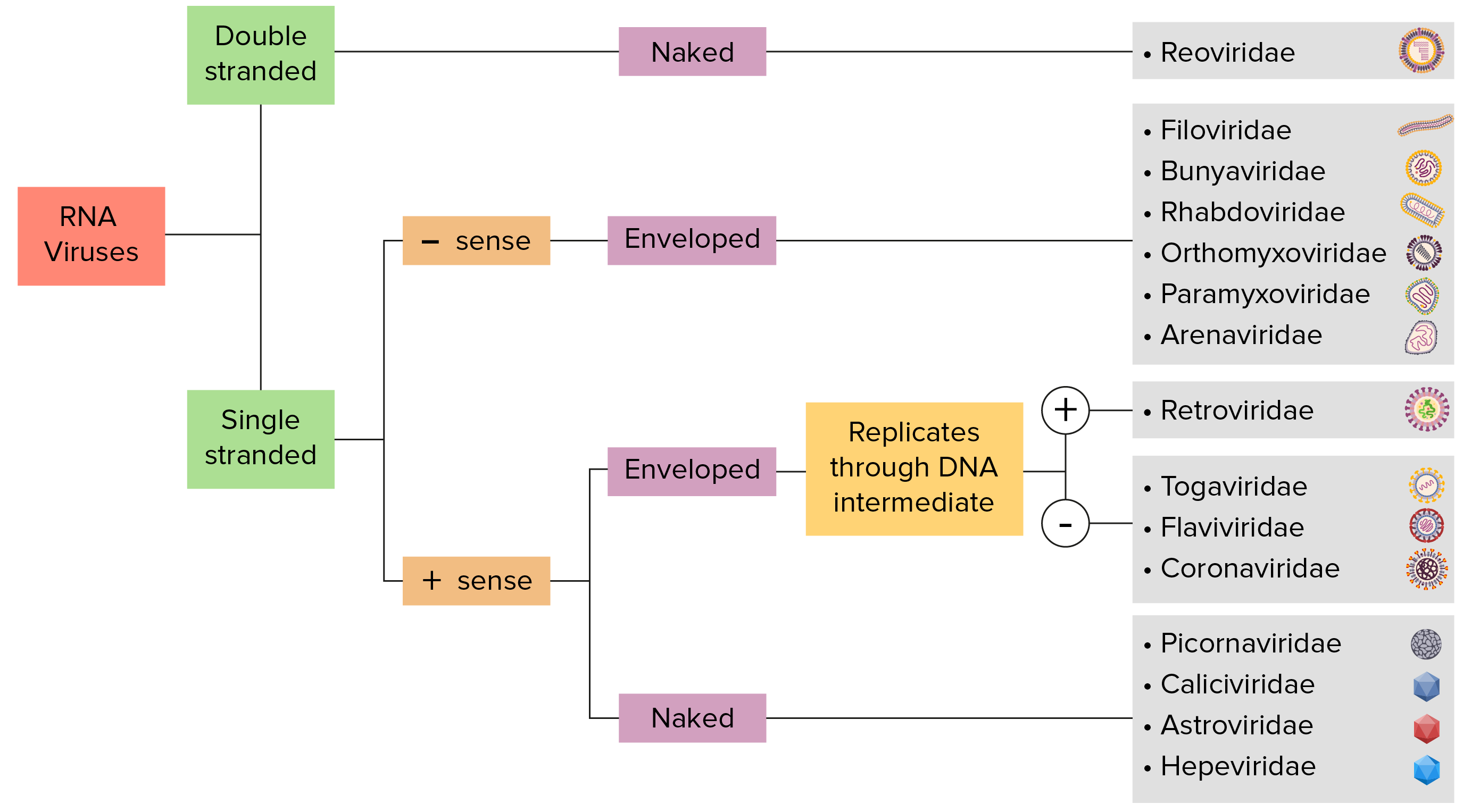
Diagrama de flujo de la clasificación de los virus de ARN

Identificación de los virus ARN:
Los virus pueden clasificarse de muchas maneras. Sin embargo, la mayoría de los virus tienen un genoma formado por ácido desoxirribonucleico (ADN) o ARN. Los virus con genoma ARN pueden caracterizarse además por tener ARN monocatenario o bicatenario. Los virus “envueltos” están cubiertos por una fina capa de membrana celular (normalmente tomada de la célula huésped). Si la capa está ausente, los virus se denominan “desnudos”. Los virus con genomas monocatenarios son de “sentido positivo” si el genoma se emplea directamente como ARN mensajero (ARNm), que se traduce en proteínas. Los virus monocatenarios de “sentido negativo” emplean la ARN polimerasa dependiente de ARN, una enzima viral, para transcribir su genoma en ARN mensajero.
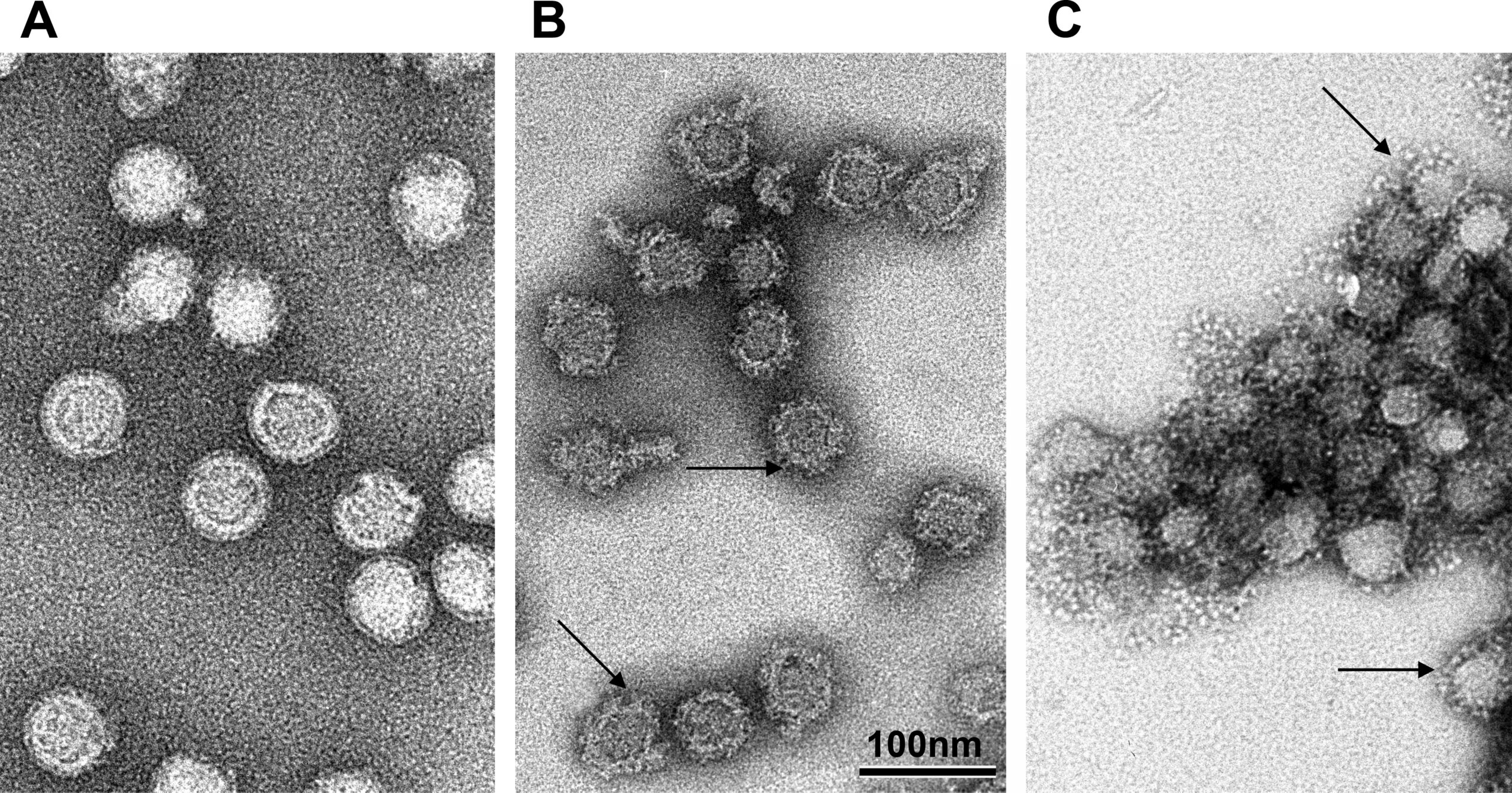
Imagen por Lecturio. Licencia: CC BY-NC-SA 4.0

Características Generales y Epidemiología

Características básicas del virus Virus Viruses are infectious, obligate intracellular parasites composed of a nucleic acid core surrounded by a protein capsid. Viruses can be either naked (non-enveloped) or enveloped. The classification of viruses is complex and based on many factors, including type and structure of the nucleoid and capsid, the presence of an envelope, the replication cycle, and the host range. Virology de la encefalitis transmitida por garrapatas

  • Taxonomía:
    • Familia: Flaviviridae Flaviviridae A family of RNA viruses, many of which cause disease in humans and domestic animals. There are three genera flavivirus; pestivirus; and hepacivirus, as well as several unassigned species. Hepatitis C Virus
    • Género: Flavivirus Flavivirus A genus of flaviviridae containing several subgroups and many species. Most are arboviruses transmitted by mosquitoes or ticks. The type species is yellow fever virus. Tick-borne Encephalitis Virus
  • Virus Virus Viruses are infectious, obligate intracellular parasites composed of a nucleic acid core surrounded by a protein capsid. Viruses can be either naked (non-enveloped) or enveloped. The classification of viruses is complex and based on many factors, including type and structure of the nucleoid and capsid, the presence of an envelope, the replication cycle, and the host range. Virology de ARN
    • Monocatenario
    • Sentido positivo
    • Lineal
  • Esférico
  • Simetría icosaédrica
  • Cápside envuelta
  • Tamaño: aproximadamente 50 nm
Virus de la encefalitis transmitida por garrapatas Flaviviridae

Virus de la encefalitis transmitida por garrapatas a diferentes pH:
A: 8,0
B: 10,0
C: 5,4

Imagen: “TBEV at different pH levels” por Stiasni K. Licencia: CC BY 2.5

Especies clínicamente relevantes

La encefalitis transmitida por garrapatas es causada por 3 subtipos de virus Virus Viruses are infectious, obligate intracellular parasites composed of a nucleic acid core surrounded by a protein capsid. Viruses can be either naked (non-enveloped) or enveloped. The classification of viruses is complex and based on many factors, including type and structure of the nucleoid and capsid, the presence of an envelope, the replication cycle, and the host range. Virology estrechamente relacionadas:

  • Europea (Occidental)
  • Siberiana
  • Rusa (Del Lejano Oriente)

Epidemiología

La encefalitis transmitida por garrapatas es la infección del sistema nervioso central (SNC) transmitida por garrapatas más común en EN Erythema nodosum is an immune-mediated panniculitis (inflammation of the subcutaneous fat) caused by a type IV (delayed-type) hypersensitivity reaction. It commonly manifests in young women as tender, erythematous nodules on the shins. Erythema Nodosum Europa y Asia ASIA Spinal Cord Injuries.
  • Aproximadamente entre 10 000–15 000 casos anuales reportados
  • Las infecciones son más comunes en EN Erythema nodosum is an immune-mediated panniculitis (inflammation of the subcutaneous fat) caused by a type IV (delayed-type) hypersensitivity reaction. It commonly manifests in young women as tender, erythematous nodules on the shins. Erythema Nodosum partes de:
  • Temporalidad de casos
    • Abril a noviembre
    • Temporada pico es en EN Erythema nodosum is an immune-mediated panniculitis (inflammation of the subcutaneous fat) caused by a type IV (delayed-type) hypersensitivity reaction. It commonly manifests in young women as tender, erythematous nodules on the shins. Erythema Nodosum verano por la gran actividad de las garrapatas
  • Geografía
    • Rara en EN Erythema nodosum is an immune-mediated panniculitis (inflammation of the subcutaneous fat) caused by a type IV (delayed-type) hypersensitivity reaction. It commonly manifests in young women as tender, erythematous nodules on the shins. Erythema Nodosum áreas urbanas
    • Más común en EN Erythema nodosum is an immune-mediated panniculitis (inflammation of the subcutaneous fat) caused by a type IV (delayed-type) hypersensitivity reaction. It commonly manifests in young women as tender, erythematous nodules on the shins. Erythema Nodosum áreas boscosas/ de hierba alta
  • Mortalidad:
    • Rara en EN Erythema nodosum is an immune-mediated panniculitis (inflammation of the subcutaneous fat) caused by a type IV (delayed-type) hypersensitivity reaction. It commonly manifests in young women as tender, erythematous nodules on the shins. Erythema Nodosum Europa: 1%–2%
    • Más elevada en EN Erythema nodosum is an immune-mediated panniculitis (inflammation of the subcutaneous fat) caused by a type IV (delayed-type) hypersensitivity reaction. It commonly manifests in young women as tender, erythematous nodules on the shins. Erythema Nodosum Asia ASIA Spinal Cord Injuries: 5%–20%

Patogénesis

Reservorios

  • Las garrapatas Ixodes actúan como vector y como reservorio.
  • Los LOS Neisseria principales huéspedes son pequeños roedores.
  • Los LOS Neisseria humanos son huéspedes accidentales.

Transmisión

  • Picaduras de garrapatas Ixodes en EN Erythema nodosum is an immune-mediated panniculitis (inflammation of the subcutaneous fat) caused by a type IV (delayed-type) hypersensitivity reaction. It commonly manifests in young women as tender, erythematous nodules on the shins. Erythema Nodosum zonas endémicas:
  • Consumo de leche cruda procedente de animales infectados
    • Cabras
    • Ovejas
    • Vacas
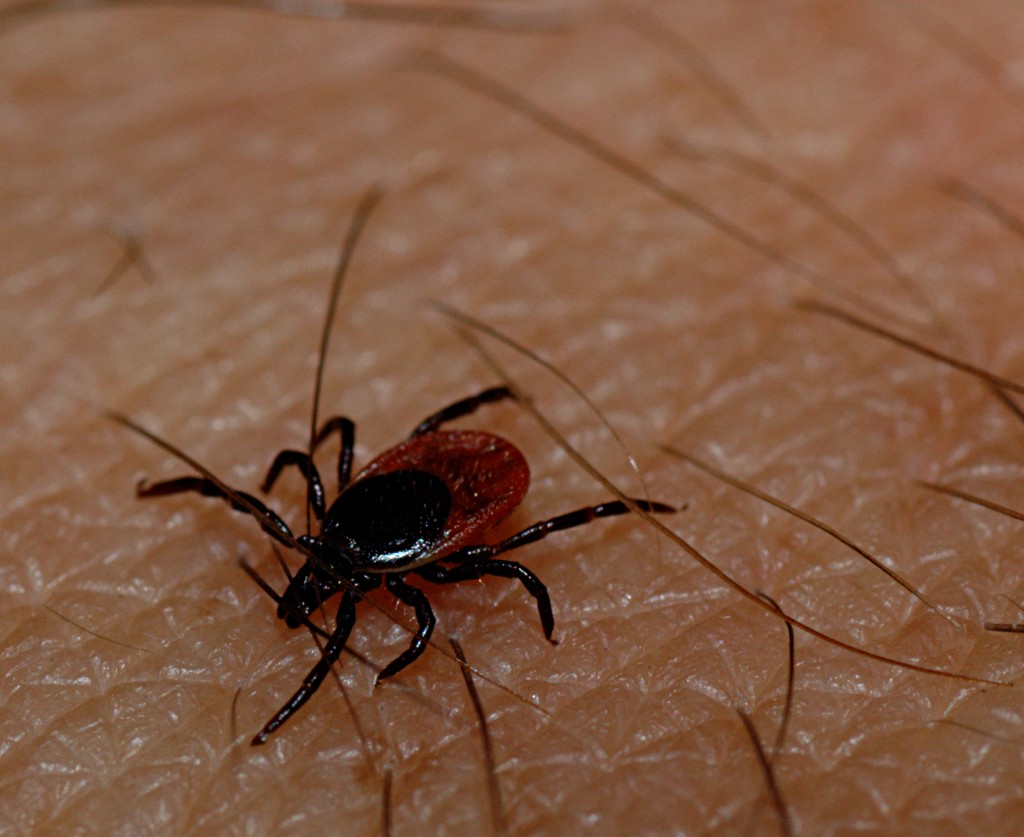
Ixodes Ricinus Flaviviridae Virus de la encefalitis transmitida por garrapatas

Una garrapata Ixodes ricinus adulta, vector del subtipo europeo del virus de la encefalitis transmitida por garrapatas

Imagen: “Soft tick, Ixodes Ricinus, on human skin” por Gabrielsen J. Licencia: CC BY 3.0

Factores de riesgo del huésped

Las actividades recreativas y laborales al AL Amyloidosis aire libre en EN Erythema nodosum is an immune-mediated panniculitis (inflammation of the subcutaneous fat) caused by a type IV (delayed-type) hypersensitivity reaction. It commonly manifests in young women as tender, erythematous nodules on the shins. Erythema Nodosum regiones endémicas pueden aumentar el riesgo de contraer TBEV TBEV Tick-borne encephalitis virus (TBEV) is a positive-sense, single-stranded RNA virus of the genus Flavivirus. Transmission occurs primarily via Ixodes ticks found in Europe, the former Soviet Union, and Asia. The virus causes tick-borne encephalitis. Most patients are asymptomatic; however, symptomatic individuals may experience a biphasic illness. Tick-borne Encephalitis Virus:
  • Cazadores
  • Agricultores
  • Trabajadores forestales
  • Campistas

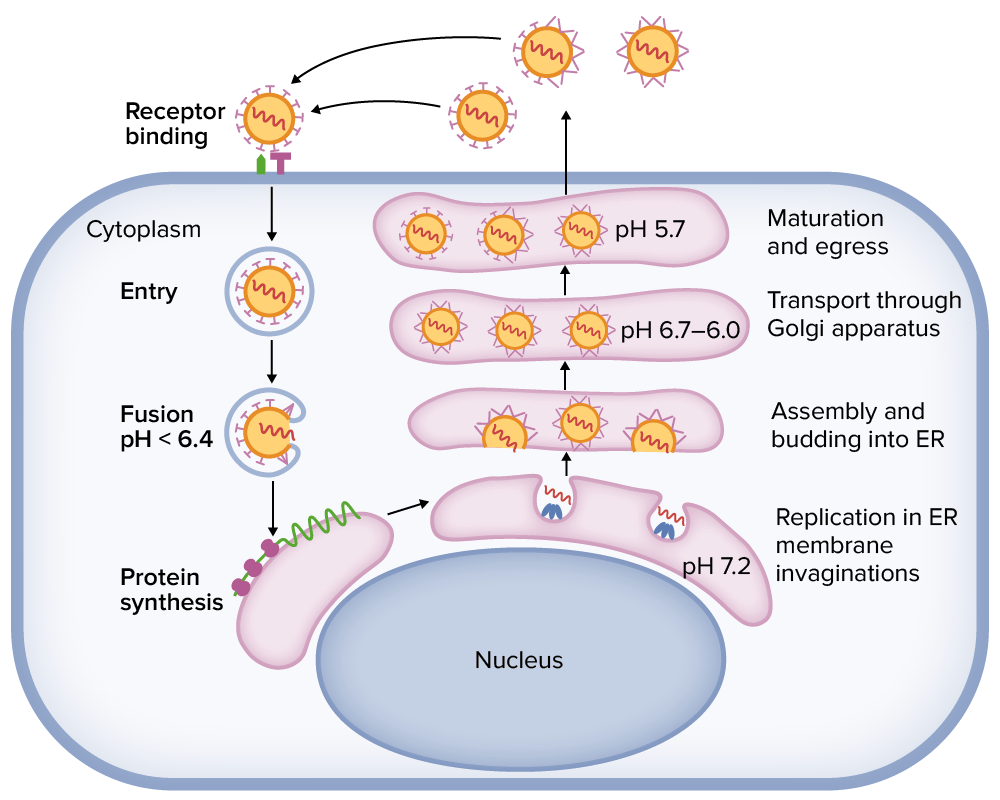
Ciclo de replicación viral

  1. El virus Virus Viruses are infectious, obligate intracellular parasites composed of a nucleic acid core surrounded by a protein capsid. Viruses can be either naked (non-enveloped) or enveloped. The classification of viruses is complex and based on many factors, including type and structure of the nucleoid and capsid, the presence of an envelope, the replication cycle, and the host range. Virology interactúa con los LOS Neisseria receptores de superficie celular → endocitosis
  2. pH pH The quantitative measurement of the acidity or basicity of a solution. Acid-Base Balance en EN Erythema nodosum is an immune-mediated panniculitis (inflammation of the subcutaneous fat) caused by a type IV (delayed-type) hypersensitivity reaction. It commonly manifests in young women as tender, erythematous nodules on the shins. Erythema Nodosum el endosoma → fusión de las membranas virales y endosomales → descobertura del virus Virus Viruses are infectious, obligate intracellular parasites composed of a nucleic acid core surrounded by a protein capsid. Viruses can be either naked (non-enveloped) or enveloped. The classification of viruses is complex and based on many factors, including type and structure of the nucleoid and capsid, the presence of an envelope, the replication cycle, and the host range. Virology
  3. La síntesis de proteínas virales se produce en EN Erythema nodosum is an immune-mediated panniculitis (inflammation of the subcutaneous fat) caused by a type IV (delayed-type) hypersensitivity reaction. It commonly manifests in young women as tender, erythematous nodules on the shins. Erythema Nodosum el retículo endoplásmico rugoso.
  4. La replicación genómica se produce en EN Erythema nodosum is an immune-mediated panniculitis (inflammation of the subcutaneous fat) caused by a type IV (delayed-type) hypersensitivity reaction. It commonly manifests in young women as tender, erythematous nodules on the shins. Erythema Nodosum las invaginaciones del retículo endoplásmico rugoso → los LOS Neisseria viriones se reempacan y ensamblan.
  5. Los LOS Neisseria viriones maduros salen de la célula.
Tick-borne encephalitis virus replication cycle within a cell

Ciclo de replicación del virus de la encefalitis transmitida por garrapatas en una célula
ER: retículo endoplásmico

Imagen por Lecturio.

Fisiopatología

  • Picadura de garrapata → El TBEV TBEV Tick-borne encephalitis virus (TBEV) is a positive-sense, single-stranded RNA virus of the genus Flavivirus. Transmission occurs primarily via Ixodes ticks found in Europe, the former Soviet Union, and Asia. The virus causes tick-borne encephalitis. Most patients are asymptomatic; however, symptomatic individuals may experience a biphasic illness. Tick-borne Encephalitis Virus se transmite por la saliva Saliva The clear, viscous fluid secreted by the salivary glands and mucous glands of the mouth. It contains mucins, water, organic salts, and ptyalin. Salivary Glands: Anatomy en EN Erythema nodosum is an immune-mediated panniculitis (inflammation of the subcutaneous fat) caused by a type IV (delayed-type) hypersensitivity reaction. It commonly manifests in young women as tender, erythematous nodules on the shins. Erythema Nodosum cuestión de minutos
  • La infección inicial se dirige contra las células de Langerhans y macrófagos
  • La replicación del TBEV TBEV Tick-borne encephalitis virus (TBEV) is a positive-sense, single-stranded RNA virus of the genus Flavivirus. Transmission occurs primarily via Ixodes ticks found in Europe, the former Soviet Union, and Asia. The virus causes tick-borne encephalitis. Most patients are asymptomatic; however, symptomatic individuals may experience a biphasic illness. Tick-borne Encephalitis Virus se produce localmente en EN Erythema nodosum is an immune-mediated panniculitis (inflammation of the subcutaneous fat) caused by a type IV (delayed-type) hypersensitivity reaction. It commonly manifests in young women as tender, erythematous nodules on the shins. Erythema Nodosum las células dendríticas → se transporta a los LOS Neisseria ganglios linfáticos locales
  • Se disemina a los LOS Neisseria tejidos extraneurales:
    • Bazo
    • Hígado
    • Médula ósea
  • Replicación continua → viremia Viremia The presence of viruses in the blood. Erythema Infectiosum → fase inicial de los LOS Neisseria síntomas
  • Eventual propagación al AL Amyloidosis cerebro (proceso no comprendido) → inflamación → lesión neuronal → 2da fase de síntomas neurológicos

Presentación Clínica

La mayoría de los LOS Neisseria pacientes son asintomáticos. Los LOS Neisseria individuos sintomáticos pueden tener un curso bifásico.

  • Periodo de incubación: 7–14 días después de la picadura de la garrapata
  • Fase virémica inicial:
    • Fiebre
    • Malestar
    • Cefalea
    • Artralgia
    • Mialgias
    • Náuseas
  • Intervalo asintomático
  • 2da fase neurológica:
    • Meningitis Meningitis Meningitis is inflammation of the meninges, the protective membranes of the brain, and spinal cord. The causes of meningitis are varied, with the most common being bacterial or viral infection. The classic presentation of meningitis is a triad of fever, altered mental status, and nuchal rigidity. Meningitis
    • Encefalitis
    • Meningoencefalitis
    • Mielitis
    • Parálisis flácida aguda

Diagnóstico y Tratamiento

Diagnóstico

Las muestras de sangre o LCR pueden utilizarse para las pruebas de diagnóstico:

  • Serología por ensayo inmunoabsorbente ligado a enzimas ( ELISA ELISA An immunoassay utilizing an antibody labeled with an enzyme marker such as horseradish peroxidase. While either the enzyme or the antibody is bound to an immunosorbent substrate, they both retain their biologic activity; the change in enzyme activity as a result of the enzyme-antibody-antigen reaction is proportional to the concentration of the antigen and can be measured spectrophotometrically or with the naked eye. Many variations of the method have been developed. St. Louis Encephalitis Virus, por sus siglas en EN Erythema nodosum is an immune-mediated panniculitis (inflammation of the subcutaneous fat) caused by a type IV (delayed-type) hypersensitivity reaction. It commonly manifests in young women as tender, erythematous nodules on the shins. Erythema Nodosum inglés) para anticuerpos inmunoglobulina M ( IgM IgM A class of immunoglobulin bearing mu chains (immunoglobulin mu-chains). Igm can fix complement. The name comes from its high molecular weight and originally being called a macroglobulin. Immunoglobulins: Types and Functions)
    • Aparecen de 0–6 días después del inicio
    • Pueden detectarse si hay síntomas neurológicos
  • PCR PCR Polymerase chain reaction (PCR) is a technique that amplifies DNA fragments exponentially for analysis. The process is highly specific, allowing for the targeting of specific genomic sequences, even with minuscule sample amounts. The PCR cycles multiple times through 3 phases: denaturation of the template DNA, annealing of a specific primer to the individual DNA strands, and synthesis/elongation of new DNA molecules. Polymerase Chain Reaction (PCR) para el ARN viral

Evaluación de soporte:

  • Estudios de LCR:
    • Pleocitosis
      • Predominio de neutrófilos ( al AL Amyloidosis principio de la enfermedad)
      • Predominio de linfocitos ( en EN Erythema nodosum is an immune-mediated panniculitis (inflammation of the subcutaneous fat) caused by a type IV (delayed-type) hypersensitivity reaction. It commonly manifests in young women as tender, erythematous nodules on the shins. Erythema Nodosum una fase avanzada de la enfermedad)
    • Glucosa normal
    • Proteína normal o ↑
  • Leucopenia
  • Trombocitopenia
  • Transaminitis Transaminitis Tick-borne Encephalitis Virus (rara)

Tratamiento

No existe una terapia medicamentosa específica. El tratamiento es de soporte.

Prevención

  • Utilizar repelente de insectos.
  • Llevar ropa de protección.
  • Pasteurizar la leche.
  • Existe una vacuna en EN Erythema nodosum is an immune-mediated panniculitis (inflammation of the subcutaneous fat) caused by a type IV (delayed-type) hypersensitivity reaction. It commonly manifests in young women as tender, erythematous nodules on the shins. Erythema Nodosum las zonas endémicas (aprobada por la FDA en EN Erythema nodosum is an immune-mediated panniculitis (inflammation of the subcutaneous fat) caused by a type IV (delayed-type) hypersensitivity reaction. It commonly manifests in young women as tender, erythematous nodules on the shins. Erythema Nodosum los LOS Neisseria EE.UU. en EN Erythema nodosum is an immune-mediated panniculitis (inflammation of the subcutaneous fat) caused by a type IV (delayed-type) hypersensitivity reaction. It commonly manifests in young women as tender, erythematous nodules on the shins. Erythema Nodosum el 2021).

Comparación de Especies Similares de Flavivirus

Tabla: Características y enfermedades de varias especies de Flavivirus Flavivirus A genus of flaviviridae containing several subgroups and many species. Most are arboviruses transmitted by mosquitoes or ticks. The type species is yellow fever virus. Tick-borne Encephalitis Virus
Organismo Virus Virus Viruses are infectious, obligate intracellular parasites composed of a nucleic acid core surrounded by a protein capsid. Viruses can be either naked (non-enveloped) or enveloped. The classification of viruses is complex and based on many factors, including type and structure of the nucleoid and capsid, the presence of an envelope, the replication cycle, and the host range. Virology de la encefalitis transmitida por garrapatas Virus Virus Viruses are infectious, obligate intracellular parasites composed of a nucleic acid core surrounded by a protein capsid. Viruses can be either naked (non-enveloped) or enveloped. The classification of viruses is complex and based on many factors, including type and structure of the nucleoid and capsid, the presence of an envelope, the replication cycle, and the host range. Virology de la encefalitis japonesa Virus Virus Viruses are infectious, obligate intracellular parasites composed of a nucleic acid core surrounded by a protein capsid. Viruses can be either naked (non-enveloped) or enveloped. The classification of viruses is complex and based on many factors, including type and structure of the nucleoid and capsid, the presence of an envelope, the replication cycle, and the host range. Virology de la encefalitis de San Louis Virus Virus Viruses are infectious, obligate intracellular parasites composed of a nucleic acid core surrounded by a protein capsid. Viruses can be either naked (non-enveloped) or enveloped. The classification of viruses is complex and based on many factors, including type and structure of the nucleoid and capsid, the presence of an envelope, the replication cycle, and the host range. Virology del Nilo Occidental
Características Las características estructurales son casi idénticas.
Región América del Norte
Transmisión Garrapata Mosquito Mosquito Mosquito
Cuadro Clínico
  • La mayoría son asintomáticos.
  • Síntomas inicialmente inespecíficos
  • Fase neurológica:
    • Meningitis Meningitis Meningitis is inflammation of the meninges, the protective membranes of the brain, and spinal cord. The causes of meningitis are varied, with the most common being bacterial or viral infection. The classic presentation of meningitis is a triad of fever, altered mental status, and nuchal rigidity. Meningitis
    • Encefalitis
    • Meningoencefalitis
  • Enfermedad febril inespecífica
  • Meningitis Meningitis Meningitis is inflammation of the meninges, the protective membranes of the brain, and spinal cord. The causes of meningitis are varied, with the most common being bacterial or viral infection. The classic presentation of meningitis is a triad of fever, altered mental status, and nuchal rigidity. Meningitis
  • Encefalitis
  • Parálisis flácida aguda
  • Síndrome de Guillain-Barré
  • La mayoría son asintomáticos.
  • Enfermedad febril inespecífica
  • Meningitis Meningitis Meningitis is inflammation of the meninges, the protective membranes of the brain, and spinal cord. The causes of meningitis are varied, with the most common being bacterial or viral infection. The classic presentation of meningitis is a triad of fever, altered mental status, and nuchal rigidity. Meningitis
  • Encefalitis
  • Meningoencefalitis
  • La mayoría son asintomáticos.
  • Fiebre del Nilo Occidental
  • Enfermedad neuroinvasiva:
    • Meningitis Meningitis Meningitis is inflammation of the meninges, the protective membranes of the brain, and spinal cord. The causes of meningitis are varied, with the most common being bacterial or viral infection. The classic presentation of meningitis is a triad of fever, altered mental status, and nuchal rigidity. Meningitis
    • Encefalitis
    • Parálisis flácida aguda
Diagnóstico
  • Serología
  • PCR PCR Polymerase chain reaction (PCR) is a technique that amplifies DNA fragments exponentially for analysis. The process is highly specific, allowing for the targeting of specific genomic sequences, even with minuscule sample amounts. The PCR cycles multiple times through 3 phases: denaturation of the template DNA, annealing of a specific primer to the individual DNA strands, and synthesis/elongation of new DNA molecules. Polymerase Chain Reaction (PCR)
Serología Serología
  • Serología
  • PCR PCR Polymerase chain reaction (PCR) is a technique that amplifies DNA fragments exponentially for analysis. The process is highly specific, allowing for the targeting of specific genomic sequences, even with minuscule sample amounts. The PCR cycles multiple times through 3 phases: denaturation of the template DNA, annealing of a specific primer to the individual DNA strands, and synthesis/elongation of new DNA molecules. Polymerase Chain Reaction (PCR)
Tratamiento De soporte De soporte De soporte De soporte
Prevención
  • Medidas para evitar las garrapatas
  • Vacunación ( en EN Erythema nodosum is an immune-mediated panniculitis (inflammation of the subcutaneous fat) caused by a type IV (delayed-type) hypersensitivity reaction. It commonly manifests in young women as tender, erythematous nodules on the shins. Erythema Nodosum zonas endémicas)
  • Medidas para evitar los LOS Neisseria mosquitos
  • Vacunación
Medidas para evitar los LOS Neisseria mosquitos Medidas para evitar los LOS Neisseria mosquitos

Diagnóstico Diferencial

  • Meningitis Meningitis Meningitis is inflammation of the meninges, the protective membranes of the brain, and spinal cord. The causes of meningitis are varied, with the most common being bacterial or viral infection. The classic presentation of meningitis is a triad of fever, altered mental status, and nuchal rigidity. Meningitis bacteriana: infección aguda de las meninges Meninges The brain and the spinal cord are enveloped by 3 overlapping layers of connective tissue called the meninges. The layers are, from the most external layer to the most internal layer, the dura mater, arachnoid mater, and pia mater. Between these layers are 3 potential spaces called the epidural, subdural, and subarachnoid spaces. Meninges: Anatomy. Los LOS Neisseria pacientes con meningitis Meningitis Meningitis is inflammation of the meninges, the protective membranes of the brain, and spinal cord. The causes of meningitis are varied, with the most common being bacterial or viral infection. The classic presentation of meningitis is a triad of fever, altered mental status, and nuchal rigidity. Meningitis bacteriana presentan cefalea, fiebre, rigidez nucal y un rápido deterioro clínico. Se realiza una punción lumbar para hacer el diagnóstico. A diferencia de la meningitis Meningitis Meningitis is inflammation of the meninges, the protective membranes of the brain, and spinal cord. The causes of meningitis are varied, with the most common being bacterial or viral infection. The classic presentation of meningitis is a triad of fever, altered mental status, and nuchal rigidity. Meningitis vírica, los LOS Neisseria estudios del LCR a menudo mostrarán un líquido turbio, glucosa baja y recuento elevado de leucocitos con predominio de neutrófilos. La tinción de Gram y el cultivo determinarán la bacteria Bacteria Bacteria are prokaryotic single-celled microorganisms that are metabolically active and divide by binary fission. Some of these organisms play a significant role in the pathogenesis of diseases. Bacteriology causante. El tratamiento incluye antibióticos y corticosteroides.
  • Enfermedad de Lyme: infección transmitida por garrapatas y causada por la espiroqueta Gram-negativa Borrelia burgdorferi Borrelia burgdorferi A specific species of bacteria, part of the borrelia burgdorferi group, whose common name is lyme disease spirochete. Borrelia. La presentación de la enfermedad de Lyme puede variar en EN Erythema nodosum is an immune-mediated panniculitis (inflammation of the subcutaneous fat) caused by a type IV (delayed-type) hypersensitivity reaction. It commonly manifests in young women as tender, erythematous nodules on the shins. Erythema Nodosum función del estadio de la enfermedad y puede incluir la característica erupción de eritema migratorio, que no se observa en EN Erythema nodosum is an immune-mediated panniculitis (inflammation of the subcutaneous fat) caused by a type IV (delayed-type) hypersensitivity reaction. It commonly manifests in young women as tender, erythematous nodules on the shins. Erythema Nodosum la encefalitis transmitida por garrapatas. Las manifestaciones neurológicas, cardíacas, oculares y articulares también son comunes en EN Erythema nodosum is an immune-mediated panniculitis (inflammation of the subcutaneous fat) caused by a type IV (delayed-type) hypersensitivity reaction. It commonly manifests in young women as tender, erythematous nodules on the shins. Erythema Nodosum las etapas posteriores. El diagnóstico se basa en EN Erythema nodosum is an immune-mediated panniculitis (inflammation of the subcutaneous fat) caused by a type IV (delayed-type) hypersensitivity reaction. It commonly manifests in young women as tender, erythematous nodules on the shins. Erythema Nodosum los LOS Neisseria hallazgos clínicos y en EN Erythema nodosum is an immune-mediated panniculitis (inflammation of the subcutaneous fat) caused by a type IV (delayed-type) hypersensitivity reaction. It commonly manifests in young women as tender, erythematous nodules on the shins. Erythema Nodosum la exposición a las garrapatas y se apoya en EN Erythema nodosum is an immune-mediated panniculitis (inflammation of the subcutaneous fat) caused by a type IV (delayed-type) hypersensitivity reaction. It commonly manifests in young women as tender, erythematous nodules on the shins. Erythema Nodosum pruebas serológicas. Se utilizan antibióticos para el tratamiento.
  • Erliquiosis y anaplasmosis Anaplasmosis Anaplasmosis is a tick-borne bacterial infection. The most common causative species include Anaplasma phagocytophilum, which infect and multiply within granulocytes. The clinical presentation can vary widely, but often includes fever, malaise, headache, myalgia, and arthralgias. Ehrlichiosis and Anaplasmosis: infecciones transmitidas por garrapatas causadas por Ehrlichia chaffeensis Ehrlichia chaffeensis A species of gram-negative bacteria that is the causative agent of human ehrlichiosis. This organism was first discovered at fort chaffee, arkansas, when blood samples from suspected human ehrlichiosis patients were studied. Ehrlichiosis and Anaplasmosis y Anaplasmosis Anaplasmosis Anaplasmosis is a tick-borne bacterial infection. The most common causative species include Anaplasma phagocytophilum, which infect and multiply within granulocytes. The clinical presentation can vary widely, but often includes fever, malaise, headache, myalgia, and arthralgias. Ehrlichiosis and Anaplasmosis phagocytophilum, respectivamente. Los LOS Neisseria síntomas de la erliquiosis y la anaplasmosis Anaplasmosis Anaplasmosis is a tick-borne bacterial infection. The most common causative species include Anaplasma phagocytophilum, which infect and multiply within granulocytes. The clinical presentation can vary widely, but often includes fever, malaise, headache, myalgia, and arthralgias. Ehrlichiosis and Anaplasmosis incluyen fiebre, cefalea y malestar general. La meningoencefalitis también puede ocurrir con la enfermedad grave. El diagnóstico se realiza mediante PCR PCR Polymerase chain reaction (PCR) is a technique that amplifies DNA fragments exponentially for analysis. The process is highly specific, allowing for the targeting of specific genomic sequences, even with minuscule sample amounts. The PCR cycles multiple times through 3 phases: denaturation of the template DNA, annealing of a specific primer to the individual DNA strands, and synthesis/elongation of new DNA molecules. Polymerase Chain Reaction (PCR). El tratamiento de ambas enfermedades es con doxiciclina.
  • Babesiosis Babesiosis Babesiosis is an infection caused by a protozoa belonging to the genus, Babesia. The most common Babesia seen in the United States is B. microti, which is transmitted by the Ixodes tick. The protozoa thrive and replicate within host erythrocytes. Lysis of erythrocytes and the body’s immune response result in clinical symptoms. Babesia/Babesiosis: infección transmitida por garrapatas causada por parásitos Babesia Babesia Babesiosis is an infection caused by a protozoa belonging to the genus, Babesia. The most common Babesia seen in the United States is B. microti, which is transmitted by the Ixodes tick. The protozoa thrive and replicate within host erythrocytes. Lysis of erythrocytes and the body’s immune response result in clinical symptoms. Babesia/Babesiosis. Los LOS Neisseria pacientes con babesiosis Babesiosis Babesiosis is an infection caused by a protozoa belonging to the genus, Babesia. The most common Babesia seen in the United States is B. microti, which is transmitted by the Ixodes tick. The protozoa thrive and replicate within host erythrocytes. Lysis of erythrocytes and the body’s immune response result in clinical symptoms. Babesia/Babesiosis pueden ser asintomáticos o desarrollar fiebre, fatiga, malestar y artralgias. Los LOS Neisseria pacientes asplénicos, inmunocomprometidos y de edad avanzada corren el riesgo de padecer una enfermedad grave, que provoca síntomas neurológicos, anemia Anemia Anemia is a condition in which individuals have low Hb levels, which can arise from various causes. Anemia is accompanied by a reduced number of RBCs and may manifest with fatigue, shortness of breath, pallor, and weakness. Subtypes are classified by the size of RBCs, chronicity, and etiology. Anemia: Overview and Types hemolítica, trombocitopenia, hepatoesplenomegalia, insuficiencia renal y muerte. El diagnóstico se confirma con un frotis de sangre periférica, pruebas serológicas y PCR PCR Polymerase chain reaction (PCR) is a technique that amplifies DNA fragments exponentially for analysis. The process is highly specific, allowing for the targeting of specific genomic sequences, even with minuscule sample amounts. The PCR cycles multiple times through 3 phases: denaturation of the template DNA, annealing of a specific primer to the individual DNA strands, and synthesis/elongation of new DNA molecules. Polymerase Chain Reaction (PCR). El tratamiento incluye antimicrobianos como atovacuona más azitromicina.
  • Tularemia: infección causada por Francisella tularensis Francisella Tularensis Aminoglycosides. La presentación de la tularemia depende del tipo de exposición y puede incluir ulceraciones, síntomas sistémicos inespecíficos, enfermedad ocular, linfadenitis, neumonía, mediastinitis Mediastinitis Mediastinitis refers to an infection or inflammation involving the mediastinum (a region in the thoracic cavity containing the heart, thymus gland, portions of the esophagus, and trachea). Acute mediastinitis can be caused by bacterial infection due to direct contamination, hematogenous or lymphatic spread, or extension of infection from nearby structures. Mediastinitis o meningitis Meningitis Meningitis is inflammation of the meninges, the protective membranes of the brain, and spinal cord. The causes of meningitis are varied, with the most common being bacterial or viral infection. The classic presentation of meningitis is a triad of fever, altered mental status, and nuchal rigidity. Meningitis. El diagnóstico se realiza con cultivos, serología y pruebas de PCR PCR Polymerase chain reaction (PCR) is a technique that amplifies DNA fragments exponentially for analysis. The process is highly specific, allowing for the targeting of specific genomic sequences, even with minuscule sample amounts. The PCR cycles multiple times through 3 phases: denaturation of the template DNA, annealing of a specific primer to the individual DNA strands, and synthesis/elongation of new DNA molecules. Polymerase Chain Reaction (PCR). Se utilizan antibióticos para el tratamiento.

Referencias:

  1. Jeffries CL, Mansfield KL, Phipps LP, Wakeley PR, Mearns R, Schock A, et al. (2014). Louping ill virus: an endemic tick-borne disease of Great Britain. J Gen Virol. Retrieved October 14, 2025, from http://dx.doi.org/10.1099/vir.0.062356-0
  2. Lindquist L, Vapalahti O. (2008). Tick-borne encephalitis. Lancet 371:1861–1871. http://dx.doi.org/10.1016/S0140-6736(08)60800-4
  3. Medlock JM, Hansford KM, Vaux AGC, Cull B, Gillingham E, Leach S. (2018). Assessment of the public health threats posed by vector-borne disease in the United Kingdom (UK). Int J Environ Res Public Health 15:2145. http://dx.doi.org/10.3390/ijerph15102145
  4. Bogovic P, Stupica D, Rojko T, Lotric-Furlan S, Vasic-Zupanc T, Kastrin A, et al. (2018). The long-term outcome of tick-borne encephalitis in Central Europe. Ticks Tick Borne Disease, 9th ed., vol. 2, pp. 369–378.
  5. CDC. (2010). Tick-borne encephalitis among US travelers to Europe and Asia—2000–2009. MMWR Morb Mortal Wkly Rep 11:335–338.
  6. Kollaritsch H, Paulke-Korinek M, Holzmann H, Hombach J, Bjorvatn B, Barrett A. (2012). Vaccines and vaccination against tick-borne encephalitis. Exp Rev Vaccines 9:1103–1119.
  7. Bogovic, P., Strle, F. (2015). Tick-borne encephalitis: A review of epidemiology, clinical characteristics, and management. World J Clin Cases 3(5):430-441. https://www.ncbi.nlm.nih.gov/pmc/articles/PMC4419106/
  8. Petersen, L.R. (2025). Arthropod-borne encephalitides. In Mitty J. (Ed.), UpToDate. Retrieved October 14, 2025, from https://www.uptodate.com/contents/arthropod-borne-encephalitides
  9. Carmona, S. (2025). Other arbovirus infections. MSD Manual Professional Version. Retrieved October 14, 2025, from https://www.msdmanuals.com/professional/infectious-diseases/arboviruses-arenaviridae-and-filoviridae/other-arbovirus-infections

¡Crea tu cuenta gratis o inicia una sesión para seguir leyendo!

Regístrate ahora y obtén acceso gratuito a Lecturio con páginas de concepto, videos médicos y cuestionarios para tu educación médica.

User Reviews

Que tengas una sesión de estudio alegre y navideña 🎁 Ahorra 50% en todos los planes >>

Details