Domina Conceptos Médicos

Estudia para la escuela de medicina y tus examenes con Lecturio.

Sífilis

La sífilis es una infección bacteriana causada por la espiroqueta Treponema pallidum Treponema pallidum The causative agent of venereal and non-venereal syphilis as well as yaws. Treponema pallidum (T. pallidum), que se transmite usualmente por contacto sexual. La sífilis tiene 4 etapas clínicas: primaria, secundaria, latente y terciaria. La sífilis primaria comienza con un chancro, una úlcera indolora en EN Erythema nodosum is an immune-mediated panniculitis (inflammation of the subcutaneous fat) caused by a type IV (delayed-type) hypersensitivity reaction. It commonly manifests in young women as tender, erythematous nodules on the shins. Erythema Nodosum los LOS Neisseria genitales. La progresión a la sífilis secundaria se manifiesta como una erupción maculopapular Maculopapular Dermatologic Examination generalizada, que incluye las palmas y las plantas. El desarrollo de la sífilis terciaria puede causar enfermedades neurológicas graves (neurosífilis), cardiovasculares y/o gomáticas. El diagnóstico se realiza mediante pruebas treponémicas y no treponémicas. La penicilina G es el antibiótico de elección. La duración del tratamiento varía en EN Erythema nodosum is an immune-mediated panniculitis (inflammation of the subcutaneous fat) caused by a type IV (delayed-type) hypersensitivity reaction. It commonly manifests in young women as tender, erythematous nodules on the shins. Erythema Nodosum función del estadio de la enfermedad.

Last updated: Dec 15, 2025

Editorial responsibility: Stanley Oiseth, Lindsay Jones, Evelin Maza

Descripción General

Epidemiología

  • Nuevos casos anuales en EN Erythema nodosum is an immune-mediated panniculitis (inflammation of the subcutaneous fat) caused by a type IV (delayed-type) hypersensitivity reaction. It commonly manifests in young women as tender, erythematous nodules on the shins. Erythema Nodosum todo el mundo: 11 millones
  • La incidencia en EN Erythema nodosum is an immune-mediated panniculitis (inflammation of the subcutaneous fat) caused by a type IV (delayed-type) hypersensitivity reaction. It commonly manifests in young women as tender, erythematous nodules on the shins. Erythema Nodosum Estados Unidos está aumentando.
  • Hombres > mujeres, especialmente hombres que tienen relaciones sexuales con hombres
  • Grupo de edad más común: 20–29 años
  • Mayor prevalencia en EN Erythema nodosum is an immune-mediated panniculitis (inflammation of the subcutaneous fat) caused by a type IV (delayed-type) hypersensitivity reaction. It commonly manifests in young women as tender, erythematous nodules on the shins. Erythema Nodosum las minorías

Etiología

  • Organismo causante:
    • Treponema pallidum Treponema pallidum The causative agent of venereal and non-venereal syphilis as well as yaws. Treponema pallidum (T. pallidum)
    • Espiroqueta gram-negativa ( en EN Erythema nodosum is an immune-mediated panniculitis (inflammation of the subcutaneous fat) caused by a type IV (delayed-type) hypersensitivity reaction. It commonly manifests in young women as tender, erythematous nodules on the shins. Erythema Nodosum forma de espiral)
  • Transmisión:
    • De humano a humano
    • Contacto sexual
    • Contacto directo con tejidos infectados
    • Vertical (sífilis congénita)
  • Factores de riesgo:
    • Sífilis adquirida:
      • Contacto sexual sin protección
      • Múltiples parejas sexuales
      • Trabajar en EN Erythema nodosum is an immune-mediated panniculitis (inflammation of the subcutaneous fat) caused by a type IV (delayed-type) hypersensitivity reaction. It commonly manifests in young women as tender, erythematous nodules on the shins. Erythema Nodosum el negocio sexual
    • La sífilis congénita:
      • Atención prenatal tardía o inexistente
      • Consumo de drogas por parte de la madre
      • Tratamiento inadecuado de la sífilis durante el embarazo

Fisiopatología

  • Factores de virulencia:
    • Hialuronidasa:
      • Permite la invasión de los LOS Neisseria tejidos.
      • Facilita la diseminación.
    • Motilidad en EN Erythema nodosum is an immune-mediated panniculitis (inflammation of the subcutaneous fat) caused by a type IV (delayed-type) hypersensitivity reaction. It commonly manifests in young women as tender, erythematous nodules on the shins. Erythema Nodosum espiral:
      • Capaz de moverse en EN Erythema nodosum is an immune-mediated panniculitis (inflammation of the subcutaneous fat) caused by a type IV (delayed-type) hypersensitivity reaction. It commonly manifests in young women as tender, erythematous nodules on the shins. Erythema Nodosum sustancias espesas (e.g., tejido conectivo)
      • Ayuda a la diseminación.
    • Fibronectina:
      • Revestimiento protector
      • Proviene del organismo huésped.
      • Impide la fagocitosis y el reconocimiento inmunitario.
  • Patogénesis:
    • Sífilis primaria:
      • T. pallidum se adhiere a la piel o a las membranas mucosas → producción de hialuronidasa → invasión de tejidos.
      • El organismo se recubre de la fibronectina del huésped → impide el reconocimiento y la fagocitosis del sistema inmunitario → desarrollo del chancro (lesión ulcerosa inicial).
      • Eventual control inmunológico local → resolución del chancro
      • Durante el periodo primario, algunas espiroquetas se desplazan a los LOS Neisseria ganglios linfáticos locales.
    • Etapas posteriores:
      • Las espiroquetas se multiplican y diseminan por el torrente sanguíneo → invaden otros órganos y tejidos.
      • Respuesta inmune inflamatoria del huésped → manifestaciones clínicas sistémicas.

Presentación Clínica

La sífilis es una enfermedad con varias fases. Los LOS Neisseria pacientes pueden presentar cualquier etapa y los LOS Neisseria individuos infectados pueden no mostrar síntomas durante años.
Sífilis primaria

  • Inicial: infección localizada
  • El periodo de incubación es de aproximadamente 10–90 días.
  • Los LOS Neisseria síntomas pueden pasar desapercibidos.
  • Se caracteriza por un chancro (lesión primaria):
    • Sin dolor Dolor Inflammation
    • Comienza como una pápula firme y roja.
    • Se convierte en EN Erythema nodosum is an immune-mediated panniculitis (inflammation of the subcutaneous fat) caused by a type IV (delayed-type) hypersensitivity reaction. It commonly manifests in young women as tender, erythematous nodules on the shins. Erythema Nodosum una úlcera firme con bordes elevados e indurados.
    • Lugares comunes:
      • Genitales
      • Ano
      • Faringe posterior
      • Labios
    • Se cura espontáneamente en EN Erythema nodosum is an immune-mediated panniculitis (inflammation of the subcutaneous fat) caused by a type IV (delayed-type) hypersensitivity reaction. It commonly manifests in young women as tender, erythematous nodules on the shins. Erythema Nodosum 3–6 semanas.
  • Linfadenopatía regional:
    • Ganglios linfáticos palpables y gomosos
    • Generalmente inguinal
    • Bilateral
    • Sin sensibilidad
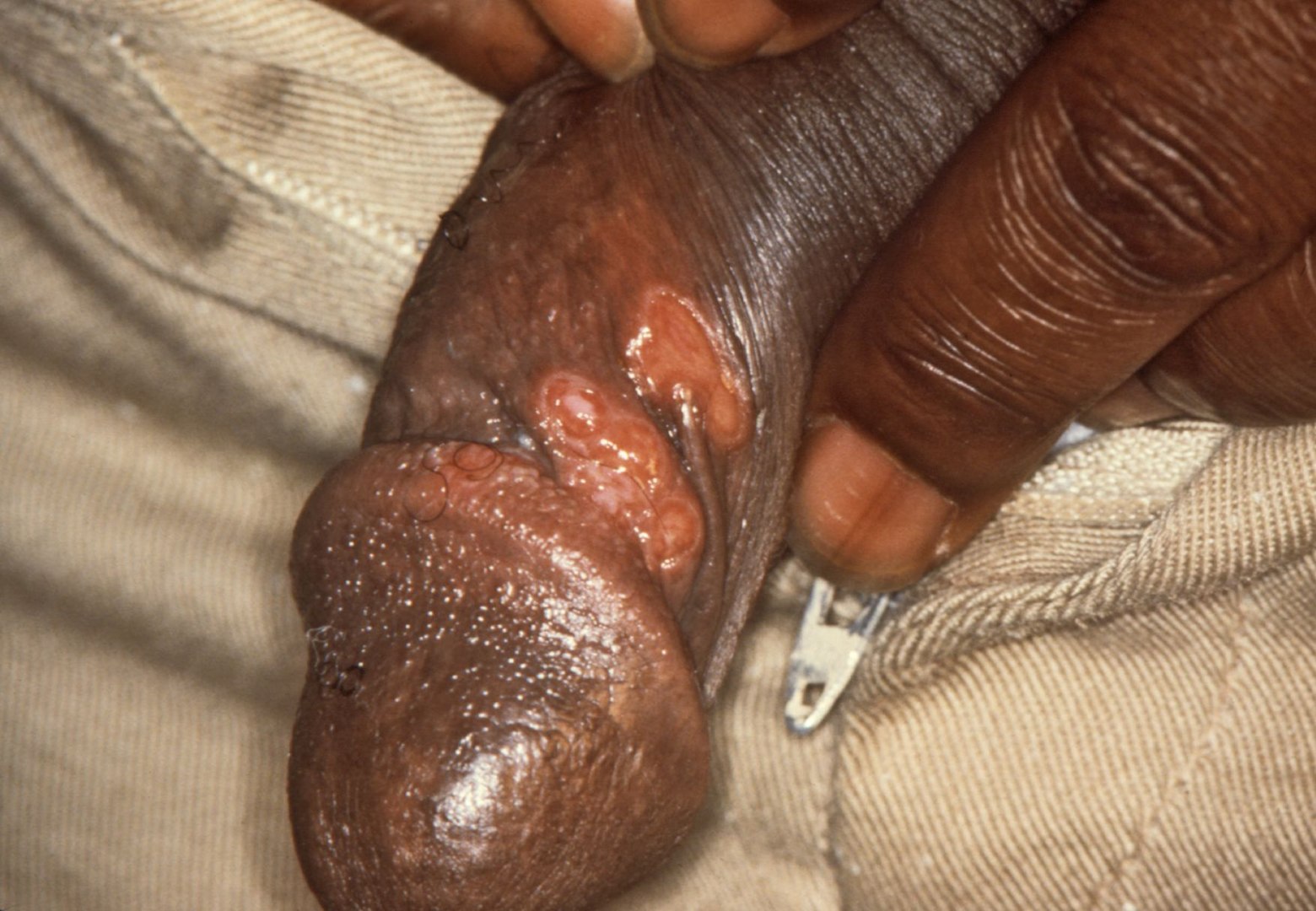
Chancro primario e indoloro de la sífilis

Chancro primario e indoloro de la sífilis (infección por T. pallidum)

Imagen: “Chancres on the penile shaft due to a primary syphilitic infection caused by Treponema pallidum 6803 lores” por M. Rein. Licencia: Public Domain
Sífilis secundaria

  • Se desarrolla entre 2 y 12 semanas después de la infección primaria.
  • Dura de 4 a 8 semanas.
  • Síntomas constitucionales:
    • Fiebre
    • Malestar
    • Mialgias
    • Cefalea
    • Anorexia Anorexia The lack or loss of appetite accompanied by an aversion to food and the inability to eat. It is the defining characteristic of the disorder anorexia nervosa. Anorexia Nervosa
    • Pérdida de peso
    • Náuseas
  • Linfadenopatía generalizada:
    • Firme
    • Sensible
    • Gomosa
  • Características mucocutáneas (todas son altamente contagiosas):
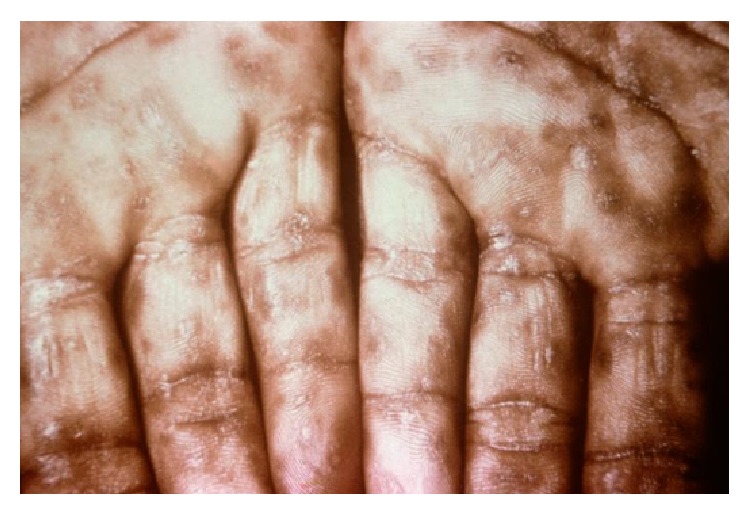
    • Erupción generalizada
      • No pruriginosa
      • Macular, papular o nodular
      • Escamosa o lisa
      • Color rojo, marrón rojizo o cobre
      • Afecta al AL Amyloidosis tronco, las extremidades, las palmas de las manos y las plantas de los LOS Neisseria pies.
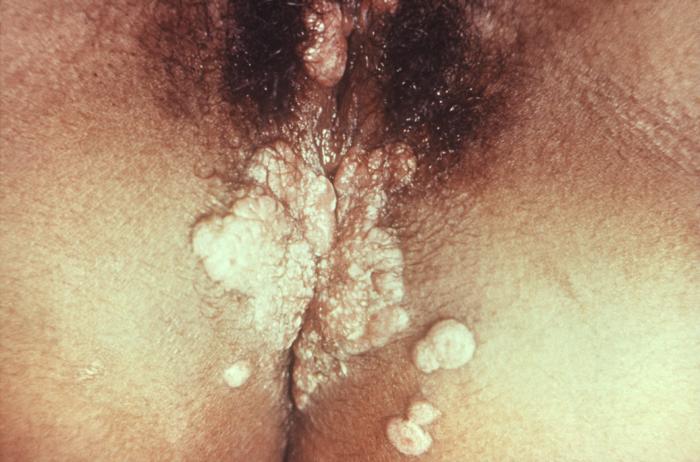
    • Condiloma lata:
      • Color blanco-grisáceo
      • Lesiones verrugosas
      • Se observa principalmente alrededor del ano y la vagina Vagina The vagina is the female genital canal, extending from the vulva externally to the cervix uteri internally. The structures have sexual, reproductive, and urinary functions and a rich blood supply, mainly arising from the internal iliac artery. Vagina, Vulva, and Pelvic Floor: Anatomy (cerca de la ubicación del chancro primario).
    • Lúes maligna:
      • Lesiones cutáneas más graves y ulcerosas
      • Se observa en EN Erythema nodosum is an immune-mediated panniculitis (inflammation of the subcutaneous fat) caused by a type IV (delayed-type) hypersensitivity reaction. It commonly manifests in young women as tender, erythematous nodules on the shins. Erythema Nodosum pacientes inmunodeprimidos (e.g., VIH).
    • Alopecia Alopecia Alopecia is the loss of hair in areas anywhere on the body where hair normally grows. Alopecia may be defined as scarring or non-scarring, localized or diffuse, congenital or acquired, reversible or permanent, or confined to the scalp or universal; however, alopecia is usually classified using the 1st 3 factors. Alopecia (pérdida de cabello)
  • Manifestaciones sistémicas:
    • Afectación del tracto gastrointestinal:
    • Afectación músculo-esquelética:
      • Periostitis Periostitis Inflammation of the periosteum. The condition is generally chronic, and is marked by tenderness and swelling of the bone and an aching pain. Acute periostitis is due to infection, is characterized by diffuse suppuration, severe pain, and constitutional symptoms, and usually results in necrosis. Reactive Arthritis
      • Sinovitis
      • Osteítis
    • Afectación renal:
      • Síndrome nefrótico
      • Nefritis aguda
      • Insuficiencia renal
    • Afectación ocular:
      • Queratitis
      • Uveítis anterior
      • Uveítis posterior
      • Neuritis óptica
    • Afectación del oído:
      • Pérdida de audición
      • Tinitus
      • Vértigo

Sífilis latente

  • Periodo entre la sífilis secundaria y la terciaria en EN Erythema nodosum is an immune-mediated panniculitis (inflammation of the subcutaneous fat) caused by a type IV (delayed-type) hypersensitivity reaction. It commonly manifests in young women as tender, erythematous nodules on the shins. Erythema Nodosum el que la enfermedad permanece latente
  • Clasificada en EN Erythema nodosum is an immune-mediated panniculitis (inflammation of the subcutaneous fat) caused by a type IV (delayed-type) hypersensitivity reaction. It commonly manifests in young women as tender, erythematous nodules on the shins. Erythema Nodosum función de la duración desde la infección inicial:
    • Temprana: < 1 año después de la infección inicial
    • Tardía: > 1 año después de la infección inicial
  • Puede durar de meses a años (a menudo décadas).
  • La enfermedad puede resolverse, recaer con lesiones cutáneas/mucosas o progresar a una sífilis terciaria.

Sífilis terciaria

  • Se observa en EN Erythema nodosum is an immune-mediated panniculitis (inflammation of the subcutaneous fat) caused by a type IV (delayed-type) hypersensitivity reaction. It commonly manifests in young women as tender, erythematous nodules on the shins. Erythema Nodosum el 33% de los LOS Neisseria casos no tratados.
  • Se produce entre 1 y 30 años después de la infección inicial.
  • Neurosífilis:
    • Meningitis Meningitis Meningitis is inflammation of the meninges, the protective membranes of the brain, and spinal cord. The causes of meningitis are varied, with the most common being bacterial or viral infection. The classic presentation of meningitis is a triad of fever, altered mental status, and nuchal rigidity. Meningitis:
      • Cefalea
      • Náusea y vómito
      • Rigidez en EN Erythema nodosum is an immune-mediated panniculitis (inflammation of the subcutaneous fat) caused by a type IV (delayed-type) hypersensitivity reaction. It commonly manifests in young women as tender, erythematous nodules on the shins. Erythema Nodosum el cuello
      • Fotofobia
      • Déficits neurológicos focales
      • Déficit de los LOS Neisseria nervios craneales
      • Convulsiones
    • Enfermedad meningovascular:
      • Endarteritis → accidente cerebrovascular
      • Meningomielitis → debilidad espástica, parestesia, atrofia muscular
    • Neurosífilis parética:
      • Meningoencefalitis crónica progresiva → atrofia cerebral
      • Alteraciones del estado de ánimo
      • Enfermedad psiquiátrica (e.g., depresión, manía, psicosis)
      • Deterioro de la memoria
      • Temblores
      • Disartria
      • Convulsión
      • Pueden producirse anomalías pupilares, pero son raras.
    • Tabes dorsalis Tabes dorsalis Parenchymatous neurosyphilis marked by slowly progressive degeneration of the posterior columns, posterior roots, and ganglia of the spinal cord. The condition tends to present 15 to 20 years after the initial infection and is characterized by lightning-like pains in the lower extremities, urinary incontinence; ataxia; severely impaired position and vibratory sense, abnormal gait, optic atrophy; Argyll-Robertson pupils, hypotonia, hyperreflexia, and trophic joint degeneration. Syphilis ( ataxia Ataxia Impairment of the ability to perform smoothly coordinated voluntary movements. This condition may affect the limbs, trunk, eyes, pharynx, larynx, and other structures. Ataxia may result from impaired sensory or motor function. Sensory ataxia may result from posterior column injury or peripheral nerve diseases. Motor ataxia may be associated with cerebellar diseases; cerebral cortex diseases; thalamic diseases; basal ganglia diseases; injury to the red nucleus; and other conditions. Ataxia-telangiectasia locomotora):
      • Desmielinización de las columnas dorsales y de las raíces dorsales
      • Ataxia Ataxia Impairment of the ability to perform smoothly coordinated voluntary movements. This condition may affect the limbs, trunk, eyes, pharynx, larynx, and other structures. Ataxia may result from impaired sensory or motor function. Sensory ataxia may result from posterior column injury or peripheral nerve diseases. Motor ataxia may be associated with cerebellar diseases; cerebral cortex diseases; thalamic diseases; basal ganglia diseases; injury to the red nucleus; and other conditions. Ataxia-telangiectasia
      • Dolor Dolor Inflammation punzante en EN Erythema nodosum is an immune-mediated panniculitis (inflammation of the subcutaneous fat) caused by a type IV (delayed-type) hypersensitivity reaction. It commonly manifests in young women as tender, erythematous nodules on the shins. Erythema Nodosum la espalda y las piernas
      • Pérdida del sentido vibratorio y de la propiocepción
      • Pérdida de reflejos
      • Parestesia
      • Articulaciones de Charcot
      • Retención de orina e incontinencia
      • Pupilas de Argyll Robertson (las pupilas se acomodan pero no reaccionan)
  • Sífilis cardiovascular:
    • Una consecuencia de la vasculitis Vasculitis Inflammation of any one of the blood vessels, including the arteries; veins; and rest of the vasculature system in the body. Systemic Lupus Erythematosus en EN Erythema nodosum is an immune-mediated panniculitis (inflammation of the subcutaneous fat) caused by a type IV (delayed-type) hypersensitivity reaction. It commonly manifests in young women as tender, erythematous nodules on the shins. Erythema Nodosum los LOS Neisseria vasa vasorum Vasa vasorum Nutrient blood vessels which supply the walls of large arteries or veins. Arteries: Histology
    • Hallazgos:
      • Aortitis Aortitis Inflammation of the wall of the aorta. Ankylosing Spondylitis
      • Aneurisma aórtico y dilatación de la raíz aórtica → regurgitación aórtica
      • Estrechamiento de la arteria coronaria
  • Sífilis terciaria benigna gomosa:
    • Gomas:
      • Lesiones blandas, aisladas, granulomatosas con necrosis Necrosis The death of cells in an organ or tissue due to disease, injury or failure of the blood supply. Ischemic Cell Damage central
      • De tamaño variable Variable Variables represent information about something that can change. The design of the measurement scales, or of the methods for obtaining information, will determine the data gathered and the characteristics of that data. As a result, a variable can be qualitative or quantitative, and may be further classified into subgroups. Types of Variables
      • Destructivas (dejan cicatrices)
    • Se produce en EN Erythema nodosum is an immune-mediated panniculitis (inflammation of the subcutaneous fat) caused by a type IV (delayed-type) hypersensitivity reaction. It commonly manifests in young women as tender, erythematous nodules on the shins. Erythema Nodosum la piel, los LOS Neisseria huesos o los LOS Neisseria órganos.
    • La afectación de los LOS Neisseria huesos puede causar un dolor Dolor Inflammation profundo y terebrante (peor por la noche).
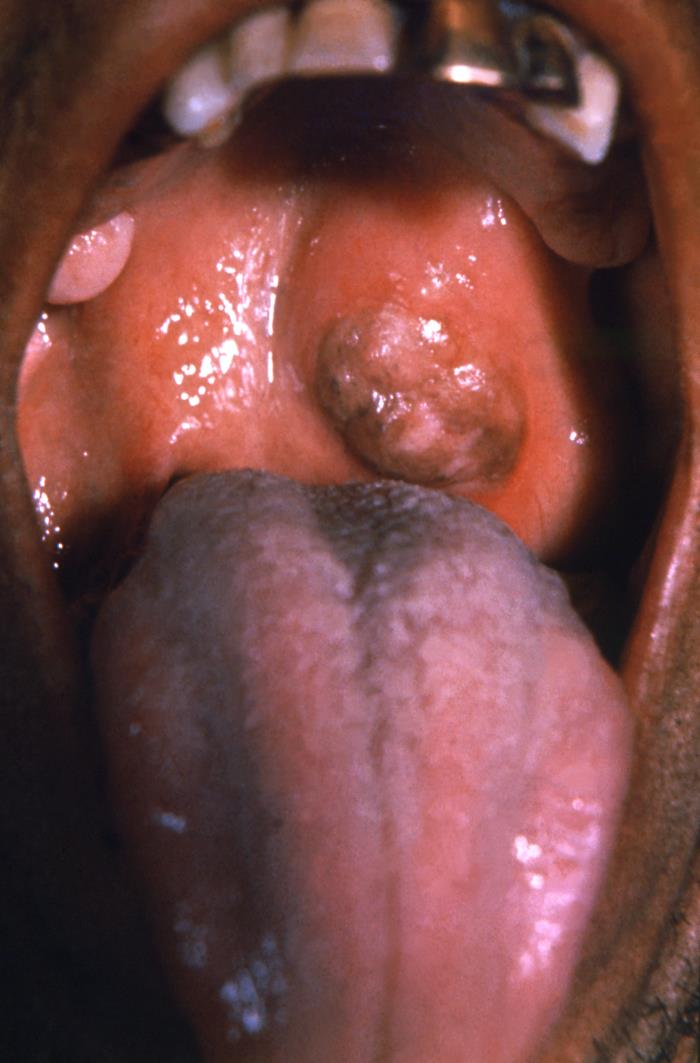
Goma de sífilis terciaria

Una goma en el paladar de un paciente con sífilis terciaria

Imagen: “16762” por CDC. Licencia: Public Domain

Diagnóstico

Enfoque general

Es difícil diagnosticar la sífilis. Sin embargo, las pruebas de laboratorio específicas y la correlación de los LOS Neisseria antecedentes y los LOS Neisseria resultados de la examinación pueden conducir a un diagnóstico.

  • Los LOS Neisseria pacientes con sospecha de infección por T. pallidum deben ser examinados con una prueba no treponémica en EN Erythema nodosum is an immune-mediated panniculitis (inflammation of the subcutaneous fat) caused by a type IV (delayed-type) hypersensitivity reaction. It commonly manifests in young women as tender, erythematous nodules on the shins. Erythema Nodosum primer lugar.
  • Una prueba no treponémica positiva debe ir seguida de una prueba treponémica confirmatoria.
  • Los LOS Neisseria pacientes también deben someterse a pruebas de otras ITS.

Pruebas no treponémicas

  • Utilizar para fines de monitoreo ya que las pruebas son sensibles, pero no específicas
  • Detecta anticuerpos anticardiolipina.
  • Opciones:
    • Prueba de reagina plasmática rápida: 1era opción
    • VDRL VDRL Treponema:
      • La mejor prueba inicial para el análisis del LCR
      • Prueba de elección para la neurosífilis
  • Resultados falsos positivos pueden ocurrir con:
    • Embarazo
    • Infecciones víricas
    • Fiebre reumática
    • Lupus eritematoso sistémico
    • Drogas

Pruebas de treponema Treponema Treponema is a gram-negative, microaerophilic spirochete. Owing to its very thin structure, it is not easily seen on Gram stain, but can be visualized using dark-field microscopy. This spirochete contains endoflagella, which allow for a characteristic corkscrew movement. Treponema

  • Pruebas de confirmación que detectan los LOS Neisseria anticuerpos contra los LOS Neisseria antígenos de Treponema Treponema Treponema is a gram-negative, microaerophilic spirochete. Owing to its very thin structure, it is not easily seen on Gram stain, but can be visualized using dark-field microscopy. This spirochete contains endoflagella, which allow for a characteristic corkscrew movement. Treponema
  • Incluso después del tratamiento, los LOS Neisseria títulos de anticuerpos treponémicos son positivos de por vida.
  • Opciones:
    • Prueba de absorción de anticuerpos treponémicos fluorescentes:
      • Puede hacerse en EN Erythema nodosum is an immune-mediated panniculitis (inflammation of the subcutaneous fat) caused by a type IV (delayed-type) hypersensitivity reaction. It commonly manifests in young women as tender, erythematous nodules on the shins. Erythema Nodosum el LCR para evaluar la neurosífilis
      • Menos específica que la prueba de LCR-VDRL
    • Ensayo de microhemaglutinación para T. pallidum ( MHA-TP MHA-TP Treponema, por sus siglas en EN Erythema nodosum is an immune-mediated panniculitis (inflammation of the subcutaneous fat) caused by a type IV (delayed-type) hypersensitivity reaction. It commonly manifests in young women as tender, erythematous nodules on the shins. Erythema Nodosum inglés)
    • Prueba de aglutinación de partículas T. pallidum ( TPPA TPPA Syphilis, por sus siglas en EN Erythema nodosum is an immune-mediated panniculitis (inflammation of the subcutaneous fat) caused by a type IV (delayed-type) hypersensitivity reaction. It commonly manifests in young women as tender, erythematous nodules on the shins. Erythema Nodosum inglés)
    • Inmunoensayo enzimático para T. pallidum ( TP-EIA TP-EIA Syphilis, por sus siglas en EN Erythema nodosum is an immune-mediated panniculitis (inflammation of the subcutaneous fat) caused by a type IV (delayed-type) hypersensitivity reaction. It commonly manifests in young women as tender, erythematous nodules on the shins. Erythema Nodosum inglés)
    • Inmunoensayo de quimioluminiscencia ( CIA CIA Syphilis)

Métodos directos

Pruebas definitivas con muestras obtenidas (como lesiones de la mucosa). Sin embargo, su uso es limitado ya que las pruebas no están disponibles de forma rutinaria.
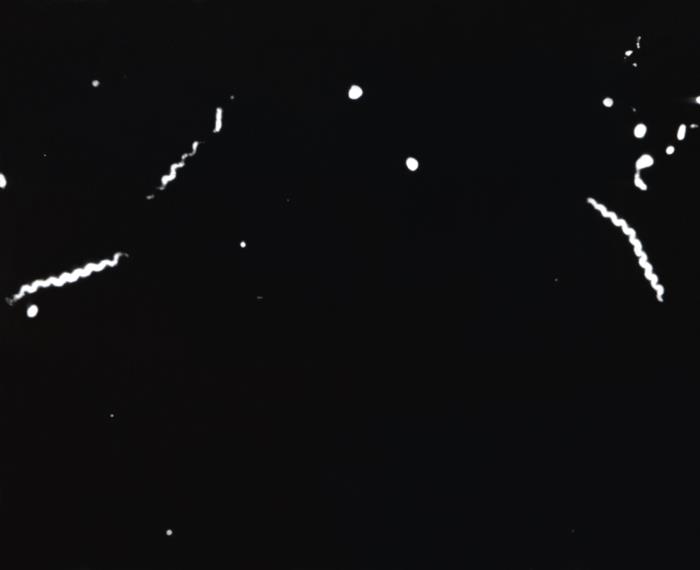
  • Microscopía de campo oscuro:
    • Una técnica de microscopía que ilumina las muestras sobre un fondo oscuro
    • Se observan espiroquetas móviles.
  • Prueba directa de anticuerpos fluorescentes (DFA, por sus siglas en EN Erythema nodosum is an immune-mediated panniculitis (inflammation of the subcutaneous fat) caused by a type IV (delayed-type) hypersensitivity reaction. It commonly manifests in young women as tender, erythematous nodules on the shins. Erythema Nodosum inglés)
  • PCR PCR Polymerase chain reaction (PCR) is a technique that amplifies DNA fragments exponentially for analysis. The process is highly specific, allowing for the targeting of specific genomic sequences, even with minuscule sample amounts. The PCR cycles multiple times through 3 phases: denaturation of the template DNA, annealing of a specific primer to the individual DNA strands, and synthesis/elongation of new DNA molecules. Polymerase Chain Reaction (PCR) para detectar ADN de T. pallidum.
Microscopía de campo oscuro de T. pallidum

Microscopía de campo oscuro de T. pallidum:
Se observan bacterias con forma de sacacorchos.

Imagen: “20488” por Richard O. Deitrick. Licencia: Public Domain

Tratamiento

Manejo de la sífilis temprana

En EN Erythema nodosum is an immune-mediated panniculitis (inflammation of the subcutaneous fat) caused by a type IV (delayed-type) hypersensitivity reaction. It commonly manifests in young women as tender, erythematous nodules on the shins. Erythema Nodosum el caso de la sífilis primaria, secundaria o tempranamente latente, se pueden utilizar los LOS Neisseria siguientes antibióticos:

  • Preferido: penicilina G IM (dosis única)
  • Regímenes alternativos:
    • Doxiciclina
    • Ceftriaxona
    • Tetraciclina
    • Amoxicilina + probenecid Probenecid The prototypical uricosuric agent. It inhibits the renal excretion of organic anions and reduces tubular reabsorption of urate. Probenecid has also been used to treat patients with renal impairment, and, because it reduces the renal tubular excretion of other drugs, has been used as an adjunct to antibacterial therapy. Gout Drugs
    • Azitromicina

Manejo de la sífilis tardía

Para la sífilis latente tardía, la sífilis terciaria o la sífilis de duración desconocida, se utiliza el siguiente régimen:

  • Preferido: penicilina G IM (3 semanas)
  • Régimen alternativo:
    • Doxiciclina
    • Ceftriaxona

Neurosífilis

  • Preferido: penicilina G IV
  • Régimen alternativo: ceftriaxona

Reacción Jarisch-Herxheimer

  • Causada por una respuesta inmunitaria a los LOS Neisseria antígenos liberados por las espiroquetas que están muriendo
  • Síntomas:
    • Escalofríos
    • Mialgias
    • Aumento de la temperatura
    • Aumento de la frecuencia respiratoria
    • Hipotensión
  • Todos los LOS Neisseria pacientes deben ser controlados tras el inicio de la terapia:
    • Ocurre en EN Erythema nodosum is an immune-mediated panniculitis (inflammation of the subcutaneous fat) caused by a type IV (delayed-type) hypersensitivity reaction. It commonly manifests in young women as tender, erythematous nodules on the shins. Erythema Nodosum 24 horas.
    • Se resuelve en EN Erythema nodosum is an immune-mediated panniculitis (inflammation of the subcutaneous fat) caused by a type IV (delayed-type) hypersensitivity reaction. It commonly manifests in young women as tender, erythematous nodules on the shins. Erythema Nodosum 12–24 horas.
    • Se ve VE Ventilation: Mechanics of Breathing en EN Erythema nodosum is an immune-mediated panniculitis (inflammation of the subcutaneous fat) caused by a type IV (delayed-type) hypersensitivity reaction. It commonly manifests in young women as tender, erythematous nodules on the shins. Erythema Nodosum el 10%–35% de los LOS Neisseria casos.
  • Se pueden dar cuidados de apoyo:
    • Antipiréticos (e.g., paracetamol paracetamol Acetaminophen is an over-the-counter nonopioid analgesic and antipyretic medication and the most commonly used analgesic worldwide. Despite the widespread use of acetaminophen, its mechanism of action is not entirely understood. Acetaminophen, aspirina, ibuprofeno)
    • Líquidos intravenosos

Related videos

Diagnóstico Diferencial

  • Chancroide: ITS causada por Haemophilus ducreyi Haemophilus ducreyi A species of Haemophilus that appears to be the pathogen or causative agent of the sexually transmitted disease, chancroid. Haemophilus. Los LOS Neisseria pacientes desarrollan úlceras genitales dolorosas y necrotizantes y linfadenopatía inguinal. El diagnóstico suele ser clínico, pero la PCR PCR Polymerase chain reaction (PCR) is a technique that amplifies DNA fragments exponentially for analysis. The process is highly specific, allowing for the targeting of specific genomic sequences, even with minuscule sample amounts. The PCR cycles multiple times through 3 phases: denaturation of the template DNA, annealing of a specific primer to the individual DNA strands, and synthesis/elongation of new DNA molecules. Polymerase Chain Reaction (PCR) y los LOS Neisseria cultivos pueden ayudar a confirmarlo. El manejo es con antibióticos macrólidos.
  • Donovanosis Donovanosis Donovanosis (also known as granuloma inguinale) is an STD caused by Klebsiella granulomatis and is mainly seen in tropical regions. The condition is characterized by chronic, progressive, ulcerating disease mostly affecting the genital region. Donovanosis: ITS causada por Klebsiella Klebsiella Klebsiella are encapsulated gram-negative, lactose-fermenting bacilli. They form pink colonies on MacConkey agar due to lactose fermentation. The main virulence factor is a polysaccharide capsule. Klebsiella pneumoniae is the most important pathogenic species. Klebsiella granulomatis. La donovanosis Donovanosis Donovanosis (also known as granuloma inguinale) is an STD caused by Klebsiella granulomatis and is mainly seen in tropical regions. The condition is characterized by chronic, progressive, ulcerating disease mostly affecting the genital region. Donovanosis también se conoce como granuloma inguinal. Las lesiones genitales progresivas y nodulares pueden convertirse en EN Erythema nodosum is an immune-mediated panniculitis (inflammation of the subcutaneous fat) caused by a type IV (delayed-type) hypersensitivity reaction. It commonly manifests in young women as tender, erythematous nodules on the shins. Erythema Nodosum ulceraciones indoloras y causar daños en EN Erythema nodosum is an immune-mediated panniculitis (inflammation of the subcutaneous fat) caused by a type IV (delayed-type) hypersensitivity reaction. It commonly manifests in young women as tender, erythematous nodules on the shins. Erythema Nodosum los LOS Neisseria tejidos. Las linfadenopatías son poco frecuentes. El diagnóstico se confirma con los LOS Neisseria hallazgos microscópicos de los LOS Neisseria cuerpos de Donovan a partir de la lesión. El tratamiento incluye antibióticos, tales como macrólidos, tetraciclinas y trimetoprima-sulfametoxazol.
  • Linfogranuloma venéreo: ITS causada por 3 cepas de Chlamydia trachomatis Chlamydia trachomatis Type species of Chlamydia causing a variety of ocular and urogenital diseases. Chlamydia. Los LOS Neisseria pacientes pueden presentar una pequeña úlcera genital transitoria e indolora, seguida de linfadenopatía (bubón). El diagnóstico es clínico, aunque las pruebas de PCR PCR Polymerase chain reaction (PCR) is a technique that amplifies DNA fragments exponentially for analysis. The process is highly specific, allowing for the targeting of specific genomic sequences, even with minuscule sample amounts. The PCR cycles multiple times through 3 phases: denaturation of the template DNA, annealing of a specific primer to the individual DNA strands, and synthesis/elongation of new DNA molecules. Polymerase Chain Reaction (PCR) pueden ayudar a confirmarlo. El tratamiento incluye tetraciclinas o eritromicina.
  • Herpes genital: Una ITS común causada por el VHS tipo 1 o 2. Los LOS Neisseria síntomas prodrómicos suelen preceder a grupos de vesículas dolorosas y llenas de líquido sobre una base eritematosa, que acaban formando úlceras que pueden unirse. Pueden aparecer linfadenopatías, disuria y neuralgias graves. El diagnóstico es generalmente clínico pero se confirma con la PCR PCR Polymerase chain reaction (PCR) is a technique that amplifies DNA fragments exponentially for analysis. The process is highly specific, allowing for the targeting of specific genomic sequences, even with minuscule sample amounts. The PCR cycles multiple times through 3 phases: denaturation of the template DNA, annealing of a specific primer to the individual DNA strands, and synthesis/elongation of new DNA molecules. Polymerase Chain Reaction (PCR) y las pruebas serológicas. El tratamiento incluye la terapia antiviral Antiviral Antivirals for Hepatitis B.
  • Verrugas genitales (también llamadas condilomas acuminados): Una infección por el virus Virus Viruses are infectious, obligate intracellular parasites composed of a nucleic acid core surrounded by a protein capsid. Viruses can be either naked (non-enveloped) or enveloped. The classification of viruses is complex and based on many factors, including type and structure of the nucleoid and capsid, the presence of an envelope, the replication cycle, and the host range. Virology del papiloma humano (VPH) que provoca una serie de hallazgos mucocutáneos, como pápulas lisas o aterciopeladas de base ancha o placas verrugosas o fungiformes rugosas, en EN Erythema nodosum is an immune-mediated panniculitis (inflammation of the subcutaneous fat) caused by a type IV (delayed-type) hypersensitivity reaction. It commonly manifests in young women as tender, erythematous nodules on the shins. Erythema Nodosum la región anogenital. El diagnóstico es clínico. El tratamiento puede incluir una terapia citodestructiva (podofilotoxina), una terapia inmunomediada ( imiquimod Imiquimod A topically-applied aminoquinoline immune modulator that induces interferon production. It is used in the treatment of external genital and perianal warts, superficial carcinoma, basal cell; and actinic keratosis. Hypertrophic and Keloid Scars) o una terapia quirúrgica.

Referencias

  1. Hicks, C. y Clement, M. (2020). Syphilis: Screening and diagnostic testing. UpToDate. Obtenido el 18 de enero de 2021, de https://www.uptodate.com/contents/syphilis-screening-and-diagnostic-testing
  2. Hicks, C. y Clement, M. (2020). Syphilis: Treatment and monitoring. UpToDate. Obtenido el 18 de enero de 2021, de https://www.uptodate.com/contents/syphilis-treatment-and-monitoring
  3. Marra, C. (2020). Neurosyphilis. UpToDate. Obtenido el 18 de enero de 2021, de https://www.uptodate.com/contents/neurosyphilis
  4. Hicks, C. y Clement, M. (2020). Syphilis: Epidemiology, pathophysiology, and clinical manifestations in patients without HIV. UpToDate. Obtenido el 18 de enero de 2021, de https://www.uptodate.com/contents/syphilis-epidemiology-pathophysiology-and-clinical-manifestations-in-patients-without-hiv
  5. Chandrasekar, P.H. (2017). Syphilis. In Bronze, M.S. (Ed.). Medscape. Obtenido el 19 de febrero de 2021, de https://emedicine.medscape.com/article/229461-overview
  6. Tudor, M.E., Al Aboud, A.M., y Gossman, W.G. (2020). Syphilis. StatPearls. Obtenido el 19 de febrero de 2021, de https://www.ncbi.nlm.nih.gov/books/NBK534780/
  7. Ha, T., Taki, P., y Dubensky, L. (2020). Neurosyphilis. StatPearls. Obtenido el 19 de febrero de 2021, de https://www.ncbi.nlm.nih.gov/books/NBK540979/
  8. Morris, S.R. (2020). Syphilis. MSD Manual Professional Version. Obtenido el 19 de febrero de 2021, de https://www.msdmanuals.com/professional/infectious-diseases/sexually-transmitted-diseases-stds/syphilis

¡Crea tu cuenta gratis o inicia una sesión para seguir leyendo!

Regístrate ahora y obtén acceso gratuito a Lecturio con páginas de concepto, videos médicos y cuestionarios para tu educación médica.

User Reviews

Que tengas una sesión de estudio alegre y navideña 🎁 Ahorra 50% en todos los planes >>

Details