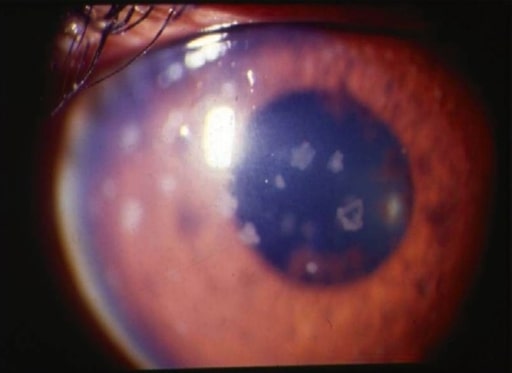
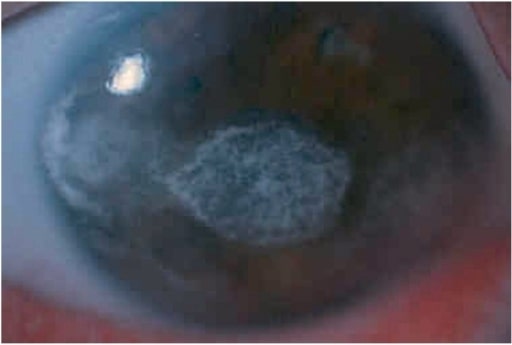
Domina Conceptos Médicos

Estudia para la escuela de medicina y tus examenes con Lecturio.

Enfermedades de la Úvea

La uveítis es la inflamación de la úvea, la capa media pigmentada del ojo, que comprende el iris, el cuerpo ciliar y la coroides. La condición se clasifica en EN Erythema nodosum is an immune-mediated panniculitis (inflammation of the subcutaneous fat) caused by a type IV (delayed-type) hypersensitivity reaction. It commonly manifests in young women as tender, erythematous nodules on the shins. Erythema Nodosum función de la localización de la enfermedad; la uveítis anterior es la más común. La uveítis puede ser causada por una infección o una enfermedad sistémica, pero en EN Erythema nodosum is an immune-mediated panniculitis (inflammation of the subcutaneous fat) caused by a type IV (delayed-type) hypersensitivity reaction. It commonly manifests in young women as tender, erythematous nodules on the shins. Erythema Nodosum algunos casos la causa es idiopática. Los LOS Neisseria pacientes presentan visión borrosa, enrojecimiento del ojo y dolor Dolor Inflammation (frecuentemente en EN Erythema nodosum is an immune-mediated panniculitis (inflammation of the subcutaneous fat) caused by a type IV (delayed-type) hypersensitivity reaction. It commonly manifests in young women as tender, erythematous nodules on the shins. Erythema Nodosum uveítis anterior), o visión reducida y miodesopsias ( en EN Erythema nodosum is an immune-mediated panniculitis (inflammation of the subcutaneous fat) caused by a type IV (delayed-type) hypersensitivity reaction. It commonly manifests in young women as tender, erythematous nodules on the shins. Erythema Nodosum la uveítis intermedia y posterior). El diagnóstico se realiza mediante una fundoscopia dilatada y un examen con lámpara de hendidura. El tratamiento para la uveítis anterior consiste en EN Erythema nodosum is an immune-mediated panniculitis (inflammation of the subcutaneous fat) caused by a type IV (delayed-type) hypersensitivity reaction. It commonly manifests in young women as tender, erythematous nodules on the shins. Erythema Nodosum esteroides tópicos, mientras que la uveítis en EN Erythema nodosum is an immune-mediated panniculitis (inflammation of the subcutaneous fat) caused by a type IV (delayed-type) hypersensitivity reaction. It commonly manifests in young women as tender, erythematous nodules on the shins. Erythema Nodosum zonas más profundas requiere terapia periocular o sistémica. La uveítis por infecciones y trastornos sistémicos requiere un tratamiento dirigido a la etiología.

Last updated: Dec 15, 2025

Editorial responsibility: Stanley Oiseth, Lindsay Jones, Evelin Maza

Descripción General

Definición

La uveítis es una inflamación de la úvea, la capa media del ojo, que comprende el iris, el cuerpo ciliar y la coroides.
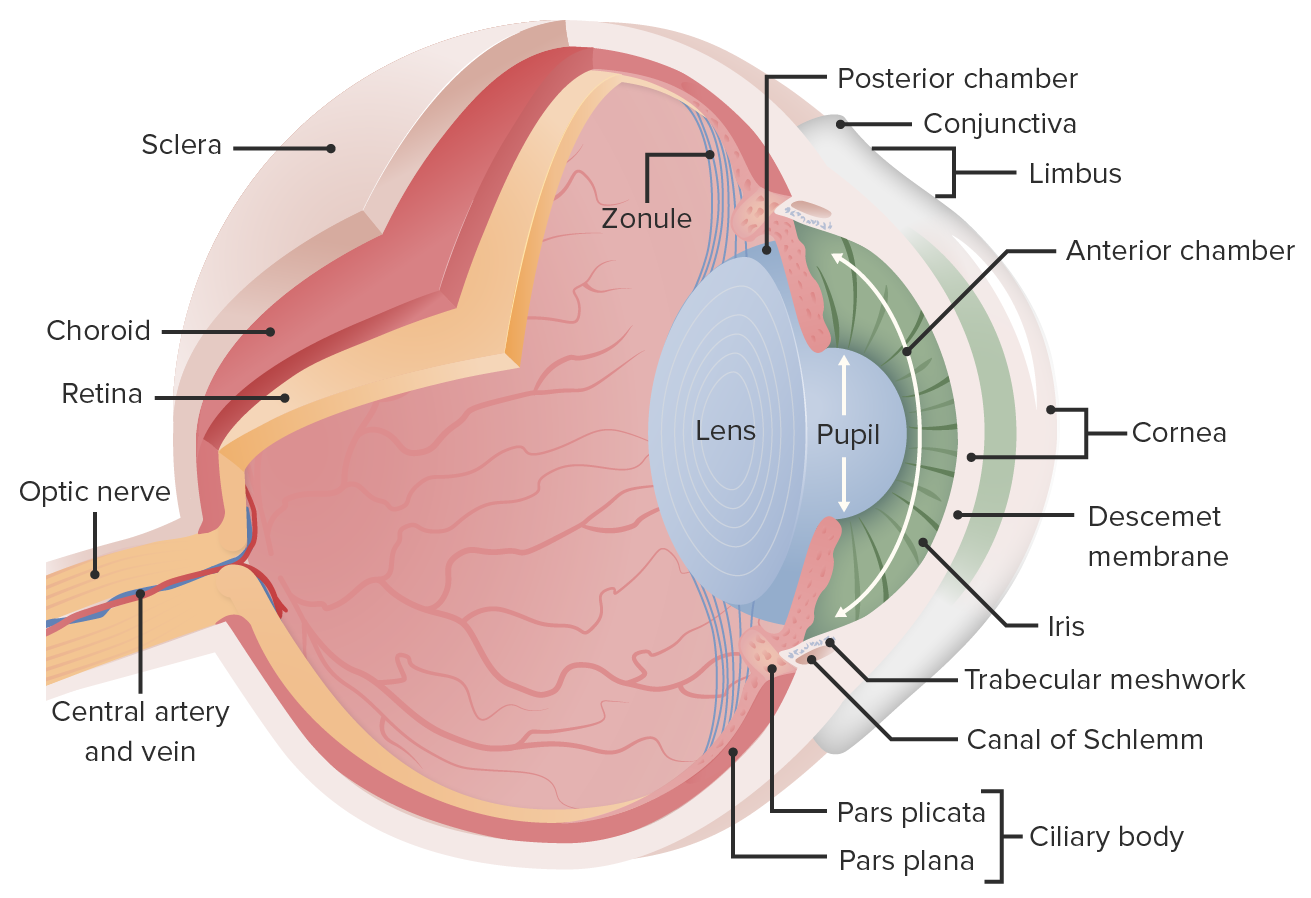
Anatomía

  • Úvea anterior
    • Parte anterior del cuerpo ciliar (pars plicata):
      • Controla la acomodación modificando la forma del cristalino
      • El epitelio produce el humor Humor Defense Mechanisms acuoso.
    • Iris: diafragma pigmentado que controla la cantidad de luz que entra en EN Erythema nodosum is an immune-mediated panniculitis (inflammation of the subcutaneous fat) caused by a type IV (delayed-type) hypersensitivity reaction. It commonly manifests in young women as tender, erythematous nodules on the shins. Erythema Nodosum el ojo mediante la midriasis Midriasis Pupil: Physiology and Abnormalities o la miosis Miosis Pupil: Physiology and Abnormalities
  • Úvea intermedia
    • Porción posterior del cuerpo ciliar (pars plana)
    • Cámara vítrea: contiene el humor Humor Defense Mechanisms vítreo
  • Úvea posterior
    • Coroides:
      • Estructura vascular que proporciona soporte y nutrición a la retina Retina The ten-layered nervous tissue membrane of the eye. It is continuous with the optic nerve and receives images of external objects and transmits visual impulses to the brain. Its outer surface is in contact with the choroid and the inner surface with the vitreous body. The outermost layer is pigmented, whereas the inner nine layers are transparent. Eye: Anatomy
      • Continúa anteriormente con el cuerpo ciliar
    • Retina Retina The ten-layered nervous tissue membrane of the eye. It is continuous with the optic nerve and receives images of external objects and transmits visual impulses to the brain. Its outer surface is in contact with the choroid and the inner surface with the vitreous body. The outermost layer is pigmented, whereas the inner nine layers are transparent. Eye: Anatomy:
      • Capa interna
      • Contiene fotorreceptores que convierten los LOS Neisseria estímulos luminosos en EN Erythema nodosum is an immune-mediated panniculitis (inflammation of the subcutaneous fat) caused by a type IV (delayed-type) hypersensitivity reaction. It commonly manifests in young women as tender, erythematous nodules on the shins. Erythema Nodosum impulsos nerviosos
Ilustración de la anatomía esencial del ojo

Esta imagen muestra la anatomía del ojo. En las cataratas, se produce un enturbiamiento del cristalino, que opacifica la luz cuando se proyecta en la retina; esto provoca una reducción de la visión, sobre todo por la noche, cuando los niveles de luz son bajos.

Imagen por Lecturio.
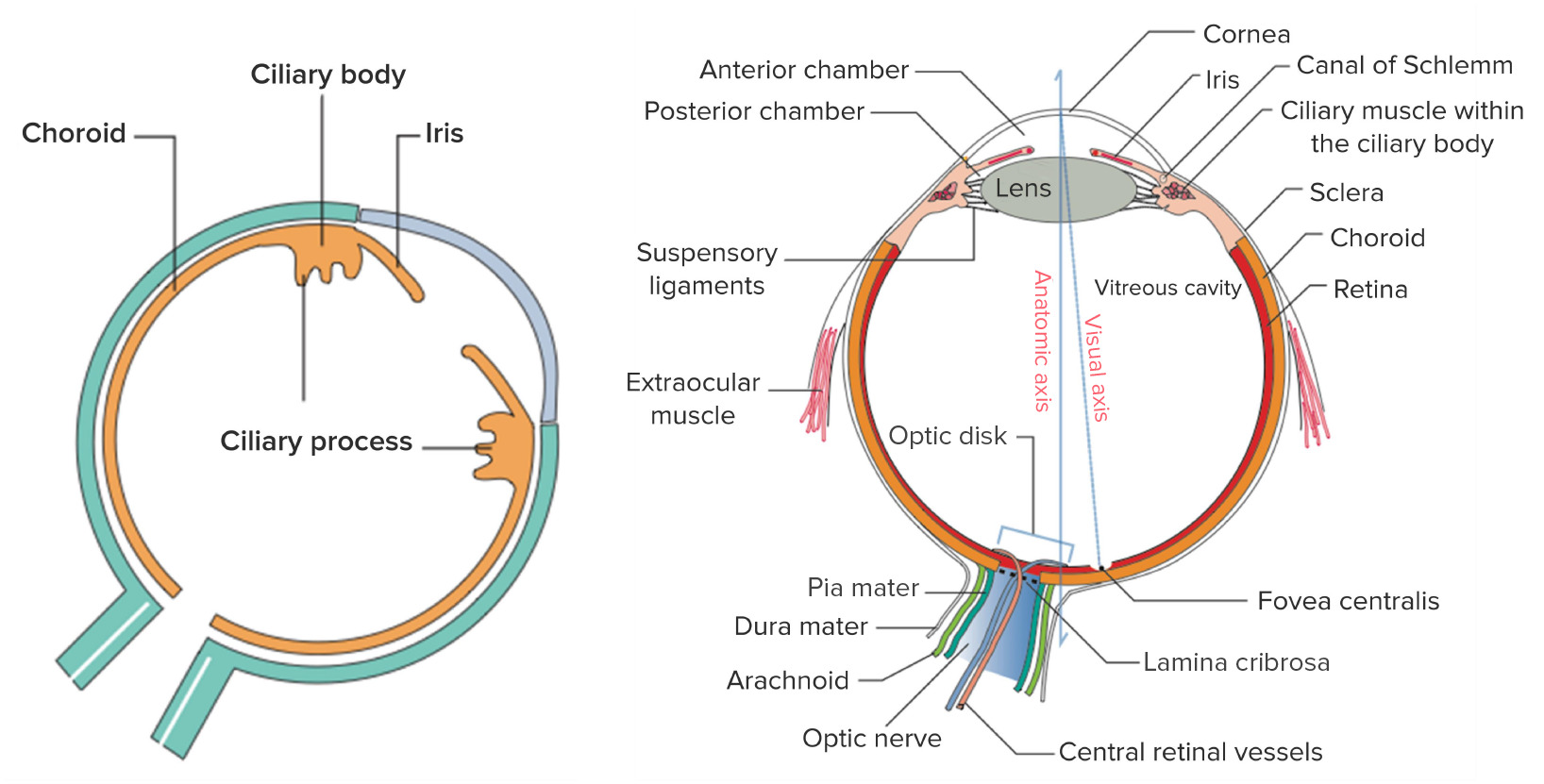
Tipos

  • Uveítis anterior
    • La más común
    • Iritis Iritis Inflammation of the iris characterized by circumcorneal injection, aqueous flare, keratotic precipitates, and constricted and sluggish pupil along with discoloration of the iris. Leprosy: iris
    • Ciclitis anterior: cuerpo ciliar
    • Iridociclitis: iris y cuerpo ciliar
  • Uveítis intermedia
    • Pars planitis Pars Planitis Form of granulomatous uveitis occurring in the region of the pars plana. This disorder is a common condition with no detectable focal pathology. It causes fibrovascular proliferation at the inferior ora serrata. Diseases of the Uvea: pars plana
    • Vitreitis/hialitis: humor Humor Defense Mechanisms vítreo
  • Uveítis posterior
    • Coroiditis: coroides
    • Coriorretinitis/retinocoroiditis: coroides y retina Retina The ten-layered nervous tissue membrane of the eye. It is continuous with the optic nerve and receives images of external objects and transmits visual impulses to the brain. Its outer surface is in contact with the choroid and the inner surface with the vitreous body. The outermost layer is pigmented, whereas the inner nine layers are transparent. Eye: Anatomy
    • Retinitis: retina Retina The ten-layered nervous tissue membrane of the eye. It is continuous with the optic nerve and receives images of external objects and transmits visual impulses to the brain. Its outer surface is in contact with the choroid and the inner surface with the vitreous body. The outermost layer is pigmented, whereas the inner nine layers are transparent. Eye: Anatomy
    • Neurorretinitis: retina Retina The ten-layered nervous tissue membrane of the eye. It is continuous with the optic nerve and receives images of external objects and transmits visual impulses to the brain. Its outer surface is in contact with the choroid and the inner surface with the vitreous body. The outermost layer is pigmented, whereas the inner nine layers are transparent. Eye: Anatomy y nervio óptico
  • Panuveítis
    • Inflamación de todas las capas
Components of the uvea

Izquierda: los componentes de la úvea, la capa vascular media del ojo
Derecha: estructura general del ojo
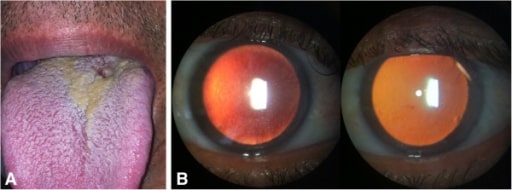
Imagen por Lecturio.

Epidemiología y Etiología

Epidemiología

  • Incidencia: 25 casos por cada 100 000 personas
  • La uveítis anterior, el tipo más frecuente, representa el 50% de los LOS Neisseria casos.
  • La patología sistémica subyacente afecta a la predisposición racial:
    • En EN Erythema nodosum is an immune-mediated panniculitis (inflammation of the subcutaneous fat) caused by a type IV (delayed-type) hypersensitivity reaction. It commonly manifests in young women as tender, erythematous nodules on the shins. Erythema Nodosum afroamericanos: sarcoidosis Sarcoidosis Sarcoidosis is a multisystem inflammatory disease that causes noncaseating granulomas. The exact etiology is unknown. Sarcoidosis usually affects the lungs and thoracic lymph nodes, but it can also affect almost every system in the body, including the skin, heart, and eyes, most commonly. Sarcoidosis, lupus eritematoso sistémico
    • En EN Erythema nodosum is an immune-mediated panniculitis (inflammation of the subcutaneous fat) caused by a type IV (delayed-type) hypersensitivity reaction. It commonly manifests in young women as tender, erythematous nodules on the shins. Erythema Nodosum asiáticos: Enfermedad de Behcet
    • En EN Erythema nodosum is an immune-mediated panniculitis (inflammation of the subcutaneous fat) caused by a type IV (delayed-type) hypersensitivity reaction. It commonly manifests in young women as tender, erythematous nodules on the shins. Erythema Nodosum caucásicos: Espondiloartropatía con antígeno leucocitario humano B27 (HLA-B27), esclerosis múltiple
    • Descendencias de Oriente Medio: Enfermedad de Behcet

Etiología

  • Infecciones virales:
    • Virus Virus Viruses are infectious, obligate intracellular parasites composed of a nucleic acid core surrounded by a protein capsid. Viruses can be either naked (non-enveloped) or enveloped. The classification of viruses is complex and based on many factors, including type and structure of the nucleoid and capsid, the presence of an envelope, the replication cycle, and the host range. Virology del herpes simple ( HSV HSV Herpes simplex virus (HSV) is a double-stranded DNA virus belonging to the family Herpesviridae. Herpes simplex virus commonly causes recurrent infections involving the skin and mucosal surfaces, including the mouth, lips, eyes, and genitals. Herpes Simplex Virus 1 and 2, por sus siglas en EN Erythema nodosum is an immune-mediated panniculitis (inflammation of the subcutaneous fat) caused by a type IV (delayed-type) hypersensitivity reaction. It commonly manifests in young women as tender, erythematous nodules on the shins. Erythema Nodosum inglés) 1 y 2
    • Citomegalovirus (CMV): se encuentra en EN Erythema nodosum is an immune-mediated panniculitis (inflammation of the subcutaneous fat) caused by a type IV (delayed-type) hypersensitivity reaction. It commonly manifests in young women as tender, erythematous nodules on the shins. Erythema Nodosum pacientes inmunocomprometidos (VIH con recuento bajo de CD4)
    • Virus Virus Viruses are infectious, obligate intracellular parasites composed of a nucleic acid core surrounded by a protein capsid. Viruses can be either naked (non-enveloped) or enveloped. The classification of viruses is complex and based on many factors, including type and structure of the nucleoid and capsid, the presence of an envelope, the replication cycle, and the host range. Virology de la varicela-zóster (VZV, por sus siglas en EN Erythema nodosum is an immune-mediated panniculitis (inflammation of the subcutaneous fat) caused by a type IV (delayed-type) hypersensitivity reaction. It commonly manifests in young women as tender, erythematous nodules on the shins. Erythema Nodosum inglés)
  • Infecciones bacterianas:
    • Sífilis
    • Tuberculosis Tuberculosis Tuberculosis (TB) is an infectious disease caused by Mycobacterium tuberculosis complex bacteria. The bacteria usually attack the lungs but can also damage other parts of the body. Approximately 30% of people around the world are infected with this pathogen, with the majority harboring a latent infection. Tuberculosis spreads through the air when a person with active pulmonary infection coughs or sneezes. Tuberculosis (TBC)
    • Bartonella henselae Bartonella henselae A species of gram-negative bacteria that is the etiologic agent of bacillary angiomatosis. This organism can also be a cause of cat-scratch disease in immunocompetent patients. Bartonella (enfermedad por arañazo de gato)
  • Infecciones fúngicas:
    • Histoplasmosis Histoplasmosis Histoplasmosis is an infection caused by Histoplasma capsulatum, a dimorphic fungus. Transmission is through inhalation, and exposure to soils containing bird or bat droppings increases the risk of infection. Most infections are asymptomatic; however, immunocompromised individuals generally develop acute pulmonary infection, chronic infection, or even disseminated disease. Histoplasma/Histoplasmosis
    • Blastomicosis
    • Candidiasis Candidiasis Candida is a genus of dimorphic, opportunistic fungi. Candida albicans is part of the normal human flora and is the most common cause of candidiasis. The clinical presentation varies and can include localized mucocutaneous infections (e.g., oropharyngeal, esophageal, intertriginous, and vulvovaginal candidiasis) and invasive disease (e.g., candidemia, intraabdominal abscess, pericarditis, and meningitis). Candida/Candidiasis
  • Infecciones parasitarias:
    • Toxoplasmosis Toxoplasmosis Toxoplasmosis is an infectious disease caused by Toxoplasma gondii, an obligate intracellular protozoan parasite. Felines are the definitive host, but transmission to humans can occur through contact with cat feces or the consumption of contaminated foods. The clinical presentation and complications depend on the host’s immune status. Toxoplasma/Toxoplasmosis
    • Cisticercosis
    • Oncocercosis
  • Causas inmunológicas sistémicas:
    • Sarcoidosis Sarcoidosis Sarcoidosis is a multisystem inflammatory disease that causes noncaseating granulomas. The exact etiology is unknown. Sarcoidosis usually affects the lungs and thoracic lymph nodes, but it can also affect almost every system in the body, including the skin, heart, and eyes, most commonly. Sarcoidosis
    • Enfermedades asociadas al AL Amyloidosis HLA-B27
      • Uveítis unilateral: espondilitis anquilosante, artritis reactiva
      • Uveítis bilateral: artritis psoriásica, enfermedad de Crohn, colitis Colitis Inflammation of the colon section of the large intestine, usually with symptoms such as diarrhea (often with blood and mucus), abdominal pain, and fever. Pseudomembranous Colitis ulcerosa
    • Artritis idiopática juvenil
    • Nefritis tubulointersticial con uveítis
    • Enfermedad de Behcet: frecuentemente es una panuveítis recurrente
    • Esclerosis múltiple
    • Lupus eritematoso sistémico
    • Síndrome de Vogt-Koyanagi-Harada
  • Medicamentos:
  • No presentan afectación extraocular:
    • Pars planitis Pars Planitis Form of granulomatous uveitis occurring in the region of the pars plana. This disorder is a common condition with no detectable focal pathology. It causes fibrovascular proliferation at the inferior ora serrata. Diseases of the Uvea: uveítis intermedia que afecta a la pars plana
    • Oftalmía simpática: inflamación del ojo contralateral tras una lesión penetrante en EN Erythema nodosum is an immune-mediated panniculitis (inflammation of the subcutaneous fat) caused by a type IV (delayed-type) hypersensitivity reaction. It commonly manifests in young women as tender, erythematous nodules on the shins. Erythema Nodosum el otro ojo
    • Uveítis/coriorretinopatía en EN Erythema nodosum is an immune-mediated panniculitis (inflammation of the subcutaneous fat) caused by a type IV (delayed-type) hypersensitivity reaction. It commonly manifests in young women as tender, erythematous nodules on the shins. Erythema Nodosum perdigonada: afecta a la úvea posterior y se asocia al AL Amyloidosis HLA-A29
    • Traumatismos: incluye cirugías intraoculares con uveítis autolimitada
  • Idiopática
Uveítis anterior bilateral no granulomatosa

Uveítis anterior bilateral no granulomatosa asociada a la sífilis. (A): Lesión consistente con chancro sifilítico en la base de la lengua; (B): Examen con lámpara de hendidura: pequeños precipitados queráticos (derecha) y depósitos de fibrina sobre el endotelio corneal (izquierda) en retroiluminación.

Imagen: “initial presentation of syphilis” por Hospital de Olhos Santa Luzia, Estrada do Encanamento 909, CEP 52070-000, Recife-Pernambuco, Brazil. Licencia: CC BY 2.0
Fisiopatología

  • Factores de riesgo que favorecen la uveítis:
    • Enfermedad inflamatoria sistémica, especialmente síndromes HLA-B27
    • Estado de inmunosupresión
    • Tabaquismo
  • Mecanismos propuestos:
    • Contaminación microbiana: En EN Erythema nodosum is an immune-mediated panniculitis (inflammation of the subcutaneous fat) caused by a type IV (delayed-type) hypersensitivity reaction. It commonly manifests in young women as tender, erythematous nodules on the shins. Erythema Nodosum casos de traumatismo, la lesión directa y la necrosis Necrosis The death of cells in an organ or tissue due to disease, injury or failure of the blood supply. Ischemic Cell Damage desencadenan una respuesta inflamatoria en EN Erythema nodosum is an immune-mediated panniculitis (inflammation of the subcutaneous fat) caused by a type IV (delayed-type) hypersensitivity reaction. It commonly manifests in young women as tender, erythematous nodules on the shins. Erythema Nodosum la zona afectada.
    • Mimetismo molecular: los LOS Neisseria antígenos de agentes infecciosos o extraños presentan reacciones cruzadas con los LOS Neisseria autoantígenos oculares.
    • Efecto indirecto de la infección: Los LOS Neisseria antígenos extraños de la infección no son detectados en EN Erythema nodosum is an immune-mediated panniculitis (inflammation of the subcutaneous fat) caused by a type IV (delayed-type) hypersensitivity reaction. It commonly manifests in young women as tender, erythematous nodules on the shins. Erythema Nodosum los LOS Neisseria tejidos oculares y conducen a un daño tisular recurrente mediado por la inmunidad.

Presentación Clínica y Diagnóstico

Presentación clínica

  • Uveítis anterior:
    • Unilateral o bilateral
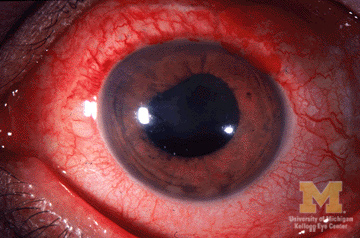
    • Dolor Dolor Inflammation, fotofobia, enrojecimiento, lagrimeo excesivo y reducción de la agudeza visual
    • Pupila constreñida o irregular: por sinequia posterior (adherencias del iris al AL Amyloidosis cristalino anterior)
  • Uveítis intermedia y posterior:
    • No suele haber dolor Dolor Inflammation ni enrojecimiento
    • Agudeza visual reducida, miodesopsias o “cuerpos flotantes”, defecto del campo visual
  • Panuveítis: se presenta con cualquiera de los LOS Neisseria síntomas mencionados anteriormente
Uveítis anterior

Imagen que muestra el enrojecimiento del ojo y la pupila irregular de la uveítis anterior

Imagen: “Anterior-uveitis” por Jonathan Trobe, M.D. Licencia: CC BY 3.0

Diagnóstico

El diagnóstico se realiza mediante un examen de fondo de ojo dilatado y un examen con lámpara de hendidura. La depresión escleral es una maniobra adicional para visualizar las estructuras posteriores al AL Amyloidosis cristalino.

Hallazgos

  • Uveítis anterior:
    • Leucocitos en EN Erythema nodosum is an immune-mediated panniculitis (inflammation of the subcutaneous fat) caused by a type IV (delayed-type) hypersensitivity reaction. It commonly manifests in young women as tender, erythematous nodules on the shins. Erythema Nodosum la cámara anterior
    • “Flare”: acumulación de proteínas en EN Erythema nodosum is an immune-mediated panniculitis (inflammation of the subcutaneous fat) caused by a type IV (delayed-type) hypersensitivity reaction. It commonly manifests in young women as tender, erythematous nodules on the shins. Erythema Nodosum el humor Humor Defense Mechanisms acuoso por cambios vasculares
    • Precipitados queráticos: sello distintivo de la iritis Iritis Inflammation of the iris characterized by circumcorneal injection, aqueous flare, keratotic precipitates, and constricted and sluggish pupil along with discoloration of the iris. Leprosy
    • Rubor Rubor Inflammation ciliar: enrojecimiento difuso en EN Erythema nodosum is an immune-mediated panniculitis (inflammation of the subcutaneous fat) caused by a type IV (delayed-type) hypersensitivity reaction. It commonly manifests in young women as tender, erythematous nodules on the shins. Erythema Nodosum el limbo
    • Hipopión: estratificación de leucocitos en EN Erythema nodosum is an immune-mediated panniculitis (inflammation of the subcutaneous fat) caused by a type IV (delayed-type) hypersensitivity reaction. It commonly manifests in young women as tender, erythematous nodules on the shins. Erythema Nodosum la cámara anterior del ojo
    • Hallazgos que indican complicaciones:
      • Cataratas
      • Glaucoma Glaucoma Glaucoma is an optic neuropathy characterized by typical visual field defects and optic nerve atrophy seen as optic disc cupping on examination. The acute form of glaucoma is a medical emergency. Glaucoma is often, but not always, caused by increased intraocular pressure (IOP). Glaucoma
      • Queratopatía en EN Erythema nodosum is an immune-mediated panniculitis (inflammation of the subcutaneous fat) caused by a type IV (delayed-type) hypersensitivity reaction. It commonly manifests in young women as tender, erythematous nodules on the shins. Erythema Nodosum banda: depósitos de calcio en EN Erythema nodosum is an immune-mediated panniculitis (inflammation of the subcutaneous fat) caused by a type IV (delayed-type) hypersensitivity reaction. It commonly manifests in young women as tender, erythematous nodules on the shins. Erythema Nodosum la córnea
      • Formación de sinequias
  • Uveítis intermedia:
    • La neblina vítrea: células inflamatorias y proteínas en EN Erythema nodosum is an immune-mediated panniculitis (inflammation of the subcutaneous fat) caused by a type IV (delayed-type) hypersensitivity reaction. It commonly manifests in young women as tender, erythematous nodules on the shins. Erythema Nodosum el humor Humor Defense Mechanisms vítreo
    • “Bolas de nieve”: gran colección inflamatoria en EN Erythema nodosum is an immune-mediated panniculitis (inflammation of the subcutaneous fat) caused by a type IV (delayed-type) hypersensitivity reaction. It commonly manifests in young women as tender, erythematous nodules on the shins. Erythema Nodosum el humor Humor Defense Mechanisms vítreo
    • “Banco de nieve”: exudados de la pars plana
    • Edema Edema Edema is a condition in which excess serous fluid accumulates in the body cavity or interstitial space of connective tissues. Edema is a symptom observed in several medical conditions. It can be categorized into 2 types, namely, peripheral (in the extremities) and internal (in an organ or body cavity). Edema macular cistoide: áreas de líquido en EN Erythema nodosum is an immune-mediated panniculitis (inflammation of the subcutaneous fat) caused by a type IV (delayed-type) hypersensitivity reaction. It commonly manifests in young women as tender, erythematous nodules on the shins. Erythema Nodosum forma de quiste en EN Erythema nodosum is an immune-mediated panniculitis (inflammation of the subcutaneous fat) caused by a type IV (delayed-type) hypersensitivity reaction. It commonly manifests in young women as tender, erythematous nodules on the shins. Erythema Nodosum la mácula
  • Uveítis posterior:
    • Manchas coriorretinianas focales
    • Blanqueamiento de la retina Retina The ten-layered nervous tissue membrane of the eye. It is continuous with the optic nerve and receives images of external objects and transmits visual impulses to the brain. Its outer surface is in contact with the choroid and the inner surface with the vitreous body. The outermost layer is pigmented, whereas the inner nine layers are transparent. Eye: Anatomy
    • Desprendimiento de retina Retina The ten-layered nervous tissue membrane of the eye. It is continuous with the optic nerve and receives images of external objects and transmits visual impulses to the brain. Its outer surface is in contact with the choroid and the inner surface with the vitreous body. The outermost layer is pigmented, whereas the inner nine layers are transparent. Eye: Anatomy
    • Edema Edema Edema is a condition in which excess serous fluid accumulates in the body cavity or interstitial space of connective tissues. Edema is a symptom observed in several medical conditions. It can be categorized into 2 types, namely, peripheral (in the extremities) and internal (in an organ or body cavity). Edema del nervio óptico

Las pruebas de laboratorio y los LOS Neisseria estudios imagenológicos adicionales están indicados cuando los LOS Neisseria signos y síntomas extraoculares son atribuibles a una enfermedad causal (e.g., sarcoidosis Sarcoidosis Sarcoidosis is a multisystem inflammatory disease that causes noncaseating granulomas. The exact etiology is unknown. Sarcoidosis usually affects the lungs and thoracic lymph nodes, but it can also affect almost every system in the body, including the skin, heart, and eyes, most commonly. Sarcoidosis, sífilis).
Tratamiento

Uveítis infecciosa

  • Tratamiento dirigido al AL Amyloidosis agente causal
  • Antibióticos (i.e., trimetoprim/sulfametoxazol para la coriorretinitis toxoplásmica) o antivirales (i.e., aciclovir para la uveítis herpética)

Uveítis no infecciosa

  • Uveítis anterior:
    • Esteroides tópicos: la dosis depende de la gravedad de la enfermedad
    • Agente ciclopléjico (ciclopentolato):
  • Uveítis intermedia o posterior:
    • No responde a la medicación tópica
    • Inyección periocular o intraocular de glucocorticoides
  • Terapia sistémica o con inmunosupresores
    • Para los LOS Neisseria casos que no pueden tratarse con inyecciones locales o cuando haya resistencia a la terapia inicial
    • Glucocorticoides orales
    • Antimetabolitos (metotrexato, azatioprina, micofenolato)
    • Anti-factor de necrosis Necrosis The death of cells in an organ or tissue due to disease, injury or failure of the blood supply. Ischemic Cell Damage tumoral ( TNF TNF Tumor necrosis factor (TNF) is a major cytokine, released primarily by macrophages in response to stimuli. The presence of microbial products and dead cells and injury are among the stimulating factors. This protein belongs to the TNF superfamily, a group of ligands and receptors performing functions in inflammatory response, morphogenesis, and cell proliferation. Tumor Necrosis Factor (TNF))-alfa ( adalimumab Adalimumab A humanized monoclonal antibody that binds specifically to tnf-alpha and blocks its interaction with endogenous tnf receptors to modulate inflammation. It is used in the treatment of rheumatoid arthritis; psoriatic arthritis; Crohn’s disease and ulcerative colitis. Disease-Modifying Antirheumatic Drugs (DMARDs))
  • Implante intraocular liberador de glucocorticoides
    • Para la uveítis posterior resistente
    • Efecto duradero, hasta 3 años
    • Complicaciones: endoftalmitis, formación de cataratas, hipertensión ocular

Diagnóstico Diferencial

  • Conjuntivitis: inflamación de la conjuntiva, el revestimiento exterior del ojo. La etiología puede ser infecciosa o no infecciosa. Los LOS Neisseria pacientes presentan enrojecimiento y secreción en EN Erythema nodosum is an immune-mediated panniculitis (inflammation of the subcutaneous fat) caused by a type IV (delayed-type) hypersensitivity reaction. It commonly manifests in young women as tender, erythematous nodules on the shins. Erythema Nodosum uno o ambos ojos. La conjuntivitis bacteriana suele presentar una secreción purulenta, mientras que las causas virales presentan una secreción acuosa.
  • Hemorragia subconjuntival: aparición de zonas delimitadas de sangre extravasada por debajo de la superficie del ojo. La condición es asintomática y puede ocurrir espontáneamente o con maniobras de Valsalva (e.g., tos TOS Thoracic outlet syndrome (TOS) is a broad term used for a spectrum of syndromes related to the general region of the thoracic outlet, which involves the compression or irritation of elements of the brachial plexus, subclavian artery, or subclavian vein. Thoracic Outlet Syndrome, estornudos o vómitos). El diagnóstico se confirma por la agudeza visual normal y la ausencia de secreción, fotofobia o sensación de cuerpo extraño. La hemorragia subconjuntival suele resolverse en EN Erythema nodosum is an immune-mediated panniculitis (inflammation of the subcutaneous fat) caused by a type IV (delayed-type) hypersensitivity reaction. It commonly manifests in young women as tender, erythematous nodules on the shins. Erythema Nodosum 1–2 semanas.
  • Desprendimiento de retina Retina The ten-layered nervous tissue membrane of the eye. It is continuous with the optic nerve and receives images of external objects and transmits visual impulses to the brain. Its outer surface is in contact with the choroid and the inner surface with the vitreous body. The outermost layer is pigmented, whereas the inner nine layers are transparent. Eye: Anatomy: separación de la retina Retina The ten-layered nervous tissue membrane of the eye. It is continuous with the optic nerve and receives images of external objects and transmits visual impulses to the brain. Its outer surface is in contact with the choroid and the inner surface with the vitreous body. The outermost layer is pigmented, whereas the inner nine layers are transparent. Eye: Anatomy del epitelio pigmentario de la retina Retina The ten-layered nervous tissue membrane of the eye. It is continuous with the optic nerve and receives images of external objects and transmits visual impulses to the brain. Its outer surface is in contact with the choroid and the inner surface with the vitreous body. The outermost layer is pigmented, whereas the inner nine layers are transparent. Eye: Anatomy que provoca un rápido daño de los LOS Neisseria fotorreceptores. Los LOS Neisseria síntomas incluyen cambios indoloros en EN Erythema nodosum is an immune-mediated panniculitis (inflammation of the subcutaneous fat) caused by a type IV (delayed-type) hypersensitivity reaction. It commonly manifests in young women as tender, erythematous nodules on the shins. Erythema Nodosum la visión, como destellos repentinos de luz, miodesopsias, empeoramiento de la visión periférica o presencia de una sombra en EN Erythema nodosum is an immune-mediated panniculitis (inflammation of the subcutaneous fat) caused by a type IV (delayed-type) hypersensitivity reaction. It commonly manifests in young women as tender, erythematous nodules on the shins. Erythema Nodosum el campo de visión. El desprendimiento de la retina Retina The ten-layered nervous tissue membrane of the eye. It is continuous with the optic nerve and receives images of external objects and transmits visual impulses to the brain. Its outer surface is in contact with the choroid and the inner surface with the vitreous body. The outermost layer is pigmented, whereas the inner nine layers are transparent. Eye: Anatomy es una emergencia que requiere cirugía correctiva.
  • Linfoma vitreorretiniano: el trastorno linfoproliferativo intraocular más común y uno de los LOS Neisseria síndromes de enmascaramiento que representa un dilema diagnóstico. Los LOS Neisseria pacientes presentan un deterioro visual gradual con miodesopsias. El estándar de oro para el diagnóstico es el examen citopatológico del líquido ocular o la biopsia coriorretiniana.

Referencias

  1. Duplechain, A., Conrady, C., Patel, B. (2023). Uveitis. Retrieved on August 11, 2025, from www.ncbi.nlm.nih.gov/books/NBK540993
  2. Forrester, J., Kuffova, L., Dick, A. (2018) Autoimmunity, Autoinflammation, and Infection in Uveitis. American Journal of Ophthalmology 189: 77–85. https://www.ajo.com/article/S0002-9394(18)30094-1/pdf
  3. Gonzalez, M., Solano, M., Porco, T., Oldenburg, C., Acharya, N., Lin, S., Chan, M. (2018). Epidemiology of Uveitis in a US population-based study. J Ophthalmic Inflamm Infect. 8:6. https://www.ncbi.nlm.nih.gov/pmc/articles/PMC5904090/
  4. Muchatuta, M., Shlamovitz, G. (2024). Iritis and Uveitis. Medscape. Retrieved on August 11, 2025, from https://emedicine.medscape.com/article/798323-overview
  5. Rosenbaum, J., Thorne, J., Romain, P. (2025) Uveitis: Etiology, Clinical Manifestations and Diagnosis. UpToDate. Retrieved on August 11, 2025, from https://www.uptodate.com/contents/uveitis-etiology-clinical-manifestations-and-diagnosis
  6. Rosenbaum, J., Trobe, J., Romain, P. (2025) Uveitis: Treatment. UpToDate. Retrieved on August 11, 2025, from https://www.uptodate.com/contents/uveitis-treatment

¡Crea tu cuenta gratis o inicia una sesión para seguir leyendo!

Regístrate ahora y obtén acceso gratuito a Lecturio con páginas de concepto, videos médicos y cuestionarios para tu educación médica.

User Reviews

Que tengas una sesión de estudio alegre y navideña 🎁 Ahorra 50% en todos los planes >>

Details