Domina Conceptos Médicos

Estudia para la escuela de medicina y tus examenes con Lecturio.

Dermatomiositis

La dermatomiositis es una miopatía autoinmune e inflamatoria. Aunque la etiología de la dermatomiositis no está clara, tiene varias asociaciones genéticas y ambientales. La dermatomiositis es común en EN Erythema nodosum is an immune-mediated panniculitis (inflammation of the subcutaneous fat) caused by a type IV (delayed-type) hypersensitivity reaction. It commonly manifests in young women as tender, erythematous nodules on the shins. Erythema Nodosum mujeres alrededor de los LOS Neisseria 50 años. Los LOS Neisseria pacientes presentan debilidad proximal simétrica, manifestaciones cutáneas características y síntomas sistémicos. El diagnóstico se basa en EN Erythema nodosum is an immune-mediated panniculitis (inflammation of the subcutaneous fat) caused by a type IV (delayed-type) hypersensitivity reaction. It commonly manifests in young women as tender, erythematous nodules on the shins. Erythema Nodosum la presentación clínica y los LOS Neisseria estudios de laboratorio y se confirma con una biopsia muscular. Los LOS Neisseria anticuerpos específicos de miositis, incluido el anti-Mi-2, son marcadores específicos en EN Erythema nodosum is an immune-mediated panniculitis (inflammation of the subcutaneous fat) caused by a type IV (delayed-type) hypersensitivity reaction. It commonly manifests in young women as tender, erythematous nodules on the shins. Erythema Nodosum la dermatomiositis. El tratamiento es con glucocorticoides sistémicos, inmunosupresores y fisioterapia. Como existe una fuerte asociación de dermatomiositis con malignidad, todos los LOS Neisseria pacientes deben someterse a un tamizaje de cáncer.

Last updated: Dec 15, 2025

Editorial responsibility: Stanley Oiseth, Lindsay Jones, Evelin Maza

Definición y Epidemiología

Definición

La dermatomiositis es una miopatía inflamatoria idiopática autoinmune que causa debilidad muscular proximal progresiva y simétrica y manifestaciones cutáneas características.

El síndrome antisintetasa es un subtipo de dermatomiositis caracterizado por la presencia de anticuerpos antisintetasa y acompañado de ciertas manifestaciones extramusculares.
Epidemiología

  • Menos de 5000 personas en EN Erythema nodosum is an immune-mediated panniculitis (inflammation of the subcutaneous fat) caused by a type IV (delayed-type) hypersensitivity reaction. It commonly manifests in young women as tender, erythematous nodules on the shins. Erythema Nodosum EE. UU. padecen dermatomiositis.
  • La tasa de incidencia anual es de 1 por cada 100 000 personas.
  • Las mujeres tienen el doble de probabilidades de verse afectadas.
  • Edad de presentación bimodal:
    • 5–15 años de edad
    • 45–60 años de edad
  • La mayoría de casos se presentan alrededor de los LOS Neisseria 50 años de edad.

Etiología y Fisiopatología

Etiología

  • Etiología exacta desconocida
  • Posibles factores genéticos:
    • HLA-DR3
    • HLA-DR5
    • HLA-DR7
  • Desencadenates ambientales:
    • Infecciosos:
      • Virus Virus Viruses are infectious, obligate intracellular parasites composed of a nucleic acid core surrounded by a protein capsid. Viruses can be either naked (non-enveloped) or enveloped. The classification of viruses is complex and based on many factors, including type and structure of the nucleoid and capsid, the presence of an envelope, the replication cycle, and the host range. Virology Coxsackie B
      • Enterovirus Enterovirus A genus of the family picornaviridae whose members preferentially inhabit the intestinal tract of a variety of hosts. The genus contains many species. Newly described members of human enteroviruses are assigned continuous numbers with the species designated ‘human enterovirus’. Coxsackievirus
      • Parvovirus
      • Virus Virus Viruses are infectious, obligate intracellular parasites composed of a nucleic acid core surrounded by a protein capsid. Viruses can be either naked (non-enveloped) or enveloped. The classification of viruses is complex and based on many factors, including type and structure of the nucleoid and capsid, the presence of an envelope, the replication cycle, and the host range. Virology linfotrópico de células T humanas tipo 1 (HTLV-1, por sus siglas en EN Erythema nodosum is an immune-mediated panniculitis (inflammation of the subcutaneous fat) caused by a type IV (delayed-type) hypersensitivity reaction. It commonly manifests in young women as tender, erythematous nodules on the shins. Erythema Nodosum inglés)
      • Toxoplasma Toxoplasma Toxoplasmosis is an infectious disease caused by Toxoplasma gondii, an obligate intracellular protozoan parasite. Felines are the definitive host, but transmission to humans can occur through contact with cat feces or the consumption of contaminated foods. The clinical presentation and complications depend on the host’s immune status. Toxoplasma/Toxoplasmosis
      • Borrelia Borrelia Borrelia are gram-negative microaerophilic spirochetes. Owing to their small size, they are not easily seen on Gram stain but can be visualized using dark-field microscopy, Giemsa, or Wright stain. Spirochetes are motile and move in a characteristic spinning fashion due to axial filaments in the periplasmic space. Borrelia
    • Medicamentos:
      • AINE (diclofenaco)
      • Antibióticos (penicilina, sulfonamidas)
      • Agentes antineoplásicos (hidroxiurea, ciclofosfamida)
      • Interferones
      • Fármacos antifactor de necrosis Necrosis The death of cells in an organ or tissue due to disease, injury or failure of the blood supply. Ischemic Cell Damage tumoral
      • Estatinas
    • Luz ultravioleta
  • Condiciones de salud predisponentes:
    • Hábito tabáquico
    • Deficiencia de vitamina D
    • Malignidad

Fisiopatología

  • En EN Erythema nodosum is an immune-mediated panniculitis (inflammation of the subcutaneous fat) caused by a type IV (delayed-type) hypersensitivity reaction. It commonly manifests in young women as tender, erythematous nodules on the shins. Erythema Nodosum los LOS Neisseria músculos:
    • Activación del complemento y producción de anticuerpos → depósito de inmunocomplejos en EN Erythema nodosum is an immune-mediated panniculitis (inflammation of the subcutaneous fat) caused by a type IV (delayed-type) hypersensitivity reaction. It commonly manifests in young women as tender, erythematous nodules on the shins. Erythema Nodosum los LOS Neisseria capilares y arteriolas del endomisio
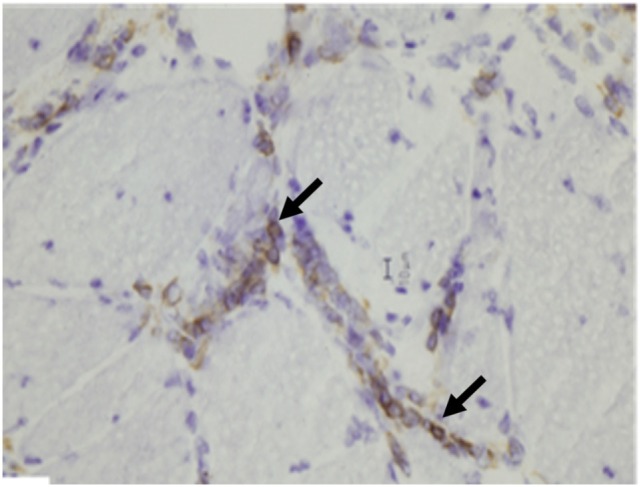
    • Asociado con infiltración de linfocitos B, células dendríticas, macrófagos y linfocitos T CD4 dentro del espacio perivascular y perimisial
    • Inflamación → destrucción de capilares → microinfarto de músculo → atrofia y degeneración muscular
      • Inicialmente se observa atrofia perifascicular.
      • Las fibras necróticas y degenerativas son hallazgos tardíos.
  • En EN Erythema nodosum is an immune-mediated panniculitis (inflammation of the subcutaneous fat) caused by a type IV (delayed-type) hypersensitivity reaction. It commonly manifests in young women as tender, erythematous nodules on the shins. Erythema Nodosum la piel:
    • La patogenia de la dermatomiositis es poco conocida.
    • Probablemente, es similar a la afectación muscular
    • Resulta en EN Erythema nodosum is an immune-mediated panniculitis (inflammation of the subcutaneous fat) caused by a type IV (delayed-type) hypersensitivity reaction. It commonly manifests in young women as tender, erythematous nodules on the shins. Erythema Nodosum:
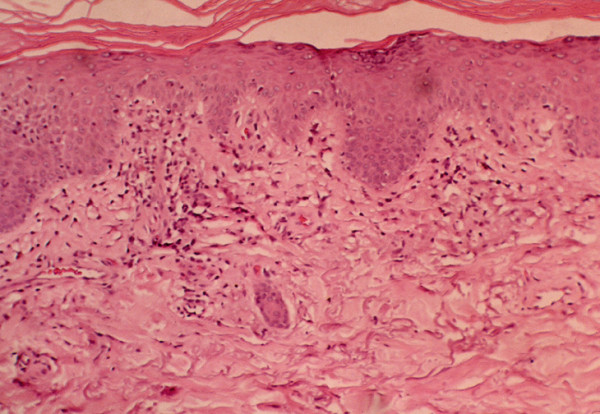
      • Hiperqueratosis y disqueratosis (queratinización anormal de células dentro del estrato espinoso)
      • Cambios vacuolares en EN Erythema nodosum is an immune-mediated panniculitis (inflammation of the subcutaneous fat) caused by a type IV (delayed-type) hypersensitivity reaction. It commonly manifests in young women as tender, erythematous nodules on the shins. Erythema Nodosum la capa basal.
      • ↑ Infiltrado linfocítico
      • Deposición de mucina

Presentación Clínica

Manifestaciones musculoesqueléticas

  • Debilidad muscular
    • Involucra músculos proximales:
      • Deltoides
      • Flexores de la cadera
      • Flexores del cuello
    • Simétrica
    • Se desarrolla durante semanas o meses
    • Se nota principalmente al AL Amyloidosis:
      • Subir escaleras
      • Cepillarse el cabello
      • Ponerse de pie desde una posición sentada
  • Los LOS Neisseria músculos rara vez presentan dolor Dolor Inflammation.
  • Puede notarse atrofia muscular.
  • Artralgia o artritis no erosiva: se observa en EN Erythema nodosum is an immune-mediated panniculitis (inflammation of the subcutaneous fat) caused by a type IV (delayed-type) hypersensitivity reaction. It commonly manifests in young women as tender, erythematous nodules on the shins. Erythema Nodosum el síndrome antisintetasa

Manifestaciones cutáneas

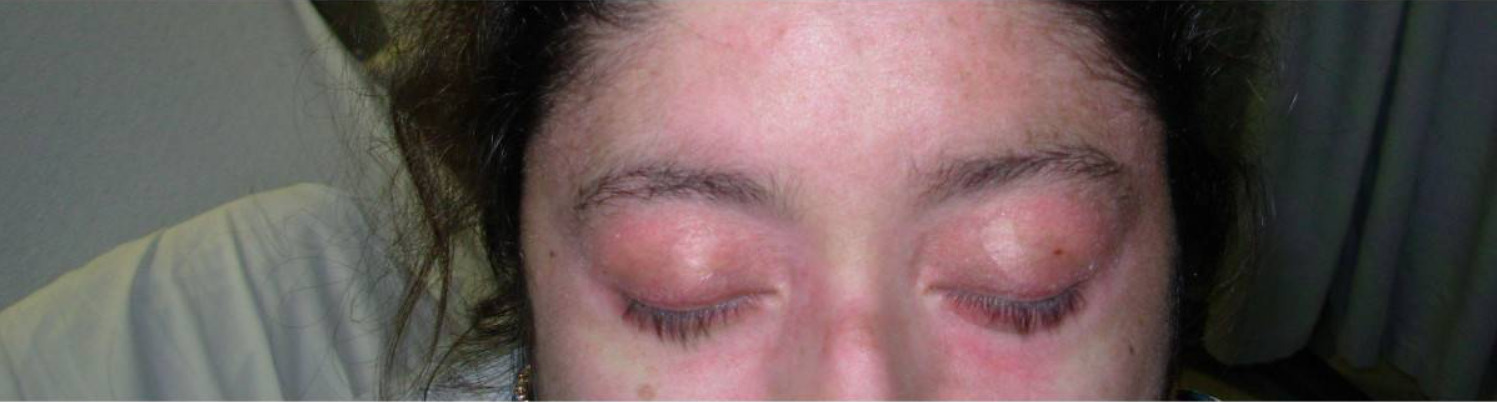
  • Erupción heliotropa:
    • Característica patognomónica
    • Erupción eritematosa alrededor de los LOS Neisseria párpados superiores
    • Edema Edema Edema is a condition in which excess serous fluid accumulates in the body cavity or interstitial space of connective tissues. Edema is a symptom observed in several medical conditions. It can be categorized into 2 types, namely, peripheral (in the extremities) and internal (in an organ or body cavity). Edema periorbitario
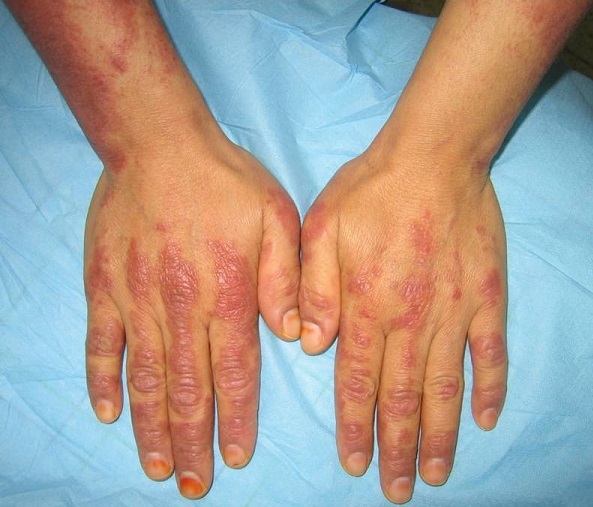
  • Pápulas de Gottron:
    • Característica patognomónica
    • Simétricas
    • Pápulas eritematosas
    • Situadas en EN Erythema nodosum is an immune-mediated panniculitis (inflammation of the subcutaneous fat) caused by a type IV (delayed-type) hypersensitivity reaction. It commonly manifests in young women as tender, erythematous nodules on the shins. Erythema Nodosum las articulaciones metacarpofalángicas e interfalángicas dorsales
  • Eritema facial:
    • Patrón de “mariposa” que imita la erupción malar del lupus
    • Involucra los LOS Neisseria pliegues nasolabiales
  • Signo de Gottron:
    • Máculas o parches eritematosos
    • A menudo en EN Erythema nodosum is an immune-mediated panniculitis (inflammation of the subcutaneous fat) caused by a type IV (delayed-type) hypersensitivity reaction. It commonly manifests in young women as tender, erythematous nodules on the shins. Erythema Nodosum superficies extensoras (e.g., manos, codos, rodillas y tobillos)
  • Poiquilodermia fotodistribuida:
    • Hipo e hiperpigmentación
    • Atrofia epidérmica leve
    • Telangiectasias Telangiectasias Ataxia-telangiectasia
    • Involucra sitios expuestos a la luz (incluido el cuero cabelludo):
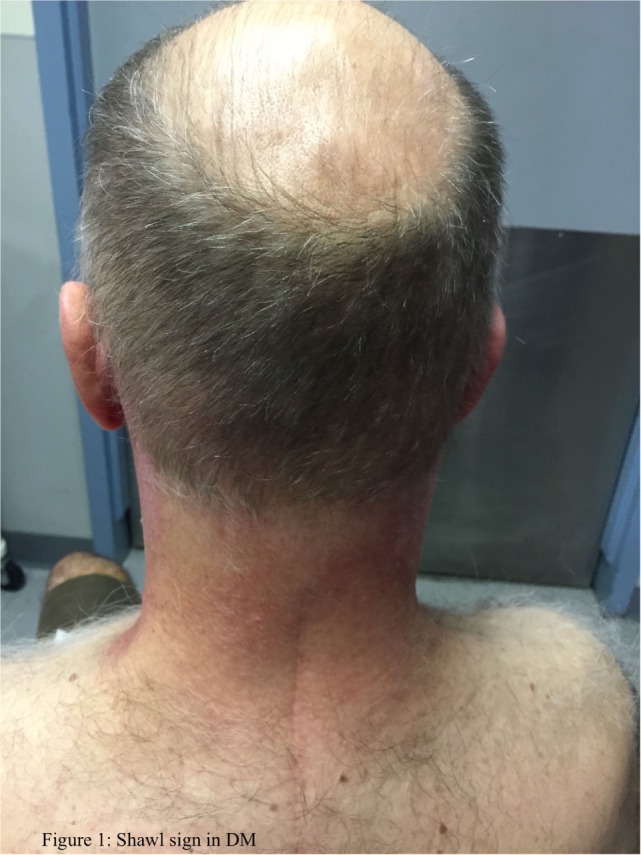
      • Signo del chal: involucra la parte superior de la espalda, la parte posterior del cuello y los LOS Neisseria hombros.
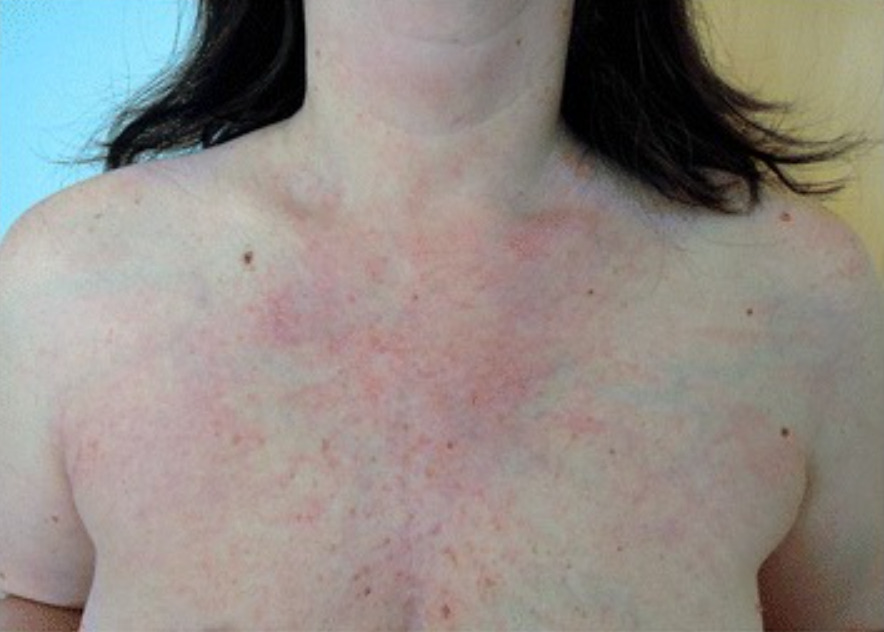
      • Signo V: implica la parte superior del pecho, la parte anterior del cuello y los LOS Neisseria hombros.
      • Signo de funda: involucra las caras laterales de los LOS Neisseria muslos.
  • Cambios en EN Erythema nodosum is an immune-mediated panniculitis (inflammation of the subcutaneous fat) caused by a type IV (delayed-type) hypersensitivity reaction. It commonly manifests in young women as tender, erythematous nodules on the shins. Erythema Nodosum las uñas:
    • Asas capilares dilatadas en EN Erythema nodosum is an immune-mediated panniculitis (inflammation of the subcutaneous fat) caused by a type IV (delayed-type) hypersensitivity reaction. It commonly manifests in young women as tender, erythematous nodules on the shins. Erythema Nodosum el pliegue ungueal proximal
    • Eritema periungal
    • Hipertrofia cuticular
  • Calcinosis cutis Calcinosis Cutis Scleroderma (común en EN Erythema nodosum is an immune-mediated panniculitis (inflammation of the subcutaneous fat) caused by a type IV (delayed-type) hypersensitivity reaction. It commonly manifests in young women as tender, erythematous nodules on the shins. Erythema Nodosum niños): depósito de calcio dentro de la piel
  • “Manos de mecánico”:
    • Erupciones hiperqueratósicas sobre las yemas de los LOS Neisseria dedos y las caras laterales de los LOS Neisseria dedos
    • Asociado con el síndrome antisintetasa

Manifestaciones sistémicas

  • Generales:
    • Fatiga
    • Fiebre
    • Pérdida de peso
    • Fenómeno de Raynaud
  • Respiratorios:
    • Enfermedad pulmonar intersticial:
      • Tos TOS Thoracic outlet syndrome (TOS) is a broad term used for a spectrum of syndromes related to the general region of the thoracic outlet, which involves the compression or irritation of elements of the brachial plexus, subclavian artery, or subclavian vein. Thoracic Outlet Syndrome seca
      • Disnea
      • Crépitos bilaterales
      • Presente en EN Erythema nodosum is an immune-mediated panniculitis (inflammation of the subcutaneous fat) caused by a type IV (delayed-type) hypersensitivity reaction. It commonly manifests in young women as tender, erythematous nodules on the shins. Erythema Nodosum el síndrome antisintetasa
    • Debilidad de los LOS Neisseria músculos del diafragma y de la pared torácica:
      • Insuficiencia respiratoria
  • Gastrointestinales:
    • Compromiso de los LOS Neisseria músculos faríngeos y esofágicos:
      • Disfagia
      • Afonía
      • Reflujo gastroesofágico
    • Gastritis Gastritis Gastritis refers to inflammation of the gastric mucosa. Gastritis may occur suddenly (acute gastritis) or slowly over time (chronic gastritis). Gastritis may be asymptomatic or with symptoms, including burning abdominal pain (which either worsens or improves with eating), dyspepsia, nausea, and vomiting. Gastritis y úlceras gástricas (más comunes en EN Erythema nodosum is an immune-mediated panniculitis (inflammation of the subcutaneous fat) caused by a type IV (delayed-type) hypersensitivity reaction. It commonly manifests in young women as tender, erythematous nodules on the shins. Erythema Nodosum niños)
  • Cardiovasculares:
    • Alteraciones de la conducción auriculoventricular
    • Miocarditis
    • Miocardiopatía dilatada

Diagnóstico

Exámenes diagnósticos

  • Pruebas de laboratorio iniciales:
    • Hemograma completo
      • Leucocitosis
      • Trombocitosis
    • Marcadores inflamatorios
      • ↑ Velocidad de eritrosedimentación
      • PCR PCR Polymerase chain reaction (PCR) is a technique that amplifies DNA fragments exponentially for analysis. The process is highly specific, allowing for the targeting of specific genomic sequences, even with minuscule sample amounts. The PCR cycles multiple times through 3 phases: denaturation of the template DNA, annealing of a specific primer to the individual DNA strands, and synthesis/elongation of new DNA molecules. Polymerase Chain Reaction (PCR)
    • Enzimas musculares (usadas para monitorear la respuesta a la terapia)
      • ↑ Creatincinasa
      • ↑ Aldolasa
      • AST AST Enzymes of the transferase class that catalyze the conversion of l-aspartate and 2-ketoglutarate to oxaloacetate and l-glutamate. Liver Function Tests y ALT ALT An enzyme that catalyzes the conversion of l-alanine and 2-oxoglutarate to pyruvate and l-glutamate. Liver Function Tests
      • LDH LDH Osteosarcoma
    • ANA positivo
      • Inespecífica y no diagnóstica
  • Seguimiento con pruebas de anticuerpos específicos de miositis:
    • Anticuerpos anti-Jo-1
      • Anticuerpo anti-histidil tRNA tRNA The small RNA molecules, 73-80 nucleotides long, that function during translation (translation, genetic) to align amino acids at the ribosomes in a sequence determined by the mRNA (RNA, messenger). There are about 30 different transfer rnas. Each recognizes a specific codon set on the mRNA through its own anticodon and as aminoacyl trnas (RNA, transfer, amino Acyl), each carries a specific amino acid to the ribosome to add to the elongating peptide chains. RNA Types and Structure sintetasa
      • Presente en EN Erythema nodosum is an immune-mediated panniculitis (inflammation of the subcutaneous fat) caused by a type IV (delayed-type) hypersensitivity reaction. It commonly manifests in young women as tender, erythematous nodules on the shins. Erythema Nodosum el síndrome antisintetasa
      • Ocurre en EN Erythema nodosum is an immune-mediated panniculitis (inflammation of the subcutaneous fat) caused by a type IV (delayed-type) hypersensitivity reaction. It commonly manifests in young women as tender, erythematous nodules on the shins. Erythema Nodosum 20%‒30% de los LOS Neisseria pacientes
    • Anticuerpos anti-Mi-2
      • Presente en EN Erythema nodosum is an immune-mediated panniculitis (inflammation of the subcutaneous fat) caused by a type IV (delayed-type) hypersensitivity reaction. It commonly manifests in young women as tender, erythematous nodules on the shins. Erythema Nodosum el 10% de los LOS Neisseria pacientes
      • Muy específico, pero de baja sensibilidad
    • Anticuerpos contra la proteína de reconocimiento de señales (anti-SRP, por sus siglas en EN Erythema nodosum is an immune-mediated panniculitis (inflammation of the subcutaneous fat) caused by a type IV (delayed-type) hypersensitivity reaction. It commonly manifests in young women as tender, erythematous nodules on the shins. Erythema Nodosum inglés)
      • Específico para miopatías inflamatorias
      • Asociado con miositis severa
  • Estudios adicionales si el diagnóstico no está claro debido a hallazgos inespecíficos o atípicos:
    • Electromiografía
      • Comprende estudios de conducción nerviosa que incluyen estimulación nerviosa repetitiva y examinación con aguja de los LOS Neisseria músculos
      • Alterada en EN Erythema nodosum is an immune-mediated panniculitis (inflammation of the subcutaneous fat) caused by a type IV (delayed-type) hypersensitivity reaction. It commonly manifests in young women as tender, erythematous nodules on the shins. Erythema Nodosum el 90% de los LOS Neisseria casos de dermatomiositis
      • Puede apoyar el diagnóstico, pero no es diagnóstico
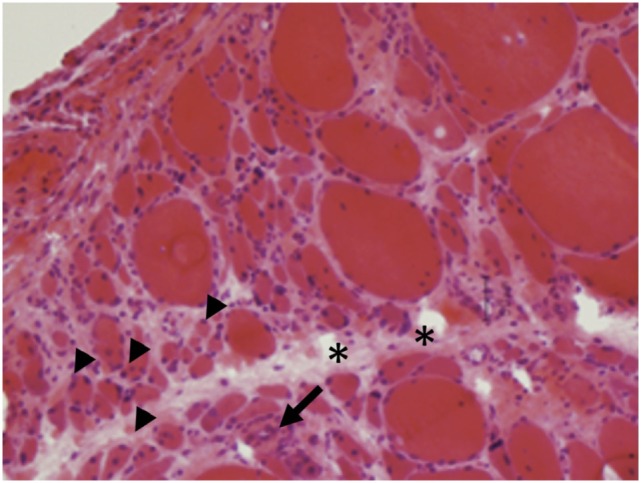
    • Biopsia muscular e histopatología
      • La prueba más precisa para confirmar el diagnóstico
      • Hallazgos: lesión capilar, atrofia y fibrosis Fibrosis Any pathological condition where fibrous connective tissue invades any organ, usually as a consequence of inflammation or other injury. Bronchiolitis Obliterans perifascicular e infiltrado de células inflamatorias

Evaluación de manifestaciones sistémicas

  • Enfermedad pulmonar intersticial:
    • Radiografía de tórax
    • Pruebas de función pulmonar
  • Disfagia:
    • Estudio de deglución de bario
    • Manometría esofágica
  • Alteraciones de la conducción: ECG ECG An electrocardiogram (ECG) is a graphic representation of the electrical activity of the heart plotted against time. Adhesive electrodes are affixed to the skin surface allowing measurement of cardiac impulses from many angles. The ECG provides 3-dimensional information about the conduction system of the heart, the myocardium, and other cardiac structures. Electrocardiogram (ECG)
  • Miocarditis o miocardiopatía: ecocardiografía

Tamizaje para malignidad

  • Los LOS Neisseria pacientes diagnosticados con dermatomiositis deben ser evaluados por una posible malignidad subyacente.
  • El estudio se dirige en EN Erythema nodosum is an immune-mediated panniculitis (inflammation of the subcutaneous fat) caused by a type IV (delayed-type) hypersensitivity reaction. It commonly manifests in young women as tender, erythematous nodules on the shins. Erythema Nodosum función de la edad y el sexo del paciente.
  • Trabajo inicial:
    • Mamografía
    • Prueba de Papanicolaou
    • Colonoscopia
    • TC de tórax, abdomen y pelvis Pelvis The pelvis consists of the bony pelvic girdle, the muscular and ligamentous pelvic floor, and the pelvic cavity, which contains viscera, vessels, and multiple nerves and muscles. The pelvic girdle, composed of 2 “hip” bones and the sacrum, is a ring-like bony structure of the axial skeleton that links the vertebral column with the lower extremities. Pelvis: Anatomy
  • Se ordenan estudios adicionales en EN Erythema nodosum is an immune-mediated panniculitis (inflammation of the subcutaneous fat) caused by a type IV (delayed-type) hypersensitivity reaction. It commonly manifests in young women as tender, erythematous nodules on the shins. Erythema Nodosum función de los LOS Neisseria factores de riesgo, los LOS Neisseria síntomas o un estudio inicial anormal:
    • Antígeno del cáncer 125 ( CA CA Condylomata acuminata are a clinical manifestation of genital HPV infection. Condylomata acuminata are described as raised, pearly, flesh-colored, papular, cauliflower-like lesions seen in the anogenital region that may cause itching, pain, or bleeding. Condylomata Acuminata (Genital Warts) 125)
    • Ultrasonido transvaginal (para pacientes con alto riesgo de cáncer de ovario)
    • Endoscopia superior (para el cáncer de esófago)
    • RM
    • Tomografía por emisión de positrones

Tratamiento

El tratamiento de la dermatomiositis se dirige hacia la restauración de la fuerza muscular y la minimización de la inflamación.

  • Consulta de reumatología
  • Tratamiento medico:
    • Glucocorticoides sistémicos (terapia de 1ra línea):
      • Por lo general, se necesita durante 9–12 meses
      • Disminución progresiva
      • Las enzimas musculares se utilizan para monitorear la respuesta a la terapia.
    • Inmunosupresores:
      • Metotrexato, azatioprina
      • Se utiliza para reducir los LOS Neisseria requisitos de esteroides y el riesgo de complicaciones inducidas por esteroides
    • Inmunoglobulina IV:
      • Para pacientes con debilidades potencialmente mortales (e.g., disfagia grave, insuficiencia respiratoria)
      • Proporciona un inicio de acción más rápido que los LOS Neisseria esteroides.
    • Para enfermedad recurrente o refractaria:
      • Rituximab Rituximab A murine-derived monoclonal antibody and antineoplastic agent that binds specifically to the cd20 antigen and is used in the treatment of leukemia; lymphoma and rheumatoid arthritis. Immunosuppressants
      • Micofenolato mofetilo
      • Tacrolimus Tacrolimus A macrolide isolated from the culture broth of a strain of streptomyces tsukubaensis that has strong immunosuppressive activity in vivo and prevents the activation of T-lymphocytes in response to antigenic or mitogenic stimulation in vitro. Immunosuppressants
  • Fisioterapia para mantener y mejorar la función muscular
  • Tratamiento de las manifestaciones cutáneas:
    • Ropa protectora y protección SPF con bloqueador solar.
    • Evitar la luz solar y la radiación ultravioleta (camas de bronceado)
  • Tratamiento de la disfagia:
    • Terapia del lenguaje
    • Elevar la cabecera de la cama
    • Modificaciones de la dieta
    • Alimentación enteral para pacientes con disfagia severa
  • Profilaxis (mientras toma corticosteroides a largo plazo):
    • Osteoporosis Osteoporosis Osteoporosis refers to a decrease in bone mass and density leading to an increased number of fractures. There are 2 forms of osteoporosis: primary, which is commonly postmenopausal or senile; and secondary, which is a manifestation of immobilization, underlying medical disorders, or long-term use of certain medications. Osteoporosis:
      • Suplementos de calcio y vitamina D
      • Bisfosfonatos en EN Erythema nodosum is an immune-mediated panniculitis (inflammation of the subcutaneous fat) caused by a type IV (delayed-type) hypersensitivity reaction. It commonly manifests in young women as tender, erythematous nodules on the shins. Erythema Nodosum pacientes de alto riesgo o individuos con osteoporosis Osteoporosis Osteoporosis refers to a decrease in bone mass and density leading to an increased number of fractures. There are 2 forms of osteoporosis: primary, which is commonly postmenopausal or senile; and secondary, which is a manifestation of immobilization, underlying medical disorders, or long-term use of certain medications. Osteoporosis
    • Pneumocystis jirovecii: trimetoprim-sulfametoxazol
    • Inmunización apropiada

Complicaciones y Pronóstico

Complicaciones

  • Compromiso cardíaco (50% de los LOS Neisseria casos):
    • Alteraciones de la conducción → arritmia
    • Miocarditis o miocardiopatía dilatada → insuficiencia cardíaca
    • ↑ Riesgo de infarto de miocardio
  • Complicaciones respiratorias:
    • Enfermedad pulmonar intersticial (30% de los LOS Neisseria casos) → hipertensión pulmonar y cor pulmonale Cor Pulmonale Cor pulmonale is right ventricular (RV) dysfunction caused by lung disease that results in pulmonary artery hypertension. The most common cause of cor pulmonale is chronic obstructive pulmonary disease. Dyspnea is the usual presenting symptom. Cor Pulmonale
    • Neumonía aspirativa por disfagia
  • Malignidad (25% de los LOS Neisseria casos):
    • Los LOS Neisseria pacientes con dermatomiositis tienen un riesgo significativamente alto (5–7 veces)
    • A menudo dentro del 1er año después del diagnóstico de dermatomiositis
    • Más comunes: cáncer de pulmón, mama, ovario, estómago, páncreas, próstata, vejiga y colorrectal, y linfoma no Hodgkin
  • Efectos secundarios de la terapia médica:
    • Terapia con corticosteroides:
      • Osteoporosis Osteoporosis Osteoporosis refers to a decrease in bone mass and density leading to an increased number of fractures. There are 2 forms of osteoporosis: primary, which is commonly postmenopausal or senile; and secondary, which is a manifestation of immobilization, underlying medical disorders, or long-term use of certain medications. Osteoporosis y fracturas por compresión
      • Resistencia a la insulina → diabetes Diabetes Diabetes mellitus (DM) is a metabolic disease characterized by hyperglycemia and dysfunction of the regulation of glucose metabolism by insulin. Type 1 DM is diagnosed mostly in children and young adults as the result of autoimmune destruction of β cells in the pancreas and the resulting lack of insulin. Type 2 DM has a significant association with obesity and is characterized by insulin resistance. Diabetes Mellitus mellitus
      • Hipertensión
      • Dislipidemia
      • Ganancia de peso
      • Retraso en EN Erythema nodosum is an immune-mediated panniculitis (inflammation of the subcutaneous fat) caused by a type IV (delayed-type) hypersensitivity reaction. It commonly manifests in young women as tender, erythematous nodules on the shins. Erythema Nodosum el crecimiento de los LOS Neisseria niños
      • Miopatía inducida por esteroides
    • Terapia inmunosupresora:
      • Infecciones oportunistas
      • Infecciones del tracto respiratorio superior y neumonía
      • Infecciones de la piel
      • Bacteriemia y sepsis Sepsis Systemic inflammatory response syndrome with a proven or suspected infectious etiology. When sepsis is associated with organ dysfunction distant from the site of infection, it is called severe sepsis. When sepsis is accompanied by hypotension despite adequate fluid infusion, it is called septic shock. Sepsis and Septic Shock

Pronóstico

  • Recaída:
    • Ocurre en EN Erythema nodosum is an immune-mediated panniculitis (inflammation of the subcutaneous fat) caused by a type IV (delayed-type) hypersensitivity reaction. It commonly manifests in young women as tender, erythematous nodules on the shins. Erythema Nodosum la mayoría de los LOS Neisseria pacientes
    • Puede ocurrir en EN Erythema nodosum is an immune-mediated panniculitis (inflammation of the subcutaneous fat) caused by a type IV (delayed-type) hypersensitivity reaction. It commonly manifests in young women as tender, erythematous nodules on the shins. Erythema Nodosum cualquier momento
  • Aproximadamente el 25% de los LOS Neisseria pacientes tienen debilidad o discapacidad muscular persistente.
  • Mortalidad:
    • La tasa de supervivencia a los LOS Neisseria 5 años es del 75%
    • Mayor mortalidad en EN Erythema nodosum is an immune-mediated panniculitis (inflammation of the subcutaneous fat) caused by a type IV (delayed-type) hypersensitivity reaction. It commonly manifests in young women as tender, erythematous nodules on the shins. Erythema Nodosum pacientes > 65 años
    • A menudo secundario a:
      • Insuficiencia cardíaca
      • Enfermedad pulmonar intersticial
      • Infecciones (oportunistas o no oportunistas)
      • Malignidad

Diagnóstico Diferencial

  • Polimiositis: una miopatía inflamatoria autoinmune debida a una lesión muscular mediada por linfocitos T. Los LOS Neisseria pacientes presentan síntomas similares a la dermatomiositis, pero carecen de las manifestaciones cutáneas características. El diagnóstico se basa en EN Erythema nodosum is an immune-mediated panniculitis (inflammation of the subcutaneous fat) caused by a type IV (delayed-type) hypersensitivity reaction. It commonly manifests in young women as tender, erythematous nodules on the shins. Erythema Nodosum la presentación clínica y la evaluación de anticuerpos, y puede confirmarse con una biopsia. El tratamiento es con glucocorticoides sistémicos, medicamentos inmunosupresores y la detección de malignidad.
  • Miositis por cuerpos de inclusión: una miopatía inflamatoria caracterizada por una debilidad muscular que progresa lentamente. Sin embargo, la debilidad es asimétrica e involucra los LOS Neisseria músculos distales, especialmente los LOS Neisseria de las manos. En EN Erythema nodosum is an immune-mediated panniculitis (inflammation of the subcutaneous fat) caused by a type IV (delayed-type) hypersensitivity reaction. It commonly manifests in young women as tender, erythematous nodules on the shins. Erythema Nodosum la exploración física destaca atrofia muscular importante y ausencia de lesiones cutáneas. El diagnóstico se confirma con una biopsia, que muestra cuerpos de inclusión dentro del tejido muscular. La miositis por cuerpos de inclusión es refractaria a los LOS Neisseria esteroides y debe excluirse en EN Erythema nodosum is an immune-mediated panniculitis (inflammation of the subcutaneous fat) caused by a type IV (delayed-type) hypersensitivity reaction. It commonly manifests in young women as tender, erythematous nodules on the shins. Erythema Nodosum casos refractarios de dermatomiositis.
  • Hipotiroidismo: una deficiencia de la hormona tiroidea que puede resultar de trastornos de la tiroides, el hipotálamo o la glándula pituitaria. La debilidad de los LOS Neisseria músculos proximales es una queja común de presentación. Los LOS Neisseria pacientes suelen tener muchas otras manifestaciones sistémicas, como intolerancia al AL Amyloidosis frío, cambios neuropsiquiátricos, piel seca, estreñimiento y bradicardia. Las pruebas de función tiroidea pueden proporcionar el diagnóstico y el tratamiento implica el reemplazo de la hormona tiroidea.
  • Miastenia gravis: una afección acompañada de debilidad muscular episódica y fatigabilidad, como resultado de autoanticuerpos contra los LOS Neisseria receptores de acetilcolina (AChR). La miastenia gravis generalmente involucra los LOS Neisseria músculos bulbares y oculares y es provocada por la actividad. No hay manifestaciones cutáneas. El diagnóstico se basa en EN Erythema nodosum is an immune-mediated panniculitis (inflammation of the subcutaneous fat) caused by a type IV (delayed-type) hypersensitivity reaction. It commonly manifests in young women as tender, erythematous nodules on the shins. Erythema Nodosum la medición de anticuerpos AChR, electromiografía y estimulación con edrofonio. El tratamiento es con anticolinesterasas, inmunosupresores, esteroides e inmunoglobulina IV.
  • Síndrome de Cushing: un trastorno endocrino caracterizado por la exposición crónica a corticosteroides exógenos o endógenos. Los LOS Neisseria pacientes con síndrome de Cushing pueden mostrar debilidad muscular proximal debido a la atrofia de los LOS Neisseria músculos de los LOS Neisseria glúteos y de la parte superior de la pierna. También pueden estar presentes la obesidad troncal característica, la cara de luna llena y la formación fácil de hematomas. El diagnóstico se basa en EN Erythema nodosum is an immune-mediated panniculitis (inflammation of the subcutaneous fat) caused by a type IV (delayed-type) hypersensitivity reaction. It commonly manifests in young women as tender, erythematous nodules on the shins. Erythema Nodosum los LOS Neisseria antecedentes y estudios de cortisol Cortisol Glucocorticoids. El tratamiento depende de la causa subyacente.
  • Lupus eritematoso sistémico: un trastorno autoinmune multisistémico que ocurre predominantemente en EN Erythema nodosum is an immune-mediated panniculitis (inflammation of the subcutaneous fat) caused by a type IV (delayed-type) hypersensitivity reaction. It commonly manifests in young women as tender, erythematous nodules on the shins. Erythema Nodosum mujeres jóvenes. El exantema malar clásico es similar al AL Amyloidosis de la dermatomiositis, excepto por la preservación de los LOS Neisseria pliegues nasolabiales. Las condiciones asociadas incluyen artritis, fenómeno de Raynaud, pleuritis Pleuritis Pleuritis, also known as pleurisy, is an inflammation of the visceral and parietal layers of the pleural membranes of the lungs. The condition can be primary or secondary and results in sudden, sharp, and intense chest pain on inhalation and exhalation. Pleuritis, enfermedad renal y síntomas neuropsiquiátricos. El diagnóstico requiere el cumplimiento de criterios clínicos y serológicos. El tratamiento es con corticosteroides e inmunosupresores.
  • Polimialgia reumática: una afección inflamatoria que afecta a los LOS Neisseria adultos > 55 años de edad. Los LOS Neisseria pacientes presentan dolor Dolor Inflammation y rigidez de los LOS Neisseria músculos proximales. No hay debilidad ni atrofia muscular. El diagnóstico es clínico y se basa en EN Erythema nodosum is an immune-mediated panniculitis (inflammation of the subcutaneous fat) caused by a type IV (delayed-type) hypersensitivity reaction. It commonly manifests in young women as tender, erythematous nodules on the shins. Erythema Nodosum la determinación de marcadores inflamatorios elevados. El tratamiento es con corticoides. Los LOS Neisseria pacientes deben ser evaluados por arteritis temporal.

Referencias

  1. Kronzer, V. L., Kimbrough, B. A., Crowson, C. S., Davis, J. M., Holmqvist, M., & Ernste, F. C. (2021). Incidence, prevalence, and mortality of dermatomyositis: A population-based cohort study. Arthritis Care & Research, 75(2), 348–355. https://doi.org/10.1002/acr.24786
  2. Yancey, K.B., Lawley, T.J. (2018). Immunologically mediated skin diseases. In J.L. Jameson, et al. (Eds.). Harrison’s Principles of Internal Medicine, 20e. New York, NY: McGraw-Hill Education.
  3. Greenberg, S.A., Amato, A.A. (2018). Inflammatory myopathies. In J. L. Jameson, et al. (Eds.). Harrison’s Principles of Internal Medicine, 20e. New York, NY: McGraw-Hill Education.
  4. Ernste, F.C., Reed, A.M. (2013). Idiopathic inflammatory myopathies: Current trends in pathogenesis, clinical features, and up-to-date treatment recommendations. Mayo Clinic Proceedings. 88(1), 83–105. http://dx.doi.org/10.1016/j.mayocp.2012.10.017
  5. Bronner, I.M., et al. (2006). Long-term outcome in polymyositis and dermatomyositis. Annals of rheumatic diseases. 65(11), 1456–1461. https://doi.org/10.1136/ard.2005.045690
  6. Callen, J.P., Wortmann, R.L. (2006). Dermatomyositis. Clinics in Dermatology. 24(5), 363–373. https://doi.org/10.1016/j.clindermatol.2006.07.001
  7. Gelber, A.C., Levine, S.M., Darrah, E. (2019). In Hammer G. D., McPhee S. J.(Eds.). Inflammatory rheumatic diseases. New York, NY: McGraw-Hill Education. http://accessmedicine.mhmedical.com/content.aspx?aid=1156660913
  8. Qudsiya, Z., Waseem, M. (2023). Dermatomyositis. StatPearls. Retrieved March 24, 2025, from https://www.ncbi.nlm.nih.gov/books/NBK558917/ 
  9. Vleugels, R.A. (2025). Cutaneous dermatomyositis in adults: Overview and initial management. In Ofori, A.O. (Ed.). UpToDate. Retrieved March 24, 2025, from https://www.uptodate.com/contents/cutaneous-dermatomyositis-in-adults-overview-and-initial-management
  10. Miller, M.L., Vleugels, R.A., Amato, A.A. (2025). Clinical manifestations of dermatomyositis and polymyositis in adults. In Ramirez Curtis, M., Ofori, A.O. (Eds.). UpToDate. Retrieved March 24, 2025, from https://www.uptodate.com/contents/clinical-manifestations-of-dermatomyositis-and-polymyositis-in-adult
  11. Miller, M.L. (2025). Initial treatment of dermatomyositis and polymyositis in adults. In Ramirez Curtis, M. (Ed.). UpToDate. Retrieved March 24, 2025, from https://www.uptodate.com/contents/initial-treatment-of-dermatomyositis-and-polymyositis-in-adults
  12. Miller, M.L. (2025). Malignancy in dermatomyositis and polymyositis. In Ramirez Curtis, M. (Ed.). UpToDate. Retrieved March 24, 2025, from https://www.uptodate.com/contents/malignancy-in-dermatomyositis-and-polymyositis
  13. Miller, M.L. (2025). Diagnosis and differential diagnosis of dermatomyositis and polymyositis in adults. In Ramirez Curtis, M. (Ed.). UpToDate. Retrieved March 24, 2025, from https://www.uptodate.com/contents/diagnosis-and-differential-diagnosis-of-dermatomyositis-and-polymyositis-in-adults
  14. Nevares, A.M. (2024). Autoimmune myositis. MSD Manual Professional Version. Retrieved March 24, 2025, from https://www.merckmanuals.com/professional/musculoskeletal-and-connective-tissue-disorders/autoimmune-rheumatic-disorders/autoimmune-myositis
  15. Femia, A.N., Vleugels, R.A., Callen, J.P. (2023). Dermatomyositis. In Diamond, H.S. (Ed.). Medscape. Retrieved March 24, 2025, from https://emedicine.medscape.com/article/332783-overview
  16. Cheeti, A., Brent, J.H., Panginikkod, S. (2023). Autoimmune myopathies. StatPearls. Retrieved March 24, 2025, from https://www.ncbi.nlm.nih.gov/books/NBK532860/

¡Crea tu cuenta gratis o inicia una sesión para seguir leyendo!

Regístrate ahora y obtén acceso gratuito a Lecturio con páginas de concepto, videos médicos y cuestionarios para tu educación médica.

User Reviews

Que tengas una sesión de estudio alegre y navideña 🎁 Ahorra 50% en todos los planes >>

Details