Domina Conceptos Médicos

Estudia para la escuela de medicina y tus examenes con Lecturio.

Artritis Reumatoide

La artritis reumatoide ( AR AR Aortic regurgitation (AR) is a cardiac condition characterized by the backflow of blood from the aorta to the left ventricle during diastole. Aortic regurgitation is associated with an abnormal aortic valve and/or aortic root stemming from multiple causes, commonly rheumatic heart disease as well as congenital and degenerative valvular disorders. Aortic Regurgitation) es una poliartritis inflamatoria simétrica y un trastorno autoinmune crónico y progresivo. La presentación ocurre con mayor frecuencia en EN Erythema nodosum is an immune-mediated panniculitis (inflammation of the subcutaneous fat) caused by a type IV (delayed-type) hypersensitivity reaction. It commonly manifests in young women as tender, erythematous nodules on the shins. Erythema Nodosum mujeres de mediana edad con inflamación articular, dolor Dolor Inflammation y rigidez matutina (a menudo en EN Erythema nodosum is an immune-mediated panniculitis (inflammation of the subcutaneous fat) caused by a type IV (delayed-type) hypersensitivity reaction. It commonly manifests in young women as tender, erythematous nodules on the shins. Erythema Nodosum las manos). La inflamación sistémica puede conducir a manifestaciones extraarticulares como nódulos reumatoides, enfermedad pulmonar intersticial, síndrome de Felty y pericarditis Pericarditis Pericarditis is an inflammation of the pericardium, often with fluid accumulation. It can be caused by infection (often viral), myocardial infarction, drugs, malignancies, metabolic disorders, autoimmune disorders, or trauma. Acute, subacute, and chronic forms exist. Pericarditis. La enfermedad prolongada y grave puede conducir a deformidades articulares irreversibles. El diagnóstico se basa en EN Erythema nodosum is an immune-mediated panniculitis (inflammation of the subcutaneous fat) caused by a type IV (delayed-type) hypersensitivity reaction. It commonly manifests in young women as tender, erythematous nodules on the shins. Erythema Nodosum una fuerte sospecha clínica y se confirma por la presencia de factor reumatoideo, anticuerpos contra el péptido cíclico citrulinado e imagenología característica. El tratamiento incluye medicamentos antirreumáticos modificadores de la enfermedad a largo plazo, agentes biológicos y fisioterapia. Los LOS Neisseria glucocorticoides y los LOS Neisseria antiinflamatorios no esteroideos (AINE) son el tratamiento de elección para la exacerbación aguda.

Last updated: Dec 15, 2025

Editorial responsibility: Stanley Oiseth, Lindsay Jones, Evelin Maza

Epidemiología y Factores de Riesgo

Epidemiología

  • Incidencia mundial: 3 por cada 10 000 personas por año
  • Más frecuente en EN Erythema nodosum is an immune-mediated panniculitis (inflammation of the subcutaneous fat) caused by a type IV (delayed-type) hypersensitivity reaction. It commonly manifests in young women as tender, erythematous nodules on the shins. Erythema Nodosum:
    • Nativos americanos
    • Norteamérica
    • Europa del Norte
  • 2–3 veces más común en EN Erythema nodosum is an immune-mediated panniculitis (inflammation of the subcutaneous fat) caused by a type IV (delayed-type) hypersensitivity reaction. It commonly manifests in young women as tender, erythematous nodules on the shins. Erythema Nodosum mujeres
  • La edad máxima de presentación es entre los LOS Neisseria 30–50 años.

Factores de riesgo

Se desconoce la causa de la artritis reumatoide ( AR AR Aortic regurgitation (AR) is a cardiac condition characterized by the backflow of blood from the aorta to the left ventricle during diastole. Aortic regurgitation is associated with an abnormal aortic valve and/or aortic root stemming from multiple causes, commonly rheumatic heart disease as well as congenital and degenerative valvular disorders. Aortic Regurgitation), pero varios factores de riesgo juegan un papel.
  • Predisposición genética:
    • 2–3 veces más probable en EN Erythema nodosum is an immune-mediated panniculitis (inflammation of the subcutaneous fat) caused by a type IV (delayed-type) hypersensitivity reaction. It commonly manifests in young women as tender, erythematous nodules on the shins. Erythema Nodosum aquellos con un familiar de 1er grado con AR AR Aortic regurgitation (AR) is a cardiac condition characterized by the backflow of blood from the aorta to the left ventricle during diastole. Aortic regurgitation is associated with an abnormal aortic valve and/or aortic root stemming from multiple causes, commonly rheumatic heart disease as well as congenital and degenerative valvular disorders. Aortic Regurgitation
    • Asociado con:
  • Factores ambientales:
    • Estilo de vida:
      • Fumar cigarrillos
      • Obesidad
    • Hormonales
    • Infecciosos:
      • Virus Virus Viruses are infectious, obligate intracellular parasites composed of a nucleic acid core surrounded by a protein capsid. Viruses can be either naked (non-enveloped) or enveloped. The classification of viruses is complex and based on many factors, including type and structure of the nucleoid and capsid, the presence of an envelope, the replication cycle, and the host range. Virology de Epstein-Barr ( EBV EBV Epstein-barr virus (EBV) is a linear, double-stranded DNA virus belonging to the herpesviridae family. This highly prevalent virus is mostly transmitted through contact with oropharyngeal secretions from an infected individual. The virus can infect epithelial cells and B lymphocytes, where it can undergo lytic replication or latency. Epstein-Barr Virus, por sus siglas en EN Erythema nodosum is an immune-mediated panniculitis (inflammation of the subcutaneous fat) caused by a type IV (delayed-type) hypersensitivity reaction. It commonly manifests in young women as tender, erythematous nodules on the shins. Erythema Nodosum inglés)
      • Parvovirus B19 Parvovirus B19 Primate erythroparvovirus 1 (generally referred to as parvovirus B19, B19 virus, or sometimes erythrovirus B19) ranks among the smallest DNA viruses. Parvovirus B19 is of the family Parvoviridae and genus Erythrovirus. In immunocompetent humans, parvovirus B19 classically results in erythema infectiosum (5th disease) or “slapped cheek syndrome.” Parvovirus B19
      • Hepatitis B Hepatitis B Hepatitis B virus (HBV) is a partially double-stranded DNA virus, which belongs to the Orthohepadnavirus genus and the Hepadnaviridae family. Most individuals with acute HBV infection are asymptomatic or have mild, self-limiting symptoms. Chronic infection can be asymptomatic or create hepatic inflammation, leading to liver cirrhosis and hepatocellular carcinoma (HCC). Hepatitis B Virus y C
      • Rubéola
      • Mycoplasma Mycoplasma Mycoplasma is a species of pleomorphic bacteria that lack a cell wall, which makes them difficult to target with conventional antibiotics and causes them to not gram stain well. Mycoplasma bacteria commonly target the respiratory and urogenital epithelium. Mycoplasma pneumoniae (M. pneumoniae), the causative agent of atypical or “walking” pneumonia. Mycoplasma
      • Infecciones dentales recurrentes

Fisiopatología

  • No se comprende completamente.
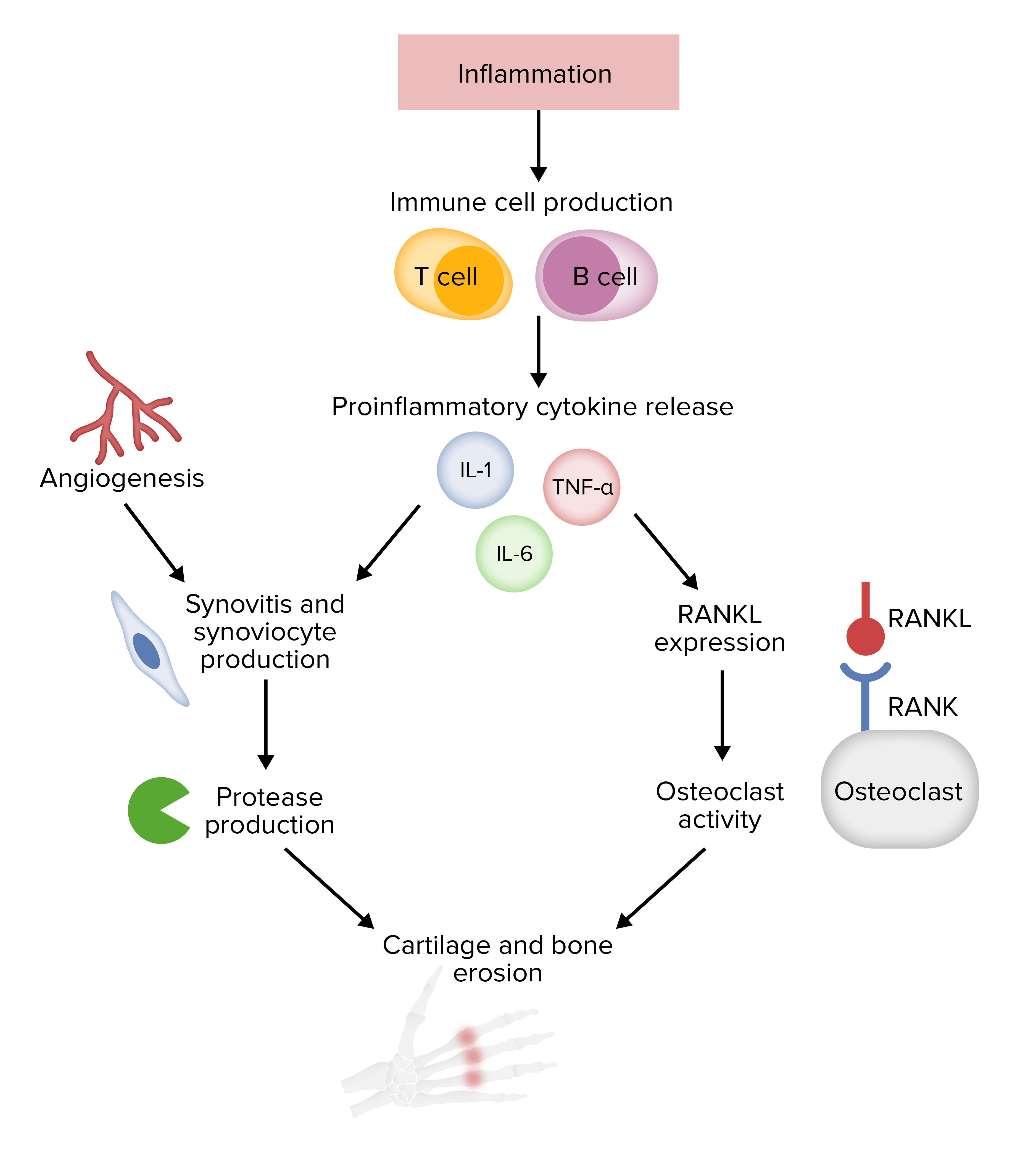
  • Un desencadenante externo desencadena la respuesta autoinmune y ↑ la expresión de enzimas que convierten la arginina en EN Erythema nodosum is an immune-mediated panniculitis (inflammation of the subcutaneous fat) caused by a type IV (delayed-type) hypersensitivity reaction. It commonly manifests in young women as tender, erythematous nodules on the shins. Erythema Nodosum citrulina → creación de antígenos
  • Las células B producen anticuerpos contra las proteínas citrulinadas → se unen al AL Amyloidosis fibrinógeno y al AL Amyloidosis colágeno → activación del complemento
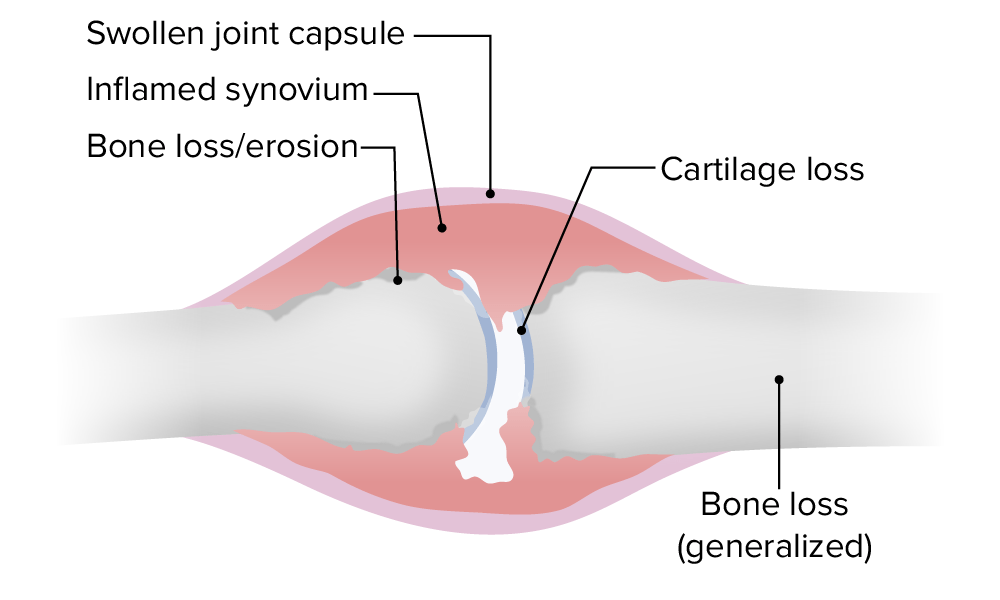
  • La membrana sinovial está infiltrada por células inmunitarias (e.g., macrófagos, mastocitos, linfocitos B, linfocitos T CD4) → producción de citocinas y quimiocinas → engrosamiento de la membrana sinovial y formación de vellosidades
  • El tejido sinovial hiperplásico ( pannus Pannus A genus of cyanobacteria in the family synechococcaceae that is free-floating and occurs in various water environments attaching to algae and submersed plants. Septic Arthritis) libera:
    • Colagenasa
    • Estromelisina
    • Interleucinas (IL)
    • Factor de necrosis Necrosis The death of cells in an organ or tissue due to disease, injury or failure of the blood supply. Ischemic Cell Damage tumoral ( TNF TNF Tumor necrosis factor (TNF) is a major cytokine, released primarily by macrophages in response to stimuli. The presence of microbial products and dead cells and injury are among the stimulating factors. This protein belongs to the TNF superfamily, a group of ligands and receptors performing functions in inflammatory response, morphogenesis, and cell proliferation. Tumor Necrosis Factor (TNF))-alfa
  • Lleva a:
    • Inflamación sinovial continua
    • Destrucción del cartílago
    • Destrucción ósea mediada por osteoclastos

Presentación Clínica

Manifestaciones articulares

  • Síntomas:
    • Dolor Dolor Inflammation articular
    • Inflamación de las articulaciones
    • Rigidez matutina (> 1 hora)
  • Caracteristicas:
    • Inicio gradual
    • Poliarticular
    • Simétricas
  • Articulaciones comúnmente afectadas:
    • Muñecas
    • 2da y 3ra articulacion metacarpofalángicas
    • Articulaciones interfalángicas proximales
    • Articulaciones metatarsofalángicas
    • Hombros
    • Codos
    • Caderas
    • Tobillos
  • La subluxación atloaxoidea puede ocurrir en EN Erythema nodosum is an immune-mediated panniculitis (inflammation of the subcutaneous fat) caused by a type IV (delayed-type) hypersensitivity reaction. It commonly manifests in young women as tender, erythematous nodules on the shins. Erythema Nodosum 20%–50% de los LOS Neisseria pacientes:
  • Nota: las articulaciones interfalángicas distales y carpometacarpianas suelen ser respetadas.

Examen físico

  • Hallazgos generales:
    • Sinovitis:
      • Dolor Dolor Inflammation de articulaciones
      • Inflamación
      • Se pueden notar derrames en EN Erythema nodosum is an immune-mediated panniculitis (inflammation of the subcutaneous fat) caused by a type IV (delayed-type) hypersensitivity reaction. It commonly manifests in young women as tender, erythematous nodules on the shins. Erythema Nodosum las articulaciones más grandes.
    • Atrofia del músculo interóseo
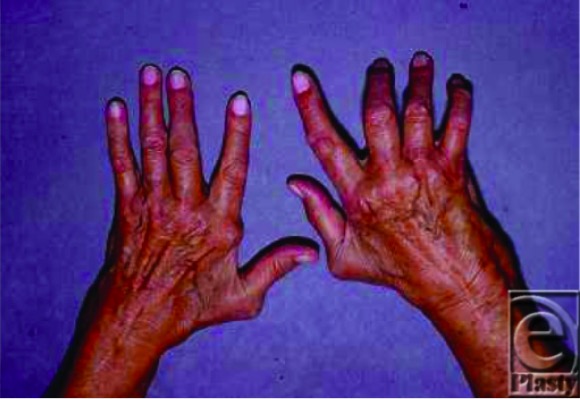
    • Deformidades articulares
    • ↓ Rango de movimiento
  • Hallazgos comunes en EN Erythema nodosum is an immune-mediated panniculitis (inflammation of the subcutaneous fat) caused by a type IV (delayed-type) hypersensitivity reaction. It commonly manifests in young women as tender, erythematous nodules on the shins. Erythema Nodosum las manos:
    • ↓ Fuerza de agarre
    • Desviación cubital de las articulaciones metacarpofalángicas
    • Deformidad en EN Erythema nodosum is an immune-mediated panniculitis (inflammation of the subcutaneous fat) caused by a type IV (delayed-type) hypersensitivity reaction. It commonly manifests in young women as tender, erythematous nodules on the shins. Erythema Nodosum ojal:
      • Flexión de articulación interfalángica proximal
      • Hiperextensión de la articulación interfalángica distal
    • Deformidad en EN Erythema nodosum is an immune-mediated panniculitis (inflammation of the subcutaneous fat) caused by a type IV (delayed-type) hypersensitivity reaction. It commonly manifests in young women as tender, erythematous nodules on the shins. Erythema Nodosum cuello de cisne:
      • Hiperextensión de la articulación interfalángica proximal
      • Flexión de la articulación interfalángica distal
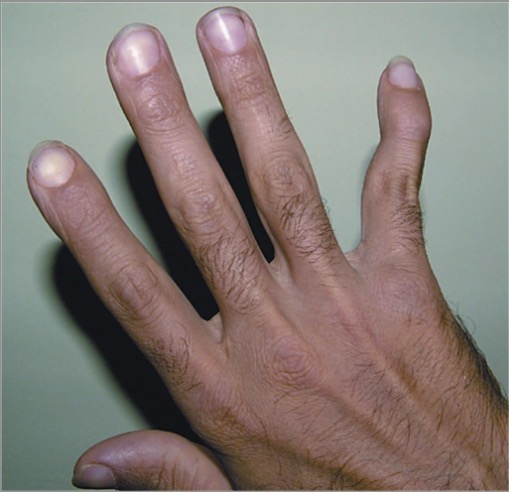
    • Pulgar del autostopista (deformidad en “Z”):
      • Flexión de la articulación metacarpofalángica
      • Hiperextensión de la articulación interfalángica
    • Signo de la cuerda del arco: prominencia de los LOS Neisseria tendones en EN Erythema nodosum is an immune-mediated panniculitis (inflammation of the subcutaneous fat) caused by a type IV (delayed-type) hypersensitivity reaction. It commonly manifests in young women as tender, erythematous nodules on the shins. Erythema Nodosum el compartimiento extensor de la mano
  • Hallazgos comunes en EN Erythema nodosum is an immune-mediated panniculitis (inflammation of the subcutaneous fat) caused by a type IV (delayed-type) hypersensitivity reaction. It commonly manifests in young women as tender, erythematous nodules on the shins. Erythema Nodosum las extremidades inferiores:
    • Movimiento de cadera restringido
    • Quiste de Baker:
      • Causado por grandes derrames sinoviales de rodilla
      • Quiste causado por atrapamiento de la membrana sinovial entre las estructuras articulares.
      • Se notará inflamación o plenitud detrás de la rodilla.
      • También se observa en EN Erythema nodosum is an immune-mediated panniculitis (inflammation of the subcutaneous fat) caused by a type IV (delayed-type) hypersensitivity reaction. It commonly manifests in young women as tender, erythematous nodules on the shins. Erythema Nodosum osteoartritis, traumatismos, gota y desgarros de menisco.
    • Dedo en EN Erythema nodosum is an immune-mediated panniculitis (inflammation of the subcutaneous fat) caused by a type IV (delayed-type) hypersensitivity reaction. It commonly manifests in young women as tender, erythematous nodules on the shins. Erythema Nodosum martillo: hiperextensión de la articulación metatarsofalángica

Manifestaciones extraarticulares

  • Generales:
    • Fatiga
    • Fiebre
    • Pérdida de peso
    • Mialgias
  • Cutáneas:
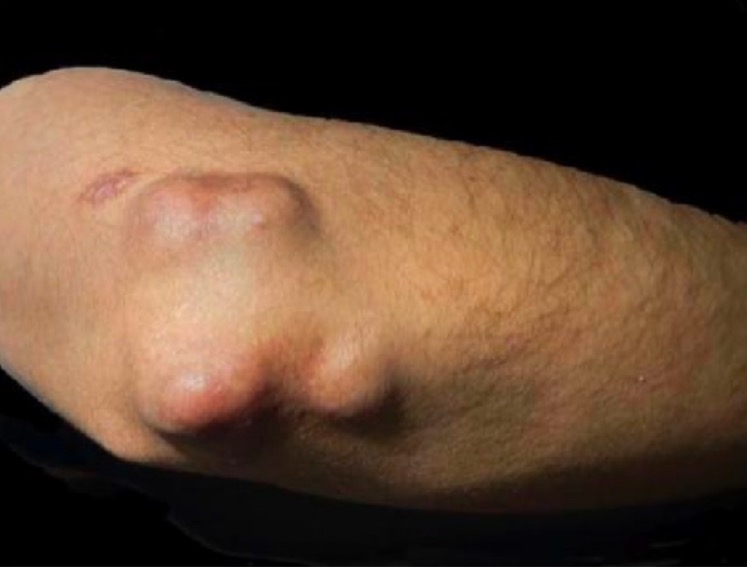
    • Nódulos reumatoides:
      • No doloroso
      • Ubicados en EN Erythema nodosum is an immune-mediated panniculitis (inflammation of the subcutaneous fat) caused by a type IV (delayed-type) hypersensitivity reaction. It commonly manifests in young women as tender, erythematous nodules on the shins. Erythema Nodosum la superficie extensora del codo, talón, tuberosidades isquiáticas y dedos
      • También puede ocurrir en EN Erythema nodosum is an immune-mediated panniculitis (inflammation of the subcutaneous fat) caused by a type IV (delayed-type) hypersensitivity reaction. It commonly manifests in young women as tender, erythematous nodules on the shins. Erythema Nodosum las vísceras.
    • Úlceras cutáneas
    • Dermatosis neutrofílica:
      • Infiltración de neutrófilos estériles
      • Pápulas eritematosas simétricas
  • Oculares:
    • Síndrome de Sjögren (queratoconjuntivitis seca)
    • Epiescleritis
    • Uveitis Uveitis Uveitis is the inflammation of the uvea, the pigmented middle layer of the eye, which comprises the iris, ciliary body, and choroid. The condition is categorized based on the site of disease; anterior uveitis is the most common. Diseases of the Uvea
  • Neurológicas:
    • Mielopatía y radiculopatía
    • Mononeuritis múltiple o polineuropatía
    • Síndrome del túnel carpiano
    • Depresión
  • Respiratorias:
    • Enfermedad pulmonar intersticial
    • Obstrucción de la vía aérea superior debido a:
      • Artritis cricoaritenoide
      • Nódulos reumatoides de las cuerdas vocales
    • Pleuritis Pleuritis Pleuritis, also known as pleurisy, is an inflammation of the visceral and parietal layers of the pleural membranes of the lungs. The condition can be primary or secondary and results in sudden, sharp, and intense chest pain on inhalation and exhalation. Pleuritis
    • Derrame pleural
    • Nódulos pulmonares
  • Cardíacas:
    • Infarto de miocardio
    • Pericarditis Pericarditis Pericarditis is an inflammation of the pericardium, often with fluid accumulation. It can be caused by infection (often viral), myocardial infarction, drugs, malignancies, metabolic disorders, autoimmune disorders, or trauma. Acute, subacute, and chronic forms exist. Pericarditis
    • Miocarditis
    • Derrame pericárdico
    • Insuficiencia valvular (por nódulos reumatoides)
    • Anomalías en EN Erythema nodosum is an immune-mediated panniculitis (inflammation of the subcutaneous fat) caused by a type IV (delayed-type) hypersensitivity reaction. It commonly manifests in young women as tender, erythematous nodules on the shins. Erythema Nodosum la conducción (por nódulos reumatoides)
  • Vasculares:
    • Vasculitis Vasculitis Inflammation of any one of the blood vessels, including the arteries; veins; and rest of the vasculature system in the body. Systemic Lupus Erythematosus
    • Enfermedad vascular periférica
    • Trombosis venosa profunda
  • Hematológicas:
    • Síndrome de Felty:
      • Artritis reumatoide
      • Neutropenia Neutropenia Neutrophils are an important component of the immune system and play a significant role in the eradication of infections. Low numbers of circulating neutrophils, referred to as neutropenia, predispose the body to recurrent infections or sepsis, though patients can also be asymptomatic. Neutropenia
      • Esplenomegalia
    • Anemia Anemia Anemia is a condition in which individuals have low Hb levels, which can arise from various causes. Anemia is accompanied by a reduced number of RBCs and may manifest with fatigue, shortness of breath, pallor, and weakness. Subtypes are classified by the size of RBCs, chronicity, and etiology. Anemia: Overview and Types de enfermedades crónicas
Nódulos reumatoides aislados

Nódulos reumatoides en AR:
Tumefacción subcutánea firme, no dolorosa, en la superficie extensora del codo en un paciente con AR

Imagen: Right elbow” por Department of Medicine, Woodhull Medical Center, Brooklyn, NY 11206, USA. Licencia: CC BY 3.0

Diagnóstico

El diagnóstico de artritis reumatoide ( AR AR Aortic regurgitation (AR) is a cardiac condition characterized by the backflow of blood from the aorta to the left ventricle during diastole. Aortic regurgitation is associated with an abnormal aortic valve and/or aortic root stemming from multiple causes, commonly rheumatic heart disease as well as congenital and degenerative valvular disorders. Aortic Regurgitation) se basa en EN Erythema nodosum is an immune-mediated panniculitis (inflammation of the subcutaneous fat) caused by a type IV (delayed-type) hypersensitivity reaction. It commonly manifests in young women as tender, erythematous nodules on the shins. Erythema Nodosum una alta sospecha clínica y se confirma mediante serología e imagenología.
Pruebas de laboratorio

  • Generales:
    • Hemograma completo:
      • ↓ Hemoglobina → anemia Anemia Anemia is a condition in which individuals have low Hb levels, which can arise from various causes. Anemia is accompanied by a reduced number of RBCs and may manifest with fatigue, shortness of breath, pallor, and weakness. Subtypes are classified by the size of RBCs, chronicity, and etiology. Anemia: Overview and Types de enfermedades crónicas
      • ↑ Plaquetas
      • Neutropenia Neutropenia Neutrophils are an important component of the immune system and play a significant role in the eradication of infections. Low numbers of circulating neutrophils, referred to as neutropenia, predispose the body to recurrent infections or sepsis, though patients can also be asymptomatic. Neutropenia → Síndrome de Felty
      • Puede haber leucocitosis leve.
    • Marcadores inflamatorios:
      • ↑ Tasa de sedimentación eritrocítica
      • ↑ Proteína C reactiva ( PCR PCR Polymerase chain reaction (PCR) is a technique that amplifies DNA fragments exponentially for analysis. The process is highly specific, allowing for the targeting of specific genomic sequences, even with minuscule sample amounts. The PCR cycles multiple times through 3 phases: denaturation of the template DNA, annealing of a specific primer to the individual DNA strands, and synthesis/elongation of new DNA molecules. Polymerase Chain Reaction (PCR))
      • ↑ Ferritina
  • Serología:
    • Factor reumatoideo:
      • Presente en EN Erythema nodosum is an immune-mediated panniculitis (inflammation of the subcutaneous fat) caused by a type IV (delayed-type) hypersensitivity reaction. It commonly manifests in young women as tender, erythematous nodules on the shins. Erythema Nodosum 70%–80% de los LOS Neisseria pacientes
      • Está presente en EN Erythema nodosum is an immune-mediated panniculitis (inflammation of the subcutaneous fat) caused by a type IV (delayed-type) hypersensitivity reaction. It commonly manifests in young women as tender, erythematous nodules on the shins. Erythema Nodosum el 15% de los LOS Neisseria pacientes sin AR AR Aortic regurgitation (AR) is a cardiac condition characterized by the backflow of blood from the aorta to the left ventricle during diastole. Aortic regurgitation is associated with an abnormal aortic valve and/or aortic root stemming from multiple causes, commonly rheumatic heart disease as well as congenital and degenerative valvular disorders. Aortic Regurgitation.
    • Anticuerpos antipéptido cíclico citrulinado (anti-CCP, por sus siglas en EN Erythema nodosum is an immune-mediated panniculitis (inflammation of the subcutaneous fat) caused by a type IV (delayed-type) hypersensitivity reaction. It commonly manifests in young women as tender, erythematous nodules on the shins. Erythema Nodosum inglés): muy específicos
    • Anticuerpos antinucleares (ANA):
      • Inespecíficos
      • Positivos en EN Erythema nodosum is an immune-mediated panniculitis (inflammation of the subcutaneous fat) caused by a type IV (delayed-type) hypersensitivity reaction. It commonly manifests in young women as tender, erythematous nodules on the shins. Erythema Nodosum 30% de los LOS Neisseria casos
  • Análisis del líquido sinovial:
    • Leucocitosis (5,000 a 50,000 células/microlitro) con predominio de neutrófilos
    • ↓ Glucosa
    • Tinción de Gram y cultivo de Gram negativos
    • Negativo para cristales

Imagenología

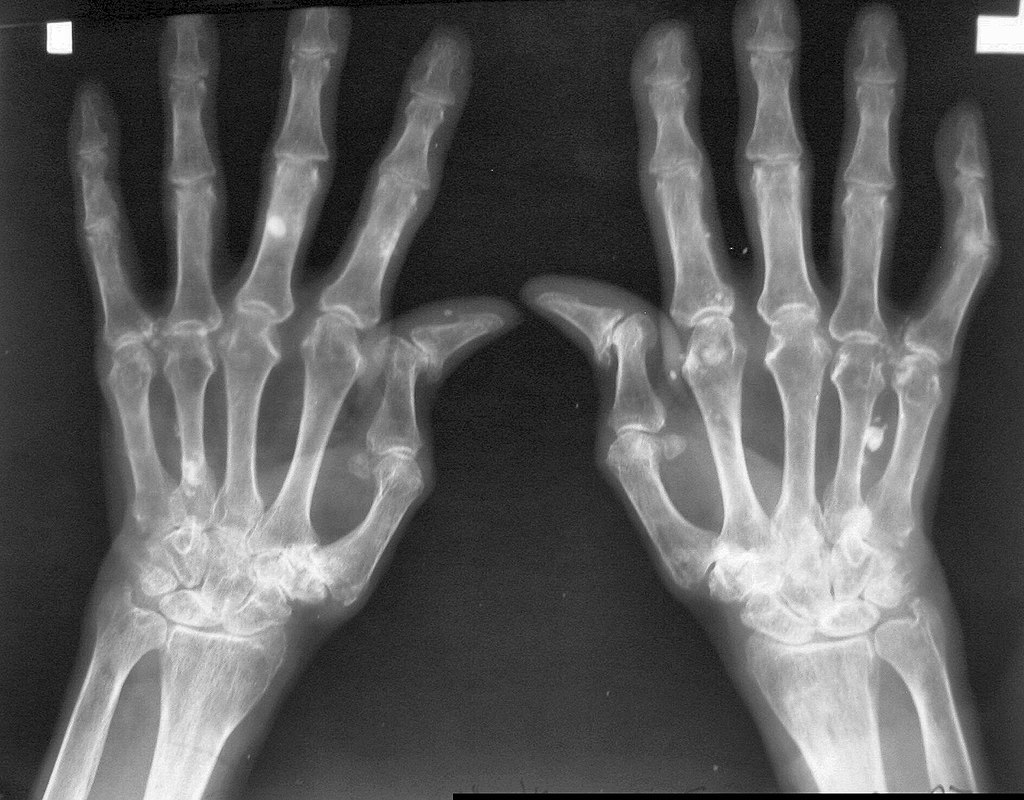
  • Radiografía:
    • Puede ser normal en EN Erythema nodosum is an immune-mediated panniculitis (inflammation of the subcutaneous fat) caused by a type IV (delayed-type) hypersensitivity reaction. It commonly manifests in young women as tender, erythematous nodules on the shins. Erythema Nodosum la enfermedad temprana
    • Inflamación de tejidos blandos
    • Osteopenia Osteopenia Osteoporosis periarticular
    • Erosión ósea
    • Estrechamiento del espacio articular
    • Subluxación articular
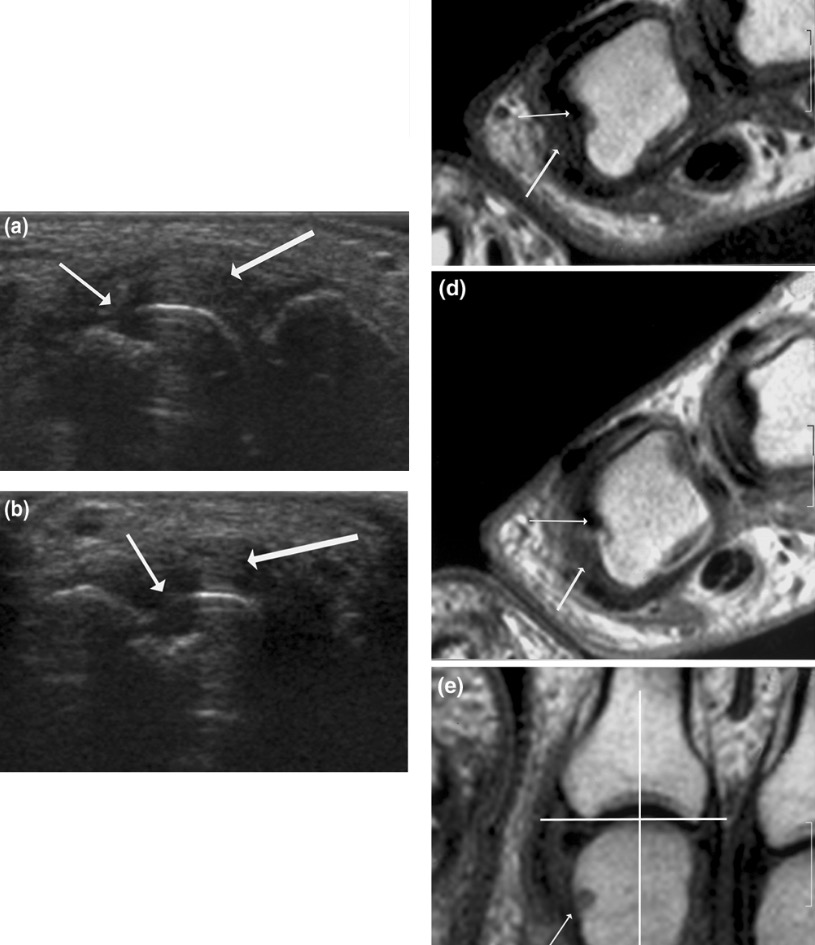
  • Ultrasonido:
    • Erosión
    • Estrechamiento del espacio articular
    • Sinovitis
  • Resonancia magnética (RM):
    • Más sensible que las radiografías.
    • Detecta la erosión más tempranamente
    • Evalúa el tejido sinovial hipertrófico e inflamado

Tratamiento y Pronóstico

Tratamiento

El objetivo es prevenir la deformidad y el daño permanente. Los LOS Neisseria pacientes deben ser derivados a un reumatólogo.

Terapias no medicamentosas

  • Terapia física y ocupacional
  • Cesar tabaquismo

Tratamiento de exacerbaciones agudas:

  • Medicamentos antiinflamatorios no esteroideos (AINE)
  • Glucocorticoides:
    • Se puede utilizar como puente hacia la terapia con medicamentos antirreumáticos modificadores de la enfermedad o para brotes agudos
    • Opciones: inyección sistémica o intraarticular

Terapia con medicamentos a largo plazo:

  • Medicamentos antirreumáticos modificadores de la enfermedad:
    • Debe iniciarse en EN Erythema nodosum is an immune-mediated panniculitis (inflammation of the subcutaneous fat) caused by a type IV (delayed-type) hypersensitivity reaction. It commonly manifests in young women as tender, erythematous nodules on the shins. Erythema Nodosum todos los LOS Neisseria pacientes al AL Amyloidosis momento del diagnóstico.
    • El metotrexato suele ser la primera opción.
    • Opciones adicionales: sulfasalazina, hidroxicloroquina, azatioprina, leflunomida
  • Inhibidores del TNF-alfa:
  • Otras opciones de terapia biológica:
    • Inhibidores de IL-6 ( tocilizumab Tocilizumab Immunosuppressants)
    • Anticuerpo monoclonal CD20 ( rituximab Rituximab A murine-derived monoclonal antibody and antineoplastic agent that binds specifically to the cd20 antigen and is used in the treatment of leukemia; lymphoma and rheumatoid arthritis. Immunosuppressants)
    • Bloqueador selectivo de la coestimulación de linfocitos T ( abatacept Abatacept A fusion protein immunoconjugate of the extracellular domain of ctla4 and the fc domain of human igg1. It functions as a t-cell co-stimulation blocker that inhibits tnf-alpha and prevents the activation of T-lymphocytes. It is used in the treatment of rheumatoid arthritis. Immunosuppressants)

Cirugía:

  • Indicado para daños severos y función limitada
  • Se puede considerar si la terapia con medicamentos no tiene éxito
  • Opciones:
    • Reemplazo de la articulación
    • Fusión de la articulación
    • Sinovectomía

Consideraciones adicionales:

  • Durante el tratamiento con glucocorticoides, los LOS Neisseria pacientes deben ser monitoreados para detectar:
    • Osteoporosis Osteoporosis Osteoporosis refers to a decrease in bone mass and density leading to an increased number of fractures. There are 2 forms of osteoporosis: primary, which is commonly postmenopausal or senile; and secondary, which is a manifestation of immobilization, underlying medical disorders, or long-term use of certain medications. Osteoporosis
    • Diabetes Diabetes Diabetes mellitus (DM) is a metabolic disease characterized by hyperglycemia and dysfunction of the regulation of glucose metabolism by insulin. Type 1 DM is diagnosed mostly in children and young adults as the result of autoimmune destruction of β cells in the pancreas and the resulting lack of insulin. Type 2 DM has a significant association with obesity and is characterized by insulin resistance. Diabetes Mellitus
    • Hipertensión
  • Se deben administrar las vacunas apropiadas para prevenir las complicaciones infecciosas de los LOS Neisseria medicamentos inmunosupresores.
  • Todos los LOS Neisseria pacientes deben someterse a pruebas de detección de tuberculosis Tuberculosis Tuberculosis (TB) is an infectious disease caused by Mycobacterium tuberculosis complex bacteria. The bacteria usually attack the lungs but can also damage other parts of the body. Approximately 30% of people around the world are infected with this pathogen, with the majority harboring a latent infection. Tuberculosis spreads through the air when a person with active pulmonary infection coughs or sneezes. Tuberculosis y hepatitis.
  • Los LOS Neisseria pacientes requieren un control de laboratorios continuo para determinar la toxicidad del medicamento:
    • Hemograma
    • Función hepática
    • Creatinina
  • Imagenología de la columna cervical antes de procedimientos quirúrgicos:
    • Evalúe si hay subluxación cervical (más a menudo en EN Erythema nodosum is an immune-mediated panniculitis (inflammation of the subcutaneous fat) caused by a type IV (delayed-type) hypersensitivity reaction. It commonly manifests in young women as tender, erythematous nodules on the shins. Erythema Nodosum la articulación atlantoaxial).
    • La intubación puede ser fatal en EN Erythema nodosum is an immune-mediated panniculitis (inflammation of the subcutaneous fat) caused by a type IV (delayed-type) hypersensitivity reaction. It commonly manifests in young women as tender, erythematous nodules on the shins. Erythema Nodosum aquellos con inestabilidad cervical.

Pronóstico

  • La AR AR Aortic regurgitation (AR) is a cardiac condition characterized by the backflow of blood from the aorta to the left ventricle during diastole. Aortic regurgitation is associated with an abnormal aortic valve and/or aortic root stemming from multiple causes, commonly rheumatic heart disease as well as congenital and degenerative valvular disorders. Aortic Regurgitation es una enfermedad crónica y progresiva:
    • La mayoría de los LOS Neisseria pacientes recaen.
    • El 10% quedará gravemente discapacitado a pesar de un tratamiento adecuado.
  • Asociado con un mayor riesgo de:
    • Enfermedad cardiovascular
    • Infección
    • Enfermedad respiratoria
    • Hemorragia gastrointestinal
    • Linfoma (especialmente con el síndrome de Felty)
  • 1.5-3 veces mayor riesgo de muerte que la población general
  • Factores de riesgo para un mal pronóstico:
    • Manifestaciones extraarticulares
    • Edad avanzada
    • Mujeres
    • Caucásicos
    • Erosión temprana en EN Erythema nodosum is an immune-mediated panniculitis (inflammation of the subcutaneous fat) caused by a type IV (delayed-type) hypersensitivity reaction. It commonly manifests in young women as tender, erythematous nodules on the shins. Erythema Nodosum la imagenología
    • Hábito tabáquico
    • Elevación de marcadores inflamatorios y/o títulos de anticuerpos
    • ≥ 20 articulaciones afectadas

Diagnóstico Diferencial

  • Osteoartritis: una forma de artritis de “desgaste” debido a la destrucción del cartílago y cambios en EN Erythema nodosum is an immune-mediated panniculitis (inflammation of the subcutaneous fat) caused by a type IV (delayed-type) hypersensitivity reaction. It commonly manifests in young women as tender, erythematous nodules on the shins. Erythema Nodosum el hueso subcondral. Los LOS Neisseria pacientes desarrollan dolor Dolor Inflammation articular gradual, rigidez duradera < 30 minutos, y disminución del rango de movimiento. Las articulaciones interfalángicas proximales, interfalángicas distales y carpometacarpianas se ven afectadas con frecuencia. El diagnóstico es clínico y se apoya en EN Erythema nodosum is an immune-mediated panniculitis (inflammation of the subcutaneous fat) caused by a type IV (delayed-type) hypersensitivity reaction. It commonly manifests in young women as tender, erythematous nodules on the shins. Erythema Nodosum los LOS Neisseria hallazgos articulares radiográficos. Los LOS Neisseria marcadores inflamatorios, factor reumatoideo y anti-CCP son negativos. El tratamiento incluye analgésicos, inyecciones intraarticulares de esteroides y cirugía para la enfermedad avanzada.
  • Gota: enfermedad causada por hiperuricemia, que conduce a la artritis por la precipitación de cristales de urato monosódico en EN Erythema nodosum is an immune-mediated panniculitis (inflammation of the subcutaneous fat) caused by a type IV (delayed-type) hypersensitivity reaction. It commonly manifests in young women as tender, erythematous nodules on the shins. Erythema Nodosum las articulaciones. La gota es a menudo monoarticular y generalmente implica dolor Dolor Inflammation, sensibilidad, edema Edema Edema is a condition in which excess serous fluid accumulates in the body cavity or interstitial space of connective tissues. Edema is a symptom observed in several medical conditions. It can be categorized into 2 types, namely, peripheral (in the extremities) and internal (in an organ or body cavity). Edema, eritema y calor Calor Inflammation en EN Erythema nodosum is an immune-mediated panniculitis (inflammation of the subcutaneous fat) caused by a type IV (delayed-type) hypersensitivity reaction. It commonly manifests in young women as tender, erythematous nodules on the shins. Erythema Nodosum la primera articulación metatarsofalángica. El diagnóstico se confirma mediante la identificación de cristales en EN Erythema nodosum is an immune-mediated panniculitis (inflammation of the subcutaneous fat) caused by a type IV (delayed-type) hypersensitivity reaction. It commonly manifests in young women as tender, erythematous nodules on the shins. Erythema Nodosum forma de aguja con birrefringencia negativa en EN Erythema nodosum is an immune-mediated panniculitis (inflammation of the subcutaneous fat) caused by a type IV (delayed-type) hypersensitivity reaction. It commonly manifests in young women as tender, erythematous nodules on the shins. Erythema Nodosum el líquido sinovial. El tratamiento incluye AINE, colchicina, corticosteroides y reducción del ácido úrico con alopurinol.
  • Pseudogota: depósito de pirofosfato de calcio intraarticular de etiología poco clara. Los LOS Neisseria pacientes presentan brotes agudos de edema Edema Edema is a condition in which excess serous fluid accumulates in the body cavity or interstitial space of connective tissues. Edema is a symptom observed in several medical conditions. It can be categorized into 2 types, namely, peripheral (in the extremities) and internal (in an organ or body cavity). Edema, calor Calor Inflammation y dolor Dolor Inflammation en EN Erythema nodosum is an immune-mediated panniculitis (inflammation of the subcutaneous fat) caused by a type IV (delayed-type) hypersensitivity reaction. It commonly manifests in young women as tender, erythematous nodules on the shins. Erythema Nodosum las articulaciones. La pseudogota generalmente afecta las articulaciones más grandes, como la rodilla. El diagnóstico se confirma mediante la identificación de cristales romboides positivamente birrefringentes en EN Erythema nodosum is an immune-mediated panniculitis (inflammation of the subcutaneous fat) caused by a type IV (delayed-type) hypersensitivity reaction. It commonly manifests in young women as tender, erythematous nodules on the shins. Erythema Nodosum el líquido sinovial. El tratamiento incluye AINE, corticosteroides y colchicina.
  • Artritis psoriásica: una espondiloartropatía que ocurre en EN Erythema nodosum is an immune-mediated panniculitis (inflammation of the subcutaneous fat) caused by a type IV (delayed-type) hypersensitivity reaction. It commonly manifests in young women as tender, erythematous nodules on the shins. Erythema Nodosum pacientes con psoriasis Psoriasis Psoriasis is a common T-cell-mediated inflammatory skin condition. The etiology is unknown, but is thought to be due to genetic inheritance and environmental triggers. There are 4 major subtypes, with the most common form being chronic plaque psoriasis. Psoriasis. La artritis psoriásica es inflamatoria, frecuentemente asimétrica y afecta tanto a las articulaciones pequeñas como a las grandes, incluidas las articulaciones interfalángicas distales y la columna sacroilíaca. Los LOS Neisseria síntomas también pueden incluir entesopatía y dactilitis. El diagnóstico es clínico y debe sospecharse en EN Erythema nodosum is an immune-mediated panniculitis (inflammation of the subcutaneous fat) caused by a type IV (delayed-type) hypersensitivity reaction. It commonly manifests in young women as tender, erythematous nodules on the shins. Erythema Nodosum pacientes con psoriasis Psoriasis Psoriasis is a common T-cell-mediated inflammatory skin condition. The etiology is unknown, but is thought to be due to genetic inheritance and environmental triggers. There are 4 major subtypes, with the most common form being chronic plaque psoriasis. Psoriasis. El tratamiento incluye medicamentos antirreumáticos modificadores de la enfermedad y agentes biológicos.
  • Artritis reactiva: una espondiloartropatía a menudo precipitada por una infección gastrointestinal o genitourinaria. Los LOS Neisseria pacientes pueden presentar artritis asimétrica, típicamente de las extremidades inferiores. La artritis reactiva puede estar asociada con fiebre, tendinitis Tendinitis Ankylosing Spondylitis, entesitis, úlceras mucocutáneas y conjuntivitis. El diagnóstico es clínico y el tratamiento incluye AINE, medicamentos antirreumáticos modificadores de la enfermedad y tratamiento de la infección.

Referencias

  1. Firestein, G.S., and Guma, M. (2025). Pathogenesis of rheumatoid arthritis. In Romain, P.L. (Ed.), Uptodate. Retrieved August 14, 2025, from https://www.uptodate.com/contents/pathogenesis-of-rheumatoid-arthritis
  2. England, B. R. (2025). Articular manifestations of rheumatoid arthritis. UpToDate. Retrieved August 14, 2025, from https://www.uptodate.com/contents/articular-manifestations-of-rheumatoid-arthritis
  3. Matteson, E.L., and Davis, J.M. (2025). Overview of the systemic and nonarticular manifestations of rheumatoid arthritis. In Romain, P.L. (Ed.), Uptodate. Retrieved August 14, 2025, from https://www.uptodate.com/contents/overview-of-the-systemic-and-nonarticular-manifestations-of-rheumatoid-arthritis
  4. Cohen, S., & Mikuls, T. R. (2025). Initial pharmacologic management of rheumatoid arthritis in adults. UpToDate. Retrieved August 14, 2025, from https://www.uptodate.com/contents/initial-pharmacologic-management-of-rheumatoid-arthritis-in-adults
  5. Kontzias, A. (2024). Rheumatoid arthritis (RA). [online] MSD Manual Professional Version. Retrieved August 14, 2025, from https://www.merckmanuals.com/professional/musculoskeletal-and-connective-tissue-disorders/joint-disorders/rheumatoid-arthritis-ra
  6. Smith, H.R., and Brown, A. (2023). Rheumatoid arthritis (RA). In Diamond. H.S. (Ed.), Medscape. Retrieved August 14, 2025, from https://emedicine.medscape.com/article/331715-overview
  7. Chauhan, K., Jandu, J.S., Goyal, A., Bansal, P., and Al-Dhahir, M.A. (2023). Rheumatoid arthritis. [online] StatPearls. Retrieved August 14, 2025, from https://www.ncbi.nlm.nih.gov/books/NBK441999/

¡Crea tu cuenta gratis o inicia una sesión para seguir leyendo!

Regístrate ahora y obtén acceso gratuito a Lecturio con páginas de concepto, videos médicos y cuestionarios para tu educación médica.

User Reviews

Que tengas una sesión de estudio alegre y navideña 🎁 Ahorra 50% en todos los planes >>

Details