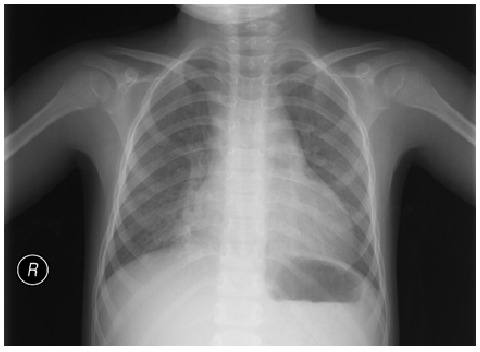



Pneumonia

A pneumonia Pneumonia Pneumonia or pulmonary inflammation is an acute or chronic inflammation of lung tissue. Causes include infection with bacteria, viruses, or fungi. In more rare cases, pneumonia can also be caused through toxic triggers through inhalation of toxic substances, immunological processes, or in the course of radiotherapy. Pneumonia corresponde a uma inflamação aguda ou crónica do parênquima pulmonar. As causas mais MAIS Androgen Insensitivity Syndrome comuns incluem infeção por bactérias, vírus ou fungos. Em casos mais MAIS Androgen Insensitivity Syndrome raros, a pneumonia Pneumonia Pneumonia or pulmonary inflammation is an acute or chronic inflammation of lung tissue. Causes include infection with bacteria, viruses, or fungi. In more rare cases, pneumonia can also be caused through toxic triggers through inhalation of toxic substances, immunological processes, or in the course of radiotherapy. Pneumonia também pode ser causada pela inalação de substâncias tóxicas ou ocorrer no contexto de processos imunológicos ou durante a realização de ciclos de radioterapia.

Last updated: Dec 15, 2025

Editorial responsibility: Stanley Oiseth, Lindsay Jones, Evelin Maza

Definição e Epidemiologia

Tipos de pneumonia Pneumonia Pneumonia or pulmonary inflammation is an acute or chronic inflammation of lung tissue. Causes include infection with bacteria, viruses, or fungi. In more rare cases, pneumonia can also be caused through toxic triggers through inhalation of toxic substances, immunological processes, or in the course of radiotherapy. Pneumonia

  • Pneumonia Pneumonia Pneumonia or pulmonary inflammation is an acute or chronic inflammation of lung tissue. Causes include infection with bacteria, viruses, or fungi. In more rare cases, pneumonia can also be caused through toxic triggers through inhalation of toxic substances, immunological processes, or in the course of radiotherapy. Pneumonia adquirida na comunidade (PAC): pneumonia Pneumonia Pneumonia or pulmonary inflammation is an acute or chronic inflammation of lung tissue. Causes include infection with bacteria, viruses, or fungi. In more rare cases, pneumonia can also be caused through toxic triggers through inhalation of toxic substances, immunological processes, or in the course of radiotherapy. Pneumonia adquirida fora do ambiente hospitalar
  • Pneumonia Pneumonia Pneumonia or pulmonary inflammation is an acute or chronic inflammation of lung tissue. Causes include infection with bacteria, viruses, or fungi. In more rare cases, pneumonia can also be caused through toxic triggers through inhalation of toxic substances, immunological processes, or in the course of radiotherapy. Pneumonia adquirida no hospital ( PAH PAH The glycine amide of 4-aminobenzoic acid. Its sodium salt is used as a diagnostic aid to measure effective renal plasma flow (ERPF) and excretory capacity. Glomerular Filtration): pneumonia Pneumonia Pneumonia or pulmonary inflammation is an acute or chronic inflammation of lung tissue. Causes include infection with bacteria, viruses, or fungi. In more rare cases, pneumonia can also be caused through toxic triggers through inhalation of toxic substances, immunological processes, or in the course of radiotherapy. Pneumonia que ocorre 48 horas após a admissão hospitalar por outro motivo, em doentes que não cumprem os critérios para pneumonia Pneumonia Pneumonia or pulmonary inflammation is an acute or chronic inflammation of lung tissue. Causes include infection with bacteria, viruses, or fungi. In more rare cases, pneumonia can also be caused through toxic triggers through inhalation of toxic substances, immunological processes, or in the course of radiotherapy. Pneumonia associada ao ventilador (PAV)
  • Pneumonia Pneumonia Pneumonia or pulmonary inflammation is an acute or chronic inflammation of lung tissue. Causes include infection with bacteria, viruses, or fungi. In more rare cases, pneumonia can also be caused through toxic triggers through inhalation of toxic substances, immunological processes, or in the course of radiotherapy. Pneumonia associada ao ventilador: pneumonia Pneumonia Pneumonia or pulmonary inflammation is an acute or chronic inflammation of lung tissue. Causes include infection with bacteria, viruses, or fungi. In more rare cases, pneumonia can also be caused through toxic triggers through inhalation of toxic substances, immunological processes, or in the course of radiotherapy. Pneumonia que ocorre 48 horas após intubação endotraqueal ou dentro de 48 horas após a extubação
  • Pneumonia Pneumonia Pneumonia or pulmonary inflammation is an acute or chronic inflammation of lung tissue. Causes include infection with bacteria, viruses, or fungi. In more rare cases, pneumonia can also be caused through toxic triggers through inhalation of toxic substances, immunological processes, or in the course of radiotherapy. Pneumonia nosocomial: engloba as definições de PAH PAH The glycine amide of 4-aminobenzoic acid. Its sodium salt is used as a diagnostic aid to measure effective renal plasma flow (ERPF) and excretory capacity. Glomerular Filtration e PAV
  • Pneumonia Pneumonia Pneumonia or pulmonary inflammation is an acute or chronic inflammation of lung tissue. Causes include infection with bacteria, viruses, or fungi. In more rare cases, pneumonia can also be caused through toxic triggers through inhalation of toxic substances, immunological processes, or in the course of radiotherapy. Pneumonia associada aos cuidados de saúde (PACS):
    • Termo descontinuado
    • Era definido como pneumonia Pneumonia Pneumonia or pulmonary inflammation is an acute or chronic inflammation of lung tissue. Causes include infection with bacteria, viruses, or fungi. In more rare cases, pneumonia can also be caused through toxic triggers through inhalation of toxic substances, immunological processes, or in the course of radiotherapy. Pneumonia em indivíduos que tinham exposição a cuidados de saúde (e.g., hospitalizados, residentes em instituições de cuidados prolongados)
    • Abrangia um grande grupo rotulado como de alto risco para organismos multirresistentes (MDRO, pela sigla em inglês), o que levou ao uso significativo de antibióticos de amplo espectro
    • Estudos posteriores mostraram que os MDRO não eram comuns nesta população.
  • Pneumonia Pneumonia Pneumonia or pulmonary inflammation is an acute or chronic inflammation of lung tissue. Causes include infection with bacteria, viruses, or fungi. In more rare cases, pneumonia can also be caused through toxic triggers through inhalation of toxic substances, immunological processes, or in the course of radiotherapy. Pneumonia por aspiração: pneumonia Pneumonia Pneumonia or pulmonary inflammation is an acute or chronic inflammation of lung tissue. Causes include infection with bacteria, viruses, or fungi. In more rare cases, pneumonia can also be caused through toxic triggers through inhalation of toxic substances, immunological processes, or in the course of radiotherapy. Pneumonia que ocorre em situações de aumento do risco de aspiração, como por exemplo diminuição do reflexo do vómito ou doentes em estado crítico
  • Pneumonia Pneumonia Pneumonia or pulmonary inflammation is an acute or chronic inflammation of lung tissue. Causes include infection with bacteria, viruses, or fungi. In more rare cases, pneumonia can also be caused through toxic triggers through inhalation of toxic substances, immunological processes, or in the course of radiotherapy. Pneumonia atípica: pneumonia Pneumonia Pneumonia or pulmonary inflammation is an acute or chronic inflammation of lung tissue. Causes include infection with bacteria, viruses, or fungi. In more rare cases, pneumonia can also be caused through toxic triggers through inhalation of toxic substances, immunological processes, or in the course of radiotherapy. Pneumonia causada por microrganismos atípicos (por exemplo, Mycoplasma pneumoniae Mycoplasma pneumoniae Short filamentous organism of the genus mycoplasma, which binds firmly to the cells of the respiratory epithelium. It is one of the etiologic agents of non-viral primary atypical pneumonia in man. Mycoplasma , Chlamydia pneumoniae Chlamydia pneumoniae A species of chlamydophila that causes acute respiratory infection, especially atypical pneumonia, in humans, horses, and koalas. Chlamydia e vírus respiratórios) e clinicamente caracterizada por sintomas mais MAIS Androgen Insensitivity Syndrome ligeiros, habitualmente sem consolidação lobar na radiografia torácica.

Epidemiologia

Fatores de Risco e Fisiopatologia

Fatores de risco para microrganismos multirresistentes ( MMR MMR A DNA repair pathway involved in correction of errors introduced during DNA replication when an incorrect base, which cannot form hydrogen bonds with the corresponding base in the parent strand, is incorporated into the daughter strand. Excinucleases recognize the base pair mismatch and cause a segment of polynucleotide chain to be excised from the daughter strand, thereby removing the mismatched base. Lynch syndrome)

  • Todo o destaque atribuído à gestão e tratamento das pneumonias com base nas definições mencionadas previamente levou à utilização inapropriada de antibióticos de largo espetro e piores resultados.
  • Mais MAIS Androgen Insensitivity Syndrome recentemente, o foco tem sido a identificação de fatores de risco que, quando presentes, aumentam a probabilidade de infeção por microrganismos resistentes, incluindo o Staphylococcus aureus Staphylococcus aureus Potentially pathogenic bacteria found in nasal membranes, skin, hair follicles, and perineum of warm-blooded animals. They may cause a wide range of infections and intoxications. Brain Abscess resistente à meticilina ( MRSA MRSA A strain of Staphylococcus aureus that is non-susceptible to the action of methicillin. The mechanism of resistance usually involves modification of normal or the presence of acquired penicillin binding proteins. Staphylococcus).
  • A identificação de ≥ 2 dos fatores de risco descritos na Tabela 1 orienta a escolha da terapêutica antimicrobiana a instituir.
Tabela 1: Fatores de risco para infeção por microrganismos resistentes a antibióticos habitualmente utilizados no tratamento da PAC.
Bactérias gram-negativas e MRSA MRSA A strain of Staphylococcus aureus that is non-susceptible to the action of methicillin. The mechanism of resistance usually involves modification of normal or the presence of acquired penicillin binding proteins. Staphylococcus MRSA MRSA A strain of Staphylococcus aureus that is non-susceptible to the action of methicillin. The mechanism of resistance usually involves modification of normal or the presence of acquired penicillin binding proteins. Staphylococcus nosocomial ( PAH PAH The glycine amide of 4-aminobenzoic acid. Its sodium salt is used as a diagnostic aid to measure effective renal plasma flow (ERPF) and excretory capacity. Glomerular Filtration e PAV) MRSA MRSA A strain of Staphylococcus aureus that is non-susceptible to the action of methicillin. The mechanism of resistance usually involves modification of normal or the presence of acquired penicillin binding proteins. Staphylococcus adquirido na comunidade
  • Hospitalização ≥ 2 dias nos últimos 90 dias
  • Utilização de antibióticos nos últimos 90 dias
  • Supressão de acidez gástrica
  • Imunossupressão
  • Doentes acamados
  • Alimentação por sonda
  • Doença pulmonar obstrutiva crónica grave (DPOC) / bronquiectasias
  • Hospitalização ≥ 2 dias nos últimos 90 dias
  • Utilização de antibióticos nos últimos 90 dias
  • Supressão de acidez gástrica
  • Internamento atual ≥ 5 dias
  • Elevada frequência de resistência a antibióticos no ambiente comunitário/hospitalar
  • Imunossupressão
  • Hemodiálise crónica nos últimos 30 dias
  • Colonização prévia por MRSA MRSA A strain of Staphylococcus aureus that is non-susceptible to the action of methicillin. The mechanism of resistance usually involves modification of normal or the presence of acquired penicillin binding proteins. Staphylococcus já conhecida
  • Insuficiência cardíaca congestiva
  • Cavitação pulmonar
  • Hemoptises
  • Neutropenia Neutropenia Neutrophils are an important component of the immune system and play a significant role in the eradication of infections. Low numbers of circulating neutrophils, referred to as neutropenia, predispose the body to recurrent infections or sepsis, though patients can also be asymptomatic. Neutropenia
  • Rash Rash Rocky Mountain Spotted Fever eritematoso
  • Infeção concomitante por Influenza Influenza Influenza viruses are members of the Orthomyxoviridae family and the causative organisms of influenza, a highly contagious febrile respiratory disease. There are 3 primary influenza viruses (A, B, and C) and various subtypes, which are classified based on their virulent surface antigens, hemagglutinin (HA) and neuraminidase (NA). Influenza typically presents with a fever, myalgia, headache, and symptoms of an upper respiratory infection. Influenza Viruses/Influenza
  • Doente previamente saudável
  • Início durante o verão

Fisiopatologia

  • Via principal: aspiração de pequena quantidade de microrganismos, nomeadamente bactérias → acesso e proliferação no espaço alveolar → resposta imunitária dos macrófagos alveolares → extravasamento capilar e infiltração alveolar → sinais e sintomas de pneumonia Pneumonia Pneumonia or pulmonary inflammation is an acute or chronic inflammation of lung tissue. Causes include infection with bacteria, viruses, or fungi. In more rare cases, pneumonia can also be caused through toxic triggers through inhalation of toxic substances, immunological processes, or in the course of radiotherapy. Pneumonia, como crepitações na auscultação e consolidação na radiografia torácica
    • Mecanismos de defesa da via respiratória: pêlos nasais e cornetos, reflexo do vómito e da tosse, árvore traqueobrônquica e o seu revestimento mucociliar e macrófagos alveolares.
  • Outras vias:
    • Hematogénica (por exemplo, endocardite direita)
    • Propagação contígua (infeção pleural ou mediastínica)
  • Patogénese alternativa: qualquer defeito nos mecanismos de defesa da via aérea pode facilitar o crescimento excessivo da flora microbiana comensal das vias aéreas, causando pneumonia Pneumonia Pneumonia or pulmonary inflammation is an acute or chronic inflammation of lung tissue. Causes include infection with bacteria, viruses, or fungi. In more rare cases, pneumonia can also be caused through toxic triggers through inhalation of toxic substances, immunological processes, or in the course of radiotherapy. Pneumonia.
  • Fases patológicas da pneumonia Pneumonia Pneumonia or pulmonary inflammation is an acute or chronic inflammation of lung tissue. Causes include infection with bacteria, viruses, or fungi. In more rare cases, pneumonia can also be caused through toxic triggers through inhalation of toxic substances, immunological processes, or in the course of radiotherapy. Pneumonia lobar bacteriana:
    • Edema Edema Edema is a condition in which excess serous fluid accumulates in the body cavity or interstitial space of connective tissues. Edema is a symptom observed in several medical conditions. It can be categorized into 2 types, namely, peripheral (in the extremities) and internal (in an organ or body cavity). Edema: exsudado alveolar que contem o microrganismo patogénico e que evolui rapidamente para a fase seguinte
    • Hepatização vermelha: predominância de eritrócitos e neutrófilos no exsudado com reduzida quantidade de bactérias
    • Hepatização cinzenta (controlo da infeção): presença predominante de neutrófilos e fibrina com poucos eritrócitos e nenhuma bactéria
    • Resolução: presença predominante de macrófagos e remoção dos neutrófilos e depósitos de fibrina

Pneumonia Adquirida na Comunidade

Etiologia

Os vários microrganismos causadores de PAC podem estar associados a pneumonias com diferentes graus de severidade (isto é, pneumonias com necessidade de tratamento em regime ambulatório ou internamento em enfermaria geral ou UCI) (ver Tabela 2):

Tabela 2: Microrganismos causadores de pneumonia Pneumonia Pneumonia or pulmonary inflammation is an acute or chronic inflammation of lung tissue. Causes include infection with bacteria, viruses, or fungi. In more rare cases, pneumonia can also be caused through toxic triggers through inhalation of toxic substances, immunological processes, or in the course of radiotherapy. Pneumonia adquirida na comunidade
Ambulatório Internamento em enfermaria geral Unidade de Cuidados Intensivos
  • Streptococcus Streptococcus Streptococcus is one of the two medically important genera of gram-positive cocci, the other being Staphylococcus. Streptococci are identified as different species on blood agar on the basis of their hemolytic pattern and sensitivity to optochin and bacitracin. There are many pathogenic species of streptococci, including S. pyogenes, S. agalactiae, S. pneumoniae, and the viridans streptococci. Streptococcus pneumonia Pneumonia Pneumonia or pulmonary inflammation is an acute or chronic inflammation of lung tissue. Causes include infection with bacteria, viruses, or fungi. In more rare cases, pneumonia can also be caused through toxic triggers through inhalation of toxic substances, immunological processes, or in the course of radiotherapy. Pneumonia1
  • Mycoplasma Mycoplasma Mycoplasma is a species of pleomorphic bacteria that lack a cell wall, which makes them difficult to target with conventional antibiotics and causes them to not gram stain well. Mycoplasma bacteria commonly target the respiratory and urogenital epithelium. Mycoplasma pneumoniae (M. pneumoniae), the causative agent of atypical or “walking” pneumonia. Mycoplasma pneumonia Pneumonia Pneumonia or pulmonary inflammation is an acute or chronic inflammation of lung tissue. Causes include infection with bacteria, viruses, or fungi. In more rare cases, pneumonia can also be caused through toxic triggers through inhalation of toxic substances, immunological processes, or in the course of radiotherapy. Pneumonia2
  • Chlamydia Chlamydia Chlamydiae are obligate intracellular gram-negative bacteria. They lack a peptidoglycan layer and are best visualized using Giemsa stain. The family of Chlamydiaceae comprises 3 pathogens that can infect humans: Chlamydia trachomatis, Chlamydia psittaci, and Chlamydia pneumoniae. Chlamydia pneumonia Pneumonia Pneumonia or pulmonary inflammation is an acute or chronic inflammation of lung tissue. Causes include infection with bacteria, viruses, or fungi. In more rare cases, pneumonia can also be caused through toxic triggers through inhalation of toxic substances, immunological processes, or in the course of radiotherapy. Pneumonia2
  • Haemophilus Haemophilus Haemophilus is a genus of Gram-negative coccobacilli, all of whose strains require at least 1 of 2 factors for growth (factor V [NAD] and factor X [heme]); therefore, it is most often isolated on chocolate agar, which can supply both factors. The pathogenic species are H. influenzae and H. ducreyi. Haemophilus pneumonia Pneumonia Pneumonia or pulmonary inflammation is an acute or chronic inflammation of lung tissue. Causes include infection with bacteria, viruses, or fungi. In more rare cases, pneumonia can also be caused through toxic triggers through inhalation of toxic substances, immunological processes, or in the course of radiotherapy. Pneumonia
  • Vírus respiratórios 2,3
  • S. pneumonia Pneumonia Pneumonia or pulmonary inflammation is an acute or chronic inflammation of lung tissue. Causes include infection with bacteria, viruses, or fungi. In more rare cases, pneumonia can also be caused through toxic triggers through inhalation of toxic substances, immunological processes, or in the course of radiotherapy. Pneumonia
  • M. pneumonia Pneumonia Pneumonia or pulmonary inflammation is an acute or chronic inflammation of lung tissue. Causes include infection with bacteria, viruses, or fungi. In more rare cases, pneumonia can also be caused through toxic triggers through inhalation of toxic substances, immunological processes, or in the course of radiotherapy. Pneumonia2
  • C. pneumonia Pneumonia Pneumonia or pulmonary inflammation is an acute or chronic inflammation of lung tissue. Causes include infection with bacteria, viruses, or fungi. In more rare cases, pneumonia can also be caused through toxic triggers through inhalation of toxic substances, immunological processes, or in the course of radiotherapy. Pneumonia2
  • H. pneumonia Pneumonia Pneumonia or pulmonary inflammation is an acute or chronic inflammation of lung tissue. Causes include infection with bacteria, viruses, or fungi. In more rare cases, pneumonia can also be caused through toxic triggers through inhalation of toxic substances, immunological processes, or in the course of radiotherapy. Pneumonia
  • Vírus respiratórios 2,3
  • Legionella Legionella Legionella is a facultative intracellular, gram-negative bacilli. Legionella does not grow on common culture media because it requires certain supplementation (cysteine and iron). Legionella pneumophila (L. pneumophila) accounts for the majority of human infections. Legionella/Legionellosis spp.2
  • S. pneumonia Pneumonia Pneumonia or pulmonary inflammation is an acute or chronic inflammation of lung tissue. Causes include infection with bacteria, viruses, or fungi. In more rare cases, pneumonia can also be caused through toxic triggers through inhalation of toxic substances, immunological processes, or in the course of radiotherapy. Pneumonia
  • Staphylococcus aureus Staphylococcus aureus Potentially pathogenic bacteria found in nasal membranes, skin, hair follicles, and perineum of warm-blooded animals. They may cause a wide range of infections and intoxications. Brain Abscess
  • Bacilos gram-negativos
  • H. pneumonia Pneumonia Pneumonia or pulmonary inflammation is an acute or chronic inflammation of lung tissue. Causes include infection with bacteria, viruses, or fungi. In more rare cases, pneumonia can also be caused through toxic triggers through inhalation of toxic substances, immunological processes, or in the course of radiotherapy. Pneumonia
  • Vírus respiratórios 2,3
  • Legionella Legionella Legionella is a facultative intracellular, gram-negative bacilli. Legionella does not grow on common culture media because it requires certain supplementation (cysteine and iron). Legionella pneumophila (L. pneumophila) accounts for the majority of human infections. Legionella/Legionellosis spp.2
Microrganismos identificados recentemente
  • Metapneumovirus
  • Síndrome de dificuldade respiratória aguda grave causada por coronavírus (epidemia de SARS-CoV SARS-CoV A viral disorder characterized by high fever, dry cough, shortness of breath (dyspnea) or breathing difficulties, and atypical pneumonia. A virus in the genus Coronavirus is the suspected agent. Coronavirus de 2003)
  • Síndrome respiratória do Médio Oriente causada por coronavírus (surto de MERS-CoV em 2012)
  • S. aureus S. aureus Potentially pathogenic bacteria found in nasal membranes, skin, hair follicles, and perineum of warm-blooded animals. They may cause a wide range of infections and intoxications. Staphylococcus resistente à meticilina adquirido na comunidade (MRSA-AC)
  • SARS-CoV-2: pandemia de COVID-19 COVID-19 Coronavirus disease 2019 (COVID-19) is an infectious disease caused by the severe acute respiratory syndrome coronavirus 2 (SARS-CoV-2) that mainly affects the respiratory system but can also cause damage to other body systems (cardiovascular, gastrointestinal, renal, and central nervous systems). em 2019-2020
1 etiologia mais comum
2 microrganismo atípico (observação: os organismos atípicos são resistentes a β-lactâmicos e devem ser tratados com macrólidos, fluoroquinolonas ou tetraciclinas)
3 Os vírus respiratórios incluem vírus influenza, adenovírus, metapneumovírus humano e vírus sincicial respiratório.

A etiologia anaeróbia surge como hipótese apenas quando existe uma história de aspiração alguns dias ou semanas antes do diagnóstico de pneumonia Pneumonia Pneumonia or pulmonary inflammation is an acute or chronic inflammation of lung tissue. Causes include infection with bacteria, viruses, or fungi. In more rare cases, pneumonia can also be caused through toxic triggers through inhalation of toxic substances, immunological processes, or in the course of radiotherapy. Pneumonia.

  • Principal fator de risco para pneumonia Pneumonia Pneumonia or pulmonary inflammation is an acute or chronic inflammation of lung tissue. Causes include infection with bacteria, viruses, or fungi. In more rare cases, pneumonia can also be caused through toxic triggers through inhalation of toxic substances, immunological processes, or in the course of radiotherapy. Pneumonia de aspiração: via aérea desprotegida (por exemplo, situações de overdose de álcool/drogas ou convulsão) + gengivite significativa
  • Complicações comuns da pneumonia Pneumonia Pneumonia or pulmonary inflammation is an acute or chronic inflammation of lung tissue. Causes include infection with bacteria, viruses, or fungi. In more rare cases, pneumonia can also be caused through toxic triggers through inhalation of toxic substances, immunological processes, or in the course of radiotherapy. Pneumonia de aspiração: formação de abcesso e empiema

Epidemiologia

  • 80% dos casos de PAC são tratados em regime de ambulatório.
  • É a causa mais MAIS Androgen Insensitivity Syndrome comum de morte por infeção em pacientes com idade superior a 65 anos
  • Cerca de 1 em cada 5 doentes internados por PAC são reinternados dentro de 1 mês após a alta.
  • A taxa de mortalidade da PAC é mais MAIS Androgen Insensitivity Syndrome alta nos extremos de idades.

Fatores de risco

Gerais

  • Idade >65 anos e <2 anos
  • Imunossupressão
  • Doenças crónicas (especialmente doenças cardiopulmonares, asma ASMA Autoimmune Hepatitis)
  • Diminuição do reflexo de vómito
  • Tabagismo
  • Institucionalização (p.e., hospitais, lares)
  • Habitações com superlotação
  • Alcoolismo

Específicos

  • Pneumonia Pneumonia Pneumonia or pulmonary inflammation is an acute or chronic inflammation of lung tissue. Causes include infection with bacteria, viruses, or fungi. In more rare cases, pneumonia can also be caused through toxic triggers through inhalation of toxic substances, immunological processes, or in the course of radiotherapy. Pneumonia pneumocócica: demência, convulsões, insuficiência cardíaca, doença cerebrovascular, alcoolismo, tabagismo, DPOC, VIH
  • Infeção por Legionella Legionella Legionella is a facultative intracellular, gram-negative bacilli. Legionella does not grow on common culture media because it requires certain supplementation (cysteine and iron). Legionella pneumophila (L. pneumophila) accounts for the majority of human infections. Legionella/Legionellosis: imunossupressão, diabetes Diabetes Diabetes mellitus (DM) is a metabolic disease characterized by hyperglycemia and dysfunction of the regulation of glucose metabolism by insulin. Type 1 DM is diagnosed mostly in children and young adults as the result of autoimmune destruction of β cells in the pancreas and the resulting lack of insulin. Type 2 DM has a significant association with obesity and is characterized by insulin resistance. Diabetes Mellitus, neoplasias malignas, VIH, tabagismo, sexo masculino e estadia recente em hotel ou navio cruzeiro
  • P. aeruginosa P. aeruginosa A species of gram-negative, aerobic, rod-shaped bacteria commonly isolated from clinical specimens (wound, burn, and urinary tract infections). It is also found widely distributed in soil and water. P. Aeruginosa is a major agent of nosocomial infection. Pseudomonas: doenças pulmonares estruturais como DPOC grave, bronquiectasias ou fibrose quística
  • H. influenza Influenza Influenza viruses are members of the Orthomyxoviridae family and the causative organisms of influenza, a highly contagious febrile respiratory disease. There are 3 primary influenza viruses (A, B, and C) and various subtypes, which are classified based on their virulent surface antigens, hemagglutinin (HA) and neuraminidase (NA). Influenza typically presents with a fever, myalgia, headache, and symptoms of an upper respiratory infection. Influenza Viruses/Influenza : tabagismo, DPOC
  • S. aureus S. aureus Potentially pathogenic bacteria found in nasal membranes, skin, hair follicles, and perineum of warm-blooded animals. They may cause a wide range of infections and intoxications. Staphylococcus: infeção por influenza Influenza Influenza viruses are members of the Orthomyxoviridae family and the causative organisms of influenza, a highly contagious febrile respiratory disease. There are 3 primary influenza viruses (A, B, and C) and various subtypes, which are classified based on their virulent surface antigens, hemagglutinin (HA) and neuraminidase (NA). Influenza typically presents with a fever, myalgia, headache, and symptoms of an upper respiratory infection. Influenza Viruses/Influenza
  • Bacilos gram-negativos (por exemplo, pneumonia Pneumonia Pneumonia or pulmonary inflammation is an acute or chronic inflammation of lung tissue. Causes include infection with bacteria, viruses, or fungi. In more rare cases, pneumonia can also be caused through toxic triggers through inhalation of toxic substances, immunological processes, or in the course of radiotherapy. Pneumonia por Klebsiella Klebsiella Klebsiella are encapsulated gram-negative, lactose-fermenting bacilli. They form pink colonies on MacConkey agar due to lactose fermentation. The main virulence factor is a polysaccharide capsule. Klebsiella pneumoniae is the most important pathogenic species. Klebsiella): situações com aumento do risco de aspiração (p.e. abuso de álcool)

Manifestações clínicas

  • Tosse:
    • Produtiva (com expetoração mucóide, purulenta ou hemoptóica)
    • Não produtiva (tosse seca, principalmente nas pneumonias atípicas)
    • Hemoptise macroscópica sugere MRSA-AC
  • Dispneia (ligeira a severa)
  • Dor torácica de características pleuríticas
  • Exame objetivo:
    • Aumento da frequência respiratória e utilização dos músculos acessórios
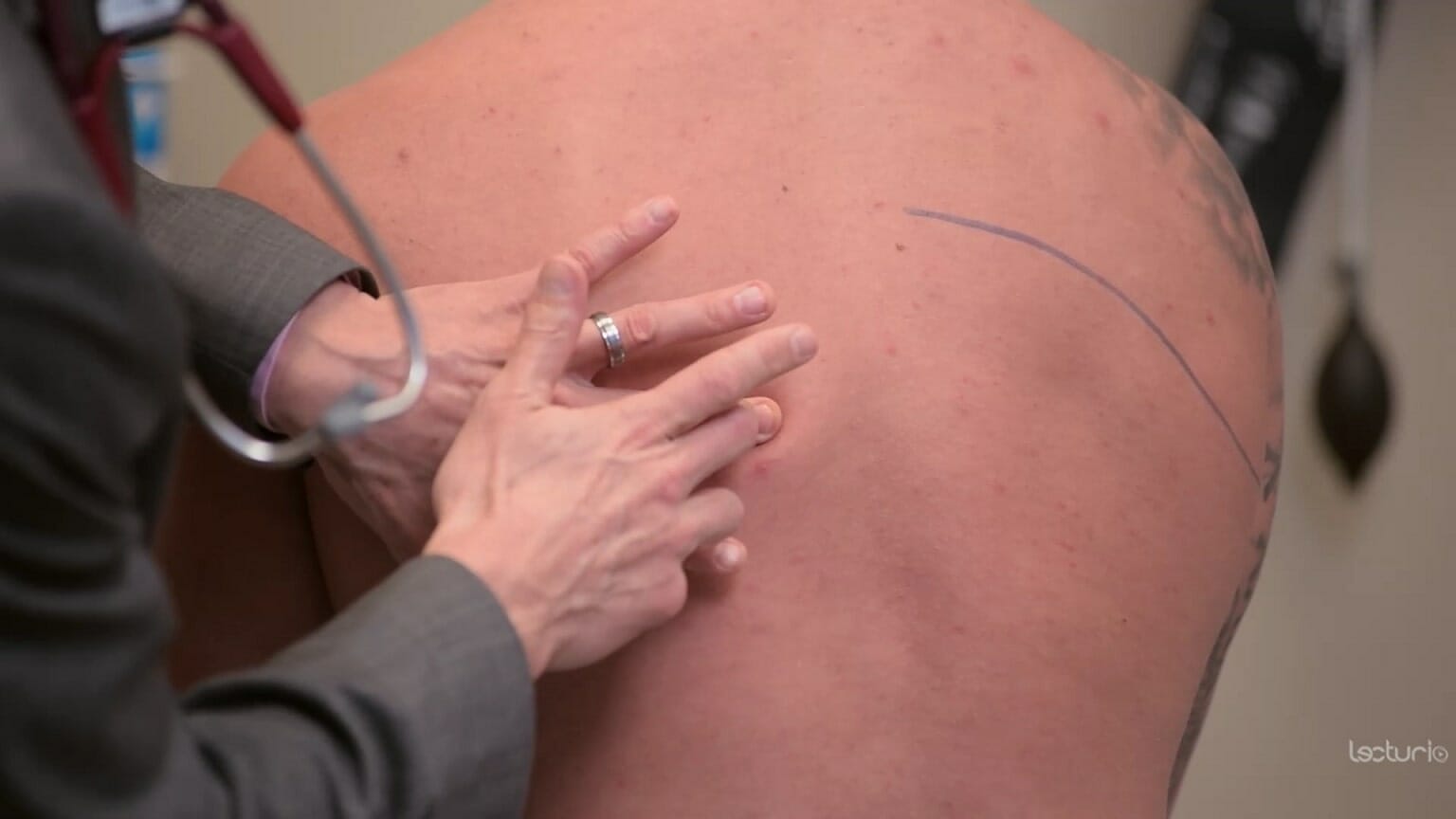
    • Frémito aumentado e macicez à percussão: consolidação
    • Frémito diminuído e macicez à percussão: derrame pleural
    • Auscultação: crepitações, ruídos brônquicos na periferia, atrito pleural
  • Sintomas inespecíficos: febre, palpitações, arrepios, suores noturnos, fadiga, náuseas, vómitos, cefaleias, mialgias, artralgias
  • A pneumonia Pneumonia Pneumonia or pulmonary inflammation is an acute or chronic inflammation of lung tissue. Causes include infection with bacteria, viruses, or fungi. In more rare cases, pneumonia can also be caused through toxic triggers through inhalation of toxic substances, immunological processes, or in the course of radiotherapy. Pneumonia em idosos pode manifestar-se como confusão.
  • Os casos mais MAIS Androgen Insensitivity Syndrome graves podem manifestar-se como choque sético e falência multiorgânica.
  • Complicações cardiovasculares, incluindo enfarte agudo do miocárdio e arritmias.

Diagnóstico clínico

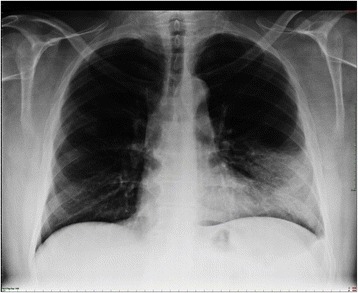
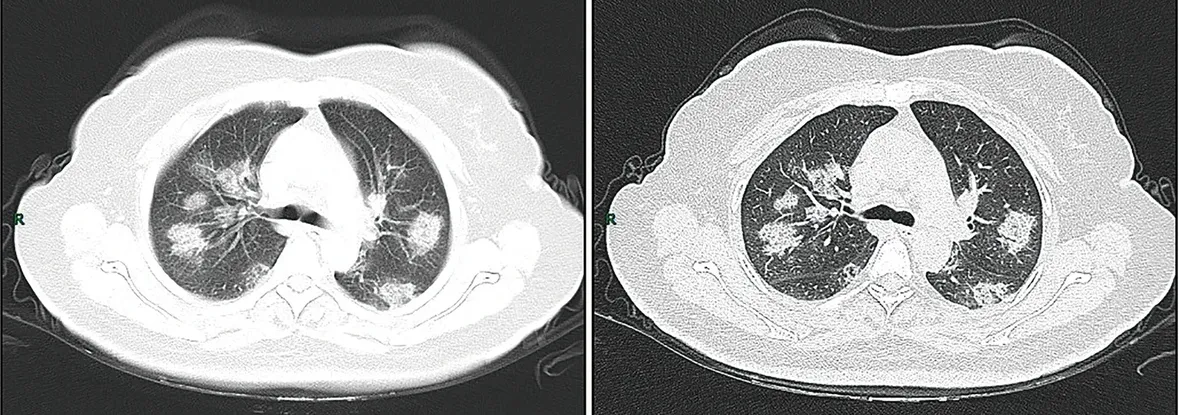
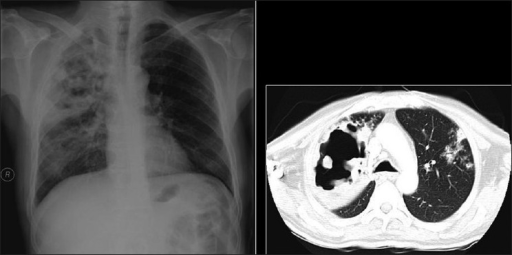
  • A maioria dos doentes em ambulatório: sintomas e sinais + radiografia de tórax (imagens 1–3)
  • Em alguns doentes pode ser útil a realização de uma tomografia computadorizada (TC) pulmonar para exclusão da presença de tumores, corpos estranhos, lesões cavitadas, etc ETC The electron transport chain (ETC) sends electrons through a series of proteins, which generate an electrochemical proton gradient that produces energy in the form of adenosine triphosphate (ATP). Electron Transport Chain (ETC).

Diagnóstico etiológico

  • A colheita de expetoração e hemoculturas é apenas recomendada em casos de pneumonia Pneumonia Pneumonia or pulmonary inflammation is an acute or chronic inflammation of lung tissue. Causes include infection with bacteria, viruses, or fungi. In more rare cases, pneumonia can also be caused through toxic triggers through inhalation of toxic substances, immunological processes, or in the course of radiotherapy. Pneumonia grave ou perante uma provável infeção por MRSA MRSA A strain of Staphylococcus aureus that is non-susceptible to the action of methicillin. The mechanism of resistance usually involves modification of normal or the presence of acquired penicillin binding proteins. Staphylococcus ou Pseudomonas aeruginosa Pseudomonas aeruginosa A species of gram-negative, aerobic, rod-shaped bacteria commonly isolated from clinical specimens (wound, burn, and urinary tract infections). It is also found widely distributed in soil and water. P. Aeruginosa is a major agent of nosocomial infection. Pseudomonas .
  • Teste PCR PCR Polymerase chain reaction (PCR) is a technique that amplifies DNA fragments exponentially for analysis. The process is highly specific, allowing for the targeting of specific genomic sequences, even with minuscule sample amounts. The PCR cycles multiple times through 3 phases: denaturation of the template DNA, annealing of a specific primer to the individual DNA strands, and synthesis/elongation of new DNA molecules. Polymerase Chain Reaction (PCR) (do inglês, Polymerase Chain Reaction Polymerase chain reaction Polymerase chain reaction (PCR) is a technique that amplifies DNA fragments exponentially for analysis. The process is highly specific, allowing for the targeting of specific genomic sequences, even with minuscule sample amounts. The PCR cycles multiple times through 3 phases: denaturation of the template DNA, annealing of a specific primer to the individual DNA strands, and synthesis/elongation of new DNA molecules. Polymerase Chain Reaction (PCR)) de secreções nasofaríngeas:
    • Durante o período de circulação do vírus influenza Influenza Influenza viruses are members of the Orthomyxoviridae family and the causative organisms of influenza, a highly contagious febrile respiratory disease. There are 3 primary influenza viruses (A, B, and C) and various subtypes, which are classified based on their virulent surface antigens, hemagglutinin (HA) and neuraminidase (NA). Influenza typically presents with a fever, myalgia, headache, and symptoms of an upper respiratory infection. Influenza Viruses/Influenza, é recomendada a realização de pesquisa deste vírus.
    • Pode estar indicada a testagem de vírus específicos durante a ocorrência de surtos, com base nas indicações das autoridades de saúde locais ou regionalais e disponibilidade de testes Testes Gonadal Hormones. Por exemplo, os grupos prioritários na testagem para SARS-CoV-2 durante a pandemia incluem:
      • Doentes hospitalizados
      • Profissionais de saúde/socorristas que se encontrem sintomáticos
      • Pacientes sintomáticos que se encontram em instituições de cuidados continuados, que têm ≥ 65 anos de idade ou presença de comorbilidades
      • Trabalhadores dos setores de bens essenciais, profissionais de saúde ou socorristas que se encontrem assintomáticos
      • Indivíduos sintomáticos que não cumpram nenhum dos critérios anteriores
      • Indivíduos com sintomatologia ligeira em comunidades com elevadas taxas de hospitalização por COVID-19 COVID-19 Coronavirus disease 2019 (COVID-19) is an infectious disease caused by the severe acute respiratory syndrome coronavirus 2 (SARS-CoV-2) that mainly affects the respiratory system but can also cause damage to other body systems (cardiovascular, gastrointestinal, renal, and central nervous systems).
    • Também permite a deteção de bactérias, nomeadamente algumas espécies de Legionella Legionella Legionella is a facultative intracellular, gram-negative bacilli. Legionella does not grow on common culture media because it requires certain supplementation (cysteine and iron). Legionella pneumophila (L. pneumophila) accounts for the majority of human infections. Legionella/Legionellosis , M. pneumoniae , C. pneumoniae e mycobacterium Mycobacterium Mycobacterium is a genus of the family Mycobacteriaceae in the phylum Actinobacteria. Mycobacteria comprise more than 150 species of facultative intracellular bacilli that are mostly obligate aerobes. Mycobacteria are responsible for multiple human infections including serious diseases, such as tuberculosis (M. tuberculosis), leprosy (M. leprae), and M. avium complex infections. Mycobacterium
  • O teste de antigénio urinário permite detetar Legionalla pneumophila ou pneumococcus.

Diagnósticos diferenciais não infeciosos

  • Edema Edema Edema is a condition in which excess serous fluid accumulates in the body cavity or interstitial space of connective tissues. Edema is a symptom observed in several medical conditions. It can be categorized into 2 types, namely, peripheral (in the extremities) and internal (in an organ or body cavity). Edema pulmonar: raio-x com infiltrado bilateral de predomínio central e alterações no ECG ECG An electrocardiogram (ECG) is a graphic representation of the electrical activity of the heart plotted against time. Adhesive electrodes are affixed to the skin surface allowing measurement of cardiac impulses from many angles. The ECG provides 3-dimensional information about the conduction system of the heart, the myocardium, and other cardiac structures. Electrocardiogram (ECG).
  • Tromboembolismo pulmonar: é raro apresentar-se com tosse produtiva ou infiltrados visíveis na radiografia torácica
  • Cancro do pulmão: história de tabagismo, síndrome constitucional (por exemplo, perda ponderal significativa) ou tosse crónica podem ser sugestivos.
  • Radioterapia
  • Pneumonite de hipersensibilidade: implica o cumprimento de critérios de diagnóstico incluindo uma história de exposição compatível
  • Doenças do tecido conjuntivo com envolvimento pulmonar: na maioria das vezes, já existe um diagnóstico prévio ou a presença de outros sintomas de doença subjacente.

Diagnósticos diferenciais infeciosos

  • Bronquite aguda
  • Exacerbação de DPOC
  • Tuberculose
  • Abcesso pulmonar

Avaliação de risco

Para além da avaliação e senso clínicos, está recomendada a utilizção de ferramentas preditivas devidamente validadas para determinar a necessidade de hospitalização:

  • Ferramenta mais MAIS Androgen Insensitivity Syndrome utilizada: Índice de gravidade da pneumonia Pneumonia Pneumonia or pulmonary inflammation is an acute or chronic inflammation of lung tissue. Causes include infection with bacteria, viruses, or fungi. In more rare cases, pneumonia can also be caused through toxic triggers through inhalation of toxic substances, immunological processes, or in the course of radiotherapy. Pneumonia (PSI, do inglês Pneumonia Pneumonia Pneumonia or pulmonary inflammation is an acute or chronic inflammation of lung tissue. Causes include infection with bacteria, viruses, or fungi. In more rare cases, pneumonia can also be caused through toxic triggers through inhalation of toxic substances, immunological processes, or in the course of radiotherapy. Pneumonia Severity Index).
    • Com base numa combinação de:
      • Dados demográficos do doente: Idade, residência em lar de idosos
      • Comorbilidades: Doença neoplásica, doença hepática, insuficiência cardíaca congestiva, doença cerebrovascular, doença renal
      • Resultados do exame físico: FR ≥ 30, PAS < 90, temperatura < 35 °C ou ≥ 40 °C, pulso ≥ 125 bpm
      • Exames laboratoriais e de imagem, incluindo pH pH The quantitative measurement of the acidity or basicity of a solution. Acid-Base Balance arterial, azoto ureico no sangue, sódio e glicose séricos, hematócrito, pressão parcial de oxigénio e derrame pleural
    • Resultados:
      • As classes de risco 1 ou 2 têm indicação para tratamento em ambulatório com antibióticos orais.
      • A classe de risco 3 poderá ter indicação para tratamento em regime de ambulatório (com antibioterapia oral) ou em internamento (com tratamento e monitorização mais MAIS Androgen Insensitivity Syndrome apertados) dependendo das condições de habitabilidade, suporte familiar e possibilidade de se manter um seguimento adequado do doente.
      • As classes de risco 4 ou 5 têm indicação para internamento hospitalar.
  • Ferramenta alternativa: CURB-65 (1 ponto para cada um dos seguintes critérios: confusão, ureia ≥ 20 mg/dL, frequência respirtória ≥ 30/min, pressão arterial sistólica < 90 mmHg ou pressão arterial diastólica < 60 mmHg, idade ≥ 65 years):
    • 0–1 (taxa de mortalidade <1%–3% ): o doente tem indicação para tratamento em ambulatório com antibióticos orais.
    • 2 (taxa de mortalidade 7%): o doente poderá ter indicação para tratamento em regime de ambulatório ou em internamento hospitalar dependendo das condições de habitabilidade, suporte familiar e possibilidade de se manter um seguimento adequado do doente.
    • 3–5 (taxa de mortalidade 14%–28% ): indicação para internamento hospitalar.

A definicação de PAC severa ou PAC com necessidade de admissão em UCI implica a existência de pneumonia Pneumonia Pneumonia or pulmonary inflammation is an acute or chronic inflammation of lung tissue. Causes include infection with bacteria, viruses, or fungi. In more rare cases, pneumonia can also be caused through toxic triggers through inhalation of toxic substances, immunological processes, or in the course of radiotherapy. Pneumonia adquirida na comunidade e pelo menos 1 dos seguintes:

  • Choque sético com necessidade de vasopressores
  • Insuficiência respiratória com necessidade de ventilação mecânica
  • 3 ou mais MAIS Androgen Insensitivity Syndrome dos seguintes: frequência respiratória ≥ 30/min, PaO2 / FiO2 ≤ 250, pneumonia Pneumonia Pneumonia or pulmonary inflammation is an acute or chronic inflammation of lung tissue. Causes include infection with bacteria, viruses, or fungi. In more rare cases, pneumonia can also be caused through toxic triggers through inhalation of toxic substances, immunological processes, or in the course of radiotherapy. Pneumonia multilobar, confusão, ureia ≥ 20 mg/dL, leucócitos< < 4.000 células /µL, plaquetas< <100.000 /µL, hipotermia, hipotensão com necessidade de fluidoterapia intensiva

Tratamento

  • Os níveis séricos de procalcitonina não devem influenciar a decisão de tratar a pneumonia Pneumonia Pneumonia or pulmonary inflammation is an acute or chronic inflammation of lung tissue. Causes include infection with bacteria, viruses, or fungi. In more rare cases, pneumonia can also be caused through toxic triggers through inhalation of toxic substances, immunological processes, or in the course of radiotherapy. Pneumonia com antibióticos.
  • Tratamento inicial de doentes com PAC em regime de ambulatório:
    • Sem comorbilidades e sem fatores de risco para MRSA MRSA A strain of Staphylococcus aureus that is non-susceptible to the action of methicillin. The mechanism of resistance usually involves modification of normal or the presence of acquired penicillin binding proteins. Staphylococcus ou P. aeruginosa P. aeruginosa A species of gram-negative, aerobic, rod-shaped bacteria commonly isolated from clinical specimens (wound, burn, and urinary tract infections). It is also found widely distributed in soil and water. P. Aeruginosa is a major agent of nosocomial infection. Pseudomonas::
      • Amoxicilina OU
      • Doxiciclina OU
      • Macrólido (azitromicina, claritromicina)
    • Com comorbilidades (por exemplo, insuficiência cardíaca congestiva, doença pulmonar crónica, neoplasia, doença cerebrovascular, doença renal ou hepática):
      • Amoxicilina / ácido clavulânico (ou cefalosporina) E macrólido (ou doxiciclina) OU
      • Fluoroquinolona respiratória (levofloxacina, moxifloxacina, gemifloxacina)
  • Tratamento antibiótico inicial para doentes internados com PAC:
    • Não severa:
      • Β-lactâmicos e macrólido OU
      • Fluoroquinolona respiratória
      • Se existirem ≥ 2 fatores de risco para MRSA MRSA A strain of Staphylococcus aureus that is non-susceptible to the action of methicillin. The mechanism of resistance usually involves modification of normal or the presence of acquired penicillin binding proteins. Staphylococcus ou P. aeruginosa P. aeruginosa A species of gram-negative, aerobic, rod-shaped bacteria commonly isolated from clinical specimens (wound, burn, and urinary tract infections). It is also found widely distributed in soil and water. P. Aeruginosa is a major agent of nosocomial infection. Pseudomonas , deve ser adicionada cobertura antibiótica (ver abaixo) apenas se a cultura ou teste PCR PCR Polymerase chain reaction (PCR) is a technique that amplifies DNA fragments exponentially for analysis. The process is highly specific, allowing for the targeting of specific genomic sequences, even with minuscule sample amounts. The PCR cycles multiple times through 3 phases: denaturation of the template DNA, annealing of a specific primer to the individual DNA strands, and synthesis/elongation of new DNA molecules. Polymerase Chain Reaction (PCR) forem positivos.
      • Se existir suspeita de abcesso pulmonar ou empiema, deve ser adicionada cobertura para agentes anaeróbios. (Nota: a suspeita de pneumonia Pneumonia Pneumonia or pulmonary inflammation is an acute or chronic inflammation of lung tissue. Causes include infection with bacteria, viruses, or fungi. In more rare cases, pneumonia can also be caused through toxic triggers through inhalation of toxic substances, immunological processes, or in the course of radiotherapy. Pneumonia por aspiração não é indicação para cobertura de agentes anaeróbios.)
    • Severa:
      • Β-lactâmicos e macrólido (preferencial) OU
      • Β-lactâmicos e fluoroquinolona respiratória
      • Se existirem ≥ 2 fatores de risco para MRSA MRSA A strain of Staphylococcus aureus that is non-susceptible to the action of methicillin. The mechanism of resistance usually involves modification of normal or the presence of acquired penicillin binding proteins. Staphylococcus ou P. aeruginosa P. aeruginosa A species of gram-negative, aerobic, rod-shaped bacteria commonly isolated from clinical specimens (wound, burn, and urinary tract infections). It is also found widely distributed in soil and water. P. Aeruginosa is a major agent of nosocomial infection. Pseudomonas deve ser adicionada cobertura antibiótica
      • Se existir suspeita de abcesso pulmonar ou empiema, deve ser adicionada cobertura para agentes anaeróbios. (Nota: a suspeita de pneumonia Pneumonia Pneumonia or pulmonary inflammation is an acute or chronic inflammation of lung tissue. Causes include infection with bacteria, viruses, or fungi. In more rare cases, pneumonia can also be caused through toxic triggers through inhalation of toxic substances, immunological processes, or in the course of radiotherapy. Pneumonia por aspiração não é indicação para cobertura de agentes anaeróbios.)
  • A cobertura empírica para MRSA MRSA A strain of Staphylococcus aureus that is non-susceptible to the action of methicillin. The mechanism of resistance usually involves modification of normal or the presence of acquired penicillin binding proteins. Staphylococcus inclui vancomicina ou linezolido.
  • A cobertura empírica para P. aeruginosa P. aeruginosa A species of gram-negative, aerobic, rod-shaped bacteria commonly isolated from clinical specimens (wound, burn, and urinary tract infections). It is also found widely distributed in soil and water. P. Aeruginosa is a major agent of nosocomial infection. Pseudomonas inclui piperacilina-tazobactam, cefepima, ceftazidima, aztreonam Aztreonam The carbapenems and aztreonam are both members of the bactericidal beta-lactam family of antibiotics (similar to penicillins). They work by preventing bacteria from producing their cell wall, ultimately leading to bacterial cell death. Carbapenems and Aztreonam, meropenem Meropenem A thienamycin derivative antibacterial agent that is more stable to renal dehydropeptidase I than imipenem, but does not need to be given with an enzyme inhibitor such as cilastatin. It is used in the treatment of bacterial infections, including infections in immunocompromised patients. Carbapenems and Aztreonam ou imipenem Imipenem Semisynthetic thienamycin that has a wide spectrum of antibacterial activity against gram-negative and gram-positive aerobic and anaerobic bacteria, including many multiresistant strains. It is stable to beta-lactamases. Clinical studies have demonstrated high efficacy in the treatment of infections of various body systems. Its effectiveness is enhanced when it is administered in combination with cilastatin, a renal dipeptidase inhibitor. Carbapenems and Aztreonam.
  • Os doentes com PAC em tratamento ambulatório ou internados que apresentem teste positivo para influenza Influenza Influenza viruses are members of the Orthomyxoviridae family and the causative organisms of influenza, a highly contagious febrile respiratory disease. There are 3 primary influenza viruses (A, B, and C) and various subtypes, which are classified based on their virulent surface antigens, hemagglutinin (HA) and neuraminidase (NA). Influenza typically presents with a fever, myalgia, headache, and symptoms of an upper respiratory infection. Influenza Viruses/Influenza devem receber tratamento anti-influenza (por exemplo, oseltamivir Oseltamivir An acetamido cyclohexene that is a structural homolog of sialic acid and inhibits neuraminidase. Antivirals for Influenza), de forma complementar à terapêutica antibiótica.
  • Medidas adjuvantes no tratamento da PAC:
    • Hidratação, oxigenoterapia se hipoxemia, vasopressores se choque e ventilação mecânica se insuficiência respiratória
    • Os corticosteroides são utilizados apenas no choque sético refratário.
  • A duração da antibioterapia, em regime de ambulatório ou internamento, deve ser de pelo menos 5 dias e sempre tendo por base a melhoria dos sinais vitais e estado de consciência, capacidade de alimentação e condição clínica global dos doentes.
  • Não está habitualmente recomendada a reavaliação imagiológica de doentes com resolução da PAC em 1 semana.
  • Perante ausência de melhoria em 3 dias ou agravamento progressivo da condição clínica dos doentes, apesar da antibioterapia instituída, devem ser avaliados:
    • Diagnósticos diferenciais não infeciosos
    • Outras infeções que não a pneumonia Pneumonia Pneumonia or pulmonary inflammation is an acute or chronic inflammation of lung tissue. Causes include infection with bacteria, viruses, or fungi. In more rare cases, pneumonia can also be caused through toxic triggers through inhalation of toxic substances, immunological processes, or in the course of radiotherapy. Pneumonia
    • Superinfeção nosocomial
    • Focalização, nomeadamente abcesso pulmonar ou empiema, que impedem o acesso do antibiótico aos microrganismos patogénicos
    • Resistência à terapêutica ou dosagem incorreta do antibiótico(s)
    • Presença de outros microrganismos menos comuns, como MRSA-AC, tuberculose ou fungos

Complicações

  • Gerais:
    • Insuficiência respiratória
    • Choque e falência multiorgânica
    • Coagulopatia
  • Específicas:
    • Infeção metastática (rara), como por exemplo abcesso cerebral ou endocardite esquerda
    • Abcesso pulmonar: sugestivo de pneumonia Pneumonia Pneumonia or pulmonary inflammation is an acute or chronic inflammation of lung tissue. Causes include infection with bacteria, viruses, or fungi. In more rare cases, pneumonia can also be caused through toxic triggers through inhalation of toxic substances, immunological processes, or in the course of radiotherapy. Pneumonia de aspiração (infeção anaeróbia-aeróbia mista), MRSA-AC ou P. aeruginosa P. aeruginosa A species of gram-negative, aerobic, rod-shaped bacteria commonly isolated from clinical specimens (wound, burn, and urinary tract infections). It is also found widely distributed in soil and water. P. Aeruginosa is a major agent of nosocomial infection. Pseudomonas
    • Derrame pleural complicado (pus, pH pH The quantitative measurement of the acidity or basicity of a solution. Acid-Base Balance <7, glicose <2,2 mmol/L, lactato desidrogenase >1.000 U/L ou cultura com isolamento de bactérias): requer drenagem completa, geralmente com dreno torácico ± videotoracoscopia diferida
    • Recidiva ou recorrência da pneumonia Pneumonia Pneumonia or pulmonary inflammation is an acute or chronic inflammation of lung tissue. Causes include infection with bacteria, viruses, or fungi. In more rare cases, pneumonia can also be caused through toxic triggers through inhalation of toxic substances, immunological processes, or in the course of radiotherapy. Pneumonia no mesmo segmento pulmonar: avaliar a presença de neoplasia subjacente

Prevenção

  • Vacinação:
    • Vacina pneumocócica conjugada (PCV 15 ou 20) em crianças:
      • Para todas as crianças com menos de 5 anos de idade
      • Esquema de vacinação de recuperação para aqueles que perderam doses
      • Se a criança recebeu apenas PCV13, complete a série com PCV15 ou 20.
    • PCV15, PCV20 em adultos:
      • Para todos os adultos com 50 anos ou mais MAIS Androgen Insensitivity Syndrome (com histórico de vacinação desconhecido ou sem PCV prévia)
      • Para adultos de 19 a 49 anos, administrar àqueles com comorbilidades subjacentes (transtorno por uso de álcool, doença pulmonar/hepática/cardíaca crónica, diabetes Diabetes Diabetes mellitus (DM) is a metabolic disease characterized by hyperglycemia and dysfunction of the regulation of glucose metabolism by insulin. Type 1 DM is diagnosed mostly in children and young adults as the result of autoimmune destruction of β cells in the pancreas and the resulting lack of insulin. Type 2 DM has a significant association with obesity and is characterized by insulin resistance. Diabetes Mellitus, tabagismo, anemia Anemia Anemia is a condition in which individuals have low Hb levels, which can arise from various causes. Anemia is accompanied by a reduced number of RBCs and may manifest with fatigue, shortness of breath, pallor, and weakness. Subtypes are classified by the size of RBCs, chronicity, and etiology. Anemia: Overview and Types falciforme ou outras hemoglobinopatias), asplenia Asplenia Asplenia is the absence of splenic tissue or function and can stem from several factors ranging from congenital to iatrogenic. There is a distinction between anatomic asplenia, which is due to the surgical removal of the spleen, and functional asplenia, which is due to a condition that leads to splenic atrophy, infarct, congestion, or infiltrative disease. Asplenia, condições imunocomprometidas e com fatores de risco para meningite (fuga de líquido cefalorraquidiano, implante coclear)
      • Se for utilizada a PCV15, administre uma dose da vacina pneumocócica polissacarídica (PPSV23) 1 ano depois.
    • Recomenda-se a vacina inativa ou recombinante contra a gripe.
  • Todos os fumadores devem ser incentivados à cessação tabágica.

Pneumonia Associada ao Ventilador e Pneumonia Adquirida no Hospital

Etiologia

  • Depende do hospital / UCI
  • Microrganismos não MR MR Calculated as the ratio of the total number of people who die due to all causes over a specific time period to the total number of people in the selected population. Measures of Health Status mais MAIS Androgen Insensitivity Syndrome comuns: S. pneumonia Pneumonia Pneumonia or pulmonary inflammation is an acute or chronic inflammation of lung tissue. Causes include infection with bacteria, viruses, or fungi. In more rare cases, pneumonia can also be caused through toxic triggers through inhalation of toxic substances, immunological processes, or in the course of radiotherapy. Pneumonia , H. influenza Influenza Influenza viruses are members of the Orthomyxoviridae family and the causative organisms of influenza, a highly contagious febrile respiratory disease. There are 3 primary influenza viruses (A, B, and C) and various subtypes, which are classified based on their virulent surface antigens, hemagglutinin (HA) and neuraminidase (NA). Influenza typically presents with a fever, myalgia, headache, and symptoms of an upper respiratory infection. Influenza Viruses/Influenza , S. aureus S. aureus Potentially pathogenic bacteria found in nasal membranes, skin, hair follicles, and perineum of warm-blooded animals. They may cause a wide range of infections and intoxications. Staphylococcus sensível à meticilina (MSSA), Enterobacteriaceae Enterobacteriaceae A family of gram-negative, facultatively anaerobic, rod-shaped bacteria that do not form endospores. Its organisms are distributed worldwide with some being saprophytes and others being plant and animal parasites. Many species are of considerable economic importance due to their pathogenic effects on agriculture and livestock. Cephalosporins multissensível
  • Microrganismos MR MR Calculated as the ratio of the total number of people who die due to all causes over a specific time period to the total number of people in the selected population. Measures of Health Status mais MAIS Androgen Insensitivity Syndrome comuns: P. aeruginosa P. aeruginosa A species of gram-negative, aerobic, rod-shaped bacteria commonly isolated from clinical specimens (wound, burn, and urinary tract infections). It is also found widely distributed in soil and water. P. Aeruginosa is a major agent of nosocomial infection. Pseudomonas , MRSA MRSA A strain of Staphylococcus aureus that is non-susceptible to the action of methicillin. The mechanism of resistance usually involves modification of normal or the presence of acquired penicillin binding proteins. Staphylococcus, Enterobacteriaceae Enterobacteriaceae A family of gram-negative, facultatively anaerobic, rod-shaped bacteria that do not form endospores. Its organisms are distributed worldwide with some being saprophytes and others being plant and animal parasites. Many species are of considerable economic importance due to their pathogenic effects on agriculture and livestock. Cephalosporins resistente a antibióticos, L. pneumophila , Aspergillus Aspergillus A genus of mitosporic fungi containing about 100 species and eleven different teleomorphs in the family trichocomaceae. Echinocandins spp. etc ETC The electron transport chain (ETC) sends electrons through a series of proteins, which generate an electrochemical proton gradient that produces energy in the form of adenosine triphosphate (ATP). Electron Transport Chain (ETC).
  • Os anaeróbios são incomuns devido às condições aeróbicas dos pulmões e o tratamento empírico cobre incidentalmente os anaeróbios. No entanto, a PAH PAH The glycine amide of 4-aminobenzoic acid. Its sodium salt is used as a diagnostic aid to measure effective renal plasma flow (ERPF) and excretory capacity. Glomerular Filtration relacionada com a aspiração pode ocorrer em doentes com:
    • Nível de consciência alterado
    • Aspiração da sonda de alimentação
    • Dentição deficiente

Epidemiologia

Cerca de 10% dos doentes em UCI desenvolvem pneumonia Pneumonia Pneumonia or pulmonary inflammation is an acute or chronic inflammation of lung tissue. Causes include infection with bacteria, viruses, or fungi. In more rare cases, pneumonia can also be caused through toxic triggers through inhalation of toxic substances, immunological processes, or in the course of radiotherapy. Pneumonia, principalmente PAV.

Patogénese de PAV

  • Colonização orofaríngea com o microrganismo patogénico
  • Aspiração do microrganismo
  • Compromisso dos mecanismos de defesa do hospedeiro

Fatores de risco

  • Todos os fatores de risco para PAC
  • Intubação endotraqueal: aumenta o risco de microaspiração
  • Intubação endotraqueal: permite a formação de biofilme pelas bactérias patogénicas
  • Sucção: danifica a mucosa endotraqueal e mobiliza bactérias no biofilme
  • Má higiene das mãos: aumenta o risco de infeção cruzada entre diferentes doentes
  • Exposição a antibióticos: aumenta o risco de microrganismos MMR MMR A DNA repair pathway involved in correction of errors introduced during DNA replication when an incorrect base, which cannot form hydrogen bonds with the corresponding base in the parent strand, is incorporated into the daughter strand. Excinucleases recognize the base pair mismatch and cause a segment of polynucleotide chain to be excised from the daughter strand, thereby removing the mismatched base. Lynch syndrome
  • Situações críticas que incluam sépsis, trauma e/ou hiperglicemia: causam imunoparalisia

Manifestações clínicas e diagnóstico

  • Semelhanças com PAC: taquipneia e aumento da ventilação por minuto, taquicardia, febre, aumento da expetoração, leucocitose, hipoxemia, sinais de consolidação
  • PAV pode ser mais MAIS Androgen Insensitivity Syndrome difícil de diagnosticar:
    • A presença de infiltrados prévios é comum em doentes ventilados
    • É mais MAIS Androgen Insensitivity Syndrome difícil a interpretação da incidência anteroposterior da radiografia torácica
    • Os sinais e sintomas como febre e leucocitose podem ser causados por uma grande variedade de outras causas, como sépsis, outras infeções e ainda fármacos
  • É possível a realização de culturas de secreções endotraqueais ou aspirados brônquicos para diagnóstico etiológico.
  • A ausência de bactérias no exame direto com coloração de gram das secreções endotraqueais sugere um diagnóstico alternativo para os sintomas de febre e infiltrados pulmonares.
  • O diagnóstico com cultura positiva é mais MAIS Androgen Insensitivity Syndrome difícil na PAH PAH The glycine amide of 4-aminobenzoic acid. Its sodium salt is used as a diagnostic aid to measure effective renal plasma flow (ERPF) and excretory capacity. Glomerular Filtration porque geralmente é mais MAIS Androgen Insensitivity Syndrome difícil a obtenção de material biológico.

Diagnóstico diferencial

  • Edema Edema Edema is a condition in which excess serous fluid accumulates in the body cavity or interstitial space of connective tissues. Edema is a symptom observed in several medical conditions. It can be categorized into 2 types, namely, peripheral (in the extremities) and internal (in an organ or body cavity). Edema pulmonar
  • Contusão pulmonar
  • Hemorragia alveolar
  • Pneumonite de hipersensibilidade
  • Síndrome de dificuldade respiratória aguda
  • Tromboembolismo pulmonar

Tratamento

  • Avalie a gravidade da doença (risco de mortalidade):
    • Choque ou necessidade de ventilação mecânica (em PAH PAH The glycine amide of 4-aminobenzoic acid. Its sodium salt is used as a diagnostic aid to measure effective renal plasma flow (ERPF) and excretory capacity. Glomerular Filtration) → adicione 2 agentes antimicrobianos antipseudomônicos + cobertura para MRSA MRSA A strain of Staphylococcus aureus that is non-susceptible to the action of methicillin. The mechanism of resistance usually involves modification of normal or the presence of acquired penicillin binding proteins. Staphylococcus.
    • Não atende aos critérios acima → prosseguir com uma avaliação de risco mais MAIS Androgen Insensitivity Syndrome aprofundada.
  • Avaliar o risco de agentes patogénicos MMR MMR A DNA repair pathway involved in correction of errors introduced during DNA replication when an incorrect base, which cannot form hydrogen bonds with the corresponding base in the parent strand, is incorporated into the daughter strand. Excinucleases recognize the base pair mismatch and cause a segment of polynucleotide chain to be excised from the daughter strand, thereby removing the mismatched base. Lynch syndrome:
    • PAH PAH The glycine amide of 4-aminobenzoic acid. Its sodium salt is used as a diagnostic aid to measure effective renal plasma flow (ERPF) and excretory capacity. Glomerular Filtration/PAV com fatores de risco para MRSA MRSA A strain of Staphylococcus aureus that is non-susceptible to the action of methicillin. The mechanism of resistance usually involves modification of normal or the presence of acquired penicillin binding proteins. Staphylococcus e P. aeruginosa P. aeruginosa A species of gram-negative, aerobic, rod-shaped bacteria commonly isolated from clinical specimens (wound, burn, and urinary tract infections). It is also found widely distributed in soil and water. P. Aeruginosa is a major agent of nosocomial infection. Pseudomonas → adicionar 2 agentes antimicrobianos antipseudomônicos (de classes diferentes, como piperacilina-tazobactam [beta-lactâmico] + levofloxacina [fluoroquinolona]) + cobertura para MRSA MRSA A strain of Staphylococcus aureus that is non-susceptible to the action of methicillin. The mechanism of resistance usually involves modification of normal or the presence of acquired penicillin binding proteins. Staphylococcus (e.g., vancomicina)
    • PAH PAH The glycine amide of 4-aminobenzoic acid. Its sodium salt is used as a diagnostic aid to measure effective renal plasma flow (ERPF) and excretory capacity. Glomerular Filtration/PAV com fatores de risco apenas para MRSA MRSA A strain of Staphylococcus aureus that is non-susceptible to the action of methicillin. The mechanism of resistance usually involves modification of normal or the presence of acquired penicillin binding proteins. Staphylococcus → adicionar um único agente com atividade antipseudomonal + cobertura para MRSA MRSA A strain of Staphylococcus aureus that is non-susceptible to the action of methicillin. The mechanism of resistance usually involves modification of normal or the presence of acquired penicillin binding proteins. Staphylococcus
    • PAH PAH The glycine amide of 4-aminobenzoic acid. Its sodium salt is used as a diagnostic aid to measure effective renal plasma flow (ERPF) and excretory capacity. Glomerular Filtration/PAV com fatores de risco apenas para P. aeruginosa P. aeruginosa A species of gram-negative, aerobic, rod-shaped bacteria commonly isolated from clinical specimens (wound, burn, and urinary tract infections). It is also found widely distributed in soil and water. P. Aeruginosa is a major agent of nosocomial infection. Pseudomonas → adicionar 2 agentes antimicrobianos antipseudomoniais de classes diferentes
    • Sem fatores de risco para MMR MMR A DNA repair pathway involved in correction of errors introduced during DNA replication when an incorrect base, which cannot form hydrogen bonds with the corresponding base in the parent strand, is incorporated into the daughter strand. Excinucleases recognize the base pair mismatch and cause a segment of polynucleotide chain to be excised from the daughter strand, thereby removing the mismatched base. Lynch syndrome → adicionar um único agente com atividade MSSA e antipseudomonal
  • Antibioterapia específica: uma vez conhecido o diagnóstico etiológico; geralmente um único agente
  • Espera-se uma resposta clínica adequada dentro de 48 a 72 horas.

Complicações

  • Choque, falência multiorgânica, coagulopatia, derrame pleural complicado, abcesso pulmonar, infeção metastática, etc ETC The electron transport chain (ETC) sends electrons through a series of proteins, which generate an electrochemical proton gradient that produces energy in the form of adenosine triphosphate (ATP). Electron Transport Chain (ETC).

Prognóstico

  • Devido à presença frequente de comorbilidades, a taxa de mortalidade da PAV é de 50–70% .
  • A PAV causada por MMR MMR A DNA repair pathway involved in correction of errors introduced during DNA replication when an incorrect base, which cannot form hydrogen bonds with the corresponding base in the parent strand, is incorporated into the daughter strand. Excinucleases recognize the base pair mismatch and cause a segment of polynucleotide chain to be excised from the daughter strand, thereby removing the mismatched base. Lynch syndrome apresenta mortalidade mais MAIS Androgen Insensitivity Syndrome elevada.
  • A PAH PAH The glycine amide of 4-aminobenzoic acid. Its sodium salt is used as a diagnostic aid to measure effective renal plasma flow (ERPF) and excretory capacity. Glomerular Filtration apresenta melhor prognóstico, relacionado com uma maior competência imunitária dos hospedeiros e uma menor prevalência de MMR MMR A DNA repair pathway involved in correction of errors introduced during DNA replication when an incorrect base, which cannot form hydrogen bonds with the corresponding base in the parent strand, is incorporated into the daughter strand. Excinucleases recognize the base pair mismatch and cause a segment of polynucleotide chain to be excised from the daughter strand, thereby removing the mismatched base. Lynch syndrome.

Prevenção

  • Consistência nas medidas de controlo de infeção e higienização das mãos
  • Evitar a intubação dos doentes quando esta não é necessária
  • Utilização apropriada de ventilação não invasiva
  • Minimização da duração da intubação
  • Utilização racional de antibióticos
  • Elevação da cabeceira (30°–45°)
  • Tubos endotraqueais com cuffs especiais que reduzam a microaspiração
  • Redução do transporte de doentes fora da UCI

Referências

  1. Metlay JP, Waterer GW, Long AC, et al. Diagnosis and Treatment of Adults with Community-acquired Pneumonia. An Official Clinical Practice Guideline of the American Thoracic Society and Infectious Diseases Society of America. Am J Respir Crit Care Med. 2019 Oct 1;200(7):e45-e67. doi: 10.1164/rccm.201908-1581ST. Retrieved from https://pubmed.ncbi.nlm.nih.gov/31573350/#
  2. Kasper DL, Fausi AS, Hauser SL, Longo DL, Lameson JL, Loscalzo J. Harrison’s Principles of Internal Medicine. New York, NY: McGraw-Hill Education; 2018.

Crie sua conta gratuita ou faça login para continuar lendo!

Cadastre-se agora e tenha acesso grátis ao Lecturio, com páginas de conceitos, vídeos de medicina e questões para sua educação médica.

Aprende mais com a Lecturio:

Multiple devices displaying human anatomy and health education content.

Complementa o teu estudo da faculdade com o companheiro de estudo tudo-em-um da Lecturio, através de métodos de ensino baseados em evidência.

Estuda onde quiseres

Two iPhones display medical education apps, one showing anatomy, the other Bookmatcher.

A Lecturio Medical complementa o teu estudo através de métodos de ensino baseados em evidência, vídeos de palestras, perguntas e muito mais – tudo combinado num só lugar e fácil de usar.

User Reviews

Have a holly, jolly study session 🎁 Save 50% on all plans now >>

Que tengas una sesión de estudio alegre y navideña 🎁 Ahorra 50% en todos los planes >>

Details