


Macrólidos e Cetolídeos

Os macrólidos e os cetolídeos são antibióticos que inibem a síntese de proteínas bacterianas através da ligação à subunidade ribossómica 50S e do bloqueio da transpeptidação. Estes antibióticos têm um largo espectro de atividade antimicrobiana, mas são mais MAIS Androgen Insensitivity Syndrome conhecidos pela sua cobertura de microrganismos atípicos. Os macrólidos comuns são a eritromicina, a claritromicina, a azitromicina e a fidaxomicina. Os efeitos colaterais incluem distúrbios gastrointestinais, prolongamento do intervalo QT e hepatotoxicidade. Os mecanismos de resistência incluem metilação ou mutação ribossomal, inativação do fármaco através da produção de enzimas ou de remoção do fármaco por bombas de efluxo.

Last updated: Dec 15, 2025
Editorial responsibility: Stanley Oiseth, Lindsay Jones, Evelin Maza

Estrutura Química e Farmacodinâmica

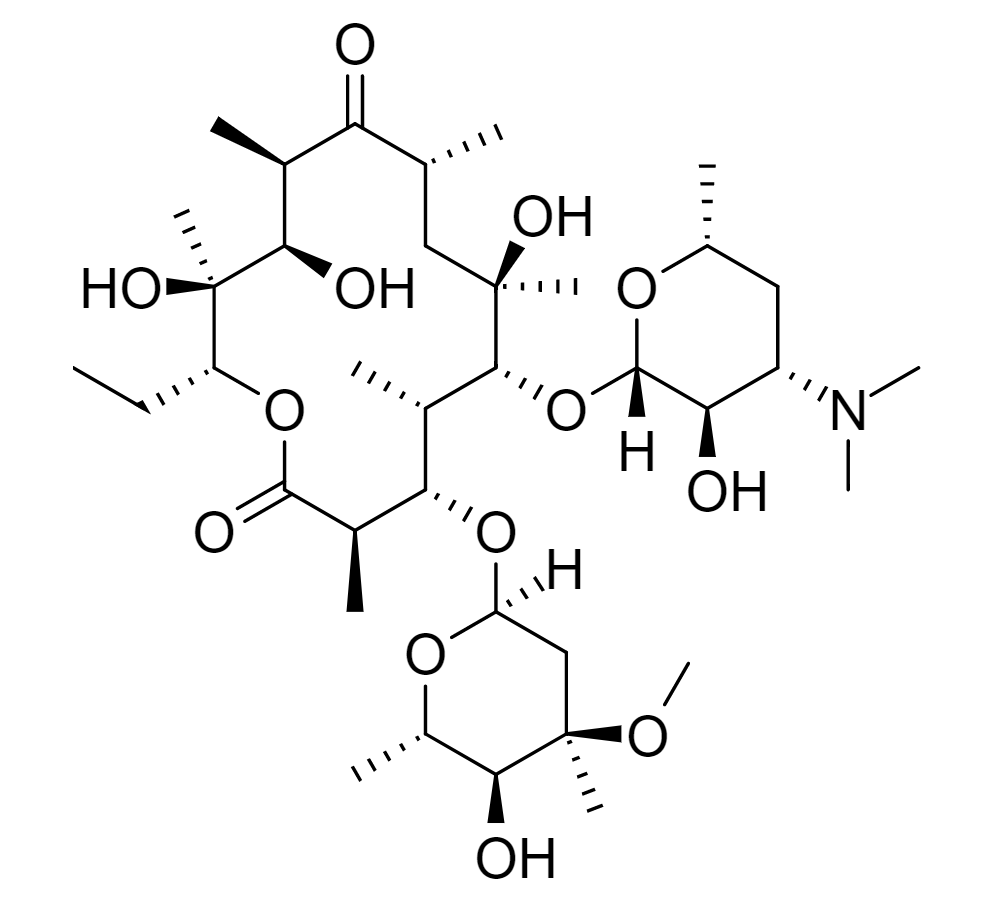
Estrutura química

  • Macrólidos: caracterizados por um anel de lactona macrocíclico
    • O anel contém 14‒16 átomos
    • 1 ou mais MAIS Androgen Insensitivity Syndrome açúcares são anexados através de ligações glicosídicas
    • A eritromicina é o fármaco padrão desta classe.
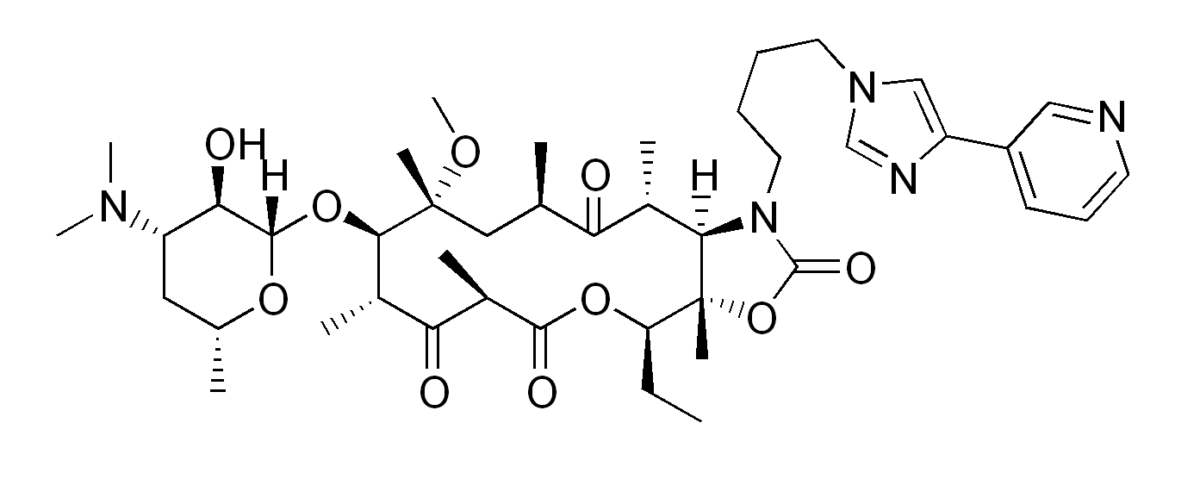
  • Cetolídeos (por exemplo, telitromicina): estrutura semelhante aos macrólidos
    • Anel de 14 átomos
    • 1 dos açúcares é substituído por um grupo ceto
    • Derivado da eritromicina

Mecanismo de ação

Geral:

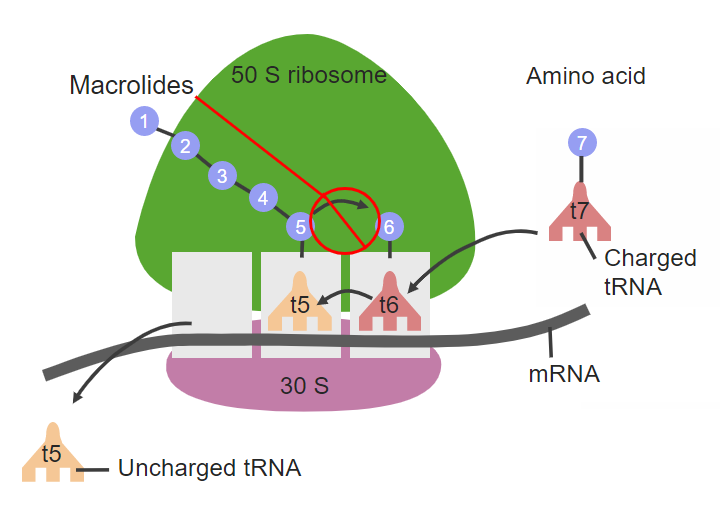
  • Inibe a síntese de proteínas bacterianas ao se ligar reversivelmente à subunidade ribossómica 50S
    • Liga-se perto do centro da peptidiltransferase → evita que a peptidiltransferase adicione aminoácidos a um péptido em crescimento (impede a transpeptidação)
    • Também inibe a formação da subunidade 50S
  • Limita o crescimento bacteriano → bacteriostático
  • Efeitos adicionais:
    • Efeito anti-inflamatório por ↓ das interleucinas e do fator de necrose tumoral alfa
    • A eritromicina é um agonista do recetor de motilina nas células enterocromafins duodenais → tem propriedades procinéticas

A fidaxomicina é uma exceção:

  • Liga-se à RNA RNA A polynucleotide consisting essentially of chains with a repeating backbone of phosphate and ribose units to which nitrogenous bases are attached. RNA is unique among biological macromolecules in that it can encode genetic information, serve as an abundant structural component of cells, and also possesses catalytic activity. RNA Types and Structure polimerase → impede a transcrição de mRNA mRNA RNA sequences that serve as templates for protein synthesis. Bacterial mRNAs are generally primary transcripts in that they do not require post-transcriptional processing. Eukaryotic mRNA is synthesized in the nucleus and must be exported to the cytoplasm for translation. Most eukaryotic mRNAs have a sequence of polyadenylic acid at the 3′ end, referred to as the poly(a) tail. The function of this tail is not known for certain, but it may play a role in the export of mature mRNA from the nucleus as well as in helping stabilize some mRNA molecules by retarding their degradation in the cytoplasm. RNA Types and Structure
  • Bactericida
O local de ação dos macrólidos

O local de ação dos macrólidos na subunidade ribossómica 50S
tRNA: RNA de transferência
mRNA: RNA mensageiro

Imagem por Lecturio. Licença: CC BY-NC-SA 4.0

Farmacocinética

Tabela: Farmacocinética de macrólidos e cetolídeos
Macrólidos Cetolídeos
Absorção Eritromicina:
  • Destruída pelo ácido do estômago → requer revestimento entérico
  • Absorção relativamente fraca
  • Os alimentos interferem na absorção
Azitromicina e claritromicina:
  • Estáveis no estômago
  • Melhor absorção
Fidaxomicina:
  • Absorção sistémica mínima
  • Atinge altas concentrações fecais
Absorção rápida
Distribuição
  • Lipofílica
  • Amplamente distribuído nos fluidos e tecidos corporais
  • Captação por macrófagos:
  • Atravessa a placenta Placenta A highly vascularized mammalian fetal-maternal organ and major site of transport of oxygen, nutrients, and fetal waste products. It includes a fetal portion (chorionic villi) derived from trophoblasts and a maternal portion (decidua) derived from the uterine endometrium. The placenta produces an array of steroid, protein and peptide hormones (placental hormones). Placenta, Umbilical Cord, and Amniotic Cavity
  • Não ultrapassa a barreira hematoencefálica
  • Exceção: a fidaxomicina atua localmente no lúmen GI
  • Amplamente distribuída nos tecidos
  • 70% de ligação às proteínas (albumina)
Metabolismo
Excreção
  • Hepático (bílis → fezes):
    • Azitromicina
    • Eritromicina
  • Renal: claritromicina
  • Fecal: fidaxomicina
  • Renal
  • Fezes

Indicações

Cobertura antimicrobiana

  • Gram-positivos:
    • Streptococcus Streptococcus Streptococcus is one of the two medically important genera of gram-positive cocci, the other being Staphylococcus. Streptococci are identified as different species on blood agar on the basis of their hemolytic pattern and sensitivity to optochin and bacitracin. There are many pathogenic species of streptococci, including S. pyogenes, S. agalactiae, S. pneumoniae, and the viridans streptococci. Streptococcus
    • Staphylococcus Staphylococcus Staphylococcus is a medically important genera of Gram-positive, aerobic cocci. These bacteria form clusters resembling grapes on culture plates. Staphylococci are ubiquitous for humans, and many strains compose the normal skin flora. Staphylococcus
    • Clostridioides difficile (fidaxomicina)
  • Gram-negativo:
    • Escherichia coli Escherichia coli The gram-negative bacterium Escherichia coli is a key component of the human gut microbiota. Most strains of E. coli are avirulent, but occasionally they escape the GI tract, infecting the urinary tract and other sites. Less common strains of E. coli are able to cause disease within the GI tract, most commonly presenting as abdominal pain and diarrhea. Escherichia coli
    • Haemophilus influenzae Haemophilus Influenzae A species of Haemophilus found on the mucous membranes of humans and a variety of animals. The species is further divided into biotypes I through viii. Haemophilus e H. ducreyi
    • Moraxella catarrhalis Moraxella catarrhalis Gram-negative aerobic cocci of low virulence that colonize the nasopharynx and occasionally cause meningitis; bacteremia; empyema; pericarditis; and pneumonia. Moraxella
    • Salmonella Salmonella Salmonellae are gram-negative bacilli of the family Enterobacteriaceae. Salmonellae are flagellated, non-lactose-fermenting, and hydrogen sulfide-producing microbes. Salmonella enterica, the most common disease-causing species in humans, is further classified based on serotype as typhoidal (S. typhi and paratyphi) and nontyphoidal (S. enteritidis and typhimurium). Salmonella
    • Yersinia enterocolitica Yersinia enterocolitica A species of the genus yersinia, isolated from both man and animal. It is a frequent cause of bacterial gastroenteritis in children. Yersinia spp./Yersiniosis
    • Shigella Shigella Shigella is a genus of gram-negative, non-lactose-fermenting facultative intracellular bacilli. Infection spreads most commonly via person-to-person contact or through contaminated food and water. Humans are the only known reservoir. Shigella
    • Campylobacter jejuni Campylobacter jejuni A species of bacteria that resemble small tightly coiled spirals. Its organisms are known to cause abortion in sheep and fever and enteritis in man and may be associated with enteric diseases of calves, lambs, and other animals. Campylobacter
    • Vibrio cholerae Vibrio cholerae The etiologic agent of cholera. Vibrio
    • Neisseria gonorrhoeae Neisseria gonorrhoeae A species of gram-negative, aerobic bacteria primarily found in purulent venereal discharges. It is the causative agent of gonorrhea. Neisseria
    • Helicobacter pylori Helicobacter pylori A spiral bacterium active as a human gastric pathogen. It is a gram-negative, urease-positive, curved or slightly spiral organism initially isolated in 1982 from patients with lesions of gastritis or peptic ulcers in Western Australia. Helicobacter pylori was originally classified in the genus campylobacter, but RNA sequencing, cellular fatty acid profiles, growth patterns, and other taxonomic characteristics indicate that the micro-organism should be included in the genus Helicobacter. It has been officially transferred to Helicobacter gen. Helicobacter
    • Bordetella pertussis Bordetella pertussis A species of gram-negative, aerobic bacteria that is the causative agent of whooping cough. Its cells are minute coccobacilli that are surrounded by a slime sheath. Bordetella
  • Atípicos
    • Mycoplasma pneumoniae Mycoplasma pneumoniae Short filamentous organism of the genus mycoplasma, which binds firmly to the cells of the respiratory epithelium. It is one of the etiologic agents of non-viral primary atypical pneumonia in man. Mycoplasma
    • Chlamydia pneumoniae Chlamydia pneumoniae A species of chlamydophila that causes acute respiratory infection, especially atypical pneumonia, in humans, horses, and koalas. Chlamydia
    • Legionella pneumophila Legionella pneumophila A species of gram-negative, aerobic bacteria that is the causative agent of legionnaires’ disease. It has been isolated from numerous environmental sites as well as from human lung tissue, respiratory secretions, and blood. Legionella/Legionellosis
    • Treponema pallidum Treponema pallidum The causative agent of venereal and non-venereal syphilis as well as yaws. Treponema
    • Babesia Babesia Babesiosis is an infection caused by a protozoa belonging to the genus, Babesia. The most common Babesia seen in the United States is B. microti, which is transmitted by the Ixodes tick. The protozoa thrive and replicate within host erythrocytes. Lysis of erythrocytes and the body’s immune response result in clinical symptoms. Babesia/Babesiosis microti
    • Ureaplasma
  • Complexo Mycobacterium avium Mycobacterium avium A bacterium causing tuberculosis in domestic fowl and other birds. In pigs, it may cause localized and sometimes disseminated disease. The organism occurs occasionally in sheep and cattle. It should be distinguished from the m. avium complex, which infects primarily humans. Mycobacterium (MAC)

Tipos de infeção

  • Infeções respiratórias:
    • Pneumonia Pneumonia Pneumonia or pulmonary inflammation is an acute or chronic inflammation of lung tissue. Causes include infection with bacteria, viruses, or fungi. In more rare cases, pneumonia can also be caused through toxic triggers through inhalation of toxic substances, immunological processes, or in the course of radiotherapy. Pneumonia adquirida na comunidade
    • Profilaxia e tratamento de MAC
    • Doença dos legionários
    • Tosse convulsa
    • Faringite estreptocócica
  • Infeções sexualmente transmissíveis:
    • Gonorreia
    • Clamídia
    • Cancroide
  • Infeção por H. pylori H. pylori A spiral bacterium active as a human gastric pathogen. It is a gram-negative, urease-positive, curved or slightly spiral organism initially isolated in 1982 from patients with lesions of gastritis or peptic ulcers in Western Australia. Helicobacter pylori was originally classified in the genus campylobacter, but RNA sequencing, cellular fatty acid profiles, growth patterns, and other taxonomic characteristics indicate that the micro-organism should be included in the genus Helicobacter. It has been officially transferred to Helicobacter gen. Helicobacter (a claritromicina faz parte da terapêutica tripla)
  • Diarreia associada a C. difficile (a fidaxomicina é monoterapia)
  • Infeções de pele e dos tecidos moles Moles Primary Skin Lesions: acne

Outras indicações

  • Doença pulmonar obstrutiva crónica e exacerbações de fibrose quística (efeito anti-inflamatório)
  • Gastroparesia (eritromicina, efeito de promotilidade)

Indicações dos cetolídeos

  • Atividade antimicrobiana semelhante à dos macrólidos
  • A telitromicina foi descontinuada nos Estados Unidos (anteriormente indicada apenas para pneumonia Pneumonia Pneumonia or pulmonary inflammation is an acute or chronic inflammation of lung tissue. Causes include infection with bacteria, viruses, or fungi. In more rare cases, pneumonia can also be caused through toxic triggers through inhalation of toxic substances, immunological processes, or in the course of radiotherapy. Pneumonia adquirida na comunidade).

Efeitos Adversos e Contraindicações

Macrólidos

  • Efeitos adversos:
    • Distúrbios gastrointestinais (especialmente com eritromicina e fidaxomicina)
    • Tonturas
    • Hepatotoxicidade:
      • Alteração dos exames de função hepática
      • Hepatite
      • Icterícia colestática
      • Necrose hepática
      • Insuficiência hepática
    • Prolongamento do intervalo QT
  • Contraindicações: história de insuficiência hepática ou icterícia colestática
  • Precauções:
    • Alteração da condução cardíaca (especialmente aqueles com prolongamento do intervalo QT e anomalias eletrolíticas)
    • Hepatotoxicidade
    • Exacerbação de miastenia gravis
    • Claritromicina: potencial ↑ mortalidade em pacientes com doença arterial coronária
  • Interações farmacológicas (particularmente com eritromicina e claritromicina devido à inibição do CYP3A4 CYP3A4 Class 3 Antiarrhythmic Drugs (Potassium Channel Blockers)):
    • Varfarina: ↑ INR
    • Sinvastatina, lovastatina: ↑ risco de mialgias e/ou rabdomiólise
    • Midazolam Midazolam A short-acting hypnotic-sedative drug with anxiolytic and amnestic properties. It is used in dentistry, cardiac surgery, endoscopic procedures, as preanesthetic medication, and as an adjunct to local anesthesia. The short duration and cardiorespiratory stability makes it useful in poor-risk, elderly, and cardiac patients. It is water-soluble at ph less than 4 and lipid-soluble at physiological pH. Benzodiazepines: sonolência
    • Teofilina: convulsões
    • ↑ Concentrações séricas de:
      • Tacrolimus Tacrolimus A macrolide isolated from the culture broth of a strain of streptomyces tsukubaensis that has strong immunosuppressive activity in vivo and prevents the activation of T-lymphocytes in response to antigenic or mitogenic stimulation in vitro. Immunosuppressants
      • Ciclosporina
      • Alcaloides da cravagem do centeio
      • Colchicina

Cetolídeos

  • Efeitos adversos:
    • Distúrbios GI
    • Alterações visuais
    • Hepatotoxicidade
    • Síncope
  • Contraindicações:
    • Hipersensibilidade a antibióticos macrólidos
    • Miastenia gravis
    • Hepatite ou icterícia
  • Precauções:
    • Hepatotoxicidade
    • Exacerbação de miastenia gravis
    • Prolongamento do intervalo QT

Mecanismos de Resistência

Existem 3 mecanismos de resistência aos macrólidos:

  • Metilação ou mutação ribossomal:
    • Impede a ligação de macrólidos
    • Pode ser mediado por plasmídeos ou cromossómico
  • Produção de enzimas inativadoras de fármacos:
  • Produção de proteínas de efluxo dependentes de ATP:
    • Transporte do fármaco para fora da célula
    • Os cetolídeos não são afetados por este mecanismo de resistência → permite a sua utilização em algumas estirpes resistentes a macrólidos

Comparação de Fármacos

Tabela: Comparação de várias classes de antibióticos inibidores da síntese de proteínas bacterianas
Classe do fármaco Mecanismo de ação Cobertura Efeitos adversos
Anfenicois
  • Ligam-se à subunidade 50S
  • Previnem a transpeptidação
  • Gram-positivos
  • Gram-negativos
  • Atípicos
  • Distúrbios GI
  • Neurite ótica
  • Anemia Anemia Anemia is a condition in which individuals have low Hb levels, which can arise from various causes. Anemia is accompanied by a reduced number of RBCs and may manifest with fatigue, shortness of breath, pallor, and weakness. Subtypes are classified by the size of RBCs, chronicity, and etiology. Anemia: Overview and Types aplásica
  • Síndrome do bebé cinzento
Lincosamidas
  • Ligam-se à subunidade 50S
  • Previnem a transpeptidação
  • Cocos gram-positivos:
    • MSSA
    • MRSA MRSA A strain of Staphylococcus aureus that is non-susceptible to the action of methicillin. The mechanism of resistance usually involves modification of normal or the presence of acquired penicillin binding proteins. Staphylococcus
    • Streptococcus Streptococcus Streptococcus is one of the two medically important genera of gram-positive cocci, the other being Staphylococcus. Streptococci are identified as different species on blood agar on the basis of their hemolytic pattern and sensitivity to optochin and bacitracin. There are many pathogenic species of streptococci, including S. pyogenes, S. agalactiae, S. pneumoniae, and the viridans streptococci. Streptococcus
  • Anaeróbios
  • Distúrbios GI
  • Reações alérgicas
  • Colite pseudomembranosa
Macrólidos
  • Ligam-se à subunidade 50S
  • Previnem a transpeptidação
  • Gram-positivos
  • Gram-negativos
  • Atípicos
  • Complexo Mycobacterium avium Mycobacterium avium A bacterium causing tuberculosis in domestic fowl and other birds. In pigs, it may cause localized and sometimes disseminated disease. The organism occurs occasionally in sheep and cattle. It should be distinguished from the m. avium complex, which infects primarily humans. Mycobacterium
  • Distúrbios GI
  • Prolongamento do intervalo QT
  • Hepatotoxicidade
  • Exacerbação de miastenia gravis
Oxazolidinonas
  • Ligam-se ao rRNA rRNA The most abundant form of RNA. Together with proteins, it forms the ribosomes, playing a structural role and also a role in ribosomal binding of mRNA and tRNAs. Individual chains are conventionally designated by their sedimentation coefficients. In eukaryotes, four large chains exist, synthesized in the nucleolus and constituting about 50% of the ribosome. RNA Types and Structure 23S da subunidade 50S
  • Impedem a formação do complexo de iniciação
Cocos gram-positivos:
  • MSSA
  • MRSA MRSA A strain of Staphylococcus aureus that is non-susceptible to the action of methicillin. The mechanism of resistance usually involves modification of normal or the presence of acquired penicillin binding proteins. Staphylococcus
  • VRE
  • Streptococcus Streptococcus Streptococcus is one of the two medically important genera of gram-positive cocci, the other being Staphylococcus. Streptococci are identified as different species on blood agar on the basis of their hemolytic pattern and sensitivity to optochin and bacitracin. There are many pathogenic species of streptococci, including S. pyogenes, S. agalactiae, S. pneumoniae, and the viridans streptococci. Streptococcus
  • Mielossupressão
  • Neuropatia
  • Acidose lática
  • Síndrome serotoninérgico
rRNA: RNA ribossómico
VRE: Enterococcus resistente à vancomicina
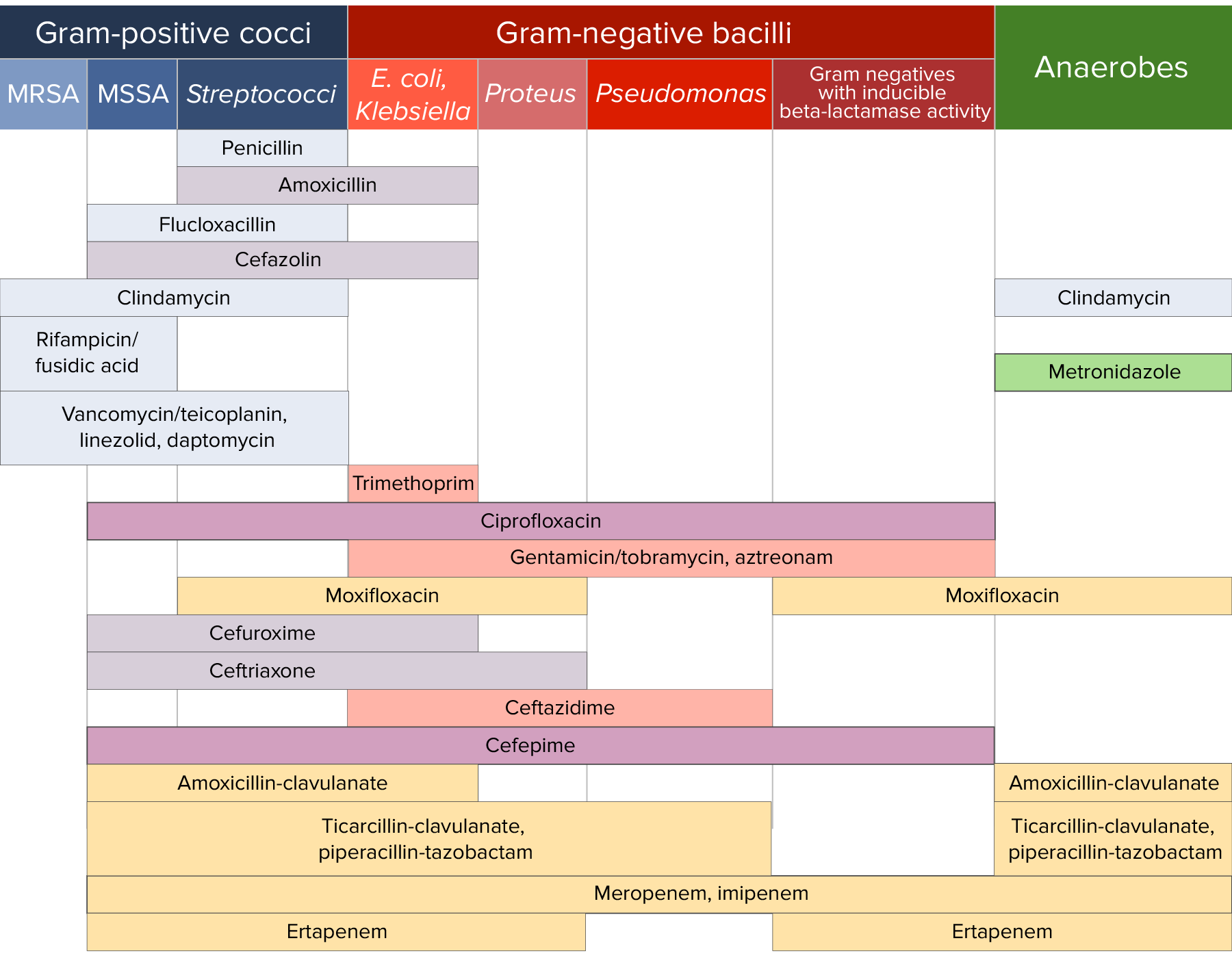
Gráfico de sensibilidade a antibióticos

Sensibilidade aos antibióticos:
Gráfico que compara a cobertura microbiana de diferentes antibióticos para cocos gram-positivos, bacilos gram-negativos e anaeróbios.

Imagem por Lecturio. Licença: CC BY-NC-SA 4.0

Referências

  1. Bertram G. (2007). Macrolide Antibiotics Comparison: Erythromycin, Clarithromycin, Azithromycin. Basic and Clinical Pharmacology. Retrieved October 20, 2025, from https://www.emedexpert.com/compare/macrolides.shtml.
  2. Werth BJ. (2024). Macrolides. MSD Manual Professional Version. Retrieved October 20, 2025, from https://www.msdmanuals.com/professional/infectious-diseases/bacteria-and-antibacterial-drugs/macrolides
  3. Patel PH, Hashmi MF. (2023). Macrolides. StatPearls. Retrieved October 20, 2025, from https://www.ncbi.nlm.nih.gov/books/NBK551495/
  4. Graziani, A.L. (2024). Azithromycin and clarithromycin. In Bond, S. (Ed.), UpToDate. Retrieved October 20, 2025, from https://www.uptodate.com/contents/azithromycin-and-clarithromycin
  5. Deck DH, Winston LG. (2012). Tetracyclines, macrolides, clindamycin, chloramphenicol, streptogramins, & oxazolidinones. In Katzung BG, Masters SB, Trevor AJ. (Eds.), Basic & Clinical Pharmacology (12th edition, pp. 809-819). https://pharmacomedicale.org/images/cnpm/CNPM_2016/katzung-pharmacology.pdf
  6. Sears P, Crook DW, Louie TJ, Miller MA, Weiss K. Fidaxomicin attains high fecal concentrations with minimal plasma concentrations following oral administration in patients with Clostridium difficile infection. Clin Infect Dis. 2012 Aug;55 Suppl 2(Suppl 2):S116-20. doi: 10.1093/cid/cis337. PMID: 22752859; PMCID: PMC3388019.

Crie sua conta gratuita ou faça login para continuar lendo!

Cadastre-se agora e tenha acesso grátis ao Lecturio, com páginas de conceitos, vídeos de medicina e questões para sua educação médica.

Aprende mais com a Lecturio:

Multiple devices displaying human anatomy and health education content.

Complementa o teu estudo da faculdade com o companheiro de estudo tudo-em-um da Lecturio, através de métodos de ensino baseados em evidência.

Estuda onde quiseres

Two iPhones display medical education apps, one showing anatomy, the other Bookmatcher.

A Lecturio Medical complementa o teu estudo através de métodos de ensino baseados em evidência, vídeos de palestras, perguntas e muito mais – tudo combinado num só lugar e fácil de usar.

User Reviews

Details