Domina Conceptos Médicos

Estudia para la escuela de medicina y tus examenes con Lecturio.

Sulfonamidas y Trimetoprim

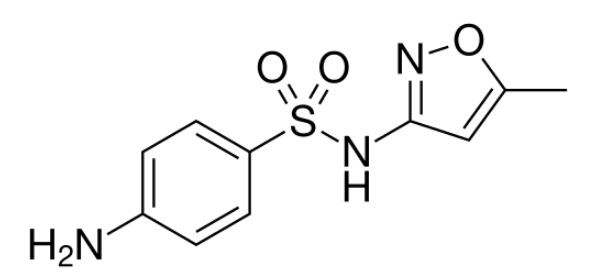
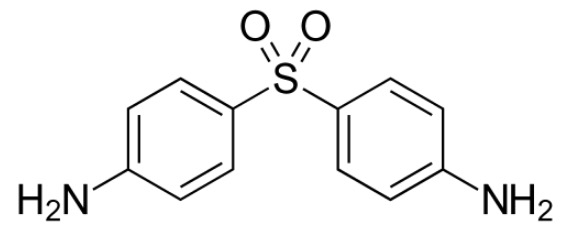
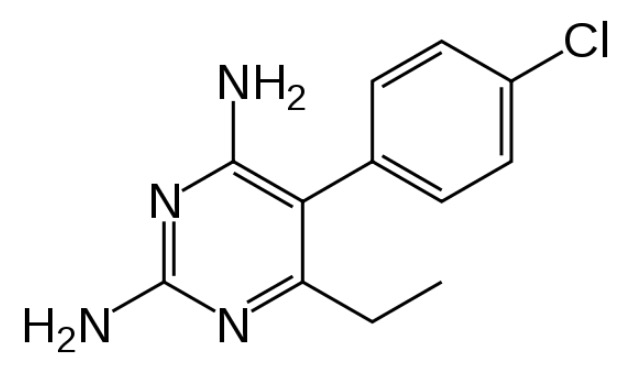
Las sulfonamidas son una clase de medicamentos antimicrobianos que inhiben la síntesis de ácido fólico en EN Erythema nodosum is an immune-mediated panniculitis (inflammation of the subcutaneous fat) caused by a type IV (delayed-type) hypersensitivity reaction. It commonly manifests in young women as tender, erythematous nodules on the shins. Erythema Nodosum microorganismos patógenos. El medicamento prototipo de esta clase es el sulfametoxazol. Aunque no son técnicamente sulfonamidas, el trimetoprim, la dapsona y la pirimetamina son también importantes agentes antimicrobianos que inhiben la síntesis del ácido fólico. Los LOS Neisseria agentes se combinan a menudo con las sulfonamidas, lo que da lugar a un efecto sinérgico. La principal indicación para su uso es el tratamiento contra las infecciones del tracto urinario (aunque ha HA Hemolytic anemia (HA) is the term given to a large group of anemias that are caused by the premature destruction/hemolysis of circulating red blood cells (RBCs). Hemolysis can occur within (intravascular hemolysis) or outside the blood vessels (extravascular hemolysis). Hemolytic Anemia surgido una importante resistencia). Además, los LOS Neisseria medicamentos se utilizan para tratar y prevenir infecciones oportunistas como la encefalitis por toxoplasmosis Toxoplasmosis Toxoplasmosis is an infectious disease caused by Toxoplasma gondii, an obligate intracellular protozoan parasite. Felines are the definitive host, but transmission to humans can occur through contact with cat feces or the consumption of contaminated foods. The clinical presentation and complications depend on the host's immune status. Toxoplasma/Toxoplasmosis y la neumonía por Pneumocystis en EN Erythema nodosum is an immune-mediated panniculitis (inflammation of the subcutaneous fat) caused by a type IV (delayed-type) hypersensitivity reaction. It commonly manifests in young women as tender, erythematous nodules on the shins. Erythema Nodosum individuos inmunosuprimidos. Los LOS Neisseria efectos secundarios más frecuentes son reacciones de hipersensibilidad, fiebre, erupción cutánea, malestar gastrointestinal y reacciones hematológicas. Los LOS Neisseria medicamentos están generalmente contraindicados en EN Erythema nodosum is an immune-mediated panniculitis (inflammation of the subcutaneous fat) caused by a type IV (delayed-type) hypersensitivity reaction. It commonly manifests in young women as tender, erythematous nodules on the shins. Erythema Nodosum el embarazo, en EN Erythema nodosum is an immune-mediated panniculitis (inflammation of the subcutaneous fat) caused by a type IV (delayed-type) hypersensitivity reaction. It commonly manifests in young women as tender, erythematous nodules on the shins. Erythema Nodosum los LOS Neisseria lactantes pequeños/enfermos y en EN Erythema nodosum is an immune-mediated panniculitis (inflammation of the subcutaneous fat) caused by a type IV (delayed-type) hypersensitivity reaction. It commonly manifests in young women as tender, erythematous nodules on the shins. Erythema Nodosum las personas con anemia Anemia Anemia is a condition in which individuals have low Hb levels, which can arise from various causes. Anemia is accompanied by a reduced number of RBCs and may manifest with fatigue, shortness of breath, pallor, and weakness. Subtypes are classified by the size of RBCs, chronicity, and etiology. Anemia: Overview and Types megaloblástica o insuficiencia renal grave.

Last updated: Dec 15, 2025

Editorial responsibility: Stanley Oiseth, Lindsay Jones, Evelin Maza

Clasificación

Los LOS Neisseria antibióticos sulfonamidas son medicamentos antimicrobianos que contienen un grupo funcional sulfonamida.

  • El sulfametoxazol es el medicamento prototipo de esta clase.
  • Otros antibióticos sulfonamidas son:
    • Sulfadiazina
    • Sulfisoxazol
  • Muchas otras sulfonamidas no son antimicrobianas:
    • Sulfasalazina (para tratar la enfermedad de Crohn)
    • Sulfonilureas (agentes antidiabéticos como la glipizida)
    • Algunos diuréticos (e.g., acetazolamida, clortalidona, furosemida e hidroclorotiazida)
    • Algunos medicamentos antivirales y antirretrovirales
    • Algunos inhibidores de la COX-2

Medicamentos con un mecanismo de acción similar al AL Amyloidosis de los LOS Neisseria antibióticos sulfonamidas (pero que no son técnicamente sulfonamidas):

  • Trimetoprim
  • Dapsona
  • Pirimetamina

Medicamento combinados (actúan de forma sinérgica):

  • Trimetoprim-sulfametoxazol (vendido comercialmente como Septra y Bactrim)
  • Eritromicina-sulfisoxazol

Estructura Química y Farmacodinamia

Estructura química

Los LOS Neisseria antibióticos sulfonamidas contienen un grupo funcional sulfonamida, que es un azufre unido a:
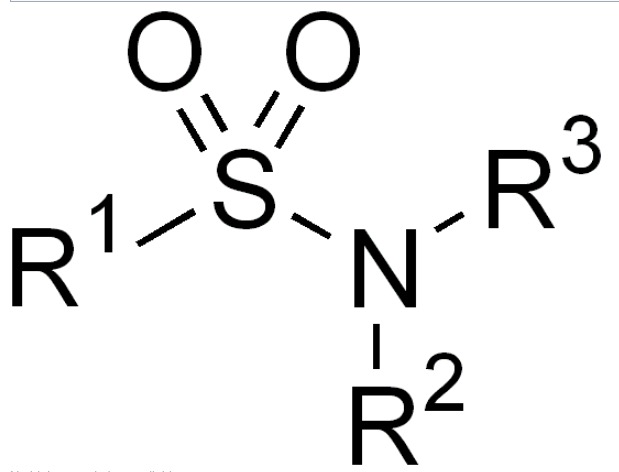
  • 2 moléculas de oxígeno separadas, cada una a través de un doble enlace
  • 1 nitrógeno
  • 1 grupo R de cadena lateral

Mecanismo de acción

Las sulfonamidas, el trimetoprim, la dapsona y la pirimetamina interrumpen la síntesis del ácido fólico en EN Erythema nodosum is an immune-mediated panniculitis (inflammation of the subcutaneous fat) caused by a type IV (delayed-type) hypersensitivity reaction. It commonly manifests in young women as tender, erythematous nodules on the shins. Erythema Nodosum los LOS Neisseria microbios.
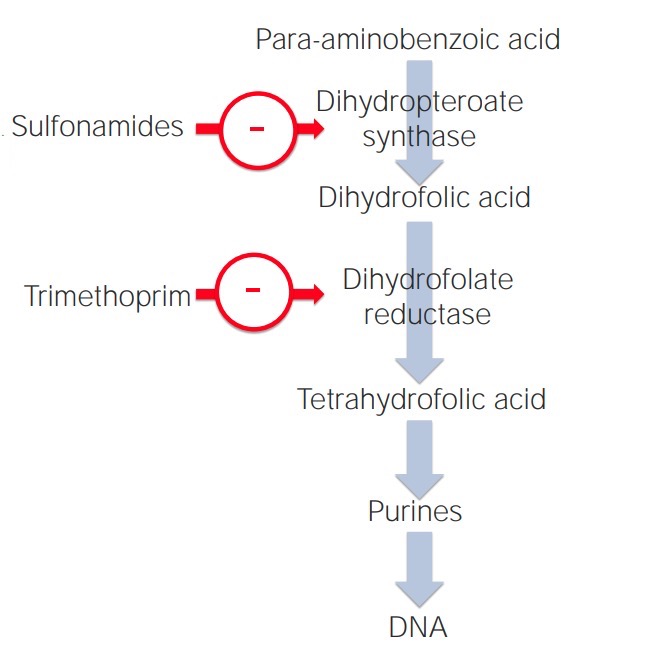
  • Síntesis del ácido fólico:
    • Dihidropteroato sintasa condensa el ácido paraaminobenzoico (PABA) con una pteridina para formar dihidropteroato, que posteriormente se convierte en EN Erythema nodosum is an immune-mediated panniculitis (inflammation of the subcutaneous fat) caused by a type IV (delayed-type) hypersensitivity reaction. It commonly manifests in young women as tender, erythematous nodules on the shins. Erythema Nodosum dihidrofolato.
    • Dihidrofolato reductasa convierte el dihidrofolato en EN Erythema nodosum is an immune-mediated panniculitis (inflammation of the subcutaneous fat) caused by a type IV (delayed-type) hypersensitivity reaction. It commonly manifests in young women as tender, erythematous nodules on the shins. Erythema Nodosum tetrahidrofolato.
    • Tetrahidrofolato que se utiliza para sintetizar purinas, que son necesarias para la síntesis del ADN.
    • Los LOS Neisseria seres humanos obtienen el tetrahidrofolato de la dieta, sin embargo los LOS Neisseria organismos unicelulares deben sintetizar el tetrahidrofolato.
  • Sulfonamidas y dapsona:
    • Análogos estructurales del ácido paraaminobenzoico
    • Compiten con el ácido paraaminobenzoico en EN Erythema nodosum is an immune-mediated panniculitis (inflammation of the subcutaneous fat) caused by a type IV (delayed-type) hypersensitivity reaction. It commonly manifests in young women as tender, erythematous nodules on the shins. Erythema Nodosum la unión a la dihidropteroato sintasa bacteriana (inhibición competitiva) → bloquea la formación de dihidropteroato
    • ↓ Dihidrofolato → ↓ tetrahidrofolato → las bacterias no pueden sintetizar purinas → se interrumpe la síntesis del ADN bacteriano
  • Trimetoprim y pirimetamina:
    • Inhiben la dihidrofolato reductasa:
      • Trimetoprim: se une selectivamente a la dihidrofolato reductasa bacteriana
      • Pirimetamina: se une selectivamente a la dihidrofolato reductasa parasitaria
    • Bloquean la formación de tetrahidrofolato a partir de dihidrofolato
    • ↓ Dihidrofolato → ↓ tetrahidrofolato → las bacterias no pueden sintetizar purinas → se interrumpe la síntesis del ADN bacteriano
  • Los LOS Neisseria medicamentos son bacteriostáticos cuando se administran de forma independiente, pero son bactericidas cuando se administran en EN Erythema nodosum is an immune-mediated panniculitis (inflammation of the subcutaneous fat) caused by a type IV (delayed-type) hypersensitivity reaction. It commonly manifests in young women as tender, erythematous nodules on the shins. Erythema Nodosum combinación:
    • Trimetoprim-sulfametoxazol
    • Sulfadiazina + pirimetamina
Mecanismo de acción de las sulfonamidas y el trimetoprim en la vía del ácido fólico

Mecanismo de acción de las sulfonamidas y el trimetoprim en la vía del ácido fólico

Imagen por Lecturio. Licencia: CC BY-NC-SA 4.0

Mecanismo de resistencia

  • Algunas bacterias utilizan folato exógeno → no dependen de la síntesis de folato a partir de ácido paraaminobenzoico → no son susceptibles a las sulfonamidas
  • Mutaciones que conducen a la sobreproducción de sustratos o enzimas:
    • ↑ Ácido paraaminobenzoico → resistencia a las sulfonamidas
    • ↑ Dihidrofolato reductasa → resistencia al AL Amyloidosis trimetoprim
  • Las mutaciones y/o los LOS Neisseria plásmidos codifican genes Genes A category of nucleic acid sequences that function as units of heredity and which code for the basic instructions for the development, reproduction, and maintenance of organisms. DNA Types and Structure con un sitio de unión al AL Amyloidosis medicamento alterado → ↓ afinidad:
    • Dihidropteroato sintetasa con baja afinidad por las sulfonamidas
    • Dihidrofolato reductasa con baja afinidad al AL Amyloidosis trimetoprim
  • Afectan la permeabilidad a los LOS Neisseria medicamentos

Farmacocinética

Distribución

  • Trimetoprim-sulfametoxazol:
    • Localizaciones:
      • Oído medio
      • Esputo y secreciones bronquiales
      • Fluidos prostáticos y vaginales
      • LCR
      • Atraviesa la placenta Placenta A highly vascularized mammalian fetal-maternal organ and major site of transport of oxygen, nutrients, and fetal waste products. It includes a fetal portion (chorionic villi) derived from trophoblasts and a maternal portion (decidua) derived from the uterine endometrium. The placenta produces an array of steroid, protein and peptide hormones (placental hormones). Placenta, Umbilical Cord, and Amniotic Cavity (teratogénico)
    • El trimetoprim es más liposoluble que el sulfametoxazol → formulado en EN Erythema nodosum is an immune-mediated panniculitis (inflammation of the subcutaneous fat) caused by a type IV (delayed-type) hypersensitivity reaction. It commonly manifests in young women as tender, erythematous nodules on the shins. Erythema Nodosum una proporción 1:5, resultando en EN Erythema nodosum is an immune-mediated panniculitis (inflammation of the subcutaneous fat) caused by a type IV (delayed-type) hypersensitivity reaction. It commonly manifests in young women as tender, erythematous nodules on the shins. Erythema Nodosum una concentración óptima para un efecto sinérgico
  • Pirimetamina:
    • Riñones
    • Pulmón
    • Hígado
    • Bazo

Absorción, metabolismo y eliminación

  • Absorción: generalmente bien absorbidas por vía oral
  • Unión a proteínas: todos están unidos a proteínas (entre 40%–90%):
    • Sulfametoxazol: 70%
    • Trimetoprim: 45%
    • Dapsona: 70%–90%
    • Pirimetamina: 87%
  • Metabolismo:
    • Cierto metabolismo hepático
    • Sulfametoxazol experimenta hidroxilación a través del CYP2C9 CYP2C9 A cytochrome p-450 subtype that has specificity for acidic xenobiotics. It oxidizes a broad range of important clinical drugs that fall under the categories of nonsteroidal anti-inflammatory agents; hypoglycemic agents; anticoagulants; and diuretics. Anticoagulants.
  • Eliminación:
    • Renal: medicamento inalterado y metabolitos
    • Vida media (intermedia a larga, prolongada en EN Erythema nodosum is an immune-mediated panniculitis (inflammation of the subcutaneous fat) caused by a type IV (delayed-type) hypersensitivity reaction. It commonly manifests in young women as tender, erythematous nodules on the shins. Erythema Nodosum la insuficiencia renal):
      • Trimetoprim-sulfametoxazol: 9–12 horas
      • Dapsona: 28 horas
      • Pirimetamina: 80–95 horas

Indicaciones

Espectro de actividad: trimetoprim-sulfametoxazol

Debido a la significativa resistencia, especialmente contra el trimetoprim-sulfametoxazol, estos medicamentos tienen mejores resultados después de las pruebas de susceptibilidad a los LOS Neisseria antibióticos. La actividad puede ser en EN Erythema nodosum is an immune-mediated panniculitis (inflammation of the subcutaneous fat) caused by a type IV (delayed-type) hypersensitivity reaction. It commonly manifests in young women as tender, erythematous nodules on the shins. Erythema Nodosum contra:

  • Bacterias gram-positivas:
    • Staphylococcus Staphylococcus Staphylococcus is a medically important genera of Gram-positive, aerobic cocci. These bacteria form clusters resembling grapes on culture plates. Staphylococci are ubiquitous for humans, and many strains compose the normal skin flora. Staphylococcus (incluido el Staphylococcus aureus Staphylococcus aureus Potentially pathogenic bacteria found in nasal membranes, skin, hair follicles, and perineum of warm-blooded animals. They may cause a wide range of infections and intoxications. Brain Abscess resistente a la meticilina ( MRSA MRSA A strain of Staphylococcus aureus that is non-susceptible to the action of methicillin. The mechanism of resistance usually involves modification of normal or the presence of acquired penicillin binding proteins. Staphylococcus, por sus siglas en EN Erythema nodosum is an immune-mediated panniculitis (inflammation of the subcutaneous fat) caused by a type IV (delayed-type) hypersensitivity reaction. It commonly manifests in young women as tender, erythematous nodules on the shins. Erythema Nodosum inglés))
    • Streptococcus Streptococcus Streptococcus is one of the two medically important genera of gram-positive cocci, the other being Staphylococcus. Streptococci are identified as different species on blood agar on the basis of their hemolytic pattern and sensitivity to optochin and bacitracin. There are many pathogenic species of streptococci, including S. pyogenes, S. agalactiae, S. pneumoniae, and the viridans streptococci. Streptococcus (cobertura poco fiable, resistencia significativa vista con S. pneumoniae)
  • Bacterias gram-negativas:
    • Enterobacteriaceae Enterobacteriaceae A family of gram-negative, facultatively anaerobic, rod-shaped bacteria that do not form endospores. Its organisms are distributed worldwide with some being saprophytes and others being plant and animal parasites. Many species are of considerable economic importance due to their pathogenic effects on agriculture and livestock. Cephalosporins:
      • Escherichia coli Escherichia coli The gram-negative bacterium Escherichia coli is a key component of the human gut microbiota. Most strains of E. coli are avirulent, but occasionally they escape the GI tract, infecting the urinary tract and other sites. Less common strains of E. coli are able to cause disease within the GI tract, most commonly presenting as abdominal pain and diarrhea. Escherichia coli (resistencia significativa)
      • Klebsiella Klebsiella Klebsiella are encapsulated gram-negative, lactose-fermenting bacilli. They form pink colonies on MacConkey agar due to lactose fermentation. The main virulence factor is a polysaccharide capsule. Klebsiella pneumoniae is the most important pathogenic species. Klebsiella
      • Enterobacter Enterobacter Multidrug-resistant Organisms and Nosocomial Infections
      • Salmonella Salmonella Salmonellae are gram-negative bacilli of the family Enterobacteriaceae. Salmonellae are flagellated, non-lactose-fermenting, and hydrogen sulfide-producing microbes. Salmonella enterica, the most common disease-causing species in humans, is further classified based on serotype as typhoidal (S. typhi and paratyphi) and nontyphoidal (S. enteritidis and typhimurium). Salmonella
      • Shigella Shigella Shigella is a genus of gram-negative, non-lactose-fermenting facultative intracellular bacilli. Infection spreads most commonly via person-to-person contact or through contaminated food and water. Humans are the only known reservoir. Shigella
    • Haemophilus influenzae Haemophilus Influenzae A species of Haemophilus found on the mucous membranes of humans and a variety of animals. The species is further divided into biotypes I through viii. Haemophilus
    • Morganella Morganella Multidrug-resistant Organisms and Nosocomial Infections
    • Clamidia
    • Neisseria Neisseria Neisseria is a genus of bacteria commonly present on mucosal surfaces. Several species exist, but only 2 are pathogenic to humans: N. gonorrhoeae and N. meningitidis. Neisseria species are non-motile, gram-negative diplococci most commonly isolated on modified Thayer-Martin (MTM) agar. Neisseria
  • Patógenos oportunistas:
    • Pneumocystis jirovecii
    • Toxoplasma Toxoplasma Toxoplasmosis is an infectious disease caused by Toxoplasma gondii, an obligate intracellular protozoan parasite. Felines are the definitive host, but transmission to humans can occur through contact with cat feces or the consumption of contaminated foods. The clinical presentation and complications depend on the host’s immune status. Toxoplasma/Toxoplasmosis gondii
    • Nocardia Nocardia Nocardia is a branching, filamentous, gram-positive bacilli. It is partially acid fast due to the presence of mycolic acids in the cell wall. Nocardia is a ubiquitous soil organism that most commonly affects immunocompromised patients. Nocardia is transmitted via inhalation of aerosolized bacteria or less commonly, via direct contact with wounds. Nocardia/Nocardiosis
  • Microorganismos NO cubiertos por trimetoprim-sulfametoxazol:
    • Pseudomonas aeruginosa Pseudomonas aeruginosa A species of gram-negative, aerobic, rod-shaped bacteria commonly isolated from clinical specimens (wound, burn, and urinary tract infections). It is also found widely distributed in soil and water. P. Aeruginosa is a major agent of nosocomial infection. Pseudomonas
    • Rickettsia Rickettsia Rickettsiae are a diverse collection of obligate intracellular, gram-negative bacteria that have a tropism for vascular endothelial cells. The vectors for transmission vary by species but include ticks, fleas, mites, and lice. Rickettsia

Indicaciones del trimetoprim-sulfametoxazol

  • Infecciones del tracto urinario:
    • Indicación principal del trimetoprim-sulfametoxazol
    • Resistencia en EN Erythema nodosum is an immune-mediated panniculitis (inflammation of the subcutaneous fat) caused by a type IV (delayed-type) hypersensitivity reaction. It commonly manifests in young women as tender, erythematous nodules on the shins. Erythema Nodosum aumento para E. coli
  • Prostatitis Prostatitis Prostatitis is inflammation or an irritative condition of the prostate that presents as different syndromes: acute bacterial, chronic bacterial, chronic prostatitis/chronic pelvic pain, and asymptomatic. Bacterial prostatitis is easier to identify clinically and the management (antibiotics) is better established. Prostatitis
  • Exacerbaciones de la enfermedad pulmonar obstructiva crónica (EPOC)
  • Otitis media aguda
  • Diarrea del viajero causada por E. coli
  • Salmonela sistémica
  • Shigelosis
  • Neumonía por Pneumocystis (tratamiento y profilaxis)
  • Usos distinto al AL Amyloidosis de la ficha:
    • Heridas por mordedura
    • Celulitis con alto riesgo de MRSA MRSA A strain of Staphylococcus aureus that is non-susceptible to the action of methicillin. The mechanism of resistance usually involves modification of normal or the presence of acquired penicillin binding proteins. Staphylococcus
    • Meningitis Meningitis Meningitis is inflammation of the meninges, the protective membranes of the brain, and spinal cord. The causes of meningitis are varied, with the most common being bacterial or viral infection. The classic presentation of meningitis is a triad of fever, altered mental status, and nuchal rigidity. Meningitis y abscesos intracraneales
    • Osteomielitis e infecciones articulares protésicas

Indicaciones de la dapsona

  • Lepra
  • Profilaxis y tratamiento en EN Erythema nodosum is an immune-mediated panniculitis (inflammation of the subcutaneous fat) caused by a type IV (delayed-type) hypersensitivity reaction. It commonly manifests in young women as tender, erythematous nodules on the shins. Erythema Nodosum individuos con VIH contra:
    • Encefalitis toxoplásmica
    • Neumonía por Pneumocystis
  • Afecciones dermatológicas:
    • Dermatitis Dermatitis Any inflammation of the skin. Atopic Dermatitis (Eczema) herpetiforme
    • Dermatosis ampollosas autoinmunes (e.g., pénfigo vulgar, penfigoide ampolloso)
    • Policondritis recidivante
    • Manifestaciones dermatológicas del lupus eritematoso sistémico (LES)

Indicaciones de la pirimetamina

  • Profilaxis y tratamiento en EN Erythema nodosum is an immune-mediated panniculitis (inflammation of the subcutaneous fat) caused by a type IV (delayed-type) hypersensitivity reaction. It commonly manifests in young women as tender, erythematous nodules on the shins. Erythema Nodosum individuos con VIH contra:
    • Encefalitis toxoplásmica ( en EN Erythema nodosum is an immune-mediated panniculitis (inflammation of the subcutaneous fat) caused by a type IV (delayed-type) hypersensitivity reaction. It commonly manifests in young women as tender, erythematous nodules on the shins. Erythema Nodosum combinación con una sulfonamida (e.g., sulfadiazina))
    • Neumonía por Pneumocystis
  • Cistoisosporiasis

Efectos Secundarios y Contraindicaciones

Efectos secundarios

  • Reacciones de hipersensibilidad
  • Fiebre
  • Reacciones dermatológicas:
  • Náuseas, vómitos y/o diarrea
  • Cristaluria (con un pH pH The quantitative measurement of the acidity or basicity of a solution. Acid-Base Balance urinario neutro o ácido)
  • Reacciones hematológicas:
    • Anemia Anemia Anemia is a condition in which individuals have low Hb levels, which can arise from various causes. Anemia is accompanied by a reduced number of RBCs and may manifest with fatigue, shortness of breath, pallor, and weakness. Subtypes are classified by the size of RBCs, chronicity, and etiology. Anemia: Overview and Types hemolítica (especialmente en EN Erythema nodosum is an immune-mediated panniculitis (inflammation of the subcutaneous fat) caused by a type IV (delayed-type) hypersensitivity reaction. It commonly manifests in young women as tender, erythematous nodules on the shins. Erythema Nodosum individuos con deficiencia de glucosa-6-fosfato-deshidrogenasa ( G6PD G6PD Pentose Phosphate Pathway))
    • Anemia Anemia Anemia is a condition in which individuals have low Hb levels, which can arise from various causes. Anemia is accompanied by a reduced number of RBCs and may manifest with fatigue, shortness of breath, pallor, and weakness. Subtypes are classified by the size of RBCs, chronicity, and etiology. Anemia: Overview and Types megaloblástica
    • Anemia Anemia Anemia is a condition in which individuals have low Hb levels, which can arise from various causes. Anemia is accompanied by a reduced number of RBCs and may manifest with fatigue, shortness of breath, pallor, and weakness. Subtypes are classified by the size of RBCs, chronicity, and etiology. Anemia: Overview and Types aplásica
    • Granulocitopenia
    • Trombocitopenia

Contraindicaciones

  • Hipersensibilidad a las sulfamidas
  • Anemia Anemia Anemia is a condition in which individuals have low Hb levels, which can arise from various causes. Anemia is accompanied by a reduced number of RBCs and may manifest with fatigue, shortness of breath, pallor, and weakness. Subtypes are classified by the size of RBCs, chronicity, and etiology. Anemia: Overview and Types megaloblástica por deficiencia de folato
  • Deficiencia de G6PD G6PD Pentose Phosphate Pathway
  • Lactantes < 2 meses de edad
  • Enfermedad renal grave
  • Embarazo (especialmente en EN Erythema nodosum is an immune-mediated panniculitis (inflammation of the subcutaneous fat) caused by a type IV (delayed-type) hypersensitivity reaction. It commonly manifests in young women as tender, erythematous nodules on the shins. Erythema Nodosum el 1er trimestre debido al AL Amyloidosis ↑ riesgo de defectos del tubo neural)
  • Lactancia si el bebé es:

Comparación de Antibióticos

Comparación basada en EN Erythema nodosum is an immune-mediated panniculitis (inflammation of the subcutaneous fat) caused by a type IV (delayed-type) hypersensitivity reaction. It commonly manifests in young women as tender, erythematous nodules on the shins. Erythema Nodosum el mecanismo de acción

Los LOS Neisseria antibióticos pueden clasificarse de varias maneras. Una forma es clasificar a los LOS Neisseria antibióticos por su mecanismo de acción.

Tabla: Antibióticos clasificados por su mecanismo de acción primario
Mecanismo Clase de antibióticos
Inhibidores de la síntesis de la pared celular bacteriana
  • Penicilinas
  • Cefalosporinas
  • Carbapenémicos
  • Misceláneos
Inhibidores de la síntesis proteica bacteriana
  • Tetraciclinas
  • Macrólidos
  • Cetólidos
  • Lincosamidas
  • Estreptograminas
  • Linezolid Linezolid An oxazolidinone and acetamide derived anti-bacterial agent and protein synthesis inhibitor that is used in the treatment of gram-positive bacterial infections of the skin and respiratory tract. Oxazolidinones
Agentes que actúan contra el ADN y/o el folato
  • Sulfonamidas
  • Trimetoprim
  • Fluoroquinolonas
Agentes antimicobacterianos
  • Agentes antituberculosos
  • Agentes antileprosos
  • Agentes micobacterianos atípicos

Comparación basada en EN Erythema nodosum is an immune-mediated panniculitis (inflammation of the subcutaneous fat) caused by a type IV (delayed-type) hypersensitivity reaction. It commonly manifests in young women as tender, erythematous nodules on the shins. Erythema Nodosum la cobertura

Los LOS Neisseria diferentes antibióticos tienen diferentes grados de actividad contra diferentes bacterias. En EN Erythema nodosum is an immune-mediated panniculitis (inflammation of the subcutaneous fat) caused by a type IV (delayed-type) hypersensitivity reaction. It commonly manifests in young women as tender, erythematous nodules on the shins. Erythema Nodosum la siguiente tabla se describen los LOS Neisseria antibióticos con actividad contra 3 clases importantes de bacterias: cocos gram-positivos, bacilos gram-negativos y anaerobios.
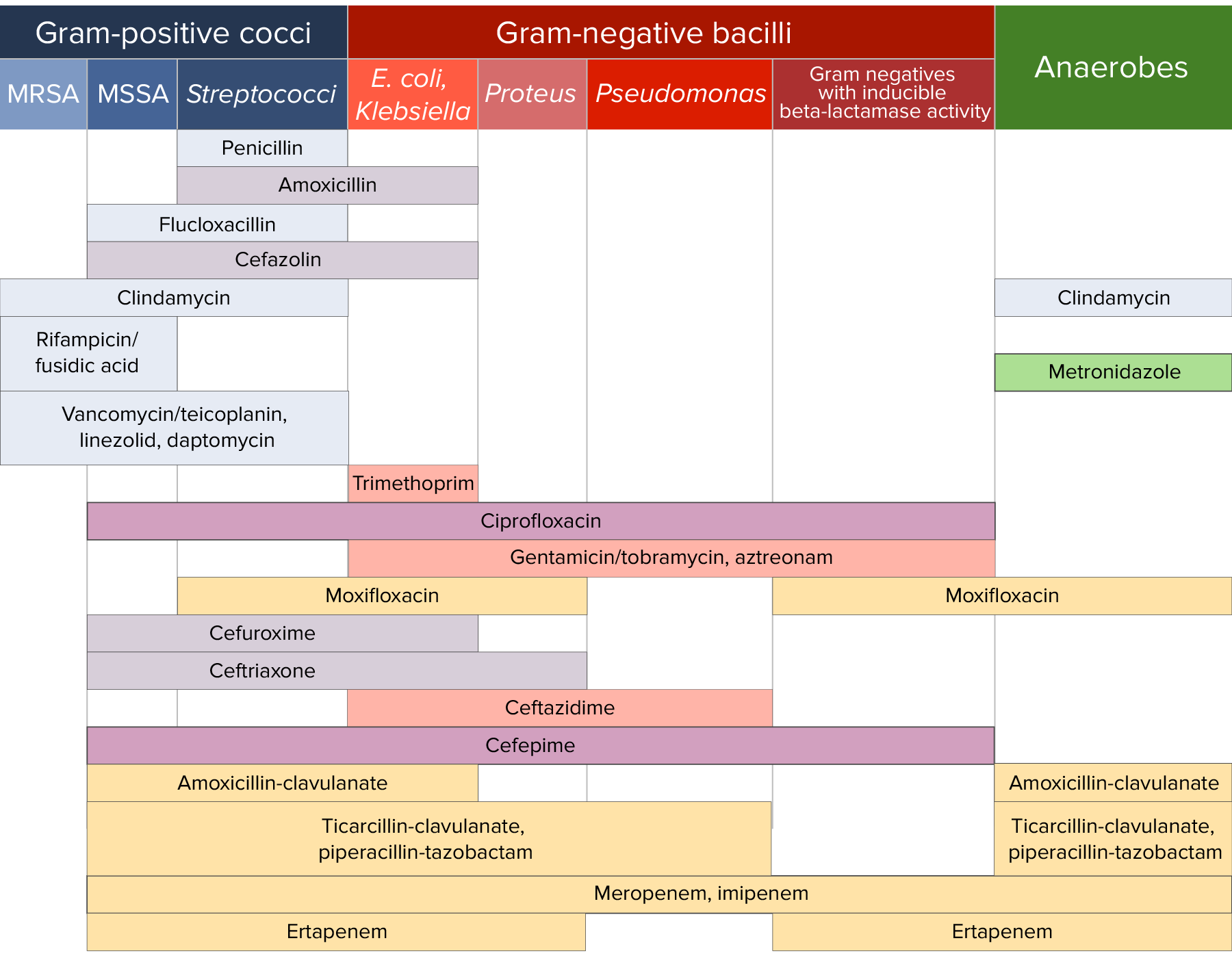
Tabla de sensibilidad a los antibióticos

Sensibilidad a los antibióticos:
Gráfico que compara la cobertura microbiana de diferentes antibióticos para cocos gram-positivos, bacilos gram-negativos y anaerobios.

Imagen por Lecturio. Licencia: CC BY-NC-SA 4.0

Referencias

  1. May, D. B. (2025). Trimethoprim-sulfamethoxazole: An overview. In Mitty, J. (Ed.), UpToDate, Retrieved October 16, 2025, from https://www.uptodate.com/contents/trimethoprim-sulfamethoxazole-an-overview 
  2. Lexicomp Drug Information Sheets (2025). In UpToDate. Retrieved October 16, 2025, from:
    1. Trimethoprim-sulfamethoxazole (co-trimoxazole): https://www.uptodate.com/contents/trimethoprim-sulfamethoxazole-co-trimoxazole-drug-information 
    2. Dapsone: https://www.uptodate.com/contents/dapsone-systemic-drug-information 
    3. Pyrimethamine: https://www.uptodate.com/contents/pyrimethamine-drug-information 
    4. Sulfadiazine: https://www.uptodate.com/contents/sulfadiazine-drug-information 
  3. Kemnic, T. (2022). Trimethoprim sulfamethoxazole. In StatPearls. Retrieved October 16, 2025, from https://www.statpearls.com/articlelibrary/viewarticle/30613/ 
  4. Kurien, G. (2024). Dapsone. In StatPearls. Retrieved October 16, 2025, from https://www.statpearls.com/articlelibrary/viewarticle/20256/

¡Crea tu cuenta gratis o inicia una sesión para seguir leyendo!

Regístrate ahora y obtén acceso gratuito a Lecturio con páginas de concepto, videos médicos y cuestionarios para tu educación médica.

User Reviews

Que tengas una sesión de estudio alegre y navideña 🎁 Ahorra 50% en todos los planes >>

Details