LosLOSNeisseria neutrófilos son un componente importante del sistema inmunológico y juegan un papel importante enENErythema nodosum is an immune-mediated panniculitis (inflammation of the subcutaneous fat) caused by a type IV (delayed-type) hypersensitivity reaction. It commonly manifests in young women as tender, erythematous nodules on the shins.Erythema Nodosum la erradicación de infecciones. Un número bajo de neutrófilos circulantes, denominado neutropeniaNeutropeniaNeutrophils are an important component of the immune system and play a significant role in the eradication of infections. Low numbers of circulating neutrophils, referred to as neutropenia, predispose the body to recurrent infections or sepsis, though patients can also be asymptomatic. Neutropenia, predispone alALAmyloidosis cuerpo a infecciones recurrentes o sepsisSepsisSystemic inflammatory response syndrome with a proven or suspected infectious etiology. When sepsis is associated with organ dysfunction distant from the site of infection, it is called severe sepsis. When sepsis is accompanied by hypotension despite adequate fluid infusion, it is called septic shock.Sepsis and Septic Shock, aunque losLOSNeisseria pacientes también pueden ser asintomáticos. La mayoría de las causas de neutropeniaNeutropeniaNeutrophils are an important component of the immune system and play a significant role in the eradication of infections. Low numbers of circulating neutrophils, referred to as neutropenia, predispose the body to recurrent infections or sepsis, though patients can also be asymptomatic. Neutropenia son adquiridas, incluida la neutropeniaNeutropeniaNeutrophils are an important component of the immune system and play a significant role in the eradication of infections. Low numbers of circulating neutrophils, referred to as neutropenia, predispose the body to recurrent infections or sepsis, though patients can also be asymptomatic. Neutropenia secundaria a infecciones, trastornos de la médula ósea y/o efectos secundarios de diversos medicamentos. El diagnóstico se realiza mediante hemograma y frotis de sangre periférica. El tratamiento está dirigido a prevenir y tratar las infecciones.
La neutropeniaNeutropeniaNeutrophils are an important component of the immune system and play a significant role in the eradication of infections. Low numbers of circulating neutrophils, referred to as neutropenia, predispose the body to recurrent infections or sepsis, though patients can also be asymptomatic. Neutropenia es una disminución enENErythema nodosum is an immune-mediated panniculitis (inflammation of the subcutaneous fat) caused by a type IV (delayed-type) hypersensitivity reaction. It commonly manifests in young women as tender, erythematous nodules on the shins.Erythema Nodosum la cantidad de neutrófilos circulantes enENErythema nodosum is an immune-mediated panniculitis (inflammation of the subcutaneous fat) caused by a type IV (delayed-type) hypersensitivity reaction. It commonly manifests in young women as tender, erythematous nodules on the shins.Erythema Nodosum la sangre, que generalmente se define como un recuento absoluto de neutrófilos de:
< 1 500 células/µL enENErythema nodosum is an immune-mediated panniculitis (inflammation of the subcutaneous fat) caused by a type IV (delayed-type) hypersensitivity reaction. It commonly manifests in young women as tender, erythematous nodules on the shins.Erythema Nodosum adultos y niños > 1 año de edad:
NeutropeniaNeutropeniaNeutrophils are an important component of the immune system and play a significant role in the eradication of infections. Low numbers of circulating neutrophils, referred to as neutropenia, predispose the body to recurrent infections or sepsis, though patients can also be asymptomatic. Neutropenia leve: 1 000–1 500 células/µL
NeutropeniaNeutropeniaNeutrophils are an important component of the immune system and play a significant role in the eradication of infections. Low numbers of circulating neutrophils, referred to as neutropenia, predispose the body to recurrent infections or sepsis, though patients can also be asymptomatic. Neutropenia moderada: 500–1 000 células/µL
NeutropeniaNeutropeniaNeutrophils are an important component of the immune system and play a significant role in the eradication of infections. Low numbers of circulating neutrophils, referred to as neutropenia, predispose the body to recurrent infections or sepsis, though patients can also be asymptomatic. Neutropenia severa: < 500 células/µL
Agranulocitosis: < 100–200 células/µL
< 1 000 células/µL enENErythema nodosum is an immune-mediated panniculitis (inflammation of the subcutaneous fat) caused by a type IV (delayed-type) hypersensitivity reaction. It commonly manifests in young women as tender, erythematous nodules on the shins.Erythema Nodosum niños de 2 semanas a 1 año de edad
< 5 000 células/µL enENErythema nodosum is an immune-mediated panniculitis (inflammation of the subcutaneous fat) caused by a type IV (delayed-type) hypersensitivity reaction. It commonly manifests in young women as tender, erythematous nodules on the shins.Erythema Nodosum lactantes durante sus 1ros días de vida
Neutrófilos
LosLOSNeisseria neutrófilos son losLOSNeisseria leucocitos más comunes. LosLOSNeisseria leucocitos son glóbulos blancos y son un componente importante del sistema inmunológico.
LosLOSNeisseria neutrófilos son leucocitos granulocíticos:
Contienen enzimas, oxidantes y proteínas, dentro de 4 tipos de gránulos, losLOSNeisseria cuales se forman durante la diferenciación de losLOSNeisseria neutrófilos:
Gránulos azurófilos (primarios): contienen proteínas antibacterianas como mieloperoxidasa y CAP37; funcionan principalmente dentro de losLOSNeisseria fagolisosomas
Gránulos específicos: contienen proteínas antibacterianas, como lactoferrina, lipocalina asociada a gelatinasa de neutrófilos, catelicidina y lisozima, y proteasas, como colagenasa
Gránulos de gelatinasa: contienen proteína antibacteriana, lisozima y las proteasas gelatinasa (matriz metaloproteinasa 9) y leucolisina
Gránulos secretores: contienen receptores transmembranales (e.g., receptores del factor de necrosisNecrosisThe death of cells in an organ or tissue due to disease, injury or failure of the blood supply.Ischemic Cell Damage tumoral y receptores de interferón-α) que se integran enENErythema nodosum is an immune-mediated panniculitis (inflammation of the subcutaneous fat) caused by a type IV (delayed-type) hypersensitivity reaction. It commonly manifests in young women as tender, erythematous nodules on the shins.Erythema Nodosum la membrana plasmática de losLOSNeisseria neutrófilos a medida que tiene lugar la exocitosis
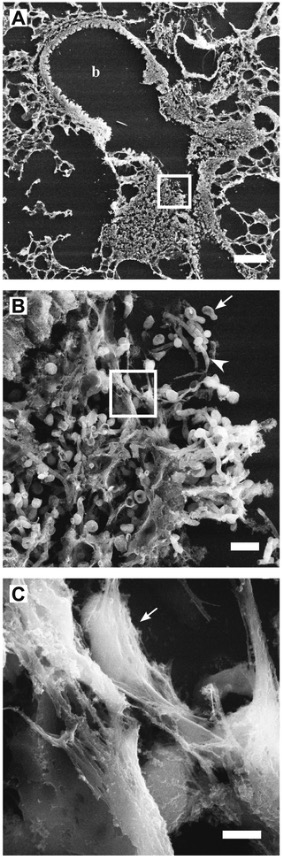
Pueden producir trampas extracelulares de neutrófilos (NETs, por sus siglas enENErythema nodosum is an immune-mediated panniculitis (inflammation of the subcutaneous fat) caused by a type IV (delayed-type) hypersensitivity reaction. It commonly manifests in young women as tender, erythematous nodules on the shins.Erythema Nodosum inglés):
Compuestas por redes de microfibras extracelulares, conformados principalmente por ácido desoxirribonucleico (ADN) de neutrófilos alterados
Las trampas extracelulares de neutrófilos se unen y degradan bacterias y otros patógenos
Otros términos:
A menudo denominados células polimorfonucleares
Neutrófilos más jóvenes e inmaduros conocidos como “bandas” o “células punzantes”
Típicamente, se reportan como un porcentaje de losLOSNeisseria leucocitos enENErythema nodosum is an immune-mediated panniculitis (inflammation of the subcutaneous fat) caused by a type IV (delayed-type) hypersensitivity reaction. It commonly manifests in young women as tender, erythematous nodules on the shins.Erythema Nodosum un hemograma
Recuento absoluto de neutrófilos:
La cantidad de neutrófilos (a diferencia del porcentaje de leucocitos) que circulan por µL de sangre
Niveles normales de recuento absoluto de neutrófilos: varían según la edad
Tabla: Niveles normales de recuento absoluto de neutrófilos por edad
Grupo de edad
Rango normal (células/µL)
Porcentaje de leucocitos que son neutrófilos
1 día de vida
5 000–21 000
Aproximadamente el 60%
1 mes de vida
1 000–9 000
Aproximadamente el 35%
≥ 1 año de edad
1 500‒8 500
Aproximadamente el 31%
≥ 10 años de edad
1 500–8 000
Aproximadamente 40 %–70%
Imágenes de microscopio electrónico de barrido a diferentes aumentos para demostrar trampas extracelulares de neutrófilos (NET): Las secciones son de Candida albicans: pulmones de ratón infectados 24 horas después del desafío intranasal. A: Un bronquiolo (b) colonizado con C. albicans e infiltrado por células inmunitarias del huésped B: imagen de alta resolución del área encuadrada del panel A que muestra el epitelio respiratorio del bronquiolo colonizado con formas de levadura C. albicans (flecha) e hifas (punta de flecha). C: Imagen de alta resolución del área encuadrada del panel B que muestra NET que cubren superficies fúngicas (flecha).
Barra de escala en A = 100 µm, en B = 10 µm y en C = 2 µm
Imagen: “A scanning electron microscope” por Urban CF et al. Licencia: CC BY 2.5
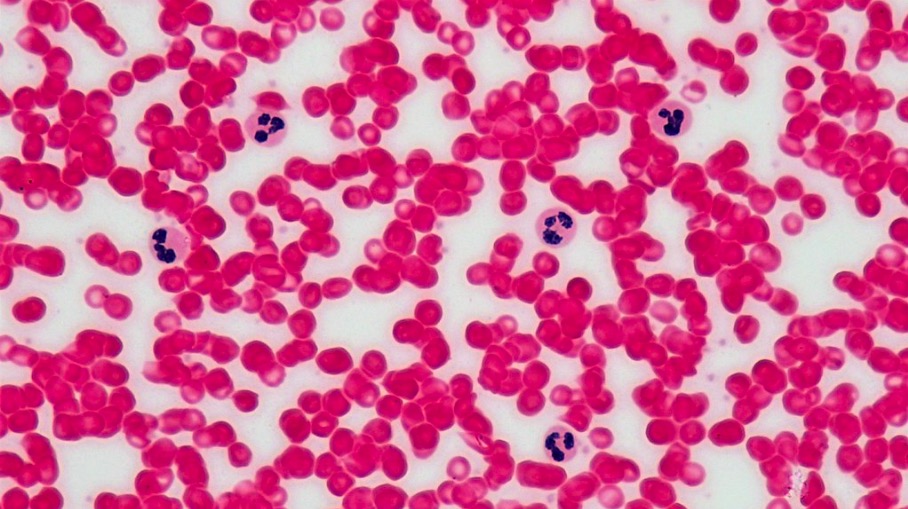
Tinción de Wright de un frotis de sangre periférica que muestra 5 neutrófilos maduros normales (células polimorfonucleares): Obsérvese que cada neutrófilo tiene un núcleo denso dispuesto en 2–5 lóbulos y un citoplasma de color rosa pálido a azul. La granularidad fina del citoplasma solo puede apreciarse a mayor aumento. La vida útil de los neutrófilos en la sangre es de 6–10 horas.
Imagen: “hematoxylin eosin stain” por Berkshire Community College Bioscience Image Library. Licencia: Dominio Público
Importancia clínica de la neutropeniaNeutropeniaNeutrophils are an important component of the immune system and play a significant role in the eradication of infections. Low numbers of circulating neutrophils, referred to as neutropenia, predispose the body to recurrent infections or sepsis, though patients can also be asymptomatic. Neutropenia
La correlación entre el recuento absoluto de neutrófilos y el riesgo infeccioso solo se aplica a las afecciones enENErythema nodosum is an immune-mediated panniculitis (inflammation of the subcutaneous fat) caused by a type IV (delayed-type) hypersensitivity reaction. It commonly manifests in young women as tender, erythematous nodules on the shins.Erythema Nodosum las que la reserva de neutrófilos de la médula ósea está disminuida, como la toxicidad hematológica de la quimioterapia.
Con la neutropeniaNeutropeniaNeutrophils are an important component of the immune system and play a significant role in the eradication of infections. Low numbers of circulating neutrophils, referred to as neutropenia, predispose the body to recurrent infections or sepsis, though patients can also be asymptomatic. Neutropenia leve no relacionada con la quimioterapia (recuento absoluto de neutrófilos, 1 000–1 500 células/µL), no hay un aumento significativo del riesgo de infección.
Con neutropeniaNeutropeniaNeutrophils are an important component of the immune system and play a significant role in the eradication of infections. Low numbers of circulating neutrophils, referred to as neutropenia, predispose the body to recurrent infections or sepsis, though patients can also be asymptomatic. Neutropenia severa (recuento absoluto de neutrófilos, < 500/µL), existe un riesgo significativo de infección; la fiebre debe tratarse con hospitalización y antibióticos parenterales, incluso con pocos signos clínicos de infección.
Epidemiología
Prevalencia:
1%–10% enENErythema nodosum is an immune-mediated panniculitis (inflammation of the subcutaneous fat) caused by a type IV (delayed-type) hypersensitivity reaction. It commonly manifests in young women as tender, erythematous nodules on the shins.Erythema Nodosum individuos sanos, asintomáticos
Mayor prevalencia enENErythema nodosum is an immune-mediated panniculitis (inflammation of the subcutaneous fat) caused by a type IV (delayed-type) hypersensitivity reaction. It commonly manifests in young women as tender, erythematous nodules on the shins.Erythema Nodosum aquellos con ciertas afecciones médicas:
La neutropeniaNeutropeniaNeutrophils are an important component of the immune system and play a significant role in the eradication of infections. Low numbers of circulating neutrophils, referred to as neutropenia, predispose the body to recurrent infections or sepsis, though patients can also be asymptomatic. Neutropenia puede ocurrir como una característica aislada o enENErythema nodosum is an immune-mediated panniculitis (inflammation of the subcutaneous fat) caused by a type IV (delayed-type) hypersensitivity reaction. It commonly manifests in young women as tender, erythematous nodules on the shins.Erythema Nodosum asociación con otras anomalías hematológicas y/o defectos de la médula ósea (e.g., anemiaAnemiaAnemia is a condition in which individuals have low Hb levels, which can arise from various causes. Anemia is accompanied by a reduced number of RBCs and may manifest with fatigue, shortness of breath, pallor, and weakness. Subtypes are classified by the size of RBCs, chronicity, and etiology. Anemia: Overview and Types megaloblástica o leucemia).
Fisiopatología
Revisión de fisiología normal
LosLOSNeisseria neutrófilos maduros son producidos por precursores enENErythema nodosum is an immune-mediated panniculitis (inflammation of the subcutaneous fat) caused by a type IV (delayed-type) hypersensitivity reaction. It commonly manifests in young women as tender, erythematous nodules on the shins.Erythema Nodosum la médula ósea. LosLOSNeisseria neutrófilos se pueden encontrar enENErythema nodosum is an immune-mediated panniculitis (inflammation of the subcutaneous fat) caused by a type IV (delayed-type) hypersensitivity reaction. It commonly manifests in young women as tender, erythematous nodules on the shins.Erythema Nodosum tres compartimentos:
Médula ósea: losLOSNeisseria neutrófilos aquí se pueden clasificar como:
Proliferativos: enENErythema nodosum is an immune-mediated panniculitis (inflammation of the subcutaneous fat) caused by a type IV (delayed-type) hypersensitivity reaction. It commonly manifests in young women as tender, erythematous nodules on the shins.Erythema Nodosum desarrollo
Almacenados: neutrófilos maduros
Sangre: losLOSNeisseria neutrófilos aquí se pueden clasificar como:
Circulantes
Marginados: adheridos alALAmyloidosis endotelio vascular o ubicados dentro del bazo
Tejidos: losLOSNeisseria neutrófilos abandonan la sangre alALAmyloidosis azar después de aproximadamente 6–10 horas para ingresar a losLOSNeisseria tejidos, donde actúan para destruir patógenos o sufrir apoptosisApoptosisA regulated cell death mechanism characterized by distinctive morphologic changes in the nucleus and cytoplasm, including the endonucleolytic cleavage of genomic DNA, at regularly spaced, internucleosomal sites, I.e., DNA fragmentation. It is genetically-programmed and serves as a balance to mitosis in regulating the size of animal tissues and in mediating pathologic processes associated with tumor growth.Ischemic Cell Damage.
Mecanismos que conducen a la neutropeniaNeutropeniaNeutrophils are an important component of the immune system and play a significant role in the eradication of infections. Low numbers of circulating neutrophils, referred to as neutropenia, predispose the body to recurrent infections or sepsis, though patients can also be asymptomatic. Neutropenia
Disminución de la producción/diferenciación enENErythema nodosum is an immune-mediated panniculitis (inflammation of the subcutaneous fat) caused by a type IV (delayed-type) hypersensitivity reaction. It commonly manifests in young women as tender, erythematous nodules on the shins.Erythema Nodosum la médula ósea:
Granulopoyesis ineficaz (e.g., anemiaAnemiaAnemia is a condition in which individuals have low Hb levels, which can arise from various causes. Anemia is accompanied by a reduced number of RBCs and may manifest with fatigue, shortness of breath, pallor, and weakness. Subtypes are classified by the size of RBCs, chronicity, and etiology. Anemia: Overview and Types megaloblástica)
La neutropeniaNeutropeniaNeutrophils are an important component of the immune system and play a significant role in the eradication of infections. Low numbers of circulating neutrophils, referred to as neutropenia, predispose the body to recurrent infections or sepsis, though patients can also be asymptomatic. Neutropenia es comúnmente adquirida, a menudo después de infecciones o como efecto secundario de varios medicamentos diferentes. EnENErythema nodosum is an immune-mediated panniculitis (inflammation of the subcutaneous fat) caused by a type IV (delayed-type) hypersensitivity reaction. It commonly manifests in young women as tender, erythematous nodules on the shins.Erythema Nodosum raras ocasiones, la neutropeniaNeutropeniaNeutrophils are an important component of the immune system and play a significant role in the eradication of infections. Low numbers of circulating neutrophils, referred to as neutropenia, predispose the body to recurrent infections or sepsis, though patients can also be asymptomatic. Neutropenia puede ser “primaria” o heredada congénitamente como parte de un síndrome menos común.
NeutropeniaNeutropeniaNeutrophils are an important component of the immune system and play a significant role in the eradication of infections. Low numbers of circulating neutrophils, referred to as neutropenia, predispose the body to recurrent infections or sepsis, though patients can also be asymptomatic. Neutropenia adquirida: no inducida por medicamentos
Infecciones (forma más común de neutropeniaNeutropeniaNeutrophils are an important component of the immune system and play a significant role in the eradication of infections. Low numbers of circulating neutrophils, referred to as neutropenia, predispose the body to recurrent infections or sepsis, though patients can also be asymptomatic. Neutropenia adquirida):
Virales, incluyendo:
Citomegalovirus (CMV)
VirusVirusViruses are infectious, obligate intracellular parasites composed of a nucleic acid core surrounded by a protein capsid. Viruses can be either naked (non-enveloped) or enveloped. The classification of viruses is complex and based on many factors, including type and structure of the nucleoid and capsid, the presence of an envelope, the replication cycle, and the host range. Virology del Ebstein-Barr (EBVEBVEpstein-barr virus (EBV) is a linear, double-stranded DNA virus belonging to the herpesviridae family. This highly prevalent virus is mostly transmitted through contact with oropharyngeal secretions from an infected individual. The virus can infect epithelial cells and B lymphocytes, where it can undergo lytic replication or latency.Epstein-Barr Virus, por sus siglas enENErythema nodosum is an immune-mediated panniculitis (inflammation of the subcutaneous fat) caused by a type IV (delayed-type) hypersensitivity reaction. It commonly manifests in young women as tender, erythematous nodules on the shins.Erythema Nodosum inglés)
InfluenzaInfluenzaInfluenza viruses are members of the Orthomyxoviridae family and the causative organisms of influenza, a highly contagious febrile respiratory disease. There are 3 primary influenza viruses (A, B, and C) and various subtypes, which are classified based on their virulent surface antigens, hemagglutinin (HA) and neuraminidase (NA). Influenza typically presents with a fever, myalgia, headache, and symptoms of an upper respiratory infection. Influenza Viruses/Influenza
Hepatitis viral
VirusVirusViruses are infectious, obligate intracellular parasites composed of a nucleic acid core surrounded by a protein capsid. Viruses can be either naked (non-enveloped) or enveloped. The classification of viruses is complex and based on many factors, including type and structure of the nucleoid and capsid, the presence of an envelope, the replication cycle, and the host range. Virology de inmunodeficiencia humana (VIH)
Bacterianas, incluyendo:
SepsisSepsisSystemic inflammatory response syndrome with a proven or suspected infectious etiology. When sepsis is associated with organ dysfunction distant from the site of infection, it is called severe sepsis. When sepsis is accompanied by hypotension despite adequate fluid infusion, it is called septic shock.Sepsis and Septic Shock bacteriana
TuberculosisTuberculosisTuberculosis (TB) is an infectious disease caused by Mycobacterium tuberculosis complex bacteria. The bacteria usually attack the lungs but can also damage other parts of the body. Approximately 30% of people around the world are infected with this pathogen, with the majority harboring a latent infection. Tuberculosis spreads through the air when a person with active pulmonary infection coughs or sneezes. Tuberculosis
Infecciones por rickettsias
Parásitos:
ToxoplasmosisToxoplasmosisToxoplasmosis is an infectious disease caused by Toxoplasma gondii, an obligate intracellular protozoan parasite. Felines are the definitive host, but transmission to humans can occur through contact with cat feces or the consumption of contaminated foods. The clinical presentation and complications depend on the host’s immune status. Toxoplasma/Toxoplasmosis
MalariaMalariaMalaria is an infectious parasitic disease affecting humans and other animals. Most commonly transmitted via the bite of a female Anopheles mosquito infected with microorganisms of the Plasmodium genus. Patients present with fever, chills, myalgia, headache, and diaphoresis.Plasmodium/Malaria
AnemiaAnemiaAnemia is a condition in which individuals have low Hb levels, which can arise from various causes. Anemia is accompanied by a reduced number of RBCs and may manifest with fatigue, shortness of breath, pallor, and weakness. Subtypes are classified by the size of RBCs, chronicity, and etiology. Anemia: Overview and Types aplásica
Radiación ionizante
Infiltración maligna
Medicamentos (ver más abajo)
Hiperesplenismo
Causas nutricionales:
Deficiencia de vitamina B12 o folato (anemiaAnemiaAnemia is a condition in which individuals have low Hb levels, which can arise from various causes. Anemia is accompanied by a reduced number of RBCs and may manifest with fatigue, shortness of breath, pallor, and weakness. Subtypes are classified by the size of RBCs, chronicity, and etiology. Anemia: Overview and Types megaloblástica; puede verse enENErythema nodosum is an immune-mediated panniculitis (inflammation of the subcutaneous fat) caused by a type IV (delayed-type) hypersensitivity reaction. It commonly manifests in young women as tender, erythematous nodules on the shins.Erythema Nodosum el alcoholismo)
Deficiencia de cobre
Proceso autoinmune y/o asociado a trastornos reumatológicos:
LES
Artritis reumatoide
Síndrome de Sjögren
Enfermedad de Crohn
Granulomatosis con poliangeitis
Reacciones transfusionales
Activación del complemento:
Hemodiálisis con membranas no biocompatibles
Síndrome de dificultad respiratoria aguda
NeutropeniaNeutropeniaNeutrophils are an important component of the immune system and play a significant role in the eradication of infections. Low numbers of circulating neutrophils, referred to as neutropenia, predispose the body to recurrent infections or sepsis, though patients can also be asymptomatic. Neutropenia idiopática crónica
NeutropeniaNeutropeniaNeutrophils are an important component of the immune system and play a significant role in the eradication of infections. Low numbers of circulating neutrophils, referred to as neutropenia, predispose the body to recurrent infections or sepsis, though patients can also be asymptomatic. Neutropenia adquirida: inducida por medicamentos
Algunos medicamentos, incluidos muchos agentes de quimioterapia, producen mielosupresión predecible dependiente de la dosis. Muchos otros medicamentos están asociados con neutropeniaNeutropeniaNeutrophils are an important component of the immune system and play a significant role in the eradication of infections. Low numbers of circulating neutrophils, referred to as neutropenia, predispose the body to recurrent infections or sepsis, though patients can also be asymptomatic. Neutropenia aislada grave (conocida como reacción idiosincrásica a medicamentos), que generalmente ocurre dentro de losLOSNeisseria 3 meses posteriores alALAmyloidosis inicio del medicamento.
Medicamentos asociados con mielosupresión (lista parcial, incluye muchos agentes de quimioterapia e inmunosupresores):
Metotrexato
Ciclofosfamida
Cisplatino, carboplatino
Etopósido
Doxorrubicina
Colchicina
Azatioprina
GanciclovirGanciclovirAn acyclovir analog that is a potent inhibitor of the herpesvirus family including cytomegalovirus. Ganciclovir is used to treat complications from aids-associated cytomegalovirus infections.Antivirals for Herpes Virus
Medicamentos asociados con la neutropeniaNeutropeniaNeutrophils are an important component of the immune system and play a significant role in the eradication of infections. Low numbers of circulating neutrophils, referred to as neutropenia, predispose the body to recurrent infections or sepsis, though patients can also be asymptomatic. Neutropenia por reacción idiosincrásica a medicamentos (lista parcial, losLOSNeisseria más comunes están resaltados):
Antivirales: aciclovir, oseltamivirOseltamivirAn acetamido cyclohexene that is a structural homolog of sialic acid and inhibits neuraminidase.Antivirals for Influenza, ganciclovirGanciclovirAn acyclovir analog that is a potent inhibitor of the herpesvirus family including cytomegalovirus. Ganciclovir is used to treat complications from aids-associated cytomegalovirus infections.Antivirals for Herpes Virus
Antiinflamatorios: antiinflamatorios no esteroideos (AINE), sulfasalazina, penicilamina
Tionamidas (medicamentos para la tiroides): metimazol, propiltiouracilo
Medicamentos cardiovasculares: ticlopidina, procainamida, propranololPropranololA widely used non-cardioselective beta-adrenergic antagonist. Propranolol has been used for myocardial infarction; arrhythmia; angina pectoris; hypertension; hyperthyroidism; migraine; pheochromocytoma; and anxiety but adverse effects instigate replacement by newer drugs.Antiadrenergic Drugs, digoxina, inhibidores de la enzima convertidora de angiotensina (IECA), hidralazina
Agentes anticancerosos no mielosupresores: rituximabRituximabA murine-derived monoclonal antibody and antineoplastic agent that binds specifically to the cd20 antigen and is used in the treatment of leukemia; lymphoma and rheumatoid arthritis.Immunosuppressants, inhibidores de la tirosina cinasa
Neutropenias congénitas o primarias
La neutropeniaNeutropeniaNeutrophils are an important component of the immune system and play a significant role in the eradication of infections. Low numbers of circulating neutrophils, referred to as neutropenia, predispose the body to recurrent infections or sepsis, though patients can also be asymptomatic. Neutropenia se asocia con múltiples síndromes poco comunes. Ejemplos incluyen:
NeutropeniaNeutropeniaNeutrophils are an important component of the immune system and play a significant role in the eradication of infections. Low numbers of circulating neutrophils, referred to as neutropenia, predispose the body to recurrent infections or sepsis, though patients can also be asymptomatic. Neutropenia familiar benigna (étnica)
NeutropeniaNeutropeniaNeutrophils are an important component of the immune system and play a significant role in the eradication of infections. Low numbers of circulating neutrophils, referred to as neutropenia, predispose the body to recurrent infections or sepsis, though patients can also be asymptomatic. Neutropenia hereditaria (o congénita)
Síndrome de Kostmann
NeutropeniaNeutropeniaNeutrophils are an important component of the immune system and play a significant role in the eradication of infections. Low numbers of circulating neutrophils, referred to as neutropenia, predispose the body to recurrent infections or sepsis, though patients can also be asymptomatic. Neutropenia cíclica
LosLOSNeisseria pacientes con neutropeniaNeutropeniaNeutrophils are an important component of the immune system and play a significant role in the eradication of infections. Low numbers of circulating neutrophils, referred to as neutropenia, predispose the body to recurrent infections or sepsis, though patients can also be asymptomatic. Neutropenia serán asintomáticos, presentarán infecciones o presentarán síntomas asociados con la causa subyacente de su neutropeniaNeutropeniaNeutrophils are an important component of the immune system and play a significant role in the eradication of infections. Low numbers of circulating neutrophils, referred to as neutropenia, predispose the body to recurrent infections or sepsis, though patients can also be asymptomatic. Neutropenia.
Infecciones
LosLOSNeisseria síntomas primarios relacionados directamente con la neutropeniaNeutropeniaNeutrophils are an important component of the immune system and play a significant role in the eradication of infections. Low numbers of circulating neutrophils, referred to as neutropenia, predispose the body to recurrent infections or sepsis, though patients can also be asymptomatic. Neutropenia involucran infecciones. Las infecciones virales pueden causar neutropeniaNeutropeniaNeutrophils are an important component of the immune system and play a significant role in the eradication of infections. Low numbers of circulating neutrophils, referred to as neutropenia, predispose the body to recurrent infections or sepsis, though patients can also be asymptomatic. Neutropenia, mientras que losLOSNeisseria pacientes con neutropeniaNeutropeniaNeutrophils are an important component of the immune system and play a significant role in the eradication of infections. Low numbers of circulating neutrophils, referred to as neutropenia, predispose the body to recurrent infections or sepsis, though patients can also be asymptomatic. Neutropenia moderada a grave tienen más probabilidades de desarrollar una infección bacteriana o fúngica. LosLOSNeisseria pacientes con neutropeniaNeutropeniaNeutrophils are an important component of the immune system and play a significant role in the eradication of infections. Low numbers of circulating neutrophils, referred to as neutropenia, predispose the body to recurrent infections or sepsis, though patients can also be asymptomatic. Neutropenia pueden presentar:
Infecciones recurrentes (e.g., otitis media recurrente)
Infecciones oportunistas (e.g., erupción por cándida)
Infecciones graves con neutropeniaNeutropeniaNeutrophils are an important component of the immune system and play a significant role in the eradication of infections. Low numbers of circulating neutrophils, referred to as neutropenia, predispose the body to recurrent infections or sepsis, though patients can also be asymptomatic. Neutropenia severa (recuento absoluto de neutrófilos < 200 células/µL):
SepsisSepsisSystemic inflammatory response syndrome with a proven or suspected infectious etiology. When sepsis is associated with organ dysfunction distant from the site of infection, it is called severe sepsis. When sepsis is accompanied by hypotension despite adequate fluid infusion, it is called septic shock.Sepsis and Septic Shock
Infecciones gastrointestinales y pulmonares potencialmente mortales
Organismos más comunes que causan infecciones recurrentes, oportunistas y/o graves:
Bacilos gram-negativos:
Escherichia coliEscherichia coliThe gram-negative bacterium Escherichia coli is a key component of the human gut microbiota. Most strains of E. coli are avirulent, but occasionally they escape the GI tract, infecting the urinary tract and other sites. Less common strains of E. coli are able to cause disease within the GI tract, most commonly presenting as abdominal pain and diarrhea. Escherichia coli
KlebsiellaKlebsiellaKlebsiella are encapsulated gram-negative, lactose-fermenting bacilli. They form pink colonies on MacConkey agar due to lactose fermentation. The main virulence factor is a polysaccharide capsule. Klebsiella pneumoniae is the most important pathogenic species.Klebsiella spp.
Pseudomonas aeruginosaPseudomonas aeruginosaA species of gram-negative, aerobic, rod-shaped bacteria commonly isolated from clinical specimens (wound, burn, and urinary tract infections). It is also found widely distributed in soil and water. P. Aeruginosa is a major agent of nosocomial infection.Pseudomonas
Cocos gram-positivos (especialmente enENErythema nodosum is an immune-mediated panniculitis (inflammation of the subcutaneous fat) caused by a type IV (delayed-type) hypersensitivity reaction. It commonly manifests in young women as tender, erythematous nodules on the shins.Erythema Nodosum pacientes con catéteres permanentes):
StaphylococcusStaphylococcusStaphylococcus is a medically important genera of Gram-positive, aerobic cocci. These bacteria form clusters resembling grapes on culture plates. Staphylococci are ubiquitous for humans, and many strains compose the normal skin flora.Staphylococcus spp.
Streptococcus viridansStreptococcus viridansA large heterogeneous group of mostly alpha-hemolytic streptococci. They colonize the respiratory tract at birth and generally have a low degree of pathogenicity. This group of species includes Streptococcus mitis; Streptococcus mutans; Streptococcus oralis; Streptococcus sanguis; Streptococcus sobrinus; and the Streptococcus milleri group. The latter are often beta-hemolytic and commonly produce invasive pyogenic infections including brain and abdominal abscesses.Brain Abscess
Cándida spp., especialmente después de que losLOSNeisseria pacientes neutropénicos reciban tratamiento con antibióticos de amplio espectro
LosLOSNeisseria hallazgos clínicos dependerán de la localización de la infección y el organismo causal y, con mayor frecuencia, pueden incluir:
Fiebre
Fatiga
Linfadenopatía
Hallazgos enENErythema nodosum is an immune-mediated panniculitis (inflammation of the subcutaneous fat) caused by a type IV (delayed-type) hypersensitivity reaction. It commonly manifests in young women as tender, erythematous nodules on the shins.Erythema Nodosum la piel:
Erupción
Celulitis, úlceras y/o abscesos
Ictericia (puede sugerir enfermedad hepática secundaria a hepatitis viral)
TosTOSThoracic outlet syndrome (TOS) is a broad term used for a spectrum of syndromes related to the general region of the thoracic outlet, which involves the compression or irritation of elements of the brachial plexus, subclavian artery, or subclavian vein.Thoracic Outlet Syndrome
Nota:losLOSNeisseria pacientes no tienen un mayor riesgo de infecciones virales o parasitarias, ya que losLOSNeisseria neutrófilos no neutralizan estas infecciones.
Otros hallazgos enENErythema nodosum is an immune-mediated panniculitis (inflammation of the subcutaneous fat) caused by a type IV (delayed-type) hypersensitivity reaction. It commonly manifests in young women as tender, erythematous nodules on the shins.Erythema NodosumlosLOSNeisseria antecedentes clínicos y el examen físico
Puede ser asintomático
Antecedentes de medicamentos que pueden causar neutropeniaNeutropeniaNeutrophils are an important component of the immune system and play a significant role in the eradication of infections. Low numbers of circulating neutrophils, referred to as neutropenia, predispose the body to recurrent infections or sepsis, though patients can also be asymptomatic. Neutropenia
Síntomas relacionados con la causa principal, por ejemplo:
Fatiga y disnea debido a anemiaAnemiaAnemia is a condition in which individuals have low Hb levels, which can arise from various causes. Anemia is accompanied by a reduced number of RBCs and may manifest with fatigue, shortness of breath, pallor, and weakness. Subtypes are classified by the size of RBCs, chronicity, and etiology. Anemia: Overview and Types concurrente
Diagnóstico
Estudios de laboratorio
Hemograma con diferencial:
Determina la gravedad de la neutropeniaNeutropeniaNeutrophils are an important component of the immune system and play a significant role in the eradication of infections. Low numbers of circulating neutrophils, referred to as neutropenia, predispose the body to recurrent infections or sepsis, though patients can also be asymptomatic. Neutropenia
Determina si la neutropeniaNeutropeniaNeutrophils are an important component of the immune system and play a significant role in the eradication of infections. Low numbers of circulating neutrophils, referred to as neutropenia, predispose the body to recurrent infections or sepsis, though patients can also be asymptomatic. Neutropenia es aislada o está asociada con otras anomalías hematológicas (ayuda a especificar el diagnóstico diferencial); ejemplos incluyen:
Eosinofilia → reacciones a medicamentos/alergias o infecciones parasitarias
Linfocitosis → leucemias, linfomas
Linfopenia → inmunodeficiencia
AnemiaAnemiaAnemia is a condition in which individuals have low Hb levels, which can arise from various causes. Anemia is accompanied by a reduced number of RBCs and may manifest with fatigue, shortness of breath, pallor, and weakness. Subtypes are classified by the size of RBCs, chronicity, and etiology. Anemia: Overview and Types megaloblástica → deficiencia de folato o vitamina B12
Frotis de sangre periférica:
Confirma el número reducido de neutrófilos
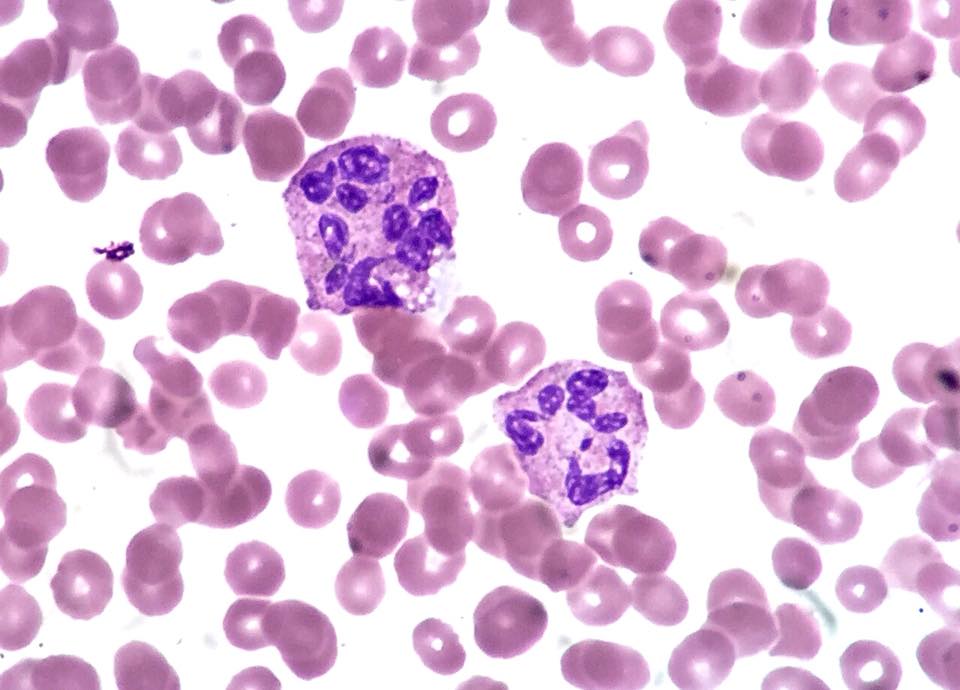
Neutrófilos hipersegmentados → deficiencia de folato o vitamina B12
Linfocitos atípicos → causa viral
Anomalías compatibles con leucemias (e.g., linfocitos manchados, proyecciones similares a filamentos o gránulos azurofílicos)
Velocidad de eritrosedimentación (ESRESRSoft Tissue Abscess, por sus siglas enENErythema nodosum is an immune-mediated panniculitis (inflammation of the subcutaneous fat) caused by a type IV (delayed-type) hypersensitivity reaction. It commonly manifests in young women as tender, erythematous nodules on the shins.Erythema Nodosum inglés) y proteína C reactiva (CRP, por sus siglas enENErythema nodosum is an immune-mediated panniculitis (inflammation of the subcutaneous fat) caused by a type IV (delayed-type) hypersensitivity reaction. It commonly manifests in young women as tender, erythematous nodules on the shins.Erythema Nodosum inglés): dado que losLOSNeisseria hallazgos clásicos de infección o inflamación pueden no ser aparentes
Otras pruebas de laboratorio a considerar según losLOSNeisseria antecedentes clínicos y losLOSNeisseria hallazgos del examen:
Hemocultivo y urocultivo si hay fiebre
Análisis de heces si el paciente tiene diarrea infecciosa
Pruebas de causas reumatológicas:
Anticuerpos antinucleares
Anticuerpos anti-ADN
Niveles de complemento
Detección de deficiencias nutricionales:
Cobre sérico
Niveles de folato y vitamina B12
Detección de infección por VIH
Pruebas genéticas si se sospechan síndromes congénitos
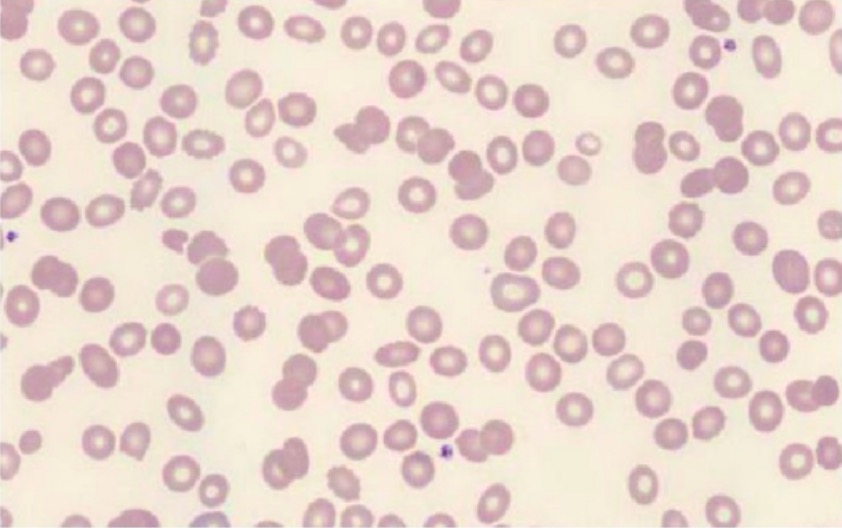
Frotis de sangre periférica de un paciente con lupus eritematoso sistémico (LES) que muestra escasez de neutrófilos
Imagen: “Peripheral blood smear” por Melissa Zhao. Licencia: CC BY 4.0
Frotis de sangre periférica de neutrófilos hipersegmentados observados en la deficiencia de folato o vitamina B12
Imagen: “Hypersegmented Neutrophils (36831145373)” por Ed Uthman. Licencia: CC BY 2.0
Otras pruebas
Otras pruebas a considerar según la presentación clínica incluyen:
Radiografía de tórax para evaluar si hay infección o malignidad
Ultrasonido o tomografía computarizada (TC) del abdomen para obtener imágenes del hígado y el bazo
Aspiración y biopsia de médula ósea si se sospecha malignidad
Tratamiento
Tratamiento general
El tratamiento depende de la causa y el grado de la neutropeniaNeutropeniaNeutrophils are an important component of the immune system and play a significant role in the eradication of infections. Low numbers of circulating neutrophils, referred to as neutropenia, predispose the body to recurrent infections or sepsis, though patients can also be asymptomatic. Neutropenia.
Suspender medicamentos causales.
Reponer las deficiencias vitamínicas causales (vitamina B12, folato y/o cobre).
Supervisar el recuento absoluto de neutrófilos enENErythema nodosum is an immune-mediated panniculitis (inflammation of the subcutaneous fat) caused by a type IV (delayed-type) hypersensitivity reaction. It commonly manifests in young women as tender, erythematous nodules on the shins.Erythema Nodosum hemogramas seriales:
Para la mayoría de losLOSNeisseria pacientes, la neutropeniaNeutropeniaNeutrophils are an important component of the immune system and play a significant role in the eradication of infections. Low numbers of circulating neutrophils, referred to as neutropenia, predispose the body to recurrent infections or sepsis, though patients can also be asymptomatic. Neutropenia se debe a una infección o medicación
Repetir el hemograma para asegurar la resolución de la neutropeniaNeutropeniaNeutrophils are an important component of the immune system and play a significant role in the eradication of infections. Low numbers of circulating neutrophils, referred to as neutropenia, predispose the body to recurrent infections or sepsis, though patients can also be asymptomatic. Neutropenia luego de la mejoría de la infección/discontinuación de losLOSNeisseria agentes agresores
Si la neutropeniaNeutropeniaNeutrophils are an important component of the immune system and play a significant role in the eradication of infections. Low numbers of circulating neutrophils, referred to as neutropenia, predispose the body to recurrent infections or sepsis, though patients can also be asymptomatic. Neutropenia persiste, se indica un estudio adicional
Infecciones:
Tratar las infecciones con losLOSNeisseria agentes apropiados
NeutropeniaNeutropeniaNeutrophils are an important component of the immune system and play a significant role in the eradication of infections. Low numbers of circulating neutrophils, referred to as neutropenia, predispose the body to recurrent infections or sepsis, though patients can also be asymptomatic. Neutropenia asociada a autoinmunidad: Considerar inmunoglobulina intravenosa y/o esteroides si la neutropeniaNeutropeniaNeutrophils are an important component of the immune system and play a significant role in the eradication of infections. Low numbers of circulating neutrophils, referred to as neutropenia, predispose the body to recurrent infections or sepsis, though patients can also be asymptomatic. Neutropenia es severa y debido a su condición autoinmune.
Factores estimulantes de colonias de granulocitos:
Estimulan naturalmente la producción de neutrófilos
Ejemplos: filgrastimFilgrastimA recombinant granulocyte colony-stimulating factor (G-CSF) that is used in the treatment and prevention of neutropenia, preparation and collection of blood progenitor cells, and for use in peripheral blood stem cell transplantation.Hematopoietic Growth Factors, pegfilgrastimPegfilgrastimHematopoietic Growth Factors
Indicados enENErythema nodosum is an immune-mediated panniculitis (inflammation of the subcutaneous fat) caused by a type IV (delayed-type) hypersensitivity reaction. It commonly manifests in young women as tender, erythematous nodules on the shins.Erythema Nodosum:
NeutropeniaNeutropeniaNeutrophils are an important component of the immune system and play a significant role in the eradication of infections. Low numbers of circulating neutrophils, referred to as neutropenia, predispose the body to recurrent infections or sepsis, though patients can also be asymptomatic. Neutropenia febril aguda
Uso profiláctico enENErythema nodosum is an immune-mediated panniculitis (inflammation of the subcutaneous fat) caused by a type IV (delayed-type) hypersensitivity reaction. It commonly manifests in young women as tender, erythematous nodules on the shins.Erythema Nodosum pacientes de quimioterapia con riesgo de neutropeniaNeutropeniaNeutrophils are an important component of the immune system and play a significant role in the eradication of infections. Low numbers of circulating neutrophils, referred to as neutropenia, predispose the body to recurrent infections or sepsis, though patients can also be asymptomatic. Neutropenia
Niños con neutropeniaNeutropeniaNeutrophils are an important component of the immune system and play a significant role in the eradication of infections. Low numbers of circulating neutrophils, referred to as neutropenia, predispose the body to recurrent infections or sepsis, though patients can also be asymptomatic. Neutropenia congénita grave y/o insuficiencia de la médula ósea
NeutropeniaNeutropeniaNeutrophils are an important component of the immune system and play a significant role in the eradication of infections. Low numbers of circulating neutrophils, referred to as neutropenia, predispose the body to recurrent infections or sepsis, though patients can also be asymptomatic. Neutropenia cíclica si el recuento absoluto de neutrófilos < 200 e infecciones están presentes
Trasplante de médula ósea: puede ser curativo para niños con síndrome de Kostmann
Indicaciones para derivación inmediata a hematología:
Blastos u otros hallazgos que sugieran malignidad hematológica observada enENErythema nodosum is an immune-mediated panniculitis (inflammation of the subcutaneous fat) caused by a type IV (delayed-type) hypersensitivity reaction. It commonly manifests in young women as tender, erythematous nodules on the shins.Erythema Nodosum frotis de sangre periférica
Recuento absoluto de neutrófilos < 200
Pancitopenia
Tratamiento de la fiebre neutropénica enENErythema nodosum is an immune-mediated panniculitis (inflammation of the subcutaneous fat) caused by a type IV (delayed-type) hypersensitivity reaction. It commonly manifests in young women as tender, erythematous nodules on the shins.Erythema Nodosum pacientes con cáncer
La fiebre neutropénica es la complicación potencialmente mortal más común de la terapia contra el cáncer.
La terapia antibiótica empírica enENErythema nodosum is an immune-mediated panniculitis (inflammation of the subcutaneous fat) caused by a type IV (delayed-type) hypersensitivity reaction. It commonly manifests in young women as tender, erythematous nodules on the shins.Erythema Nodosum la presentación es imprescindible para mejorar losLOSNeisseria resultados y disminuir la mortalidad.
Un organismo causal se identifica solo ⅓ de las veces y, por lo tanto, losLOSNeisseria antibióticos están destinados a tratar un amplio espectro de patógenos esperados.
Se haHAHemolytic anemia (HA) is the term given to a large group of anemias that are caused by the premature destruction/hemolysis of circulating red blood cells (RBCs). Hemolysis can occur within (intravascular hemolysis) or outside the blood vessels (extravascular hemolysis).Hemolytic Anemia demostrado que losLOSNeisseria antibióticos profilácticos y el apoyo del factor de crecimiento alALAmyloidosis inicio de la neutropeniaNeutropeniaNeutrophils are an important component of the immune system and play a significant role in the eradication of infections. Low numbers of circulating neutrophils, referred to as neutropenia, predispose the body to recurrent infections or sepsis, though patients can also be asymptomatic. Neutropenia benefician solo a un pequeño subgrupo de pacientes con cáncer de alto riesgo que reciben quimioterapia.
Diagnóstico Diferencial de las Neutropenias Primarias
NeutropeniaNeutropeniaNeutrophils are an important component of the immune system and play a significant role in the eradication of infections. Low numbers of circulating neutrophils, referred to as neutropenia, predispose the body to recurrent infections or sepsis, though patients can also be asymptomatic. Neutropenia familiar benigna (étnica): causa hereditaria de neutropeniaNeutropeniaNeutrophils are an important component of the immune system and play a significant role in the eradication of infections. Low numbers of circulating neutrophils, referred to as neutropenia, predispose the body to recurrent infections or sepsis, though patients can also be asymptomatic. Neutropenia leve a moderada, que se observa con mayor frecuencia enENErythema nodosum is an immune-mediated panniculitis (inflammation of the subcutaneous fat) caused by a type IV (delayed-type) hypersensitivity reaction. It commonly manifests in young women as tender, erythematous nodules on the shins.Erythema Nodosum personas de ascendencia africana. Estos pacientes pueden no generar leucocitosis durante la infección, pero por lo demás su presentación es normal. Generan fiebre y taquicardia durante la infección (similar a losLOSNeisseria controles), no tienen una mayor incidencia de infección y no tienen un mayor riesgo de neutropeniaNeutropeniaNeutrophils are an important component of the immune system and play a significant role in the eradication of infections. Low numbers of circulating neutrophils, referred to as neutropenia, predispose the body to recurrent infections or sepsis, though patients can also be asymptomatic. Neutropenia febril secundaria a la terapia mielosupresora. Las reservas de médula ósea enENErythema nodosum is an immune-mediated panniculitis (inflammation of the subcutaneous fat) caused by a type IV (delayed-type) hypersensitivity reaction. It commonly manifests in young women as tender, erythematous nodules on the shins.Erythema Nodosum estos pacientes son normales.
NeutropeniaNeutropeniaNeutrophils are an important component of the immune system and play a significant role in the eradication of infections. Low numbers of circulating neutrophils, referred to as neutropenia, predispose the body to recurrent infections or sepsis, though patients can also be asymptomatic. Neutropenia hereditaria/neutropeniaNeutropeniaNeutrophils are an important component of the immune system and play a significant role in the eradication of infections. Low numbers of circulating neutrophils, referred to as neutropenia, predispose the body to recurrent infections or sepsis, though patients can also be asymptomatic. Neutropenia congénita: afección resultante de mutaciones enENErythema nodosum is an immune-mediated panniculitis (inflammation of the subcutaneous fat) caused by a type IV (delayed-type) hypersensitivity reaction. It commonly manifests in young women as tender, erythematous nodules on the shins.Erythema Nodosum uno de varios genesGenesA category of nucleic acid sequences that function as units of heredity and which code for the basic instructions for the development, reproduction, and maintenance of organisms.DNA Types and Structure, típicamente heredada de forma autosómica dominante y que a menudo conduce a una neutropeniaNeutropeniaNeutrophils are an important component of the immune system and play a significant role in the eradication of infections. Low numbers of circulating neutrophils, referred to as neutropenia, predispose the body to recurrent infections or sepsis, though patients can also be asymptomatic. Neutropenia grave. Esta afección es más común enENErythema nodosum is an immune-mediated panniculitis (inflammation of the subcutaneous fat) caused by a type IV (delayed-type) hypersensitivity reaction. It commonly manifests in young women as tender, erythematous nodules on the shins.Erythema Nodosum lactantes y niños pequeños. LosLOSNeisseria síntomas incluyen llagas enENErythema nodosum is an immune-mediated panniculitis (inflammation of the subcutaneous fat) caused by a type IV (delayed-type) hypersensitivity reaction. It commonly manifests in young women as tender, erythematous nodules on the shins.Erythema Nodosum la boca, fiebre frecuente, neumonía, infecciones de oído y llagas enENErythema nodosum is an immune-mediated panniculitis (inflammation of the subcutaneous fat) caused by a type IV (delayed-type) hypersensitivity reaction. It commonly manifests in young women as tender, erythematous nodules on the shins.Erythema Nodosum el recto. Si la afección no se trata de inmediato, un niño puede comenzar a perder dientes como resultado de infecciones graves de las encías.
Síndrome de Kostmann: causa hereditaria de neutropeniaNeutropeniaNeutrophils are an important component of the immune system and play a significant role in the eradication of infections. Low numbers of circulating neutrophils, referred to as neutropenia, predispose the body to recurrent infections or sepsis, though patients can also be asymptomatic. Neutropenia congénita severa (recuento absoluto de neutrófilos es a menudo < 200). Se hereda con un patrón autosómico recesivo, aunque se desconocen losLOSNeisseriagenesGenesA category of nucleic acid sequences that function as units of heredity and which code for the basic instructions for the development, reproduction, and maintenance of organisms.DNA Types and Structure causantes. El síndrome de Kostmann es una afección agresiva enENErythema nodosum is an immune-mediated panniculitis (inflammation of the subcutaneous fat) caused by a type IV (delayed-type) hypersensitivity reaction. It commonly manifests in young women as tender, erythematous nodules on the shins.Erythema Nodosum la que losLOSNeisseria pacientes no pueden producir neutrófilos de manera efectiva. LosLOSNeisseria pacientes suelen enfermarse gravemente y pueden requerir un trasplante de médula ósea, que es curativo.
NeutropeniaNeutropeniaNeutrophils are an important component of the immune system and play a significant role in the eradication of infections. Low numbers of circulating neutrophils, referred to as neutropenia, predispose the body to recurrent infections or sepsis, though patients can also be asymptomatic. Neutropenia cíclica: causa autosómica dominante de neutropeniaNeutropeniaNeutrophils are an important component of the immune system and play a significant role in the eradication of infections. Low numbers of circulating neutrophils, referred to as neutropenia, predispose the body to recurrent infections or sepsis, though patients can also be asymptomatic. Neutropenia episódica tanto enENErythema nodosum is an immune-mediated panniculitis (inflammation of the subcutaneous fat) caused by a type IV (delayed-type) hypersensitivity reaction. It commonly manifests in young women as tender, erythematous nodules on the shins.Erythema Nodosum niños como enENErythema nodosum is an immune-mediated panniculitis (inflammation of the subcutaneous fat) caused by a type IV (delayed-type) hypersensitivity reaction. It commonly manifests in young women as tender, erythematous nodules on the shins.Erythema Nodosum adultos. LosLOSNeisseria episodios ocurren aproximadamente cada 3 semanas (rango, 12–35 días) y continúan durante 3–6 días enENErythema nodosum is an immune-mediated panniculitis (inflammation of the subcutaneous fat) caused by a type IV (delayed-type) hypersensitivity reaction. It commonly manifests in young women as tender, erythematous nodules on the shins.Erythema Nodosum un solo ciclo. LosLOSNeisseria síntomas incluyen fiebre, infecciones y úlceras. Muchos niños mejoran después de la pubertad.
Síndrome de Shwachman-Diamond: síndrome muy raro que se presenta enENErythema nodosum is an immune-mediated panniculitis (inflammation of the subcutaneous fat) caused by a type IV (delayed-type) hypersensitivity reaction. It commonly manifests in young women as tender, erythematous nodules on the shins.Erythema Nodosum la infancia, se hereda con un patrón autosómico recesivo. El síndrome se caracteriza por insuficiencia pancreática, disostosis metafisaria (ensanchamiento enENErythema nodosum is an immune-mediated panniculitis (inflammation of the subcutaneous fat) caused by a type IV (delayed-type) hypersensitivity reaction. It commonly manifests in young women as tender, erythematous nodules on the shins.Erythema NodosumlosLOSNeisseria extremos de losLOSNeisseria huesos largos con constricción y esclerosis de la diáfisis), retraso del crecimiento y neutropeniaNeutropeniaNeutrophils are an important component of the immune system and play a significant role in the eradication of infections. Low numbers of circulating neutrophils, referred to as neutropenia, predispose the body to recurrent infections or sepsis, though patients can also be asymptomatic. Neutropenia con o sin anemiaAnemiaAnemia is a condition in which individuals have low Hb levels, which can arise from various causes. Anemia is accompanied by a reduced number of RBCs and may manifest with fatigue, shortness of breath, pallor, and weakness. Subtypes are classified by the size of RBCs, chronicity, and etiology. Anemia: Overview and Types o trombocitopenia.
Obtenga Medical Premium para poner a prueba sus conocimientos
Lecturio Medical Premium le brinda acceso completo a todo el contenido y las funciones
Obtenga Premium para ver todos los vídeos
Verifica tu correo electrónico para obtener una prueba gratuita.
Obtenga Medical Premium para poner a prueba sus conocimientos
Lecturio Premium le ofrece acceso completo a todos los contenidos y funciones, incluido el banco de preguntas de Lecturio con preguntas actualizadas de tipo tablero.