
Domina Conceptos Médicos

Estudia para la escuela de medicina y tus examenes con Lecturio.

Mastitis

La mastitis Mastitis Mastitis is inflammation of the breast tissue with or without infection. The most common form of mastitis is associated with lactation in the first few weeks after birth. Non-lactational mastitis includes periductal mastitis and idiopathic granulomatous mastitis (IGM). Mastitis es la inflamación del tejido mamario con o sin infección. La forma más común de mastitis Mastitis Mastitis is inflammation of the breast tissue with or without infection. The most common form of mastitis is associated with lactation in the first few weeks after birth. Non-lactational mastitis includes periductal mastitis and idiopathic granulomatous mastitis (IGM). Mastitis está asociada a la lactancia en EN Erythema nodosum is an immune-mediated panniculitis (inflammation of the subcutaneous fat) caused by a type IV (delayed-type) hypersensitivity reaction. It commonly manifests in young women as tender, erythematous nodules on the shins. Erythema Nodosum las primeras semanas después del parto. La mastitis Mastitis Mastitis is inflammation of the breast tissue with or without infection. The most common form of mastitis is associated with lactation in the first few weeks after birth. Non-lactational mastitis includes periductal mastitis and idiopathic granulomatous mastitis (IGM). Mastitis no asociada a la lactancia incluye la mastitis Mastitis Mastitis is inflammation of the breast tissue with or without infection. The most common form of mastitis is associated with lactation in the first few weeks after birth. Non-lactational mastitis includes periductal mastitis and idiopathic granulomatous mastitis (IGM). Mastitis periductal y la mastitis Mastitis Mastitis is inflammation of the breast tissue with or without infection. The most common form of mastitis is associated with lactation in the first few weeks after birth. Non-lactational mastitis includes periductal mastitis and idiopathic granulomatous mastitis (IGM). Mastitis granulomatosa idiopática. La mastitis Mastitis Mastitis is inflammation of the breast tissue with or without infection. The most common form of mastitis is associated with lactation in the first few weeks after birth. Non-lactational mastitis includes periductal mastitis and idiopathic granulomatous mastitis (IGM). Mastitis asociada a la lactancia suele ser causada por Staphylococcus aureus Staphylococcus aureus Potentially pathogenic bacteria found in nasal membranes, skin, hair follicles, and perineum of warm-blooded animals. They may cause a wide range of infections and intoxications. Brain Abscess, que se introduce en EN Erythema nodosum is an immune-mediated panniculitis (inflammation of the subcutaneous fat) caused by a type IV (delayed-type) hypersensitivity reaction. It commonly manifests in young women as tender, erythematous nodules on the shins. Erythema Nodosum la leche materna durante el amamantamiento. La etiología de la mastitis Mastitis Mastitis is inflammation of the breast tissue with or without infection. The most common form of mastitis is associated with lactation in the first few weeks after birth. Non-lactational mastitis includes periductal mastitis and idiopathic granulomatous mastitis (IGM). Mastitis no asociada a la lactancia es poco conocida, pero la mastitis Mastitis Mastitis is inflammation of the breast tissue with or without infection. The most common form of mastitis is associated with lactation in the first few weeks after birth. Non-lactational mastitis includes periductal mastitis and idiopathic granulomatous mastitis (IGM). Mastitis periductal se asocia comúnmente con el tabaquismo, y la mastitis Mastitis Mastitis is inflammation of the breast tissue with or without infection. The most common form of mastitis is associated with lactation in the first few weeks after birth. Non-lactational mastitis includes periductal mastitis and idiopathic granulomatous mastitis (IGM). Mastitis granulomatosa idiopática se asocia frecuentemente con Corynebacterium Corynebacterium Corynebacteria are gram-positive, club-shaped bacilli. Corynebacteria are commonly isolated on tellurite or Loeffler's media and have characteristic metachromatic granules. The major pathogenic species is Corynebacterium diphtheriae, which causes a severe respiratory infection called diphtheria. Corynebacterium. Las pacientes presentan edema Edema Edema is a condition in which excess serous fluid accumulates in the body cavity or interstitial space of connective tissues. Edema is a symptom observed in several medical conditions. It can be categorized into 2 types, namely, peripheral (in the extremities) and internal (in an organ or body cavity). Edema, eritema, sensibilidad y, posiblemente, una masa en EN Erythema nodosum is an immune-mediated panniculitis (inflammation of the subcutaneous fat) caused by a type IV (delayed-type) hypersensitivity reaction. It commonly manifests in young women as tender, erythematous nodules on the shins. Erythema Nodosum la mama. Generalmente, el diagnóstico es clínico, aunque en EN Erythema nodosum is an immune-mediated panniculitis (inflammation of the subcutaneous fat) caused by a type IV (delayed-type) hypersensitivity reaction. It commonly manifests in young women as tender, erythematous nodules on the shins. Erythema Nodosum algunos casos puede ser necesario realizar ultrasonidos, cultivos y biopsias. El tratamiento incluye antibióticos, analgésicos, drenaje de cualquier absceso y escisión quirúrgica del conducto para la mastitis Mastitis Mastitis is inflammation of the breast tissue with or without infection. The most common form of mastitis is associated with lactation in the first few weeks after birth. Non-lactational mastitis includes periductal mastitis and idiopathic granulomatous mastitis (IGM). Mastitis periductal.

Last updated: Dec 15, 2025

Editorial responsibility: Stanley Oiseth, Lindsay Jones, Evelin Maza

Descripción General

Definición

La mastitis Mastitis Mastitis is inflammation of the breast tissue with or without infection. The most common form of mastitis is associated with lactation in the first few weeks after birth. Non-lactational mastitis includes periductal mastitis and idiopathic granulomatous mastitis (IGM). Mastitis se refiere a la inflamación de la mama que puede o no estar asociada a una infección.

Clasificación

  • Mastitis Mastitis Mastitis is inflammation of the breast tissue with or without infection. The most common form of mastitis is associated with lactation in the first few weeks after birth. Non-lactational mastitis includes periductal mastitis and idiopathic granulomatous mastitis (IGM). Mastitis asociada a la lactancia (la más común)
  • Mastitis Mastitis Mastitis is inflammation of the breast tissue with or without infection. The most common form of mastitis is associated with lactation in the first few weeks after birth. Non-lactational mastitis includes periductal mastitis and idiopathic granulomatous mastitis (IGM). Mastitis no asociada a la lactancia:
    • Mastitis Mastitis Mastitis is inflammation of the breast tissue with or without infection. The most common form of mastitis is associated with lactation in the first few weeks after birth. Non-lactational mastitis includes periductal mastitis and idiopathic granulomatous mastitis (IGM). Mastitis periductal:
      • Inflamación de los LOS Neisseria conductos mamarios subareolares
      • Es diferente de la ectasia ductal mamaria, que implica una dilatación ductal y afecta principalmente a las mujeres postmenopáusicas
    • Mastitis Mastitis Mastitis is inflammation of the breast tissue with or without infection. The most common form of mastitis is associated with lactation in the first few weeks after birth. Non-lactational mastitis includes periductal mastitis and idiopathic granulomatous mastitis (IGM). Mastitis granulomatosa idiopática: masa mamaria inflamatoria periférica

Epidemiología

  • Mastitis Mastitis Mastitis is inflammation of the breast tissue with or without infection. The most common form of mastitis is associated with lactation in the first few weeks after birth. Non-lactational mastitis includes periductal mastitis and idiopathic granulomatous mastitis (IGM). Mastitis asociada a la lactancia:
    • Afecta hasta al AL Amyloidosis 10% de las madres que dan lactancia
    • Más común en EN Erythema nodosum is an immune-mediated panniculitis (inflammation of the subcutaneous fat) caused by a type IV (delayed-type) hypersensitivity reaction. It commonly manifests in young women as tender, erythematous nodules on the shins. Erythema Nodosum los LOS Neisseria primeros 3 meses de lactancia
  • Mastitis Mastitis Mastitis is inflammation of the breast tissue with or without infection. The most common form of mastitis is associated with lactation in the first few weeks after birth. Non-lactational mastitis includes periductal mastitis and idiopathic granulomatous mastitis (IGM). Mastitis no asociada a la lactancia:
    • Mastitis Mastitis Mastitis is inflammation of the breast tissue with or without infection. The most common form of mastitis is associated with lactation in the first few weeks after birth. Non-lactational mastitis includes periductal mastitis and idiopathic granulomatous mastitis (IGM). Mastitis periductal:
      • Más común en EN Erythema nodosum is an immune-mediated panniculitis (inflammation of the subcutaneous fat) caused by a type IV (delayed-type) hypersensitivity reaction. It commonly manifests in young women as tender, erythematous nodules on the shins. Erythema Nodosum mujeres jóvenes
      • Asociada al AL Amyloidosis tabaquismo
    • Mastitis Mastitis Mastitis is inflammation of the breast tissue with or without infection. The most common form of mastitis is associated with lactation in the first few weeks after birth. Non-lactational mastitis includes periductal mastitis and idiopathic granulomatous mastitis (IGM). Mastitis granulomatosa idiopática:
      • Rara
      • Más común en EN Erythema nodosum is an immune-mediated panniculitis (inflammation of the subcutaneous fat) caused by a type IV (delayed-type) hypersensitivity reaction. It commonly manifests in young women as tender, erythematous nodules on the shins. Erythema Nodosum mujeres jóvenes y multíparas
      • Puede ocurrir en EN Erythema nodosum is an immune-mediated panniculitis (inflammation of the subcutaneous fat) caused by a type IV (delayed-type) hypersensitivity reaction. It commonly manifests in young women as tender, erythematous nodules on the shins. Erythema Nodosum mujeres nulíparas y en EN Erythema nodosum is an immune-mediated panniculitis (inflammation of the subcutaneous fat) caused by a type IV (delayed-type) hypersensitivity reaction. It commonly manifests in young women as tender, erythematous nodules on the shins. Erythema Nodosum hombres
      • En EN Erythema nodosum is an immune-mediated panniculitis (inflammation of the subcutaneous fat) caused by a type IV (delayed-type) hypersensitivity reaction. It commonly manifests in young women as tender, erythematous nodules on the shins. Erythema Nodosum Estados Unidos, asociada a la etnia hispana

Etiología y Fisiopatología

Mastitis Mastitis Mastitis is inflammation of the breast tissue with or without infection. The most common form of mastitis is associated with lactation in the first few weeks after birth. Non-lactational mastitis includes periductal mastitis and idiopathic granulomatous mastitis (IGM). Mastitis asociada a la lactancia

  • Más comúnmente asociada con infección estafilocócica
  • Un mal drenaje de la leche conduce a la estasis de la misma y al AL Amyloidosis crecimiento de microorganismos.
  • Patógenos:
    • Ingresan en EN Erythema nodosum is an immune-mediated panniculitis (inflammation of the subcutaneous fat) caused by a type IV (delayed-type) hypersensitivity reaction. It commonly manifests in young women as tender, erythematous nodules on the shins. Erythema Nodosum los LOS Neisseria conductos lácteos durante la lactancia (la leche materna no es estéril)
    • Generalmente, proceden de la piel de la madre o de la boca/nariz del bebé
    • Agentes infecciosos más comunes:
      • Staphylococcus aureus Staphylococcus aureus Potentially pathogenic bacteria found in nasal membranes, skin, hair follicles, and perineum of warm-blooded animals. They may cause a wide range of infections and intoxications. Brain Abscess (más común); puede ser S. aureus S. aureus Potentially pathogenic bacteria found in nasal membranes, skin, hair follicles, and perineum of warm-blooded animals. They may cause a wide range of infections and intoxications. Staphylococcus resistente a la meticilina ( MRSA MRSA A strain of Staphylococcus aureus that is non-susceptible to the action of methicillin. The mechanism of resistance usually involves modification of normal or the presence of acquired penicillin binding proteins. Staphylococcus, por sus siglas en EN Erythema nodosum is an immune-mediated panniculitis (inflammation of the subcutaneous fat) caused by a type IV (delayed-type) hypersensitivity reaction. It commonly manifests in young women as tender, erythematous nodules on the shins. Erythema Nodosum inglés)
      • Streptococcus Streptococcus Streptococcus is one of the two medically important genera of gram-positive cocci, the other being Staphylococcus. Streptococci are identified as different species on blood agar on the basis of their hemolytic pattern and sensitivity to optochin and bacitracin. There are many pathogenic species of streptococci, including S. pyogenes, S. agalactiae, S. pneumoniae, and the viridans streptococci. Streptococcus del grupo A o B
      • Escherichia coli Escherichia coli The gram-negative bacterium Escherichia coli is a key component of the human gut microbiota. Most strains of E. coli are avirulent, but occasionally they escape the GI tract, infecting the urinary tract and other sites. Less common strains of E. coli are able to cause disease within the GI tract, most commonly presenting as abdominal pain and diarrhea. Escherichia coli
      • Corynebacterium Corynebacterium Corynebacteria are gram-positive, club-shaped bacilli. Corynebacteria are commonly isolated on tellurite or Loeffler’s media and have characteristic metachromatic granules. The major pathogenic species is Corynebacterium diphtheriae, which causes a severe respiratory infection called diphtheria. Corynebacterium
      • Bacteroides Bacteroides Bacteroides is a genus of opportunistic, anaerobic, gram-negative bacilli. Bacteroides fragilis is the most common species involved in human disease and is part of the normal flora of the large intestine. Bacteroides
  • Un mal drenaje o congestión de la leche pueden resultar de:
    • Excesivo suministro de leche
    • Alimentación/extracción poco frecuentes
    • Destete rápido
    • Obstrucción parcial de un conducto
  • Factores de riesgo adicionales:
    • Pezones agrietados/excoriación
    • Enfermedad de la madre o del bebé
    • Estrés y fatiga de la madre
    • Inmunidad materna deprimida:
      • Virus Virus Viruses are infectious, obligate intracellular parasites composed of a nucleic acid core surrounded by a protein capsid. Viruses can be either naked (non-enveloped) or enveloped. The classification of viruses is complex and based on many factors, including type and structure of the nucleoid and capsid, the presence of an envelope, the replication cycle, and the host range. Virology de la inmunodeficiencia humana (VIH)/síndrome de inmunodeficiencia adquirida (SIDA)
      • Diabetes Diabetes Diabetes mellitus (DM) is a metabolic disease characterized by hyperglycemia and dysfunction of the regulation of glucose metabolism by insulin. Type 1 DM is diagnosed mostly in children and young adults as the result of autoimmune destruction of β cells in the pancreas and the resulting lack of insulin. Type 2 DM has a significant association with obesity and is characterized by insulin resistance. Diabetes Mellitus mellitus
      • Cáncer

Mastitis Mastitis Mastitis is inflammation of the breast tissue with or without infection. The most common form of mastitis is associated with lactation in the first few weeks after birth. Non-lactational mastitis includes periductal mastitis and idiopathic granulomatous mastitis (IGM). Mastitis no asociada a la lactancia

Mastitis Mastitis Mastitis is inflammation of the breast tissue with or without infection. The most common form of mastitis is associated with lactation in the first few weeks after birth. Non-lactational mastitis includes periductal mastitis and idiopathic granulomatous mastitis (IGM). Mastitis periductal:

  • Inflamación de los LOS Neisseria conductos subareolares
  • Asociada al AL Amyloidosis tabaquismo
  • Se desconoce la etiología exacta; las posibilidades incluyen:
    • Tabaquismo, que daña los LOS Neisseria conductos subareolares directamente o a través de hipoxia localizada
    • Metaplasia Metaplasia A condition in which there is a change of one adult cell type to another similar adult cell type. Cellular Adaptation escamosa asociada a la mastitis Mastitis Mastitis is inflammation of the breast tissue with or without infection. The most common form of mastitis is associated with lactation in the first few weeks after birth. Non-lactational mastitis includes periductal mastitis and idiopathic granulomatous mastitis (IGM). Mastitis → obstrucción parcial del conducto
    • Organismos patógenos; aislados en EN Erythema nodosum is an immune-mediated panniculitis (inflammation of the subcutaneous fat) caused by a type IV (delayed-type) hypersensitivity reaction. It commonly manifests in young women as tender, erythematous nodules on the shins. Erythema Nodosum 60%–85% de los LOS Neisseria casos
    • Los LOS Neisseria patógenos incluyen:
      • Staphylococci (más comunes)
      • Enterococ ci CI The percentage of the chest diameter occupied by the heart. Imaging of the Heart and Great Vessels
      • Bacteroides Bacteroides Bacteroides is a genus of opportunistic, anaerobic, gram-negative bacilli. Bacteroides fragilis is the most common species involved in human disease and is part of the normal flora of the large intestine. Bacteroides
      • Proteus Proteus Proteus spp. are gram-negative, facultatively anaerobic bacilli. Different types of infection result from Proteus, but the urinary tract is the most common site. The majority of cases are caused by Proteus mirabilis (P. mirabilis). The bacteria are part of the normal intestinal flora and are also found in the environment. Proteus

Mastitis Mastitis Mastitis is inflammation of the breast tissue with or without infection. The most common form of mastitis is associated with lactation in the first few weeks after birth. Non-lactational mastitis includes periductal mastitis and idiopathic granulomatous mastitis (IGM). Mastitis granulomatosa idiopática:

  • Masa mamaria inflamatoria periférica
  • Generalmente unilateral
  • No se asocia al AL Amyloidosis cáncer de mama
  • Se desconoce su etiología.
  • Asociada a Corynebacterium Corynebacterium Corynebacteria are gram-positive, club-shaped bacilli. Corynebacteria are commonly isolated on tellurite or Loeffler’s media and have characteristic metachromatic granules. The major pathogenic species is Corynebacterium diphtheriae, which causes a severe respiratory infection called diphtheria. Corynebacterium (aunque no está claro si es causante)

Presentación Clínica

General

  • La mastitis Mastitis Mastitis is inflammation of the breast tissue with or without infection. The most common form of mastitis is associated with lactation in the first few weeks after birth. Non-lactational mastitis includes periductal mastitis and idiopathic granulomatous mastitis (IGM). Mastitis se presenta con edema Edema Edema is a condition in which excess serous fluid accumulates in the body cavity or interstitial space of connective tissues. Edema is a symptom observed in several medical conditions. It can be categorized into 2 types, namely, peripheral (in the extremities) and internal (in an organ or body cavity). Edema y eritema en EN Erythema nodosum is an immune-mediated panniculitis (inflammation of the subcutaneous fat) caused by a type IV (delayed-type) hypersensitivity reaction. It commonly manifests in young women as tender, erythematous nodules on the shins. Erythema Nodosum la zona afectada.
  • Pueden desarrollarse abscesos y presentarse como masas sensibles y fluctuantes.

Mastitis Mastitis Mastitis is inflammation of the breast tissue with or without infection. The most common form of mastitis is associated with lactation in the first few weeks after birth. Non-lactational mastitis includes periductal mastitis and idiopathic granulomatous mastitis (IGM). Mastitis asociada a la lactancia

  • Edema Edema Edema is a condition in which excess serous fluid accumulates in the body cavity or interstitial space of connective tissues. Edema is a symptom observed in several medical conditions. It can be categorized into 2 types, namely, peripheral (in the extremities) and internal (in an organ or body cavity). Edema, eritema y calor Calor Inflammation
  • Generalmente unilateral
  • Síntomas sistémicos de infección:
    • Fiebre/escalofríos
    • Fatiga/malestar general
    • Mialgias (dolores musculares)
  • Dolor Dolor Inflammation durante la lactancia
  • Linfadenopatía regional (ganglios linfáticos sensibles y agrandados)
  • Masa fluctuante y sensible (absceso en EN Erythema nodosum is an immune-mediated panniculitis (inflammation of the subcutaneous fat) caused by a type IV (delayed-type) hypersensitivity reaction. It commonly manifests in young women as tender, erythematous nodules on the shins. Erythema Nodosum 3%–11% de los LOS Neisseria casos)
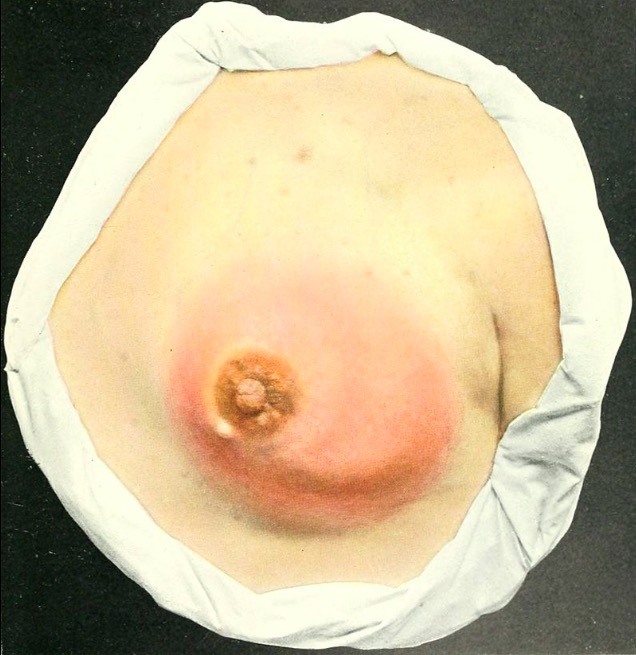
Mastitis de lactancia

La mastitis asociada a la lactancia se presenta como una mama edematosa y eritematosa.

Imagen: “atlasofclinicals00bock” por Internet Archive Book Images. Licencia: Dominio Público
Mastitis Mastitis Mastitis is inflammation of the breast tissue with or without infection. The most common form of mastitis is associated with lactation in the first few weeks after birth. Non-lactational mastitis includes periductal mastitis and idiopathic granulomatous mastitis (IGM). Mastitis periductal

  • Inflamación periareolar
  • Descarga del pezón
  • Masa fluctuante y sensible (absceso); puede romperse y drenar en EN Erythema nodosum is an immune-mediated panniculitis (inflammation of the subcutaneous fat) caused by a type IV (delayed-type) hypersensitivity reaction. It commonly manifests in young women as tender, erythematous nodules on the shins. Erythema Nodosum el borde de la areola Areola Examination of the Breast
  • Fístula cutánea drenante (por absceso crónico/recurrente)

Mastitis Mastitis Mastitis is inflammation of the breast tissue with or without infection. The most common form of mastitis is associated with lactation in the first few weeks after birth. Non-lactational mastitis includes periductal mastitis and idiopathic granulomatous mastitis (IGM). Mastitis granulomatosa idiopática

  • Masa mamaria inflamatoria periférica
  • También puede desarrollarse:
    • Múltiples áreas de infección periférica
    • Pequeños y múltiples abscesos
    • Úlceras cutáneas suprayacentes
  • A menudo imita el cáncer de mama:
    • “Piel de naranja” suprayacente
    • Linfadenopatía axilar
    • Retracción del pezón
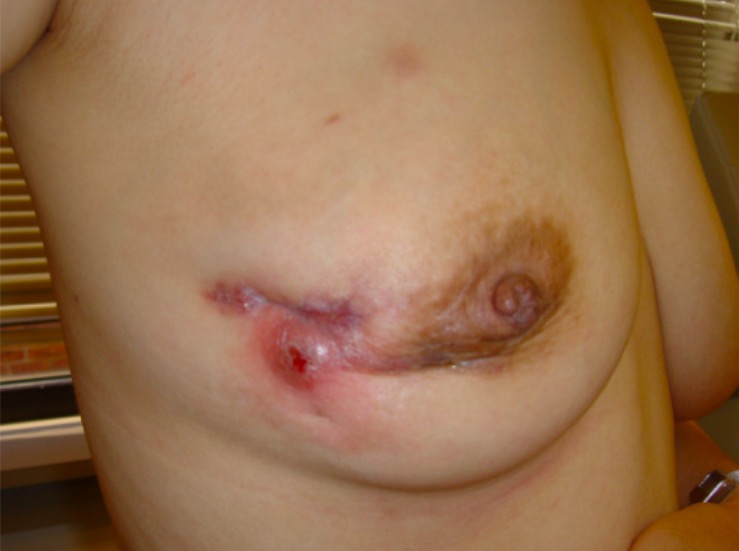
Mastitis granulomatosa idiopática de la mama derecha

Mastitis granulomatosa idiopática (estado posterior a la biopsia de mama por incisión)

Imagen: “IGM of the right breast” por Dept. of Radiation Oncology, Johns Hopkins University School of Medicine, Baltimore, MD 21231, USA. Licencia: CC BY 2.0
Diagnóstico

Madres lactantes

  • El diagnóstico se establece con base en EN Erythema nodosum is an immune-mediated panniculitis (inflammation of the subcutaneous fat) caused by a type IV (delayed-type) hypersensitivity reaction. It commonly manifests in young women as tender, erythematous nodules on the shins. Erythema Nodosum la presentación clínica.
  • Estudios de apoyo:
    • Tinción de Gram y cultivo de la leche:
      • Pueden ayudar a identificar los LOS Neisseria organismos causantes
      • Solo se requieren en EN Erythema nodosum is an immune-mediated panniculitis (inflammation of the subcutaneous fat) caused by a type IV (delayed-type) hypersensitivity reaction. It commonly manifests in young women as tender, erythematous nodules on the shins. Erythema Nodosum casos refractarios al AL Amyloidosis tratamiento
    • Hemocultivo: en EN Erythema nodosum is an immune-mediated panniculitis (inflammation of the subcutaneous fat) caused by a type IV (delayed-type) hypersensitivity reaction. It commonly manifests in young women as tender, erythematous nodules on the shins. Erythema Nodosum caso de infección progresiva grave/signos de sepsis Sepsis Systemic inflammatory response syndrome with a proven or suspected infectious etiology. When sepsis is associated with organ dysfunction distant from the site of infection, it is called severe sepsis. When sepsis is accompanied by hypotension despite adequate fluid infusion, it is called septic shock. Sepsis and Septic Shock
    • Ultrasonido:
      • En EN Erythema nodosum is an immune-mediated panniculitis (inflammation of the subcutaneous fat) caused by a type IV (delayed-type) hypersensitivity reaction. It commonly manifests in young women as tender, erythematous nodules on the shins. Erythema Nodosum busca de abscesos → aparece como una masa llena de líquido
      • Si se presenta una masa al AL Amyloidosis examen físico
      • Si no hay mejora clínica después de 48–72 horas de antibióticos empíricos
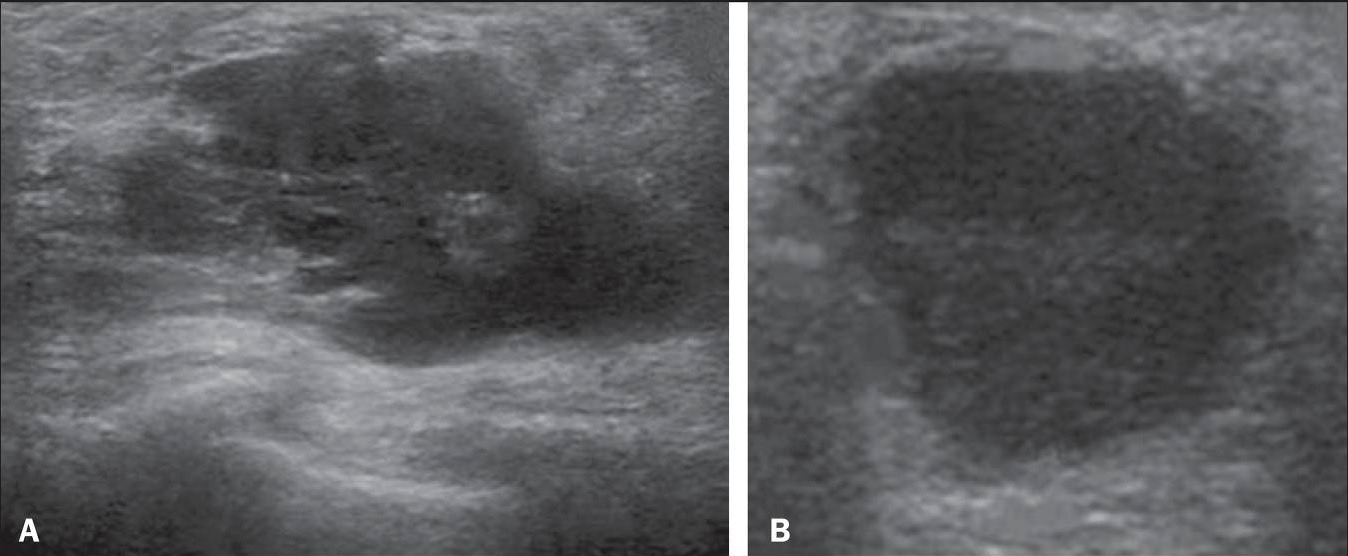
Absceso en ultrasonido para el diagnóstico de mastitis

Imagen por ultrasonido de un absceso mamario:
A: compleja, con límites mal definidos
B: aspecto homogéneo con bordes bien definidos

Imagen: “Abscess” por Antônio Arildo Reginaldo de Holanda et al. Licencia: CC BY 4.0

Mujeres no lactantes

Mastitis Mastitis Mastitis is inflammation of the breast tissue with or without infection. The most common form of mastitis is associated with lactation in the first few weeks after birth. Non-lactational mastitis includes periductal mastitis and idiopathic granulomatous mastitis (IGM). Mastitis periductal:

  • El diagnóstico se basa en EN Erythema nodosum is an immune-mediated panniculitis (inflammation of the subcutaneous fat) caused by a type IV (delayed-type) hypersensitivity reaction. It commonly manifests in young women as tender, erythematous nodules on the shins. Erythema Nodosum la presentación clínica.
  • Se puede obtener un ultrasonido para descartar un absceso.

Mastitis Mastitis Mastitis is inflammation of the breast tissue with or without infection. The most common form of mastitis is associated with lactation in the first few weeks after birth. Non-lactational mastitis includes periductal mastitis and idiopathic granulomatous mastitis (IGM). Mastitis granulomatosa idiopática:

  • Presentación clínica: puede simular un cáncer de mama
  • Estudios de laboratorio:
    • Tinción de Gram y cultivo de cualquier secreción del pezón
    • Prolactina: puede estar ↑ en EN Erythema nodosum is an immune-mediated panniculitis (inflammation of the subcutaneous fat) caused by a type IV (delayed-type) hypersensitivity reaction. It commonly manifests in young women as tender, erythematous nodules on the shins. Erythema Nodosum la mastitis Mastitis Mastitis is inflammation of the breast tissue with or without infection. The most common form of mastitis is associated with lactation in the first few weeks after birth. Non-lactational mastitis includes periductal mastitis and idiopathic granulomatous mastitis (IGM). Mastitis granulomatosa idiopática
  • Imagenología:
    • Ultrasonido:
      • Masa sólida
      • Podría también mostrar abscesos únicos o múltiples
    • Mamografía: puede no ser capaz de diferenciarla de malignidad
  • Biopsia por punción con aguja gruesa:
    • Biopsia de masas sospechosas encontradas en EN Erythema nodosum is an immune-mediated panniculitis (inflammation of the subcutaneous fat) caused by a type IV (delayed-type) hypersensitivity reaction. It commonly manifests in young women as tender, erythematous nodules on the shins. Erythema Nodosum ultrasonido
    • Se envía para tinción de Gram, cultivo e histopatología.
    • Hallazgos de la mastitis Mastitis Mastitis is inflammation of the breast tissue with or without infection. The most common form of mastitis is associated with lactation in the first few weeks after birth. Non-lactational mastitis includes periductal mastitis and idiopathic granulomatous mastitis (IGM). Mastitis granulomatosa idiopática:
      • Inflamación granulomatosa no caseificante y no necrosante
      • Negativos para bacilos ácido-alcohol resistentes u hongos
      • Los LOS Neisseria cultivos pueden mostrar Corynebacterium Corynebacterium Corynebacteria are gram-positive, club-shaped bacilli. Corynebacteria are commonly isolated on tellurite or Loeffler’s media and have characteristic metachromatic granules. The major pathogenic species is Corynebacterium diphtheriae, which causes a severe respiratory infection called diphtheria. Corynebacterium.

Tratamiento

Mastitis Mastitis Mastitis is inflammation of the breast tissue with or without infection. The most common form of mastitis is associated with lactation in the first few weeks after birth. Non-lactational mastitis includes periductal mastitis and idiopathic granulomatous mastitis (IGM). Mastitis asociada a la lactancia

  • Cuidados de soporte:
    • Analgésicos (antiinflamatorios no esteroideos, acetaminofén)
    • Compresas frías
    • Vaciado frecuente y completo de la vía mamaria:
      • Lactancia materna
      • Extracción mecánica
      • Expresión manual
  • Antibióticos:
    • No-MRSA:
      • Penicilinas antiestafilocócicas: dicloxacilina
      • Cefalosporinas: cefalexina
      • Eritromicina (hipersensibilidad a los LOS Neisseria betalactámicos)
    • MRSA MRSA A strain of Staphylococcus aureus that is non-susceptible to the action of methicillin. The mechanism of resistance usually involves modification of normal or the presence of acquired penicillin binding proteins. Staphylococcus:
      • Clindamicina
      • Trimetoprim-sulfametoxazol (evitar en EN Erythema nodosum is an immune-mediated panniculitis (inflammation of the subcutaneous fat) caused by a type IV (delayed-type) hypersensitivity reaction. It commonly manifests in young women as tender, erythematous nodules on the shins. Erythema Nodosum madres que amamantan a bebés < 1 mes)
      • Puede ser necesaria la vancomicina intravenosa en EN Erythema nodosum is an immune-mediated panniculitis (inflammation of the subcutaneous fat) caused by a type IV (delayed-type) hypersensitivity reaction. It commonly manifests in young women as tender, erythematous nodules on the shins. Erythema Nodosum caso de presentación severa/séptica
  • Tratamiento quirúrgico: incisión y drenaje de los LOS Neisseria abscesos asociados

Mastitis Mastitis Mastitis is inflammation of the breast tissue with or without infection. The most common form of mastitis is associated with lactation in the first few weeks after birth. Non-lactational mastitis includes periductal mastitis and idiopathic granulomatous mastitis (IGM). Mastitis no asociada a la lactancia

Mastitis Mastitis Mastitis is inflammation of the breast tissue with or without infection. The most common form of mastitis is associated with lactation in the first few weeks after birth. Non-lactational mastitis includes periductal mastitis and idiopathic granulomatous mastitis (IGM). Mastitis periductal:

  • A menudo es un problema crónico
  • Antibióticos:
    • Amoxicilina-clavulanato (1era línea)
    • Trimetoprim-sulfametoxazol si hay preocupación por MRSA MRSA A strain of Staphylococcus aureus that is non-susceptible to the action of methicillin. The mechanism of resistance usually involves modification of normal or the presence of acquired penicillin binding proteins. Staphylococcus
    • Generalmente, la duración del tratamiento es de 5–7 días
  • Absceso:
    • Incisión y drenaje
    • Aspiración con aguja
    • Recidivará hasta en EN Erythema nodosum is an immune-mediated panniculitis (inflammation of the subcutaneous fat) caused by a type IV (delayed-type) hypersensitivity reaction. It commonly manifests in young women as tender, erythematous nodules on the shins. Erythema Nodosum un 50% de los LOS Neisseria casos
  • Fístulas y abscesos recurrentes:
    • Escisión quirúrgica de los LOS Neisseria conductos implicados
    • Abrir o extirpar el tracto fistuloso

Mastitis Mastitis Mastitis is inflammation of the breast tissue with or without infection. The most common form of mastitis is associated with lactation in the first few weeks after birth. Non-lactational mastitis includes periductal mastitis and idiopathic granulomatous mastitis (IGM). Mastitis granulomatosa idiopática:

  • Generalmente, es autolimitada y resuelve, pero puede tardar hasta 20 meses
  • Infecciones secundarias tratadas con antibióticos y drenaje de abscesos si es necesario:
    • Empíricamente, se pueden administrar los LOS Neisseria mismos antibióticos que en EN Erythema nodosum is an immune-mediated panniculitis (inflammation of the subcutaneous fat) caused by a type IV (delayed-type) hypersensitivity reaction. It commonly manifests in young women as tender, erythematous nodules on the shins. Erythema Nodosum mastitis Mastitis Mastitis is inflammation of the breast tissue with or without infection. The most common form of mastitis is associated with lactation in the first few weeks after birth. Non-lactational mastitis includes periductal mastitis and idiopathic granulomatous mastitis (IGM). Mastitis periductal
    • Ajustar los LOS Neisseria antibióticos en EN Erythema nodosum is an immune-mediated panniculitis (inflammation of the subcutaneous fat) caused by a type IV (delayed-type) hypersensitivity reaction. It commonly manifests in young women as tender, erythematous nodules on the shins. Erythema Nodosum función del cultivo y susceptibilidad.
    • Doxiciclina para Corynebacterium Corynebacterium Corynebacteria are gram-positive, club-shaped bacilli. Corynebacteria are commonly isolated on tellurite or Loeffler’s media and have characteristic metachromatic granules. The major pathogenic species is Corynebacterium diphtheriae, which causes a severe respiratory infection called diphtheria. Corynebacterium
  • Mastitis Mastitis Mastitis is inflammation of the breast tissue with or without infection. The most common form of mastitis is associated with lactation in the first few weeks after birth. Non-lactational mastitis includes periductal mastitis and idiopathic granulomatous mastitis (IGM). Mastitis granulomatosa idiopática persistente y refractaria: se pueden utilizar esteroides y metotrexato.

Diagnóstico Diferencial

  • Cáncer de mama inflamatorio: un cáncer de mama raro, agresivo y de rápido crecimiento que se caracteriza por eritema y edema Edema Edema is a condition in which excess serous fluid accumulates in the body cavity or interstitial space of connective tissues. Edema is a symptom observed in several medical conditions. It can be categorized into 2 types, namely, peripheral (in the extremities) and internal (in an organ or body cavity). Edema. Casi todas las mujeres tienen afectación de ganglios linfáticos y hasta ⅓ de las mujeres tendrán metástasis a distancia en EN Erythema nodosum is an immune-mediated panniculitis (inflammation of the subcutaneous fat) caused by a type IV (delayed-type) hypersensitivity reaction. It commonly manifests in young women as tender, erythematous nodules on the shins. Erythema Nodosum el momento de presentación. El diagnóstico debe sospecharse en EN Erythema nodosum is an immune-mediated panniculitis (inflammation of the subcutaneous fat) caused by a type IV (delayed-type) hypersensitivity reaction. It commonly manifests in young women as tender, erythematous nodules on the shins. Erythema Nodosum mujeres con una inflamación rápidamente progresiva y sin mejoría después de los LOS Neisseria antibióticos. La imagenología de mama con mamografía y ultrasonido diagnósticos junto con una biopsia por punción con aguja gruesa pueden confirmar el diagnóstico. El tratamiento incluye cirugía, quimioterapia y radiación.
  • Absceso mamario: acumulación de pus dentro de la glándula mamaria que generalmente está asociada a mastitis Mastitis Mastitis is inflammation of the breast tissue with or without infection. The most common form of mastitis is associated with lactation in the first few weeks after birth. Non-lactational mastitis includes periductal mastitis and idiopathic granulomatous mastitis (IGM). Mastitis. Se presenta como una masa unilateral y fluctuante dentro de una mama dolorosa, eritematosa y edematosa. El tratamiento consiste en EN Erythema nodosum is an immune-mediated panniculitis (inflammation of the subcutaneous fat) caused by a type IV (delayed-type) hypersensitivity reaction. It commonly manifests in young women as tender, erythematous nodules on the shins. Erythema Nodosum incisión y drenaje.
  • Galactocele Galactocele Benign Breast Conditions: acumulación quística de líquido causada generalmente por un conducto lácteo obstruido. Los LOS Neisseria galactoceles se presentan como una masa firme y palpable en EN Erythema nodosum is an immune-mediated panniculitis (inflammation of the subcutaneous fat) caused by a type IV (delayed-type) hypersensitivity reaction. It commonly manifests in young women as tender, erythematous nodules on the shins. Erythema Nodosum la región subareolar y pueden mostrar un nivel clásico de grasa-líquido en EN Erythema nodosum is an immune-mediated panniculitis (inflammation of the subcutaneous fat) caused by a type IV (delayed-type) hypersensitivity reaction. It commonly manifests in young women as tender, erythematous nodules on the shins. Erythema Nodosum la imagenología. A diferencia de la mastitis Mastitis Mastitis is inflammation of the breast tissue with or without infection. The most common form of mastitis is associated with lactation in the first few weeks after birth. Non-lactational mastitis includes periductal mastitis and idiopathic granulomatous mastitis (IGM). Mastitis asociada a la lactancia, los LOS Neisseria galactoceles no se asocian a síntomas sistémicos como fiebre, malestar o mialgias. El diagnóstico se basa en EN Erythema nodosum is an immune-mediated panniculitis (inflammation of the subcutaneous fat) caused by a type IV (delayed-type) hypersensitivity reaction. It commonly manifests in young women as tender, erythematous nodules on the shins. Erythema Nodosum los LOS Neisseria antecedentes y en EN Erythema nodosum is an immune-mediated panniculitis (inflammation of the subcutaneous fat) caused by a type IV (delayed-type) hypersensitivity reaction. It commonly manifests in young women as tender, erythematous nodules on the shins. Erythema Nodosum la aspiración, que muestra un líquido lechoso. Estas lesiones no requieren escisión.
  • Ectasia de los LOS Neisseria conductos mamarios: dilatación de los LOS Neisseria conductos subareolares asociada a fibrosis Fibrosis Any pathological condition where fibrous connective tissue invades any organ, usually as a consequence of inflammation or other injury. Bronchiolitis Obliterans y a secreción espesa y cremosa del pezón. La ectasia de los LOS Neisseria conductos mamarios, que antes se consideraba parte del mismo síndrome que la mastitis Mastitis Mastitis is inflammation of the breast tissue with or without infection. The most common form of mastitis is associated with lactation in the first few weeks after birth. Non-lactational mastitis includes periductal mastitis and idiopathic granulomatous mastitis (IGM). Mastitis periductal, se considera ahora un fenómeno relacionado con la edad que no se asocia a una inflamación o infección significativa. La ectasia suele darse en EN Erythema nodosum is an immune-mediated panniculitis (inflammation of the subcutaneous fat) caused by a type IV (delayed-type) hypersensitivity reaction. It commonly manifests in young women as tender, erythematous nodules on the shins. Erythema Nodosum mujeres postmenopáusicas, mientras que la mastitis Mastitis Mastitis is inflammation of the breast tissue with or without infection. The most common form of mastitis is associated with lactation in the first few weeks after birth. Non-lactational mastitis includes periductal mastitis and idiopathic granulomatous mastitis (IGM). Mastitis periductal generalmente se da en EN Erythema nodosum is an immune-mediated panniculitis (inflammation of the subcutaneous fat) caused by a type IV (delayed-type) hypersensitivity reaction. It commonly manifests in young women as tender, erythematous nodules on the shins. Erythema Nodosum mujeres más jóvenes, especialmente aquellas que fuman.

Referencias

  1. Al-Khaffaf, B., Knox, F., & Bundred, N. J. (2008). Idiopathic granulomatous mastitis: a 25-year experience. Journal of the American College of Surgeons, 206(2), 269–273. https://doi.org/10.1016/j.jamcollsurg.2007.07.041 
  2. Beckmann C.R.B., Ling, F.W., et al. (Eds.). (2010). Obstetrics and gynecology (6th ed.). Lippincott Williams & Wilkins.
  3. Dixon, M., & Louis-Jacques, A. (2023). Lactational mastitis. UpToDate. Retrieved March 28, 2025, from https://www.uptodate.com/contents/lactational-mastitis
  4. Dixon, M., & Pariser, K. M. (2022). Nonlactational mastitis in adults. UpToDate. Retrieved March 28, 2025, from https://www.uptodate.com/contents/nonlactational-mastitis-in-adults
  5. Schoenfeld, E. M., & McKay, M. P. (2010). Mastitis and methicillin-resistant Staphylococcus aureus (MRSA): the calm before the storm? Journal of Emergency Medicine, 38(4), e31–e34. https://doi.org/10.1016/j.jemermed.2008.11.021

¡Crea tu cuenta gratis o inicia una sesión para seguir leyendo!

Regístrate ahora y obtén acceso gratuito a Lecturio con páginas de concepto, videos médicos y cuestionarios para tu educación médica.

User Reviews

Que tengas una sesión de estudio alegre y navideña 🎁 Ahorra 50% en todos los planes >>

Details