Domina Conceptos Médicos

Estudia para la escuela de medicina y tus examenes con Lecturio.

Fascitis Necrosante

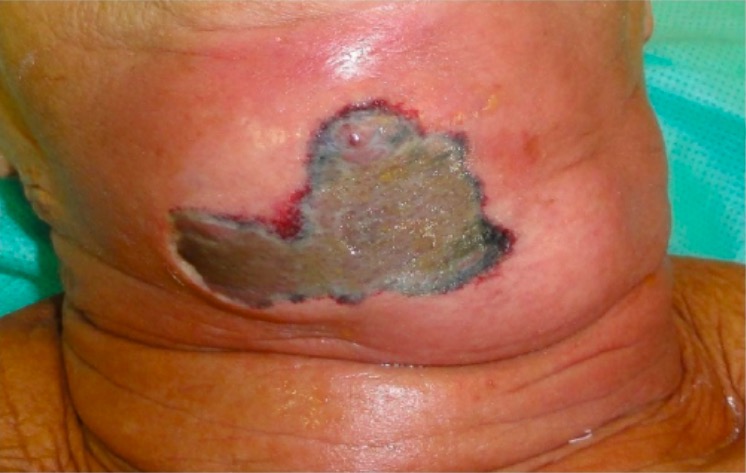
La fascitis necrosante es una infección potencialmente mortal que provoca una rápida destrucción y necrosis Necrosis The death of cells in an organ or tissue due to disease, injury or failure of the blood supply. Ischemic Cell Damage de la fascia Fascia Layers of connective tissue of variable thickness. The superficial fascia is found immediately below the skin; the deep fascia invests muscles, nerves, and other organs. Cellulitis y los LOS Neisseria tejidos subcutáneos. Los LOS Neisseria pacientes pueden presentar un dolor Dolor Inflammation importante desproporcionado con respecto a los LOS Neisseria síntomas que presentan y un eritema rápidamente progresivo de la zona afectada. La mayoría de los LOS Neisseria pacientes también presentarán signos sistémicos de infección, como fiebre, hipotensión, alteración del estado mental y fallo orgánico multisistémico. El diagnóstico es principalmente clínico, ya que los LOS Neisseria pacientes pueden evolucionar rápidamente hacia un shock Shock Shock is a life-threatening condition associated with impaired circulation that results in tissue hypoxia. The different types of shock are based on the underlying cause: distributive (↑ cardiac output (CO), ↓ systemic vascular resistance (SVR)), cardiogenic (↓ CO, ↑ SVR), hypovolemic (↓ CO, ↑ SVR), obstructive (↓ CO), and mixed. Types of Shock séptico si no se controla el sitio de infección. Este tipo de infección es una emergencia quirúrgica y requiere un desbridamiento quirúrgico de emergencia, antibióticos parenterales y una estrecha monitorización hemodinámica.

Last updated: Dec 15, 2025

Editorial responsibility: Stanley Oiseth, Lindsay Jones, Evelin Maza

Descripción General

Epidemiología

  • Incidencia: ≤ 1 caso por cada 100 000 individuos al AL Amyloidosis año
  • 20%‒40% de las personas afectadas tienen diabetes Diabetes Diabetes mellitus (DM) is a metabolic disease characterized by hyperglycemia and dysfunction of the regulation of glucose metabolism by insulin. Type 1 DM is diagnosed mostly in children and young adults as the result of autoimmune destruction of β cells in the pancreas and the resulting lack of insulin. Type 2 DM has a significant association with obesity and is characterized by insulin resistance. Diabetes Mellitus.
  • Proporción entre hombres y mujeres: 3:1
  • Mortalidad: 20%‒80%

Etiología

La fascitis necrosante se divide microbiológicamente en EN Erythema nodosum is an immune-mediated panniculitis (inflammation of the subcutaneous fat) caused by a type IV (delayed-type) hypersensitivity reaction. It commonly manifests in young women as tender, erythematous nodules on the shins. Erythema Nodosum función del organismo u organismos causantes en EN Erythema nodosum is an immune-mediated panniculitis (inflammation of the subcutaneous fat) caused by a type IV (delayed-type) hypersensitivity reaction. It commonly manifests in young women as tender, erythematous nodules on the shins. Erythema Nodosum:

  • Tipo I:
    • Infección polimicrobiana que contiene anaerobios y aerobios:
      • Streptococcus Streptococcus Streptococcus is one of the two medically important genera of gram-positive cocci, the other being Staphylococcus. Streptococci are identified as different species on blood agar on the basis of their hemolytic pattern and sensitivity to optochin and bacitracin. There are many pathogenic species of streptococci, including S. pyogenes, S. agalactiae, S. pneumoniae, and the viridans streptococci. Streptococcus pyogenes
      • Bacteroides Bacteroides Bacteroides is a genus of opportunistic, anaerobic, gram-negative bacilli. Bacteroides fragilis is the most common species involved in human disease and is part of the normal flora of the large intestine. Bacteroides
      • Peptostreptococcus Peptostreptococcus A genus of gram-positive, anaerobic, coccoid bacteria that is part of the normal flora of humans. Its organisms are opportunistic pathogens causing bacteremias and soft tissue infections. Perianal and Perirectal Abscess
      • Escherichia coli Escherichia coli The gram-negative bacterium Escherichia coli is a key component of the human gut microbiota. Most strains of E. coli are avirulent, but occasionally they escape the GI tract, infecting the urinary tract and other sites. Less common strains of E. coli are able to cause disease within the GI tract, most commonly presenting as abdominal pain and diarrhea. Escherichia coli
      • Enterobacter Enterobacter Multidrug-resistant Organisms and Nosocomial Infections
      • Klebsiella Klebsiella Klebsiella are encapsulated gram-negative, lactose-fermenting bacilli. They form pink colonies on MacConkey agar due to lactose fermentation. The main virulence factor is a polysaccharide capsule. Klebsiella pneumoniae is the most important pathogenic species. Klebsiella
      • Proteus Proteus Proteus spp. are gram-negative, facultatively anaerobic bacilli. Different types of infection result from Proteus, but the urinary tract is the most common site. The majority of cases are caused by Proteus mirabilis (P. mirabilis). The bacteria are part of the normal intestinal flora and are also found in the environment. Proteus
    • A menudo se observa en EN Erythema nodosum is an immune-mediated panniculitis (inflammation of the subcutaneous fat) caused by a type IV (delayed-type) hypersensitivity reaction. It commonly manifests in young women as tender, erythematous nodules on the shins. Erythema Nodosum adultos mayores con comorbilidades, particularmente diabetes Diabetes Diabetes mellitus (DM) is a metabolic disease characterized by hyperglycemia and dysfunction of the regulation of glucose metabolism by insulin. Type 1 DM is diagnosed mostly in children and young adults as the result of autoimmune destruction of β cells in the pancreas and the resulting lack of insulin. Type 2 DM has a significant association with obesity and is characterized by insulin resistance. Diabetes Mellitus mellitus
    • Tipo más común
  • Tipo II:
    • Infección monomicrobiana:
      • Streptococcus Streptococcus Streptococcus is one of the two medically important genera of gram-positive cocci, the other being Staphylococcus. Streptococci are identified as different species on blood agar on the basis of their hemolytic pattern and sensitivity to optochin and bacitracin. There are many pathogenic species of streptococci, including S. pyogenes, S. agalactiae, S. pneumoniae, and the viridans streptococci. Streptococcus del grupo A (el más común)
      • Staphylococcus aureus Staphylococcus aureus Potentially pathogenic bacteria found in nasal membranes, skin, hair follicles, and perineum of warm-blooded animals. They may cause a wide range of infections and intoxications. Brain Abscess
    • Ocurre en EN Erythema nodosum is an immune-mediated panniculitis (inflammation of the subcutaneous fat) caused by a type IV (delayed-type) hypersensitivity reaction. It commonly manifests in young women as tender, erythematous nodules on the shins. Erythema Nodosum cualquier grupo etario
    • Se encuentra frecuentemente en EN Erythema nodosum is an immune-mediated panniculitis (inflammation of the subcutaneous fat) caused by a type IV (delayed-type) hypersensitivity reaction. It commonly manifests in young women as tender, erythematous nodules on the shins. Erythema Nodosum individuos sin factores de riesgo significativos
  • Tipo III (la definición o existencia de este tipo varía en EN Erythema nodosum is an immune-mediated panniculitis (inflammation of the subcutaneous fat) caused by a type IV (delayed-type) hypersensitivity reaction. It commonly manifests in young women as tender, erythematous nodules on the shins. Erythema Nodosum la literatura):
    • Gangrena gaseosa
      • Más comúnmente por inoculación traumática con Clostridium perfringens Clostridium perfringens The most common etiologic agent of gas gangrene. It is differentiable into several distinct types based on the distribution of twelve different toxins. Gas Gangrene
      • El Clostridium septicum Clostridium septicum A species of gram-positive bacteria in the family clostridiaceae. Infections have a strong association with malignancies and also with gas gangrene. Gas Gangrene está relacionado con el cáncer de colon Colon The large intestines constitute the last portion of the digestive system. The large intestine consists of the cecum, appendix, colon (with ascending, transverse, descending, and sigmoid segments), rectum, and anal canal. The primary function of the colon is to remove water and compact the stool prior to expulsion from the body via the rectum and anal canal. Colon, Cecum, and Appendix: Anatomy y la leucemia.
    • Vibrio vulnificus Vibrio vulnificus A species of halophilic bacteria in the genus vibrio, which lives in warm seawater. It can cause infections in those who eat raw contaminated seafood or have open wounds exposed to seawater. Vibrio
      • Por lesiones acuáticas o consumo de mariscos crudos
      • Se observa con más frecuencia en EN Erythema nodosum is an immune-mediated panniculitis (inflammation of the subcutaneous fat) caused by a type IV (delayed-type) hypersensitivity reaction. It commonly manifests in young women as tender, erythematous nodules on the shins. Erythema Nodosum pacientes con enfermedad hepática crónica

Factores de riesgo

  • Inmunosupresión:
    • Diabetes Diabetes Diabetes mellitus (DM) is a metabolic disease characterized by hyperglycemia and dysfunction of the regulation of glucose metabolism by insulin. Type 1 DM is diagnosed mostly in children and young adults as the result of autoimmune destruction of β cells in the pancreas and the resulting lack of insulin. Type 2 DM has a significant association with obesity and is characterized by insulin resistance. Diabetes Mellitus mellitus
    • VIH
    • Neutropenia Neutropenia Neutrophils are an important component of the immune system and play a significant role in the eradication of infections. Low numbers of circulating neutrophils, referred to as neutropenia, predispose the body to recurrent infections or sepsis, though patients can also be asymptomatic. Neutropenia
  • Daños en EN Erythema nodosum is an immune-mediated panniculitis (inflammation of the subcutaneous fat) caused by a type IV (delayed-type) hypersensitivity reaction. It commonly manifests in young women as tender, erythematous nodules on the shins. Erythema Nodosum la piel:
    • Traumatismo penetrante significativo o laceración menor
    • Abuso de drogas intravenosas
    • Cirugía reciente
    • Picadura de insecto
  • Malignidad
  • Obesidad
  • Tabaquismo
  • Alcoholismo
  • Cirrosis hepática

Fisiopatología

  • Las bacterias se extienden al AL Amyloidosis tejido subcutáneo desde:
    • Úlcera cercana o infección superficial
    • Traumatismo
    • Torrente sanguíneo (más a menudo S. pyogenes)
  • Incluso en EN Erythema nodosum is an immune-mediated panniculitis (inflammation of the subcutaneous fat) caused by a type IV (delayed-type) hypersensitivity reaction. It commonly manifests in young women as tender, erythematous nodules on the shins. Erythema Nodosum las infecciones monomicrobianas, otros patógenos aeróbicos y anaeróbicos pueden desempeñar un papel.
  • La infección provoca la oclusión de los LOS Neisseria vasos sanguíneos subcutáneos → isquemia tisular y fascial → necrosis Necrosis The death of cells in an organ or tissue due to disease, injury or failure of the blood supply. Ischemic Cell Damage
    • Se producen daños en EN Erythema nodosum is an immune-mediated panniculitis (inflammation of the subcutaneous fat) caused by a type IV (delayed-type) hypersensitivity reaction. It commonly manifests in young women as tender, erythematous nodules on the shins. Erythema Nodosum los LOS Neisseria nervios superficiales → anestesia localizada
    • Condiciones hipóxicas → ↓ función de los LOS Neisseria neutrófilos → proliferación de bacterias
  • La infección y la necrosis Necrosis The death of cells in an organ or tissue due to disease, injury or failure of the blood supply. Ischemic Cell Damage pueden desplazarse rápidamente a lo largo de los LOS Neisseria planos fasciales, posiblemente debido a las enzimas y toxinas bacterianas.
  • Puede desarrollarse gangrena:
    • Metabolismo anaeróbico por organismos facultativos → producción de dióxido de carbono, hidrógeno y nitrógeno
    • El hidrógeno y el nitrógeno son insolubles y se acumulan en EN Erythema nodosum is an immune-mediated panniculitis (inflammation of the subcutaneous fat) caused by a type IV (delayed-type) hypersensitivity reaction. It commonly manifests in young women as tender, erythematous nodules on the shins. Erythema Nodosum los LOS Neisseria tejidos subcutáneos.

Presentación Clínica

Hallazgos en EN Erythema nodosum is an immune-mediated panniculitis (inflammation of the subcutaneous fat) caused by a type IV (delayed-type) hypersensitivity reaction. It commonly manifests in young women as tender, erythematous nodules on the shins. Erythema Nodosum piel y tejidos blandos

Signos tempranos:

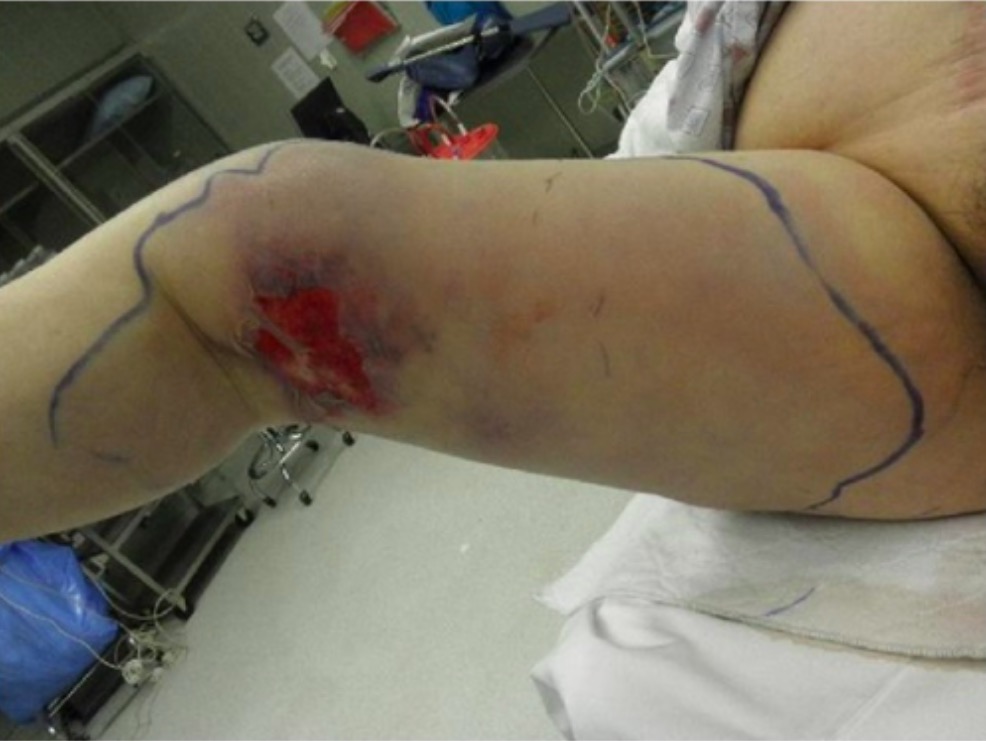
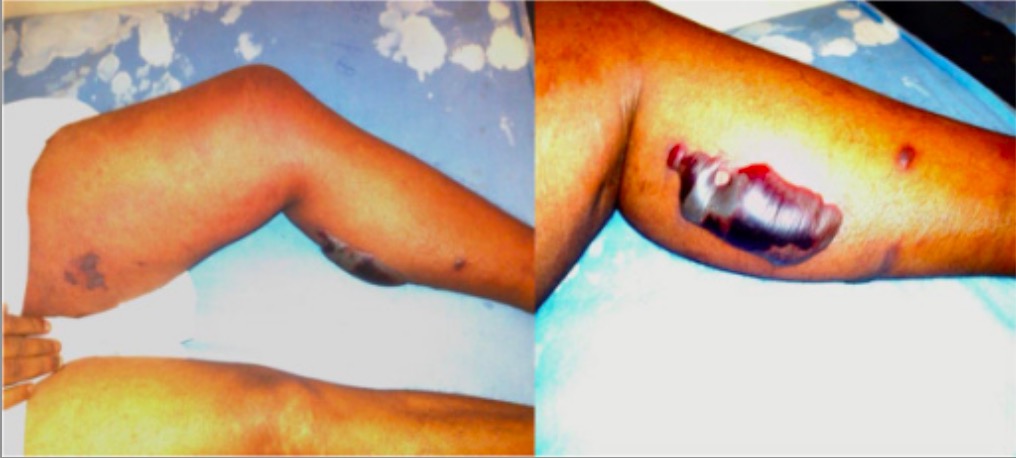
  • Dolor Dolor Inflammation agudo e intenso desproporcionado con los LOS Neisseria hallazgos físicos
  • Eritema que se extiende rápidamente durante horas o días.
  • Calidez
  • Piel tensa e indurada

Signos tardíos:

  • Crepitación
  • Anestesia o parestesia
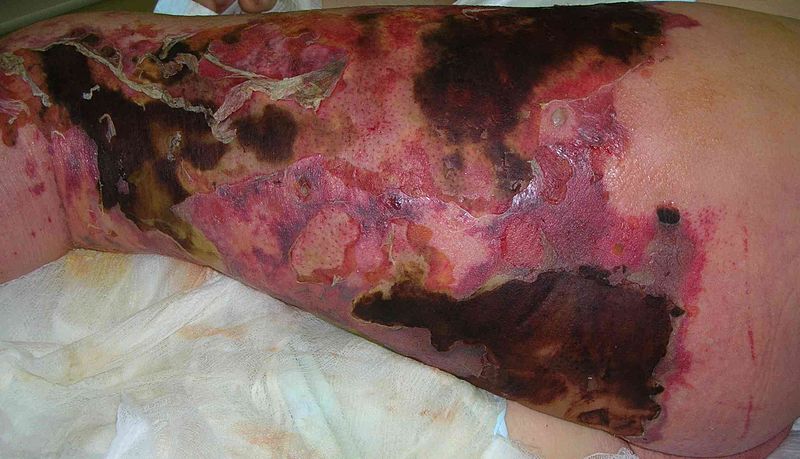
  • Bulas, necrosis Necrosis The death of cells in an organ or tissue due to disease, injury or failure of the blood supply. Ischemic Cell Damage cutánea o ulceración

Sitios comunes de infección:

  • Extremidades (más común)
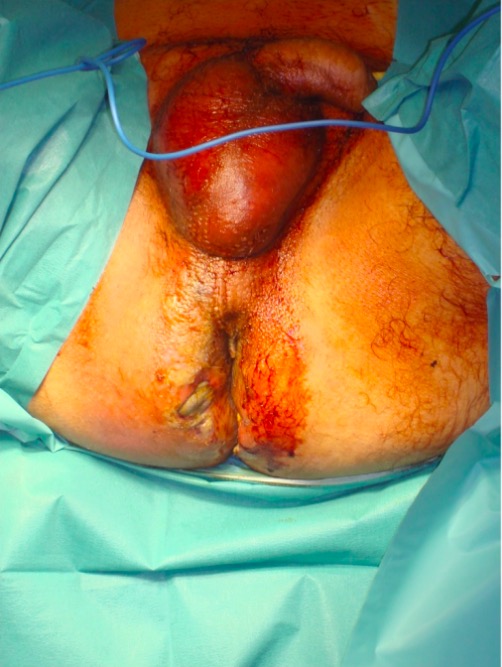
  • Gangrena de Fournier (fascitis necrosante del periné):
    • Se presenta como dolor Dolor Inflammation, eritema y edema Edema Edema is a condition in which excess serous fluid accumulates in the body cavity or interstitial space of connective tissues. Edema is a symptom observed in several medical conditions. It can be categorized into 2 types, namely, peripheral (in the extremities) and internal (in an organ or body cavity). Edema en EN Erythema nodosum is an immune-mediated panniculitis (inflammation of the subcutaneous fat) caused by a type IV (delayed-type) hypersensitivity reaction. It commonly manifests in young women as tender, erythematous nodules on the shins. Erythema Nodosum la zona genital
    • Se extiende rápidamente a la pared abdominal anterior y a los LOS Neisseria músculos de los LOS Neisseria glúteos
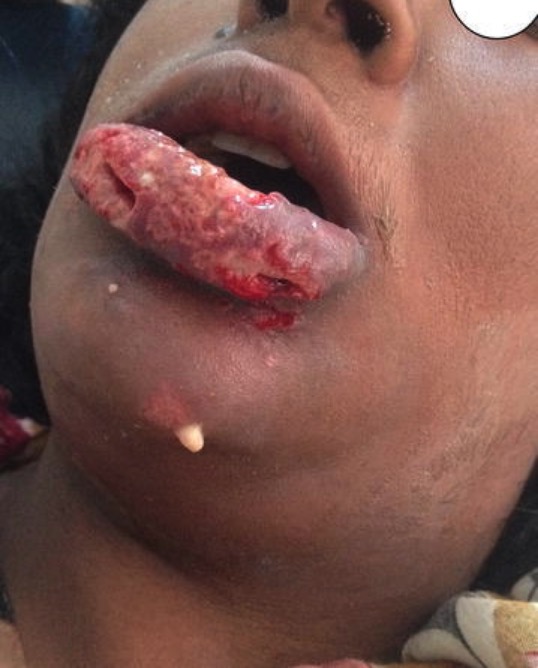
  • Cabeza y cuello:
    • A menudo tiene un origen dental o faríngeo por procedimientos o traumatismos
    • Puede extenderse a la cara, la parte inferior del cuello y el mediastino

Hallazgos compatibles con compromiso sistémico

  • Fiebre alta
  • Taquicardia
  • Hipotensión
  • Alteración mental:
    • Confusión
    • Obnubilación

Diagnóstico

El diagnóstico definitivo de la fascitis necrosante se realiza mediante la exploración quirúrgica y el desbridamiento. Estos procesos no deben retrasarse para obtener información diagnóstica si la sospecha clínica es alta.

Sin embargo, lo siguiente puede ser útil:
  • Laboratorios:
    • La tinción de Gram y los LOS Neisseria cultivos deben obtenerse de:
      • Sangre (preferiblemente antes de la administración de antibióticos)
      • Muestras intraoperatorias
    • ↑ Conteo de leucocitos con desplazamiento a la izquierda
    • ↑ Velocidad de eritrosedimentación y proteína C reactiva
    • ↓ HCO3 → acidosis Acidosis A pathologic condition of acid accumulation or depletion of base in the body. The two main types are respiratory acidosis and metabolic acidosis, due to metabolic acid build up. Respiratory Acidosis metabólica
    • ↑ Ácido láctico
    • ↑ Nitrógeno ureico en EN Erythema nodosum is an immune-mediated panniculitis (inflammation of the subcutaneous fat) caused by a type IV (delayed-type) hypersensitivity reaction. It commonly manifests in young women as tender, erythematous nodules on the shins. Erythema Nodosum sangre y creatinina → insuficiencia renal aguda
    • ↑ Glucosa
    • ↓ Na
  • Escala Laboratory Risk Indicator Indicator Methods for assessing flow through a system by injection of a known quantity of an indicator, such as a dye, radionuclide, or chilled liquid, into the system and monitoring its concentration over time at a specific point in the system. Body Fluid Compartments for Necrotizing Fasciitis Necrotizing fasciitis Necrotizing fasciitis is a life-threatening infection that causes rapid destruction and necrosis of the fascia and subcutaneous tissues. Patients may present with significant pain out of proportion to the presenting symptoms and rapidly progressive erythema of the affected area. Necrotizing Fasciitis (LRINEC):
    • Calcula una puntuación utilizando el conteo de leucocitos, proteína C reactiva, hemoglobina, creatinina, sodio y glucosa
    • Tiene una alta especificidad pero una baja sensibilidad
    • No debe utilizarse solo para descartar una infección
  • Imagenología:
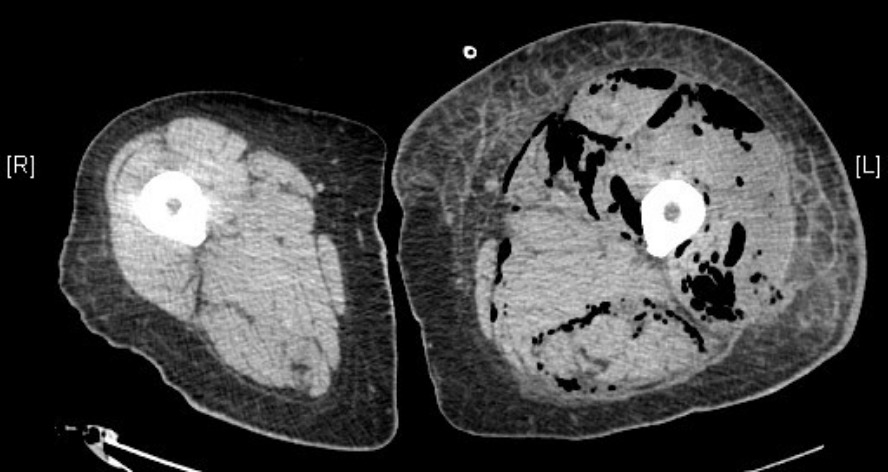
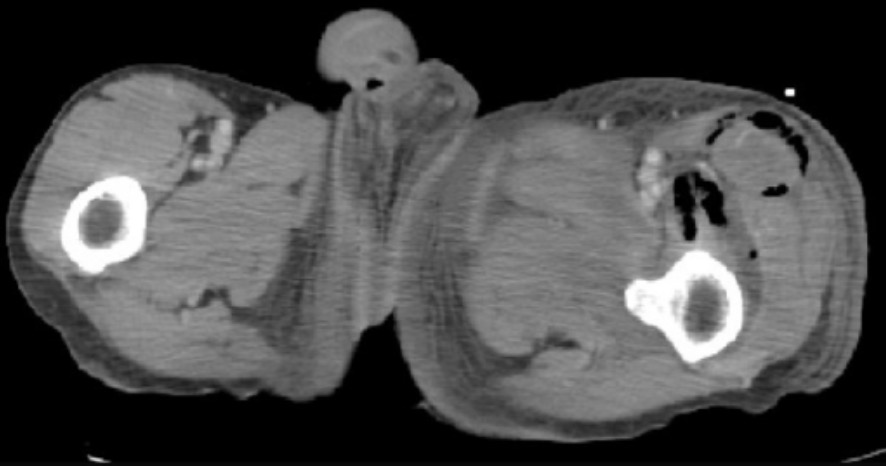
    • La TC es la mejor modalidad de imagenología y puede mostrar:
      • Gas subcutáneo
      • Cambios inflamatorios a lo largo de los LOS Neisseria planos fasciales
      • Colecciones de fluidos
    • Las radiografías pueden revelar la presencia de gas en EN Erythema nodosum is an immune-mediated panniculitis (inflammation of the subcutaneous fat) caused by a type IV (delayed-type) hypersensitivity reaction. It commonly manifests in young women as tender, erythematous nodules on the shins. Erythema Nodosum los LOS Neisseria tejidos, especialmente en EN Erythema nodosum is an immune-mediated panniculitis (inflammation of the subcutaneous fat) caused by a type IV (delayed-type) hypersensitivity reaction. It commonly manifests in young women as tender, erythematous nodules on the shins. Erythema Nodosum las extremidades.

Tratamiento

Cirugía

El desbridamiento quirúrgico es la base del tratamiento.
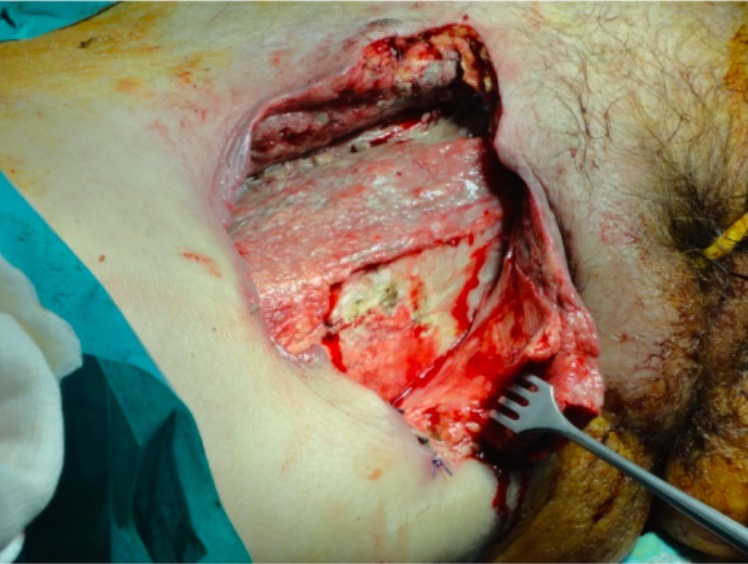
  • Se elimina el tejido necrótico.
  • A menudo se requieren múltiples desbridamientos seriados para controlar la infección por completo.
  • La amputación puede ser necesaria en EN Erythema nodosum is an immune-mediated panniculitis (inflammation of the subcutaneous fat) caused by a type IV (delayed-type) hypersensitivity reaction. It commonly manifests in young women as tender, erythematous nodules on the shins. Erythema Nodosum caso de enfermedad grave que afecte a una extremidad.
  • Se pueden obtener muestras de tejido y enviarlas para su cultivo.
Manejo de la fascitis necrotizante

Escisión quirúrgica de los tejidos necróticos en la fascitis necrosante

Imagen: “Management of necrotizing fasciitis” por 3rd Department of Surgery, Attikon University Hospital, University of Athens School of Medicine, Athens, Greece. Licencia: CC BY 4.0

Terapia con antibióticos

  • Deben administrarse antibióticos intravenosos de manera precoz para cubrir las bacterias gram-positivas, gram-negativas y anaerobias.
  • Un régimen terapéutico inicial debe incluir cada uno de los LOS Neisseria siguientes elementos:
    • Carbapenem Carbapenem The carbapenems and aztreonam are both members of the bactericidal beta-lactam family of antibiotics (similar to penicillins). They work by preventing bacteria from producing their cell wall, ultimately leading to bacterial cell death. Carbapenems and Aztreonam o piperacilina-tazobactam
    • Vancomicina o daptomicina (cobertura del Staphylococcus aureus Staphylococcus aureus Potentially pathogenic bacteria found in nasal membranes, skin, hair follicles, and perineum of warm-blooded animals. They may cause a wide range of infections and intoxications. Brain Abscess resistente a meticilina ( MRSA MRSA A strain of Staphylococcus aureus that is non-susceptible to the action of methicillin. The mechanism of resistance usually involves modification of normal or the presence of acquired penicillin binding proteins. Staphylococcus, por sus siglas en EN Erythema nodosum is an immune-mediated panniculitis (inflammation of the subcutaneous fat) caused by a type IV (delayed-type) hypersensitivity reaction. It commonly manifests in young women as tender, erythematous nodules on the shins. Erythema Nodosum inglés))
    • Clindamicina (para efectos antitoxina contra estreptococos o estafilococos productores de toxinas)
  • La terapia debe adaptarse eventualmente a los LOS Neisseria datos de los LOS Neisseria cultivos (cuando estén disponibles).

Cuidados postoperatorios

  • La mayoría de los LOS Neisseria pacientes necesitarán ser monitorizados en EN Erythema nodosum is an immune-mediated panniculitis (inflammation of the subcutaneous fat) caused by a type IV (delayed-type) hypersensitivity reaction. It commonly manifests in young women as tender, erythematous nodules on the shins. Erythema Nodosum una unidad de cuidados intensivos.
  • Soporte hemodinámico:
    • Reanimación agresiva con líquidos cristaloides intravenosos
    • Soporte vasopresor para el shock Shock Shock is a life-threatening condition associated with impaired circulation that results in tissue hypoxia. The different types of shock are based on the underlying cause: distributive (↑ cardiac output (CO), ↓ systemic vascular resistance (SVR)), cardiogenic (↓ CO, ↑ SVR), hypovolemic (↓ CO, ↑ SVR), obstructive (↓ CO), and mixed. Types of Shock séptico (la norepinefrina es la primera línea)
  • Controlar la hemoglobina y transfundir en EN Erythema nodosum is an immune-mediated panniculitis (inflammation of the subcutaneous fat) caused by a type IV (delayed-type) hypersensitivity reaction. It commonly manifests in young women as tender, erythematous nodules on the shins. Erythema Nodosum caso de pérdida de sangre asociada a desbridamientos repetidos.

Complicaciones

  • Shock Shock Shock is a life-threatening condition associated with impaired circulation that results in tissue hypoxia. The different types of shock are based on the underlying cause: distributive (↑ cardiac output (CO), ↓ systemic vascular resistance (SVR)), cardiogenic (↓ CO, ↑ SVR), hypovolemic (↓ CO, ↑ SVR), obstructive (↓ CO), and mixed. Types of Shock séptico
  • Síndrome de shock Shock Shock is a life-threatening condition associated with impaired circulation that results in tissue hypoxia. The different types of shock are based on the underlying cause: distributive (↑ cardiac output (CO), ↓ systemic vascular resistance (SVR)), cardiogenic (↓ CO, ↑ SVR), hypovolemic (↓ CO, ↑ SVR), obstructive (↓ CO), and mixed. Types of Shock tóxico
  • Fallo orgánico multisistémico
  • Pérdida de extremidades y cicatrices graves
  • Muerte

Diagnóstico Diferencial

  • Celulitis: infección bacteriana común de la piel que afecta a las capas más profundas de la dermis Dermis A layer of vascularized connective tissue underneath the epidermis. The surface of the dermis contains innervated papillae. Embedded in or beneath the dermis are sweat glands; hair follicles; and sebaceous glands. Skin: Structure and Functions y el tejido subcutáneo. Esta afección es causada con mayor frecuencia por S. aureus S. aureus Potentially pathogenic bacteria found in nasal membranes, skin, hair follicles, and perineum of warm-blooded animals. They may cause a wide range of infections and intoxications. Staphylococcus y S. pyogenes. La celulitis se presenta como una zona eritematosa y edematosa, caliente y sensible al AL Amyloidosis tacto. Generalmente, no hay crepitación, necrosis Necrosis The death of cells in an organ or tissue due to disease, injury or failure of the blood supply. Ischemic Cell Damage ni compromiso sistémico. El diagnóstico es clínico y el tratamiento consiste en EN Erythema nodosum is an immune-mediated panniculitis (inflammation of the subcutaneous fat) caused by a type IV (delayed-type) hypersensitivity reaction. It commonly manifests in young women as tender, erythematous nodules on the shins. Erythema Nodosum la administración de antibióticos adaptados al AL Amyloidosis organismo sospechado.
  • Pioderma gangrenoso: dermatosis neutrofílica que se presenta con inflamación y ulceración de la piel. Los LOS Neisseria pacientes presentan una pápula dolorosa e inflamada que evoluciona hacia una úlcera con bordes irregulares y drenaje purulento. A diferencia de la fascitis necrosante, rara vez hay compromiso sistémico, afectación de los LOS Neisseria planos fasciales o mejora con antibióticos. Esta afección empeorará con el desbridamiento. El diagnóstico de pioderma gangrenoso se basa en EN Erythema nodosum is an immune-mediated panniculitis (inflammation of the subcutaneous fat) caused by a type IV (delayed-type) hypersensitivity reaction. It commonly manifests in young women as tender, erythematous nodules on the shins. Erythema Nodosum la evaluación clínica y los LOS Neisseria hallazgos histológicos. Se trata con terapia inmunosupresora.
  • Gangrena gaseosa: la mionecrosis por Clostridium (gangrena gaseosa) es una infección de músculos y tejidos blandos potencialmente mortal que suele desarrollarse tras una inoculación traumática con Clostridium perfringens Clostridium perfringens The most common etiologic agent of gas gangrene. It is differentiable into several distinct types based on the distribution of twelve different toxins. Gas Gangrene. El dolor Dolor Inflammation muscular repentino e intenso aparece poco después de la lesión. También se producen cambios en EN Erythema nodosum is an immune-mediated panniculitis (inflammation of the subcutaneous fat) caused by a type IV (delayed-type) hypersensitivity reaction. It commonly manifests in young women as tender, erythematous nodules on the shins. Erythema Nodosum la piel (de rojo/púrpura a negro), sensibilidad, formación de bulas y crepitación, los LOS Neisseria cuales progresan rápidamente. El diagnóstico es clínico. Una vez que se sospecha, se debe iniciar una terapia antibiótica intravenosa y se debe realizar un desbridamiento quirúrgico urgente.
  • Piomiositis: infección del músculo esquelético que resulta de la propagación hematógena de una fuente primaria infectada. Los LOS Neisseria pacientes presentan dolor Dolor Inflammation localizado, fiebre y un grado variable Variable Variables represent information about something that can change. The design of the measurement scales, or of the methods for obtaining information, will determine the data gathered and the characteristics of that data. As a result, a variable can be qualitative or quantitative, and may be further classified into subgroups. Types of Variables de hallazgos en EN Erythema nodosum is an immune-mediated panniculitis (inflammation of the subcutaneous fat) caused by a type IV (delayed-type) hypersensitivity reaction. It commonly manifests in young women as tender, erythematous nodules on the shins. Erythema Nodosum la piel, desde un eritema mínimo hasta una sensibilidad severa, induración y edema Edema Edema is a condition in which excess serous fluid accumulates in the body cavity or interstitial space of connective tissues. Edema is a symptom observed in several medical conditions. It can be categorized into 2 types, namely, peripheral (in the extremities) and internal (in an organ or body cavity). Edema. El diagnóstico se realiza con datos obtenidos de la imagenología y los LOS Neisseria cultivos. El tratamiento suele consistir en EN Erythema nodosum is an immune-mediated panniculitis (inflammation of the subcutaneous fat) caused by a type IV (delayed-type) hypersensitivity reaction. It commonly manifests in young women as tender, erythematous nodules on the shins. Erythema Nodosum un drenaje percutáneo o, en EN Erythema nodosum is an immune-mediated panniculitis (inflammation of the subcutaneous fat) caused by a type IV (delayed-type) hypersensitivity reaction. It commonly manifests in young women as tender, erythematous nodules on the shins. Erythema Nodosum casos graves, en EN Erythema nodosum is an immune-mediated panniculitis (inflammation of the subcutaneous fat) caused by a type IV (delayed-type) hypersensitivity reaction. It commonly manifests in young women as tender, erythematous nodules on the shins. Erythema Nodosum un drenaje quirúrgico abierto con terapia antibiótica.

Referencias

  1. Stevens, D.L., and Baddour, L.M. (2021). Necrotizing soft tissue infections. In Baron, E.L. (Ed.), UpToDate. Retrieved February 12, 2021, from https://www.uptodate.com/contents/necrotizing-soft-tissue-infections
  2. Schultz, S.A. (2020). Necrotizing fasciitis. In Bronze, M.S. (Ed.), Medscape. Retrieved February 12, 2021, from https://emedicine.medscape.com/article/2051157-overview#a4
  3. Dhar, A.D. (2019). Necrotizing soft tissue infection. [online] MSD Manual Professional Version. Retrieved February 17, 2021, from https://www.msdmanuals.com/professional/dermatologic-disorders/bacterial-skin-infections/necrotizing-soft-tissue-infection
  4. Wallace, H.A., and Perera, T.B. (2020). Necrotizing fasciitis. [online] StatPearls. Retrieved February 17, 2021, from https://www.ncbi.nlm.nih.gov/books/NBK430756/
  5. Schadt, C. (2021). Pyoderma gangrenosum: Pathogenesis, clinical features and diagnosis. In Ofori, A.O. (Ed.), UpToDate. Retrieved February 14, 2021, from https://www.uptodate.com/contents/pyoderma-gangrenosum-pathogenesis-clinical-features-and-diagnosis
  6. Baddour, L.M., and Keerasuntornpong, A. (2021). Pyomyositis. In Baron, E.L. (Ed.), UpToDate. Retrieved February 14, 2021, from https://www.uptodate.com/contents/pyomyositis

¡Crea tu cuenta gratis o inicia una sesión para seguir leyendo!

Regístrate ahora y obtén acceso gratuito a Lecturio con páginas de concepto, videos médicos y cuestionarios para tu educación médica.

User Reviews

Que tengas una sesión de estudio alegre y navideña 🎁 Ahorra 50% en todos los planes >>

Details