Domina Conceptos Médicos

Estudia para la escuela de medicina y tus examenes con Lecturio.

Examen Oftalmológico

Un examen exhaustivo de los LOS Neisseria ojos y sus funciones es importante para todas las personas con síntomas oculares, y para detectar la agudeza visual, el glaucoma Glaucoma Glaucoma is an optic neuropathy characterized by typical visual field defects and optic nerve atrophy seen as optic disc cupping on examination. The acute form of glaucoma is a medical emergency. Glaucoma is often, but not always, caused by increased intraocular pressure (IOP). Glaucoma y la patología de la retina Retina The ten-layered nervous tissue membrane of the eye. It is continuous with the optic nerve and receives images of external objects and transmits visual impulses to the brain. Its outer surface is in contact with the choroid and the inner surface with the vitreous body. The outermost layer is pigmented, whereas the inner nine layers are transparent. Eye: Anatomy. Un examen de rutina incluye pruebas de agudeza visual, visión periférica y visión del color, además de un examen del ojo externo, la conjuntiva, la esclerótica, el iris, la pupila y los LOS Neisseria movimientos extraoculares. Los LOS Neisseria médicos de atención primaria evalúan y derivan los LOS Neisseria problemas de agudeza visual, y tratan las afecciones oculares menores, como las infecciones, el hordeolum Hordeolum A hordeolum is an acute infection affecting the meibomian, Zeiss, or Moll glands of the eyelid. Stasis of the gland secretions predisposes to bacterial infection. Staphylococcus aureus is the most common pathogen. Hordeolum (Stye) (orzuelos) y las abrasiones corneales. Los LOS Neisseria exámenes con lámpara de hendidura son realizados por oftalmólogos o personal de urgencias para examinar la córnea, la cámara anterior, el cristalino y el fondo de ojo. Los LOS Neisseria exámenes con dilatación pupilar ayudan a examinar la retina Retina The ten-layered nervous tissue membrane of the eye. It is continuous with the optic nerve and receives images of external objects and transmits visual impulses to the brain. Its outer surface is in contact with the choroid and the inner surface with the vitreous body. The outermost layer is pigmented, whereas the inner nine layers are transparent. Eye: Anatomy. Se recomiendan los LOS Neisseria exámenes anuales a las personas con diabetes Diabetes Diabetes mellitus (DM) is a metabolic disease characterized by hyperglycemia and dysfunction of the regulation of glucose metabolism by insulin. Type 1 DM is diagnosed mostly in children and young adults as the result of autoimmune destruction of β cells in the pancreas and the resulting lack of insulin. Type 2 DM has a significant association with obesity and is characterized by insulin resistance. Diabetes Mellitus para la detección temprana y el tratamiento de la retinopatía.

Last updated: Dec 15, 2025

Editorial responsibility: Stanley Oiseth, Lindsay Jones, Evelin Maza

Introducción

Descripción general

  • Pruebas de visión:
    • Agudeza visual
    • Visión periférica
    • Visión del color
  • Examen en EN Erythema nodosum is an immune-mediated panniculitis (inflammation of the subcutaneous fat) caused by a type IV (delayed-type) hypersensitivity reaction. It commonly manifests in young women as tender, erythematous nodules on the shins. Erythema Nodosum el consultorio:
    • Examen del ojo externo
    • Conjuntiva
    • Esclerótica
    • Iris
    • Pupila
    • Movimientos extraoculares
    • Examen oftalmoscópico del fondo de ojo
  • Examen detallado con lámpara de hendidura:
    • Córnea
    • Cámara anterior
    • Cristalino
    • Examen dilatado de la retina Retina The ten-layered nervous tissue membrane of the eye. It is continuous with the optic nerve and receives images of external objects and transmits visual impulses to the brain. Its outer surface is in contact with the choroid and the inner surface with the vitreous body. The outermost layer is pigmented, whereas the inner nine layers are transparent. Eye: Anatomy

Recomendaciones para el examen oftalmológico

La frecuencia recomendada de los LOS Neisseria exámenes oftalmológicos no es estándar, pero en EN Erythema nodosum is an immune-mediated panniculitis (inflammation of the subcutaneous fat) caused by a type IV (delayed-type) hypersensitivity reaction. It commonly manifests in young women as tender, erythematous nodules on the shins. Erythema Nodosum general es:

  • Niños:
  • Adultos:
    • Una vez entre los LOS Neisseria 20 y 30 años
    • Cada 2 años a partir de los LOS Neisseria 40-50 años de edad, incluyendo el tamizaje del glaucoma Glaucoma Glaucoma is an optic neuropathy characterized by typical visual field defects and optic nerve atrophy seen as optic disc cupping on examination. The acute form of glaucoma is a medical emergency. Glaucoma is often, but not always, caused by increased intraocular pressure (IOP). Glaucoma
    • Anualmente, si es necesario corregir la visión
    • Anualmente para personas con diabetes Diabetes Diabetes mellitus (DM) is a metabolic disease characterized by hyperglycemia and dysfunction of the regulation of glucose metabolism by insulin. Type 1 DM is diagnosed mostly in children and young adults as the result of autoimmune destruction of β cells in the pancreas and the resulting lack of insulin. Type 2 DM has a significant association with obesity and is characterized by insulin resistance. Diabetes Mellitus
    • Según sea necesario para los LOS Neisseria síntomas o las lesiones

Un examen de dilatación ayuda a diagnosticar:

  • Retinopatía diabética
  • Retinopatía hipertensiva
  • Degeneración macular
  • Desprendimiento de retina Retina The ten-layered nervous tissue membrane of the eye. It is continuous with the optic nerve and receives images of external objects and transmits visual impulses to the brain. Its outer surface is in contact with the choroid and the inner surface with the vitreous body. The outermost layer is pigmented, whereas the inner nine layers are transparent. Eye: Anatomy

Historia clínica

  • Examen de bienestar ocular o quejas visuales
  • Historial de uso de gafas o lentes de contacto
  • Antecedentes familiares:
    • Glaucoma Glaucoma Glaucoma is an optic neuropathy characterized by typical visual field defects and optic nerve atrophy seen as optic disc cupping on examination. The acute form of glaucoma is a medical emergency. Glaucoma is often, but not always, caused by increased intraocular pressure (IOP). Glaucoma
    • Daltonismo
    • Otras enfermedades oculares
  • Enfermedades crónicas
  • Historial quirúrgico
  • Medicamentos

Anatomía

El ojo y sus apéndices están situados en EN Erythema nodosum is an immune-mediated panniculitis (inflammation of the subcutaneous fat) caused by a type IV (delayed-type) hypersensitivity reaction. It commonly manifests in young women as tender, erythematous nodules on the shins. Erythema Nodosum la órbita. El globo ocular es esférico y está unido a los LOS Neisseria músculos extraoculares.
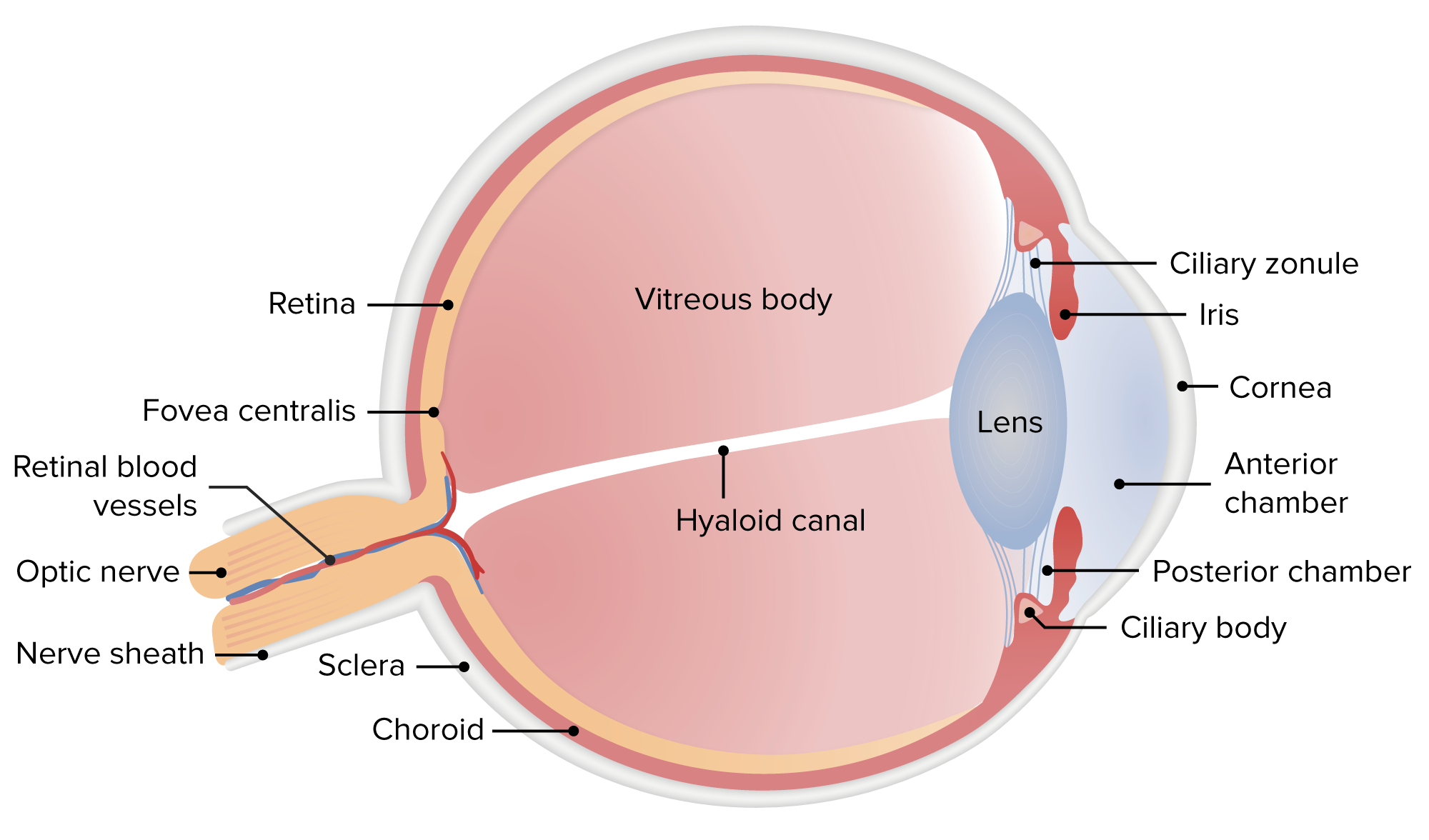
  • La parte frontal Frontal The bone that forms the frontal aspect of the skull. Its flat part forms the forehead, articulating inferiorly with the nasal bone and the cheek bone on each side of the face. Skull: Anatomy del ojo:
    • Córnea: la parte anterior y transparente del globo ocular.
    • Esclerótica:
      • “Parte blanca” del ojo
      • Capa exterior fibrosa y protectora
      • Compuesto principalmente por colágeno y algunas fibras elásticas cruciales
    • Limbo: la unión de la córnea y la esclerótica
    • Conjuntiva: la membrana mucosa transparente que se adhiere al AL Amyloidosis limbo
    • Iris:
      • La “parte coloreada” del ojo
      • Conectado a la parte anterior del cuerpo ciliar
      • Cubre la parte superior del cristalino y actúa como un obturador para el ojo
    • Cuerpo ciliar: mantiene el cristalino en EN Erythema nodosum is an immune-mediated panniculitis (inflammation of the subcutaneous fat) caused by a type IV (delayed-type) hypersensitivity reaction. It commonly manifests in young women as tender, erythematous nodules on the shins. Erythema Nodosum su sitio
  • Úvea (capa vascular media del ojo):
    • Úvea anterior: iris y cuerpo ciliar
    • Coroides: Parte posterior de la úvea
      • Contiene vasos sanguíneos que proporcionan nutrientes al AL Amyloidosis ojo
      • Situado entre la retina Retina The ten-layered nervous tissue membrane of the eye. It is continuous with the optic nerve and receives images of external objects and transmits visual impulses to the brain. Its outer surface is in contact with the choroid and the inner surface with the vitreous body. The outermost layer is pigmented, whereas the inner nine layers are transparent. Eye: Anatomy y la esclerótica
      • Se extiende hasta el nervio óptico posteriormente
  • El fondo del ojo:
    • Retina Retina The ten-layered nervous tissue membrane of the eye. It is continuous with the optic nerve and receives images of external objects and transmits visual impulses to the brain. Its outer surface is in contact with the choroid and the inner surface with the vitreous body. The outermost layer is pigmented, whereas the inner nine layers are transparent. Eye: Anatomy:
      • La capa nerviosa del ojo
      • Responsable de la percepción de la visión
      • Contiene varias células fotorreceptoras
      • Conectada al AL Amyloidosis nervio óptico
    • Mácula (área en EN Erythema nodosum is an immune-mediated panniculitis (inflammation of the subcutaneous fat) caused by a type IV (delayed-type) hypersensitivity reaction. It commonly manifests in young women as tender, erythematous nodules on the shins. Erythema Nodosum el centro de la retina Retina The ten-layered nervous tissue membrane of the eye. It is continuous with the optic nerve and receives images of external objects and transmits visual impulses to the brain. Its outer surface is in contact with the choroid and the inner surface with the vitreous body. The outermost layer is pigmented, whereas the inner nine layers are transparent. Eye: Anatomy):
      • Se encarga de enfocar los LOS Neisseria objetos a detalle
      • Necesario para actividades como la conducción y la lectura
    • Fóvea central: una pequeña depresión en EN Erythema nodosum is an immune-mediated panniculitis (inflammation of the subcutaneous fat) caused by a type IV (delayed-type) hypersensitivity reaction. It commonly manifests in young women as tender, erythematous nodules on the shins. Erythema Nodosum la mácula donde la visión es más nítida
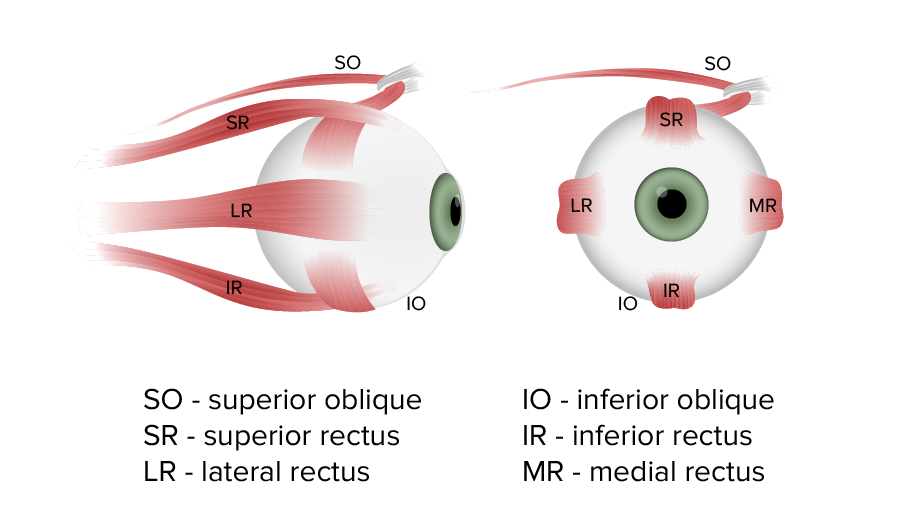
  • Músculos extraoculares:
    • 6 músculos que controlan los LOS Neisseria movimientos oculares
    • 4 músculos rectos:
      • Superior
      • Inferior
      • Lateral
      • Medial
    • 2 músculos oblicuos:
      • Superior
      • Inferior

Equipo para el examen

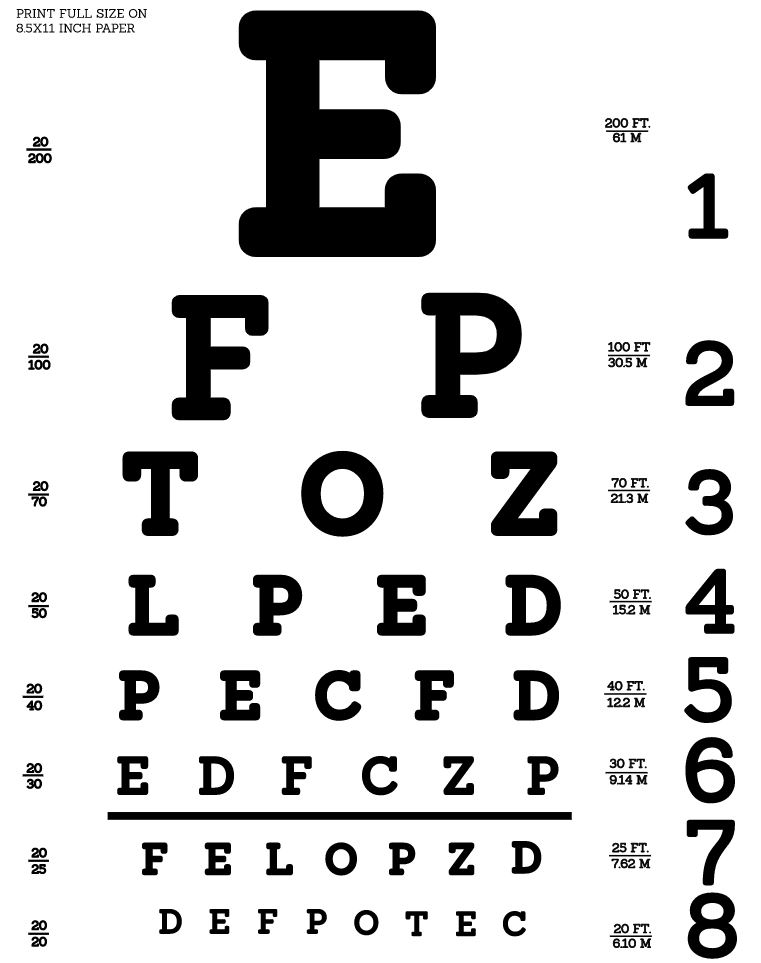
  • Tabla de Snellen o tarjeta de bolsillo para comprobar la agudeza visual
  • Tabla de Ishihara para valorar daltonismo
  • Linterna para examinar las pupilas
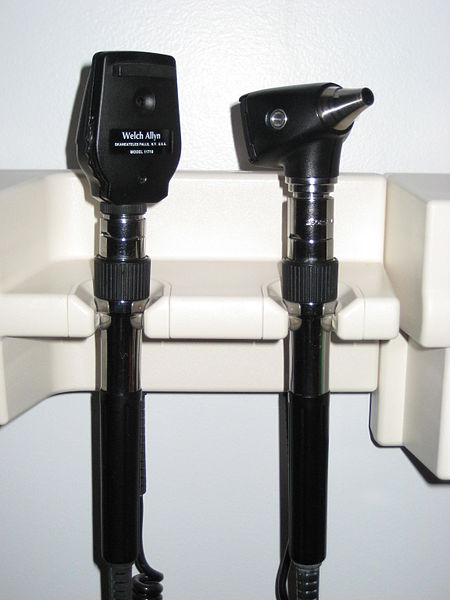
  • Oftalmoscopio para examinar la retina Retina The ten-layered nervous tissue membrane of the eye. It is continuous with the optic nerve and receives images of external objects and transmits visual impulses to the brain. Its outer surface is in contact with the choroid and the inner surface with the vitreous body. The outermost layer is pigmented, whereas the inner nine layers are transparent. Eye: Anatomy/fondo
  • Equipos especiales utilizados principalmente por oftalmólogos o médicos de urgencias:
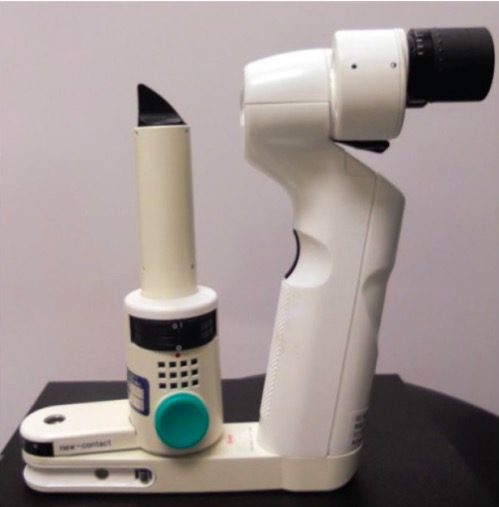
    • Lámpara de hendidura para examinar la córnea
    • Tonómetro para medir la presión intraocular
    • Gotas oculares para la dilatación pupilar:
      • Fenilefrina
      • Atropina
      • Tropicamida
      • Ciclopentolato
    • Fluoresceína y lámpara UV para detectar abrasiones corneales
    • Rejilla Amsler
    • Máquinas para pruebas perimetrales

Examen de la Visión

Pruebas de agudeza visual

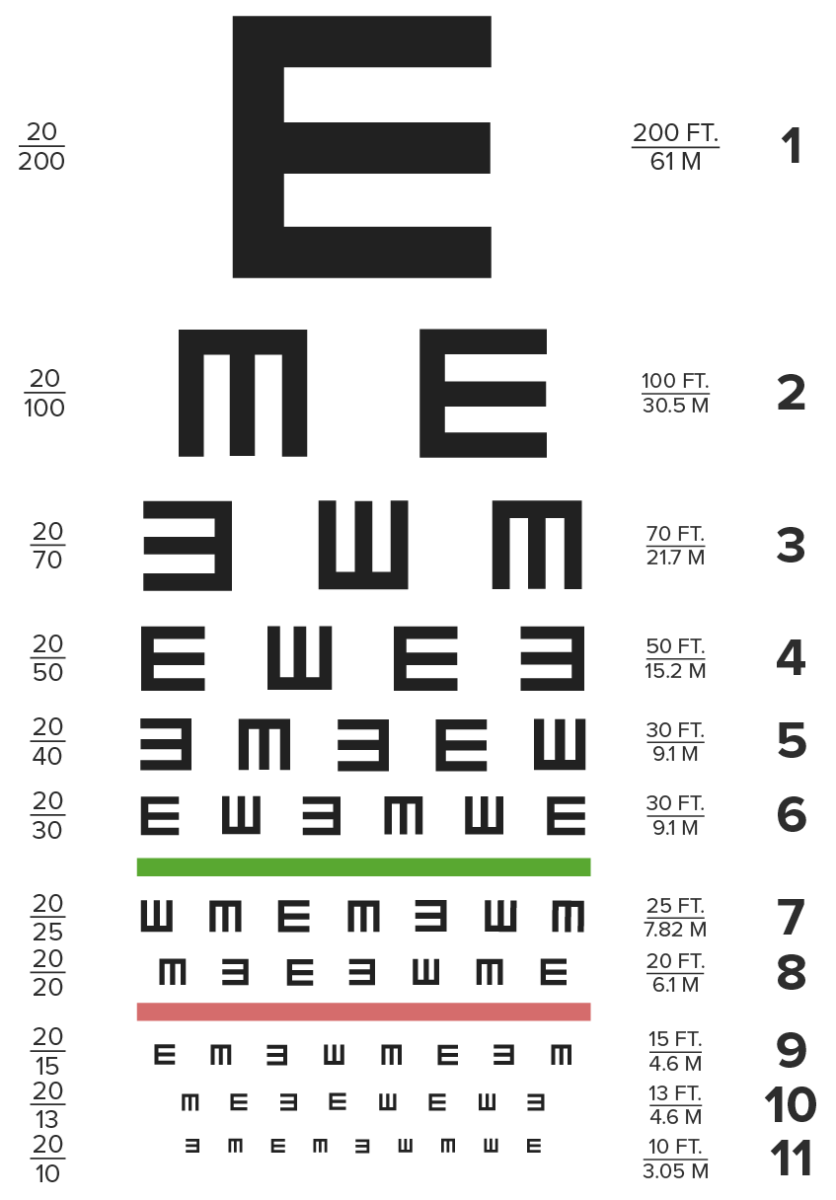
Tabla de Snellen:

  • Muestra una serie de 11 líneas de letras mayúsculas sobre fondo blanco, cada una de las cuales disminuye progresivamente de tamaño:
    • La fila más pequeña que puede leerse con precisión indica la agudeza visual en EN Erythema nodosum is an immune-mediated panniculitis (inflammation of the subcutaneous fat) caused by a type IV (delayed-type) hypersensitivity reaction. It commonly manifests in young women as tender, erythematous nodules on the shins. Erythema Nodosum ese ojo en EN Erythema nodosum is an immune-mediated panniculitis (inflammation of the subcutaneous fat) caused by a type IV (delayed-type) hypersensitivity reaction. It commonly manifests in young women as tender, erythematous nodules on the shins. Erythema Nodosum concreto.
    • La línea 8 corresponde a una visión 20/20, lo que indica que una persona con una agudeza visual normal puede leer esta línea con precisión a 6,1 mts (20 pies) de distancia.
  • La tabla optométrica “Tumbling E” permite detectar la miopía en EN Erythema nodosum is an immune-mediated panniculitis (inflammation of the subcutaneous fat) caused by a type IV (delayed-type) hypersensitivity reaction. It commonly manifests in young women as tender, erythematous nodules on the shins. Erythema Nodosum niños pequeños o en EN Erythema nodosum is an immune-mediated panniculitis (inflammation of the subcutaneous fat) caused by a type IV (delayed-type) hypersensitivity reaction. It commonly manifests in young women as tender, erythematous nodules on the shins. Erythema Nodosum personas que no saben leer.
  • Procedimiento:
    • El sujeto está sentado o de pie a 6,1 mts (20 pies) de la tabla de Snellen.
    • Se pide al AL Amyloidosis sujeto que se tape un ojo, que lea la carta con cada ojo por separado y luego con los LOS Neisseria dos ojos. La agudeza visual de cada uno se registra como una fracción (e.g., 20/30).
    • Prueba de contar los LOS Neisseria dedos: se realiza si el sujeto es incapaz de leer la línea superior incluso desde 3 pies (0,91 mts). Se pide al AL Amyloidosis sujeto que cuente el número de dedos que sostiene el examinador. Los LOS Neisseria resultados se registran como CD-1, 2 o 3 en EN Erythema nodosum is an immune-mediated panniculitis (inflammation of the subcutaneous fat) caused by a type IV (delayed-type) hypersensitivity reaction. It commonly manifests in young women as tender, erythematous nodules on the shins. Erythema Nodosum función del número de dedos visualizados y contados con precisión.
    • Movimiento de la mano (MM): se comprueba si el sujeto es incapaz de contar los LOS Neisseria dedos; se registra como MM positivo o MM negativo
    • Prueba de percepción de la luz (PL): para los LOS Neisseria sujetos que no pueden contar los LOS Neisseria dedos o apreciar los LOS Neisseria movimientos de la mano; se registra como PL positivo o PL negativo

Tabla de visión cercana:

  • Se utiliza para comprobar la visión de cerca a una distancia de 35 cm (14 pulgadas)
  • Se suele utilizar la tabla optométrica Jaeger (con 10 líneas de letra progresivamente más pequeña):
    • Tamaños de texto que aumentan de 0,37–2,5 mm
    • La agudeza se registra en EN Erythema nodosum is an immune-mediated panniculitis (inflammation of the subcutaneous fat) caused by a type IV (delayed-type) hypersensitivity reaction. It commonly manifests in young women as tender, erythematous nodules on the shins. Erythema Nodosum la línea más pequeña que puede ser leída con precisión por el sujeto.

Relevancia clínica:

  • Los LOS Neisseria trastornos refractivos pueden tratarse con dispositivos refractivos (gafas o lentes de contacto):
    • Miopía: mala visión lejana
    • Hipermetropía: mala visión cercana
    • Astigmatismo: visión borrosa debida a la deformación de la superficie de la córnea hace HACE Altitude Sickness que los LOS Neisseria rayos de luz que entran en EN Erythema nodosum is an immune-mediated panniculitis (inflammation of the subcutaneous fat) caused by a type IV (delayed-type) hypersensitivity reaction. It commonly manifests in young women as tender, erythematous nodules on the shins. Erythema Nodosum el ojo a lo largo de diferentes planos se enfoquen de forma desigual.
  • Presbicia:
    • Error Error Refers to any act of commission (doing something wrong) or omission (failing to do something right) that exposes patients to potentially hazardous situations. Disclosure of Information no refractivo en EN Erythema nodosum is an immune-mediated panniculitis (inflammation of the subcutaneous fat) caused by a type IV (delayed-type) hypersensitivity reaction. It commonly manifests in young women as tender, erythematous nodules on the shins. Erythema Nodosum adultos mayores
    • Afecta a la agudeza visual debido a la pérdida de la acomodación normal del cristalino

Pruebas de campo visual

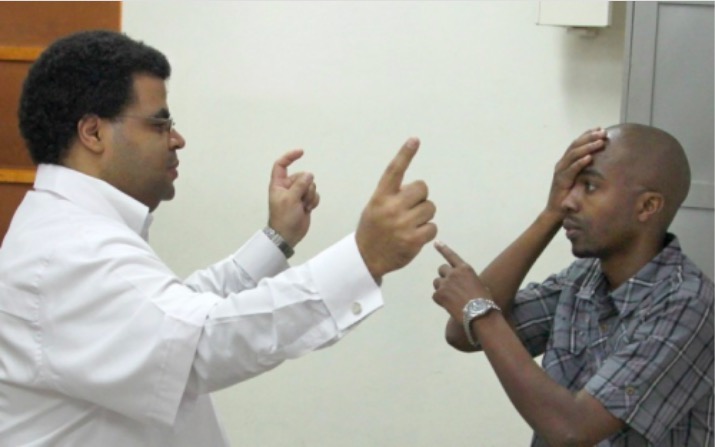
El campo de visión es el área total en EN Erythema nodosum is an immune-mediated panniculitis (inflammation of the subcutaneous fat) caused by a type IV (delayed-type) hypersensitivity reaction. It commonly manifests in young women as tender, erythematous nodules on the shins. Erythema Nodosum la que se pueden visualizar los LOS Neisseria objetos mientras se mira de frente; incluye la visión central y la visión periférica.

  • Examen de visión periférica = prueba de confrontación
    • Procedimiento:
      • El examinador se sienta frente al AL Amyloidosis sujeto a la misma altura de la cabeza pero a una distancia de unos 60 cm (2 pies).
      • Se pide al AL Amyloidosis individuo que se cubra el ojo izquierdo con la palma de la mano y se le dice que mire directamente al AL Amyloidosis ojo izquierdo del examinador.
      • El examinador cierra su ojo derecho y mueve su mano desde la periferia hacia la línea de visión común.
      • El paciente anuncia que puede ver el movimiento de la mano cuando entra en EN Erythema nodosum is an immune-mediated panniculitis (inflammation of the subcutaneous fat) caused by a type IV (delayed-type) hypersensitivity reaction. It commonly manifests in young women as tender, erythematous nodules on the shins. Erythema Nodosum su campo de visión.
      • El movimiento de la mano se repite en EN Erythema nodosum is an immune-mediated panniculitis (inflammation of the subcutaneous fat) caused by a type IV (delayed-type) hypersensitivity reaction. It commonly manifests in young women as tender, erythematous nodules on the shins. Erythema Nodosum varias partes del campo de visión, es decir, arriba, abajo, a la derecha, a la izquierda.
      • El proceso se repite para el ojo contralateral.
    • Resultados: El sujeto debe confirmar el movimiento de la mano en EN Erythema nodosum is an immune-mediated panniculitis (inflammation of the subcutaneous fat) caused by a type IV (delayed-type) hypersensitivity reaction. It commonly manifests in young women as tender, erythematous nodules on the shins. Erythema Nodosum su campo de visión, que se compara con la del examinador (asumiendo que es normal).
  • Otras pruebas utilizadas por los LOS Neisseria oftalmólogos:
    • Perimetría:
      • Las máquinas perimetrales manuales o automatizadas se utilizan para examinar y cuantificar el campo visual de las personas mediante objetivos de diversos tamaños y colores.
      • Importancia clínica: La disminución de la visión periférica puede deberse a daños en EN Erythema nodosum is an immune-mediated panniculitis (inflammation of the subcutaneous fat) caused by a type IV (delayed-type) hypersensitivity reaction. It commonly manifests in young women as tender, erythematous nodules on the shins. Erythema Nodosum el nervio óptico, la retina Retina The ten-layered nervous tissue membrane of the eye. It is continuous with the optic nerve and receives images of external objects and transmits visual impulses to the brain. Its outer surface is in contact with the choroid and the inner surface with the vitreous body. The outermost layer is pigmented, whereas the inner nine layers are transparent. Eye: Anatomy o las zonas del cerebro que procesan la visión (por ejemplo, después de un accidente cerebrovascular).
    • Rejilla de Amsler:
      • Una prueba para detectar la pérdida de visión central debida a la degeneración macular
      • Líneas horizontales y verticales en EN Erythema nodosum is an immune-mediated panniculitis (inflammation of the subcutaneous fat) caused by a type IV (delayed-type) hypersensitivity reaction. It commonly manifests in young women as tender, erythematous nodules on the shins. Erythema Nodosum una cuadrícula con un solo punto en EN Erythema nodosum is an immune-mediated panniculitis (inflammation of the subcutaneous fat) caused by a type IV (delayed-type) hypersensitivity reaction. It commonly manifests in young women as tender, erythematous nodules on the shins. Erythema Nodosum el centro
      • Se examina un ojo a la vez a 30 cm de distancia.
      • Se pide al AL Amyloidosis sujeto que fije su visión en EN Erythema nodosum is an immune-mediated panniculitis (inflammation of the subcutaneous fat) caused by a type IV (delayed-type) hypersensitivity reaction. It commonly manifests in young women as tender, erythematous nodules on the shins. Erythema Nodosum el punto central y que describa cualquier patrón que vea en EN Erythema nodosum is an immune-mediated panniculitis (inflammation of the subcutaneous fat) caused by a type IV (delayed-type) hypersensitivity reaction. It commonly manifests in young women as tender, erythematous nodules on the shins. Erythema Nodosum su visión.
      • La rejilla de Amsler se usa para detectar defectos en EN Erythema nodosum is an immune-mediated panniculitis (inflammation of the subcutaneous fat) caused by a type IV (delayed-type) hypersensitivity reaction. It commonly manifests in young women as tender, erythematous nodules on the shins. Erythema Nodosum los LOS Neisseria 20 grados centrales del campo visual.
  • Relevancia clínica
    • Las pruebas de los LOS Neisseria campos visuales ayudan a diagnosticar:
      • Daños en EN Erythema nodosum is an immune-mediated panniculitis (inflammation of the subcutaneous fat) caused by a type IV (delayed-type) hypersensitivity reaction. It commonly manifests in young women as tender, erythematous nodules on the shins. Erythema Nodosum el nervio óptico
      • Glaucoma Glaucoma Glaucoma is an optic neuropathy characterized by typical visual field defects and optic nerve atrophy seen as optic disc cupping on examination. The acute form of glaucoma is a medical emergency. Glaucoma is often, but not always, caused by increased intraocular pressure (IOP). Glaucoma
      • Hemianopsia
      • Cataratas
    • La rejilla de Amsler puede emplearse para evaluar el campo visual central de un individuo, en EN Erythema nodosum is an immune-mediated panniculitis (inflammation of the subcutaneous fat) caused by a type IV (delayed-type) hypersensitivity reaction. It commonly manifests in young women as tender, erythematous nodules on the shins. Erythema Nodosum particular para la degeneración macular.
Prueba de los campos visuales

Comprobación de los campos visuales:
El ojo izquierdo del examinador está cerrado para poder comparar el campo de su ojo derecho con el del ojo izquierdo del sujeto.

Imagen: “Testing visual fields” por Consultant ophthalmic surgeon, Department of Ophthalmology, Norfolk & Norwich University Hospital, and Honorary Reader, University of East Anglia, Norwich, UK. Licencia: Cc BY 2.0

Visión del color

  • Delimita la deficiencia en EN Erythema nodosum is an immune-mediated panniculitis (inflammation of the subcutaneous fat) caused by a type IV (delayed-type) hypersensitivity reaction. It commonly manifests in young women as tender, erythematous nodules on the shins. Erythema Nodosum la percepción de los LOS Neisseria colores rojo/verde y total
  • Puede realizarse en EN Erythema nodosum is an immune-mediated panniculitis (inflammation of the subcutaneous fat) caused by a type IV (delayed-type) hypersensitivity reaction. It commonly manifests in young women as tender, erythematous nodules on the shins. Erythema Nodosum la consulta para diagnosticar el daltonismo
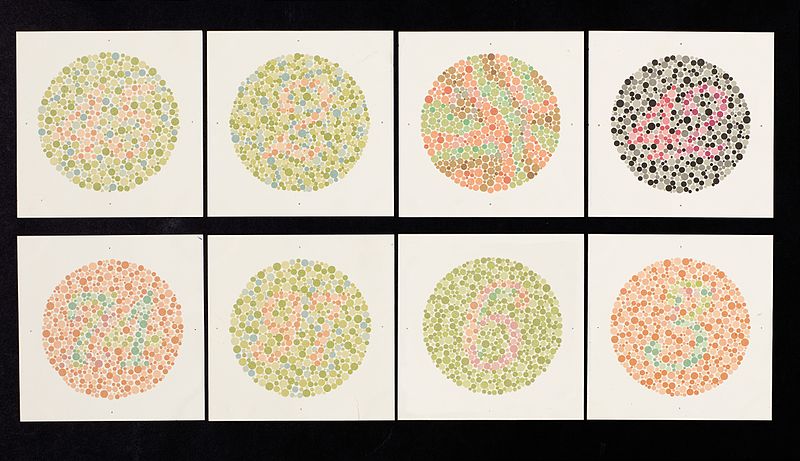
  • Prueba de color Ishihara: 14 láminas numeradas y de colores para el tamizaje masivo y el uso en EN Erythema nodosum is an immune-mediated panniculitis (inflammation of the subcutaneous fat) caused by a type IV (delayed-type) hypersensitivity reaction. It commonly manifests in young women as tender, erythematous nodules on the shins. Erythema Nodosum el aula
Gráfico de Ishihara

Tabla de Ishihara utilizada para examinar la visión del color

Imagen: “Ishihara chart” por Wellcome Trust. Licencia: CC BY 4.0

Examen Ocular

Examen general de la cara

  • Postura de la cabeza:
    • Puede ser anormal en EN Erythema nodosum is an immune-mediated panniculitis (inflammation of the subcutaneous fat) caused by a type IV (delayed-type) hypersensitivity reaction. It commonly manifests in young women as tender, erythematous nodules on the shins. Erythema Nodosum individuos con estrabismo
    • La cabeza puede girarse en EN Erythema nodosum is an immune-mediated panniculitis (inflammation of the subcutaneous fat) caused by a type IV (delayed-type) hypersensitivity reaction. It commonly manifests in young women as tender, erythematous nodules on the shins. Erythema Nodosum la dirección de la acción del músculo paralizado (e.g., accidente cerebrovascular).
    • Con la ptosis Ptosis Cranial Nerve Palsies, el mentón se eleva para descubrir la zona pupilar.
  • La frente:
    • La pérdida completa de las arrugas en EN Erythema nodosum is an immune-mediated panniculitis (inflammation of the subcutaneous fat) caused by a type IV (delayed-type) hypersensitivity reaction. It commonly manifests in young women as tender, erythematous nodules on the shins. Erythema Nodosum un lado de la frente se observa en EN Erythema nodosum is an immune-mediated panniculitis (inflammation of the subcutaneous fat) caused by a type IV (delayed-type) hypersensitivity reaction. It commonly manifests in young women as tender, erythematous nodules on the shins. Erythema Nodosum individuos con parálisis facial de la neurona motora inferior (e.g., parálisis de Bell).
    • La asimetría facial también puede observarse en EN Erythema nodosum is an immune-mediated panniculitis (inflammation of the subcutaneous fat) caused by a type IV (delayed-type) hypersensitivity reaction. It commonly manifests in young women as tender, erythematous nodules on the shins. Erythema Nodosum individuos con secuelas de un accidente cerebrovascular, pero solo está afectada la mitad inferior de la cara (no la frente).
    • Mnemotecnia:
      • B como en EN Erythema nodosum is an immune-mediated panniculitis (inflammation of the subcutaneous fat) caused by a type IV (delayed-type) hypersensitivity reaction. It commonly manifests in young women as tender, erythematous nodules on the shins. Erythema Nodosum parálisis de Bell (Bell’s palsy Palsy paralysis of an area of the body, thus incapable of voluntary movement Cranial Nerve Palsies, en EN Erythema nodosum is an immune-mediated panniculitis (inflammation of the subcutaneous fat) caused by a type IV (delayed-type) hypersensitivity reaction. It commonly manifests in young women as tender, erythematous nodules on the shins. Erythema Nodosum inglés): Tanto la parte superior como la inferior de la cara están afectadas, (Both upper and lower face are affected, en EN Erythema nodosum is an immune-mediated panniculitis (inflammation of the subcutaneous fat) caused by a type IV (delayed-type) hypersensitivity reaction. It commonly manifests in young women as tender, erythematous nodules on the shins. Erythema Nodosum inglés).
      • S como en EN Erythema nodosum is an immune-mediated panniculitis (inflammation of the subcutaneous fat) caused by a type IV (delayed-type) hypersensitivity reaction. It commonly manifests in young women as tender, erythematous nodules on the shins. Erythema Nodosum accidente cerebrovascular (Stroke, en EN Erythema nodosum is an immune-mediated panniculitis (inflammation of the subcutaneous fat) caused by a type IV (delayed-type) hypersensitivity reaction. It commonly manifests in young women as tender, erythematous nodules on the shins. Erythema Nodosum inglés): Exclusivamente afecta a la sonrisa, (only the Smile is affected, en EN Erythema nodosum is an immune-mediated panniculitis (inflammation of the subcutaneous fat) caused by a type IV (delayed-type) hypersensitivity reaction. It commonly manifests in young women as tender, erythematous nodules on the shins. Erythema Nodosum inglés).

Ojo externo

El examen preliminar para detectar cualquier anomalía grave en EN Erythema nodosum is an immune-mediated panniculitis (inflammation of the subcutaneous fat) caused by a type IV (delayed-type) hypersensitivity reaction. It commonly manifests in young women as tender, erythematous nodules on the shins. Erythema Nodosum el ojo y las estructuras circundantes se realiza con luz difusa. Los LOS Neisseria resultados clínicamente relevantes son:

La ceja:

  • El nivel de las cejas puede modificarse en EN Erythema nodosum is an immune-mediated panniculitis (inflammation of the subcutaneous fat) caused by a type IV (delayed-type) hypersensitivity reaction. It commonly manifests in young women as tender, erythematous nodules on the shins. Erythema Nodosum individuos con ptosis Ptosis Cranial Nerve Palsies.
  • La madarosis Madarosis Blepharitis (ausencia de pelo en EN Erythema nodosum is an immune-mediated panniculitis (inflammation of the subcutaneous fat) caused by a type IV (delayed-type) hypersensitivity reaction. It commonly manifests in young women as tender, erythematous nodules on the shins. Erythema Nodosum el tercio lateral de las cejas) se observa en EN Erythema nodosum is an immune-mediated panniculitis (inflammation of the subcutaneous fat) caused by a type IV (delayed-type) hypersensitivity reaction. It commonly manifests in young women as tender, erythematous nodules on the shins. Erythema Nodosum:
    • Lepra
    • Hipotiroidismo

Párpados:

  • Posición:
    • Normalmente, el párpado inferior cubre el limbo y el superior cubre 2 mm de la córnea con los LOS Neisseria ojos abiertos.
    • En EN Erythema nodosum is an immune-mediated panniculitis (inflammation of the subcutaneous fat) caused by a type IV (delayed-type) hypersensitivity reaction. It commonly manifests in young women as tender, erythematous nodules on the shins. Erythema Nodosum los LOS Neisseria casos de ptosis Ptosis Cranial Nerve Palsies, el párpado cubre más de una sexta parte de la córnea.
    • El limbo superior puede verse debido a la retracción del párpado en EN Erythema nodosum is an immune-mediated panniculitis (inflammation of the subcutaneous fat) caused by a type IV (delayed-type) hypersensitivity reaction. It commonly manifests in young women as tender, erythematous nodules on the shins. Erythema Nodosum:
      • Tirotoxicosis
      • Sobreactividad simpática
  • Movimiento:
    • Normalmente, el párpado superior sigue al AL Amyloidosis globo ocular con un movimiento hacia abajo.
    • Con la oftalmopatía tiroidea, el movimiento del párpado superior se retrasa con respecto a la mirada hacia abajo.
    • Lagoftalmos (incapacidad de cerrar los LOS Neisseria ojos completamente) visto en EN Erythema nodosum is an immune-mediated panniculitis (inflammation of the subcutaneous fat) caused by a type IV (delayed-type) hypersensitivity reaction. It commonly manifests in young women as tender, erythematous nodules on the shins. Erythema Nodosum:
    • El ritmo normal de parpadeo es de 12–6 por minuto:
      • Aumenta con la irritación local
      • Reducido en EN Erythema nodosum is an immune-mediated panniculitis (inflammation of the subcutaneous fat) caused by a type IV (delayed-type) hypersensitivity reaction. It commonly manifests in young women as tender, erythematous nodules on the shins. Erythema Nodosum la parálisis del 7.º nervio
  • Margen palpebral:
    • Entropión: giro hacia dentro del margen del párpado
    • Ectropión:
      • Giro hacia el exterior del margen del párpado
      • Las causas más comunes son el tracoma, la blefaritis, el orzuelo y el traumatismo del párpado.
    • Distiquiasis: una hilera extra de pestañas anormal
    • La madarosis Madarosis Blepharitis (ausencia de pestañas) puede verse en EN Erythema nodosum is an immune-mediated panniculitis (inflammation of the subcutaneous fat) caused by a type IV (delayed-type) hypersensitivity reaction. It commonly manifests in young women as tender, erythematous nodules on the shins. Erythema Nodosum:
      • Blefaritis crónica
      • Lepra
      • Hipotiroidismo
    • La inflamación en EN Erythema nodosum is an immune-mediated panniculitis (inflammation of the subcutaneous fat) caused by a type IV (delayed-type) hypersensitivity reaction. It commonly manifests in young women as tender, erythematous nodules on the shins. Erythema Nodosum el margen del párpado puede deberse a:
      • Hordeolum Hordeolum A hordeolum is an acute infection affecting the meibomian, Zeiss, or Moll glands of the eyelid. Stasis of the gland secretions predisposes to bacterial infection. Staphylococcus aureus is the most common pathogen. Hordeolum (Stye) (orzuelo)
      • Papiloma
      • Chalazión marginal
    • Anquilobléfaron (fisura palpebral horizontalmente estrecha) visto en EN Erythema nodosum is an immune-mediated panniculitis (inflammation of the subcutaneous fat) caused by a type IV (delayed-type) hypersensitivity reaction. It commonly manifests in young women as tender, erythematous nodules on the shins. Erythema Nodosum los LOS Neisseria ángulos del ojo después de:
      • Adherencias de los LOS Neisseria párpados tras una blefaritis ulcerosa
      • Adherencias de los LOS Neisseria párpados tras quemaduras
    • Blefarofimosis (fisura palpebral estrecha): suele ser una anomalía congénita
    • Fisura palpebral verticalmente estrecha vista en EN Erythema nodosum is an immune-mediated panniculitis (inflammation of the subcutaneous fat) caused by a type IV (delayed-type) hypersensitivity reaction. It commonly manifests in young women as tender, erythematous nodules on the shins. Erythema Nodosum:
      • Afecciones inflamatorias de la conjuntiva
      • Afecciones inflamatorias de la córnea y la úvea
      • Ptosis Ptosis Cranial Nerve Palsies
      • Enoftalmos y anoftalmos
      • Bulbo atrófico
    • Fisura palpebral verticalmente ancha vista en EN Erythema nodosum is an immune-mediated panniculitis (inflammation of the subcutaneous fat) caused by a type IV (delayed-type) hypersensitivity reaction. It commonly manifests in young women as tender, erythematous nodules on the shins. Erythema Nodosum:
  • Aparato lagrimal:
    • Inspección del área del saco lagrimal para:
      • Enrojecimiento
      • Inflamación
      • Fístula
    • Inspección de los LOS Neisseria puntos lagrimales en EN Erythema nodosum is an immune-mediated panniculitis (inflammation of the subcutaneous fat) caused by a type IV (delayed-type) hypersensitivity reaction. It commonly manifests in young women as tender, erythematous nodules on the shins. Erythema Nodosum busca de defectos como:
      • Eversión
      • Estenosis
      • Ausencia
      • Secreción
    • Prueba de regurgitación para la dacriocistitis: Presionar sobre la zona del saco lagrimal justo medial al AL Amyloidosis canto medial y observar si hay regurgitación de alguna secreción desde los LOS Neisseria puntos lagrimales.
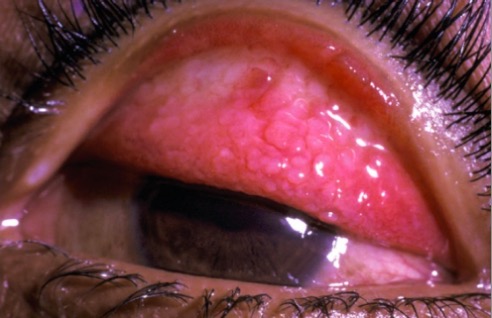
Papilas en el párpado superior evertido en la queraconjuntivitis vernal

Papilas en el párpado superior evertido en la queratoconjuntivitis vernal

Imagen: “Papillae on the everted upper eyelid in vernal keraconjunctivitis” por Millicent Bore. Licencia: CC BY 2.0

Conjuntiva

Examen:

  • La parte bulbar de la conjuntiva puede examinarse retrayendo el párpado con los LOS Neisseria dedos.
  • Conjuntiva palpebral inferior: Tirar del párpado inferior hacia abajo mientras el sujeto mira hacia arriba.
  • Conjuntiva palpebral superior: Retraer el párpado superior suavemente con los LOS Neisseria dedos.

Relevancia clínica:

  • Decoloración:
    • Melanosis Melanosis Disorders of increased melanin pigmentation that develop without preceding inflammatory disease. Primary Biliary Cholangitis primaria adquirida: La mácula marrón unilateral e indolora puede transformarse en EN Erythema nodosum is an immune-mediated panniculitis (inflammation of the subcutaneous fat) caused by a type IV (delayed-type) hypersensitivity reaction. It commonly manifests in young women as tender, erythematous nodules on the shins. Erythema Nodosum un melanoma Melanoma Melanoma is a malignant tumor arising from melanocytes, the melanin-producing cells of the epidermis. These tumors are most common in fair-skinned individuals with a history of excessive sun exposure and sunburns. Melanoma maligno.
    • Conjuntiva pálida: se observa con la anemia Anemia Anemia is a condition in which individuals have low Hb levels, which can arise from various causes. Anemia is accompanied by a reduced number of RBCs and may manifest with fatigue, shortness of breath, pallor, and weakness. Subtypes are classified by the size of RBCs, chronicity, and etiology. Anemia: Overview and Types
    • Manchas rojas brillantes: indicativo de hemorragia subconjuntival
  • Congestión:
    • Superficial: conjuntivitis
    • Profunda: iridociclitis o queratitis
    • Mixta: glaucoma Glaucoma Glaucoma is an optic neuropathy characterized by typical visual field defects and optic nerve atrophy seen as optic disc cupping on examination. The acute form of glaucoma is a medical emergency. Glaucoma is often, but not always, caused by increased intraocular pressure (IOP). Glaucoma
  • Edema Edema Edema is a condition in which excess serous fluid accumulates in the body cavity or interstitial space of connective tissues. Edema is a symptom observed in several medical conditions. It can be categorized into 2 types, namely, peripheral (in the extremities) and internal (in an organ or body cavity). Edema:
    • Afecciones inflamatorias
    • Infecciones
    • Reacciones alérgicas
  • Folículos:
    • Zonas elevadas de color blanco grisáceo (agregación de linfocitos) observadas en EN Erythema nodosum is an immune-mediated panniculitis (inflammation of the subcutaneous fat) caused by a type IV (delayed-type) hypersensitivity reaction. It commonly manifests in young women as tender, erythematous nodules on the shins. Erythema Nodosum:
      • Tracoma
      • Conjuntivitis folicular aguda
  • Papilas (ver foto):
    • Zonas rojas y elevadas con la parte superior plana
    • Visto en EN Erythema nodosum is an immune-mediated panniculitis (inflammation of the subcutaneous fat) caused by a type IV (delayed-type) hypersensitivity reaction. It commonly manifests in young women as tender, erythematous nodules on the shins. Erythema Nodosum:
      • Tracoma
      • Conjuntivitis alérgica
      • Conjuntivitis papilar gigante (CPG)
  • Concreciones:
    • Zonas elevadas de color blanco amarillento que varían de tamaño
    • Representan células epiteliales espesas y muertas en EN Erythema nodosum is an immune-mediated panniculitis (inflammation of the subcutaneous fat) caused by a type IV (delayed-type) hypersensitivity reaction. It commonly manifests in young women as tender, erythematous nodules on the shins. Erythema Nodosum las glándulas de Henle
    • Visto en EN Erythema nodosum is an immune-mediated panniculitis (inflammation of the subcutaneous fat) caused by a type IV (delayed-type) hypersensitivity reaction. It commonly manifests in young women as tender, erythematous nodules on the shins. Erythema Nodosum:
      • Tracoma
      • Degeneración conjuntival
      • Puede ser idiopático
  • Pingüécula:
    • Nódulo amarillento, triangular y avascular Avascular Corneal Abrasions, Erosion, and Ulcers que se asemeja a una gota de grasa
    • Depósitos grasos/proteínico en EN Erythema nodosum is an immune-mediated panniculitis (inflammation of the subcutaneous fat) caused by a type IV (delayed-type) hypersensitivity reaction. It commonly manifests in young women as tender, erythematous nodules on the shins. Erythema Nodosum la conjuntiva (no afecta a la córnea)
    • Se desarrolla en EN Erythema nodosum is an immune-mediated panniculitis (inflammation of the subcutaneous fat) caused by a type IV (delayed-type) hypersensitivity reaction. It commonly manifests in young women as tender, erythematous nodules on the shins. Erythema Nodosum la conjuntiva bulbar en EN Erythema nodosum is an immune-mediated panniculitis (inflammation of the subcutaneous fat) caused by a type IV (delayed-type) hypersensitivity reaction. It commonly manifests in young women as tender, erythematous nodules on the shins. Erythema Nodosum respuesta a:
      • Exposición a la luz UV
      • Irritación por el viento
      • Irritación por polvo
    • Puede progresar a un pterigión
    • Puede o no oscurecer el campo de visión
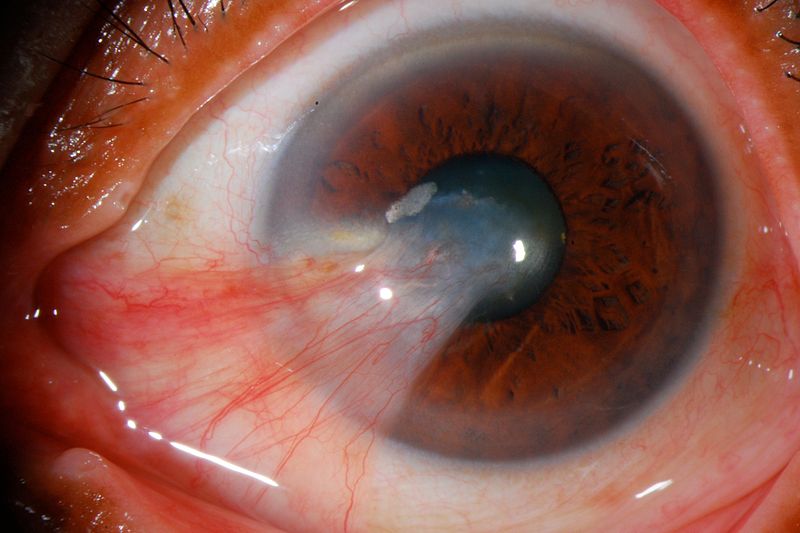
  • Pterigión (ver foto):
    • Nódulo vascular amarillento, triangular, parecido a una gota de grasa
    • Depósitos grasos/proteínicos en EN Erythema nodosum is an immune-mediated panniculitis (inflammation of the subcutaneous fat) caused by a type IV (delayed-type) hypersensitivity reaction. It commonly manifests in young women as tender, erythematous nodules on the shins. Erythema Nodosum la conjuntiva (implica a la córnea)
    • Se desarrolla en EN Erythema nodosum is an immune-mediated panniculitis (inflammation of the subcutaneous fat) caused by a type IV (delayed-type) hypersensitivity reaction. It commonly manifests in young women as tender, erythematous nodules on the shins. Erythema Nodosum la conjuntiva bulbar en EN Erythema nodosum is an immune-mediated panniculitis (inflammation of the subcutaneous fat) caused by a type IV (delayed-type) hypersensitivity reaction. It commonly manifests in young women as tender, erythematous nodules on the shins. Erythema Nodosum respuesta a:
      • Exposición a la luz UV
      • Irritación por el viento
      • Irritación por polvo
    • Puede ir precedido de una pingüécula
    • Afecta generalmente al AL Amyloidosis campo de visión
  • Quistes: se ven en EN Erythema nodosum is an immune-mediated panniculitis (inflammation of the subcutaneous fat) caused by a type IV (delayed-type) hypersensitivity reaction. It commonly manifests in young women as tender, erythematous nodules on the shins. Erythema Nodosum la conjuntiva
  • Tumores malignos de la conjuntiva:
    • Dermoides
    • Papilomas
    • Carcinoma de células escamosas
Pterigión

Pterigión severo que llega a la pupila

Imagen: “Pterygium” por José Miguel Varas, MD. Licencia: CC BY 3.0

Esclerótica

  • Se examina al AL Amyloidosis mismo tiempo que la conjuntiva
  • Relevancia clínica:
    • Esclerótica amarilla: ictericia por enfermedad hepática
    • Decoloración azulada: osteítis deformante, síndrome de Marfan
    • Inflamación: En EN Erythema nodosum is an immune-mediated panniculitis (inflammation of the subcutaneous fat) caused by a type IV (delayed-type) hypersensitivity reaction. It commonly manifests in young women as tender, erythematous nodules on the shins. Erythema Nodosum la escleritis se observa un nódulo plano circunscrito de color rosa o púrpura.
    • Epiescleritis: mancha profunda y oscura asociada a una marcada inflamación y congestión ciliar
    • Las perforaciones traumáticas pueden verse en EN Erythema nodosum is an immune-mediated panniculitis (inflammation of the subcutaneous fat) caused by a type IV (delayed-type) hypersensitivity reaction. It commonly manifests in young women as tender, erythematous nodules on the shins. Erythema Nodosum condiciones de traumatismo.
    • El traumatismo perforante puede comunicarse con la cámara anterior.

Iris

  • La “parte coloreada” del ojo, examinada con luz normal
  • Coloboma Coloboma Congenital anomaly in which some of the structures of the eye are absent due to incomplete fusion of the fetal intraocular fissure during gestation. Esophageal Atresia and Tracheoesophageal Fistula anterior: fisura o hendidura del iris:
    • El coloboma uveal confiere al iris un aspecto de “ojo de cerradura” u “ojo de gato”:
      • Puede ser benigno
      • Puede estar asociado a graves defectos del cristalino y del nervio óptico
  • Sinequias: adherencias entre el iris y otras estructuras pupilares
    • Las sinequias anteriores se ven en EN Erythema nodosum is an immune-mediated panniculitis (inflammation of the subcutaneous fat) caused by a type IV (delayed-type) hypersensitivity reaction. It commonly manifests in young women as tender, erythematous nodules on the shins. Erythema Nodosum:
      • Leucoma adherente
      • Lepra
      • Lesión corneal perforante
    • Sinequias posteriores: se observan con la iridociclitis
  • La heterocromía congénita del iris (iris de diferente color en EN Erythema nodosum is an immune-mediated panniculitis (inflammation of the subcutaneous fat) caused by a type IV (delayed-type) hypersensitivity reaction. It commonly manifests in young women as tender, erythematous nodules on the shins. Erythema Nodosum el mismo individuo) puede justificar una evaluación adicional para:
    • Síndrome de Waardenburg
    • Síndrome de Sturge-Weber
    • Síndrome de Horner
  • Iritis Iritis Inflammation of the iris characterized by circumcorneal injection, aqueous flare, keratotic precipitates, and constricted and sluggish pupil along with discoloration of the iris. Leprosy: leucocitos en EN Erythema nodosum is an immune-mediated panniculitis (inflammation of the subcutaneous fat) caused by a type IV (delayed-type) hypersensitivity reaction. It commonly manifests in young women as tender, erythematous nodules on the shins. Erythema Nodosum la cámara anterior del ojo
  • Uveítis anterior: inflamación del iris y del cuerpo ciliar anterior
  • Iridociclitis: inflamación del iris y del cuerpo ciliar adyacente
    • El tipo más común de uveítis
    • Puede limitarse al AL Amyloidosis ojo o significar una enfermedad sistémica
    • Asociado a condiciones reumatológicas:
      • Espondilitis anquilosante relacionada con HLA-B27
      • Artritis psoriásica
      • Lupus eritematoso sistémico
    • Asociado a enfermedades infecciosas:
      • Herpes zóster
      • Citomegalovirus
      • Toxoplasmosis Toxoplasmosis Toxoplasmosis is an infectious disease caused by Toxoplasma gondii, an obligate intracellular protozoan parasite. Felines are the definitive host, but transmission to humans can occur through contact with cat feces or the consumption of contaminated foods. The clinical presentation and complications depend on the host’s immune status. Toxoplasma/Toxoplasmosis
      • Sífilis
      • TB TB Tuberculosis (TB) is an infectious disease caused by Mycobacterium tuberculosis complex bacteria. The bacteria usually attack the lungs but can also damage other parts of the body. Approximately 30% of people around the world are infected with this pathogen, with the majority harboring a latent infection. Tuberculosis spreads through the air when a person with active pulmonary infection coughs or sneezes. Tuberculosis
    • Leucemia o linfoma: puede producir una respuesta leucocitaria que puede confundirse con una inflamación

Pupila

  • Ambos ojos deben tener pupilas redondas y simétricas.
  • Examine con poca luz o en EN Erythema nodosum is an immune-mediated panniculitis (inflammation of the subcutaneous fat) caused by a type IV (delayed-type) hypersensitivity reaction. It commonly manifests in young women as tender, erythematous nodules on the shins. Erythema Nodosum la oscuridad con una linterna para inspeccionar:
    • Tamaño
    • Forma
    • Color
    • Reacciones
  • Tamaño:
    • Normal: 3-4 mm
    • Tamaño desigual de las pupilas: anisocoria Anisocoria Unequal pupil size, which may represent a benign physiologic variant or a manifestation of disease. Pathologic anisocoria reflects an abnormality in the musculature of the iris (iris diseases) or in the parasympathetic or sympathetic pathways that innervate the pupil. Physiologic anisocoria refers to an asymmetry of pupil diameter, usually less than 2mm, that is not associated with disease. Pupil: Physiology and Abnormalities
      • Puede ser una condición fisiológica benigna de larga duración ( anisocoria Anisocoria Unequal pupil size, which may represent a benign physiologic variant or a manifestation of disease. Pathologic anisocoria reflects an abnormality in the musculature of the iris (iris diseases) or in the parasympathetic or sympathetic pathways that innervate the pupil. Physiologic anisocoria refers to an asymmetry of pupil diameter, usually less than 2mm, that is not associated with disease. Pupil: Physiology and Abnormalities simple)
      • Puede indicar un defecto pupilar eferente visto en EN Erythema nodosum is an immune-mediated panniculitis (inflammation of the subcutaneous fat) caused by a type IV (delayed-type) hypersensitivity reaction. It commonly manifests in young women as tender, erythematous nodules on the shins. Erythema Nodosum:
    • Disminución del tamaño de la pupila ( miosis Miosis Pupil: Physiology and Abnormalities) observada con:
      • Efecto de los LOS Neisseria fármacos mióticos locales
      • Iridociclitis
      • Síndrome de Horner
      • Lesión en EN Erythema nodosum is an immune-mediated panniculitis (inflammation of the subcutaneous fat) caused by a type IV (delayed-type) hypersensitivity reaction. It commonly manifests in young women as tender, erythematous nodules on the shins. Erythema Nodosum la cabeza
      • Consumo de opiáceos
    • Aumento del tamaño de la pupila ( midriasis Midriasis Pupil: Physiology and Abnormalities) que se observa con:
      • Efecto de los LOS Neisseria fármacos midriáticos locales
      • Glaucoma Glaucoma Glaucoma is an optic neuropathy characterized by typical visual field defects and optic nerve atrophy seen as optic disc cupping on examination. The acute form of glaucoma is a medical emergency. Glaucoma is often, but not always, caused by increased intraocular pressure (IOP). Glaucoma congestivo agudo
      • Atrofia óptica
      • Desprendimiento de retina Retina The ten-layered nervous tissue membrane of the eye. It is continuous with the optic nerve and receives images of external objects and transmits visual impulses to the brain. Its outer surface is in contact with the choroid and the inner surface with the vitreous body. The outermost layer is pigmented, whereas the inner nine layers are transparent. Eye: Anatomy
      • Consumo de cocaína y estimulantes
  • Forma (una forma anormal suele indicar una cirugía previa)
  • Color (depende de las estructuras situadas detrás de la pupila):
    • Negro azabache en EN Erythema nodosum is an immune-mediated panniculitis (inflammation of the subcutaneous fat) caused by a type IV (delayed-type) hypersensitivity reaction. It commonly manifests in young women as tender, erythematous nodules on the shins. Erythema Nodosum afaquia
    • Blanco grisáceo en EN Erythema nodosum is an immune-mediated panniculitis (inflammation of the subcutaneous fat) caused by a type IV (delayed-type) hypersensitivity reaction. It commonly manifests in young women as tender, erythematous nodules on the shins. Erythema Nodosum la catarata cortical senil inmadura
    • Blanco perlado en EN Erythema nodosum is an immune-mediated panniculitis (inflammation of the subcutaneous fat) caused by a type IV (delayed-type) hypersensitivity reaction. It commonly manifests in young women as tender, erythematous nodules on the shins. Erythema Nodosum la catarata cortical madura
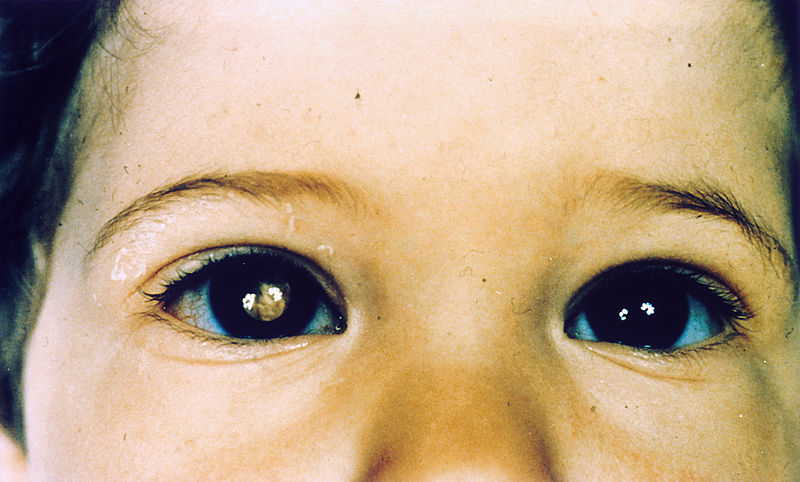
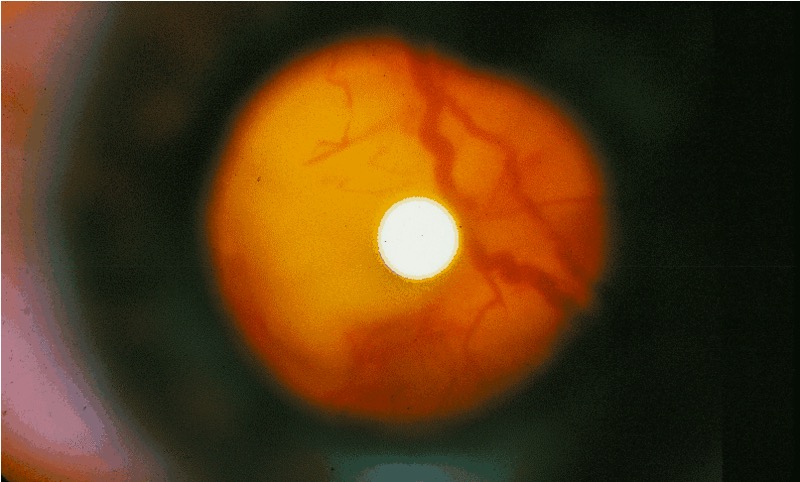
    • Leucocoria (reflejo blanco en EN Erythema nodosum is an immune-mediated panniculitis (inflammation of the subcutaneous fat) caused by a type IV (delayed-type) hypersensitivity reaction. It commonly manifests in young women as tender, erythematous nodules on the shins. Erythema Nodosum la pupila (ver foto)) vista en EN Erythema nodosum is an immune-mediated panniculitis (inflammation of the subcutaneous fat) caused by a type IV (delayed-type) hypersensitivity reaction. It commonly manifests in young women as tender, erythematous nodules on the shins. Erythema Nodosum:
      • Catarata congénita
      • Retinoblastoma Retinoblastoma Retinoblastoma is a rare tumor but the most common primary intraocular malignancy of childhood. It is believed that the condition arises from a neuronal progenitor cell. Retinoblastoma can be heritable or non-heritable. Retinoblastoma
      • Retinopatía del prematuro
    • En EN Erythema nodosum is an immune-mediated panniculitis (inflammation of the subcutaneous fat) caused by a type IV (delayed-type) hypersensitivity reaction. It commonly manifests in young women as tender, erythematous nodules on the shins. Erythema Nodosum la iridociclitis se observan exudados blancos y sucios.
  • Examen pupilar para detectar reacciones:
    • Reflejo de luz directa:
      • Para provocar este reflejo, se sienta al AL Amyloidosis sujeto en EN Erythema nodosum is an immune-mediated panniculitis (inflammation of the subcutaneous fat) caused by a type IV (delayed-type) hypersensitivity reaction. It commonly manifests in young women as tender, erythematous nodules on the shins. Erythema Nodosum una habitación oscura y se utiliza una linterna para provocar la constricción. Se repite en EN Erythema nodosum is an immune-mediated panniculitis (inflammation of the subcutaneous fat) caused by a type IV (delayed-type) hypersensitivity reaction. It commonly manifests in young women as tender, erythematous nodules on the shins. Erythema Nodosum el otro ojo.
      • Una pupila normal reacciona a la luz contrayéndose enérgicamente.
    • Reflejo luminoso consensuado:
      • Se expone una pupila a la luz y se observa la respuesta en EN Erythema nodosum is an immune-mediated panniculitis (inflammation of the subcutaneous fat) caused by a type IV (delayed-type) hypersensitivity reaction. It commonly manifests in young women as tender, erythematous nodules on the shins. Erythema Nodosum el otro ojo. El procedimiento se repite para el otro ojo.
      • Normalmente, la pupila contralateral se contrae cuando la luz brillante se dirige a la pupila ipsilateral.
    • Prueba de la linterna oscilante:
      • Para evaluar un defecto de la vía aferente
      • Ilumine con una linterna una pupila y observe la constricción. A continuación, se traslada la linterna al AL Amyloidosis otro ojo y se observa la respuesta de la pupila.
      • El movimiento de vaivén se repite varias veces mientras se observa la respuesta de las pupilas.
      • Respuesta normal: Ambas pupilas se contraen por igual. En EN Erythema nodosum is an immune-mediated panniculitis (inflammation of the subcutaneous fat) caused by a type IV (delayed-type) hypersensitivity reaction. It commonly manifests in young women as tender, erythematous nodules on the shins. Erythema Nodosum un defecto de la vía aferente, la pupila afectada se dilatará cuando la linterna se mueva del ojo normal al AL Amyloidosis ojo anormal.
      • Conocido como pupila de Marcus Gunn (defecto pupilar aferente relativo)
    • Reflejo cercano:
      • Se pide al AL Amyloidosis sujeto que enfoque un objeto lejano y luego se le indica que enfoque repentinamente un objeto situado a unos 15 cm de su ojo.
      • Respuesta normal: Se observa la constricción de la pupila cuando el sujeto intenta enfocar el objeto cercano.
Niño con retinoblastoma

Niño con retinoblastoma del ojo derecho que presenta leucocoria

Imagen: “Pathology: Patient: Retinoblastoma” por National Cancer Institute. Licencia: Dominio Público

Córnea

La córnea se examina con una lámpara de hendidura o tras una tinción corneal.

  • Para examinar una abrasión corneal:
    • Se aplica una gota de colorante de fluoresceína en EN Erythema nodosum is an immune-mediated panniculitis (inflammation of the subcutaneous fat) caused by a type IV (delayed-type) hypersensitivity reaction. It commonly manifests in young women as tender, erythematous nodules on the shins. Erythema Nodosum la conjuntiva del ángulo interno del ojo.
    • Las abrasiones o úlceras de la córnea se tiñen de color verde brillante con fluoresceína cuando se observan bajo luz ultravioleta.
  • Relevancia clínica
    • Tamaño (anomalías diagnosticadas en EN Erythema nodosum is an immune-mediated panniculitis (inflammation of the subcutaneous fat) caused by a type IV (delayed-type) hypersensitivity reaction. It commonly manifests in young women as tender, erythematous nodules on the shins. Erythema Nodosum los LOS Neisseria bebés):
      • Microcórnea: diámetro horizontal < 10 mm
      • Megalocórnea: diámetro horizontal > 13 mm
    • Forma:
      • Normalmente, la córnea es una estructura parecida a un vidrio de reloj con una superficie posterior uniforme.
      • Se realizan pruebas de queratometría y topografía corneal para analizar la curvatura de la córnea.
      • Queratocono: formación cónica de la córnea
      • Córnea plana: El aplanamiento de la córnea puede producirse en EN Erythema nodosum is an immune-mediated panniculitis (inflammation of the subcutaneous fat) caused by a type IV (delayed-type) hypersensitivity reaction. It commonly manifests in young women as tender, erythematous nodules on the shins. Erythema Nodosum individuos como una anomalía congénita.
      • Astigmatismo:
        • Condición de refracción
        • La superficie corneal deformada provoca un enfoque desigual de los LOS Neisseria rayos de luz.
    • Brillo:
      • La córnea normal tiene un brillo.
      • Perdido en afecciones de “ojo seco” como el síndrome de Sjögren
    • Sensación:
      • Reflejo de parpadeo:
        • El examinador toca la superficie de la córnea con un cotonete de algodón.
        • La respuesta normal es parpadear.
        • Puede verse afectado en EN Erythema nodosum is an immune-mediated panniculitis (inflammation of the subcutaneous fat) caused by a type IV (delayed-type) hypersensitivity reaction. It commonly manifests in young women as tender, erythematous nodules on the shins. Erythema Nodosum caso de afecciones neurológicas
      • La sensibilidad de la córnea está disminuida en EN Erythema nodosum is an immune-mediated panniculitis (inflammation of the subcutaneous fat) caused by a type IV (delayed-type) hypersensitivity reaction. It commonly manifests in young women as tender, erythematous nodules on the shins. Erythema Nodosum:
        • Queratitis herpética
        • Queratitis neuroparalítica
        • Lepra
        • Diabetes Diabetes Diabetes mellitus (DM) is a metabolic disease characterized by hyperglycemia and dysfunction of the regulation of glucose metabolism by insulin. Type 1 DM is diagnosed mostly in children and young adults as the result of autoimmune destruction of β cells in the pancreas and the resulting lack of insulin. Type 2 DM has a significant association with obesity and is characterized by insulin resistance. Diabetes Mellitus mellitus
        • Glaucoma Glaucoma Glaucoma is an optic neuropathy characterized by typical visual field defects and optic nerve atrophy seen as optic disc cupping on examination. The acute form of glaucoma is a medical emergency. Glaucoma is often, but not always, caused by increased intraocular pressure (IOP). Glaucoma terminal
        • Después del bloqueo del trigémino para la neuralgia posherpética
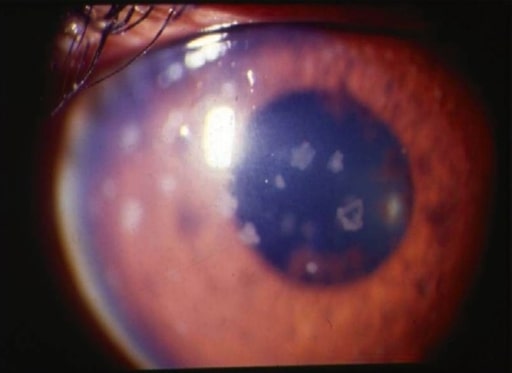
antiguos precipitados queráticos

Uveítis anterior: fotografía con lámpara de hendidura que muestra grandes precipitados queráticos antiguos

Imagen: “Anterior uveitis” por L. V. Prasad Eye Institute, Kallam Anji Reddy Campus, Hyderabad, India. Licencia: CC BY 2.0

Cámara anterior

  • Profundidad:
    • Medida con una lámpara de hendidura
    • La profundidad normal es de 2,5 mm.
    • La cámara anterior poco profunda se ve VE Ventilation: Mechanics of Breathing en EN Erythema nodosum is an immune-mediated panniculitis (inflammation of the subcutaneous fat) caused by a type IV (delayed-type) hypersensitivity reaction. It commonly manifests in young women as tender, erythematous nodules on the shins. Erythema Nodosum:
      • Glaucoma Glaucoma Glaucoma is an optic neuropathy characterized by typical visual field defects and optic nerve atrophy seen as optic disc cupping on examination. The acute form of glaucoma is a medical emergency. Glaucoma is often, but not always, caused by increased intraocular pressure (IOP). Glaucoma primario de ángulo estrecho
      • Subluxación anterior del cristalino
    • La cámara anterior profunda se ve VE Ventilation: Mechanics of Breathing en EN Erythema nodosum is an immune-mediated panniculitis (inflammation of the subcutaneous fat) caused by a type IV (delayed-type) hypersensitivity reaction. It commonly manifests in young women as tender, erythematous nodules on the shins. Erythema Nodosum:
      • Afaquia congénita (falta de cristalino)
      • Miopía
      • Queratoglobo
      • Queratocono
  • Relevancia clínica:
    • Hifema (sangre en EN Erythema nodosum is an immune-mediated panniculitis (inflammation of the subcutaneous fat) caused by a type IV (delayed-type) hypersensitivity reaction. It commonly manifests in young women as tender, erythematous nodules on the shins. Erythema Nodosum la cámara anterior) visto en EN Erythema nodosum is an immune-mediated panniculitis (inflammation of the subcutaneous fat) caused by a type IV (delayed-type) hypersensitivity reaction. It commonly manifests in young women as tender, erythematous nodules on the shins. Erythema Nodosum:
      • Traumatismo ocular
      • Cirugía ocular
      • Iridociclitis
    • Hipopión (pus en EN Erythema nodosum is an immune-mediated panniculitis (inflammation of the subcutaneous fat) caused by a type IV (delayed-type) hypersensitivity reaction. It commonly manifests in young women as tender, erythematous nodules on the shins. Erythema Nodosum la cámara anterior) visto en EN Erythema nodosum is an immune-mediated panniculitis (inflammation of the subcutaneous fat) caused by a type IV (delayed-type) hypersensitivity reaction. It commonly manifests in young women as tender, erythematous nodules on the shins. Erythema Nodosum:
      • Úlcera corneal
      • Iridociclitis
      • Endoftalmitis
    • Flagelo acuoso (células inflamatorias en EN Erythema nodosum is an immune-mediated panniculitis (inflammation of the subcutaneous fat) caused by a type IV (delayed-type) hypersensitivity reaction. It commonly manifests in young women as tender, erythematous nodules on the shins. Erythema Nodosum la cámara anterior): se ve VE Ventilation: Mechanics of Breathing como finas partículas en EN Erythema nodosum is an immune-mediated panniculitis (inflammation of the subcutaneous fat) caused by a type IV (delayed-type) hypersensitivity reaction. It commonly manifests in young women as tender, erythematous nodules on the shins. Erythema Nodosum movimiento en EN Erythema nodosum is an immune-mediated panniculitis (inflammation of the subcutaneous fat) caused by a type IV (delayed-type) hypersensitivity reaction. It commonly manifests in young women as tender, erythematous nodules on the shins. Erythema Nodosum casos de iridociclitis
    • Pueden encontrarse cuerpos extraños tras una lesión traumática (por ejemplo, madera, hierro, partículas de vidrio, partículas de piedra, pestañas).

Cristalino

El examen del cristalino se realiza con una lámpara de hendidura tras dilatar completamente las pupilas.

  • Posición:
    • Dislocación:
      • Anteriormente en EN Erythema nodosum is an immune-mediated panniculitis (inflammation of the subcutaneous fat) caused by a type IV (delayed-type) hypersensitivity reaction. It commonly manifests in young women as tender, erythematous nodules on the shins. Erythema Nodosum la cámara anterior
      • Posteriormente en EN Erythema nodosum is an immune-mediated panniculitis (inflammation of the subcutaneous fat) caused by a type IV (delayed-type) hypersensitivity reaction. It commonly manifests in young women as tender, erythematous nodules on the shins. Erythema Nodosum la cámara vítrea
    • Subluxación:
      • Desplazamiento parcial de la posición del cristalino
      • Se observa como una media luna dorada brillante en EN Erythema nodosum is an immune-mediated panniculitis (inflammation of the subcutaneous fat) caused by a type IV (delayed-type) hypersensitivity reaction. It commonly manifests in young women as tender, erythematous nodules on the shins. Erythema Nodosum la iluminación focal
      • Se observa como una línea oscura en EN Erythema nodosum is an immune-mediated panniculitis (inflammation of the subcutaneous fat) caused by a type IV (delayed-type) hypersensitivity reaction. It commonly manifests in young women as tender, erythematous nodules on the shins. Erythema Nodosum la oftalmoscopia directa a distancia
    • Importancia clínica: puede haber dislocación o subluxación con traumatismos
  • Transparencia:
    • La opacidad es indicativa de una catarata.
    • Blanco grisáceo o amarillento
    • Importancia clínica de las cataratas observadas en EN Erythema nodosum is an immune-mediated panniculitis (inflammation of the subcutaneous fat) caused by a type IV (delayed-type) hypersensitivity reaction. It commonly manifests in young women as tender, erythematous nodules on the shins. Erythema Nodosum la oftalmoscopia:
      • Congénito
      • Se desarrollan con el envejecimiento y la exposición al AL Amyloidosis sol
      • Efecto secundario de los LOS Neisseria corticosteroides
      • Catarata diabética: “opacidades en forma de copo de nieve”
      • Enfermedad de Wilson: “catarata de girasol”
      • Lesión por contusión del cristalino: “cataratas en forma de roseta”

Comprobación de la presión intraocular

  • Presión intraocular normal: 10-21 mm Hg
  • Equipo utilizado en EN Erythema nodosum is an immune-mediated panniculitis (inflammation of the subcutaneous fat) caused by a type IV (delayed-type) hypersensitivity reaction. It commonly manifests in young women as tender, erythematous nodules on the shins. Erythema Nodosum el tamizaje del glaucoma Glaucoma Glaucoma is an optic neuropathy characterized by typical visual field defects and optic nerve atrophy seen as optic disc cupping on examination. The acute form of glaucoma is a medical emergency. Glaucoma is often, but not always, caused by increased intraocular pressure (IOP). Glaucoma:
    • Tonómetro de indentación (tonómetro de Schiotz)
    • Tonómetro de aplanación (tonómetro Goldman)
  • Relevancia clínica
    • Hipertensión ocular:
      • Aumento de la presión intraocular
      • No hay daños en EN Erythema nodosum is an immune-mediated panniculitis (inflammation of the subcutaneous fat) caused by a type IV (delayed-type) hypersensitivity reaction. It commonly manifests in young women as tender, erythematous nodules on the shins. Erythema Nodosum las estructuras ópticas y los LOS Neisseria campos visuales son normales
      • Factor de riesgo de glaucoma Glaucoma Glaucoma is an optic neuropathy characterized by typical visual field defects and optic nerve atrophy seen as optic disc cupping on examination. The acute form of glaucoma is a medical emergency. Glaucoma is often, but not always, caused by increased intraocular pressure (IOP). Glaucoma
    • Glaucoma Glaucoma Glaucoma is an optic neuropathy characterized by typical visual field defects and optic nerve atrophy seen as optic disc cupping on examination. The acute form of glaucoma is a medical emergency. Glaucoma is often, but not always, caused by increased intraocular pressure (IOP). Glaucoma:
      • Presión intraocular elevada con daño del nervio óptico
      • Síntomas:
        • Visión borrosa
        • Ceguera
        • Dolor Dolor Inflammation en EN Erythema nodosum is an immune-mediated panniculitis (inflammation of the subcutaneous fat) caused by a type IV (delayed-type) hypersensitivity reaction. It commonly manifests in young women as tender, erythematous nodules on the shins. Erythema Nodosum el ojo
      • Requiere tratamiento inmediato para evitar la pérdida de visión
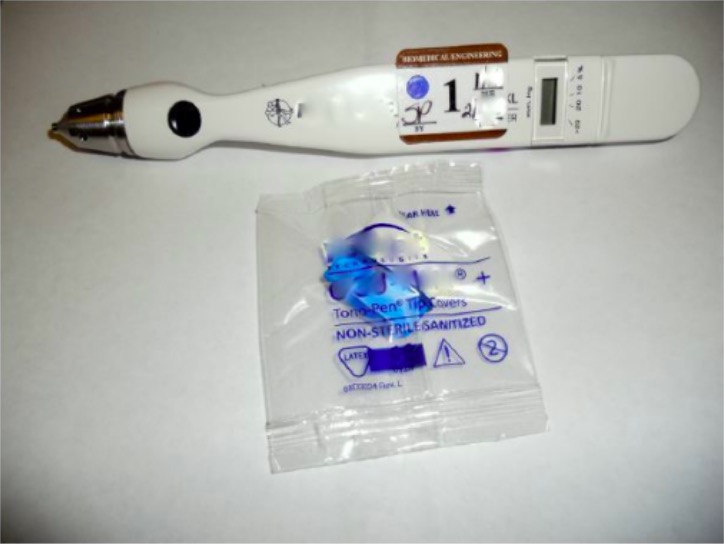
Tonómetro

Tonómetro utilizado para medir la presión intraocular

Imagen: “Tonometer” por University of California, Irvine School of Medicine, Emergency Department, Irvine, California. Licencia: CC BY 4.0
Examen del Fondo de Ojo

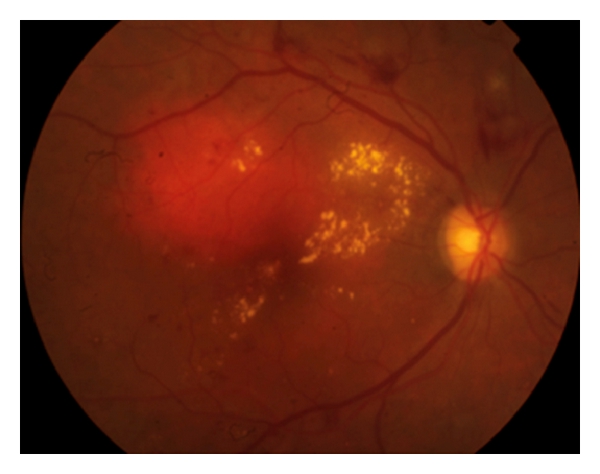
El examen del fondo de ojo es importante para diagnosticar trastornos del humor Humor Defense Mechanisms vítreo, el nervio óptico, la coroides y la retina Retina The ten-layered nervous tissue membrane of the eye. It is continuous with the optic nerve and receives images of external objects and transmits visual impulses to the brain. Its outer surface is in contact with the choroid and the inner surface with the vitreous body. The outermost layer is pigmented, whereas the inner nine layers are transparent. Eye: Anatomy.
  • Dilatar la pupila con un agente midriático:
    • Fenilefrina
    • Atropina
    • Tropicamida
    • Ciclopentolato
  • El fondo de ojo puede examinarse con un oftalmoscopio:
    • Los LOS Neisseria medios oculares deben ser transparentes.
    • La opacificación puede verse con:
      • Opacidad de la córnea (por ejemplo, queratitis)
      • Opacidad del cristalino (por ejemplo, catarata)
      • Opacidades vítreas (por ejemplo, hemorragia)
  • Relevancia clínica:
    • Examen de los LOS Neisseria vasos sanguíneos de la retina Retina The ten-layered nervous tissue membrane of the eye. It is continuous with the optic nerve and receives images of external objects and transmits visual impulses to the brain. Its outer surface is in contact with the choroid and the inner surface with the vitreous body. The outermost layer is pigmented, whereas the inner nine layers are transparent. Eye: Anatomy y hallazgos anormales:
      • Las arteriolas aparecen de color rojo brillante y las vénulas de color violáceo.
      • El estrechamiento de las arteriolas puede verse en EN Erythema nodosum is an immune-mediated panniculitis (inflammation of the subcutaneous fat) caused by a type IV (delayed-type) hypersensitivity reaction. It commonly manifests in young women as tender, erythematous nodules on the shins. Erythema Nodosum:
        • Retinopatía hipertensiva
        • Arteriosclerosis
        • Oclusión de la arteria central de la retina Retina The ten-layered nervous tissue membrane of the eye. It is continuous with the optic nerve and receives images of external objects and transmits visual impulses to the brain. Its outer surface is in contact with the choroid and the inner surface with the vitreous body. The outermost layer is pigmented, whereas the inner nine layers are transparent. Eye: Anatomy
      • La tortuosidad de las venas puede verse en EN Erythema nodosum is an immune-mediated panniculitis (inflammation of the subcutaneous fat) caused by a type IV (delayed-type) hypersensitivity reaction. It commonly manifests in young women as tender, erythematous nodules on the shins. Erythema Nodosum:
        • Diabetes Diabetes Diabetes mellitus (DM) is a metabolic disease characterized by hyperglycemia and dysfunction of the regulation of glucose metabolism by insulin. Type 1 DM is diagnosed mostly in children and young adults as the result of autoimmune destruction of β cells in the pancreas and the resulting lack of insulin. Type 2 DM has a significant association with obesity and is characterized by insulin resistance. Diabetes Mellitus mellitus
        • Oclusión de la vena central de la retina Retina The ten-layered nervous tissue membrane of the eye. It is continuous with the optic nerve and receives images of external objects and transmits visual impulses to the brain. Its outer surface is in contact with the choroid and the inner surface with the vitreous body. The outermost layer is pigmented, whereas the inner nine layers are transparent. Eye: Anatomy
        • Discrasias sanguíneas
      • Drusas (depósitos de lípidos amarillos bajo la retina Retina The ten-layered nervous tissue membrane of the eye. It is continuous with the optic nerve and receives images of external objects and transmits visual impulses to the brain. Its outer surface is in contact with the choroid and the inner surface with the vitreous body. The outermost layer is pigmented, whereas the inner nine layers are transparent. Eye: Anatomy) vistas en EN Erythema nodosum is an immune-mediated panniculitis (inflammation of the subcutaneous fat) caused by a type IV (delayed-type) hypersensitivity reaction. It commonly manifests in young women as tender, erythematous nodules on the shins. Erythema Nodosum:
        • Normal con la edad avanzada
        • Signo temprano de degeneración macular
    • Examen del disco óptico y hallazgos anormales:
      • Conexión del nervio óptico con la retina Retina The ten-layered nervous tissue membrane of the eye. It is continuous with the optic nerve and receives images of external objects and transmits visual impulses to the brain. Its outer surface is in contact with the choroid and the inner surface with the vitreous body. The outermost layer is pigmented, whereas the inner nine layers are transparent. Eye: Anatomy
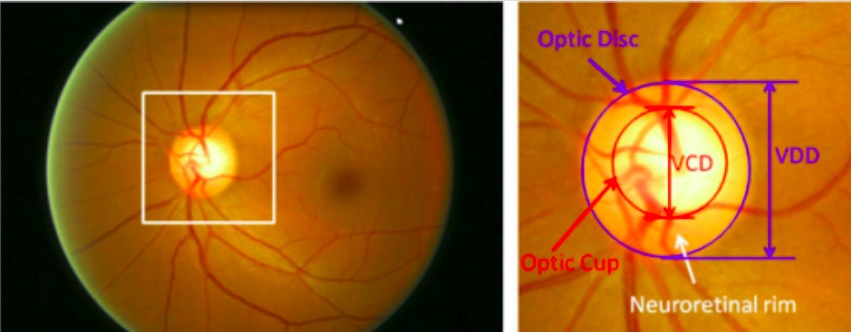
      • Blanco rosado, estructura circular de 1,5 mm con una “copa” central
      • Hiperemia del disco vista en EN Erythema nodosum is an immune-mediated panniculitis (inflammation of the subcutaneous fat) caused by a type IV (delayed-type) hypersensitivity reaction. It commonly manifests in young women as tender, erythematous nodules on the shins. Erythema Nodosum:
        • Papiledema
        • Papilitis
      • Palidez del disco: signo de atrofia óptica
      • La relación copa-disco normal es de 0,3 y puede estar aumentada en EN Erythema nodosum is an immune-mediated panniculitis (inflammation of the subcutaneous fat) caused by a type IV (delayed-type) hypersensitivity reaction. It commonly manifests in young women as tender, erythematous nodules on the shins. Erythema Nodosum el glaucoma Glaucoma Glaucoma is an optic neuropathy characterized by typical visual field defects and optic nerve atrophy seen as optic disc cupping on examination. The acute form of glaucoma is a medical emergency. Glaucoma is often, but not always, caused by increased intraocular pressure (IOP). Glaucoma.
      • La neovascularización del disco puede ocurrir en EN Erythema nodosum is an immune-mediated panniculitis (inflammation of the subcutaneous fat) caused by a type IV (delayed-type) hypersensitivity reaction. It commonly manifests in young women as tender, erythematous nodules on the shins. Erythema Nodosum:
        • Retinopatía diabética
        • Retinopatía falciforme
    • Examen macular y hallazgos anormales (normalmente requiere un examen con lámpara de hendidura):
      • La mácula normal es ligeramente más oscura que la retina Retina The ten-layered nervous tissue membrane of the eye. It is continuous with the optic nerve and receives images of external objects and transmits visual impulses to the brain. Its outer surface is in contact with the choroid and the inner surface with the vitreous body. The outermost layer is pigmented, whereas the inner nine layers are transparent. Eye: Anatomy circundante.
      • El centro imparte un reflejo luminoso (reflejo foveal).
      • Agujero macular: defecto redondo de todo el grosor del tejido retiniano en EN Erythema nodosum is an immune-mediated panniculitis (inflammation of the subcutaneous fat) caused by a type IV (delayed-type) hypersensitivity reaction. It commonly manifests in young women as tender, erythematous nodules on the shins. Erythema Nodosum la retina Retina The ten-layered nervous tissue membrane of the eye. It is continuous with the optic nerve and receives images of external objects and transmits visual impulses to the brain. Its outer surface is in contact with the choroid and the inner surface with the vitreous body. The outermost layer is pigmented, whereas the inner nine layers are transparent. Eye: Anatomy foveal que provoca la pérdida de la visión central
      • Mancha de color rojo cereza vista en EN Erythema nodosum is an immune-mediated panniculitis (inflammation of the subcutaneous fat) caused by a type IV (delayed-type) hypersensitivity reaction. It commonly manifests in young women as tender, erythematous nodules on the shins. Erythema Nodosum:
        • Oclusión de la arteria central de la retina Retina The ten-layered nervous tissue membrane of the eye. It is continuous with the optic nerve and receives images of external objects and transmits visual impulses to the brain. Its outer surface is in contact with the choroid and the inner surface with the vitreous body. The outermost layer is pigmented, whereas the inner nine layers are transparent. Eye: Anatomy
        • Enfermedad de Tay-Sachs
        • Enfermedad de Niemann-Pick
        • Enfermedad de Gaucher
      • Edema Edema Edema is a condition in which excess serous fluid accumulates in the body cavity or interstitial space of connective tissues. Edema is a symptom observed in several medical conditions. It can be categorized into 2 types, namely, peripheral (in the extremities) and internal (in an organ or body cavity). Edema macular visto en EN Erythema nodosum is an immune-mediated panniculitis (inflammation of the subcutaneous fat) caused by a type IV (delayed-type) hypersensitivity reaction. It commonly manifests in young women as tender, erythematous nodules on the shins. Erythema Nodosum:
        • Trauma
        • Operaciones intraoculares
        • Uveítis
        • Maculopatía diabética
      • Se observan exudados duros en EN Erythema nodosum is an immune-mediated panniculitis (inflammation of the subcutaneous fat) caused by a type IV (delayed-type) hypersensitivity reaction. It commonly manifests in young women as tender, erythematous nodules on the shins. Erythema Nodosum:
        • Retinopatía diabética
        • Retinopatía hipertensiva
      • Mácula pálida: se observa en EN Erythema nodosum is an immune-mediated panniculitis (inflammation of the subcutaneous fat) caused by a type IV (delayed-type) hypersensitivity reaction. It commonly manifests in young women as tender, erythematous nodules on the shins. Erythema Nodosum la degeneración macular en EN Erythema nodosum is an immune-mediated panniculitis (inflammation of the subcutaneous fat) caused by a type IV (delayed-type) hypersensitivity reaction. It commonly manifests in young women as tender, erythematous nodules on the shins. Erythema Nodosum personas mayores

Referencias

  1. Khurana, A.K. (2018). Comprehensive Ophthalmology (4th edition, pp. 461-498).
  2. Sihota, R., Tandon. (2019). Parson’s Diseases of the Eye (22nd edition, Chapters 9-13, pp. 87-145).
  3. Jason, D. (2016). The 8-Point Eye Exam. American Academy of Ophthalmology. https://www.aao.org/young-ophthalmologists/yo-info/article/how-to-conduct-eight-point-ophthalmology-exam
  4. Yadav, S., Tandon, R. (2019). Comprehensive eye examination: what does it mean? Community Eye Health, 32, S1-S4. https://www.ncbi.nlm.nih.gov/pmc/articles/PMC704181
  5. Machiele, R., Motlagh, M., Zeppieri, M., & Patel, B. C. (2024). Intraocular pressure. In StatPearls. StatPearls Publishing. Retrieved August 9, 2025, from https://www.ncbi.nlm.nih.gov/books/NBK532237/
  6. Golnik, K. C. (2025). Congenital and acquired abnormalities of the optic nerve. UpToDate. Retrieved August 9, 2025, from https://www.uptodate.com/contents/congenital-and-acquired-abnormalities-of-the-optic-nerve
  7. Rosenbaum, J.T. (2025). Uveitis: Etiology, clinical manifestations, and diagnosis. UpToDate. Retrieved August 9, 2025, from https://www.uptodate.com/contents/uveitis-etiology-clinical-manifestations-and-diagnosis

¡Crea tu cuenta gratis o inicia una sesión para seguir leyendo!

Regístrate ahora y obtén acceso gratuito a Lecturio con páginas de concepto, videos médicos y cuestionarios para tu educación médica.

User Reviews

Que tengas una sesión de estudio alegre y navideña 🎁 Ahorra 50% en todos los planes >>

Details