Domina Conceptos Médicos

Estudia para la escuela de medicina y tus examenes con Lecturio.

Descripción General de las Funciones de las Proteínas

Las proteínas tienen una amplia gama de funciones en EN Erythema nodosum is an immune-mediated panniculitis (inflammation of the subcutaneous fat) caused by a type IV (delayed-type) hypersensitivity reaction. It commonly manifests in young women as tender, erythematous nodules on the shins. Erythema Nodosum el cuerpo. Las proteínas estructurales ayudan a mantener la integridad física de las células y permiten el movimiento de sustancias dentro de las células. Las proteínas catalíticas son enzimas, que son críticas en EN Erythema nodosum is an immune-mediated panniculitis (inflammation of the subcutaneous fat) caused by a type IV (delayed-type) hypersensitivity reaction. It commonly manifests in young women as tender, erythematous nodules on the shins. Erythema Nodosum casi todas las funciones biológicas (e.g., metabolismo, coagulación, digestión). Las proteínas de comunicación, señalización y regulación son fundamentales para coordinar las respuestas en EN Erythema nodosum is an immune-mediated panniculitis (inflammation of the subcutaneous fat) caused by a type IV (delayed-type) hypersensitivity reaction. It commonly manifests in young women as tender, erythematous nodules on the shins. Erythema Nodosum todo el organismo e incluyen receptores, hormonas, neurotransmisores, moléculas de señalización intracelular (como quinasas y proteínas G) y factores de transcripción. Además, las proteínas participan en EN Erythema nodosum is an immune-mediated panniculitis (inflammation of the subcutaneous fat) caused by a type IV (delayed-type) hypersensitivity reaction. It commonly manifests in young women as tender, erythematous nodules on the shins. Erythema Nodosum el transporte de sustancias a través del torrente sanguíneo, así como a través de las membranas celulares. Las proteínas también juegan un papel crítico en EN Erythema nodosum is an immune-mediated panniculitis (inflammation of the subcutaneous fat) caused by a type IV (delayed-type) hypersensitivity reaction. It commonly manifests in young women as tender, erythematous nodules on the shins. Erythema Nodosum el sistema inmunológico.

Last updated: Apr 25, 2025

Editorial responsibility: Stanley Oiseth, Lindsay Jones, Evelin Maza

Descripción General

Las proteínas son 1 de los LOS Neisseria 3 principales macronutrientes utilizados en EN Erythema nodosum is an immune-mediated panniculitis (inflammation of the subcutaneous fat) caused by a type IV (delayed-type) hypersensitivity reaction. It commonly manifests in young women as tender, erythematous nodules on the shins. Erythema Nodosum el cuerpo. Las proteínas están compuestas de aminoácidos y tienen una amplia gama de funciones en EN Erythema nodosum is an immune-mediated panniculitis (inflammation of the subcutaneous fat) caused by a type IV (delayed-type) hypersensitivity reaction. It commonly manifests in young women as tender, erythematous nodules on the shins. Erythema Nodosum el cuerpo, que incluyen:

  • Función estructural:
    • Manteniendo la forma y la integridad física
    • E.g., colágeno, queratina, elastina
  • Movimiento:
    • Moviendo substancias dentro de las células (e.g., quinesina que se mueve a lo largo de los LOS Neisseria microtúbulos)
    • Contracción muscular (e.g., miosina moviéndose a lo largo de los LOS Neisseria filamentos de actina)
  • Catálisis (i.e., enzimas); algunos ejemplos incluyen:
    • Enzimas digestivas
    • Enzimas que catalizan procesos metabólicos y catabólicos (e.g., ciclo de Krebs)
    • Cascada de la coagulación
  • Proteínas reguladoras y de señalización, que incluyen:
    • Receptores
    • Hormonas
    • Moléculas de señalización intracelular (e.g., quinasas)
    • Factores de transcripción
  • Moléculas de transporte y almacenamiento (e.g., albúmina, ferritina, apolipoproteínas, canales de membrana)
  • Función inmunológica: anticuerpos

Proteínas Estructurales

Las proteínas estructurales son importantes para mantener la forma celular y la integridad física.
  • Suelen tener estructuras simples:
    • A menudo, solo son estructuras primarias y secundarias (carecen de una estructura terciaria y cuaternaria más compleja)
    • A menudo tienen aminoácidos que se repiten constantemente
    • Suelen tener mucha glicina
    • Forman largos filamentos
  • Proteínas estructurales fibrosas importantes:
    • Colágeno: cartílago, tejido conectivo
    • Queratinas: pelo, uñas
    • Elastina y fibrilina: tejido conectivo
  • Proteínas estructurales globulares importantes (que se unen para formar filamentos largos):
    • Actina: muchas funciones estructurales y contráctiles
      • Contracción muscular
      • Forma parte del citoesqueleto
      • Motilidad y división celular
      • Movimiento de vesículas y organelos dentro de la célula
    • Tubulina: forma microtúbulos
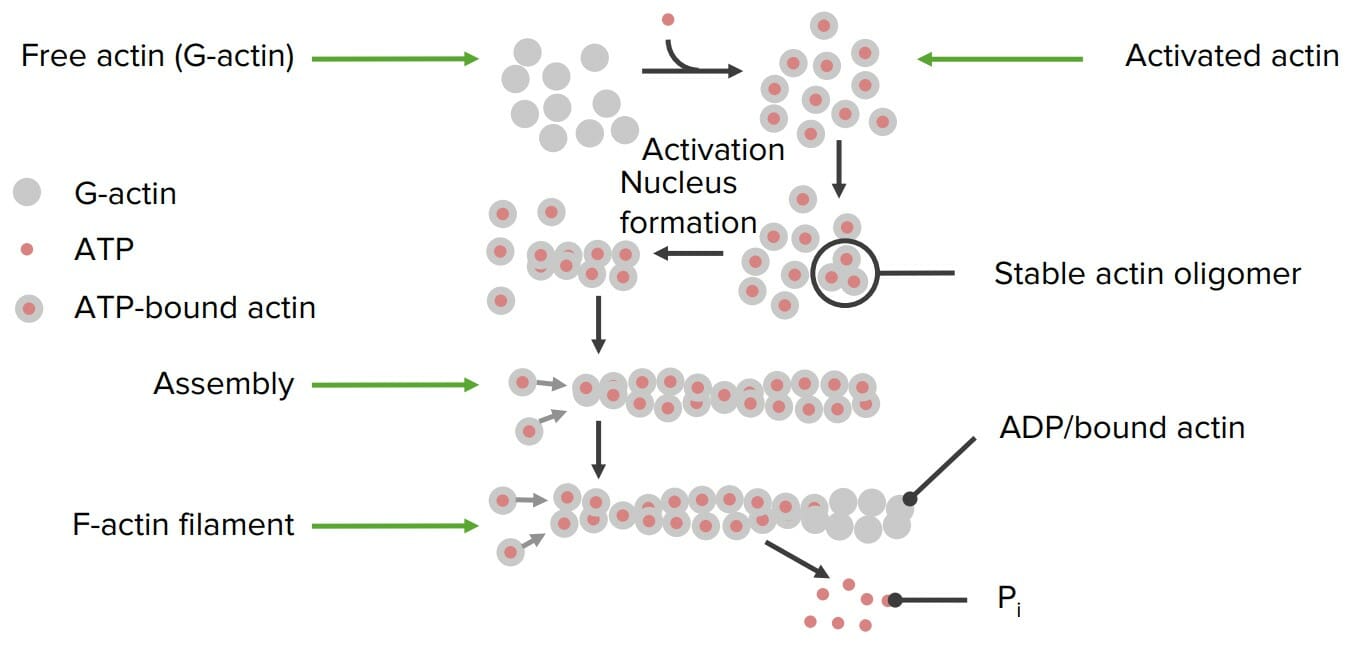
Formación de filamentos de actina a partir de proteínas de actina individuales

Formación de filamentos de actina a partir de proteínas individuales de actina:
La actina libre se activa con adenosin trifosfato (ATP, por sus siglas en inglés). Se forma un núcleo de activación y comienza la polimerización. Una vez ensamblado el filamento, se libera un fosfato individual (Pi) de las proteínas individuales de actina, que lo “desactiva”, dando como resultado un filamento final estable. Un adenosin difosfato (ADP, por sus siglas en inglés) permanece unido a cada actina.
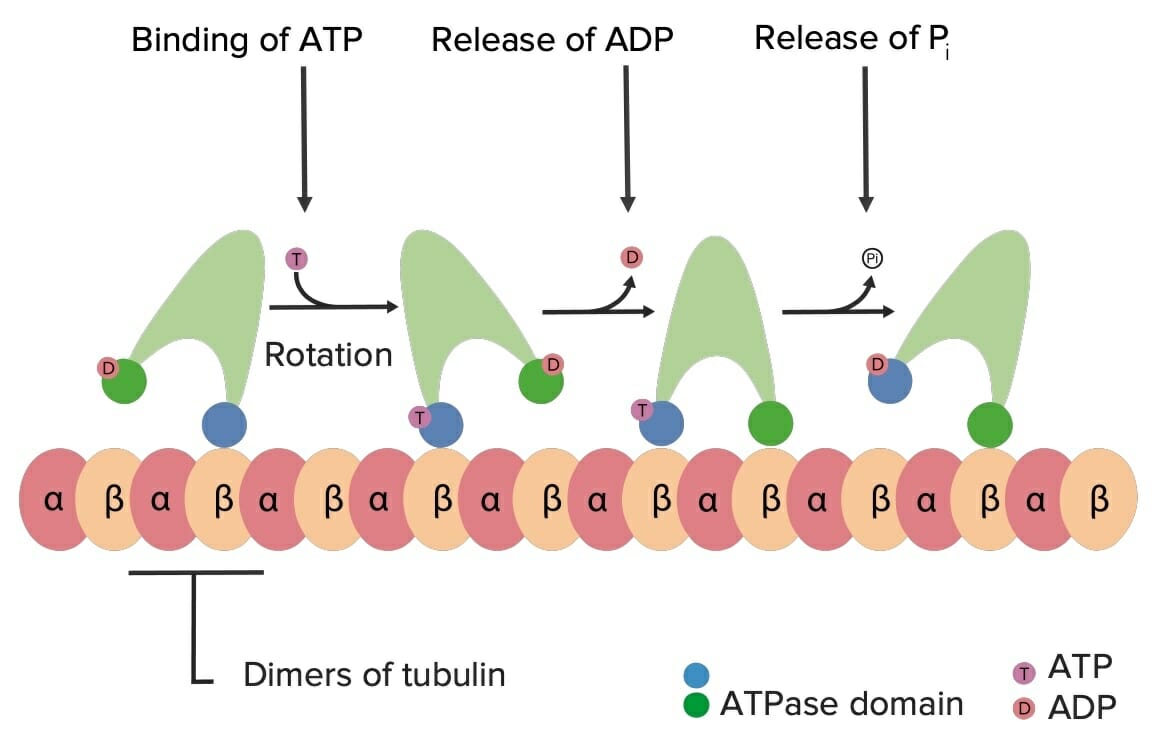
Imagen por Lecturio.

Proteínas Involucradas en el Movimiento

  • Quinesina y dineína:
    • Utilizan energía ATP para transportar elementos y conducirlos a lo largo de los LOS Neisseria microtúbulos
    • Mueven sustancias dentro de la célula
    • La quinesina se mueve en EN Erythema nodosum is an immune-mediated panniculitis (inflammation of the subcutaneous fat) caused by a type IV (delayed-type) hypersensitivity reaction. It commonly manifests in young women as tender, erythematous nodules on the shins. Erythema Nodosum una dirección por los LOS Neisseria microtúbulos; la dineína se mueve hacia el otro lado
  • Miosina:
    • Utiliza energía ATP para moverse por los LOS Neisseria filamentos de actina a través de un proceso conocido como ciclo de puente cruzado
    • Provoca contracción muscular
Cinesina caminando por los microtúbulos

Ejemplo de cómo la quinesina se mueve por los microtúbulos utilizando energía ATP:
Cuando el ATP se une a la quinesina, da como resultado un cambio conformacional en la molécula, lo que hace que “gire” sobre la tubulina. Esto conduce a un movimiento de “marcha” de la quinesina (y su carga) por las “carreteras” de los microtúbulos dentro de la célula.
Pi: fosfato

Imagen por Lecturio.

Proteínas Reguladoras, de Señalización y de Comunicación

Funciones

Estas proteínas son responsables de:

  • Transmitir mensajes entre y dentro de las células
  • Responder al AL Amyloidosis entorno
  • Coordinar las respuestas entre células y sistemas orgánicos

Tipos de proteínas señalizadoras y reguladoras

  • Receptores unidos a membrana:
    • Integrados en EN Erythema nodosum is an immune-mediated panniculitis (inflammation of the subcutaneous fat) caused by a type IV (delayed-type) hypersensitivity reaction. It commonly manifests in young women as tender, erythematous nodules on the shins. Erythema Nodosum la membrana celular
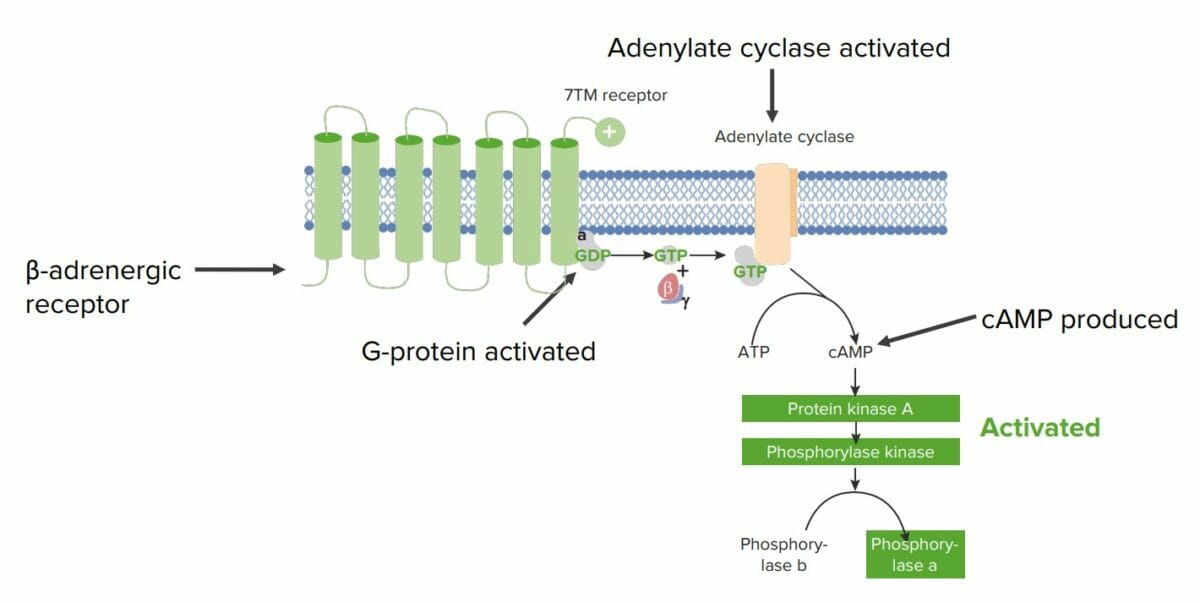
    • Muchos se conocen como 7TM: tienen 7 dominios enrollados transmembranalmente
    • Responden a una señal externa (e.g., hormona) → inducen un cambio conformacional → inician un 2do mensajero dentro de la célula
  • Receptores intracelulares:
    • Proteínas dentro de una célula que se unen y responden a una señal externa (e.g., hormona)
    • Se observan con las hormonas lipofílicas derivadas del colesterol (e.g., receptor Receptor Receptors are proteins located either on the surface of or within a cell that can bind to signaling molecules known as ligands (e.g., hormones) and cause some type of response within the cell. Receptors de estrógeno)
  • Hormonas peptídicas:
    • Viajan dentro de la sangre desde un lugar a sus células diana
    • Pueden unirse a receptores en EN Erythema nodosum is an immune-mediated panniculitis (inflammation of the subcutaneous fat) caused by a type IV (delayed-type) hypersensitivity reaction. It commonly manifests in young women as tender, erythematous nodules on the shins. Erythema Nodosum la membrana o dentro de la célula
    • Desencadenan una respuesta dentro de la célula
    • E.g., insulina, oxitocina, muchas otras
  • Neurotransmisores:
    • Derivados de los LOS Neisseria aminoácidos que comunican señales nerviosas
    • E.g., norepinefrina, dopamina
  • Proteínas de transducción de señales:
    • Proteínas dentro de una célula que transmiten la señal a lo largo del organismo
    • Mecanismos primarios:
      • Crean o liberan segundos mensajeros (e.g., adenosín monofosfato cíclico (AMPc, por sus siglas en EN Erythema nodosum is an immune-mediated panniculitis (inflammation of the subcutaneous fat) caused by a type IV (delayed-type) hypersensitivity reaction. It commonly manifests in young women as tender, erythematous nodules on the shins. Erythema Nodosum inglés), trifosfato de inositol (IP3, por sus siglas en EN Erythema nodosum is an immune-mediated panniculitis (inflammation of the subcutaneous fat) caused by a type IV (delayed-type) hypersensitivity reaction. It commonly manifests in young women as tender, erythematous nodules on the shins. Erythema Nodosum inglés), Ca CA Condylomata acuminata are a clinical manifestation of genital HPV infection. Condylomata acuminata are described as raised, pearly, flesh-colored, papular, cauliflower-like lesions seen in the anogenital region that may cause itching, pain, or bleeding. Condylomata Acuminata (Genital Warts)2+)
      • Cascadas de fosforilación: una molécula fosforila a la siguiente, activando esa molécula para que pueda fosforilar otra molécula y así sucesivamente.
    • Ejemplos:
      • Proteínas G: frecuentemente acopladas a receptores de membrana
      • Quinasas: fosforiladoras → implicadas en EN Erythema nodosum is an immune-mediated panniculitis (inflammation of the subcutaneous fat) caused by a type IV (delayed-type) hypersensitivity reaction. It commonly manifests in young women as tender, erythematous nodules on the shins. Erythema Nodosum cascadas de fosforilación
  • Factores de transcripción:
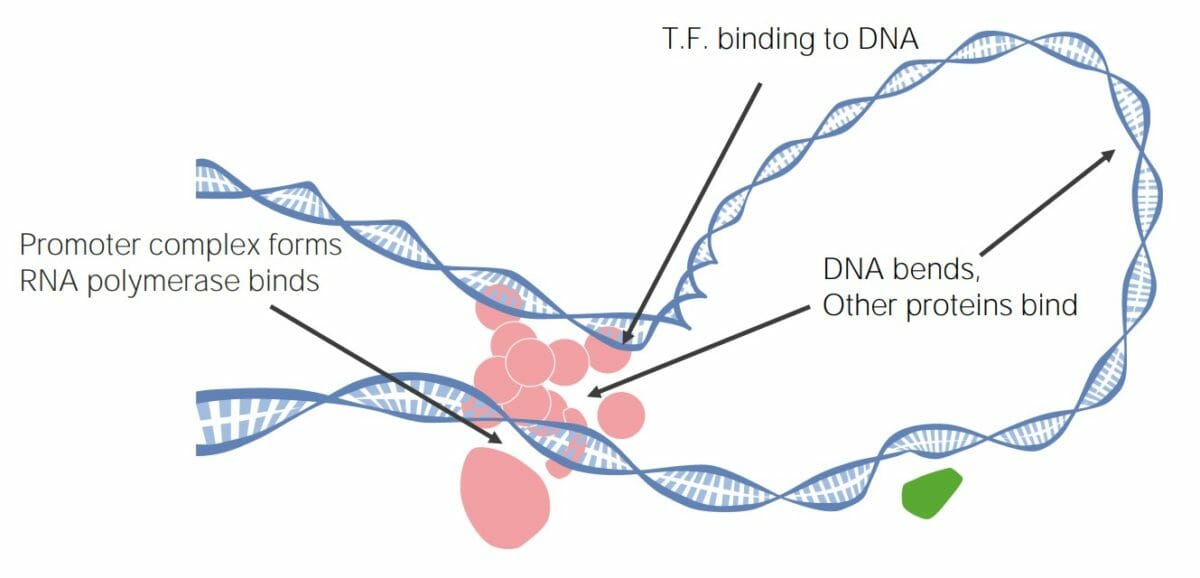
    • Controlan los LOS Neisseria genes Genes A category of nucleic acid sequences that function as units of heredity and which code for the basic instructions for the development, reproduction, and maintenance of organisms. DNA Types and Structure que se deben transcribir (i.e., controlan la expresión génica)
    • Algunas de estas proteínas son capaces de unirse a secuencias de ácido desoxirribonucleico (ADN) específicas (conocidas como secuencias potenciadoras o represoras).
    • Los LOS Neisseria factores de transcripción pueden:
      • Ser necesarios para que se produzca la transcripción
      • Impedir que se produzca la transcripción
    • Una señal entrante a menudo afecta a los LOS Neisseria factores de transcripción:
      • Permiten que la célula responda, por ejemplo, aumentando o disminuyendo un producto proteico en EN Erythema nodosum is an immune-mediated panniculitis (inflammation of the subcutaneous fat) caused by a type IV (delayed-type) hypersensitivity reaction. It commonly manifests in young women as tender, erythematous nodules on the shins. Erythema Nodosum particular
      • Ese producto proteico puede, a su vez, ser otro factor de transcripción, que controla la expresión de un gen diferente.

Proteínas Catalíticas (i.e., Enzimas)

Enzimas

  • Una clase de proteínas capaces de catalizar reacciones
  • Se unen a sustratos en EN Erythema nodosum is an immune-mediated panniculitis (inflammation of the subcutaneous fat) caused by a type IV (delayed-type) hypersensitivity reaction. It commonly manifests in young women as tender, erythematous nodules on the shins. Erythema Nodosum su sitio de unión y provocan algún tipo de reacción (e.g., hidrólisis)
  • Los LOS Neisseria sitios de unión son altamente específicos para un antígeno en EN Erythema nodosum is an immune-mediated panniculitis (inflammation of the subcutaneous fat) caused by a type IV (delayed-type) hypersensitivity reaction. It commonly manifests in young women as tender, erythematous nodules on the shins. Erythema Nodosum particular
  • Pueden acelerar la velocidad de una reacción más de un cuatrillón de veces
  • Participan en EN Erythema nodosum is an immune-mediated panniculitis (inflammation of the subcutaneous fat) caused by a type IV (delayed-type) hypersensitivity reaction. It commonly manifests in young women as tender, erythematous nodules on the shins. Erythema Nodosum una amplia variedad de funciones biológicas, que incluyen:
    • Metabolismo
    • Respiración celular
    • Crecimiento y desarrollo
    • Digestión
    • Coagulación

Modelos para entender la función enzimática

Existen 2 modelos principales que ayudan a explicar cómo funcionan las enzimas:

  • Modelo de cerradura y llave de Fischer (modelo antiguo):
    • Postula que el sustrato encaja en EN Erythema nodosum is an immune-mediated panniculitis (inflammation of the subcutaneous fat) caused by a type IV (delayed-type) hypersensitivity reaction. It commonly manifests in young women as tender, erythematous nodules on the shins. Erythema Nodosum el sitio de unión de la enzima como una llave que encaja en EN Erythema nodosum is an immune-mediated panniculitis (inflammation of the subcutaneous fat) caused by a type IV (delayed-type) hypersensitivity reaction. It commonly manifests in young women as tender, erythematous nodules on the shins. Erythema Nodosum una cerradura
    • Describe la especificidad del antígeno/sustrato a la enzima, pero no cómo funciona la catalización real
  • Modelo del ajuste inducido de Koshland (modelo más nuevo):
    • Postula que el sitio de unión de la enzima está cerca de encajar, pero no perfectamente, con el sustrato
    • Esto significa que cuando el sustrato se une, existe un ligero cambio conformacional en EN Erythema nodosum is an immune-mediated panniculitis (inflammation of the subcutaneous fat) caused by a type IV (delayed-type) hypersensitivity reaction. It commonly manifests in young women as tender, erythematous nodules on the shins. Erythema Nodosum la enzima → la tensión se almacena como energía potencial
    • Esta tensión/energía luego actúa sobre el sustrato, provocando que ocurra la reacción.
interacción enzima-sustrato

Imagen que muestra las 2 teorías de la interacción enzima–sustrato

Imagen por Lecturio.

Proteínas de Transporte y Almacenamiento

Otra función importante de las proteínas es transportar y/o almacenar biomoléculas, incluidas sustancias como oxígeno, vitaminas y minerales, hormonas y más.

Proteínas circulantes

Las proteínas circulantes transportan sustancias a través de la sangre y/o los LOS Neisseria espacios intersticiales; Ejemplos incluyen:
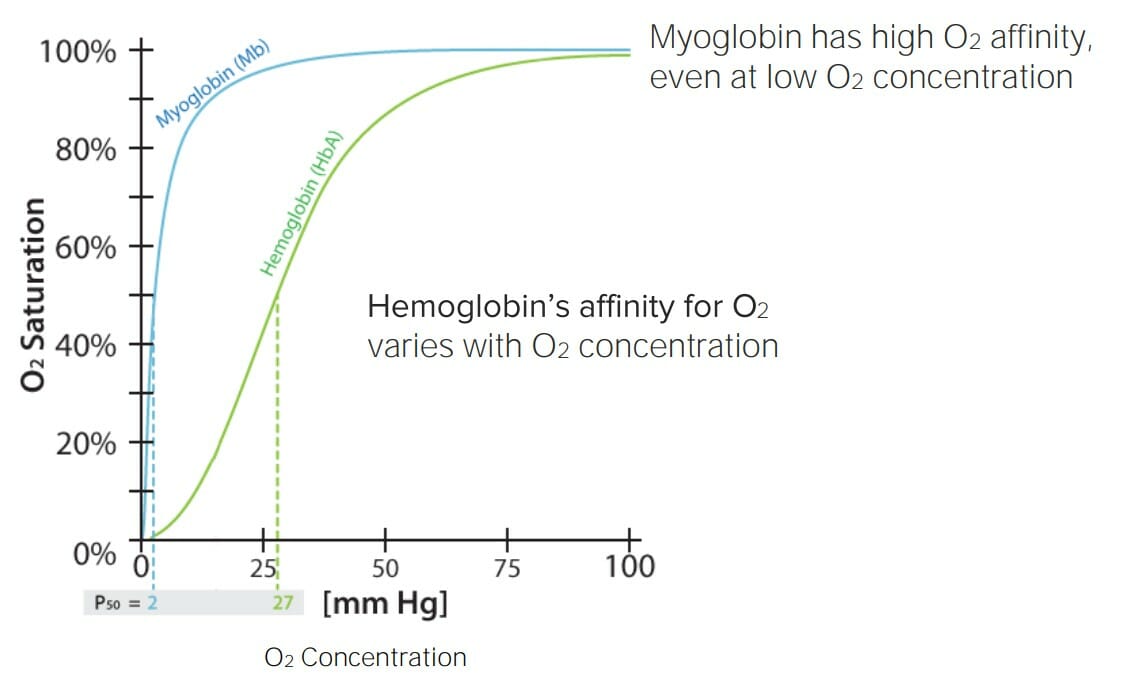
  • Hemo y mioglobina:
    • Las propiedades del grupo hemo lo convierten en EN Erythema nodosum is an immune-mediated panniculitis (inflammation of the subcutaneous fat) caused by a type IV (delayed-type) hypersensitivity reaction. It commonly manifests in young women as tender, erythematous nodules on the shins. Erythema Nodosum una excelente molécula de transporte de O2:
      • La afinidad por él O2 varía según la concentración de O2 circundante
      • Se une fácilmente al AL Amyloidosis O2 cuando la concentración de O2 es alta → se une fácilmente al AL Amyloidosis O2 en EN Erythema nodosum is an immune-mediated panniculitis (inflammation of the subcutaneous fat) caused by a type IV (delayed-type) hypersensitivity reaction. It commonly manifests in young women as tender, erythematous nodules on the shins. Erythema Nodosum los LOS Neisseria pulmones durante la inhalación
      • Libera fácilmente O2 cuando las concentraciones de O2 son bajas → libera fácilmente O2 en EN Erythema nodosum is an immune-mediated panniculitis (inflammation of the subcutaneous fat) caused by a type IV (delayed-type) hypersensitivity reaction. It commonly manifests in young women as tender, erythematous nodules on the shins. Erythema Nodosum los LOS Neisseria tejidos
    • Las propiedades de la mioglobina la convierten en EN Erythema nodosum is an immune-mediated panniculitis (inflammation of the subcutaneous fat) caused by a type IV (delayed-type) hypersensitivity reaction. It commonly manifests in young women as tender, erythematous nodules on the shins. Erythema Nodosum una excelente molécula de almacenamiento de O2:
      • La afinidad por él O2 es alta, incluso a bajas concentraciones de O2
      • Se une fácilmente al AL Amyloidosis O2, independientemente de la concentración de O2 circundante
      • Altamente concentrada en EN Erythema nodosum is an immune-mediated panniculitis (inflammation of the subcutaneous fat) caused by a type IV (delayed-type) hypersensitivity reaction. It commonly manifests in young women as tender, erythematous nodules on the shins. Erythema Nodosum los LOS Neisseria músculos, donde él O2 se almacena hasta que se necesita durante el ejercicio
  • Albúmina:
    • Se une a muchas otras sustancias (e.g., hormonas, medicamentos) y las transporta por todo el cuerpo
    • También es el principal modulador de la presión oncótica del plasma Plasma The residual portion of blood that is left after removal of blood cells by centrifugation without prior blood coagulation. Transfusion Products
  • Ferritina: una proteína de unión al AL Amyloidosis hierro que sirve como la principal forma de almacenamiento de hierro en EN Erythema nodosum is an immune-mediated panniculitis (inflammation of the subcutaneous fat) caused by a type IV (delayed-type) hypersensitivity reaction. It commonly manifests in young women as tender, erythematous nodules on the shins. Erythema Nodosum el cuerpo (un reservorio de hierro)
Afinidad de la hemoglobina y la mioglobina por el oxígeno

Afinidad de la hemoglobina y la mioglobina por el oxígeno (O2) en función de la saturación de O2:
Obsérvese las variaciones en la afinidad de la hemoglobina en función de la saturación de O2 circundante. Esto significa que la hemoglobina se unirá fácilmente al O2 cuando él O2 sea abundante (e.g., durante la inhalación en los pulmones), pero lo liberará fácilmente cuando la saturación de O2 sea baja (e.g., en los tejidos).
Esto hace que la hemoglobina sea una excelente molécula de transporte de O2. Por otro lado, la mioglobina tiene una alta afinidad por él O2 independientemente de la saturación de O2 circundante, lo que significa que se unirá fácilmente al O2 y no lo liberará hasta que la saturación de O2 circundante sea casi 0. Esto hace que la mioglobina sea una excelente molécula de almacenamiento de O2.
P50: presión a la que el 50% de las moléculas (hemoglobina o mioglobina) están saturadas de O2/p>


Imagen por Lecturio.

Proteínas Unidas a la Membrana

Las proteínas unidas a la membrana mueven sustancias a través de la membrana celular. Ejemplos incluyen:
  • Canales:
    • Permiten que una molécula en EN Erythema nodosum is an immune-mediated panniculitis (inflammation of the subcutaneous fat) caused by a type IV (delayed-type) hypersensitivity reaction. It commonly manifests in young women as tender, erythematous nodules on the shins. Erythema Nodosum particular viaje a través de la membrana
    • Ejemplos:
      • Canales epiteliales de sodio: canales que reabsorben Na+ en EN Erythema nodosum is an immune-mediated panniculitis (inflammation of the subcutaneous fat) caused by a type IV (delayed-type) hypersensitivity reaction. It commonly manifests in young women as tender, erythematous nodules on the shins. Erythema Nodosum los LOS Neisseria túbulos contorneados distales de los LOS Neisseria riñones (sitio de acción de la amilorida, un diurético ahorrador de K+)
      • Canales de aminoácidos
  • Simportadores (i.e., cotransportadores):
    • Transportan 2 moléculas en EN Erythema nodosum is an immune-mediated panniculitis (inflammation of the subcutaneous fat) caused by a type IV (delayed-type) hypersensitivity reaction. It commonly manifests in young women as tender, erythematous nodules on the shins. Erythema Nodosum la misma dirección
    • E.g., cotransportador Na-K-2Cl: una proteína transmembrana que mueve 1 Na+, 1 K+ y 2 Cl hacia las células tubulares renales en EN Erythema nodosum is an immune-mediated panniculitis (inflammation of the subcutaneous fat) caused by a type IV (delayed-type) hypersensitivity reaction. It commonly manifests in young women as tender, erythematous nodules on the shins. Erythema Nodosum el asa ASA Anterior Cord Syndrome de Henle (sitio de acción de los LOS Neisseria diuréticos del asa ASA Anterior Cord Syndrome)
  • Antiportadores (i.e., intercambiadores):
    • Transportan 2 moléculas en EN Erythema nodosum is an immune-mediated panniculitis (inflammation of the subcutaneous fat) caused by a type IV (delayed-type) hypersensitivity reaction. It commonly manifests in young women as tender, erythematous nodules on the shins. Erythema Nodosum direcciones opuestas
    • E.g., HCO3Cl intercambiador involucrado en EN Erythema nodosum is an immune-mediated panniculitis (inflammation of the subcutaneous fat) caused by a type IV (delayed-type) hypersensitivity reaction. It commonly manifests in young women as tender, erythematous nodules on the shins. Erythema Nodosum la reabsorción y excreción de Cl y HCO3
  • ATPasa/bombas:
    • Canales que requieren de energía ATP para mover sustancias a través de ellos (generalmente moviendo una sustancia contra su gradiente electroquímico)
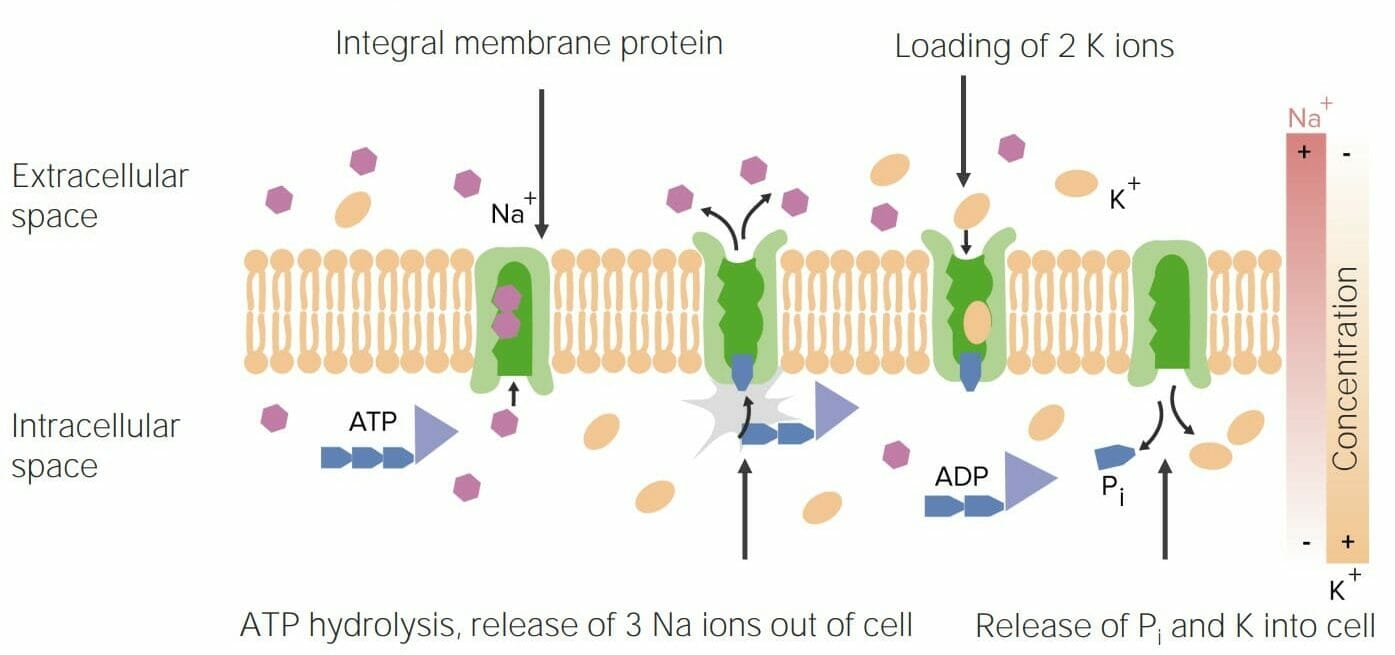
    • E.g., Na+/K+-ATPasa:
      • Una bomba transmembrana de importancia crítica
      • Mueve 3 Na+ fuera de la célula y 2 K+ dentro de la célula (ambos iones se mueven en EN Erythema nodosum is an immune-mediated panniculitis (inflammation of the subcutaneous fat) caused by a type IV (delayed-type) hypersensitivity reaction. It commonly manifests in young women as tender, erythematous nodules on the shins. Erythema Nodosum contra de sus gradientes de concentración)
      • Requiere de energía ATP
      • Establece un gradiente electroquímico que se utiliza en EN Erythema nodosum is an immune-mediated panniculitis (inflammation of the subcutaneous fat) caused by a type IV (delayed-type) hypersensitivity reaction. It commonly manifests in young women as tender, erythematous nodules on the shins. Erythema Nodosum múltiples procesos (e.g., transmisión nerviosa, absorción de nutrientes)
Funcionamiento del transportador Na/K-ATPasa

Imagen que muestra el funcionamiento del transportador Na/K-ATPasa, que es una función importante de las proteínas
Pi: fosfato
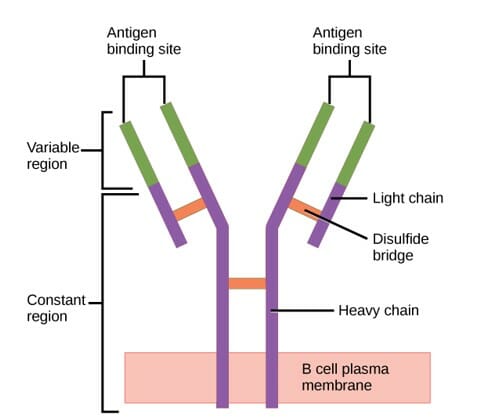
Imagen por Lecturio.

Anticuerpos

Descripción General

  • Glucoproteínas globulares producidas por el sistema inmunitario adaptativo
  • Reconocen y se unen a moléculas específicas (llamadas antígenos)
  • Funciones:
    • Neutralizan las toxinas y los LOS Neisseria patógenos uniéndose y “cubriendo” los LOS Neisseria sitios de unión
    • Activan el sistema del complemento
    • Opsonización (recubrimiento de patógenos que mejoran la fagocitosis)
  • Presentes en EN Erythema nodosum is an immune-mediated panniculitis (inflammation of the subcutaneous fat) caused by a type IV (delayed-type) hypersensitivity reaction. It commonly manifests in young women as tender, erythematous nodules on the shins. Erythema Nodosum 2 formas:
    • Solubles: secretados en EN Erythema nodosum is an immune-mediated panniculitis (inflammation of the subcutaneous fat) caused by a type IV (delayed-type) hypersensitivity reaction. It commonly manifests in young women as tender, erythematous nodules on the shins. Erythema Nodosum la sangre
    • Unidos a la membrana

Estructura

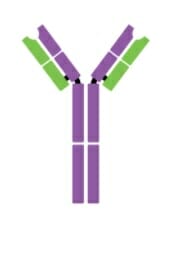
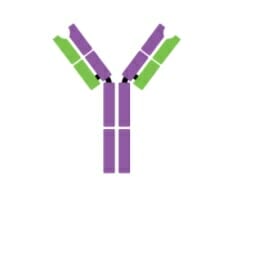
  • Constan de 4 cadenas polipeptídicas:
    • 2 cadenas pesadas: forman una forma de Y unidas por enlaces disulfuro
    • 2 uniones ligeras: unidas a las cadenas pesadas a lo largo de los LOS Neisseria brazos superiores de la Y por enlaces disulfuro
  • 2 regiones primarias:
    • Regiones variables:
      • Localizadas en EN Erythema nodosum is an immune-mediated panniculitis (inflammation of the subcutaneous fat) caused by a type IV (delayed-type) hypersensitivity reaction. It commonly manifests in young women as tender, erythematous nodules on the shins. Erythema Nodosum las puntas de las cadenas ligeras y pesadas
      • Responsables de identificar antígenos
      • Pueden producir una variedad increíblemente amplia de regiones variables debido a la mezcla de ADN
    • Regiones constantes: regiones que son relativamente consistentes en EN Erythema nodosum is an immune-mediated panniculitis (inflammation of the subcutaneous fat) caused by a type IV (delayed-type) hypersensitivity reaction. It commonly manifests in young women as tender, erythematous nodules on the shins. Erythema Nodosum estructura entre los LOS Neisseria anticuerpos dentro de la misma clase
Estructura del anticuerpo (regiones)

Estructura del anticuerpo (regiones):
El anticuerpo tiene una región variable única (formada por cadenas pesadas y ligeras) capaz de unirse a un antígeno diferente y una región constante (formada por cadenas pesadas).

Imagen:Figure 42.22” por OpenStax Licencia: CC BY 4.0, recortado por Lecturio.

Funciones de las diferentes clases de inmunoglobulinas ( Ig Ig X-linked Agammaglobulinemia)

Existen 5 clases diferentes de inmunoglobulinas:
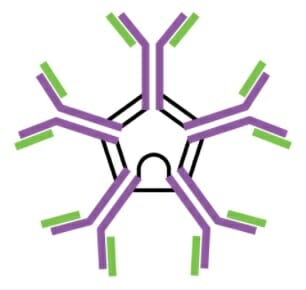
  • IgM IgM A class of immunoglobulin bearing mu chains (immunoglobulin mu-chains). Igm can fix complement. The name comes from its high molecular weight and originally being called a macroglobulin. Immunoglobulins: Types and Functions:
    • Anticuerpo principal en EN Erythema nodosum is an immune-mediated panniculitis (inflammation of the subcutaneous fat) caused by a type IV (delayed-type) hypersensitivity reaction. It commonly manifests in young women as tender, erythematous nodules on the shins. Erythema Nodosum la respuesta inmune primaria
    • Facilita la activación de las células B al AL Amyloidosis unirse a las células T colaboradoras
    • Fija el complemento, lo que conduce a la lisis de los LOS Neisseria microorganismos
    • Puede aglutinar patógenos, facilitando así la eliminación de patógenos
    • La forma de monómero sirve como receptor Receptor Receptors are proteins located either on the surface of or within a cell that can bind to signaling molecules known as ligands (e.g., hormones) and cause some type of response within the cell. Receptors de células B en EN Erythema nodosum is an immune-mediated panniculitis (inflammation of the subcutaneous fat) caused by a type IV (delayed-type) hypersensitivity reaction. It commonly manifests in young women as tender, erythematous nodules on the shins. Erythema Nodosum células B vírgenes.
  • IgG IgG The major immunoglobulin isotype class in normal human serum. There are several isotype subclasses of igg, for example, igg1, igg2a, and igg2b. Hypersensitivity Pneumonitis:
    • Anticuerpo principal en EN Erythema nodosum is an immune-mediated panniculitis (inflammation of the subcutaneous fat) caused by a type IV (delayed-type) hypersensitivity reaction. It commonly manifests in young women as tender, erythematous nodules on the shins. Erythema Nodosum la respuesta inmune secundaria
    • Fija el complemento
    • Mejora la fagocitosis
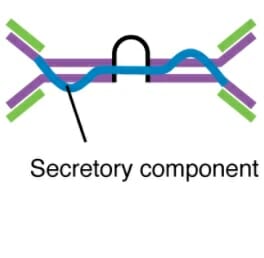
  • IgA IgA Represents 15-20% of the human serum immunoglobulins, mostly as the 4-chain polymer in humans or dimer in other mammals. Secretory iga is the main immunoglobulin in secretions. Immunoglobulins: Types and Functions:
    • Principal Ig Ig X-linked Agammaglobulinemia en EN Erythema nodosum is an immune-mediated panniculitis (inflammation of the subcutaneous fat) caused by a type IV (delayed-type) hypersensitivity reaction. It commonly manifests in young women as tender, erythematous nodules on the shins. Erythema Nodosum las secreciones: lágrimas, saliva Saliva The clear, viscous fluid secreted by the salivary glands and mucous glands of the mouth. It contains mucins, water, organic salts, and ptyalin. Salivary Glands: Anatomy, calostro, moco
    • Puede ser transportada a través de la mucosa
    • Previene la colonización bacteriana de las superficies mucosas
  • IgE IgE An immunoglobulin associated with mast cells. Overexpression has been associated with allergic hypersensitivity. Immunoglobulins: Types and Functions:
    • La unión del alérgeno a la IgE IgE An immunoglobulin associated with mast cells. Overexpression has been associated with allergic hypersensitivity. Immunoglobulins: Types and Functions desencadena la liberación de mediadores inflamatorios de los LOS Neisseria mastocitos y basófilos (respuesta alérgica)
    • Importante en EN Erythema nodosum is an immune-mediated panniculitis (inflammation of the subcutaneous fat) caused by a type IV (delayed-type) hypersensitivity reaction. It commonly manifests in young women as tender, erythematous nodules on the shins. Erythema Nodosum la eliminación de parásitos: los LOS Neisseria eosinófilos se unen a los LOS Neisseria helmintos recubiertos de IgE IgE An immunoglobulin associated with mast cells. Overexpression has been associated with allergic hypersensitivity. Immunoglobulins: Types and Functions → matan al AL Amyloidosis parásito
  • IgD IgD An immunoglobulin which accounts for less than 1% of plasma immunoglobulin. It is found on the membrane of many circulating B lymphocytes. Immunoglobulins: Types and Functions: Junto con la IgM IgM A class of immunoglobulin bearing mu chains (immunoglobulin mu-chains). Igm can fix complement. The name comes from its high molecular weight and originally being called a macroglobulin. Immunoglobulins: Types and Functions, constituye el receptor Receptor Receptors are proteins located either on the surface of or within a cell that can bind to signaling molecules known as ligands (e.g., hormones) and cause some type of response within the cell. Receptors de células B de las células B vírgenes
Tabla: Las 5 clases de Ig Ig X-linked Agammaglobulinemia
Pentámero de IgM IgM A class of immunoglobulin bearing mu chains (immunoglobulin mu-chains). Igm can fix complement. The name comes from its high molecular weight and originally being called a macroglobulin. Immunoglobulins: Types and Functions Monómero de IgG IgG The major immunoglobulin isotype class in normal human serum. There are several isotype subclasses of igg, for example, igg1, igg2a, and igg2b. Hypersensitivity Pneumonitis Dímero secretor de IgA IgA Represents 15-20% of the human serum immunoglobulins, mostly as the 4-chain polymer in humans or dimer in other mammals. Secretory iga is the main immunoglobulin in secretions. Immunoglobulins: Types and Functions Monómero de IgE IgE An immunoglobulin associated with mast cells. Overexpression has been associated with allergic hypersensitivity. Immunoglobulins: Types and Functions Monómero de IgD IgD An immunoglobulin which accounts for less than 1% of plasma immunoglobulin. It is found on the membrane of many circulating B lymphocytes. Immunoglobulins: Types and Functions
Cadenas pesadas μ γ α ε δ
Número de sitios de unión a antígenos 10 2 4 2 2
Peso molecular (daltons) 900 000 150 000 385 000 200 000 180 000
Porcentaje de anticuerpos totales en EN Erythema nodosum is an immune-mediated panniculitis (inflammation of the subcutaneous fat) caused by a type IV (delayed-type) hypersensitivity reaction. It commonly manifests in young women as tender, erythematous nodules on the shins. Erythema Nodosum suero 6% 80% 13% 0,002% 1%
Atraviesa la placenta Placenta A highly vascularized mammalian fetal-maternal organ and major site of transport of oxygen, nutrients, and fetal waste products. It includes a fetal portion (chorionic villi) derived from trophoblasts and a maternal portion (decidua) derived from the uterine endometrium. The placenta produces an array of steroid, protein and peptide hormones (placental hormones). Placenta, Umbilical Cord, and Amniotic Cavity No Si No No No
Fija el complemento Si Si No No No
Fc Fc Crystallizable fragments composed of the carboxy-terminal halves of both immunoglobulin heavy chains linked to each other by disulfide bonds. Fc fragments contain the carboxy-terminal parts of the heavy chain constant regions that are responsible for the effector functions of an immunoglobulin (complement fixation, binding to the cell membrane via fc receptors, and placental transport). This fragment can be obtained by digestion of immunoglobulins with the proteolytic enzyme papain. Immunoglobulins: Types and Functions se une a Fagocitos Mastocitos y basófilos
Función Anticuerpo principal de las respuestas primarias, es el mejor en EN Erythema nodosum is an immune-mediated panniculitis (inflammation of the subcutaneous fat) caused by a type IV (delayed-type) hypersensitivity reaction. It commonly manifests in young women as tender, erythematous nodules on the shins. Erythema Nodosum la fijación del complemento; la forma monomérica de IgM IgM A class of immunoglobulin bearing mu chains (immunoglobulin mu-chains). Igm can fix complement. The name comes from its high molecular weight and originally being called a macroglobulin. Immunoglobulins: Types and Functions sirve como receptor Receptor Receptors are proteins located either on the surface of or within a cell that can bind to signaling molecules known as ligands (e.g., hormones) and cause some type of response within the cell. Receptors de células B Anticuerpo sanguíneo principal de las respuestas secundarias, neutraliza toxinas, opsonización Se secreta hacia el moco, lágrimas, saliva Saliva The clear, viscous fluid secreted by the salivary glands and mucous glands of the mouth. It contains mucins, water, organic salts, and ptyalin. Salivary Glands: Anatomy, calostro Anticuerpo de actividad alérgica y antiparasitaria Receptor Receptor Receptors are proteins located either on the surface of or within a cell that can bind to signaling molecules known as ligands (e.g., hormones) and cause some type of response within the cell. Receptors de células B

Relevancia Clínica

Un sinnúmero de trastornos clínicos son causados por anormalidades o deficiencias de proteínas y/o metabolismo proteico anormal. A continuación se enumeran algunos ejemplos.

Anomalías/deficiencias enzimáticas

  • Estados de hipercoagulación o hipocoagulación: las deficiencias o mutaciones de las enzimas involucradas en EN Erythema nodosum is an immune-mediated panniculitis (inflammation of the subcutaneous fat) caused by a type IV (delayed-type) hypersensitivity reaction. It commonly manifests in young women as tender, erythematous nodules on the shins. Erythema Nodosum la cascada de la coagulación pueden resultar en EN Erythema nodosum is an immune-mediated panniculitis (inflammation of the subcutaneous fat) caused by a type IV (delayed-type) hypersensitivity reaction. It commonly manifests in young women as tender, erythematous nodules on the shins. Erythema Nodosum estados de hipercoagulabilidad o hipocoagulabilidad.
    • Hemofilias: deficiencias de factor VIII Factor VIII Factor VIII of blood coagulation. Antihemophilic factor that is part of the factor viii/von Willebrand factor complex. Factor VIII is produced in the liver and acts in the intrinsic pathway of blood coagulation. It serves as a cofactor in factor X activation and this action is markedly enhanced by small amounts of thrombin. Hemostasis (hemofilia A), factor IX Factor IX Storage-stable blood coagulation factor acting in the intrinsic pathway of blood coagulation. Its activated form, ixa, forms a complex with factor VIII and calcium on platelet factor 3 to activate factor X to Xa. Hemostasis (hemofilia B) o factor XI (hemofilia C), todas las cuales son enzimas importantes necesarias para formar coágulos. Las hemofilias dan como resultado un estado de hipocoagulabilidad y se presentan con sangrado anormal.
    • Factor V Leiden Factor V Leiden Hypercoagulable States: mutación puntual que resulta en EN Erythema nodosum is an immune-mediated panniculitis (inflammation of the subcutaneous fat) caused by a type IV (delayed-type) hypersensitivity reaction. It commonly manifests in young women as tender, erythematous nodules on the shins. Erythema Nodosum resistencia a la degradación del factor Va VA Ventilation: Mechanics of Breathing por la proteína C → ↑ factor Va VA Ventilation: Mechanics of Breathing → ↑ formación de coágulos
  • Fenilcetonuria: trastorno metabólico causado por mutaciones en EN Erythema nodosum is an immune-mediated panniculitis (inflammation of the subcutaneous fat) caused by a type IV (delayed-type) hypersensitivity reaction. It commonly manifests in young women as tender, erythematous nodules on the shins. Erythema Nodosum el gen de la fenilalanina hidroxilasa que codifica la enzima PAH PAH The glycine amide of 4-aminobenzoic acid. Its sodium salt is used as a diagnostic aid to measure effective renal plasma flow (ERPF) and excretory capacity. Glomerular Filtration, que convierte la fenilalanina en EN Erythema nodosum is an immune-mediated panniculitis (inflammation of the subcutaneous fat) caused by a type IV (delayed-type) hypersensitivity reaction. It commonly manifests in young women as tender, erythematous nodules on the shins. Erythema Nodosum tirosina. Esta conversión conduce a una acumulación de fenilalanina, que causa daño en EN Erythema nodosum is an immune-mediated panniculitis (inflammation of the subcutaneous fat) caused by a type IV (delayed-type) hypersensitivity reaction. It commonly manifests in young women as tender, erythematous nodules on the shins. Erythema Nodosum los LOS Neisseria tractos de la sustancia blanca y mielina a través de mecanismos desconocidos, lo que lleva a déficits neurológicos. En EN Erythema nodosum is an immune-mediated panniculitis (inflammation of the subcutaneous fat) caused by a type IV (delayed-type) hypersensitivity reaction. It commonly manifests in young women as tender, erythematous nodules on the shins. Erythema Nodosum la mayoría de los LOS Neisseria casos, los LOS Neisseria niveles de tirosina son normales o ligeramente bajos.
  • Enfermedades de almacenamiento lisosomal: mutaciones genéticas de las enzimas lisosomales, lo que lleva a un metabolismo disfuncional y a la acumulación de glucosaminoglicanos, glucoproteínas o glucolípidos. Los LOS Neisseria ejemplos de enfermedades de almacenamiento lisosomal incluyen la enfermedad de Gaucher, enfermedad de Tay-Sachs y mucopolisacaridosis.
  • Enfermedades por almacenamiento de glucógeno: trastornos caracterizados por una descomposición anormal del glucógeno debido a defectos genéticos de una de las enzimas clave involucradas en EN Erythema nodosum is an immune-mediated panniculitis (inflammation of the subcutaneous fat) caused by a type IV (delayed-type) hypersensitivity reaction. It commonly manifests in young women as tender, erythematous nodules on the shins. Erythema Nodosum el proceso. La deficiencia de estas enzimas puede causar hipoglucemia y/o depósito anormal de glucógeno en EN Erythema nodosum is an immune-mediated panniculitis (inflammation of the subcutaneous fat) caused by a type IV (delayed-type) hypersensitivity reaction. It commonly manifests in young women as tender, erythematous nodules on the shins. Erythema Nodosum los LOS Neisseria tejidos. Las enfermedades por almacenamiento de glucógeno más comunes incluyen las enfermedades de von Gierke, Pompe, Cori y McArdle.

Proteínas Estructurales Anormales

  • Escorbuto: una deficiencia dietética de vitamina C resulta en EN Erythema nodosum is an immune-mediated panniculitis (inflammation of the subcutaneous fat) caused by a type IV (delayed-type) hypersensitivity reaction. It commonly manifests in young women as tender, erythematous nodules on the shins. Erythema Nodosum la síntesis anormal de colágeno. La vitamina C es necesaria para la hidroxilación de la prolina en EN Erythema nodosum is an immune-mediated panniculitis (inflammation of the subcutaneous fat) caused by a type IV (delayed-type) hypersensitivity reaction. It commonly manifests in young women as tender, erythematous nodules on the shins. Erythema Nodosum las fibras de colágeno. La hidroxiprolina permite la formación de muchos enlaces de hidrógeno, uniendo las fibras de colágeno, lo cual es muy importante para la fuerza del colágeno.
  • Distrofia muscular de Duchenne: un trastorno genético recesivo ligado al AL Amyloidosis cromosoma X que produce distrofina anormal. La distrofina es una glucoproteína estructural que une el citoesqueleto y la matriz extracelular del músculo (necesaria para la función muscular normal). Al AL Amyloidosis ser incapaz de regenerarse normalmente, el tejido muscular es reemplazado por tejido fibroso y graso.

Proteínas de transporte anormales

  • Anemia Anemia Anemia is a condition in which individuals have low Hb levels, which can arise from various causes. Anemia is accompanied by a reduced number of RBCs and may manifest with fatigue, shortness of breath, pallor, and weakness. Subtypes are classified by the size of RBCs, chronicity, and etiology. Anemia: Overview and Types de células falciformes: grupo de trastornos genéticos en EN Erythema nodosum is an immune-mediated panniculitis (inflammation of the subcutaneous fat) caused by a type IV (delayed-type) hypersensitivity reaction. It commonly manifests in young women as tender, erythematous nodules on the shins. Erythema Nodosum los LOS Neisseria que una proteína de hemoglobina anormal (hemoglobina S) transforma los LOS Neisseria eritrocitos en EN Erythema nodosum is an immune-mediated panniculitis (inflammation of the subcutaneous fat) caused by a type IV (delayed-type) hypersensitivity reaction. It commonly manifests in young women as tender, erythematous nodules on the shins. Erythema Nodosum células falciformes. Esta transformación resulta en EN Erythema nodosum is an immune-mediated panniculitis (inflammation of the subcutaneous fat) caused by a type IV (delayed-type) hypersensitivity reaction. It commonly manifests in young women as tender, erythematous nodules on the shins. Erythema Nodosum anemia Anemia Anemia is a condition in which individuals have low Hb levels, which can arise from various causes. Anemia is accompanied by a reduced number of RBCs and may manifest with fatigue, shortness of breath, pallor, and weakness. Subtypes are classified by the size of RBCs, chronicity, and etiology. Anemia: Overview and Types crónica, episodios vaso-oclusivos, dolor Dolor Inflammation y daño de órganos.
  • Fibrosis Fibrosis Any pathological condition where fibrous connective tissue invades any organ, usually as a consequence of inflammation or other injury. Bronchiolitis Obliterans quística: trastorno autosómico recesivo causado por mutaciones en EN Erythema nodosum is an immune-mediated panniculitis (inflammation of the subcutaneous fat) caused by a type IV (delayed-type) hypersensitivity reaction. It commonly manifests in young women as tender, erythematous nodules on the shins. Erythema Nodosum el gen CFTR. Las mutaciones conducen a una disfunción de los LOS Neisseria canales de cloruro, lo que da lugar a una mucosidad hiperviscosa y a la acumulación de secreciones.

Señalización anormal y proteínas receptoras

  • Miastenia gravis: trastorno neuromuscular autoinmune caracterizado por debilidad y fatigabilidad de los LOS Neisseria músculos esqueléticos causados por disfunción/destrucción de los LOS Neisseria receptores de acetilcolina en EN Erythema nodosum is an immune-mediated panniculitis (inflammation of the subcutaneous fat) caused by a type IV (delayed-type) hypersensitivity reaction. It commonly manifests in young women as tender, erythematous nodules on the shins. Erythema Nodosum la unión neuromuscular. La miastenia se presenta con fatiga, ptosis Ptosis Cranial Nerve Palsies, diplopía, disfagia, dificultad respiratoria y debilidad progresiva en EN Erythema nodosum is an immune-mediated panniculitis (inflammation of the subcutaneous fat) caused by a type IV (delayed-type) hypersensitivity reaction. It commonly manifests in young women as tender, erythematous nodules on the shins. Erythema Nodosum las extremidades, lo que provoca dificultad en EN Erythema nodosum is an immune-mediated panniculitis (inflammation of the subcutaneous fat) caused by a type IV (delayed-type) hypersensitivity reaction. It commonly manifests in young women as tender, erythematous nodules on the shins. Erythema Nodosum el movimiento.
  • Enfermedad de Graves: trastorno autoinmune caracterizado por la presencia de anticuerpos circulantes contra los LOS Neisseria receptores de la hormona estimulante de la tiroides (TSH, por sus siglas en EN Erythema nodosum is an immune-mediated panniculitis (inflammation of the subcutaneous fat) caused by a type IV (delayed-type) hypersensitivity reaction. It commonly manifests in young women as tender, erythematous nodules on the shins. Erythema Nodosum inglés), lo que hace HACE Altitude Sickness que la glándula tiroides tenga una hiperfunción.
  • Diabetes Diabetes Diabetes mellitus (DM) is a metabolic disease characterized by hyperglycemia and dysfunction of the regulation of glucose metabolism by insulin. Type 1 DM is diagnosed mostly in children and young adults as the result of autoimmune destruction of β cells in the pancreas and the resulting lack of insulin. Type 2 DM has a significant association with obesity and is characterized by insulin resistance. Diabetes Mellitus mellitus tipo 2: causada principalmente por la resistencia periférica a la insulina. La insulina en EN Erythema nodosum is an immune-mediated panniculitis (inflammation of the subcutaneous fat) caused by a type IV (delayed-type) hypersensitivity reaction. It commonly manifests in young women as tender, erythematous nodules on the shins. Erythema Nodosum sí es una hormona peptídica que es responsable de mantener los LOS Neisseria niveles normales de glucosa en EN Erythema nodosum is an immune-mediated panniculitis (inflammation of the subcutaneous fat) caused by a type IV (delayed-type) hypersensitivity reaction. It commonly manifests in young women as tender, erythematous nodules on the shins. Erythema Nodosum sangre. La glucosa en EN Erythema nodosum is an immune-mediated panniculitis (inflammation of the subcutaneous fat) caused by a type IV (delayed-type) hypersensitivity reaction. It commonly manifests in young women as tender, erythematous nodules on the shins. Erythema Nodosum sangre crónicamente elevada da como resultado una secreción de insulina crónicamente elevada, lo que a su vez da como resultado una regulación a la baja y una disminución de la sensibilidad de las proteínas receptoras de insulina.
  • Síndrome de insensibilidad completa a los LOS Neisseria andrógenos: afección recesiva ligada al AL Amyloidosis cromosoma X en EN Erythema nodosum is an immune-mediated panniculitis (inflammation of the subcutaneous fat) caused by a type IV (delayed-type) hypersensitivity reaction. It commonly manifests in young women as tender, erythematous nodules on the shins. Erythema Nodosum la que una mutación genética afecta la función de los LOS Neisseria receptores de andrógenos, lo que lleva a la resistencia a la testosterona. Los LOS Neisseria individuos tendrán un cariotipo 46,XY y testículos no descendidos, con desarrollo mamario y genitales femeninos externos (debido a la conversión periférica excesiva de testosterona en EN Erythema nodosum is an immune-mediated panniculitis (inflammation of the subcutaneous fat) caused by a type IV (delayed-type) hypersensitivity reaction. It commonly manifests in young women as tender, erythematous nodules on the shins. Erythema Nodosum estrógeno).

Trastornos autoinmunes

  • Lupus eritematoso sistémico (LES): afección crónica, autoinmune e inflamatoria que causa el depósito de complejos inmunes en EN Erythema nodosum is an immune-mediated panniculitis (inflammation of the subcutaneous fat) caused by a type IV (delayed-type) hypersensitivity reaction. It commonly manifests in young women as tender, erythematous nodules on the shins. Erythema Nodosum los LOS Neisseria órganos, lo que resulta en EN Erythema nodosum is an immune-mediated panniculitis (inflammation of the subcutaneous fat) caused by a type IV (delayed-type) hypersensitivity reaction. It commonly manifests in young women as tender, erythematous nodules on the shins. Erythema Nodosum manifestaciones sistémicas. Las características clínicas notables incluyen erupción malar, artritis no destructiva, nefritis lúpica, serositis Serositis Inflammation of a serous membrane. Systemic Lupus Erythematosus, citopenias, enfermedad tromboembólica, convulsiones y/o psicosis.
  • Artritis reumatoide ( AR AR Aortic regurgitation (AR) is a cardiac condition characterized by the backflow of blood from the aorta to the left ventricle during diastole. Aortic regurgitation is associated with an abnormal aortic valve and/or aortic root stemming from multiple causes, commonly rheumatic heart disease as well as congenital and degenerative valvular disorders. Aortic Regurgitation): poliartritis inflamatoria simétrica. La artritis reumatoide generalmente se presenta en EN Erythema nodosum is an immune-mediated panniculitis (inflammation of the subcutaneous fat) caused by a type IV (delayed-type) hypersensitivity reaction. It commonly manifests in young women as tender, erythematous nodules on the shins. Erythema Nodosum mujeres de mediana edad con inflamación de las articulaciones, dolor Dolor Inflammation y rigidez matutina. La fisiopatología no se conoce por completo, pero en EN Erythema nodosum is an immune-mediated panniculitis (inflammation of the subcutaneous fat) caused by a type IV (delayed-type) hypersensitivity reaction. It commonly manifests in young women as tender, erythematous nodules on the shins. Erythema Nodosum muchos individuos existe una mayor expresión de la enzima que convierte la arginina en EN Erythema nodosum is an immune-mediated panniculitis (inflammation of the subcutaneous fat) caused by a type IV (delayed-type) hypersensitivity reaction. It commonly manifests in young women as tender, erythematous nodules on the shins. Erythema Nodosum citrulina; los LOS Neisseria anticuerpos se unen a estas proteínas citrulinadas, lo que da como resultado la activación del sistema del complemento.
  • Nefropatía por IgA IgA Represents 15-20% of the human serum immunoglobulins, mostly as the 4-chain polymer in humans or dimer in other mammals. Secretory iga is the main immunoglobulin in secretions. Immunoglobulins: Types and Functions (enfermedad de Berger): enfermedad renal caracterizada por el depósito de IgA IgA Represents 15-20% of the human serum immunoglobulins, mostly as the 4-chain polymer in humans or dimer in other mammals. Secretory iga is the main immunoglobulin in secretions. Immunoglobulins: Types and Functions en EN Erythema nodosum is an immune-mediated panniculitis (inflammation of the subcutaneous fat) caused by a type IV (delayed-type) hypersensitivity reaction. It commonly manifests in young women as tender, erythematous nodules on the shins. Erythema Nodosum el mesangio. La enfermedad de Berger es la causa más común de glomerulonefritis primaria en EN Erythema nodosum is an immune-mediated panniculitis (inflammation of the subcutaneous fat) caused by a type IV (delayed-type) hypersensitivity reaction. It commonly manifests in young women as tender, erythematous nodules on the shins. Erythema Nodosum la mayoría de los LOS Neisseria países desarrollados. Las características comunes de presentación son hematuria Hematuria Presence of blood in the urine. Renal Cell Carcinoma macroscópica o asintomática, hematuria Hematuria Presence of blood in the urine. Renal Cell Carcinoma microscópica en EN Erythema nodosum is an immune-mediated panniculitis (inflammation of the subcutaneous fat) caused by a type IV (delayed-type) hypersensitivity reaction. It commonly manifests in young women as tender, erythematous nodules on the shins. Erythema Nodosum el análisis de orina con una infección previa de las vías respiratorias superiores o del tubo gastrointestinal.

Referencias

  1. Ajomiwe, N., Mba, O. I., Joshua, C. C., & Nwonumara, G. N. (2024). Protein nutrition: Understanding structure, digestibility, and bioavailability for optimal health. Foods, 13(11), 1771. https://doi.org/10.3390/foods13111771
  2. Boadu, F., & Cheng, J. (2024). Improving protein function prediction by learning and integrating representations of protein sequences and function labels. Bioinformatics Advances, 4(1), vbae120. https://doi.org/10.1093/bioadv/vbae120
  3. Kumar Bompalli, L. (2024). Protein: Structure and function. Figshare. https://doi.org/10.6084/M9.FIGSHARE.26235233.V1
  4. Lin, B., Zhang, W., Zhang, Y., Zhao, Z., Wang, Y., Zhu, C., & Pan, R. (2024). A comprehensive review and comparison of existing computational methods for protein function prediction. Briefings in Bioinformatics, 25(4), bbae289. https://doi.org/10.1093/bib/bbae289
  5. Friar, G. (2025). AI model deciphers the code in proteins that tells them where to go. MIT News. Retreived on July 15, 2025, from https://news.mit.edu/2025/ai-model-deciphers-code-proteins-tells-them-where-to-go-0213
  6. Nelson, D. L., & Cox, M. M. (2021). Lehninger principles of biochemistry (8th ed.). W. H. Freeman and Company.

¡Crea tu cuenta gratis o inicia una sesión para seguir leyendo!

Regístrate ahora y obtén acceso gratuito a Lecturio con páginas de concepto, videos médicos y cuestionarios para tu educación médica.

User Reviews

Que tengas una sesión de estudio alegre y navideña 🎁 Ahorra 50% en todos los planes >>

Details