Domina Conceptos Médicos

Estudia para la escuela de medicina y tus examenes con Lecturio.

Anomalías y Afecciones del Pene

Las anomalías y afecciones del pene pueden ser congénitas o adquiridas y pueden afectar el orificio uretral, el prepucio, el cuerpo o el glande del pene. Algunos ejemplos son la fimosis, la parafimosis, el epispadias Epispadias A birth defect due to malformation of the urethra in which the urethral opening is above its normal location. In the male, the malformed urethra generally opens on the top or the side of the penis, but the urethra can also be open the entire length of the penis. In the female, the malformed urethral opening is often between the clitoris and the labia, or in the abdomen. Penile Anomalies and Conditions, el hipospadias, la balanitis Balanitis Inflammation of the head of the penis, glans penis. Penile Anomalies and Conditions, la enfermedad de Peyronie y el priapismo. La gravedad de los LOS Neisseria síntomas clínicos varía, pero el diagnóstico de cada una de estas condiciones suele basarse en EN Erythema nodosum is an immune-mediated panniculitis (inflammation of the subcutaneous fat) caused by a type IV (delayed-type) hypersensitivity reaction. It commonly manifests in young women as tender, erythematous nodules on the shins. Erythema Nodosum los LOS Neisseria antecedentes y la exploración física. El tratamiento varía desde las terapias médicas hasta la intervención quirúrgica. Es importante conocer estos diagnósticos, ya que algunos (como la fimosis y la balanitis Balanitis Inflammation of the head of the penis, glans penis. Penile Anomalies and Conditions) son relativamente comunes, mientras que otros (como la parafimosis y el priapismo) pueden tener complicaciones graves si no se tratan a tiempo.

Last updated: Dec 15, 2025

Editorial responsibility: Stanley Oiseth, Lindsay Jones, Evelin Maza

Descripción General

Anatomía

El pene se compone de:

  • Glande:
    • También conocido como la cabeza del pene
    • Cubierto por el prepucio
  • Cuerpo del pene:
    • Compuesto por 2 columnas de tejido eréctil conocidas como:
      • Cuerpos cavernosos
      • Cuerpo esponjoso
    • Estas regiones están cubiertas por una membrana: la túnica albugínea.
  • La uretra:
    • Comienza desde la vejiga y atraviesa el centro del pene.
    • Termina con una abertura en EN Erythema nodosum is an immune-mediated panniculitis (inflammation of the subcutaneous fat) caused by a type IV (delayed-type) hypersensitivity reaction. It commonly manifests in young women as tender, erythematous nodules on the shins. Erythema Nodosum la punta del glande, llamada meato uretral.

Clasificación

Las afecciones penianas pueden clasificarse en EN Erythema nodosum is an immune-mediated panniculitis (inflammation of the subcutaneous fat) caused by a type IV (delayed-type) hypersensitivity reaction. It commonly manifests in young women as tender, erythematous nodules on the shins. Erythema Nodosum función de la región del pene comprometida:
  • Glande y prepucio:
  • Cuerpo del pene:
    • Enfermedad de Peyronie
    • Priapismo
  • Uretra:
    • Epispadias Epispadias A birth defect due to malformation of the urethra in which the urethral opening is above its normal location. In the male, the malformed urethra generally opens on the top or the side of the penis, but the urethra can also be open the entire length of the penis. In the female, the malformed urethral opening is often between the clitoris and the labia, or in the abdomen. Penile Anomalies and Conditions
    • Hipospadias

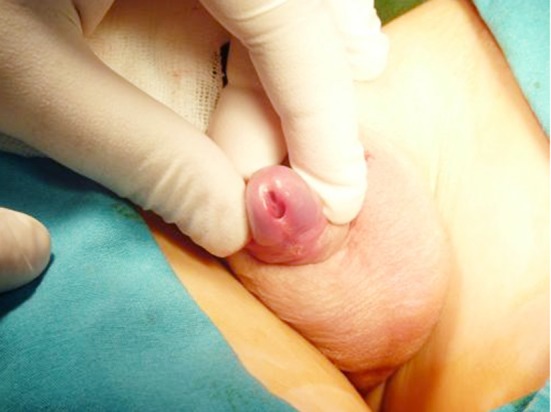
Epispadias e Hipospadias

Epispadias Epispadias A birth defect due to malformation of the urethra in which the urethral opening is above its normal location. In the male, the malformed urethra generally opens on the top or the side of the penis, but the urethra can also be open the entire length of the penis. In the female, the malformed urethral opening is often between the clitoris and the labia, or in the abdomen. Penile Anomalies and Conditions

  • Definición: abertura anormal de la uretra en EN Erythema nodosum is an immune-mediated panniculitis (inflammation of the subcutaneous fat) caused by a type IV (delayed-type) hypersensitivity reaction. It commonly manifests in young women as tender, erythematous nodules on the shins. Erythema Nodosum la superficie dorsal del pene
  • Epidemiología:
    • Muy rara
    • Incidencia reportada: < 1 de cada 100 000 recién nacidos masculinos
  • Etiología:
    • Migración defectuosa del tubérculo genital → tubularización uretral incompleta
    • Asociada a defectos anormales de la pared abdominal, como la extrofia vesical
  • Presentación clínica:
    • Abertura del meato en EN Erythema nodosum is an immune-mediated panniculitis (inflammation of the subcutaneous fat) caused by a type IV (delayed-type) hypersensitivity reaction. It commonly manifests in young women as tender, erythematous nodules on the shins. Erythema Nodosum el dorso del pene
    • Prepucio con capucha ventral
    • Asociada a curvatura del pene (chordee)
  • Diagnóstico: A menudo se diagnostica al AL Amyloidosis realizar el examen genital del recién nacido.
  • Tratamiento: cierre quirúrgico y reconstrucción
  • Complicaciones:
    • ↑ Frecuencia de las infecciones del tracto urinario (ITU)
    • Incontinencia urinaria
    • Reflujo urinario
    • Infertilidad
Bebé masculino con epispadias

Bebé masculino con epispadias

Imagen: “Male baby with epispadias” por Department of Pediatric Urology, University Medical Center Regensburg, Germany. Licencia: CC BY 2.0
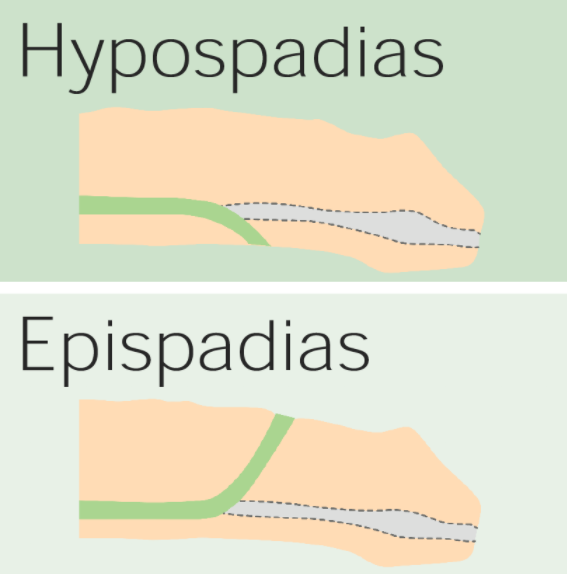
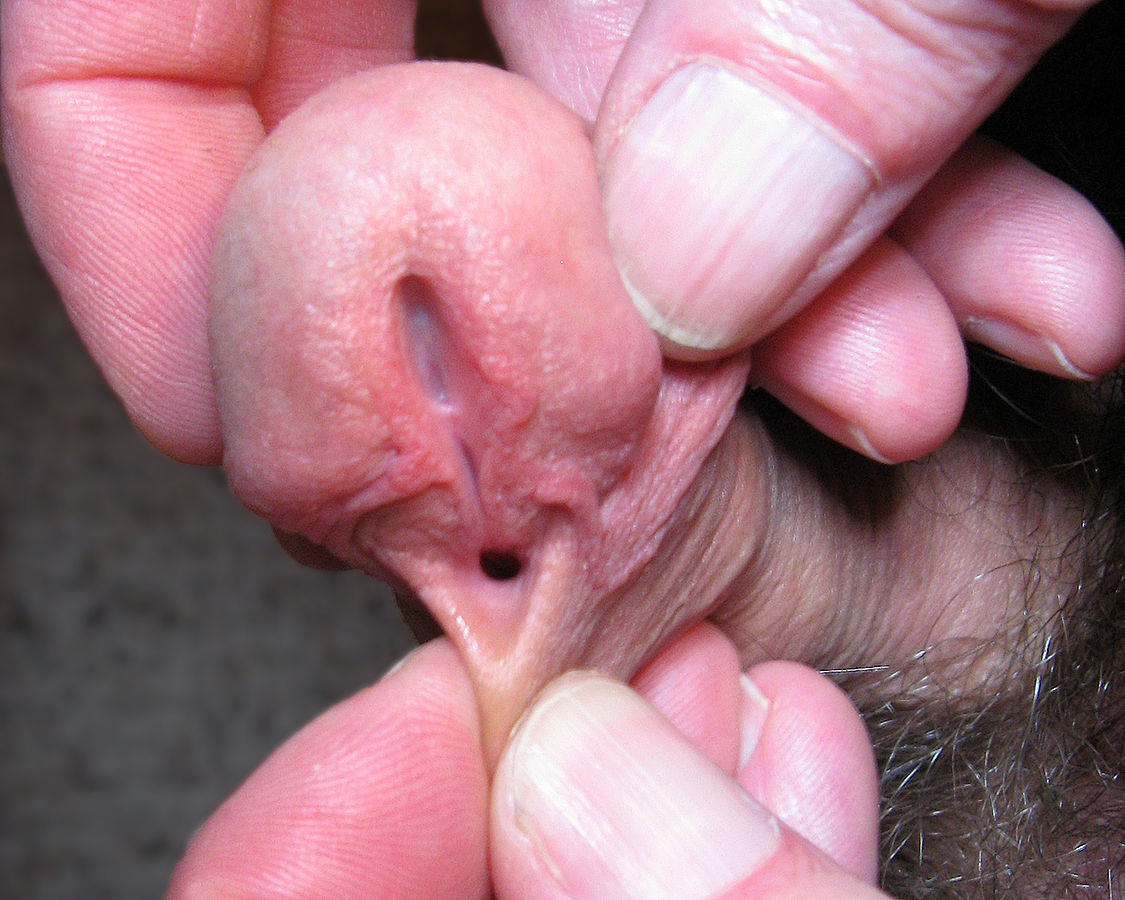
Hipospadias

  • Definición: abertura anormal de la uretra en EN Erythema nodosum is an immune-mediated panniculitis (inflammation of the subcutaneous fat) caused by a type IV (delayed-type) hypersensitivity reaction. It commonly manifests in young women as tender, erythematous nodules on the shins. Erythema Nodosum la superficie ventral del pene
  • Epidemiología:
    • Defecto congénito más común del pene
    • Se produce en EN Erythema nodosum is an immune-mediated panniculitis (inflammation of the subcutaneous fat) caused by a type IV (delayed-type) hypersensitivity reaction. It commonly manifests in young women as tender, erythematous nodules on the shins. Erythema Nodosum aproximadamente 1 de cada 250 recién nacidos masculinos en EN Erythema nodosum is an immune-mediated panniculitis (inflammation of the subcutaneous fat) caused by a type IV (delayed-type) hypersensitivity reaction. It commonly manifests in young women as tender, erythematous nodules on the shins. Erythema Nodosum Estados Unidos.
  • Etiología:
    • Causada por la falta del cierre de los LOS Neisseria pliegues uretrales
    • La causa es multifactorial.
    • Puede estar asociada a factores:
      • Ambientales
      • Genéticos
      • Endocrinos
  • Presentación clínica:
    • Abertura del meato en EN Erythema nodosum is an immune-mediated panniculitis (inflammation of the subcutaneous fat) caused by a type IV (delayed-type) hypersensitivity reaction. It commonly manifests in young women as tender, erythematous nodules on the shins. Erythema Nodosum la superficie ventral del pene
    • Prepucio deficiente en EN Erythema nodosum is an immune-mediated panniculitis (inflammation of the subcutaneous fat) caused by a type IV (delayed-type) hypersensitivity reaction. It commonly manifests in young women as tender, erythematous nodules on the shins. Erythema Nodosum la superficie ventral → cierre incompleto del prepucio alrededor del glande
    • Asociada a cuerda peneana
  • Diagnóstico: A menudo se diagnostica al AL Amyloidosis realizar el examen genital del recién nacido.
  • Tratamiento:
    • Corrección quirúrgica
    • No está justificado para casos con defectos leves.
  • Complicaciones:
    • ↑ Riesgo de ITU
    • Incontinencia urinaria
    • Obstrucción urinaria
    • Infertilidad

Fimosis y Parafimosis

Fimosis

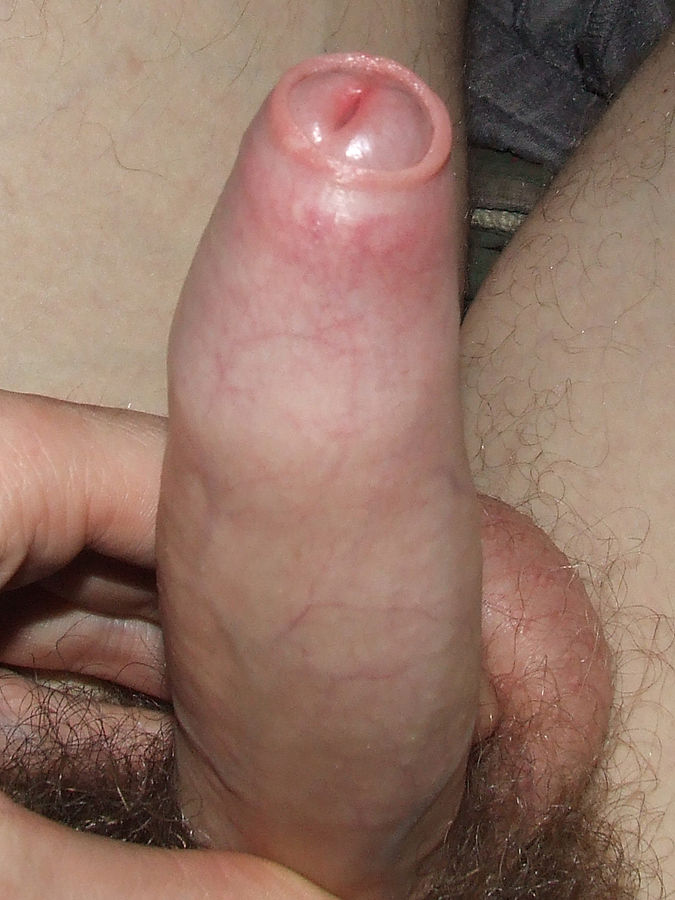
  • Definición: incapacidad de retraer el prepucio sobre el glande
  • Epidemiología: 1 de las anomalías más comunes del pene
  • Etiología:
    • Fisiológica:
      • Ocurre en EN Erythema nodosum is an immune-mediated panniculitis (inflammation of the subcutaneous fat) caused by a type IV (delayed-type) hypersensitivity reaction. It commonly manifests in young women as tender, erythematous nodules on the shins. Erythema Nodosum casi todos los LOS Neisseria recién nacidos varones.
      • Debida al AL Amyloidosis desarrollo normal de las adherencias congénitas entre el prepucio y el glande
    • Patológica:
      • Prepucio no retráctil secundario a cicatrización
      • Suele ser el resultado de infección e inflamación.
  • Presentación clínica:
    • Prepucio no retráctil
    • Fisiológica: “abombamiento” del prepucio con la micción
    • Patológica:
  • Diagnóstico: examen físico
  • Tratamiento:
    • La fimosis fisiológica es autolimitada.
    • Buena higiene
    • Dilatación y estiramiento suaves
    • Crema tópica de corticoides
    • Circuncisión
  • Complicaciones:
Fimosis

Un pene erecto con fimosis

Imagen: “Example of an erect penis with Phimosis. The foreskin will not retract.” por Andrew1985. Licencia: Dominio Público
Parafimosis

  • Definición: condición en EN Erythema nodosum is an immune-mediated panniculitis (inflammation of the subcutaneous fat) caused by a type IV (delayed-type) hypersensitivity reaction. It commonly manifests in young women as tender, erythematous nodules on the shins. Erythema Nodosum la que el prepucio de un pene no circuncidado queda atrapado detrás del glande y no puede reducirse:
    • Puede provocar estrangulamiento e infarto del glande.
    • Se considera una emergencia urológica.
  • Etiología: varios factores predisponentes potenciales:
    • Fimosis
    • Traumatismo
    • Actividad sexual
    • Procedimientos (por lo general, debido a que no se vuelve a colocar el prepucio sobre el glande después del procedimiento):
      • Cistoscopia
      • Cateterismo
  • Presentación clínica:
    • Inflamación
    • Dolor Dolor Inflammation y sensibilidad
    • Banda constrictiva de tejido proximal al AL Amyloidosis glande
    • El prepucio retraído no se reduce fácilmente de forma manual.
    • Si no se corrige: isquemia o necrosis Necrosis The death of cells in an organ or tissue due to disease, injury or failure of the blood supply. Ischemic Cell Damage → decoloración azul o negra
  • Diagnóstico: examen físico
  • Tratamiento:
    • Control del dolor Dolor Inflammation
    • Reducción manual
    • Intervención quirúrgica:
      • Reducción de la hendidura dorsal (incisión de la banda constrictora)
      • Circuncisión de emergencia
  • Complicaciones: necrosis Necrosis The death of cells in an organ or tissue due to disease, injury or failure of the blood supply. Ischemic Cell Damage del glande
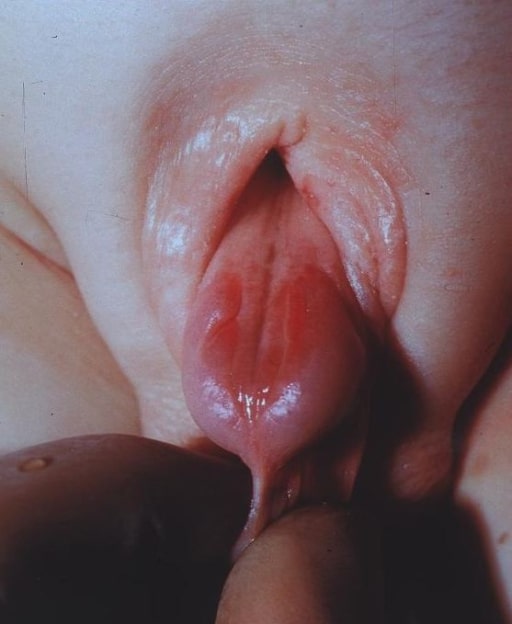
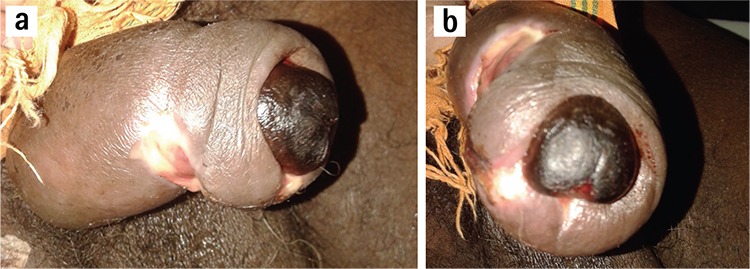
Parafimosis complicada por gangrena del glande

Parafimosis complicada por gangrena del glande:
Esta condición es causada por la alteración del flujo sanguíneo, linfático y venoso, lo que conduce a la inflamación y al compromiso del flujo sanguíneo arterial.
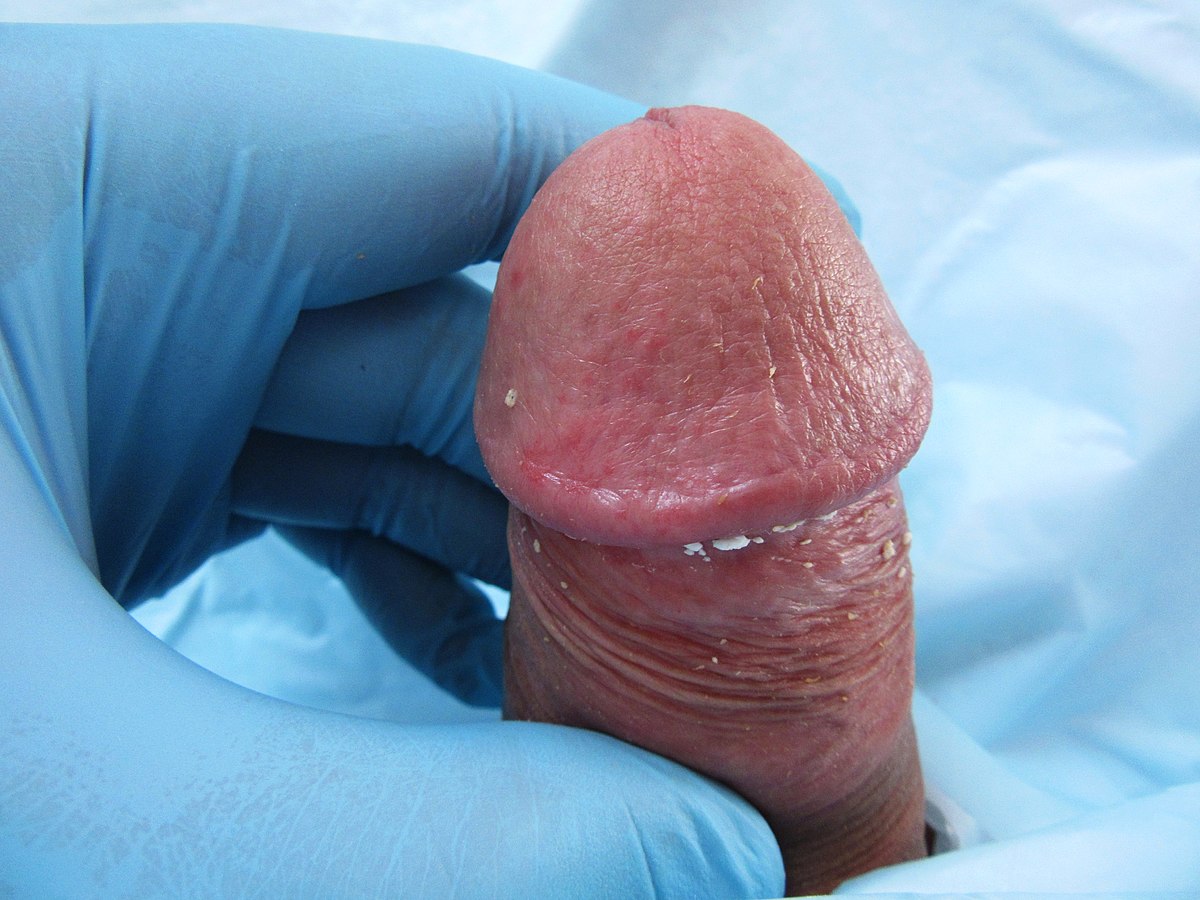
Imagen: “Demonstrating penile glans gangrene with paraphimotic constriction ring with purulent urethral discharge” por Balkan Medical Journal. Licencia: CC BY 2.5

Balanitis

Definición y epidemiología

Etiología

  • Factores predisponentes:
    • Limpieza inadecuada del pene y del prepucio
    • Fimosis
    • Exposición a sustancias irritantes:
      • Jabones
      • Lubricantes
      • Látex
    • Condiciones dermatológicas:
      • Reacción alérgica
      • Eccema
      • Psoriasis Psoriasis Psoriasis is a common T-cell-mediated inflammatory skin condition. The etiology is unknown, but is thought to be due to genetic inheritance and environmental triggers. There are 4 major subtypes, with the most common form being chronic plaque psoriasis. Psoriasis
      • Liquen plano
    • Traumatismo
    • Condiciones médicas crónicas, como:
      • Diabetes Diabetes Diabetes mellitus (DM) is a metabolic disease characterized by hyperglycemia and dysfunction of the regulation of glucose metabolism by insulin. Type 1 DM is diagnosed mostly in children and young adults as the result of autoimmune destruction of β cells in the pancreas and the resulting lack of insulin. Type 2 DM has a significant association with obesity and is characterized by insulin resistance. Diabetes Mellitus
      • Obesidad
      • Insuficiencia cardiaca u otras condiciones edematosas
  • Causas infecciosas comunes:
    • Candida Candida Candida is a genus of dimorphic, opportunistic fungi. Candida albicans is part of the normal human flora and is the most common cause of candidiasis. The clinical presentation varies and can include localized mucocutaneous infections (e.g., oropharyngeal, esophageal, intertriginous, and vulvovaginal candidiasis) and invasive disease (e.g., candidemia, intraabdominal abscess, pericarditis, and meningitis). Candida/Candidiasis
    • Bacterias
      • Neisseria gonorrhoeae Neisseria gonorrhoeae A species of gram-negative, aerobic bacteria primarily found in purulent venereal discharges. It is the causative agent of gonorrhea. Neisseria
      • Estreptococos del grupo B
      • Chlamydia Chlamydia Chlamydiae are obligate intracellular gram-negative bacteria. They lack a peptidoglycan layer and are best visualized using Giemsa stain. The family of Chlamydiaceae comprises 3 pathogens that can infect humans: Chlamydia trachomatis, Chlamydia psittaci, and Chlamydia pneumoniae. Chlamydia
      • Anaerobios
      • Treponema pallidum Treponema pallidum The causative agent of venereal and non-venereal syphilis as well as yaws. Treponema
      • Trichomonas Trichomonas A genus of parasitic flagellate eukaryotes distinguished by the presence of four anterior flagella, an undulating membrane, and a trailing flagellum. Nitroimidazoles
      • Herpes simple
      • Escabiosis

Presentación clínica

  • Eritema
  • Edema Edema Edema is a condition in which excess serous fluid accumulates in the body cavity or interstitial space of connective tissues. Edema is a symptom observed in several medical conditions. It can be categorized into 2 types, namely, peripheral (in the extremities) and internal (in an organ or body cavity). Edema del glande
  • Dolor Dolor Inflammation y sensibilidad
  • Prurito
  • Prepucio apretado
  • Exudado purulento
  • Lesiones ulceradas del glande y del prepucio
  • Obstrucción urinaria
  • Linfadenopatía
Balanitis causada por esmegma

Eritema y edema del glande del pene compatible con balanitis

Imagen: “Balanitis caused by smegma” por MFN24. Licencia: CC0 1.0

Diagnóstico

  • Examen físico
  • Los LOS Neisseria exámenes adicionales se determinan en EN Erythema nodosum is an immune-mediated panniculitis (inflammation of the subcutaneous fat) caused by a type IV (delayed-type) hypersensitivity reaction. It commonly manifests in young women as tender, erythematous nodules on the shins. Erythema Nodosum función de los LOS Neisseria antecedentes, pero pueden incluir:
    • Cultivos bacterianos
    • Pruebas del virus Virus Viruses are infectious, obligate intracellular parasites composed of a nucleic acid core surrounded by a protein capsid. Viruses can be either naked (non-enveloped) or enveloped. The classification of viruses is complex and based on many factors, including type and structure of the nucleoid and capsid, the presence of an envelope, the replication cycle, and the host range. Virology del herpes simple
    • Preparación de hidróxido de potasio → evaluación para Candida Candida Candida is a genus of dimorphic, opportunistic fungi. Candida albicans is part of the normal human flora and is the most common cause of candidiasis. The clinical presentation varies and can include localized mucocutaneous infections (e.g., oropharyngeal, esophageal, intertriginous, and vulvovaginal candidiasis) and invasive disease (e.g., candidemia, intraabdominal abscess, pericarditis, and meningitis). Candida/Candidiasis
    • Pruebas para gonorrea y clamidia

Tratamiento

  • Buena higiene, con una limpieza adecuada del pene y del prepucio
  • Evitar los LOS Neisseria irritantes
  • Tratamiento de la infección subyacente, si está presente
  • Tratamiento de enfermedades crónicas predisponentes

Complicaciones

  • Fimosis
  • Parafimosis
  • ↑ Riesgo de cáncer de pene
  • Estenosis uretral

Enfermedad de Peyronie

Definición

La enfermedad de Peyronie es una deformidad del pene causada por la fibrosis Fibrosis Any pathological condition where fibrous connective tissue invades any organ, usually as a consequence of inflammation or other injury. Bronchiolitis Obliterans/cicatrización de la túnica albugínea.
Epidemiología

  • Prevalencia: aproximadamente el 5% de los LOS Neisseria hombres (probablemente subreportada)
  • Edad media: aproximadamente 55 años

Etiología

  • Las placas fibrosas pueden producirse por:
    • Traumatismo
    • Isquemia tisular
  • Factores de riesgo:
    • Procedimientos urológicos:
      • Cateterismo
      • Cistoscopia
      • Resección transuretral de la próstata
    • Trastornos del tejido conectivo
    • Genética
    • Hipogonadismo
    • Diabetes Diabetes Diabetes mellitus (DM) is a metabolic disease characterized by hyperglycemia and dysfunction of the regulation of glucose metabolism by insulin. Type 1 DM is diagnosed mostly in children and young adults as the result of autoimmune destruction of β cells in the pancreas and the resulting lack of insulin. Type 2 DM has a significant association with obesity and is characterized by insulin resistance. Diabetes Mellitus
    • Tabaquismo
    • Consumo de alcohol
    • Edad avanzada

Presentación clínica

  • Suele ser más evidente durante la erección.
  • Desviación del pene hacia el lado afectado
  • Dolor Dolor Inflammation
  • Nódulos o placas palpables
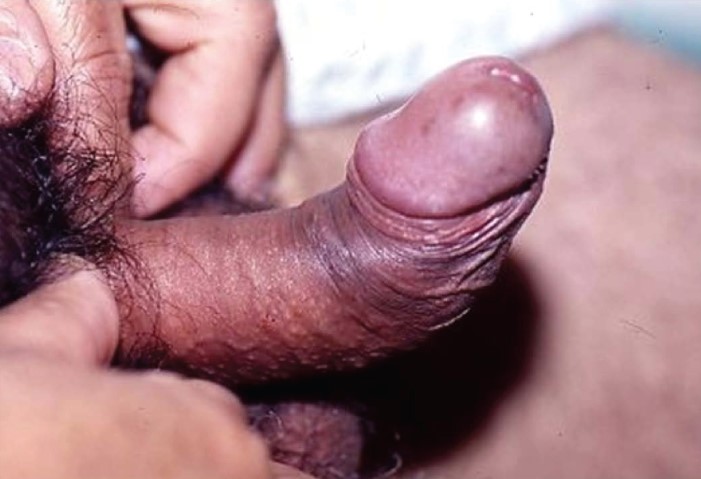
Curvatura anormal del pene Enfermedad de Peyronie

Curvatura anormal del pene secundaria a la enfermedad de Peyronie

Imagen: “Penile deformity secondary to Peyronie’s disease” por Tran VQ et al. Licencia: CC BY 3.0

Diagnóstico

El diagnóstico es clínico.

Tratamiento

  • Observación (para aquellos con enfermedad leve y estable)
  • Terapia médica:
    • Pentoxifilina → previene el depósito de colágeno y la fibrosis Fibrosis Any pathological condition where fibrous connective tissue invades any organ, usually as a consequence of inflammation or other injury. Bronchiolitis Obliterans
    • Inyecciones intralesionales:
      • Colagenasa
      • Verapamilo → ↑ actividad de la colagenasa, ↓ producción de colágeno
  • Reparación quirúrgica para casos graves

Complicaciones

  • Disfunción eréctil
  • Efectos psicológicos:
    • Ansiedad
    • Baja autoestima

Priapismo

Definición

El priapismo es una erección anormal y persistente (generalmente > 4 horas) que no está asociada a la estimulación sexual.

Epidemiología

  • Incidencia: 0,73 casos por cada 100 000 hombres al AL Amyloidosis año
  • El priapismo isquémico es más frecuente (aproximadamente ⅔ de los LOS Neisseria casos están asociados al AL Amyloidosis tratamiento de la disfunción eréctil).
  • Distribución etaria bimodal:
    • 5–10 años
    • 20–50 años

Etiología y fisiopatología

  • Isquémico:
    • Causado por un fallo en EN Erythema nodosum is an immune-mediated panniculitis (inflammation of the subcutaneous fat) caused by a type IV (delayed-type) hypersensitivity reaction. It commonly manifests in young women as tender, erythematous nodules on the shins. Erythema Nodosum el flujo de salida venoso, que puede ser debido a:
      • Exceso de neurotransmisores
      • Vénulas obstruidas → impiden el drenaje venoso.
      • Relajación prolongada del músculo liso
    • Puede provocar un síndrome compartimental → daño tisular.
    • Causas:
      • Medicamentos (e.g., sildenafilo, anfetaminas, hidralazina, prazosina)
      • Enfermedad de células falciformes
      • Leucemia
      • Vasculitis Vasculitis Inflammation of any one of the blood vessels, including the arteries; veins; and rest of the vasculature system in the body. Systemic Lupus Erythematosus
      • Estado de hipercoagulabilidad
  • No isquémico:
    • Formación de fístulas arteriales → flujo arterial anormal hacia los LOS Neisseria cuerpos cavernosos
    • No hay obstrucción del flujo de salida venoso.
    • Generalmente por una lesión directa

Presentación clínica

  • Isquémico:
    • Erección dolorosa
    • Rigidez
    • Si no se trata → necrosis Necrosis The death of cells in an organ or tissue due to disease, injury or failure of the blood supply. Ischemic Cell Damage
  • No isquémico:

Diagnóstico

El diagnóstico se sospecha con base en EN Erythema nodosum is an immune-mediated panniculitis (inflammation of the subcutaneous fat) caused by a type IV (delayed-type) hypersensitivity reaction. It commonly manifests in young women as tender, erythematous nodules on the shins. Erythema Nodosum los LOS Neisseria antecedentes y el examen físico. Los LOS Neisseria siguientes hallazgos pueden ayudar a diferenciar el priapismo isquémico del no isquémico:

  • Gases sanguíneos cavernosos:
    • Isquémico:
      • La muestra de sangre tendrá un aspecto negro
      • Hipoxia
      • Hipercarbia
      • Acidosis Acidosis A pathologic condition of acid accumulation or depletion of base in the body. The two main types are respiratory acidosis and metabolic acidosis, due to metabolic acid build up. Respiratory Acidosis
    • No isquémico:
      • La muestra de sangre será roja
      • Oxígeno normal
      • Dióxido de carbono normal
      • pH pH The quantitative measurement of the acidity or basicity of a solution. Acid-Base Balance normal
  • Ultrasonido Doppler Doppler Ultrasonography applying the doppler effect, with frequency-shifted ultrasound reflections produced by moving targets (usually red blood cells) in the bloodstream along the ultrasound axis in direct proportion to the velocity of movement of the targets, to determine both direction and velocity of blood flow. Ultrasound (Sonography):
    • Isquémico: flujo sanguíneo mínimo o ausente en EN Erythema nodosum is an immune-mediated panniculitis (inflammation of the subcutaneous fat) caused by a type IV (delayed-type) hypersensitivity reaction. It commonly manifests in young women as tender, erythematous nodules on the shins. Erythema Nodosum las arterias cavernosas
    • No isquémico: flujo sanguíneo arterial normal o alto

Tratamiento

  • Isquémico:
    • Consulta urológica
    • Aspiración del cuerpo cavernoso
    • Inyección intracavernosa de fenilefrina → induce la contracción del músculo liso → ↑ salida venosa
    • Cirugía
  • No isquémico:
    • Puede resolverse espontáneamente
    • Arteriografía con embolización

Complicaciones

Las complicaciones del priapismo isquémico incluyen:

  • Disfunción eréctil
  • Necrosis Necrosis The death of cells in an organ or tissue due to disease, injury or failure of the blood supply. Ischemic Cell Damage del pene

Referencias

  1. Sandean, D. P., Leslie, S. W., & Lotfollahzadeh, S. (2024). Peyronie Disease. In StatPearls [Internet]. U.S. National Library of Medicine. https://www.ncbi.nlm.nih.gov/books/NBK560628/
  2. Fahmy, M. A. (2017). Congenital anomalies of the penis. ResearchGate. https://www.researchgate.net/publication/313796990_Congenital_Anomalies_of_the_Penis
  3. Baskin, L.S. (2024). Hypospadias: pathogenesis, diagnosis, and evaluation. UpToDate. Retrieved October 12, 2025, from https://www.uptodate.com/contents/hypospadias-pathogenesis-diagnosis-and-evaluation
  4. Baskin, L.S. (2025). Hypospadias: management and outcome. UpToDate. Retrieved October 12, 2025, from https://www.uptodate.com/contents/hypospadias-management-and-outcome
  5. Wilcox, D. (2025). Care and complications of the uncircumcised penis in infants and children. In L. S. Baskin (Ed.), UpToDate. Retrieved October 12, 2025, from https://www.uptodate.com/contents/care-and-complications-of-the-uncircumcised-penis-in-infants-and-children
  6. Tews, M. (2024). Paraphimosis: clinical manifestations, diagnosis and treatment. UpToDate. Retrieved October 12, 2025, from https://www.uptodate.com/contents/paraphimosis-clinical-manifestations-diagnosis-and-treatment
  7. Tews, M., Singer, J.I. (2024). Balanitis and balanoposthitis in children and adolescents: clinical manifestations, evaluation, and diagnosis. UpToDate. Retrieved October 12, 2025, from https://www.uptodate.com/contents/balanitis-and-balanoposthitis-in-children-and-adolescents-clinical-manifestations-evaluation-and-diagnosis
  8. Barrisford, G.W. (2025). Balanitis in adults. UpTodate. Retrieved October 12, 2025, from https://www.uptodate.com/contents/balanitis-in-adults
  9. Deveci, S. (2025). Priapism. UpToDate. Retrieved October 12, 2025, from https://www.uptodate.com/contents/priapism
  10. Brant, W.O., Bella, A.J., Lue, T.F. (2025). Peyronie’s disease: diagnosis and medical management. UpToDate. Retrieved October 12, 2025, from https://www.uptodate.com/contents/peyronies-disease-diagnosis-and-medical-management
  11. Rabinowitz, R., Cubillos, J. (2024). Penile and urethral anomalies. MSD Manual Professional Version. Retrieved October 12, 2025, from https://www.msdmanuals.com/professional/pediatrics/congenital-renal-and-genitourinary-anomalies/penile-and-urethral-anomalies
  12. Anand, S., Lotfollahzadaeh, S. (2024). Epispadias. StatPearls. Retrieved October 12, 2025, from https://www.ncbi.nlm.nih.gov/books/NBK563180/
  13. McPhee, A.S., Stormont, G., McKay, A.C. (2023). Phimosis. StatPearls. Retrieved October 12, 2025, from https://www.ncbi.nlm.nih.gov/books/NBK525972/
  14. Bragg, B.N., Kong, E.L., Leslie, S.W. (2023). Paraphimosis. StatPearls. Retrieved October 12, 2025, from https://www.ncbi.nlm.nih.gov/books/NBK459233/
  15. Ghory, H.Z., Sharma, R. (2024). Phimosis and paraphimosis. Medscape. Retrieved October 12, 2025, from https://emedicine.medscape.com/article/777539-overview

¡Crea tu cuenta gratis o inicia una sesión para seguir leyendo!

Regístrate ahora y obtén acceso gratuito a Lecturio con páginas de concepto, videos médicos y cuestionarios para tu educación médica.

User Reviews

Que tengas una sesión de estudio alegre y navideña 🎁 Ahorra 50% en todos los planes >>

Details