Domina Conceptos Médicos

Estudia para la escuela de medicina y tus examenes con Lecturio.

Aminoglucósidos

Los LOS Neisseria aminoglucósidos son una clase de antibióticos dentro de los LOS Neisseria cuales se incluyen la gentamicina, tobramicina, amikacina, neomicina, plazomicina y estreptomicina. Esta clase de medicamentos se unen a la subunidad ribosomal 30S para inhibir la síntesis proteica bacteriana. A diferencia de otros medicamentos con un mecanismo de acción similar, los LOS Neisseria aminoglucósidos son bactericidas. Los LOS Neisseria aminoglucósidos proporcionan cobertura contra patógenos Gram-negativos aerobios, incluyendo Pseudomonas Pseudomonas Pseudomonas is a non-lactose-fermenting, gram-negative bacillus that produces pyocyanin, which gives it a characteristic blue-green color. Pseudomonas is found ubiquitously in the environment, as well as in moist reservoirs, such as hospital sinks and respiratory equipment. Pseudomonas. Los LOS Neisseria aminoglucósidos también pueden utilizarse de forma sinérgica con inhibidores de la síntesis de la pared celular bacteriana (e.g., β-lactámicos) para patógenos Gram-positivos. Su uso está limitado por sus graves efectos secundarios, como nefrotoxicidad y ototoxicidad.

Last updated: Dec 15, 2025
Editorial responsibility: Stanley Oiseth, Lindsay Jones, Evelin Maza

Estructura Química y Farmacodinamia

Estructura química

  • Contienen un núcleo formado por un anillo de hexosa
  • Enlaces glucosídicos a varios amino azúcares
  • La gentamicina es el medicamento prototípico.
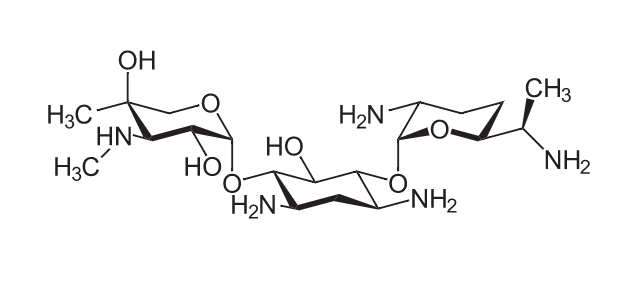
Estructura química de la gentamicina

Estructura química de la gentamicina:
Un núcleo formado por un anillo de hexosa (2-deoxiestreptamina en el centro) unido a 2 moléculas de amino azúcares
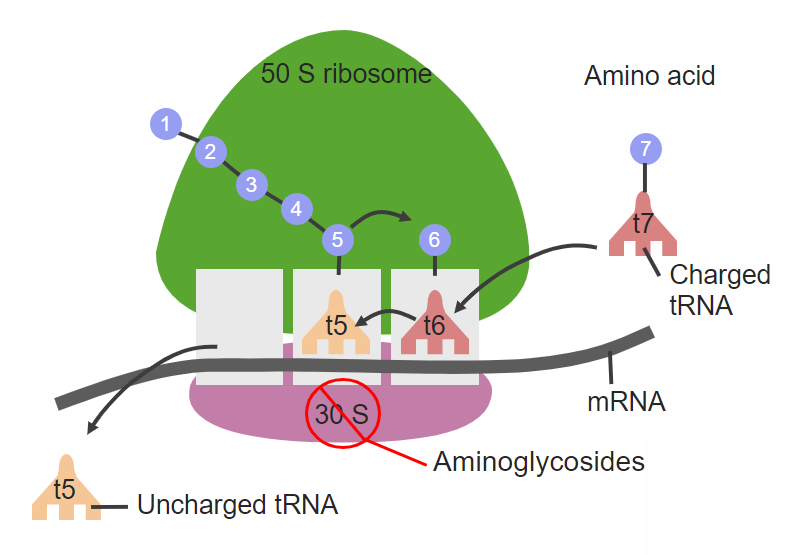
Imagen: “Gentamicin” por NEUROtiker. Licencia: Dominio Público

Mecanismo de acción

  • Los LOS Neisseria aminoglucósidos se unen a la subunidad ribosomal 30S bacteriana.
  • Interrupción de la síntesis proteica bacteriana mediante:
    • Prevención de la formación del complejo de iniciación
    • Lectura errónea del ácido ribonucleico mensajero (ARNm) → producción de una proteína defectuosa → daño a la célula
  • El proceso es letal para la célula bacteriana → bactericida (muerte bacteriana dependiente de la concentración)
  • Efecto postantibiótico que permite la supresión continua del crecimiento bacteriano.
  • Nota: Los LOS Neisseria aminoglucósidos se transportan a través de la membrana celular mediante un proceso dependiente del oxígeno (no son eficaces contra las bacterias anaerobias).
Sitio de acción de los aminoglucósidos

Sitio de acción de los aminoglucósidos, se dirigen a la subunidad ribosomal 30S
ARNt: ARN de transferencia
ARNm: ARN mensajero

Imagen por Lecturio. Licencia: CC BY-NC-SA 4.0

Farmacocinética

Absorción

  • Baja absorción enteral
  • Suelen administrarse por vía intravenosa (IV) o intramuscular (IM)

Distribución

  • Hidrófilica → volumen de distribución ↑ con sobrecarga de líquidos (e.g., edema Edema Edema is a condition in which excess serous fluid accumulates in the body cavity or interstitial space of connective tissues. Edema is a symptom observed in several medical conditions. It can be categorized into 2 types, namely, peripheral (in the extremities) and internal (in an organ or body cavity). Edema, ascitis).
  • Atraviesan la placenta Placenta A highly vascularized mammalian fetal-maternal organ and major site of transport of oxygen, nutrients, and fetal waste products. It includes a fetal portion (chorionic villi) derived from trophoblasts and a maternal portion (decidua) derived from the uterine endometrium. The placenta produces an array of steroid, protein and peptide hormones (placental hormones). Placenta, Umbilical Cord, and Amniotic Cavity
  • No atraviesan la barrera hematoencefálica
  • Baja penetración en EN Erythema nodosum is an immune-mediated panniculitis (inflammation of the subcutaneous fat) caused by a type IV (delayed-type) hypersensitivity reaction. It commonly manifests in young women as tender, erythematous nodules on the shins. Erythema Nodosum:
    • Tracto biliar
    • Secreciones respiratorias

Excreción

  • El aclaramiento está correlacionado con la función renal (↓ filtración glomerular → ↑ vida media).
  • Aproximadamente el 99% se eliminan inalterados en EN Erythema nodosum is an immune-mediated panniculitis (inflammation of the subcutaneous fat) caused by a type IV (delayed-type) hypersensitivity reaction. It commonly manifests in young women as tender, erythematous nodules on the shins. Erythema Nodosum la orina.
  • Se pueden eliminar con hemodiálisis

Indicaciones

Cobertura antimicrobiana

  • Bacterias aerobias Gram-negativas, incluyendo:
    • Pseudomonas aeruginosa Pseudomonas aeruginosa A species of gram-negative, aerobic, rod-shaped bacteria commonly isolated from clinical specimens (wound, burn, and urinary tract infections). It is also found widely distributed in soil and water. P. Aeruginosa is a major agent of nosocomial infection. Pseudomonas
    • Escherichia coli Escherichia coli The gram-negative bacterium Escherichia coli is a key component of the human gut microbiota. Most strains of E. coli are avirulent, but occasionally they escape the GI tract, infecting the urinary tract and other sites. Less common strains of E. coli are able to cause disease within the GI tract, most commonly presenting as abdominal pain and diarrhea. Escherichia coli
    • Klebsiella pneumoniae Klebsiella Pneumoniae Gram-negative, non-motile, capsulated, gas-producing rods found widely in nature and associated with urinary and respiratory infections in humans. Aminoglycosides
    • Enterobacterales (p. ej., Enterobacter Enterobacter Multidrug-resistant Organisms and Nosocomial Infections, Serratia Serratia A genus of gram-negative, facultatively anaerobic, rod-shaped bacteria that occurs in the natural environment (soil, water, and plant surfaces) or as an opportunistic human pathogen. Acute Cholangitis, Proteus Proteus Proteus spp. are gram-negative, facultatively anaerobic bacilli. Different types of infection result from Proteus, but the urinary tract is the most common site. The majority of cases are caused by Proteus mirabilis (P. mirabilis). The bacteria are part of the normal intestinal flora and are also found in the environment. Proteus, Providencia)
    • Acinetobacter Acinetobacter Multidrug-resistant Organisms and Nosocomial Infections spp.
    • Yersinia pestis Yersinia pestis The plague is a bacterial infection caused by Yersinia pestis (Y. pestis), which primarily infects rodents. The disease is transmitted to humans via a flea bite. Inhalation of infectious droplets and handling infected animals or laboratory specimens are other means of transmission. The plague has 3 forms: bubonic (most common form), septicemic, and pneumonic. Yersinia pestis/Plague
    • Francisella tularensis Francisella Tularensis Aminoglycosides
    • Brucella Brucella Brucellosis (also known as undulant fever, Mediterranean fever, or Malta fever) is a zoonotic infection that spreads predominantly through ingestion of unpasteurized dairy products or direct contact with infected animal products. Clinical manifestations include fever, arthralgias, malaise, lymphadenopathy, and hepatosplenomegaly. Brucella/Brucellosis spp.
  • Micobacterias
  • Efecto sinérgico con antibióticos β-lactámicos contra:
    • Staphylococcus Staphylococcus Staphylococcus is a medically important genera of Gram-positive, aerobic cocci. These bacteria form clusters resembling grapes on culture plates. Staphylococci are ubiquitous for humans, and many strains compose the normal skin flora. Staphylococcus
    • Streptococcus Streptococcus Streptococcus is one of the two medically important genera of gram-positive cocci, the other being Staphylococcus. Streptococci are identified as different species on blood agar on the basis of their hemolytic pattern and sensitivity to optochin and bacitracin. There are many pathogenic species of streptococci, including S. pyogenes, S. agalactiae, S. pneumoniae, and the viridans streptococci. Streptococcus
    • Enterococcus Enterococcus Enterococcus is a genus of oval-shaped gram-positive cocci that are arranged in pairs or short chains. Distinguishing factors include optochin resistance and the presence of pyrrolidonyl arylamidase (PYR) and Lancefield D antigen. Enterococcus is part of the normal flora of the human GI tract. Enterococcus

Tipos de infecciones

  • Suelen utilizarse como terapia combinada para:
    • Endocarditis Endocarditis Endocarditis is an inflammatory disease involving the inner lining (endometrium) of the heart, most commonly affecting the cardiac valves. Both infectious and noninfectious etiologies lead to vegetations on the valve leaflets. Patients may present with nonspecific symptoms such as fever and fatigue. Endocarditis
    • Neumonía nosocomial
    • Osteomielitis
    • Infecciones del tracto urinario (incluyendo pielonefritis)
  • Utilizados como monoterapia para:
    • Infecciones del tracto urinario multirresistentes
    • Plaga
    • Tularemia
  • Formulación no sistémica aprobada:
    • Tobramicina (inhalada): Aprobada por la FDA para la infección pulmonar crónica por Pseudomonas aeruginosa Pseudomonas aeruginosa A species of gram-negative, aerobic, rod-shaped bacteria commonly isolated from clinical specimens (wound, burn, and urinary tract infections). It is also found widely distributed in soil and water. P. Aeruginosa is a major agent of nosocomial infection. Pseudomonas en EN Erythema nodosum is an immune-mediated panniculitis (inflammation of the subcutaneous fat) caused by a type IV (delayed-type) hypersensitivity reaction. It commonly manifests in young women as tender, erythematous nodules on the shins. Erythema Nodosum la fibrosis Fibrosis Any pathological condition where fibrous connective tissue invades any organ, usually as a consequence of inflammation or other injury. Bronchiolitis Obliterans quística.
  • Usos fuera de ficha técnica: amikacina y estreptomicina para Mycobacterium tuberculosis Mycobacterium tuberculosis Tuberculosis (TB) is an infectious disease caused by Mycobacterium tuberculosis complex bacteria. The bacteria usually attack the lungs but can also damage other parts of the body. Approximately 30% of people around the world are infected with this pathogen, with the majority harboring a latent infection. Tuberculosis spreads through the air when a person with active pulmonary infection coughs or sneezes. Tuberculosis multirresistente.

Efectos Secundarios y Contraindicaciones

Efectos secundarios

  • Nefrotoxicidad → acumulación de aminoglucósidos en EN Erythema nodosum is an immune-mediated panniculitis (inflammation of the subcutaneous fat) caused by a type IV (delayed-type) hypersensitivity reaction. It commonly manifests in young women as tender, erythematous nodules on the shins. Erythema Nodosum la corteza renal
  • Ototoxicidad (puede ser irreversible):
    • Amikacina: daño coclear
    • Gentamicina, estreptomicina y tobramicina: daño vestibular
  • Bloqueo neuromuscular (raro)

Contraindicaciones

  • Alergia a los LOS Neisseria aminoglucósidos
  • Embarazo
  • Trastornos neuromusculares (e.g., miastenia gravis)

Interacciones medicamentosas

  • Uso precavido cuando se utiliza con otros medicamentos nefrotóxicos:
    • Anfotericina B
    • Vancomicina
    • Antiinflamatorios no esteroideos (AINE)
    • Medios de contraste radiológicos
  • Diuréticos de asa ASA Anterior Cord Syndrome: ↑ riesgo de ototoxicidad.
  • ↑ Riesgo de bloqueo neuromuscular:
    • Vecuronio
    • Toxina botulínica
    • Mecamilamina

Monitorización

  • Niveles séricos del medicamento (niveles máximos y mínimos)
  • Función renal
  • Función auditiva
  • Agudeza visual

Mecanismo de Resistencia

Varios mecanismos de resistencia hacia los LOS Neisseria aminoglucósidos:

  • Producción de enzimas inactivadoras:
    • Acetiltransferasas
    • Fosfotransferasas
    • Nucleotidiltransferasas
  • Alteraciones en EN Erythema nodosum is an immune-mediated panniculitis (inflammation of the subcutaneous fat) caused by a type IV (delayed-type) hypersensitivity reaction. It commonly manifests in young women as tender, erythematous nodules on the shins. Erythema Nodosum los LOS Neisseria sitios de unión en EN Erythema nodosum is an immune-mediated panniculitis (inflammation of the subcutaneous fat) caused by a type IV (delayed-type) hypersensitivity reaction. It commonly manifests in young women as tender, erythematous nodules on the shins. Erythema Nodosum los LOS Neisseria ribosomas (metilación)
  • Sistemas de eflujo y ↓ permeabilidad celular

Comparación de Antibióticos

En EN Erythema nodosum is an immune-mediated panniculitis (inflammation of the subcutaneous fat) caused by a type IV (delayed-type) hypersensitivity reaction. It commonly manifests in young women as tender, erythematous nodules on the shins. Erythema Nodosum la siguiente tabla se comparan los LOS Neisseria antibióticos que inhiben la síntesis proteica bacteriana:

Tabla: Comparación de varias clases de antibióticos inhibidores de la síntesis proteica bacteriana
Clase del medicamento Mecanismo de acción Cobertura Efectos secundarios
Anfenicoles
  • Se unen a la subunidad 50S
  • Evitan la transpeptidación
  • Gram-positivos
  • Gram-negativos
  • Atípicos
  • Malestar gastrointestinal
  • Neuritis óptica
  • Anemia Anemia Anemia is a condition in which individuals have low Hb levels, which can arise from various causes. Anemia is accompanied by a reduced number of RBCs and may manifest with fatigue, shortness of breath, pallor, and weakness. Subtypes are classified by the size of RBCs, chronicity, and etiology. Anemia: Overview and Types aplásica
  • Síndrome del bebé gris
Lincosamidas
  • Se unen a la subunidad 50S
  • Evitan la transpeptidación
  • Cocos Gram-positivos:
    • Staphylococcus aureus Staphylococcus aureus Potentially pathogenic bacteria found in nasal membranes, skin, hair follicles, and perineum of warm-blooded animals. They may cause a wide range of infections and intoxications. Brain Abscess sensible a la meticilina (MSSA, por sus siglas en EN Erythema nodosum is an immune-mediated panniculitis (inflammation of the subcutaneous fat) caused by a type IV (delayed-type) hypersensitivity reaction. It commonly manifests in young women as tender, erythematous nodules on the shins. Erythema Nodosum inglés)
    • Staphylococcus aureus Staphylococcus aureus Potentially pathogenic bacteria found in nasal membranes, skin, hair follicles, and perineum of warm-blooded animals. They may cause a wide range of infections and intoxications. Brain Abscess resistente a la meticilina ( MRSA MRSA A strain of Staphylococcus aureus that is non-susceptible to the action of methicillin. The mechanism of resistance usually involves modification of normal or the presence of acquired penicillin binding proteins. Staphylococcus, por sus siglas en EN Erythema nodosum is an immune-mediated panniculitis (inflammation of the subcutaneous fat) caused by a type IV (delayed-type) hypersensitivity reaction. It commonly manifests in young women as tender, erythematous nodules on the shins. Erythema Nodosum inglés)
    • Streptococcus Streptococcus Streptococcus is one of the two medically important genera of gram-positive cocci, the other being Staphylococcus. Streptococci are identified as different species on blood agar on the basis of their hemolytic pattern and sensitivity to optochin and bacitracin. There are many pathogenic species of streptococci, including S. pyogenes, S. agalactiae, S. pneumoniae, and the viridans streptococci. Streptococcus
  • Anaerobios
  • Malestar gastrointestinal
  • Reacciones alérgicas
  • Colitis Colitis Inflammation of the colon section of the large intestine, usually with symptoms such as diarrhea (often with blood and mucus), abdominal pain, and fever. Pseudomembranous Colitis pseudomembranosa
Macrólidos
  • Se unen a la subunidad 50S
  • Evitan la transpeptidación
  • Gram-positivos
  • Gram-negativos
  • Atípicos
  • Complejo Mycobacterium avium Mycobacterium avium A bacterium causing tuberculosis in domestic fowl and other birds. In pigs, it may cause localized and sometimes disseminated disease. The organism occurs occasionally in sheep and cattle. It should be distinguished from the m. avium complex, which infects primarily humans. Mycobacterium
  • Malestar gastrointestinal
  • Prolongación del QT
  • Hepatotoxicidad
  • Exacerbación de la miastenia gravis
Oxazolidinonas
  • Se unen al AL Amyloidosis ARNr 23S de la subunidad 50S
  • Evitan la formación de complejos de iniciación
Cocos Gram-positivos:
  • MSSA
  • MRSA MRSA A strain of Staphylococcus aureus that is non-susceptible to the action of methicillin. The mechanism of resistance usually involves modification of normal or the presence of acquired penicillin binding proteins. Staphylococcus
  • ERV
  • Streptococcus Streptococcus Streptococcus is one of the two medically important genera of gram-positive cocci, the other being Staphylococcus. Streptococci are identified as different species on blood agar on the basis of their hemolytic pattern and sensitivity to optochin and bacitracin. There are many pathogenic species of streptococci, including S. pyogenes, S. agalactiae, S. pneumoniae, and the viridans streptococci. Streptococcus
  • Mielosupresión
  • Neuropatía
  • Acidosis Acidosis A pathologic condition of acid accumulation or depletion of base in the body. The two main types are respiratory acidosis and metabolic acidosis, due to metabolic acid build up. Respiratory Acidosis láctica
  • Síndrome serotoninérgico
ARNr: ARN ribosómico
ERV: Enterococo resistente a la vancomicina
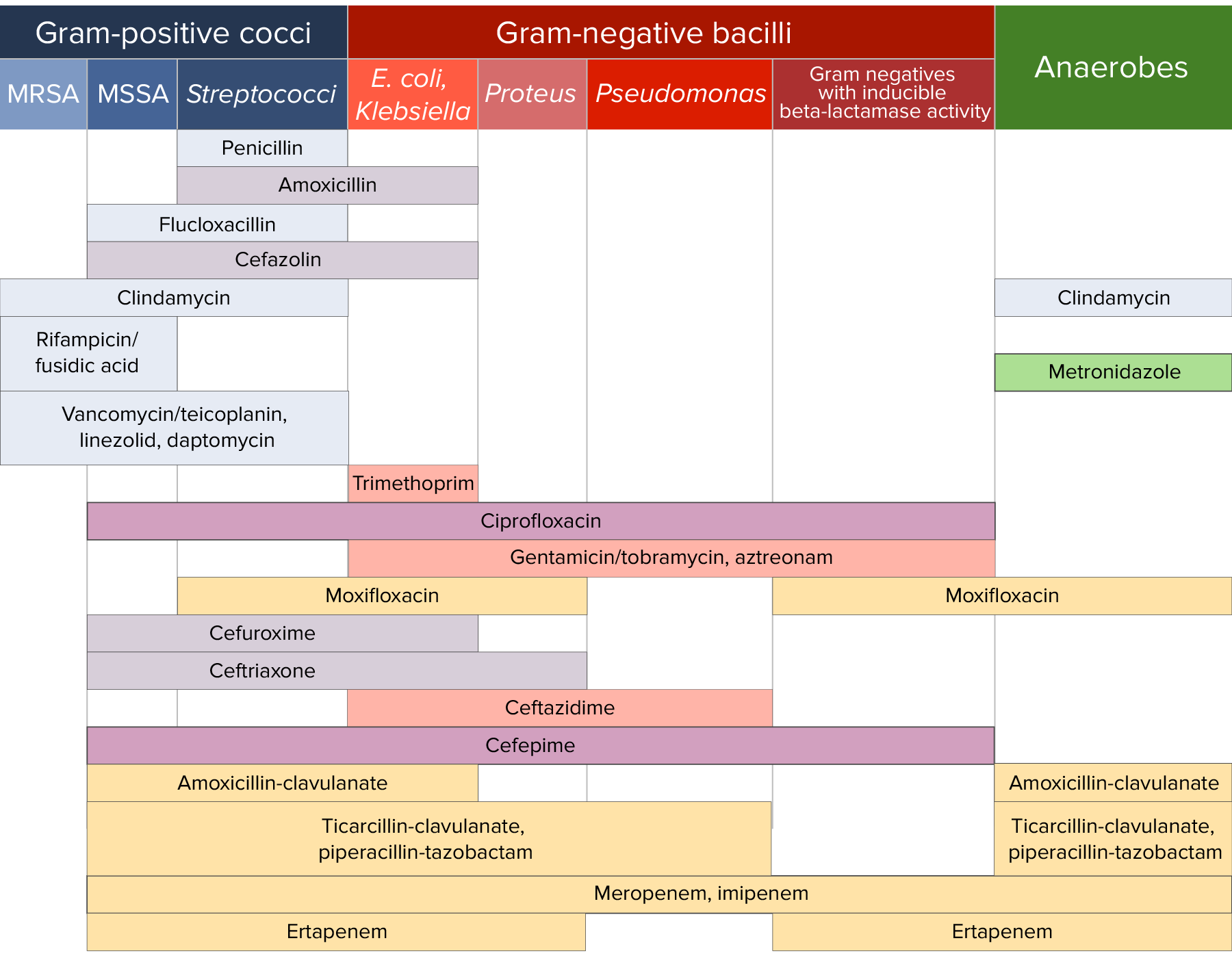
Tabla de sensibilidad a los antibióticos

Sensibilidad a los antibióticos:
Gráfico que compara la cobertura microbiana de diferentes antibióticos para cocos Gram-positivos, bacilos Gram-negativos y anaerobios.

Imagen por Lecturio. Licencia: CC BY-NC-SA 4.0

Referencias

  1. Avent ML, Rogers BA, Cheng AC, Paterson DL. (2011). Current use of aminoglycosides: indications, pharmacokinetics, and monitoring for toxicity. Intern Med J. 41(6):441–9. https://pubmed.ncbi.nlm.nih.gov/21309997/
  2. Pagkalis S, Mantadakis E, Mavros MN, Ammari C, Falagas ME. (2011). Pharmacological considerations for the proper clinical use of aminoglycosides. Drugs; 71(17):2277–94. https://pubmed.ncbi.nlm.nih.gov/22085385/
  3. Krause KM, Serio AW, Kane TR, Connolly LE. (2016). Aminoglycosides: An Overview. Cold Spring Harb Perspect Med; 6(6) https://pubmed.ncbi.nlm.nih.gov/27252397/
  4. LeBras M, Chow I, Mabasa VH, Ensom MH. (2016). Systematic Review of Efficacy, Pharmacokinetics, and Administration of Intraventricular Aminoglycosides in Adults. Neurocrit Care; 25(3):492–507. https://pubmed.ncbi.nlm.nih.gov/27043949/
  5. Leis JA, Rutka JA, Gold WL. (2015). Aminoglycoside-induced ototoxicity. CMAJ; 187(1):E52. https://pubmed.ncbi.nlm.nih.gov/25225217/
  6. Selimoglu E. (2007). Aminoglycoside-induced ototoxicity. Curr Pharm Des; 13(1):119–26. https://pubmed.ncbi.nlm.nih.gov/17266591/
  7. Lopez-Novoa JM, Quiros Y, Vicente L, Morales AI, Lopez-Hernandez FJ. (2011). New insights into the mechanism of aminoglycoside nephrotoxicity: an integrative point of view. Kidney Int; 79(1):33–45. https://pubmed.ncbi.nlm.nih.gov/20861826/
  8. Drew, R.H. (2022). Aminoglycosides. Bloom, A. (Ed.), UpToDate. Retrieved October 28, 2025, from https://www.uptodate.com/contents/aminoglycosides
  9. Block, M., Blanchard, D.L. (2023). Aminoglycosides. StatPearls. Retrieved October 28, 2025, from https://www.ncbi.nlm.nih.gov/books/NBK541105/
  10. Werth, B.J. (2024). Aminoglycosides. MSD Manual Professional Version. Retrieved October 28, 2025, from  https://www.msdmanuals.com/professional/infectious-diseases/bacteria-and-antibacterial-drugs/aminoglycosides

¡Crea tu cuenta gratis o inicia una sesión para seguir leyendo!

Regístrate ahora y obtén acceso gratuito a Lecturio con páginas de concepto, videos médicos y cuestionarios para tu educación médica.

User Reviews

Que tengas una sesión de estudio alegre y navideña 🎁 Ahorra 50% en todos los planes >>

Details