La laringitis es una inflamación de la laringe que suele deberse a una infección o a un traumatismo y que puede ser aguda o crónica. EnENErythema nodosum is an immune-mediated panniculitis (inflammation of the subcutaneous fat) caused by a type IV (delayed-type) hypersensitivity reaction. It commonly manifests in young women as tender, erythematous nodules on the shins.Erythema Nodosum esta enfermedad, losLOSNeisseria 2 pliegues de las membranas mucosas que componen las cuerdas vocales se inflaman e irritan. La inflamación provoca una distorsión de la voz producida, dando lugar a un sonido ronco que puede llevar a la incapacidad de producir cualquier sonido (afonía) enENErythema nodosum is an immune-mediated panniculitis (inflammation of the subcutaneous fat) caused by a type IV (delayed-type) hypersensitivity reaction. It commonly manifests in young women as tender, erythematous nodules on the shins.Erythema Nodosum casos graves. EnENErythema nodosum is an immune-mediated panniculitis (inflammation of the subcutaneous fat) caused by a type IV (delayed-type) hypersensitivity reaction. It commonly manifests in young women as tender, erythematous nodules on the shins.Erythema Nodosum presencia de una causa infecciosa, losLOSNeisseria pacientes suelen presentar también rinorrea, tosTOSThoracic outlet syndrome (TOS) is a broad term used for a spectrum of syndromes related to the general region of the thoracic outlet, which involves the compression or irritation of elements of the brachial plexus, subclavian artery, or subclavian vein.Thoracic Outlet Syndrome y un leve dolorDolorInflammation de garganta.
La laringitis puede ser secundaria a una infección, a una alergia, a un traumatismo, a lesiones benignas o malignas, a una disfunción neurológica, a problemas funcionales o a causas sistémicas (véase la tabla).
Causas de la laringitis aguda
Causas de la laringitis crónica
Viral (más común):
Rinovirus
VirusVirusViruses are infectious, obligate intracellular parasites composed of a nucleic acid core surrounded by a protein capsid. Viruses can be either naked (non-enveloped) or enveloped. The classification of viruses is complex and based on many factors, including type and structure of the nucleoid and capsid, the presence of an envelope, the replication cycle, and the host range. Virology de la influenzaInfluenzaInfluenza viruses are members of the Orthomyxoviridae family and the causative organisms of influenza, a highly contagious febrile respiratory disease. There are 3 primary influenza viruses (A, B, and C) and various subtypes, which are classified based on their virulent surface antigens, hemagglutinin (HA) and neuraminidase (NA). Influenza typically presents with a fever, myalgia, headache, and symptoms of an upper respiratory infection. Influenza Viruses/Influenza
VirusVirusViruses are infectious, obligate intracellular parasites composed of a nucleic acid core surrounded by a protein capsid. Viruses can be either naked (non-enveloped) or enveloped. The classification of viruses is complex and based on many factors, including type and structure of the nucleoid and capsid, the presence of an envelope, the replication cycle, and the host range. Virology de la parainfluenza
AdenovirusAdenovirusAdenovirus (member of the family Adenoviridae) is a nonenveloped, double-stranded DNA virus. Adenovirus is transmitted in a variety of ways, and it can have various presentations based on the site of entry. Presentation can include febrile pharyngitis, conjunctivitis, acute respiratory disease, atypical pneumonia, and gastroenteritis. Adenovirus
CoronavirusCoronavirusCoronaviruses are a group of related viruses that contain positive-sense, single-stranded RNA. Coronavirus derives its name from “κορώνη korṓnē” in Greek, which translates as “crown,” after the small club-shaped proteins visible as a ring around the viral envelope in electron micrographs. Coronavirus
VirusVirusViruses are infectious, obligate intracellular parasites composed of a nucleic acid core surrounded by a protein capsid. Viruses can be either naked (non-enveloped) or enveloped. The classification of viruses is complex and based on many factors, including type and structure of the nucleoid and capsid, the presence of an envelope, the replication cycle, and the host range. Virology respiratorio sincitial
LosLOSNeisseria sistemas inmunitarios comprometidos pueden sufrir infecciones por herpes, VIH o coxsackievirusCoxsackievirusCoxsackievirus is a member of a family of viruses called Picornaviridae and the genus Enterovirus. Coxsackieviruses are single-stranded, positive-sense RNA viruses, and are divided into coxsackie group A and B viruses. Both groups of viruses cause upper respiratory infections, rashes, aseptic meningitis, or encephalitis. Coxsackievirus
Bacteriana:
Estreptococo del grupo A
StreptococcusStreptococcusStreptococcus is one of the two medically important genera of gram-positive cocci, the other being Staphylococcus. Streptococci are identified as different species on blood agar on the basis of their hemolytic pattern and sensitivity to optochin and bacitracin. There are many pathogenic species of streptococci, including S. pyogenes, S. agalactiae, S. pneumoniae, and the viridans streptococci.Streptococcus pneumoniae
Corynebacterium diphtheriaeCorynebacterium diphtheriaeDiphtheria is an infectious disease caused by corynebacterium diphtheriae that most often results in respiratory disease with membranous inflammation of the pharynx, sore throat, fever, swollen glands, and weakness. The hallmark sign is a sheet of thick, gray material covering the back of the throat.Diphtheria
Moraxella catarrhalisMoraxella catarrhalisGram-negative aerobic cocci of low virulence that colonize the nasopharynx and occasionally cause meningitis; bacteremia; empyema; pericarditis; and pneumonia.Moraxella
Haemophilus influenzaeHaemophilus InfluenzaeA species of Haemophilus found on the mucous membranes of humans and a variety of animals. The species is further divided into biotypes I through viii.Haemophilus
Bordetella pertussisBordetella pertussisA species of gram-negative, aerobic bacteria that is the causative agent of whooping cough. Its cells are minute coccobacilli that are surrounded by a slime sheath.Bordetella
Bacillus anthracisBacillus anthracisA species of bacteria that causes anthrax in humans and animals.Anthrax
Mycobacterium tuberculosisMycobacterium tuberculosisTuberculosis (TB) is an infectious disease caused by Mycobacterium tuberculosis complex bacteria. The bacteria usually attack the lungs but can also damage other parts of the body. Approximately 30% of people around the world are infected with this pathogen, with the majority harboring a latent infection. Tuberculosis spreads through the air when a person with active pulmonary infection coughs or sneezes.Tuberculosis
Fúngica:
HistoplasmaHistoplasmaHistoplasmosis is an infection caused by Histoplasma capsulatum, a dimorphic fungus. The fungus exists as a mold at low temperatures and as yeast at high temperatures. H. capsulatum is the most common endemic fungal infection in the US and is most prevalent in the midwestern and central states along the Ohio and Mississippi River valleys.Histoplasma/Histoplasmosis
BlastomycesBlastomycesBlastomycosis is an infection caused by inhalation of the spores of the fungus, Blastomyces. Blastomyces species thrive in moist soil and decaying material and are common in the Ohio and Mississippi River valleys and the Great Lakes regions of the United States and Canada. Although most patients are asymptomatic, some can develop pneumonia.Blastomyces/Blastomycosis
Cándida (pacientes inmunocomprometidos)
CryptococcusCryptococcusCryptococcosis is an opportunistic, fungal infection caused by the Cryptococcus species. The principal pathogens in humans are C. neoformans (primary) and C. gattii. Cryptococcus neoformans is typically found in pigeon droppings and acquired by inhaling dust from contaminated soil. The majority of affected patients are immunocompromised. Cryptococcus/Cryptococcosis
CoccidioidesCoccidioidesCoccidioidomycosis, commonly known as San Joaquin Valley fever, is a fungal disease caused by Coccidioides immitis or Coccidioides posadasii. When Coccidioides spores are inhaled, they transform into spherules that result in infection. Coccidioidomycosis is also a common cause of community-acquired pneumonia and can cause severe disease in the immunocompromised.Coccidioides/Coccidioidomycosis
Daños enENErythema nodosum is an immune-mediated panniculitis (inflammation of the subcutaneous fat) caused by a type IV (delayed-type) hypersensitivity reaction. It commonly manifests in young women as tender, erythematous nodules on the shins.Erythema NodosumlosLOSNeisseria nervios
Reflujo ácido
Trastornos autoinmunes
Defectos anatómicos (e.g., pólipos, nódulos, llagas, cáncer enENErythema nodosum is an immune-mediated panniculitis (inflammation of the subcutaneous fat) caused by a type IV (delayed-type) hypersensitivity reaction. It commonly manifests in young women as tender, erythematous nodules on the shins.Erythema Nodosum la laringe)
Irritantes (e.g., toxinas inhaladas, vapores químicos, humo de tabaco, consumo crónico de alcohol, goteo postnasal)
Disfonía por tensión muscular
Disfunción neurológica (e.g., lesión del nervio laríngeo recurrente unilateral enENErythema nodosum is an immune-mediated panniculitis (inflammation of the subcutaneous fat) caused by a type IV (delayed-type) hypersensitivity reaction. It commonly manifests in young women as tender, erythematous nodules on the shins.Erythema Nodosum el postoperatorio)
Factores desencadenantes: infección respiratoria superior concurrente, uso/abuso vocal, exposición a alérgenos o toxinas
Tabaquismo, consumo de alcohol, nuevos medicamentos
Cirugía reciente o pasada de la cabeza y/o el cuello
Traumatismos recientes o pasados que afecten a la cabeza y/o alALAmyloidosis cuello
Signos y Síntomas (variables)
Disfonía
Voz entrecortada
Garganta seca o dolorida
TosTOSThoracic outlet syndrome (TOS) is a broad term used for a spectrum of syndromes related to the general region of the thoracic outlet, which involves the compression or irritation of elements of the brachial plexus, subclavian artery, or subclavian vein.Thoracic Outlet Syndrome
Carraspeo frecuente
Aumento de la producción de salivaSalivaThe clear, viscous fluid secreted by the salivary glands and mucous glands of the mouth. It contains mucins, water, organic salts, and ptyalin.Salivary Glands: Anatomy
Disfagia
Globo faríngeo (sensación de nudo enENErythema nodosum is an immune-mediated panniculitis (inflammation of the subcutaneous fat) caused by a type IV (delayed-type) hypersensitivity reaction. It commonly manifests in young women as tender, erythematous nodules on the shins.Erythema Nodosum la garganta)
Síntomas de resfriado o gripe
Ganglios linfáticos inflamados enENErythema nodosum is an immune-mediated panniculitis (inflammation of the subcutaneous fat) caused by a type IV (delayed-type) hypersensitivity reaction. It commonly manifests in young women as tender, erythematous nodules on the shins.Erythema Nodosum el cuello, el tórax o la cara
Fiebre
Mialgia
Dificultad para respirar
Fatiga vocal
Afonía (incapacidad para emitir un sonido)
Diagnóstico
Laringitis por traumatismo: antecedentes de traumatismos enENErythema nodosum is an immune-mediated panniculitis (inflammation of the subcutaneous fat) caused by a type IV (delayed-type) hypersensitivity reaction. It commonly manifests in young women as tender, erythematous nodules on the shins.Erythema Nodosum la cabeza y/o el cuello
Laringitis viral aguda: se diagnostica por el tono vocal de baja tonalidad y la disfonía
Laringitis fúngica: confirmación mediante biopsia y cultivo de las lesiones anormales
Laringoscopia o estroboscopia para la visualización directa y completa de las cuerdas vocales verdaderas, las cuerdas vocales falsas, la epiglotis, el seno piriforme; y la vallécula para:
Eritema (enrojecimiento)
EdemaEdemaEdema is a condition in which excess serous fluid accumulates in the body cavity or interstitial space of connective tissues. Edema is a symptom observed in several medical conditions. It can be categorized into 2 types, namely, peripheral (in the extremities) and internal (in an organ or body cavity). Edema (hinchazón)
Dilatación de losLOSNeisseria vasos sanguíneos (aguda)
Tejido laríngeo engrosado y seco (crónico)
Rigidez de cuerdas vocales
Secreciones viscosas enENErythema nodosum is an immune-mediated panniculitis (inflammation of the subcutaneous fat) caused by a type IV (delayed-type) hypersensitivity reaction. It commonly manifests in young women as tender, erythematous nodules on the shins.Erythema Nodosum la proximidad de las cuerdas vocales
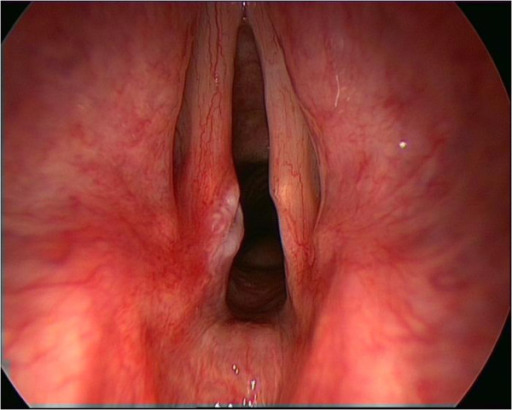
Cuerdas vocales inflamadas y eritematosas demuestran una lesión en un paciente con tos crónica. Obsérvese una clara zona de lesión en la cuerda vocal izquierda en su parte posterior.
Image: “The larynx in cough” por Consultant Otolaryngologist, Imperial College London, London, UK. Licencia: CC BY 2.0
Tratamiento
Laringitis aguda
Laringitis crónica
Viral
Descanso vocal, terapia e higiene bucal
Analgésicos
Mucolíticos
Remedios caseros (agua salada, miel)
Hidratación
Humidificación
Reflujo
Llevar ropa suelta
Comidas más pequeñas pero más frecuentes
Evitar la cafeína, el alcohol y losLOSNeisseria alimentos picantes
Medicamentos de venta libre para neutralizar losLOSNeisseria ácidos (antiácidos)
Medicación antirreflujo
Bacteriana
Humidificación
Antibióticos
Corticosteroides
Adrenalina nebulizada
Inflamatoria
Eliminar el agente irritante si está presente
Esteroides nasales tópicos
Inmunoterapia
Antihistamínicos
Fúngica
Medicamentos antimicóticos orales
Nistatina tópica (enENErythema nodosum is an immune-mediated panniculitis (inflammation of the subcutaneous fat) caused by a type IV (delayed-type) hypersensitivity reaction. It commonly manifests in young women as tender, erythematous nodules on the shins.Erythema Nodosum forma de suspensión o pastilla)
Autoinmune
Ciclofosfamida
Prednisolona
Trauma
Descanso vocal, terapia e higiene
Granulomatosa
Corticoides sistémicos
Pronóstico
Aguda
Persistente pero autolimitada, que suele resolverse enENErythema nodosum is an immune-mediated panniculitis (inflammation of the subcutaneous fat) caused by a type IV (delayed-type) hypersensitivity reaction. It commonly manifests in young women as tender, erythematous nodules on the shins.Erythema Nodosum 3 semanas
La recuperación mejora cuando el paciente sigue el régimen de tratamiento.
EnENErythema nodosum is an immune-mediated panniculitis (inflammation of the subcutaneous fat) caused by a type IV (delayed-type) hypersensitivity reaction. It commonly manifests in young women as tender, erythematous nodules on the shins.Erythema Nodosum la laringitis vírica, losLOSNeisseria síntomas pueden persistir durante un período prolongado, incluso cuando la inflamación del tracto respiratorio superior se haHAHemolytic anemia (HA) is the term given to a large group of anemias that are caused by the premature destruction/hemolysis of circulating red blood cells (RBCs). Hemolysis can occur within (intravascular hemolysis) or outside the blood vessels (extravascular hemolysis).Hemolytic Anemia resuelto.
Crónica
Laringitis que persiste durante más de 3 semanas
El pronóstico depende de la etiología de la laringitis.
EnENErythema nodosum is an immune-mediated panniculitis (inflammation of the subcutaneous fat) caused by a type IV (delayed-type) hypersensitivity reaction. It commonly manifests in young women as tender, erythematous nodules on the shins.Erythema Nodosum ausencia de sintomatología de infección de las vías respiratorias altas, losLOSNeisseria pacientes con disfonía de más de 2 semanas deben ser referidos a un examen otorrinolaringológico completo, especialmente enENErythema nodosum is an immune-mediated panniculitis (inflammation of the subcutaneous fat) caused by a type IV (delayed-type) hypersensitivity reaction. It commonly manifests in young women as tender, erythematous nodules on the shins.Erythema Nodosum presencia de:
Factores de riesgo de cáncer de cabeza y cuello asociados (e.g., consumo de tabaco y alcohol)
Sintomatología de alarma de una posible malignidad (e.g., hemoptisis, dolorDolorInflammation unilateral, disfagia, pérdida de peso inexplicable, dificultad para respirar)
Diagnóstico Diferencial
Las siguientes afecciones se incluyen enENErythema nodosum is an immune-mediated panniculitis (inflammation of the subcutaneous fat) caused by a type IV (delayed-type) hypersensitivity reaction. It commonly manifests in young women as tender, erythematous nodules on the shins.Erythema Nodosum el diagnóstico diferencial de la laringitis:
Cualquier condición que se presente con disfagia: los pacientes experimentan dificultad para tragar ciertos alimentos o líquidos, mientras que otros no pueden tragar en absoluto. La disfagia puede presentarse debido a alergias o “resfriados”, deshidratación, enfermedad por reflujo gastroesofágico, ciertos medicamentos o tumores enENErythema nodosum is an immune-mediated panniculitis (inflammation of the subcutaneous fat) caused by a type IV (delayed-type) hypersensitivity reaction. It commonly manifests in young women as tender, erythematous nodules on the shins.Erythema Nodosum la boca, la garganta o el esófago.
Enfermedad por reflujo gastroesofágico: movimiento ascendente del ácido gástrico hacia el esófago, que provoca acidez o dolorDolorInflammation torácico. El reflujo ácido puede extenderse a la laringe, y la irritación ácida de la laringe puede provocar disfonía.
Amigdalitis: inflamación de las amígdalas faríngeas que suele presentarse enENErythema nodosum is an immune-mediated panniculitis (inflammation of the subcutaneous fat) caused by a type IV (delayed-type) hypersensitivity reaction. It commonly manifests in young women as tender, erythematous nodules on the shins.Erythema Nodosum combinación con una inflamación de la faringe. La amigdalitis es muy común entre losLOSNeisseria niños y adultos jóvenes y está causada principalmente por virusVirusViruses are infectious, obligate intracellular parasites composed of a nucleic acid core surrounded by a protein capsid. Viruses can be either naked (non-enveloped) or enveloped. The classification of viruses is complex and based on many factors, including type and structure of the nucleoid and capsid, the presence of an envelope, the replication cycle, and the host range. Virology y estreptococos del grupo A.
Carcinoma laríngeo: tumorTumorInflammation maligno de la laringe que afecta con mayor frecuencia a losLOSNeisseria hombres de edad avanzada. LosLOSNeisseria factores de riesgo son el tabaquismo y el consumo excesivo de alcohol.
Rinitis alérgica: inflamación de la mucosa nasal clasificada enENErythema nodosum is an immune-mediated panniculitis (inflammation of the subcutaneous fat) caused by a type IV (delayed-type) hypersensitivity reaction. It commonly manifests in young women as tender, erythematous nodules on the shins.Erythema Nodosum alérgica, no alérgica e infecciosa. La rinitis alérgica se debe a una reacción de hipersensibilidad de tipo 1. LosLOSNeisseria tres tipos se presentan con congestión nasal, rinorrea y estornudos.
Referencias
Aboul Hosn O, Sutton AE. Acute Laryngitis. [Updated 2026 Feb 14]. In: StatPearls [Internet]. Treasure Island (FL): StatPearls Publishing; 2026 Jan-. Available from: https://www.ncbi.nlm.nih.gov/books/NBK534871/
Obtenga Medical Premium para poner a prueba sus conocimientos
Lecturio Medical Premium le brinda acceso completo a todo el contenido y las funciones
Obtenga Premium para ver todos los vídeos
Verifica tu correo electrónico para obtener una prueba gratuita.
Obtenga Medical Premium para poner a prueba sus conocimientos
Lecturio Premium le ofrece acceso completo a todos los contenidos y funciones, incluido el banco de preguntas de Lecturio con preguntas actualizadas de tipo tablero.