Domina Conceptos Médicos

Estudia para la escuela de medicina y tus examenes con Lecturio.

Esquistosoma/Esquistosomiasis

La esquistosomiasis es una infección causada por el Schistosoma Schistosoma Schistosomiasis is an infection caused by Schistosoma, a trematode. Schistosomiasis occurs in developing countries with poor sanitation. Freshwater snails are the intermediate host and are transmitted to humans through skin contact with contaminated fresh water. The clinical presentation occurs as a result of the host's immune response to antigens from the eggs. Schistosoma/Schistosomiasis, un tremátodo. La esquistosomiasis se produce en EN Erythema nodosum is an immune-mediated panniculitis (inflammation of the subcutaneous fat) caused by a type IV (delayed-type) hypersensitivity reaction. It commonly manifests in young women as tender, erythematous nodules on the shins. Erythema Nodosum los LOS Neisseria países en EN Erythema nodosum is an immune-mediated panniculitis (inflammation of the subcutaneous fat) caused by a type IV (delayed-type) hypersensitivity reaction. It commonly manifests in young women as tender, erythematous nodules on the shins. Erythema Nodosum desarrollo con un saneamiento deficiente. Los LOS Neisseria caracoles de agua dulce son el huésped intermediario y se transmiten a los LOS Neisseria humanos a través del contacto de la piel con agua dulce contaminada. La presentación clínica se produce como resultado de la respuesta inmunitaria del huésped a los LOS Neisseria antígenos de los LOS Neisseria huevos. La mayoría de los LOS Neisseria pacientes son asintomáticos, pero otros pueden desarrollar una dermatitis Dermatitis Any inflammation of the skin. Atopic Dermatitis (Eczema) esquistosomática aguda, un síndrome de esquistosomiasis aguda o una esquistosomiasis crónica. El diagnóstico puede hacerse mediante la evaluación microscópica de la orina o las heces, la serología o la PCR PCR Polymerase chain reaction (PCR) is a technique that amplifies DNA fragments exponentially for analysis. The process is highly specific, allowing for the targeting of specific genomic sequences, even with minuscule sample amounts. The PCR cycles multiple times through 3 phases: denaturation of the template DNA, annealing of a specific primer to the individual DNA strands, and synthesis/elongation of new DNA molecules. Polymerase Chain Reaction (PCR). El tratamiento de la esquistosomiasis es el praziquantel Praziquantel An anthelmintic used in most schistosome and many cestode infestations. Anthelmintic Drugs.

Last updated: Dec 15, 2025
Editorial responsibility: Stanley Oiseth, Lindsay Jones, Evelin Maza

Características Generales y Epidemiología

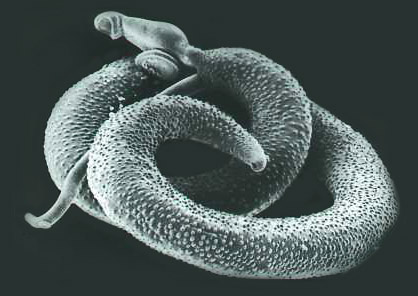
Características generales de Schistosoma Schistosoma Schistosomiasis is an infection caused by Schistosoma, a trematode. Schistosomiasis occurs in developing countries with poor sanitation. Freshwater snails are the intermediate host and are transmitted to humans through skin contact with contaminated fresh water. The clinical presentation occurs as a result of the host’s immune response to antigens from the eggs. Schistosoma/Schistosomiasis

  • Tremátodo
  • Platelmintos parasitarios
  • Huevos:
    • Redondos u ovalados
    • Extremo final bifurcado
  • Adultos:
    • Alargados
    • Tubulares
    • 10–20 mm de longitud
    • Los LOS Neisseria machos son más pequeños que las hembras.
    • Ventosas orales y ventrales
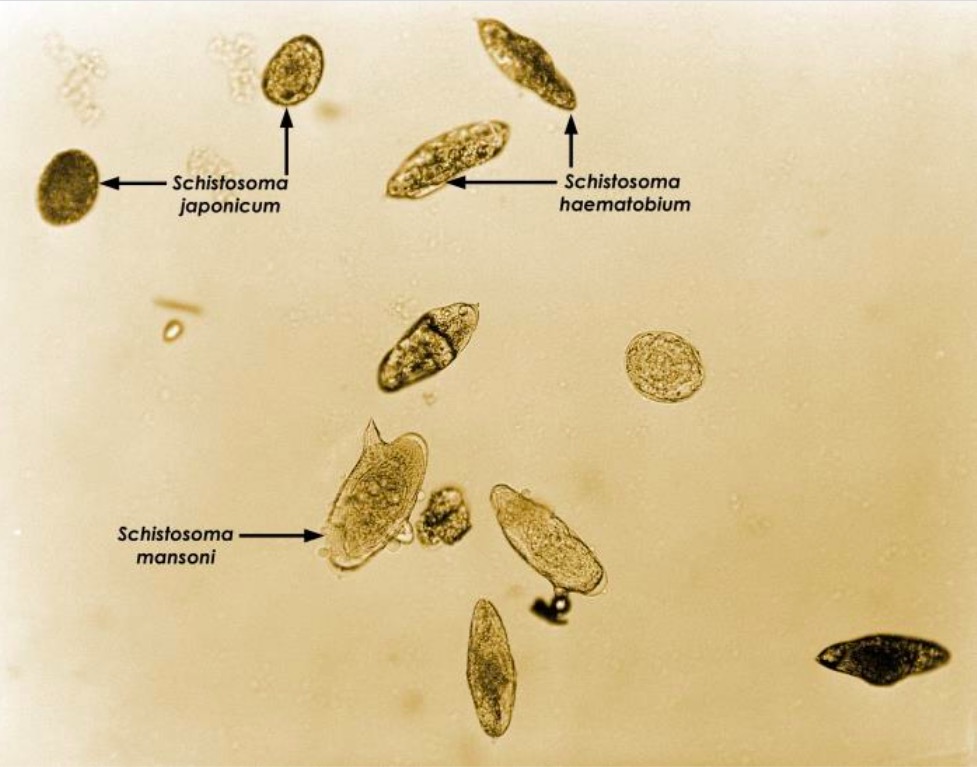
Huevos de esquistosoma

Microfotografía que muestra una agrupación de 3 especies diferentes de huevos de Schistosoma: S. japonicum, S. mansoni y S. haematobium.

Imagen: “21017” por CDC/Dr. Brodsky. Licencia: Dominio Público

Especies clínicamente relevantes

  • Enfermedades gastrointestinales:
  • Enfermedades del tracto genitourinario: S. haematobium S. haematobium A species of trematode blood flukes of the family schistosomatidae which occurs at different stages in development in veins of the pulmonary and hepatic system and finally the bladder lumen. This parasite causes urinary schistosomiasis. Schistosoma/Schistosomiasis

Epidemiología

  • Incidencia anual a nivel mundial: 200–300 millones
  • Hombres > mujeres
  • Niños y adolescentes > adultos
  • Tasa de mortalidad: 0,3 por cada 100 000 casos

Distribución geográfica

  • S. mansoni S. mansoni A species of trematode blood flukes of the family schistosomatidae. It is common in the nile delta. The intermediate host is the planorbid snail. This parasite causes schistosomiasis mansoni and intestinal bilharziasis. Schistosoma/Schistosomiasis:
    • África subsahariana
    • América del Sur
    • Caribe
    • Oriente Medio
  • S. japonicum S. japonicum A species of trematode blood flukes belonging to the family schistosomatidae whose distribution is confined to areas of the far east. The intermediate host is a snail. It occurs in man and other mammals. Schistosoma/Schistosomiasis:
    • China
    • Filipinas
    • Tailandia
    • Indonesia
  • S. haematobium S. haematobium A species of trematode blood flukes of the family schistosomatidae which occurs at different stages in development in veins of the pulmonary and hepatic system and finally the bladder lumen. This parasite causes urinary schistosomiasis. Schistosoma/Schistosomiasis:
    • África
    • Oriente Medio
  • S. mekongi S. mekongi Schistosoma/Schistosomiasis: Sudeste de Asia ASIA Spinal Cord Injuries
  • S. intercalatum S. intercalatum Schistosoma/Schistosomiasis: África Central y Occidental

Patogénesis

Reservorios

  • Humanos
  • Mamíferos:
    • Animales domésticos y salvajes
    • Ganado
  • Los LOS Neisseria caracoles de agua dulce son huéspedes intermediarios.

Transmisión

La transmisión se produce por el contacto de la piel con agua dulce infectada.

Factores de riesgo del huésped

El Schistosoma Schistosoma Schistosomiasis is an infection caused by Schistosoma, a trematode. Schistosomiasis occurs in developing countries with poor sanitation. Freshwater snails are the intermediate host and are transmitted to humans through skin contact with contaminated fresh water. The clinical presentation occurs as a result of the host’s immune response to antigens from the eggs. Schistosoma/Schistosomiasis se encuentra en EN Erythema nodosum is an immune-mediated panniculitis (inflammation of the subcutaneous fat) caused by a type IV (delayed-type) hypersensitivity reaction. It commonly manifests in young women as tender, erythematous nodules on the shins. Erythema Nodosum entornos de agua dulce en EN Erythema nodosum is an immune-mediated panniculitis (inflammation of the subcutaneous fat) caused by a type IV (delayed-type) hypersensitivity reaction. It commonly manifests in young women as tender, erythematous nodules on the shins. Erythema Nodosum zonas con un mal sistema del alcantarillado.
  • Exposiciones recreativas:
    • Natación
    • Jugar en EN Erythema nodosum is an immune-mediated panniculitis (inflammation of the subcutaneous fat) caused by a type IV (delayed-type) hypersensitivity reaction. It commonly manifests in young women as tender, erythematous nodules on the shins. Erythema Nodosum el agua o en EN Erythema nodosum is an immune-mediated panniculitis (inflammation of the subcutaneous fat) caused by a type IV (delayed-type) hypersensitivity reaction. It commonly manifests in young women as tender, erythematous nodules on the shins. Erythema Nodosum el lodo
  • Exposiciones ocupacionales:
    • Pesca
    • Lavandería

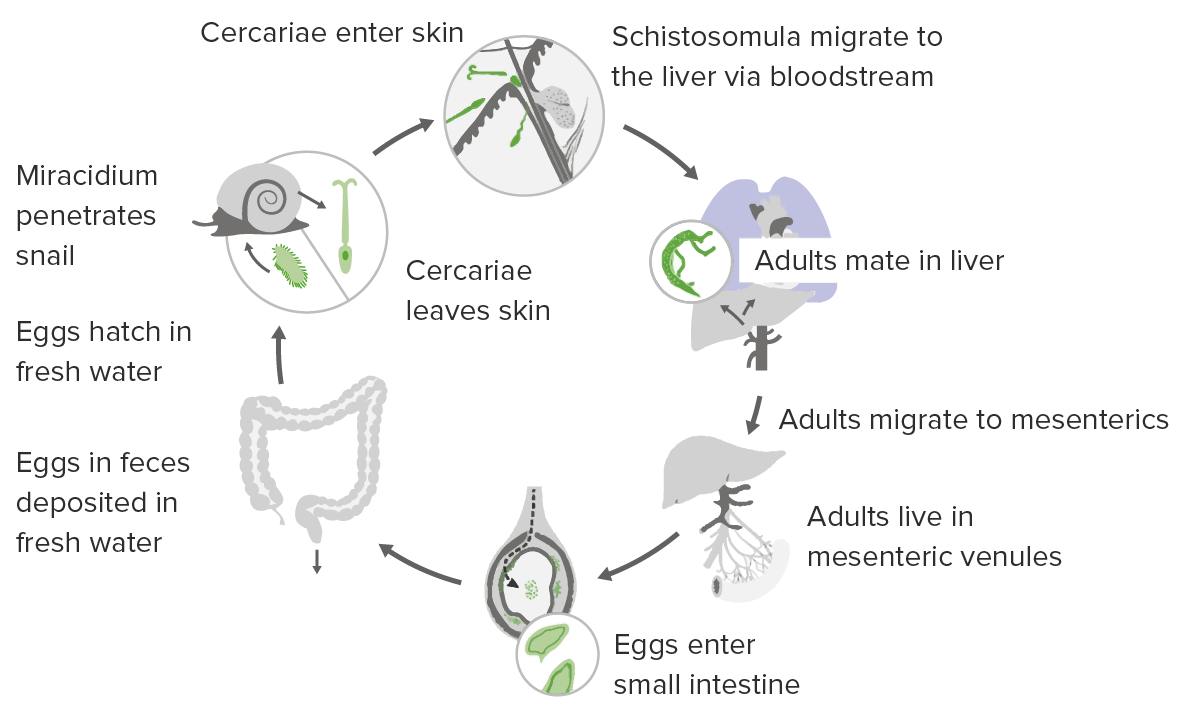
Ciclo de vida

  • Las larvas de Schistosoma Schistosoma Schistosomiasis is an infection caused by Schistosoma, a trematode. Schistosomiasis occurs in developing countries with poor sanitation. Freshwater snails are the intermediate host and are transmitted to humans through skin contact with contaminated fresh water. The clinical presentation occurs as a result of the host’s immune response to antigens from the eggs. Schistosoma/Schistosomiasis (miracidium) penetran en EN Erythema nodosum is an immune-mediated panniculitis (inflammation of the subcutaneous fat) caused by a type IV (delayed-type) hypersensitivity reaction. It commonly manifests in young women as tender, erythematous nodules on the shins. Erythema Nodosum un caracol (huésped intermediario) → reproducción asexual y maduración a cercaria → liberación del caracol al AL Amyloidosis agua
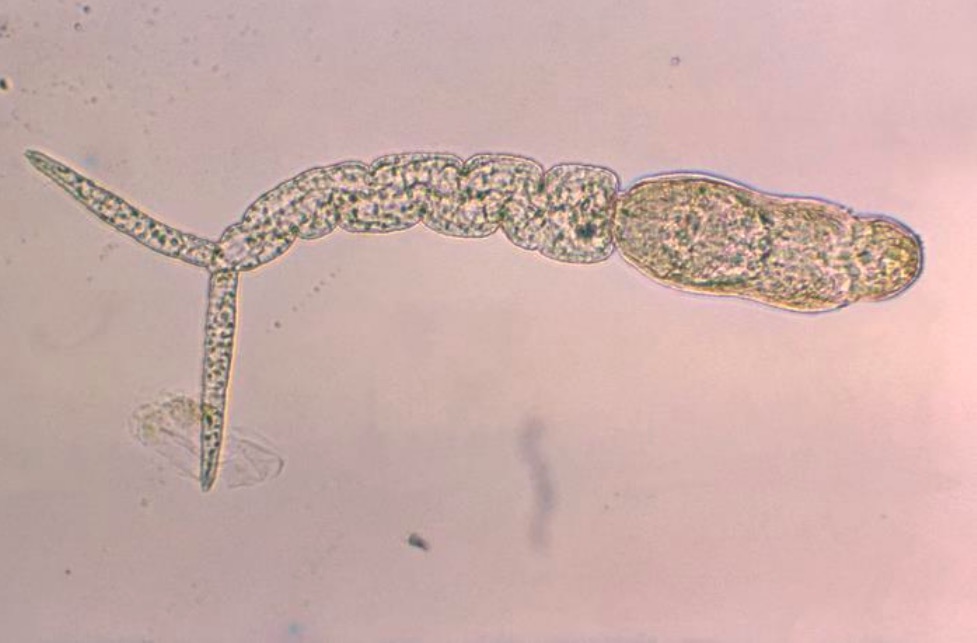
  • Las cercarias penetran en EN Erythema nodosum is an immune-mediated panniculitis (inflammation of the subcutaneous fat) caused by a type IV (delayed-type) hypersensitivity reaction. It commonly manifests in young women as tender, erythematous nodules on the shins. Erythema Nodosum la piel humana → se convierten en EN Erythema nodosum is an immune-mediated panniculitis (inflammation of the subcutaneous fat) caused by a type IV (delayed-type) hypersensitivity reaction. It commonly manifests in young women as tender, erythematous nodules on the shins. Erythema Nodosum esquistosómulas tras desprenderse de sus colas bifurcadas
  • Migración al AL Amyloidosis torrente sanguíneo → infección del hígado → maduración y reproducción
  • Los LOS Neisseria gusanos adultos se desplazan a través de los LOS Neisseria vasos del sistema portal hasta las vénulas mesentéricas del intestino.
  • Las hembras ponen huevos → penetran en EN Erythema nodosum is an immune-mediated panniculitis (inflammation of the subcutaneous fat) caused by a type IV (delayed-type) hypersensitivity reaction. It commonly manifests in young women as tender, erythematous nodules on the shins. Erythema Nodosum los LOS Neisseria intestinos → se excretan en EN Erythema nodosum is an immune-mediated panniculitis (inflammation of the subcutaneous fat) caused by a type IV (delayed-type) hypersensitivity reaction. It commonly manifests in young women as tender, erythematous nodules on the shins. Erythema Nodosum las heces
  • Los LOS Neisseria huevos eclosionan en EN Erythema nodosum is an immune-mediated panniculitis (inflammation of the subcutaneous fat) caused by a type IV (delayed-type) hypersensitivity reaction. It commonly manifests in young women as tender, erythematous nodules on the shins. Erythema Nodosum el agua → el ciclo continúa
  • Nota: S. haematobium S. haematobium A species of trematode blood flukes of the family schistosomatidae which occurs at different stages in development in veins of the pulmonary and hepatic system and finally the bladder lumen. This parasite causes urinary schistosomiasis. Schistosoma/Schistosomiasis ocupa el plexo venoso vesical → los LOS Neisseria huevos se excretan en EN Erythema nodosum is an immune-mediated panniculitis (inflammation of the subcutaneous fat) caused by a type IV (delayed-type) hypersensitivity reaction. It commonly manifests in young women as tender, erythematous nodules on the shins. Erythema Nodosum la orina
El ciclo de vida del Schistosoma

El ciclo de vida del Schistosoma

Imagen por Lecturio.
Fisiopatología

La enfermedad clínica es causada por:

  • Movimiento de los LOS Neisseria huevos a través del sistema venoso esplácnico hacía:
    • Hígado
    • Pulmones
    • Bazo
    • Cerebro
    • Médula espinal
  • La respuesta inmunitaria a las proteínas y los LOS Neisseria hidratos de carbono segregados por los LOS Neisseria huevos da lugar a:
    • Inflamación intestinal → pérdida de sangre y cicatrización
    • Fibrosis Fibrosis Any pathological condition where fibrous connective tissue invades any organ, usually as a consequence of inflammation or other injury. Bronchiolitis Obliterans periportal → hipertensión portal y varices esofágicas
    • Inflamación de la vejiga → pseudopólipos y cáncer de vejiga

Presentación Clínica

La mayoría de los LOS Neisseria pacientes son asintomáticos. Los LOS Neisseria individuos sintomáticos pueden presentarse de distintas maneras:

Dermatitis Dermatitis Any inflammation of the skin. Atopic Dermatitis (Eczema) aguda por esquistosoma

También se conoce como “prurito del nadador”:
  • Erupción pruriginosa en EN Erythema nodosum is an immune-mediated panniculitis (inflammation of the subcutaneous fat) caused by a type IV (delayed-type) hypersensitivity reaction. It commonly manifests in young women as tender, erythematous nodules on the shins. Erythema Nodosum el sitio de entrada de las cercarias:
    • Puede ser papular o urticarial
    • Debido a una reacción de hipersensibilidad
  • Los LOS Neisseria pies y la parte inferior de las piernas se ven afectadas con mayor frecuencia.
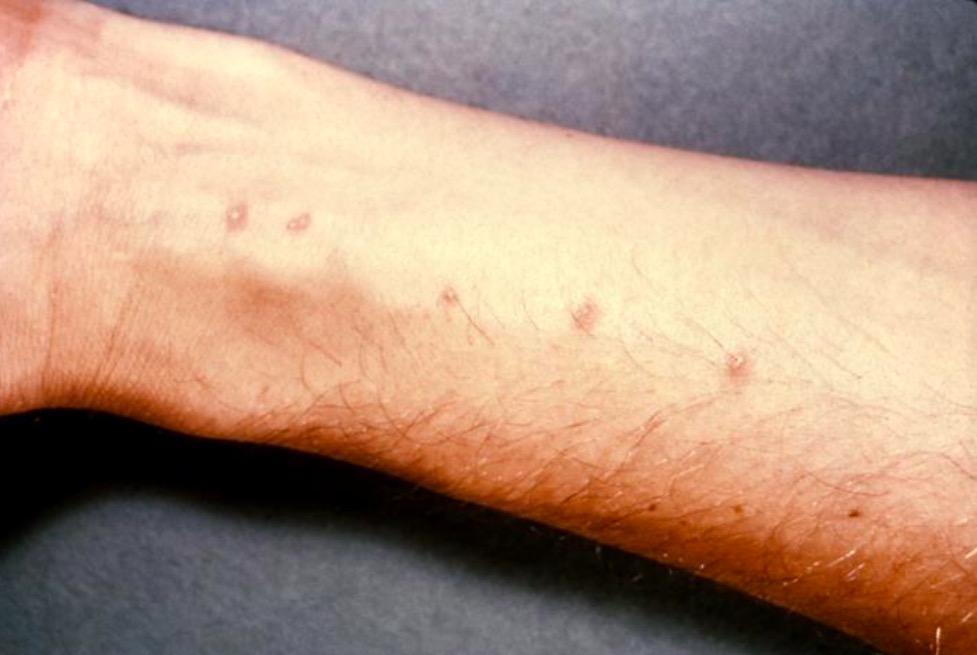
Prurito del nadador

Erupción papular debida a una dermatitis aguda por esquistosoma:
La reacción de hipersensibilidad se produce cuando la piel es penetrada por las cercarias de Schistosoma.

Imagen: “5249” por CDC. Licencia: Dominio Público

Síndrome de esquistosomiasis aguda (fiebre de Katayama)

Se produce debido a una reacción de hipersensibilidad sistémica entre 3–8 semanas después de la infección inicial:

  • Fiebre
  • Escalofríos
  • Fatiga
  • Urticaria Urticaria Urticaria is raised, well-circumscribed areas (wheals) of edema (swelling) and erythema (redness) involving the dermis and epidermis with associated pruritus (itch). Urticaria is not a single disease but rather is a reaction pattern representing cutaneous mast cell degranulation. Urticaria (Hives)
  • Angioedema Angioedema Angioedema is a localized, self-limited (but potentially life-threatening), nonpitting, asymmetrical edema occurring in the deep layers of the skin and mucosal tissue. The common underlying pathophysiology involves inflammatory mediators triggering significant vasodilation and increased capillary permeability. Angioedema
  • Tos TOS Thoracic outlet syndrome (TOS) is a broad term used for a spectrum of syndromes related to the general region of the thoracic outlet, which involves the compression or irritation of elements of the brachial plexus, subclavian artery, or subclavian vein. Thoracic Outlet Syndrome no productiva
  • Mialgias
  • Artralgias
  • Dolor Dolor Inflammation abdominal
  • Diarrea

Esquistosomiasis crónica

La presentación clínica puede variar según el número de huevos en EN Erythema nodosum is an immune-mediated panniculitis (inflammation of the subcutaneous fat) caused by a type IV (delayed-type) hypersensitivity reaction. It commonly manifests in young women as tender, erythematous nodules on the shins. Erythema Nodosum los LOS Neisseria tejidos, el sitio de la infección y la respuesta inmunitaria del huésped.

Esquistosomiasis intestinal:

  • Dolor Dolor Inflammation abdominal
  • Disminución del apetito
  • Diarrea
  • Hemorragia intestinal
  • Complicaciones:
    • Estenosis intestinales
    • Pólipos y displasias intestinales

Esquistosomiasis hepatoesplénica:

  • Hepatoesplenomegalia
  • Complicaciones de la hipertensión portal:
    • Varices esofágicas (riesgo de hemorragia)
    • Hipertensión pulmonar (consecuencia de la circulación colateral portosistémica que permite la embolización del huevo hacia los LOS Neisseria pulmones)
  • Nota: La función hepática no está comprometida.

Esquistosomiasis genitourinaria:

  • Disuria
  • Frecuencia urinaria
  • Hematuria Hematuria Presence of blood in the urine. Renal Cell Carcinoma terminal (sangre al AL Amyloidosis final del chorro miccional)
  • Hematospermia
  • Ulceras genitales
  • Complicaciones:
    • Estenosis ureterales
    • Obstrucción del cuello vesical
    • Hidronefrosis
    • Cáncer de vejiga
    • Infertilidad (por afectación de ovarios o trompas uterinas)

Neuroesquistosomiasis:

Diagnóstico, Tratamiento y Prevención

Diagnóstico

  • Examen microscópico de orina y heces en EN Erythema nodosum is an immune-mediated panniculitis (inflammation of the subcutaneous fat) caused by a type IV (delayed-type) hypersensitivity reaction. It commonly manifests in young women as tender, erythematous nodules on the shins. Erythema Nodosum busca de huevos
  • Pruebas serológicas:
    • Ensayo inmunoabsorbente ligado a enzimas ( ELISA ELISA An immunoassay utilizing an antibody labeled with an enzyme marker such as horseradish peroxidase. While either the enzyme or the antibody is bound to an immunosorbent substrate, they both retain their biologic activity; the change in enzyme activity as a result of the enzyme-antibody-antigen reaction is proportional to the concentration of the antigen and can be measured spectrophotometrically or with the naked eye. Many variations of the method have been developed. St. Louis Encephalitis Virus, por sus siglas en EN Erythema nodosum is an immune-mediated panniculitis (inflammation of the subcutaneous fat) caused by a type IV (delayed-type) hypersensitivity reaction. It commonly manifests in young women as tender, erythematous nodules on the shins. Erythema Nodosum inglés)
    • Hemaglutinación indirecta
    • Prueba de anticuerpos inmunofluorescentes
  • Prueba de antígenos:
    • Antígeno circulante del esquistosoma
    • Antígeno catódico circulante
    • PCR PCR Polymerase chain reaction (PCR) is a technique that amplifies DNA fragments exponentially for analysis. The process is highly specific, allowing for the targeting of specific genomic sequences, even with minuscule sample amounts. The PCR cycles multiple times through 3 phases: denaturation of the template DNA, annealing of a specific primer to the individual DNA strands, and synthesis/elongation of new DNA molecules. Polymerase Chain Reaction (PCR)
  • Pruebas para identificar el ADN de parásitos ( PCR PCR Polymerase chain reaction (PCR) is a technique that amplifies DNA fragments exponentially for analysis. The process is highly specific, allowing for the targeting of specific genomic sequences, even with minuscule sample amounts. The PCR cycles multiple times through 3 phases: denaturation of the template DNA, annealing of a specific primer to the individual DNA strands, and synthesis/elongation of new DNA molecules. Polymerase Chain Reaction (PCR))
  • La TC y la RM pueden mostrar cambios inespecíficos para la neuroesquistosomiasis.

Tratamiento

  • Terapia antihelmíntica ( praziquantel Praziquantel An anthelmintic used in most schistosome and many cestode infestations. Anthelmintic Drugs):
    • ↑ Permeabilidad a los LOS Neisseria iones de calcio en EN Erythema nodosum is an immune-mediated panniculitis (inflammation of the subcutaneous fat) caused by a type IV (delayed-type) hypersensitivity reaction. It commonly manifests in young women as tender, erythematous nodules on the shins. Erythema Nodosum gusanos adultos
    • El daño al AL Amyloidosis gusano induce una respuesta inmunitaria del huésped.
  • Corticosteroides para reducir la inflamación en EN Erythema nodosum is an immune-mediated panniculitis (inflammation of the subcutaneous fat) caused by a type IV (delayed-type) hypersensitivity reaction. It commonly manifests in young women as tender, erythematous nodules on the shins. Erythema Nodosum:
    • Síndrome de esquistosomiasis aguda
    • Neuroesquistosomiasis

Prevención

Protección personal en EN Erythema nodosum is an immune-mediated panniculitis (inflammation of the subcutaneous fat) caused by a type IV (delayed-type) hypersensitivity reaction. It commonly manifests in young women as tender, erythematous nodules on the shins. Erythema Nodosum zonas endémicas:

  • Evitar nadar o vadear en EN Erythema nodosum is an immune-mediated panniculitis (inflammation of the subcutaneous fat) caused by a type IV (delayed-type) hypersensitivity reaction. It commonly manifests in young women as tender, erythematous nodules on the shins. Erythema Nodosum agua dulce.
  • Secarse enérgicamente después de una breve exposición accidental al AL Amyloidosis agua.
  • Utilizar calzado y ropa protectora.
  • Hervir el agua del baño.

Estrategias de control:

  • Programas de saneamiento (eliminar la orina y las heces humanas lejos de las fuentes de agua dulce)
  • Control de caracoles
  • Programas comunitarios de tratamiento masivo

Comparación de Gusanos Redondos

Tabla: Comparación de helmintos similares y sus enfermedades asociadas
Organismo Enterobius vermicularis Enterobius Vermicularis Enterobius/Enterobiasis Toxocara canis Toxocara canis A species of parasitic nematode found in the intestine of dogs. Lesions in the brain, liver, eye, kidney, and lung are caused by migrating larvae. In humans, these larvae do not follow normal patterns and may produce visceral larva migrans (larva migrans, visceral). Toxocariasis Ascaris Ascaris Ascaris is a genus of parasitic nematodes. The infection, ascariasis, is most often caused by A. lumbricoides. Transmission occurs primarily via ingestion of water or food contaminated with Ascaris eggs. Most patients with ascariasis are asymptomatic. Ascaris/Ascariasis lumbricoides Strongyloides stercoralis Strongyloides stercoralis A species of parasitic nematode widely distributed in tropical and subtropical countries. The females and their larvae inhabit the mucosa of the intestinal tract, where they cause ulceration and diarrhea. Strongyloidiasis Schistosoma Schistosoma Schistosomiasis is an infection caused by Schistosoma, a trematode. Schistosomiasis occurs in developing countries with poor sanitation. Freshwater snails are the intermediate host and are transmitted to humans through skin contact with contaminated fresh water. The clinical presentation occurs as a result of the host’s immune response to antigens from the eggs. Schistosoma/Schistosomiasis mansoni
Características Nemátodo Nemátodo Nemátodo Nemátodo Trematodo
Reservorios Humanos Perros Humanos
  • Humanos
  • Perros
  • Gatos
Humanos
Transmisión Fecal–oral Fecal–oral Fecal–oral Contacto de la piel con suelo contaminado Contacto de la piel con agua contaminada
Cuadro Clínico
  • Larva migratoria visceral
  • Larva migratoria ocular
  • Tos TOS Thoracic outlet syndrome (TOS) is a broad term used for a spectrum of syndromes related to the general region of the thoracic outlet, which involves the compression or irritation of elements of the brachial plexus, subclavian artery, or subclavian vein. Thoracic Outlet Syndrome
  • Sibilancias
  • Hemoptisis
  • Cólicos abdominales
  • Náuseas
  • Desnutrición
  • Tos TOS Thoracic outlet syndrome (TOS) is a broad term used for a spectrum of syndromes related to the general region of the thoracic outlet, which involves the compression or irritation of elements of the brachial plexus, subclavian artery, or subclavian vein. Thoracic Outlet Syndrome
  • Sibilancias
  • Dolor Dolor Inflammation abdominal
  • Diarrea
  • Erupción
  • Prurito del nadador
  • Fiebre de Katayama
  • Las infecciones crónicas conducen a la formación de granulomas Granulomas A relatively small nodular inflammatory lesion containing grouped mononuclear phagocytes, caused by infectious and noninfectious agents. Sarcoidosis, causando enfermedades cerebrales, pulmonares, intestinales y hepáticas.
Diagnóstico
  • Clínico
  • Prueba de la cinta de celofán
  • Serología
  • Biopsia
Coprología
  • Coprología
  • Serología
  • Coprología
  • Serología
Tratamiento
  • Albendazol
  • Mebendazol
  • Pamoato de pirantel
  • Albendazol
  • Mebendazol
  • Albendazol
  • Mebendazol
  • Ivermectina
  • Albendazol
Praziquantel Praziquantel An anthelmintic used in most schistosome and many cestode infestations. Anthelmintic Drugs
Prevención Buena higiene
  • Buena higiene
  • Desparasitación de los LOS Neisseria perros.
  • Eliminación adecuada de las heces de los LOS Neisseria perros
  • Buena higiene
  • Limpiar las frutas y verduras crudas antes de consumirlas.
  • Utilizar zapatos y ropa protectora.
  • Mejorar el saneamiento.
  • Evite nadar o bañarse en EN Erythema nodosum is an immune-mediated panniculitis (inflammation of the subcutaneous fat) caused by a type IV (delayed-type) hypersensitivity reaction. It commonly manifests in young women as tender, erythematous nodules on the shins. Erythema Nodosum agua contaminada.
  • Beber agua hervida o embotellada.
  • Mejorar el saneamiento.

Diagnóstico Diferencial

  • Gastroenteritis Gastroenteritis Gastroenteritis is inflammation of the stomach and intestines, commonly caused by infections from bacteria, viruses, or parasites. Transmission may be foodborne, fecal-oral, or through animal contact. Common clinical features include abdominal pain, diarrhea, vomiting, fever, and dehydration. Gastroenteritis: inflamación del estómago y los LOS Neisseria intestinos, que suele estar causada por infecciones de bacterias, virus Virus Viruses are infectious, obligate intracellular parasites composed of a nucleic acid core surrounded by a protein capsid. Viruses can be either naked (non-enveloped) or enveloped. The classification of viruses is complex and based on many factors, including type and structure of the nucleoid and capsid, the presence of an envelope, the replication cycle, and the host range. Virology o parásitos. Las características clínicas incluyen dolor Dolor Inflammation abdominal, diarrea, vómitos, fiebre y deshidratación. Las pruebas de diagnóstico con análisis de heces o cultivo no siempre son necesarias, pero pueden ayudar a determinar la etiología. La mayoría de los LOS Neisseria casos son autolimitados, por lo que el único tratamiento necesario es la terapia de soporte (líquidos).
  • Enfermedad inflamatoria intestinal: inflamación crónica del tracto gastrointestinal debida a una respuesta inmunitaria mediada por células en EN Erythema nodosum is an immune-mediated panniculitis (inflammation of the subcutaneous fat) caused by a type IV (delayed-type) hypersensitivity reaction. It commonly manifests in young women as tender, erythematous nodules on the shins. Erythema Nodosum la mucosa gastrointestinal. La enfermedad de Crohn y la colitis Colitis Inflammation of the colon section of the large intestine, usually with symptoms such as diarrhea (often with blood and mucus), abdominal pain, and fever. Pseudomembranous Colitis ulcerosa son tipos de enfermedad inflamatoria intestinal. Los LOS Neisseria síntomas incluyen diarrea, dolor Dolor Inflammation abdominal, pérdida de peso y manifestaciones extraintestinales. El diagnóstico incluye imagenología, endoscopia y biopsia. El tratamiento incluye esteroides, aminosalicilatos, inmunomoduladores y agentes biológicos.
  • Hepatitis vírica: inflamación del hígado causada por la infección de un virus Virus Viruses are infectious, obligate intracellular parasites composed of a nucleic acid core surrounded by a protein capsid. Viruses can be either naked (non-enveloped) or enveloped. The classification of viruses is complex and based on many factors, including type and structure of the nucleoid and capsid, the presence of an envelope, the replication cycle, and the host range. Virology de la hepatitis. Los LOS Neisseria pacientes pueden presentar un pródromo viral de fiebre, anorexia Anorexia The lack or loss of appetite accompanied by an aversion to food and the inability to eat. It is the defining characteristic of the disorder anorexia nervosa. Anorexia Nervosa y náuseas. También se produce dolor Dolor Inflammation abdominal en EN Erythema nodosum is an immune-mediated panniculitis (inflammation of the subcutaneous fat) caused by a type IV (delayed-type) hypersensitivity reaction. It commonly manifests in young women as tender, erythematous nodules on the shins. Erythema Nodosum el cuadrante superior derecho, ictericia y transaminitis Transaminitis Tick-borne Encephalitis Virus. El diagnóstico se realiza mediante pruebas serológicas virales para diferenciar la hepatitis viral de la esquistosomiasis. El tratamiento de la hepatitis aguda es de soporte.
  • Pancreatitis Pancreatitis Inflammation of the pancreas. Pancreatitis is classified as acute unless there are computed tomographic or endoscopic retrograde cholangiopancreatographic findings of chronic pancreatitis. The two most common forms of acute pancreatitis are alcoholic pancreatitis and gallstone pancreatitis. Acute Pancreatitis aguda: inflamación del páncreas. Los LOS Neisseria pacientes presentan una aparición repentina de dolor Dolor Inflammation epigástrico intenso, que suele ser agudo y se irradia a la espalda. La pancreatitis Pancreatitis Inflammation of the pancreas. Pancreatitis is classified as acute unless there are computed tomographic or endoscopic retrograde cholangiopancreatographic findings of chronic pancreatitis. The two most common forms of acute pancreatitis are alcoholic pancreatitis and gallstone pancreatitis. Acute Pancreatitis aguda se asocia con el abuso de alcohol y los LOS Neisseria cálculos biliares. El diagnóstico se basa en EN Erythema nodosum is an immune-mediated panniculitis (inflammation of the subcutaneous fat) caused by a type IV (delayed-type) hypersensitivity reaction. It commonly manifests in young women as tender, erythematous nodules on the shins. Erythema Nodosum el dolor Dolor Inflammation abdominal, la elevación de la lipasa y/o imagenología (que revelan un edema Edema Edema is a condition in which excess serous fluid accumulates in the body cavity or interstitial space of connective tissues. Edema is a symptom observed in several medical conditions. It can be categorized into 2 types, namely, peripheral (in the extremities) and internal (in an organ or body cavity). Edema pancreático). El tratamiento incluye el reposo intestinal, el control del dolor Dolor Inflammation y la hidratación de líquidos por vía intravenosa.
  • Dermatitis Dermatitis Any inflammation of the skin. Atopic Dermatitis (Eczema) de contacto: una dermatitis Dermatitis Any inflammation of the skin. Atopic Dermatitis (Eczema) eritematosa y papular, a menudo con zonas de vesiculación (debido a la exposición directa de la piel a un irritante con efecto citotóxico directo). El diagnóstico se basa en EN Erythema nodosum is an immune-mediated panniculitis (inflammation of the subcutaneous fat) caused by a type IV (delayed-type) hypersensitivity reaction. It commonly manifests in young women as tender, erythematous nodules on the shins. Erythema Nodosum los LOS Neisseria antecedentes y en EN Erythema nodosum is an immune-mediated panniculitis (inflammation of the subcutaneous fat) caused by a type IV (delayed-type) hypersensitivity reaction. It commonly manifests in young women as tender, erythematous nodules on the shins. Erythema Nodosum los LOS Neisseria hallazgos del examen físico. El tratamiento incluye la evitación de los LOS Neisseria irritantes ofensivos, la adopción de medidas de protección y el uso de emolientes y humectantes. Los LOS Neisseria esteroides tópicos son el tratamiento de 1ra línea.
  • Infección del tracto urinario: una enfermedad de amplio espectro que va VA Ventilation: Mechanics of Breathing desde la simple cistitis hasta la pielonefritis grave. Dependiendo de la localización de la infección, los LOS Neisseria pacientes pueden presentar disuria, urgencia/frecuencia urinaria, dolor Dolor Inflammation suprapúbico y/o fiebre. El análisis de orina y el cultivo establecen el diagnóstico. Las opciones de tratamiento incluyen antibióticos orales o intravenosos.
  • Difilobotriasis: infección parasitaria intestinal causada por Diphyllobothrium Diphyllobothrium Diphyllobothriasis represents an intestinal parasitic infection caused by the cestode Diphyllobothrium. Diphyllobothriasis is acquired by ingestion of late larvae in undercooked or raw fish. The clinical presentation of diphyllobothriasis varies from asymptomatic, nonspecific symptoms to intestinal obstruction, and/or vitamin B12 deficiency. Dibothriocephalus/Diphyllobothriasis, un cestodo, que se adquiere por la ingestión de larvas en EN Erythema nodosum is an immune-mediated panniculitis (inflammation of the subcutaneous fat) caused by a type IV (delayed-type) hypersensitivity reaction. It commonly manifests in young women as tender, erythematous nodules on the shins. Erythema Nodosum pescado poco cocinado o crudo procedente de regiones con lagos de agua fría. Los LOS Neisseria pacientes presentan malestar abdominal, diarrea, glositis y anemia Anemia Anemia is a condition in which individuals have low Hb levels, which can arise from various causes. Anemia is accompanied by a reduced number of RBCs and may manifest with fatigue, shortness of breath, pallor, and weakness. Subtypes are classified by the size of RBCs, chronicity, and etiology. Anemia: Overview and Types. La difilobotriasis se diagnostica mediante examen microscópico de las heces en EN Erythema nodosum is an immune-mediated panniculitis (inflammation of the subcutaneous fat) caused by a type IV (delayed-type) hypersensitivity reaction. It commonly manifests in young women as tender, erythematous nodules on the shins. Erythema Nodosum busca de huevos y parásitos. El tratamiento incluye una terapia antihelmíntica como el praziqunatel.
  • Taeniasis Taeniasis Taenia belong to the Cestoda class of helminths. Humans are infected with these tapeworms by eating undercooked beef (T. saginata) or pork (T. solium and T. asiatica). Taeniasis is often asymptomatic, but the ingestion of larvae can cause abdominal discomfort, nausea, and constipation or diarrhea. Taenia/Taeniasis: infección por tenías que se produce tras el consumo de carne de res o cerdo cruda o poco cocinada. Los LOS Neisseria pacientes son generalmente asintomáticos, pero pueden presentar el paso de proglótidos. La presentación de Taenia Taenia Taenia belong to the Cestoda class of helminths. Humans are infected with these tapeworms by eating undercooked beef (T. saginata) or pork (T. solium and T. asiatica). Taeniasis is often asymptomatic, but the ingestion of larvae can cause abdominal discomfort, nausea, and constipation or diarrhea. Taenia/Taeniasis solium puede incluir raramente convulsiones por neurocisticercosis. El diagnóstico requiere un alto índice de sospecha, análisis de las heces (para los LOS Neisseria huevos y los LOS Neisseria parásitos) o la obtención de imagenología. El tratamiento incluye una terapia antihelmíntica.

Referencias

  1. World Health Organization. (2023). Schistosomiasis. Retrieved November 18, 2025, from https://www.who.int/en/news-room/fact-sheets/detail/schistosomiasis
  2. Nicolls DJ, Weld LH, Schwartz E, et al. Characteristics of schistosomiasis in travelers reported to the GeoSentinel Surveillance Network 1997-2008. Am J Trop Med Hyg 2008; 79:729.
  3. Clerinx, J., and Soentjens, P. (2025). Schistosomiasis: Epidemiology, clinical manifestations, and diagnosis. In Baron, E.L. (Ed.), UpToDate. Retrieved November 18, 2025, from https://www.uptodate.com/contents/schistosomiasis-epidemiology-clinical-manifestations-and-diagnosis
  4. Soentjens, P., & Clerinx, J. (2025). Schistosomiasis: Management and prevention. UpToDate. Retrieved November 18, 2025, from https://www.uptodate.com/contents/schistosomiasis-management-and-prevention
  5. Ahmed, S.B. (2023). Schistosomiasis (Bilharzia). In Bronze, M.S. (Ed.), Medscape. Retrieved November 18, 2025, from https://emedicine.medscape.com/article/228392-overview
  6. Lackey, E.K., and Horrall, S. (2023). Schistosomiasis. [online] StatPearls. Retrieved November 18, 2025, from https://www.ncbi.nlm.nih.gov/books/NBK554434/
  7. Pearson, R.D. (2025). Schistosomiasis. [online] MSD Manual Professional Version. Retrieved November 18, 2025, from https://www.msdmanuals.com/professional/infectious-diseases/trematodes-flukes/schistosomiasis
  8. Schistosoma. (n.d.). The Australian Society for Parasitology. Retrieved November 18, 2025, from http://parasite.org.au/para-site/text/schistosoma-text.html
  9. Colley, D.G., Bustinduy, A.L., Secor, W.E., and King, C.H. (2014). Human schistosomiasis. Lancet, 383(9936), 2253–2264. https://doi.org/10.1016/S0140-6736(13)61949-2

¡Crea tu cuenta gratis o inicia una sesión para seguir leyendo!

Regístrate ahora y obtén acceso gratuito a Lecturio con páginas de concepto, videos médicos y cuestionarios para tu educación médica.

User Reviews

Que tengas una sesión de estudio alegre y navideña 🎁 Ahorra 50% en todos los planes >>

Details