Domina Conceptos Médicos

Estudia para la escuela de medicina y tus examenes con Lecturio.

Carbapenémicos y Aztreonam

Los LOS Neisseria carbapenémicos y el aztreonam Aztreonam The carbapenems and aztreonam are both members of the bactericidal beta-lactam family of antibiotics (similar to penicillins). They work by preventing bacteria from producing their cell wall, ultimately leading to bacterial cell death. Carbapenems and Aztreonam son miembros de la familia de antibióticos betalactámicos bactericidas (similares a las penicilinas). Actúan impidiendo que las bacterias produzcan su pared celular, lo que en EN Erythema nodosum is an immune-mediated panniculitis (inflammation of the subcutaneous fat) caused by a type IV (delayed-type) hypersensitivity reaction. It commonly manifests in young women as tender, erythematous nodules on the shins. Erythema Nodosum última instancia conduce a la muerte celular bacteriana. Hay 4 carbapenémicos disponibles, todos ellos terminados en EN Erythema nodosum is an immune-mediated panniculitis (inflammation of the subcutaneous fat) caused by a type IV (delayed-type) hypersensitivity reaction. It commonly manifests in young women as tender, erythematous nodules on the shins. Erythema Nodosum “-penem” y 1 monobactámico disponible, que es el aztreonam Aztreonam The carbapenems and aztreonam are both members of the bactericidal beta-lactam family of antibiotics (similar to penicillins). They work by preventing bacteria from producing their cell wall, ultimately leading to bacterial cell death. Carbapenems and Aztreonam. Los LOS Neisseria carbapenémicos son todos antibióticos de amplio espectro que se utilizan para una variedad de infecciones graves, a menudo infecciones resistentes a medicamentos y/o adquiridas en EN Erythema nodosum is an immune-mediated panniculitis (inflammation of the subcutaneous fat) caused by a type IV (delayed-type) hypersensitivity reaction. It commonly manifests in young women as tender, erythematous nodules on the shins. Erythema Nodosum el hospital que pueden ocurrir en EN Erythema nodosum is an immune-mediated panniculitis (inflammation of the subcutaneous fat) caused by a type IV (delayed-type) hypersensitivity reaction. It commonly manifests in young women as tender, erythematous nodules on the shins. Erythema Nodosum todo el cuerpo. El aztreonam Aztreonam The carbapenems and aztreonam are both members of the bactericidal beta-lactam family of antibiotics (similar to penicillins). They work by preventing bacteria from producing their cell wall, ultimately leading to bacterial cell death. Carbapenems and Aztreonam tiene un espectro más estrecho y se utiliza normalmente para las infecciones por bacilos gram-negativos aerobios en EN Erythema nodosum is an immune-mediated panniculitis (inflammation of the subcutaneous fat) caused by a type IV (delayed-type) hypersensitivity reaction. It commonly manifests in young women as tender, erythematous nodules on the shins. Erythema Nodosum pacientes que tienen una alergia grave a los LOS Neisseria betalactámicos, pero que requieren un tratamiento con betalactámicos, ya que no existe una alergenicidad cruzada significativa entre el aztreonam Aztreonam The carbapenems and aztreonam are both members of the bactericidal beta-lactam family of antibiotics (similar to penicillins). They work by preventing bacteria from producing their cell wall, ultimately leading to bacterial cell death. Carbapenems and Aztreonam y los LOS Neisseria demás betalactámicos.

Last updated: Dec 15, 2025

Editorial responsibility: Stanley Oiseth, Lindsay Jones, Evelin Maza

Estructura Química y Clasificación

Clasificación de los LOS Neisseria betalactámicos

Los LOS Neisseria carbapenémicos y los LOS Neisseria monobactámicos son miembros de la familia de los LOS Neisseria antibióticos betalactámicos. Todos ellos son inhibidores de la síntesis de la pared celular. Los LOS Neisseria miembros de la familia de los LOS Neisseria betalactámicos incluyen:

  • Penicilinas
  • Cefalosporinas
  • Carbapenémicos:
    • Imipenem Imipenem Semisynthetic thienamycin that has a wide spectrum of antibacterial activity against gram-negative and gram-positive aerobic and anaerobic bacteria, including many multiresistant strains. It is stable to beta-lactamases. Clinical studies have demonstrated high efficacy in the treatment of infections of various body systems. Its effectiveness is enhanced when it is administered in combination with cilastatin, a renal dipeptidase inhibitor. Carbapenems and Aztreonam
    • Doripenem Doripenem A carbapenem derivative antibacterial agent that is more stable to renal dehydropeptidase I than imipenem, but does not need to be given with an enzyme inhibitor such as cilastatin. It is used in the treatment of infections such as hospital-acquired pneumonia, and complicated intra-abdominal or urinary-tract infections, including pyelonephritis. Carbapenems and Aztreonam
    • Meropenem Meropenem A thienamycin derivative antibacterial agent that is more stable to renal dehydropeptidase I than imipenem, but does not need to be given with an enzyme inhibitor such as cilastatin. It is used in the treatment of bacterial infections, including infections in immunocompromised patients. Carbapenems and Aztreonam
    • Ertapenem Ertapenem A carbapenem derivative antibacterial agent that is more stable to renal dehydropeptidase I than imipenem, but does not need to be given with an enzyme inhibitor such as cilastatin. It is used in the treatment of gram-positive and gram-negative bacterial infections including intra-abdominal infections, acute gynecological infections, complicated urinary tract infections, skin infections, and respiratory tract infections. It is also used to prevent infection in colorectal surgery. Carbapenems and Aztreonam
  • Monobactámicos:
    • Aztreonam Aztreonam The carbapenems and aztreonam are both members of the bactericidal beta-lactam family of antibiotics (similar to penicillins). They work by preventing bacteria from producing their cell wall, ultimately leading to bacterial cell death. Carbapenems and Aztreonam

Estructura química de los LOS Neisseria carbapenémicos

Los LOS Neisseria carbapenémicos consisten en EN Erythema nodosum is an immune-mediated panniculitis (inflammation of the subcutaneous fat) caused by a type IV (delayed-type) hypersensitivity reaction. It commonly manifests in young women as tender, erythematous nodules on the shins. Erythema Nodosum:
  • Un anillo betalactámico: un anillo de 4 miembros que contiene 2 carbonos ( los LOS Neisseria carbonos α y β), un nitrógeno y un grupo carbonilo (carbono doblemente unido al AL Amyloidosis oxígeno)
    • Forma la parte antibacteriana del medicamento
    • Puede ser hidrolizado (i.e., roto) por las betalactamasas, que son producidas por ciertas bacterias resistentes
    • Si este anillo se rompe, el medicamento pierde sus propiedades antibacterianas.
    • Todos los LOS Neisseria betalactámicos contienen un anillo betalactámico.
  • Una cadena lateral conocida como grupo R:
    • Unida al AL Amyloidosis carbono-α del anillo beta-lactámico
    • Diferencia los LOS Neisseria distintos carbapenémicos entre sí
    • Responsable de sus características farmacocinéticas y espectros de actividad únicos
    • Algunas estructuras pueden inhibir estéricamente la hidrólisis del anillo betalactámico por la betalactamasa.
  • Un anillo de amida de 5 miembros con un segundo grupo R
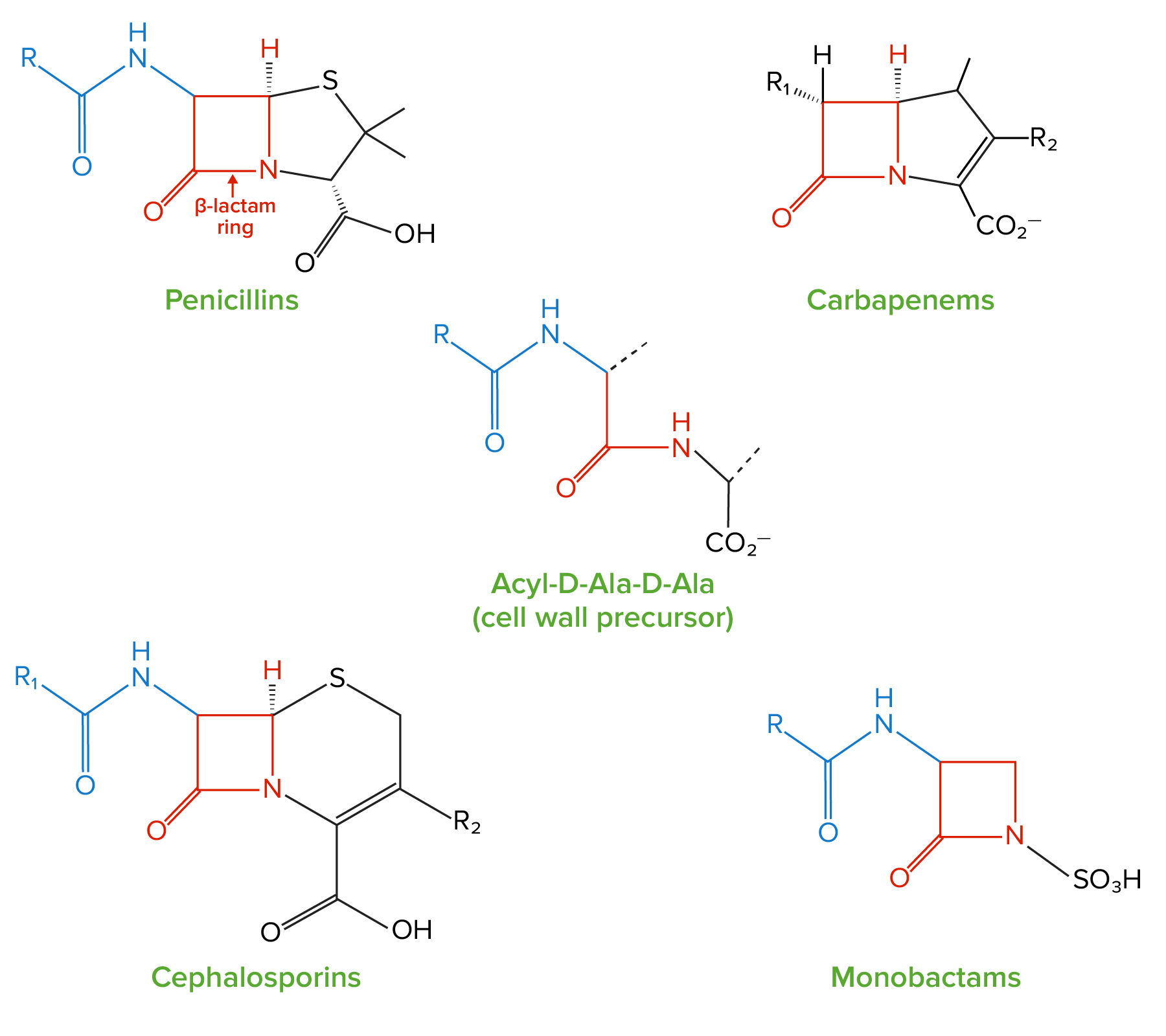
Estructura de los betalactámicos

Estructura de los betalactámicos:
Todos los antibióticos betalactámicos contienen el mismo anillo central “betalactámico” de 4 miembros (resaltado en rojo). Este anillo es el responsable de las propiedades antibacterianas de estos medicamentos porque es la región que se une a las proteínas de unión a la penicilina y las inhibe. Las proteínas de unión a la penicilina catalizan la formación de la pared celular mediante la formación de enlaces entrecruzados entre las cadenas peptídicas de las moléculas de peptidoglicano; las proteínas de unión a la penicilina forman estos enlaces entrecruzados entre los péptidos acil-D-Ala-D-Ala, que tienen una estructura similar al anillo betalactámico.

Imagen por Lecturio. Licencia: CC BY-NC-SA 4.0

Estructura de los LOS Neisseria monobactámicos

Los LOS Neisseria monobactámicos son también antibióticos betalactámicos. Su estructura es lo suficientemente diferente a la de la penicilina como para que no haya alergia cruzada con las penicilinas. El aztreonam Aztreonam The carbapenems and aztreonam are both members of the bactericidal beta-lactam family of antibiotics (similar to penicillins). They work by preventing bacteria from producing their cell wall, ultimately leading to bacterial cell death. Carbapenems and Aztreonam es el único monobactámico comercializado. Las estructuras de los LOS Neisseria monobactámicos incluyen:
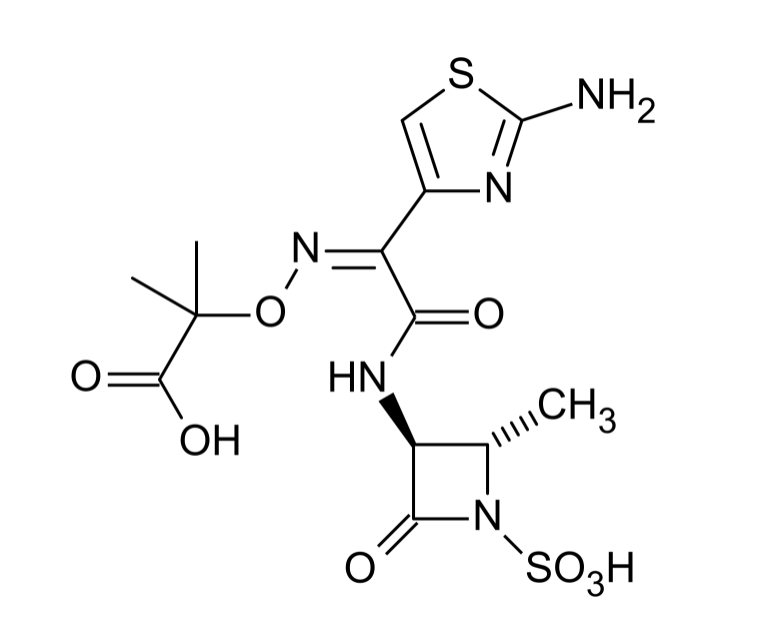
  • Anillo beta-lactámico
  • Una cadena lateral con un grupo R
  • Grupo -SO3H
Estructura del aztreonam, el único monobactámico comercializado en Estados Unidos

Estructura del aztreonam, el único monobactámico comercializado en Estados Unidos

Imagen: “Chemical structure of aztreonam” por Mysid. Licencia: Dominio Público

Mecanismo de Acción y Resistencia

Todos los LOS Neisseria betalactámicos, incluidos los LOS Neisseria carbapenémicos y los LOS Neisseria monobactámicos, actúan inhibiendo la síntesis de la pared celular bacteriana.
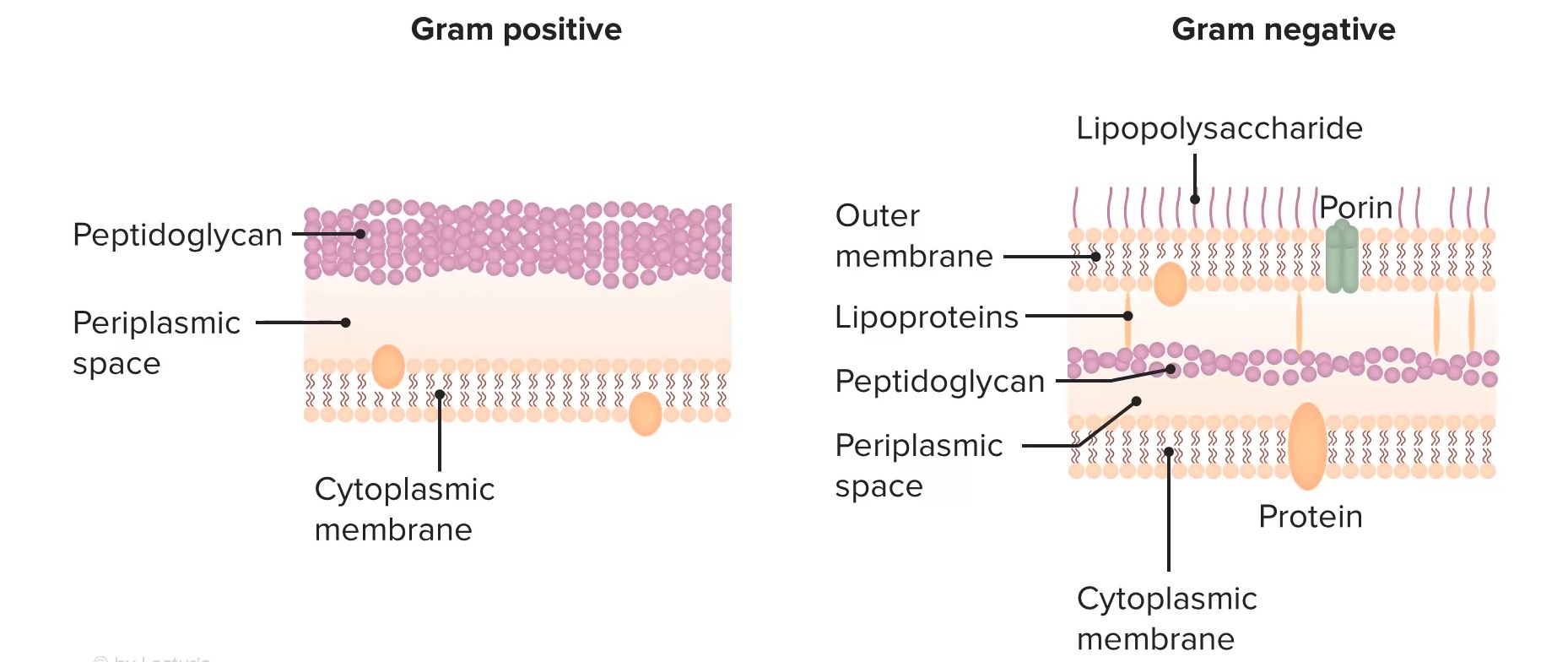
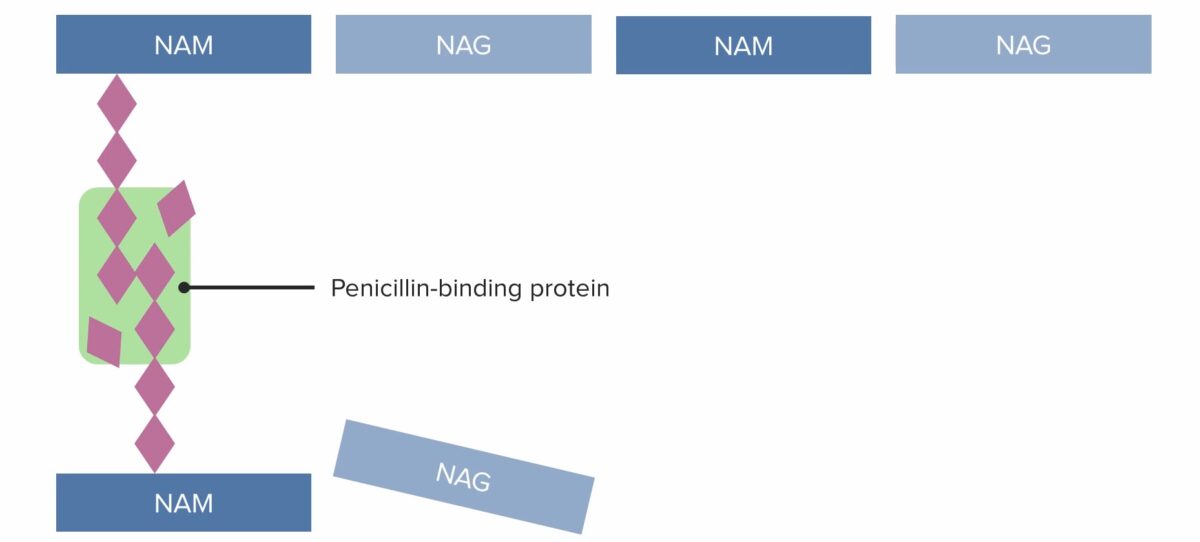
Resumen: Entendiendo las paredes celulares

  • Las paredes celulares de las bacterias contienen cadenas de peptidoglicano (capas grandes y gruesas en EN Erythema nodosum is an immune-mediated panniculitis (inflammation of the subcutaneous fat) caused by a type IV (delayed-type) hypersensitivity reaction. It commonly manifests in young women as tender, erythematous nodules on the shins. Erythema Nodosum los LOS Neisseria organismos gram-positivos y capas relativamente más pequeñas/delgadas en EN Erythema nodosum is an immune-mediated panniculitis (inflammation of the subcutaneous fat) caused by a type IV (delayed-type) hypersensitivity reaction. It commonly manifests in young women as tender, erythematous nodules on the shins. Erythema Nodosum los LOS Neisseria organismos gram-negativos)
  • Las cadenas de peptidoglicano están formadas por:
    • Un esqueleto de azúcar con 2 azúcares alternados:
      • Ácido N-acetilmurámico
      • N-acetilglucosamina
    • Cadenas peptídicas laterales cortas de los LOS Neisseria azúcares N-acetilmurámico
  • Estos péptidos cortos forman puentes entrecruzados entre cadenas de peptidoglicano adyacentes, creando una estructura en EN Erythema nodosum is an immune-mediated panniculitis (inflammation of the subcutaneous fat) caused by a type IV (delayed-type) hypersensitivity reaction. It commonly manifests in young women as tender, erythematous nodules on the shins. Erythema Nodosum forma de red.
    • Estos puentes son necesarios para la estructura del peptidoglicano (y, por tanto, de la pared celular).
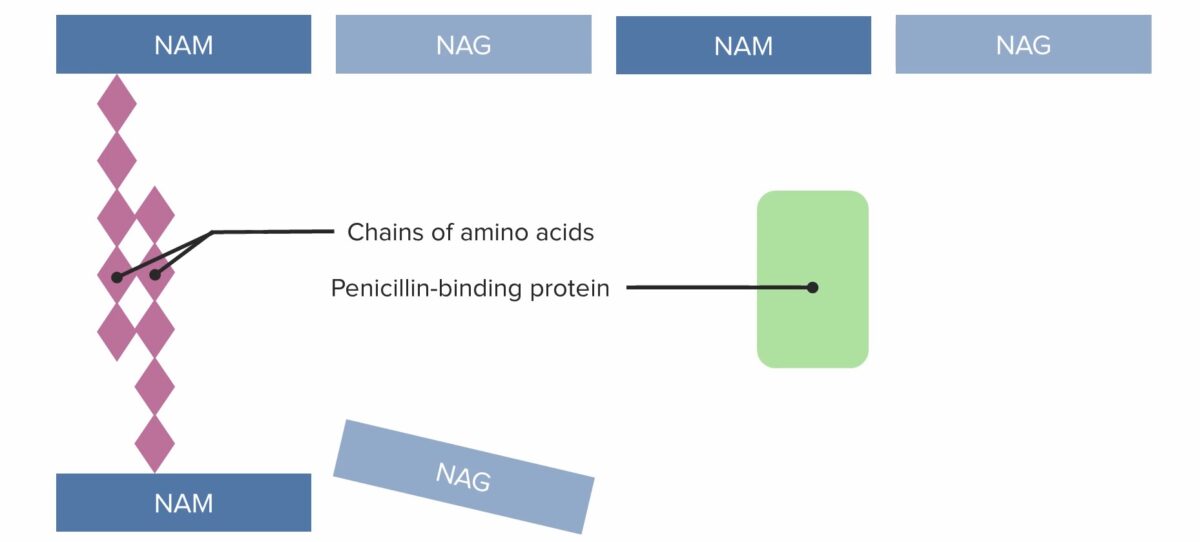
    • Las proteínas de unión a la penicilina son las enzimas que crean estos puentes entrecruzados.
Estructura de las paredes celulares bacterianas Cefalosporinas

Estructura de las paredes celulares bacterianas

Imagen por Lecturio. Licencia: CC BY-NC-SA 4.0

Mecanismo de acción

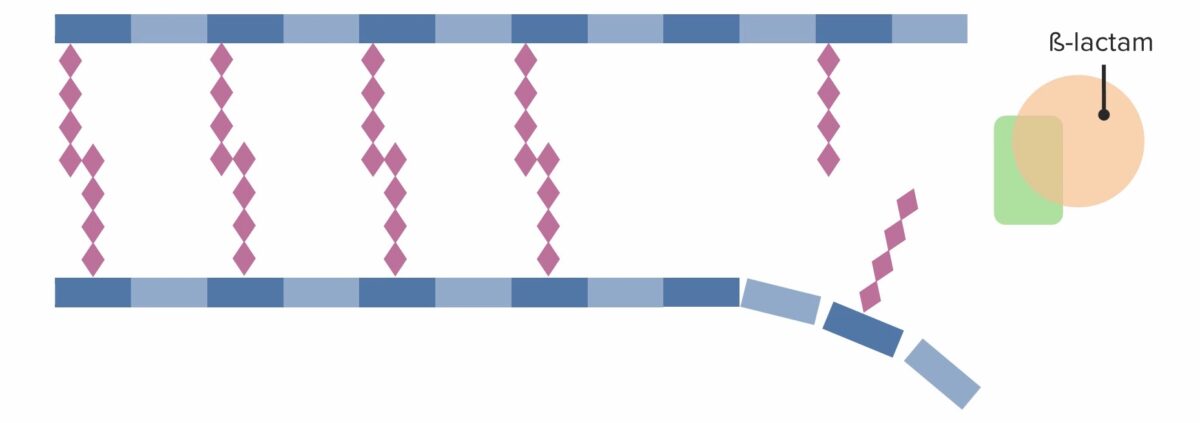
Todos los LOS Neisseria betalactámicos actúan inhibiendo irreversiblemente las proteínas de unión a la penicilina los LOS Neisseria antibióticos betalactámicos inhiben la síntesis de la pared celular
Actividad bactericida

Los LOS Neisseria betalactámicos, incluidos los LOS Neisseria carbapenémicos y los LOS Neisseria monobactámicos, son bactericidas ( en EN Erythema nodosum is an immune-mediated panniculitis (inflammation of the subcutaneous fat) caused by a type IV (delayed-type) hypersensitivity reaction. It commonly manifests in young women as tender, erythematous nodules on the shins. Erythema Nodosum lugar de bacteriostáticos).
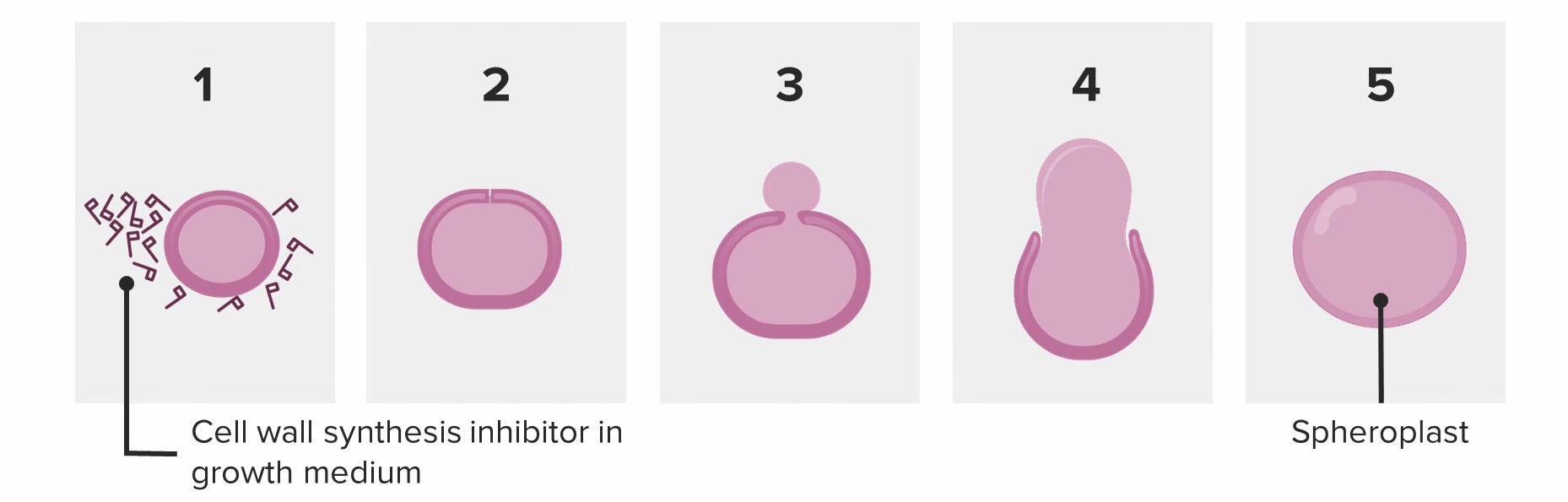
  • La pared celular bacteriana es necesaria para su supervivencia → sin ella se inicia la muerte celular
  • Cuando las bacterias intentan replicarse, se desprenden de su pared celular.
  • Sin embargo, en EN Erythema nodosum is an immune-mediated panniculitis (inflammation of the subcutaneous fat) caused by a type IV (delayed-type) hypersensitivity reaction. It commonly manifests in young women as tender, erythematous nodules on the shins. Erythema Nodosum presencia de betalactámicos, estas son incapaces de formar nuevas paredes celulares.
  • Las bacterias son incapaces de dividirse eficazmente y la célula restante se autocataliza y muere.
Bacterias que intentan dividirse en presencia de penicilina

Bacteria que intenta dividirse en presencia de penicilina:
La bacteria acaba desprendiéndose de su pared y convirtiéndose en un esferoplasto. El esferoplasto no puede sobrevivir y se autocataliza (muere).

Imagen por Lecturio. Licencia: CC BY-NC-SA 4.0

Mecanismos de resistencia

Las bacterias emplean 3 mecanismos principales para resistir a los LOS Neisseria betalactámicos:

  • Resistencia por betalactamasa:
    • La betalactamasa es una enzima que escinde el anillo betalactámico e inactiva el antibiótico.
    • Tipo de resistencia más común
    • Aunque la mayoría de los LOS Neisseria carbapenems Carbapenems A group of beta-lactam antibiotics in which the sulfur atom in the thiazolidine ring of the penicillin molecule is replaced by a carbon atom. Thienamycins are a subgroup of carbapenems which have a sulfur atom as the first constituent of the side chain. Carbapenems and Aztreonam y monobactamasas son resistentes a las betalactamasas, cada vez hay más resistencia, especialmente entre los LOS Neisseria organismos gramnegativos.
    • Las carbapenemasas son betalactamasas que pueden hidrolizar los LOS Neisseria carbapenems Carbapenems A group of beta-lactam antibiotics in which the sulfur atom in the thiazolidine ring of the penicillin molecule is replaced by a carbon atom. Thienamycins are a subgroup of carbapenems which have a sulfur atom as the first constituent of the side chain. Carbapenems and Aztreonam y otros antibióticos betalactámicos (e.g., penicilina, cefalosporinas).
  • Resistencia mediada por proteínas de unión a la penicilina (↓ en EN Erythema nodosum is an immune-mediated panniculitis (inflammation of the subcutaneous fat) caused by a type IV (delayed-type) hypersensitivity reaction. It commonly manifests in young women as tender, erythematous nodules on the shins. Erythema Nodosum la unión a proteínas de unión a la penicilina):
    • Mutaciones en EN Erythema nodosum is an immune-mediated panniculitis (inflammation of the subcutaneous fat) caused by a type IV (delayed-type) hypersensitivity reaction. It commonly manifests in young women as tender, erythematous nodules on the shins. Erythema Nodosum las proteínas de unión a la penicilina → dan lugar a una afinidad ↓ de los LOS Neisseria betalactámicos a las proteínas de unión a la penicilina
    • A pesar de las mutaciones, estas proteínas de unión a la penicilina siguen siendo capaces de producir una pared celular.
  • ↓ Permeabilidad de la membrana
    • Los LOS Neisseria carbapenémicos entran en EN Erythema nodosum is an immune-mediated panniculitis (inflammation of the subcutaneous fat) caused by a type IV (delayed-type) hypersensitivity reaction. It commonly manifests in young women as tender, erythematous nodules on the shins. Erythema Nodosum las células a través de canales especializados.
      • Las pruebas sugieren que los LOS Neisseria carbapenémicos no utilizan los LOS Neisseria canales de porina utilizados por otros betalactámicos; utilizan un canal diferente.
      • Aunque es menos común, este canal puede ser alterado para ↓ la permeabilidad al AL Amyloidosis carbapenémico
    • ↓ Permeabilidad → ↓ antibiótico dentro de la célula → resistencia al AL Amyloidosis antibiótico.
    • Mecanismo común de resistencia a los LOS Neisseria carbapenémicos en EN Erythema nodosum is an immune-mediated panniculitis (inflammation of the subcutaneous fat) caused by a type IV (delayed-type) hypersensitivity reaction. It commonly manifests in young women as tender, erythematous nodules on the shins. Erythema Nodosum Pseudomonas aeruginosa Pseudomonas aeruginosa A species of gram-negative, aerobic, rod-shaped bacteria commonly isolated from clinical specimens (wound, burn, and urinary tract infections). It is also found widely distributed in soil and water. P. Aeruginosa is a major agent of nosocomial infection. Pseudomonas

Mecanismo de degradación del imipenem Imipenem Semisynthetic thienamycin that has a wide spectrum of antibacterial activity against gram-negative and gram-positive aerobic and anaerobic bacteria, including many multiresistant strains. It is stable to beta-lactamases. Clinical studies have demonstrated high efficacy in the treatment of infections of various body systems. Its effectiveness is enhanced when it is administered in combination with cilastatin, a renal dipeptidase inhibitor. Carbapenems and Aztreonam

  • Deshidropeptidasa renal: un tipo diferente de enzima producida por el riñón, que es capaz de inactivar el imipenem Imipenem Semisynthetic thienamycin that has a wide spectrum of antibacterial activity against gram-negative and gram-positive aerobic and anaerobic bacteria, including many multiresistant strains. It is stable to beta-lactamases. Clinical studies have demonstrated high efficacy in the treatment of infections of various body systems. Its effectiveness is enhanced when it is administered in combination with cilastatin, a renal dipeptidase inhibitor. Carbapenems and Aztreonam
  • Cilastatina es un inhibidor de la deshidropeptidasa y siempre se administra en EN Erythema nodosum is an immune-mediated panniculitis (inflammation of the subcutaneous fat) caused by a type IV (delayed-type) hypersensitivity reaction. It commonly manifests in young women as tender, erythematous nodules on the shins. Erythema Nodosum combinación con el imipenem Imipenem Semisynthetic thienamycin that has a wide spectrum of antibacterial activity against gram-negative and gram-positive aerobic and anaerobic bacteria, including many multiresistant strains. It is stable to beta-lactamases. Clinical studies have demonstrated high efficacy in the treatment of infections of various body systems. Its effectiveness is enhanced when it is administered in combination with cilastatin, a renal dipeptidase inhibitor. Carbapenems and Aztreonam.

Inhibidores de la betalactamasa

Debido al AL Amyloidosis creciente problema de la resistencia por las betalactamasas, se han desarrollado inhibidores de betalactamasas que a menudo se combinan con diferentes antibióticos betalactámicos. Las combinaciones disponibles de carbapenémicos y monobactámicos/inhibidores de la betalactamasa incluyen:

  • Meropenem Meropenem A thienamycin derivative antibacterial agent that is more stable to renal dehydropeptidase I than imipenem, but does not need to be given with an enzyme inhibitor such as cilastatin. It is used in the treatment of bacterial infections, including infections in immunocompromised patients. Carbapenems and Aztreonam/vaborbactam
  • Imipenem Imipenem Semisynthetic thienamycin that has a wide spectrum of antibacterial activity against gram-negative and gram-positive aerobic and anaerobic bacteria, including many multiresistant strains. It is stable to beta-lactamases. Clinical studies have demonstrated high efficacy in the treatment of infections of various body systems. Its effectiveness is enhanced when it is administered in combination with cilastatin, a renal dipeptidase inhibitor. Carbapenems and Aztreonam/cilastatina/relebactam
  • Aztreonam Aztreonam The carbapenems and aztreonam are both members of the bactericidal beta-lactam family of antibiotics (similar to penicillins). They work by preventing bacteria from producing their cell wall, ultimately leading to bacterial cell death. Carbapenems and Aztreonam/ avibactam Avibactam Cephalosporins

Carbapenémicos

Farmacocinética

  • Distribución: penetra bien en EN Erythema nodosum is an immune-mediated panniculitis (inflammation of the subcutaneous fat) caused by a type IV (delayed-type) hypersensitivity reaction. It commonly manifests in young women as tender, erythematous nodules on the shins. Erythema Nodosum todos los LOS Neisseria fluidos y tejidos corporales, incluidos el líquido peritoneal, líquido pulmonar, huesos, bilis y orina
  • Unión a proteínas:
    • < 20%: meropenem Meropenem A thienamycin derivative antibacterial agent that is more stable to renal dehydropeptidase I than imipenem, but does not need to be given with an enzyme inhibitor such as cilastatin. It is used in the treatment of bacterial infections, including infections in immunocompromised patients. Carbapenems and Aztreonam, imipenem Imipenem Semisynthetic thienamycin that has a wide spectrum of antibacterial activity against gram-negative and gram-positive aerobic and anaerobic bacteria, including many multiresistant strains. It is stable to beta-lactamases. Clinical studies have demonstrated high efficacy in the treatment of infections of various body systems. Its effectiveness is enhanced when it is administered in combination with cilastatin, a renal dipeptidase inhibitor. Carbapenems and Aztreonam, doripenem Doripenem A carbapenem derivative antibacterial agent that is more stable to renal dehydropeptidase I than imipenem, but does not need to be given with an enzyme inhibitor such as cilastatin. It is used in the treatment of infections such as hospital-acquired pneumonia, and complicated intra-abdominal or urinary-tract infections, including pyelonephritis. Carbapenems and Aztreonam
    • > 85%: ertapenem Ertapenem A carbapenem derivative antibacterial agent that is more stable to renal dehydropeptidase I than imipenem, but does not need to be given with an enzyme inhibitor such as cilastatin. It is used in the treatment of gram-positive and gram-negative bacterial infections including intra-abdominal infections, acute gynecological infections, complicated urinary tract infections, skin infections, and respiratory tract infections. It is also used to prevent infection in colorectal surgery. Carbapenems and Aztreonam
  • Metabolismo:
    • Imipenem Imipenem Semisynthetic thienamycin that has a wide spectrum of antibacterial activity against gram-negative and gram-positive aerobic and anaerobic bacteria, including many multiresistant strains. It is stable to beta-lactamases. Clinical studies have demonstrated high efficacy in the treatment of infections of various body systems. Its effectiveness is enhanced when it is administered in combination with cilastatin, a renal dipeptidase inhibitor. Carbapenems and Aztreonam:
      • Metabolizado en EN Erythema nodosum is an immune-mediated panniculitis (inflammation of the subcutaneous fat) caused by a type IV (delayed-type) hypersensitivity reaction. It commonly manifests in young women as tender, erythematous nodules on the shins. Erythema Nodosum el túbulo renal proximal por la deshidropeptidasa renal
      • Para prolongar la actividad del medicamento, el imipenem Imipenem Semisynthetic thienamycin that has a wide spectrum of antibacterial activity against gram-negative and gram-positive aerobic and anaerobic bacteria, including many multiresistant strains. It is stable to beta-lactamases. Clinical studies have demonstrated high efficacy in the treatment of infections of various body systems. Its effectiveness is enhanced when it is administered in combination with cilastatin, a renal dipeptidase inhibitor. Carbapenems and Aztreonam se combina con la cilastatina, un inhibidor de la deshidropeptidasa.
    • Otros:
      • Estable frente a la deshidropeptidasa I renal, por lo que puede administrarse sin cilastatina
      • Hidrólisis hepática del anillo betalactámico a metabolitos inactivos
  • Vida media:
    • Ertapenem Ertapenem A carbapenem derivative antibacterial agent that is more stable to renal dehydropeptidase I than imipenem, but does not need to be given with an enzyme inhibitor such as cilastatin. It is used in the treatment of gram-positive and gram-negative bacterial infections including intra-abdominal infections, acute gynecological infections, complicated urinary tract infections, skin infections, and respiratory tract infections. It is also used to prevent infection in colorectal surgery. Carbapenems and Aztreonam: cerca de 4 horas → una dosis diaria
    • Otros: 1–2 horas; requieren dosis más frecuentes
  • Excreción:
    • Principalmente en EN Erythema nodosum is an immune-mediated panniculitis (inflammation of the subcutaneous fat) caused by a type IV (delayed-type) hypersensitivity reaction. It commonly manifests in young women as tender, erythematous nodules on the shins. Erythema Nodosum la orina como medicamento inalterado
    • Algunos tienen niveles muy pequeños de excreción fecal.

Indicaciones

  • Se consideran antibióticos de muy amplio espectro con actividad contra:
    • Microorganismos gram-positivos:
      • Streptococcus Streptococcus Streptococcus is one of the two medically important genera of gram-positive cocci, the other being Staphylococcus. Streptococci are identified as different species on blood agar on the basis of their hemolytic pattern and sensitivity to optochin and bacitracin. There are many pathogenic species of streptococci, including S. pyogenes, S. agalactiae, S. pneumoniae, and the viridans streptococci. Streptococcus spp.
      • Staphylococcus Staphylococcus Staphylococcus is a medically important genera of Gram-positive, aerobic cocci. These bacteria form clusters resembling grapes on culture plates. Staphylococci are ubiquitous for humans, and many strains compose the normal skin flora. Staphylococcus (no es activo contra el Staphylococcus aureus Staphylococcus aureus Potentially pathogenic bacteria found in nasal membranes, skin, hair follicles, and perineum of warm-blooded animals. They may cause a wide range of infections and intoxications. Brain Abscess resistente a la meticilina ( MRSA MRSA A strain of Staphylococcus aureus that is non-susceptible to the action of methicillin. The mechanism of resistance usually involves modification of normal or the presence of acquired penicillin binding proteins. Staphylococcus, por sus siglas en EN Erythema nodosum is an immune-mediated panniculitis (inflammation of the subcutaneous fat) caused by a type IV (delayed-type) hypersensitivity reaction. It commonly manifests in young women as tender, erythematous nodules on the shins. Erythema Nodosum inglés))
      • Enterococcus Enterococcus Enterococcus is a genus of oval-shaped gram-positive cocci that are arranged in pairs or short chains. Distinguishing factors include optochin resistance and the presence of pyrrolidonyl arylamidase (PYR) and Lancefield D antigen. Enterococcus is part of the normal flora of the human GI tract. Enterococcus faecalis
      • Listeria Listeria Listeria spp. are motile, flagellated, gram-positive, facultative intracellular bacilli. The major pathogenic species is Listeria monocytogenes. Listeria are part of the normal gastrointestinal flora of domestic mammals and poultry and are transmitted to humans through the ingestion of contaminated food, especially unpasteurized dairy products. Listeria Monocytogenes/Listeriosis spp.
    • Mayoría de las Enterobacteriaceae Enterobacteriaceae A family of gram-negative, facultatively anaerobic, rod-shaped bacteria that do not form endospores. Its organisms are distributed worldwide with some being saprophytes and others being plant and animal parasites. Many species are of considerable economic importance due to their pathogenic effects on agriculture and livestock. Cephalosporins:
      • Escherichia coli Escherichia coli The gram-negative bacterium Escherichia coli is a key component of the human gut microbiota. Most strains of E. coli are avirulent, but occasionally they escape the GI tract, infecting the urinary tract and other sites. Less common strains of E. coli are able to cause disease within the GI tract, most commonly presenting as abdominal pain and diarrhea. Escherichia coli
      • Klebsiella Klebsiella Klebsiella are encapsulated gram-negative, lactose-fermenting bacilli. They form pink colonies on MacConkey agar due to lactose fermentation. The main virulence factor is a polysaccharide capsule. Klebsiella pneumoniae is the most important pathogenic species. Klebsiella
      • Proteus Proteus Proteus spp. are gram-negative, facultatively anaerobic bacilli. Different types of infection result from Proteus, but the urinary tract is the most common site. The majority of cases are caused by Proteus mirabilis (P. mirabilis). The bacteria are part of the normal intestinal flora and are also found in the environment. Proteus
      • Serratia Serratia A genus of gram-negative, facultatively anaerobic, rod-shaped bacteria that occurs in the natural environment (soil, water, and plant surfaces) or as an opportunistic human pathogen. Acute Cholangitis
      • Enterobacter Enterobacter Multidrug-resistant Organisms and Nosocomial Infections
      • Citrobacter Citrobacter Multidrug-resistant Organisms and Nosocomial Infections
    • H. influenzae H. influenzae A species of Haemophilus found on the mucous membranes of humans and a variety of animals. The species is further divided into biotypes I through VIII. Haemophilus y N. gonorrhoeae N. gonorrhoeae A species of gram-negative, aerobic bacteria primarily found in purulent venereal discharges. It is the causative agent of gonorrhea. Neisseria productoras de betalactamasas
    • Pseudomonas aeruginosa Pseudomonas aeruginosa A species of gram-negative, aerobic, rod-shaped bacteria commonly isolated from clinical specimens (wound, burn, and urinary tract infections). It is also found widely distributed in soil and water. P. Aeruginosa is a major agent of nosocomial infection. Pseudomonas
    • Anaerobios:
      • Bacteroides Bacteroides Bacteroides is a genus of opportunistic, anaerobic, gram-negative bacilli. Bacteroides fragilis is the most common species involved in human disease and is part of the normal flora of the large intestine. Bacteroides
      • Fusobacterium Fusobacterium A genus of gram-negative, anaerobic, rod-shaped bacteria found in cavities of humans and other animals. No endospores are formed. Some species are pathogenic and occur in various purulent or gangrenous infections. Dog and Cat Bites
      • Clostridium
      • Peptostreptococcus Peptostreptococcus A genus of gram-positive, anaerobic, coccoid bacteria that is part of the normal flora of humans. Its organisms are opportunistic pathogens causing bacteremias and soft tissue infections. Perianal and Perirectal Abscess
  • Normalmente reservados para:
    • Infecciones graves o potencialmente mortales
    • Infecciones resistentes a medicamentos
    • Infecciones adquiridas en EN Erythema nodosum is an immune-mediated panniculitis (inflammation of the subcutaneous fat) caused by a type IV (delayed-type) hypersensitivity reaction. It commonly manifests in young women as tender, erythematous nodules on the shins. Erythema Nodosum el hospital
  • Usos clínicos más comunes:
    • Infecciones intraabdominales y pélvicas graves (e.g., rotura de apendicitis, abortos sépticos)
    • Infecciones complicadas de la piel y los LOS Neisseria tejidos blandos
    • Meningitis Meningitis Meningitis is inflammation of the meninges, the protective membranes of the brain, and spinal cord. The causes of meningitis are varied, with the most common being bacterial or viral infection. The classic presentation of meningitis is a triad of fever, altered mental status, and nuchal rigidity. Meningitis bacteriana
    • Abscesos intracraneales y espinales
    • Osteomielitis
    • Neumonía adquirida en EN Erythema nodosum is an immune-mediated panniculitis (inflammation of the subcutaneous fat) caused by a type IV (delayed-type) hypersensitivity reaction. It commonly manifests in young women as tender, erythematous nodules on the shins. Erythema Nodosum el hospital (NAH) y neumonía asociada a la ventilación mecánica (NAV)
    • Infecciones complicadas del tracto urinario (ITU)
    • Sepsis Sepsis Systemic inflammatory response syndrome with a proven or suspected infectious etiology. When sepsis is associated with organ dysfunction distant from the site of infection, it is called severe sepsis. When sepsis is accompanied by hypotension despite adequate fluid infusion, it is called septic shock. Sepsis and Septic Shock
    • Fiebre neutropénica
  • Los LOS Neisseria carbapenémicos atraviesan la placenta Placenta A highly vascularized mammalian fetal-maternal organ and major site of transport of oxygen, nutrients, and fetal waste products. It includes a fetal portion (chorionic villi) derived from trophoblasts and a maternal portion (decidua) derived from the uterine endometrium. The placenta produces an array of steroid, protein and peptide hormones (placental hormones). Placenta, Umbilical Cord, and Amniotic Cavity, pero en EN Erythema nodosum is an immune-mediated panniculitis (inflammation of the subcutaneous fat) caused by a type IV (delayed-type) hypersensitivity reaction. It commonly manifests in young women as tender, erythematous nodules on the shins. Erythema Nodosum general se consideran seguros en EN Erythema nodosum is an immune-mediated panniculitis (inflammation of the subcutaneous fat) caused by a type IV (delayed-type) hypersensitivity reaction. It commonly manifests in young women as tender, erythematous nodules on the shins. Erythema Nodosum el embarazo si se cree que son necesarios.

Efectos secundarios

  • Toxicidad en EN Erythema nodosum is an immune-mediated panniculitis (inflammation of the subcutaneous fat) caused by a type IV (delayed-type) hypersensitivity reaction. It commonly manifests in young women as tender, erythematous nodules on the shins. Erythema Nodosum el sistema nervioso central (SNC) (especialmente en EN Erythema nodosum is an immune-mediated panniculitis (inflammation of the subcutaneous fat) caused by a type IV (delayed-type) hypersensitivity reaction. It commonly manifests in young women as tender, erythematous nodules on the shins. Erythema Nodosum pacientes con enfermedad subyacente del SNC o con función renal alterada):
    • Cambios en EN Erythema nodosum is an immune-mediated panniculitis (inflammation of the subcutaneous fat) caused by a type IV (delayed-type) hypersensitivity reaction. It commonly manifests in young women as tender, erythematous nodules on the shins. Erythema Nodosum el estado mental
    • Mioclonía
    • Convulsiones (especialmente imipenem Imipenem Semisynthetic thienamycin that has a wide spectrum of antibacterial activity against gram-negative and gram-positive aerobic and anaerobic bacteria, including many multiresistant strains. It is stable to beta-lactamases. Clinical studies have demonstrated high efficacy in the treatment of infections of various body systems. Its effectiveness is enhanced when it is administered in combination with cilastatin, a renal dipeptidase inhibitor. Carbapenems and Aztreonam)
  • Efectos hematológicos:
    • Anemia Anemia Anemia is a condition in which individuals have low Hb levels, which can arise from various causes. Anemia is accompanied by a reduced number of RBCs and may manifest with fatigue, shortness of breath, pallor, and weakness. Subtypes are classified by the size of RBCs, chronicity, and etiology. Anemia: Overview and Types
    • Trombocitopenia
  • Malestar gastrointestinal
  • ↑ Transaminasas séricas
  • Erupción
  • Superinfección:
    • Infecciones por hongos
    • Clostridioides difficile/ colitis Colitis Inflammation of the colon section of the large intestine, usually with symptoms such as diarrhea (often with blood and mucus), abdominal pain, and fever. Pseudomembranous Colitis pseudomembranosa

Contraindicaciones

  • Alergias a los LOS Neisseria betalactámicos
  • Utilizar con precaución en EN Erythema nodosum is an immune-mediated panniculitis (inflammation of the subcutaneous fat) caused by a type IV (delayed-type) hypersensitivity reaction. It commonly manifests in young women as tender, erythematous nodules on the shins. Erythema Nodosum pacientes que tengan:
    • Enfermedad subyacente del SNC
    • Deterioro de la función renal
  • El imipenem Imipenem Semisynthetic thienamycin that has a wide spectrum of antibacterial activity against gram-negative and gram-positive aerobic and anaerobic bacteria, including many multiresistant strains. It is stable to beta-lactamases. Clinical studies have demonstrated high efficacy in the treatment of infections of various body systems. Its effectiveness is enhanced when it is administered in combination with cilastatin, a renal dipeptidase inhibitor. Carbapenems and Aztreonam está contraindicado en EN Erythema nodosum is an immune-mediated panniculitis (inflammation of the subcutaneous fat) caused by a type IV (delayed-type) hypersensitivity reaction. It commonly manifests in young women as tender, erythematous nodules on the shins. Erythema Nodosum infecciones pediátricas del SNC debido a su potencial convulsivo.

Monobactámicos: Aztreonam

Farmacocinética

  • Se distribuye ampliamente en EN Erythema nodosum is an immune-mediated panniculitis (inflammation of the subcutaneous fat) caused by a type IV (delayed-type) hypersensitivity reaction. It commonly manifests in young women as tender, erythematous nodules on the shins. Erythema Nodosum los LOS Neisseria tejidos corporales, líquido cefalorraquídeo (LCR), secreciones bronquiales, líquido peritoneal, bilis y hueso
  • Unión a proteínas: aproximadamente el 50%
  • Metabolismo:
    • Metabolismo hepático menor
    • No se degrada por ciertos tipos de betalactamasas
  • Vida media: 1–2 horas con función renal normal
  • Excreción:
    • 60%–70% en EN Erythema nodosum is an immune-mediated panniculitis (inflammation of the subcutaneous fat) caused by a type IV (delayed-type) hypersensitivity reaction. It commonly manifests in young women as tender, erythematous nodules on the shins. Erythema Nodosum la orina como medicamento inalterado
    • Aproximadamente el 10% en EN Erythema nodosum is an immune-mediated panniculitis (inflammation of the subcutaneous fat) caused by a type IV (delayed-type) hypersensitivity reaction. It commonly manifests in young women as tender, erythematous nodules on the shins. Erythema Nodosum las heces

Indicaciones

  • Espectro más estrecho que los LOS Neisseria carbapenémicos
  • Se utiliza normalmente para las infecciones aerobias por bacilos gram-negativos en EN Erythema nodosum is an immune-mediated panniculitis (inflammation of the subcutaneous fat) caused by a type IV (delayed-type) hypersensitivity reaction. It commonly manifests in young women as tender, erythematous nodules on the shins. Erythema Nodosum pacientes con alergias graves a los LOS Neisseria betalactámicos que requieren un tratamiento con betalactámicos:
    • Infecciones del tracto respiratorio inferior
    • ITU
    • Infecciones de la piel y de los LOS Neisseria tejidos blandos
    • Infecciones intraabdominales y pélvicas
    • Meningitis Meningitis Meningitis is inflammation of the meninges, the protective membranes of the brain, and spinal cord. The causes of meningitis are varied, with the most common being bacterial or viral infection. The classic presentation of meningitis is a triad of fever, altered mental status, and nuchal rigidity. Meningitis bacteriana
  • Tiene actividad contra:
    • Enterobacterias que no producen betalactamasas
    • Pseudomonas aeruginosa Pseudomonas aeruginosa A species of gram-negative, aerobic, rod-shaped bacteria commonly isolated from clinical specimens (wound, burn, and urinary tract infections). It is also found widely distributed in soil and water. P. Aeruginosa is a major agent of nosocomial infection. Pseudomonas
  • No es activo contra:
    • Bacterias gram-positivas
    • Anaerobios
  • Sinérgico con los LOS Neisseria aminoglucósidos

Efectos secundarios

  • ↑ Transaminasas séricas
  • Neutropenia Neutropenia Neutrophils are an important component of the immune system and play a significant role in the eradication of infections. Low numbers of circulating neutrophils, referred to as neutropenia, predispose the body to recurrent infections or sepsis, though patients can also be asymptomatic. Neutropenia en EN Erythema nodosum is an immune-mediated panniculitis (inflammation of the subcutaneous fat) caused by a type IV (delayed-type) hypersensitivity reaction. It commonly manifests in young women as tender, erythematous nodules on the shins. Erythema Nodosum niños
  • Erupción
  • Malestar gastrointestinal
  • Vértigo, cefaleas
  • Superinfección

Contraindicaciones

  • Alergia al AL Amyloidosis aztreonam Aztreonam The carbapenems and aztreonam are both members of the bactericidal beta-lactam family of antibiotics (similar to penicillins). They work by preventing bacteria from producing their cell wall, ultimately leading to bacterial cell death. Carbapenems and Aztreonam
  • La alergia cruzada con otros betalactámicos es extremadamente rara, aunque posible.

Comparación de la Cobertura de Antibióticos

Comparación basada en EN Erythema nodosum is an immune-mediated panniculitis (inflammation of the subcutaneous fat) caused by a type IV (delayed-type) hypersensitivity reaction. It commonly manifests in young women as tender, erythematous nodules on the shins. Erythema Nodosum los LOS Neisseria mecanismos de acción

Los LOS Neisseria antibióticos pueden clasificarse de varias maneras. Una forma es clasificarlos por su mecanismo de acción:

Tabla: Antibióticos clasificados por su mecanismo de acción primario
Mecanismo Clases de antibióticos
Inhibidores de la síntesis de la pared celular bacteriana
  • Penicilinas
  • Cefalosporinas
  • Penems
  • Misceláneos
Inhibidores de la síntesis proteica bacteriana
  • Tetraciclinas
  • Macrólidos
  • Cétolidos
  • Lincosamidas
  • Estreptograminas
  • Linezolid Linezolid An oxazolidinone and acetamide derived anti-bacterial agent and protein synthesis inhibitor that is used in the treatment of gram-positive bacterial infections of the skin and respiratory tract. Oxazolidinones
Agentes que actúan contra el ácido desoxirribonucleico (ADN) y/o el folato
  • Sulfonamidas
  • Trimetoprim
  • Fluoroquinolonas
Agentes antimicobacterianos
  • Agentes antituberculosos
  • Agentes antileprosos
  • Agentes micobacterianos atípicos

Comparación basada en EN Erythema nodosum is an immune-mediated panniculitis (inflammation of the subcutaneous fat) caused by a type IV (delayed-type) hypersensitivity reaction. It commonly manifests in young women as tender, erythematous nodules on the shins. Erythema Nodosum la cobertura

Los LOS Neisseria diferentes antibióticos tienen distintos grados de actividad contra diferentes bacterias. En EN Erythema nodosum is an immune-mediated panniculitis (inflammation of the subcutaneous fat) caused by a type IV (delayed-type) hypersensitivity reaction. It commonly manifests in young women as tender, erythematous nodules on the shins. Erythema Nodosum la tabla siguiente se indican los LOS Neisseria antibióticos que tienen actividad contra 3 clases importantes de bacterias, como los LOS Neisseria cocos gram-positivos, bacilos gram-negativos y anaerobios.
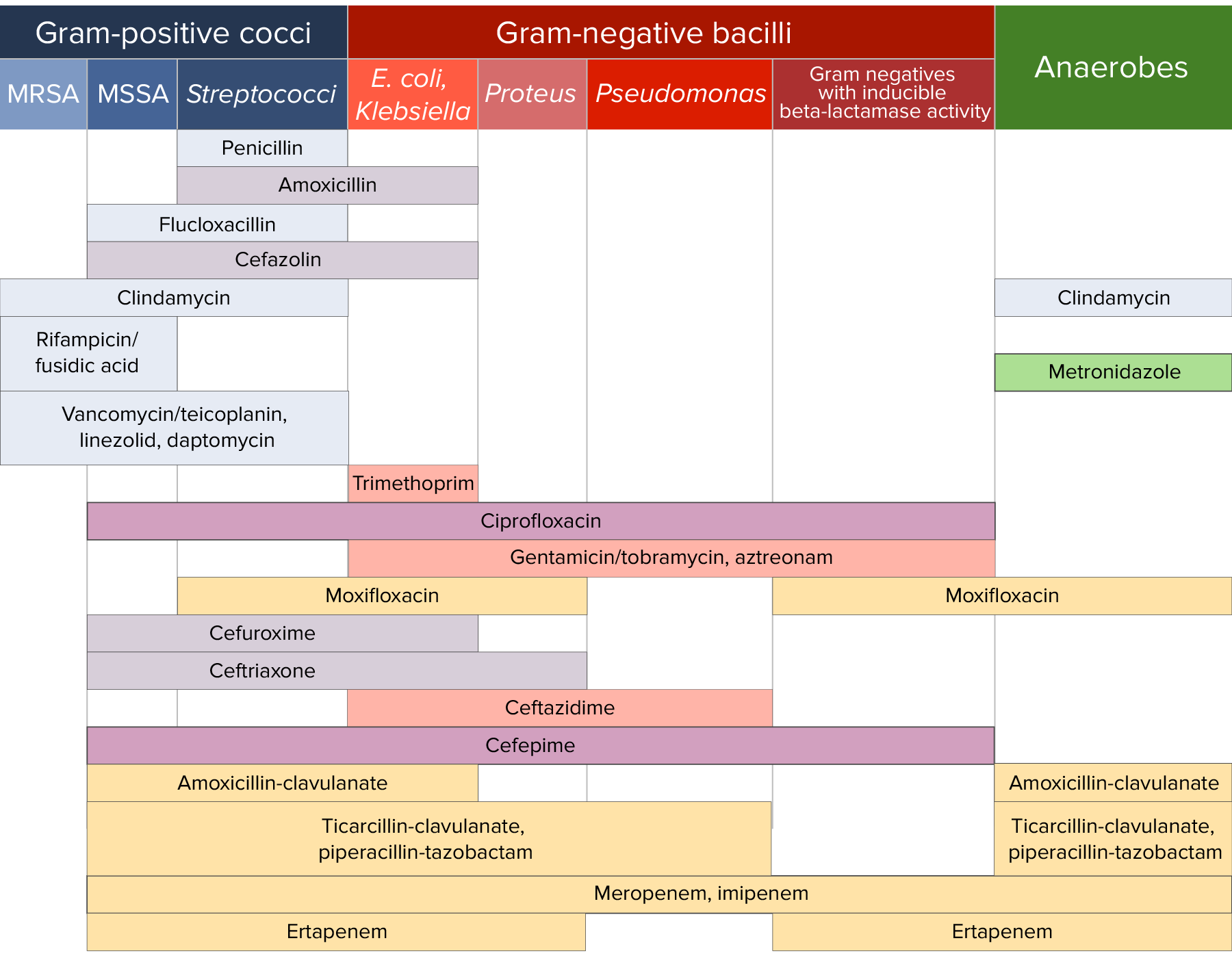
Tabla de sensibilidad a los antibióticos

Sensibilidad a los antibióticos:
Gráfico que compara la cobertura microbiana de diferentes antibióticos para cocos gram-positivos, bacilos gram-negativos y anaerobios.

Imagen por Lecturio. Licencia: CC BY-NC-SA 4.0

Referencias

  1. McCormack, J, Lalji, F. (2019). The “best” antibiotic sensitivity chart. Retrieved October 17, 2025, from https://therapeuticseducation.org/sites/therapeuticseducation.org/files/Antibiotic_Sensitivity_FINAL_Nov_2019.pdf 
  2. Letourneau, AR. (2023). Beta-lactam antibiotics: Mechanisms of action and resistance and adverse effects. In Bloom, A. (Ed.), Uptodate. Retrieved October 17, 2025, from https://www.uptodate.com/contents/beta-lactam-antibiotics-mechanisms-of-action-and-resistance-and-adverse-effects
  3. Letourneau, AR. (2025).  Combination beta-lactamase inhibitors, carbapenems, and monobactams. In Bloom, A. (Ed.), Uptodate. Retrieved October 17, 2025, from https://www.uptodate.com/contents/combination-beta-lactamase-inhibitors-carbapenems-and-monobactams 
  4. Pandey, N. (2023). Beta Lactam Antibiotics. StatPearls. Retrieved October 17, 2025, from https://www.statpearls.com/articlelibrary/viewarticle/18243/ 
  5. Werth, BJ. (2024). Carbapenems. Merck Manual. Retrieved October 17, 2025, from https://www.merckmanuals.com/professional/infectious-diseases/bacteria-and-antibacterial-drugs/carbapenems 
  6. Werth, BJ. (2024). Monobactams. Merck Manual. Retrieved October 17, 2025, from https://www.merckmanuals.com/professional/infectious-diseases/bacteria-and-antibacterial-drugs/monobactams?query=aztreonam 
  7. Lexidrug (2025). Drug Information Sheets, UpToDate, Retrieved October 17, 2025, from:

¡Crea tu cuenta gratis o inicia una sesión para seguir leyendo!

Regístrate ahora y obtén acceso gratuito a Lecturio con páginas de concepto, videos médicos y cuestionarios para tu educación médica.

User Reviews

Que tengas una sesión de estudio alegre y navideña 🎁 Ahorra 50% en todos los planes >>

Details