Domina Conceptos Médicos

Estudia para la escuela de medicina y tus examenes con Lecturio.

Bunyavirales

Bunyaviridae Bunyaviridae A family of viruses, mainly arboviruses, consisting of a single strand of RNA. Virions are enveloped particles 90-120 nm diameter. The complete family contains over 300 members arranged in five genera: orthobunyavirus; hantavirus; nairovirus; phlebovirus; and tospovirus. Bunyavirales es una familia de virus Virus Viruses are infectious, obligate intracellular parasites composed of a nucleic acid core surrounded by a protein capsid. Viruses can be either naked (non-enveloped) or enveloped. The classification of viruses is complex and based on many factors, including type and structure of the nucleoid and capsid, the presence of an envelope, the replication cycle, and the host range. Virology de ARN que se clasifica en EN Erythema nodosum is an immune-mediated panniculitis (inflammation of the subcutaneous fat) caused by a type IV (delayed-type) hypersensitivity reaction. It commonly manifests in young women as tender, erythematous nodules on the shins. Erythema Nodosum 5 géneros: Orthobunyavirus Orthobunyavirus A genus of the family bunyaviridae containing over 150 viruses, most of which are transmitted by mosquitoes or flies. They are arranged in groups defined by serological criteria, each now named for the original reference species (previously called serogroups). Many species have multiple serotypes or strains. Bunyavirales ( virus Virus Viruses are infectious, obligate intracellular parasites composed of a nucleic acid core surrounded by a protein capsid. Viruses can be either naked (non-enveloped) or enveloped. The classification of viruses is complex and based on many factors, including type and structure of the nucleoid and capsid, the presence of an envelope, the replication cycle, and the host range. Virology La Crosse), Hantavirus Hantavirus A genus of the family bunyaviridae causing hantavirus infections, first identified during the korean war. Infection is found primarily in rodents and humans. Transmission does not appear to involve arthropods. Hantaan virus is the type species. Bunyavirales, Nairovirus Nairovirus A genus of the family bunyaviridae named after nairobi sheep disease, an acute, hemorrhagic, tick-borne, gastroenteritis affecting sheep and goats. The type species is dugbe virus. Some viruses in this genus are capable of causing severe and fatal disease in humans. Bunyavirales ( virus Virus Viruses are infectious, obligate intracellular parasites composed of a nucleic acid core surrounded by a protein capsid. Viruses can be either naked (non-enveloped) or enveloped. The classification of viruses is complex and based on many factors, including type and structure of the nucleoid and capsid, the presence of an envelope, the replication cycle, and the host range. Virology de la fiebre hemorrágica de Crimea-Congo), Phlebovirus Phlebovirus A genus of the family bunyaviridae comprising many viruses, most of which are transmitted by phlebotomus flies and cause phlebotomus fever. The type species is rift valley fever virus. Bunyavirales ( virus Virus Viruses are infectious, obligate intracellular parasites composed of a nucleic acid core surrounded by a protein capsid. Viruses can be either naked (non-enveloped) or enveloped. The classification of viruses is complex and based on many factors, including type and structure of the nucleoid and capsid, the presence of an envelope, the replication cycle, and the host range. Virology de la fiebre del Valle del Rift) y Tospovirus Tospovirus A genus of plant viruses in the family bunyaviridae. Tomato spotted wilt virus is the type species. Transmission occurs by at least nine species of thrips. Bunyavirales. Las características comunes de la familia de virus Virus Viruses are infectious, obligate intracellular parasites composed of a nucleic acid core surrounded by a protein capsid. Viruses can be either naked (non-enveloped) or enveloped. The classification of viruses is complex and based on many factors, including type and structure of the nucleoid and capsid, the presence of an envelope, the replication cycle, and the host range. Virology con un genoma tipo ácido ribonucleico (ARN) de sentido negativo monocatenario, incluyen que tiene tres segmentos, y que se encuentra en EN Erythema nodosum is an immune-mediated panniculitis (inflammation of the subcutaneous fat) caused by a type IV (delayed-type) hypersensitivity reaction. It commonly manifests in young women as tender, erythematous nodules on the shins. Erythema Nodosum una estructura esférica envuelta. Las infecciones generalmente son transmitidas por artrópodos o roedores. Hay múltiples manifestaciones clínicas, en EN Erythema nodosum is an immune-mediated panniculitis (inflammation of the subcutaneous fat) caused by a type IV (delayed-type) hypersensitivity reaction. It commonly manifests in young women as tender, erythematous nodules on the shins. Erythema Nodosum general se presentan como fiebres hemorrágicas y/o encefalitis. Los LOS Neisseria procedimientos de diagnóstico incluyen serología y RT-PCR RT-PCR A variation of the pcr technique in which cDNA is made from RNA via reverse transcription. The resultant cDNA is then amplified using standard pcr protocols. Polymerase Chain Reaction (PCR). El tratamiento es principalmente de soporte.

Last updated: Dec 15, 2025
Editorial responsibility: Stanley Oiseth, Lindsay Jones, Evelin Maza

Clasificación

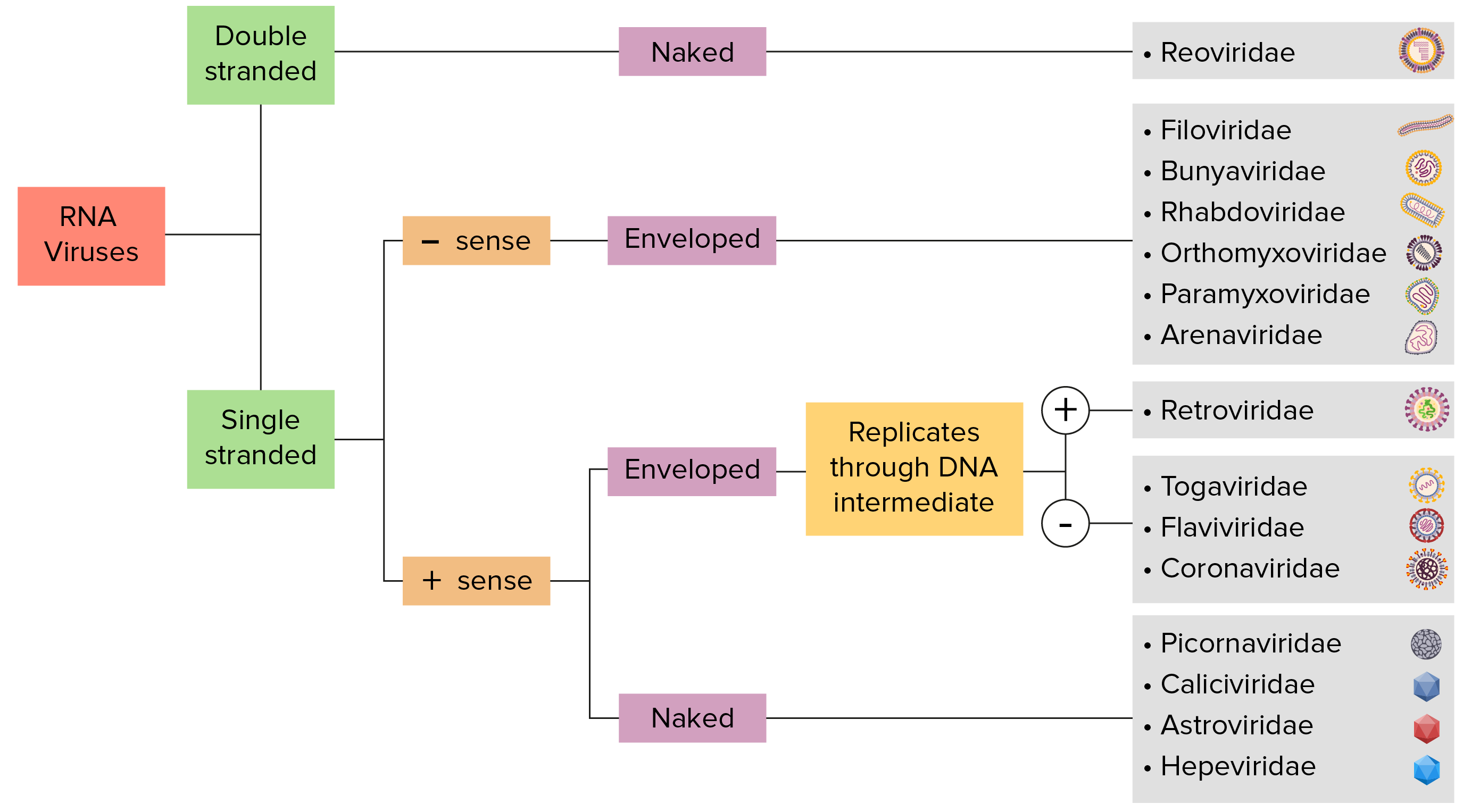
Diagrama de flujo de la clasificación de los virus de ARN

Identificación de los virus ARN:
Los virus pueden clasificarse de muchas maneras. Sin embargo, la mayoría de los virus tienen un genoma formado por ADN o ARN. Los virus del genoma de ARN se pueden caracterizar adicionalmente basándose en la presencia de ARN monocatenario o bicatenario. Los virus “envueltos” están cubiertos por una fina capa de membrana celular (normalmente tomada de la célula huésped). Si no poseen envoltura, los virus se denominan “desnudos”. Los virus con genomas monocatenarios se denominan virus de “sentido positivo” si el genoma se utiliza directamente como ARN mensajero (ARNm), el cual se traduce en proteínas. Los virus monocatenarios de “sentido negativo” emplean la ARN polimerasa dependiente de ARN, una enzima viral, para transcribir su genoma en ARN mensajero.
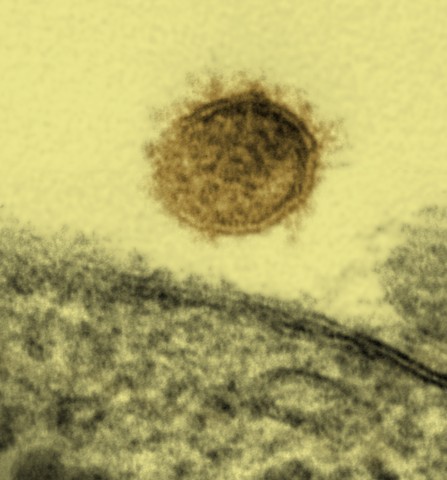
Imagen por Lecturio. Licencia: CC BY-NC-SA 4.0

Características

Características básicas

  • Taxonomía:
    • Orden: Bunyavirales Bunyavirales Bunyaviridae is a family of RNA viruses that is classified into 5 genera: Orthobunyavirus (La Crosse virus), Hantavirus, Nairovirus (Crimean-Congo hemorrhagic fever virus), Phlebovirus (Rift Valley fever virus), and Tospovirus. The common characteristics of the virus family include an enveloped spherical structure containing a single-stranded, negative-sense RNA genome, which is triple-segmented. Bunyavirales
    • Familia: Bunyaviridae Bunyaviridae A family of viruses, mainly arboviruses, consisting of a single strand of RNA. Virions are enveloped particles 90-120 nm diameter. The complete family contains over 300 members arranged in five genera: orthobunyavirus; hantavirus; nairovirus; phlebovirus; and tospovirus. Bunyavirales
    • 5 géneros:
      • Hantavirus Hantavirus A genus of the family bunyaviridae causing hantavirus infections, first identified during the korean war. Infection is found primarily in rodents and humans. Transmission does not appear to involve arthropods. Hantaan virus is the type species. Bunyavirales/Orthohantavirus (incluye virus Virus Viruses are infectious, obligate intracellular parasites composed of a nucleic acid core surrounded by a protein capsid. Viruses can be either naked (non-enveloped) or enveloped. The classification of viruses is complex and based on many factors, including type and structure of the nucleoid and capsid, the presence of an envelope, the replication cycle, and the host range. Virology Sin Nombre)
      • Orthobunyavirus Orthobunyavirus A genus of the family bunyaviridae containing over 150 viruses, most of which are transmitted by mosquitoes or flies. They are arranged in groups defined by serological criteria, each now named for the original reference species (previously called serogroups). Many species have multiple serotypes or strains. Bunyavirales (incluye el virus Virus Viruses are infectious, obligate intracellular parasites composed of a nucleic acid core surrounded by a protein capsid. Viruses can be either naked (non-enveloped) or enveloped. The classification of viruses is complex and based on many factors, including type and structure of the nucleoid and capsid, the presence of an envelope, the replication cycle, and the host range. Virology de La Crosse)
      • Phlebovirus Phlebovirus A genus of the family bunyaviridae comprising many viruses, most of which are transmitted by phlebotomus flies and cause phlebotomus fever. The type species is rift valley fever virus. Bunyavirales (incluye el virus Virus Viruses are infectious, obligate intracellular parasites composed of a nucleic acid core surrounded by a protein capsid. Viruses can be either naked (non-enveloped) or enveloped. The classification of viruses is complex and based on many factors, including type and structure of the nucleoid and capsid, the presence of an envelope, the replication cycle, and the host range. Virology de la fiebre del Valle del Rift, los LOS Neisseria virus Virus Viruses are infectious, obligate intracellular parasites composed of a nucleic acid core surrounded by a protein capsid. Viruses can be either naked (non-enveloped) or enveloped. The classification of viruses is complex and based on many factors, including type and structure of the nucleoid and capsid, the presence of an envelope, the replication cycle, and the host range. Virology de flebótomo/Phlebotomus)
      • Nairovirus Nairovirus A genus of the family bunyaviridae named after nairobi sheep disease, an acute, hemorrhagic, tick-borne, gastroenteritis affecting sheep and goats. The type species is dugbe virus. Some viruses in this genus are capable of causing severe and fatal disease in humans. Bunyavirales (incluye fiebre hemorrágica de Crimea-Congo)
      • Tospovirus Tospovirus A genus of plant viruses in the family bunyaviridae. Tomato spotted wilt virus is the type species. Transmission occurs by at least nine species of thrips. Bunyavirales (infecta solo a plantas)
  • Bunyavirus:
    • Envuelto: una envoltura con 2 glicoproteínas
    • Esférico, de 80–120 nm de diámetro
    • Genoma:
      • Virus Virus Viruses are infectious, obligate intracellular parasites composed of a nucleic acid core surrounded by a protein capsid. Viruses can be either naked (non-enveloped) or enveloped. The classification of viruses is complex and based on many factors, including type and structure of the nucleoid and capsid, the presence of an envelope, the replication cycle, and the host range. Virology de ARN monocatenario de sentido negativo
      • Triple segmentado
      • Presencia de cápside helicoidal
      • Contiene ARN polimerasa dependiente de ARN
    • Principalmente, virus Virus Viruses are infectious, obligate intracellular parasites composed of a nucleic acid core surrounded by a protein capsid. Viruses can be either naked (non-enveloped) or enveloped. The classification of viruses is complex and based on many factors, including type and structure of the nucleoid and capsid, the presence of an envelope, the replication cycle, and the host range. Virology transmitidos por artrópodos o roedores:
      • Hantavirus Hantavirus A genus of the family bunyaviridae causing hantavirus infections, first identified during the korean war. Infection is found primarily in rodents and humans. Transmission does not appear to involve arthropods. Hantaan virus is the type species. Bunyavirales (roedores)
      • Orthobunyavirus Orthobunyavirus A genus of the family bunyaviridae containing over 150 viruses, most of which are transmitted by mosquitoes or flies. They are arranged in groups defined by serological criteria, each now named for the original reference species (previously called serogroups). Many species have multiple serotypes or strains. Bunyavirales (mosquitos)
      • Nairovirus Nairovirus A genus of the family bunyaviridae named after nairobi sheep disease, an acute, hemorrhagic, tick-borne, gastroenteritis affecting sheep and goats. The type species is dugbe virus. Some viruses in this genus are capable of causing severe and fatal disease in humans. Bunyavirales (garrapatas)
      • Phlebovirus Phlebovirus A genus of the family bunyaviridae comprising many viruses, most of which are transmitted by phlebotomus flies and cause phlebotomus fever. The type species is rift valley fever virus. Bunyavirales: virus Virus Viruses are infectious, obligate intracellular parasites composed of a nucleic acid core surrounded by a protein capsid. Viruses can be either naked (non-enveloped) or enveloped. The classification of viruses is complex and based on many factors, including type and structure of the nucleoid and capsid, the presence of an envelope, the replication cycle, and the host range. Virology de la fiebre por flebótomos (flebovirus)
      • Phlebovirus Phlebovirus A genus of the family bunyaviridae comprising many viruses, most of which are transmitted by phlebotomus flies and cause phlebotomus fever. The type species is rift valley fever virus. Bunyavirales: virus Virus Viruses are infectious, obligate intracellular parasites composed of a nucleic acid core surrounded by a protein capsid. Viruses can be either naked (non-enveloped) or enveloped. The classification of viruses is complex and based on many factors, including type and structure of the nucleoid and capsid, the presence of an envelope, the replication cycle, and the host range. Virology de la fiebre del Valle del Rift (mosquitos)
    • Enfermedades asociadas:
      • Fiebres hemorrágicas (i.e., hantavirus Hantavirus A genus of the family bunyaviridae causing hantavirus infections, first identified during the korean war. Infection is found primarily in rodents and humans. Transmission does not appear to involve arthropods. Hantaan virus is the type species. Bunyavirales, fiebre hemorrágica de Crimea-Congo)
      • Encefalitis transmitida por mosquitos (i.e.,grupo de encefalitis de California, que incluye el virus Virus Viruses are infectious, obligate intracellular parasites composed of a nucleic acid core surrounded by a protein capsid. Viruses can be either naked (non-enveloped) or enveloped. The classification of viruses is complex and based on many factors, including type and structure of the nucleoid and capsid, the presence of an envelope, the replication cycle, and the host range. Virology de La Crosse)

Related videos

Hantavirus

Etiología y epidemiología

  • Género: Hantavirus Hantavirus A genus of the family bunyaviridae causing hantavirus infections, first identified during the korean war. Infection is found primarily in rodents and humans. Transmission does not appear to involve arthropods. Hantaan virus is the type species. Bunyavirales
  • > 20 especies (alrededor de 11 causan enfermedades en EN Erythema nodosum is an immune-mediated panniculitis (inflammation of the subcutaneous fat) caused by a type IV (delayed-type) hypersensitivity reaction. It commonly manifests in young women as tender, erythematous nodules on the shins. Erythema Nodosum los LOS Neisseria seres humanos) que incluyen:
    • Virus Virus Viruses are infectious, obligate intracellular parasites composed of a nucleic acid core surrounded by a protein capsid. Viruses can be either naked (non-enveloped) or enveloped. The classification of viruses is complex and based on many factors, including type and structure of the nucleoid and capsid, the presence of an envelope, the replication cycle, and the host range. Virology Sin Nombre:
      • Etiología del brote de “Four Corners” de 1993 en EN Erythema nodosum is an immune-mediated panniculitis (inflammation of the subcutaneous fat) caused by a type IV (delayed-type) hypersensitivity reaction. It commonly manifests in young women as tender, erythematous nodules on the shins. Erythema Nodosum el suroeste de EE. UU.
      • Entre las etiologías del síndrome pulmonar por hantavirus Hantavirus A genus of the family bunyaviridae causing hantavirus infections, first identified during the korean war. Infection is found primarily in rodents and humans. Transmission does not appear to involve arthropods. Hantaan virus is the type species. Bunyavirales/síndrome cardiopulmonar por hantavirus Hantavirus A genus of the family bunyaviridae causing hantavirus infections, first identified during the korean war. Infection is found primarily in rodents and humans. Transmission does not appear to involve arthropods. Hantaan virus is the type species. Bunyavirales y una enfermedad respiratoria grave y potencialmente mortal
    • Virus Virus Viruses are infectious, obligate intracellular parasites composed of a nucleic acid core surrounded by a protein capsid. Viruses can be either naked (non-enveloped) or enveloped. The classification of viruses is complex and based on many factors, including type and structure of the nucleoid and capsid, the presence of an envelope, the replication cycle, and the host range. Virology de Seúl, Dobrava y Puumala: entre los LOS Neisseria agentes etiológicos de la fiebre hemorrágica con síndrome renal
  • Epidemiología:
    • China tiene la mayor incidencia anual de enfermedades relacionadas con hantavirus Hantavirus A genus of the family bunyaviridae causing hantavirus infections, first identified during the korean war. Infection is found primarily in rodents and humans. Transmission does not appear to involve arthropods. Hantaan virus is the type species. Bunyavirales.
    • 864 casos reportados en EN Erythema nodosum is an immune-mediated panniculitis (inflammation of the subcutaneous fat) caused by a type IV (delayed-type) hypersensitivity reaction. It commonly manifests in young women as tender, erythematous nodules on the shins. Erythema Nodosum los LOS Neisseria EE. UU. en EN Erythema nodosum is an immune-mediated panniculitis (inflammation of the subcutaneous fat) caused by a type IV (delayed-type) hypersensitivity reaction. It commonly manifests in young women as tender, erythematous nodules on the shins. Erythema Nodosum 2022 (más comúnmente encontrados en EN Erythema nodosum is an immune-mediated panniculitis (inflammation of the subcutaneous fat) caused by a type IV (delayed-type) hypersensitivity reaction. It commonly manifests in young women as tender, erythematous nodules on the shins. Erythema Nodosum los LOS Neisseria estados del oeste y suroeste)
    • La mayoría de las infecciones en EN Erythema nodosum is an immune-mediated panniculitis (inflammation of the subcutaneous fat) caused by a type IV (delayed-type) hypersensitivity reaction. It commonly manifests in young women as tender, erythematous nodules on the shins. Erythema Nodosum los LOS Neisseria EE. UU. son esporádicas.
Una partícula del virus Sin Nombre Hantavirus Bunyavirales

Una partícula del virus Sin Nombre que se muestra gemando de una célula Vero:
El virus Sin Nombre causa el síndrome pulmonar por hantavirus en América del Norte.
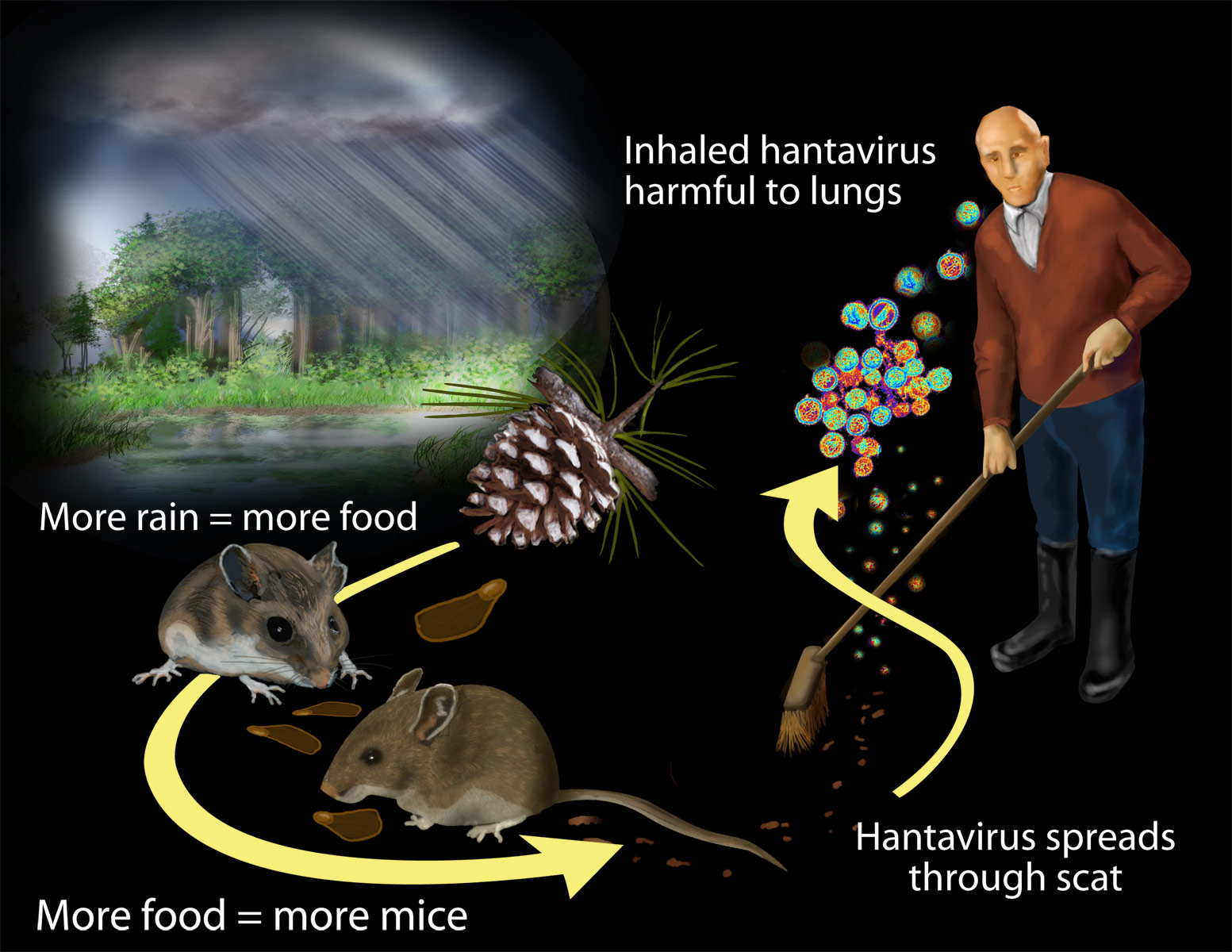
Imagen: “A Sin Nombre virus particle shown budding from a Vero cell” por NIAID.. Licencia: CC BY 2.0

Fisiopatología

  • Reservorio primario: roedores (ratones ciervo en EN Erythema nodosum is an immune-mediated panniculitis (inflammation of the subcutaneous fat) caused by a type IV (delayed-type) hypersensitivity reaction. It commonly manifests in young women as tender, erythematous nodules on the shins. Erythema Nodosum los LOS Neisseria EE. UU.)
  • Transmisión:
    • Vía aerosoles/ inhalación (exposición a heces, saliva Saliva The clear, viscous fluid secreted by the salivary glands and mucous glands of the mouth. It contains mucins, water, organic salts, and ptyalin. Salivary Glands: Anatomy u orina de ratones infectados)
    • Mordedura de roedor
    • Contacto directo (por la nariz o la boca) con materiales contaminados con excrementos, saliva Saliva The clear, viscous fluid secreted by the salivary glands and mucous glands of the mouth. It contains mucins, water, organic salts, and ptyalin. Salivary Glands: Anatomy u orina de roedores
    • Ingestión de excrementos, saliva Saliva The clear, viscous fluid secreted by the salivary glands and mucous glands of the mouth. It contains mucins, water, organic salts, and ptyalin. Salivary Glands: Anatomy u orina de roedores
  • Principales síndromes/procesos patológicos:
    • Síndrome pulmonar por hantavirus Hantavirus A genus of the family bunyaviridae causing hantavirus infections, first identified during the korean war. Infection is found primarily in rodents and humans. Transmission does not appear to involve arthropods. Hantaan virus is the type species. Bunyavirales
      • Los LOS Neisseria antígenos virales penetran el endotelio y dan lugar a una respuesta inmunológica → ↑ permeabilidad capilar → edema Edema Edema is a condition in which excess serous fluid accumulates in the body cavity or interstitial space of connective tissues. Edema is a symptom observed in several medical conditions. It can be categorized into 2 types, namely, peripheral (in the extremities) and internal (in an organ or body cavity). Edema pulmonar
      • Es el más fatal de los LOS Neisseria 2 síndromes por hantavirus Hantavirus A genus of the family bunyaviridae causing hantavirus infections, first identified during the korean war. Infection is found primarily in rodents and humans. Transmission does not appear to involve arthropods. Hantaan virus is the type species. Bunyavirales
      • Causado principalmente por especies de hantavirus Hantavirus A genus of the family bunyaviridae causing hantavirus infections, first identified during the korean war. Infection is found primarily in rodents and humans. Transmission does not appear to involve arthropods. Hantaan virus is the type species. Bunyavirales en EN Erythema nodosum is an immune-mediated panniculitis (inflammation of the subcutaneous fat) caused by a type IV (delayed-type) hypersensitivity reaction. It commonly manifests in young women as tender, erythematous nodules on the shins. Erythema Nodosum las Américas, y generalmente ocurre en EN Erythema nodosum is an immune-mediated panniculitis (inflammation of the subcutaneous fat) caused by a type IV (delayed-type) hypersensitivity reaction. It commonly manifests in young women as tender, erythematous nodules on the shins. Erythema Nodosum el otoño en EN Erythema nodosum is an immune-mediated panniculitis (inflammation of the subcutaneous fat) caused by a type IV (delayed-type) hypersensitivity reaction. It commonly manifests in young women as tender, erythematous nodules on the shins. Erythema Nodosum los LOS Neisseria EE. UU.
    • Fiebre hemorrágica con síndrome renal
      • Azoemia secundaria a lesión del endotelio vascular (fuga capilar y pérdida de líquidos)
      • Daño tubular e intersticial inducido por citocinas → nefritis tubulointersticial
      • Más común de los LOS Neisseria 2 síndromes por hantavirus Hantavirus A genus of the family bunyaviridae causing hantavirus infections, first identified during the korean war. Infection is found primarily in rodents and humans. Transmission does not appear to involve arthropods. Hantaan virus is the type species. Bunyavirales
      • Causado principalmente por especies de hantavirus Hantavirus A genus of the family bunyaviridae causing hantavirus infections, first identified during the korean war. Infection is found primarily in rodents and humans. Transmission does not appear to involve arthropods. Hantaan virus is the type species. Bunyavirales en EN Erythema nodosum is an immune-mediated panniculitis (inflammation of the subcutaneous fat) caused by a type IV (delayed-type) hypersensitivity reaction. It commonly manifests in young women as tender, erythematous nodules on the shins. Erythema Nodosum Asia ASIA Spinal Cord Injuries y Europa
Transmisión de hantavirus

Transmisión de hantavirus:
Los investigadores encontraron que el contacto con roedores y sus desechos pone a los humanos en riesgo de exposición al hantavirus. Las lluvias masivas asociadas con fenomeno del Niño de 1991-1992 impulsaron la productividad de las plantas.
La población de roedores creció al alimentarse con la materia vegetal más abundante. El mayor contacto con roedores y sus desechos pone a más humanos en riesgo de exposición al hantavirus.

Imagen:  “Researchers found that contact with rodents and their waste puts humans at risk for exposure to hantavirus” por Zina Deretsky, National Science Foundation. Licencia: Dominio Público

Presentación Clínica

  • Síndrome pulmonar por hantavirus Hantavirus A genus of the family bunyaviridae causing hantavirus infections, first identified during the korean war. Infection is found primarily in rodents and humans. Transmission does not appear to involve arthropods. Hantaan virus is the type species. Bunyavirales / Sindrome cardiopulmonar por hantavirus Hantavirus A genus of the family bunyaviridae causing hantavirus infections, first identified during the korean war. Infection is found primarily in rodents and humans. Transmission does not appear to involve arthropods. Hantaan virus is the type species. Bunyavirales:
    • Período de incubación: 1–3 semanas
    • Fase prodrómica (hasta 5 días):
      • Fiebre
      • Cefalea
      • Dolores musculares
      • Náuseas/vómitos/diarrea
    • Fase cardiopulmonar (2–7 días):
      • Tos TOS Thoracic outlet syndrome (TOS) is a broad term used for a spectrum of syndromes related to the general region of the thoracic outlet, which involves the compression or irritation of elements of the brachial plexus, subclavian artery, or subclavian vein. Thoracic Outlet Syndrome
      • Disnea: puede progresar a hipoxia e insuficiencia respiratoria que requiere ventilación mecánica
      • Hipotensión
      • Oliguria Oliguria Decreased urine output that is below the normal range. Oliguria can be defined as urine output of less than or equal to 0. 5 or 1 ml/kg/hr depending on the age. Renal Potassium Regulation
      • Hallazgos: taquipnea, taquicardia
    • Fase de convalecencia:
      • Diuresis significativa
      • Resolución de síntomas
  • Fiebre hemorrágica con síndrome renal:
    • Varía según la especie (i.e., el virus Virus Viruses are infectious, obligate intracellular parasites composed of a nucleic acid core surrounded by a protein capsid. Viruses can be either naked (non-enveloped) or enveloped. The classification of viruses is complex and based on many factors, including type and structure of the nucleoid and capsid, the presence of an envelope, the replication cycle, and the host range. Virology Hantaan en EN Erythema nodosum is an immune-mediated panniculitis (inflammation of the subcutaneous fat) caused by a type IV (delayed-type) hypersensitivity reaction. It commonly manifests in young women as tender, erythematous nodules on the shins. Erythema Nodosum Asia ASIA Spinal Cord Injuries causa una enfermedad más grave)
    • Las manifestaciones incluyen:
      • Fiebre
      • Hipotensión (puede provocar un shock Shock Shock is a life-threatening condition associated with impaired circulation that results in tissue hypoxia. The different types of shock are based on the underlying cause: distributive (↑ cardiac output (CO), ↓ systemic vascular resistance (SVR)), cardiogenic (↓ CO, ↑ SVR), hypovolemic (↓ CO, ↑ SVR), obstructive (↓ CO), and mixed. Types of Shock)
      • Hemorragia
      • IRA (↓ TFG, oliguria Oliguria Decreased urine output that is below the normal range. Oliguria can be defined as urine output of less than or equal to 0. 5 or 1 ml/kg/hr depending on the age. Renal Potassium Regulation, proteinuria Proteinuria The presence of proteins in the urine, an indicator of kidney diseases. Nephrotic Syndrome in Children y hematuria Hematuria Presence of blood in the urine. Renal Cell Carcinoma)

Diagnóstico y tratamiento

  • Pruebas confirmatorias:
    • Serología (i.e., ensayo inmunoabsorbente ligado a enzimas ( ELISA ELISA An immunoassay utilizing an antibody labeled with an enzyme marker such as horseradish peroxidase. While either the enzyme or the antibody is bound to an immunosorbent substrate, they both retain their biologic activity; the change in enzyme activity as a result of the enzyme-antibody-antigen reaction is proportional to the concentration of the antigen and can be measured spectrophotometrically or with the naked eye. Many variations of the method have been developed. St. Louis Encephalitis Virus, por sus siglas en EN Erythema nodosum is an immune-mediated panniculitis (inflammation of the subcutaneous fat) caused by a type IV (delayed-type) hypersensitivity reaction. It commonly manifests in young women as tender, erythematous nodules on the shins. Erythema Nodosum inglés)), donde la infección aguda se detecta como:
      • IgM IgM A class of immunoglobulin bearing mu chains (immunoglobulin mu-chains). Igm can fix complement. The name comes from its high molecular weight and originally being called a macroglobulin. Immunoglobulins: Types and Functions antihantavirus específico (generalmente la nucleocápside o el antígeno N)
      • Un aumento de 4 veces en EN Erythema nodosum is an immune-mediated panniculitis (inflammation of the subcutaneous fat) caused by a type IV (delayed-type) hypersensitivity reaction. It commonly manifests in young women as tender, erythematous nodules on the shins. Erythema Nodosum los LOS Neisseria títulos de IgG IgG The major immunoglobulin isotype class in normal human serum. There are several isotype subclasses of igg, for example, igg1, igg2a, and igg2b. Hypersensitivity Pneumonitis antihantavirus
    • RT-PCR RT-PCR A variation of the pcr technique in which cDNA is made from RNA via reverse transcription. The resultant cDNA is then amplified using standard pcr protocols. Polymerase Chain Reaction (PCR) con plasma Plasma The residual portion of blood that is left after removal of blood cells by centrifugation without prior blood coagulation. Transfusion Products, células sanguíneas o tejidos
  • Pruebas de laboratorio adicionales:
    • Hemograma: leucocitosis, trombocitopenia
    • Panel hepático: transaminitis Transaminitis Tick-borne Encephalitis Virus, ↓ albúmina
    • Fiebre hemorrágica con síndrome renal: Nitrógeno de Urea Urea A compound formed in the liver from ammonia produced by the deamination of amino acids. It is the principal end product of protein catabolism and constitutes about one half of the total urinary solids. Urea Cycle (BUN, por sus siglas en EN Erythema nodosum is an immune-mediated panniculitis (inflammation of the subcutaneous fat) caused by a type IV (delayed-type) hypersensitivity reaction. It commonly manifests in young women as tender, erythematous nodules on the shins. Erythema Nodosum inglés) / creatinina anormal, proteinuria Proteinuria The presence of proteins in the urine, an indicator of kidney diseases. Nephrotic Syndrome in Children o hematuria Hematuria Presence of blood in the urine. Renal Cell Carcinoma
    • PCR PCR Polymerase chain reaction (PCR) is a technique that amplifies DNA fragments exponentially for analysis. The process is highly specific, allowing for the targeting of specific genomic sequences, even with minuscule sample amounts. The PCR cycles multiple times through 3 phases: denaturation of the template DNA, annealing of a specific primer to the individual DNA strands, and synthesis/elongation of new DNA molecules. Polymerase Chain Reaction (PCR)
  • Radiografía de tórax:
    • Síndrome pulmonar por hantavirus Hantavirus A genus of the family bunyaviridae causing hantavirus infections, first identified during the korean war. Infection is found primarily in rodents and humans. Transmission does not appear to involve arthropods. Hantaan virus is the type species. Bunyavirales:
      • Edema Edema Edema is a condition in which excess serous fluid accumulates in the body cavity or interstitial space of connective tissues. Edema is a symptom observed in several medical conditions. It can be categorized into 2 types, namely, peripheral (in the extremities) and internal (in an organ or body cavity). Edema intersticial ( en EN Erythema nodosum is an immune-mediated panniculitis (inflammation of the subcutaneous fat) caused by a type IV (delayed-type) hypersensitivity reaction. It commonly manifests in young women as tender, erythematous nodules on the shins. Erythema Nodosum la mayoría de los LOS Neisseria pacientes después de 48 horas)
      • Nebulización perihiliar sin cardiomegalia
    • Fiebre hemorrágica con síndrome renal:
      • Puede evidenciarse una radiografía de tórax anormal
      • Infiltrados intersticiales, derrame, atelectasia
  • Tratamiento:
    • Terapia de soporte:
      • Soporte cardiorrespiratorio
      • Balance de liquidos
      • Diálisis según lo indicado
    • Prevención: control de roedores, evitar el contacto con roedores y limpieza adecuada de los LOS Neisseria sitios de anidación
    • No hay vacuna disponible
  • Mortalidad:
    • Síndrome pulmonar por antavirus: hasta un 35% en EN Erythema nodosum is an immune-mediated panniculitis (inflammation of the subcutaneous fat) caused by a type IV (delayed-type) hypersensitivity reaction. It commonly manifests in young women as tender, erythematous nodules on the shins. Erythema Nodosum general
    • Fiebre hemorrágica con síndrome renal: 5%–10%
Tabla: Diagnóstico y tratamiento
Síndrome pulmonar por hantavirus Hantavirus A genus of the family bunyaviridae causing hantavirus infections, first identified during the korean war. Infection is found primarily in rodents and humans. Transmission does not appear to involve arthropods. Hantaan virus is the type species. Bunyavirales Fiebre hemorrágica por hantavirus Hantavirus A genus of the family bunyaviridae causing hantavirus infections, first identified during the korean war. Infection is found primarily in rodents and humans. Transmission does not appear to involve arthropods. Hantaan virus is the type species. Bunyavirales
Incubación 1–3 semanas 1–3 semanas (hasta 6 semanas)
Diagnóstico
  • Serología
  • RT-PCR RT-PCR A variation of the pcr technique in which cDNA is made from RNA via reverse transcription. The resultant cDNA is then amplified using standard pcr protocols. Polymerase Chain Reaction (PCR)
  • Serología
  • RT-PCR RT-PCR A variation of the pcr technique in which cDNA is made from RNA via reverse transcription. The resultant cDNA is then amplified using standard pcr protocols. Polymerase Chain Reaction (PCR)
Manifestaciones clínicas Pródromo: síntomas similares a los LOS Neisseria de la gripe, aparición repentina de dificultad para respirar con edema Edema Edema is a condition in which excess serous fluid accumulates in the body cavity or interstitial space of connective tissues. Edema is a symptom observed in several medical conditions. It can be categorized into 2 types, namely, peripheral (in the extremities) and internal (in an organ or body cavity). Edema pulmonar de rápida evolución Fiebre, presión arterial baja/ shock Shock Shock is a life-threatening condition associated with impaired circulation that results in tissue hypoxia. The different types of shock are based on the underlying cause: distributive (↑ cardiac output (CO), ↓ systemic vascular resistance (SVR)), cardiogenic (↓ CO, ↑ SVR), hypovolemic (↓ CO, ↑ SVR), obstructive (↓ CO), and mixed. Types of Shock, IRA
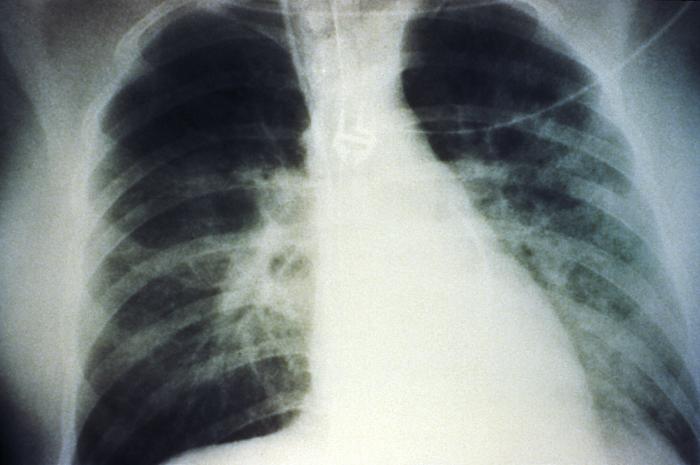
Radiografía de tórax AP síndrome pulmonar por hantavirus Bunyavirus

Una radiografía de tórax anteroposterior muestra un derrame pulmonar bilateral en estadio medio debido al síndrome pulmonar por hantavirus:
La evolución radiológica del síndrome pulmonar por hantavirus comienza con cambios mínimos por edema pulmonar intersticial que progresa a edema alveolar con afectación bilateral severa. Los derrames pleurales son frecuentes y, a menudo, lo suficientemente grandes como para ser evidentes radiográficamente.
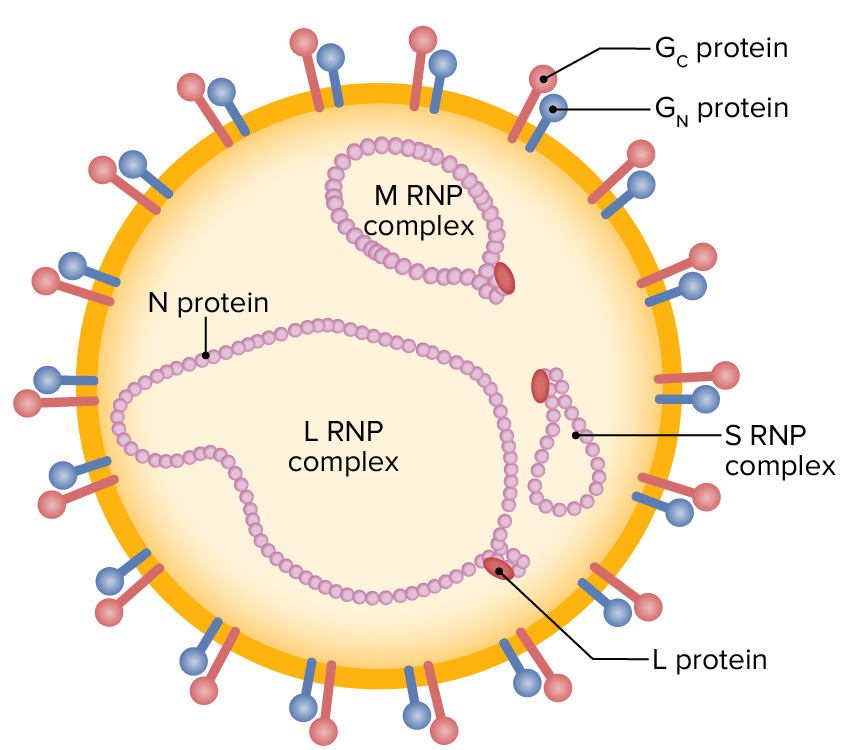
Imagen: “This AP chest X-ray reveals the mid-staged bilateral pulmonary effusion due to hantavirus pulmonary syndrome, or HPS” por CDC/ D. Loren Ketai, M.D. Licencia: Dominio Público

Virus de la Fiebre Hemorrágica de Crimea-Congo

Etiología y epidemiología

  • Género: Nairovirus Nairovirus A genus of the family bunyaviridae named after nairobi sheep disease, an acute, hemorrhagic, tick-borne, gastroenteritis affecting sheep and goats. The type species is dugbe virus. Some viruses in this genus are capable of causing severe and fatal disease in humans. Bunyavirales
  • Virus Virus Viruses are infectious, obligate intracellular parasites composed of a nucleic acid core surrounded by a protein capsid. Viruses can be either naked (non-enveloped) or enveloped. The classification of viruses is complex and based on many factors, including type and structure of the nucleoid and capsid, the presence of an envelope, the replication cycle, and the host range. Virology de la fiebre hemorrágica de Crimea-Congo
  • Enfermedad asociada: fiebre hemorrágica de Crimea-Congo
    • Caracterizado por 1ra vez en EN Erythema nodosum is an immune-mediated panniculitis (inflammation of the subcutaneous fat) caused by a type IV (delayed-type) hypersensitivity reaction. It commonly manifests in young women as tender, erythematous nodules on the shins. Erythema Nodosum Crimea en EN Erythema nodosum is an immune-mediated panniculitis (inflammation of the subcutaneous fat) caused by a type IV (delayed-type) hypersensitivity reaction. It commonly manifests in young women as tender, erythematous nodules on the shins. Erythema Nodosum 1944 (fiebre de Crimea)
    • Más tarde se reconoció en EN Erythema nodosum is an immune-mediated panniculitis (inflammation of the subcutaneous fat) caused by a type IV (delayed-type) hypersensitivity reaction. It commonly manifests in young women as tender, erythematous nodules on the shins. Erythema Nodosum 1956 como la causa de la enfermedad en EN Erythema nodosum is an immune-mediated panniculitis (inflammation of the subcutaneous fat) caused by a type IV (delayed-type) hypersensitivity reaction. It commonly manifests in young women as tender, erythematous nodules on the shins. Erythema Nodosum el Congo, lo que dio como resultado el nombre actual de la enfermedad
  • Epidemiología:
    • Zonas endémicas:
      • África (central principalmente)
      • Europa del Este (particularmente en EN Erythema nodosum is an immune-mediated panniculitis (inflammation of the subcutaneous fat) caused by a type IV (delayed-type) hypersensitivity reaction. It commonly manifests in young women as tender, erythematous nodules on the shins. Erythema Nodosum la ex Unión Soviética) y del Sur de Europa
      • Mediterráneo
      • Oriente Medio
      • Noroeste de China
      • Asia ASIA Spinal Cord Injuries Central
      • Subcontinente indio
    • Riesgo de exposición:
      • Pastores de animales
      • Trabajadores ganaderos
      • Trabajadores del matadero
Schematic illustration of a nairovirus particle

Ilustración esquemática de una partícula de nairovirus (ARN monocatenario envuelto que contiene segmentos L, M y S, rodeado de glicoproteínas externas)
RNP: ribonucleoproteína
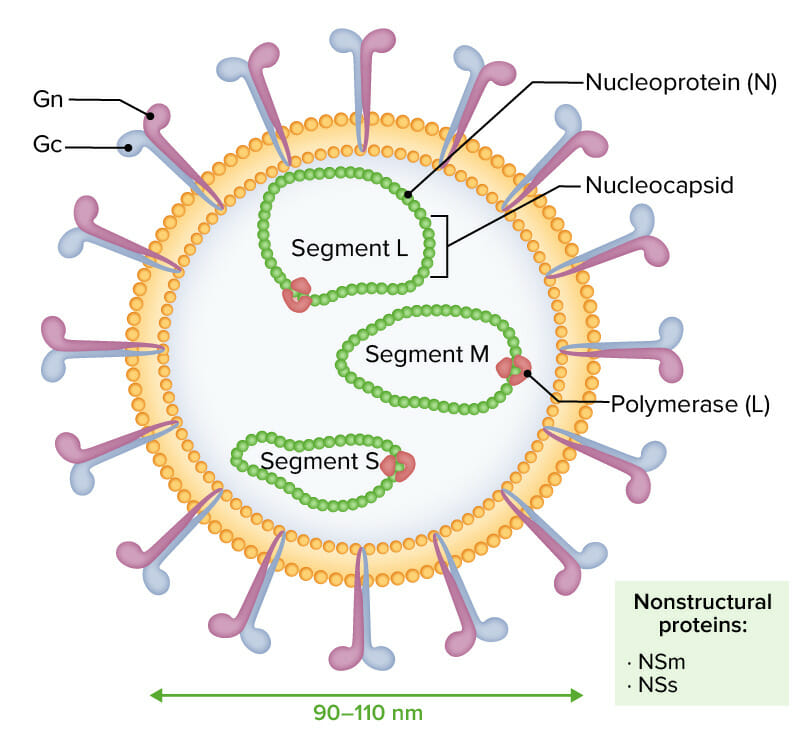
Imagen por Lecturio.

Fisiopatología

  • Vector y reservorio: las garrapatas Ixodid (género: Hyalomma) pueden transmitir el virus Virus Viruses are infectious, obligate intracellular parasites composed of a nucleic acid core surrounded by a protein capsid. Viruses can be either naked (non-enveloped) or enveloped. The classification of viruses is complex and based on many factors, including type and structure of the nucleoid and capsid, the presence of an envelope, the replication cycle, and the host range. Virology a la progenie.
  • Huéspedes amplificadores: animales salvajes y domésticos, como; ganado vacuno, caprino, ovino
  • Transmisión:
    • Picaduras de garrapatas
    • Contacto directo con fluidos corporales de ganado o humanos infectados
    • Transmisión documentada a través de equipos médicos esterilizados incorrectamente, lesiones por pinchazos de agujas y suministros médicos contaminados en EN Erythema nodosum is an immune-mediated panniculitis (inflammation of the subcutaneous fat) caused by a type IV (delayed-type) hypersensitivity reaction. It commonly manifests in young women as tender, erythematous nodules on the shins. Erythema Nodosum hospitales.
    • Transmisión vertical (de madre a hijo)
  • Proceso de la enfermedad:
    • El virus Virus Viruses are infectious, obligate intracellular parasites composed of a nucleic acid core surrounded by a protein capsid. Viruses can be either naked (non-enveloped) or enveloped. The classification of viruses is complex and based on many factors, including type and structure of the nucleoid and capsid, the presence of an envelope, the replication cycle, and the host range. Virology se replica en EN Erythema nodosum is an immune-mediated panniculitis (inflammation of the subcutaneous fat) caused by a type IV (delayed-type) hypersensitivity reaction. It commonly manifests in young women as tender, erythematous nodules on the shins. Erythema Nodosum el sitio de inoculación dentro de las células epiteliales, macrófagos y células dendríticas → viremia Viremia The presence of viruses in the blood. Erythema Infectiosum
    • Las células endoteliales son el tejido diana atacado por el virus Virus Viruses are infectious, obligate intracellular parasites composed of a nucleic acid core surrounded by a protein capsid. Viruses can be either naked (non-enveloped) or enveloped. The classification of viruses is complex and based on many factors, including type and structure of the nucleoid and capsid, the presence of an envelope, the replication cycle, and the host range. Virology, lo que desencadena la liberación de citocinas y quimiocinas y conduce a:
      • Aumento de la permeabilidad vascular
      • Agregación plaquetaria desregulada → cascada de coagulación estimulada (estado procoagulante)
      • Los LOS Neisseria factores de coagulación eventualmente se vuelven deficientes → hemorragia

Presentación Clínica

  • Inicio repentino de síntomas similares a los LOS Neisseria de la gripe:
    • Cefalea
    • Fiebre
    • Dolor Dolor Inflammation de espalda y artralgias
    • Dolor Dolor Inflammation abdominal
    • Náuseas/vómitos
    • Enrojecimiento facial
    • Inyección conjuntival
    • Petequias en EN Erythema nodosum is an immune-mediated panniculitis (inflammation of the subcutaneous fat) caused by a type IV (delayed-type) hypersensitivity reaction. It commonly manifests in young women as tender, erythematous nodules on the shins. Erythema Nodosum el paladar
  • Los LOS Neisseria síntomas duran hasta 7 días:
    • Más a menudo seguido de recuperación
    • Puede progresar a una enfermedad grave con hemorragia (equimosis, epistaxis Epistaxis Bleeding from the nose. Granulomatosis with Polyangiitis, sangrado de encías, hematuria Hematuria Presence of blood in the urine. Renal Cell Carcinoma, melena Melena The black, tarry, foul-smelling feces that contain degraded blood. Gastrointestinal Bleeding, sangrado menstrual abundante)
    • La respuesta exagerada de citocinas proinflamatorias (“tormenta de citocinas”) conduce a hipotensión, shock Shock Shock is a life-threatening condition associated with impaired circulation that results in tissue hypoxia. The different types of shock are based on the underlying cause: distributive (↑ cardiac output (CO), ↓ systemic vascular resistance (SVR)), cardiogenic (↓ CO, ↑ SVR), hypovolemic (↓ CO, ↑ SVR), obstructive (↓ CO), and mixed. Types of Shock e insuficiencia multiorgánica.
  • Las tasas de mortalidad en EN Erythema nodosum is an immune-mediated panniculitis (inflammation of the subcutaneous fat) caused by a type IV (delayed-type) hypersensitivity reaction. It commonly manifests in young women as tender, erythematous nodules on the shins. Erythema Nodosum pacientes hospitalizados oscilan entre el 9%–50%.

Diagnóstico y tratamiento

  • Pruebas de diagnóstico:
    • El diagnóstico se basa en EN Erythema nodosum is an immune-mediated panniculitis (inflammation of the subcutaneous fat) caused by a type IV (delayed-type) hypersensitivity reaction. It commonly manifests in young women as tender, erythematous nodules on the shins. Erythema Nodosum hallazgos físicos y antecedentes de riesgo de exposición.
    • RT-PCR RT-PCR A variation of the pcr technique in which cDNA is made from RNA via reverse transcription. The resultant cDNA is then amplified using standard pcr protocols. Polymerase Chain Reaction (PCR)
    • Serología (detección de inmunoglobulinas específicas IgM IgM A class of immunoglobulin bearing mu chains (immunoglobulin mu-chains). Igm can fix complement. The name comes from its high molecular weight and originally being called a macroglobulin. Immunoglobulins: Types and Functions e IgG IgG The major immunoglobulin isotype class in normal human serum. There are several isotype subclasses of igg, for example, igg1, igg2a, and igg2b. Hypersensitivity Pneumonitis mediante ELISA ELISA An immunoassay utilizing an antibody labeled with an enzyme marker such as horseradish peroxidase. While either the enzyme or the antibody is bound to an immunosorbent substrate, they both retain their biologic activity; the change in enzyme activity as a result of the enzyme-antibody-antigen reaction is proportional to the concentration of the antigen and can be measured spectrophotometrically or with the naked eye. Many variations of the method have been developed. St. Louis Encephalitis Virus)
  • Pruebas de laboratorio adicionales:
    • Hemograma: trombocitopenia, leucopenia
    • Panel hepático: transaminitis Transaminitis Tick-borne Encephalitis Virus, hiperbilirrubinemia
    • ↑ Tiempo de protrombina (TP) / Índice internacional normalizado (INR, por sus siglas en EN Erythema nodosum is an immune-mediated panniculitis (inflammation of the subcutaneous fat) caused by a type IV (delayed-type) hypersensitivity reaction. It commonly manifests in young women as tender, erythematous nodules on the shins. Erythema Nodosum inglés)
    • En EN Erythema nodosum is an immune-mediated panniculitis (inflammation of the subcutaneous fat) caused by a type IV (delayed-type) hypersensitivity reaction. It commonly manifests in young women as tender, erythematous nodules on the shins. Erythema Nodosum coagulación intravascular diseminada: ↑ productos de degradación de fibrina, ↓ fibrinógeno
  • Tratamiento
    • Soporte:
      • Soporte cardiorrespiratorio
      • Balance de liquidos
      • Reemplazo de hemoderivados
    • La ribavirina puede ofrecer algún beneficio.
    • No hay vacuna disponible
  • Prevención:
    • Evitar el contacto con sangre y fluidos corporales de animales infectados.
    • Usar repelentes de insectos y ropa protectora.
    • Aislamiento de pacientes
    • Usar equipos de protección personal

Virus de la Fiebre del Valle del Rift

Etiología y epidemiología

  • Género: Phlebovirus Phlebovirus A genus of the family bunyaviridae comprising many viruses, most of which are transmitted by phlebotomus flies and cause phlebotomus fever. The type species is rift valley fever virus. Bunyavirales
  • Virus Virus Viruses are infectious, obligate intracellular parasites composed of a nucleic acid core surrounded by a protein capsid. Viruses can be either naked (non-enveloped) or enveloped. The classification of viruses is complex and based on many factors, including type and structure of the nucleoid and capsid, the presence of an envelope, the replication cycle, and the host range. Virology de la fiebre del valle del Rift
  • Enfermedad asociada: Fiebre del valle del Rift (fiebre hemorrágica viral)
  • Epidemiología:
    • Zonas endémicas:
      • Este de África
      • África Sub-sahariana
      • Madagascar
    • Afecta habitualmente al AL Amyloidosis ganado, pero los LOS Neisseria seres humanos se infectan de forma secundaria.
Enveloped virions of Rift Valley fever virus (RVFV)

Los viriones envueltos del virus de la fiebre del Valle del Rift se caracterizan por un genoma de ARN negativo o ambisentido compuesto por 3 segmentos monocatenarios (designados L, M y S):
Las 3 moléculas de ARN están encapsuladas por la nucleoproteína (N), dando forma a la nucleocápside e interactuando con la polimerasa viral (L). Las glicoproteínas Gn y Gc se observan externamente. Las proteínas no estructurales NSm y NSs se expresan durante la infección.
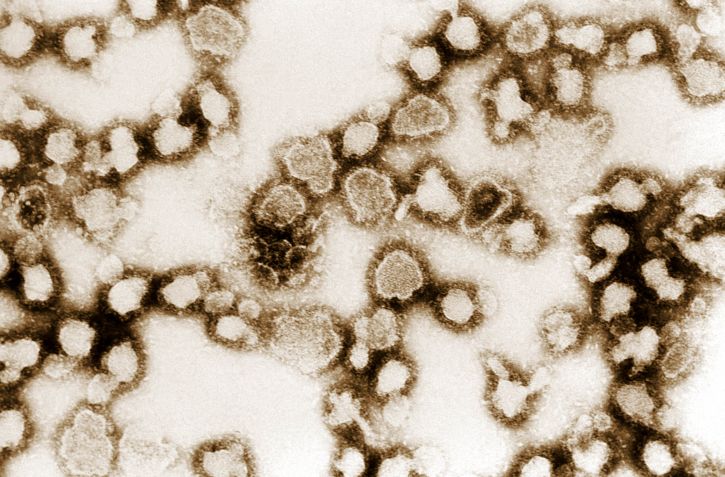
Imagen por Lecturio.

Fisiopatología

  • Vector:
    • Mosquitos: las hembras pueden transmitir el virus Virus Viruses are infectious, obligate intracellular parasites composed of a nucleic acid core surrounded by a protein capsid. Viruses can be either naked (non-enveloped) or enveloped. The classification of viruses is complex and based on many factors, including type and structure of the nucleoid and capsid, the presence of an envelope, the replication cycle, and the host range. Virology a sus huevos.
      • Mosquito Aedes (vector primario)
      • Mosquito Culex
    • Animales infectados
  • Transmisión:
    • Picadura de mosquito
    • Contacto con sangre o fluidos corporales de animales infectados.
  • Factores de riesgo del huésped
    • Vivir en EN Erythema nodosum is an immune-mediated panniculitis (inflammation of the subcutaneous fat) caused by a type IV (delayed-type) hypersensitivity reaction. It commonly manifests in young women as tender, erythematous nodules on the shins. Erythema Nodosum zonas rurales
    • Dormir al AL Amyloidosis aire libre por la noche
    • Pastores/agricultores
    • Veterinarios
    • Carniceros/trabajadores de mataderos

Presentación Clínica

  • La infección por virus Virus Viruses are infectious, obligate intracellular parasites composed of a nucleic acid core surrounded by a protein capsid. Viruses can be either naked (non-enveloped) or enveloped. The classification of viruses is complex and based on many factors, including type and structure of the nucleoid and capsid, the presence of an envelope, the replication cycle, and the host range. Virology de la fiebre del valle del Rift puede causar enfermedades leves o graves en EN Erythema nodosum is an immune-mediated panniculitis (inflammation of the subcutaneous fat) caused by a type IV (delayed-type) hypersensitivity reaction. It commonly manifests in young women as tender, erythematous nodules on the shins. Erythema Nodosum los LOS Neisseria seres humanos.
    • Enfermedad leve:
      • 90% de los LOS Neisseria casos
      • La mayoría de los LOS Neisseria pacientes tienen una enfermedad similar a la gripe o no presentan síntomas.
      • La recuperación toma de 2 días a 1 semana
    • Enfermedad grave:
      • 8%–10% de los LOS Neisseria casos
      • Enfermedad ocular: retinitis, lesiones que afectan la mácula (el 50% padecerá ceguera permanente)
      • Fiebre hemorrágica (1% de los LOS Neisseria casos): hemorragia, insuficiencia hepática, hematemesis Hematemesis Vomiting of blood that is either fresh bright red, or older ‘coffee-ground’ in character. It generally indicates bleeding of the upper gastrointestinal tract. Mallory-Weiss Syndrome (Mallory-Weiss Tear) (tiene una tasa de mortalidad del 50%)
      • Encefalitis (1% de los LOS Neisseria casos): cefalea, coma Coma Coma is defined as a deep state of unarousable unresponsiveness, characterized by a score of 3 points on the GCS. A comatose state can be caused by a multitude of conditions, making the precise epidemiology and prognosis of coma difficult to determine. Coma, convulsiones (pueden conducir a déficits neurológicos permanentes)

Diagnóstico y tratamiento

  • RT-PCR RT-PCR A variation of the pcr technique in which cDNA is made from RNA via reverse transcription. The resultant cDNA is then amplified using standard pcr protocols. Polymerase Chain Reaction (PCR)
  • Aislamiento viral en EN Erythema nodosum is an immune-mediated panniculitis (inflammation of the subcutaneous fat) caused by a type IV (delayed-type) hypersensitivity reaction. It commonly manifests in young women as tender, erythematous nodules on the shins. Erythema Nodosum cultivo celular
  • Serología (anticuerpos IgM IgM A class of immunoglobulin bearing mu chains (immunoglobulin mu-chains). Igm can fix complement. The name comes from its high molecular weight and originally being called a macroglobulin. Immunoglobulins: Types and Functions contra el virus Virus Viruses are infectious, obligate intracellular parasites composed of a nucleic acid core surrounded by a protein capsid. Viruses can be either naked (non-enveloped) or enveloped. The classification of viruses is complex and based on many factors, including type and structure of the nucleoid and capsid, the presence of an envelope, the replication cycle, and the host range. Virology de la fiebre del valle del Rift)
  • Tratamiento
    • La mayoría de las infecciones son autolimitadas.
    • Cuidados de soporte
    • No hay tratamientos aprobados por la Food and Drug Administration (FDA, por sus siglas en EN Erythema nodosum is an immune-mediated panniculitis (inflammation of the subcutaneous fat) caused by a type IV (delayed-type) hypersensitivity reaction. It commonly manifests in young women as tender, erythematous nodules on the shins. Erythema Nodosum inglés)
  • Prevención
    • No existen vacunas para la prevención.
    • Evite el contacto con la sangre y los LOS Neisseria fluidos corporales de los LOS Neisseria animales infectados.
    • Para evitar mosquitos:
      • Repelente de insectos
      • Redes de mosquitos
      • Ropa protectora

Virus de La Crosse

Etiología y epidemiología

  • Género: Orthobunyavirus Orthobunyavirus A genus of the family bunyaviridae containing over 150 viruses, most of which are transmitted by mosquitoes or flies. They are arranged in groups defined by serological criteria, each now named for the original reference species (previously called serogroups). Many species have multiple serotypes or strains. Bunyavirales
  • Virus Virus Viruses are infectious, obligate intracellular parasites composed of a nucleic acid core surrounded by a protein capsid. Viruses can be either naked (non-enveloped) or enveloped. The classification of viruses is complex and based on many factors, including type and structure of the nucleoid and capsid, the presence of an envelope, the replication cycle, and the host range. Virology de La Crosse: virus Virus Viruses are infectious, obligate intracellular parasites composed of a nucleic acid core surrounded by a protein capsid. Viruses can be either naked (non-enveloped) or enveloped. The classification of viruses is complex and based on many factors, including type and structure of the nucleoid and capsid, the presence of an envelope, the replication cycle, and the host range. Virology más patógeno en EN Erythema nodosum is an immune-mediated panniculitis (inflammation of the subcutaneous fat) caused by a type IV (delayed-type) hypersensitivity reaction. It commonly manifests in young women as tender, erythematous nodules on the shins. Erythema Nodosum el serogrupo de encefalitis de California
  • Enfermedad asociada: encefalitis de La Crosse (enfermedad arboviral transmitida por mosquitos)
  • Epidemiología:
    • Virus Virus Viruses are infectious, obligate intracellular parasites composed of a nucleic acid core surrounded by a protein capsid. Viruses can be either naked (non-enveloped) or enveloped. The classification of viruses is complex and based on many factors, including type and structure of the nucleoid and capsid, the presence of an envelope, the replication cycle, and the host range. Virology de La Crosse: el arbovirus más común que causa infecciones del SNC en EN Erythema nodosum is an immune-mediated panniculitis (inflammation of the subcutaneous fat) caused by a type IV (delayed-type) hypersensitivity reaction. It commonly manifests in young women as tender, erythematous nodules on the shins. Erythema Nodosum niños (América del Norte)
    • Aproximadamente el 75% de los LOS Neisseria casos en EN Erythema nodosum is an immune-mediated panniculitis (inflammation of the subcutaneous fat) caused by a type IV (delayed-type) hypersensitivity reaction. It commonly manifests in young women as tender, erythematous nodules on the shins. Erythema Nodosum la población pediátrica
    • En EN Erythema nodosum is an immune-mediated panniculitis (inflammation of the subcutaneous fat) caused by a type IV (delayed-type) hypersensitivity reaction. It commonly manifests in young women as tender, erythematous nodules on the shins. Erythema Nodosum los LOS Neisseria EE. UU.:
      • 30–120 casos de enfermedades neuroinvasivas notificados anualmente
      • La mayoría de los LOS Neisseria casos se notifican en EN Erythema nodosum is an immune-mediated panniculitis (inflammation of the subcutaneous fat) caused by a type IV (delayed-type) hypersensitivity reaction. It commonly manifests in young women as tender, erythematous nodules on the shins. Erythema Nodosum el verano, con un pico de incidencia entre julio y septiembre.
      • Áreas más afectadas: estados del medio oeste superior, medio Atlántico y sureste
morfología ultraestructural exhibida por numerosos virus de La Crosse Bunyavirales

Imagen que muestra la morfología ultraestructural exhibida por numerosas partículas del virus La Crosse (LCV)

Imagen: “Image showing the ultrastructural morphology exhibited by numerous La Crosse virus (LCV) particles” por Dr. Erskine Palmer, USCDCP.Licencia: Dominio Público

Fisiopatología

  • Vector: el mosquito del agujero del árbol oriental, Aedes triseriatus Aedes triseriatus Bunyavirales
  • Reservorio: A. triseriatus ( virus Virus Viruses are infectious, obligate intracellular parasites composed of a nucleic acid core surrounded by a protein capsid. Viruses can be either naked (non-enveloped) or enveloped. The classification of viruses is complex and based on many factors, including type and structure of the nucleoid and capsid, the presence of an envelope, the replication cycle, and the host range. Virology se transmite de un mosquito hembra a los LOS Neisseria huevos)
  • Huéspedes: los LOS Neisseria ciclos de infección ocurren entre mosquitos y huéspedes (humanos, ardillas, ardillas listadas y otros pequeños mamíferos).
  • Transmisión: picadura de mosquito
  • Fisiopatología
    • El virus Virus Viruses are infectious, obligate intracellular parasites composed of a nucleic acid core surrounded by a protein capsid. Viruses can be either naked (non-enveloped) or enveloped. The classification of viruses is complex and based on many factors, including type and structure of the nucleoid and capsid, the presence of an envelope, the replication cycle, and the host range. Virology se transmite por vía subcutánea a través de un mosquito que se alimenta.
    • La replicación viral comienza en EN Erythema nodosum is an immune-mediated panniculitis (inflammation of the subcutaneous fat) caused by a type IV (delayed-type) hypersensitivity reaction. It commonly manifests in young women as tender, erythematous nodules on the shins. Erythema Nodosum el músculo adyacente al AL Amyloidosis sitio de penetración, seguido eventualmente por viremia Viremia The presence of viruses in the blood. Erythema Infectiosum.
    • Se produce diseminación al AL Amyloidosis sistema reticuloendotelial (ganglios linfáticos, hígado, bazo) y puede generarse posteriormente una neuroinvasión.

Presentación Clínica

  • Incubación: 3–7 días.
  • Muchas personas infectadas son asintomáticas o presentan una enfermedad leve similar a la gripe:
    • Cefalea
    • Náuseas, vómitos
    • Fatiga, letargo
  • Pocas personas infectadas pueden desarrollar una enfermedad neuroinvasiva grave (con mayor frecuencia, niños < 16 años):
    • Encefalitis
    • Convulsiones
    • Meningitis Meningitis Meningitis is inflammation of the meninges, the protective membranes of the brain, and spinal cord. The causes of meningitis are varied, with the most common being bacterial or viral infection. The classic presentation of meningitis is a triad of fever, altered mental status, and nuchal rigidity. Meningitis aséptica
    • Parálisis
    • Coma Coma Coma is defined as a deep state of unarousable unresponsiveness, characterized by a score of 3 points on the GCS. A comatose state can be caused by a multitude of conditions, making the precise epidemiology and prognosis of coma difficult to determine. Coma
    • Las muertes son poco comunes.

Diagnóstico y tratamiento

  • Sospechar en EN Erythema nodosum is an immune-mediated panniculitis (inflammation of the subcutaneous fat) caused by a type IV (delayed-type) hypersensitivity reaction. It commonly manifests in young women as tender, erythematous nodules on the shins. Erythema Nodosum pacientes que presenten síntomas típicos en EN Erythema nodosum is an immune-mediated panniculitis (inflammation of the subcutaneous fat) caused by a type IV (delayed-type) hypersensitivity reaction. It commonly manifests in young women as tender, erythematous nodules on the shins. Erythema Nodosum una zona endémica.
  • Pruebas de diagnóstico:
    • Utilizar método ELISA ELISA An immunoassay utilizing an antibody labeled with an enzyme marker such as horseradish peroxidase. While either the enzyme or the antibody is bound to an immunosorbent substrate, they both retain their biologic activity; the change in enzyme activity as a result of the enzyme-antibody-antigen reaction is proportional to the concentration of the antigen and can be measured spectrophotometrically or with the naked eye. Many variations of the method have been developed. St. Louis Encephalitis Virus para la detección IgM IgM A class of immunoglobulin bearing mu chains (immunoglobulin mu-chains). Igm can fix complement. The name comes from its high molecular weight and originally being called a macroglobulin. Immunoglobulins: Types and Functions y anticuerpos neutralizantes del virus Virus Viruses are infectious, obligate intracellular parasites composed of a nucleic acid core surrounded by a protein capsid. Viruses can be either naked (non-enveloped) or enveloped. The classification of viruses is complex and based on many factors, including type and structure of the nucleoid and capsid, the presence of an envelope, the replication cycle, and the host range. Virology en EN Erythema nodosum is an immune-mediated panniculitis (inflammation of the subcutaneous fat) caused by a type IV (delayed-type) hypersensitivity reaction. It commonly manifests in young women as tender, erythematous nodules on the shins. Erythema Nodosum suero o LCR
    • Un aumento de 4 veces en EN Erythema nodosum is an immune-mediated panniculitis (inflammation of the subcutaneous fat) caused by a type IV (delayed-type) hypersensitivity reaction. It commonly manifests in young women as tender, erythematous nodules on the shins. Erythema Nodosum el título de anticuerpos.
    • Determinación de antígenos virales o secuencias genómicas en EN Erythema nodosum is an immune-mediated panniculitis (inflammation of the subcutaneous fat) caused by a type IV (delayed-type) hypersensitivity reaction. It commonly manifests in young women as tender, erythematous nodules on the shins. Erythema Nodosum tejido, sangre o LCR
  • Exámenes adicionales:
    • La TC cerebral es normal.
    • Las anomalías en EN Erythema nodosum is an immune-mediated panniculitis (inflammation of the subcutaneous fat) caused by a type IV (delayed-type) hypersensitivity reaction. It commonly manifests in young women as tender, erythematous nodules on the shins. Erythema Nodosum el EEG EEG Seizures son frecuentes.
  • Tratamiento
    • De soporte
    • Generalmente son autolimitantes
    • No hay medicamentos antivirales efectivos
    • No hay vacuna disponible
  • Prevención
    • Para evitar los LOS Neisseria mosquitos:
      • Repelente de insectos
      • Ropa protectora
      • Evite las áreas infestadas de mosquitos

Comparación de especies

Tabla: Comparación de especies
Organismo Hantavirus Hantavirus A genus of the family bunyaviridae causing hantavirus infections, first identified during the korean war. Infection is found primarily in rodents and humans. Transmission does not appear to involve arthropods. Hantaan virus is the type species. Bunyavirales Virus Virus Viruses are infectious, obligate intracellular parasites composed of a nucleic acid core surrounded by a protein capsid. Viruses can be either naked (non-enveloped) or enveloped. The classification of viruses is complex and based on many factors, including type and structure of the nucleoid and capsid, the presence of an envelope, the replication cycle, and the host range. Virology de la fiebre hemorrágica de Crimea-Congo Virus Virus Viruses are infectious, obligate intracellular parasites composed of a nucleic acid core surrounded by a protein capsid. Viruses can be either naked (non-enveloped) or enveloped. The classification of viruses is complex and based on many factors, including type and structure of the nucleoid and capsid, the presence of an envelope, the replication cycle, and the host range. Virology de la fiebre del valle del Rift Virus Virus Viruses are infectious, obligate intracellular parasites composed of a nucleic acid core surrounded by a protein capsid. Viruses can be either naked (non-enveloped) or enveloped. The classification of viruses is complex and based on many factors, including type and structure of the nucleoid and capsid, the presence of an envelope, the replication cycle, and the host range. Virology de La Crosse
Características Virus Virus Viruses are infectious, obligate intracellular parasites composed of a nucleic acid core surrounded by a protein capsid. Viruses can be either naked (non-enveloped) or enveloped. The classification of viruses is complex and based on many factors, including type and structure of the nucleoid and capsid, the presence of an envelope, the replication cycle, and the host range. Virology de ARN monocatenario, envuelto y de sentido negativo
Género Hantavirus Hantavirus A genus of the family bunyaviridae causing hantavirus infections, first identified during the korean war. Infection is found primarily in rodents and humans. Transmission does not appear to involve arthropods. Hantaan virus is the type species. Bunyavirales u Orthohantavirus Nairovirus Nairovirus A genus of the family bunyaviridae named after nairobi sheep disease, an acute, hemorrhagic, tick-borne, gastroenteritis affecting sheep and goats. The type species is dugbe virus. Some viruses in this genus are capable of causing severe and fatal disease in humans. Bunyavirales Phlebovirus Phlebovirus A genus of the family bunyaviridae comprising many viruses, most of which are transmitted by phlebotomus flies and cause phlebotomus fever. The type species is rift valley fever virus. Bunyavirales Orthobunyvirus
Transmisión Inhalación y contacto directo con la orina y las heces de ratones infectados Contacto con garrapatas infectadas (especialmente Hyalomma spp.)
  • Picadura de mosquito
  • Exposición a sangre y fluidos corporales de animales infectados
Picadura de mosquito
Presentación Clínica
  • Síndrome pulmonar por hantavirus Hantavirus A genus of the family bunyaviridae causing hantavirus infections, first identified during the korean war. Infection is found primarily in rodents and humans. Transmission does not appear to involve arthropods. Hantaan virus is the type species. Bunyavirales
  • Fiebre hemorrágica con síndrome renal
Fiebre hemorrágica
  • Fiebre hemorrágica
  • Enfermedad ocular
  • Encefalitis
Encefalitis
Diagnóstico
  • RT-PCR RT-PCR A variation of the pcr technique in which cDNA is made from RNA via reverse transcription. The resultant cDNA is then amplified using standard pcr protocols. Polymerase Chain Reaction (PCR)
  • ELISA ELISA An immunoassay utilizing an antibody labeled with an enzyme marker such as horseradish peroxidase. While either the enzyme or the antibody is bound to an immunosorbent substrate, they both retain their biologic activity; the change in enzyme activity as a result of the enzyme-antibody-antigen reaction is proportional to the concentration of the antigen and can be measured spectrophotometrically or with the naked eye. Many variations of the method have been developed. St. Louis Encephalitis Virus (anticuerpos)
  • RT-PCR RT-PCR A variation of the pcr technique in which cDNA is made from RNA via reverse transcription. The resultant cDNA is then amplified using standard pcr protocols. Polymerase Chain Reaction (PCR)
  • ELISA ELISA An immunoassay utilizing an antibody labeled with an enzyme marker such as horseradish peroxidase. While either the enzyme or the antibody is bound to an immunosorbent substrate, they both retain their biologic activity; the change in enzyme activity as a result of the enzyme-antibody-antigen reaction is proportional to the concentration of the antigen and can be measured spectrophotometrically or with the naked eye. Many variations of the method have been developed. St. Louis Encephalitis Virus (anticuerpos)
  • RT-PCR RT-PCR A variation of the pcr technique in which cDNA is made from RNA via reverse transcription. The resultant cDNA is then amplified using standard pcr protocols. Polymerase Chain Reaction (PCR)
  • ELISA ELISA An immunoassay utilizing an antibody labeled with an enzyme marker such as horseradish peroxidase. While either the enzyme or the antibody is bound to an immunosorbent substrate, they both retain their biologic activity; the change in enzyme activity as a result of the enzyme-antibody-antigen reaction is proportional to the concentration of the antigen and can be measured spectrophotometrically or with the naked eye. Many variations of the method have been developed. St. Louis Encephalitis Virus (anticuerpos)
  • ELISA ELISA An immunoassay utilizing an antibody labeled with an enzyme marker such as horseradish peroxidase. While either the enzyme or the antibody is bound to an immunosorbent substrate, they both retain their biologic activity; the change in enzyme activity as a result of the enzyme-antibody-antigen reaction is proportional to the concentration of the antigen and can be measured spectrophotometrically or with the naked eye. Many variations of the method have been developed. St. Louis Encephalitis Virus (anticuerpos en EN Erythema nodosum is an immune-mediated panniculitis (inflammation of the subcutaneous fat) caused by a type IV (delayed-type) hypersensitivity reaction. It commonly manifests in young women as tender, erythematous nodules on the shins. Erythema Nodosum suero o LCR)
  • RT-PCR RT-PCR A variation of the pcr technique in which cDNA is made from RNA via reverse transcription. The resultant cDNA is then amplified using standard pcr protocols. Polymerase Chain Reaction (PCR)
Tratamiento De soporte
  • De soporte
  • Ribavirina
De soporte De soporte

Diagnóstico Diferencial

  • Virus Virus Viruses are infectious, obligate intracellular parasites composed of a nucleic acid core surrounded by a protein capsid. Viruses can be either naked (non-enveloped) or enveloped. The classification of viruses is complex and based on many factors, including type and structure of the nucleoid and capsid, the presence of an envelope, the replication cycle, and the host range. Virology de la encefalitis de Saint Louis: miembro del género Flavivirus Flavivirus A genus of flaviviridae containing several subgroups and many species. Most are arboviruses transmitted by mosquitoes or ticks. The type species is yellow fever virus. Tick-borne Encephalitis Virus y agente causal de la encefalitis de Saint Louis. El virus Virus Viruses are infectious, obligate intracellular parasites composed of a nucleic acid core surrounded by a protein capsid. Viruses can be either naked (non-enveloped) or enveloped. The classification of viruses is complex and based on many factors, including type and structure of the nucleoid and capsid, the presence of an envelope, the replication cycle, and the host range. Virology de la encefalitis de Saint Louis es un virus Virus Viruses are infectious, obligate intracellular parasites composed of a nucleic acid core surrounded by a protein capsid. Viruses can be either naked (non-enveloped) or enveloped. The classification of viruses is complex and based on many factors, including type and structure of the nucleoid and capsid, the presence of an envelope, the replication cycle, and the host range. Virology de ARN monocatenario de sentido positivo, pequeño, envuelto, que es transmitido por especies de mosquitos Culex. La mayoría de las infecciones son asintomáticas. Los LOS Neisseria individuos sintomáticos pueden tener presentaciones variadas con síntomas similares a los LOS Neisseria de la gripe, meningitis Meningitis Meningitis is inflammation of the meninges, the protective membranes of the brain, and spinal cord. The causes of meningitis are varied, with the most common being bacterial or viral infection. The classic presentation of meningitis is a triad of fever, altered mental status, and nuchal rigidity. Meningitis aséptica, encefalitis o meningoencefalitis. El diagnóstico se confirma con serología. No existen medicamentos antivirales eficaces; por lo tanto, el tratamiento es de soporte. La prevención tiene como objetivo el control local de mosquitos y la protección personal utilizando repelentes de insectos y ropa protectora.
  • Fiebre amarilla: enfermedad causada por el virus Virus Viruses are infectious, obligate intracellular parasites composed of a nucleic acid core surrounded by a protein capsid. Viruses can be either naked (non-enveloped) or enveloped. The classification of viruses is complex and based on many factors, including type and structure of the nucleoid and capsid, the presence of an envelope, the replication cycle, and the host range. Virology de la fiebre amarilla, un virus Virus Viruses are infectious, obligate intracellular parasites composed of a nucleic acid core surrounded by a protein capsid. Viruses can be either naked (non-enveloped) or enveloped. The classification of viruses is complex and based on many factors, including type and structure of the nucleoid and capsid, the presence of an envelope, the replication cycle, and the host range. Virology de ARN monocatenario de sentido positivo del género Flavivirus Flavivirus A genus of flaviviridae containing several subgroups and many species. Most are arboviruses transmitted by mosquitoes or ticks. The type species is yellow fever virus. Tick-borne Encephalitis Virus. Los LOS Neisseria seres humanos y los LOS Neisseria primates sirven como reservorios y la transmisión se produce por la picadura de un mosquito hembra infectado. Los LOS Neisseria pacientes presentan fiebre y síntomas similares a los LOS Neisseria de la gripe en EN Erythema nodosum is an immune-mediated panniculitis (inflammation of the subcutaneous fat) caused by a type IV (delayed-type) hypersensitivity reaction. It commonly manifests in young women as tender, erythematous nodules on the shins. Erythema Nodosum la mayoría de los LOS Neisseria casos. La enfermedad grave puede causar disfunción multiorgánica que da como resultado ictericia, disfunción renal, hemorragia, shock Shock Shock is a life-threatening condition associated with impaired circulation that results in tissue hypoxia. The different types of shock are based on the underlying cause: distributive (↑ cardiac output (CO), ↓ systemic vascular resistance (SVR)), cardiogenic (↓ CO, ↑ SVR), hypovolemic (↓ CO, ↑ SVR), obstructive (↓ CO), and mixed. Types of Shock y potencialmente la muerte. El diagnóstico se puede confirmar con serología y PCR PCR Polymerase chain reaction (PCR) is a technique that amplifies DNA fragments exponentially for analysis. The process is highly specific, allowing for the targeting of specific genomic sequences, even with minuscule sample amounts. The PCR cycles multiple times through 3 phases: denaturation of the template DNA, annealing of a specific primer to the individual DNA strands, and synthesis/elongation of new DNA molecules. Polymerase Chain Reaction (PCR). No hay medicamentos antivirales disponibles para tratar la fiebre amarilla; por lo tanto, el tratamiento es de soporte. La prevención incluye evitar los LOS Neisseria mosquitos y la vacunación.
  • Virus Virus Viruses are infectious, obligate intracellular parasites composed of a nucleic acid core surrounded by a protein capsid. Viruses can be either naked (non-enveloped) or enveloped. The classification of viruses is complex and based on many factors, including type and structure of the nucleoid and capsid, the presence of an envelope, the replication cycle, and the host range. Virology de la encefalitis transmitida por garrapatas: un virus Virus Viruses are infectious, obligate intracellular parasites composed of a nucleic acid core surrounded by a protein capsid. Viruses can be either naked (non-enveloped) or enveloped. The classification of viruses is complex and based on many factors, including type and structure of the nucleoid and capsid, the presence of an envelope, the replication cycle, and the host range. Virology de ARN monocatenario de sentido positivo del género Flavivirus Flavivirus A genus of flaviviridae containing several subgroups and many species. Most are arboviruses transmitted by mosquitoes or ticks. The type species is yellow fever virus. Tick-borne Encephalitis Virus, que causa encefalitis. La transmisión se produce principalmente a través de las garrapatas Ixodes y las infecciones son frecuentes en EN Erythema nodosum is an immune-mediated panniculitis (inflammation of the subcutaneous fat) caused by a type IV (delayed-type) hypersensitivity reaction. It commonly manifests in young women as tender, erythematous nodules on the shins. Erythema Nodosum Europa, Rusia y Asia ASIA Spinal Cord Injuries. La mayoría de los LOS Neisseria pacientes son asintomáticos; sin embargo, los LOS Neisseria individuos sintomáticos pueden experimentar una enfermedad bifásica. Después de recuperarse de síntomas inespecíficos, los LOS Neisseria pacientes pueden desarrollar manifestaciones neurológicas como meningitis Meningitis Meningitis is inflammation of the meninges, the protective membranes of the brain, and spinal cord. The causes of meningitis are varied, with the most common being bacterial or viral infection. The classic presentation of meningitis is a triad of fever, altered mental status, and nuchal rigidity. Meningitis, encefalitis o meningoencefalitis. La serología o la PCR PCR Polymerase chain reaction (PCR) is a technique that amplifies DNA fragments exponentially for analysis. The process is highly specific, allowing for the targeting of specific genomic sequences, even with minuscule sample amounts. The PCR cycles multiple times through 3 phases: denaturation of the template DNA, annealing of a specific primer to the individual DNA strands, and synthesis/elongation of new DNA molecules. Polymerase Chain Reaction (PCR) pueden confirmar el diagnóstico. No existen medicamentos antivirales eficaces para tratar las infecciones por el virus Virus Viruses are infectious, obligate intracellular parasites composed of a nucleic acid core surrounded by a protein capsid. Viruses can be either naked (non-enveloped) or enveloped. The classification of viruses is complex and based on many factors, including type and structure of the nucleoid and capsid, the presence of an envelope, the replication cycle, and the host range. Virology de la encefalitis transmitida por garrapatas. El tratamiento es de soporte.
  • Virus del dengue: es un pequeño virus de ARN monocatenario de sentido positivo del género Flavivirus. La transmisión se produce a través de la picadura de mosquitos Aedes hembras. La mayoría de las infecciones son asintomáticas. Los individuos sintomáticos pueden pasar por 3 etapas, con manifestaciones graves que ocurren en aquellos con infecciones previas. La fase febril incluye fiebre, cefalea y dolor retroorbitario, mialgias y artralgias (dolor de “hueso roto”) y erupciones maculopapulares. La fase crítica incluye hemorragia y shock Shock Shock is a life-threatening condition associated with impaired circulation that results in tissue hypoxia. The different types of shock are based on the underlying cause: distributive (↑ cardiac output (CO), ↓ systemic vascular resistance (SVR)), cardiogenic (↓ CO, ↑ SVR), hypovolemic (↓ CO, ↑ SVR), obstructive (↓ CO), and mixed. Types of Shock. Hay resolución de síntomas en EN Erythema nodosum is an immune-mediated panniculitis (inflammation of the subcutaneous fat) caused by a type IV (delayed-type) hypersensitivity reaction. It commonly manifests in young women as tender, erythematous nodules on the shins. Erythema Nodosum la fase de convalecencia. El diagnóstico se basa en EN Erythema nodosum is an immune-mediated panniculitis (inflammation of the subcutaneous fat) caused by a type IV (delayed-type) hypersensitivity reaction. It commonly manifests in young women as tender, erythematous nodules on the shins. Erythema Nodosum los LOS Neisseria hallazgos clínicos, serología, pruebas de antígenos o PCR PCR Polymerase chain reaction (PCR) is a technique that amplifies DNA fragments exponentially for analysis. The process is highly specific, allowing for the targeting of specific genomic sequences, even with minuscule sample amounts. The PCR cycles multiple times through 3 phases: denaturation of the template DNA, annealing of a specific primer to the individual DNA strands, and synthesis/elongation of new DNA molecules. Polymerase Chain Reaction (PCR). El tratamiento es de soporte.

Referencias

  1. Ayoade, F., Cordova, L. (2024) California Encephalitis. Medscape. Retrieved December 8, 2024, from https://emedicine.medscape.com/article/234159-overview#a6
  2. Barbosa, N., Concha, J., Dasilva, L. (2020). Bunyavirus. 10.1016/B978-0-12-818731-9.00037-9. 
  3. Chandy, S., Mathai, D. (2017). Globally emerging hantaviruses: An overview. Indian J Med Microbiol. 35(2), 165-175. https://pubmed.ncbi.nlm.nih.gov/28681802/
  4. Cennimo, D., Hale, Z. (2024). Hantavirus Pulmonary Syndrome. Medscape. Retrieved December 8, 2024, from https://emedicine.medscape.com/article/236425-overview
  5. Drebot, M.A., Jones, S., Grolla, A., Safronetz, D., Strong, J.E., Kobinger, G., Lindsay, R.L. (2015). Hantavirus pulmonary syndrome in Canada: An overview of clinical features, diagnostics, epidemiology, and prevention. Can Commun Dis Rep. 04;41(6), 124-131. https://pubmed.ncbi.nlm.nih.gov/29769944/
  6. Hjelle, B. (2024) Hantavirus cardiopulmonary syndrome. UpToDate. Retrieved December 8, 2024, from https://www.uptodate.com/contents/hantavirus-cardiopulmonary-syndrome
  7. Krause, A., Mirazimi, A. (2010). Molecular biology and pathogenesis of Crimean-Congo hemorrhagic virus. Medscape. Retrieved May 25, 2021, from https://www.medscape.com/viewarticle/729785_2
  8. Leblebicioglu, H. (2024). Crimean-Congo hemorrhagic fever. UpToDate. Retrieved December 8, 2024, from https://www.uptodate.com/contents/crimean-congo-hemorrhagic-fever
  9. Mustonen, J. (2024). Kidney involvement in Hantavirus infections. UpToDate. Retrieved December 8, 2024, from https://www.uptodate.com/contents/kidney-involvement-in-hantavirus-infections
  10. Pepin, M., Bouloy, M., Bird, B.H., Kemp, A., Paweska, J. (2010). Rift Valley fever virus (Bunyaviridae: Phlebovirus): An update on pathogenesis, molecular epidemiology, vectors, diagnostics, and prevention. Vet Res 41, 61.
  11. Petersen, L. (2024). Arthropod-borne encephalitides. UpToDate. Retrieved December 8, 2024, from https://www.uptodate.com/contents/arthropod-borne-encephalitides
  12. Riedel, S., & Hobden, J.A., & Miller, S., & Morse, S.A., & Mietzner, T.A., & Detrick, B., & Mitchell, T.G., & Sakanari, J.A., & Hotez, P., & Mejia, R. (Eds.) (2019). Arthropod-borne and rodent-borne viral diseases. Jawetz, Melnick, & Adelberg’s Medical Microbiology, 28e. McGraw-Hill. https://accessmedicine.mhmedical.com/content.aspx?bookid=2629&sectionid=217774914
  13. Sah, R., Mohanty, A., Rohilla, R., Padhi, B. K., Chandran, D., Chakraborty, C., & Dhama, K. (2022). Recent outbreaks of hantavirus—a very lethal and zoonotic virus: An update and counteracting strategies. International Journal of Surgery Open, 49, Article 100582. https://doi.org/10.1016/j.ijso.2022.100582 
  14. Centers for Disease Control and Prevention. (2024). Reported cases of hantavirus disease. Retrieved December 8, 2024, from https://www.cdc.gov/hantavirus/data-research/cases/index.html

¡Crea tu cuenta gratis o inicia una sesión para seguir leyendo!

Regístrate ahora y obtén acceso gratuito a Lecturio con páginas de concepto, videos médicos y cuestionarios para tu educación médica.

User Reviews

Que tengas una sesión de estudio alegre y navideña 🎁 Ahorra 50% en todos los planes >>

Details