
Domina Conceptos Médicos

Estudia para la escuela de medicina y tus examenes con Lecturio.

Bronquitis Aguda

La bronquitis aguda es una infección común de las vías respiratorias inferiores de los LOS Neisseria bronquios que provoca muchas consultas sanitarias al AL Amyloidosis año. Suele deberse a causas víricas en EN Erythema nodosum is an immune-mediated panniculitis (inflammation of the subcutaneous fat) caused by a type IV (delayed-type) hypersensitivity reaction. It commonly manifests in young women as tender, erythematous nodules on the shins. Erythema Nodosum pacientes sin enfermedad pulmonar crónica. Los LOS Neisseria síntomas son tos TOS Thoracic outlet syndrome (TOS) is a broad term used for a spectrum of syndromes related to the general region of the thoracic outlet, which involves the compression or irritation of elements of the brachial plexus, subclavian artery, or subclavian vein. Thoracic Outlet Syndrome, con o sin expectoración, que suele desaparecer en EN Erythema nodosum is an immune-mediated panniculitis (inflammation of the subcutaneous fat) caused by a type IV (delayed-type) hypersensitivity reaction. It commonly manifests in young women as tender, erythematous nodules on the shins. Erythema Nodosum 1-3 semanas. La bronquitis aguda se diagnostica clínicamente, aunque una radiografía de tórax ayuda a aclarar el diagnóstico si se sospecha neumonía. El tratamiento es de soporte, y los LOS Neisseria antibióticos no están indicados en EN Erythema nodosum is an immune-mediated panniculitis (inflammation of the subcutaneous fat) caused by a type IV (delayed-type) hypersensitivity reaction. It commonly manifests in young women as tender, erythematous nodules on the shins. Erythema Nodosum adultos por lo demás sanos.

Last updated: Jan 23, 2023

Editorial responsibility: Stanley Oiseth, Lindsay Jones, Evelin Maza

Descripción General

Definición

La bronquitis aguda es la inflamación aguda de las grandes vías aéreas del tracto respiratorio inferior en EN Erythema nodosum is an immune-mediated panniculitis (inflammation of the subcutaneous fat) caused by a type IV (delayed-type) hypersensitivity reaction. It commonly manifests in young women as tender, erythematous nodules on the shins. Erythema Nodosum la que el parénquima pulmonar no se ve VE Ventilation: Mechanics of Breathing afectado.

  • Se produce debido a una infección viral o bacteriana
  • A menudo precedida por una infección del tracto respiratorio superior debido a etiologías similares
  • La bronquitis aguda viral puede convertirse en EN Erythema nodosum is an immune-mediated panniculitis (inflammation of the subcutaneous fat) caused by a type IV (delayed-type) hypersensitivity reaction. It commonly manifests in young women as tender, erythematous nodules on the shins. Erythema Nodosum una sobreinfección bacteriana secundaria.

Epidemiología

La bronquitis aguda es una enfermedad muy común.

  • Incidencia:
    • Aproximadamente el 5% de los LOS Neisseria adultos tienen un episodio de bronquitis aguda cada año.
    • Se encuentra entre las 10 principales condiciones por las que los LOS Neisseria pacientes buscan atención médica
  • Ocurrencia: más frecuente a finales de otoño y en EN Erythema nodosum is an immune-mediated panniculitis (inflammation of the subcutaneous fat) caused by a type IV (delayed-type) hypersensitivity reaction. It commonly manifests in young women as tender, erythematous nodules on the shins. Erythema Nodosum los LOS Neisseria meses de invierno
  • Preferencia según el sexo: afecta a ambos sexos por igual
  • Preferencia de edad: los LOS Neisseria niños y adolescentes se ven más afectados que los LOS Neisseria adultos

Etiología

La bronquitis aguda suele ser causada por una infección viral, aunque también pueden existir causas bacterianas.

  • Bronquitis viral: responsable de aproximadamente el 95% de los LOS Neisseria casos de bronquitis aguda
    • Influenza A Influenza A Antivirals for Influenza y B
    • Parainfluenza
    • Virus Virus Viruses are infectious, obligate intracellular parasites composed of a nucleic acid core surrounded by a protein capsid. Viruses can be either naked (non-enveloped) or enveloped. The classification of viruses is complex and based on many factors, including type and structure of the nucleoid and capsid, the presence of an envelope, the replication cycle, and the host range. Virology respiratorio sincitial
    • Rinovirus
    • Coronavirus Coronavirus Coronaviruses are a group of related viruses that contain positive-sense, single-stranded RNA. Coronavirus derives its name from “κορώνη korṓnē” in Greek, which translates as “crown,” after the small club-shaped proteins visible as a ring around the viral envelope in electron micrographs. Coronavirus
  • Bronquitis aguda bacteriana: solo es responsable de aproximadamente el 5% de los LOS Neisseria casos
    • Mycoplasma pneumoniae Mycoplasma pneumoniae Short filamentous organism of the genus mycoplasma, which binds firmly to the cells of the respiratory epithelium. It is one of the etiologic agents of non-viral primary atypical pneumonia in man. Mycoplasma
    • Chlamydia pneumoniae Chlamydia pneumoniae A species of chlamydophila that causes acute respiratory infection, especially atypical pneumonia, in humans, horses, and koalas. Chlamydia
    • Bordetella pertussis Bordetella pertussis A species of gram-negative, aerobic bacteria that is the causative agent of whooping cough. Its cells are minute coccobacilli that are surrounded by a slime sheath. Bordetella
    • Agentes causales poco frecuentes, que suelen aparecer solo con la instrumentación de las vías respiratorias o la enfermedad pulmonar obstructiva crónica (EPOC):
      • Streptococcus Streptococcus Streptococcus is one of the two medically important genera of gram-positive cocci, the other being Staphylococcus. Streptococci are identified as different species on blood agar on the basis of their hemolytic pattern and sensitivity to optochin and bacitracin. There are many pathogenic species of streptococci, including S. pyogenes, S. agalactiae, S. pneumoniae, and the viridans streptococci. Streptococcus pneumoniae
      • Staphylococcus aureus Staphylococcus aureus Potentially pathogenic bacteria found in nasal membranes, skin, hair follicles, and perineum of warm-blooded animals. They may cause a wide range of infections and intoxications. Brain Abscess
      • Haemophilus influenzae Haemophilus Influenzae A species of Haemophilus found on the mucous membranes of humans and a variety of animals. The species is further divided into biotypes I through viii. Haemophilus
      • Moraxella catarrhalis Moraxella catarrhalis Gram-negative aerobic cocci of low virulence that colonize the nasopharynx and occasionally cause meningitis; bacteremia; empyema; pericarditis; and pneumonia. Moraxella
  • Factores de riesgo:

Related videos

Fisiopatología

La bronquitis aguda se caracteriza por la infección e inflamación de las células del tejido que recubre los LOS Neisseria bronquios.
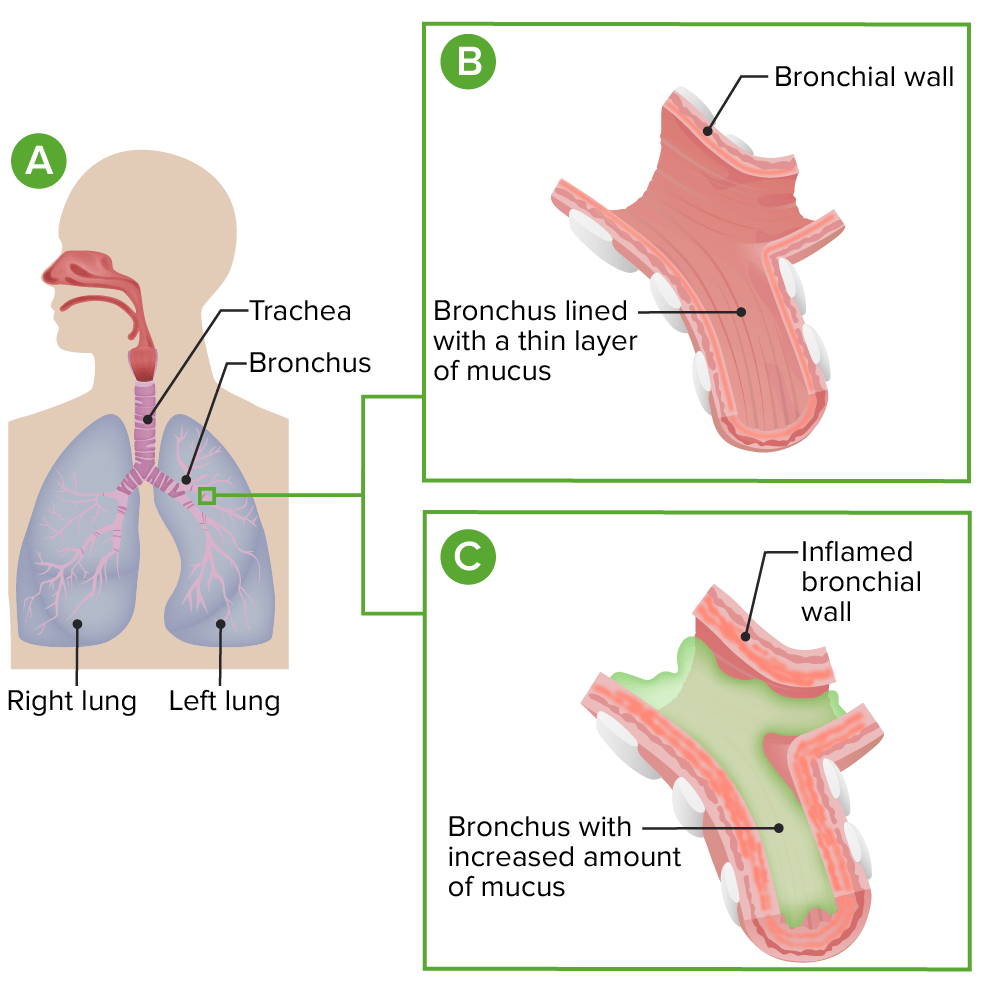
  • Causa de irritación e inflamación:
    • Alteración de la función ciliar
    • Hiperemia y edema Edema Edema is a condition in which excess serous fluid accumulates in the body cavity or interstitial space of connective tissues. Edema is a symptom observed in several medical conditions. It can be categorized into 2 types, namely, peripheral (in the extremities) and internal (in an organ or body cavity). Edema en EN Erythema nodosum is an immune-mediated panniculitis (inflammation of the subcutaneous fat) caused by a type IV (delayed-type) hypersensitivity reaction. It commonly manifests in young women as tender, erythematous nodules on the shins. Erythema Nodosum la membrana mucosa
    • Disminución de la función mucociliar bronquial
    • Aumento de la producción de moco → tos TOS Thoracic outlet syndrome (TOS) is a broad term used for a spectrum of syndromes related to the general region of the thoracic outlet, which involves the compression or irritation of elements of the brachial plexus, subclavian artery, or subclavian vein. Thoracic Outlet Syndrome característica de la bronquitis aguda
  • Puede desarrollarse una bronconeumonía si la inflamación se extiende hacia abajo hasta los LOS Neisseria bronquiolos y el parénquima pulmonar.
Acute bronchitis pathophysiology

Fisiopatología de la bronquitis aguda
A: anatomía normal
B: vista detallada de un bronquio normal
C: bronquios inflamados con exceso de mucosidad en la bronquitis aguda

Imagen por Lecturio.

Presentación Clínica

La bronquitis aguda suele ser una afección autolimitada con una tos TOS Thoracic outlet syndrome (TOS) is a broad term used for a spectrum of syndromes related to the general region of the thoracic outlet, which involves the compression or irritation of elements of the brachial plexus, subclavian artery, or subclavian vein. Thoracic Outlet Syndrome prominente que dura 1–3 semanas.

  • Tos TOS Thoracic outlet syndrome (TOS) is a broad term used for a spectrum of syndromes related to the general region of the thoracic outlet, which involves the compression or irritation of elements of the brachial plexus, subclavian artery, or subclavian vein. Thoracic Outlet Syndrome (síntoma predominante):
    • Inicio agudo
    • Productiva con esputo claro, amarillo o purulento
    • Nota: El esputo purulento no es específico de causas bacterianas.
  • Dolor Dolor Inflammation torácico por tos TOS Thoracic outlet syndrome (TOS) is a broad term used for a spectrum of syndromes related to the general region of the thoracic outlet, which involves the compression or irritation of elements of the brachial plexus, subclavian artery, or subclavian vein. Thoracic Outlet Syndrome frecuente
  • Sibilancias
  • Roncus que se aclaran con la tos TOS Thoracic outlet syndrome (TOS) is a broad term used for a spectrum of syndromes related to the general region of the thoracic outlet, which involves the compression or irritation of elements of the brachial plexus, subclavian artery, or subclavian vein. Thoracic Outlet Syndrome
  • Disnea leve
  • Malestar
  • Fiebre:
    • Posible, pero poco frecuente en EN Erythema nodosum is an immune-mediated panniculitis (inflammation of the subcutaneous fat) caused by a type IV (delayed-type) hypersensitivity reaction. It commonly manifests in young women as tender, erythematous nodules on the shins. Erythema Nodosum la bronquitis aguda
    • Generalmente de bajo grado si está presente
    • Debe alertar sobre una posible neumonía o sobreinfección bacteriana
  • Una infección de vías respiratorias superiores (“resfriado común”) suele preceder a la bronquitis aguda y puede presentar síntomas que se solapan con la aparición de la bronquitis aguda:
  • Hallazgos que son más consistentes con neumonía que con bronquitis aguda:
    • Fiebre
    • Taquipnea
    • Crepitantes
    • Matidez a la percusión
    • Egofonía
    • Frémito táctil

Diagnóstico

La bronquitis aguda suele ser un diagnóstico clínico que se basa en EN Erythema nodosum is an immune-mediated panniculitis (inflammation of the subcutaneous fat) caused by a type IV (delayed-type) hypersensitivity reaction. It commonly manifests in young women as tender, erythematous nodules on the shins. Erythema Nodosum los LOS Neisseria antecedentes y el examen físico, y debe sospecharse en EN Erythema nodosum is an immune-mediated panniculitis (inflammation of the subcutaneous fat) caused by a type IV (delayed-type) hypersensitivity reaction. It commonly manifests in young women as tender, erythematous nodules on the shins. Erythema Nodosum pacientes con un inicio agudo de tos TOS Thoracic outlet syndrome (TOS) is a broad term used for a spectrum of syndromes related to the general region of the thoracic outlet, which involves the compression or irritation of elements of the brachial plexus, subclavian artery, or subclavian vein. Thoracic Outlet Syndrome, que a menudo sigue a una infección de vías respiratorias superiores sin hallazgos de neumonía. Las pruebas adicionales pueden incluir:
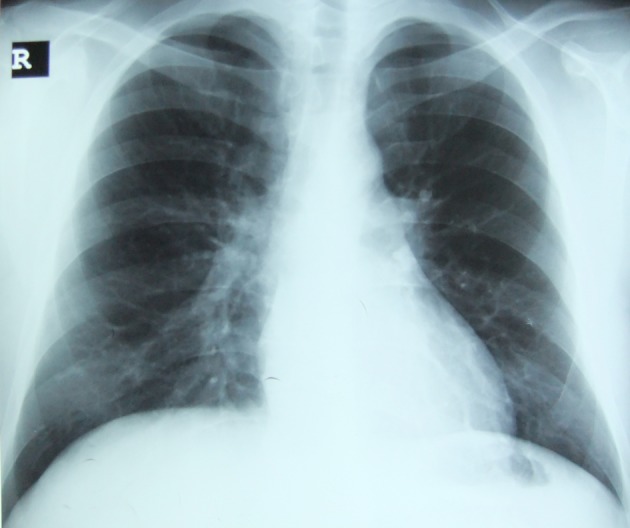
Radiografía de tórax

  • Para descartar la neumonía
  • Indicaciones:
    • Signos de consolidación en EN Erythema nodosum is an immune-mediated panniculitis (inflammation of the subcutaneous fat) caused by a type IV (delayed-type) hypersensitivity reaction. It commonly manifests in young women as tender, erythematous nodules on the shins. Erythema Nodosum el examen físico:
      • Matidez a la percusión
      • Egofonía
      • Frémito táctil
    • Signos vitales anormales:
      • Fiebre
      • Taquicardia
      • Taquipnea
      • ↓ Saturación de oxígeno
    • Estado mental o cambios de comportamiento en EN Erythema nodosum is an immune-mediated panniculitis (inflammation of the subcutaneous fat) caused by a type IV (delayed-type) hypersensitivity reaction. It commonly manifests in young women as tender, erythematous nodules on the shins. Erythema Nodosum los LOS Neisseria ancianos (> 75 años)
    • Pacientes inmunocomprometidos
  • Hallazgos:
    • Suele ser normal en EN Erythema nodosum is an immune-mediated panniculitis (inflammation of the subcutaneous fat) caused by a type IV (delayed-type) hypersensitivity reaction. It commonly manifests in young women as tender, erythematous nodules on the shins. Erythema Nodosum la bronquitis aguda
    • Puede mostrar un engrosamiento de las paredes bronquiales en EN Erythema nodosum is an immune-mediated panniculitis (inflammation of the subcutaneous fat) caused by a type IV (delayed-type) hypersensitivity reaction. It commonly manifests in young women as tender, erythematous nodules on the shins. Erythema Nodosum los LOS Neisseria lóbulos inferiores
    • Las infiltraciones/consolidaciones indican neumonía.
La radiografía de tórax muestra prominencia broncovascular

Radiografía de tórax que muestra prominencia broncovascular.

Imagen: “Chest radiography shows bronchovascular prominance on admission” por Sertogullarindan, B. et al. Licencia: CC BY 2.0

Pruebas microbiológicas

  • Raramente indicado porque los LOS Neisseria resultados no suelen modificar el tratamiento
  • No se recomienda, salvo en EN Erythema nodosum is an immune-mediated panniculitis (inflammation of the subcutaneous fat) caused by a type IV (delayed-type) hypersensitivity reaction. It commonly manifests in young women as tender, erythematous nodules on the shins. Erythema Nodosum caso de sospecha de brotes: Tinción de Gram y cultivo de esputo (porque las causas bacterianas son raras)
  • Considerar la realización de pruebas para detectar la influenza Influenza Influenza viruses are members of the Orthomyxoviridae family and the causative organisms of influenza, a highly contagious febrile respiratory disease. There are 3 primary influenza viruses (A, B, and C) and various subtypes, which are classified based on their virulent surface antigens, hemagglutinin (HA) and neuraminidase (NA). Influenza typically presents with a fever, myalgia, headache, and symptoms of an upper respiratory infection. Influenza Viruses/Influenza:
    • Fiebre y tos TOS Thoracic outlet syndrome (TOS) is a broad term used for a spectrum of syndromes related to the general region of the thoracic outlet, which involves the compression or irritation of elements of the brachial plexus, subclavian artery, or subclavian vein. Thoracic Outlet Syndrome durante la temporada de influenza Influenza Influenza viruses are members of the Orthomyxoviridae family and the causative organisms of influenza, a highly contagious febrile respiratory disease. There are 3 primary influenza viruses (A, B, and C) and various subtypes, which are classified based on their virulent surface antigens, hemagglutinin (HA) and neuraminidase (NA). Influenza typically presents with a fever, myalgia, headache, and symptoms of an upper respiratory infection. Influenza Viruses/Influenza
    • Niños < 2 años de edad
    • Adultos > 65 años
    • Mujeres embarazadas
    • Residentes en EN Erythema nodosum is an immune-mediated panniculitis (inflammation of the subcutaneous fat) caused by a type IV (delayed-type) hypersensitivity reaction. It commonly manifests in young women as tender, erythematous nodules on the shins. Erythema Nodosum hogares de ancianos
    • Pacientes inmunocomprometidos
    • Comorbilidades médicas:
      • Asma ASMA Autoimmune Hepatitis
      • EPOC
      • Fibrosis Fibrosis Any pathological condition where fibrous connective tissue invades any organ, usually as a consequence of inflammation or other injury. Bronchiolitis Obliterans quística
      • Trastornos cardíacos, renales, hepáticos, endocrinos o sanguíneos
      • IMC ≥ 40
  • Considerar la realización de pruebas para detectar la tos TOS Thoracic outlet syndrome (TOS) is a broad term used for a spectrum of syndromes related to the general region of the thoracic outlet, which involves the compression or irritation of elements of the brachial plexus, subclavian artery, or subclavian vein. Thoracic Outlet Syndrome ferina:
    • Tos TOS Thoracic outlet syndrome (TOS) is a broad term used for a spectrum of syndromes related to the general region of the thoracic outlet, which involves the compression or irritation of elements of the brachial plexus, subclavian artery, or subclavian vein. Thoracic Outlet Syndrome paroxística con silbido inspiratorio
    • Tos TOS Thoracic outlet syndrome (TOS) is a broad term used for a spectrum of syndromes related to the general region of the thoracic outlet, which involves the compression or irritation of elements of the brachial plexus, subclavian artery, or subclavian vein. Thoracic Outlet Syndrome emetizante
  • Considerar la realización de pruebas para detectar la COVID-19 COVID-19 Coronavirus disease 2019 (COVID-19) is an infectious disease caused by the severe acute respiratory syndrome coronavirus 2 (SARS-CoV-2) that mainly affects the respiratory system but can also cause damage to other body systems (cardiovascular, gastrointestinal, renal, and central nervous systems). : todos los LOS Neisseria individuos con infecciones respiratorias durante la pandemia

Tratamiento

La bronquitis aguda suele ser una enfermedad autolimitada que normalmente solo requiere cuidados de soporte.

Educación de los LOS Neisseria pacientes

  • Los LOS Neisseria síntomas se resuelven espontáneamente en EN Erythema nodosum is an immune-mediated panniculitis (inflammation of the subcutaneous fat) caused by a type IV (delayed-type) hypersensitivity reaction. It commonly manifests in young women as tender, erythematous nodules on the shins. Erythema Nodosum 1‒3 semanas.
  • Explicar por qué no están indicados los LOS Neisseria antibióticos a los LOS Neisseria pacientes que los LOS Neisseria solicitan.
  • Conversar sobre los LOS Neisseria mejores tratamientos para la reducción de los LOS Neisseria síntomas.

Tratamientos para la reducción de los LOS Neisseria síntomas

  • Para la tos TOS Thoracic outlet syndrome (TOS) is a broad term used for a spectrum of syndromes related to the general region of the thoracic outlet, which involves the compression or irritation of elements of the brachial plexus, subclavian artery, or subclavian vein. Thoracic Outlet Syndrome:
    • Terapia no farmacológica (no hay datos sobre la eficacia, pero es de bajo riesgo y puede ayudar):
      • Té caliente
      • Pastillas para la garganta
      • Miel
    • Agentes antitusivos (la eficacia es incierta, pero las guías de práctica clínica recomiendan ofrecerlos para disminuir el uso de antibióticos):
      • Dextrometorfano (Robitussin)
      • Guaifenesina (Mucinex)
      • Codeína (generalmente se evita debido a su potencial adictivo)
  • Para el malestar, las mialgias y la fiebre:
    • Antipiréticos analgésicos:
      • AINE
      • Paracetamol paracetamol Acetaminophen is an over-the-counter nonopioid analgesic and antipyretic medication and the most commonly used analgesic worldwide. Despite the widespread use of acetaminophen, its mechanism of action is not entirely understood. Acetaminophen
  • Para las sibilancias: beta-agonistas ( Albuterol Albuterol A short-acting beta-2 adrenergic agonist that is primarily used as a bronchodilator agent to treat asthma. Sympathomimetic Drugs)
  • Para pacientes con enfermedades pulmonares subyacentes (EPOC, asma ASMA Autoimmune Hepatitis):
    • Prednisona
    • Optimizar la terapia para las condiciones subyacentes.
    • Considerar los LOS Neisseria antimicrobianos en EN Erythema nodosum is an immune-mediated panniculitis (inflammation of the subcutaneous fat) caused by a type IV (delayed-type) hypersensitivity reaction. It commonly manifests in young women as tender, erythematous nodules on the shins. Erythema Nodosum casos de infecciones bacterianas conocidas o sospechosas.

Antimicrobianos

Los LOS Neisseria antibióticos NO se recomiendan específicamente en EN Erythema nodosum is an immune-mediated panniculitis (inflammation of the subcutaneous fat) caused by a type IV (delayed-type) hypersensitivity reaction. It commonly manifests in young women as tender, erythematous nodules on the shins. Erythema Nodosum la bronquitis aguda en EN Erythema nodosum is an immune-mediated panniculitis (inflammation of the subcutaneous fat) caused by a type IV (delayed-type) hypersensitivity reaction. It commonly manifests in young women as tender, erythematous nodules on the shins. Erythema Nodosum adultos sin ningún otro problema de salud. Hay pruebas sólidas que apoyan la necesidad de evitar los LOS Neisseria antibióticos, aunque la prescripción excesiva e inadecuada sigue siendo frecuente.

  • Riesgos de la terapia con antibióticos:
    • Alteraciones de la microbiota, que pueden perjudicar la función inmunitaria
    • Infección por Clostridium difficile Clostridium difficile A common inhabitant of the colon flora in human infants and sometimes in adults. The type species clostridioides difficile is formerly known as Clostridium difficile. It is a causative agent for clostridioides infections and is associated with pseudomembranous enterocolitis in patients receiving antibiotic therapy. Clostridia
    • Aumento de la resistencia a los LOS Neisseria antibióticos
  • Indicaciones de antimicrobianos en EN Erythema nodosum is an immune-mediated panniculitis (inflammation of the subcutaneous fat) caused by a type IV (delayed-type) hypersensitivity reaction. It commonly manifests in young women as tender, erythematous nodules on the shins. Erythema Nodosum caso de un patógeno tratable identificado:
    • Influenza Influenza Influenza viruses are members of the Orthomyxoviridae family and the causative organisms of influenza, a highly contagious febrile respiratory disease. There are 3 primary influenza viruses (A, B, and C) and various subtypes, which are classified based on their virulent surface antigens, hemagglutinin (HA) and neuraminidase (NA). Influenza typically presents with a fever, myalgia, headache, and symptoms of an upper respiratory infection. Influenza Viruses/Influenza: inhibidores de la neuraminidasa (e.g., oseltamivir Oseltamivir An acetamido cyclohexene that is a structural homolog of sialic acid and inhibits neuraminidase. Antivirals for Influenza, zanamivir Zanamivir A guanido-neuraminic acid that is used to inhibit neuraminidase. Antivirals for Influenza)
    • Tos TOS Thoracic outlet syndrome (TOS) is a broad term used for a spectrum of syndromes related to the general region of the thoracic outlet, which involves the compression or irritation of elements of the brachial plexus, subclavian artery, or subclavian vein. Thoracic Outlet Syndrome ferina: macrólidos (e.g., azitromicina, eritromicina)
    • COVID-19 COVID-19 Coronavirus disease 2019 (COVID-19) is an infectious disease caused by the severe acute respiratory syndrome coronavirus 2 (SARS-CoV-2) that mainly affects the respiratory system but can also cause damage to other body systems (cardiovascular, gastrointestinal, renal, and central nervous systems). : tratamiento complejo con directrices cambiantes
  • Otras causas bacterianas de bronquitis aguda:
    • En EN Erythema nodosum is an immune-mediated panniculitis (inflammation of the subcutaneous fat) caused by a type IV (delayed-type) hypersensitivity reaction. It commonly manifests in young women as tender, erythematous nodules on the shins. Erythema Nodosum general, no se recomiendan los LOS Neisseria antibióticos en EN Erythema nodosum is an immune-mediated panniculitis (inflammation of the subcutaneous fat) caused by a type IV (delayed-type) hypersensitivity reaction. It commonly manifests in young women as tender, erythematous nodules on the shins. Erythema Nodosum ausencia de neumonía.
    • Considerar el tratamiento en EN Erythema nodosum is an immune-mediated panniculitis (inflammation of the subcutaneous fat) caused by a type IV (delayed-type) hypersensitivity reaction. It commonly manifests in young women as tender, erythematous nodules on the shins. Erythema Nodosum pacientes con afecciones pulmonares subyacentes y/o en EN Erythema nodosum is an immune-mediated panniculitis (inflammation of the subcutaneous fat) caused by a type IV (delayed-type) hypersensitivity reaction. It commonly manifests in young women as tender, erythematous nodules on the shins. Erythema Nodosum individuos con alto riesgo de complicaciones.

Modificación del estilo de vida

  • Dejar de fumar
  • Evitar los LOS Neisseria alérgenos/contaminantes
  • Vacunas contra la gripe y la neumonía según las directrices estándar

Diagnóstico Diferencial

  • Neumonía: infección del parénquima pulmonar causada generalmente por bacterias o virus Virus Viruses are infectious, obligate intracellular parasites composed of a nucleic acid core surrounded by a protein capsid. Viruses can be either naked (non-enveloped) or enveloped. The classification of viruses is complex and based on many factors, including type and structure of the nucleoid and capsid, the presence of an envelope, the replication cycle, and the host range. Virology. La neumonía adquirida en EN Erythema nodosum is an immune-mediated panniculitis (inflammation of the subcutaneous fat) caused by a type IV (delayed-type) hypersensitivity reaction. It commonly manifests in young women as tender, erythematous nodules on the shins. Erythema Nodosum la comunidad ( NAC NAC Acetaminophen Overdose) representa el 80% de los LOS Neisseria casos. El diagnóstico de neumonía se basa en EN Erythema nodosum is an immune-mediated panniculitis (inflammation of the subcutaneous fat) caused by a type IV (delayed-type) hypersensitivity reaction. It commonly manifests in young women as tender, erythematous nodules on the shins. Erythema Nodosum la presentación clínica de fiebre, tos TOS Thoracic outlet syndrome (TOS) is a broad term used for a spectrum of syndromes related to the general region of the thoracic outlet, which involves the compression or irritation of elements of the brachial plexus, subclavian artery, or subclavian vein. Thoracic Outlet Syndrome productiva, disnea, crepitantes y consolidación en EN Erythema nodosum is an immune-mediated panniculitis (inflammation of the subcutaneous fat) caused by a type IV (delayed-type) hypersensitivity reaction. It commonly manifests in young women as tender, erythematous nodules on the shins. Erythema Nodosum la radiografía de tórax. El tratamiento antibiótico empírico suele ser adecuado para la NAC NAC Acetaminophen Overdose, mientras que la neumonía en EN Erythema nodosum is an immune-mediated panniculitis (inflammation of the subcutaneous fat) caused by a type IV (delayed-type) hypersensitivity reaction. It commonly manifests in young women as tender, erythematous nodules on the shins. Erythema Nodosum un paciente ventilado suele requerir un tratamiento basado en EN Erythema nodosum is an immune-mediated panniculitis (inflammation of the subcutaneous fat) caused by a type IV (delayed-type) hypersensitivity reaction. It commonly manifests in young women as tender, erythematous nodules on the shins. Erythema Nodosum cultivos.
  • Influenza Influenza Influenza viruses are members of the Orthomyxoviridae family and the causative organisms of influenza, a highly contagious febrile respiratory disease. There are 3 primary influenza viruses (A, B, and C) and various subtypes, which are classified based on their virulent surface antigens, hemagglutinin (HA) and neuraminidase (NA). Influenza typically presents with a fever, myalgia, headache, and symptoms of an upper respiratory infection. Influenza Viruses/Influenza: enfermedad respiratoria altamente contagiosa y febril. La influenza Influenza Influenza viruses are members of the Orthomyxoviridae family and the causative organisms of influenza, a highly contagious febrile respiratory disease. There are 3 primary influenza viruses (A, B, and C) and various subtypes, which are classified based on their virulent surface antigens, hemagglutinin (HA) and neuraminidase (NA). Influenza typically presents with a fever, myalgia, headache, and symptoms of an upper respiratory infection. Influenza Viruses/Influenza suele presentarse con fiebre, mialgias, cefalea y síntomas de una infección de las vías respiratorias superiores. Los LOS Neisseria síntomas de la gastroenteritis Gastroenteritis Gastroenteritis is inflammation of the stomach and intestines, commonly caused by infections from bacteria, viruses, or parasites. Transmission may be foodborne, fecal-oral, or through animal contact. Common clinical features include abdominal pain, diarrhea, vomiting, fever, and dehydration. Gastroenteritis también pueden aparecer con más frecuencia en EN Erythema nodosum is an immune-mediated panniculitis (inflammation of the subcutaneous fat) caused by a type IV (delayed-type) hypersensitivity reaction. It commonly manifests in young women as tender, erythematous nodules on the shins. Erythema Nodosum los LOS Neisseria niños. El diagnóstico suele ser clínico, aunque hay pruebas disponibles. La radiografía de tórax está justificada en EN Erythema nodosum is an immune-mediated panniculitis (inflammation of the subcutaneous fat) caused by a type IV (delayed-type) hypersensitivity reaction. It commonly manifests in young women as tender, erythematous nodules on the shins. Erythema Nodosum los LOS Neisseria pacientes con alto riesgo de neumonía o en EN Erythema nodosum is an immune-mediated panniculitis (inflammation of the subcutaneous fat) caused by a type IV (delayed-type) hypersensitivity reaction. It commonly manifests in young women as tender, erythematous nodules on the shins. Erythema Nodosum los LOS Neisseria individuos que presentan síntomas de una complicación con neumonía viral o bacteriana secundaria. El tratamiento puede incluir inhibidores de la neuraminidasa y de la M2 cuando se inicia de forma temprana.
  • Tos ferina: infección bacteriana potencialmente mortal, también conocida como tos convulsa o pertussis, que se presenta con una tos paroxística intensa seguida de un sonido inspiratorio “ferino” y/o tos TOS Thoracic outlet syndrome (TOS) is a broad term used for a spectrum of syndromes related to the general region of the thoracic outlet, which involves the compression or irritation of elements of the brachial plexus, subclavian artery, or subclavian vein. Thoracic Outlet Syndrome emetizante. La tos TOS Thoracic outlet syndrome (TOS) is a broad term used for a spectrum of syndromes related to the general region of the thoracic outlet, which involves the compression or irritation of elements of the brachial plexus, subclavian artery, or subclavian vein. Thoracic Outlet Syndrome ferina puede ser grave en EN Erythema nodosum is an immune-mediated panniculitis (inflammation of the subcutaneous fat) caused by a type IV (delayed-type) hypersensitivity reaction. It commonly manifests in young women as tender, erythematous nodules on the shins. Erythema Nodosum los LOS Neisseria bebés < 1 año de edad. Si se sospecha de tos TOS Thoracic outlet syndrome (TOS) is a broad term used for a spectrum of syndromes related to the general region of the thoracic outlet, which involves the compression or irritation of elements of the brachial plexus, subclavian artery, or subclavian vein. Thoracic Outlet Syndrome ferina, debe iniciarse inmediatamente una terapia antibiótica con macrólidos, aunque esté pendiente la confirmación de laboratorio. La tos TOS Thoracic outlet syndrome (TOS) is a broad term used for a spectrum of syndromes related to the general region of the thoracic outlet, which involves the compression or irritation of elements of the brachial plexus, subclavian artery, or subclavian vein. Thoracic Outlet Syndrome ferina se puede prevenir con la vacunación.
  • Bronquiolitis: condición respiratoria causada por la inflamación de los LOS Neisseria bronquiolos, en EN Erythema nodosum is an immune-mediated panniculitis (inflammation of the subcutaneous fat) caused by a type IV (delayed-type) hypersensitivity reaction. It commonly manifests in young women as tender, erythematous nodules on the shins. Erythema Nodosum la mayoría de los LOS Neisseria casos causada por el virus Virus Viruses are infectious, obligate intracellular parasites composed of a nucleic acid core surrounded by a protein capsid. Viruses can be either naked (non-enveloped) or enveloped. The classification of viruses is complex and based on many factors, including type and structure of the nucleoid and capsid, the presence of an envelope, the replication cycle, and the host range. Virology respiratorio sincitial, que afecta a los LOS Neisseria niños. Los LOS Neisseria pacientes suelen presentar inicialmente síntomas respiratorios superiores, como tos TOS Thoracic outlet syndrome (TOS) is a broad term used for a spectrum of syndromes related to the general region of the thoracic outlet, which involves the compression or irritation of elements of the brachial plexus, subclavian artery, or subclavian vein. Thoracic Outlet Syndrome y congestión, que pueden progresar a disnea, sibilancias e hipoxia. El diagnóstico es clínico y el tratamiento se dirige a mejorar la oxigenación y la hidratación. La bronquiolitis es una enfermedad autolimitada con buen pronóstico.
  • Sinusitis Sinusitis Sinusitis refers to inflammation of the mucosal lining of the paranasal sinuses. The condition usually occurs concurrently with inflammation of the nasal mucosa (rhinitis), a condition known as rhinosinusitis. Acute sinusitis is due to an upper respiratory infection caused by a viral, bacterial, or fungal agent. Sinusitis aguda: una infección viral (frecuentemente), bacteriana o micótica de las vías respiratorias superiores que provoca la inflamación de la mucosa de los LOS Neisseria senos paranasales. La sinusitis Sinusitis Sinusitis refers to inflammation of the mucosal lining of the paranasal sinuses. The condition usually occurs concurrently with inflammation of the nasal mucosa (rhinitis), a condition known as rhinosinusitis. Acute sinusitis is due to an upper respiratory infection caused by a viral, bacterial, or fungal agent. Sinusitis aguda suele producirse simultáneamente con la inflamación de la mucosa nasal y se presenta con dolor Dolor Inflammation facial sobre el seno afectado y rinorrea purulenta. El diagnóstico suele ser clínico y el tratamiento es de soporte. Los LOS Neisseria antibióticos están indicados en EN Erythema nodosum is an immune-mediated panniculitis (inflammation of the subcutaneous fat) caused by a type IV (delayed-type) hypersensitivity reaction. It commonly manifests in young women as tender, erythematous nodules on the shins. Erythema Nodosum los LOS Neisseria casos menos comunes de sinusitis Sinusitis Sinusitis refers to inflammation of the mucosal lining of the paranasal sinuses. The condition usually occurs concurrently with inflammation of the nasal mucosa (rhinitis), a condition known as rhinosinusitis. Acute sinusitis is due to an upper respiratory infection caused by a viral, bacterial, or fungal agent. Sinusitis bacteriana.
  • Asma ASMA Autoimmune Hepatitis: enfermedad respiratoria inflamatoria crónica caracterizada por la hiperreactividad bronquial y la obstrucción del flujo de aire. El asma ASMA Autoimmune Hepatitis suele presentarse con sibilancias, tos TOS Thoracic outlet syndrome (TOS) is a broad term used for a spectrum of syndromes related to the general region of the thoracic outlet, which involves the compression or irritation of elements of the brachial plexus, subclavian artery, or subclavian vein. Thoracic Outlet Syndrome y disnea. El diagnóstico se confirma con una prueba de función pulmonar que evidencia un patrón obstructivo reversible. El tratamiento es con broncodilatadores y corticoides inhalados.
  • Aspiración de cuerpos extraños: Los LOS Neisseria cuerpos extraños aspirados pueden alojarse en EN Erythema nodosum is an immune-mediated panniculitis (inflammation of the subcutaneous fat) caused by a type IV (delayed-type) hypersensitivity reaction. It commonly manifests in young women as tender, erythematous nodules on the shins. Erythema Nodosum los LOS Neisseria bronquios, afectar a la respiración y provocar una infección o erosión de las paredes bronquiales. Los LOS Neisseria cuerpos extraños son aspirados con mayor frecuencia por los LOS Neisseria niños, que pueden presentarse con tos TOS Thoracic outlet syndrome (TOS) is a broad term used for a spectrum of syndromes related to the general region of the thoracic outlet, which involves the compression or irritation of elements of the brachial plexus, subclavian artery, or subclavian vein. Thoracic Outlet Syndrome o sibilancias. El diagnóstico se realiza a partir de imagenología, y el tratamiento se dirige a la rápida eliminación del cuerpo extraño.
  • ERGE: se produce cuando el ácido del estómago vuelve con frecuencia al AL Amyloidosis esófago. El reflujo ácido puede irritar el revestimiento del esófago y provocar síntomas como dolor Dolor Inflammation urente retroesternal, regurgitación, tos TOS Thoracic outlet syndrome (TOS) is a broad term used for a spectrum of syndromes related to the general region of the thoracic outlet, which involves the compression or irritation of elements of the brachial plexus, subclavian artery, or subclavian vein. Thoracic Outlet Syndrome y dolor Dolor Inflammation de garganta. El diagnóstico suele ser clínico, pero la monitorización ambulatoria del pH pH The quantitative measurement of the acidity or basicity of a solution. Acid-Base Balance puede confirmar el diagnóstico. El tratamiento se basa en EN Erythema nodosum is an immune-mediated panniculitis (inflammation of the subcutaneous fat) caused by a type IV (delayed-type) hypersensitivity reaction. It commonly manifests in young women as tender, erythematous nodules on the shins. Erythema Nodosum modificaciones del estilo de vida y en EN Erythema nodosum is an immune-mediated panniculitis (inflammation of the subcutaneous fat) caused by a type IV (delayed-type) hypersensitivity reaction. It commonly manifests in young women as tender, erythematous nodules on the shins. Erythema Nodosum el tratamiento con medicamentos reductores de la acidez.
  • Insuficiencia cardíaca: se refiere a la incapacidad del corazón para suministrar al AL Amyloidosis cuerpo con un gasto suficiente para satisfacer sus necesidades metabólicas. La presentación de la insuficiencia cardíaca incluye dolor Dolor Inflammation torácico, disnea de esfuerzo, tos TOS Thoracic outlet syndrome (TOS) is a broad term used for a spectrum of syndromes related to the general region of the thoracic outlet, which involves the compression or irritation of elements of the brachial plexus, subclavian artery, or subclavian vein. Thoracic Outlet Syndrome que empeora al AL Amyloidosis reclinarse, fatiga, edema Edema Edema is a condition in which excess serous fluid accumulates in the body cavity or interstitial space of connective tissues. Edema is a symptom observed in several medical conditions. It can be categorized into 2 types, namely, peripheral (in the extremities) and internal (in an organ or body cavity). Edema con fóvea y crepitantes en EN Erythema nodosum is an immune-mediated panniculitis (inflammation of the subcutaneous fat) caused by a type IV (delayed-type) hypersensitivity reaction. It commonly manifests in young women as tender, erythematous nodules on the shins. Erythema Nodosum el examen físico. Un ultrasonido cardíaco y una prueba de esfuerzo cardíaco mostrarán una función cardíaca reducida. Una radiografía de tórax mostrará edema Edema Edema is a condition in which excess serous fluid accumulates in the body cavity or interstitial space of connective tissues. Edema is a symptom observed in several medical conditions. It can be categorized into 2 types, namely, peripheral (in the extremities) and internal (in an organ or body cavity). Edema pulmonar. El tratamiento es con múltiples medicamentos y modificaciones del estilo de vida.

Referencias

  1. Centers for Disease Control and Prevention. (2024). Chest cold (Acute bronchitis). Retrieved April 28, 2025, from https://www.cdc.gov/acute-bronchitis/about/?CDC_AAref_Val=https://www.cdc.gov/antibiotic-use/bronchitis.html
  2. Singh, A., Avula, A., Zahn, E. (2024). Acute Bronchitis. StatPearls. Retrieved April 28, 2025, from https://www.ncbi.nlm.nih.gov/books/NBK448067/
  3. File, T. M. (2025) Acute bronchitis in adults. UpToDate. Retrieved April 28, 2025, from https://www.uptodate.com/contents/acute-bronchitis-in-adults

¡Crea tu cuenta gratis o inicia una sesión para seguir leyendo!

Regístrate ahora y obtén acceso gratuito a Lecturio con páginas de concepto, videos médicos y cuestionarios para tu educación médica.

User Reviews

Que tengas una sesión de estudio alegre y navideña 🎁 Ahorra 50% en todos los planes >>

Details