Mordeduras de cães e gatos podem causar destruição superficial e profunda dos tecidos, assim como infeções graves de feridas. As mordeduras de cães ocorrem com maisMAISAndrogen Insensitivity Syndrome frequência em homens e crianças e frequentemente causam traumatismo por esmagamento ou laceração. As mordeduras de gato são maisMAISAndrogen Insensitivity Syndrome frequentes em mulheres adultas e resultam em feridas perfuradas. Como as feridas de perfuração permitem a inoculação de bactérias nos tecidos profundos, as picadas de gatos estão maisMAISAndrogen Insensitivity Syndrome frequentemente associadas à infeção. O diagnóstico é clínico e as culturas devem ser obtidas se a ferida parecer infetada. A abordagem requer cuidado fastidioso da ferida e antibióticos para feridas de alto risco ou infetadas.
EikenellaEikenellaA genus of gram-negative, facultatively anaerobic, rod-shaped bacteria that occurs in the human mouth and intestine. Organisms of this genus can be opportunistic pathogens.Dog and Cat Bites
ProteusProteusProteus spp. are gram-negative, facultatively anaerobic bacilli. Different types of infection result from Proteus, but the urinary tract is the most common site. The majority of cases are caused by Proteus mirabilis (P. mirabilis). The bacteria are part of the normal intestinal flora and are also found in the environment. Proteus
KlebsiellaKlebsiellaKlebsiella are encapsulated gram-negative, lactose-fermenting bacilli. They form pink colonies on MacConkey agar due to lactose fermentation. The main virulence factor is a polysaccharide capsule. Klebsiella pneumoniae is the most important pathogenic species.Klebsiella
HaemophilusHaemophilusHaemophilus is a genus of Gram-negative coccobacilli, all of whose strains require at least 1 of 2 factors for growth (factor V [NAD] and factor X [heme]); therefore, it is most often isolated on chocolate agar, which can supply both factors. The pathogenic species are H. influenzae and H. ducreyi.Haemophilus
MoraxellaMoraxellaMoraxella is a genus of gram-negative diplococci, with M. catarrhalis being the most clinically relevant species. M. catarrhalis is part of the normal flora of the upper respiratory tract, but it can cause infection in susceptible individuals. The infection is transmitted through respiratory droplets and can lead to chronic obstructive pulmonary disease (COPD) exacerbations in adults and otitis media in children. Moraxella
CorynebacteriumCorynebacteriumCorynebacteria are gram-positive, club-shaped bacilli. Corynebacteria are commonly isolated on tellurite or Loeffler’s media and have characteristic metachromatic granules. The major pathogenic species is Corynebacterium diphtheriae, which causes a severe respiratory infection called diphtheria.Corynebacterium
NeisseriaNeisseriaNeisseria is a genus of bacteria commonly present on mucosal surfaces. Several species exist, but only 2 are pathogenic to humans: N. gonorrhoeae and N. meningitidis. Neisseria species are non-motile, gram-negative diplococci most commonly isolated on modified Thayer-Martin (MTM) agar. Neisseria
PrevotellaPrevotellaA genus of gram-negative, anaerobic, nonsporeforming, nonmotile rods. Organisms of this genus had originally been classified as members of the bacteroides genus but overwhelming biochemical and chemical findings in 1990 indicated the need to separate them from other bacteroides species, and hence, this new genus was established.Dog and Cat Bites
PorphyromonasPorphyromonasA genus of gram-negative, anaerobic, nonsporeforming, nonmotile rods or coccobacilli. Organisms in this genus had originally been classified as members of the bacteroides genus but overwhelming biochemical and chemical findings indicated the need to separate them from other bacteroides species, and hence, this new genus was created.Dog and Cat Bites
Bartonella henselaeBartonella henselaeA species of gram-negative bacteria that is the etiologic agent of bacillary angiomatosis. This organism can also be a cause of cat-scratch disease in immunocompetent patients.Bartonella
ActinomycesActinomycesActinomyces is an anaerobic, gram-positive, branching, filamentous rod. Actinomyces israelii is the most common species involved in human disease. The organism is commonly found as part of the normal flora in the oral cavity, gastrointestinal tract, and reproductive tract. Actinomyces/Actinomycosis
PropionibacteriumPropionibacteriumA genus of gram-positive, rod-shaped bacteria whose cells occur singly, in pairs or short chains, in V or y configurations, or in clumps resembling letters of the chinese alphabet. Its organisms are found in cheese and dairy products as well as on human skin and can occasionally cause soft tissue infections.Dog and Cat Bites
Clostridium
WolinellaWolinellaA genus of gram-negative, anaerobic, rod-shaped bacteria isolated from the bovine rumen, the human gingival sulcus, and dental pulpitis infections.Dog and Cat Bites
Peptostostreptococcus
StaphylococcusStaphylococcusStaphylococcus is a medically important genera of Gram-positive, aerobic cocci. These bacteria form clusters resembling grapes on culture plates. Staphylococci are ubiquitous for humans, and many strains compose the normal skin flora.Staphylococcus
StreptococcusStreptococcusStreptococcus is one of the two medically important genera of gram-positive cocci, the other being Staphylococcus. Streptococci are identified as different species on blood agar on the basis of their hemolytic pattern and sensitivity to optochin and bacitracin. There are many pathogenic species of streptococci, including S. pyogenes, S. agalactiae, S. pneumoniae, and the viridans streptococci.Streptococcus
Pasteurella multocidaPasteurella MultocidaA species of gram-negative, facultatively anaerobic, rod-shaped bacteria normally found in the flora of the mouth and respiratory tract of animals and birds. It causes shipping fever; hemorrhagic bacteremia; and intestinal disease in animals. In humans, disease usually arises from a wound infection following a bite or scratch from domesticated animals.Dog and Cat Bites
BacteroidesBacteroidesBacteroides is a genus of opportunistic, anaerobic, gram-negative bacilli. Bacteroides fragilis is the most common species involved in human disease and is part of the normal flora of the large intestine.Bacteroides
FusobacteriumFusobacteriumA genus of gram-negative, anaerobic, rod-shaped bacteria found in cavities of humans and other animals. No endospores are formed. Some species are pathogenic and occur in various purulent or gangrenous infections.Dog and Cat Bites
Fatores de risco de infeção por mordedura
Fatores relacionados com o paciente:
Apresentação tardia
Imunossupressão:
DiabetesDiabetesDiabetes mellitus (DM) is a metabolic disease characterized by hyperglycemia and dysfunction of the regulation of glucose metabolism by insulin. Type 1 DM is diagnosed mostly in children and young adults as the result of autoimmune destruction of β cells in the pancreas and the resulting lack of insulin. Type 2 DM has a significant association with obesity and is characterized by insulin resistance.Diabetes Mellitus mellitus
AnemiaAnemiaAnemia is a condition in which individuals have low Hb levels, which can arise from various causes. Anemia is accompanied by a reduced number of RBCs and may manifest with fatigue, shortness of breath, pallor, and weakness. Subtypes are classified by the size of RBCs, chronicity, and etiology. Anemia: Overview and Types falciforme
AspleniaAspleniaAsplenia is the absence of splenic tissue or function and can stem from several factors ranging from congenital to iatrogenic. There is a distinction between anatomic asplenia, which is due to the surgical removal of the spleen, and functional asplenia, which is due to a condition that leads to splenic atrophy, infarct, congestion, or infiltrative disease. Asplenia
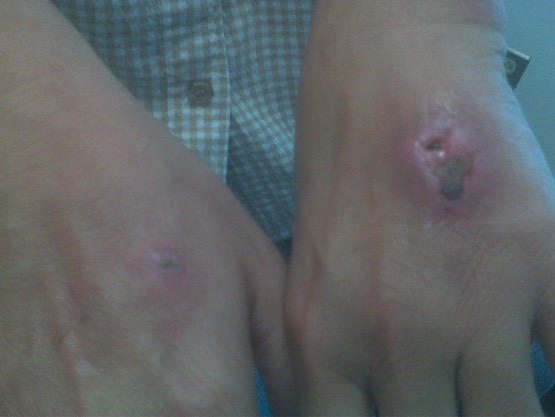
Feridas bilaterais, ulcerativas, nodulares no dorso das mãos de um paciente depois de ter sofrido mordidas de cão
Imagem: “Ulcerative, nodular wounds” por Warren Alpert Brown University School of Medicine, 1125 North Main Street, Providence, RI 02906, USA. Licença: CC BY 4.0
História importante a obter
Hora da ocorrência (há quanto tempo desde a mordedura)
Circunstâncias
Tipo de animal
Status do animal (risco de Raiva)
Febre
Factores de risco do doente para infeção de feridas
Intervenção cirúrgica justificada para feridas extensas, avulsão parcial da flap ou perda total do tecido
Doenças infecciosas
Para ajudar no regime antibiótico definitivo
Profilaxia
As feridas com baixo risco de infeção não requerem profilaxia antibiótica. A profilaxia antibiótica é indicada para:
Qualquer mordida de gato que penetre a pele
Feridas de alto risco:
Feridas profundas de perfuração
Lesões por esmagamento
Feridas que necessitam de reparação cirúrgica ou após o encerramento primário
Feridas perto de um osso ou articulação
Mordeduras na mão, na face ou na região genital
Apresentação tardia
Pacientes imunocomprometidos
Condições de alto risco:
Apresentação tardia
Doentes imunocomprometidos
DiabetesDiabetesDiabetes mellitus (DM) is a metabolic disease characterized by hyperglycemia and dysfunction of the regulation of glucose metabolism by insulin. Type 1 DM is diagnosed mostly in children and young adults as the result of autoimmune destruction of β cells in the pancreas and the resulting lack of insulin. Type 2 DM has a significant association with obesity and is characterized by insulin resistance.Diabetes Mellitus mellitus
Esplenectomia
Doença hepática avançada
Pós-mastectomia
Articulações prostéticas
Mordeduras Humanas
TalTALRenal Sodium and Water Regulation como as mordeduras de cães e gatos, as mordeduras humanas podem comportar um risco significativo de infeção.
Mordedura oclusiva (quando alguém morde com força suficiente para quebrar a pele)
Microbiologia
A infeção após uma mordida humana é frequentemente polimicrobiana. Os organismos comuns incluem:
StreptococcusStreptococcusStreptococcus is one of the two medically important genera of gram-positive cocci, the other being Staphylococcus. Streptococci are identified as different species on blood agar on the basis of their hemolytic pattern and sensitivity to optochin and bacitracin. There are many pathogenic species of streptococci, including S. pyogenes, S. agalactiae, S. pneumoniae, and the viridans streptococci.Streptococcus
StaphylococcusStaphylococcusStaphylococcus is a medically important genera of Gram-positive, aerobic cocci. These bacteria form clusters resembling grapes on culture plates. Staphylococci are ubiquitous for humans, and many strains compose the normal skin flora.Staphylococcus
EikenellaEikenellaA genus of gram-negative, facultatively anaerobic, rod-shaped bacteria that occurs in the human mouth and intestine. Organisms of this genus can be opportunistic pathogens.Dog and Cat Bites corrodens
CorynebacteriumCorynebacteriumCorynebacteria are gram-positive, club-shaped bacilli. Corynebacteria are commonly isolated on tellurite or Loeffler’s media and have characteristic metachromatic granules. The major pathogenic species is Corynebacterium diphtheriae, which causes a severe respiratory infection called diphtheria.Corynebacterium
BacteroidesBacteroidesBacteroides is a genus of opportunistic, anaerobic, gram-negative bacilli. Bacteroides fragilis is the most common species involved in human disease and is part of the normal flora of the large intestine.Bacteroides
Considerações gerais e avaliação
Os indivíduos com estas lesões apresentam-se frequentemente com uma infeção já estabelecida (por exemplo, feridas com exsudado purulento e/ou edemaEdemaEdema is a condition in which excess serous fluid accumulates in the body cavity or interstitial space of connective tissues. Edema is a symptom observed in several medical conditions. It can be categorized into 2 types, namely, peripheral (in the extremities) and internal (in an organ or body cavity). Edema)
Nas lesões por mordedura da mão, os danos na bainha tendinosa, na fáscia e nas cabeças dos metacarpos precisam de ser avaliados cuidadosamente:
Examinar a mão com os dedos estendidos e com o punho fechado.
Verificar se há material estranho, infeção e o estado neurovascular.
A infeção profunda manifesta-se como:
Dor desproporcional em relação aos achados
Dor com o movimento passivo
Crepitação e derrame articular
Febre e outros sinais sistémicos
Avaliação:
Marcadores inflamatórios (por exemplo, PCRPCRPolymerase chain reaction (PCR) is a technique that amplifies DNA fragments exponentially for analysis. The process is highly specific, allowing for the targeting of specific genomic sequences, even with minuscule sample amounts. The PCR cycles multiple times through 3 phases: denaturation of the template DNA, annealing of a specific primer to the individual DNA strands, and synthesis/elongation of new DNA molecules.Polymerase Chain Reaction (PCR)) para infeções clinicamente evidentes
Cultura da ferida
Hemoculturas se suspeita de bacteriemia
Testar uma potencial exposição a VIH, hepatite B e hepatite C.
Imagiologia radiológica
Tratamento
Irrigação extensa de feridas
Vacinação contra o tétano
Profilaxia pós-exposição (VIH e hepatite B) se indicado
A profilaxia de amoxicilina/ácido clavulânico deve ser dada se a pele tiver sido perfurada.
O regime antibiótico alternativo é semelhante ao usado nas mordeduras de cães e gatos
VirusVirusViruses are infectious, obligate intracellular parasites composed of a nucleic acid core surrounded by a protein capsid. Viruses can be either naked (non-enveloped) or enveloped. The classification of viruses is complex and based on many factors, including type and structure of the nucleoid and capsid, the presence of an envelope, the replication cycle, and the host range. VirologyHerpes SimplexHerpes SimplexA group of acute infections caused by herpes simplex virus type 1 or type 2 that is characterized by the development of one or more small fluid-filled vesicles with a raised erythematous base on the skin or mucous membrane. It occurs as a primary infection or recurs due to a reactivation of a latent infection.Congenital TORCH Infections
Laceração de tendões
Infeções (particularmente lesões de punho fechado):
Tenosinovite
Artrite séptica
Osteomielite
Deformidades cosméticas
Diagnóstico Diferencial
Mordedura de cobra: Envenenamento no local da mordida pode causar edemaEdemaEdema is a condition in which excess serous fluid accumulates in the body cavity or interstitial space of connective tissues. Edema is a symptom observed in several medical conditions. It can be categorized into 2 types, namely, peripheral (in the extremities) and internal (in an organ or body cavity). Edema, eritema, calorCalorInflammation, bolhas e necrose. Sintomas sistêmicos como náuseas, diaforese, parestesias e alterações sensoriais podem estar presentes, que não são comuns em mordidas de cães ou gatos. O diagnóstico é clínico. A gestão inclui cuidados de suporte, controlo da dor, hidratação e antiveneno. Os pacientes são monitorizados de perto quanto a choque, coagulopatia, insuficiência respiratória e insuficiência renal.
Picada de insecto: Picadas de abelha, vespa e formiga podem causar envenenamento com intumescência localizada. Alguns pacientes desenvolverão uma reação alérgica severa, incluindo anafilaxia. Isto não ocorre com mordeduras de cães ou gatos. O diagnóstico é clínico. O manejo inclui a remoção do ferrão (se presente), anti-histamínicos, controle da dor e cuidados de emergência para anafilaxia.
Picada de escorpião: A maioria das picadas de escorpião são inofensivas. No entanto, o escorpião de casca é venenoso. Os pacientes terão dor e inchaço no local da picada. As manifestações sistêmicas podem incluir espasmos musculares, diaforese, movimentos anormais do pescoço e da cabeça, taquicardia, hipertensão e desconforto respiratório. O diagnóstico é clínico. A abordagem inclui cuidados de apoio, controlo da dor, benzodiazepinas para espasmos musculares e antiveneno.
Mordidas de aranha: A aranha reclusa castanha contém um veneno necrotizante, que pode levar a uma ferida dolorosa, bolhosa e necrótica, febres, mialgias, hemólise, convulsões e insuficiência renal. O veneno neurotóxico de uma aranha viúva negra pode causar cãibras e rigidez muscular, sinais vitais instáveis, lacrimejo, salivação, ptose e desconforto respiratório. O diagnóstico é clínico. O tratamento inclui tratamento de feridas, tratamento da dor, antiveneno para mordedura de viúva negra e desbridamento retardado do tecido necrótico para mordedura de reclusas castanhas.
Referências
Holmquist L, Elixhauser A. (2010). Emergency department visits and inpatient stays involving dog bites. Healthcare Cost and Utilization Project Statistical Briefs. https://www.ncbi.nlm.nih.gov/books/NBK52650/
Oehler RL, Velez AP, Mizrachi M, Lamarche J, Gompf S. (2009). Bite-related and septic syndromes caused by cats and dogs. Lancet Infect Dis. Medline. Retrieved April 24, 2025, from https://reference.medscape.com/medline/abstract/19555903
A Lecturio Medical complementa o teu estudo através de métodos de ensino baseados em evidência, vídeos de palestras, perguntas e muito mais – tudo combinado num só lugar e fácil de usar.
User Reviews
One Platform. Everything You Need to Succeed. 📚 Get 30% off all plans and certificates!
Lecturio Premium dá-lhe acesso total a todos os conteúdos e características
Obtenha Premium para ver todos os vídeos
Verifique agora o seu e-mail para obter um teste gratuito.
Crie uma conta gratuita para testar os seus conhecimentos
Lecturio Premium dá-lhe acesso total a todos os conteúdos e características - incluindo o Qbank de Lecturio com perguntas actualizadas ao estilo do board-.