


Carbapenemes e Aztreonam

Os carbapenemes e o aztreonam Aztreonam The carbapenems and aztreonam are both members of the bactericidal beta-lactam family of antibiotics (similar to penicillins). They work by preventing bacteria from producing their cell wall, ultimately leading to bacterial cell death. Carbapenems and Aztreonam são ambos membros da família de antibióticos beta-lactâmicos bactericidas (semelhantes às penicilinas). Atuam evitando que as bactérias produzam a sua parede celular, levando à morte celular. Existem 4 carbapenemes disponíveis, todos terminando em “-penem” e 1 monobactam disponível, que é o aztreonam Aztreonam The carbapenems and aztreonam are both members of the bactericidal beta-lactam family of antibiotics (similar to penicillins). They work by preventing bacteria from producing their cell wall, ultimately leading to bacterial cell death. Carbapenems and Aztreonam. Os carbapenemes são todos antibióticos de largo espectro usados para uma variedade de infeções graves, frequentemente multirresistentes e/ou associadas aos cuidados de saúde (ACS), que podem ocorrer em todo o corpo. O aztreonam Aztreonam The carbapenems and aztreonam are both members of the bactericidal beta-lactam family of antibiotics (similar to penicillins). They work by preventing bacteria from producing their cell wall, ultimately leading to bacterial cell death. Carbapenems and Aztreonam tem um espectro mais MAIS Androgen Insensitivity Syndrome estreito e normalmente é usado para infeções aeróbias por bacilos gram-negativos em pacientes que têm uma alergia grave a beta-lactâmicos, mas que precisam de terapêutica com beta-lactâmicos, uma vez que não há reação cruzada significativa entre o aztreonam Aztreonam The carbapenems and aztreonam are both members of the bactericidal beta-lactam family of antibiotics (similar to penicillins). They work by preventing bacteria from producing their cell wall, ultimately leading to bacterial cell death. Carbapenems and Aztreonam e os outros beta-lactâmicos.

Last updated: Dec 15, 2025

Editorial responsibility: Stanley Oiseth, Lindsay Jones, Evelin Maza

Química e Classificação

Classificação beta-lactâmicos

Os carbapenemes e monobactam são ambos membros da família de antibióticos beta-lactâmicos. Todos são inibidores da síntese da parede celular. Os membros da família beta-lactâmicos incluem:

  • Penicilinas
  • Cefalosporinas
  • Carbapenemes:
    • Imipenem Imipenem Semisynthetic thienamycin that has a wide spectrum of antibacterial activity against gram-negative and gram-positive aerobic and anaerobic bacteria, including many multiresistant strains. It is stable to beta-lactamases. Clinical studies have demonstrated high efficacy in the treatment of infections of various body systems. Its effectiveness is enhanced when it is administered in combination with cilastatin, a renal dipeptidase inhibitor. Carbapenems and Aztreonam
    • Doripenem Doripenem A carbapenem derivative antibacterial agent that is more stable to renal dehydropeptidase I than imipenem, but does not need to be given with an enzyme inhibitor such as cilastatin. It is used in the treatment of infections such as hospital-acquired pneumonia, and complicated intra-abdominal or urinary-tract infections, including pyelonephritis. Carbapenems and Aztreonam
    • Meropenem Meropenem A thienamycin derivative antibacterial agent that is more stable to renal dehydropeptidase I than imipenem, but does not need to be given with an enzyme inhibitor such as cilastatin. It is used in the treatment of bacterial infections, including infections in immunocompromised patients. Carbapenems and Aztreonam
    • Ertapenem Ertapenem A carbapenem derivative antibacterial agent that is more stable to renal dehydropeptidase I than imipenem, but does not need to be given with an enzyme inhibitor such as cilastatin. It is used in the treatment of gram-positive and gram-negative bacterial infections including intra-abdominal infections, acute gynecological infections, complicated urinary tract infections, skin infections, and respiratory tract infections. It is also used to prevent infection in colorectal surgery. Carbapenems and Aztreonam
  • Monobactam:
    • Aztreonam Aztreonam The carbapenems and aztreonam are both members of the bactericidal beta-lactam family of antibiotics (similar to penicillins). They work by preventing bacteria from producing their cell wall, ultimately leading to bacterial cell death. Carbapenems and Aztreonam

Estrutura dos carbapenemes

Os carbapenemes consistem em:

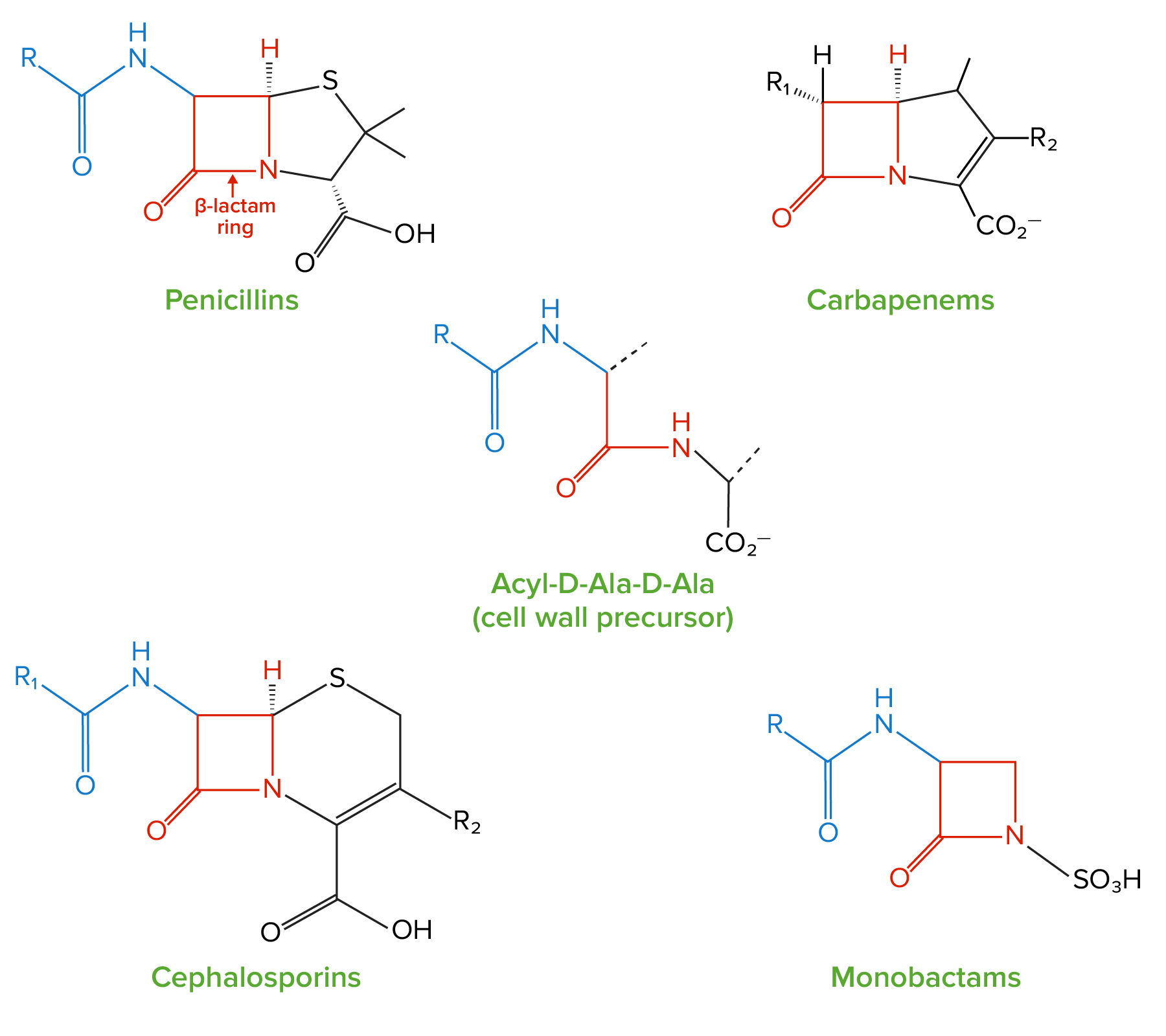
  • Um anel beta-lactama: um anel tetratómico contendo 2 carbonos (os carbonos α e β), um nitrogénio e um grupo carbonil (carbono com ligação dupla ao oxigénio)
    • A porção antibacteriana da estrutura
    • Pode ser hidrolisado (ou seja, quebrado) por beta-lactamases, que são produzidas por certas bactérias resistentes
    • Se este anel for quebrado, o fármaco perde as suas propriedades antibacterianas.
    • Todos os beta-lactâmicos contêm um anel beta-lactama.
  • Uma cadeia lateral conhecida como grupo R:
    • Ligado ao carbono α no anel beta-lactama
    • Diferencia diferentes carbapenemes uns dos outros
    • Responsável pela sua farmacocinética e por espectros de atividade exclusivos
    • Certas estruturas podem inibir estericamente a hidrólise do anel beta-lactama pela beta-lactamase Beta-Lactamase Penicillins.
  • Um anel amida pentatómico com um segundo grupo R
Estrutura dos beta-lactâmicos

Estrutura dos beta-lactâmicos:
Todos os antibióticos beta-lactâmicos contêm o mesmo anel beta-lactama central de 4 lados (destacado em vermelho). Este anel é responsável pelas propriedades antibacterianas destes fármacos porque é a região que se liga e inibe as proteínas de ligação à penicilina (PBPs). As PBPs catalisam a formação da parede celular formando ligações cruzadas entre cadeias de péptidos em moléculas de peptidoglicano; as PBPs formam estas ligações cruzadas entre os peptídeos acil-D-Ala-D-Ala, que têm uma estrutura semelhante ao anel beta-lactama.

Imagem por Lecturio. Licença: CC BY-NC-SA 4.0

Estrutura do monobactam

Os monobactam também são antibióticos beta-lactâmicos. A sua estrutura é diferente o suficiente da penicilina para que não haja alergia cruzada. O azetreonam é o único monobactam comercializado. As estruturas monobactâmicas incluem:
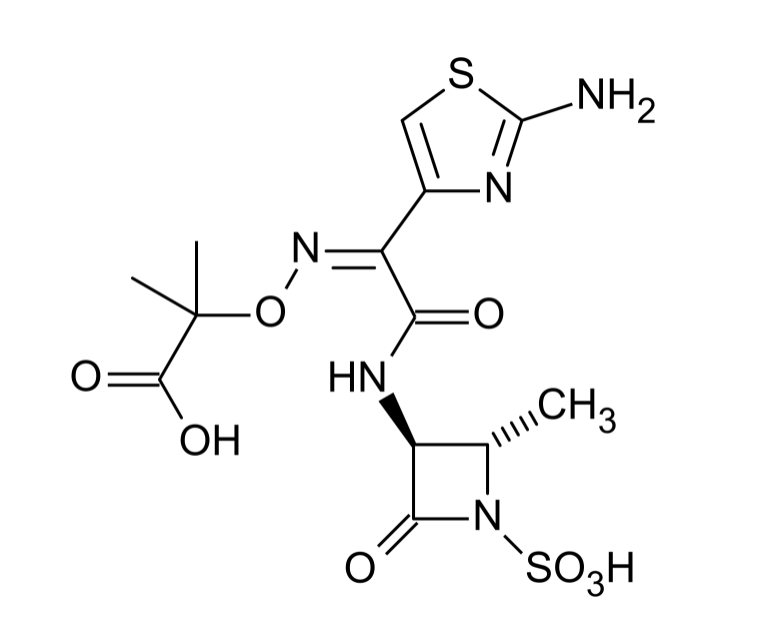
  • O anel beta-lactama
  • Uma cadeia lateral com um grupo R
  • Um grupo -SO3H
Estrutura de carbapenemes e aztreonam

Estrutura do aztreonam, o único monobactam comercializado nos Estados Unidos

Imagem: “Chemical structure of aztreonam” por Mysid. Licença: Public Domain

Mecanismos de Ação e Resistência

Todos os beta-lactâmicos, incluindo os carbapenemes e o monobactam, atuam inibindo a síntese da parede celular bacteriana.
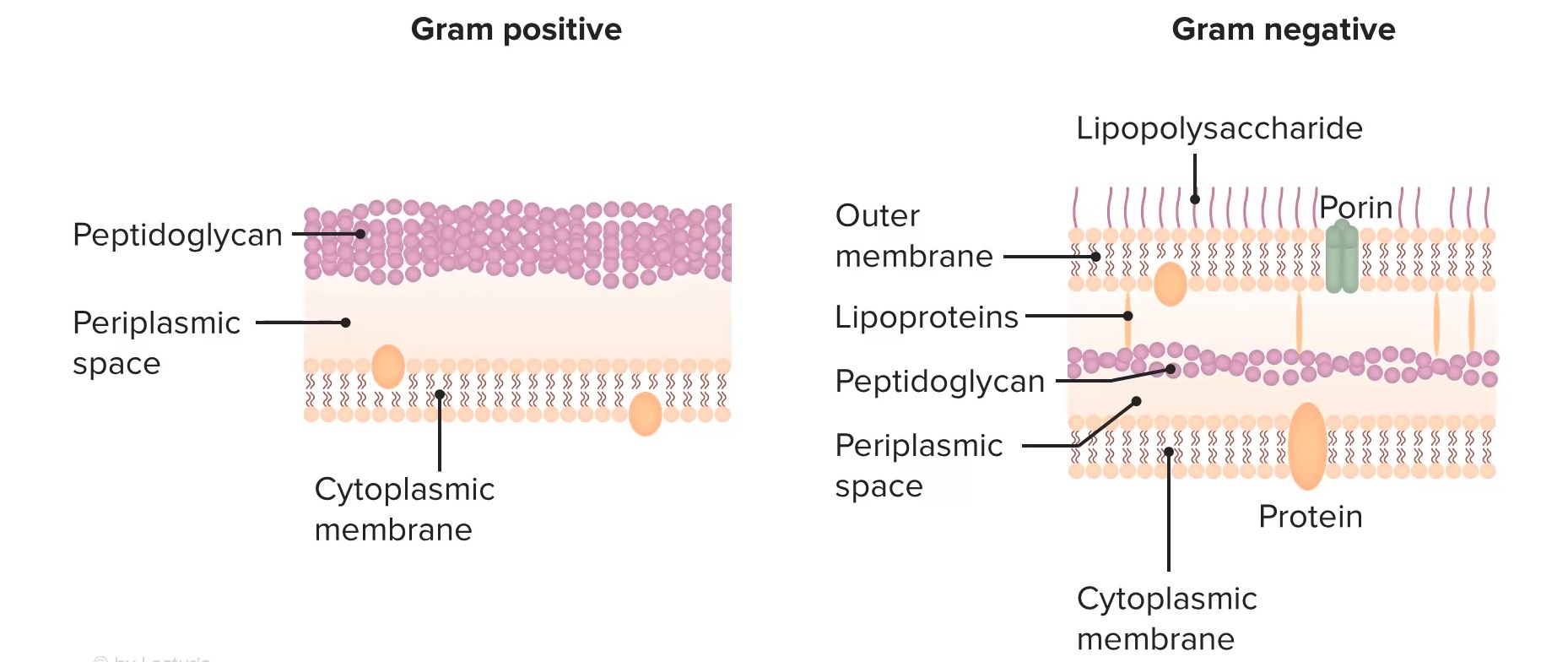
Contexto: compreendendo as paredes celulares

  • As paredes das células bacterianas contêm cadeias de peptidoglicanos (camadas grandes e espessas nos organismos gram-positivos e camadas relativamente menores/ mais MAIS Androgen Insensitivity Syndrome finas nos organismos gram-negativos)
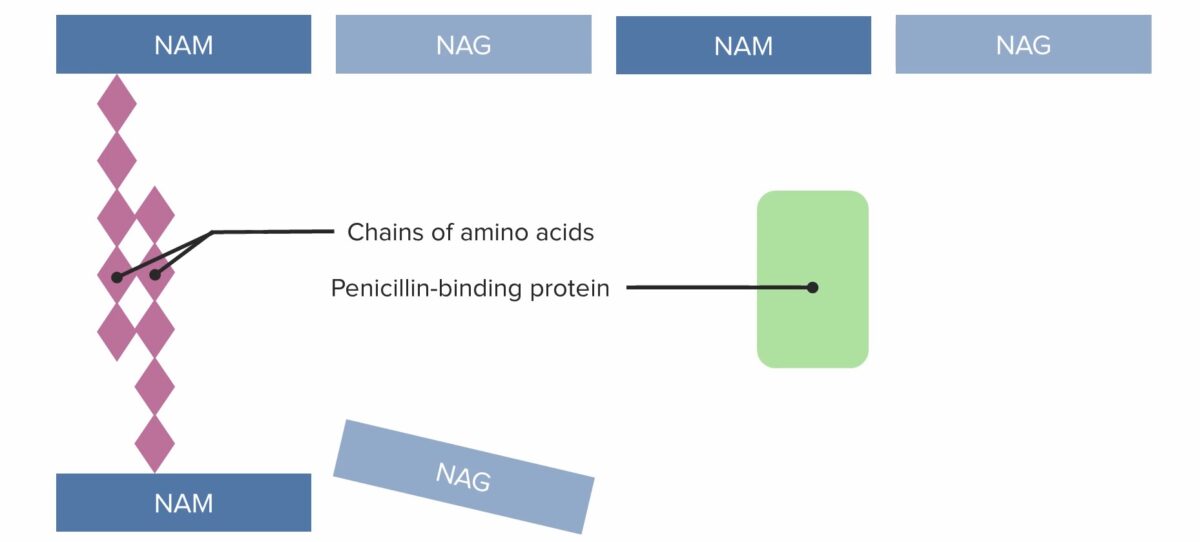
  • As cadeias de peptidoglicanos são compostas por:
    • Uma cadeia central de açúcar com 2 açúcares alternados:
      • Ácido N-acetilmurâmico (NAM)
      • N-acetilglucosamina (NAG)
    • Cadeias laterais curtas de péptidos que se ramificam a partir dos açúcares NAM
  • Estes péptidos curtos formam pontes reticuladas entre cadeias de peptidoglicanos adjacentes, criando uma estrutura semelhante a uma rede de pesca.
    • Estas pontes são necessárias para a estrutura do peptidoglicano (e, portanto, da parede celular).
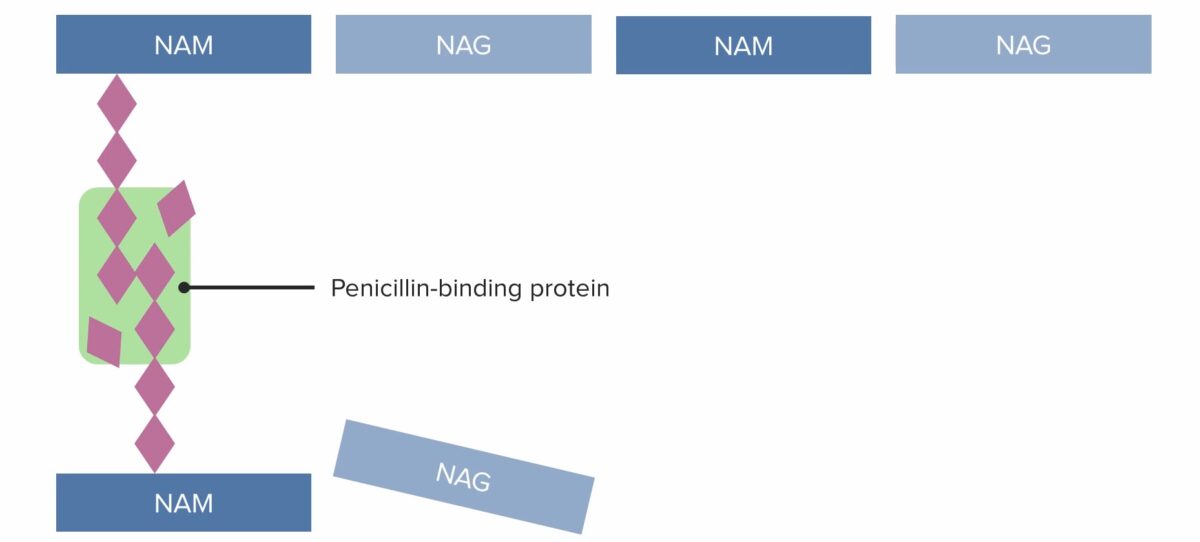
    • As PBPs PBPs Bacterial proteins that share the property of binding irreversibly to penicillins and other antibacterial agents derived from lactams. The penicillin-binding proteins are primarily enzymes involved in cell wall biosynthesis including muramoylpentapeptide carboxypeptidase; peptide synthases; transpeptidases; and hexosyltransferases. Penicillins são as enzimas que criam essas pontes reticuladas.
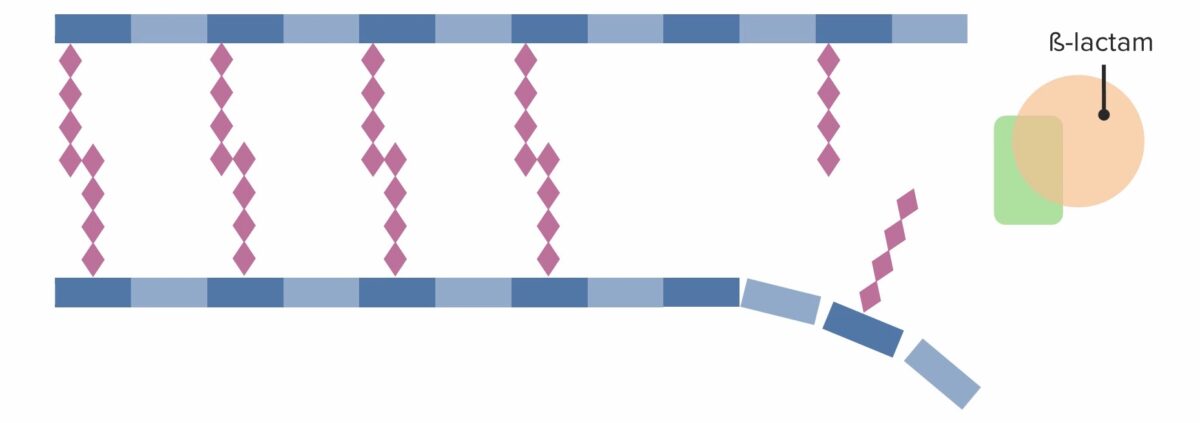
Estrutura das células bacterianas

Estrutura das paredes celulares bacterianas

Imagem por Lecturio. Licença: CC BY-NC-SA 4.0

Mecanismo de ação

Todos os beta-lactâmicos atuam irreversivelmente ligando-se e inibindo as PBPs PBPs Bacterial proteins that share the property of binding irreversibly to penicillins and other antibacterial agents derived from lactams. The penicillin-binding proteins are primarily enzymes involved in cell wall biosynthesis including muramoylpentapeptide carboxypeptidase; peptide synthases; transpeptidases; and hexosyltransferases. Penicillins os antibióticos beta-lactâmicos inibem a síntese da parede celular
Atividade bactericida

Os beta-lactâmicos, incluindo os carbapenemes e os monobactam, são bactericidas (em vez de bacteriostáticos).

  • A parede celular bacteriana é necessária para a sua sobrevivência → sem ela, inicia-se a morte celular
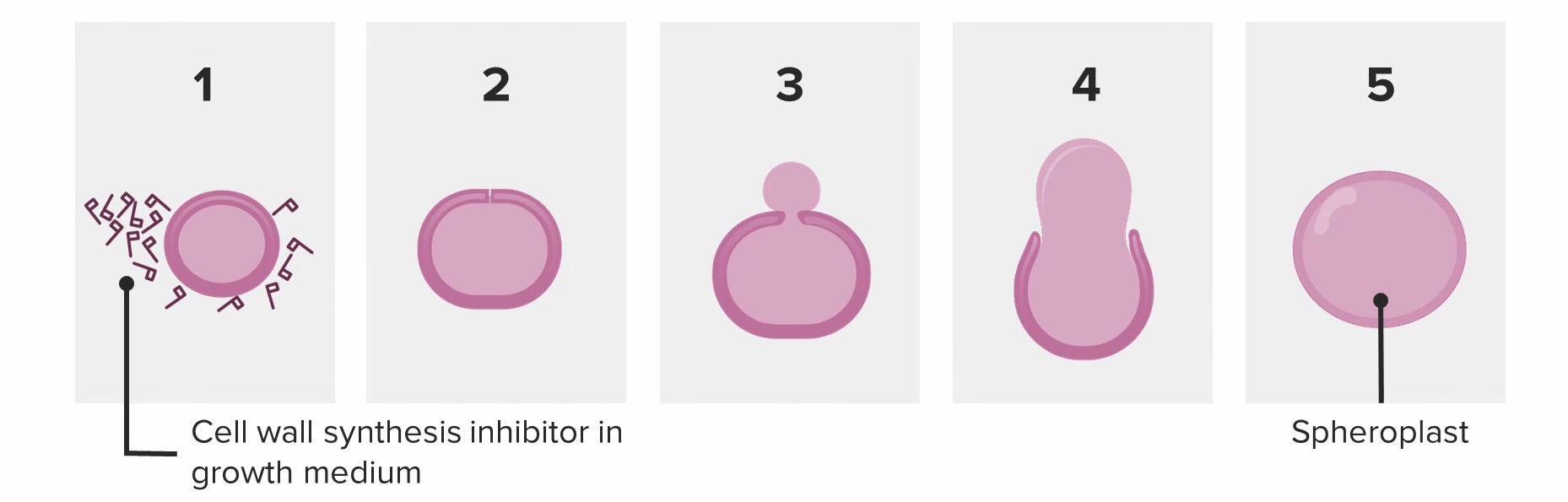
  • Quando as bactérias se tentam replicar, perdem as suas paredes celulares.
  • Na presença de beta-lactâmicos, no entanto, são incapazes de formar novas paredes celulares.
  • As bactérias são incapazes de se dividir com eficácia, e a célula restante autocatalisa-se e morre.
Bactérias a tentar dividir-se na presença de penicilina

Bactéria a tentar dividir-se na presença de penicilina:
A bactéria acaba por de libertar da sua parede e se transformar num esferoplasto. O esferoplasto é incapaz de sobreviver e autocatalisa-se (morre).

Imagem por Lecturio. Licença: CC BY-NC-SA 4.0
Mecanismos de resistência

As bactérias usam 3 mecanismos primários para resistir aos beta-lactâmicos:

  • Resistência a beta-lactamase Beta-Lactamase Penicillins:
    • A beta-lactamase Beta-Lactamase Penicillins é uma enzima que cliva o anel beta-lactama e que inativa o antibiótico.
    • O tipo de resistência mais MAIS Androgen Insensitivity Syndrome comum
    • Embora a maioria dos carbapenemes e monobactames sejam resistentes às beta-lactamases, há uma resistência crescente, especialmente entre os organismos gram-negativos.
    • As carbapenemases são beta-lactamases que conseguem hidrolizar carbapenemes e outros antibióticos beta-lactâmicos (por exemplo, penicilina, cefalosporinas).
  • Resistência mediada por PBP (↓ ligação a PBPs PBPs Bacterial proteins that share the property of binding irreversibly to penicillins and other antibacterial agents derived from lactams. The penicillin-binding proteins are primarily enzymes involved in cell wall biosynthesis including muramoylpentapeptide carboxypeptidase; peptide synthases; transpeptidases; and hexosyltransferases. Penicillins):
    • Mutações nas PBPs PBPs Bacterial proteins that share the property of binding irreversibly to penicillins and other antibacterial agents derived from lactams. The penicillin-binding proteins are primarily enzymes involved in cell wall biosynthesis including muramoylpentapeptide carboxypeptidase; peptide synthases; transpeptidases; and hexosyltransferases. Penicillins → resultam em ↓ afinidade dos beta-lactâmicos para as PBP
    • Apesar das mutações, estas PBPs PBPs Bacterial proteins that share the property of binding irreversibly to penicillins and other antibacterial agents derived from lactams. The penicillin-binding proteins are primarily enzymes involved in cell wall biosynthesis including muramoylpentapeptide carboxypeptidase; peptide synthases; transpeptidases; and hexosyltransferases. Penicillins ainda são capazes de produzir uma parede celular.
  • ↓ Permeabilidade da membrana
    • Os carbapenemes entram nas células através de canais especializados.
      • A evidência sugere que os carbapenemes não usam os canais de porina usados por outros beta-lactâmicos; usam um canal diferente.
      • Embora menos comum, este canal pode ser alterado para ↓ a permeabilidade aos carbapenemes
    • ↓ Permeabilidade → ↓ antibiótico dentro da célula → resistência a antibióticos
    • Um mecanismo comum de resistência contra carbapenemes na Pseudomonas aeruginosa Pseudomonas aeruginosa A species of gram-negative, aerobic, rod-shaped bacteria commonly isolated from clinical specimens (wound, burn, and urinary tract infections). It is also found widely distributed in soil and water. P. Aeruginosa is a major agent of nosocomial infection. Pseudomonas

Mecanismo de degradação do imipenem Imipenem Semisynthetic thienamycin that has a wide spectrum of antibacterial activity against gram-negative and gram-positive aerobic and anaerobic bacteria, including many multiresistant strains. It is stable to beta-lactamases. Clinical studies have demonstrated high efficacy in the treatment of infections of various body systems. Its effectiveness is enhanced when it is administered in combination with cilastatin, a renal dipeptidase inhibitor. Carbapenems and Aztreonam

  • Desidropeptidase renal: um tipo diferente de enzima produzida pelo rim, que é capaz de inativar o imipenem Imipenem Semisynthetic thienamycin that has a wide spectrum of antibacterial activity against gram-negative and gram-positive aerobic and anaerobic bacteria, including many multiresistant strains. It is stable to beta-lactamases. Clinical studies have demonstrated high efficacy in the treatment of infections of various body systems. Its effectiveness is enhanced when it is administered in combination with cilastatin, a renal dipeptidase inhibitor. Carbapenems and Aztreonam
  • A cilastatina é um inibidor da desidropeptidase e é sempre administrada em associação com o imipenem Imipenem Semisynthetic thienamycin that has a wide spectrum of antibacterial activity against gram-negative and gram-positive aerobic and anaerobic bacteria, including many multiresistant strains. It is stable to beta-lactamases. Clinical studies have demonstrated high efficacy in the treatment of infections of various body systems. Its effectiveness is enhanced when it is administered in combination with cilastatin, a renal dipeptidase inhibitor. Carbapenems and Aztreonam.

Inibidores de beta-lactamase Beta-Lactamase Penicillins

Devido ao crescente problema de resistência das beta-lactamases, foram desenvolvidos inibidores da beta-lactamase Beta-Lactamase Penicillins que costumam ser combinados com diferentes antibióticos beta-lactâmicos. As combinações disponíveis de carbapeneme e monobactam/inibidor de beta-lactamase Beta-Lactamase Penicillins incluem:

  • Meropenem Meropenem A thienamycin derivative antibacterial agent that is more stable to renal dehydropeptidase I than imipenem, but does not need to be given with an enzyme inhibitor such as cilastatin. It is used in the treatment of bacterial infections, including infections in immunocompromised patients. Carbapenems and Aztreonam/vaborbactam
  • Imipenem Imipenem Semisynthetic thienamycin that has a wide spectrum of antibacterial activity against gram-negative and gram-positive aerobic and anaerobic bacteria, including many multiresistant strains. It is stable to beta-lactamases. Clinical studies have demonstrated high efficacy in the treatment of infections of various body systems. Its effectiveness is enhanced when it is administered in combination with cilastatin, a renal dipeptidase inhibitor. Carbapenems and Aztreonam/cilastatina/relebactam
  • Aztreonam Aztreonam The carbapenems and aztreonam are both members of the bactericidal beta-lactam family of antibiotics (similar to penicillins). They work by preventing bacteria from producing their cell wall, ultimately leading to bacterial cell death. Carbapenems and Aztreonam/ avibactam Avibactam Cephalosporins

Carbapenemes

Farmacocinética

  • Distribuição: penetram bem em todos os fluidos e tecidos corporais, incluindo o fluido peritoneal, o fluido pulmonar, o osso, a bílis e a urina
  • Ligação proteica:
    • < 20%: meropenem Meropenem A thienamycin derivative antibacterial agent that is more stable to renal dehydropeptidase I than imipenem, but does not need to be given with an enzyme inhibitor such as cilastatin. It is used in the treatment of bacterial infections, including infections in immunocompromised patients. Carbapenems and Aztreonam, imipenem Imipenem Semisynthetic thienamycin that has a wide spectrum of antibacterial activity against gram-negative and gram-positive aerobic and anaerobic bacteria, including many multiresistant strains. It is stable to beta-lactamases. Clinical studies have demonstrated high efficacy in the treatment of infections of various body systems. Its effectiveness is enhanced when it is administered in combination with cilastatin, a renal dipeptidase inhibitor. Carbapenems and Aztreonam, doripenem Doripenem A carbapenem derivative antibacterial agent that is more stable to renal dehydropeptidase I than imipenem, but does not need to be given with an enzyme inhibitor such as cilastatin. It is used in the treatment of infections such as hospital-acquired pneumonia, and complicated intra-abdominal or urinary-tract infections, including pyelonephritis. Carbapenems and Aztreonam
    • > 85%: ertapenem Ertapenem A carbapenem derivative antibacterial agent that is more stable to renal dehydropeptidase I than imipenem, but does not need to be given with an enzyme inhibitor such as cilastatin. It is used in the treatment of gram-positive and gram-negative bacterial infections including intra-abdominal infections, acute gynecological infections, complicated urinary tract infections, skin infections, and respiratory tract infections. It is also used to prevent infection in colorectal surgery. Carbapenems and Aztreonam
  • Metabolismo:
    • Imipenem Imipenem Semisynthetic thienamycin that has a wide spectrum of antibacterial activity against gram-negative and gram-positive aerobic and anaerobic bacteria, including many multiresistant strains. It is stable to beta-lactamases. Clinical studies have demonstrated high efficacy in the treatment of infections of various body systems. Its effectiveness is enhanced when it is administered in combination with cilastatin, a renal dipeptidase inhibitor. Carbapenems and Aztreonam:
      • Metabolizado nos túbulos renais proximais pela desidropeptidase I renal
      • Para prolongar a atividade do fármaco, o imipenem Imipenem Semisynthetic thienamycin that has a wide spectrum of antibacterial activity against gram-negative and gram-positive aerobic and anaerobic bacteria, including many multiresistant strains. It is stable to beta-lactamases. Clinical studies have demonstrated high efficacy in the treatment of infections of various body systems. Its effectiveness is enhanced when it is administered in combination with cilastatin, a renal dipeptidase inhibitor. Carbapenems and Aztreonam é combinado com cilastatina, um inibidor de desidropeptidases.
    • Outros:
      • Estável contra a desidropeptidase I renal, portanto pode ser administrado sem cilastatina
      • Hidrólise hepática do anel beta-lactama para metabolitos inativos
  • Semi-vida:
    • Ertapenem Ertapenem A carbapenem derivative antibacterial agent that is more stable to renal dehydropeptidase I than imipenem, but does not need to be given with an enzyme inhibitor such as cilastatin. It is used in the treatment of gram-positive and gram-negative bacterial infections including intra-abdominal infections, acute gynecological infections, complicated urinary tract infections, skin infections, and respiratory tract infections. It is also used to prevent infection in colorectal surgery. Carbapenems and Aztreonam: aproximadamente 4 horas → administração uma vez por dia
    • Outros: 1–2 horas; requer administração mais MAIS Androgen Insensitivity Syndrome frequente
  • Excreção:
    • Principalmente na urina como fármaco inalterado
    • Alguns têm níveis muito pequenos de excreção fecal.

Indicações

  • Considerados antibióticos de largo espectro com atividade contra:
    • Organismos gram-positivos:
      • Streptococcus Streptococcus Streptococcus is one of the two medically important genera of gram-positive cocci, the other being Staphylococcus. Streptococci are identified as different species on blood agar on the basis of their hemolytic pattern and sensitivity to optochin and bacitracin. There are many pathogenic species of streptococci, including S. pyogenes, S. agalactiae, S. pneumoniae, and the viridans streptococci. Streptococcus spp.
      • Staphylococcus Staphylococcus Staphylococcus is a medically important genera of Gram-positive, aerobic cocci. These bacteria form clusters resembling grapes on culture plates. Staphylococci are ubiquitous for humans, and many strains compose the normal skin flora. Staphylococcus (não ativo contra MRSA MRSA A strain of Staphylococcus aureus that is non-susceptible to the action of methicillin. The mechanism of resistance usually involves modification of normal or the presence of acquired penicillin binding proteins. Staphylococcus)
      • Enterococcus Enterococcus Enterococcus is a genus of oval-shaped gram-positive cocci that are arranged in pairs or short chains. Distinguishing factors include optochin resistance and the presence of pyrrolidonyl arylamidase (PYR) and Lancefield D antigen. Enterococcus is part of the normal flora of the human GI tract. Enterococcus faecalis
      • Listeria Listeria Listeria spp. are motile, flagellated, gram-positive, facultative intracellular bacilli. The major pathogenic species is Listeria monocytogenes. Listeria are part of the normal gastrointestinal flora of domestic mammals and poultry and are transmitted to humans through the ingestion of contaminated food, especially unpasteurized dairy products. Listeria Monocytogenes/Listeriosis spp.
    • A maioria das Enterobacteriaceae Enterobacteriaceae A family of gram-negative, facultatively anaerobic, rod-shaped bacteria that do not form endospores. Its organisms are distributed worldwide with some being saprophytes and others being plant and animal parasites. Many species are of considerable economic importance due to their pathogenic effects on agriculture and livestock. Cephalosporins:
      • Escherichia coli Escherichia coli The gram-negative bacterium Escherichia coli is a key component of the human gut microbiota. Most strains of E. coli are avirulent, but occasionally they escape the GI tract, infecting the urinary tract and other sites. Less common strains of E. coli are able to cause disease within the GI tract, most commonly presenting as abdominal pain and diarrhea. Escherichia coli
      • Klebsiella Klebsiella Klebsiella are encapsulated gram-negative, lactose-fermenting bacilli. They form pink colonies on MacConkey agar due to lactose fermentation. The main virulence factor is a polysaccharide capsule. Klebsiella pneumoniae is the most important pathogenic species. Klebsiella
      • Proteus Proteus Proteus spp. are gram-negative, facultatively anaerobic bacilli. Different types of infection result from Proteus, but the urinary tract is the most common site. The majority of cases are caused by Proteus mirabilis (P. mirabilis). The bacteria are part of the normal intestinal flora and are also found in the environment. Proteus
      • Serratia Serratia A genus of gram-negative, facultatively anaerobic, rod-shaped bacteria that occurs in the natural environment (soil, water, and plant surfaces) or as an opportunistic human pathogen. Acute Cholangitis
      • Enterobacter Enterobacter Multidrug-resistant Organisms and Nosocomial Infections
      • Citrobacter Citrobacter Multidrug-resistant Organisms and Nosocomial Infections
    • H. influenzae H. influenzae A species of Haemophilus found on the mucous membranes of humans and a variety of animals. The species is further divided into biotypes I through VIII. Haemophilus e N. gonorrhoeae N. gonorrhoeae A species of gram-negative, aerobic bacteria primarily found in purulent venereal discharges. It is the causative agent of gonorrhea. Neisseria produtores de beta-lactamases
    • Pseudomonas aeruginosa Pseudomonas aeruginosa A species of gram-negative, aerobic, rod-shaped bacteria commonly isolated from clinical specimens (wound, burn, and urinary tract infections). It is also found widely distributed in soil and water. P. Aeruginosa is a major agent of nosocomial infection. Pseudomonas
    • Anaeróbios:
      • Bacteroides Bacteroides Bacteroides is a genus of opportunistic, anaerobic, gram-negative bacilli. Bacteroides fragilis is the most common species involved in human disease and is part of the normal flora of the large intestine. Bacteroides
      • Fusobacterium Fusobacterium A genus of gram-negative, anaerobic, rod-shaped bacteria found in cavities of humans and other animals. No endospores are formed. Some species are pathogenic and occur in various purulent or gangrenous infections. Dog and Cat Bites
      • Clostridium
      • Peptostreptococcus Peptostreptococcus A genus of gram-positive, anaerobic, coccoid bacteria that is part of the normal flora of humans. Its organisms are opportunistic pathogens causing bacteremias and soft tissue infections. Perianal and Perirectal Abscess
  • Normalmente reservado para:
    • Infeções graves e/ou com risco de vida
    • Infeções multirresistentes
    • Infeções associadas aos cuidados de saúde (IACS)
  • Os usos clínicos comuns incluem:
    • Infeções intra-abdominais e pélvicas graves (por exemplo, apendicite com rotura, abortos séticos)
    • Infeções complicadas da pele e dos tecidos moles Moles Primary Skin Lesions
    • Meningite bacteriana
    • Abcessos intracranianos e espinhais
    • Osteomielite
    • Pneumonia Pneumonia Pneumonia or pulmonary inflammation is an acute or chronic inflammation of lung tissue. Causes include infection with bacteria, viruses, or fungi. In more rare cases, pneumonia can also be caused through toxic triggers through inhalation of toxic substances, immunological processes, or in the course of radiotherapy. Pneumonia complicada e/ou associada a cuidados de saúde (PACS)
    • Infeções do trato urinário (ITUs) complicadas
    • Sépsis
    • Neutropenia Neutropenia Neutrophils are an important component of the immune system and play a significant role in the eradication of infections. Low numbers of circulating neutrophils, referred to as neutropenia, predispose the body to recurrent infections or sepsis, though patients can also be asymptomatic. Neutropenia febril
  • Os carbapenemes atravessam a placenta Placenta A highly vascularized mammalian fetal-maternal organ and major site of transport of oxygen, nutrients, and fetal waste products. It includes a fetal portion (chorionic villi) derived from trophoblasts and a maternal portion (decidua) derived from the uterine endometrium. The placenta produces an array of steroid, protein and peptide hormones (placental hormones). Placenta, Umbilical Cord, and Amniotic Cavity, mas geralmente são considerados seguros na gravidez se forem considerados necessários.

Efeitos adversos

  • Toxicidade do SNC (especialmente em pacientes com doença do SNC subjacente ou diminuição da função renal):
    • Alteração do estado mental
    • Mioclonias
    • Convulsões (especialmente imipenem Imipenem Semisynthetic thienamycin that has a wide spectrum of antibacterial activity against gram-negative and gram-positive aerobic and anaerobic bacteria, including many multiresistant strains. It is stable to beta-lactamases. Clinical studies have demonstrated high efficacy in the treatment of infections of various body systems. Its effectiveness is enhanced when it is administered in combination with cilastatin, a renal dipeptidase inhibitor. Carbapenems and Aztreonam)
  • Efeitos hematológicos:
    • Anemia Anemia Anemia is a condition in which individuals have low Hb levels, which can arise from various causes. Anemia is accompanied by a reduced number of RBCs and may manifest with fatigue, shortness of breath, pallor, and weakness. Subtypes are classified by the size of RBCs, chronicity, and etiology. Anemia: Overview and Types
    • Trombocitopenia
  • Distúrbios GI
  • Transaminases Transaminases A subclass of enzymes of the transferase class that catalyze the transfer of an amino group from a donor (generally an amino acid) to an acceptor (generally a 2-keto acid). Most of these enzymes are pyridoxyl phosphate proteins. Autoimmune Hepatitis séricas
  • Rash Rash Rocky Mountain Spotted Fever
  • Sobreinfeção:
    • Infeções fúngicas
    • Clostridioides difficile/colite pseudomembranosa

Contraindicações

  • Alergias a beta-lactâmicos
  • Utilizar com precaução em pacientes que têm:
    • Doença do SNC subjacente
    • Diminuição da função renal
  • O imipenem Imipenem Semisynthetic thienamycin that has a wide spectrum of antibacterial activity against gram-negative and gram-positive aerobic and anaerobic bacteria, including many multiresistant strains. It is stable to beta-lactamases. Clinical studies have demonstrated high efficacy in the treatment of infections of various body systems. Its effectiveness is enhanced when it is administered in combination with cilastatin, a renal dipeptidase inhibitor. Carbapenems and Aztreonam está contraindicado nas infeções pediátricas do SNC devido ao potencial de convulsão.

Monobactam: Aztreonam

Farmacocinética

  • Distribuído amplamente nos tecidos do corpo, no LCR, nas secreções brônquicas, no fluido peritoneal, na bílis e no osso
  • Ligação às proteínas: aproximadamente 50%
  • Metabolismo:
    • Metabolismo hepático menor
    • Não é degradado por certos tipos de beta-lactamases
  • Semi-vida: 1–2 horas com função renal normal
  • Excreção:
    • 60%–70% na urina como fármaco inalterado
    • Aproximadamente 10% nas fezes

Indicações

  • Espectro mais MAIS Androgen Insensitivity Syndrome estreito do que dos carbapenemes
  • Normalmente usado para infeções por bacilos gram-negativos aeróbios em pacientes com alergias graves a beta-lactâmicos que requerem terapia com beta-lactâmicos:
    • Infeções das vias aéreas inferiores (IVAI)
    • ITUs
    • Infeções da pele e dos tecidos moles Moles Primary Skin Lesions
    • Infeções intra-abdominais e pélvicas
    • Meningite bacteriana
  • Tem atividade contra:
    • Enterobacteriaceae Enterobacteriaceae A family of gram-negative, facultatively anaerobic, rod-shaped bacteria that do not form endospores. Its organisms are distributed worldwide with some being saprophytes and others being plant and animal parasites. Many species are of considerable economic importance due to their pathogenic effects on agriculture and livestock. Cephalosporins que não produz beta-lactamases
    • Pseudomonas aeruginosa Pseudomonas aeruginosa A species of gram-negative, aerobic, rod-shaped bacteria commonly isolated from clinical specimens (wound, burn, and urinary tract infections). It is also found widely distributed in soil and water. P. Aeruginosa is a major agent of nosocomial infection. Pseudomonas
  • Não ativo contra:
    • Bactérias gram-positivas
    • Anaeróbios
  • Sinérgico com aminoglicosídeos

Efeitos adversos

  • Transaminases Transaminases A subclass of enzymes of the transferase class that catalyze the transfer of an amino group from a donor (generally an amino acid) to an acceptor (generally a 2-keto acid). Most of these enzymes are pyridoxyl phosphate proteins. Autoimmune Hepatitis séricas
  • Neutropenia Neutropenia Neutrophils are an important component of the immune system and play a significant role in the eradication of infections. Low numbers of circulating neutrophils, referred to as neutropenia, predispose the body to recurrent infections or sepsis, though patients can also be asymptomatic. Neutropenia em crianças
  • Rash Rash Rocky Mountain Spotted Fever
  • Distúrbios GI
  • Vertigem, dores de cabeça
  • Sobreinfeção

Contraindicações

  • Alergia ao aztreonam Aztreonam The carbapenems and aztreonam are both members of the bactericidal beta-lactam family of antibiotics (similar to penicillins). They work by preventing bacteria from producing their cell wall, ultimately leading to bacterial cell death. Carbapenems and Aztreonam
  • As reações cruzadas com outros beta-lactâmicos são extremamente raras, embora possíveis.

Comparação da Cobertura de Antibióticos

Comparação baseada em mecanismos de ação

Os antibióticos podem ser classificados de várias formas. Uma maneira é classificá-los por mecanismo de ação:

Tabela: Antibióticos classificados por mecanismo de ação primário
Mecanismo Classes de antibióticos
Inibidores da síntese da parede celular bacteriana
  • Penicilinas
  • Cefalosporinas
  • Penemes
  • Diversos
Inibidores da síntese de proteínas bacterianas
  • Tetraciclinas
  • Macrólidos
  • Cetolídeos
  • Lincosamidas
  • Estreptograminas
  • Linezolida
Agentes que atuam contra DNA DNA A deoxyribonucleotide polymer that is the primary genetic material of all cells. Eukaryotic and prokaryotic organisms normally contain DNA in a double-stranded state, yet several important biological processes transiently involve single-stranded regions. DNA, which consists of a polysugar-phosphate backbone possessing projections of purines (adenine and guanine) and pyrimidines (thymine and cytosine), forms a double helix that is held together by hydrogen bonds between these purines and pyrimidines (adenine to thymine and guanine to cytosine). DNA Types and Structure e/ou folato
  • Sulfonamidas
  • Trimetoprim
  • Fluoroquinolonas
Agentes antimicobacterianos
  • Agentes anti-TB
  • Agentes anti-hanseníase (lepra)
  • Agentes micobacterianos atípicos

Comparação com base na cobertura

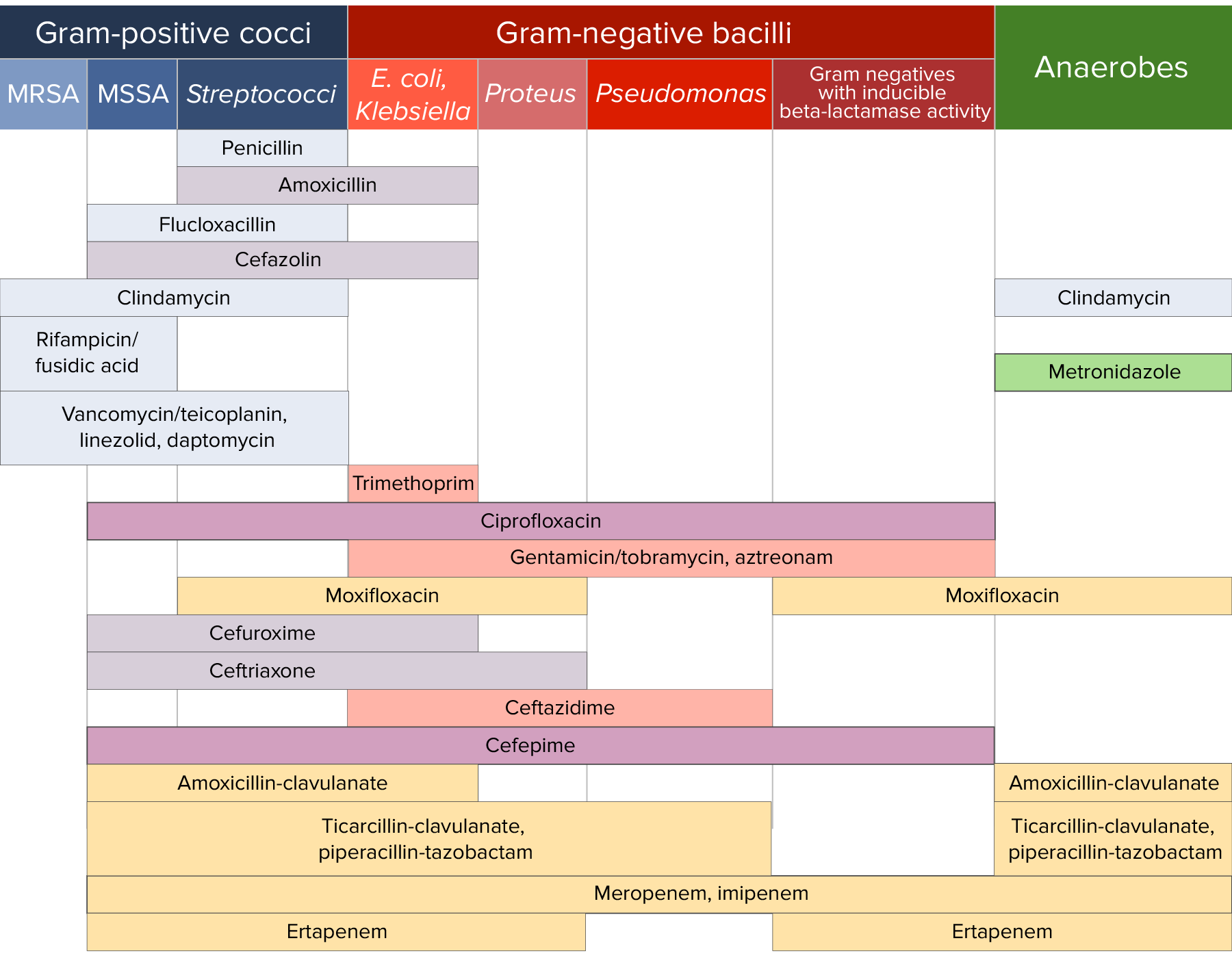
Diferentes antibióticos têm vários graus de atividade contra diferentes bactérias. A tabela a seguir descreve quais os antibióticos que têm atividade contra 3 classes importantes de bactérias, incluindo cocos gram-positivos, bacilos gram-negativos e anaeróbios.

Gráfico de sensibilidade a antibióticos

Sensibilidade aos antibióticos:
Gráfico que compara a cobertura microbiana de diferentes antibióticos para cocos gram-positivos, bacilos gram-negativos e anaeróbios.

Imagem por Lecturio. Licença: CC BY-NC-SA 4.0

Referências

  1. McCormack, J, Lalji, F. (2019). The “best” antibiotic sensitivity chart. Retrieved October 17, 2025, from https://therapeuticseducation.org/sites/therapeuticseducation.org/files/Antibiotic_Sensitivity_FINAL_Nov_2019.pdf 
  2. Letourneau, AR. (2023). Beta-lactam antibiotics: Mechanisms of action and resistance and adverse effects. In Bloom, A. (Ed.), Uptodate. Retrieved October 17, 2025, from https://www.uptodate.com/contents/beta-lactam-antibiotics-mechanisms-of-action-and-resistance-and-adverse-effects
  3. Letourneau, AR. (2025).  Combination beta-lactamase inhibitors, carbapenems, and monobactams. In Bloom, A. (Ed.), Uptodate. Retrieved October 17, 2025, from https://www.uptodate.com/contents/combination-beta-lactamase-inhibitors-carbapenems-and-monobactams 
  4. Pandey, N. (2023). Beta Lactam Antibiotics. StatPearls. Retrieved October 17, 2025, from https://www.statpearls.com/articlelibrary/viewarticle/18243/ 
  5. Werth, BJ. (2024). Carbapenems. Merck Manual. Retrieved October 17, 2025, from https://www.merckmanuals.com/professional/infectious-diseases/bacteria-and-antibacterial-drugs/carbapenems 
  6. Werth, BJ. (2024). Monobactams. Merck Manual. Retrieved October 17, 2025, from https://www.merckmanuals.com/professional/infectious-diseases/bacteria-and-antibacterial-drugs/monobactams?query=aztreonam 
  7. Lexidrug (2025). Drug Information Sheets, UpToDate, Retrieved October 17, 2025, from:

Crie sua conta gratuita ou faça login para continuar lendo!

Cadastre-se agora e tenha acesso grátis ao Lecturio, com páginas de conceitos, vídeos de medicina e questões para sua educação médica.

Aprende mais com a Lecturio:

Multiple devices displaying human anatomy and health education content.

Complementa o teu estudo da faculdade com o companheiro de estudo tudo-em-um da Lecturio, através de métodos de ensino baseados em evidência.

Estuda onde quiseres

Two iPhones display medical education apps, one showing anatomy, the other Bookmatcher.

A Lecturio Medical complementa o teu estudo através de métodos de ensino baseados em evidência, vídeos de palestras, perguntas e muito mais – tudo combinado num só lugar e fácil de usar.

User Reviews

Have a holly, jolly study session 🎁 Save 50% on all plans now >>

Que tengas una sesión de estudio alegre y navideña 🎁 Ahorra 50% en todos los planes >>

Details