
Domina Conceptos Médicos

Estudia para la escuela de medicina y tus examenes con Lecturio.

Virus del Nilo Occidental

El virus Virus Viruses are infectious, obligate intracellular parasites composed of a nucleic acid core surrounded by a protein capsid. Viruses can be either naked (non-enveloped) or enveloped. The classification of viruses is complex and based on many factors, including type and structure of the nucleoid and capsid, the presence of an envelope, the replication cycle, and the host range. Virology del Nilo Occidental es un virus Virus Viruses are infectious, obligate intracellular parasites composed of a nucleic acid core surrounded by a protein capsid. Viruses can be either naked (non-enveloped) or enveloped. The classification of viruses is complex and based on many factors, including type and structure of the nucleoid and capsid, the presence of an envelope, the replication cycle, and the host range. Virology de ácido ribonucleico (ARN) monocatenario, de sentido positivo y envuelto, del género Flavivirus Flavivirus A genus of flaviviridae containing several subgroups and many species. Most are arboviruses transmitted by mosquitoes or ticks. The type species is yellow fever virus. Tick-borne Encephalitis Virus. Las aves son los LOS Neisseria principales huéspedes y la enfermedad es transmitida con mayor frecuencia por los LOS Neisseria mosquitos Culex. La mayoría de las personas infectadas por el virus Virus Viruses are infectious, obligate intracellular parasites composed of a nucleic acid core surrounded by a protein capsid. Viruses can be either naked (non-enveloped) or enveloped. The classification of viruses is complex and based on many factors, including type and structure of the nucleoid and capsid, the presence of an envelope, the replication cycle, and the host range. Virology del Nilo Occidental son asintomáticas. Algunos pacientes desarrollan la fiebre del Nilo Occidental (una enfermedad febril autolimitada) y una proporción muy pequeña de pacientes desarrollan la enfermedad neuroinvasiva del Nilo Occidental. La enfermedad neuroinvasiva del Nilo Occidental incluye meningitis Meningitis Meningitis is inflammation of the meninges, the protective membranes of the brain, and spinal cord. The causes of meningitis are varied, with the most common being bacterial or viral infection. The classic presentation of meningitis is a triad of fever, altered mental status, and nuchal rigidity. Meningitis, encefalitis y parálisis flácida aguda. El diagnóstico se confirma con serología de suero, serología del líquido cefalorraquídeo (LCR) o reacción en EN Erythema nodosum is an immune-mediated panniculitis (inflammation of the subcutaneous fat) caused by a type IV (delayed-type) hypersensitivity reaction. It commonly manifests in young women as tender, erythematous nodules on the shins. Erythema Nodosum cadena de polimerasa ( PCR PCR Polymerase chain reaction (PCR) is a technique that amplifies DNA fragments exponentially for analysis. The process is highly specific, allowing for the targeting of specific genomic sequences, even with minuscule sample amounts. The PCR cycles multiple times through 3 phases: denaturation of the template DNA, annealing of a specific primer to the individual DNA strands, and synthesis/elongation of new DNA molecules. Polymerase Chain Reaction (PCR), por sus siglas en EN Erythema nodosum is an immune-mediated panniculitis (inflammation of the subcutaneous fat) caused by a type IV (delayed-type) hypersensitivity reaction. It commonly manifests in young women as tender, erythematous nodules on the shins. Erythema Nodosum inglés). No se dispone de terapia antiviral Antiviral Antivirals for Hepatitis B, por lo que el tratamiento es de soporte. La prevención se centra en EN Erythema nodosum is an immune-mediated panniculitis (inflammation of the subcutaneous fat) caused by a type IV (delayed-type) hypersensitivity reaction. It commonly manifests in young women as tender, erythematous nodules on the shins. Erythema Nodosum el control local de los LOS Neisseria mosquitos y el tamizaje de la sangre y órganos donados.

Last updated: Dec 15, 2025
Editorial responsibility: Stanley Oiseth, Lindsay Jones, Evelin Maza

Clasificación

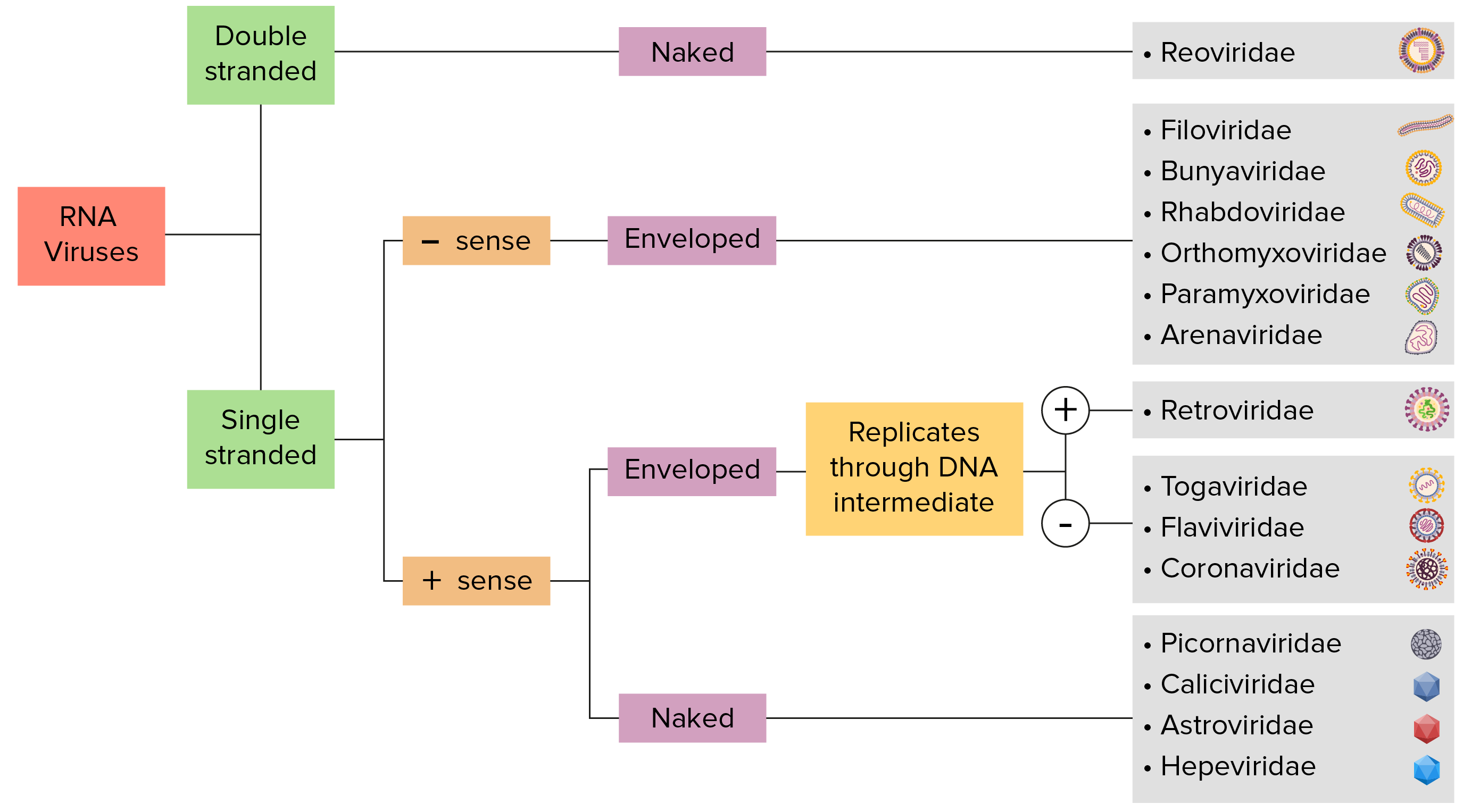
Diagrama de flujo de la clasificación de los virus de ARN

Identificación de los virus ARN:
Los virus pueden clasificarse de muchas maneras. Sin embargo, la mayoría de los virus tienen un genoma formado por ácido desoxirribonucleico (ADN) o ARN. Los virus con genoma ARN pueden caracterizarse además por tener ARN monocatenario o bicatenario. Los virus “envueltos” están cubiertos por una fina capa de membrana celular (normalmente tomada de la célula huésped). Si la capa está ausente, los virus se denominan “desnudos”. Los virus con genomas monocatenarios son de “sentido positivo” si el genoma se emplea directamente como ARN mensajero (ARNm), que se traduce en proteínas. Los virus monocatenarios de “sentido negativo” emplean la ARN polimerasa dependiente de ARN, una enzima viral, para transcribir su genoma en ARN mensajero.
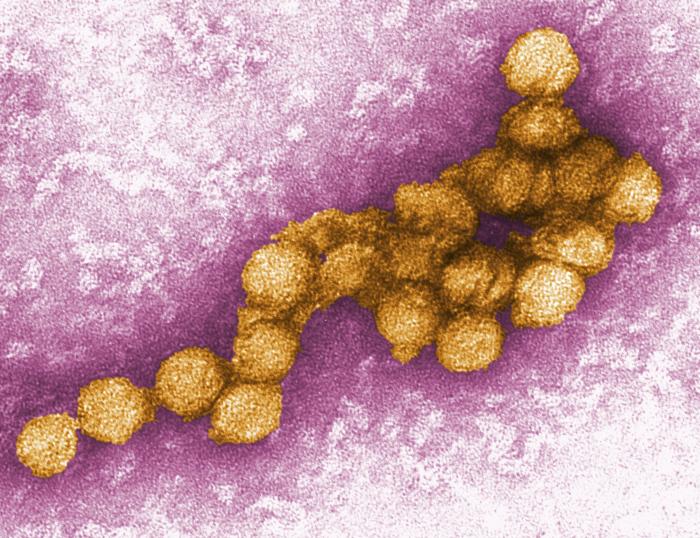
Imagen por Lecturio. Licencia: CC BY-NC-SA 4.0

Características Generales y Epidemiología

Características básicas del virus Virus Viruses are infectious, obligate intracellular parasites composed of a nucleic acid core surrounded by a protein capsid. Viruses can be either naked (non-enveloped) or enveloped. The classification of viruses is complex and based on many factors, including type and structure of the nucleoid and capsid, the presence of an envelope, the replication cycle, and the host range. Virology del Nilo Occidental

  • Taxonomía:
    • Familia Flaviviridae Flaviviridae A family of RNA viruses, many of which cause disease in humans and domestic animals. There are three genera flavivirus; pestivirus; and hepacivirus, as well as several unassigned species. Hepatitis C Virus
    • Género Flavivirus Flavivirus A genus of flaviviridae containing several subgroups and many species. Most are arboviruses transmitted by mosquitoes or ticks. The type species is yellow fever virus. Tick-borne Encephalitis Virus
  • Virus Virus Viruses are infectious, obligate intracellular parasites composed of a nucleic acid core surrounded by a protein capsid. Viruses can be either naked (non-enveloped) or enveloped. The classification of viruses is complex and based on many factors, including type and structure of the nucleoid and capsid, the presence of an envelope, the replication cycle, and the host range. Virology de ARN:
    • Monocatenario
    • Sentido positivo
    • Lineal
  • Esférico
  • Simetría icosaédrica
  • Envuelto
  • Tamaño: aproximadamente 50 nm
Virus del Nilo Occidental

Una imagen coloreada de microscopio electrónico de transmisión de los viriones del Nilo Occidental

Imagen: “West Nile virus” por CDC/P.E. Rollin. Licencia: Dominio Público

Enfermedad asociada

Dos linajes filogénicos del virus Virus Viruses are infectious, obligate intracellular parasites composed of a nucleic acid core surrounded by a protein capsid. Viruses can be either naked (non-enveloped) or enveloped. The classification of viruses is complex and based on many factors, including type and structure of the nucleoid and capsid, the presence of an envelope, the replication cycle, and the host range. Virology del Nilo Occidental causan las siguientes enfermedades:
  • Fiebre del Nilo Occidental
  • Enfermedad neuroinvasiva:
    • Meningitis Meningitis Meningitis is inflammation of the meninges, the protective membranes of the brain, and spinal cord. The causes of meningitis are varied, with the most common being bacterial or viral infection. The classic presentation of meningitis is a triad of fever, altered mental status, and nuchal rigidity. Meningitis
    • Encefalitis
    • Parálisis flácida aguda

Epidemiología

  • Número de casos en EN Erythema nodosum is an immune-mediated panniculitis (inflammation of the subcutaneous fat) caused by a type IV (delayed-type) hypersensitivity reaction. It commonly manifests in young women as tender, erythematous nodules on the shins. Erythema Nodosum Estados Unidos 1999–2015:
    • 44 000 en EN Erythema nodosum is an immune-mediated panniculitis (inflammation of the subcutaneous fat) caused by a type IV (delayed-type) hypersensitivity reaction. It commonly manifests in young women as tender, erythematous nodules on the shins. Erythema Nodosum total
    • 20 000 con enfermedad neuroinvasiva
  • Desarrollan una enfermedad grave: < 1%.
  • Tasa de mortalidad de los LOS Neisseria pacientes en EN Erythema nodosum is an immune-mediated panniculitis (inflammation of the subcutaneous fat) caused by a type IV (delayed-type) hypersensitivity reaction. It commonly manifests in young women as tender, erythematous nodules on the shins. Erythema Nodosum caso de enfermedad grave: 3%–15%
  • Una de las enfermedades arbovirales más ampliamente distribuidas
  • Distribución geográfica:

Patogénesis

Reservorios

  • Huésped principal: aves
  • Huéspedes accidentales:
    • Caballos
    • Humanos
    • Otros mamíferos

Transmisión

  • Vector: mosquitos Culex
  • Transfusiones sanguíneas
  • Trasplante de órganos
  • Transplacentario
Mosquito Culex

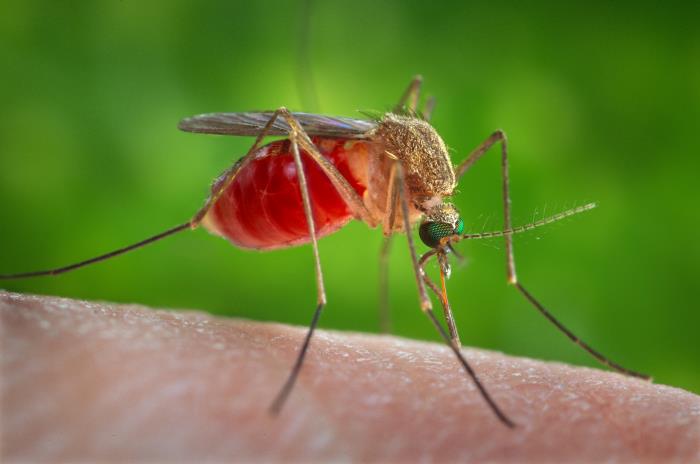
Una hembra mosquito Culex responsable de la transmisión del virus del Nilo Occidental

Imagen: “Culex mosquito” por CDC/James Gathany. Licencia: Dominio Público

Factores de riesgo del huésped

Mayor riesgo de infección:

  • Vivir en EN Erythema nodosum is an immune-mediated panniculitis (inflammation of the subcutaneous fat) caused by a type IV (delayed-type) hypersensitivity reaction. It commonly manifests in young women as tender, erythematous nodules on the shins. Erythema Nodosum zonas con altas temperaturas y precipitaciones
  • Vivir cerca de aguas estancadas
  • Vivir cerca de una población de aves huésped inmunológicamente susceptible

Mayor riesgo de enfermedad neuroinvasiva:

  • Edad > 60 años
  • Inmunosupresión:
    • Malignidad hematológica
    • Trasplante de órganos
    • Medicamentos
    • Diabetes Diabetes Diabetes mellitus (DM) is a metabolic disease characterized by hyperglycemia and dysfunction of the regulation of glucose metabolism by insulin. Type 1 DM is diagnosed mostly in children and young adults as the result of autoimmune destruction of β cells in the pancreas and the resulting lack of insulin. Type 2 DM has a significant association with obesity and is characterized by insulin resistance. Diabetes Mellitus
  • Otras condiciones médicas:
    • Enfermedad renal crónica
    • Hipertensión

Replicación viral

  • El virus Virus Viruses are infectious, obligate intracellular parasites composed of a nucleic acid core surrounded by a protein capsid. Viruses can be either naked (non-enveloped) or enveloped. The classification of viruses is complex and based on many factors, including type and structure of the nucleoid and capsid, the presence of an envelope, the replication cycle, and the host range. Virology interactúa con los LOS Neisseria receptores de superficie celular → endocitosis
  • pH pH The quantitative measurement of the acidity or basicity of a solution. Acid-Base Balance en EN Erythema nodosum is an immune-mediated panniculitis (inflammation of the subcutaneous fat) caused by a type IV (delayed-type) hypersensitivity reaction. It commonly manifests in young women as tender, erythematous nodules on the shins. Erythema Nodosum el endosoma → fusión de las membranas virales y endosomales → descobertura del virus Virus Viruses are infectious, obligate intracellular parasites composed of a nucleic acid core surrounded by a protein capsid. Viruses can be either naked (non-enveloped) or enveloped. The classification of viruses is complex and based on many factors, including type and structure of the nucleoid and capsid, the presence of an envelope, the replication cycle, and the host range. Virology.
  • La síntesis de proteínas virales se produce en EN Erythema nodosum is an immune-mediated panniculitis (inflammation of the subcutaneous fat) caused by a type IV (delayed-type) hypersensitivity reaction. It commonly manifests in young women as tender, erythematous nodules on the shins. Erythema Nodosum el retículo endoplásmico rugoso.
  • La replicación del genoma se produce en EN Erythema nodosum is an immune-mediated panniculitis (inflammation of the subcutaneous fat) caused by a type IV (delayed-type) hypersensitivity reaction. It commonly manifests in young women as tender, erythematous nodules on the shins. Erythema Nodosum las invaginaciones del retículo endoplásmico rugoso → los LOS Neisseria viriones se reempaquetan y ensamblan
  • Los LOS Neisseria viriones maduros salen de la célula.

Fisiopatología

  • El virus Virus Viruses are infectious, obligate intracellular parasites composed of a nucleic acid core surrounded by a protein capsid. Viruses can be either naked (non-enveloped) or enveloped. The classification of viruses is complex and based on many factors, including type and structure of the nucleoid and capsid, the presence of an envelope, the replication cycle, and the host range. Virology del Nilo Occidental es inyectado en EN Erythema nodosum is an immune-mediated panniculitis (inflammation of the subcutaneous fat) caused by a type IV (delayed-type) hypersensitivity reaction. It commonly manifests in young women as tender, erythematous nodules on the shins. Erythema Nodosum el huésped por un mosquito.
  • La replicación se produce en EN Erythema nodosum is an immune-mediated panniculitis (inflammation of the subcutaneous fat) caused by a type IV (delayed-type) hypersensitivity reaction. It commonly manifests in young women as tender, erythematous nodules on the shins. Erythema Nodosum los LOS Neisseria queratinocitos y en EN Erythema nodosum is an immune-mediated panniculitis (inflammation of the subcutaneous fat) caused by a type IV (delayed-type) hypersensitivity reaction. It commonly manifests in young women as tender, erythematous nodules on the shins. Erythema Nodosum las células dendríticas.
  • Propagación a través del sistema linfático → replicación en EN Erythema nodosum is an immune-mediated panniculitis (inflammation of the subcutaneous fat) caused by a type IV (delayed-type) hypersensitivity reaction. It commonly manifests in young women as tender, erythematous nodules on the shins. Erythema Nodosum los LOS Neisseria ganglios linfáticos
  • Se produce una viremia Viremia The presence of viruses in the blood. Erythema Infectiosum → propagación a los LOS Neisseria órganos viscerales → mayor replicación
  • Diseminación eventual al AL Amyloidosis sistema nervioso central (SNC) (el modo de entrada no está claro) → respuesta inflamatoria → daño neuronal → manifestaciones neurológicas

Presentación Clínica

La mayoría de los LOS Neisseria pacientes son asintomáticos. La enfermedad sintomática puede variar en EN Erythema nodosum is an immune-mediated panniculitis (inflammation of the subcutaneous fat) caused by a type IV (delayed-type) hypersensitivity reaction. It commonly manifests in young women as tender, erythematous nodules on the shins. Erythema Nodosum gravedad y presentación.

Fiebre del Nilo Occidental

Aproximadamente el 20% de los LOS Neisseria pacientes infectados desarrollarán una enfermedad leve y autolimitada.
  • Fiebre
  • Cefalea
  • Náuseas y vómitos
  • Anorexia Anorexia The lack or loss of appetite accompanied by an aversion to food and the inability to eat. It is the defining characteristic of the disorder anorexia nervosa. Anorexia Nervosa
  • Malestar
  • Mialgia
  • Dolor Dolor Inflammation ocular
  • Dolor Dolor Inflammation de espalda
  • Erupción:
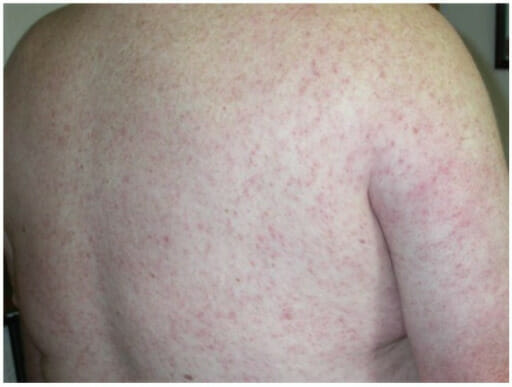
West nile virus

Erupción maculopapular debida al virus del Nilo Occidental

Imagen: “Diffuse maculopapular rash associated with West Nile virus infection” por James J Sevjar. Licencia: CC BY 3.0

Enfermedad neuroinvasiva

Aproximadamente el 1% de los LOS Neisseria pacientes infectados pueden experimentar:

  • Meningitis Meningitis Meningitis is inflammation of the meninges, the protective membranes of the brain, and spinal cord. The causes of meningitis are varied, with the most common being bacterial or viral infection. The classic presentation of meningitis is a triad of fever, altered mental status, and nuchal rigidity. Meningitis:
    • Fiebre
    • Cefalea
    • Rigidez nucal
    • Fotofobia
  • Encefalitis:
    • Alteración del estado mental
    • Debilidad muscular severa
    • Síntomas extrapiramidales:
      • Rigidez
      • Bradicinesia
      • Inestabilidad postural
    • Temblor
    • Mioclonía
    • Convulsiones
  • Parálisis flácida aguda:
    • Parálisis de las extremidades generalmente aislada y asimétrica
    • Puede producirse una parálisis respiratoria.
  • Otras manifestaciones:
    • Síndrome de Guillain-Barré
    • Polineuropatía
    • Parálisis del nervio craneal

Diagnóstico

Estudios definitivos:

  • Serología de suero o LCR
  • PCR PCR Polymerase chain reaction (PCR) is a technique that amplifies DNA fragments exponentially for analysis. The process is highly specific, allowing for the targeting of specific genomic sequences, even with minuscule sample amounts. The PCR cycles multiple times through 3 phases: denaturation of the template DNA, annealing of a specific primer to the individual DNA strands, and synthesis/elongation of new DNA molecules. Polymerase Chain Reaction (PCR) para detectar el ARN viral
  • Cultivo viral

Evaluación de soporte:

  • Análisis de sangre:
    • Leucocitosis
    • Hiponatremia → síndrome de secreción inadecuada de hormona antidiurética ( SIADH SIADH Syndrome of inappropriate antidiuretic hormone secretion (SIADH) is a disorder of impaired water excretion due to the inability to suppress the secretion of antidiuretic hormone (ADH). SIADH is characterized by impaired water excretion leading to dilutional hyponatremia, which is mainly asymptomatic but may cause neurologic symptoms. S Syndrome of Inappropriate Antidiuretic Hormone Secretion (SIADH), por sus siglas en EN Erythema nodosum is an immune-mediated panniculitis (inflammation of the subcutaneous fat) caused by a type IV (delayed-type) hypersensitivity reaction. It commonly manifests in young women as tender, erythematous nodules on the shins. Erythema Nodosum inglés) por encefalitis
  • Examen del LCR:
    • Pleocitosis con predominio de linfocitos (predominio de neutrófilos al AL Amyloidosis principio del curso)
    • Niveles normales de glucosa
    • ↑ Proteína
  • Resonancia magnética (RM) del cerebro: realce en EN Erythema nodosum is an immune-mediated panniculitis (inflammation of the subcutaneous fat) caused by a type IV (delayed-type) hypersensitivity reaction. It commonly manifests in young women as tender, erythematous nodules on the shins. Erythema Nodosum las leptomeninges Leptomeninges Meninges: Anatomy, ganglios basales y tálamos

Tratamiento

Actualmente, no se dispone de terapia antiviral Antiviral Antivirals for Hepatitis B; el tratamiento es de soporte. En EN Erythema nodosum is an immune-mediated panniculitis (inflammation of the subcutaneous fat) caused by a type IV (delayed-type) hypersensitivity reaction. It commonly manifests in young women as tender, erythematous nodules on the shins. Erythema Nodosum pacientes con enfermedad neuroinvasiva, puede ser necesario lo siguiente:

  • Cuidados en EN Erythema nodosum is an immune-mediated panniculitis (inflammation of the subcutaneous fat) caused by a type IV (delayed-type) hypersensitivity reaction. It commonly manifests in young women as tender, erythematous nodules on the shins. Erythema Nodosum la unidad de cuidados intensivos (UCI)
  • Monitorización de la presión intracraneal
  • Tratamiento de las convulsiones
  • Soporte ventilatorio por insuficiencia respiratoria o incapacidad para proteger las vías respiratorias
  • Terapia ocupacional y física

Prevención

  • Control local de mosquitos
  • Repelente de insectos
  • Ropa protectora
  • Tamizaje de donantes de sangre y órganos

Comparación de Especies Similares de Flavivirus

Tabla: Características y enfermedades de varias especies de Flavivirus Flavivirus A genus of flaviviridae containing several subgroups and many species. Most are arboviruses transmitted by mosquitoes or ticks. The type species is yellow fever virus. Tick-borne Encephalitis Virus
Organismo Virus Virus Viruses are infectious, obligate intracellular parasites composed of a nucleic acid core surrounded by a protein capsid. Viruses can be either naked (non-enveloped) or enveloped. The classification of viruses is complex and based on many factors, including type and structure of the nucleoid and capsid, the presence of an envelope, the replication cycle, and the host range. Virology de la encefalitis transmitida por garrapatas Virus Virus Viruses are infectious, obligate intracellular parasites composed of a nucleic acid core surrounded by a protein capsid. Viruses can be either naked (non-enveloped) or enveloped. The classification of viruses is complex and based on many factors, including type and structure of the nucleoid and capsid, the presence of an envelope, the replication cycle, and the host range. Virology de la encefalitis japonesa Virus Virus Viruses are infectious, obligate intracellular parasites composed of a nucleic acid core surrounded by a protein capsid. Viruses can be either naked (non-enveloped) or enveloped. The classification of viruses is complex and based on many factors, including type and structure of the nucleoid and capsid, the presence of an envelope, the replication cycle, and the host range. Virology de la encefalitis de San Louis Virus Virus Viruses are infectious, obligate intracellular parasites composed of a nucleic acid core surrounded by a protein capsid. Viruses can be either naked (non-enveloped) or enveloped. The classification of viruses is complex and based on many factors, including type and structure of the nucleoid and capsid, the presence of an envelope, the replication cycle, and the host range. Virology del Nilo Occidental
Características Las características estructurales son casi idénticas.
Región América del Norte
Transmisión Garrapata Mosquito Mosquito Mosquito
Cuadro Clínico
  • La mayoría son asintomáticas.
  • Síntomas inicialmente inespecíficos
  • Fase neurológica:
    • Meningitis Meningitis Meningitis is inflammation of the meninges, the protective membranes of the brain, and spinal cord. The causes of meningitis are varied, with the most common being bacterial or viral infection. The classic presentation of meningitis is a triad of fever, altered mental status, and nuchal rigidity. Meningitis
    • Encefalitis
    • Meningoencefalitis
  • Enfermedad febril inespecífica
  • Meningitis Meningitis Meningitis is inflammation of the meninges, the protective membranes of the brain, and spinal cord. The causes of meningitis are varied, with the most common being bacterial or viral infection. The classic presentation of meningitis is a triad of fever, altered mental status, and nuchal rigidity. Meningitis
  • Encefalitis
  • Parálisis flácida aguda
  • Guillain-Barré
  • La mayoría son asintomáticas.
  • Enfermedad febril inespecífica
  • Meningitis Meningitis Meningitis is inflammation of the meninges, the protective membranes of the brain, and spinal cord. The causes of meningitis are varied, with the most common being bacterial or viral infection. The classic presentation of meningitis is a triad of fever, altered mental status, and nuchal rigidity. Meningitis
  • Encefalitis
  • Meningoencefalitis
  • La mayoría son asintomáticas.
  • Fiebre del Nilo Occidental
  • Enfermedad neuroinvasiva:
    • Meningitis Meningitis Meningitis is inflammation of the meninges, the protective membranes of the brain, and spinal cord. The causes of meningitis are varied, with the most common being bacterial or viral infection. The classic presentation of meningitis is a triad of fever, altered mental status, and nuchal rigidity. Meningitis
    • Encefalitis
    • Parálisis flácida aguda
Diagnóstico
  • Serología
  • PCR PCR Polymerase chain reaction (PCR) is a technique that amplifies DNA fragments exponentially for analysis. The process is highly specific, allowing for the targeting of specific genomic sequences, even with minuscule sample amounts. The PCR cycles multiple times through 3 phases: denaturation of the template DNA, annealing of a specific primer to the individual DNA strands, and synthesis/elongation of new DNA molecules. Polymerase Chain Reaction (PCR)
Serología Serología
  • Serología
  • PCR PCR Polymerase chain reaction (PCR) is a technique that amplifies DNA fragments exponentially for analysis. The process is highly specific, allowing for the targeting of specific genomic sequences, even with minuscule sample amounts. The PCR cycles multiple times through 3 phases: denaturation of the template DNA, annealing of a specific primer to the individual DNA strands, and synthesis/elongation of new DNA molecules. Polymerase Chain Reaction (PCR)
Tratamiento De soporte De soporte De soporte De soporte
Prevención
  • Medidas para evitar las garrapatas
  • Vacunación ( en EN Erythema nodosum is an immune-mediated panniculitis (inflammation of the subcutaneous fat) caused by a type IV (delayed-type) hypersensitivity reaction. It commonly manifests in young women as tender, erythematous nodules on the shins. Erythema Nodosum zonas endémicas)
  • Medidas para evitar los LOS Neisseria mosquitos
  • Vacunación
Medidas para evitar los LOS Neisseria mosquitos Medidas para evitar los LOS Neisseria mosquitos

Diagnóstico Diferencial

  • Enfermedad de Lyme: infección transmitida por garrapatas y causada por la espiroqueta Gram-negativa Borrelia burgdorferi Borrelia burgdorferi A specific species of bacteria, part of the borrelia burgdorferi group, whose common name is lyme disease spirochete. Borrelia. La presentación puede variar según el estadio de la enfermedad y puede incluir la característica erupción de eritema migratorio. Las manifestaciones neurológicas, cardíacas, oculares y articulares también son comunes en EN Erythema nodosum is an immune-mediated panniculitis (inflammation of the subcutaneous fat) caused by a type IV (delayed-type) hypersensitivity reaction. It commonly manifests in young women as tender, erythematous nodules on the shins. Erythema Nodosum las etapas posteriores. El diagnóstico se basa en EN Erythema nodosum is an immune-mediated panniculitis (inflammation of the subcutaneous fat) caused by a type IV (delayed-type) hypersensitivity reaction. It commonly manifests in young women as tender, erythematous nodules on the shins. Erythema Nodosum los LOS Neisseria hallazgos clínicos y la exposición a garrapatas, y se apoya en EN Erythema nodosum is an immune-mediated panniculitis (inflammation of the subcutaneous fat) caused by a type IV (delayed-type) hypersensitivity reaction. It commonly manifests in young women as tender, erythematous nodules on the shins. Erythema Nodosum las pruebas serológicas. Se utilizan antibióticos para el tratamiento.
  • Erliquiosis y anaplasmosis Anaplasmosis Anaplasmosis is a tick-borne bacterial infection. The most common causative species include Anaplasma phagocytophilum, which infect and multiply within granulocytes. The clinical presentation can vary widely, but often includes fever, malaise, headache, myalgia, and arthralgias. Ehrlichiosis and Anaplasmosis: infecciones transmitidas por garrapatas causadas por Ehrlichia chaffeensis Ehrlichia chaffeensis A species of gram-negative bacteria that is the causative agent of human ehrlichiosis. This organism was first discovered at fort chaffee, arkansas, when blood samples from suspected human ehrlichiosis patients were studied. Ehrlichiosis and Anaplasmosis y Anaplasmosis Anaplasmosis Anaplasmosis is a tick-borne bacterial infection. The most common causative species include Anaplasma phagocytophilum, which infect and multiply within granulocytes. The clinical presentation can vary widely, but often includes fever, malaise, headache, myalgia, and arthralgias. Ehrlichiosis and Anaplasmosis phagocytophilum, respectivamente. Los LOS Neisseria síntomas de la erliquiosis y anaplasmosis Anaplasmosis Anaplasmosis is a tick-borne bacterial infection. The most common causative species include Anaplasma phagocytophilum, which infect and multiply within granulocytes. The clinical presentation can vary widely, but often includes fever, malaise, headache, myalgia, and arthralgias. Ehrlichiosis and Anaplasmosis incluyen fiebre, cefalea y malestar general. La meningoencefalitis también puede ocurrir con la enfermedad grave. El diagnóstico se realiza mediante PCR PCR Polymerase chain reaction (PCR) is a technique that amplifies DNA fragments exponentially for analysis. The process is highly specific, allowing for the targeting of specific genomic sequences, even with minuscule sample amounts. The PCR cycles multiple times through 3 phases: denaturation of the template DNA, annealing of a specific primer to the individual DNA strands, and synthesis/elongation of new DNA molecules. Polymerase Chain Reaction (PCR). El tratamiento de ambas enfermedades es con doxiciclina.
  • Fiebre de las Montañas Rocosas: enfermedad causada por Rickettsia rickettsii Rickettsia rickettsii A species of gram-negative, aerobic bacteria that is the etiologic agent of rocky mountain spotted fever. Its cells are slightly smaller and more uniform in size than those of rickettsia prowazekii. Rickettsia. La presentación incluye fiebre, fatiga, cefalea y erupción después de una picadura de garrapata. El diagnóstico se basa en EN Erythema nodosum is an immune-mediated panniculitis (inflammation of the subcutaneous fat) caused by a type IV (delayed-type) hypersensitivity reaction. It commonly manifests in young women as tender, erythematous nodules on the shins. Erythema Nodosum las características clínicas, biopsia de la erupción y pruebas serológicas. El tratamiento consiste en EN Erythema nodosum is an immune-mediated panniculitis (inflammation of the subcutaneous fat) caused by a type IV (delayed-type) hypersensitivity reaction. It commonly manifests in young women as tender, erythematous nodules on the shins. Erythema Nodosum la administración de antibióticos, incluida la doxiciclina.
  • Toxoplasmosis Toxoplasmosis Toxoplasmosis is an infectious disease caused by Toxoplasma gondii, an obligate intracellular protozoan parasite. Felines are the definitive host, but transmission to humans can occur through contact with cat feces or the consumption of contaminated foods. The clinical presentation and complications depend on the host’s immune status. Toxoplasma/Toxoplasmosis: enfermedad infecciosa causada por Toxoplasma Toxoplasma Toxoplasmosis is an infectious disease caused by Toxoplasma gondii, an obligate intracellular protozoan parasite. Felines are the definitive host, but transmission to humans can occur through contact with cat feces or the consumption of contaminated foods. The clinical presentation and complications depend on the host’s immune status. Toxoplasma/Toxoplasmosis gondii. Los LOS Neisseria pacientes inmunocompetentes no suelen presentar síntomas; los LOS Neisseria pacientes inmunocomprometidos pueden desarrollar toxoplasmosis Toxoplasmosis Toxoplasmosis is an infectious disease caused by Toxoplasma gondii, an obligate intracellular protozoan parasite. Felines are the definitive host, but transmission to humans can occur through contact with cat feces or the consumption of contaminated foods. The clinical presentation and complications depend on the host’s immune status. Toxoplasma/Toxoplasmosis en EN Erythema nodosum is an immune-mediated panniculitis (inflammation of the subcutaneous fat) caused by a type IV (delayed-type) hypersensitivity reaction. It commonly manifests in young women as tender, erythematous nodules on the shins. Erythema Nodosum el SNC o coriorretinitis. El diagnóstico se hace HACE Altitude Sickness con serología o prueba PCR PCR Polymerase chain reaction (PCR) is a technique that amplifies DNA fragments exponentially for analysis. The process is highly specific, allowing for the targeting of specific genomic sequences, even with minuscule sample amounts. The PCR cycles multiple times through 3 phases: denaturation of the template DNA, annealing of a specific primer to the individual DNA strands, and synthesis/elongation of new DNA molecules. Polymerase Chain Reaction (PCR). Los LOS Neisseria pacientes inmunocompetentes pueden no necesitar ningún tratamiento. Los LOS Neisseria inmunodeprimidos o los LOS Neisseria pacientes con enfermedad grave pueden requerir un tratamiento combinado con pirimetamina, sulfadiazina y leucovorina.
  • Encefalitis por herpes simple: infección grave del SNC causada por los LOS Neisseria virus Virus Viruses are infectious, obligate intracellular parasites composed of a nucleic acid core surrounded by a protein capsid. Viruses can be either naked (non-enveloped) or enveloped. The classification of viruses is complex and based on many factors, including type and structure of the nucleoid and capsid, the presence of an envelope, the replication cycle, and the host range. Virology del herpes simple. Los LOS Neisseria pacientes desarrollan una rápida aparición de fiebre, cefalea, nivel de conciencia alterado, déficits neurológicos focales y convulsiones. El diagnóstico se confirma con la prueba PCR PCR Polymerase chain reaction (PCR) is a technique that amplifies DNA fragments exponentially for analysis. The process is highly specific, allowing for the targeting of specific genomic sequences, even with minuscule sample amounts. The PCR cycles multiple times through 3 phases: denaturation of the template DNA, annealing of a specific primer to the individual DNA strands, and synthesis/elongation of new DNA molecules. Polymerase Chain Reaction (PCR) del LCR. En EN Erythema nodosum is an immune-mediated panniculitis (inflammation of the subcutaneous fat) caused by a type IV (delayed-type) hypersensitivity reaction. It commonly manifests in young women as tender, erythematous nodules on the shins. Erythema Nodosum la RM pueden observarse lesiones hiperintensas en EN Erythema nodosum is an immune-mediated panniculitis (inflammation of the subcutaneous fat) caused by a type IV (delayed-type) hypersensitivity reaction. It commonly manifests in young women as tender, erythematous nodules on the shins. Erythema Nodosum los LOS Neisseria lóbulos temporales. El tratamiento de elección es el aciclovir intravenoso.
  • Poliomielitis: enfermedad infecciosa causada por el poliovirus Poliovirus Poliomyelitis is an infectious disease caused by the poliovirus. This virus is a member of the Picornaviridae family. It is a small, single-stranded, positive-sense RNA virus without a lipid envelope. Transmission occurs through the fecal-oral route and, occasionally, through respiratory aerosols. Poliovirus/Poliomyelitis. La mayoría de los LOS Neisseria pacientes son asintomáticos o tienen una presentación leve similar a los LOS Neisseria síntomas de la gripe. La poliomielitis no paralítica puede presentarse con meningitis Meningitis Meningitis is inflammation of the meninges, the protective membranes of the brain, and spinal cord. The causes of meningitis are varied, with the most common being bacterial or viral infection. The classic presentation of meningitis is a triad of fever, altered mental status, and nuchal rigidity. Meningitis aséptica. Una proporción menor de pacientes evolucionará a poliomielitis paralítica con progresión neurológica, incluyendo parálisis flácida asimétrica. El diagnóstico se determina por la presentación clínica y se apoya en EN Erythema nodosum is an immune-mediated panniculitis (inflammation of the subcutaneous fat) caused by a type IV (delayed-type) hypersensitivity reaction. It commonly manifests in young women as tender, erythematous nodules on the shins. Erythema Nodosum el cultivo viral, PCR PCR Polymerase chain reaction (PCR) is a technique that amplifies DNA fragments exponentially for analysis. The process is highly specific, allowing for the targeting of specific genomic sequences, even with minuscule sample amounts. The PCR cycles multiple times through 3 phases: denaturation of the template DNA, annealing of a specific primer to the individual DNA strands, and synthesis/elongation of new DNA molecules. Polymerase Chain Reaction (PCR) y serología. El tratamiento es de soporte.
  • Meningitis Meningitis Meningitis is inflammation of the meninges, the protective membranes of the brain, and spinal cord. The causes of meningitis are varied, with the most common being bacterial or viral infection. The classic presentation of meningitis is a triad of fever, altered mental status, and nuchal rigidity. Meningitis bacteriana: infección aguda de las meninges Meninges The brain and the spinal cord are enveloped by 3 overlapping layers of connective tissue called the meninges. The layers are, from the most external layer to the most internal layer, the dura mater, arachnoid mater, and pia mater. Between these layers are 3 potential spaces called the epidural, subdural, and subarachnoid spaces. Meninges: Anatomy. Los LOS Neisseria pacientes presentan cefalea, fiebre, rigidez nucal y un rápido deterioro clínico. Se realiza una punción lumbar para hacer el diagnóstico. A diferencia de la meningitis Meningitis Meningitis is inflammation of the meninges, the protective membranes of the brain, and spinal cord. The causes of meningitis are varied, with the most common being bacterial or viral infection. The classic presentation of meningitis is a triad of fever, altered mental status, and nuchal rigidity. Meningitis vírica, los LOS Neisseria estudios del LCR mostrarán un líquido turbio, hipoglucemia y un recuento elevado de leucocitos con predominio de neutrófilos. La tinción de Gram y el cultivo determinan la bacteria Bacteria Bacteria are prokaryotic single-celled microorganisms that are metabolically active and divide by binary fission. Some of these organisms play a significant role in the pathogenesis of diseases. Bacteriology causante. El tratamiento incluye antibióticos y corticosteroides.
  • Tumores intracraneales: crecimiento benigno o maligno de células en EN Erythema nodosum is an immune-mediated panniculitis (inflammation of the subcutaneous fat) caused by a type IV (delayed-type) hypersensitivity reaction. It commonly manifests in young women as tender, erythematous nodules on the shins. Erythema Nodosum el cerebro. La presentación incluye cefalea, náuseas o vómitos inexplicables, visión borrosa y dificultad para hablar o escuchar. El diagnóstico se realiza mediante un examen neurológico, imagenología (RM o tomografía computarizada (TC)) y a veces, biopsia. El tratamiento incluye radiación, quimioterapia y/o cirugía.
  • Absceso cerebral: acumulación de pus en EN Erythema nodosum is an immune-mediated panniculitis (inflammation of the subcutaneous fat) caused by a type IV (delayed-type) hypersensitivity reaction. It commonly manifests in young women as tender, erythematous nodules on the shins. Erythema Nodosum el parénquima cerebral debido a una infección. La presentación incluye fiebre, cefalea, convulsiones, náuseas y vómitos. Un diagnóstico definitivo a partir de la presentación clínica sola es difícil; por lo tanto, el diagnóstico se basa principalmente en EN Erythema nodosum is an immune-mediated panniculitis (inflammation of the subcutaneous fat) caused by a type IV (delayed-type) hypersensitivity reaction. It commonly manifests in young women as tender, erythematous nodules on the shins. Erythema Nodosum la imagenología. El tratamiento incluye terapia con antibióticos y cirugía para drenar el absceso.

Referencias

  1. Petersen LR, Marfin AA. West Nile virus: a primer for the clinician. Ann Intern Med. 2002. 137(3):173–9. http://reference.medscape.com/medline/abstract/12160365
  2. Brinton MA. Host factors involved in West Nile virus replication. Ann N Y Acad Sci. 2001. 51:207–19. http://reference.medscape.com/medline/abstract/11797778
  3. Asnis DS, Conetta R, Teixeira AA, et al. The West Nile Virus outbreak of 1999 in New York: the Flushing Hospital experience. Clin Infect Dis. 2000. (3):413–8. http://reference.medscape.com/medline/abstract/10722421
  4. Centers for Disease Control and Prevention. Acute flaccid paralysis syndrome associated with West Nile virus infection–Mississippi and Louisiana, July-August 2002. MMWR Morb Mortal Wkly Rep. 2002. 51(37):825–8. http://reference.medscape.com/medline/abstract/12353741
  5. Guarner, J., Shieh, W.-J., Hunter, S., Paddock, C. D., Morken, T., Campbell, G. L., Marfin, A. A., & Zaki, S. R. (2004). Clinicopathologic study and laboratory diagnosis of 23 cases with West Nile virus encephalomyelitis. Human Pathology, 35(8), 983–990. https://doi.org/10.1016/j.humpath.2004.04.008
  6. Hart, J. Jr., Tillman, G., Kraut, M. A., Chiang, H.-S., Strain, J. F., Li, Y., Agrawal, A. G., Jester, P., Gnann, J. W. Jr., Whitley, R., & NIAID Collaborative Antiviral Study Group West Nile Virus 210 Protocol Team. (2014). West Nile virus neuroinvasive disease: Neurological manifestations and prospective longitudinal outcomes. BMC Infectious Diseases, 14, 248. https://doi.org/10.1186/1471-2334-14-248
  7. Yuill, T.M. (2023). West Nile virus. [online] MSD Manual Professional Version. Retrieved March 29, 2025, from https://www.msdmanuals.com/professional/infectious-diseases/arboviruses-arenaviridae-and-filoviridae/west-nile-virus
  8. Clark, M.B., and Schaefer, T.J. (2023). West Nile virus. [online] StatPearls. Retrieved March 28, 2025, from https://www.ncbi.nlm.nih.gov/books/NBK544246/
  9. Salinas, J.D., and Steiner, M.L. (2024). West Nile virus. In Moberg-Wolff, E.A. (Ed.), Medscape. Retrieved March 28, 2025, from https://emedicine.medscape.com/article/312210-overview
  10. Petersen, L.R. (2025). Epidemiology and pathogenesis of West Nile virus infection. In Mitty, J. (Ed.), UpToDate. Retrieved March 28, 2025, from https://www.uptodate.com/contents/epidemiology-and-pathogenesis-of-west-nile-virus-infection
  11. Petersen, L.R. (2025). Clinical manifestations and diagnosis of West Nile virus infection. In Mitty, J. (Ed.), UpToDate. Retrieved March 28, 2025, from https://www.uptodate.com/contents/clinical-manifestations-and-diagnosis-of-west-nile-virus-infection
  12. Petersen, L.R. (2025). Treatment and Prevention of West Nile virus infection. In Mitty, J. (Ed.), UpToDate. Retrieved March 28, 2025, from https://www.uptodate.com/contents/treatment-and-prevention-of-west-nile-virus-infection
  13. Centers for Disease Control and Prevention. (2024, May 15). West Nile: Symptoms, diagnosis, & treatment. Centers for Disease Control and Prevention. https://www.cdc.gov/west-nile-virus/symptoms-diagnosis-treatment/index.html

¡Crea tu cuenta gratis o inicia una sesión para seguir leyendo!

Regístrate ahora y obtén acceso gratuito a Lecturio con páginas de concepto, videos médicos y cuestionarios para tu educación médica.

User Reviews

Que tengas una sesión de estudio alegre y navideña 🎁 Ahorra 50% en todos los planes >>

Details