Domina Conceptos Médicos

Estudia para la escuela de medicina y tus examenes con Lecturio.

Toxoplasma/Toxoplasmosis

La toxoplasmosis Toxoplasmosis Toxoplasmosis is an infectious disease caused by Toxoplasma gondii, an obligate intracellular protozoan parasite. Felines are the definitive host, but transmission to humans can occur through contact with cat feces or the consumption of contaminated foods. The clinical presentation and complications depend on the host's immune status. Toxoplasma/Toxoplasmosis es una enfermedad infecciosa causada por Toxoplasma Toxoplasma Toxoplasmosis is an infectious disease caused by Toxoplasma gondii, an obligate intracellular protozoan parasite. Felines are the definitive host, but transmission to humans can occur through contact with cat feces or the consumption of contaminated foods. The clinical presentation and complications depend on the host's immune status. Toxoplasma/Toxoplasmosis gondii, un parásito protozoario intracelular obligado. Los LOS Neisseria felinos son el huésped definitivo, pero la transmisión a los LOS Neisseria humanos puede producirse por el contacto con las heces de los LOS Neisseria gatos o el consumo de alimentos contaminados. La presentación clínica y las complicaciones dependen del estado inmunitario del huésped. Generalmente, los LOS Neisseria pacientes inmunocompetentes no presentan síntomas, mientras que los LOS Neisseria inmunocomprometidos pueden desarrollar toxoplasmosis Toxoplasmosis Toxoplasmosis is an infectious disease caused by Toxoplasma gondii, an obligate intracellular protozoan parasite. Felines are the definitive host, but transmission to humans can occur through contact with cat feces or the consumption of contaminated foods. The clinical presentation and complications depend on the host's immune status. Toxoplasma/Toxoplasmosis en EN Erythema nodosum is an immune-mediated panniculitis (inflammation of the subcutaneous fat) caused by a type IV (delayed-type) hypersensitivity reaction. It commonly manifests in young women as tender, erythematous nodules on the shins. Erythema Nodosum el SNC o coriorretinitis. El diagnóstico suele realizarse mediante pruebas de serología o PCR PCR Polymerase chain reaction (PCR) is a technique that amplifies DNA fragments exponentially for analysis. The process is highly specific, allowing for the targeting of specific genomic sequences, even with minuscule sample amounts. The PCR cycles multiple times through 3 phases: denaturation of the template DNA, annealing of a specific primer to the individual DNA strands, and synthesis/elongation of new DNA molecules. Polymerase Chain Reaction (PCR). Los LOS Neisseria pacientes inmunocompetentes pueden no necesitar tratamiento. Los LOS Neisseria pacientes inmunocomprometidos o los LOS Neisseria que padecen una enfermedad grave pueden requerir un tratamiento combinado con pirimetamina, sulfadiazina y leucovorina.

Last updated: Dec 15, 2025

Editorial responsibility: Stanley Oiseth, Lindsay Jones, Evelin Maza

Características Generales y Epidemiología

Características generales de Toxoplasma Toxoplasma Toxoplasmosis is an infectious disease caused by Toxoplasma gondii, an obligate intracellular protozoan parasite. Felines are the definitive host, but transmission to humans can occur through contact with cat feces or the consumption of contaminated foods. The clinical presentation and complications depend on the host’s immune status. Toxoplasma/Toxoplasmosis

Características generales:

  • Parásito intracelular obligado
  • Parásito protozoario

Formas morfológicas:

  • Ooquiste:
    • Eliminado en EN Erythema nodosum is an immune-mediated panniculitis (inflammation of the subcutaneous fat) caused by a type IV (delayed-type) hypersensitivity reaction. It commonly manifests in young women as tender, erythematous nodules on the shins. Erythema Nodosum las heces de los LOS Neisseria felinos
    • Tarda de 1–5 días en EN Erythema nodosum is an immune-mediated panniculitis (inflammation of the subcutaneous fat) caused by a type IV (delayed-type) hypersensitivity reaction. It commonly manifests in young women as tender, erythematous nodules on the shins. Erythema Nodosum esporular en EN Erythema nodosum is an immune-mediated panniculitis (inflammation of the subcutaneous fat) caused by a type IV (delayed-type) hypersensitivity reaction. It commonly manifests in young women as tender, erythematous nodules on the shins. Erythema Nodosum el medio ambiente y volverse infeccioso
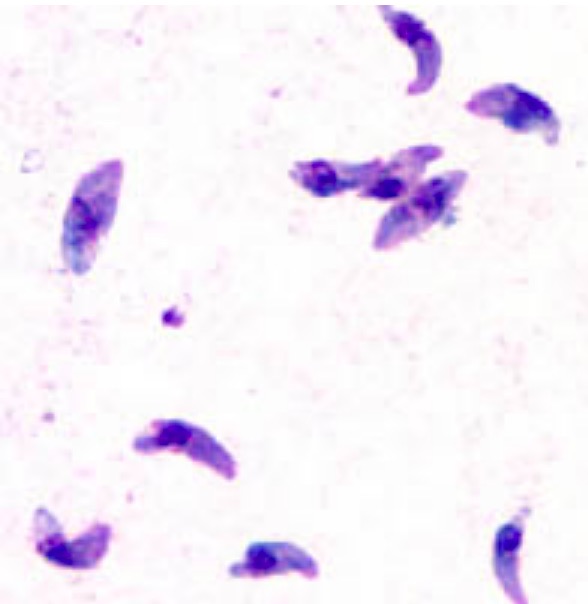
  • Taquizoíto (también llamado trofozoíto):
    • Intracelular obligado
    • Forma de media luna con un núcleo central
    • Responsable de la invasión celular y de la enfermedad clínica
    • Se multiplica rápidamente
  • Bradizoíto:
    • Quiescente
    • Forma una pared gruesa a su alrededor (quiste tisular)
    • Resistente a las enzimas digestivas
    • Puede ser eliminado por congelación y temperaturas normales de cocción

Especies clínicamente relevantes

La toxoplasmosis Toxoplasmosis Toxoplasmosis is an infectious disease caused by Toxoplasma gondii, an obligate intracellular protozoan parasite. Felines are the definitive host, but transmission to humans can occur through contact with cat feces or the consumption of contaminated foods. The clinical presentation and complications depend on the host’s immune status. Toxoplasma/Toxoplasmosis es causada por el Toxoplasma Toxoplasma Toxoplasmosis is an infectious disease caused by Toxoplasma gondii, an obligate intracellular protozoan parasite. Felines are the definitive host, but transmission to humans can occur through contact with cat feces or the consumption of contaminated foods. The clinical presentation and complications depend on the host’s immune status. Toxoplasma/Toxoplasmosis gondii.

Epidemiología

  • Se encuentra a nivel mundial, pero es más común en EN Erythema nodosum is an immune-mediated panniculitis (inflammation of the subcutaneous fat) caused by a type IV (delayed-type) hypersensitivity reaction. It commonly manifests in young women as tender, erythematous nodules on the shins. Erythema Nodosum las regiones tropicales
  • Se reportan 225 000 casos al AL Amyloidosis año en EN Erythema nodosum is an immune-mediated panniculitis (inflammation of the subcutaneous fat) caused by a type IV (delayed-type) hypersensitivity reaction. It commonly manifests in young women as tender, erythematous nodules on the shins. Erythema Nodosum Estados Unidos
  • Aproximadamente el 50% de los LOS Neisseria individuos tienen anticuerpos contra T. gondii:
    • Aproximadamente el 11% de la población > 6 años de edad en EN Erythema nodosum is an immune-mediated panniculitis (inflammation of the subcutaneous fat) caused by a type IV (delayed-type) hypersensitivity reaction. It commonly manifests in young women as tender, erythematous nodules on the shins. Erythema Nodosum Estados Unidos
    • Hasta el 78% de la población en EN Erythema nodosum is an immune-mediated panniculitis (inflammation of the subcutaneous fat) caused by a type IV (delayed-type) hypersensitivity reaction. It commonly manifests in young women as tender, erythematous nodules on the shins. Erythema Nodosum algunas zonas de Brasil

Patogénesis

Huésped

  • Los LOS Neisseria felinos son el único huésped definitivo.
  • Las infecciones pueden producirse en EN Erythema nodosum is an immune-mediated panniculitis (inflammation of the subcutaneous fat) caused by a type IV (delayed-type) hypersensitivity reaction. It commonly manifests in young women as tender, erythematous nodules on the shins. Erythema Nodosum una amplia gama de huéspedes intermediarios vertebrados (incluidos los LOS Neisseria seres humanos).

Transmisión

  • Vía oral:
    • Ingestión de ooquistes eliminados en EN Erythema nodosum is an immune-mediated panniculitis (inflammation of the subcutaneous fat) caused by a type IV (delayed-type) hypersensitivity reaction. It commonly manifests in young women as tender, erythematous nodules on the shins. Erythema Nodosum las heces de felinos infectados
    • Ingestión de carne infectada que se encuentre cruda o poco cocinada (forma de quiste tisular)
  • Transfusión de sangre o trasplante de órganos
  • Transmisión vertical

Ciclo de vida y fisiopatología

Ciclo de vida:

  • Los LOS Neisseria ooquistes se eliminan en EN Erythema nodosum is an immune-mediated panniculitis (inflammation of the subcutaneous fat) caused by a type IV (delayed-type) hypersensitivity reaction. It commonly manifests in young women as tender, erythematous nodules on the shins. Erythema Nodosum las heces del gato → son ingeridos por un huésped intermediario (e.g., mamíferos, aves)
  • Los LOS Neisseria ooquistes se transforman en EN Erythema nodosum is an immune-mediated panniculitis (inflammation of the subcutaneous fat) caused by a type IV (delayed-type) hypersensitivity reaction. It commonly manifests in young women as tender, erythematous nodules on the shins. Erythema Nodosum taquizoítos → se localizan en EN Erythema nodosum is an immune-mediated panniculitis (inflammation of the subcutaneous fat) caused by a type IV (delayed-type) hypersensitivity reaction. It commonly manifests in young women as tender, erythematous nodules on the shins. Erythema Nodosum los LOS Neisseria tejidos neurales y musculares → se convierten en EN Erythema nodosum is an immune-mediated panniculitis (inflammation of the subcutaneous fat) caused by a type IV (delayed-type) hypersensitivity reaction. It commonly manifests in young women as tender, erythematous nodules on the shins. Erythema Nodosum quistes tisulares
  • El gato consume tejidos de un hospedador intermediario infectado → el organismo experimenta un ciclo sexual → el ciclo continúa

Ciclo de vida y fisiopatología en EN Erythema nodosum is an immune-mediated panniculitis (inflammation of the subcutaneous fat) caused by a type IV (delayed-type) hypersensitivity reaction. It commonly manifests in young women as tender, erythematous nodules on the shins. Erythema Nodosum humanos:
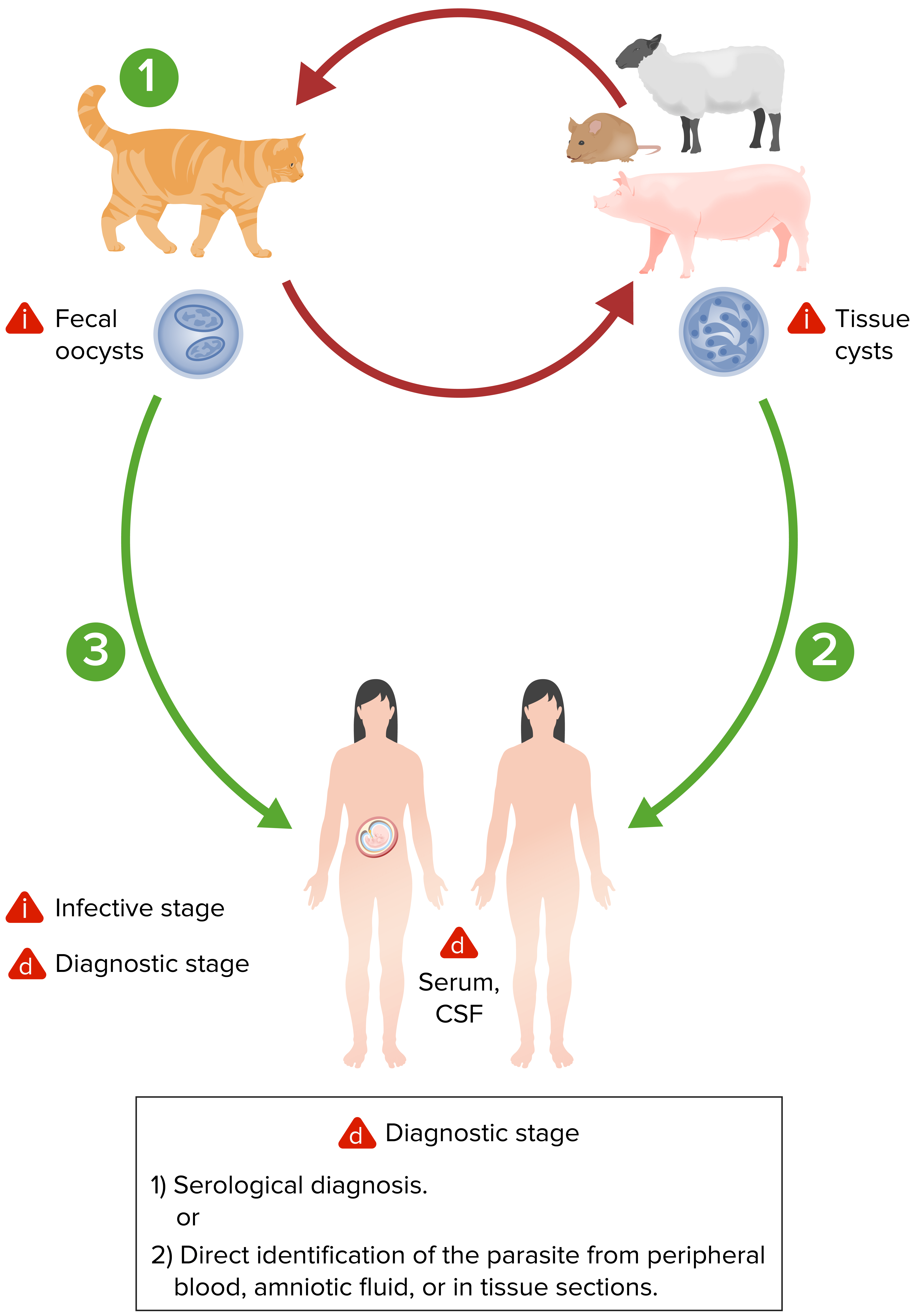
  • Transmisión al AL Amyloidosis huésped humano → bradizoítos liberados de los LOS Neisseria quistes (o esporozoítos de los LOS Neisseria ooquistes)
  • Transformación en EN Erythema nodosum is an immune-mediated panniculitis (inflammation of the subcutaneous fat) caused by a type IV (delayed-type) hypersensitivity reaction. It commonly manifests in young women as tender, erythematous nodules on the shins. Erythema Nodosum taquizoítos → se multiplican rápidamente en EN Erythema nodosum is an immune-mediated panniculitis (inflammation of the subcutaneous fat) caused by a type IV (delayed-type) hypersensitivity reaction. It commonly manifests in young women as tender, erythematous nodules on the shins. Erythema Nodosum las células gastrointestinales → rompen las células
  • Se transportan en EN Erythema nodosum is an immune-mediated panniculitis (inflammation of the subcutaneous fat) caused by a type IV (delayed-type) hypersensitivity reaction. It commonly manifests in young women as tender, erythematous nodules on the shins. Erythema Nodosum los LOS Neisseria vasos linfáticos y se diseminan en EN Erythema nodosum is an immune-mediated panniculitis (inflammation of the subcutaneous fat) caused by a type IV (delayed-type) hypersensitivity reaction. It commonly manifests in young women as tender, erythematous nodules on the shins. Erythema Nodosum el torrente sanguíneo hacia:
    • Músculo esquelético
    • Miocardio
    • Cerebro
    • Ojos
  • El sistema inmunitario generalmente controla la replicación de los LOS Neisseria taquizoítos.
  • Los LOS Neisseria bradizoítos desarrollan quistes y permanecen latentes → pueden permanecer latentes durante años
Toxoplasmosis

El ciclo de vida de Toxosplasma gondii. Tanto los ooquistes como los quistes tisulares se transforman en taquizoítos poco después de la ingestión. Los taquizoítos se localizan en el tejido neural y muscular y se transforman en bradizoítos tisulares. Si una mujer embarazada se infecta, los taquizoítos pueden infectar al feto a través del torrente sanguíneo.

Imagen por Lecturio.

Presentación Clínica

La presentación clínica de la toxoplasmosis Toxoplasmosis Toxoplasmosis is an infectious disease caused by Toxoplasma gondii, an obligate intracellular protozoan parasite. Felines are the definitive host, but transmission to humans can occur through contact with cat feces or the consumption of contaminated foods. The clinical presentation and complications depend on the host’s immune status. Toxoplasma/Toxoplasmosis puede variar dependiendo la función inmunitaria del huésped y los LOS Neisseria órganos implicados. La siguiente tabla resume las distintas enfermedades:

Tabla: Presentaciones clínicas de la toxoplasmosis Toxoplasmosis Toxoplasmosis is an infectious disease caused by Toxoplasma gondii, an obligate intracellular protozoan parasite. Felines are the definitive host, but transmission to humans can occur through contact with cat feces or the consumption of contaminated foods. The clinical presentation and complications depend on the host’s immune status. Toxoplasma/Toxoplasmosis
Huésped Enfermedad Presentación
Huésped inmunocompetente Infección subclínica (aproximadamente el 90% de los LOS Neisseria casos) Asintomática
Enfermedad sistémica aguda Signos y síntomas comunes:Manifestaciones poco comunes:
  • Neumonitis
  • Miocarditis
  • Hepatitis
  • Uveítis posterior
  • Polimiositis
  • Encefalitis
Huéspedes inmunocomprometidos (e.g., SIDA) Toxoplasmosis Toxoplasmosis Toxoplasmosis is an infectious disease caused by Toxoplasma gondii, an obligate intracellular protozoan parasite. Felines are the definitive host, but transmission to humans can occur through contact with cat feces or the consumption of contaminated foods. The clinical presentation and complications depend on the host’s immune status. Toxoplasma/Toxoplasmosis del SNC (enfermedad definitoria de SIDA, recuento de CD4 < 100 células/µl)
  • Fiebre
  • Cefalea
  • Déficits neurológicos focales
  • Cambios en EN Erythema nodosum is an immune-mediated panniculitis (inflammation of the subcutaneous fat) caused by a type IV (delayed-type) hypersensitivity reaction. It commonly manifests in young women as tender, erythematous nodules on the shins. Erythema Nodosum el estado mental
  • Convulsiones
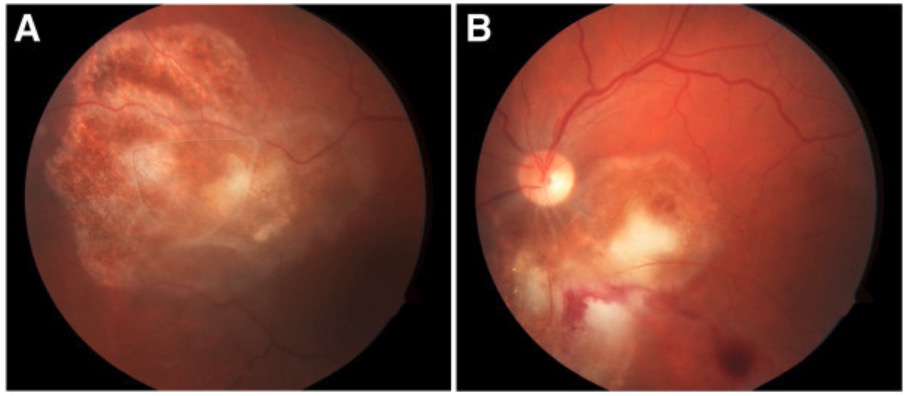
Coriorretinitis Síntomas:Hallazgos fundoscópicos:
  • Lesiones algodonosas blanco-amarillentas elevadas
  • Distribución no vascular
Neumonitis
  • Fiebre
  • Disnea
  • Tos TOS Thoracic outlet syndrome (TOS) is a broad term used for a spectrum of syndromes related to the general region of the thoracic outlet, which involves the compression or irritation of elements of the brachial plexus, subclavian artery, or subclavian vein. Thoracic Outlet Syndrome no productiva
Feto, recién nacido o lactante Toxoplasmosis Toxoplasmosis Toxoplasmosis is an infectious disease caused by Toxoplasma gondii, an obligate intracellular protozoan parasite. Felines are the definitive host, but transmission to humans can occur through contact with cat feces or the consumption of contaminated foods. The clinical presentation and complications depend on the host’s immune status. Toxoplasma/Toxoplasmosis congénita Tríada clásica:
  • Coriorretinitis
  • Hidrocefalia
  • Calcificaciones intracraneales difusas
Signos y síntomas:
  • Fiebre
  • Hepatoesplenomegalia
  • Linfadenopatía
  • Ictericia
  • Anemia Anemia Anemia is a condition in which individuals have low Hb levels, which can arise from various causes. Anemia is accompanied by a reduced number of RBCs and may manifest with fatigue, shortness of breath, pallor, and weakness. Subtypes are classified by the size of RBCs, chronicity, and etiology. Anemia: Overview and Types y trombocitopenia
  • Retraso en EN Erythema nodosum is an immune-mediated panniculitis (inflammation of the subcutaneous fat) caused by a type IV (delayed-type) hypersensitivity reaction. It commonly manifests in young women as tender, erythematous nodules on the shins. Erythema Nodosum el crecimiento
  • Petequias y púrpura (erupción en forma de “magdalena de arándanos”)
  • Macrocefalia
  • Neumonitis
  • Convulsiones
  • Pérdida auditiva neurosensorial
CD4: grupo de diferenciación 4 (por sus siglas en EN Erythema nodosum is an immune-mediated panniculitis (inflammation of the subcutaneous fat) caused by a type IV (delayed-type) hypersensitivity reaction. It commonly manifests in young women as tender, erythematous nodules on the shins. Erythema Nodosum inglés)
Retinocoroiditis por toxoplasma

Examen del fondo de ojo de la coriorretinitis por Toxoplasma:
Se observan las lesiones algodonosas blanco-amarillentas en el ojo derecho (A) e izquierdo (B).

Imagen: “Retinochoroiditis” por Department of Ophthalmology and Visual Sciences, Montefiore Medical Center and Albert Einstein College of Medicine, Bronx, NY 10467, USA. Licencia: CC BY 2.0

Diagnóstico

La evaluación diagnóstica se guiará por la presentación clínica del paciente.
Estudios de laboratorio

  • Pruebas serológicas (ensayo inmunoabsorbente ligado a enzimas ( ELISA ELISA An immunoassay utilizing an antibody labeled with an enzyme marker such as horseradish peroxidase. While either the enzyme or the antibody is bound to an immunosorbent substrate, they both retain their biologic activity; the change in enzyme activity as a result of the enzyme-antibody-antigen reaction is proportional to the concentration of the antigen and can be measured spectrophotometrically or with the naked eye. Many variations of the method have been developed. St. Louis Encephalitis Virus, por sus siglas en EN Erythema nodosum is an immune-mediated panniculitis (inflammation of the subcutaneous fat) caused by a type IV (delayed-type) hypersensitivity reaction. It commonly manifests in young women as tender, erythematous nodules on the shins. Erythema Nodosum inglés)):
    • Anticuerpos IgM IgM A class of immunoglobulin bearing mu chains (immunoglobulin mu-chains). Igm can fix complement. The name comes from its high molecular weight and originally being called a macroglobulin. Immunoglobulins: Types and Functions:
      • Aparecen en EN Erythema nodosum is an immune-mediated panniculitis (inflammation of the subcutaneous fat) caused by a type IV (delayed-type) hypersensitivity reaction. It commonly manifests in young women as tender, erythematous nodules on the shins. Erythema Nodosum el plazo de 1 semana desde el inicio de los LOS Neisseria síntomas
      • Una prueba positiva indica una infección activa.
    • Anticuerpos IgG IgG The major immunoglobulin isotype class in normal human serum. There are several isotype subclasses of igg, for example, igg1, igg2a, and igg2b. Hypersensitivity Pneumonitis:
  • Reacción en EN Erythema nodosum is an immune-mediated panniculitis (inflammation of the subcutaneous fat) caused by a type IV (delayed-type) hypersensitivity reaction. It commonly manifests in young women as tender, erythematous nodules on the shins. Erythema Nodosum cadena de la polimerasa ( PCR PCR Polymerase chain reaction (PCR) is a technique that amplifies DNA fragments exponentially for analysis. The process is highly specific, allowing for the targeting of specific genomic sequences, even with minuscule sample amounts. The PCR cycles multiple times through 3 phases: denaturation of the template DNA, annealing of a specific primer to the individual DNA strands, and synthesis/elongation of new DNA molecules. Polymerase Chain Reaction (PCR), por sus siglas en EN Erythema nodosum is an immune-mediated panniculitis (inflammation of the subcutaneous fat) caused by a type IV (delayed-type) hypersensitivity reaction. It commonly manifests in young women as tender, erythematous nodules on the shins. Erythema Nodosum inglés):
    • Detecta el ADN del parásito
    • Las muestras pueden obtenerse de:
  • Estudios de laboratorio adicionales:
    • Prueba de anticuerpos heterófilos negativa → descarta la mononucleosis Mononucleosis Infectious mononucleosis (IM), also known as “the kissing disease,” is a highly contagious viral infection caused by the Epstein-Barr virus. Its common name is derived from its main method of transmission: the spread of infected saliva via kissing. Clinical manifestations of IM include fever, tonsillar pharyngitis, and lymphadenopathy. Mononucleosis
    • Linfocitosis (con o sin células atípicas)
    • Transaminitis Transaminitis Tick-borne Encephalitis Virus leve

Histopatología

  • Brinda un diagnóstico definitivo, pero rara vez es requerido
  • Hallazgos en EN Erythema nodosum is an immune-mediated panniculitis (inflammation of the subcutaneous fat) caused by a type IV (delayed-type) hypersensitivity reaction. It commonly manifests in young women as tender, erythematous nodules on the shins. Erythema Nodosum los LOS Neisseria ganglios linfáticos:
    • Hiperplasia folicular reactiva
    • Grupos irregulares de macrófagos tisulares con citoplasma eosinófilo
  • Hallazgos cerebrales:
    • Encefalitis difusa y en EN Erythema nodosum is an immune-mediated panniculitis (inflammation of the subcutaneous fat) caused by a type IV (delayed-type) hypersensitivity reaction. It commonly manifests in young women as tender, erythematous nodules on the shins. Erythema Nodosum parches
    • Lesiones quísticas
    • Regiones necróticas
    • Granulomas Granulomas A relatively small nodular inflammatory lesion containing grouped mononuclear phagocytes, caused by infectious and noninfectious agents. Sarcoidosis
    • Vasculitis Vasculitis Inflammation of any one of the blood vessels, including the arteries; veins; and rest of the vasculature system in the body. Systemic Lupus Erythematosus linfocítica
  • Hallazgos oculares:
    • Panoftalmitis segmentaria
    • Necrosis Necrosis The death of cells in an organ or tissue due to disease, injury or failure of the blood supply. Ischemic Cell Damage
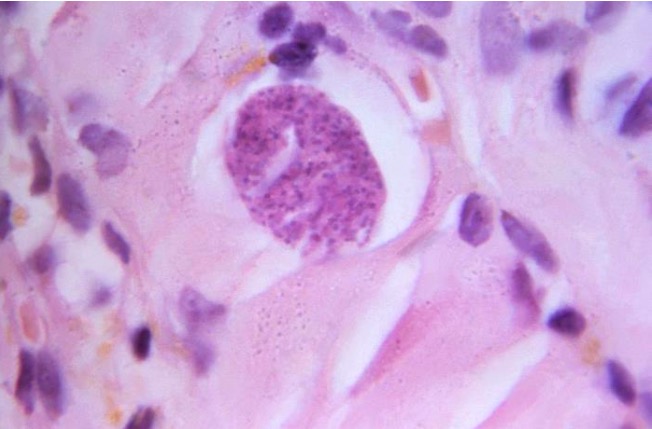
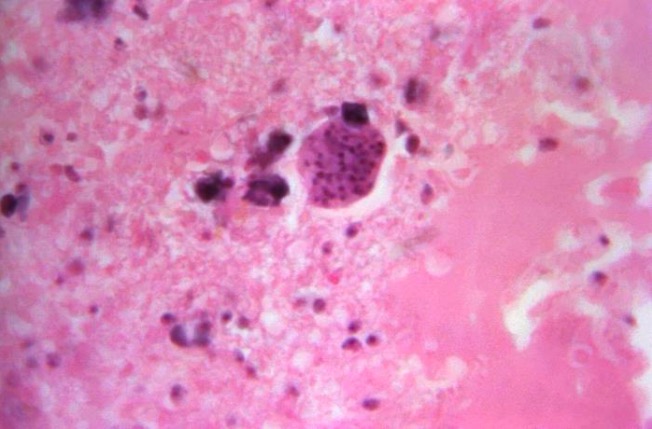
    • Quistes tisulares y taquizoítos
Histología de la neurotoxoplasmosis

Microfotografía de un quiste tisular de Toxoplasma gondii en una muestra de tejido cerebral

Imagen: “16543” por CDC/Dr. Martin Hicklin. Licencia: Dominio Público

Imagenología

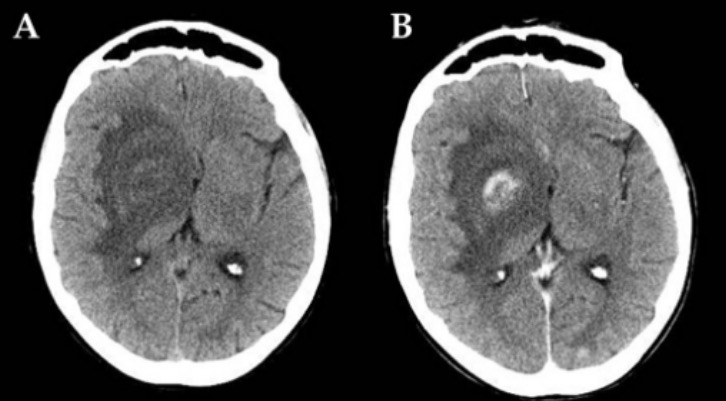
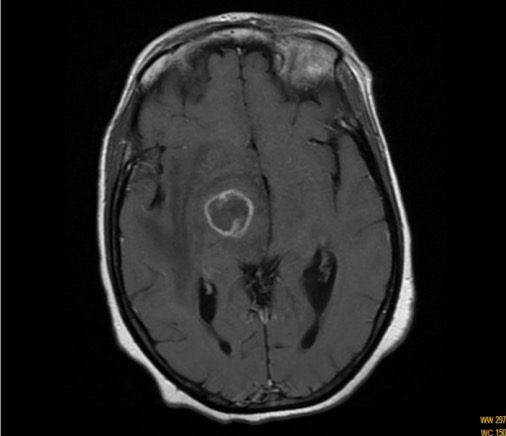
Si se sospecha de toxoplasmosis Toxoplasmosis Toxoplasmosis is an infectious disease caused by Toxoplasma gondii, an obligate intracellular protozoan parasite. Felines are the definitive host, but transmission to humans can occur through contact with cat feces or the consumption of contaminated foods. The clinical presentation and complications depend on the host’s immune status. Toxoplasma/Toxoplasmosis congénita o del sistema nervioso central, se puede solicitar imagenología cerebral.
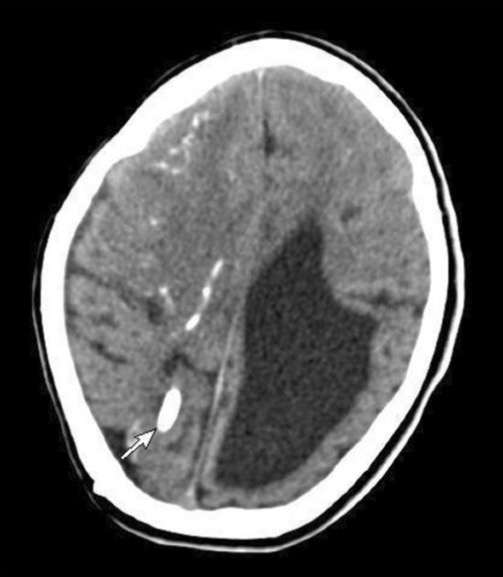
  • Opciones:
    • TC
    • RM
  • Hallazgos en EN Erythema nodosum is an immune-mediated panniculitis (inflammation of the subcutaneous fat) caused by a type IV (delayed-type) hypersensitivity reaction. It commonly manifests in young women as tender, erythematous nodules on the shins. Erythema Nodosum la toxoplasmosis Toxoplasmosis Toxoplasmosis is an infectious disease caused by Toxoplasma gondii, an obligate intracellular protozoan parasite. Felines are the definitive host, but transmission to humans can occur through contact with cat feces or the consumption of contaminated foods. The clinical presentation and complications depend on the host’s immune status. Toxoplasma/Toxoplasmosis del SNC:
    • Lesiones anulares únicas o múltiples
    • Cambios inflamatorios
  • Hallazgos en EN Erythema nodosum is an immune-mediated panniculitis (inflammation of the subcutaneous fat) caused by a type IV (delayed-type) hypersensitivity reaction. It commonly manifests in young women as tender, erythematous nodules on the shins. Erythema Nodosum la toxoplasmosis Toxoplasmosis Toxoplasmosis is an infectious disease caused by Toxoplasma gondii, an obligate intracellular protozoan parasite. Felines are the definitive host, but transmission to humans can occur through contact with cat feces or the consumption of contaminated foods. The clinical presentation and complications depend on the host’s immune status. Toxoplasma/Toxoplasmosis congénita:
    • Calcificaciones dispersas
    • Hidrocefalia
    • Atrofia cortical

Tratamiento y Prevención

Tratamiento

Los LOS Neisseria pacientes inmunocompetentes no suelen requerir tratamiento. Sin embargo, el tratamiento es necesario para los LOS Neisseria pacientes inmunocomprometidos, embarazadas o con síntomas graves o prolongados.

  • Terapia médica combinada:
    • Pirimetamina (inhibe la dihidrofolato reductasa)
    • Sulfadiazina (inhibe la dihidropteroato sintetasa)
    • Leucovorina (ácido folínico, previene la carencia de ácido fólico)
  • Pueden añadirse corticosteroides en EN Erythema nodosum is an immune-mediated panniculitis (inflammation of the subcutaneous fat) caused by a type IV (delayed-type) hypersensitivity reaction. It commonly manifests in young women as tender, erythematous nodules on the shins. Erythema Nodosum la toxoplasmosis Toxoplasmosis Toxoplasmosis is an infectious disease caused by Toxoplasma gondii, an obligate intracellular protozoan parasite. Felines are the definitive host, but transmission to humans can occur through contact with cat feces or the consumption of contaminated foods. The clinical presentation and complications depend on the host’s immune status. Toxoplasma/Toxoplasmosis del SNC para reducir el edema Edema Edema is a condition in which excess serous fluid accumulates in the body cavity or interstitial space of connective tissues. Edema is a symptom observed in several medical conditions. It can be categorized into 2 types, namely, peripheral (in the extremities) and internal (in an organ or body cavity). Edema cerebral si hay efecto de masa.
  • Garantizar que los LOS Neisseria pacientes con SIDA inicien la terapia antirretroviral.

Prevención y profilaxis

  • Medidas generales:
    • Lavarse las manos después de manipular carne cruda o arena para gatos.
    • Cocinar bien la carne.
  • Pacientes embarazadas:
    • No se recomienda el tamizaje rutinario de anticuerpos en EN Erythema nodosum is an immune-mediated panniculitis (inflammation of the subcutaneous fat) caused by a type IV (delayed-type) hypersensitivity reaction. It commonly manifests in young women as tender, erythematous nodules on the shins. Erythema Nodosum mujeres embarazadas.
    • Evitar los LOS Neisseria gatos.
    • No limpiar las cajas de arena para gatos (si es inevitable, use guantes).
  • Pacientes con SIDA: trimetoprim/sulfametoxazol a largo plazo cuando el conteo de CD4 sea < 100 células/µl

Diagnóstico Diferencial

  • Mononucleosis Mononucleosis Infectious mononucleosis (IM), also known as “the kissing disease,” is a highly contagious viral infection caused by the Epstein-Barr virus. Its common name is derived from its main method of transmission: the spread of infected saliva via kissing. Clinical manifestations of IM include fever, tonsillar pharyngitis, and lymphadenopathy. Mononucleosis infecciosa: enfermedad causada por el virus Virus Viruses are infectious, obligate intracellular parasites composed of a nucleic acid core surrounded by a protein capsid. Viruses can be either naked (non-enveloped) or enveloped. The classification of viruses is complex and based on many factors, including type and structure of the nucleoid and capsid, the presence of an envelope, the replication cycle, and the host range. Virology de Epstein-Barr ( EBV EBV Epstein-barr virus (EBV) is a linear, double-stranded DNA virus belonging to the herpesviridae family. This highly prevalent virus is mostly transmitted through contact with oropharyngeal secretions from an infected individual. The virus can infect epithelial cells and B lymphocytes, where it can undergo lytic replication or latency. Epstein-Barr Virus, por sus siglas en EN Erythema nodosum is an immune-mediated panniculitis (inflammation of the subcutaneous fat) caused by a type IV (delayed-type) hypersensitivity reaction. It commonly manifests in young women as tender, erythematous nodules on the shins. Erythema Nodosum inglés) que se caracteriza por fiebre, fatiga, linfadenopatía y faringitis. Puede observarse una linfocitosis atípica. El diagnóstico se basa en EN Erythema nodosum is an immune-mediated panniculitis (inflammation of the subcutaneous fat) caused by a type IV (delayed-type) hypersensitivity reaction. It commonly manifests in young women as tender, erythematous nodules on the shins. Erythema Nodosum las características clínicas y en EN Erythema nodosum is an immune-mediated panniculitis (inflammation of the subcutaneous fat) caused by a type IV (delayed-type) hypersensitivity reaction. It commonly manifests in young women as tender, erythematous nodules on the shins. Erythema Nodosum las pruebas de laboratorio, como una prueba de anticuerpos heterófilos positiva o la serología. El tratamiento es de soporte.
  • Mononucleosis Mononucleosis Infectious mononucleosis (IM), also known as “the kissing disease,” is a highly contagious viral infection caused by the Epstein-Barr virus. Its common name is derived from its main method of transmission: the spread of infected saliva via kissing. Clinical manifestations of IM include fever, tonsillar pharyngitis, and lymphadenopathy. Mononucleosis por CMV: enfermedad causada por el CMV. Los LOS Neisseria pacientes pueden presentar fiebre, linfadenopatía, hepatitis y linfocitosis atípica. Sin embargo, la faringitis está ausente. La prueba serológica positiva para el CMV proporciona el diagnóstico. La enfermedad es autolimitante.
  • Infección aguda por el virus Virus Viruses are infectious, obligate intracellular parasites composed of a nucleic acid core surrounded by a protein capsid. Viruses can be either naked (non-enveloped) or enveloped. The classification of viruses is complex and based on many factors, including type and structure of the nucleoid and capsid, the presence of an envelope, the replication cycle, and the host range. Virology de la inmunodeficiencia humana (VIH): enfermedad de transmisión sexual o sanguínea causada por el VIH. La presentación del VIH está marcada por síntomas constitucionales como linfadenopatía y fiebre. Una mayor progresión puede dar lugar a infecciones oportunistas y tumores malignos. El diagnóstico se realiza mediante un inmunoensayo enzimático. Las pruebas adicionales incluyen la determinación de la carga viral del VIH, el genotipo y el recuento de linfocitos T CD4+. Se recomienda el tratamiento inmediato con terapia antirretroviral combinada.
  • Tularemia: infección rara causada por Francisella tularensis Francisella Tularensis Aminoglycosides, adquirida por contacto con tejidos animales, garrapatas o moscas picadoras. La infección se manifiesta como una pápula, seguida de fiebre, cefalea y linfadenopatía supurativa. La tularemia puede tener una afectación multiorgánica. El diagnóstico se basa en EN Erythema nodosum is an immune-mediated panniculitis (inflammation of the subcutaneous fat) caused by a type IV (delayed-type) hypersensitivity reaction. It commonly manifests in young women as tender, erythematous nodules on the shins. Erythema Nodosum el hemocultivo y el cultivo de los LOS Neisseria tejidos infectados. El tratamiento es con antibióticos.
  • Enfermedad del arañazo de gato: infección causada por Bartonella henselae Bartonella henselae A species of gram-negative bacteria that is the etiologic agent of bacillary angiomatosis. This organism can also be a cause of cat-scratch disease in immunocompetent patients. Bartonella, un bacilo gram-negativo. Los LOS Neisseria pacientes generalmente se presentan con fiebre, pérdida de peso y linfadenopatía dolorosa tras ser mordidos o arañados por un gato. El diagnóstico se confirma mediante serología o PCR PCR Polymerase chain reaction (PCR) is a technique that amplifies DNA fragments exponentially for analysis. The process is highly specific, allowing for the targeting of specific genomic sequences, even with minuscule sample amounts. The PCR cycles multiple times through 3 phases: denaturation of the template DNA, annealing of a specific primer to the individual DNA strands, and synthesis/elongation of new DNA molecules. Polymerase Chain Reaction (PCR). Se recomienda el tratamiento sintomático y se administra azitromicina en EN Erythema nodosum is an immune-mediated panniculitis (inflammation of the subcutaneous fat) caused by a type IV (delayed-type) hypersensitivity reaction. It commonly manifests in young women as tender, erythematous nodules on the shins. Erythema Nodosum caso de enfermedad grave.
  • Tuberculosis Tuberculosis Tuberculosis (TB) is an infectious disease caused by Mycobacterium tuberculosis complex bacteria. The bacteria usually attack the lungs but can also damage other parts of the body. Approximately 30% of people around the world are infected with this pathogen, with the majority harboring a latent infection. Tuberculosis spreads through the air when a person with active pulmonary infection coughs or sneezes. Tuberculosis extrapulmonar: una infección diseminada por micobacterias. La presentación de la tuberculosis Tuberculosis Tuberculosis (TB) is an infectious disease caused by Mycobacterium tuberculosis complex bacteria. The bacteria usually attack the lungs but can also damage other parts of the body. Approximately 30% of people around the world are infected with this pathogen, with the majority harboring a latent infection. Tuberculosis spreads through the air when a person with active pulmonary infection coughs or sneezes. Tuberculosis extrapulmonar incluye meningitis Meningitis Meningitis is inflammation of the meninges, the protective membranes of the brain, and spinal cord. The causes of meningitis are varied, with the most common being bacterial or viral infection. The classic presentation of meningitis is a triad of fever, altered mental status, and nuchal rigidity. Meningitis, pericarditis Pericarditis Pericarditis is an inflammation of the pericardium, often with fluid accumulation. It can be caused by infection (often viral), myocardial infarction, drugs, malignancies, metabolic disorders, autoimmune disorders, or trauma. Acute, subacute, and chronic forms exist. Pericarditis, linfadenitis e infección hepática, y puede variar en EN Erythema nodosum is an immune-mediated panniculitis (inflammation of the subcutaneous fat) caused by a type IV (delayed-type) hypersensitivity reaction. It commonly manifests in young women as tender, erythematous nodules on the shins. Erythema Nodosum función del lugar afectado. El diagnóstico se basa en EN Erythema nodosum is an immune-mediated panniculitis (inflammation of the subcutaneous fat) caused by a type IV (delayed-type) hypersensitivity reaction. It commonly manifests in young women as tender, erythematous nodules on the shins. Erythema Nodosum la detección de bacilos ácido-alcohol resistentes mediante el cultivo de fluidos corporales o muestras de tejido. El tratamiento consiste en EN Erythema nodosum is an immune-mediated panniculitis (inflammation of the subcutaneous fat) caused by a type IV (delayed-type) hypersensitivity reaction. It commonly manifests in young women as tender, erythematous nodules on the shins. Erythema Nodosum una terapia combinada con isoniazida, rifampicina, pirazinamida y etambutol.
  • Enfermedad de Hodgkin: una neoplasia de linfocitos B en EN Erythema nodosum is an immune-mediated panniculitis (inflammation of the subcutaneous fat) caused by a type IV (delayed-type) hypersensitivity reaction. It commonly manifests in young women as tender, erythematous nodules on the shins. Erythema Nodosum los LOS Neisseria ganglios linfáticos. Los LOS Neisseria pacientes presentan linfadenopatía, sudoración nocturna, pérdida de peso, fiebre, esplenomegalia y hepatomegalia. Las pruebas de diagnóstico incluyen el análisis histológico de los LOS Neisseria ganglios linfáticos, los LOS Neisseria análisis de sangre, la TC y la tomografía por emisión de positrones ( PET PET An imaging technique that combines a positron-emission tomography (PET) scanner and a ct X ray scanner. This establishes a precise anatomic localization in the same session. Nuclear Imaging, por sus siglas en EN Erythema nodosum is an immune-mediated panniculitis (inflammation of the subcutaneous fat) caused by a type IV (delayed-type) hypersensitivity reaction. It commonly manifests in young women as tender, erythematous nodules on the shins. Erythema Nodosum inglés). El tratamiento incluye quimioterapia y radioterapia.
  • Neurocisticercosis: infección causada por la ingestión de huevos de Taenia solium. Los quistes pueden formarse en cualquier parte del SNC y causar cambios de personalidad, convulsiones, déficits neurológicos focales o signos de hipertensión intracraneal. Generalmente, el diagnóstico se realiza basándose en el aspecto de “queso suizo” del cerebro en EN Erythema nodosum is an immune-mediated panniculitis (inflammation of the subcutaneous fat) caused by a type IV (delayed-type) hypersensitivity reaction. It commonly manifests in young women as tender, erythematous nodules on the shins. Erythema Nodosum la RM o la TC. Las pruebas serológicas también puede ser útiles. El tratamiento es controversial, pero puede incluir esteroides, terapia antihelmíntica y una consulta neuroquirúrgica.
  • Tumores intracraneales: crecimiento benigno o maligno de células en EN Erythema nodosum is an immune-mediated panniculitis (inflammation of the subcutaneous fat) caused by a type IV (delayed-type) hypersensitivity reaction. It commonly manifests in young women as tender, erythematous nodules on the shins. Erythema Nodosum el cerebro que se presenta como cefalea, náuseas o vómitos inexplicables, visión borrosa y dificultad para hablar o escuchar. El diagnóstico se realiza mediante un examen neurológico, imagenología (RM o TC) y, a veces, una biopsia. El tratamiento incluye radiación, quimioterapia y/o cirugía.
  • Absceso cerebral: acumulación de pus en EN Erythema nodosum is an immune-mediated panniculitis (inflammation of the subcutaneous fat) caused by a type IV (delayed-type) hypersensitivity reaction. It commonly manifests in young women as tender, erythematous nodules on the shins. Erythema Nodosum el parénquima cerebral debido a una infección. El absceso cerebral se presenta con fiebre, cefalea, convulsiones, náuseas y vómitos. El diagnóstico se basa principalmente en EN Erythema nodosum is an immune-mediated panniculitis (inflammation of the subcutaneous fat) caused by a type IV (delayed-type) hypersensitivity reaction. It commonly manifests in young women as tender, erythematous nodules on the shins. Erythema Nodosum la imagenología, ya que es difícil llegar a un diagnóstico definitivo basado únicamente en EN Erythema nodosum is an immune-mediated panniculitis (inflammation of the subcutaneous fat) caused by a type IV (delayed-type) hypersensitivity reaction. It commonly manifests in young women as tender, erythematous nodules on the shins. Erythema Nodosum la presentación clínica. El tratamiento incluye terapia con antibióticos y cirugía para drenar el absceso.

Referencias

  1. Petersen, E. (2025). Toxoplasmosis: Acute systemic disease. In Mitty, J. (Ed.), UpToDate. Retrieved February 26, 2025, from https://www.uptodate.com/contents/toxoplasmosis-acute-systemic-disease
  2. Petersen, E., Mandelbrot, L. (2025). Toxoplasmosis in pregnancy. In Barss, V.A., and Mitty, J. (Eds.), UpToDate. Retrieved February 26, 2025, from https://www.uptodate.com/contents/toxoplasmosis-and-pregnancy
  3. Guerina, N.G., Marquez, L. (2025). Congenital toxoplasmosis: Clinical features and diagnosis. In Armsby, C. (Ed.), UpToDate. Retrieved February 26, 2025, from https://www.uptodate.com/contents/congenital-toxoplasmosis-clinical-features-and-diagnosis
  4. Gandhi, R.T. (2025). Toxoplasmosis in patients with HIV. In Mitty, J. (Ed.), UpToDate. Retrieved February 26, 2025, from https://www.uptodate.com/contents/toxoplasmosis-in-patients-with-hiv
  5. Schwartzman, J.D., Petersen, E. (2025). Diagnostic testing for toxoplasmosis infection. In Mitty, J. (Ed.), UpToDate. Retrieved February 26, 2025, from https://www.uptodate.com/contents/diagnostic-testing-for-toxoplasmosis-infection
  6. Madireddy, S., Rivas Chacon, E.D., Mangat, R. (2024). Toxoplasmosis. [online] StatPearls. Retrieved February 26, 2025, from https://www.ncbi.nlm.nih.gov/books/NBK563286/
  7. Centers for Disease Control and Prevention. (2024). Toxoplasmosis. Retrieved February 26, 2025, from https://www.cdc.gov/dpdx/toxoplasmosis/index.html
  8. The Australian Society for Parasitology Inc. (n.d.). Toxoplasma. Retrieved February 26, 2025, from http://parasite.org.au/para-site/text/toxoplasma-text.html
  9. Hokelek, M. (2022). Toxoplasmosis. In Bronze, M.S. (Ed.), Medscape. Retrieved February 26, 2025, from https://emedicine.medscape.com/article/229969-overview
  10. Toxoplasmosis: causes and how it spreads. (2025, February 14). Toxoplasmosis. https://www.cdc.gov/toxoplasmosis/causes/index.html

¡Crea tu cuenta gratis o inicia una sesión para seguir leyendo!

Regístrate ahora y obtén acceso gratuito a Lecturio con páginas de concepto, videos médicos y cuestionarios para tu educación médica.

User Reviews

Que tengas una sesión de estudio alegre y navideña 🎁 Ahorra 50% en todos los planes >>

Details