Domina Conceptos Médicos

Estudia para la escuela de medicina y tus examenes con Lecturio.

Síndrome Nefrítico

El síndrome nefrítico es una categoría amplia de enfermedades glomerulares caracterizadas por hematuria Hematuria Presence of blood in the urine. Renal Cell Carcinoma glomerular, pérdida variable Variable Variables represent information about something that can change. The design of the measurement scales, or of the methods for obtaining information, will determine the data gathered and the characteristics of that data. As a result, a variable can be qualitative or quantitative, and may be further classified into subgroups. Types of Variables de la función renal e hipertensión. Estas características contrastan con las del síndrome nefrótico, que incluye enfermedades glomerulares caracterizadas por proteinuria Proteinuria The presence of proteins in the urine, an indicator of kidney diseases. Nephrotic Syndrome in Children grave, aunque a veces hay superposición de > 1 enfermedad glomerular en EN Erythema nodosum is an immune-mediated panniculitis (inflammation of the subcutaneous fat) caused by a type IV (delayed-type) hypersensitivity reaction. It commonly manifests in young women as tender, erythematous nodules on the shins. Erythema Nodosum el mismo individuo. Las presentaciones clínicas del síndrome nefrítico son muy variadas, desde asintomáticas con anomalías urinarias hasta enfermedades críticas potencialmente mortales. El diagnóstico se sugiere por hematuria Hematuria Presence of blood in the urine. Renal Cell Carcinoma, proteinuria Proteinuria The presence of proteins in the urine, an indicator of kidney diseases. Nephrotic Syndrome in Children leve a moderada y ciertas serologías (e.g., ANCA ANCA Group of systemic vasculitis with a strong association with anca. The disorders are characterized by necrotizing inflammation of small and medium size vessels, with little or no immune-complex deposits in vessel walls. Rapidly Progressive Glomerulonephritis); la biopsia de riñón es necesaria en EN Erythema nodosum is an immune-mediated panniculitis (inflammation of the subcutaneous fat) caused by a type IV (delayed-type) hypersensitivity reaction. It commonly manifests in young women as tender, erythematous nodules on the shins. Erythema Nodosum la mayoría de los LOS Neisseria casos. El tratamiento varía tanto como las presentaciones clínicas, desde la vigilancia en EN Erythema nodosum is an immune-mediated panniculitis (inflammation of the subcutaneous fat) caused by a type IV (delayed-type) hypersensitivity reaction. It commonly manifests in young women as tender, erythematous nodules on the shins. Erythema Nodosum casos leves hasta la inmunosupresión y plasmaféresis en EN Erythema nodosum is an immune-mediated panniculitis (inflammation of the subcutaneous fat) caused by a type IV (delayed-type) hypersensitivity reaction. It commonly manifests in young women as tender, erythematous nodules on the shins. Erythema Nodosum la enfermedad agresiva.

Last updated: Dec 15, 2025

Editorial responsibility: Stanley Oiseth, Lindsay Jones, Evelin Maza

Descripción General

Definición

El síndrome nefrítico se define por algunos o todos los LOS Neisseria siguientes hallazgos:
  • Hematuria Hematuria Presence of blood in the urine. Renal Cell Carcinoma glomerular: sedimento urinario activo
    • Eritrocitos dismórficos
    • Cilindros de eritrocitos
  • Proteinuria Proteinuria The presence of proteins in the urine, an indicator of kidney diseases. Nephrotic Syndrome in Children leve a moderada (500–3 500 mg/día denominada “subnefrótica”)
  • Hipertensión debida a:
    • Sobrecarga de volumen/retención de Na
    • Supresión del SRAA
  • Azoemia:
    • Nitrogeno de urea Urea A compound formed in the liver from ammonia produced by the deamination of amino acids. It is the principal end product of protein catabolism and constitutes about one half of the total urinary solids. Urea Cycle (BUN, por sus siglas en EN Erythema nodosum is an immune-mediated panniculitis (inflammation of the subcutaneous fat) caused by a type IV (delayed-type) hypersensitivity reaction. It commonly manifests in young women as tender, erythematous nodules on the shins. Erythema Nodosum inglés) elevado
    • Relación de BUN a creatinina >15
  • Oliguria Oliguria Decreased urine output that is below the normal range. Oliguria can be defined as urine output of less than or equal to 0. 5 or 1 ml/kg/hr depending on the age. Renal Potassium Regulation: < 500 mL de orina/día
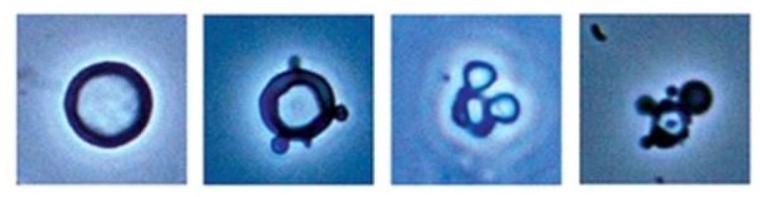
Microscopía de orina: glóbulos rojos normales y dismórficos

Microscopía de orina del síndrome nefrítico: 
Izquierda: glóbulos rojos normales con aspecto circular 
Derecha (3 imágenes): glóbulos rojos dismórficos con manchas en las membranas y células “Mickey Mouse

Imagen: “Isomorphic red blood cells (RBCs) and dysmorphic RBCs, 400×” por Chu-Su Y., et al. Licencia: CC BY 4.0, recortada por Lecturio.

Etiología

  • Glomerulonefritis aguda (se presenta con IRA leve a moderada):
    • Nefropatía por IgA IgA Represents 15-20% of the human serum immunoglobulins, mostly as the 4-chain polymer in humans or dimer in other mammals. Secretory iga is the main immunoglobulin in secretions. Immunoglobulins: Types and Functions (también crónica)
    • Glomerulonefritis postestreptocócica
    • Nefritis lúpica (también crónica)
    • Glomerulonefritis membranoproliferativa (por inmunocomplejos y mediada por complemento)
    • La glomerulonefritis rápidamente progresiva se puede ver con:
      • Enfermedad anti-membrana basal glomerular (síndrome de Goodpasture)
      • Glomerulonefritis por inmunocomplejos (debido a nefritis lúpica, IgA IgA Represents 15-20% of the human serum immunoglobulins, mostly as the 4-chain polymer in humans or dimer in other mammals. Secretory iga is the main immunoglobulin in secretions. Immunoglobulins: Types and Functions, postestreptocócica, glomerulonefritis membranoproliferativa y glomerulonefritis pauciinmune asociada con vasculitis Vasculitis Inflammation of any one of the blood vessels, including the arteries; veins; and rest of the vasculature system in the body. Systemic Lupus Erythematosus asociada a anticuerpos anticitoplasma de neutrófilos)
  • Glomerulonefritis crónica (se presenta de 3 formas):

Clasificación

  • Glomerulonefritis primaria:
    • Nefropatía por IgA IgA Represents 15-20% of the human serum immunoglobulins, mostly as the 4-chain polymer in humans or dimer in other mammals. Secretory iga is the main immunoglobulin in secretions. Immunoglobulins: Types and Functions
    • Glomerulonefritis membranoproliferativa
    • Enfermedad anti-membrana basal glomerular (síndrome de Goodpasture)
  • Trastornos hereditarios:
    • Síndrome de Alport
    • Enfermedad de la membrana basal delgada
  • Glomerulonefritis secundaria:
    • Causas infecciosas y posinfecciosas:
      • Streptococcus Streptococcus Streptococcus is one of the two medically important genera of gram-positive cocci, the other being Staphylococcus. Streptococci are identified as different species on blood agar on the basis of their hemolytic pattern and sensitivity to optochin and bacitracin. There are many pathogenic species of streptococci, including S. pyogenes, S. agalactiae, S. pneumoniae, and the viridans streptococci. Streptococcus beta-hemolítico del grupo A
      • Mycoplasma Mycoplasma Mycoplasma is a species of pleomorphic bacteria that lack a cell wall, which makes them difficult to target with conventional antibiotics and causes them to not gram stain well. Mycoplasma bacteria commonly target the respiratory and urogenital epithelium. Mycoplasma pneumoniae (M. pneumoniae), the causative agent of atypical or “walking” pneumonia. Mycoplasma
      • Salmonella typhi Salmonella typhi A serotype of Salmonella enterica which is the etiologic agent of typhoid fever. Enteric Fever (Typhoid Fever)
      • Infecciones estafilocócicas (incluida endocarditis Endocarditis Endocarditis is an inflammatory disease involving the inner lining (endometrium) of the heart, most commonly affecting the cardiac valves. Both infectious and noninfectious etiologies lead to vegetations on the valve leaflets. Patients may present with nonspecific symptoms such as fever and fatigue. Endocarditis bacteriana)
      • Abscesos viscerales por bacterias gramnegativas
      • Malaria Malaria Malaria is an infectious parasitic disease affecting humans and other animals. Most commonly transmitted via the bite of a female Anopheles mosquito infected with microorganisms of the Plasmodium genus. Patients present with fever, chills, myalgia, headache, and diaphoresis. Plasmodium/Malaria
      • Esquistosomiasis
      • Coxsackievirus Coxsackievirus Coxsackievirus is a member of a family of viruses called Picornaviridae and the genus Enterovirus. Coxsackieviruses are single-stranded, positive-sense RNA viruses, and are divided into coxsackie group A and B viruses. Both groups of viruses cause upper respiratory infections, rashes, aseptic meningitis, or encephalitis. Coxsackievirus
      • Citomegalovirus
      • Virus Virus Viruses are infectious, obligate intracellular parasites composed of a nucleic acid core surrounded by a protein capsid. Viruses can be either naked (non-enveloped) or enveloped. The classification of viruses is complex and based on many factors, including type and structure of the nucleoid and capsid, the presence of an envelope, the replication cycle, and the host range. Virology del Ebstein-Barr ( EBV EBV Epstein-barr virus (EBV) is a linear, double-stranded DNA virus belonging to the herpesviridae family. This highly prevalent virus is mostly transmitted through contact with oropharyngeal secretions from an infected individual. The virus can infect epithelial cells and B lymphocytes, where it can undergo lytic replication or latency. Epstein-Barr Virus, por sus siglas en EN Erythema nodosum is an immune-mediated panniculitis (inflammation of the subcutaneous fat) caused by a type IV (delayed-type) hypersensitivity reaction. It commonly manifests in young women as tender, erythematous nodules on the shins. Erythema Nodosum inglés)
      • Hepatitis B Hepatitis B Hepatitis B virus (HBV) is a partially double-stranded DNA virus, which belongs to the Orthohepadnavirus genus and the Hepadnaviridae family. Most individuals with acute HBV infection are asymptomatic or have mild, self-limiting symptoms. Chronic infection can be asymptomatic or create hepatic inflammation, leading to liver cirrhosis and hepatocellular carcinoma (HCC). Hepatitis B Virus y C
      • Sarampión
      • Paperas
      • Varicela
    • Trastornos del tejido conectivo: lupus eritematoso sistémico.
    • Vasculitis Vasculitis Inflammation of any one of the blood vessels, including the arteries; veins; and rest of the vasculature system in the body. Systemic Lupus Erythematosus:
      • Granulomatosis eosinofílica con poliangeitis (antes, síndrome de Churg-Strauss)
      • Poliangeitis microscópica
      • Granulomatosis con poliangeitis
      • Vasculitis Vasculitis Inflammation of any one of the blood vessels, including the arteries; veins; and rest of the vasculature system in the body. Systemic Lupus Erythematosus asociada a IgA IgA Represents 15-20% of the human serum immunoglobulins, mostly as the 4-chain polymer in humans or dimer in other mammals. Secretory iga is the main immunoglobulin in secretions. Immunoglobulins: Types and Functions, también conocida como púrpura de Henoch-Schönlein (no es lo mismo que nefropatía por IgA IgA Represents 15-20% of the human serum immunoglobulins, mostly as the 4-chain polymer in humans or dimer in other mammals. Secretory iga is the main immunoglobulin in secretions. Immunoglobulins: Types and Functions)
      • Poliarteritis nodosa
    • Discrasias hematológicas:
      • Crioglobulinemia mixta IgG-IgM
      • Púrpura trombocitopénica trombótica-síndrome urémico hemolítico

Fisiopatología

Los LOS Neisseria 2 mecanismos principales de lesión glomerular en EN Erythema nodosum is an immune-mediated panniculitis (inflammation of the subcutaneous fat) caused by a type IV (delayed-type) hypersensitivity reaction. It commonly manifests in young women as tender, erythematous nodules on the shins. Erythema Nodosum los LOS Neisseria síndromes nefríticos son la desregulación del complemento y la mediada por inmunocomplejos. Las formas hereditarias de glomerulonefritis (e.g., síndrome de Alport) tienen diferentes fisiopatologías.
Anatomía y fisiología de la nefrona

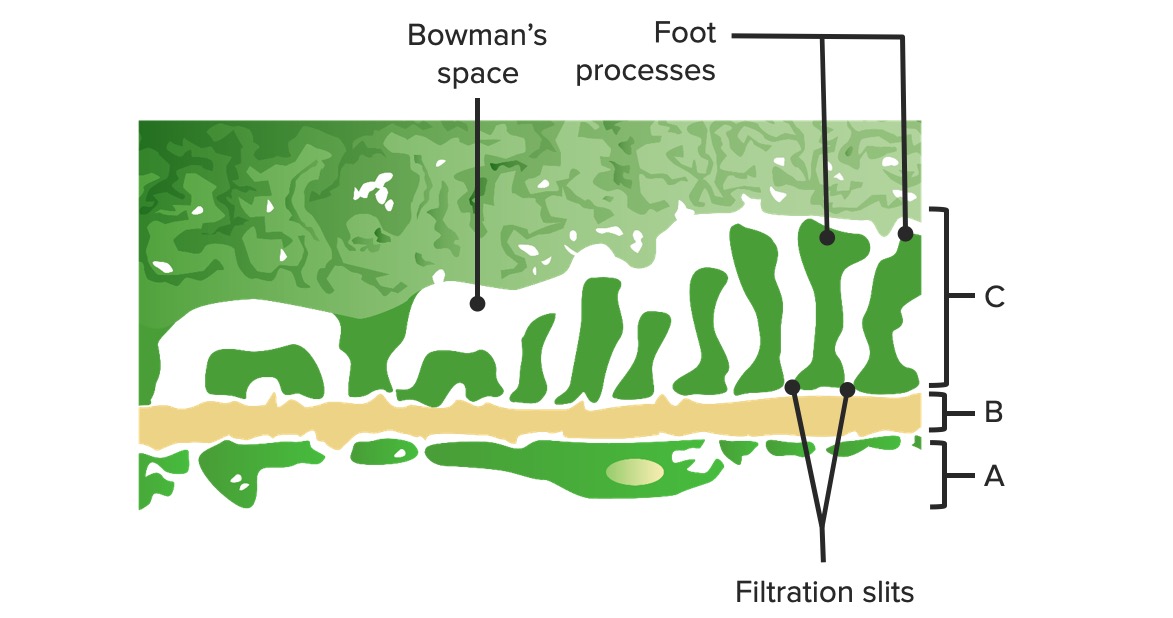
  • Barrera glomerular: estructura de filtración de la nefrona que rodea los LOS Neisseria capilares glomerulares e incluye las siguientes 3 capas:
    • Endotelio capilar: paredes de los LOS Neisseria vasos capilares
    • Membrana basal glomerular: formada por las láminas basales del endotelio capilar y del podocito
    • Epitelio (podocitos): unido a la membrana basal glomerular por múltiples procesos
  • El síndrome nefrítico afecta principalmente al AL Amyloidosis endotelio capilar y a la membrana basal glomerular.
  • Síndrome nefrótico involucra principalmente el capa epitelial con podocitos.
Barrera glomerular

Diagrama de la barrera glomerular:
A: Endotelio fenestrado de los capilares glomerulares
B: Membrana basal
C: Capa epitelial que muestra los procesos podocitarios de los podocitos y las proteínas estructurales que crean el diafragma de hendidura

Imagen por Lecturio.

Fisiopatología

  • Mediada por complejos inmunitarios:
    • Antígeno:
      • Puede ser extraño (e.g., bacteriano) o propio (e.g., enfermedad autoinmune)
      • Puede estar circulando en EN Erythema nodosum is an immune-mediated panniculitis (inflammation of the subcutaneous fat) caused by a type IV (delayed-type) hypersensitivity reaction. It commonly manifests in young women as tender, erythematous nodules on the shins. Erythema Nodosum el torrente sanguíneo o fijarse en EN Erythema nodosum is an immune-mediated panniculitis (inflammation of the subcutaneous fat) caused by a type IV (delayed-type) hypersensitivity reaction. It commonly manifests in young women as tender, erythematous nodules on the shins. Erythema Nodosum los LOS Neisseria tejidos.
    • Antígeno + anticuerpo = complejo inmune → respuesta inflamatoria → se reclutan neutrófilos y otros factores inflamatorios → daño tisular
      • Puede formarse en EN Erythema nodosum is an immune-mediated panniculitis (inflammation of the subcutaneous fat) caused by a type IV (delayed-type) hypersensitivity reaction. It commonly manifests in young women as tender, erythematous nodules on the shins. Erythema Nodosum la circulación (e.g., glomerulonefritis postestreptocócica)
      • También se puede formar directamente en EN Erythema nodosum is an immune-mediated panniculitis (inflammation of the subcutaneous fat) caused by a type IV (delayed-type) hypersensitivity reaction. It commonly manifests in young women as tender, erythematous nodules on the shins. Erythema Nodosum los LOS Neisseria tejidos (e.g., enfermedad anti-membrana basal glomerular)
  • Desregulación del complemento:
    • Sistema/proceso normal del complemento:
      • El complemento es un componente del sistema inmunológico humoral.
      • La cascada termina con la formación de un complejo de ataque a la membrana → compromete la integridad de la membrana de la célula extraña → lisis celular
    • Desregulación en EN Erythema nodosum is an immune-mediated panniculitis (inflammation of the subcutaneous fat) caused by a type IV (delayed-type) hypersensitivity reaction. It commonly manifests in young women as tender, erythematous nodules on the shins. Erythema Nodosum glomerulonefritis:
      • Compromete la integridad de la unidad de filtración glomerular → fuga de eritrocitos y proteínas a la orina → disminuye la tasa de filtración glomerular
      • La vía alternativa está hiperactiva → respuesta inflamatoria inapropiada y reclutamiento de neutrófilos → daño tisular
Vías primarias del sistema del complemento

Vías primarias del sistema del complemento
MBL: linfocitosis monoclonal de células B

Imagen por Lecturio.

Tipos de Síndrome Nefrítico

Las causas primarias y secundarias de glomerulonefritis varían según la etiología, pero tienen en EN Erythema nodosum is an immune-mediated panniculitis (inflammation of the subcutaneous fat) caused by a type IV (delayed-type) hypersensitivity reaction. It commonly manifests in young women as tender, erythematous nodules on the shins. Erythema Nodosum común hematuria Hematuria Presence of blood in the urine. Renal Cell Carcinoma y grados variables de proteinuria Proteinuria The presence of proteins in the urine, an indicator of kidney diseases. Nephrotic Syndrome in Children. Los LOS Neisseria resultados de la biopsia difieren y es importante conocerlos.
Nefropatía por IgA IgA Represents 15-20% of the human serum immunoglobulins, mostly as the 4-chain polymer in humans or dimer in other mammals. Secretory iga is the main immunoglobulin in secretions. Immunoglobulins: Types and Functions

  • Presentación:
    • Se presenta más comúnmente como glomerulonefritis crónica:
      • 40% presenta hematuria Hematuria Presence of blood in the urine. Renal Cell Carcinoma macroscópica.
      • El 30% se encuentra de forma incidental con hematuria Hematuria Presence of blood in the urine. Renal Cell Carcinoma microscópica persistente.
      • Puede presentarse en EN Erythema nodosum is an immune-mediated panniculitis (inflammation of the subcutaneous fat) caused by a type IV (delayed-type) hypersensitivity reaction. It commonly manifests in young women as tender, erythematous nodules on the shins. Erythema Nodosum asociación con una infección concurrente de las vías respiratorias superiores.
    • Se presenta con mucha menos frecuencia como glomerulonefritis aguda o glomerulonefritis rápidamente progresiva (aproximadamente 5%–10%)
  • Diagnóstico:
    • Laboratorios: niveles normales de complemento en EN Erythema nodosum is an immune-mediated panniculitis (inflammation of the subcutaneous fat) caused by a type IV (delayed-type) hypersensitivity reaction. It commonly manifests in young women as tender, erythematous nodules on the shins. Erythema Nodosum suero
    • Hallazgos de la biopsia renal:
      • Microscopía óptica: hipercelularidad mesangial
      • Inmunofluorescencia: positiva para IgA IgA Represents 15-20% of the human serum immunoglobulins, mostly as the 4-chain polymer in humans or dimer in other mammals. Secretory iga is the main immunoglobulin in secretions. Immunoglobulins: Types and Functions en EN Erythema nodosum is an immune-mediated panniculitis (inflammation of the subcutaneous fat) caused by a type IV (delayed-type) hypersensitivity reaction. It commonly manifests in young women as tender, erythematous nodules on the shins. Erythema Nodosum el mesangio
      • Microscopía electrónica: depósitos inmunes mesangiales
  • Tratamiento:
    • Tratamiento expectante si la creatinina está en EN Erythema nodosum is an immune-mediated panniculitis (inflammation of the subcutaneous fat) caused by a type IV (delayed-type) hypersensitivity reaction. It commonly manifests in young women as tender, erythematous nodules on the shins. Erythema Nodosum rango normal y la proteinuria Proteinuria The presence of proteins in the urine, an indicator of kidney diseases. Nephrotic Syndrome in Children es < 500 mg/día
    • IECA si la proteinuria Proteinuria The presence of proteins in the urine, an indicator of kidney diseases. Nephrotic Syndrome in Children es de 500 mg–1 000 mg/día
    • Esteroides para la enfermedad progresiva
    • Trasplante si hay progresión a enfermedad renal en EN Erythema nodosum is an immune-mediated panniculitis (inflammation of the subcutaneous fat) caused by a type IV (delayed-type) hypersensitivity reaction. It commonly manifests in young women as tender, erythematous nodules on the shins. Erythema Nodosum etapa terminal

Glomerulonefritis postestreptocócica

  • Presentación:
    • Causa más común de síndrome nefrítico agudo (pero no concurrente) en EN Erythema nodosum is an immune-mediated panniculitis (inflammation of the subcutaneous fat) caused by a type IV (delayed-type) hypersensitivity reaction. It commonly manifests in young women as tender, erythematous nodules on the shins. Erythema Nodosum niños
    • Puede presentarse de 1–3 semanas después de una infección de garganta causada por cepas nefritogénicas específicas del Streptococcus Streptococcus Streptococcus is one of the two medically important genera of gram-positive cocci, the other being Staphylococcus. Streptococci are identified as different species on blood agar on the basis of their hemolytic pattern and sensitivity to optochin and bacitracin. There are many pathogenic species of streptococci, including S. pyogenes, S. agalactiae, S. pneumoniae, and the viridans streptococci. Streptococcus beta-hemolítico del grupo A
    • Puede presentarse de 3–6 semanas después de una infección cutánea (impétigo): causada por Streptococcus Streptococcus Streptococcus is one of the two medically important genera of gram-positive cocci, the other being Staphylococcus. Streptococci are identified as different species on blood agar on the basis of their hemolytic pattern and sensitivity to optochin and bacitracin. There are many pathogenic species of streptococci, including S. pyogenes, S. agalactiae, S. pneumoniae, and the viridans streptococci. Streptococcus del grupo A o Staphylococcus aureus Staphylococcus aureus Potentially pathogenic bacteria found in nasal membranes, skin, hair follicles, and perineum of warm-blooded animals. They may cause a wide range of infections and intoxications. Brain Abscess
  • Diagnóstico:
    • Laboratorios:
      • Prueba de estreptozima: mide 5 anticuerpos diferentes, incluida la antiestreptolisina-O después de una infección faríngea
      • Análisis de orina: hematuria Hematuria Presence of blood in the urine. Renal Cell Carcinoma con cilindros de eritrocitos, +/– proteinuria Proteinuria The presence of proteins in the urine, an indicator of kidney diseases. Nephrotic Syndrome in Children
    • Hallazgos de la biopsia renal:
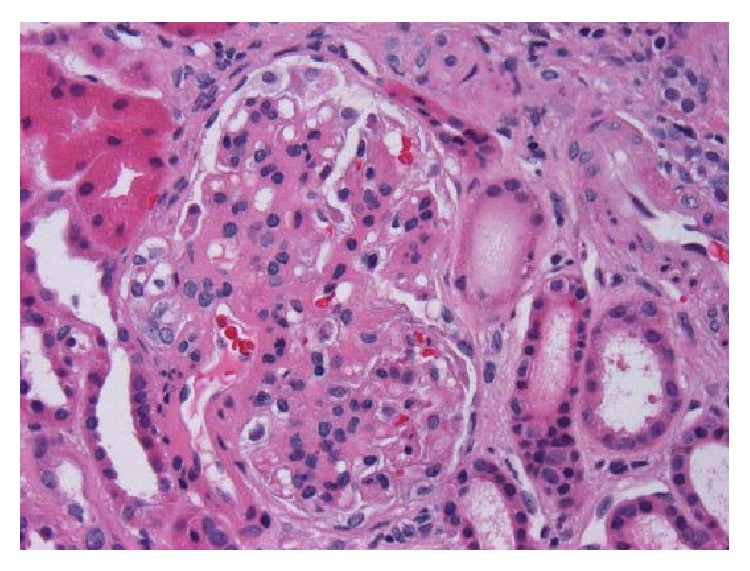
      • Microscopía óptica: proliferación endocapilar difusa con neutrófilos.
      • Inmunofluorescencia: C3 positivo; patrón granular de IgG IgG The major immunoglobulin isotype class in normal human serum. There are several isotype subclasses of igg, for example, igg1, igg2a, and igg2b. Hypersensitivity Pneumonitis “grumoso-irregular” o “cielo estrellado”
      • Microscopía electrónica: depósitos de inmunocomplejos subepiteliales en EN Erythema nodosum is an immune-mediated panniculitis (inflammation of the subcutaneous fat) caused by a type IV (delayed-type) hypersensitivity reaction. It commonly manifests in young women as tender, erythematous nodules on the shins. Erythema Nodosum forma de joroba
  • Tratamiento:
    • Cuidados de soporte
    • Antibióticos: solo si la infección por estreptococos todavía está presente en EN Erythema nodosum is an immune-mediated panniculitis (inflammation of the subcutaneous fat) caused by a type IV (delayed-type) hypersensitivity reaction. It commonly manifests in young women as tender, erythematous nodules on the shins. Erythema Nodosum el momento del diagnóstico
    • Trate la hipertensión y/o el edema Edema Edema is a condition in which excess serous fluid accumulates in the body cavity or interstitial space of connective tissues. Edema is a symptom observed in several medical conditions. It can be categorized into 2 types, namely, peripheral (in the extremities) and internal (in an organ or body cavity). Edema:
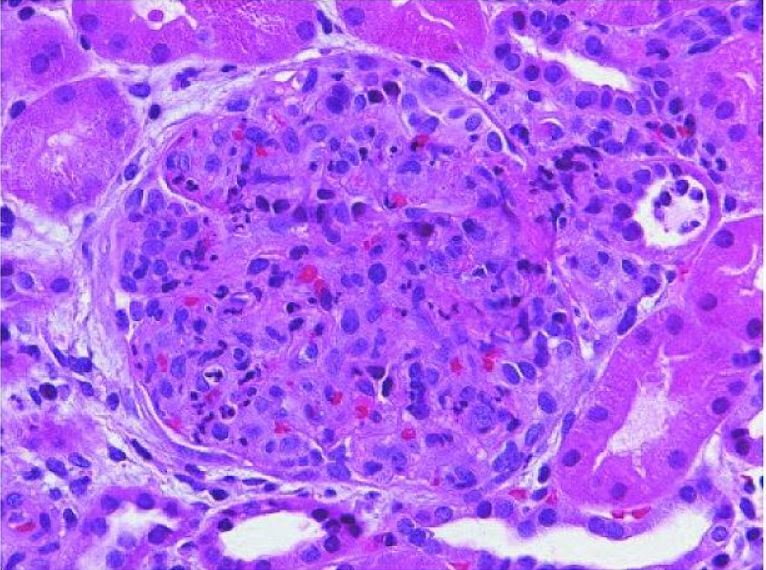
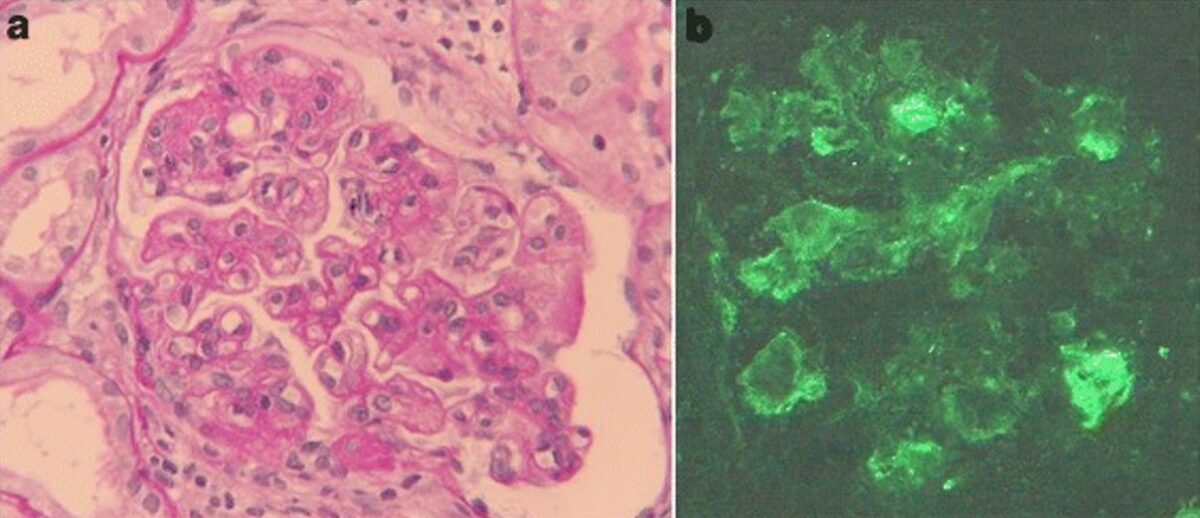
Acute poststreptococcal glomerulonephritis

Glomerulonefritis postestreptocócica aguda:
Un glomérulo agrandado con cierre global de la luz capilar causado por la proliferación de células endógenas predominantemente mesangiales y la infiltración de monocitos transmitidos por la sangre y leucocitos polimorfonucleares (tinción hematoxilina y eosina).
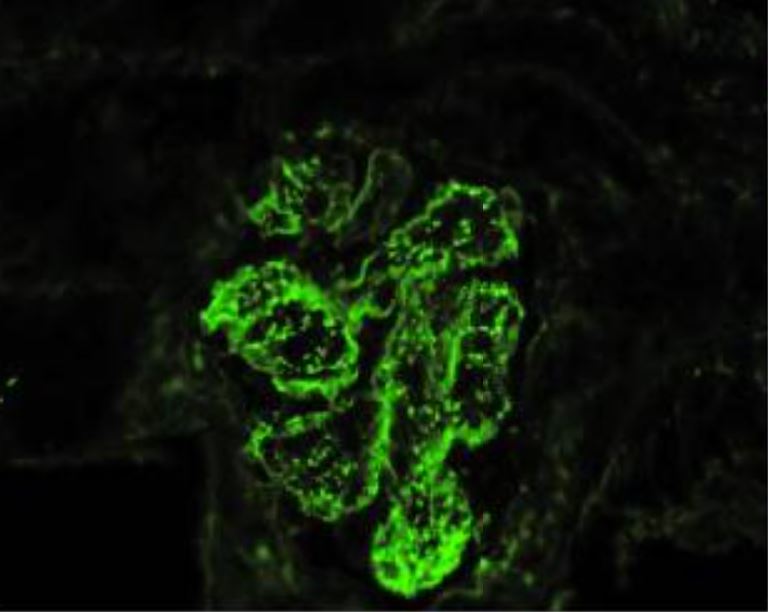
Imagen: “IgA-dominant acute poststreptococcal glomerulonephritis with concomitant rheumatic fever successfully treated with steroids: a case report” por Rus RR, Toplak N, Vizjak A, Mraz J, Ferluga D. Licencia: CC BY 2.5
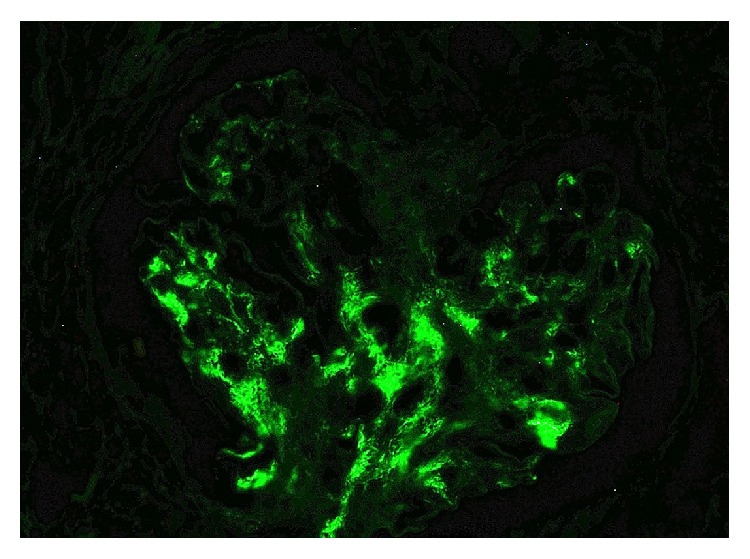
IgA-dominant acute poststreptococcal glomerulonephritis with concomitant rheumatic fever (immunofluorescence microscopy)

Glomerulonefritis postestreptocócica aguda con predominio de IgA y fiebre reumática concomitante (microscopía de inmunofluorescencia):
Muestra depósitos inmunes granulares mesangiales y glomerulares de la pared capilar con un patrón de “cielo estrellado” de dominancia de IgA
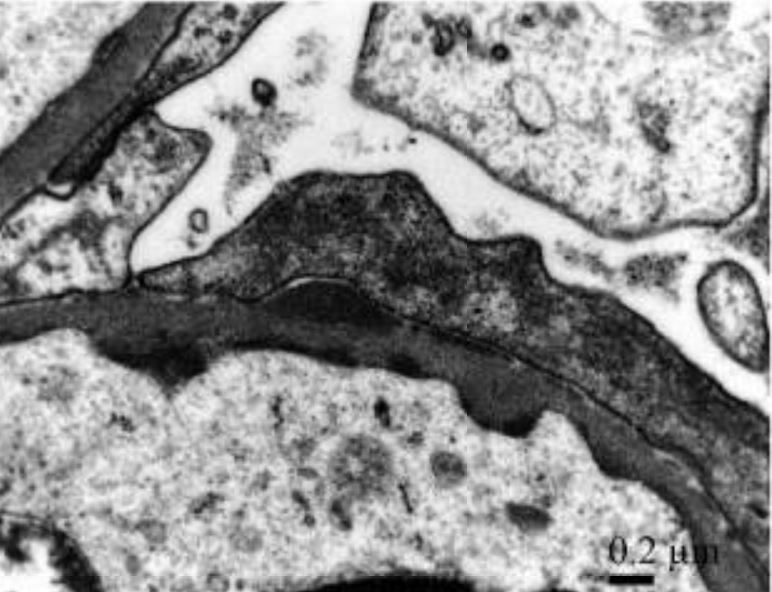
Imagen: “IgA-dominant acute poststreptococcal glomerulonephritis with concomitant rheumatic fever successfully treated with steroids: a case report” por Rus RR, Toplak N, Vizjak A, Mraz J, Ferluga D. Licencia: CC BY 2.5, recortada por Lecturio.
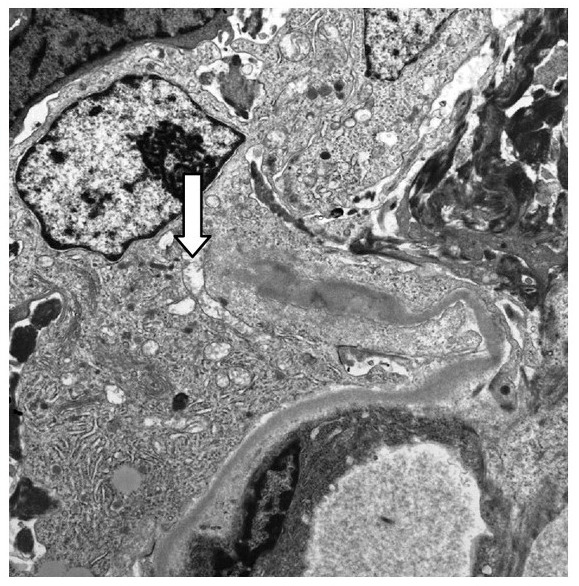
IgA-dominant acute poststreptococcal glomerulonephritis with concomitant rheumatic fever (electron micrograph)
Micrografía electrónica de

Glomerulonefritis postestreptocócica aguda con predominio de IgA y fiebre reumática concomitante:
Los depósitos subendoteliales y subepiteliales discretos electro-densos detectados en gran aumento muestran depósitos inmunes granulares mesangiales y de la pared capilar glomerular con un patrón de dominancia de IgA en “cielo estrellado”
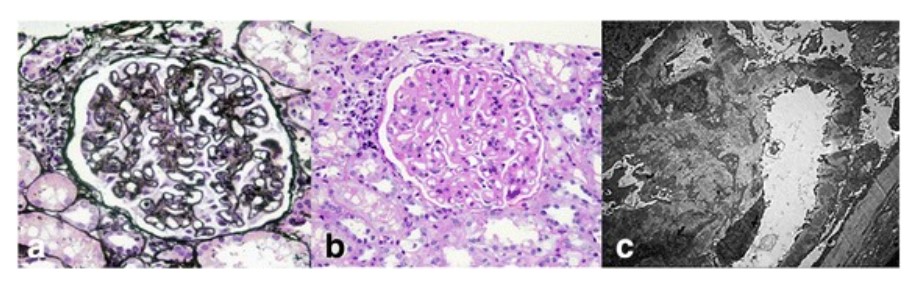
Imagen: “IgA-dominant acute poststreptococcal glomerulonephritis with concomitant rheumatic fever successfully treated with steroids: a case report” por Rus RR, Toplak N, Vizjak A, Mraz J, Ferluga D. Licencia: CC BY 2.5, recortada por Lecturio.

Nefritis lúpica

  • Presentación:
    • Variable Variable Variables represent information about something that can change. The design of the measurement scales, or of the methods for obtaining information, will determine the data gathered and the characteristics of that data. As a result, a variable can be qualitative or quantitative, and may be further classified into subgroups. Types of Variables; puede presentarse como glomerulonefritis aguda/crónica o como glomerulonefritis rápidamente progresiva
    • Comúnmente tendrá un patrón de recaídas y remisiones una vez establecida
    • Puede superponerse con el síndrome nefrótico
  • Diagnóstico:
    • Hallazgos de laboratorio:
      • Patrón clásico de la vía del complemento (C3 y C4 bajos)
      • Pruebas de diagnóstico específicas: ANA, ADN bicatenario (dsDNA)
    • Hallazgos de la biopsia renal (difieren según la clase):
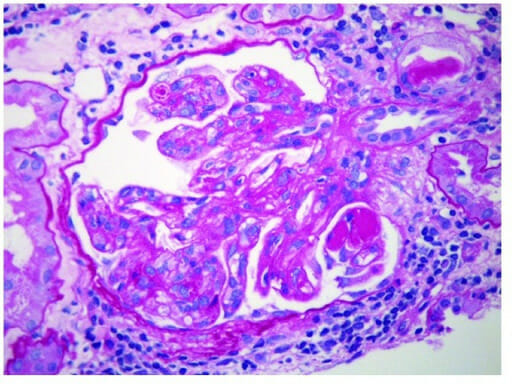
      • Clase III (glomerulonefritis proliferativa focal): < 50% de compromiso de los LOS Neisseria glomérulos con proliferación celular; “Bucles de alambre”
      • Clase IV (glomerulonefritis proliferativa difusa): > 50% de compromiso de los LOS Neisseria glomérulos con proliferación celular; “Bucles de alambre”
      • Clase V (nefropatía membranosa): Membrana basal engrosada
  • Tratamiento:
    • Clase I y II: tratamiento conservador con IECA para la hipertensión
    • Clase III y IV: añadir medicamentos inmunosupresores (esteroides y ciclofosfamida).
    • Clase V: esteroides + micofenolato de mofetilo + IECA para proteinuria Proteinuria The presence of proteins in the urine, an indicator of kidney diseases. Nephrotic Syndrome in Children
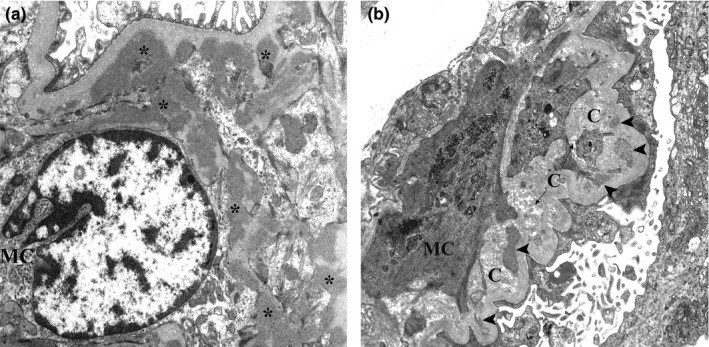
Hallazgos histopatológicos renales en un paciente con lupus eritematoso sistémico

Hallazgos histopatológicos renales en el lupus eritematoso sistémico:
Las micrografías de luz de un glomérulo muestran un engrosamiento difuso de la membrana basal glomerular (tinción de ácido peryódico y metenamina de plata; 400x) (a) Con hipercelularidad mesangial y expansión de la matriz mesangial (tinción de ácido periódico-Schiff; 400x) (b). Los análisis de microscopía electrónica muestran numerosos depósitos subepiteliales y mesangiales electro-densos, así como depósitos dentro de la membrana basal glomerular con fusión extensa de los procesos podocitarios (5000x) (c).
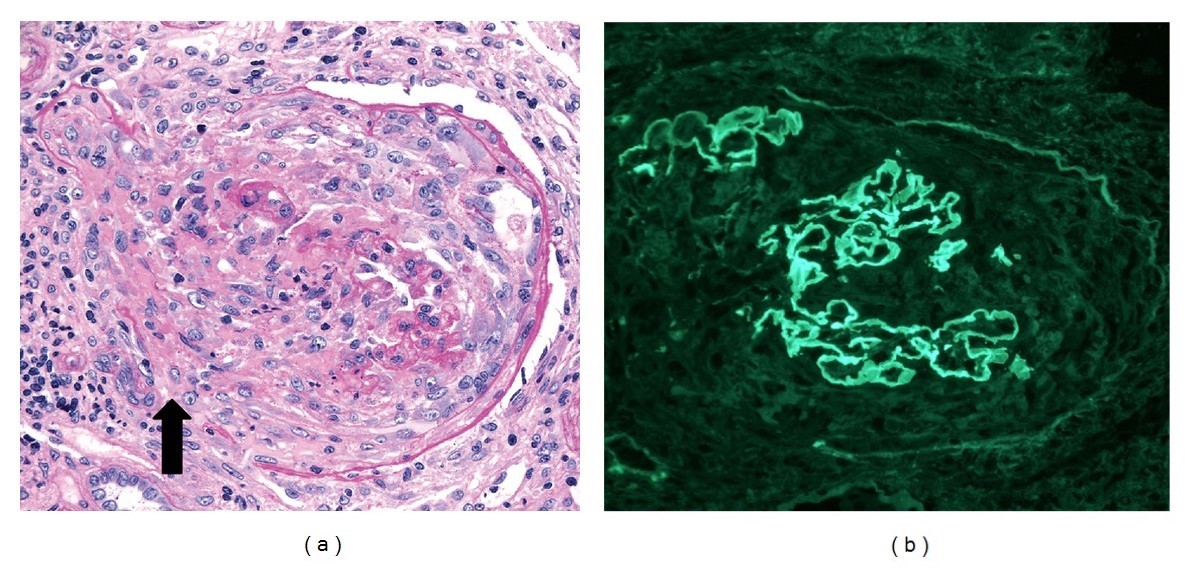
Imagen: “Renal histopathological findings” por Su X., et al. Licencia: CC BY 4.0

Enfermedad anti-membrana basal glomerular (síndrome de Goodpasture)

  • Presentación:
    • Solo se presenta como glomerulonefritis rápidamente progresiva (emergencia médica)
    • Síndrome de Goodpasture (también llamado semilunar):
      • Se refiere a afectación renal y pulmonar (síndrome pulmonar–renal)
      • Se presenta con hemoptisis en EN Erythema nodosum is an immune-mediated panniculitis (inflammation of the subcutaneous fat) caused by a type IV (delayed-type) hypersensitivity reaction. It commonly manifests in young women as tender, erythematous nodules on the shins. Erythema Nodosum 25%–60%
      • Más probable en EN Erythema nodosum is an immune-mediated panniculitis (inflammation of the subcutaneous fat) caused by a type IV (delayed-type) hypersensitivity reaction. It commonly manifests in young women as tender, erythematous nodules on the shins. Erythema Nodosum personas < 30 años
      • Las personas mayores > 50 años tienen más probabilidades de tener glomerulonefritis aislada.
  • Diagnóstico:
    • Niveles normales de complemento sérico
    • Pruebas de diagnóstico específicas:
      • Anticuerpo anti-membrana basal glomerular en EN Erythema nodosum is an immune-mediated panniculitis (inflammation of the subcutaneous fat) caused by a type IV (delayed-type) hypersensitivity reaction. It commonly manifests in young women as tender, erythematous nodules on the shins. Erythema Nodosum suero
      • ANCA ANCA Group of systemic vasculitis with a strong association with anca. The disorders are characterized by necrotizing inflammation of small and medium size vessels, with little or no immune-complex deposits in vessel walls. Rapidly Progressive Glomerulonephritis sérico (hasta la mitad será positivo = superposición con vasculitis Vasculitis Inflammation of any one of the blood vessels, including the arteries; veins; and rest of the vasculature system in the body. Systemic Lupus Erythematosus asociada a ANCA ANCA Group of systemic vasculitis with a strong association with anca. The disorders are characterized by necrotizing inflammation of small and medium size vessels, with little or no immune-complex deposits in vessel walls. Rapidly Progressive Glomerulonephritis)
      • Radiografía/TC de tórax: evaluar la presencia de hemorragia pulmonar.
      • Lavado broncoalveolar para diagnóstico definitivo
    • Hallazgos de la biopsia renal:
      • Microscopía óptica: semilunas, necrosis Necrosis The death of cells in an organ or tissue due to disease, injury or failure of the blood supply. Ischemic Cell Damage.
      • Inmunofluorescencia: deposición lineal de IgG IgG The major immunoglobulin isotype class in normal human serum. There are several isotype subclasses of igg, for example, igg1, igg2a, and igg2b. Hypersensitivity Pneumonitis
      • Microscopía electrónica: hallazgos inespecíficos
  • Tratamiento:
    • Plasmaféresis
    • Inmunosupresores
    • Trasplante en EN Erythema nodosum is an immune-mediated panniculitis (inflammation of the subcutaneous fat) caused by a type IV (delayed-type) hypersensitivity reaction. It commonly manifests in young women as tender, erythematous nodules on the shins. Erythema Nodosum personas que desarrollan enfermedad renal en EN Erythema nodosum is an immune-mediated panniculitis (inflammation of the subcutaneous fat) caused by a type IV (delayed-type) hypersensitivity reaction. It commonly manifests in young women as tender, erythematous nodules on the shins. Erythema Nodosum etapa terminal

Glomerulonefritis membranoproliferativa mediada por inmunocomplejos

  • Presentación:
    • Variable Variable Variables represent information about something that can change. The design of the measurement scales, or of the methods for obtaining information, will determine the data gathered and the characteristics of that data. As a result, a variable can be qualitative or quantitative, and may be further classified into subgroups. Types of Variables; puede desencadenarse por una multitud de enfermedades subyacentes
    • Puede presentarse como glomerulonefritis aguda/crónica o como glomerulonefritis rápidamente progresiva
    • La glomerulonefritis membranoproliferativa a menudo se superpone con el síndrome nefrótico.
    • Generalmente asociada con crioglobulinemia mixta con hepatitis C Hepatitis C Hepatitis C is an infection of the liver caused by the hepatitis C virus (HCV). The infection can be transmitted through infectious blood or body fluids and may be transmitted during childbirth or through IV drug use or sexual intercourse. Hepatitis C virus can cause both acute and chronic hepatitis, ranging from a mild to a serious, lifelong illness including liver cirrhosis and hepatocellular carcinoma (HCC). Hepatitis C Virus
  • Diagnóstico:
    • Laboratorios:
      • Patrón clásico de la vía del complemento (C3 bajo, C4 bajo)
      • Anticuerpos contra la hepatitis B Hepatitis B Hepatitis B virus (HBV) is a partially double-stranded DNA virus, which belongs to the Orthohepadnavirus genus and the Hepadnaviridae family. Most individuals with acute HBV infection are asymptomatic or have mild, self-limiting symptoms. Chronic infection can be asymptomatic or create hepatic inflammation, leading to liver cirrhosis and hepatocellular carcinoma (HCC). Hepatitis B Virus y C
    • Hallazgos de la biopsia:
      • Microscopía óptica: “vía de tranvía” de doble contorno de la membrana basal glomerular
      • Inmunofluorescencia: varía según la etiología
      • Microscopía electrónica: depósitos subendoteliales
  • Tratamiento:
    • Glomerulonefritis aguda: esteroides + micofenolato de mofetilo (evitar con función renal muy deficiente)
    • Glomerulonefritis rápidamente progresiva: esteroides intravenosos más ciclofosfamida

Glomerulonefritis membranoproliferativa mediada por complemento

  • Presentación:
    • Los LOS Neisseria subtipos llamados enfermedad de depósitos densos y glomerulonefritis C3 son ambos raros.
    • Puede presentarse como glomerulonefritis aguda/crónica o como glomerulonefritis rápidamente proliferativa
    • Las drusas (depósitos de grasa en EN Erythema nodosum is an immune-mediated panniculitis (inflammation of the subcutaneous fat) caused by a type IV (delayed-type) hypersensitivity reaction. It commonly manifests in young women as tender, erythematous nodules on the shins. Erythema Nodosum la retina Retina The ten-layered nervous tissue membrane of the eye. It is continuous with the optic nerve and receives images of external objects and transmits visual impulses to the brain. Its outer surface is in contact with the choroid and the inner surface with the vitreous body. The outermost layer is pigmented, whereas the inner nine layers are transparent. Eye: Anatomy) pueden verse en EN Erythema nodosum is an immune-mediated panniculitis (inflammation of the subcutaneous fat) caused by a type IV (delayed-type) hypersensitivity reaction. It commonly manifests in young women as tender, erythematous nodules on the shins. Erythema Nodosum la enfermedad de depósitos densos.
  • Diagnóstico:
    • Laboratorios:
      • Patrón de la vía alternativa del complemento (C3 bajo, C4 normal)
      • Factor nefrítico C3 sérico
      • Mutaciones del factor I/factor H
    • Hallazgos de la biopsia:
      • Microscopía óptica: vía de tranvía de doble contorno de la membrana basal glomerular
      • Inmunofluorescencia: C3 positivo
      • Microscopía electrónica: depósitos densos intramembranosos (solo con enfermedad degenerativa del disco)
  • Tratamiento:
    • Conservador con IECA si < 1,5 g/día de proteinuria Proteinuria The presence of proteins in the urine, an indicator of kidney diseases. Nephrotic Syndrome in Children y creatinina normal
    • Esteroides + micofenolato de mofetilo si ≥ 1,5 g/día de proteinuria Proteinuria The presence of proteins in the urine, an indicator of kidney diseases. Nephrotic Syndrome in Children o creatinina anormal
    • El trasplante es una opción, pero es posible que vuelva a aparecer en EN Erythema nodosum is an immune-mediated panniculitis (inflammation of the subcutaneous fat) caused by a type IV (delayed-type) hypersensitivity reaction. It commonly manifests in young women as tender, erythematous nodules on the shins. Erythema Nodosum el injerto.

Diagnóstico Diferencial

  • Síndrome de Alport: también conocido como nefritis hereditaria. El síndrome de Alport es una enfermedad genética del colágeno tipo IV de la membrana basal. La presentación clínica incluye inicialmente hematuria Hematuria Presence of blood in the urine. Renal Cell Carcinoma microscópica aislada, que puede confundirse con nefropatía por IgA IgA Represents 15-20% of the human serum immunoglobulins, mostly as the 4-chain polymer in humans or dimer in other mammals. Secretory iga is the main immunoglobulin in secretions. Immunoglobulins: Types and Functions o enfermedad de la membrana basal delgada. También hay hipoacusia neurosensorial característica, así como anomalías oculares. La enfermedad renal crónica se desarrolla con el tiempo y puede progresar a enfermedad renal en EN Erythema nodosum is an immune-mediated panniculitis (inflammation of the subcutaneous fat) caused by a type IV (delayed-type) hypersensitivity reaction. It commonly manifests in young women as tender, erythematous nodules on the shins. Erythema Nodosum etapa terminal que requiere trasplante.
  • Enfermedad de la membrana basal delgada: también conocida como hematuria Hematuria Presence of blood in the urine. Renal Cell Carcinoma familiar benigna. Esta enfermedad genética se presenta con hematuria Hematuria Presence of blood in the urine. Renal Cell Carcinoma microscópica aislada y puede confundirse con nefropatía por IgA IgA Represents 15-20% of the human serum immunoglobulins, mostly as the 4-chain polymer in humans or dimer in other mammals. Secretory iga is the main immunoglobulin in secretions. Immunoglobulins: Types and Functions o síndrome de Alport. La biopsia de riñón solo muestra un adelgazamiento difuso de la membrana basal glomerular en EN Erythema nodosum is an immune-mediated panniculitis (inflammation of the subcutaneous fat) caused by a type IV (delayed-type) hypersensitivity reaction. It commonly manifests in young women as tender, erythematous nodules on the shins. Erythema Nodosum el microscopio electrónico. El pronóstico general de la enfermedad de la membrana basal delgada es bueno. Los LOS Neisseria individuos deben recibir un IECA y someterse a un seguimiento a largo plazo, ya que puede haber una superposición con el síndrome de Alport y algunos desarrollarán enfermedad renal crónica.
  • Púrpura de Henoch-Schönlein: también conocida como vasculitis Vasculitis Inflammation of any one of the blood vessels, including the arteries; veins; and rest of the vasculature system in the body. Systemic Lupus Erythematosus por IgA IgA Represents 15-20% of the human serum immunoglobulins, mostly as the 4-chain polymer in humans or dimer in other mammals. Secretory iga is the main immunoglobulin in secretions. Immunoglobulins: Types and Functions. La púrpura de Henoch-Schönlein es principalmente una enfermedad pediátrica y es la causa más común de vasculitis Vasculitis Inflammation of any one of the blood vessels, including the arteries; veins; and rest of the vasculature system in the body. Systemic Lupus Erythematosus en EN Erythema nodosum is an immune-mediated panniculitis (inflammation of the subcutaneous fat) caused by a type IV (delayed-type) hypersensitivity reaction. It commonly manifests in young women as tender, erythematous nodules on the shins. Erythema Nodosum los LOS Neisseria niños. Esta afección implica el depósito de complejos inmunes IgA IgA Represents 15-20% of the human serum immunoglobulins, mostly as the 4-chain polymer in humans or dimer in other mammals. Secretory iga is the main immunoglobulin in secretions. Immunoglobulins: Types and Functions en EN Erythema nodosum is an immune-mediated panniculitis (inflammation of the subcutaneous fat) caused by a type IV (delayed-type) hypersensitivity reaction. It commonly manifests in young women as tender, erythematous nodules on the shins. Erythema Nodosum múltiples vasos después de un desencadenante (infeccioso/ambiental) e incluye síntomas cutáneos, gastrointestinales y musculoesqueléticos. Los LOS Neisseria hallazgos renales son muy similares a los LOS Neisseria de la nefropatía por IgA IgA Represents 15-20% of the human serum immunoglobulins, mostly as the 4-chain polymer in humans or dimer in other mammals. Secretory iga is the main immunoglobulin in secretions. Immunoglobulins: Types and Functions, pero la enfermedad a menudo es autolimitada en EN Erythema nodosum is an immune-mediated panniculitis (inflammation of the subcutaneous fat) caused by a type IV (delayed-type) hypersensitivity reaction. It commonly manifests in young women as tender, erythematous nodules on the shins. Erythema Nodosum los LOS Neisseria niños y, a menudo, no se necesita biopsia de riñón ni esteroides.

Referencias

  1. Appel, G. B., Kaplan, A. A. (2020). Overview of the classification and treatment of rapidly progressive (crescentic) glomerulonephritis. UpToDate. Retrieved October 25, 2021, from https://www.uptodate.com/contents/overview-of-the-classification-and-treatment-of-rapidly-progressive-crescentic-glomerulonephritis
  2. Bomback, A. S., Appel, G. B. (2021). Lupus nephritis: diagnosis and classification. UpToDate. Retrieved October 25, 2021, from https://www.uptodate.com/contents/lupus-nephritis-diagnosis-and-classification
  3. Fervenza, F. C., Sethi, S. (2021). Membranoproliferative glomerulonephritis: Classification, clinical features, and diagnosis. UpToDate. Retrieved October 25, 2021, from https://www.uptodate.com/contents/membranoproliferative-glomerulonephritis-classification-clinical-features-and-diagnosis
  4. Fervenza, F. C., Sethi, S. (2020). Membranoproliferative glomerulonephritis: treatment and prognosis. UpToDate. Retrieved October 25, 2021, from https://www.uptodate.com/contents/membranoproliferative-glomerulonephritis-treatment-and-prognosis
  5. Kashtan, C. E., Simon, J. F. (2020). Isolated and persistent glomerular hematuria in adults. UpToDate. Retrieved October 25, 2021, from https://www.uptodate.com/contents/isolated-and-persistent-glomerular-hematuria-in-adults
  6. Kopel, T., Salant, D. J. (2020). C3 glomerulopathies: Dense deposit disease and C3 glomerulonephritis. UpToDate. Retrieved October 25, 2021, from https://www.uptodate.com/contents/c3-glomerulopathies-dense-deposit-disease-and-c3-glomerulonephritis
  7. McAdoo, S. P., Pusey, C. D. (2017). Anti-glomerular basement membrane disease. Clinical Journal of the American Society of Nephrology 12:1162–1172. https://doi.org/10.2215/CJN.01380217
  8. Niaudet, P. (2020). Poststreptococcal glomerulonephritis. UpToDate. Retrieved October 25, 2021, from https://www.uptodate.com/contents/poststreptococcal-glomerulonephritis
  9. Radhakrishnan, J. (2021). Glomerular disease: Evaluation and differential diagnosis in adults. UpToDate. Retrieved October 25, 2021, from https://www.uptodate.com/contents/glomerular-disease-evaluation-and-differential-diagnosis-in-adults

¡Crea tu cuenta gratis o inicia una sesión para seguir leyendo!

Regístrate ahora y obtén acceso gratuito a Lecturio con páginas de concepto, videos médicos y cuestionarios para tu educación médica.

User Reviews

Que tengas una sesión de estudio alegre y navideña 🎁 Ahorra 50% en todos los planes >>

Details